



Abstract
Background:
Many studies have explored personal values in nursing, but none has assessed whether the predictions made by the theory of intergenerational value change are true for the different generations of nursing professionals and students. This theory predicts a shift in those personal values held by younger generations towards ones focussed on self-expression.
Research question:
The purpose of the study was to identify intergenerational differences in personal values among nursing professionals and nursing students and to determine whether generational value profiles fit the predictions made by the theory.
Research design:
An exploratory comparative design with a cross-sectional survey method was used.
Participants and research context:
Participants were recruited from four public hospitals and 10 Primary Care Centres in medium-size cities in Spain. A sample of 589 nurses and 2295 nursing students participated in the study. An open survey method was used to collect data that were classified grouping reported values into categories following a method of value lexicon construction and analysed by contingency tables with Pearson’s χ 2 and standardized residuals.
Ethical considerations:
Approval to conduct the study was obtained from the Deans of the nursing schools and the Directors of Nursing of the institutions. Anonymity was guaranteed, participation was voluntary and participants were informed of the purpose of the study.
Findings:
The results can be synthesized in two age-related trends in the reporting of values among three groups of participants. First, among younger nurses and students, some nursing core values (e.g. ethical and professional) decreased in importance, while other values centred on social relationships and personal well-being increased.
Discussion and Conclusion:
This study shows intergenerational change in personal values among both nursing students and young nursing professionals. Findings suggest the need to pay more attention to value training and professional socialization during the schooling period.
Keywords
Introduction
A distinguishing feature of human beings is the fact that our lives are influenced by values. In philosophy and social sciences, values have been the object of broad study. While philosophy and ethics have examined the essence and nature of values, psychology has concentrated on explaining their influence on individual and collective behaviour. Values have been defined as abstract beliefs about desirable end states or behaviours that transcend specific situations, guide evaluation and behaviour and can be rank-ordered in terms of relative importance. 1 –3 The importance of ethical values has been noted by numerous authors. For example, it has been emphasized that values represent basic convictions of what is right, good or desirable and motivate both social and professional behaviours. 4 In this regard, as has been established by Omery 5 if ‘ethics identifies the norms or standards of behaviors that either are or can become the values that are implemented through moral reasoning’ some personal values can ‘go in the direction’ of an ethical behaviour that results in a professional practice in accordance with the ethical codes of the profession. Nursing is a science and a profession founded on specific human values emphasizing the importance of ethical values. 4
According to the Value Change Theory (VCT),
6
–8
older generations developed materialist values (rational-secular values) while confronting life’s hardships in a social climate of scarcity and insecurity while keeping hard work in high regard. In contrast, younger generations have been growing up in social contexts of prosperity and security and have been progressively incorporating a system of values that prioritize post-materialist or self-expressionist ideals related to the development of personal autonomy, harmony in personal relationships, solidarity and tolerance, well-being and the like.
9
–11
For example, as Braithwaite et al.
12
have established: Those who have postmaterialist values have been exposed to greater security and, as a result, are oriented toward satisfying other needs, needs associated with social bonds, self-esteem, and self-actualization. Consequently, postmaterialists are likely to place a higher value on ideas, equality of opportunity, greater citizen involvement in decision making at government and community levels, and environmental protection (pp. 1536–1537).
Instead of limiting the participants’ responses to a specific list of standard values, an alternative is to use an open format in which participants are asked to freely write their personal values in their own words without restrictions. There are several advantages to use an open format: (a) it reduces the effect of social desirability, (b) it reduces response time and (c) it allows the participants to express their personal values in their own words.
Studies that have explored values using an open format have found inconsistencies in the generality and intensity of the change in values predicted by the VCT in a variety of samples including health professionals 13 and Spanish, German and American general populations. 14 –18 This study incorporates an open methodology to explore change in values.
Human relationships are the driving force of certain professions such as nursing, social work or social education and imply a socially focussed dedication to others. Nursing is a profession that requires a series of vocational and altruistic values, together with other ethical and transcendental ideals which reinforce the service to others over one’s own needs. 19 –23 That is, a kind of values that transcend the idea of a life centred on oneself that characterized post-materialist values, the predominance of which is predicted by the VCT for the new generations. As such, studies exploring the personal values of young and old generations of nurses may assess the extent to which value change patterns predicted by VCT for the general population also apply to nurses.
Many theoretical and empirical studies have focussed on values associated with nursing professional practice, 24 as decision-making should be based on ethical models that demand personal values which shape the profession’s typical value profile. 25,26 The shift towards a predominance of post-modernist values predicted by the VCT, together with the post-modernist cultural point of view, could imply great changes for the nursing profession. Some authors are in favour of these post-modernist value changes and consider them positive, 27 –29 while others consider them negative. 30 –32 Individuals with a post-materialistic value profile would mainly be concerned with their psychological well-being, the pursuit of happiness, being in love and being loved, living in harmony and the like.
Various studies 21,33 –35 have analysed the values held by nursing students and by professionals. 36 –38 Several studies suggested that nurses of different generations may embrace different values because of distinctive social, economic and educational characteristics. 36 –38 Although the extant literature suggests that nurses in different generations have different sets of personal values, there are no studies to determine whether generational value profiles in nursing students and nursing professionals fit the predictions made by VCT, which were developed for the general populations of Western countries.
The purpose of this study is to compare the personal values among three generations: nursing students, young professional and senior professionals. The study also examines whether generational value profiles of nursing students and nursing professionals fit the predictions made by the theory of intergenerational value change developed for the general population.
Method
Study design
An exploratory comparative design with a cross-sectional survey method was used to examine the personal values of nurses over generations.
Participants
Nurse participants were recruited from 4 public hospitals (one university and three city hospitals) and 10 Primary Care Centres in medium-size cities situated in southern Spain. We follow a purposive or judgmental strategy of sampling, with the sample being selected based on the knowledge of a population and the purpose of the study. These hospitals are medium to large in size, accommodating 200–700 beds, and play a central role in treating patients who require a high level of medical care in this region. Each of the 10 Primary Care Centres covers a population of between 5000 and 10,000 people. Voluntary participation in the study was requested in the hospitals and Primary Care Centres, with a total of 603 professionals agreeing to participate. The nursing professional sample was diverse, as nearly 40% of them grew up and were trained in various regions of Spain.
The student sample was selected following a non-probabilistic sampling method to ensure representation from all regions of Spain and from each of the 4 years of education required to complete the degree. A total sample of 2399 students from throughout Spain agreed to complete a questionnaire about personal values.
In all, 3002 participants approached for the study submitted a questionnaire. However, 109 participants were eliminated from the final sample because they returned incomplete questionnaires. Hence, each of the 2884 participants from the final sample was then assigned to one of the three generational groups: Nursing Students Group (NSG) with 2295 participants, Young Nurses Group (YNG) with 307 participants and Senior Nurses Group (SNG) with 282 participants.
The categorization of participants into three distinct generations can be justified by taking into account Spain’s social context and recent historical developments. A process of great social and political upheaval, which was initiated in 1975, helped established democracy after 36 years from civil war 1936–1939. Generations affected by such profound changes in education, customs and civil liberties likely formed a set of values which differ from previous generations.
Nursing Student Generation (born between 1984 and 1991)
This group is composed of nursing students who meet the minimum age requirement to attend college in Spain (19 years old), although some students who switched degrees or health training studies are older. Although the majority of students received nursing education according to the 1977 curriculum reform (University Nursing Diploma), some first-year students received nursing education as prescribed by the 2009 Nursing Grade Curriculum.
Young Professional Generation (born between 1970 and 1985)
This group is made up of professionals born between 1970 and 1985, which represent the first generation which evolved and was educated under the social context and values of a democratic society, particularly during the political transition years between 1975 and 1980. By 1977, nursing studies were fully incorporated into the university system through the creation of the University Nursing Diploma qualification, which increased the strength of specific nursing disciplines and encouraged professional autonomy.
Senior Professional Generation (born between 1945 and 1969)
This generation is composed of individuals born between 1945 and 1969 whose values were formed under the social context of a dictatorship. The year 1945 was marked as the upper limit for inclusion, as 65 is the age of retirement. This generation bears some resemblance to the ‘baby boomers’ in the United States, 39 –41 who were born between the 1940s and the 1960s. They were raised by parents who maintained traditional beliefs in a social climate in which ethical, religious, familism, work and materialist values were dominant. Nurses in the baby boomer generation received nursing education according to the 1955 Technical Health Assistant Curriculum reform. Recognition of nursing as profession was low in this period, and thus their education was received outside the university system.
Instruments and data collection
We adapted the questionnaire originally developed by Roales-Nieto 14 to assess nurses’ personal values freely and openly. The adapted version (Report of Personal Values-Nursing – RPV-N) was used to measure nurses’ personal values with an open-ended question format, which allows for participants to freely disclose up to a maximum of 10 values in order of importance (a detailed description of RPV-N can be found in Roales-Nieto and Segura 15 ). The RPV-N contains questions related to socio-demographic data and four open-ended questions about values (Sections A, B, C and D). In this study, we analysed the questions that asked about the most important personal values (Section A).
In Section A, participants read the following instructions before answering: Please, think of the MOST IMPORTANT PERSONAL VALUES that are driving your life. Create a list of these values where number 1 is your most important value, number 2 is your second most important, etcetera. You may write up to a maximum of 10, but do so by RIGOROUS ORDER OF IMPORTANCE.
Ethical considerations
Prior to data collection, approval to conduct the study was obtained from the Deans of the nursing schools and the Directors of Nursing of all participating institutions.
Data analysis
We used the statistical package SPSS-20 for Mac to analyse data. Each of the values disclosed by participants was assigned into categories following the value lexicon construction method. 42 Consistent with this procedure, values reported by the participants were assigned to categories by five independent expert researchers (judges) who (a) classified values reported according to their similarity in content and (b) assigned each value reported to a value category that grouped items with similar meanings. To minimize lexical ambiguity, context-dependent words with multiple meanings (polysemy) were avoided. The agreement of at least four out of five experts was required to form a category and to assign a reported value into a category. Taking the nature of the data into account, the statistical analysis was carried out using contingency tables with Pearson’s χ 2 and standardized residual (SR – a measure of the degree to which an observed chi-square cell frequency differs from the value that would be expected on the basis of the null hypothesis, confidence interval of 95%).
Results
All 3002 questionnaires distributed were returned, and 118 were excluded from the analysis because they were incomplete. Therefore, a total of 2884 usable questionnaires were analysed (a final response rate of 96%).
Of the final sample of 2884 participants, 2295 were nursing students born between 1984 and 1991 (mean age = 20.95 years; standard deviation (SD) = 1.672 years), 307 were nurses born between 1970 and 1985 (mean age = 31.18 years; SD = 5.016 years) and 282 were nurses born between 1945 and 1969 (mean age = 48.49 years; SD = 5.621 years). The composition of the participants was 81% female. As for their educational backgrounds of professional nurses, the majority (64%) had nursing diplomas, followed by 23% having associate degrees, 11% Bachelor of Nursing and 2% higher degrees, and 75% working in permanent full-time positions. The socio-demographic characteristics of the three groups can be seen in Table 1. Despite marital status differences due to generational age, the three groups share similar socioeconomic background and gender distribution.
Socio-demographic distribution of participants by group.
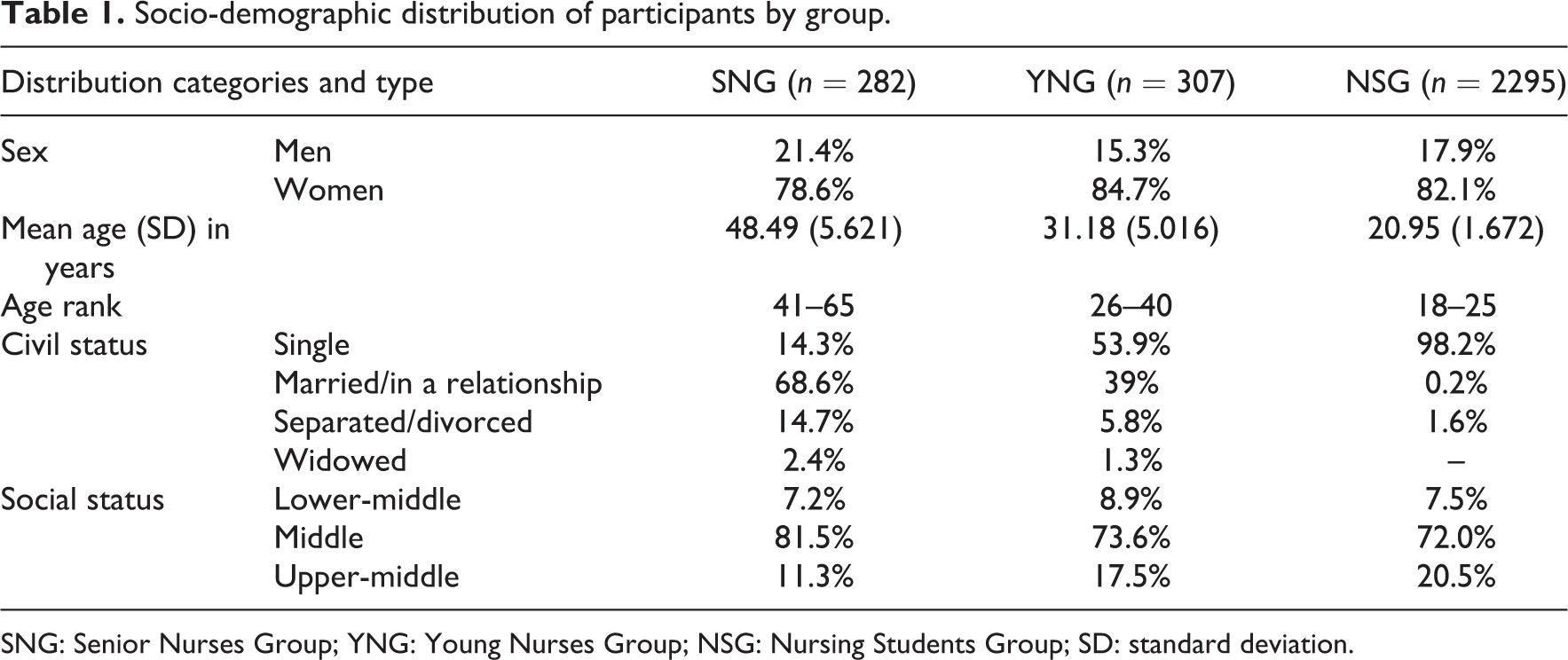
SNG: Senior Nurses Group; YNG: Young Nurses Group; NSG: Nursing Students Group; SD: standard deviation.
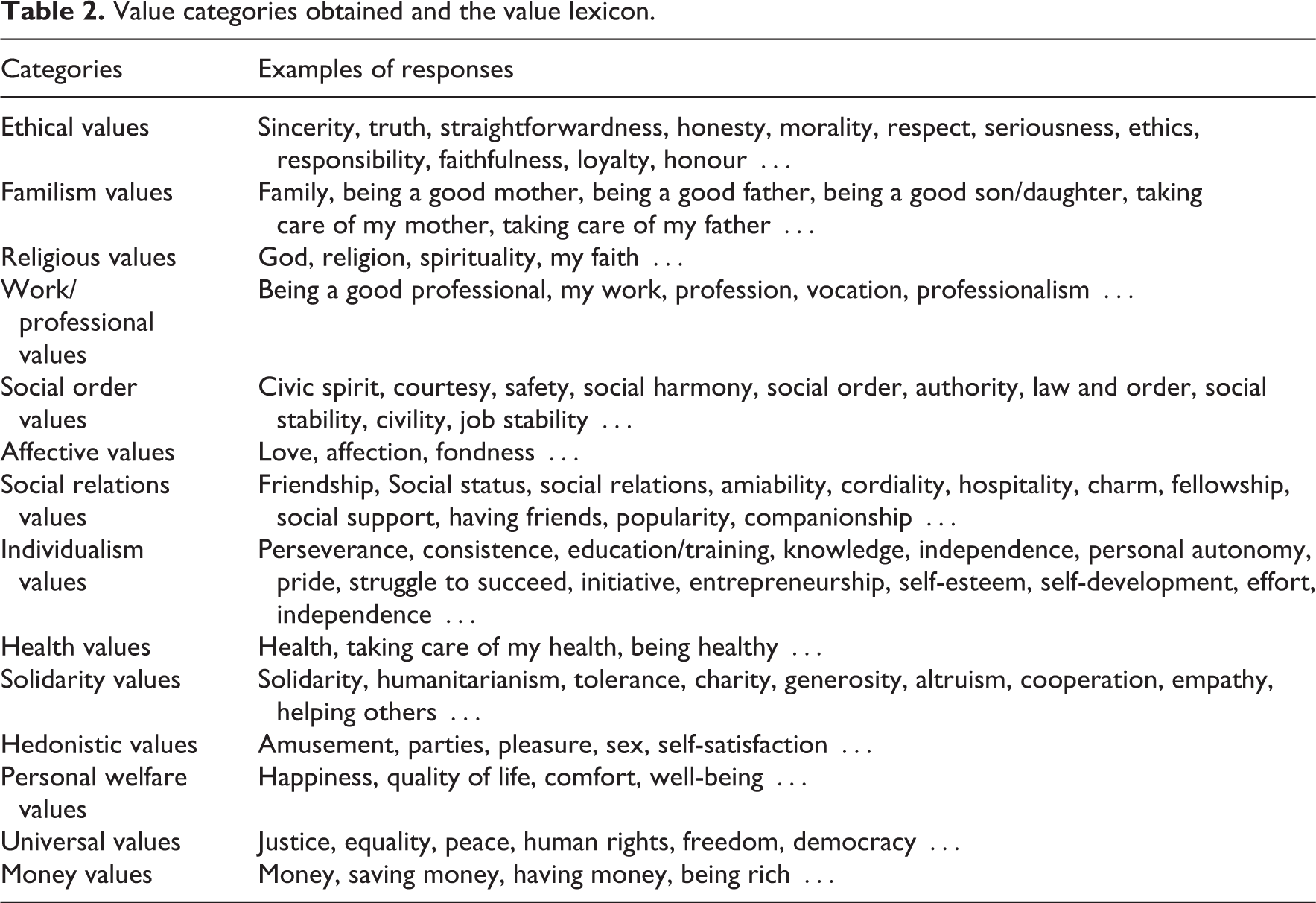
Statistical analysis by means of contingency tables with Pearson’s χ 2 and SR indicate that there are no significant differences between the reports of personal values along the socio-demographic variables analysed for the three groups of participants (i.e. sex, civil status, education level, social status). The results produced three blocks of reported personal values (one for every group). The NSG (n = 2,295) provided a total of 12,601 responses of personal values (M = 5.7; SD = 1.94); the YNG (n = 307) provided a total of 1631 responses (M = 5.3; SD = 2.15) and the SNG (n = 282) provided 1441 responses (M = 5.5; SD = 2.30). These reported values were grouped into categories according to the value lexicon construction method described earlier. About 84% of total reported values were assigned to one of the categories by agreement of all five judges, and 12% of reported values were assigned by agreement of four judges (96% of agreement); 4% of the reported values were eliminated for failing to meet the inter-observer agreement criteria. Table 2 shows the 14 resulting value categories with some examples of the values reported by participants ascribed to each category.
Value categories obtained and the value lexicon.
Intergenerational analysis of reported personal values
Table 3 shows the generational profile of personal values which displays the value categories generated for each of the groups. The percentage of each group’s participants who reported their personal values in each of the categories is displayed. The order in which the categories appear represents the importance each group assigned to each of the value categories.
Generational profiles of personal values showing priority order of values (the shadowing shows the first five categories across groups).
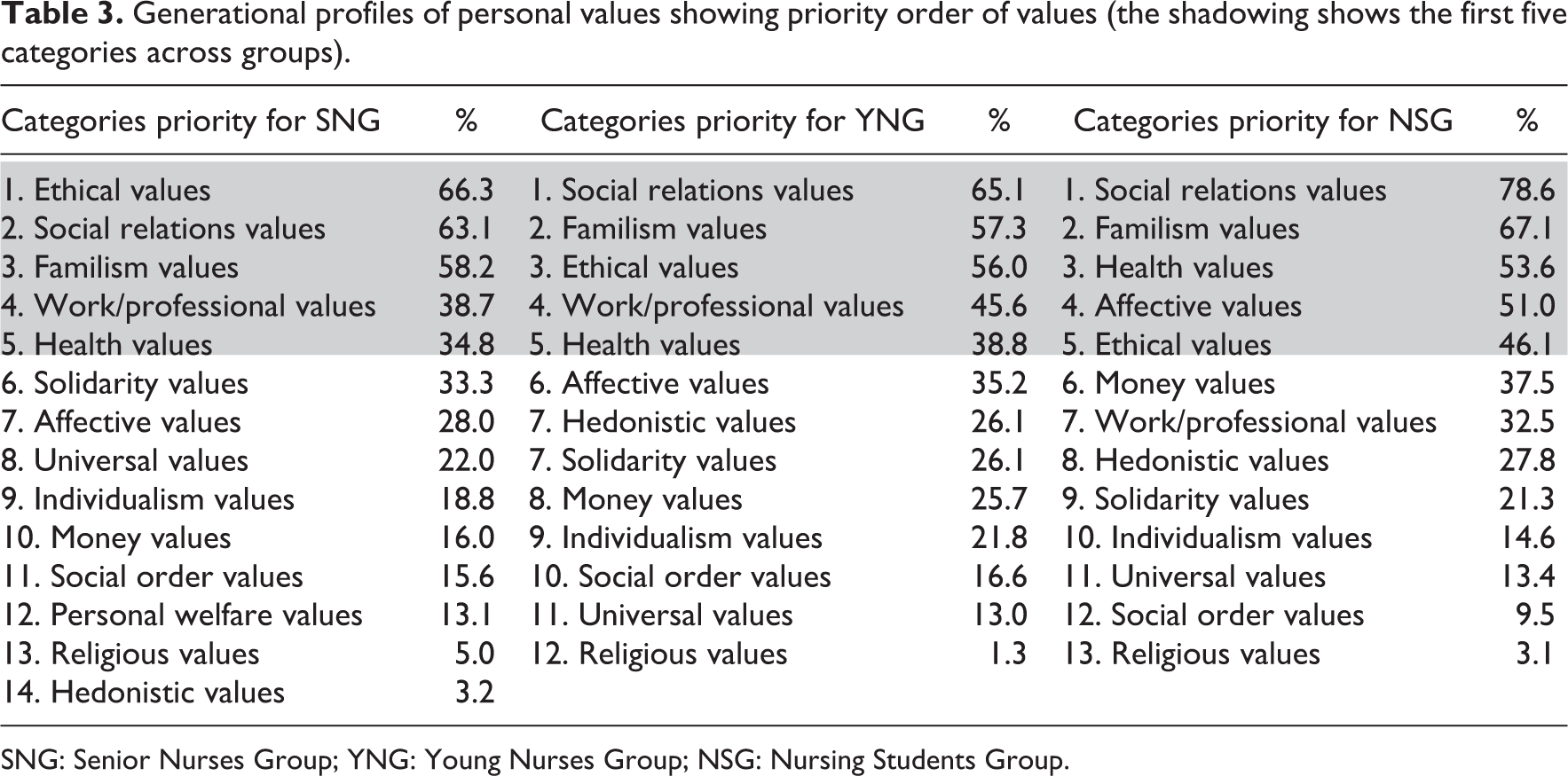
SNG: Senior Nurses Group; YNG: Young Nurses Group; NSG: Nursing Students Group.
The statistical analysis shows many significant differences in the reporting of personal values between the groups. For example, significant differences in all five categories (familism, affective, social relations, health and money values) are found between the professional groups (YNG and SNG), which report said values below the expected rate (SR negatives), and the students (NSG), which shows a higher than expected report rate (SR positives). However, in the ethical and social relation values, the direction of change is inverted. That is, the student group (NSG) shows a lower than expected rate (SR of −6.5 and −4.6, respectively), and the two professional groups show a higher than expected rate (SR of +6.1 and +2.7 for SNG, and +2.6 and +3.4 for YNG).
Other examples of significant differences are found between two of the three groups representing generational extremes: the youngest (NSG) and the oldest (SNG). In the hedonistic value category, the NSG shows a much higher rate than expected (SR = +6.3), while the SNG shows the opposite (SR = −9.0). For the categories of solidarity and universal values, the pattern is inverted, and the SNG shows a higher than expected rate (SR of +4.4 and +4.0, respectively) and the NSG, a lower one (SR of −4.3 and −2.4, respectively).
These two age-related patterns of personal values in relation to age can also be seen in Figure 1. On one hand, the categories of ethical, work/professional, solidarity, universal, individualist, social order and religious values show a downward trend with decreasing age. That is to say, these values are less reported by younger participants than older ones, irrespective of the participants’ professional status. For example, ethical values are more important for older professionals (SNG = 66%) than for younger professionals (YNG = 56%). Students, who represent the youngest generation, assign less importance (NSG = 46.1%) than both groups of professionals (see Figure 1). Conversely, value categories including familism, social relations, health, affective, money and hedonistic show an upward trend with decreasing age, regardless of the participant’s professional status. In other words, these values are reported more by younger participants than older ones. For instance, young students (NSG = 27.8%) prioritized these categories higher than young professionals (YNG = 26.1). In turn, young professionals assign higher importance to said values than older professionals (SNG = 3.2%) (see Figure 1).
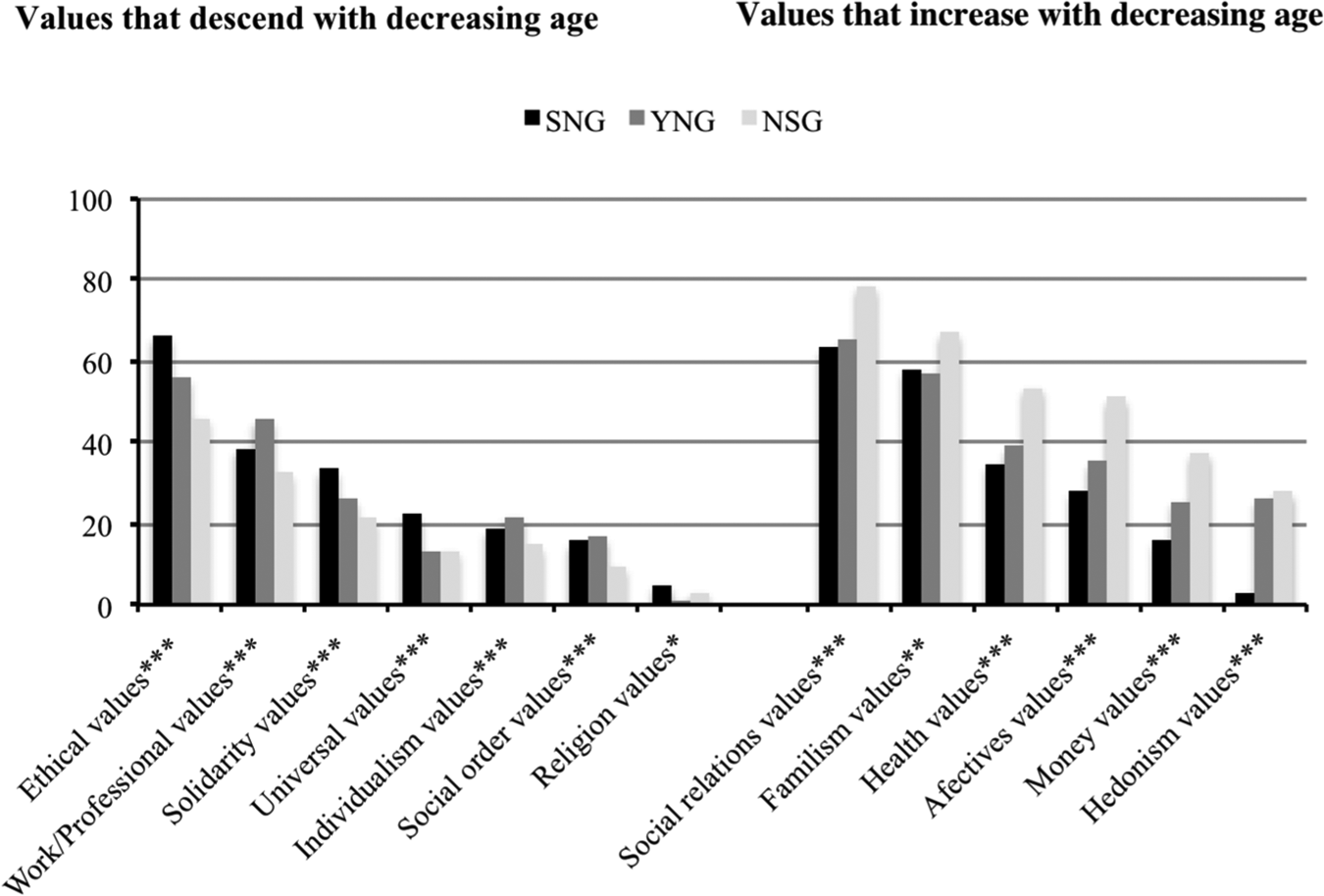
Graphical representation of the two intergenerational change tendencies for personal values, displaying the percentage of participants in each group who mention each value category and if the change is of statistical significance.
An alternative way to look at change in values in nursing professionals is to compare significant differences between two of the three groups representing generational extremes: the SNG, the oldest generation representing a bygone era of nursing professionals, and the NSG, students who embodied the future of the profession. Figure 2 shows a summary of the change in importance given to values between the oldest and youngest generations. For example, the percentage difference of 20.22% for ethical values reflects the difference between the oldest professional scores (SNG = 66.3%) and the youngest generation, students (NSG = 46.1%). The 20.2% (66.3−46.1 = 20.2) can be interpreted as a loss of important ethical values among the youngest generation with respect to the oldest generation.
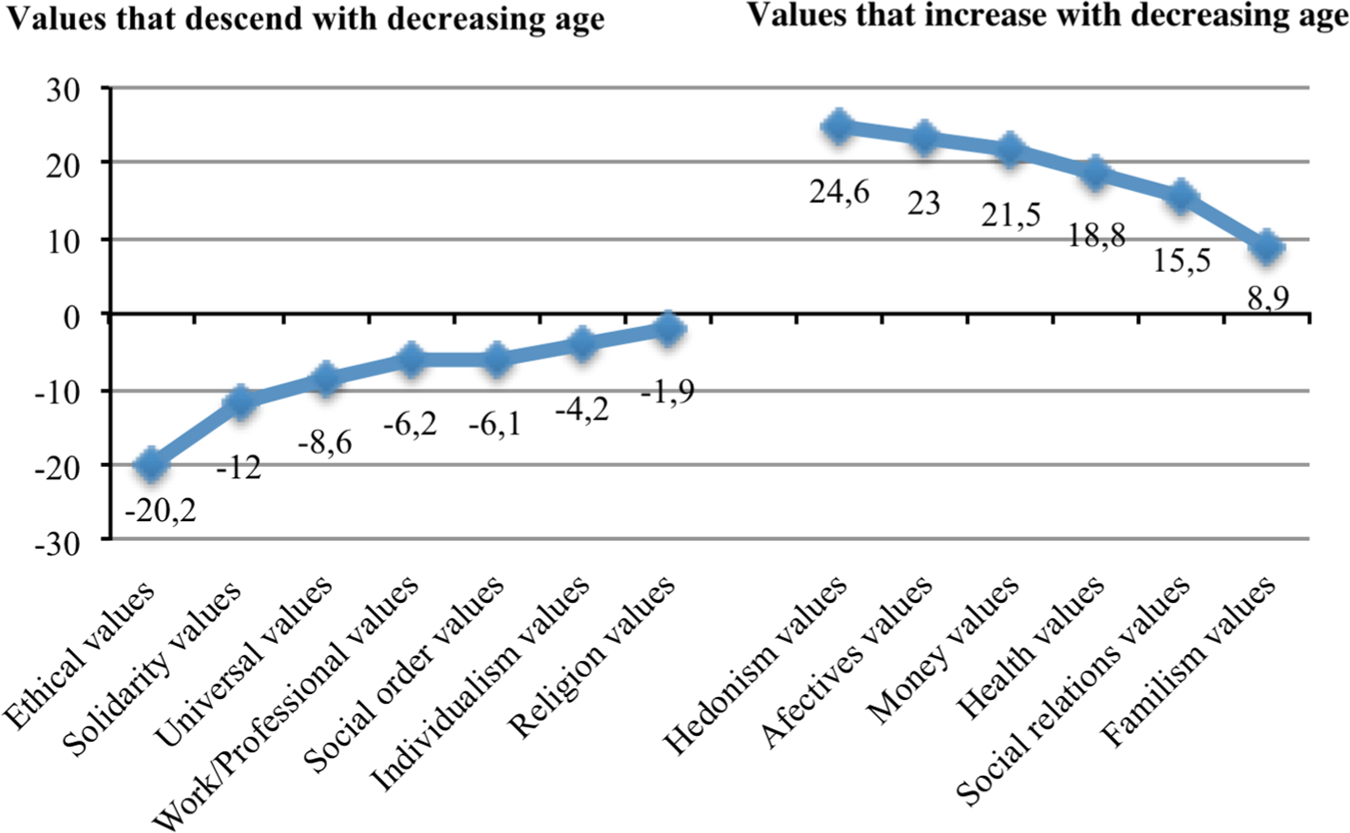
Graphical representation of the two intergenerational change tendencies for personal values, displaying the percentage difference between the oldest (SNG) and the youngest (NSG) group.
Figure 2 also shows the patterns of values that descend with decreasing age and increase with decreasing age for the youngest (NSG) and oldest generations (SNG). The percentage difference is shown as negative when a category was mentioned by a lower percentage of the younger generation in relation to the oldest one. For example, percentage differences for values which decrease in importance for the younger generations are pronounced for ethical (−20.22), solidarity (−12) and universal values (−8.6) categories. Likewise, the percentage difference is shown as positive when a category was mentioned by a higher percentage of the younger generation in relation to the older one. For instance, percentage differences for values which increase in importance for younger generations (with increases of over 10%) are reported for the categories of hedonistic (24.6), affective (23), money (21.5), health (18.8) and social relations (15.5) values.
Discussion
This study shows significant intergenerational differences in reported personal values of nursing students and professionals. Two clear trends emerge among its most relevant findings which demonstrate how values are influenced by age regardless of participants’ professional status. One pattern showed how some nursing core values (e.g. ethical and professional values) lessened in importance as age decreased, while the other showed how values centred on self-expressions increase in importance as age decreased.
The first trend indicates that certain core value categories including ethical, solidarity and universal values, work/professional, lose importance for the younger generations irrespective of their professional status. Comparisons show that older professionals place more relevance on ethical and solidarity values than the younger professionals; and, among the two generational extremes (see Figure 2), the loss of core values is more pronounced for the youngest generation (SNG) than for the oldest (NSG). These tendencies suggest that only the oldest generation of professionals still hold core ethical values (e.g. respect, responsibility, dignity, honesty, moral standards) which the literature identified as those which are prioritized by nursing professionals. 4,36 –41,43 –45 More importantly, findings from this trend imply a loss of importance of said core values among individuals that represent the future of the nursing profession (young professionals and students).
The second trend shows how other value categories increase in importance as age decreased. For example, the younger generations placed more importance on values included in the category of hedonism than older generations. The most salient difference was again found when the youngest (NSG) and the oldest generation (SNG) were compared against each other (24.6%). Younger professional valued hedonism more than older professionals (22.9%). However, differences between young professionals and students representing the younger generation were very small (1.7%), suggesting they both valued hedonism nearly the same. The second trend showed a shift of values towards hedonism and personal well-being, which could be traced to the major social and democratic transformations during the 80s and 90s in Spain. Future studies should explore this phenomenon as it might have an effect on professional performance.
Equally, within this trend, the great importance placed on values categories related to affective life and social life also stands out. The value categories of affective and social relations (e.g. personal relationships, friendship and feeling part of a group or social network) show a clear increase in importance among younger generations (students and young nurses). These findings, together with hedonism, suggest that nursing students and the younger nurses are shifting to post-modernist or self-expression values in the direction predicted by VCT. Furthermore, this age-related trend shows the same direction of change as the one found for samples of general populations in Spain, German and the United States. 14 –18 An exception can be seen by the increase in importance of the money value category for the youngest generation, as students mentioned money as a personal value more than the professionals (a difference of 21.5% with regard to the oldest generation of professionals and 11.8% with regard to the younger generation of professionals). This finding contradicts the results of Daehlen’s 46 longitudinal study in which money as a value was more important among professionals than students.
Furthermore, if we focus our analysis on the student group, we find that it shows the lowest rating for the work/professional value category in relation to the other two groups of professionals (−6.2% of difference with the older group and −13.1% of difference with the young professionals). This finding is of particular concern, because we could be facing a generation of nursing students in which only 32.5% value their future profession, without having even been exposed to their practice. In a review of literature regarding satisfaction related to professional performance in nursing, 47 the authors concluded that ‘literature suggests that nurses are experiencing increasing levels of work-related stress over time and increased levels of work-related stress are associated with lower levels of satisfaction with reward packages and working conditions’ (p. 222).
The low level of prominence placed by students on values related to the job/profession category (e.g. being a good professional) suggests that future nurses may not value their profession long before they enter the labour market and experience its working conditions. If this finding is confirmed, new studies should consider values as another potential variable mediating the effects of work-related stress and job dissatisfaction.
Another line of interpretation, which could help understand these findings, is related to the reasons why students nowadays choose to study nursing in contrast with the reasons why older generations of nurses chose the profession. Nursing is a profession with a high level of employment and this could have enticed people to choose this career path, without even knowing what it entails. In fact, at the time in which this study took place, the relationship between the demand and the availability of placements in nursing programmes was 274% (meaning there were 2.74 applications for every place offered in Spanish universities). This study did not examine the possible impact of career and vocational aspirations on reported values. Future studies should systematically assess the role of values on choosing nursing as a profession.
Finally, a worrisome finding relates to the absence of core nursing values among young professionals and nursing students. In fact, values mentioned by specialized literature (e.g. ICN, 2006) as being basic core values in nursing professional practice, such as solidarity and universal values (e.g. justice, freedom, equality, altruism), decreased in importance as age decreased. For example, altruism, which was cited as value in our study and highlighted as a core nursing value in the literature, 35,48,49 was considered a priority for only one in five students. The fact that these values were cited less by students than by professionals leads us to wonder whether professional socialization is being adequately developed during training. Current curricula put an emphasis on the acquiring of professional skills, pushing training in professional values into the background. However, the special nature of nursing work requires not only professional competencies but also that the nurse knows how ‘to be’ and how to relate to the patients from a values perspective. Maybe it should promote training in professional values during the period of academic training involving professional tutors of practices in this task.
Like any other research, the conclusion of this preliminary study should be handled cautiously due to its limitations. A unique feature of this study is the use of an open format survey technique which allows respondents to freely disclose their own personal values without being restricted by a predetermined researcher lists. Despite its novelty, it may require further replication.
Especially, an issue that should be explored in depth is whether generational differences in values can be explained as either a Cohort or a maturation effect. That is, the differences in values may be related to the concerns of the young different to the concerns of older people (with a lot of responsibilities to coping with – economic, familiar, social). However, the effects of maturation could hardly explain all the differences; for example, that some values are reported less by students than by professionals (e.g. the case for altruism). Nonetheless, this should be considered as a potential limitation of this study, but that is common to all cross-sectional studies that examine differences on values between generations and can only be resolved with longitudinal studies that measure the report of personal values over time.
In addition, it should be considered as a potential limitation to generalizability that the sample has been composed only by Spanish population. Studies are needed to examine whether the same trends in the report of values appear in samples from other countries. Finally, the limitations of using of open format survey technique also need to be mentioned, especially when comparing the results of this study with others using closed formats of value assessment.
Conclusion
The analysis shows evidence of an important intergenerational change in reported values of nursing students and professionals. The intergenerational differences showed two clearly opposing age-related trends regardless of the participants’ professional status. One trend demonstrates how certain values increase in importance as generations aged, and the other shows values decreasing in importance in line with decreasing age.
These age-related changes in personal values partially fit the predictions of VCT, 6 –10 particularly the prominence given to post-modernist values among the younger generations (students and young nurses). In contrast, the importance of other materialist-type values (i.e. money values) or classic (e.g. familism values) is also maintained or increased which partially contradicts VCT’s predictions.
The study revealed some value change patterns that are troublesome from a nursing perspective. The decrease in importance of ethical, work/professional, solidarity and universal values categories, together with an increase in importance of hedonistic and money values for younger generations, implies changes contrary to the profile of core nursing values historically associated with the profession. If these facts are confirmed, they would indicate a deterioration in core nursing values among younger generations of professionals and students, which in turn would lead us to consider the benefits of enhancing nursing socialization during the university learning period, and encourage training of younger nursing professionals on values that characterize professional nursing practice.
Footnotes
Conflict of interest
The authors declare that there is no conflict of interest.
Funding
This study was supported by the Minister of Education and Science, National Plan I+D+i, research project SEJ2005-05844/PSIC with J.G.R.-N. as director.