



Abstract
Background
Healthy aging is one of the essential aspects of a health promotion program in the elderly.
Aim
Exploring ethical challenges in healthy elderly care from the perspective of nurses, older adults, and families in the Iranian context.
Research Design
This qualitative study was conducted using a content analysis approach in 4 health centers in northeastern Iran from 2017 to 2019. Semi-structured interviews, observation, review of elderly files, and focus groups were used to collect data.
Ethical considerations
The ethics committee of the university approved this study in Iran. This study adhered to the principles of the Helsinki Declaration. Ethical principles autonomy, confidentiality, and anonymity were considered for the participants. Participants were informed about the purpose of the study and submitted written informed consent regarding their participation.
Findings
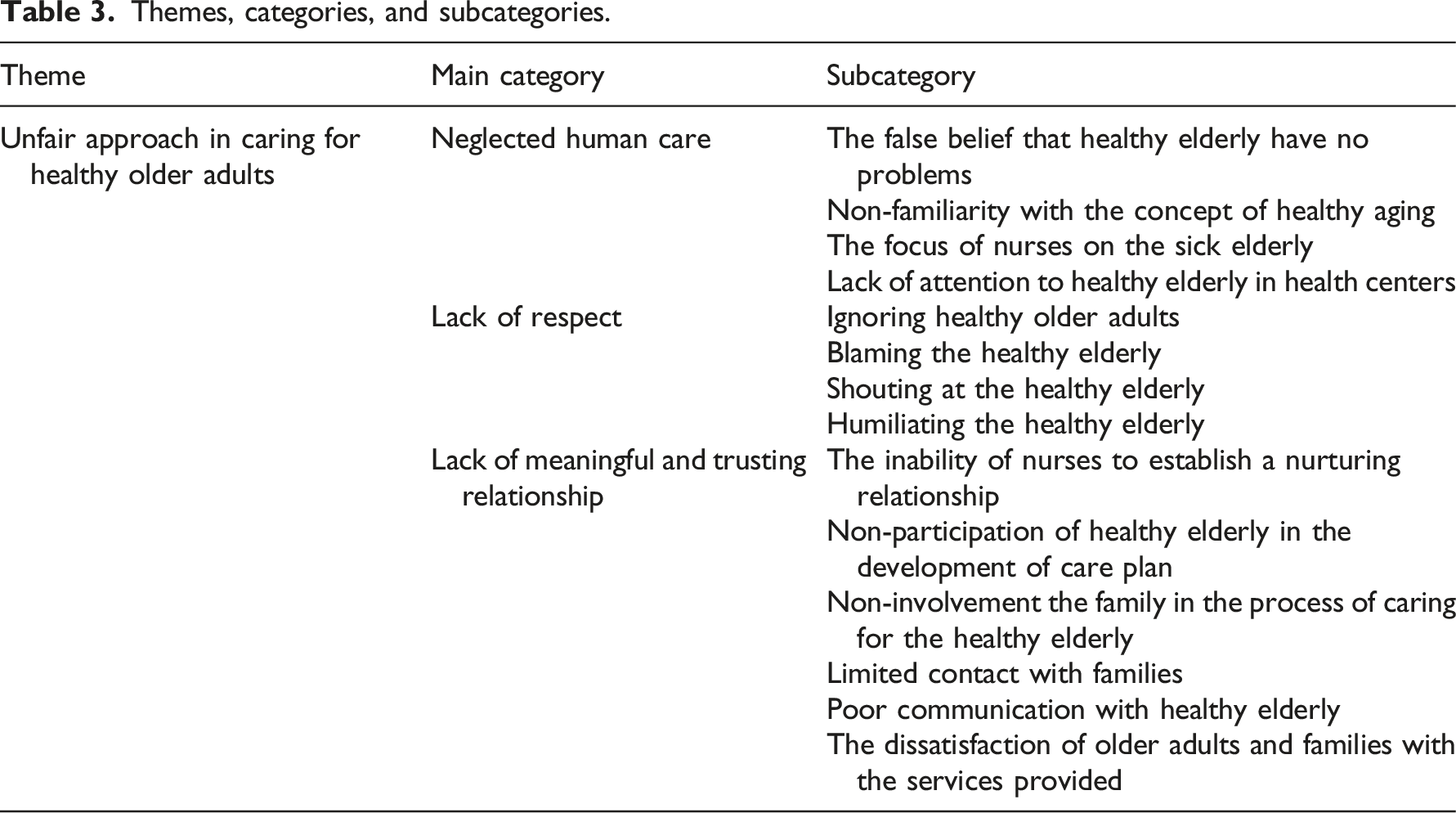
The central theme was: An unfair approach to caring for healthy older adults. The three categories were as follows: Forgotten human care, disrespect, and lack of a meaningful and trustworthy relationship. The 14 subcategories highlighted the ethical challenges of healthy aging care in health centers.
Discussion
The findings showed that due to nurses’ unfamiliarity with the concept of healthy aging, older adults are discriminated against in care centers. Creating a standard care program for healthy older adults ensures that ethical principles are followed for these clients.
Conclusion
Various individual and organizational factors lead to an unfair approach to caring for healthy elderly in health centers. The following factors can help improve the care of healthy aging and reduce ethical challenges in this area: Introducing nurses to the concept of healthy old age and its dimensions, creating a community-based approach in health centers, prioritizing health issues over health issues, Involvement of families and older adults in needs assessment-goal setting-implementation and evaluation of health services, and design of home visit programs to provide services to healthy elderly.
Introduction
By 2030, one in six people in the world will be aged 60 years or over. By 2050, the world’s population of people aged 60 years and older will double (2.1 billion), and two-thirds of these older adults will live in low- and middle-income countries. 1 In Iran, the increase in life expectancy over the last five decades has led to a steady rise in the proportion of the older adults. It is expected that by 2050, about 28% of Iran’s population will be over 60 years old. 2 The older persons face many health needs. Responding to these needs imposes a heavy economic burden on countries’ economic and health systems. One of the strategies to deal with this problem is health promotion programs and healthy aging. Healthy aging is a critical factor in older adults’ health promotion program. 3 The focus of the World Health Organization’s program was on healthy aging between 2020 and 2030. 4 This organization calls healthy aging “the process of developing and maintaining the functional ability that enables wellbeing in older age.” 5 The Healthy Aging Program enables older adults to be valuable members of their family, community, and the economy. 6 Healthy aging is an opportunity for governments, health organizations, and civil society to improve the lives of older adults through their collaborative action. 7 Peel et al. (2005), introduce the behavioral determinants of healthy old age as follows: Prevention of injury, physical activity, healthy eating, abstinence from drugs, appropriate physical environment, and proper social communication. 8 This study aimed to investigate the ethical challenges of nurses working in health centers with healthy older adults. These challenges have been examined by nurses, older adults, and older adults families. Nurses in Iran do not clearly understand healthy aging; therefore, this study aimed to investigate the ethical challenges of nurses working in health centers with healthy older adults. These challenges have been examined by nurses, older adults, and older adults families.
Background
The systematic review of Shahraki et al. (2018) showed that Iranian nurses do not have the proper knowledge and attitude about caring for older adults. 9 Health centers in Iran provide the following services to clients: Maternal and child care, Vaccination, Environmental health, Occupational health, Mental health, and Screening for essential diseases. These centers are under the control of the government. At present, in the field of aging, the integrated care program is the most crucial program implemented for the older adults. One of the main challenges of the above centers is that the burden of an integrated aging care is more on the sick older adults than on the healthy older adults. Due to the high workload and lack of trained staff in many centers, there is a passive approach to healthy and trouble-free older persons.
The Iranian health care setting faces two significant challenges about healthy aging. First, health centers are not adequately familiar with the concept of healthy aging. Secondly, in the integrated care, a patient-centered approach prevails, and services are for the older adults suffering from heart disease, diabetes, hypertension, and depression. 10 There has been a shift in health services from hospitals to mobile care, home care, and community-based environments.11,12 Because healthy older adults are not in the integrated care program, the health system neglects this group of older adults. The reason why healthy older adults do not go to the health care system in the first place is because they are healthy. According to PHC principles, health services must be available and accessible. 13 A solid moral obligation to community health prevails in health centers. Nurses must be accountable to different clients and families and follow and act according to ethical principles when providing training, counseling, or care. 14 Safa and Hajbagheri’s (2019) study showed that Iranian nurses are not well informed of the ethical aspects of caring for older adults. 15 Studies on aging in Iran have focused on social participation, 16 abuse, 17 empowerment in chronic diseases, 18 lifestyle, 19 quality of life, 20 nutrition, 21 loneliness, 22 physical activity, 23 and dignity. 24
Why this study is important for international nursing and for nursing ethics? Nurses are the foundation of a country’s primary health care, where they act as health gatekeepers and work in diverse community settings to provide health promotion and disease prevention across the lifespan. In parallel with an increasing aging population and a change in disease spectrum, the role of a nurse is shifting from that of traditionally following physicians’ orders to a more expanded role with responsibility for preventive care. Nurses also pay more attention to health promotion and educational programs. 25 Nurses provide safe, person-centered and evidence-based practice for the health and wellbeing of people, and in partnership with the person, they promote shared decision-making and care delivery between the person, nominated partners, family, friends, and health professionals. Nurses promote health and wellbeing for people and their families, colleagues, the broader community, and themselves in a way that addresses health inequality. 26
Objective: This study was conducted to explore nurses’ ethical challenges in caring for healthy older adults in Iran
Methods
Research design
This study aimed to investigate ethical challenges associated with caring for healthy older adults from the perspective of nursing staff, older adults, and their families. Given the paucity of studies on nurses’ ethical challenges in caring for healthy older adults in Iran and other developing countries, this qualitative study was undertaken in 4 health centers in northeastern Iran during 2017–2019. These four centers were selected based on purpose. They covered a population of about 300,000. They were among the educational centers affiliated with the University of Medical Sciences. These health centers provided primary health care to clients, including the older persons.
Participants and research context
The population consisted of nurses who had a rich experience in geriatric care and worked in health centers. There were three groups of participants: nurses, healthy older adults, and their families. Nurses were selected using purposive sampling. Initially, 25 nurses working in health centers were selected, but after 15 interviews, data saturation was reached. Also, seven healthy older adults and five family members of these older adults referring to the health centers expressed their willingness to participate in the study. Inclusion criteria for nurses had a bachelor’s degree in nursing and at least 2 years of experience in geriatric care. For the older adults, the inclusion criteria had a health record in the health center and willingness to participate in the research. The older adults and their families were invited to participate in the study by telephone. Before the study, we explained the objectives of the research and interview process to participants. After obtaining written consent, interviews were conducted either at the health center or home of the older adults. In addition, older adults participants were not ill but had health in centers. In the Iranian health system, an electronic health record is created for all family members so that if older adults refer to the health center, the required services will be provided to them. At the site of this study—the city of Mashhad in northeastern Iran—there are more than 300 health centers that serve a population of 4 million.
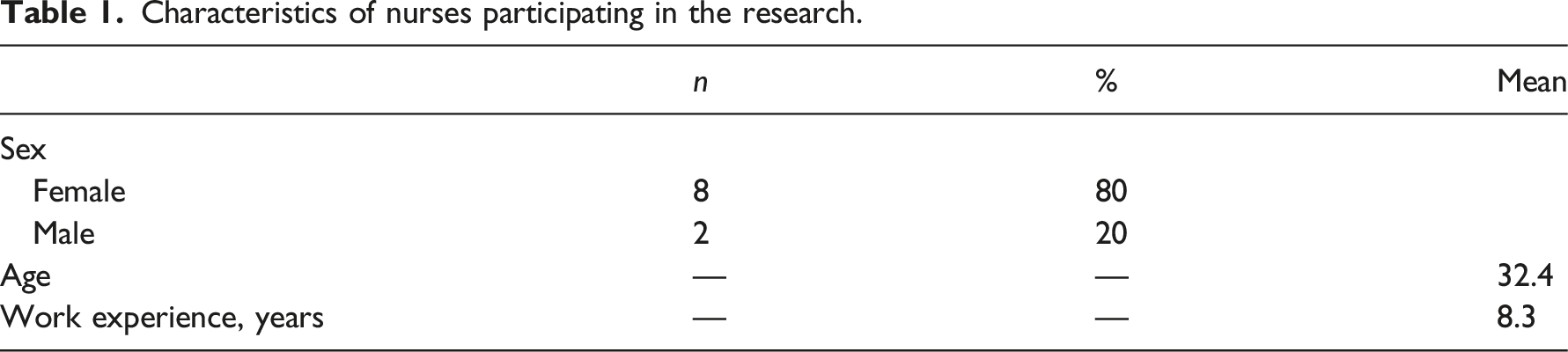
Characteristics of nurses participating in the research.
Data collection
To achieve the goal of healthy aging, the cooperation and participation of the older adults, older persons’ families, and health centers is necessary. Lack of collaboration, lack of understanding of healthy aging, lack of family involvement, and poor performance of health center nurses can make this goal challenging. The ethical challenge of healthy aging stems from this. In this regard, interview questions were designed for three groups of nurses, the older adults, and families. To meet the ethical challenge, the questions were designed to assess how nurses were performing, the expectations, and needs of the older adults.
Nurses working in the health center were purposefully selected to reach the participants. Then, based on the files available in the health center, the older adults who were eligible to enter the study were contacted and invited to participate in the study.
We used semi-structured, in-depth, face-to-face interviews along with observation, review of older adults’ records, and focus groups for data collection. Accordingly, 27 interviews and four focus groups were conducted. Interviews began with questions about participants’ experiences of care provided to healthy older adults at the health centers. In the following, exploratory questions were asked.
Participants at their convenience selected the time and place of interviews. Each interview lasted 30–60 min. At the beginning of each interview, the study objectives were explained to the participant, and after recording the demographic information, the main questions (mainly open-ended items) were asked. The interview continued based on the participants’ answers to learn more about their experiences on the subject. All interviews were conducted and recorded in Persian. The interview questions were as follows:
Questions asked to Nurses: What do you do for healthy older adults in this center? What are the difficulties of dealing with healthy older adults? Describe your experience of dealing with a healthy older person? What do you think defines healthy aging? What are the determinants of healthy aging?
Questions asked to healthy older adults: What do you need as a healthy senior? What do you expect from the health center? What experience do you have of nursing treatment?
Questions asked to family members: What do you know about geriatric care? What do you do to keep your older adults healthy? How do nurses treat you?
Interviews continued until data saturation was reached, and no new themes or categories emerged in the interviews.
Observing the records of the older adults and how nurses deal with the older adults and their families helped gather more in-depth information and provided a realistic picture of the study phenomenon. The lead researcher recorded how nurses provide care to healthy older adults during work shifts as a field note for data analysis. We also evaluated the records of healthy older adults, the type of care, and the services provided to them to interpret data.
To reduce the bias caused by observation, we used a checklist while viewing. This checklist measured how the nurse treated and interacted with older adults. This checklist was completed simultaneously by two senior postgraduate students.
Data analysis
Parallel to data collection, data analysis was performed using Graneheim and Lundman content analysis method. 27 For the researcher to reach a consensus over the text, the interviews were transcribed verbatim and reviewed several times. Then, the meaning of textual units and the initial coding were extracted. The codes were compared and classified based on their similarities, differences, and content. All interviews were analyzed by the researcher and supervised by the research team. MAXQDA 10 software was used for data analysis.
Establishing rigor
We used Lincoln and Guba’s criteria to improve study rigor. 28 After coding, the interviews have reflected the participants to be rolled for their approval. On the other hand, the researcher’s firsthand experience of the research setting for more than 10 years and the researcher’s long-term involvement and dedication to data collection gained participants’ trust and helped enrich the data. A professional research team oversaw the coding and data analysis process. This team had a wealth of experience in qualitative research and management and ethics. Several transcripts of the interviews and the theme-extraction process were provided to experts in qualitative research and PhD students for further analysis and modification. Maximum diversity was exercised in the sampling of nurses and older adults. To enhance fittingness, the researcher tried to record all stages of the research, including data collection, analysis, and classification of categories and subgroups in a way that was entirely measurable for others.
Ethical considerations
This study was approved by the Ethics Committee of the Faculty of Medical Sciences, and adhered to the Declaration of Helsinki. 29 Participants were ensured about the observance of ethical principles related to autonomy, confidentiality, and anonymity. Participation was voluntary, and oral and written consent was obtained from all subjects. Participants were able to withdraw from the study at any stage. Before the interview, the purpose of the study was explained to the participants, and written consent was obtained.
It could have been possible that some participants told another story than the healthcare professionals. In particular, some abuse or some such could have surfaced. In such cases, the interviewer wrote Memo, and in subsequent interviews or group discussions, discusses the issue with other participants and asks about similar experiences.
Findings
Characteristics of older adults participating in the research.

Theme: An unfair approach to caring for the healthy older adults
Themes, categories, and subcategories.
Category 1: Neglected human care
Subcategory 1: The false belief that a healthy senior has no problems. Due to the nature of their job, nurses usually provide services to sick people. Hence, it may be difficult for nurses to imagine that a healthy older person might need care, support, and training. Older adult: Nurses think that I am healthy because I came to the health center independently and have no care record. I tell them about my intention to use more nutritious foods in my diet and seek their help, but they say you are healthy and do not need to change your diet. Nurse: The term healthy older adults imply that the person has no medical problems, so he needs care. Family member: When I approach nurses for assistance, they say that there is no need for special care because your mother has no medical condition. Whenever she got sick or had other medical problems, take her to a health center.
Subcategory 2: Lack of knowledge about the concept of healthy aging. Healthy aging is a new concept in the health care setting of Iran. This concept is mainly taught in universities and postgraduate programs. For this reason, nursing staff in hospitals or health centers, who predominantly have a bachelor’s degree, are barely familiar with this concept. Nurses must first understand the healthy aging concept and its dimensions to provide appropriate services to healthy older adults. In this regard, the participants stated: Nurse: I have no idea what healthy aging means. At the health center, we work with older adults and help seekers. In the training courses we have been so far, we have not been trained about healthy aging. Older adult: Nurses are oblivious that healthy older adults may have needs and should be trained. Family member: I once told a nurse in the health center to hold a training class for us. She said your father is not sick, and the educational classes are for patients only.
Subcategory 3: The focus on nursing staff on sick older adults. An integrated geriatric care program is implemented in Iranian health centers. This program, drafted based on common old age diseases, offers services to sick older adults. Older adults suffering from hypertension, diabetes, depression, and cardiovascular diseases have a health record, and they receive care accordingly. The lack of a caring approach for healthy older adults is evident in this program. One of the ethical aspects of human care is maintaining and promoting health in all social groups. Nurses and the health system should not postpone consideration until people develop an illness. In this regard, the participants stated: Nurse: According to the routine program of the health center, we provide services only to older adults with medical conditions. Older adults who are healthy and have no medical condition or disease should visit us annually. A health record is created for them whenever they fall ill and enter the care cycle. Older adult: I asked the nurse whether they have a nutrition or disease prevention class for healthy older adults. In response, she said that classes are only for sick people. I reminded her that I needed to be trained to improve my health and have time for such classes, but she did not care. Family member: The healthy older adults do not receive any special care. When they find out that the older adults are not sick, they tell us to return the following year.
Subcategory 4: Healthy older adults are disregarded in health centers. Taking care of help seekers and their needs is a significant ethical aspect of care. Since the older adults care program in Iranian health centers is founded upon providing services to the older adults with medical conditions, the healthy older adults are left to their devices at the health center without receiving any care or training. Nurse: We do not care for healthy older adults during the shift. When a senior visits the center, I first check to see if they have a health record and are healthy or ill. If they are healthy, I will not do anything special for them. Older adult: If I stay in this health center for an hour, no nursing staff will bother asking me whether I need any care or not. Training classes, screening programs, blood pressure, and blood sugar control are exclusively for ill older adults, and we are largely neglected in the health centers. Family member: They do nothing for my mother here and leave her unattended. Getting lost and abandoned arouses negative feelings in me.
Category 2: Lack of respect
Subcategory 1: Neglecting healthy older adults. One of the ethical facets of caring for older adults is cherishing and respecting them. Disregarding older adults will sabotage their trust in the health system and reduce their willingness to visit the health center. As a result, health centers will not achieve one of their essential goals, that is, making health care accessible to all members of society. On this subject, the participants stated: Nurse: We have a heavy workload at the health center, so we do not have time to take healthy older adults. Since they do not have a particular medical condition, we should focus on sick older adults. We give priority to patients, and it is only natural for a healthy older person to be neglected. Older adult: The first question nurses ask me is, “What medical conditions do you have? When I say I am healthy, but I need your guidance and training on nutrition or physical activity, they remind me they do not have time (for healthy older adults).” Family member: In health centers, as in hospitals, services are provided only to patients. Here is a health center, and it should be dedicated to the prevention of diseases and health promotion, but its top priority is treatment.
Subcategory 2: Blaming healthy older adults. Welcoming helps seekers and refusing to blame them is one of the ethical dimensions of caring. Criticism and blame of the older adults undermine the self-confidence and self-care in the older adults. On the other hand, blaming leads to secrecy and the older adults’ mistrust of the care system. In this regard, the participants stated: Nurse: I keep telling these older adults they are not sick, and it is not necessary to visit the health center. I tell them we provide care to ill older adults, who are only wasting our time and energy. Older adult: Nurses censure us for going to the health center for no particular reason. They say we should not visit the center until we are sick. Family member: The nurses have told me repeatedly to bring her whenever she gets sick.
Subcategory 3: Shouting at healthy older adults. Nurses, tired and angry, may shout at the older adults. This issue may frighten older adults and make them feel insecure. This sense of insecurity hinders the proper communication between the older adults and the nurse and diminishes the quality of care. In this regard, the participants stated: Nurse: Sometimes, when I am on a tight schedule and a healthy older adult does not heed my words and keeps asking questions, I shout at him. Older adult: I am afraid to call some nurses or ask them questions. They are so grumpy and short-tempered. Family member: In one case, one of the nurses argued with my father and me, starting to shout at us. As a result, we did not go to the health center for six months.
Subcategory 4: Humiliating healthy older adults. Humiliation and ridicule is a form of psychological abuse of older adults. This issue is very unethical and can impair the self-esteem of older adults. In this regard, the participants stated: Nurse: Sometimes, the older adults do funny and stupid things. In these cases, I humorously remind them of their mistakes. Older adult: Some nurses are waiting for us to make a mistake. I once mispronounced the name of a drug. The nurse was laughing at me for 5 min. I was agitated. Family member: When nurses ask me a question, I often hesitate to answer. I’m afraid to say something wrong, and they will make fun of me.
Category 3: Lack of a meaningful and trusting relationship
Subcategory 1: Inability of nurses to build a nurturing relationship. Building a relationship based on support is one of the ethical aspects of old-age care. The supportive activities by the nursing staff are intended to make positive changes and improve the health of older adults. In this regard, the participants stated: Nurse: The number of referrals and workload is so high that we cannot communicate correctly with the older adults. Older adult: The nurses here know little about us and are reluctant to spend enough time connecting with us. Family member: Most of the time, the nurses do not even look at us when filling out the medical record form.
Subcategory 2: Non-involvement of the healthy older adults in drafting care program. Today, consulting clients to identify their core needs, set care goals, and evaluate care is an ethical principle and part of the client’s rights. Participation empowers clients to practice self-care and improve the effectiveness of health programs. In this regard, the participants stated: Nurse: We implement the programs and cares formulated by the Ministry of Health. There is no need for older adults to take part in this process. They know little about these subjects and are usually unable to identify their care needs accurately. Older adult: Nurses do not let us discuss our needs and problems in health. They only ask us to answer questions in the file. Family member: At the health center, I am only told to bring the older adults a checkup on a specific date. They do not seek my opinion or that of the older adults for designing and implementing the care program.
Subcategory 3: Limited contact with families. Today, family-centered care is one of the professional and ethical facets. By empowering the family system, the effectiveness of care is improved, and the number of referrals to the health system decreases, which cuts the costs in the health system. In this regard, the participants stated: Nurse: We do not consult the family. Not only do they make little help, but they also waste our time and energy. I cannot explain anything to both the older adults and his family. Older adult: The nurses tell everything to me and ask me to pass them on to my family. Family member: As someone who spends most of her time with older adults and is aware of their needs and problems, I have never been asked to play an active part in caring for older adults. They assert that we have to listen to ourselves.
Subcategory 4: Dissatisfaction of the older adults and families with the services provided. Satisfaction is one of the critical factors associated with the continuation of the care program, which improves and promotes the health of older adults. The older adults will be content with the caring services based on accountability, support, reassurance, communication, family participation, and involvement. In this regard, the participants added: Nurse: We do not care much about the clients' satisfaction. Here is not a private clinic. As long as we can do the routine, it will be enough. Older adult: I am not satisfied with the type of work and the quality of services provided, and if I had an alternative, I would stop visiting this center. Family member: The service is not satisfactory, and it is only intended to follow the routine.
Discussion
This study aimed to investigate ethical challenges to care for healthy older adults in health centers and explore nurses’ experiences, the older adults, and their families on this subject. In general, our results unraveled a series of shortcomings in caring for healthy older adults in health centers. These deficiencies have adverse consequences for older adults, nurses, and the health system. The present study results covered a significant theme, the unfair approach to caring for healthy older adults, as well as three categories of “neglected human care, lack of respect and lack of a meaningful and trusting relationship between healthy older adults and nurses.” Lillemoen and Pedersen (2013) demonstrated ethical challenges in primary health care centers, arguing that, like hospitals, ethics should be observed in these centers. 30 Podgorica et al. (2020) state that some of these ethical challenges are attributed to older clients. 31 Kalánková et al. (2021) also believe that older adults have unmet care needs. 32 In this regard, Sandman and Hofmann (2019) state that the neglected needs of older adults are more prominent in health centers. 33 This issue is genuine for healthy older adults. Health care systems, designed based on a problem-solving approach, chiefly provide services to patients. 34 Mahmoudi et al. (2012) posit that healthy older adults with no medical conditions and illnesses are discriminated against in care. Even though healthy older adults do not display any clear evidence of disease, this age group requires education and support to delay the onset of illness as much as possible by improving their health. 36 This discriminatory care is at odds with ethical principles and should be seriously addressed. Nurses represent the largest group of human resources in health centers worldwide that frequently contact older adults patients. 37 However, most nurses seem to know little of the duties and standards they are accountable for interventions with due respect for their knowledge and skills and observance of ethical principles. 38 One of the essential tasks of nurses is to help clients maintain their health. Healthy older adults represent one of the groups in need of care services. Such care needs usually go unnoticed in health centers and are disregarded by the nursing staff. The nurses should provide necessary training to the older adults and families about self-care, prevention of complications, and follow-up treatment. 39 The nurse should offer essential support for the older adults to describe their health status and needs. The nurse can liaison with the older adults and other health care workers. 40
One of the main concepts that emerged in this study was neglected human care, which embraced false beliefs about healthy aging and focused on sick older adults. The emphasis on human beings and humanism is the essence of nursing care. In the theory of human care, Watson posits that a help seeker should not be cared for as an object. 41 Watson states that nursing staff needs a shift from focusing on treatment to caring for the help seeker. 42 This topic is even more critical in older adults with multiple health needs. Omar and Mohammad (2019) reported that nurses are insufficiently aware of various aspects of geriatric care. 43 That is especially true of healthy older adults who have hidden care needs. To provide optimal care for healthy older adults, we must first know the concept and dimensions. Nurses should be aware that the care for healthy older adults is a concept that focuses on empowering and promoting the health of older adults rather than concentrating on sick older adults.
The next concept addressed in this study was the lack of respect for the older adults in health centers. This issue includes ignoring, blaming, and humiliating older adults. Showing respect to older adults when providing care is of utmost importance. 44 Hasegawa and Ota (2019) argue that honoring and cherishing the older adults by the nurse cultivates a sense of worth in the older adults and positively affects the self-care ability of the older adults. 45 Šaňáková and Čáp (2018) state that respecting the older adults in the eyes of nurses involves: establishing an open relationship, respecting privacy, protecting the security, and maintaining a relationship with the family. 46
In healthy older adults, since the physical and mental status of the older adults is relatively sound, the nurse can forge a better relationship with the older adults by respecting them and thereby encouraging their greater participation in the care program. When the health system neglects the older adults, they feel threatened and distrust the health system. 47
Another finding of this study was the absence of a significant relationship based on trust between older adults and nurses. This concept covered limited and inappropriate relationships, lack of participation, and the older adults’ dissatisfaction with the care program. Effective communication is one of the crucial aspects of care. 48 Nurses cannot provide appropriate services without effective communication. The services need to be underlined by proper touches. Dissatisfaction with the health system is chiefly rooted in this issue. Human-centered communication raises the level of the older adults’ satisfaction with the quality of services. According to Lakin et al. (2020), nurses communicate with older adults clients in a short and cursory manner. 49 Mohammed and Omar argue that nurses’ attitude toward older adults is not well-adjusted because they assume that older adults cannot identify and evaluate their needs. 50 In low- to middle-income countries, health care systems are designed to provide services mainly to patients. However, most people are healthy and need programs and interventions to help maintain and improve their health. This issue is more critical in the older adults because this age group is more prone to various diseases. Promoting the health of the older adults depends on three main factors: the older persons themselves, their families, and health systems and socio-economic infrastructure. The present study results showed that Iranian older adults face problems in all these dimensions, which may be a more significant moral challenge for the Iranian health system.
Conclusion
Various individual and organizational factors have perpetuated an unfair approach to caring for healthy older adults in health centers. It is essential to educate the nursing staff about healthy aging and its dimensions, change the management process of health centers, establish a community-oriented approach, and prioritize health issues over medical issues. Furthermore, involving the older adults clients and their families in need analysis, determining, implementing, and evaluating health services, and organizing home visitation programs to offer services to healthy older adults can help improve the quality of care provided to healthy older adults and resolve ethical challenges.
Another solution is to consider the care for healthy older adults and their improved quality of life, which is disregarded mainly in the Iranian healthcare settings, in the integrated care program that serves as the standard of health centers. It is essential to develop detailed and exhaustive training programs for nurses regarding the ethical issues and challenges of caring for healthy older adults. In addition, senior managers and planners of health systems need to ascertain the importance of caring for healthy individuals or older adults, not just providing services to patients.
The findings of this study can have broad implications for the education, research, management, and clinical practice of nurses in health settings. One limitation of this study was that some nurses might conceal some facts for fear of jeopardizing their job position. We reassured the participants about confidentiality and anonymity throughout the research to overcome this shortcoming. Moreover, it was challenging to study moral concepts in individuals and discuss their experiences because they usually interpreted morality according to their attitudes and knowledge. Nurses also tended to talk about their positive experiences and refused to discuss their negative experiences or those that did not conform to ethical principles. The researcher sought to ask indirect questions and explain the participants’ experiences impartially. One of the limitations of this study was that older adults who did not have a record at the health center were not included in the study. We were also unable to ask participants some questions due to ethical challenges. For example, we could not ask the older adults which nurse was not satisfied with their performance. Or, we could not ask the nurses why they do not treat healthy older persons with respect.
Footnotes
Acknowledgements
This study is a part of a PhD dissertation on Nursing. It was approved and supported financially by the research deputy of University. All authors would like to express their gratitude to University. Furthermore, the authors would like to thank all nurses, older adults, and families who shared their valuable experiences in this study.
Declaration of Conflicting interests
The author(s) declared no potential conflicts of interest concerning this article’s research, authorship, or publication.
Funding
The author(s) disclosed receipt of the following financial support for this article’s research, authorship, or publication: This work was supported by The University funded this study Tarbiat Modares University.
