



Abstract
Background
Social inequities in the healthcare system threaten global health. Efforts to establish equity in healthcare is a key goal of healthcare systems worldwide. Social justice is a basic value of the nursing profession that always merits attention.
Objective
This study aimed to identify and explain the processes of the nursing profession’s participation in establishing social justice in healthcare system.
Research design and methods
This qualitative study was conducted using the grounded theory method.
Participants and research context
Data were collected through in-depth, semi-structured, individual interviews with 26 participants, 23 of whom were members of the nursing profession. Sampling started purposefully and, then, continued with theoretical sampling. Field notes were also taken for data collection. Data analysis was performed using Corbin and Strauss’ 2015 method.
Ethical considerations
The research was approved by the Ethics Committee of Urmia University of Medical Sciences in Iran.
Findings
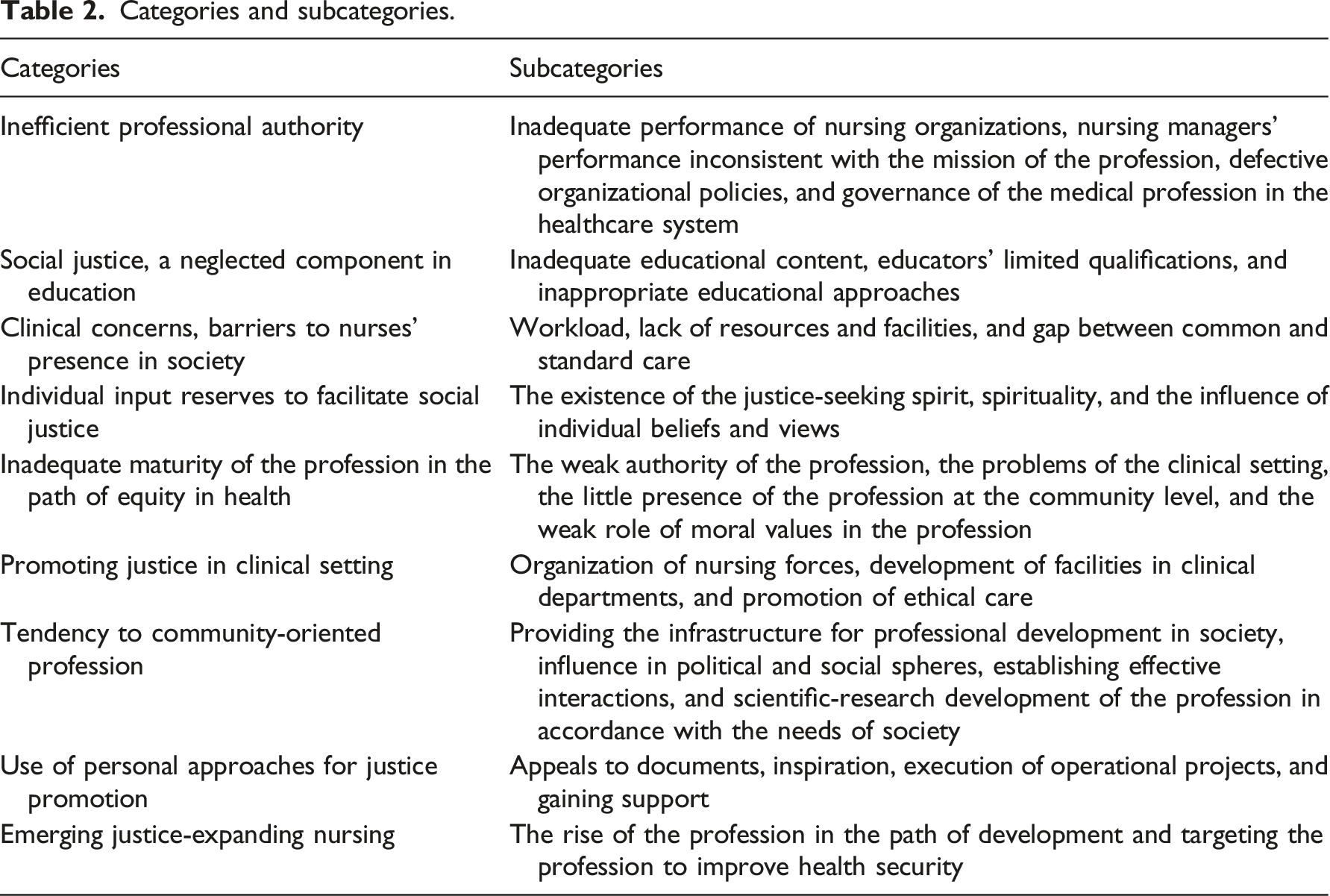
The “Professional Dynamics in the Path of Justice” was the study’s core category. This theory is the result of nine main categories: “inefficient professional authority,” “social justice, a neglected component in education,” “clinical concerns, barriers to nurses’ presence in society,” “individual input reserves to facilitate social justice,” “inadequate maturity of the profession in the path of equity in health,” “promoting justice in clinical practice,” “a tendency to community-oriented profession,” “use of personal approaches for justice promotion,” and “emerging justice-expanding nursing.” These categories cover the underlying factors, strategies, and outcomes of the nursing profession’s participation in establishing social justice process in healthcare.
Conclusion
The theory of professional dynamics in the path of justice can be used as a practical guide to describe the role of nurses in establishing social justice. Further studies with a quantitative approach to applying this theory are recommended.
Introduction
In the current era of globalization, health complexity is being discussed more than ever. The World Health Organization (WHO) has introduced and established the Commission on Social Determinants of Health (2005) as the heart of this complex debate and seeks to identify how the social structures of society affect health through interactions, norms, and broad social institutions. Social justice is given priority as a mechanism to correct and eliminate social and health inequalities. 1 This concept has received more attention in Iran’s health system in recent decades and it has been noted in the high-level documents such as the constitution, the 5-year vision document, and also in the health sector evolution plan and it’s based on the principle of providing equal access to healthcare services for all individuals regardless of their social or economic status. Although the structural, content, process, and behavior changes in the health system in recent decades have a fair approach in Iran, but some deviations and mismanagements have delayed the process of realizing justice. 2 The term social justice was first used in 1840 by Jesuit Luigi Thaparelli, who defined it as a virtue including actions for the common good and correction of unjust behavior. 3 Social justice in healthcare includes providing the same healthcare to all members of society regardless of personal characteristics such as sex, ethnicity, geographical location, and socioeconomic status. 4 The outcomes of social justice in healthcare include health equity, safety, and appropriate access to social determinants of health, both at the national and international level. 5 At the same time, with social injustice in health, resistance and conflict in society weaken people’s trust in the healthcare system and lead to confrontations; therefore, in all cultures, establishing justice in healthcare is necessary to maintaining human health and survival. 6 Structural inequities in health systems refer to systemic and institutionalized disparities in access to healthcare services and health outcomes that are rooted in social, economic, and political structures. 7 Basically, a duty of governments is ensuring, maintaining, and justly promoting the health of the society; this optimal governance is measured by the key index of the health status of countries. 8 The nursing profession comprises the biggest proportion of healthcare staff and is recognized for its duties in promotion health, preventing disease, and easing pain. 5 These responsibilities are closely intertwined with social, economic, political, and cultural factors that impact people’s well-being, so the nursing profession plays a determining role in establishing social justice and ensuring health. 9 Despite the nursing professions’ code of ethics and educational guidelines regarding social justice as one of the main topics of the profession, this category has received less attention in nursing practice; 10 despite the national and global measures to reduce the severity of health inequality and injustice, this problem persists. The silence of nurses on the topic of dealing with social injustice in healthcare systems exposes this profession to social, economic, or professional risks. 11 In general, nurses, as the largest group of health service providers, have a unique status in working for social justice to alleviate social and economic injustice that affects public health and well-being.
Although a wide range of studies have been conducted on social justice in nursing in some countries, each study has only examined a part of this multidimensional phenomenon. The literature has focused on identifying the concept,5,12 education,13,14 importance of social justice,6,15 and some effective factors related to the nursing profession, 16 but the phenomenon of how nurses participate in promoting social justice has not been investigated in detail. Those studies that have discussed professional participation in social justice have not provided clear and specific information about the nature and content of participation.11,16–18 Therefore, revealing this path and explaining the form and nature of this participation is a challenge facing the nursing profession. Investigating the phenomenon of social justice in health and nurses’ professional participation in establishing it through a qualitative study seems useful. Because social justice is a complex and multidimensional concept and its formation is affected by various factors, among the wide range of qualitative studies, grounded theory 19 was chosen to guide the current study. The grounded theory method is a process-oriented approach; by examining people’s interactions during social processes, it allows us to examine the changes of a phenomenon and describe its different stages over time. 19 This research was conducted to identify and explain effective processes in the participation of the nursing profession to establish social justice in healthcare system.
Method
Study design and research context
This study was conducted in Iran in May 2019 until November 2021 with the qualitative grounded theory approach based on Corbin and Strauss’ (2015) method. The research setting included hospitals, colleges, organizations (Deputy of Nursing in Ministry of Health), and nursing union organizations in Urmia, Tabriz, Tehran, and Zahedan. These cities were selected due to their large size and forerun in educational, clinical, and social nursing activities. Zahedan was chosen because it is one of the deprived provinces of Iran.
Data collection
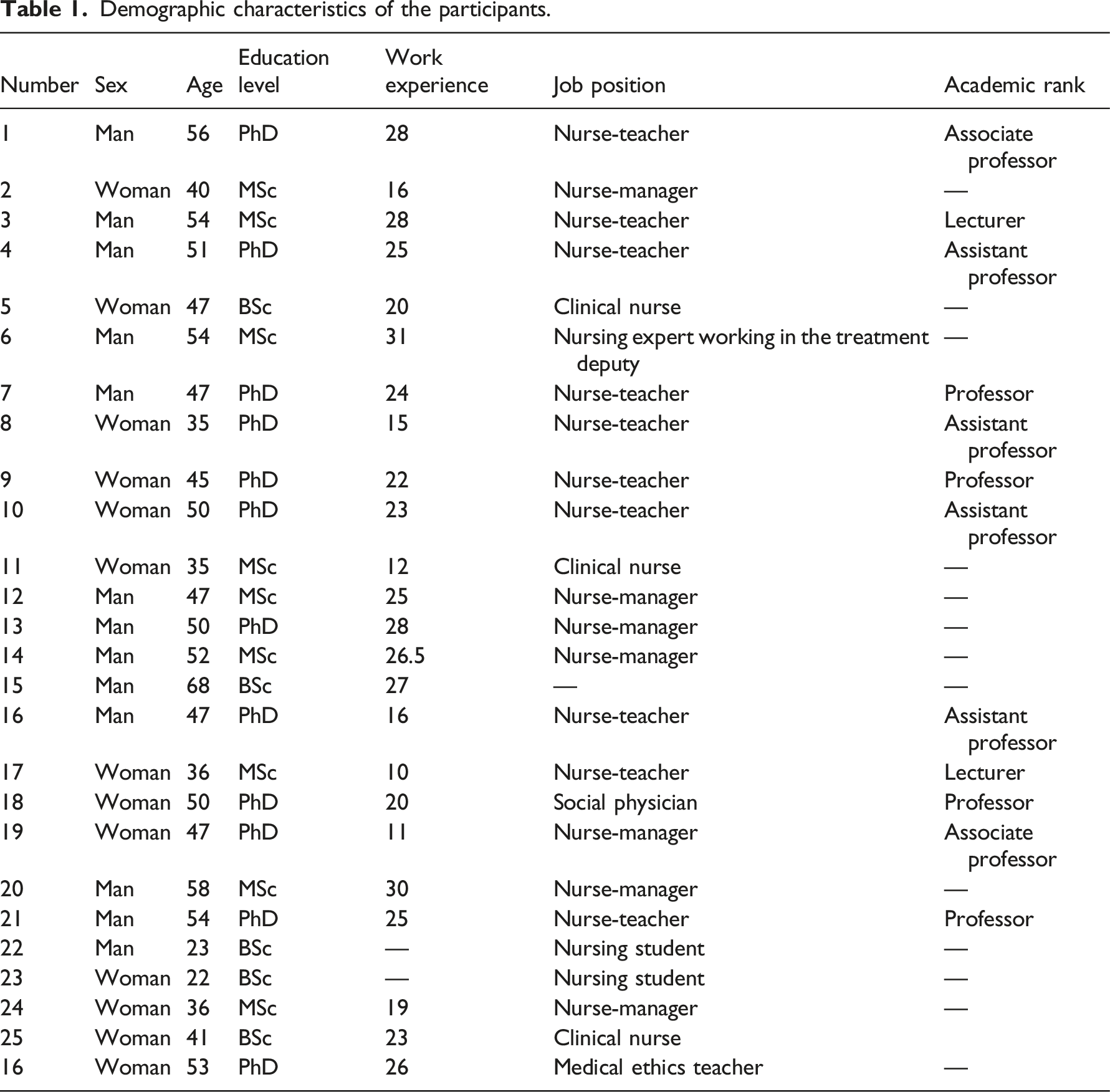
In grounded theory research, participants are selected based on their experience in the social process of the desired phenomenon. 20 First, using purposive sampling, 20 people were interviewed. In the purposeful sampling stage, the participants were selected based on their insight and having experience of considered phenomenon in different fields of nursing such as education, practice, and leadership. Then, based on the resulting data, the classes and special features emerging in each category and the need for saturation within the categories, theoretical sampling 21 of 6 other cases also took place. Eventually, there were 26 participants, with an equal split between women and men (13 each). Of these, 23 were nursing professionals, consisting of 8 nursing managers and 9 nursing faculty members. Additionally, one participant was an expert of the Deputy of Treatment, and two were nursing students. Three of the participants were interviewed as bedside nurses; one of them was also working in a charity institution. Moreover, according to theoretical sampling, an interview was conducted with a doctor, a professor of medical ethics, and a layperson.
The main data collection method was in-depth semi-structured individual interviews. All the interviews were conducted at the time and place chosen by the participants, which was mostly their workplace. The duration of the interviews varied between 45 and 90 minutes; they were audio-recorded upon the participants’ permission and transcribed verbatim. Using the technique of continuous comparison between data, emerging categories and assumptions were extracted from the field notes and helped the researcher continue the process of theoretical sampling until reaching data saturation. A question posed concerned the participants' experience of participating in social justice in healthcare; due to the abstract nature of the problem, it was formulated as more objective questions, such as What is needed to create and develop social justice? Are you doing anything for this? Or Describe your successful and unsuccessful experiences in establishing social justice. The effective factors in nurses’ participation in the establishment of social justice in healthcare were followed up with questions such as According to your experience, what factors affected your participation in social justice in healthcare?
Data analysis
Corbin and Strauss’ (2015) 21 analysis method was used, which involves open coding to identify concepts, developing concepts according to their characteristics and dimensions, analyzing data for the context, and introducing the process for the analysis and combining categories. The analysis was performed simultaneously with the data collection, and each interview was transcribed and analyzed immediately after it was finished. MAXQDA 2010 was used for data analysis.
Assessment of data accuracy and stability
Guba and Lincoln’s criteria were used to ensure the trustworthiness and stability of the data. 22 To ensure the credibility of the data, member checks and the researcher’s prolonged engagement were used. The data were evaluated by an external researcher (external auditing). To control dependability, the researcher tried to describe the various stages of the research and all the activities in detail so that other people would understand the process by reading this paper. For confirmability, the audit trail method was used: all the stages of the research, especially the stages of data analysis, were recorded in detail along the way, so that if other researchers wished to continue research in this field, they would be able to do so. The transferability of the findings was ensured by providing a rich description of the research report in this field (information about the setting, the participants, and any other relevant contextual factors that may have influenced the findings).
Ethical considerations
Data collection began after the approval of the Ethics Committee of Urmia University of Medical Sciences and obtaining the permits. Before the start of the interview, the purpose of the study and the interview method were explained to the participants; after we assured them of the confidentiality of information, anonymity, and having the right to withdraw from the study, they provided informed consent for participation and having the interviews recorded.
Findings
Demographic characteristics of the participants.
Categories and subcategories.

Research theory.
Data analysis for concepts is the same as open coding where the basic concepts and classes are formed. After conducting the interviews and recording them, they were carefully transcribed and read line by line. Then, based on open coding, a code was assigned to each semantic unit in MAXQDA. For coding, the words of the interviewees or the concepts that expressed the meaning of the sentences and conversations were used. Codes and concepts that were similar were classified together and, based on similarities and differences, their subcategories were placed within the main classes.
Context is a set of conditions in which a problem or situation occurs and people respond to it through an action or reaction. In the analysis of the context affecting nurses’ professional participation in the establishment of social justice in healthcare, the concepts extracted from the data included four main categories: inefficient professional authority; social justice, a neglected component in education; clinical concerns, barriers to nurses’ presence in society; and the individual input reserves to facilitate social justice.
Inefficient professional authority
The first category repeatedly mentioned by the participants as a factor affecting nurses’ participation in social justice was the authority of the profession. The authority of the nursing profession is the driving force for the development of social justice in healthcare. According to the data, nurses do not have the necessary professional authority to expand social justice in healthcare due to insufficient performance of nursing organizations, nursing managers’ inconsistent performance with the mission of the profession, defective organizational policies, and the governance of the medical profession in the healthcare system. Although the activity of professional nursing organizations is the authority of the profession in the path of social justice, according to the participants, the actions of these organizations are not enough. The inadequacy in enforcing nurses’ rights, the weakness in fully estimating people’s rights in society, and the poor promotion of professional development goals were identified as barriers to nurses’ participation in social justice in healthcare system. One of the participants said: “The nursing workforce that is providing the services should also have their rights respected and their security maintained so that they can provide good services, and they should be calm enough to be able to think about society. Unfortunately, most nurses are now only trying to make money because the cost of living is very high” (P. 9).
The important role of nursing managers in professional authority is undeniable. Through decisions and correct performance in accordance with the mission of the profession, they can play a fundamental role in the participation of the profession in social justice. Most of the participants discussed the weak performance of managers, combined with executive weakness and self-interest. “The nursing office is not the sole decision-maker for the nursing group; it does not have much power” (P. 2).
Basically, the expansion of social justice in healthcare depends on constructive and correct policies. Revision of organizational laws and by-laws and policies inconsistent with society's expectations were the concepts of this subcategory. “Unfortunately, policy-making regarding the distribution of nursing staff in our country is not appropriate; that is, we have an excess of staff in some provinces and a shortage in some others” (P. 12).
Given that the majority of key managerial positions and important decision-making centers in the healthcare system are in the hands of doctors, decisions in the healthcare system are always made in line with doctors’ interests or at least applied such that they do not disturb their interests. The power-seeking of the medical profession, decision making, and policy-making being the monopoly of the medical profession were identified as the concepts of this subcategory. One participant mentioned “physician-centerdness is both policy-making and treatment” (P. 20).
Social justice, a neglected component in education
Another category related to the underlying factors in nurses’ professional participation in the establishment of social justice in healthcare is social justice in academic education. This main category includes three subcategories of insufficient educational content, educators’ limited qualifications, and inappropriate educational approaches.
The content of education is a component of the educational structure. Lack of attention to social justice in the curriculum, discontinuity in the presentation of a unit on ethic values of the profession, and devoting most of the lessons to diseases and clinical care were insufficient components of the educational content, which formed the sub-classes. “As far as I can remember, during our undergraduate studies, we did not have a course about codes of professional ethics, including social justice. Now, if you ask me what social justice is in the healthcare system, I may not even be able to define it correctly” (P. 5).
Nursing educators have an undeniable role in training suitable people through institutionalizing beliefs and behaviors. Educators can improve students’ critical thinking with their training and correct practices and help cultivate people with justice in health. Unfortunately, the participants talked about educators’ insufficient abilities in social justice education and their failure in valuing the social justice as part of nursing education; these were discussed as concepts within the category of educators’ limited qualifications. “Unfortunately, our educators are so involved in education and research, especially for their promotion, that they don’t have the opportunity to deal with social issues” (P. 3).
Educational approaches are also a key part of the educational structure, playing an important role in transferring the ethical values of the profession, including social justice. Focusing on traditional approaches and weakness in applying affective learning approaches are the basic concepts under this category. “In the class of professional ethics, we students did not have any active role; the teacher came in and presented the material according to the heading. He/she would present examples of ethical issues, and the class was over. Well, basically, topics like social justice should be dealt with differently. As a student in the ethics class, I should visualize and understand unequal situations and discuss the reaction I should have” (P. 22).
Clinical concerns, barriers to nurses’ presence in society
Another important category related to underlying factors in nurses’ professional participation in the establishment of social justice was the concerns of the clinical setting. This category consisted of three subcategories: workload, lack of resources and facilities, and the gap between routine and standard care. Nurses repeatedly mentioned the burden at the workplace that hindered their participation in social justice. The high volume of work due to lack of staff and large number of patients, fulfilling tasks outside the scope of job descriptions, and numerous expectations from nurses were the concepts of this subcategory. “We have two nurses for 30 beds, and that’s not enough; they don’t know what to do, while these 30 beds should have at least 4 or 5 nurses. We will definitely not have quality and proper services; in this situation, there is no reason left for the nurse to even think about social justice in healthcare” (P. 1).
It is obvious that the availability of facilities and resources greatly contributes to accelerating works, providing better services, and reducing nurses’ worries in the hospital and letting them play their role in social justice. The lack and defectiveness of resources and equipment were among the concepts of this subcategory. “One of the ECG machines is broken frequently, and we have trouble getting an ECG. We have to open it up or go get the other one. This takes all our time and makes us nervous” (P. 25).
The standard of care includes an acceptable level of quality of care formulated by the consensus of experts based on the available evidence for a specific group. The lack of evidence-based performance and neglect of holistic care were among the problems of providing standard nursing care in Iran. As another concern of the hospital setting, it is an obstacle to nurses’ presence in society and participation in social justice; in general, nurses in Iran are involved in the field of treatment and have a low presence in the society. “Another problem in nursing is paying attention to minor tasks, for example, she/he only gives the patient medicine and returns to the station. Now, this view is spreading from the bedside level to the community level as well, nurses must pay attention to all aspects of the patient” (P. 13).
Individual input reserves facilitating social justice
Another category related to underlying factors is the individual input reserves to facilitate social justice. The meaning of individual input reserves in this study is what a person carries with her/him before entering the nursing profession. Reserves such as the spirit of seeking justice, individual beliefs and views, and spirituality played essential roles in nurses’ participation in the establishment of social justice, in many cases. Overcoming organizational and educational obstacles leads to actions in the direction of social justice expansion.
The spirit of seeking justice is considered a kind of individual input reserves that is largely influenced by the prevailing culture. Considering the cultural and religious context of the studied society, this characteristic was salient and, in many cases, it caused people to try to expand social justice in healthcare despite the existing problems. Interest in spreading justice, risk-taking, and having a high sense of civic responsibility are the basic concepts of this subcategory. “It originates in the person’s personality. Are they kind? Are the issues of seeking justice important to them? I personally enjoy helping others. When a burning patient comes to the follow-up clinic, when they get better, when they laugh, this mean the world to me” (P.10).
Another influential factor in the individual input reserves involved in nurses’ participation in social justice is individual beliefs and views. “ I grew up in a family where my father was a military and we lived in different cities of the country and met people with different cultures and values. I learned a lot from my father about justice development and tried to apply it in my profession. We should not discriminate between people, we are all human” (P. 10).
The categories of religion and spirituality are interwoven, and since justice is included among the principles of most religions, spirituality is an influential factor in a person’s attention to justice. This becomes more important because the majority of Iranian people are Muslims and religious beliefs are institutionalized in their culture and social relations. Religion-based performance, conscientious performance, and selfless performance were recognized as important concepts of this subcategory. “For me, social justice means that everyone should benefit from nursing services according to their needs. When we went to the underprivileged areas with the Basij medical community camp, we provided services and health education. I consider this a form of participation in social justice, and there, when you see how much people need your services, you’re encouraged to visit that place again” (P. 8).
The most important concern of the profession in participation in social justice is the lack of development of the profession in the path of social justice. The profession in various organizational, educational, and clinical dimensions is not mature enough for the development of social justice. At this stage, the researcher identified the reactions and strategies used by nurses to face their main concern. In line with the dynamics of the profession in the direction of spreading justice, the following strategies were used: promotion of justice in the clinical setting, tendency to a society-oriented profession, and use of personal approaches for justice promotion.
Promotion of justice in the clinical setting
The reforms made in the clinical setting in terms of human resources, facilities, and quality of care 23 have paved the way for nurses’ participation in the establishment of social justice in healthcare because if the nurses have better conditions in the clinical settings, they can also pay attention to the social needs of the patients. Organization of nursing forces, development of facilities in clinical departments, and promotion of ethical care are among the efforts made in this regard.
To rectify the problems of the hospital setting, which have been identified in this study as factors preventing nurses from participating in activities leading to social justice, organizing nursing forces is one of the most effective strategies used by the profession. It is possible to overcome the problems by increasing the number of nurses and empowering the personnel. “The Ministry of Health and Medical Education, accordingly, universities of medical sciences, have tried to compensate for this problem by recruiting nurses, corporate nurses, clinical care training, extension trainings, and recently, student work, which means that we are trying to solve this lack of human resources from five axes. Despite all interventions, we are not satisfied; this is an ongoing need, and we are trying to solve it in different ways” (P. 14).
According to some participants, the efforts of nurses, including making frequent requests to the officials of the Ministry of Health to provide facilities and use advanced equipment, are among the solutions used in this field. “All the shortages in medical facilities and equipment are presented to the university through hospital managers and matrons. Especially since the care is provided by nurses, they know exactly what is needed and transfer these. Recently, very good measures have been adopted in providing facilities and equipment, especially for deprived area. You know that access to health services is a clear example of social justice” (P. 14).
Providing ethical care is one of the professional expectations of nurses, which is a prerequisite for the profession to enter the society and extensive justice measures. One of the solutions used by the system is to educate nurses about ethical issues. “Because this gap was felt, this year, for the first time, we notified all universities that all nurses must pass 6 hours of training on patient rights and nursing code of ethics. All nurses in the country and their statistics must be handed to us by the end of the year” (P. 12).
Tendency to community-oriented profession
Members of the profession, especially at the organizational level, are experiencing an orientation toward the community in their profession to pay attention to the different needs of nurses and community members and participate in social justice. To this end, they are trying to provide the infrastructure for nursing profession presence in the society, influence on policy-making, establish effective interactions, especially at the inter-sectoral level, and research development of the profession in accordance with the needs of society. To provide infrastructure for professional development, the establishment of community care centers and the greater presence of nurses in the community are needed. “Besides the serious measures taken by the deputy in developing home care centers, another ongoing action in this deputy is the establishment of intermediate centers. If we want our services to be carried out well, we have to create this chain. Today, we wrote the by-laws, and we will soon witness its implementation” (P. 19).
According to most of the participants, influence in the political and social spheres is one of the strategies used by the members of the nursing profession for gaining authority, and they are trying to achieve the mentioned goals through social presence, political presence, and professional organizations. “After the organization of the nursing system was formed, very good efforts were made in introducing the profession to the society and officials, and nursing regained its professional identity to a large extent” (P. 9).
According to the participants, establishing interprofessional collaborations in expressing themselves and influencing the profession among other professions and society are effective and promote the profession's power. Interactions in the direction of professional development and extensive justice measures in the society are among the basic concepts of this subcategory. “In Tehran Municipality, we aimed to promote the role of nursing in the health of the society with the help of the Tehran City Councils, so that the municipalities would have health experts” (P. 3).
Development of postgraduate education, correction of faulty educational processes, and execution of practical research are among the basic concepts under the category of research development of professions in accordance with the needs of society. “Well, according to the different branches it has today, nursing is developing its own educational qualifications and what it trains its applicants; in fact, it wants to respond to the health-related needs of the society, the simplest of which is geriatric nursing” (P. 4).
Use of personal approaches for justice promotion
As mentioned before, some people with a strong spirit of seeking justice cannot tolerate injustices and sufferings; thus, with their personal approaches, they try to spread justice despite the obstacles on the way. Appeals to documents, inspiration, execution of operational projects, and gaining support are among the strategies used for the expansion of justice.
According to the participants, one of the factors that helped them develop justice is referring to high-level documents that are usually provided by ministries. “For extensive work to establish justice, you need to find a high-level document somewhere, use it, and move in that direction. When it is in line with the goals of the Ministry of Interior, someone will take your hand or, at least, not stop you. I always try to do my work and be in a position that will help me and justify my work” (P. 10).
The participants admitted that being inspired was sometimes the beginning of their path toward justice expansion. Taking advantage of other people’s experiences was recognized as one of the basic concepts of this subcategory. “People’s experience is quite valuable to me. We were at a conference once; there was a doctor from the US. She said, ‘30 years ago, we used to go to notorious neighborhoods to observe social justice and to expand the role of nursing in society. We provided health education, and these neighborhoods were so scary that my husband used to come and sit in the car waiting for me to return.’ Then I thought, why don’t I do this, and I started” (P. 10).
The majority of justice-seeking participants listed extensive justice actions in the form of research projects as their dominant strategy in this direction. “We really had no choice. So, we brought up the topic of palliative care as a research project and the second level, that is, treatment. We are now implementing it, while this part should happen at the first level. It should be placed in PHC. Imam Hossein and Tajrish Hospitals were piloted. We developed our own guidelines. People from different areas were encouraged to bring their patients to us …” (P. 19).
In addition to encouraging and helping the adaptation of members, the adoption of the strategy to gain support leads to faster and better progress of extensive justice measures and ultimately develops nurses’ participation in social justice. Organizational support and colleagues’ support were important concepts of this subcategory. “If it was not for the support and cooperation of our colleagues, the work of the clinic would not have progressed. If the members do not accept something, they hinder other people’s plans” (P. 19).
Emerging justice-expanding nursing
In this study, the participants used strategies (promoting of justice in the clinical setting, tendency to the society-oriented profession, and use of personal approaches for justice promotion) that led to some outcomes in order to participate in social justice. In this study, the category of “Emerging justice-expanding nursing” is the outcome of the study and the results of the processes used by the nurses. This category includes the following subcategories: “The rise of the profession in the path of development” and “Targeting the profession to improve health security.”
The rise of the profession in the path of development appears with greater representation of the profession in society, moves toward professionalization, and improves professional self-confidence.
In line with the greater representation of the profession in society, one of the participants said: “We have to develop nursing roles at the community level if we want to progress and act professionally. Whenever we were present in society, we achieved positive results” (P. 3).
To move toward professionalization, one of the participants said: “When nursing acts professionally in all dimensions, scientific, practical, and ethical, its dignity and status will increase, and the profession will be promoted and nurses can be more effective in enacting social justice within the health care system and society” (P. 1).
To improve professional self-confidence, one of the participants said: “When I participated in the National Blood Pressure Mobilization, after controlling the blood pressure, we would identify suspicious and high-risk cases and refer them to medical centers. We may have prevented many deaths, or if training was needed, we would train them. It was a very good experience for me because I felt useful” (P. 8).
In improving health security, the nursing profession pays more attention to comprehensive coverage of nursing services, providing peace of mind, reducing healthcare costs, and improving public health. In line with the comprehensive coverage of nursing services, one of the participants said: “The efforts that are being made for developing the role of the profession in society, such as the development of home care centers, the establishment of intermediate centers, or the presence of nurses in national mobilizations, are all aiming to create continuity in nursing services and benefit society from the science and expertise of nursing. We do not want nursing to serve only at the level of treatment; it should be present in all stages of prevention. I hope that with the efforts made, we can witness this in the near future” (P. 12).
As for providing peace, one of the participants said: “When I see the nurse comes to my house and completely heals the diabetic wound in a leg that the doctor had ordered to be amputed, with specialized nursing care, I feel calm physically and mentally” (P. 1).
As for reduction of healthcare costs, one of the participants said: “We are now trying hard to resolve the issue of home visit insurance so that patients do not have to bear additional costs. Since home services are not covered by insurance, they are more expensive” (P. 12).
In terms of promoting public health, one of the participants said: “We have a nurse who runs the biggest news channel related to health. As a reference, she provides the latest news and information in the field of medicine and paramedicine. She has 37,000 followers, from all strata” (P. 14).
The central variable, 21 which is sometimes called the central or core category, introduces the main view and design of the research, expresses the main topic of the research, and all the classes are related to it. To determine the central class, the researcher should select the class that has the most explanatory relationship, covers all the analyzed data, and can link other classes to each other.
Finally, the professional dynamics in the path of justice was chosen as the central category that led the profession to participate in social justice. It was found that all the elements of the process, including the orientation toward society, research development, and personal approaches, are done for dynamism in the path of spreading justice.
Discussion
The findings revealed that the professional participation of nurses in the establishment of social justice in healthcare is accompanied by efforts aiming for the dynamics of the profession in the path of justice expansion.
The inadequate maturity of the profession in the path of equity in health, which has arisen in the context of the profession’s authority, education, clinical setting, and individual input reserves, provides the context for the profession’s efforts to be dynamic in the path of justice expansion. Professional authority is an effective factor in nurses’ professional participation in the establishment of social justice in healthcare; unfortunately, professional authority was not sufficient and was raised as a deterrent factor due to insufficient performance of nursing organizations, weak performance of nursing managers, defective organizational policies, and the governance of the medical profession in the healthcare system. The role of nursing organizations in promoting the individual and collective performance of nurses to expand social justice has also been emphasized by Rutter and Kushner. 17 In Dos Santos’ study, the performance of these organizations was favorable and in favor of the working class and society, 24 which contradicts the findings of the current study. Differences between countries, especially in political, economic, social, and cultural dimensions, may affect this difference. The promotion of social justice by the nursing profession needs powerful nursing leaders and managers, which has been mentioned in various studies.25,26 The lack of presence of nurses in policy-making is another component of professional authority that plays an important role in their participation in the establishment of social justice in healthcare. The inhibiting role of physicians’ leadership in the balance of power and nurses’ ability to spread justice in the healthcare systems of other societies has been mentioned, for example, by Ameen. 27
According to the participants’ experiences, the academic training of the profession is another effective factor in nurses’ participation in the establishment of social justice. This main category included three subcategories of insufficient educational content, educators'’ limited qualifications, and inappropriate educational approaches. Lack of attention to social justice in the nursing curriculum is a problem that has been mentioned in other studies.25,28 According to the participants, in the content of the nursing curriculum, most of the units are dedicated to diseases and clinical care, which is also mentioned in Thurman’s study. 29 The reason for the focus of the units on diseases and clinical care may lie in the weaknesses of nursing practice in the clinical setting, which has made the content to focus on care. The importance of the role of trained educators in training nurses with qualifications and equipped with various skills to create social changes in today’s world, with increasing changes and multiple crises, is obvious. Read et al. have also mentioned this and noted the importance of the role of nursing educators to institutionalize the basic nature of social justice and health justice in students. 30 Unfortunately, based on the participants’ experience, nursing educators do not have the necessary qualifications to teach and institutionalize social justice in students. The way of presentation and the educational approach used to convey the ethical values of the profession such as social justice are also important issues. In his study, Einhellig talks about the ineffectiveness of traditional approaches such as lectures to cultivate social justice in nursing graduates and expresses the advantages of affective learning approaches in this regard. 31 It seems that the large number of students and the impossibility of allocating enough time to using emotional approaches lead to a tendency toward lectures.
Due to clinical concerns such as nursing workload, lack of resources and facilities, and the gap between routine and standard care, the possibility of the presence and influence of the nursing profession in society is limited. The effect of workload on nurses’ effective and ethical performance in clinical settings has been confirmed in various studies.32,33 The impact of the lack of medical resources and equipment on the quality of nursing services and justice in health has also been confirmed by Moyimane et al. In their study, some nurses pointed out that the problems of lack of medical equipment lead to deprivation of some people in the society from these facilities and injustice in the healthcare system. 34
Individual input reserves such as the spirit of justice-seeking, individual beliefs and views, and spirituality are other influential underlying factors in the participation of the profession in the establishment of social justice. The influence of individual input reserves on people’s willingness to participate in social activities and seeking justice has been confirmed in other studies.35–37
The promotion of justice in the clinical setting is the first strategy used by the members of the profession to participate in the establishment of social justice. In this regard, the organization of nursing forces, the development of facilities in clinical departments, and the promotion of ethical care are the strategies adopted by nurses to promote justice in the clinical setting. Kabene in their study has clearly pointed out the effects of having enough healthcare human resources, including nurses, on improving the quality of services and achieving justice in health. 38
According to the data obtained from the experiences of the participants, providing infrastructure for professional development in the society, influence in the political and social spheres, establishing effective interactions and research development according to the needs of the society. The strategies adopted by the members of the profession are oriented toward society that has been confirmed in other studies.39,40
According to the participants, appeals to documents, inspiration, execution of operational projects, and gaining support are among their personal strategies for participation in the establishment of social justice, which have also been mentioned by other studies.41,42
The emerging justice-expanding nursing, which was recognized as the outcome of the present study, includes two subcategories of the rise of the profession in the path of development and targeting the profession to improve health security. The improvement of the social status of nurses due to their extensive justice activities has been stated in various studies.43,44 Nurses’ participation in the establishment of social justice is one of the ethical principles of the nursing profession in the direction of professionalization; a major outcome of extensive justice activities is a better movement in the path of professionalization because one of the indicators of professionalism is responding to the needs of society; this is also mentioned in the statement of the American Nurses Association and Wronka’s study.45,46
Walter’s emancipatory nursing praxis theory of social justice developed from an international level of the critical factors influencing nurses’ perceptions of their role in social justice. The ENP implementing processes (becoming, awakening, engaging, and transforming) and two conditional contexts (relational and reflexive) provide transformative learning process that determines nurse engagement in social justice. The lack of nursing educational and organizational support in social justice role development and the weakness in advocate role were among the findings of the study. 47 It seems that, despite the similarities in the present study, in the whole considering the economic and welfare conditions in Iran due to international sanctions which also affect the health system and the weakness of power in the nursing profession are among the reasons why the nursing profession is lagging behind in this phenomenon. However, there are movements toward social justice. That is appreciated and hoped that improvements will be achieved with the efforts of nurses.
Conclusion
By expressing the ability of the members of the nursing profession in participation in the establishment of social justice, the findings showed the inadequacy in professional authority, academic education, and the clinical setting of Iran. By introducing basic solutions such as promoting justice in the clinical setting, a community orientation, and personal approaches to justice, this study revealed the role and importance of individual and organizational efforts of the profession for participation in the establishment of social justice, the need to gain power, enrich professional education, especially in ethical issues, and solve clinical problems to provide the possibility of nurses’ participation in the establishment of social justice. It is suggested that to expand the knowledge related to nurses’ participation in the establishment of social justice, the theory of the current study be investigated through quantitative research studies.
Limitations
The vastness of the studied areas was one of the cases that required spending more time for in-depth investigation which was restricted, considering the researcher’s limited time as a doctoral student. However, by attending various fields, interviewing various participants, and with in-depth and principled analysis, we tried to overcome this limitation as much as possible. Dependence of research results on temporal and spatial conditions is a limitation of all qualitative studies, and the present study is no exception to this rule.
Considering that our study has identified the factors that impede or promote the development of social justice in the nursing profession, and recognizing that most countries face weaknesses in these areas, the common problems identified in this study can also benefit other countries.
Footnotes
Acknowledgments
This study is part of a PhD dissertation approved and funded by the Office of Vice Chancellor for Research of Urmia University of Medical Sciences (Code: IR.UMSU.REC.1397.223). The researchers would like to thank all the participants for their sincere cooperation. This study was supported by a research grant from Urmia University of Medical Sciences, Iran, and was approved by the ethical committee. The authors would like to express their sincere gratitude to this canter and all the participants for their cooperation in this study.
Author contributions
Design: Fariba Hosseinzadegan, Madineh Jasemi, and Hosein Habibzadeh; literature search: Fariba Hosseinzadegan; data analysis: Fariba Hosseinzadegan, Madineh Jasemi, and Hosein Habibzadeh; manuscript preparation: Fariba Hosseinzadegan and Madineh Jasemi; manuscript editing: Fariba Hosseinzadegan, Madineh Jasemi, and Hosein Habibzadeh.
Declaration of conflicting interests
The author(s) declared no potential conflicts of interest with respect to the research, authorship, and/or publication of this article.
Funding
The author(s) disclosed receipt of the following financial support for the research, authorship, and/or publication of this article: This study was funded by the Research Department of Urmia University of Medical Sciences (Code: IR.UMSU.REC.1397.223).
