




Abstract
Consumption-oriented urban life has increased the role of the retail sector in the viability of the urban core and sustainability of cities. The current organization of retailing creates a centre/periphery dichotomy that challenges urban sustainability in many countries. Turkey is a country with a vivid retail environment, having traditional, small-scale retailing as well as shopping centres in large and medium-sized cities. Although some efforts at policy-making have been made by state institutions and the non-profit organizations of various actors in the sector, there is no comprehensive retail policy in Turkey. This situation has led to negative consequences for the traditional segments of the sector and for cities’ spatial organization. It also threatens the sustainability of urban life, which is nourished by a variety of actors in the sector. Thus, it is imperative to control the development of retail investments through a holistic approach, considering how they might affect all actors and citizens.
Introduction
Retail activities and consumption patterns are an important part of the spatial organization of contemporary urban spaces. Global trends in urbanization and the consumption-oriented organization of daily life have affected different cities in the same way. Retail spaces such as shopping malls, hypermarkets and theme parks, usually located on a city’s periphery, have become the core of the urban experience: public spaces divorced from the city centre and the surrounding streets, which were the traditional focus in urban centres. In metropolitan areas, where the retail structure is more complex than in smaller centres, changes in the relation between the city and retailing express a clear centre/periphery dichotomy that challenges urban sustainability in many countries. This development has caused much debate about the role of new retail forms in the viability of the urban core in many European countries (Nagy, 2001; Van der Krabben, 2009).
The competition between new retail and consumption spaces and their environments and the traditional forms has important impacts on urban public spaces. Public spaces now often become a consumption object – either being strategically developed and used by new retail developers or unintentionally replacing urban public spaces (Erkip, 2003, 2005). Today, consumption and retail developments offer a variety of uses and meanings that might help to create more socially and environmentally sustainable cities. Using them to the best benefit of cities and citizens is the challenge that planners and policy makers are now facing.
Sustainability has long been on the agenda of various countries and of the United Nations, with a focus on economic development in relation to the planet’s limited resources and the needs of future generations (United Nations, 1987). Despite the mention of three dimensions – environmental, social and economic – in this report, the concept of sustainability is limited to eco-system balance and the management of natural resources. The concern for development in harmony with natural resources led to a limited conception of sustainability, where economic growth was seen to be the major problem (REPLACIS, 2011). However, recent approaches have captured other aspects of sustainability. The European Union (Council of the European Union, 2006) defines sustainability as an objective governing all policies and activities of member countries. Today, the sustainability of urban areas inevitably invites discussion about the different forces prevailing in urban systems.
Thus, urban sustainability can be associated with the preservation of diversified retail systems to respond effectively to the needs, wants and desires of different kinds of consumers. Recent trends show that different urban retail facilities have distinct levels of resilience that can be empowered by sectoral and spatial planning policies. A better understanding of the role played by consumption in the production of new urban spaces is imperative to capture the complexity of the issue.
In this context, the resilience of an urban retail system is defined as the ability of different types of retailing, on different scales, to adapt to changes, crises or shocks that challenge the system’s equilibrium without failing to perform their functions in a sustainable way (REPLACIS, 2011). Urban sustainability requires the viability and vitality of the city centre, part of which involves the resilience of different kinds of retailers. In recent decades, the process of retail decentralization and urban sprawl has contributed to the decline of city centres. Several policies and coalitions have tried to deal with this issue (Balsas, 2000). In Europe, city centres are not only the most important shopping districts but also contain the symbols of a city, essential for citizen identity. However, from a spatial point of view, the linkages between retailing and the city have not always followed the same trajectories. The Turkish urban structure is one example that requires deeper analysis to be able to compare and contrast it with that in European countries.
The Turkish context
Until the 1980s, the Turkish economy was producer driven and mainly based on import substitution. The distribution of goods was only a secondary concern and was left to independent, family-owned and capital-weak enterprises (Tokatli and Boyaci, 1998). The economic structure changed radically after 1980 to include more liberal, outward-looking policies with a Western focus. This transformation can be seen as the major cause of changes in the retail sector, which was traditionally dominated by local and small-scale stores. Since then, the role and share of corporate domestic and foreign capital have been increasing in the sector, creating an unfavourable environment for traditional sellers and distributors (Tokatli and Boyaci, 1998).
The export-oriented development strategy introduced an environment that was highly conducive to retail growth and affected the sector in a number of ways, altering demand-side factors, changing environmental conditions and increasing its attraction for large corporations (Kompil and Celik, 2006). Considerable economic growth and social, political and technological changes also boosted the development of Turkey’s retail environment. The major factors in this change have been increases in urbanization rates, consumer expenditures and private car ownership, widespread usage of credit cards and durable goods, the changing status of women, the changing consumer profile, technological advances and the internationalization of retailing (Erkip, 2003; Kompil and Celik, 2006).
Despite the negative effects of the recent global economic crises, the Turkish economy seems to be recovering quickly and is expected to grow over the next decade. Despite a high unemployment rate, which is projected to be a major challenge for the next few years, economic recovery seems to be possible (EIU, 2009).
‘Based on 2008 results for consumer goods and services, taking the average of 27 EU member countries as 100, Denmark, among 37 countries, has the highest price level indices with 141, whereas Macedonia has the lowest with 47. Price level indices for Turkey are 73 for the same period’ (TURKSTAT, 2009). In this macroeconomic environment, consumption expenditures are allocated accordingly, and spending on housing and rent constitutes the highest share in total consumption expenditures (TURKSTAT, 2008). Food and non-alcoholic beverages follow, with a ratio of 24.4 percent. However, there are huge income differences between low- and high-income households in Turkey (TURKSTAT, 2006), which have led to a variable and fragmented demand structure.
The development of the retail sector in Turkey
The retail sector in Turkey was dominated by small and independent firms for a long time. The traditional open-air and covered bazaars of the Ottoman period, which were replaced by convenience stores – grocers, greengrocers, butchers – in the republican period, continue to be a part of Turkish retailing in many cities and towns even today. However, they are under threat. Shopping malls, which entered Turkish urban life in the late 1980s as a result of global influences, can be seen as the symbol of a major cultural transformation (Özcan, 2000). Tokatli and Boyaci (1998) point to organized domestic and foreign capital in the retail sector as the most dominant influence since 1980.
Together with the relative recovery in economic indicators after 1980, the influence of mass media caused changes in the life patterns and consumption behaviour of Turkish consumers. The financial sector also aided in increasing consumption, with the greater promotion of credit and credit cards. As changing consumption patterns created demand for new and modern retail goods and spaces, markets, hypermarkets and shopping malls emerged in urban settings. Since 1996, the Customs Union between Turkey and the European Union has accelerated relationships with European countries and paved the way for large-scale, Western-type retail developments. Although limited in number, there are first-generation malls that decayed after a few decades, similar to the situation in Greece (Delladetsima, 2006). However, more modern and larger malls have been continuously emerging in many cities in Turkey.
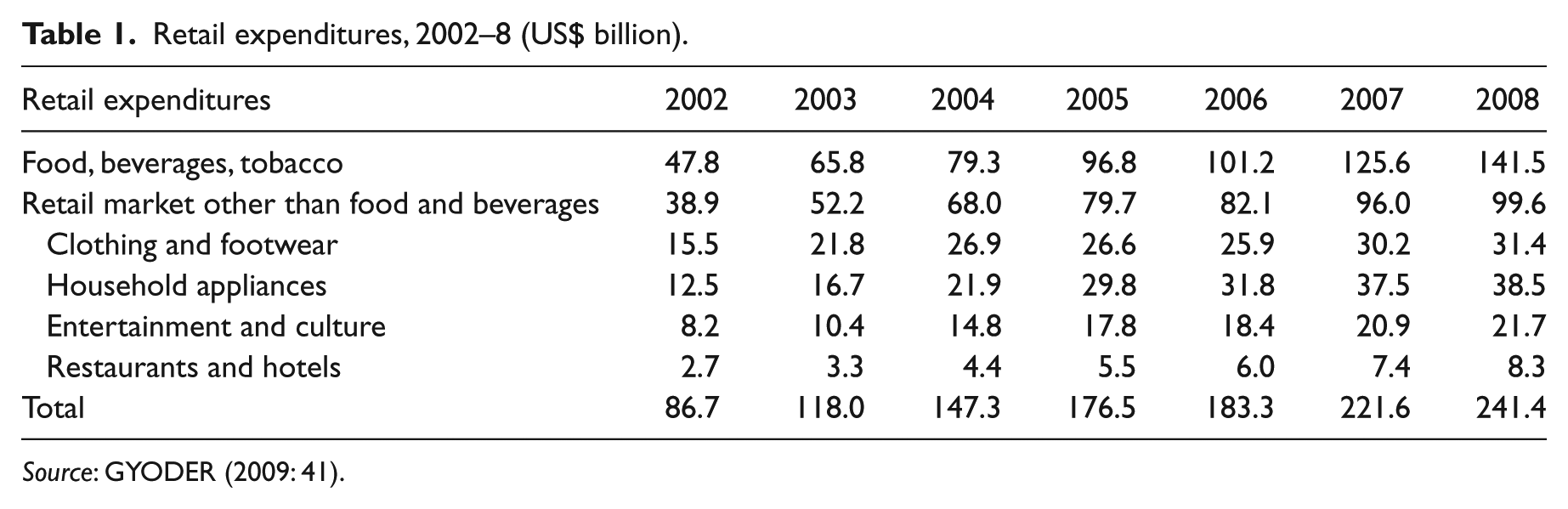
High-income groups are attracted to consume foreign brands in malls, whereas the largest group of the population chooses cheap and lower-quality products and unregistered shopping in alternative retail outlets. This is an expected consequence of the increasing role of consumption in Turkey. Despite the recent economic crises, the retail share of households’ expenditures has been growing (GYODER, 2008). See Table 1 for the change in retail expenditures.
Retail expenditures, 2002–8 (US$ billion).
Source: GYODER (2009: 41).
Although the number of retail stores and shopping malls has been increasing, the retail sector has a highly fragmented structure owing to the long-standing imbalance in the income distribution, which is not expected to change radically in the near future. It seems that Western-style shopping malls and hypermarkets will continue to be the dominant trend (EIU, 2009). Yet discount stores and outlets are expected to increase their share in the retail market (EIU, 2009). According to the EIU (2009: 12), ‘for retailing durables, the franchise system – consisting of high-street outlets tied to one of the major manufacturers – will remain dominant in the forecast period, despite some competition from big stores’. This situation applies to textiles, furniture and other durable products, as well as food and beverages, and it thus makes discount stores an effective supply channel for numerous retail products.
In this context, small and local distributors have initiated new structures in order to have more power against global and corporate capital and to be able to survive in the market. Such efforts can be seen as an important resilience strategy. The most recent example is Fayda A.Ş, which has brought together 73 local market chains with about 1000 shops in 31 Turkish cities (Radikal, 26 March 2009).
[It] does not carry out logistical operations such as shipment and storage of orders. Shipment is carried out directly from the producing companies to customers’ main warehouses . . . In order to ensure that the products, which are supplied to the partners on equal terms, are presented to consumers on the same terms, Fayda A.Ş. determines a ‘recommended shelf selling price’ and notifies this to its partners. During the joint work carried out with government institutions with the aim of maintaining price stability, it sees the provision of cheap and quality products to consumers as a social aim. (http://www.faydaas.com.tr)
Its current market share is about 6 percent, but there is a growing effort to increase the number of members and its market share.
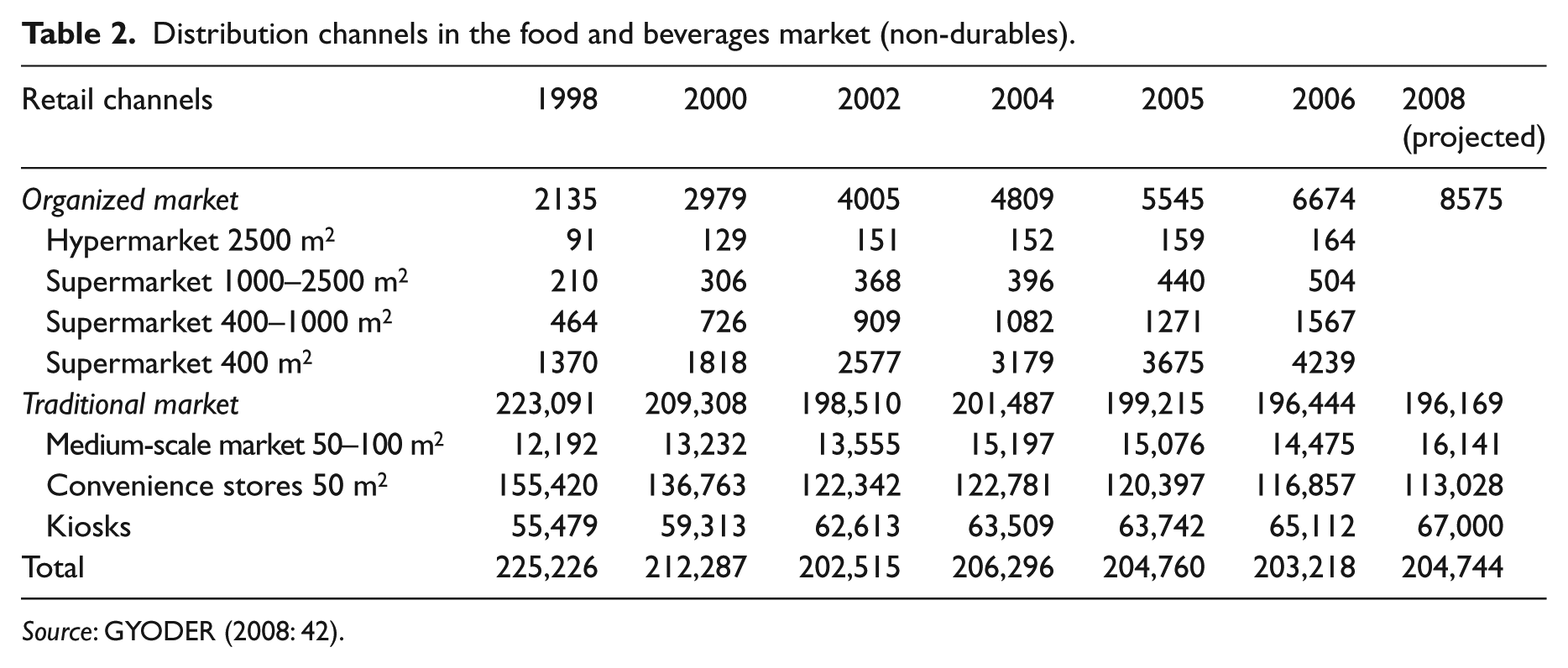
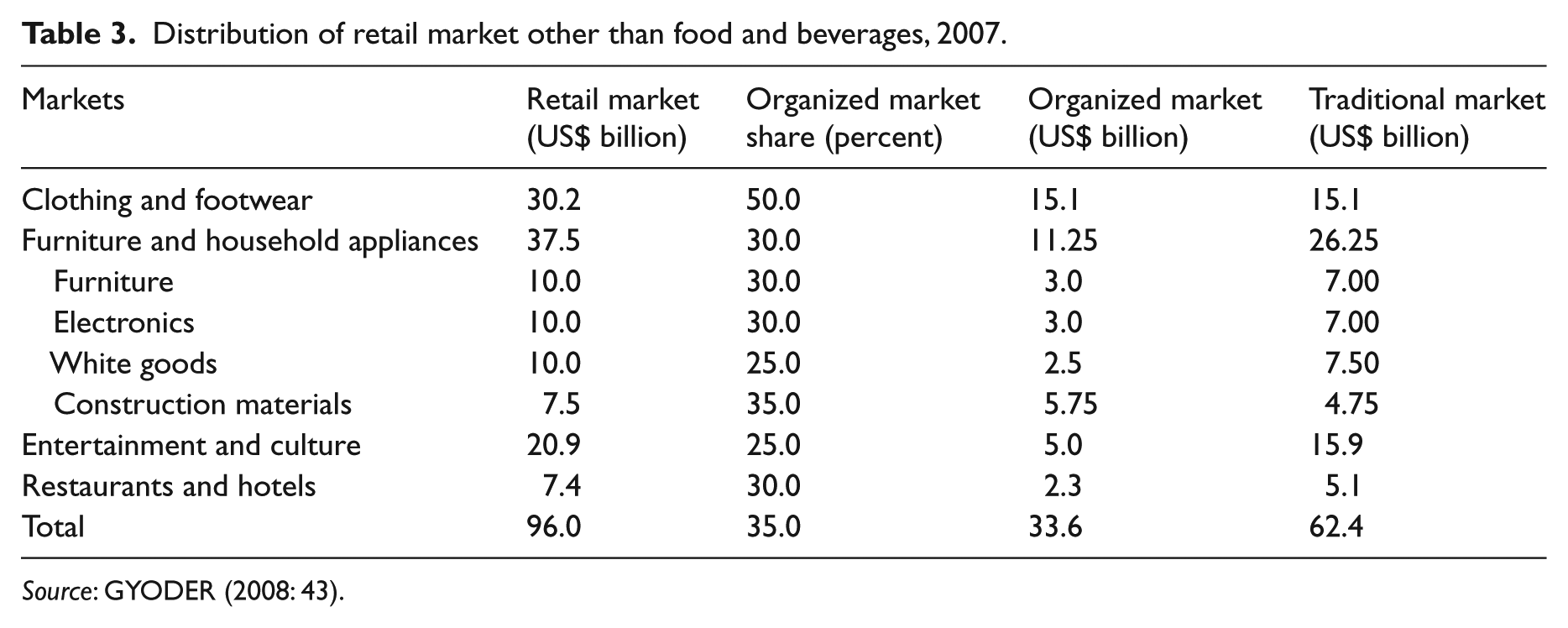
These developments have influenced less organized or unorganized portions of the sector more negatively, reducing the number of small and medium-scale shops. The number of grocers and small markets decreased from 223,091 to 195,184 between 1998 and 2008; and the period 1998–2006 witnessed an increase in the number of hypermarkets – from 91 to 164 (GYODER, 2009). Despite this, the retail sector is still dominated by traditional sellers, with a share of over 60 percent (AMPD and PWC, 2010). According to Kompil and Celik (2006), ‘open-air bazaars – with a wide variety of products, fresh fruits and vegetables – groceries and others – with their proximity and accessibility to home – continue attracting consumers’. However, it is expected that organized sellers will increase their share in the short run (see Tables 2 and 3 for the distribution channels in the retail market).
Distribution channels in the food and beverages market (non-durables).
Source: GYODER (2008: 42).
Distribution of retail market other than food and beverages, 2007.
Source: GYODER (2008: 43).
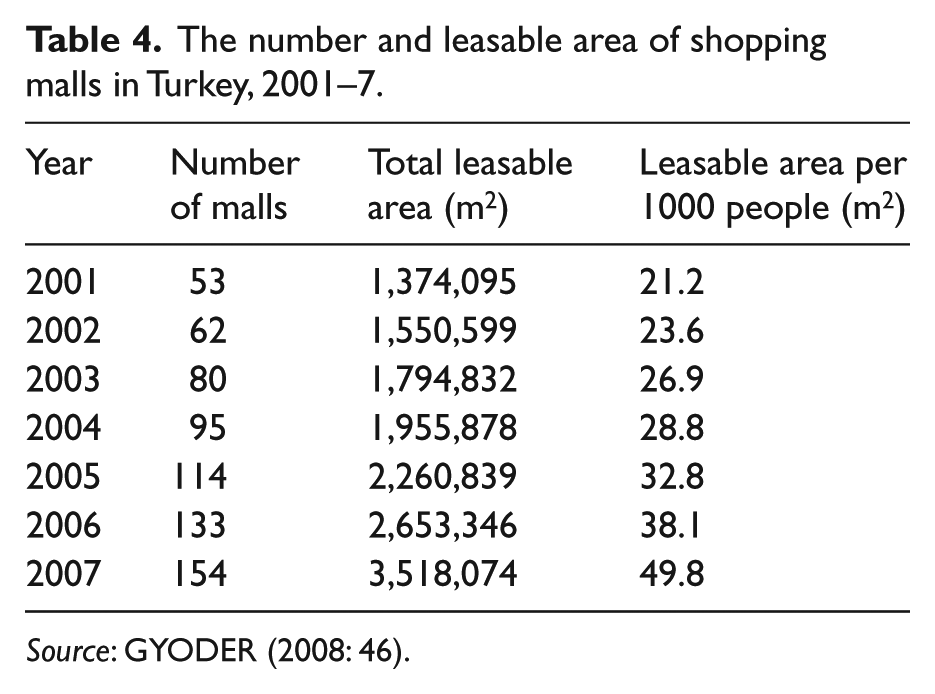
Consumer demand for shopping malls and the increase in the number of malls in the past 20 years indicate that Turkish society is ready and eager to accept this transformation (Erkip, 2003). Table 4 shows the number of shopping malls and their leasable area.
The number and leasable area of shopping malls in Turkey, 2001–7.
Source: GYODER (2008: 46).
Despite the negative impact of the 2001 economic crisis, investments in shopping malls accelerated in 2005 and 2006 and there was a 28 percent increase in the number of malls in 2007 (Pekdemir, 2008). The total retail area reached 5.7 million m2 with 236 malls in 2009 and it was expected to reach 7.0 million m2 in 2012 (DTZ, 2008; AMPD and PWC, 2010). In addition, a significant number of outlet centres were opened in 2008 (DTZ, 2008).
Currently, shopping mall supply is concentrated in the three largest cities – Istanbul, Ankara and İzmir (41 percent, 16 percent and 7 percent, respectively)
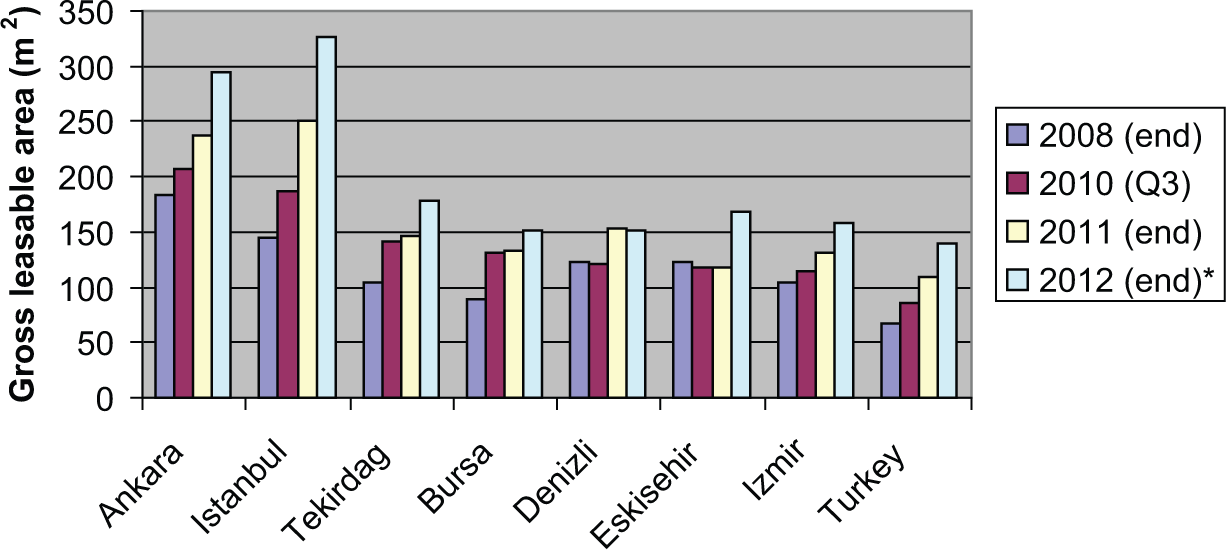
Shopping mall development in selected cities: Gross leasable area per 1000 inhabitants (m2).
Motives for change in the retail sector
Relations with the European Union
The Economist Intelligence Unit (EIU, 2009) points out the importance of EU membership for Turkey despite the uncertain character of accession. It is not expected that Turkey will be able to join the EU by the expected date of 2015; the more probable period of accession will be between 2020 and 2030. Although this long period makes the process hard to predict, it is assumed that EU membership will be a government priority until at least 2015.
We expect economic policy to be tailored to maintaining macroeconomic stability and continuing to improve the business environment. By 2010 Turkey’s fiscal position should be much improved, which may allow the government more room to increase public investment in infrastructure and possibly reduce tax rates further. Although expected to improve substantially as a result of its EU pros-pects, the problems of unpredictability and ineffici-ency in Turkey’s domestic legal and regulatory environment may not have been overcome entirely by 2010, but it should improve further after 2010, assuming EU accession is still a government priority. (EIU, 2009: 7)
The Turkish economy is and will continue to be dependent on international developments, that is, financial markets, the EU and global terms of trade. International competition will affect it ‘since low-value-added manufactured goods are likely to remain its main product line. Its technology potential is relatively limited, and it is not well placed to become a major supplier of services other than tourism, although a major improvement in the financial sector since 2001 may enable Turkey to develop as a provider of banking services in the wider region’ (EIU, 2009: 6–7). The potential of being an energy hub is another important motive for economic development in the country.
Relevant legislation and institutional changes
Capital Markets Law and the Turkish Competition Authority
In 1994, Law No. 4054 to sustain competition in several markets (currency, credit, capital, commodities and services) was enacted in accordance with the Constitution of Turkey. It is considered an important milestone in Turkey’s relations with the EU (Rekabet Kurumu, 2008). The Turkish Competition Authority was established in 1997 to enforce this law. The Authority has been structured as an administratively and financially autonomous institution in order to perform effectively. It applies regulations and control systems to realize perfect competition between retailers and service providers, where consumers are expected to be the largest beneficiaries of its decisions (interview with Aydın Çelen, Turkish Competition Authority, Ankara, 16 December 2009).
Establishment of Real Estate Investment Trusts
In the 1990s, Turkey began a transition from a weak real estate investment market, dominated by small-scale builders, to a more mature one, dominated by large construction companies and property developers. The state provided legal support for this transition with the establishment of Real Estate Investment Trusts (REITs), which aided large domestic and foreign capital in land development and shopping mall investments. In Turkey, the first REIT was established in 1995, a few years after they had entered the Turkish legal structure with changes to the Capital Markets Law and the Tax Law in 1992 (Teker, 1996).
Legislative instructions regarding the founding and operating of REITs were published in 1998. According to the law, REITs can buy and sell real estate, including shopping malls, but are not allowed to undertake construction activities directly. REITs are exempt from corporation and income taxes, providing important economic advantages to their shareholders. Within a decade, 13 REITs had been established in Turkey, with a total portfolio value of US$2.722 billion, of which shopping centres took the largest share (US$920 million, or 47 percent) (İş Investment, 2009: 9).
Turkey’s retail sector is attractive to foreign investment, which is expected to grow despite the recent global economic crisis. In 2011, Turkey appeared in the Top 10 of A. T. Kearney’s Global Retail Development Index for the first time. Compared with selected European countries, the investment potential in Turkey for foreign investors seems to remain high (see Table 5 for a comparison of population, income and retail expenditures between Turkey and some European countries).
Economic indicators and retail expenditures in some European countries and Turkey, 2008.
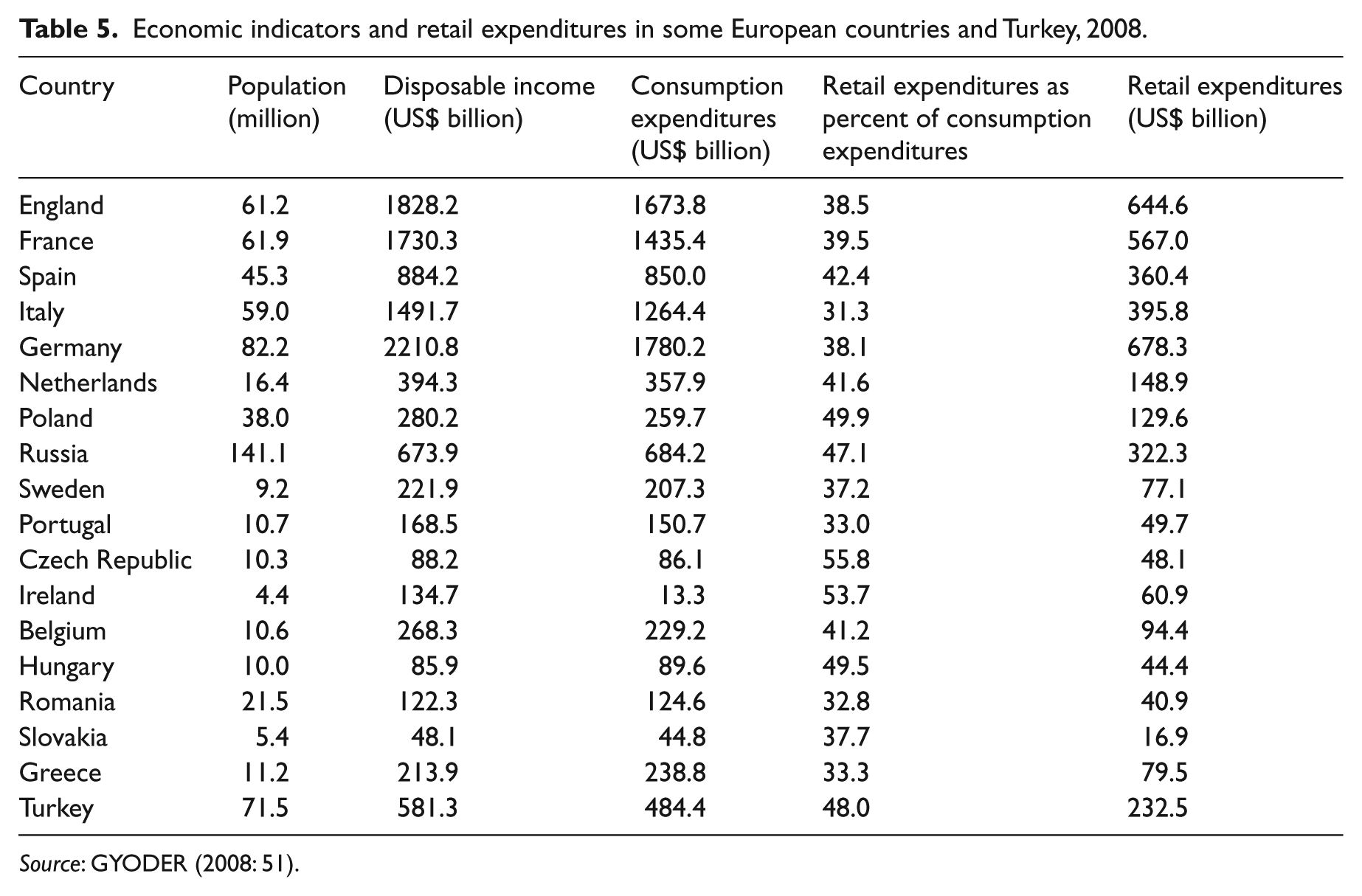
Source: GYODER (2008: 51).
This situation makes the rate of return on leases in shopping malls quite high in Turkey in comparison with other countries. Turkey has the second-highest rate of return (Russia has the highest) and appears to be a profitable market for foreign investments. The diversity of retail development in EU countries is an important factor leading to the penetration of more mature and regulated markets into countries with less mature and more fragmented retail structures (Poole et al., 2002). With its current economic and legal structure, Turkey is a candidate for such penetration.
Currently, Carrefour (France), Metro (Germany) and Tesco (UK) are the three leading foreign retailers in Turkey. ‘Most retailers have expansion plans, which will be assisted by the growth of urban centres and foreign interest in the Turkish retail market’ (EIU, 2009: 12). Although Istanbul has been the favoured site for foreign investment until now, other cities may attract further investment (DTZ, 2008). There are claims that Istanbul is over-invested in shopping centres, with 42 percent of the total number of shopping centres in Turkey (EIU, 2009). (See Table 6 for the list of current foreign investors.)
Shopping malls owned or partnered by foreign investors, 2008.
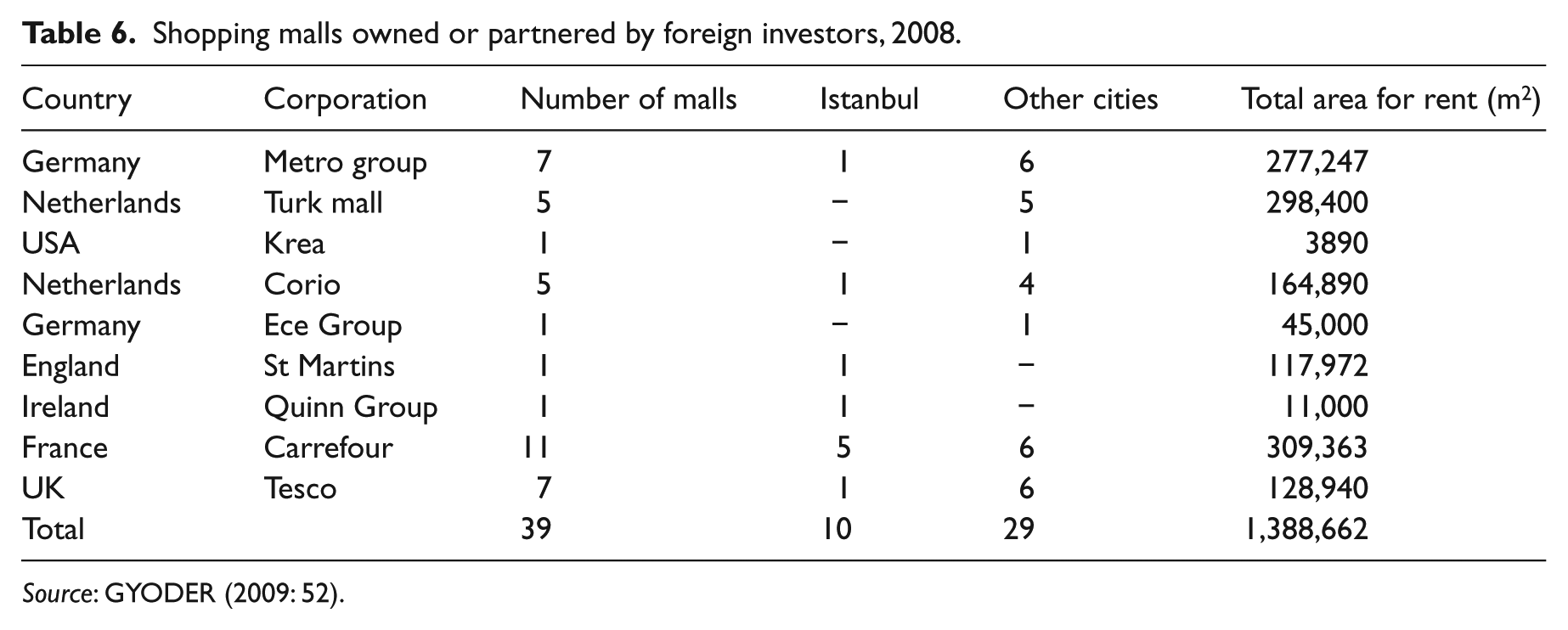
Source: GYODER (2009: 52).
Ownership rights for foreigners
Foreign direct investments in Turkey were encouraged by Law No. 4875 in 2003, which provided foreign investors with the same conditions as their domestic partners in establishing a partnership. The same law removed any remaining restrictions on the types of partnership established. This legal arrangement has been criticized for being too permissive of foreign capital and having no concern for its effects on domestic capital (Doğrusöz, 2003). In addition, with an amendment to the Law of Title Deed in 2005, foreign enterprises have the right to partial ownership in real estate developments under special legislative conditions (Amendment to Law No. 5444, 2005).
Retail policies and legislation
Despite efforts, however fragmented, to organize the retail sector in Turkey, there is no deliberate, stable and consistent retail policy in the country. This is mainly owing to the impacts of global capital movements and uncertainties in the EU membership process. There is a constant struggle between domestic capital (mainly represented by traditional and small-scale retailers) and foreign corporate capital (represented by large, organized retail investments). Under these conditions, corporate capital (domestic and foreign) has been a powerful actor in the economy. However, the market is still dominated by domestic capital in the country as a whole.
The main indicators of the struggle are recent constructions of luxury malls in big cities, on the one hand, and the resistance of small shops, street shopping and open-air bazaars, and small, less-impressive shopping centres in Anatolian cities, on the other. Under this dual structure and uncertainties, interventions by the state have a limited effect on guiding the development of the sector. However, these efforts by state agencies, which may have relevance for the retail sector, carry the potential for a more holistic retail policy. Reports prepared by state agencies are considered to be regulative efforts, which have been articulated in two main documents: a draft of the Law of Supermarkets, Hypermarkets and Chain Markets, which was prepared by the Ministry of Industry and Commerce in 2004, and the official report of the Council of Urbanization of the Ministry of Public Works and Settlement (now the Ministry of Environment and Urbanization) in 2009.
The first document reviewed relevant legislation in France, Italy and the United States and consulted two major retailers in the UK and Germany, as well as Turkish governorships, municipalities and other related actors to benefit from previous experience and provide a consensus. The aim of the proposed law is three-fold: (a) consideration of consumer rights, (b) the provision of modern urbanization in cities and (c) balancing competition between various segments of the retail sector. The law excludes open-air bazaars, shopping arcades, shopping streets, conventional office buildings and wholesale food markets. The reason for these exclusions is not clear, and can be considered a weakness in the law.
With respect to consumer rights, the importance of quality, price stability, packing and hygienic conditions of products has been emphasized, which might be considered as legal support for organized retailing.
In providing balanced competition, tradespeople, craftspeople and small and medium-sized enterprises have been considered as a group. Locational density and working hours are regulated accordingly. In addition, the relationships of big stores with their suppliers are clearly defined. There has been ongoing debate on the aspect of the law that obliges stores with sales areas of 5000 m2 or more to locate beyond the city limits. The law also details some restrictions on large stores’ working hours and promotion strategies. According to traditional retailers, this law supports small shops in the city centre, preventing unfair competition. They refer to EU legislation under which large stores must be closed at weekends; this restriction is related to protecting the social structure (Palandöken, 2005, 2006). However, shopping mall developers oppose the proposed law, citing it as excessive intervention in retail development (Dünya Gazetesi, 10 February 2010). Some view the law as considering consumers and competition in a balanced way, providing equal opportunities to all players (Uzun, 2008). Seemingly, the power structure prevents the debate being concluded in favour of traditional retailers; representatives of big capital have the advantage for the time being.
In terms of the sustainability of cities, the proposed law would introduce a ‘Strategic Urban and Environmental Impact Assessment’ to assess new demands for organized retail areas. Thus, population characteristics, traffic density, location in relation to similar retail places and to the city centre, parking, social facilities, infrastructure and environmental problems are considered in principle. However, the law has not yet passed and negotiations continue.
The second document, prepared by the Council of Urbanization, also focused on sustainability issues in Turkey. It is a comprehensive report on urban problems that suggests solutions and provides proposals for different sectors in relation to urban sustainability.
As far as the aims of these two main policy documents are concerned, it can be asserted that the development of organized retail areas in appropriate locations, to contemporary standards and with considerations related to the quality of urban life is likely to be achieved. However, apparently owing to flaws in the implementation process, implementation is not consistent with the aims of these macro policies. At this point, it is imperative to understand the roles of various actors in this process.
Key actors structuring the retail sector
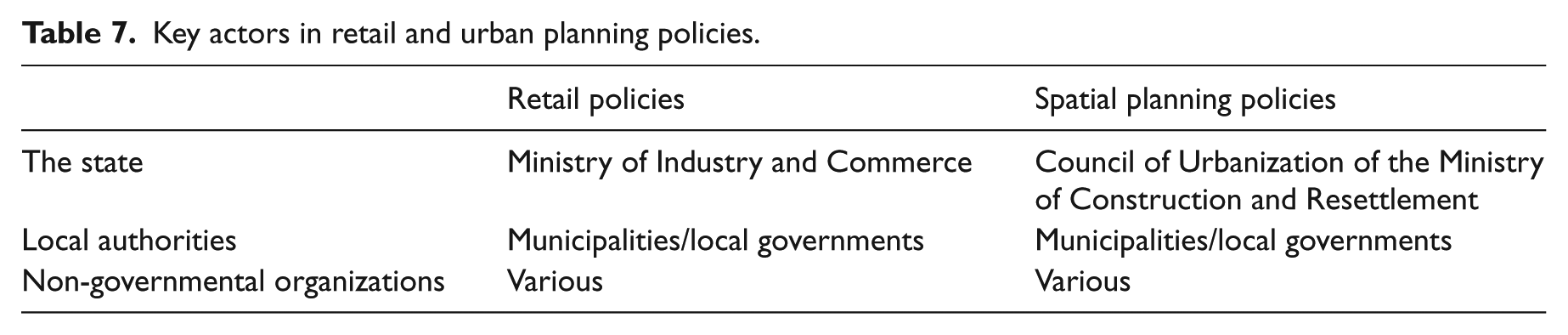
Retail policies and spatial planning policies are closely related – the same three actors (the state, local governments and professional organizations) play a role.
At the top of the scale, two ministries shape the policies: the Ministry of Industry and Commerce for retail policies and the Ministry of Public Works and Settlement for urban development policies.
At the level of local government, there is no great differentiation between the two domains. Municipalities and governorships are responsible for the development and implementation of urban plans and also for controlling the construction and operation of shopping malls in their regions. Therefore, it is expected that decision-making on the allocation of organized retail spaces would be in accordance with a city’s urban development plan and the operation would be controlled accordingly. However, the implementation process indicates that flaws in local governance units create problems in cities, including ones related to retail spaces.
At the third level, the professional organizations of the two policy fields are completely differentiated. The retail sector is represented mostly by organized investors and developers. As far as spatial planning is concerned, environmental engineering and civil engineering organizations and chambers of architects and city planners act as advocates for public space interests (see Table 7). The views of professional organizations about the sector, its development and policy proposals are discussed separately in the following sections.
Key actors in retail and urban planning policies.
Investors and developers
Investor and developer organizations are those into which domestic and foreign capital have been incorporated and organized so as to take part in decision-making concerning the location, construction and management of shopping malls. This group of organizations is greatly concerned with the debates related to EU accession. Initially, investors/developers and retailers were members of the same organization, but the group representing European capital (Cenol, Cefic, Corio, Merrill Lynch, Forum Investment, Acteeum, Kuwait Investment Authority, ECE, Redevco, REIDIN, etc.) split off and established the Turkish Council of Shopping Centres (interview with Haluk Sur, President of Urban Land Institute, Istanbul, 21 May 2009). As far as the interests of this group of organizations are concerned, problems in the implementation of retail policies concern planning, finance and the overall nature of the business environment.
Lack of proper planning causes shopping mall catchment areas to overlap, creating serious competition. Densely located shopping malls also negatively affect the urban transportation system (interview with Nihat Sandıkçıoğlu, Vice President of the Association of Shopping Mall Investors, Istanbul, 22 May 2009). The problems created by densely located shopping malls in the city centre are widely discussed by academics and professional chambers (see, for example, TMMOB, 2011, for a detailed discussion on planning issues related to shopping mall development in Turkey). Since there is no stability in (or guarantee of) proper implementation of urban development plans in Turkey, a piece of land that was formerly identified as green space, hospital or industrial area may be transformed into a commercial land-use area through the legal mechanism of ‘plan revisions’ (Günay, 2009). Because shopping malls require considerable capital investment, capital owners decide subjectively where to construct these huge buildings and force plan revision mechanisms accordingly. This means that urban land is developed not according to plans but through illegal enforcements (interview with Şeref Songör, President of the National Federation of Retailers Ankara, 3 June 2009).
When it comes to financing retailing, global real estate crises influence returns on capital in Turkey. The period for returns on capital increased from 2–3 years to 8–9 years, and has finally become 18–20 years (interviews with Şeref Songör and Nihat Sandıkçıoğlu). Current legislation in Turkey allows a leaseholder to vacate a shop before the contract period ends. As a result, property owners who arrange their debt plans on the basis of their income from rents incur losses (interview with Nihat Sandıkçıoğlu).
Because the nature of the Turkish business environment is unpredictable, foreign investors feel uneasy about the Turkish legislation. Elsewhere, rules are certain and global values of capital rule the market, but in Turkey, emotions, rather than regulations, prevail (interview with Nihat Sandıkçıoğlu).
Further, in Turkey, the concepts of ‘mall’ and ‘outlet’ are not differentiated, because ‘outlet’ is misused with a different meaning. In Europe, ‘outlet’ means a shopping place located outside the city, selling cheaper products. Its construction investment costs are relatively lower owing to limited facilities for social gathering (food courts, playgrounds, etc.) and less impressive architectural and design properties. Turkish ‘outlets’, in contrast, are mostly located in city centres and are of high-quality construction and design. They sell products from several brand names simultaneously (interviews with Nihat Sandıkçıoğlu and Şeref Songör).
Small-scale domestic retailers
An essential component of Turkey’s retail sector is producers of food and other non-durable products. Under the conditions of globalization, supermarkets have become places where domestic and foreign product brands compete. Small-scale domestic retailers in Turkey face some problems in this process. We mainly quote Şeref Songör, President of the National Federation of Retailers and chair of the board of directors of Makromarket, a prominent supermarket chain. His views can be summarized along the following lines. First, he points out the conflicts between capital groups as well as between foreign and domestic retailers, which emerge in various ways. He also criticizes local governments and leading institutions in the sector for their lack of concern regarding ethical issues. Secondly, he underlines the strength and resilience of conventional shopping streets and districts, despite the support that is provided for modern shopping centres, and expresses the importance of supporting small-scale traditional retailing.
Regarding conflicts between capital groups, there is a representation problem for retailer organizations in Turkey, which are not considered to be non-governmental organizations. Retailers are strongly perceived as having commercial identities, which creates a disadvantage because their views and criticisms are not appropriately taken into account.
Considering the issue of domestic versus foreign products, supermarkets became places where domestic and foreign brands compete under the conditions of globalization.
‘Supermarkets are important because they function as gates to the world economy, where producers are able to access consumers in foreign markets and sell their products there at competitive prices.’ (Interview with Şeref Songör)
Although the restrictions are not harsh, opening up and operating a supermarket abroad is not easy because of the legislative regulations (Walmart of the USA had to quit the European market two years ago, after opening 84 stores). Every country except Turkey has measures to protect its domestic capital and retailers.
‘If liberalism prevails in Turkey without any limitation, the result will be the absolute death of domestic retailers. Market discipline and equal conditions with European countries must be established in Turkey.’ (Interview with Şeref Songör)
Songör further stresses that domestic retailers need regulations, but global retailers are not willing to be subject to regulations:
‘Domestic retailers are accused of being narrow-minded when they defend regulative measures. Foreign retailers have double standards in this respect; although regulations are very strict in their own countries, they support the unregulated environment in Turkey. As domestic retailers, we require the government to support local producers and investors in order to protect the balance between domestic and foreign capital groups.’
As a third point regarding conflicts between capital groups, Songör draws attention to social and individual aspects of the labour force and the problems in this field:
‘Staff work long hours and also on weekends. . . . Long hours at work decrease the productivity of workers considerably and prevent their self-improvement. This is more of a problem for small traditional enterprises than organized retailers.’
According to Songör, local governments and leading institutions such as chambers of commerce are responsible for outlining and defending ethical values.
In terms of the strength and resilience of cities’ traditional retailers and street shopping, Songör explains that,
‘although competition is severe, these authentic or traditional shopping places and retailers always modify and transform themselves and survive. It is a fact that, as the number of pedestrian areas increases in cities, street shopping will attract more consumers. Municipalities are expected to work more on this issue, and the legislation should be revised accordingly. Local authorities must preserve the aesthetic and architectural assets of their cities and consider the expectations of their citizens.’
The role of professional organizations in spatial planning
In the previous section, we summarized the views of professional organizations related to the retail sector. On the one hand, they defend their capital interests and, on the other, they underline the importance of spatial planning when they emphasize urban problems, environmental aspects and aesthetic values that must be considered in urban environments.
Here, it should be noted that concern about the lack of proper spatial planning and the reluctance of local governments to initiate a solution are shared by professional organizations. For example, the Union of Chambers of Turkish Engineers and Architects (TMMOB) asserts that cities are not managed comprehensively, and that fragmented approaches prevail in urban development. According to the Chamber of City Planners (ŞPO), globalism attacks the urban environment with gated communities and shopping malls, and does not improve urban life for the majority of citizens (TMMOB–ŞPO, 2009a). The criticisms of this group in relation to retail developments in urban environments indicate their concern for the future of cities lacking comprehensive planning efforts.
Land speculation is an issue of the utmost importance in Turkey. In all big cities, large amounts of land have been subject to urban development with high costs of technical and social infrastructure, without considering the actual needs of citizens. Urbanization has been turned into a process to create as much rent as possible rather than one that focuses on how to best meet the needs of citizens (Şengül, 2009).
The concept of the ‘development project’ has been subject to criticism because some projects in Turkish urban spaces have ignored traditional development components and related plans and have been costly (Günay, 2009). Urban transformation practices (including shopping malls) have also been criticized because such projects are usually implemented on vacant land outside cities, so they provoke land speculation rather than solving urban problems (Nizamoğlu, 2009).
Professional organizations play active roles in fighting against the decay of city centres. In 1986, the Municipality of Ankara took the initiative to revise a plan for a shopping mall and vehicle parking on green space at the heart of the city. The chambers of the various professions went to court and prevented this project from being implemented (Tekinbaş, 2008). Another example of active role-taking is from İzmir, where the branch of the Chamber of City Planners won a case against Zorlu Holdings. The company had initiated a plan revision to build a 32-storey skyscraper on the site of former tobacco warehouses in the traditional city centre, Konak-Çankaya. The plan revision was prevented (TMMOB–ŞPO, 2009b). Such cases, however, are limited in number.
Conclusion
Developments in the retail sector in Turkey have created a dynamic and creative environment, with the actors forming the sector coming up with different resilience strategies that provide a new context in which to discuss urban sustainability. It can even be claimed that these developments have had a positive influence by creating an awareness regarding urban sustainability in society.
The urban population, particularly the younger demographics, is higher in Turkey than in other European countries. This situation creates the potential for the simultaneous use of shopping malls and street retailers in urban centres, as well as open spaces such as parks. Yet small-scale retailing is struggling to compete with organized and large investments and shopping malls, and it seems that the competition has continued to favour the latter. There are indications in many European countries that a decrease in the number of small-scale traditional shops causes decay in urban centres as a result of a lack of maintenance in the area. Further, it causes a decrease in the viability of core urban life through increasing vacancies and rising crime rates (Balsas, 2000). Municipalities and non-profit retail and citizen organizations have been collaborating to develop revitalization projects for attracting citizens to the urban core. The policies and strategies that other countries have developed could help Turkey cope with changes in the retail sector and their influence on urban centres and urban life.
The Swedish experience underlines the importance of regional planning to coordinate the development of autonomous municipalities and to foster research on the environmental effects of shopping malls (they generate traffic, increase carbon dioxide emissions and create noise). It is emphasized that regional planning is indispensable for protecting environmental standards, because municipalities face strong competition in order to attract retail investments, often at the expense of environmental considerations. In Turkey, globalization dynamics are likely to put pressure on local authorities to invite retail investments without considering their impacts on society and the environment. The French experience is also valuable; cases there show how retail investments can rehabilitate decaying areas in city centres. The experience of Portugal provides a model for utilizing EU funds to develop and renovate retail spaces within old city centres to increase the quality of urban life (REPLACIS, 2011).
The main actors in the sector are traditional retailers − consisting of convenience stores, traditional bazaars and small street shops − and organized retailers, including shopping malls and outlet stores. Their characteristics and resilience strategies, together with retail policies and organizations, seem to define the future of Turkish cities. There are no comprehensive legal arrangements involving retailing in Turkey. Although there have been some efforts to organize the sector under certain laws, they have been limited and sporadic. Seemingly, the power structure prevents the debate being concluded in favour of traditional retailers; the more organized developments have the upper hand for the time being. Thus, the first and most important policy proposal is to regulate the sector through a comprehensive law. All sector actors seem to be willing to contribute to the preparation process, so governing bodies need to be more actively involved and focus on passing the law immediately.
There are various reasons why shopping malls appeal to Turkish consumers more than traditional street shops do: the leading factors are insufficient maintenance and infrastructure in urban cores, traffic congestion and parking problems. Such issues make daily life and accessing public spaces harder for citizens, especially in big cities. Thus, Western-style shopping malls and their accompanying norms have become the new public spaces, replacing parks and other outdoor areas, filling a gap (Erkip, 2003, 2005). Recognition of this shift might lead to important changes in the use of and expectations from urban public spaces. In these circumstances, upgrading and maintaining public spaces and different retail forms should be a priority in new policies of retail planning in Turkey. The resilience strategies of traditional retailers could be incorporated into such planning. The ‘new planning rationale’ that is proposed by Edwards (cited in Delladetsima, 2006) seems to be necessary for Turkey as well.
Another aspect of this issue is related to the design of shopping malls. The increasing competition in the retail sector might force investors to develop new infrastructure and design proposals. Recent developments indicate remarkably creative attempts in that respect. For example, Meydan Merter, a new shopping mall in Istanbul, is designed with a glass roof that can be opened or closed according to the weather conditions. Solar energy will be the main source of power in this mall, indicating a concern for sustainability. Another design replicates traditional shopping streets in a multi-storey luxury mall (Radikal, 12 August 2009). To compete with such organized attempts, traditional retailing and shopping areas should be supported by regulations that encourage people to take advantage of their central location.
At this point, the provision of malls in the urban core needs to be viewed in the light of urban sustainability, as well as the resilience of local and traditional shops. It is imperative to avoid further unplanned and spontaneous development of shopping malls in Turkey, so that malls and other distribution channels can both survive. A holistic policy is required to support sustainable urban development, considering all actors in the retailing sector as well as the vibrant urban centre of cities in Turkey.
Footnotes
Acknowledgements
We would like to thank the anonymous reviewers and the editor of European Urban and Regional Studies for their helpful comments on an earlier version of this paper. Our research was a part of an Urban-Net project, which was conducted by researchers from France, Sweden, Portugal and Turkey between 2009 and 2011. We are grateful to colleagues who participated in this project for their contribution to our knowledge about retail planning in various European countries.
Funding
This research was partially funded by TÜBİTAK (The Scientific and Technological Research Council of Turkey) as an Urban-Net project, grant No. SOBAG-108K614.