



Abstract
This article draws on the concept of Europeanization to assess the EU cohesion policy’s capacity to promote inclusive regional governance and cooperation in regional development initiatives in Central and Eastern European countries. EU cohesion policy is often credited with improving cooperation and coordination in the delivery of the regional development policy through the application of multi-level governance enshrined in the partnership principle. By imposing a close partnership among a variety of actors, cohesion policy has the capacity to alter domestic relations between the centre and the periphery, and to create a broader scope for regional and bottom-up involvement in economic development policy. However, a lack of tradition of decentralization and collaborative policy-making, as well as a limited capacity of sub-national actors, can result in uneven outcomes of the application of the partnership principle across countries and regions. This raises questions about the transferability of the partnership approach to new Member States characterized by weak sub-national institutions, a legacy of centralized policy-making and limited civic involvement. This paper addresses this issue by comparing horizontal partnership arrangements put in place for the purpose of cohesion policy implementation and examining their impacts on the patterns of sub-national governance. The horizontal partnership arrangements are compared across three regions in countries with differentiated systems of territorial administration: Poland, the Czech Republic and Hungary.
Keywords
Introduction
One of the defining features of cohesion policy (CP), which over time has developed into a comprehensive investment instrument fundamental to the attainment of the EU’s strategic objectives (European Commission, 2010a), is its multi-level mode of governance, embodied in the principle of partnership. 1 The partnership principle requires, on the one hand, vertical cooperation between the actors at different levels of government, from the EU level down to the regional level, and, on the other hand, entails the inclusion of a variety of public and non-state stakeholders in all stages of the implementation cycle of the Structural Funds (SF), including programming, implementation and evaluation. In practice, this involves continuous cooperation and negotiation between the levels of government to ensure the congruence of strategic and operational documents, establishment of channels and institutions for including the partners into the decision-making processes (e.g. monitoring committees, consultations, working groups) and promoting cooperation between the various actors as part of EU-funded projects. The partnership principle is of particular importance for the implementation of EU cohesion policy in the programming period 2014–2020, reinforcing the place-based approach to regional policy. This approach, advocated in the Barca Report (Barca, 2009: 178) and promoted by the European Commission (European Commission, 2010b), involves tailoring interventions to the targeted areas and necessitates access to local knowledge through involvement of local actors. In the current age of austerity, the growing pressure for better results with EU cohesion policy further reinforces the rationale for effective horizontal partnership as a tool allowing for improving the effectiveness and quality of EU-funded projects (Polverari and Michie, 2009: 36–37).
The partnership principle also has the capacity to trigger institutional change in the EU Member States and generate added value (Mairate, 2006) by promoting greater coordination between policy actors and a more inclusive approach to regional development policy (Kelleher et al., 1999). Thus, in Central and Eastern European Countries (CEECs), the main beneficiaries of the SF, the introduction of the EU cohesion policy framework catalysed major changes in the patterns of governance. This created room for a growing role of regional and bottom-up involvement in economic development policy (Bachtler and McMaster, 2008; Baun and Marek, 2008b; Bruszt, 2008). Nevertheless, the literature to date has revealed that these countries encounter significant difficulties in adjusting to the EU cohesion policy framework (Baun and Marek, 2008b; EPRC, 2009a; Ferry, 2007; Kozak, 2007; Paraskevopoulos and Leonardi, 2004) due to the legacy of centralized policy-making, entrenched bureaucratic routines and the weakness of the civil society. As a result of the limited learning capacity of the domestic administrative institutions, the Europeanization of regional policy actors in CEECs could thus remain ‘shallow’ (Czernielewska et al., 2004).
Can the partnership principle work in the Central and Eastern European context? Do the sub-national actors comply with this new EU-imposed practice only superficially, or do they learn to implement and internalize the principle over time? This paper answers these questions by shedding light on the mechanisms and outcomes of adjustment to CP’s polycentric governance in three regions of CEECs and identifies the domestic factors affecting this process.
The paper is structured as follows. First, it reviews the literature on CP’s partnership. Second, it introduces Europeanization as theoretical background for the study and outlines the research design used. Third, an empirical section presents the findings from the regions studied. The article closes with a discussion of the mechanisms and outcomes of the adjustment to the partnership principle in CEECs.
The partnership principle and its impacts in the EU Member States
The partnership principle is one of the most important sources of added value generated by CP. It favours institutional capacity building and creates opportunities for policy innovation and learning across organizational boundaries (Kelleher et al., 1999). Perhaps more importantly, however, compliance with the partnership principle can induce a change towards a multi-level governance system based on cooperation and incorporation of the regional stakeholders into the policy process. This impact of the partnership principle is particularly important in the case of CEECs (Bachtler and McMaster, 2008; Bruszt, 2008), where centralized decision-making, lack of cross-level and cross-sectoral coordination, and a lack of receptivity to non-state actors are entrenched in the political and administrative traditions.
Research to date demonstrates that the partnership principle is best observed in countries with traditions of cooperation between public, private and societal actors, such as Ireland (Adshead, 2005) or Scotland (Danson et al., 1999). On the contrary, in countries with centralized territorial administration and policy-making styles, applying partnership tends to be challenging. For instance, in Greece (Getimis and Grigoriadou, 2004) and Portugal (Nanetti et al., 2004) partnership was hampered by centralization, the financial and organizational weakness of local governments, and a frail non-state sector. The capacity to adapt to the partnership principle can also be regionally differentiated, as illustrated by the case of Italy: in its northern regions SF partnerships could draw on the pre-existing networks and strong regional institutions, yet in the south the application of partnership faced difficulties due to a lack of cooperative culture and limited administrative capacity (Kelleher et al., 1999). The partnership capacity depends on institutional networks and social capital, territorial assets that enhance the regional actors’ capability to adapt to CP’s multi-level governance (see e.g. Bache, 2008; Marks, 1993) and collaborative approach to policy-making (Leonardi, 2005; Paraskevopoulos and Leonardi, 2004). Nonetheless, even in regions lacking these assets, cooperation between the policy actors imposed by the EU cohesion policy framework can contribute to reinforcement of institutional capacity and stimulate processes of social learning, generating social capital (Kelleher et al., 1999; Paraskevopoulos and Leonardi, 2004).
Studies focusing on the impact of EU cohesion policy in CEECs came to similar conclusions. The legacy of ‘democratic centralism’ under the communist rule, the lack of cooperative policy-making traditions and deficiency of administrative capacity were considered a major obstacle for partnership (Czernielewska et al., 2004; Marek and Baun, 2008a). This was expected to result in creation of institutional arrangements conforming to the partnership requirements, but without changing the actors’ preferences and ‘ways of doing things’ (Bache, 2008). One may therefore assume that the scope for its institutionalization in CEECs is limited (Bachtler and McMaster, 2008: 402). Indeed, the application of the partnership principle in CEECs in the first round of implementation of the SF after accession remained deficient, even though learning dynamics resulted in gradual improvement of the operation of partnership arrangements over time (EPRC, 2009a). There is, however, a shortage of research explaining the mechanisms of the domestic actors’ adjustment to the partnership principle, particularly in a comparative perspective and with a focus on the regional and local authorities, a gap addressed by this study.
EU cohesion policy and Europeanization
In the case of CEECs, CP has had a particularly strong impact on the domestic institutions, due to the weakness of pre-existing domestic regional policies and the rapidity of the conditionality-driven adjustment in the pre-accession period (Ferry, 2007). As a result, CP has to a large extent set the domestic regional development agenda in CEECs, and EU-funded programmes are the main components of the domestic regional policies. In order to account for this impact, many studies used Europeanization as a theoretical framework (Bache, 2008; Ferry, 2007; Hughes et al., 2004; Leonardi, 2005; Paraskevopoulos and Leonardi, 2004).
The concept of Europeanization (see, for example, Cowles et al., 2001; Featherstone and Radaelli, 2003; Graziano and Vink, 2007) refers to the influence of EU policies on the Member States’ policy processes, institutions and politics. That is not to say that the domestic actors simply adapt to the EU-imposed policy rules, as the outcomes of Europeanization depend on how EU norms affect their preferences, how they resonate with the embedded domestic institutions and how they are interpreted and used by the domestic actors to pursue their goals. In fact, EU norms and ‘best practices’ are frequently reinterpreted by the domestic bureaucracies according to their perceptions, values and interests, which crucially affects Europeanization processes and can produce different unintended results and side-effects. For instance, domestic officials can demonstrate formal compliance with the EU prescriptions and ‘best practice’ concerning a given policy or the course of reforms of administrative structures, while in reality manipulating them and advancing their own agendas by strategically using the ‘ritual of listening to foreigners’ (Sellar and McEwen, 2011: 301).
Most accounts of Europeanization rely on the distinction between the rationalist and sociological mechanisms of adjustment to EU norms (Börzel and Risse, 2003). In the first case, EU policies are considered as a factor changing the domestic structures of opportunity. Hence, the actors follow the logic of consequentiality and adjust strategically to EU policy norms following a cost–benefit calculation or out of necessity. In the second case, the domestic actors change their preferences and internalize the EU norms through processes of social learning, following the logic of appropriateness.
Prior to their accession to the EU, the process of Europeanization of CEECs mainly involved a hasty adjustment to EU rules spurred by conditionality and external incentives (Börzel, 2006; Grabbe, 2006; Hughes et al., 2004; Schimmelfennig and Sedelmeier, 2005; Sedelmeier, 2006). This left little scope for learning and institutionalization of these rules. In addition, with respect to EU cohesion policy and its multi-level and inclusive mode of operation, the lack of cooperative culture and legacies of centralization, statism and the silo mentality of administration led many to expect a ‘shallow’ Europeanization (Czernielewska et al., 2004), involving superficial change without profoundly modifying the pre-existing mode of governance (Bruszt, 2008). Nonetheless, an alternative hypothesis has also been advanced: social learning mechanisms of Europeanization, marginalized in the wake of conditionality-driven pre-accession adjustments, could become more visible once the CEECs become full members of the EU and more of their policy actors become actively involved in implementation of EU policies (Bafoil and Surel, 2008; Goetz, 2005; Sedelmeier, 2006). While studies focusing on Europeanization in the CEECs during thepre-accession period tended to adopt a ‘top-down’ or ‘impositional’ approach (Goetz, 2005), this research follows a ‘bottom-up’ approach (Radaelli, 2003, 2004). Thus it puts emphasis not only on the domestic institutional settings but also on the actors involved in policy implementation, their preferences, interests and perceptions, as well as the horizontal diffusion of EU-imported norms and practices. The objective of this paper is to test the above hypothesis concerning the gradual shift from ‘shallow’ rational-choice adjustment to social learning and internationalization of EU norms through a comparative investigation of the mechanisms of adjustment to EU cohesion policy’s partnership principle at the sub-national level.
Research design and case studies
The mechanisms and depth of adjustment to EU cohesion policy framework can be operationalized using the distinction between ‘thin’ and ‘thick’ learning (Bache, 2008: 18; Radaelli, 2003: 52). Thin learning corresponds to rationalist mechanisms of Europeanization, involving a strategic reorientation of policy practices driven by constraint or interest in order to accommodate EU-imposed policy rules. It occurs without fundamentally changing the established ‘ways of doing things’ and can be qualified as ‘shallow’ change. Conversely, thick learning occurs when EU-imposed practices are internalized by the domestic actors who consider them appropriate. The pre-existing ‘ways of doing things’ are gradually transformed and the actors change their preferences, corresponding to a ‘deep’ change.
Three test variables are used to distinguish between the two mechanisms. The study examines the actors’ motivation for adopting partnership. Adjustments motivated by the desire to acquire EU funds and/or by obligation are considered as indicators of strategic and ‘shallow’ change. Conversely, the adoption of partnership stemming from the desire to enhance the outcomes of the actors’ actions indicates internalization. Second, a further indicator of ‘deep’ change and internalization are the actors’ positive perceptions of partnership as useful and appropriate practice. Third, spillover effects of adoption of partnership, such as the voluntary use of the partnership approach outside the SF programmes or EU-funded projects, are also considered as an indicator of internalization.
The study is based on 46 semi-structured interviews conducted the winter of 2011 in Poland, the Czech Republic and Hungary. The interviewees were selected from ‘key informants’ within the central-level institutions coordinating the implementation of CP, regional-level institutions distributing the SF and local authorities benefiting from the SF. The local authorities in each of the regions that were included in the study included a large variety of cases in terms of their size and urban/rural characteristics. Thus, the interviewees included senior officials in relevant ministries, regional authorities and other regional bodies, mayors of municipalities or their personnel dealing with EU funds, and a variety of experts and practitioners dealing with EU funds (e.g. academics, consultants). Whereas the few existing studies on horizontal partnership concentrate on non-governmental organizations (NGOs) and economic and social partners (Batory and Cartwright, 2011; Polverari and Michie, 2009), this research focuses on territorial administration and project-level partnership. For the purpose of assessment of the impact of EU funds over time, the study also draws on an earlier round of interviews conducted as part of my previous study on Poland in 2008 (Dąbrowski, 2011). The present study builds on this previous research to shed more light on the effects of EU CP’s partnership principle through a comparative investigation and relying on new empirical data from three regions in different countries. Moreover, secondary sources (evaluation reports, programming documents, press articles) were also used for the purpose of triangulation of the findings from interviews and enhancing the validity of the findings.
Poland, the Czech Republic and Hungary, while sharing the legacy of communist rule, differ significantly in the degree of decentralization, organization of their territorial administration and the average size of municipalities. These differences, as will be demonstrated, affect the processes of Europeanization of the sub-national actors in each of these countries and result in differentiated patterns of adjustment to the EU cohesion policy framework. This study focuses on one region from each of the countries (Figure 1); therefore it does not capture this regional differentiation.
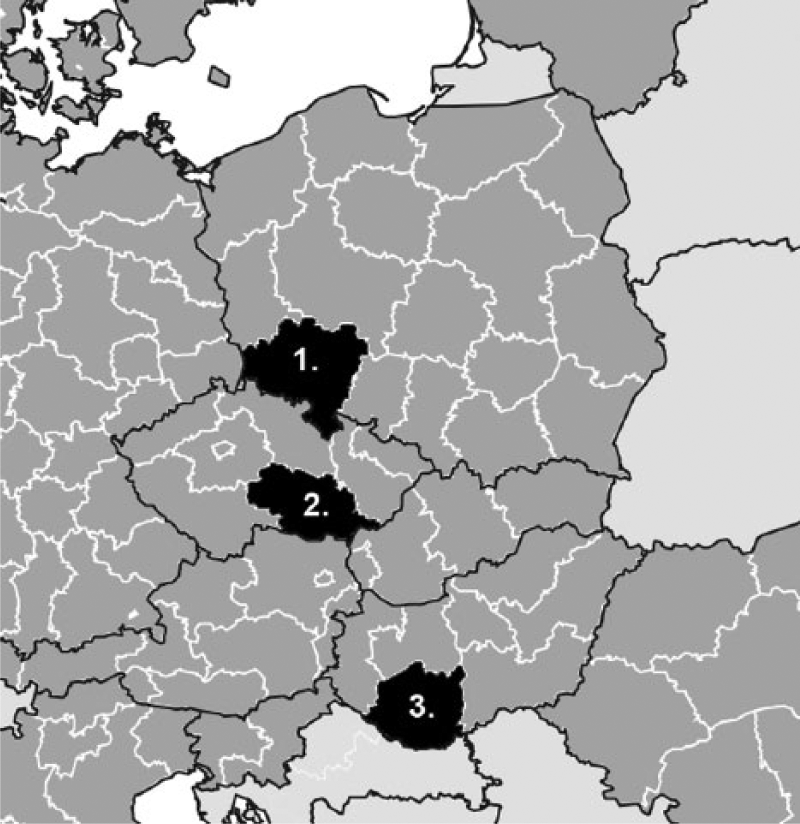
The regions studied.
Poland: Lower Silesia
Poland has the most decentralized three-tier system of territorial administration among the CEECs. The Polish regions, also known as voivodships (województwa), established in 1999, correspond to the NUTS 2 designation (Nomenclature of Territorial Units for Statistics), and their elected executives (the Marshals and the Boards of Voivodship, appointed by the regional assemblies) were given wide competences in regional development policy and management of the SF. After the (re)centralization of the management of the SF in 2004–2006, supported by the European Commission (Dąbrowski, 2008; Hughes et al., 2004), in 2007–2013 the regional authorities took over the role of the Managing Authorities for their Regional Operational Programmes (ROPs), which considerably increased their profile in the state hierarchy and within the regional political arena. Poland’s 2478 well-rooted local self-governments, established in 1990, are relatively big in terms of both population and area, compared with those in the Czech Republic and Hungary, as the data presented in Tables 1 and 2 below indicate. As will be shown in the empirical section, size of municipalities matters, being one of the factors affecting the capacity to engage in partnerships.
Municipalities in Poland, the Czech Republic and Hungary.

Note: for Czech Republic the data are from 2007, for Poland from 2010, for Hungary from 2007.
Source: adapted from Council of Europe (2007); GUS (2011); Swianiewicz 2002.
Percentage of municipalities with fewer than 1000 inhabitants.

Source: Swianiewicz (2002: 7).
The case study region for Poland is Lower Silesia, located in the more economically developed south-west of the country. In 2009, its gross domestic product (GDP) per capita was at 66.2% of the EU27 average. 2 The region also benefits from a relatively strong civil society (Gumkowska and Herbst, 2005) and an above average administrative capacity (Swianiewicz et al., 2000).
Czech Republic: South East Cohesion Region
In the Czech Republic there are 14 self-governed regions (Kraj) each with an elected regional assembly and a regional authority (Krajský úřad). The regional authority is headed by the regional governor (Hejtman), appointed by the assembly, and since 2000 it has been responsible for regional development (Baun and Marek, 2008: 166–168). The regions, however, remain financially weak and dependent on the central government, raising doubts about their capacity to deliver a regional development policy and effectively participate in EU cohesion policy (Ferry and McMaster, 2005: 20–22). The Czech territorial administration is also characterized by a disjointed structure and weak cooperation across levels (Myant and Smith, 2006). Additionally, unlike in Poland, for the purpose of implementation of the SF, eight ‘artificial’ NUTS 2 cohesion regions were created, regrouping several regions (Baun, 2002: 269). Regional Councils for the cohesion regions (Regionální rada regionu soudržnosti), comprising representatives of the participating self-governed regions, were put in place to design and manage the ROPs. However, the rapidly learning and increasingly competent regional authorities have more political weight and legitimacy; hence they remain the predominant actors at the regional level (Marek and Baun, 2008b: 183).
Soon after the fall of communism, a system of local self-government was put in place with 6249 3 small and fragmented municipalities that were ‘too weak to play much of a role in strategic decisions’ (Myant and Smith, 2006: 167). As indicated in Table 2 below, 80% of them have fewer than 1000 inhabitants. Given the limited budgets of many of those small municipalities, they were encouraged to form associations (Lacina and Vajdova, 2000), so-called micro-regions, in order to pool resources for particular projects or in provision of public services and, later on, also to apply jointly for the SF.
The South East Cohesion Region, chosen as the Czech case study, comprises two self-governed regions: South Moravia (Jihomoravský Kraj) and Vysočina
Hungary: South Transdanubia
Hungary has the most centralized system of territorial administration and management of the SF out of the three countries examined. Territorial self-government units were established as early as 1990: municipalities at the local level and counties (Megye) above the local level with elected authorities and competences in public services that cannot be provided by municipalities. Later on, a ‘euro-conform’ institutional system was launched with the Law on Regional Development in 1996 and its 1999 amendment, creating Regional Development Councils (RDCs) and Regional Development Agencies (RDAs) at the NUTS 2 level with important competences in management of pre-accession and structural funds (Pálné Kovács et al., 2004: 457). In contrast, the 1996 law did not attribute competences in regional development policy to the county authorities. 5
The Hungarian local-level authorities remain very fragmented, albeit on average less so than in the Czech Republic (see Tables 1 and 2). 6 More than half of them have a population under 1000. Thus, most municipalities have limited resources to provide public services, 7 prompting the establishment of voluntary micro-regional associations to overcome this limitation since the early 1990s. The micro-regions were thus established to pool resources and jointly provide of public services, invest in infrastructure and apply for external funding. The abovementioned law from 1996 regulated the operation of micro-regions and offered them the possibility of being represented within the RDC (Pfeil, 1999). However, in the wake of the on-going economic crisis, the Hungarian micro-regions saw their funding from the central government diminish, considerably weakening their position.
In addition, the effectiveness of the EU-catalysed regionalization in Hungary remains handicapped by the financial weakness of counties, the dysfunctional operation of RDCs and the misfit between the ‘artificial’ NUTS 2 regions and the spatial ties of the actors operating on a smaller scale (Horvath, 2008: 191, 197, 202). Despite the regionalization reforms introduced in the 1990s, one can observe a continuing reversal of the decentralization and regionalization trends (Horvath, 2008: 198; Pálné Kovács, 2011). 8 In 2007–2013, unlike in Poland and the Czech Republic, the NUTS 2 level institutions (RDAs) do not have the status of Managing Authorities for the ROPs. At the central level, the management of the administration is the responsibility of the National Development Agency (NDA), while at the regional level the funds are distributed by the RDAs. 9 Moreover, the regional development system in Hungary was set up in parallel to and outside the state administration structures, which limits the scope for spillover of the EU cohesion policy norms and practices to the latter.
This research focused on South Transdanubia, one of Hungary’s economically lagging regions (44.6% of EU 27 average GDP per capita). However, it is there that regionalization, new policy approaches and implementation of EU regional funding in Hungary were pioneered (Pálné Kovács et al., 2004: 442–443). This allowed the accumulation of a stock of experience in collaborative policy-making and fostered the region’s reputation as the ‘cradle of regionalism’ (Pálné Kovács, 2009: 207).
Empirical findings
This section presents the empirical findings from Poland, the Czech Republic and Hungary. The research concentrated on three aspects of horizontal cooperation: partnership in programming, partnership in implementation and monitoring, and project-level partnership.
Partnership in programming: learning how to cooperate
The study found evidence of a gradual internalization of partnership at the programming stage in all three regions studied. Whereas in the initial period after accession the application of partnership in programme consultations remained limited, partnership in the formulation of ROPs for 2007–2013 was more inclusive and the influence of the partners was growing, as attested by the interviewees. In Lower Silesia, the consultations were organized by the regional authority, which is responsible for the preparation and implementation of the ROP. In the Czech case of the South East Cohesion Region, the authorities of South Moravia and Vysočina were responsible for preparation of the ROP and organization of partnership for that purpose, 10 while the implementation of the programme was the responsibility of the Regional Council. In South Transdanubia, the preparation of the ROP in partnership and its subsequent implementation was the responsibility of the South Transdanubia Regional Development Agency (STRDA). 11 In all three regions, widespread regional-level consultations were organized, offering the opportunities to participate in the formulation of regional programmes by participating in numerous working groups, seminars and conferences or submitting suggestions via online consultation forums. 12
The Polish, Czech and Hungarian regional officials initially considered the consultations of the ROPs an EU-imposed requirement; however, this perception changed over time. As some interviewees stressed, consultations were widely considered by the regional officials as ‘a very good practice’ and a means to improve the ROPs. 13 A number of interviewees highlighted that cooperation with stakeholders improved over time and the officials administering the EU programmes gradually recognized that partnership was a ‘good thing’. 14 Most interviewees argued that consultations allowed the exploitation of local knowledge and enhanced the connection between the region’s needs and the programme’s priorities. 15 Moreover, this form of partnership was seen as a tool for spotting potential implementation problems, building consensus on the use of the SF in the region and sharing responsibility for decisions taken with the stakeholders. 16
In all of the three regions, an important spin-off of the consultations of the ROPs was the establishment of a broad regional network. In Lower Silesia, the ROP was consulted within the Regional Steering Committee (RSC, a partnership body gathering representatives of the central government, local authorities and the key non-state stakeholders), sub-regional consultation groups and an online forum, as well as through a wide range of conferences and informal meetings and working groups. 17 These interactions in consultations contributed to mutual understanding and allowed the fostering of relationships based on trust, a precondition for efficient operation of cooperative governance arrangements. Partnership in ROP formulation involved a learning curve and was facilitated by the strong interpersonal between the regional and local officials built over the years. 18 In the South East Cohesion Region, the networks established for the consultation of the ROP remained active after the launch of the programme and allow the regional actors to ‘meet, talk about development and exchange ideas’ 19 on its implementation and wider development issues. 20 Finally, in South Transdanubia, the STRDA saw the establishment of a regional network revolving around the SF as an opportunity to build informal relationships with potential applicants and spread knowledge on the programme and preparation of projects among them. 21
Nonetheless there are some remaining problems. Interviews with the Polish and Czech stakeholders participating in consultations of the ROPs showed that their involvement was chiefly motivated by self-interest and the desire to maximize their chances of securing EU funding, 22 indicative of a shallow and strategic adjustment to the horizontal partnership. Likewise, in Hungary, consultations of the ROPs were undermined by attitudes of local leaders keen to secure as much funding for their constituencies as possible, 23 making it difficult to reach consensus (see Kovacs and Cartwright, 2010: 45). This invites the conclusion that, when it comes to the attitudes of the stakeholders involved, not much has changed since the programming process for the programmes covering 2004–2006, when regional level partnership was akin to a ‘wishing forum’ where partners articulated their interests (EPRC, 2009c: 26). Thus, this is an example of an unintended effect of Europeanization, whereby an EU ‘best practice’ is formally being complied with and has an impact on the behaviour of the domestic actors, but in reality is reinterpreted by those actors to according their preferences and agendas (cf. Sellar and McEwen, 2011).
Additionally, although horizontal partnership was generally perceived in a favourable light by the beneficiaries of the SF, 24 a number of local authorities, particularly those of smaller towns or villages, did not participate in consultations on the ROP, while some of the local officials demonstrated disillusionment and a lack of interest in the SF. 25 In fact, the local-level actors often lack capacity, knowledge and desire to take part in regional partnership initiatives. Another noteworthy detail: in all the three regions studied, as the interviewees stressed, the consultations on the ROPs were dominated by local authorities, while economic and social partners often lacked the capacity to make their voice heard (see also Batory and Cartwright, 2011: 47; Polverari and Michie, 2009: 45). 26
Finally, the involvement of stakeholders in the design of ROPs in the South East region and South Transdanubia was hindered by the mismatch between the NUTS 2 units and the regional boundaries. In the Czech case this could be compensated for by the consultations on ROPs conducted by the regional authorities within their jurisdictions, parallel to consultations run by the Regional Council for the cohesion region. By contrast, in Hungary, county authorities are not actively involved in regional development policy.
A closer look at the outcomes and spin-offs of the consultations of the ROPs revealed further notable differences between the three regions studied. In Lower Silesia, various activities organized as part of the consultations mobilized cooperation among the local authorities. For instance, consultation groups were organized by and between various stakeholders in sub-regions in order to foster joint recommendations regarding the ROP. One could also observe emergence of new SF-oriented associations of local officials, disseminating knowledge on the SF and ‘good practice’ 27 and stimulating cooperation between local actors. Furthermore, the majority of the stakeholders interviewed in Lower Silesia argued that they had a genuine possibility of influencing the programme and the regional authority took their opinion into consideration. For example, as a result of pressures from the local authorities, revitalization of urban areas was introduced into the Lower Silesian ROP as an area eligible for funding. 28 Therefore, even if the final decisions were taken by the regional authorities, the voice of the local authorities was taken into consideration in the decision-making.
By contrast, in the South East Cohesion Region and South Transdanubia, the study finds no concrete evidence of such ‘bottom-up’ mobilization and, importantly, no evidence of influence exerted by the local authorities or other stakeholders on the actual decisions concerning the content of the ROPs, which appears to defy the purpose of partnership. Moreover, the Czech Regional Councils and the Hungarian RDAs had much less freedom in shaping their ROPs than the regional authorities in Poland. In the Czech Republic, the MRD imposed a set of three priorities for all the ROPs. 29 Thus, the scope for the regional stakeholders to influence the ROPs was limited. In Hungary, the degree of central control on the ROP appeared to be even stronger, fuelling dissatisfaction among some regional actors. In fact, the draft ROPs established in consultations at the regional level ‘were often overwritten and overridden’ by the NDA in Budapest (SFTeam, 2009: 20).
The study finds some evidence of spill-over in the consultation practice at the local level, suggesting internalization of horizontal partnership. Yet again, this varied across the regions studied. In Poland, public consultations at the local level are becoming commonplace (EPRC, 2009d: 65) and are organized for a variety of local issues, which is proof of the gradual internalization of this practice.
In the Czech Republic one can observe similar developments; however, only in bigger municipalities. As Czech towns with over 50,000 inhabitants are obliged to prepare Integrated Urban Development Plans in partnership with stakeholders in order to be granted access to EU funds, the introduction of local consultations tends to be initially driven by the desire to acquire the funds. Nonetheless, this practice is also increasingly used for the purpose of domestic funding schemes or the municipalities’ own development initiatives. 30 Consultations on development issues are not common among the smaller municipalities; however, they are increasingly used by some Czech micro-regions, which is actively encouraged by the regional authorities. 31
In Hungary, consultations at the local level are a precondition for eligibility for the SF, 32 but the local officials tend to consider it a formality and it is hard to foster ‘consultative coalitions’ in most Hungarian municipalities, which remain fragmented and dominated by political client networks (Pálné Kovács, 2011: 35–36). Additionally, there is much less scope for spillover of this practice to domestic initiatives, as currently the EU structural funding is in practice the only development funding available for the Hungarian local authorities, 33 while domestic funds are being spent mostly for the purpose of co-financing the EU-funded investment. 34 More generally, the separation between the EU funds administration and territorial administration in Hungary results in a situation where knowledge and experience acquired by the RDAs and the NDA is used exclusively for the purpose of administration of the SF and stays within these institutions, or eventually is used by their former employees working for consultancies. 35
As a note of caution, it should be stressed that the implementation and effects of partnership may be different in other regions of the three countries studied. For instance, the proactiveness of the RDA in building an extensive partnership network for the purpose of the ROP was a unique characteristic of South Transdanubia and may not exist in other Hungarian regions. 36 Likewise, the South East region is reputed for its relatively strong horizontal networks, 37 which may be lacking in other Czech cohesion regions.
All in all, the above findings indicate that at least some aspects of the partnership approach can be successfully implemented in regions that lack traditions of cooperative and inclusive policy-making. There is some evidence of internalization of partnership in preparation of strategic documents in all three cases, mainly at the regional level, even though it involves mainly consultation rather than shared decision-making on programming. The local authorities in the three regions studied also tend to be motivated to participate in programming by the pursuit of their own interests, rather than the desire to contribute to shaping broader regional goals and objectives. Whereas in Lower Silesia the local authorities were able to mobilize and exert an influence on the decision-making, in the other two regions studied there is no evidence of that, which suggests that consultations in those regions did not offer possibilities for genuine participation in policy-making. Moreover, stronger involvement of the national governments in the Czech Republic and Hungary in management of the SF constrains the degree to which the sub-national actors can shape their investment priorities. This contrasts with the case of Poland, where self-governed regions correspond to NUTS 2 level, are responsible for management of the ROPs and enjoy a substantial autonomy in setting their priorities, which in turn left more scope for input from the local authorities. In addition, the extent of spillover of the practice of consultations on development issues was the largest in the Polish case, while in the two other cases it was more limited and varied depending on the size of municipalities, provisions in the frameworks for implementation of the SF, the extent to which the regional authorities promote it and, finally, the availability of domestic funding for public investment at the local level.
Partnership in implementation and monitoring: ‘shallow’ adjustment
The adjustment to partnership in implementation and monitoring of the SF programmes remains ‘shallow’ across the three case studies, albeit with some differences. In the 2004–2006 period, the regional horizontal partnership in Poland was extended beyond the requirements of the European Commission by including the stakeholders in project appraisal by means of advisory partnership committees: the Regional Steering Committees (RSCs). These bodies comprised a broad spectrum of stakeholders assessing the ranking lists of projects to receive funding, which were pre-established by the experts at the Marshal Office. 38 No such formal partnership bodies were established in Czech Republic and Hungary. The RSCs created a new channel for stakeholder participation in regional policy-making, 39 yet they remained façade institutions. The final decisions were taken by the Board of Voivodship (regional executive). The RSCs were also heavily politicized and affected by favouritism (Dąbrowski, 2010). Unsurprisingly, the regional officials perceived the RSCs as a futile obstacle to swift disbursement of the SF. 40 As a result, in 2007–2013, they were abolished, albeit relevant stakeholders have been consulted in the project appraisal process on an informal and ad hoc basis. 41
The regional Monitoring Committees (MCs), involving a variety of regional public and private stakeholders, are typically the main embodiment of the partnership principle. In Poland, despite some hurdles stemming from lack of preparation of its members (EPRC, 2009d), the officials involved in SF management during the 2004–2006 period assessed the MCs more positively than the RSCs (Evaluation for Government Organizations SC, 2010: 220–221). The powers of the MC in Lower Silesia were expanded in the 2007–2013 period by including it in the formulation of the eligibility criteria for funding in the ROP. However, participation of local authorities in partnership committees was motivated mainly by the potential to lobby in favour of their own projects or obtain ‘first-hand’ information on the SF, 42 casting doubts on their understanding of the purpose of partnership.
The involvement of stakeholders in implementation of the ROP in Czech and Hungarian regions, unlike in Lower Silesia, has formally been limited to participation in the MCs. In the Czech Republic, the MCs at the regional level have sparked limited interest among the regional stakeholders, who consider them a formality’ (EPRC, 2009b: 33). The MCs have remained weak in the 2007–2013 period, 43 despite the voting rights attributed to their members. In the South East region the MC has worked well formally, but in practice it has suffered from a staggering asymmetry of power between the agenda-setting experts from the Regional Council and the committee members lacking in-depth knowledge. Consequently, there has been hardly any debate and ‘the Committee usually accepted almost everything that the Regional Office presented’. 44 Thus, the MCs have been widely seen as a ‘talking shop’ 45 that is nonetheless ‘imposed by the EU regulations’. 46
In Hungary, the utility of the regional MCs has been widely recognized, resulting in the transfer of that form of partnership to some domestic programmes (EPRC, 2009c: 3, 43). However, this spillover proved unsustainable, as domestic development funding schemes have practically disappeared since 2009. 47 Moreover, the government officials were assured a majority position in the regional MCs, limiting the scope for influence of the regional partners (Kovacs and Cartwright, 2010: 31), while the partners involved were disillusioned by the limited powers of these institutions, resulting in a gradual decline in attendance (Batory and Cartwright, 2011: 17–18). By contrast, the South Transdanubian interviewees expressed overall positive opinions on partnership in monitoring of the ROP 2007–2013, 48 mirroring the adherence of the region’s elite to idea of partnership and inclusion of stakeholders in regional policy. In practice, however, the partners involved have tended to put forward their narrow interests and lacked a ‘global view’ on the regional issues, 49 while the role of the regional MCs has remained limited to ‘rubber-stamping’ the decisions taken by RDAs, which remain the predominant regional actors. 50 That said, the weakness of MCs is a general issue across the EU Member States (see Batory and Cartwright, 2011).
In sum, partnership in implementation and monitoring of the SF remained weak in all three regions. That said, Lower Silesia stood out in comparison with the other two regions studied, because of the (unsuccessful) experiment with a formalized partnership body for project appraisal, and greater powers entrusted to the MC, as well as the continued informal consultations with stakeholders in selecting projects to receive EU funding, thanks to their previously developed working relationships with the regional authority. In South Transdanubia and the South East region, partnership in monitoring remained a formality, as in most regions across the EU, and did not exist at all in project appraisal.
Project-level partnership: differentiated capacity to initiate and sustain cooperation
The availability of structural funding also prompted new forms of collaboration between local actors as part of EU-funded projects, which is another aspect of the impact of EU cohesion policy on the patterns of governance. Project-level partnership could take the form of alliances between local authorities (e.g. infrastructural projects) or cross-sectoral partnerships that bring public and non-state actors (e.g. human resources development projects). The study finds considerable differences on this between the three regions as well as between the municipalities within them. In fact, the capacity to initiate partnership projects varies considerably and depends crucially on the size of the municipality, which in turn determines its financial and human resources that can be invested in elaboration of common goals as well as the design and implementation of joint investment. In addition, engagement in joint EU-funded projects depends on the mayors’ activeness, openness to collaboration and previous experience with such initiatives.
In 2004–2006, partnership-based projects were unpopular in Lower Silesia, chiefly because of the lack of experience in inter-institutional cooperation, limited trust, competition for funding and the fact that partnership projects involve additional red tape. 51 The only raison d’être of the majority of the early partnership projects was to obtain EU money. 52 Such projects seldom involved a reflection on the purpose of the cooperation, which tended to fall apart after the projects had ended. In that way, this early experience of Lower Silesia resembled that of the other two regions studied. However, the situation in changed in the 2007–2013 period with the growing experience of beneficiaries and introduction of both implicit and explicit incentives for partnership-based infrastructural projects to the sectoral Operational Programmes and the ROPs. 53 Thus, the MO informally advises the beneficiaries to consider preparing joint projects, while at the same time additional points are attributed to cooperative projects and the thresholds in terms of the projects’ value and impact on the region’s development are higher than in the 2004–2007 period. 54 These changes encouraged many local authorities to prepare joint infrastructural projects as part of inter-communal consortiums and learn to take advantage of partnership. 55
The decision to get involved in project-level partnership could stem from the desire both to increase chances of acquiring a grant and to cooperate in order to generate synergies by pooling resources. 56 Despite initial scepticism, the local officials expressed positive opinions about partnership projects as a means to improve the impact of the project and address problems that could not be solved by an individual actor, 57 indicating internalization of this practice.
Notably, many cases of inter-communal cooperation initiated for the purpose of joint application for EU funding continued beyond the project, 58 a further indicator of ‘thick’ learning. Importantly, several interviewees argued that participation in partnerships fostered relationships based on trust, favouring further cooperation within and beyond the SF. 59 This observation was confirmed by a recent evaluation showing that in roughly one in two partnership projects the cooperation continued (RE-SOURCE, 2010: 108). It is also noteworthy that the partnership approach was transferred to the Government’s National Programme for Reconstruction of Local Roads 2008–2011, for which funding applicants are encouraged to prepare joint investment projects. 60 Therefore, in the Lower Silesian case, the relatively large size of the municipalities, combined with the proactiveness of the regional authority in promoting partnership projects through persuasion and the existence of clear incentives for such projects included in the eligibility criteria under the ROP, allowed for overcoming the reluctance towards inter-municipal collaboration and generated spillover effects resulting in the increasing use of this practice.
By contrast, in the South East Cohesion Region and South Transdanubia, project-level partnership remains rare. Unlike in Poland, limited cooperation between the municipalities as part of micro-regions existed in the Czech Republic and Hungary before the arrival of the SF. 61 It was mainly driven by the need to pool resources among the small and fragmented local authorities. Despite this early inter-municipality cooperation experience, EU-funded partnership projects remain unpopular in the South East region and South Transdanubia. This may be considered as paradoxical, as in Western European countries with relatively small municipalities, such as France (e.g. West, 2007) or Spain (e.g. Garrido, 2007), inter-municipal cooperation tends to be widespread and highly institutionalized. In the Czech and Hungarian cases, the strong competition for EU funding among the local authorities, limited trust and ‘lack of understanding of partnership’ 62 render cooperation difficult, 63 even if there is a clear functional need for it. Cooperation as part of EU-funded projects – if it takes place at all – often remains opportunistic and driven by interest, and fails to generate any significant spillover effects. 64 Moreover, in the Czech and Hungarian cases, unlike the Polish one, no clear incentives for partnership projects were incorporated into the eligibility criteria for funding under the ROPs. This is another reason why partnerships remain unpopular in those two regions, as financial incentives may well be decisive for overcoming the reluctance towards inter-municipal cooperation.
Nonetheless, despite this general trend, in both regions there are isolated examples of EU-funded partnership projects based on pre-existing cooperation within a micro-region and well-defined common aims that created scope for more durable cooperation 65 and fostering trust-based relationships. 66 Czech interviewees tended to be uncertain about future cooperation and its spillover beyond the EU-funded project; however, they expressed overall positive opinions about partnership. 67 There is also growing interest in collaborative projects in micro-regions where the local leaders ‘realized the necessity to join forces and cooperate’ 68 in order to overcome their financial limitations. 69
In South Transdanubia the rare examples of learning dynamics stimulated by EU-funded partnership projects were found in localities with entrepreneurial mayors and valuable local assets galvanizing cooperation, such as Tamási 70 (geothermal energy) or the Villány area (wine culture). 71 However, in the 2007–2013 period, the NDA has put less emphasis on promoting cross-sector and inter-communal partnerships, 72 a trend opposite to the one observed in Poland. Inter-institutional cooperation remains hampered by political rivalries between the municipalities grouped in a micro-region 73 and clashes with the Hungarian political culture, where ‘cooperation is not something to be proud of’. 74 Finally, as a result of the austerity measures introduced in response to the severe economic crisis in Hungary, there are practically no domestic funding schemes. Hence, the scope for spillover is very limited, as in order for t to take place there needs to be a domestic scheme or process in which the EU-imported practices could be applied.
Conclusions
Given the CEECs’ shared legacy of democratic centralism under the pre-1989 regimes, in all of the three regions studied the concept of horizontal partnership is a new practice introduced by the SF, clashing with the predominant statism, traditions of centralization and clientelism. However, the present study shows that the imposition of this cooperative framework spurred gradual development of the partnership culture, albeit to varying extent between the three cases. While previous research has pointed to differentiated patterns of adjustment to the partnership principle across countries, depending on their constitutional arrangements or the administrative traditions (e.g. Bache, 2008; Bachtler and McMaster, 2008; Baun and Marek, 2008a; Bruszt, 2008) they tend to focus on the national level and the vertical dimension of multi-level governance. This research complements this literature in three ways: (1) by focusing on its horizontal dimension of multi-level governance, (2) by providing new evidence on the interactions between regional and local actors in Central and Eastern Europe and (3) by identifying the mechanisms of adjustment to the partnership principle from the perspective of those sub-national actors. By doing so, the study reveals the complex patterns of adjustment to the partnership principle, the depth of which varies not only across regions, but also across the different aspects of partnership implemented in a given region and across the individual actors within a region.
Thus, in all three regions studied, the regional actors internalized partnership in strategic programming. The consultations on the programming documents for the 2007–2013 period were widespread and considered to be appropriate and beneficial by the regional officials involved, suggesting that this new practice can take root. One could also observe spillover effects: emergence of new regional networks and diffusion of consultations at the local level. That said, the participation of stakeholders in consultations tends to be driven by self-interest and only in the case of Lower Silesia did the local authorities exert an actual influence on the priorities of the ROP thanks to grass-roots cooperation and mobilization among them.
The depth of adjustment to the partnership approach in implementation of the SF and at the project level varied more significantly. The deepest change has been observed in Lower Silesia, with formal involvement of stakeholders in project appraisal in 2004–2006, inclusion of the MCs in setting the eligibility criteria for the ROP and continuous informal consultations. Conversely, in the South East Cohesion Region and South Transdanubia, partnership in project appraisal was practically non-existent, while the MCs remained weak and dominated by the regional or central actors. Similarly, in the Polish case, following an initial reluctance, partnership at the project level is becoming gradually internalized by many local authorities. Even though involvement in partnership projects tends to be initially interest-driven, collaboration on a joint project triggers social learning processes and often continues and expands beyond the project. These are encouraging signs that over time the partnership approach may take hold in Poland. In contrast, in the Czech Republic, despite the earlier experience in inter-communal projects and some isolated examples of successful partnership projects, the small and fragmented local authorities tend to lack partnership capacity and remain reluctant to cooperate as part of joint EU-funded projects, which limits the possibility for spillover effects. In Hungary, the scope for spillover effects is even smaller, because not only do most Hungarian municipalities tend to lack resources for coping with EU-funded projects, but there is practically no alternative to EU funding, with the domestic schemes being phased out in the context of crisis.
The results of this research suggest that the multi-level governance and EU CP’s partnership approach are indeed transferrable to countries that lack traditions of cooperation and long-established authorities at the regional level and – under some conditions – can be internalized by at least some of the sub-national actors. The findings from the three regions studied point to several factors that affect the depth of adjustment to the partnership principle by the regional and local actors on the ground. To begin with, the study highlights the importance of the time factor. Learning over time was observed in all three cases, confirming the view that internalization of partnership can only happen incrementally (EPRC, 2009a; Kelleher et al., 1999).
Moreover, the adjustment to partnership was shaped by the institutional legacies, highlighting the crucial importance of the domestic institutions for the outcomes of Europeanization and the effectiveness of EU policies on the ground. While many of those legacies are shared by all new EU Member States, they differ in terms of degree of decentralization and fragmentation of the local authorities. Both of these factors clearly influence the responses to the partnership principle.
Previous research (e.g. Bache, 2008; Baun and Marek, 2008a) suggested that the degree of decentralization determines the capacity of the sub-national actors to adjust to the EU CP’s multi-level mode of governance and to internalize partnership working. This study substantiated those claims, while providing new empirical evidence on the participation of the regional stakeholders, chiefly local authorities, in the policy process at the sub-national level. Thus evidence of actual influence of municipalities on the programming and implementation of EU funds was found only in Lower Silesia, where the regional authority enjoys greater autonomy and wider competences than in the other two regions studied.
By contrast, fragmentation of the local authorities as a factor affecting the impact of the partnership principle has been omitted in previous studies investigating the impacts of the EU CP’s partnership principle. The greater size – and hence also the financial capacity and human resources potential – of the Polish municipalities implies greater capacity to design joint projects and favours stronger spillover effects of the partnership approach. By contrast, the fragmented Czech and Hungarian municipalities tend to avoid partnership projects, in spite of their previous involvement in micro-regional cooperation. Whereas, in Western European countries with relatively small municipalities, inter-municipal cooperation tends to be well developed and serves as a means to overcome the limitations of fragmentation, in the Central and Eastern European context the predominance of competitive rather than cooperative attitudes and mistrust among the local leaders remain considerable obstacles for horizontal partnership. That is why project-level partnerships rarely take off in the Czech Republic and Hungary, despite the fact that, in both countries, the small size of municipalities calls for cooperation to enable effective interventions by pooling resources and that a framework for voluntary inter-municipal collaboration as part of micro-regions was put in place more than a decade ago.
In addition, the depth of adjustment to the partnership approach varies greatly depending on the administrative capacity of the sub-national authorities, their resources and even the attitudes of the local authorities. While the first two factors tend to be linked with the size of municipalities and are often cited as obstacles for effective management of the SF and operationalization of partnerships, the role of the perceptions, attitudes and activeness of the local leaders tends to be overlooked. This study sheds new light on this issue. Some municipalities in the regions investigated acquired hardly any or no EU funding, partly because they lacked ability to provide match funding or sufficient human resources to cope with preparing a bid for funding, but also because of the passive and risk-averse attitudes of the mayor or the local council, which prevented them from seeking external sources of funding. Such passive local authorities were scarcely exposed to the influence of the SF framework and also less interested in participating in the various aspects of horizontal partnership. Similar observations were made in all of the regions studied. Thus, small size of a municipality does not preclude successful application for EU funds and participation in horizontal cooperation – apathy of the local leaders does. In fact, even in the Czech and Hungarian regions studied, there are examples of well-functioning inter-communal partnership projects in municipalities led by entrepreneurial and forward-looking leaders capable of identifying local strengths and common goals – the foundations of a successful partnership.
Last but not least, the study shows that, in the absence of traditions of cooperation, the existence of incentives for cooperation is vital to overcome the reluctance to engage in partnerships. This aspect also has been thus far neglected in the literature on multi-level governance and the EU CP’s partnership principle. Thus, in Lower Silesia, unlike the other two regions studied, clear incentives for partnership projects were built into the ROP, which encouraged project-level partnership and created scope for new learning dynamics helpful in overcoming mistrust between municipalities.
This study also contributes to the literature by elucidating the mechanisms of Europeanization at the sub-national level and showing how rationalist and sociological mechanisms for the adoption of EU policy rules coexist and intertwine. An initially ‘shallow’ rational choice-driven adjustment to the partnership principle does not preclude gradual internalization of this new approach over time, particularly in cases where it matched the interests of the actors concerned and was perceived as a useful tool. Moreover, the findings presented above indicate that the impacts of CP remain uneven and differentiated, both across the regions and the actors operating within them as well as across the different aspects or stages of policy implementation. This challenges the purposefulness of typologies of outcomes of Europeanization, distinguishing between inertia, accommodation, transformation and retrenchment (e.g. Börzel and Risse, 2003; Radaelli, 2003). The study shows that the ‘depth’ of adjustment to the EU-imposed policy rules tends to change over time, depending not only on the financial and administrative capacity of the different policy actors involved, but also on their preferences, interests or even attitudes. Hence, the study emphasizes the intricate and multi-faceted nature of Europeanization processes and their outcomes, which eschew easy categorization.
As for policy implications, the study shows that, despite the unfavourable conditions for institutionalization of horizontal cooperation in CEECs, under some conditions the ‘carrot and stick’ approach characterizing the CP framework can be effective in promoting the partnership approach in these countries (and other with similar institutional legacies) owing to the learning dynamics that it stimulates. This in turn may contribute to development of social capital, facilitating cooperation between the sub-national actors that is the key to effective and efficient use of EU funds. Nevertheless, the study also highlights examples where cooperation at the sub-national level is undermined by political rivalries, clientelism and pursuit of narrow particular interests, demonstrating that partnership can also generate perverse effects and lead to sub-optimal use of the SF.
The above findings have implications for EU cohesion policy after 2013, putting greater emphasis on integrated place-based interventions and enhanced coordination across levels to enable interventions tailored to the specific territorial needs, while ensuring coordination and compliance with the overarching EU and national strategic goals. In the proposed legislative package for 2014–2020, the European Commission put forward the Partnership Contract 75 – a new multi-level coordination tool elaborated by the Member States in close collaboration with sub-national authorities and stakeholders that is to set out the strategy and priorities for the use of the SF in line with the Europe 2020 strategy – as well as the Integrated Territorial Investment – a tool for implementing territorial strategies in an integrated way to be managed at the regional level. 76 Implementation of such instruments requires effective vertical and horizontal collaboration with involvement of regional stakeholders (see e.g. Barca, 2009; ESPON, 2010), whereas, as demonstrated in the study, these conditions are not yet met in the CEECs (and elsewhere too, for that matter, as previous studies suggest). This highlights the limitations of the multi-level governance approach and points to the importance of the efforts to enhance the quality of government at the sub-national level, 77 one of the key factors for effective delivery of regional development policies. Finally, it invites caution about putting into practice the place-based approach in the post-2013 EU cohesion policy, which is unlikely to bring the expected benefits to all benefiting from EU funding.
Footnotes
Acknowledgements
Thanks to Romain Pasquier, Gábor Schneider and Oto Potluka for their useful comments as well as Ilona Pálné Kovács, Andrea Suvák and Ákos Bodor for their invaluable help in organizing the fieldwork.