



Abstract
This article conducts a bibliometric analysis of published research on the topic of franchising during the last three decades (1988–2017). This analysis is based on 570 articles related to franchising, from 108 journals published by 785 authors, taken from the Web of Science database. This article complements our understanding of the intellectual foundations of franchising research by highlighting the impact of authors, articles, journals and topics of interest. Given that franchising research cut across many functional areas and disciplines, the analysis provides insights for established and novice researchers, educational institutions and policymakers in understanding the evolution of this field.
Introduction
It is estimated that, in the USA, there are about 745,000 business format establishments providing about 7.88 million jobs and generating output worth US$713.2 billion in 2017 (HIS-Markit, 2018). This trend in franchising is not limited to the USA alone; as franchising is well established in most developed nations and is rapidly growing in emerging markets such as China. Franchising, as an organisation form, is one of the important facets of today’s business environment and the presence of franchises is very noticeable in our day-to-day interactions with business establishments. This topic has attracted the attention of researchers in recent decades, and academic journals have been publishing articles on franchising on a much more regular basis.
Given the increasing momentum of scholarly work on this topic, four reviews of franchising literature have been published. One of the seminal works in this regard was Elango and Fried (1997). In their research, they reviewed 99 articles and identified three streams of research: franchising and society, franchising relationship and franchising operations. It laid the foundation for academic research on franchising, and the literature has evolved considerably since then. Seven years later, Combs, Michael, and Castrogiovanni (2004) followed up with a theoretical synthesis of the literature on franchising. They argued that resource scarcity and agency theory predominated franchising research and called for greater diversity in the theoretical framing of franchising research by focusing on upper echelons, resource-based view and institutional theory. Using retailing literature as a basis for franchising research, Chabowski, Hult, and Mena (2011), developed a three-dimensional typology, strategic intention, consumer exchange and franchise structure. More recently, Nijmeijer, Fabbricotti, and Huijsman (2014) conducted a narrative synthesis of 126 peer-reviewed journal articles, wherein they identified five clusters of research, focusing on the outcomes related to franchising.
While these papers have advanced the agenda for franchising research, our article seeks to complement earlier reviews by examining bibliometric linkages and focusing on published papers on franchising exclusively. Such an approach allows us to capture the underlying structures and patterns in knowledge development and sharing in the franchising literature. Additionally, such an approach is less judgment-driven and relatively stable, and could serve as an aid for researchers working on this topic. Therefore, in this article, we conduct an in-depth analysis of the intellectual structure of the franchising field based on objective data. Given the fact that franchising literature is spread across multiple domains within the business field, we use the database Web of Science (formerly known as ISI Web of Knowledge). This database is well-respected, allows access to most of the reputable research journals in the world, and has been used in many academic studies of this nature (e.g., Nerur, Rasheed, & Natarajan, 2008). Using the identified articles, we show the impact of authors, journals, key articles and topics. The article is made up of five parts, inclusive of this introductory section. In the second section, we present an overview of the specific techniques employed in this article, while the third section explains data collection process employed for the study. The fourth section presents the results of the analysis, while the final section highlights the key inferences of this study and offers suggestions for future research before concluding this article.
Overview of Bibliometric Techniques
Pilkington and Meredith (2009) indicate that reviews of literature can be visualised into two types, namely, qualitative and quantitative. The qualitative approach, which has largely been the conventional practice, involves identifying relevant articles, grouping them based on topical focus and later identifying themes and ideas which are most important for the field. The quantitative approach uses a more objective method which attempts to get to the intellectual structure of the field; though bibliographic techniques such as citation and co-citation identify which papers are cited in the field, and explain the interrelationships among them. While the former gives insights on the field and serves an important purpose by identifying and grouping key ideas conceptually, ‘it does not provide us with those works that are directly influencing current research, nor does it give us a contemporary view of the subject or its theoretical structure’ (Pilkington & Meredith, 2009, p.186).
Bibliometric techniques refer to a common set of approaches which focus on compiling citations listed in other publications in a body of literature and using mathematical and statistical measures to make inferences (Pritchard, 1969). The assumption of these techniques is that citations are an acceptable proxy for the actual influence of other publications on a particular research paper, as they are a measure of scholarly dependence (Culnan, 1987). A common criticism of using citation measures is that citations do not represent the utility of the publication to readers of the material nor does it reflect the quality of the publication since publications also get cited for negative reasons (e.g., erroneous findings). Additionally, given the importance of such scores, it is well known that the authors attempt to game this outcome. Despite these criticisms of citation measures, one can agree that they represent the extent of visibility and connectivity of scientific activity taking place in a field.
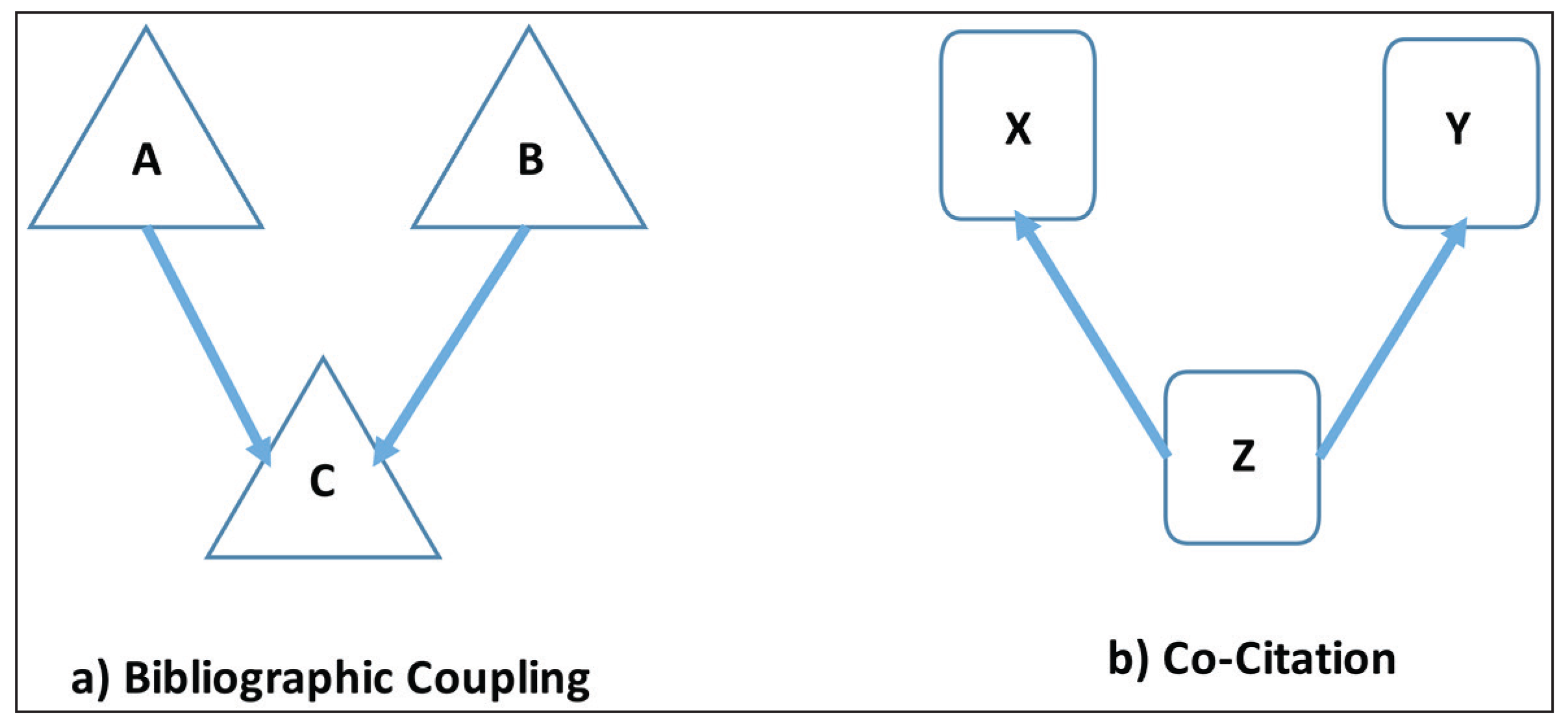
When bibliometric techniques are used to develop networks, they are commonly referred to as bibliometric networks. In this article, we employ bibliometric techniques, namely, co-citation and bibliographic coupling analysis, to develop such networks and supplement it with standard tables of direct citations to enhance the overall understanding of the subject matter. Co-citation is said to have occurred if there is a third publication that cites two of the same papers (Marshakova, 1981; Small, 1973). When a large number of papers cite two of the same papers, their co-citation linkage would thus be stronger. Bibliographic coupling attempts to capture the degree of overlap in the publications. Two papers are bibliographic coupled if there is a third publication that is cited by both papers (Kessler, 1963). According to Kessler, when two papers share a large number of publications, they would have a strong bibliographic coupling, relatively. Both these techniques are referred to as cross citations, indicating the relatedness of publications on a topic and are illustrated in Figure 1.
While many approaches exist to create bibliometric networks, in this article, we use the distance-based approach, visualisation of co-citation networks (White & Griffith, 1981). In the distance-based approach, the distance between nodes in the network indicates the degree of relatedness of the nodes, that is, the smaller the distance, the higher the relatedness (Van Eck & Waltman, 2017). The process of building these networks involves a series of steps once the specific papers for analysis have been identified. The first step is the preparation of a citation matrix and a frequency matrix which is used for the generation of a matrix of correlation coefficients. Later, these correlation scores are used to generate factors, and the distances between citations are scaled and presented for inferences. The technical details of these procedures are elaborated in Waltman, Van Eck, and Noyons (2010).
We use the VOSviewer (VOS stands for ‘visualisation of similarities’) program for analysing bibliometric networks, as well as the visual presentation of the networks. While historically multidimensional scaling is used for the mapping of the bibliographic networks, VOS uses specific procedures which are elaborated in well-established scientific publications in related fields and is claimed to create maps which are more reliable (Van Eck & Waltman, 2010). The VOS program also allows for special text mining features, as well as greater choices (e.g., network, overlay and density) in the visualisation of the network, allowing the user to choose the option and providing greater clarity in the presentation. In the next section, we present the procedure employed to identify studies related to franchising.
Selection of Papers
Since this study is one of the first bibliometric studies on franchising, our goal for sample selection was to be inclusive enough to capture franchising-related English language articles published in quality journals globally. We felt limiting the choice of selection to journal articles (as opposed to books or conference papers) would serve as a measure of quality. After an extensive review of literature databases with inputs from subject area experts, we decided to use the ISI Web of Knowledge that claims to include about 8,500 high-impact journals in the world. One other reason for this is choice, is that this database stores the collection of references used in the selected articles, which is required for analysis. The ISI Web of Knowledge has been used in several academic publications in studies and generally well-regarded and used by many academic libraries in the world.
The time period of this study was chosen to be from 1988 to 2017. Two reasons lead us to this choice. First, the Social Sciences Citation Index (SSCI) and Science Citations Index Expanded (SCI-Expanded) both of these are relevant to this topic, started its full coverage from 1988. Two, we felt that a 30-year window would be a reasonable time frame for research done on this topic. We acknowledge that these choices will lead us not factoring articles published in journals not covered by Web of Science or in other languages other than English or that have been published before 1988. Despite these limitations, we believe that the articles captured are a reasonable sample of the articles published on franchising. Our next step was to identify articles related to franchising in the Web of Science database within the following categories: business, management, business finance, management, operations research, management science, hospitality-leisure-sports-tourism and ethics. We used several keywords (i.e., franchising, franchise, franchisee, franchisor, franchising system, etc., in singular and plural forms) to capture all articles related to franchising. This search resulted in identifying about 893 articles.
A quick review of these articles indicated that many would fit outside the domain of this article, which is on business format/trade name franchising. For instance, there were several articles on monopoly franchising (wherein a city may give a cable company franchising rights to sell cable services), sports franchising (e.g., NFL), and voter franchise (i.e., right to vote). Therefore, we needed to eliminate articles which did not focus on business format/trade name franchising. We formed a three-member expert panel to identify articles for deletion. Two members of this team were academicians from different business disciplines with significant exposure to franchising research, while the other was a senior MBA student with two decades of executive experience in the franchising sector. Initially, each of the panel members was independently asked to identify articles which did not fit the notion of business format/trade name franchising. Later, the three panelists met to discuss their rationale when there was a lack of consistency across the three until a complete agreement was achieved on the articles that should be dropped. This resulted in the final sample of 570 articles. A listing of these articles is available as a supplemental file from the author.
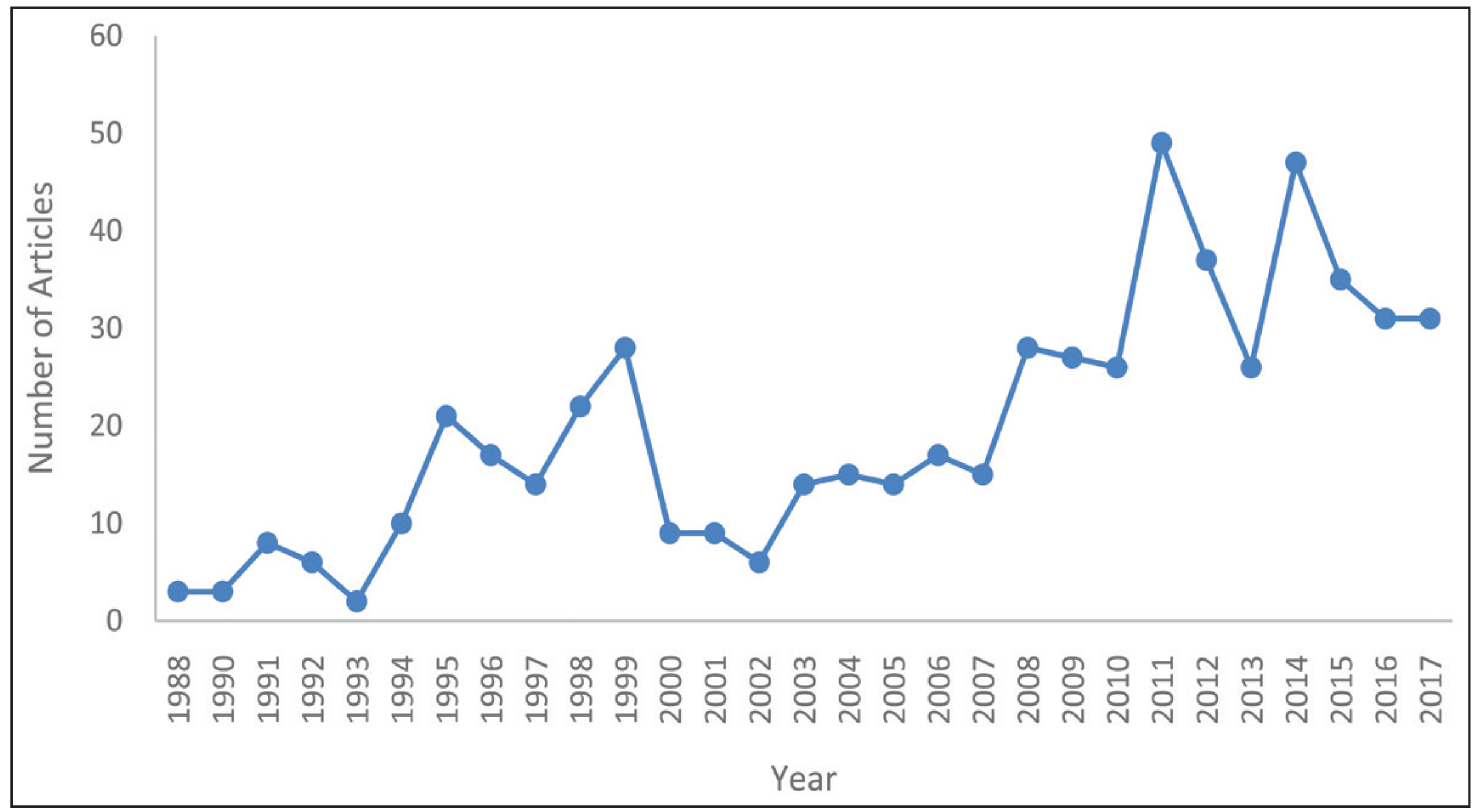
Figure 2 presents the publication year distribution of the papers considered for this analysis. As seen in the figure, there is a growth in the number of articles published in journals from 1988, peaking at 1999 with about 28 articles. After this, there is a lull in franchising publications for several years (2000–2002), following which the number of articles published start to increase again. In 2011, 49 articles were published related to franchising, the largest number of articles published in 1 year during the last 30 years. In the last 3 years of the review period, about thirty plus articles on franchising were published (2015: 35; 2016: 31; and 2017: 31).
Results
In this section, we present the results of the bibliographic analysis. Initially to provide an overview of franchising publications, tables showing a summary of leading papers with direct citations as well as count measures of authors, universities and countries are presented. Next, we present the results of co-citation analysis, bibliographic coupling and bibliographic cartography analysis.
Table Summary
Table 1 presents the 25 most cited franchising articles along with their relative ranks. The total citation received by these articles are presented in two categories, namely citations in the Web of Science Core Collection journals (referred to as WoS in Table 1) and Total Citations which adds citations in BIOSIS Citation Index, Chinese Science Citation Database, Data Citation Index, Russian Citation Index and SciELO Citation Index to the Web of Science Core Collection (referred to as All in Table 1). Since these articles were published in different years, citation numbers were adjusted by dividing the number of years (e.g., 2017 – 2005 = 12 for Cachon et al.) that have passed since the article was published. Contingent on the citation measure, on the average, indicates that these articles have between 13 and 14 citations annually.
Franchising-articles with Most Citations
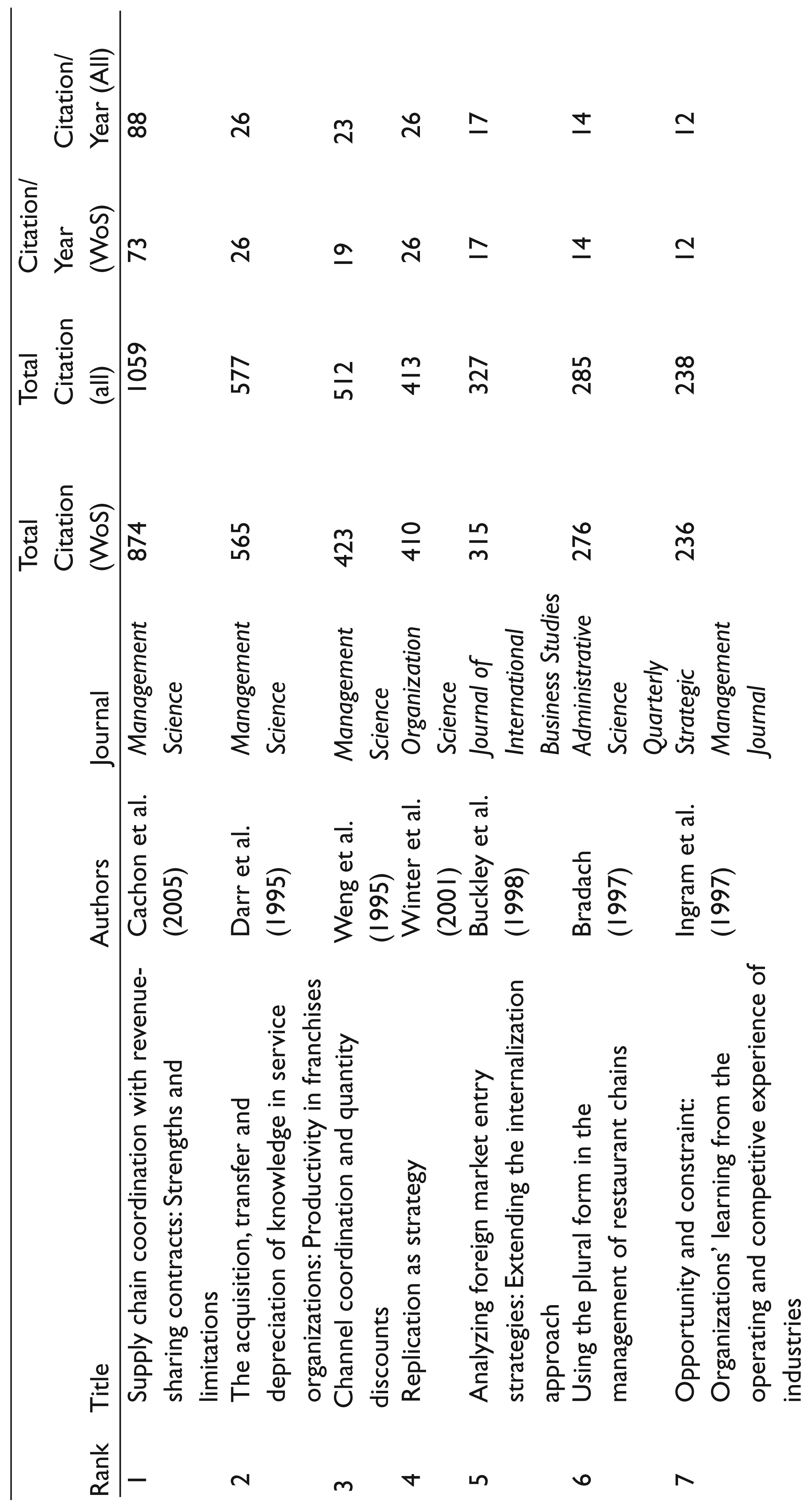
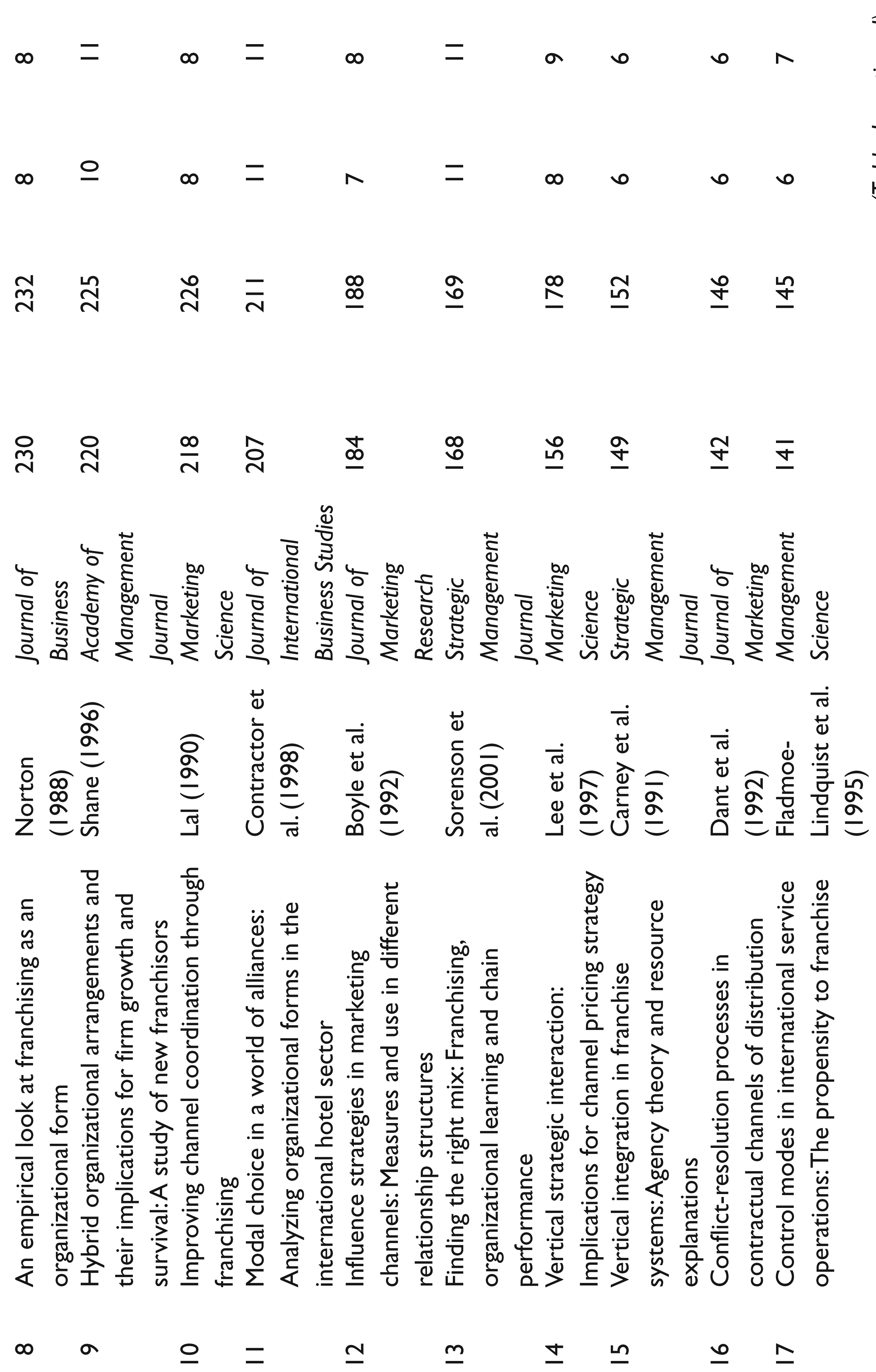
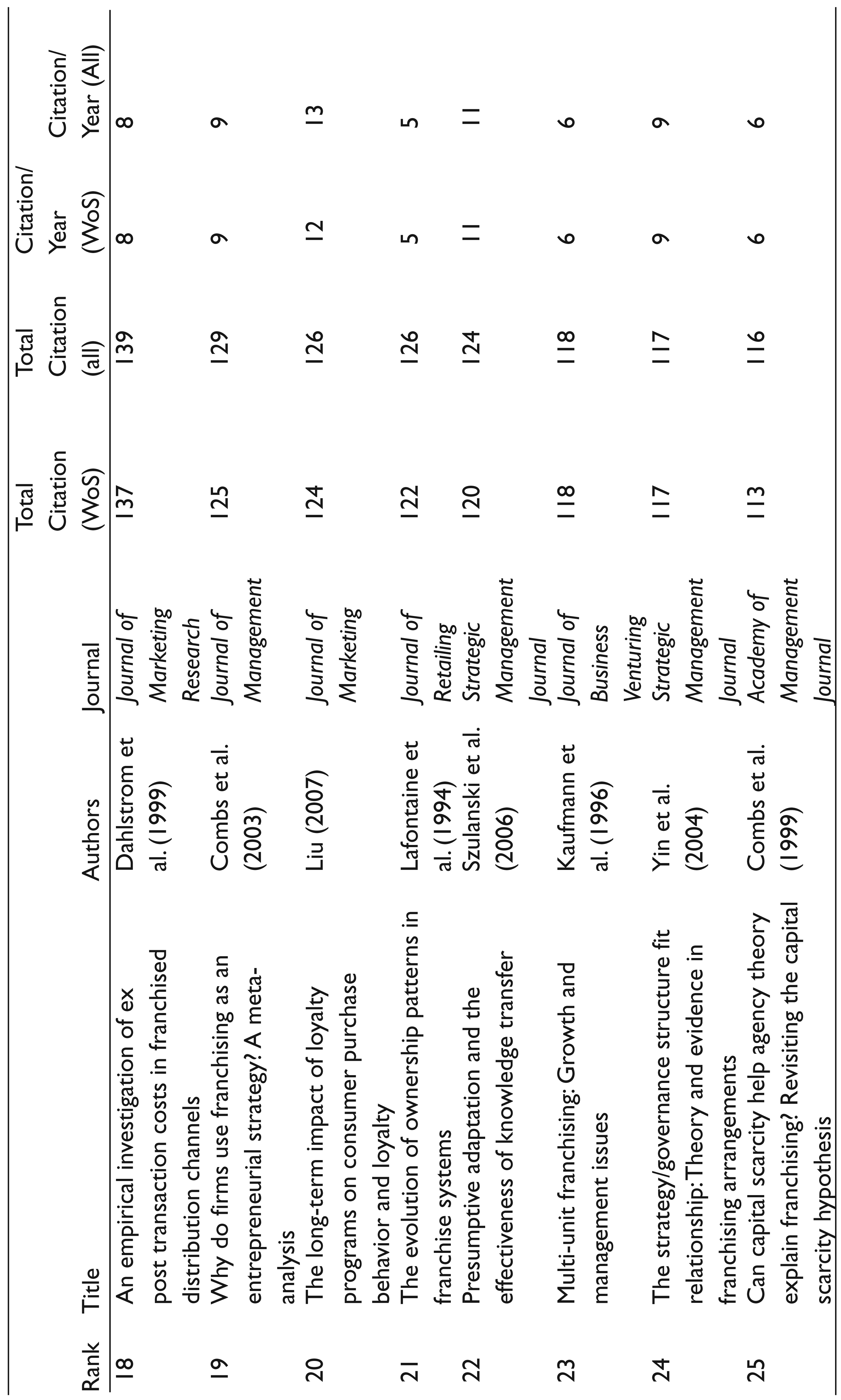
Interestingly, we found that the top three articles with the largest number of citations were all published in Management Science. Strategic Management Journal has the largest number of entries (i.e., five) among the 25 articles. In order to differentiate and highlight the papers which have contributed to franchising literature across the three decades, we rank them separately in three groups and presented them in Table 2. Our analysis indicate that papers published during the years 1988–1997 received about 7.5 (7.4–7.8) citations, while those published during the years 1998–2007 received about 12 (11.16–13) citations, and those in the most recent decade (2008–2017) received about 7 (7.16–7.36) citations per year.
Franchising-articles with Most Citations Across Three Decades


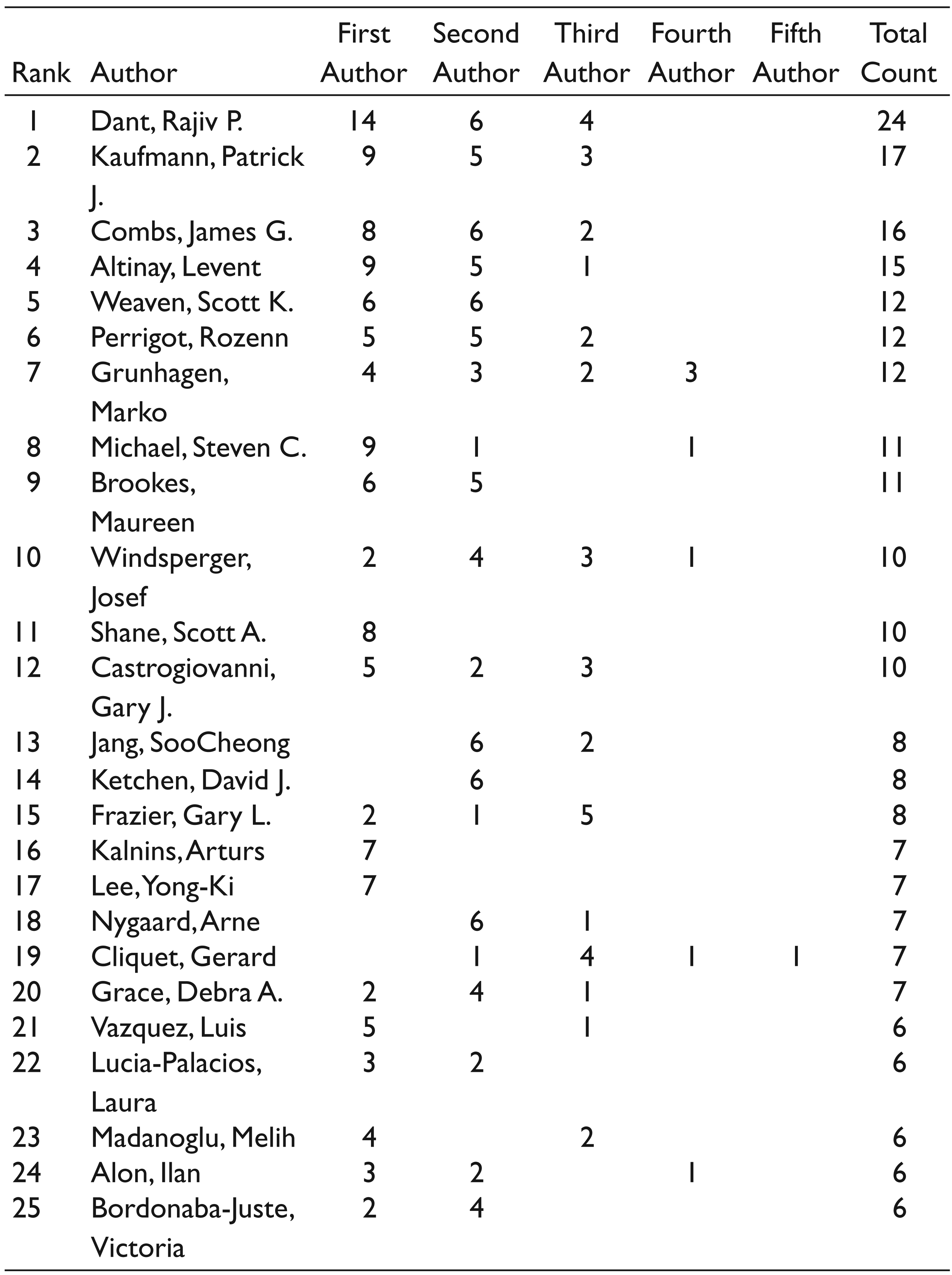
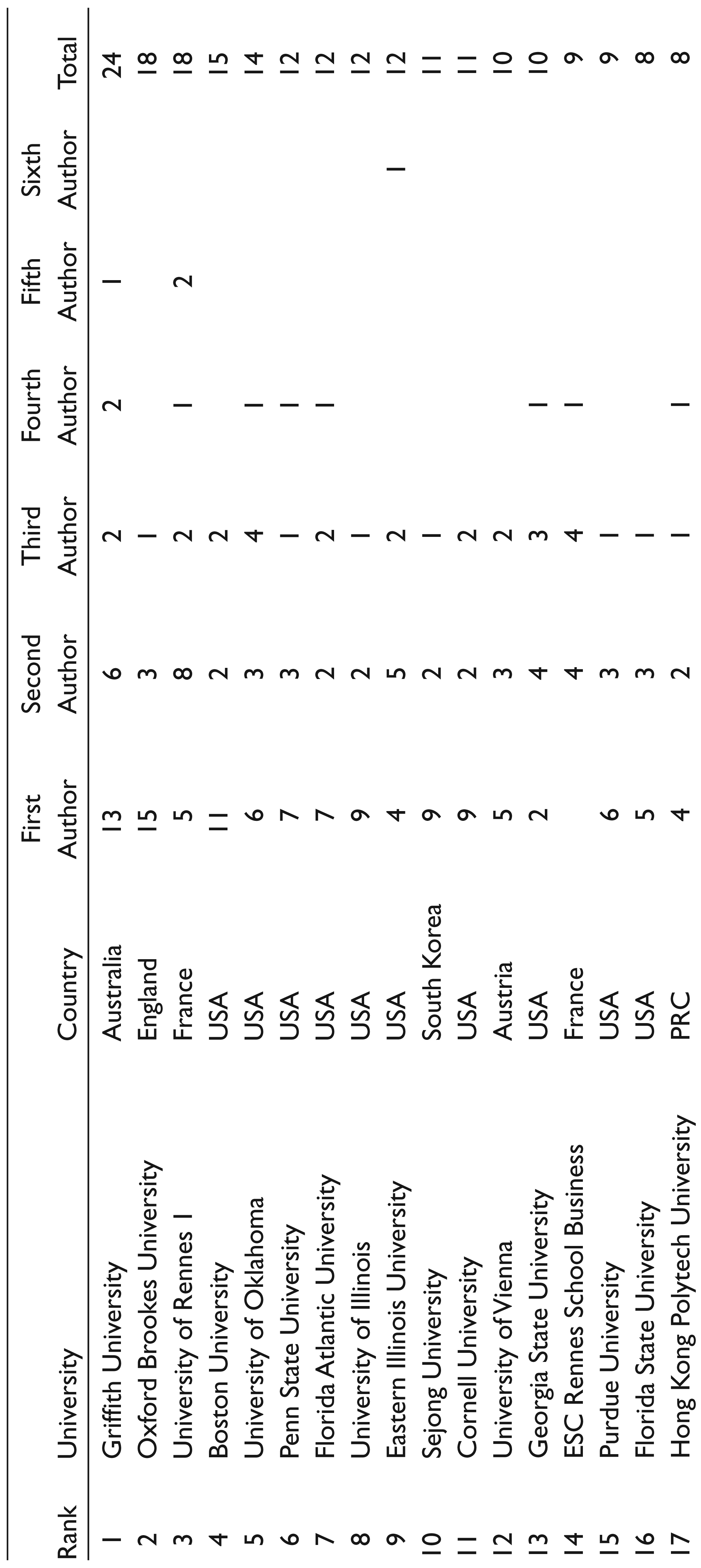
Table 3 presents the authors who are most active in franchising literature, with Rajiv Dant having 24 publications in the last three decades. The top 12 authors working in this area have 10 or more papers on this topic. Table 4 provides a listing of the journals which are active in franchising research. Journal of Small Business Management, Service Industries Journal, Journal of Business Venturing, Journal of Retailing and Journal of Business Research have at least 29 or more articles related to franchising. Table 5 presents institutions which are most active in franchising literature. Griffith University, Oxford Brookes University, University of Rennes, Boston University, University of Oklahoma and Penn State University had the highest number of published papers.
Authors Most Active in Franchising Literature
Journals and Citation Impact of Franchising Articles
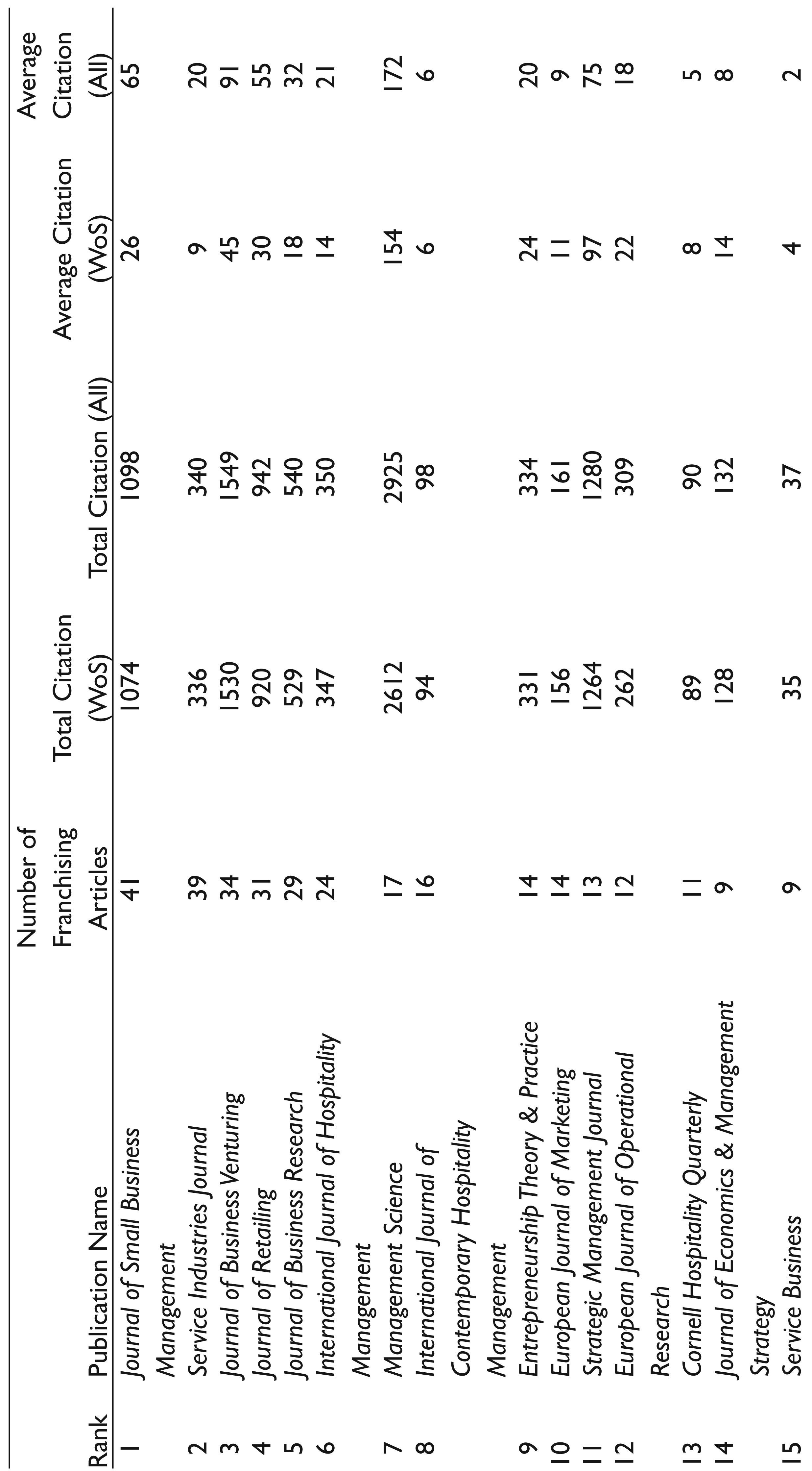
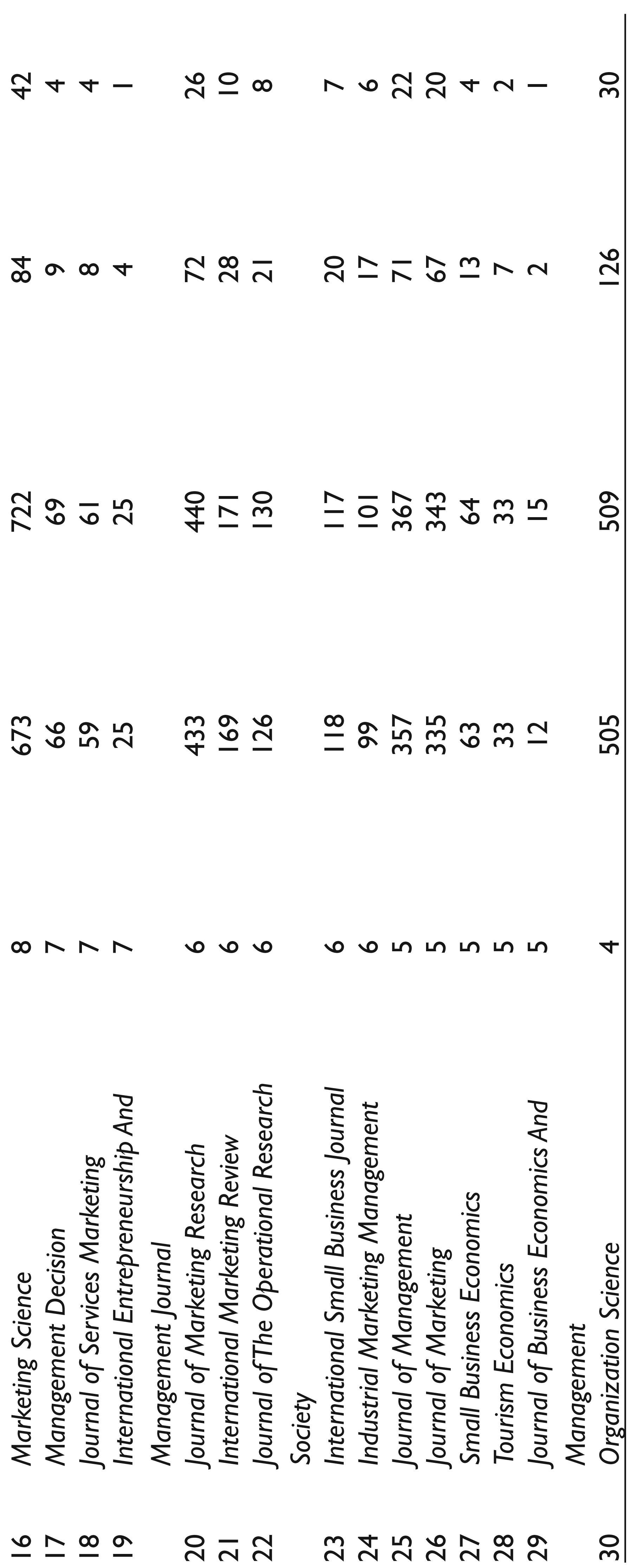
All = Total Times Cited Count (Web of Science Core Collection, BIOSIS Citation Index, Chinese Science Citation Database, Data Citation Index, Russian Science Citation Index, SciELO Citation Index)
Universities Most Active in Franchising Literature

Co-citation Analysis
In co-citation analysis, the assumption is that published articles in scholarly journals build on similar articles that have already been published (Van Raan, 2012). Therefore, using co-citation analysis, we seek to reveal commonalities in franchising research and also understand the articles which serve as a foundation for franchising research. In order to have a reasonable number of papers for this analysis, we required that for a paper to be included in the analysis, it needed at least 30 citations. This resulted in 67 publications which were used extensively in franchising literature. To develop clusters based on the co-citations of these authors, we normalised the data using LinLog layout technique and the modularity clustering technique (Newman, 2004; Noack, 2007). The three clusters developed in this analysis are presented in Figure 3.
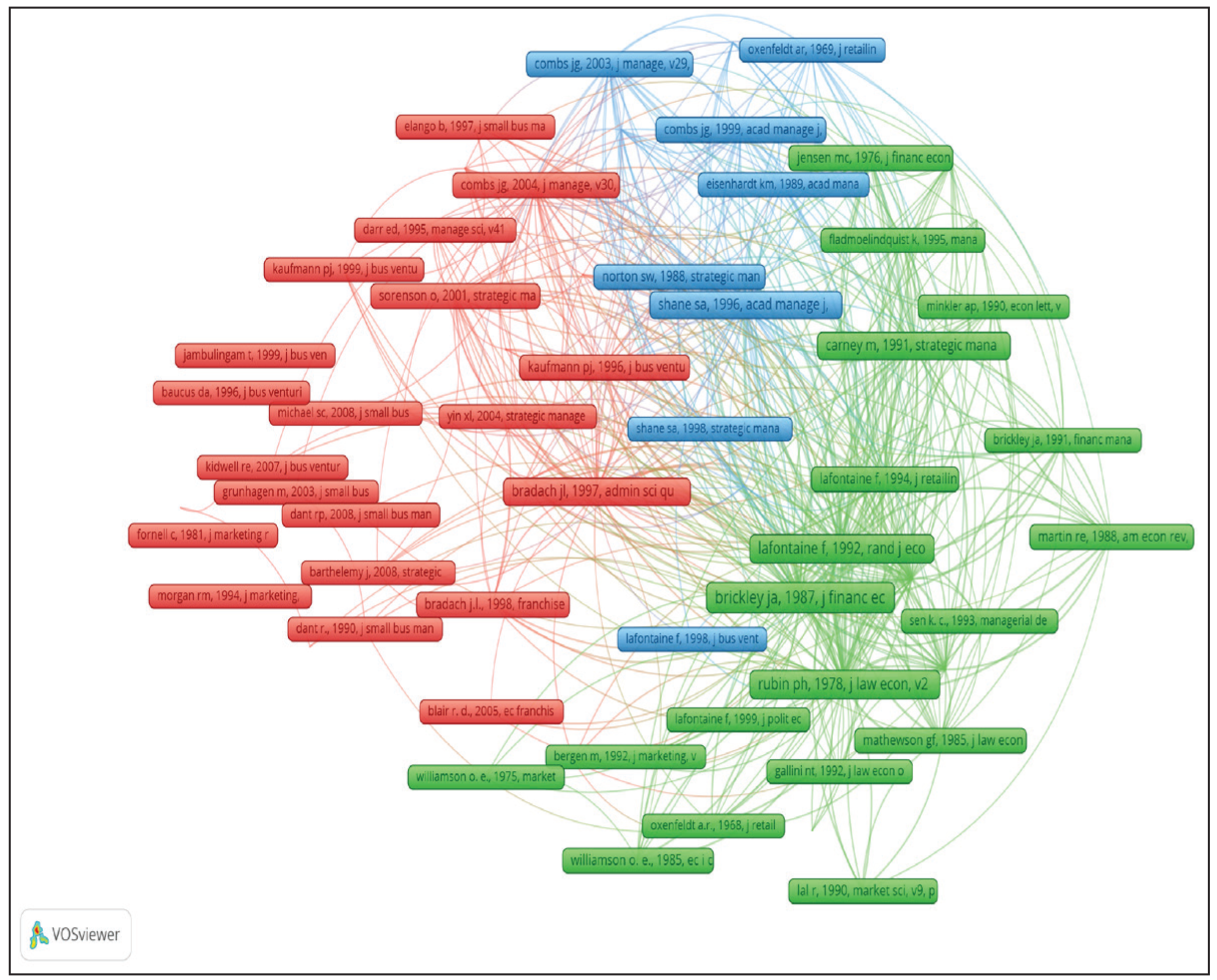
This figure illustrates the articles which have served as the intellectual foundation for franchising-related papers. The articles are presented in clusters, and clusters are optimised to remove any overlap so that an article can belong to only one cluster. Articles located closer to one another indicate a higher frequency of co-occurrence and greater relatedness in terms of co-citation. The colour of the item represents the cluster the article belongs to. A content analysis of these articles indicates three themes: rationale of franchising (green cluster)—why should franchising exist; optimising franchising choices (blue cluster)—choice of company-owned and franchised units; and franchising operations (red cluster)—managing the franchising system effectively. Additionally, it should be noted that not all these articles are from the domain of franchising. Some of them are from the broader domain of literature (e.g., finance, marketing, management, economics, law, etc.) from which franchising articles have drawn.
Bibliographic Coupling
To understand the knowledge base of franchising literature, we conducted a bibliographic coupling using the source journal. The criterion used was that a journal should have at least five papers and at least 30 citations. We developed clusters using procedures elaborated earlier in the co-citation section. Our analysis indicated a three-cluster solution (represented in different colours), which is visually presented in Figure 4. The blue cluster is made up of five (primarily Hospitality) journals. Four of these are visible (International Journal of Hospitality Management, International Journal of Contemporary Hospitality Management, Tourism Economics, and Service Business), while International Marketing Review is not. This happens because if labels overlap, VOS tends to drop one from the figure to increase clarity.
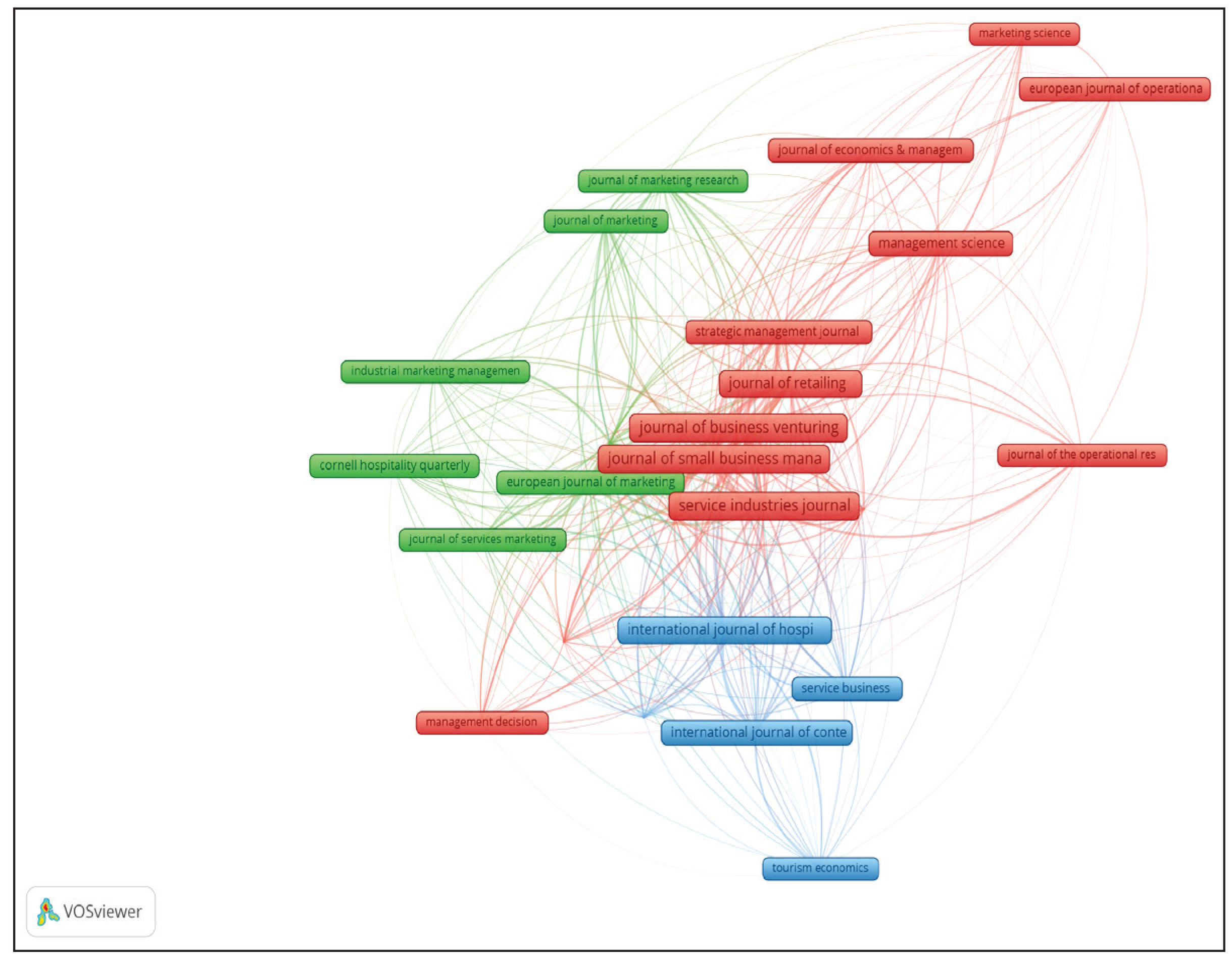
The green cluster with seven entries is made up of six marketing journals along with the Cornell Hospitality Quarterly. Interestingly, while three of the hospitality/tourism-related journals were in the blue cluster, Cornell Hospitality Quarterly is in the green cluster with marketing journals. The red cluster with 14 entries is made up of 11 entrepreneurship and management journals (Entrepreneurship Theory and Practice, International Small Business Journal, and Journal of Economics and Management are not visible in Figure 4), along with Journal of Retailing, Marketing Science and Service Industries Journal. A review of Figure 3 indicates that there are tight linkages between some of the functional area journals, which are illustrated by their proximity. However, there are also strong linkages (represented by the many lines) across clusters, indicating that there is much knowledge sharing in franchising research across functional areas.
Bibliographic Cartography Analysis
Based on the co-occurrences of common keywords in abstracts of the 570 papers identified, we also conducted cartography analysis. The number of co-occurrences of two keywords that appear in an abstract can be used to make an inference of commonalities or on-going patterns in research (Peters & Van Raan, 1993). To identify popular terms in franchising papers, we selected terms that appeared at least 25 times. Based on this criterion, a total of 94 terms were identified, and for each of them, a relevance score was calculated. The relevance scores are ranked for 94 terms and the top 60 per cent (i.e., 56 terms) of these scores are presented in Figures 5 and 6. Figure 5 visualises the keywords as clusters and presents them in groups based on their commonalities, while Figure 6 shows the shift in the focus of topics across time. The size of the label and the circle of the item represent the relative importance of the article, and lines between them represent links.
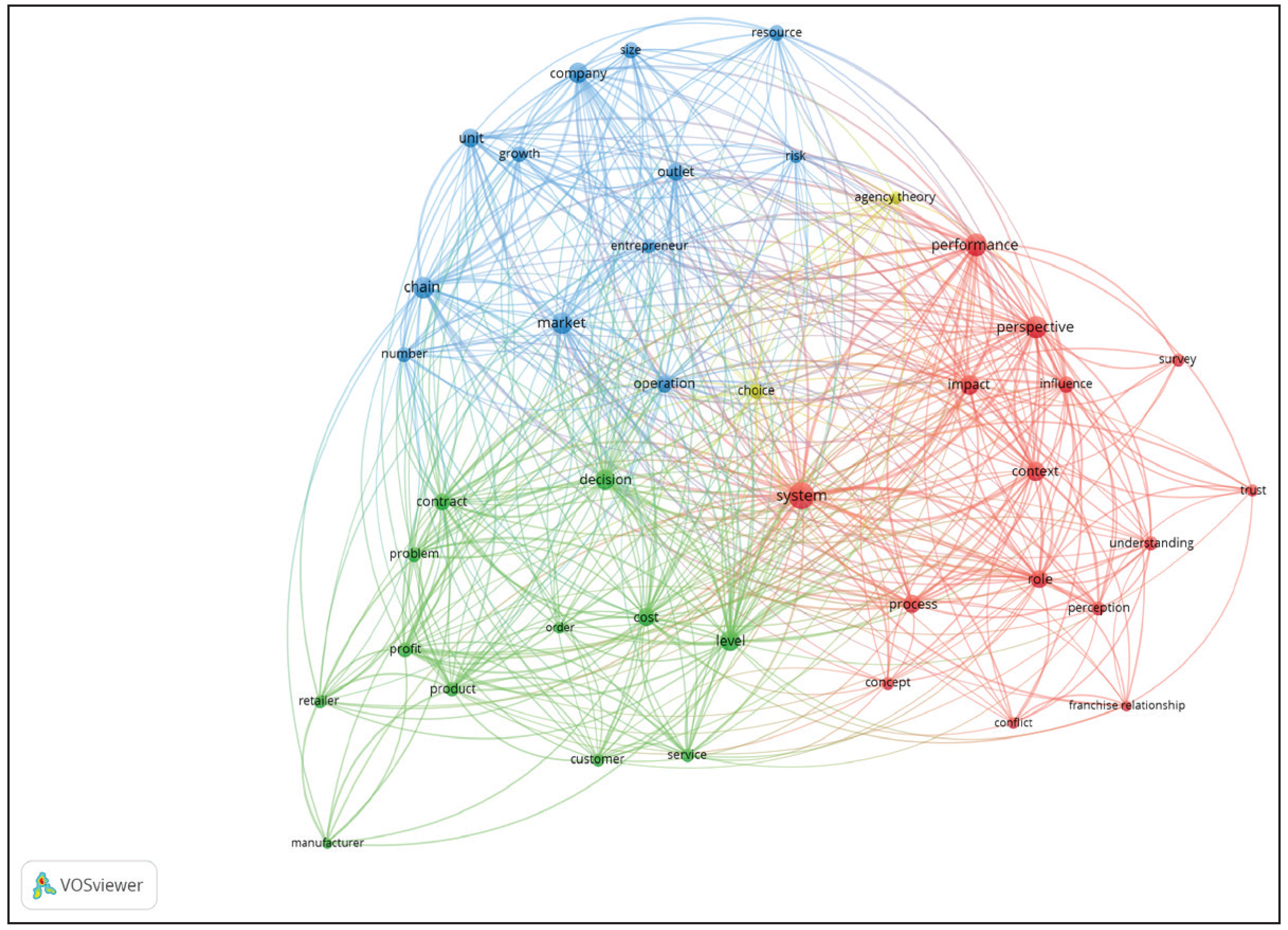
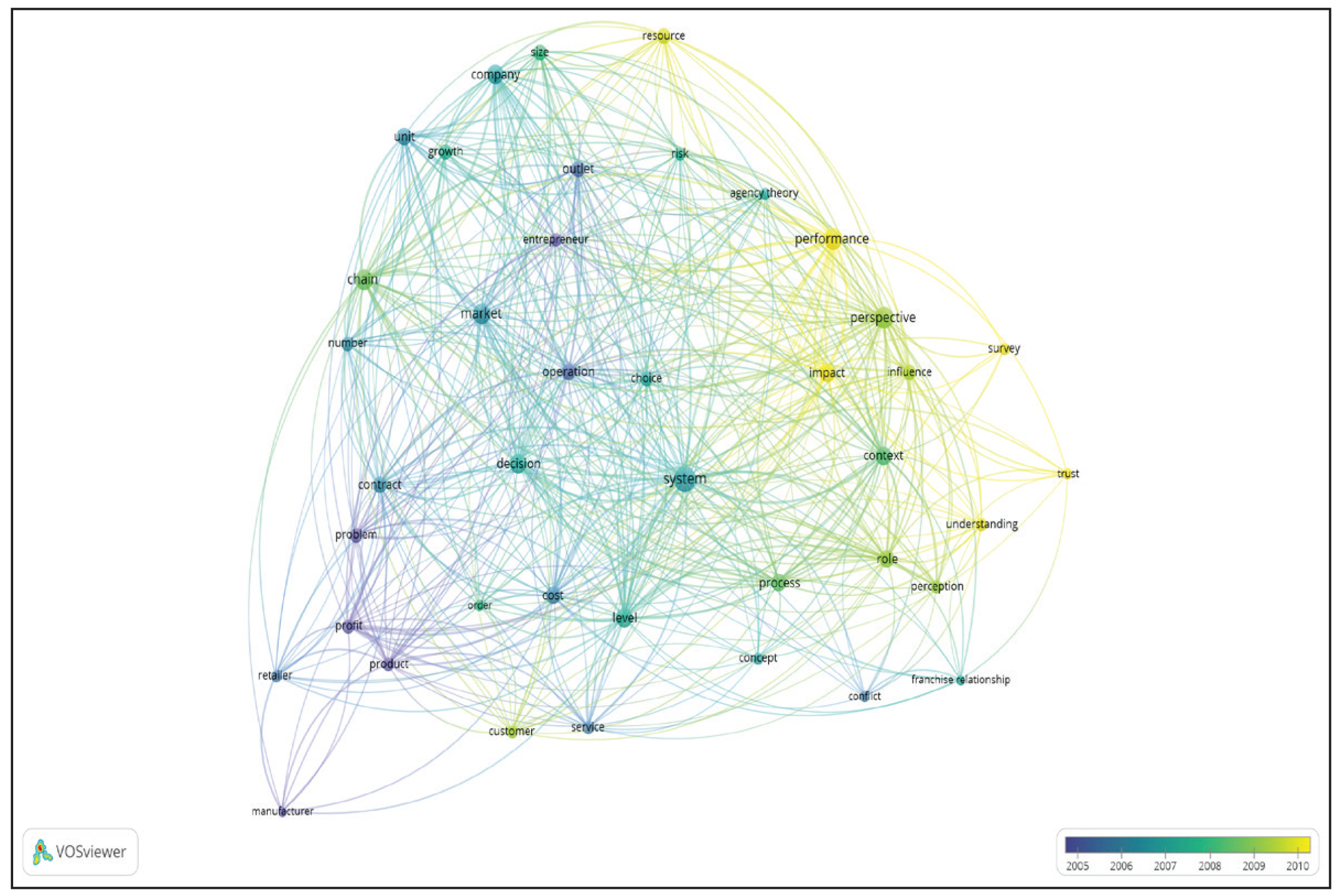
Figure 5 indicates three clusters of keywords exist, represented in red, blue and green, with each of them focusing on different elements of franchising system management. The red cluster keyword emphasis is on franchisor-franchisee elements of franchising relationship, while the blue cluster emphasises the balance of company-owned and entrepreneurial elements of franchising, and the green cluster is at the organisational level optimisation of franchising. Figure 6 indicates the time trend in the change of topics. Topics in darker shade indicate topics of interest in earlier years, while lighter shades reflect topics of more recent interest. It seems that in earlier years, agency theory and related issues were key factors driving franchising research compared to recent years. Recently, there seems to be a shift in topical interest to elements of performance, trust, resources and overall understanding.
Conclusion
In this section, we highlight the key inferences of this study and later offer suggestions for future research before concluding this article.
Key Inferences
Franchising research during the last three decades has appeared in a variety of journals while making significant advances in our understanding of this important facet of the business landscape. The following observations can be made on extant research. First, franchising research is a truly multidisciplinary area with articles appearing in many functional area journals within the business domain, along with a set of focused articles appearing in hospitality management related journals. Clearly, franchising research is published in a wide variety of journals and has established itself as an important area of research. Second, the number of articles on franchising has shown an increasing trend in output over each of the three decades studied. These articles published in the three recent decades have become more rigorous, academically sophisticated and impactful. There seems to be a positive trend in the quality as well as the utility of articles published, indicating the promise of this topic. Third, the majority of the top 25 articles with most citations have more than one author, a pattern consistent with the overall trend in many business-oriented academic journals. Fourth, the top three universities active in franchising research are outside of the USA, indicative of global interest on this topic, even though 14 US-based universities are ranked within the top 25 schools active in franchising research. Fifth, of the papers reviewed here, US-based (first) authors have 260 publications (about 45%). It is encouraging to see a global community of scholars involved in franchising contributing to the remaining 55 per cent of the studies. Sixth, Rajiv Dant, Patrick Kaufmann and James Combs are the most active authors in franchising, and the number of publications by them ranges from 16 to 24. Seventh, franchising research is characterised by a variety of papers (i.e., conceptual, case studies and empirical) following inductive and deductive methodologies. While the first decade was characterised by a relatively greater number of conceptual and empirical papers (based on percentages), in recent decades there have been fewer conceptual papers with an increase in case studies and empirical papers indicating the development of this field. Eighth, franchising studies employed use a diversity of primary and secondary data sources along with a variety of statistical analysis procedures. For primary data, while researchers primarily use surveys, other data collection techniques such as interviews, field studies, focus groups and observation methods have been deployed. Among secondary data sources, the Uniform Franchise Offering Circular (UFOC) which includes 23 items of information has served as an important data source for franchising research. The US Federal Trade Commission requires franchisors to disclose this information to potential franchisees along with franchise agreement, which has aided franchising research very well. Among statistical techniques, regression analysis is used most frequently. Ninth, while the majority of studies used a US-based sample, other countries studied include Spain, Australia, UK, France, Taiwan, Germany, South Korea, China, Brazil, Turkey, Norway, Canada, Japan, etc., along with a few multicounty samples. Finally, while earlier research focused on the reasons for franchising to exist and optimising the choice between franchising and company-owned units, in recent times, the emphasis has shifted toward managing the franchising system efficiently, indicative of the maturing of the topic.
Suggestions for Future Research
While the presentation in this article has thus far been based on specific criteria assessments of franchising research, this section is more subjective and reflective of the authors’ opinion, based on an integrative review of the articles. In this subsection, we highlight key issues which need attention in future research. Unlike the conventional qualitative review, it does not seek to offer specific recommendations on research topics. The underlying motivation for such reflection, based on analysis of a paper review, is to present an overall assessment of the literature over the past three decades in a thematic manner which, coupled with the inferences presented, could serve to increase the utility of future research on franchising.
Recognise the varied actors involved in franchising. While franchising research has evolved in many ways, future research needs to find a way to accommodate the multitude of factors driving franchising outcomes, as well as the motivation toward franchising. Franchising can be visualised at three levels, namely, franchisor, franchisee and franchise system. However, this multidimensionality with many actors and differing motivations complicates or confounds even straightforward research questions if not carefully dealt with. For example, if a study’s focus is determinants of performance, the question ‘what is a performance?’ is contingent on whose perspective it takes, namely, franchisor, franchisee, or the shareholders of the franchise system. Therefore, future research should be cognizant of and acknowledge the factors driving commonalities and delineating differences between and across varying levels. To increase the precision of the research being done, these should highlight specific assumptions and perspectives in order to reduce needless confounds in its interpretation. In recent years, the development of multilevel statistical/optimisation models allow for the accommodation of the various levels of franchising quite effectively, offering many opportunities for new research which we hope future researchers will exploit.
Recognise the multiple drivers involved in determining franchising outcomes. Many studies in franchising largely assume the effect of many external drivers to be consistent across industries and environmental conditions. Based on the strategic management paradigm, one could argue that the efficacy and effectiveness of many choices made in franchising would be contingent on the type of country environment, industry and product-service characteristics. Barring a few instances where industry/environmental controls are used, in most cases, the assumption seems to be that the findings will hold across varied circumstances. Therefore, future research can extend current findings in franchising, by testing if these findings hold new contexts. Some examples of potential queries which need empirical verification in this context include: Is franchising more suitable in industries where there is a greater need for greater personal customer contact (i.e., soft versus hard service)?; Does the type of resources held by the franchisor impact the setup and operations of the franchise system?; Does the desirability of franchisee characteristics vary by national characteristics (e.g., culture)?; Do formal and informal institutional characteristics across countries impact the efficacy of the franchising system?; Is the choice of franchising system parameters (e.g., royalty, fees, ownership, etc.) impacted by the industry life cycle?; Does the type of knowledge which needs to be transferred to the franchisee impact the design of the franchise system?; etc. Therefore, we call for future research to design studies and account for and test these differences, which would increase the utility of the findings through the recognition of the underlying contingencies and boundary conditions.
Recognise the impending impact of Artificial Intelligence [AI] and Service Automation revolution on franchising. The potential ability of artificial intelligence and of machines to complete tasks hitherto reserved for human beings is being recognised and in the early stages of entry into many service businesses. While these innovations are relatively new and emerging, they do bring interesting and new avenues for franchising research. For instance, one of the justifications for the existence of franchising as an organisation form has been Agency theory, an assertion which has been supported in research. Agency theoretic arguments include the notion that managers/employees could potentially shirk in their duties in varied franchising units, resulting in high monitoring costs for the franchisor, thereby serving as a motivator for franchising, as this is less likely to happen with franchisee ownership. If both managers and employees could be completely replaced by machines (something currently at the experimental stage of testing by several franchisors), then it would require a revisit of some basic assumptions of franchising. Additionally, currently, innovation within the franchising system can be top-down (i.e., franchisor driven), bottom-up (i.e., franchisee driven), or both. In a system dominated by AI-driven machines, innovation opportunities could be different, wherein major innovations would be largely top-down, but machine learning could allow greater bottom-up optimisation in the local context. These issues are currently just emerging, and they present virgin territory for aspiring scholars seeking to make an impact in this area.
Closing Comments
This article presents an overview of the current state of research in franchising using bibliometric techniques. Such techniques as applied in this article minimise subjective inferences of the authors. To this extent, several tables and network diagrams illustrating varied linkages are presented, showing the intellectual structure of franchising research. The analysis provides insights for established and novice researchers, educational institutions and policymakers in understanding the evolution of the field and serves as an important complement to existing qualitative reviews of franchising research. We close this article by calling for future research to push the envelope of knowledge further on this organisational form which has the potential of offering meaningful and yet gainful employment through shared ownership opportunities.
Footnotes
Acknowledgements
The author thanks Chris Anderson, Vance H. Fried, Ama Ampadu-Kissi, Adem Firinci and Bastian Braukmann for research support.
Supplemental Material
Declaration of Conflicting Interests
The author declared no potential conflicts of interest with respect to the research, authorship and/or publication of this article.
Funding
The author received no financial support for the research, authorship and/or publication of this article.