



Abstract
Gender inequality is an obstacle to inclusive growth, and literature reveals shortcomings in the basic entrepreneurial assumption of equal access to resources, support and economic opportunities for women. International bodies have emphasised the need to examine gender differentials at various levels like, country, organisational and individual levels. Our study is a novel attempt in this direction and aims to build a comprehensive understanding of gender differentials in entrepreneurship using multi-method research design. We analyse and integrate findings from the macro-level using national level datasets (NSSO and Economic Census) and the micro-level using surveys (primary data and GEM India data). Our results note a gender equality lacuna, calling for the need to include meaningful sex-disaggregated data in national surveys, the entrepreneurial intentions of women, behavioural traits impacting women entrepreneurs, the importance of entrepreneurship education, fear of failure, self-confidence and the need for role models. We propose a model of macro and micro factors impacting women entrepreneurship in developing countries.
Keywords
Despite the rising concerns in the literature on glaring inequalities that women face (Carr et al., 1996; Kantor, 2002), there is still a long way to go in terms of achieving gender equality in economic opportunities. The World Bank (2011) defines male or female gender in terms of factors, explicitly, attributes (like social, cultural and behavioural), expectations and norms. And gender equality is defined in terms of ‘how these factors determine the way in which women and men relate to each other and to the resulting differences in power between them’ (World Bank 2011; World Bank Group, 2015, p. 6).
In the past, the gender discourse has largely been around female workers who are poor or factory workers (Alamgir & Alakavuklar, 2018; Kantor, 2002). The main forms of gender-based equality or differentiation examined in the literature are around geography or regions and sociocultural differences, which can influence economic opportunities for women (Carr et al., 1996; Cowling, 2000). A growing stream of research in entrepreneurship is also engaging in the gender discourse (Bardasi et al., 2011; Brush et al., 2019; Goyal & Yadav, 2014; Jennings & Brush, 2013; Yadav & Unni, 2016). Evidence from global surveys conducted by GEM (Shukla et al., 2014, 2020) also repeatedly reveals gender sensitivity existing in early-stage entrepreneurial activity due to cultural or socio-economic factors.
Brush et al. (2019) revealed a false assumption existing in entrepreneurship ecosystems, which assumes that both male and female entrepreneurs have equal levels of support and equal access to resources in starting a business. They suggest reality contradicts this assumption and ‘women are at a disadvantage’ (Brush et al., 2019, p. 393) when starting a business and even succeeding in it. Researchers highlight the need to examine gender inequalities in entrepreneurial ecosystems (Brush et al., 2019) and policy (Foss et al., 2019), encompassing various levels like institutional, organisational and individual. Our study is a novel attempt in this direction that aims to extend the literature on women entrepreneurship using a multi-method research strategy that explores the phenomenon from a macro and micro level.
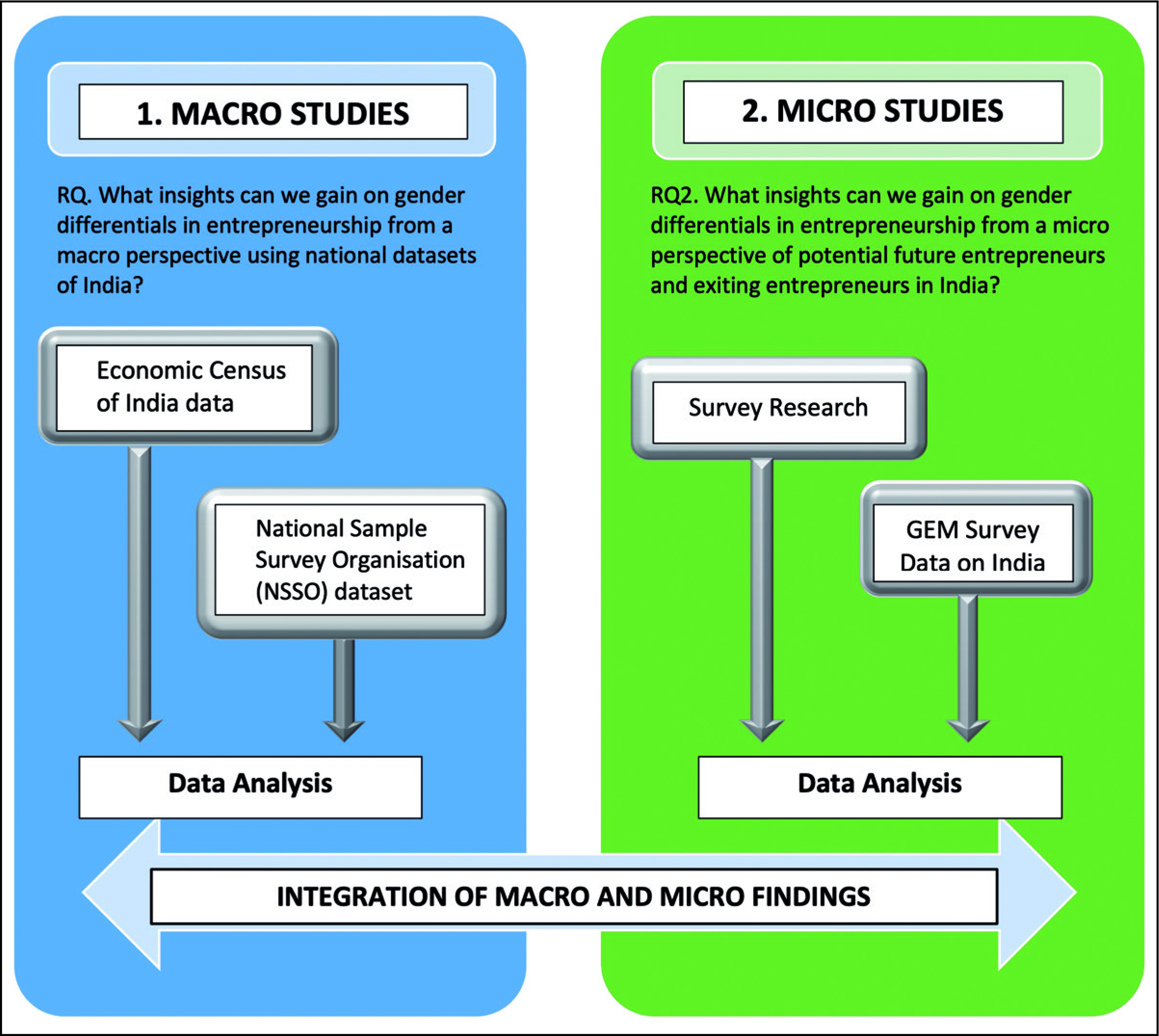
The research objective of our study was to explore gender differentials in entrepreneurship from a macro as well as micro perspective in India (Figure 1). The findings presented in this article were a part of a large research project funded by the Indian Council of Social Sciences Research (ICSSR). In this article, we first present a brief review of the literature. Next, we discuss our research questions, multi-method research design and findings from our macro and micro studies. We conclude the article with a summary of our integrated findings and highlight the implications for research and policy. We also propose directions for future research as a framework of macro- and macro-factors impacting women entrepreneurship in developing countries.
Literature Review
Evolution of the Gender Discourse in Entrepreneurship Research
The research inquiry into entrepreneurship has come a long way from displaying blindness or denial towards gender inequalities in organisations to gender being an accepted area of research investigation (Acker, 1990; Grosser & Moon, 2019; Lewis, 2014; Yadav & Unni, 2016). Research on gender and entrepreneurship area dates back to the emergence of feminism research in the 1970s as a consequence of masculinity and the overpowering dominance exhibited by men in organisations (Acker, 1990). In the theory of gendered organisations, Acker (1990) proposes that organisational structures deeply embed gender, which demonstrates how masculinity gets built into the norms of management and organisational processes. As a result, there is a likelihood of pressure being exercised on individuals to enact masculine identities that abide by the organisational norms of doing the job well (Lewis, 2014; Nentwich & Kelan, 2014).
Lewis (2014, p. 1854) reviews literature on gender and entrepreneurship and reports that women entrepreneurs inhabit both masculine and feminine realms. As a result, they juggle between ‘both masculinity and femininity’. Research in the field of gender studies conceives post-feminism as a theoretical lens that can help build an understanding of engagement, heterogeneity and the evolution of feminism by connecting it with other philosophical and political movements of change (Gillis & Munford, 2004; Lewis, 2014). Braithwaite (2002) suggests post- feminism as a theoretical stance, highlighting that there is a shift in the categorization of feminist issues and questions posed. As a result, the breadth of feminist issues in current times has significantly increased as compared to the past. Brooks (1997) calls post-feminism as a perspective to link with other feminist discourses.
Women Entrepreneurship Research
Majority of the literature on women entrepreneurship tries to examine gender differentials and compare women versus men by their distinctive entrepreneurial traits like motivations, personality and experience (Ahl, 2002; Sexton & Bowman-Upton, 1990; Verheul et al., 2006) or firm characteristics like firm size, strategy, management and performance (Gundry & Welsch, 2001; Watson & Robinson, 2003). Some studies also examine differences between male and female entrepreneurs using personal attributes and business characteristics, for example, differences in starting a business, having different backgrounds, different goals and variation in business structure (Verheul et al., 2006). However, prior literature fails to explain the motivations or expectations of female entrepreneurs in terms of ‘how it really offers a better “balance” between family and work’ (Cardella et al., 2020, p. 1557).
Past studies highlighted that women entrepreneurs experience barriers and are unable to participate in a similar manner in entrepreneurial activities as male entrepreneurs. This is largely due to differences women experience in accessing resources and networks required to start and run a business. Brush et al. (2019, p. 393) advocate that ‘gender matters in ecosystems at the institutional, organisational and individual levels’. Raghuvanshi et al. (2017, p. 220) built a model using prior literature to identify five causal barriers to women entrepreneurship, including inadequate education and training in entrepreneurship, restricted ‘spatial mobility’ and family support, inadequate institutional support and business skills, and inability to acquire the finance required to run the business. Goyal and Yadav (2014, p. 68) report ‘difficulty in accessing finance, socio-cultural biases against women and low self-esteem, the existence of institutional voids and lack of skills and entrepreneurial education’ as key barriers to entrepreneurship for women living in developing countries. Literature also details barriers to women entrepreneurship in different geographic contexts like Malaysia (Loveline et al., 2014), Pakistan (Roomi & Parrott, 2008), Vietnam (Huy, 2019), UAE (Tlaiss, 2014), South Africa (Derera et al., 2014) and other nations.
Women Entrepreneurship and Behavioural Economics Research
The neo-classical economics model suggests that the choice to become an entrepreneur is built on expected utility gains from income and work conditions (Eisenhauer, 1995). Examining this further, Douglas and Sheperd (2002) developed the choice of becoming an entrepreneur (self-employed) based on a utility maximisation model of human behaviour, including factors like attitude towards work, risk, independence and income. They reported positive attitude to risk and a feeling of independence (being one’s own boss) as the most important behavioural traits impacting an individual’s choice to pursue entrepreneurship (self-employment).
Behavioural economics studies the effects of influencing individual behaviour through indirect suggestions or ‘nudges’ towards desired behaviour. Oliver (2015) argued that, besides trying to nudge people into desired behaviour, insights from behavioural economics can also be used to inform possible regulation or policy. Behavioural economists lay more emphasis on the context in which decisions are made, which becomes significant while exploring women entrepreneurship in developing countries. Scholars researching women entrepreneurship have also emphasised the role of context and suggested that context can affect individual attributes like risk-taking behaviour and self-confidence (Welter, 2020). We explore this further in our analysis. Specifically, we analyse how behavioural motivations may influence entrepreneurship using the Global Entrepreneurship Monitor (GEM) survey data from India (Shukla et al., 2014).
Research in the South Asian Context: Gender Inequalities at Work
Women continue to face discrimination at workplaces, which has been a disablement in the past (Acker, 2006; Bobbitt-Zeher, 2011) and it still continues to be an impediment to gender equality going forward (Hideg & Wilson, 2020; Wolfram et al., 2020). Consequently, the experiences that men have at workplace are relatively different from what women experience at workplaces (Bobbitt-Zeher, 2011). Feminist scholars in the past have examined the gendering of organisational practices and reported numerous attempts being made to eradicate gender inequalities, but inequalities still exist (Acker, 1990, 2006; Bobbitt-Zeher, 2011).
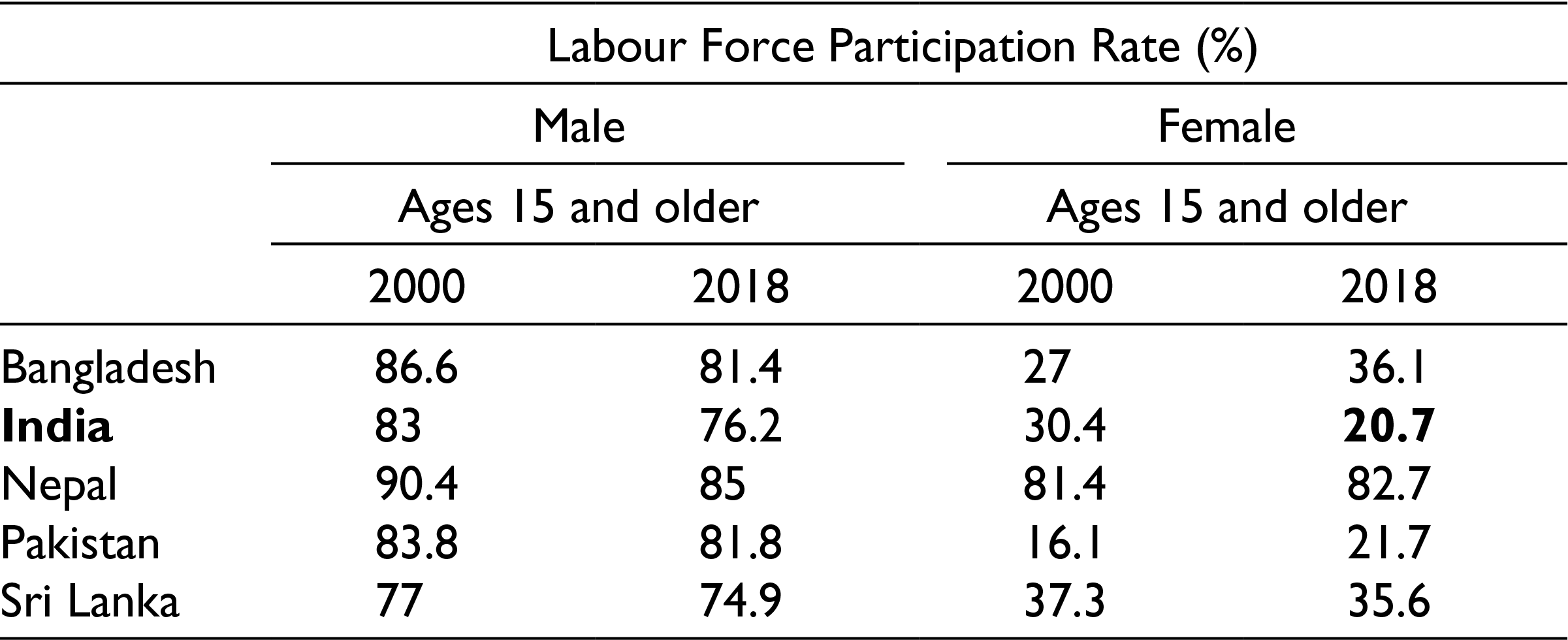
Recent World Bank data shows that the female labour force participation rate in South Asian countries, such as Bangladesh, Nepal and Pakistan has increased. India was an exception with decline in women’s participation (Table 1). There are many possible reasons to support this growing trend of increased women’s participation, namely, increased levels of education, increased employment opportunities, migration or necessity-based family pressures to enter labour markets (Unni, 2001). Despite the growing positive trend, labour participation rates for men in 2018 were much higher than for women in South Asian countries like Bangladesh (81.4% males and 36.1% females), India (76.2% males and 20.7% females), Pakistan (81.8% males and 21.7% females) and Sri Lanka (74.9% males and 35.6% females). The only country with a small gap in labour force participation was Nepal, having 85% of males and 82.7% of females in 2018 (Table 1). Women’s participation in India and Pakistan was the lowest as compared to the other South Asian countries. A significant proportion of women workers in South Asia are self-employed, a form of nascent entrepreneurship. A possible explanation could be socio-cultural pressures and institutional voids in developing countries (Goyal & Yadav, 2014) like India and Pakistan, which inhibit women from participating in markets or restrict them to working within their homes in family self-employed enterprises.
Labour force participation rate in South Asia
Multi-method Research Design and Research Questions
Many researchers have emphasised the benefits of designing multi-method studies that act as a simple yet powerful research strategy (Brewer & Hunter, 2006; Yadav et al., 2016) because they combine the strengths of more than one research method in a study. Thus, we adopted the multi-method research design, which involved two sets of quantitative studies: (a) macro-level studies using two national datasets and (b) micro-level studies using individual-level data from a primary survey and GEM survey data from India (Figure 1). Our study was funded by the Indian Council of Social Sciences Research (ICSSR) and was conducted during 2015–2017 by a team of researchers led by the authors. The research objective was to comprehend gender differentials in entrepreneurship from a macro- and micro-perspective. In the macro-level studies, we used national datasets like the Economic Census of India data and the National Sample Survey Office (NSSO) data. Our macro study was guided by the following research question:
In the micro-level study, we wanted to understand the perspectives of existing entrepreneurs as well as potential future entrepreneurs. Therefore, we conducted a survey of youth studying in higher education institutions in the National Capital Region (NCR) of India to explore gender differentials and their intentions to pursue entrepreneurship. Next, we analysed the individual-level data on Indian entrepreneurs using the GEM India data. Our micro-studies were guided by the following research questions:
Discussion of Findings: Macro Studies
What Do We Learn from the Economic Census of India on Gender Differentials in Entrepreneurship?
In India, six economic censuses have been completed till date: in 1977, 1980, 1990, 1998, 2005 and 2013. The seventh economic census that started in 2019 is likely to be completed by 2020–2021 as the Indian government extended the survey due to COVID-19 restrictions (Suneja, 2020). Therefore, in our study, we used the last three available data from the 1998, 2005 and 2013 census. According to the 2013 Economic Census of India, 58.5 million firms operate in India that includes 45.4 million firms (about 77.6%) engaged in non-agricultural activities (GOI, 2016, 2018). Out of the total 58.5 million firms, 34.8 million (about 60%) were in rural areas and the remaining 23.7 million were in urban areas. Under the non-agricultural enterprises category, around 30 million (about 66%) comprised of own account enterprises (OAE) that operated with only family labour. These OAEs were likely to be micro and small enterprises that fell under the informal or unorganised sector. In this sector, around 5.2 million non-agricultural firms were operated by women, which comprised 11.2% of all non-agricultural firms.
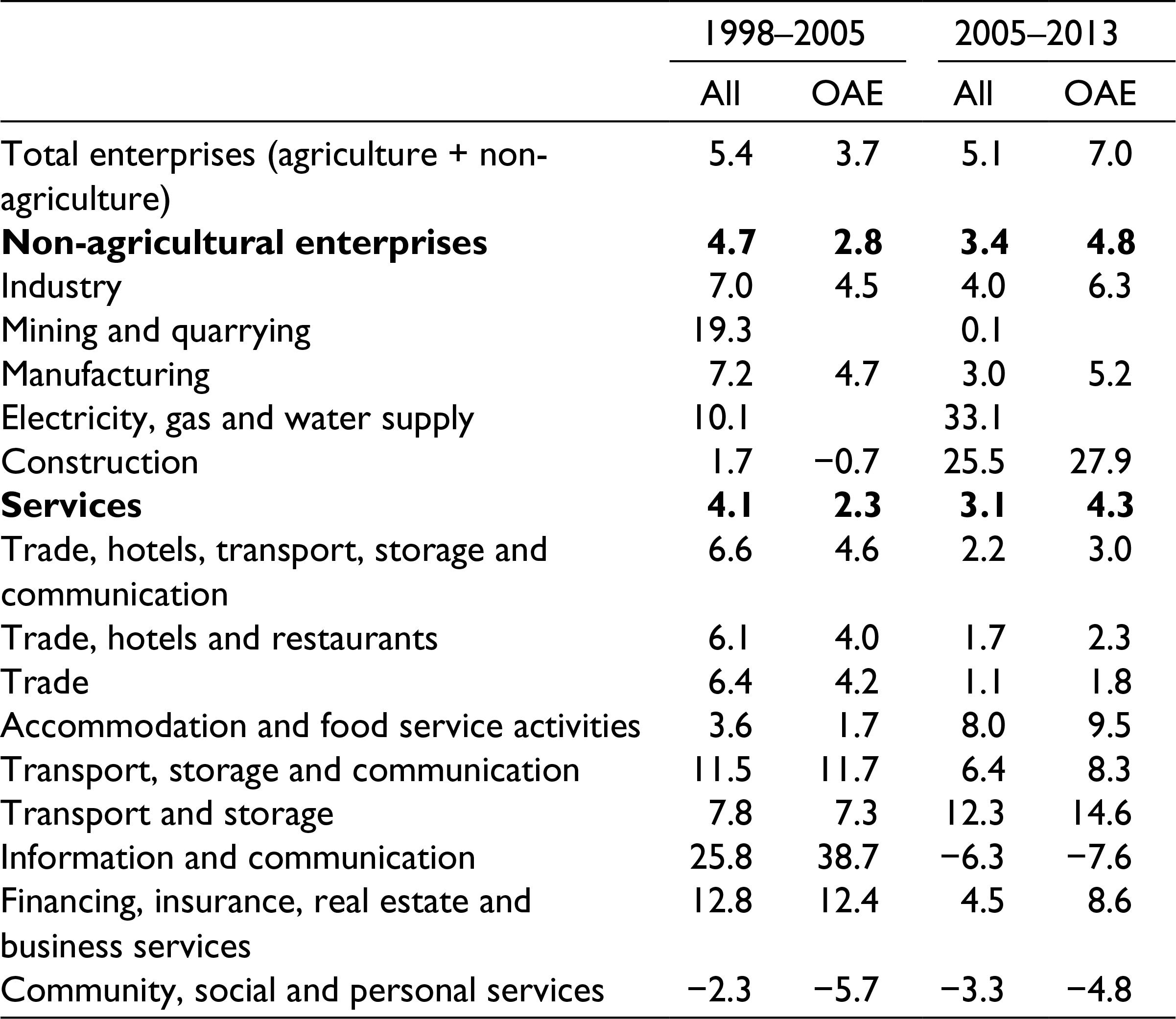
Our analysis included data on all enterprises as compared to OAEs in urban areas and is summarised in Tables 2 and 3. All enterprises (including agricultural and non-agricultural enterprises) in urban areas registered a growth rate of more than 5% during the economic census periods 2005–2013. This growth rate was similar to the growth rate of the previous census periods 1998–2005 (Table 2). However, the growth of non-agricultural enterprises was slower as compared to the total enterprise growth rate in both periods. Though the overall growth of enterprises fell during 2005–2013, the growth rate of urban OAEs increased in all industry groups. That is, micro-enterprises in the informal sector registered higher growth than larger establishments during 2005–2013.
Economic Census of India (1998–2013): Annual Growth Rate of Enterprises (urban)
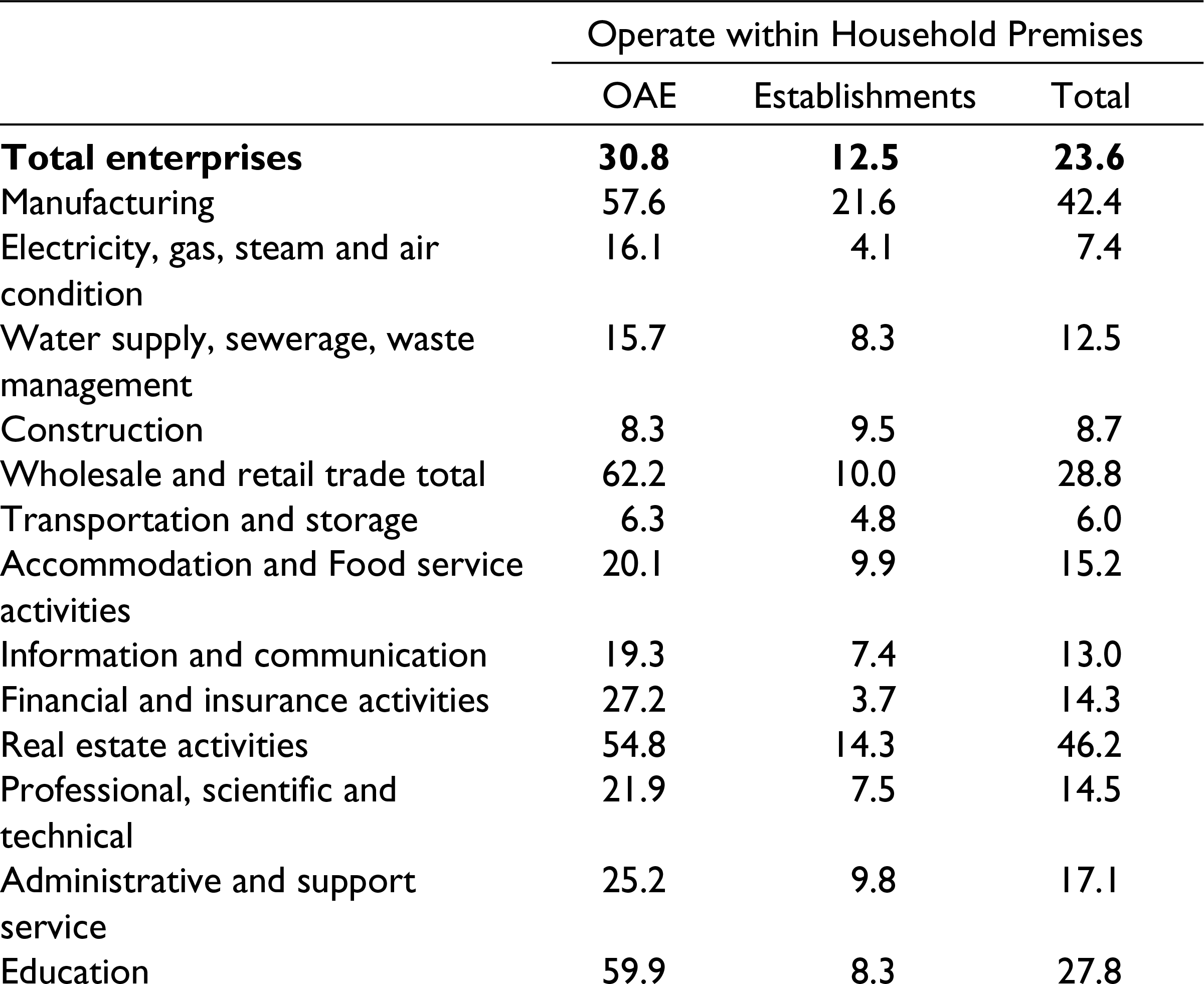
Analysis of the 2013 census data reveals a quarter of all enterprises in urban areas operated within household premises as they did not have a separate designated place of work (Table 3). Around 30% of own-account enterprises (with no hired labour or workers) operated from household premises, as compared to only 12% of establishments (larger enterprises with at least one hired worker). Nearly 60% of OAE in manufacturing and wholesale/retail trade were home-based.
Economic Census of India (2013): Enterprises Operating within Household Premises (urban)
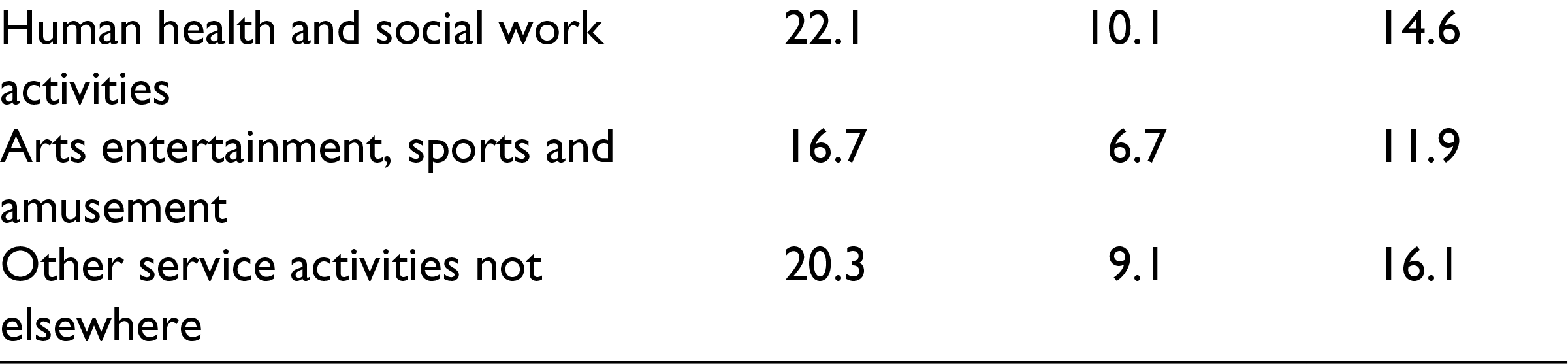
Middle class and lower middle class households are more likely to be involved in these small own-account enterprises with an investment of their own capital or funds borrowed from friends and relatives. Further, they were small in scale of operations, with limited opportunities for growth. Women overwhelmingly operated such small enterprises (Table 4). In developing countries like India, such small enterprises operating from home are likely to have poor resources and are likely to resort to unlawful means to gain access to infrastructure like electricity, water or sanitation facilities. Further, they are likely to have unsafe storage facilities within the household, which may further reduce their chances of getting reasonable work contracts due to low credibility of operations and product or service quality. All these factors are likely to translate into lower productivity and lower incomes for these small enterprises.
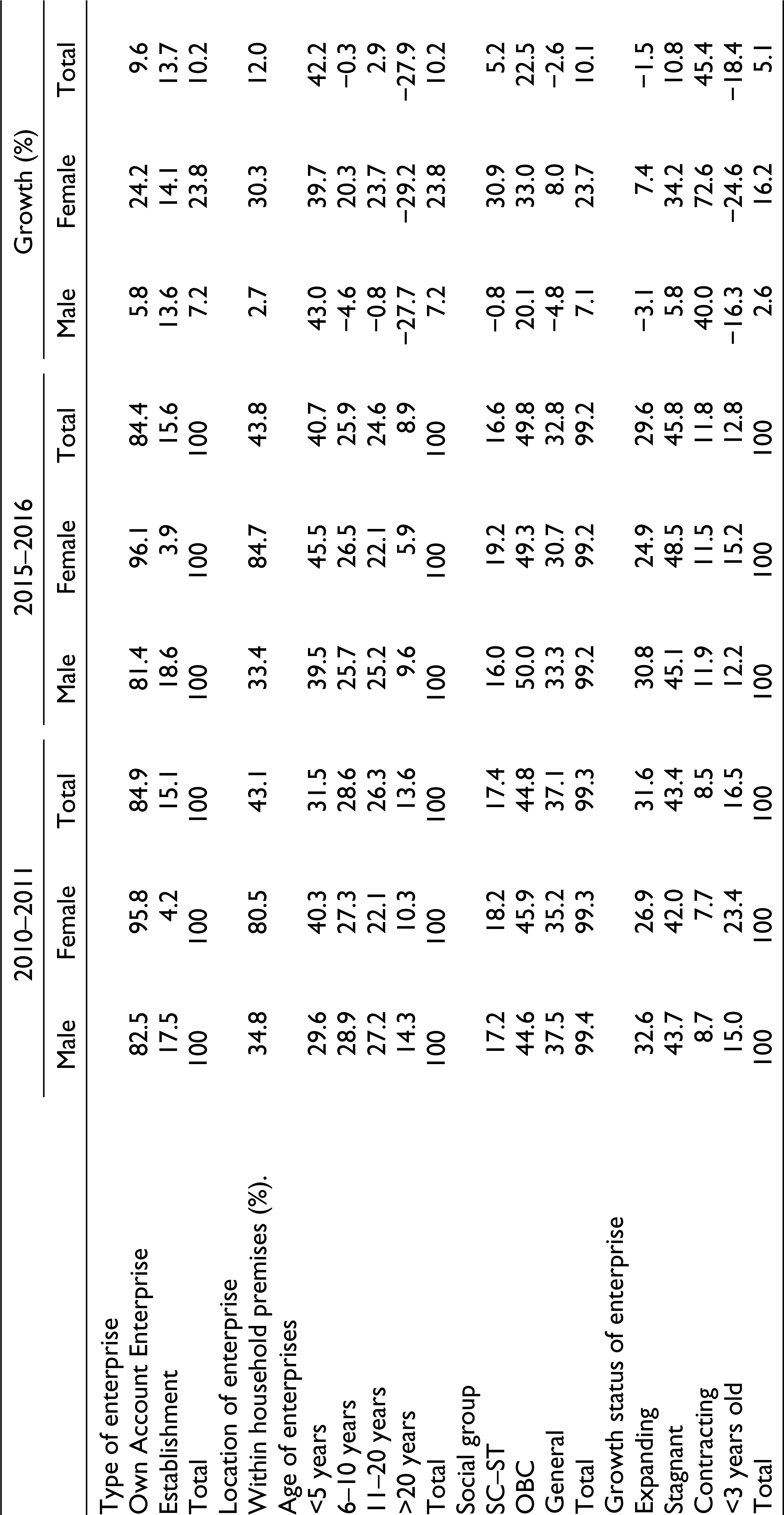
NSSO Survey India (2010–2011 and 2015–2016): Characteristics of Enterprises by Gender
To conclude, the economic census data has its limitations as it may not capture a large proportion of unorganised enterprises in India. However, the census data paints a broader picture of enterprises operating in India and helps in analysing the growth rate of enterprises across the economic censuses. There was a large growth of micro and small enterprises during 2005–2013.
What Do We Learn from the NSSO Data on Gender Differentials in Entrepreneurship?
Though the Annual Survey of Industries (ASI) in India provides comprehensive data on enterprises in the organised sector, it does not capture information on gender. Therefore, we used the NSSO database to study informal enterprises by gender (of ownership). Sengupta et al. (2013) also used NSSO data to examine women entrepreneurship in India. We used the unorganised non-agricultural enterprise survey data on unregistered enterprises. Three rounds of these consolidated surveys have been conducted by NSSO in 1999–2000, 2010–2011 and 2015–2016. In our study, we used data from 2010–2011 and 2015–2016.
We found the NSSO database more comprehensive for examining gender-based ownership in enterprises. It also provided information on the characteristics of the owner and the enterprise. Similar to the findings from the economic census analysis, we noticed the majority of firms operating in the unorganised or informal sector were OAEs, which operated using family labour only. This was more predominant in the case of women-owned enterprises (Table 4).
While examining gender differentials, there was no significant difference in the growth of large male-owned enterprises (called establishments in the dataset) as compared to large female-owned enterprises. However, the number of female-owned small enterprises had higher growth rates as compared to male-owned small enterprises from 2010–2011 to 2015–2016. Most of the female-owned enterprises were smaller in scale, and 84.7% of them operated out of household premises in 2015–2016. As compared to male-owned firms, female OAEs were more likely to have lower-value assets, revenues and productivity.
Upon comparing the age of enterprises by gender (firms <5 years), male-owned firms were found to be more evenly distributed by age. Female-owned firms were younger, perhaps implying that they were operated by younger women. The data also revealed that social groups like ‘other backward classes’ comprised nearly 50% of all the enterprises. This was the most dominant social group, suggesting dynamism in this caste group in Indian society for both male and female enterprises during the period ranging from 2010 to 2016.
There was a significant increase in unorganised enterprises, including OAEs started by women. Therefore, a question of significance then is, how do female-owned startups fare in terms of firm growth? For both time periods, 2010–2011 and 2015–2016, one-third of the firm owners reported an expansion of operations for both male and female-owned firms (Table 4). There was a slight decline in the percentage of firms that were expanding in 2015–2016. In 2015–2016, about 45% of male and 48% of female firms were stagnant, while about 11% of firms with both male and female ownership reported contraction. On a positive note, there was a 7% growth in firm expansion among female-owned firms from 2010–2011 to 2015–2016. To conclude, while most of the female entrepreneurs had small-scale firms, at least a third were resilient groups that were able to grow their businesses even after the financial crisis of 2008–2009.
Discussion of Findings: Micro Studies
What Do We Learn about Gender Differentials and Entrepreneurial Intentions of University Students in India?
Survey Research and Primary Data
The final-year undergraduate and postgraduate students enrolled in both technical and non-technical courses in public as well as private higher education institutions in the National Capital Region (NCR) of India are invited to participate in our survey. We had a total sample of 940 final-year students from 28 higher education institutions in NCR, India. We conducted the pilot study in 2016 and the final survey during the year 2017.
The total sample of 940 respondents included 504 males and 436 females (Table 5). There were 570 respondents from public institutions (336 males and 234 females) and 370 respondents from private institutions (168 males and 202 females). The majority of the respondents were in the age group of 18–23 years (65%). Some of the respondents were also pursuing higher education after having worked for some time. We were also able to collect social caste-related data that revealed less representation of minority groups based on caste in the higher education system in NCR, India. The majority of the respondents were from the ‘others or general’ category that belongs to socially forward castes in India (76.2%). This was followed by socially neglected minority caste groups like scheduled tribes (12.4%), scheduled castes (10.4%) and other backward castes (2%).
Survey Demographic Statistics
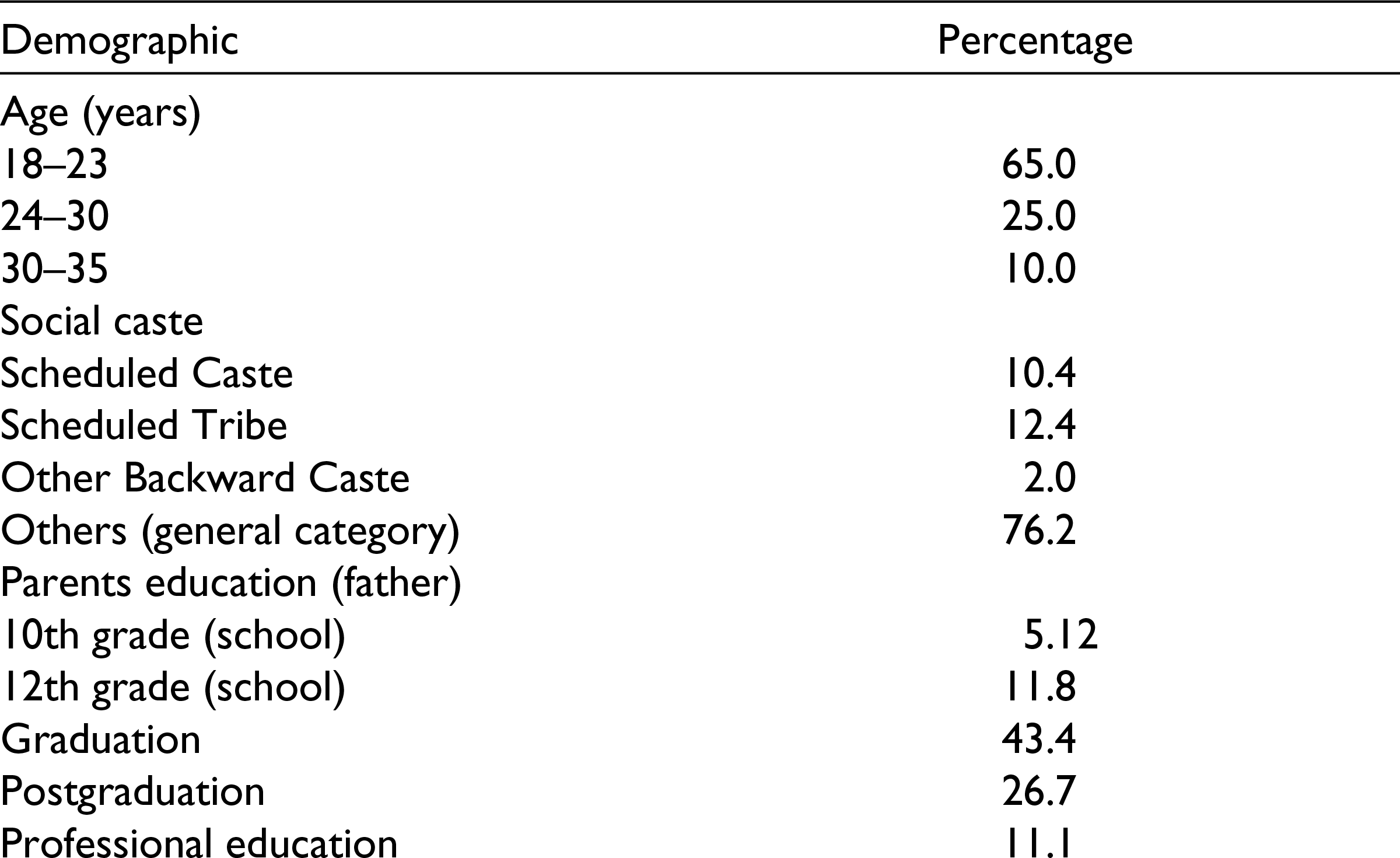

The parents (specifically, fathers) of the majority of the respondents had some university-level education, with 43.4% having a graduate degree and 26.7% having a post-graduate degree. This suggests that parents with higher education degrees were more likely to send their children to college. With respect to the occupational background of parents (father), 38.2% had their own business, 34.5% were in government jobs and 18.4% were in private jobs (Table 5). Furthermore, more than one-third of the respondents came from affluent families, having a monthly income of more than ₹100,000.
Are Young Women (Versus Men) Interested in Entrepreneurship?
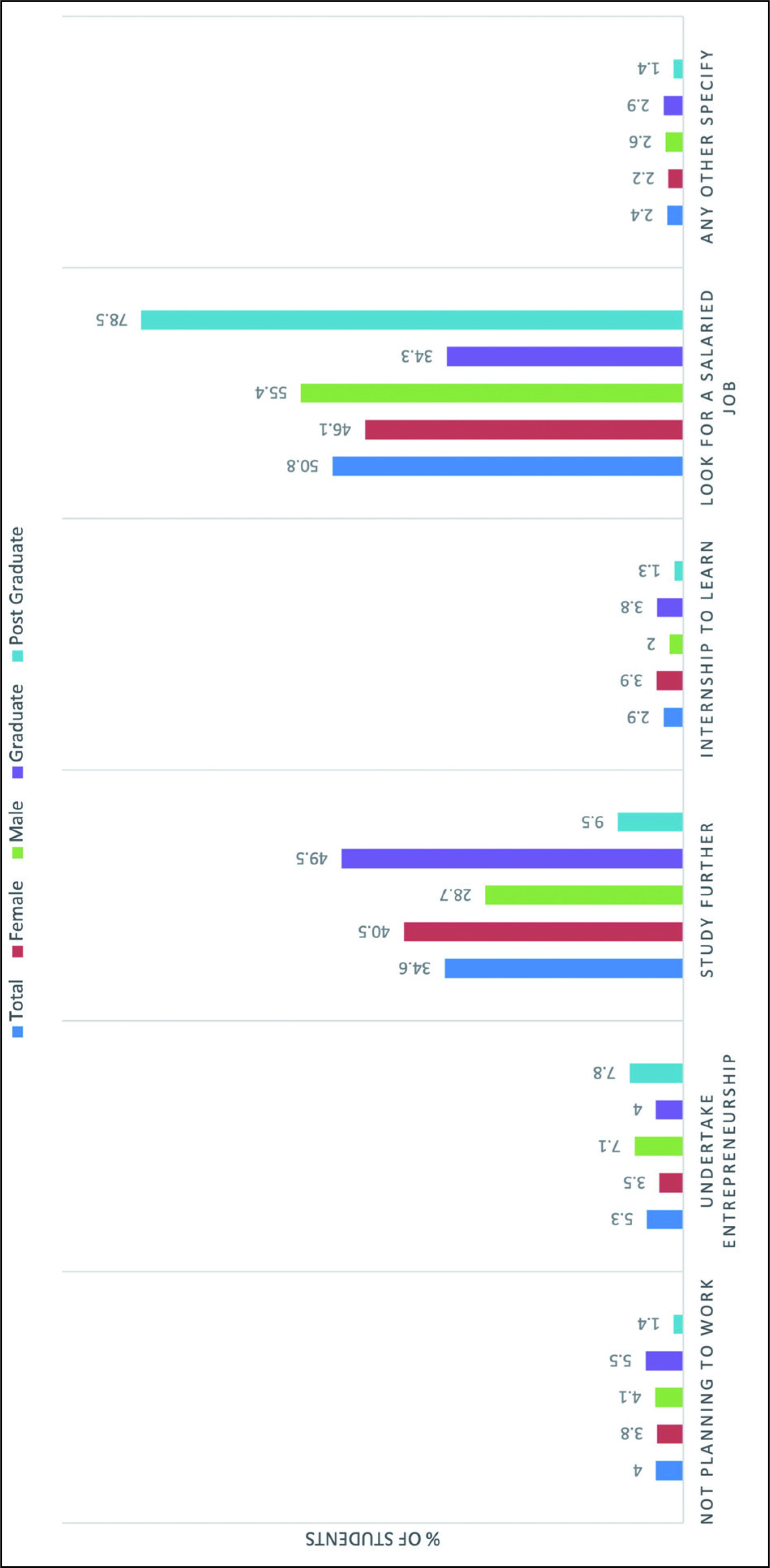
More than half of the survey respondents wanted to pursue a stable salaried job after completing their education. The percentage of youth planning to apply for a salaried job was higher in the case of males (55.4%) as compared to females (46.1%). Interestingly, the higher the level of degree, greater the interest in a secure salaried job (postgraduate 78.55% and graduate 34.25%). Notably, women were more interested in pursuing further studies as compared to men (Figure 2) and were less inclined to pursue entrepreneurship. This highlights an alarming gap in youth perception, specifically among young females, about choosing entrepreneurship as a potential career. Therefore, it has implications for policy and the entrepreneurial ecosystem.
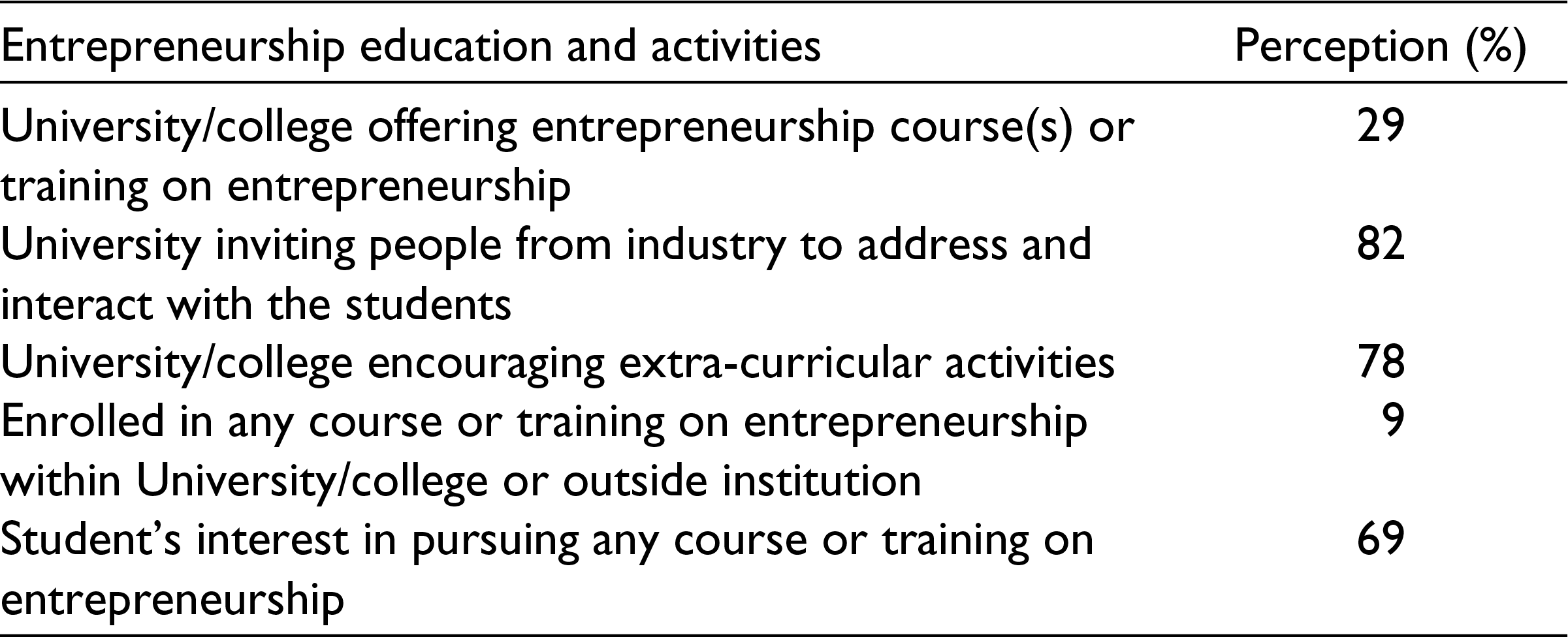
About 29% of survey respondents were aware of entrepreneurship-related courses being offered at their university, and around 82% reported that their university invited industry speakers and entrepreneurs. Only 9% of the respondents had actually undertaken any formal course or training on entrepreneurship at their university or any outside institution. But 69% were willing or open to the idea of undertaking entrepreneurship-related courses (Table 6). This implies that entrepreneurship courses in higher education are likely to increase awareness and can possibly encourage students to become entrepreneurs. Further, females (69%) were less likely than males (78%) to participate in entrepreneurship-related events on university campuses.
Student Perception of Entrepreneurship-related Education Offered in Universities
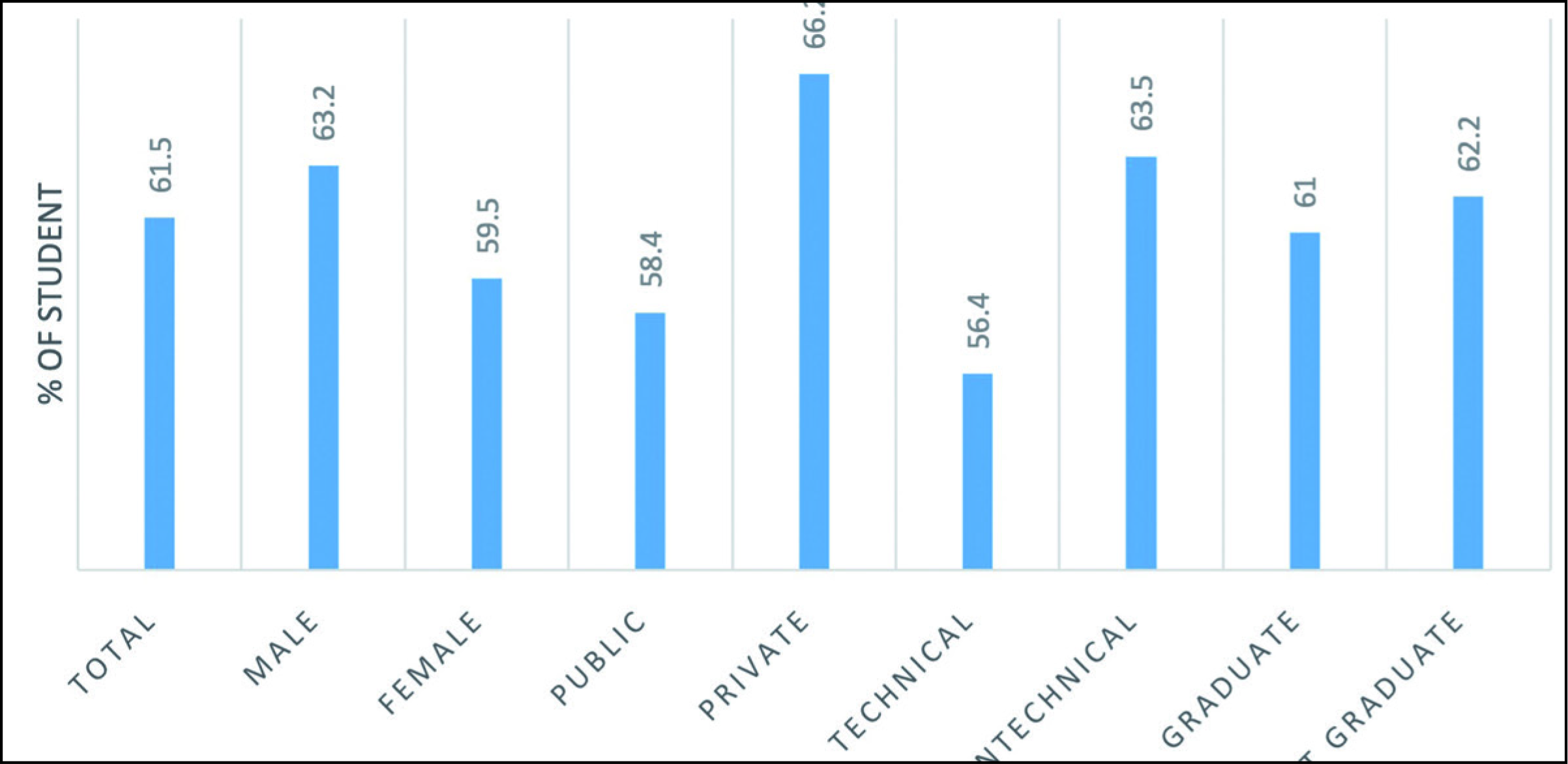
Only 5.3% of respondents wanted to pursue entrepreneurship immediately after graduation (Figure 2), and 62% expressed interest in entrepreneurship as a potential career after 5–10 years of graduating from college (Figure 3). Female students were less inclined (versus males) to pursue entrepreneurship immediately after graduation (about 5%). However, they were more inclined to pursue entrepreneurship after 5–10 years of graduation (59%). Further, interest in pursuing entrepreneurship was higher among students studying at private universities (66%) as compared to public universities (58%) in India.
Reasons for Interest or Disinterest in Entrepreneurship
In our survey, we uncovered the various reasons for youth’s interest in entrepreneurship as a career. These were—dynamics of the entrepreneurship profession (60%), monetary attraction (20%) and having an entrepreneur (role model) within the family (15%). Further, the reasons for disinterest towards entrepreneurship were simply that they were not interested in entrepreneurship as a profession (40%), perceiving entrepreneurship as risky (20%), perceiving entrepreneurship as requiring seed money (17%) and lack of guidance on entrepreneurship (15%). While examining gender-based differentials, female students suggest ‘no interest’ and ‘lack of guidance’ (lack of a role model) as the two main reasons for disinterest in entrepreneurship. On the other hand, male students perceived ‘no interest’, ‘high-risk’ and ‘need for seed money’ as the main reasons for disinterest in entrepreneurship (Figure 4).

Sources of Motivation
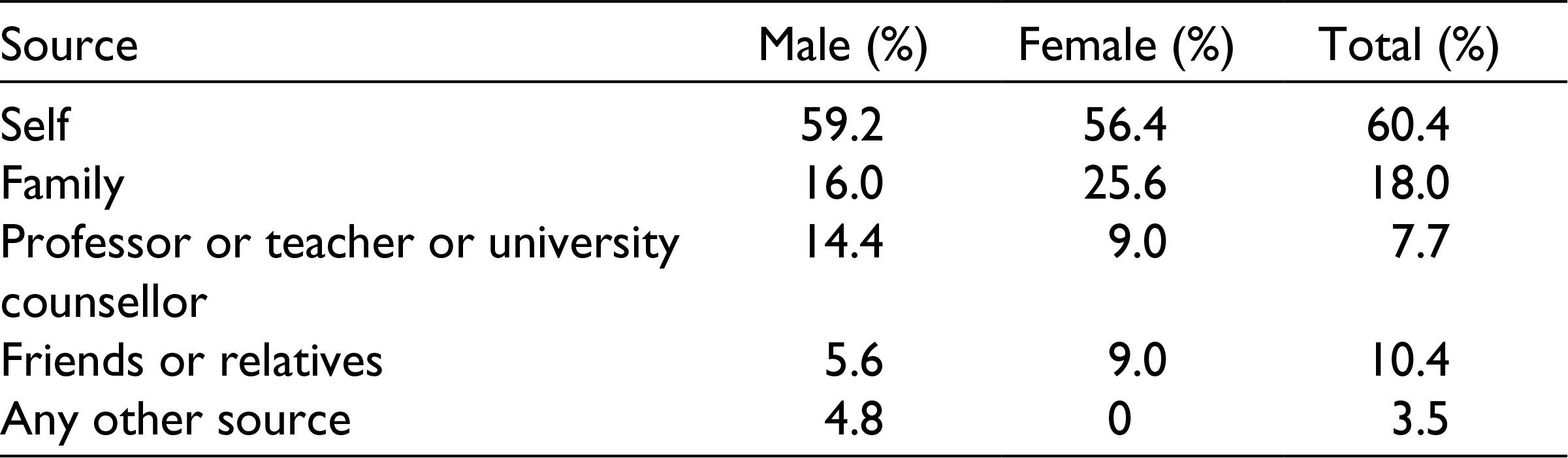
We uncovered 60.4% of students (56.4% of females and 59.2% of males) being self-motivated, 18% having a family member as a source of motivation (25.6% of females and 16% of males) and 7.7% suggesting a teacher or education counsellor as a source of motivation (Table 7). The latter two can be seen as having a role model and are higher among girls. Further, among students interested in entrepreneurship, 68.8% of males and 73.4% of females had an entrepreneur in their family. This suggests having an entrepreneur within a family, or a role model to look up to, acted as a positive source of motivation for young students, and it was more so in the case of females.
Sources of Entrepreneurship Motivation by Gender (student perception in percentage)
Further, the key motivation for pursuing entrepreneurship in the case of both male and female students was to create ‘something innovative’ to focus on ‘technology of interest’ and to ‘satisfy a market need’ (Table 8). Under sources of motivation, female respondents had high mean scores for ‘having more free time’, followed by ‘having more flexibility’, ‘independence’ and ‘creating something innovative’.
Youth Motivation for Entrepreneurship by Gender (mean scores)

What Do We Learn about Gender Differentials in Behavioural Traits of Entrepreneurs in India?
Research suggests that risk-taking capacity of individuals motivates them to start a business that may or may not deliver high returns (Douglas, & Shepherd, 2002). Moore and Healy’s (2008) suggested alertness to business opportunity and self-confidence as a measure of ‘overconfidence’ in one’s capability that can be a potential reason for undertaking opportunity-driven entrepreneurship. Prior literature suggests having a role-model entrepreneur motivates individuals to pursue entrepreneurship. Individuals can see the role model entrepreneur as an example, which reduces uncertainty and increases confidence (Bandura, 1978; Indrawati et al., 2015). Thus, using GEM India data, we explored four behavioural traits of the entrepreneur: (a) fear of failure: a fear that prevents an individual from starting a new business, (b) alertness to business opportunity: an individual’s belief that there exists an excellent opportunity for a business, (c) self-confidence: an individual’s belief in having essential knowledge, skills and experience to run or start a business and (d) having a role model.
Data Sources and Method
We pooled the samples from the adult population survey dataset of GEM for the years 2013 and 2014 in India. Our total pooled sample included 8,360 respondents (4,100 males and 4,260 females). In our sample, there were a total of 887 entrepreneurs, including 624 male and 263 female entrepreneurs. We define an entrepreneur as an individual who is in the age group of 18–64 years old and starts a new business or is the owner-manager of an existing business.
Research Model
We specified a multinomial logit regression model to estimate the probability of an event taking place with more than two possible outcomes. The respondents were divided into three groups: opportunity-based entrepreneurs, necessity-driven entrepreneurs and those who were not entrepreneurs, the last being used as the reference category.

The regression constant term is represented by α, χ represents a vector of owner characteristics, Y is a vector of behavioural traits, i is the individual firm, j is gender and E is the error term. We ran four specifications (M1, M2, M3 and M4) of the model, adding each of the four behavioural traits/motivations variables in each subsequent specification, separately for men and women entrepreneurs. The results of the regression models M1−M4 are presented in Table 9. Further details on the descriptive results are available from the authors.
Descriptive Findings
Youth (both females and males aged 25−44 years) and males in the top 33 percentile of the household income group were more likely to pursue opportunity-driven entrepreneurship. Interestingly, in the case of females, household income levels did not make any difference in the choice of entrepreneurship (opportunity or necessity). Individuals (both male and female) with post-secondary or tertiary education were more likely to become entrepreneurs.
Entrepreneurial Behavioural Trait: Risk-taking and Fear of Failure
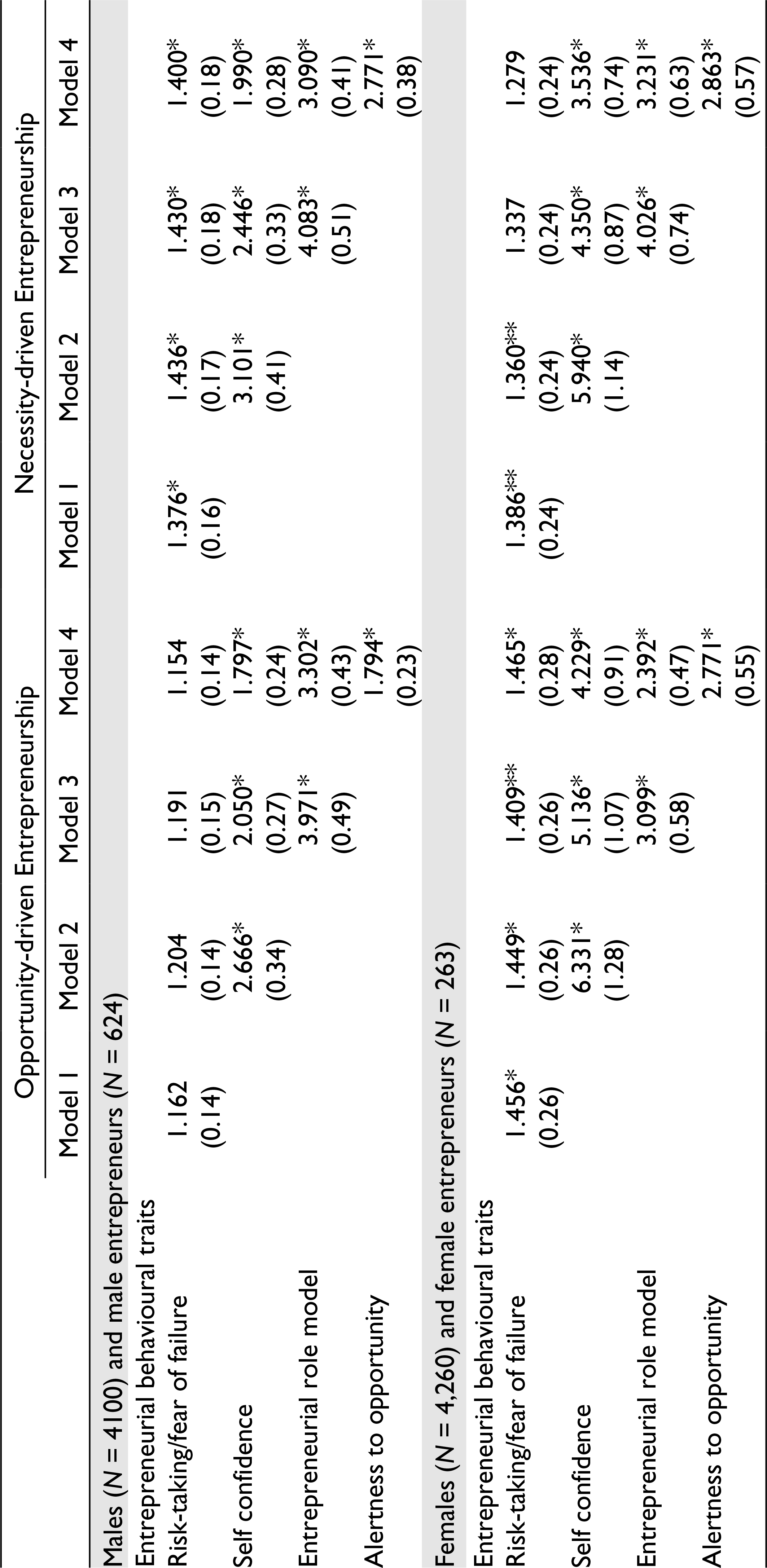
Our results reveal that male entrepreneurs do not have a significant fear of failure while pursuing opportunity-driven businesses, and those having a significant fear of failure are 1.4 times more likely to pursue necessity-driven entrepreneurship (Table 9). Opportunity-driven male entrepreneurs were more likely to be from upper income households, and necessity-driven male entrepreneurs were from the lowest income households. In contrast, female entrepreneurs who had significant fear of failure were 1.4 times more likely to pursue opportunity-driven entrepreneurship. Females were more likely to pursue entrepreneurship for the opportunity or necessity to earn money, despite any fear of failure. This behaviour of women goes against the general perception and evidence. It can be understood from the behavioural economics perspective as a context-specific characteristic of female entrepreneurship in low-income communities in developing economies.
Behavioural Traits Impact on Opportunity-driven and Necessity-driven Entrepreneurship by Gender, India (log odds ratio)
(a) * and **Significant at 1% and 5%, respectively.
(b) Base variable for the multinomial is not being an entrepreneur. Base household income is the lowest 33 percentile. Base education category is no education.
Entrepreneurial Behavioural Trait: Self-confidence and Alertness to Opportunity
Both male and female opportunity-driven entrepreneurs exhibited significant positive self-confidence and alertness to business opportunities. Notably, females having self-confidence were around 5–6 times more likely to be opportunity-driven entrepreneurs than self-confident males who were only about 2 times more likely to be opportunity-driven entrepreneurs. Similarly, females who were alert to business opportunities were 2.7 times more likely to pursue opportunity-driven entrepreneurship than males (1.8 times). Thus, we posit that women who build self-confidence and are alert to opportunities in their behavioural traits are more likely to overcome their fear of failure while pursuing opportunity-driven business ideas.
Entrepreneurial Role Model
Both men and women having a role model were 2–3 times more likely to consider opportunity-driven entrepreneurship. A plausible explanation could be that the institutional environment in India is not very conducive for businesses, and having a role model or knowing an entrepreneur (male or female) is likely to reduce uncertainty and risk. This is further likely to motivate women to start a business.
Conclusion and Future Directions
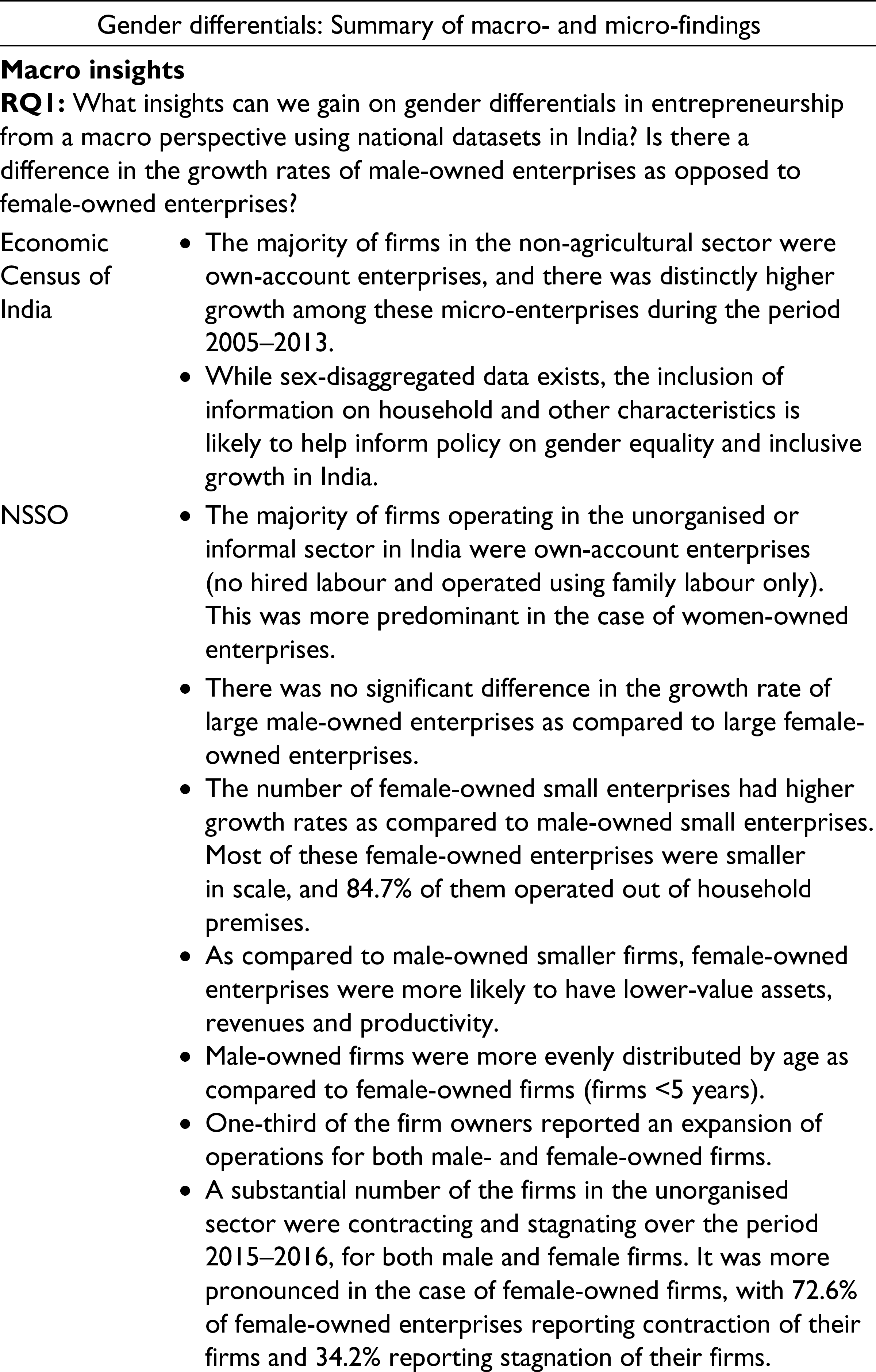
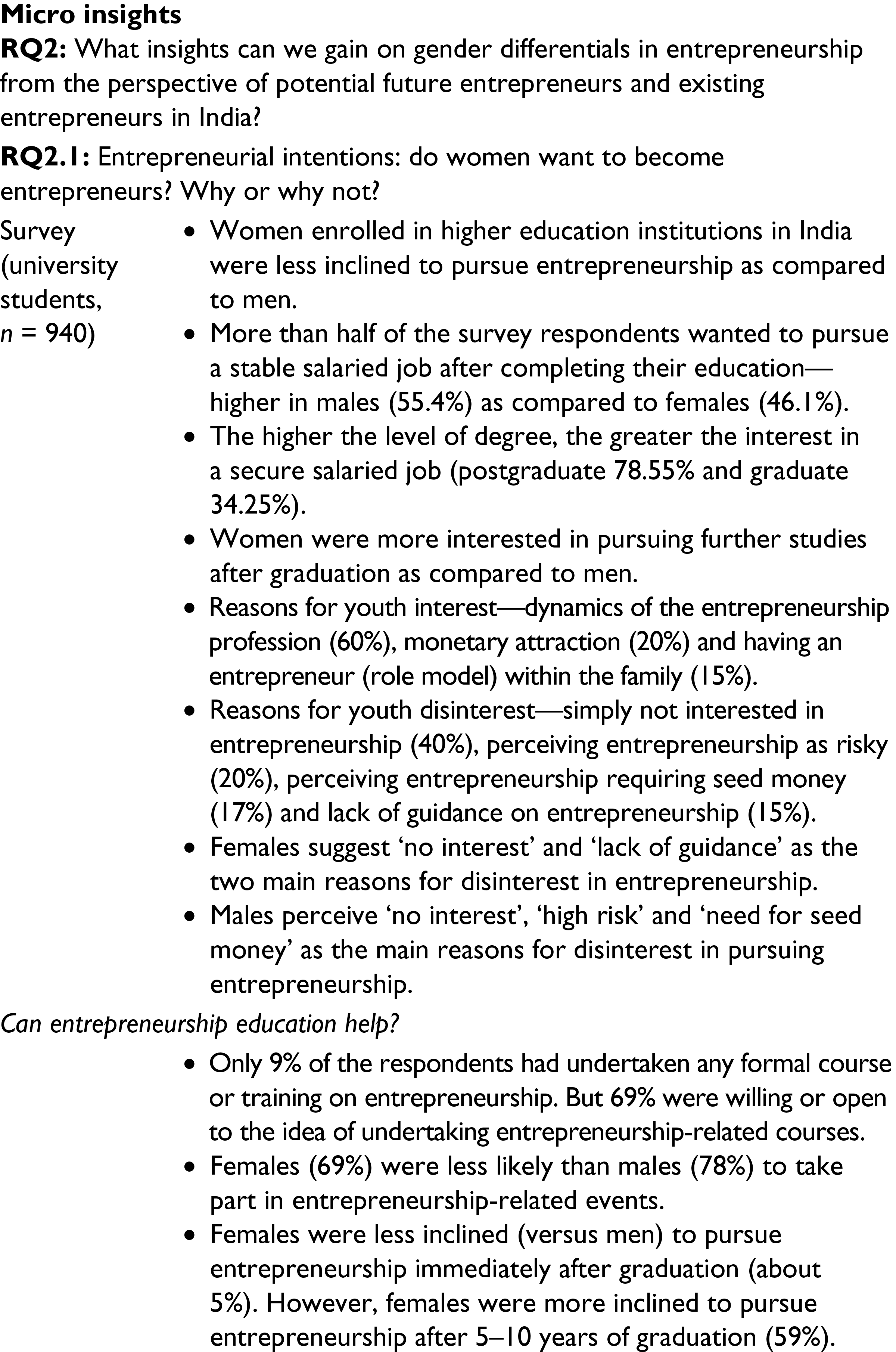
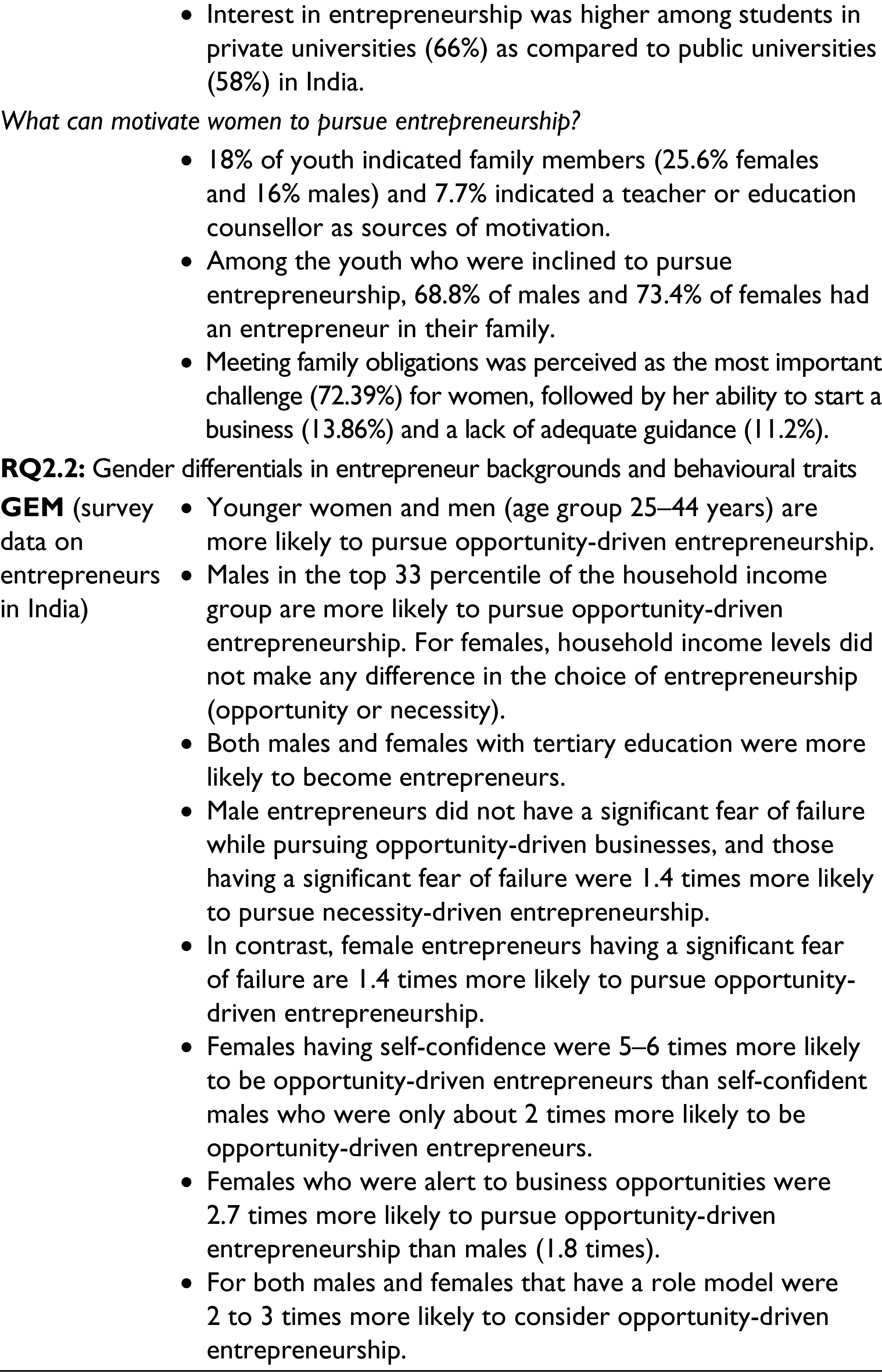
Our study is a novel attempt as it presents an extensive picture of gender differentials in entrepreneurship using a multi-method research strategy in the context of developing countries like India. Table 10 illustrates the contributions of our study and presents an integrated summary of our macro- and micro-level findings. Our study has significant implications for research and policy. Based on our findings, we propose a direction for future research in a framework of macro- and micro-factors impacting women entrepreneurship (Figure 5). These factors are likely to influence inclusive and sustainable entrepreneurship in developing countries.
Integration of Macro- and Micro-findings on Women Entrepreneurship in India

Implications for Research
The lens of gender and entrepreneurship suggests women entrepreneurs may incorporate both masculine and feminine traits (Carlson, 2011; Lewis, 2014). The combination of feminine traits (like emotion, nurturing nature, passivity) and masculine traits (like autonomy, rationality, economic independence, assertiveness and emotional independence) could help women achieve entrepreneurial success. Literature on behavioural economics and entrepreneurship challenges the dominant paradigm of entrepreneurship, suggesting a move beyond economic gains. There are questions raised about the construction of an entrepreneur as being a man or a woman, driven by a desire to seize an opportunity for economic gain for the type of opportunity he or she pursues. In this article, we explored individual traits by gender to understand the motivational and behavioural traits of women who choose to become entrepreneurs and the type of entrepreneurship they pursue (opportunity or necessity-driven).
Our findings present insights into a few behavioural traits of women entrepreneurs (like self-confidence, alertness and fear of failure/ risk-taking) in India that can potentially guide future research in other contexts. Having a role model also worked to encourage women entrepreneurship. Welter (2020) suggests context is likely to impact traits like risk-taking behaviour and self-confidence in women founders. Aligned with this view, we also suggest the need to examine gender and entrepreneurship in the context of various settings that may include cultural, spatial, geographic or historical dimensions. To emphasise originality in the interpretation of our findings, we reveal that women undertake opportunity-driven entrepreneurship despite the fear of failure. We further argue that our findings represent the context-specific nature of female entrepreneurship in poor communities in developing countries, where self-confidence and alertness to business allows women to overcome fear of failure and undertake opportunity-driven entrepreneurship. Further, having a role model reduces uncertainty and risk where the institutional environment does not support women entrepreneurs, particularly those from poor communities.
Our survey of university students reveals female students were less inclined (versus males) to pursue entrepreneurship immediately after graduation but were open to becoming entrepreneurs after 5–10 years of graduation. A plausible explanation here could be that one has less confidence in one’s ability to launch a business. Literature highlights the paucity of research on entrepreneurial intentions (Donaldson et al., 2021), especially in the context of students in developing countries like India (Pandit et al., 2018). There is a need to evaluate the role of entrepreneurship education in influencing entrepreneurial intentions in the context of developing countries. A study in the UAE reports the positive influence of entrepreneurship education on the entrepreneurial intentions of female students (van Ewijk & Belghiti-Mahut, 2019). Our research reveals that entrepreneurship-related education is beneficial in promoting female entrepreneurship. There is a need to explore this further in different sociocultural contexts because entrepreneurship education can act as an enabler in empowering female students. This could further enhance the possibility of female students becoming entrepreneurs to achieve financial independence, gain self-confidence and generate employment for themselves and others.
Implications for Policy
Prior literature widely documents the presence of gender-based constraints and inequalities (Chaudhuri et al., 2020; Conroy et al., 2019; Kantor, 2002). Furthermore, there have been unanimous calls by the World Bank Group (2015) for the need to adopt a country-led approach for collecting sex-disaggregated data to achieve gender equality and inform policy. Notably, our macro-level study uncovers a gender-related data lacuna in the national level datasets. The Annual Survey of India does not have gender-disaggregated data. The Economic Census and National Sample Survey enterprise data do have gender disaggregated data, but they do not have any variables related to household or social reproduction characteristics that can help better understand the motivation for entrepreneurship by gender. Making provisions for including sex-disaggregated data, household and institutional characteristics in the future is likely to help inform policy on gender equality and promote inclusive growth in developing countries like India. This is a critical finding and has important implications for policy making in countries in the South Asian context.
We also uncovered resilience among women-owned enterprises despite barriers in India and the evolving aspirations of young women. Our research reinforces the importance of ‘role models’ and mentors in boosting women entrepreneurship. Institutional mechanisms also need to be developed, such as encouraging entrepreneurs from industry associations and chambers of commerce in countries like India to act as role models and enablers for aspiring women. Policies directed at expanding women-owned enterprises and motivating female students will further the goals of increasing the workforce participation of women, which is abysmally low and declining in India, and enhancing economic development in developing countries. Insights presented in this article can guide future research on building an inclusive ecosystem and entrepreneurship policies (Acs et al., 2016) that help achieve the UN’s sustainable development goals of gender equality and women empowerment.
Finally, we suggest our results be viewed in the light of the limitations of the number of variables studied. For example, the datasets examined do not include family and other indicators of social reproduction characteristics that are likely to be more relevant for females trying to start a business. Future studies can also examine such indicators to understand what inhibits or encourages women to start a business.
Footnotes
Acknowledgements
We greatly acknowledge the support provided by Indian Council of Social Sciences Research (ICSSR), Institute of Rural Management Anand (IRMA), Gujarat, India and Institute for Human Development (IHD), New Delhi, India. We would also like to thank the editor and reviewers of the Journal of Entrepreneurship for their feedback and time in reviewing our manuscript. We are grateful to our dear friend and departed soul late Prof. Preet Rustagi, who is deeply missed as a friend, colleague and collaborator on the ICSSR project.
Declaration of Conflicting Interests
The authors declared no potential conflicts of interest with respect to the research, authorship and/or publication of this article.
Funding
Data and findings presented in this paper are from a research project funded under the Sponsored Studies Programme by the Indian Council of Social Sciences Research (ICSSR) India.