



Abstract
This article seeks to systematically identify and model antecedents of entrepreneurial bootstrapping and bricolage to determine and interpret the relationships and hierarchy between them. Entrepreneurial bootstrapping and bricolage are key dynamic capabilities that help entrepreneurs access, accumulate and enhance resources to adapt to scarce business environments. The article employs a modified total interpretive structural modelling analysis to determine hierarchical inter-relationships between the antecedents and a Matrice d’ Impacts Croises Multiplication Applique An Classment analysis to understand their driving and dependence powers. The results highlight that founder characteristics and human capital are placed at the lower levels, making them critical driving elements of the model along with environmental hostility and resource constraints. Entrepreneurial orientation, slack, external financial capital and entrepreneurial frugality are dependent variables, with social capital as a linkage variable. This study will guide entrepreneurs trying to implement resourcefulness behaviours to respond to the coronavirus disease-2019 crisis by prioritising driving antecedents to impact the dependent factors further.
Keywords
Over the last few decades, growth in entrepreneurial businesses has added pressure on existing resources making gathering resources to operate a nascent venture an onerous task. Scholars in entrepreneurship have suggested multiple theories to explain how entrepreneurs sail through these resource constraints by creatively accumulating and applying limited resources to meet their business goals (Lumpkin & Dess, 1996; Sarasvathy, 2001). Resourcefulness suggests that the actual potential of a resource is not known until entrepreneurs use those resources in a new innovative way. Such a unique and unusual combination of resources gives start-up ventures a competitive advantage to compete with the bigger players (Costa et al., 2013).
The behaviours under study are resourcefulness behaviours that explain how firms manage resources under constraints. Entrepreneurial bootstrapping refers to informal approaches used by entrepreneurs––such as accelerating receivables, delaying payables, using cheap labour, deferring rent, exploiting their social networks––to arrange and accumulate business resources (both financial and non-financial) without depending on conventional sources of finance such as debt and equity (Bhide, 1992; Harrison et al., 2004; Rutherford et al., 2012) Entrepreneurial bricolage involves using resources at hand by making do with the resources already owned or available freely or cheaply (Baker, 2007; Baker & Nelson, 2005). Entrepreneurs who employ bricolage have a bias to act and come up with creative solutions to overcome resource challenges using resources that might be deemed unusable by others (Senyard et al., 2014). Table 1 briefly describes the top five most cited studies in the literature in both the areas.
Most Cited Papers on Entrepreneurial Bootstrapping and Bricolage.
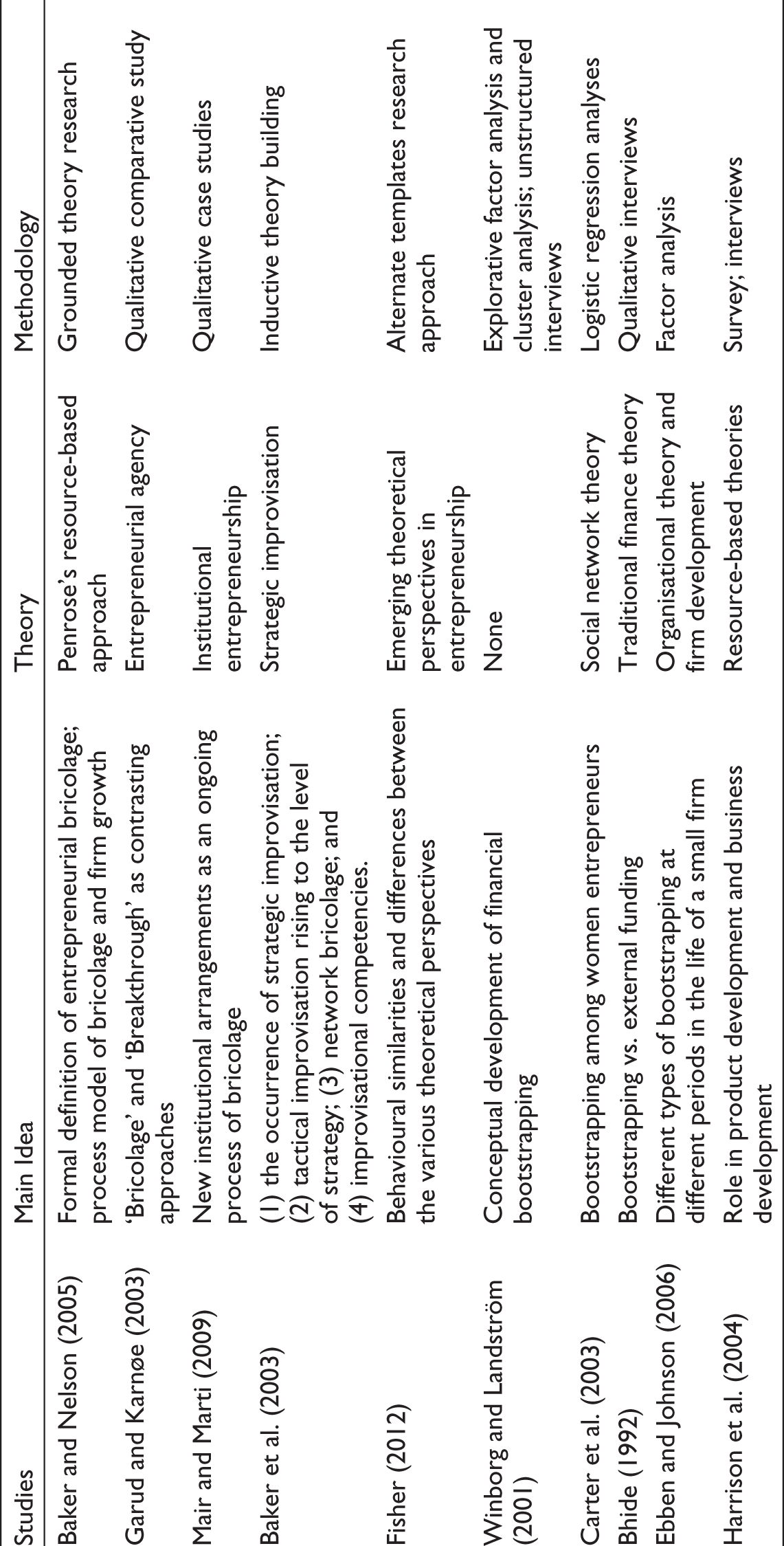
The behaviours mentioned above are used to study similar informal resourcing methods, but existing research has rarely studied them together. Research in bootstrapping has been primarily focused on the types of bootstrapping methods used by entrepreneurs, the role of bootstrapping as the firm grows and, more recently, impact on firm performance. Research in entrepreneurial bricolage has focussed on comparing it with similar approaches such as effectuation, causation and improvisation, with advancement towards understanding its role while innovating in resource-constrained, dynamic business environments, social entrepreneurship contexts and unsuitable institutional arrangements.
In terms of methodology, prior research consists of studies with both inductive case-based qualitative work and empirical studies while also focussing on conceptual papers. However, no study has focussed on integrated antecedent-based research to understand what pushes entrepreneurs to act resourcefully. In terms of theoretical perspectives, literature in these two areas focuses on prominent classical theories such as resource dependency theory, resource constraint theory, resource-based view, dynamic capabilities theory, pecking order of theory, institutional theory, traditional finance theory and organisational learning. These theories have been used repeatedly to explain the resource management of entrepreneurs; however, academic research still lacks the rigour it requires, suggesting a need for more sophisticated developments in theory supported by empirical studies (Sharma et al., 2012).
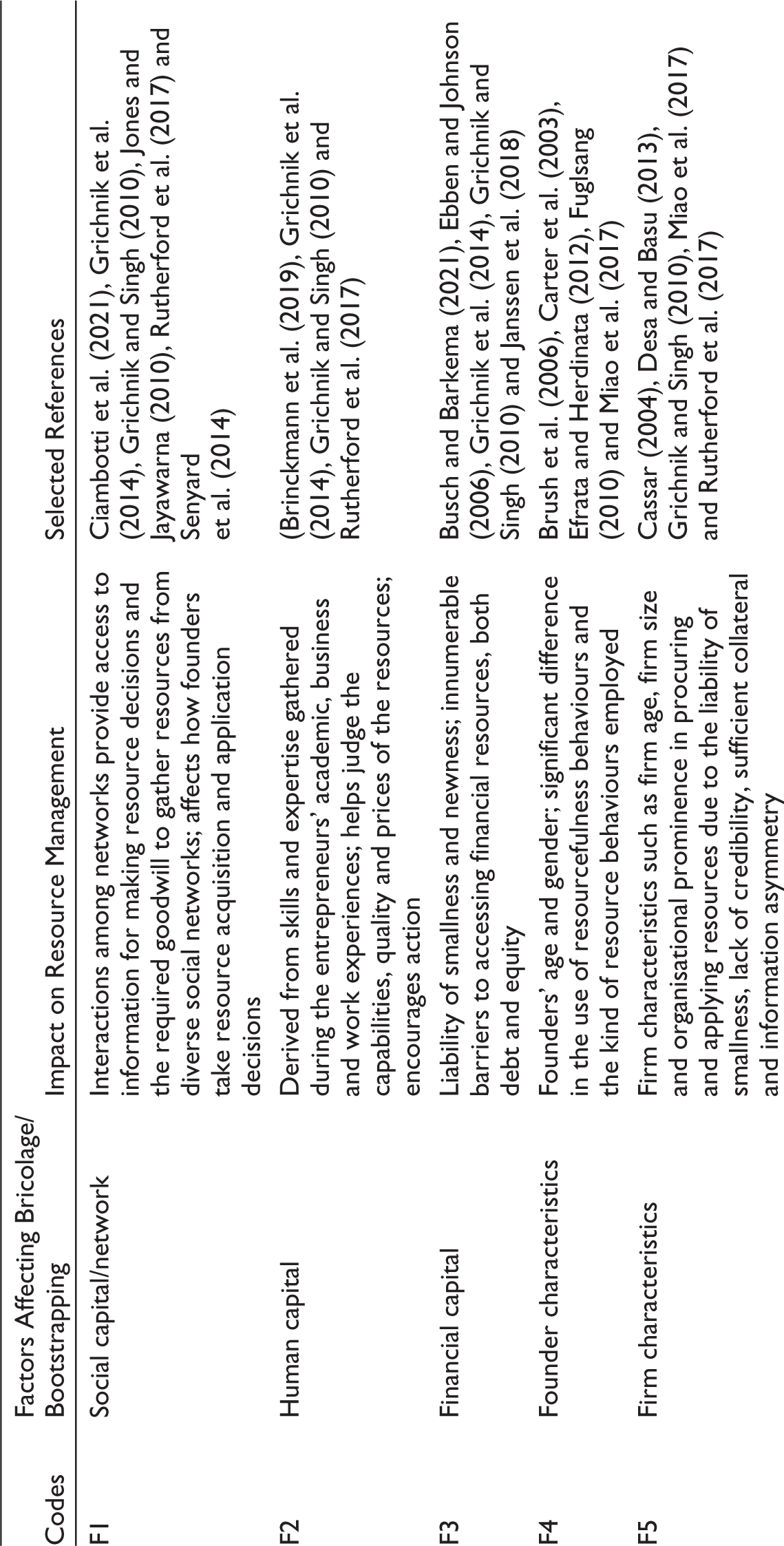
This study extends existing research in identifying antecedents that drive these behaviours. Following a systematic review of the literature, social capital, human capital, financial capital, founder characteristics, firm characteristics, entrepreneurial orientation, frugality, slack, resource constraints and environmental hostility were identified as antecedents of these behaviours. The review suggested that the existing literature provides little attention to the relationships between these antecedents that act as catalysts for resourcefulness behaviours. Therefore, the current study sought to identify the interlinkages between these antecedents using modified total interpretive structural modelling (m-TISM) methodology based on their driving and dependence powers. A hierarchical relationship model is established, followed by Matrice d’ Impacts Croises Multiplication Applique An Classment (MICMAC) analysis to understand their driving and dependence roles. The model is validated with an Indian entrepreneurial case study.
This study proposes a hierarchical model for the successful implementation of entrepreneurial bootstrapping and bricolage, suggesting multiple combinations of antecedents impacting the resource mobilisation behaviours. The study will guide entrepreneurs attempting to sail through the challenges of the coronavirus disease-2019 (COVID-19) pandemic in building resilience to survive dynamic markets. The levels of m-TISM digraph will guide them in prioritising while making resource decisions by focusing on the driving antecedents to impact the dependent factors further to mobilise resources following the immediate disruption due to the ongoing coronavirus crisis.
Preliminary Research Work and Review: Identification of Antecedents
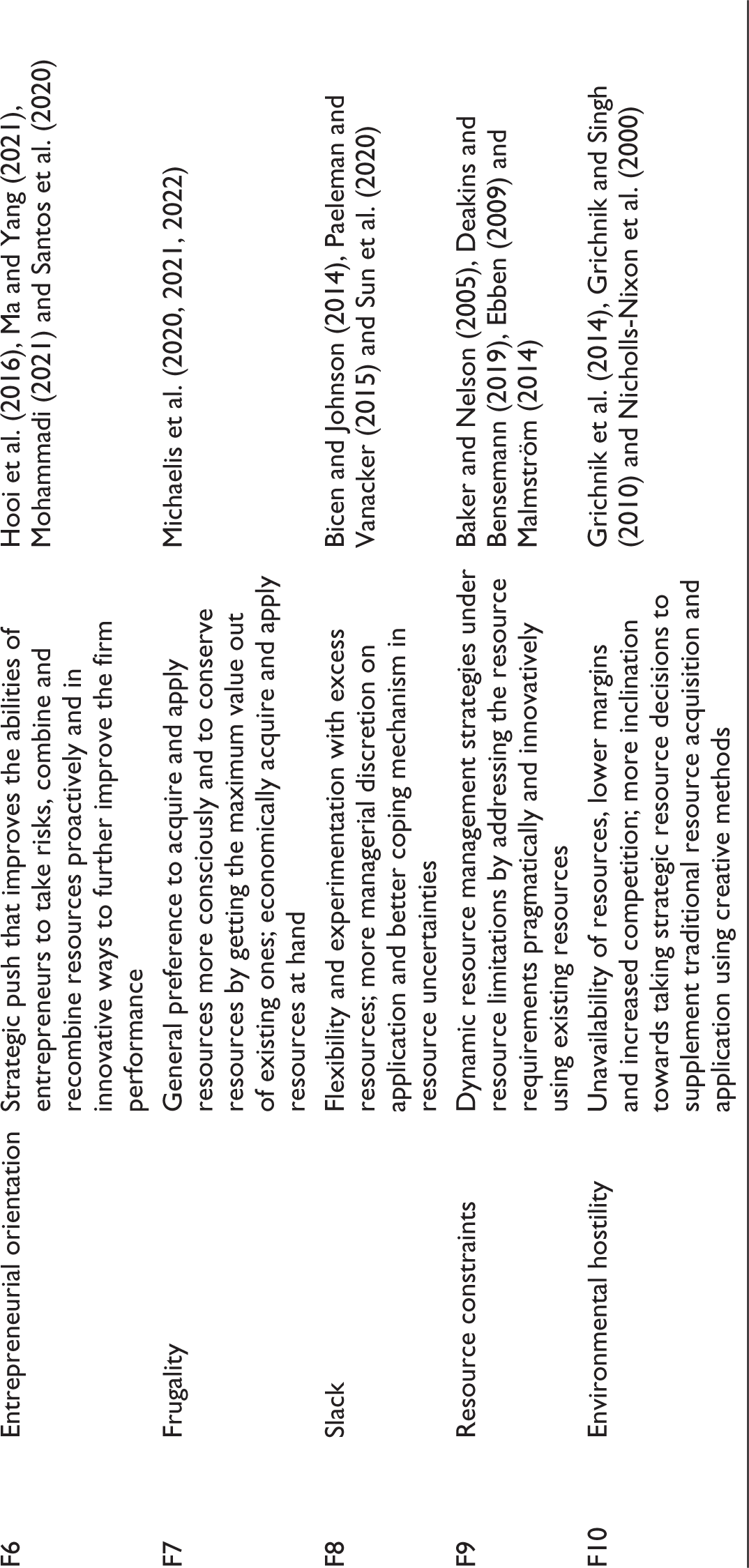
The antecedents of bootstrapping and bricolage behaviours were identified following a systematic literature review. Online bibliographic databases were searched using multiple appropriate keywords to identify and explore relevant literature to finalise 10 antecedents of these behaviours (Singh & Dhir, 2021). The literature search criteria is explained in detail in the next section. Table 2 describes these factors along with their respective codes and selected references.
Selected Refaxerences of Antecedents Identified.
Methodology and Analysis
The first step in the methodology was identifying the antecedents impacting entrepreneurial bootstrapping and bricolage, then modelling them using the m-TISM methodology. The identification of the 10 antecedents is explained in detail below. Next, this article employs an m-TISM methodology to better understand the unstructured antecedents of entrepreneurial resourcefulness behaviours and their driver-dependence relationships, which could further be used for theory building, understanding and analysing case studies, as well as decision making in real business situations (Sushil, 2017). m-TISM methodology, a further upgrade to the total interpretive structural modelling (TISM), is chosen to overcome the linkage weakness of interpretive structural modelling (ISM) pertaining to answering only the ‘what’ and ‘how’ as well as the interpretation of the links (Sushil, 2012, 2017; Warfield, 1974). The ‘why’ aspect of relationships between elements is thus answered by an updated version of ISM or the TISM/m-TISM (Sushil, 2017).
This qualitative method helps determine the degree of relationships and hierarchy with logic between the elements under study (Singh & Dhir, 2021). It solves the problems of the previous methods by including meaningful and logical transitive links and successive paired comparisons with interpretations (Sushil, 2017). While structured reviews help identify constructs for further analysis, this methodology helps make a hierarchical model from those constructs (Rajan & Dhir, 2020). Finally, the model is validated with an Indian entrepreneurial case study.
Steps in m-TISM Methodology
Step 1: Identifying the Elements and Defining them
The antecedents to these behaviours are identified using an extensive systematic literature review. The data were collected from online bibliometric database Scopus, using keywords such as ‘bricolage’ and ‘bootstrap*’ along with ‘entrepreneur*’, ‘startup*’, ‘founder*’ to filter out literature not relevant to entrepreneurship. The literature was collected from 1991 to mid-2021 from business, management and other related areas such as psychology and sociology. The sample was finally refined to include studies that relate to only entrepreneurial bootstrapping and bricolage.
Step 2: Defining the Contextual Relationship
The contextual relationship between the antecedents of bootstrapping and bricolage is defined in the next step. For this analysis, it is defined as Factor A influences Factor B. For example, human capital influences access to financial capital and social capital influences entrepreneurial orientation. This process is done for all factors and all pairs.
Step 3: Interpreting the Contextual Relationship
The relationship identified in the previous step is interpreted to determine how Factor A influences factor B. For example, to understand how F2 influences F3, the relevant academic literature suggests a positive correlation between founder(s) education levels and access to external financial capital.
Step 4: Paired Comparisons
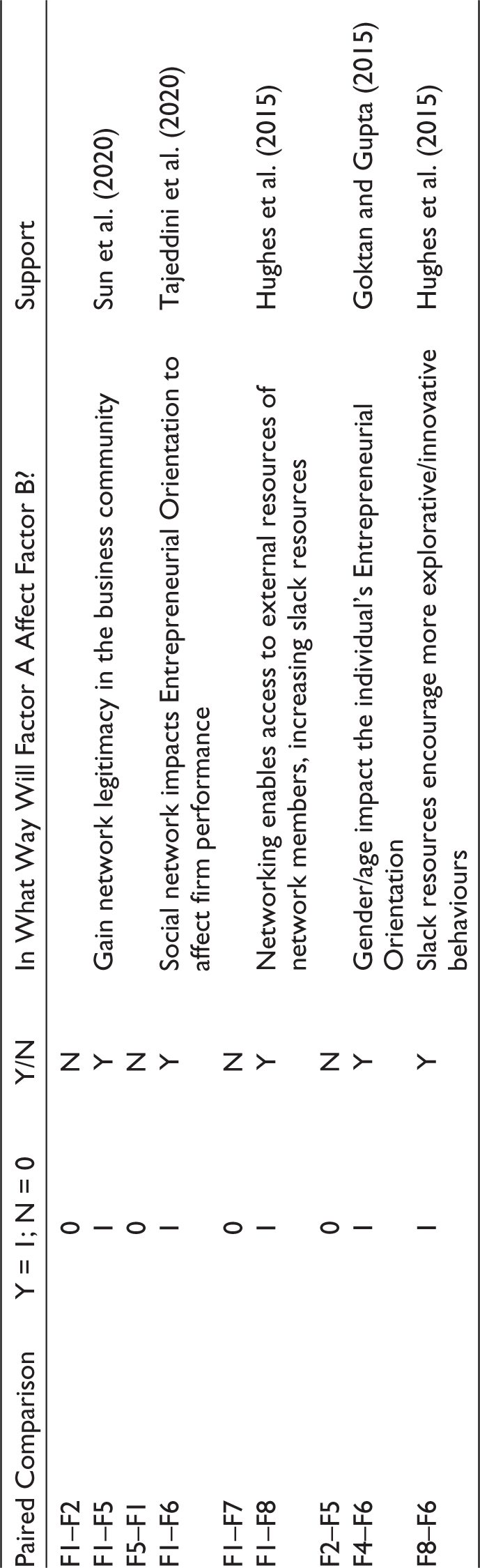
The elements identified are compared pair-wise to form a detailed self-interaction matrix (interpretive knowledge base). The paired comparison is defined as Yes (Y) or No (N). The relationships which are defined as yes are then interpreted logically according to the existing literature. A comprehensive knowledge base, a sample of which is in Table 3, is finally prepared with the Y–N markings for each pair-wise comparison.
Sample of the Interpretive Logic-knowledge Base.
Step 5: Making Reachability Matrix with Transitivity
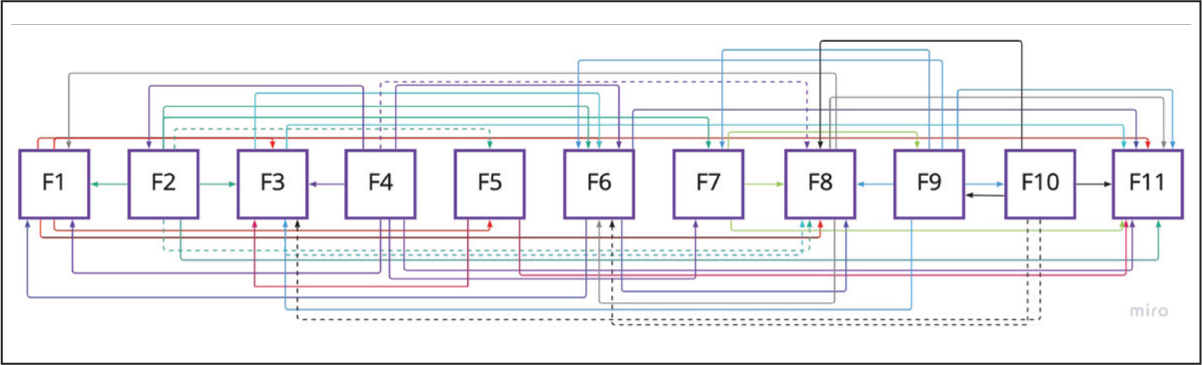
The Y and N in the knowledge base are converted to ‘1’ and ‘0’, respectively, to draft the reachability matrix (Table 4). At the same time, the comparisons are checked for transitivity. If Factor A influences Factor B, Factor B influences Factor C, then the relationship between Factor A and Factor C is considered as a transitive relationship. The links found transitive are labelled as ‘1*’ in place of ‘0’ (Table 5). For instance, Factor F2 is transitively linked to Factor F5, as firms gain legitimacy and organisational prominence indirectly through social relations due to academic background or work experience. Figure 1 shows the direct and Figure 2 shows the transitive links. Figure 3 shows the combined links. In the modified version of TISM or m-TISM, Sushil (2017) suggested merging Step 1 to Step 5 to check transitivity during pair-wise comparisons, thereby reducing the iterations required during the level partitioning (Meena & Dhir, 2021). This modification helps manage the challenge of a higher number of paired comparisons and transitivity checks as the number of elements under study increases (Sushil, 2017; Yadav & Sushil, 2014). In this process, the pairs identified as transitive are not required to be compared again.
Reachability Matrix Without Transitivity.

Reachability Matrix with Transitivity.
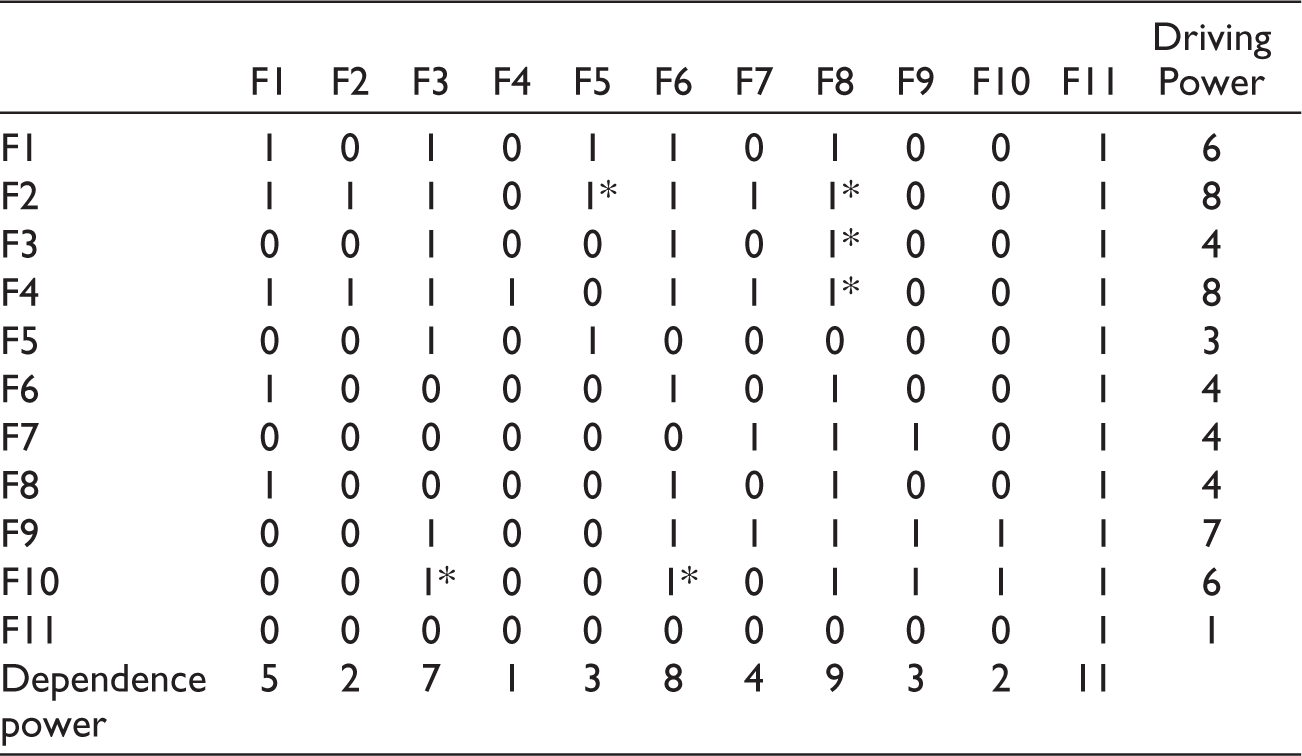
Direct Links.
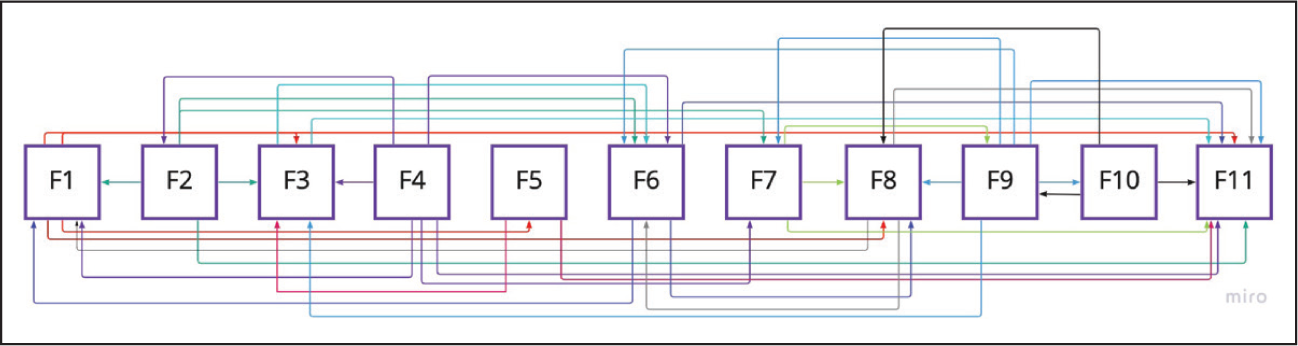
Transitive Links.

Direct and Transitive Links.
Step 6: Partitioning into Levels
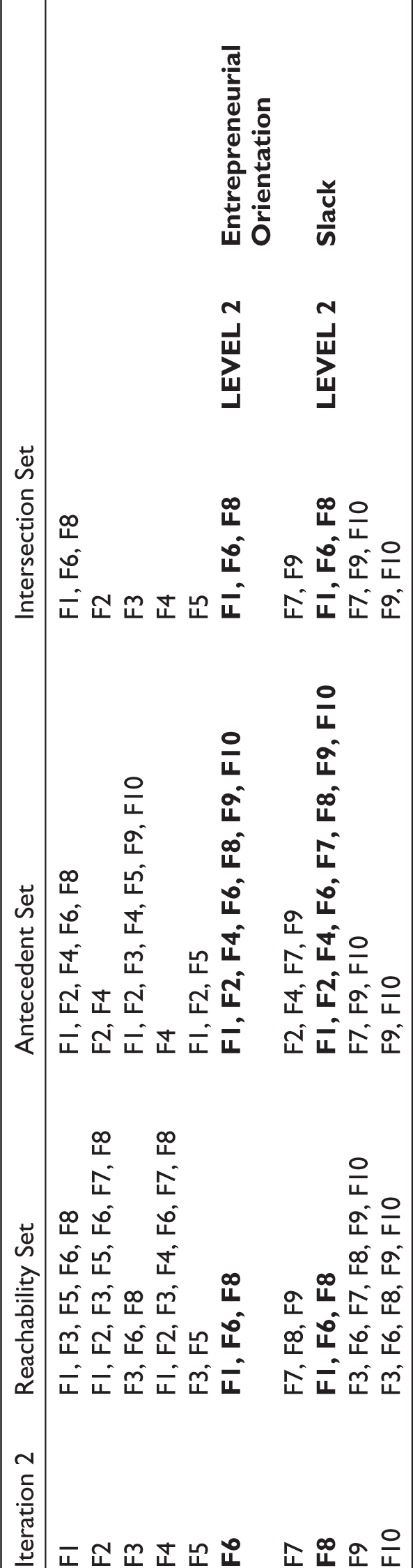
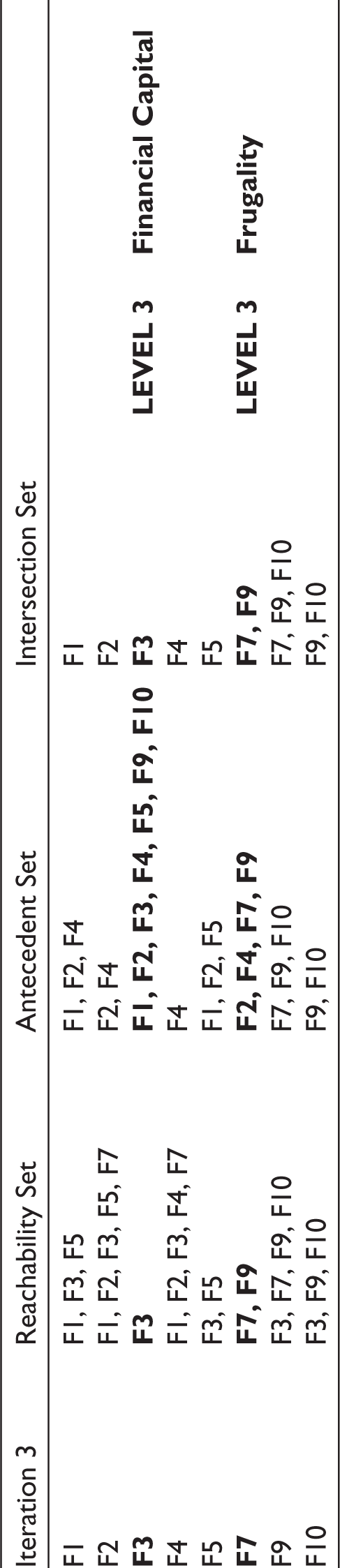
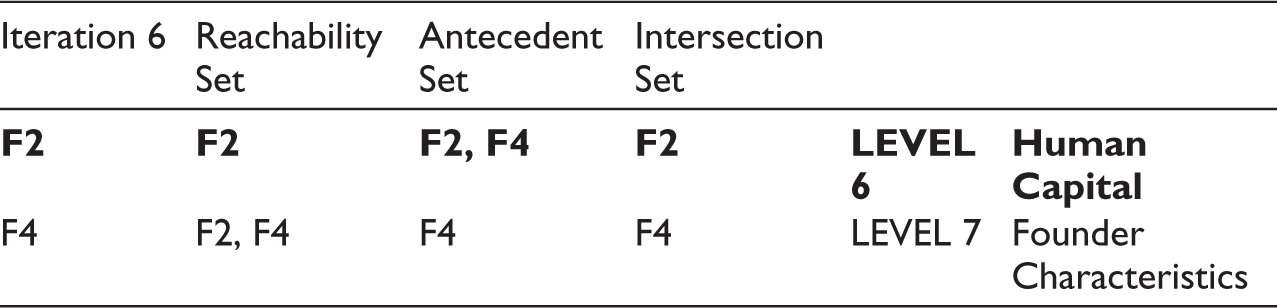
The reachability set for Factor X is identified as the antecedents which are influenced by factor X. For example, in the first iteration, as shown in Table 6, for factor F1, the reachability set consists of {F1, F3, F5, F6, F8, F11} as social capital influences access to finance, firm characteristics in form of legitimacy, entrepreneurial orientation, resource slack, and bootstrapping and bricolage behaviours. The antecedent set for Factor X is identified as factors that affect or influence Factor X. For example, for Factor F1, the antecedent set consists of {F1, F2, F4, F6, F8} as human capital or academic and work background, founder characteristics such as age and gender, entrepreneurial orientation and resource slack that can be shared with the network influences the entrepreneurs’ social capital. Finally, the intersection set consists of factors present in both reachability and antecedent sets. For example, for Factor F1, the intersection set is {F1, F6, F8}. To create level partitions, factors with the same reachability and intersection set are identified, as highlighted in bold in Table 6 to Table 11. The first factor(s) identified is at Level 1. These factor(s) are then removed from the respective sets, and partitioning is done again to determine the subsequent levels of partitioning. This iterative process (Tables 6–11) continues until all the levels are ascertained.
Level Partitioning Matrix: Iteration 1.
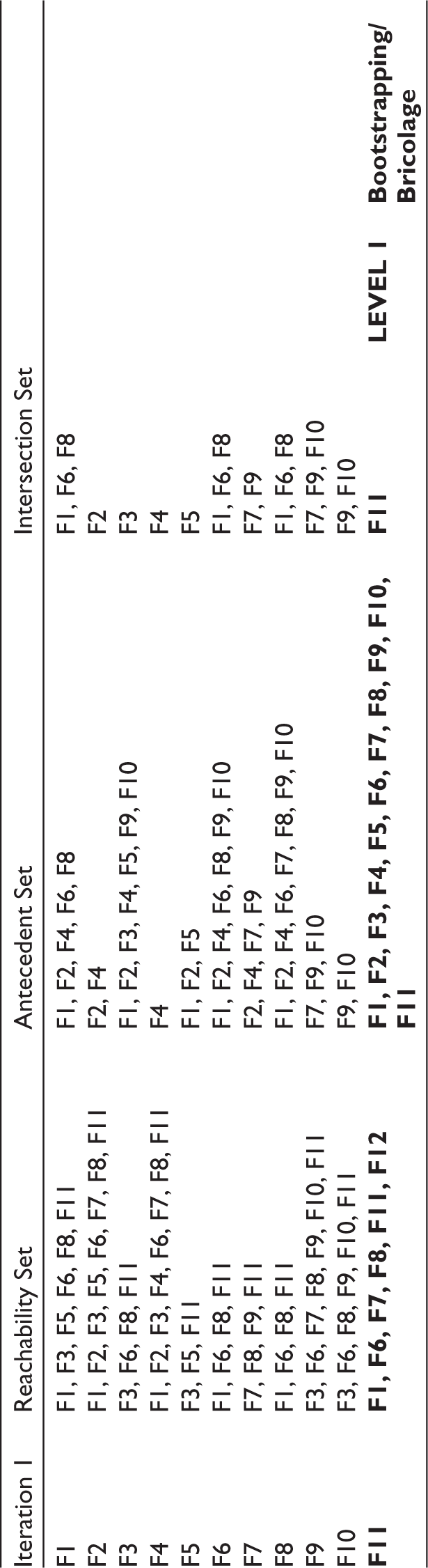
Level Partitioning Matrix: Iteration 2.
Level Partitioning Matrix: Iteration 3.
Level Partitioning Matrix: Iteration 4.

Level Partitioning Matrix: Iteration 5.

Level Partitioning Matrix: Iteration 6.
Step 7: Digraph
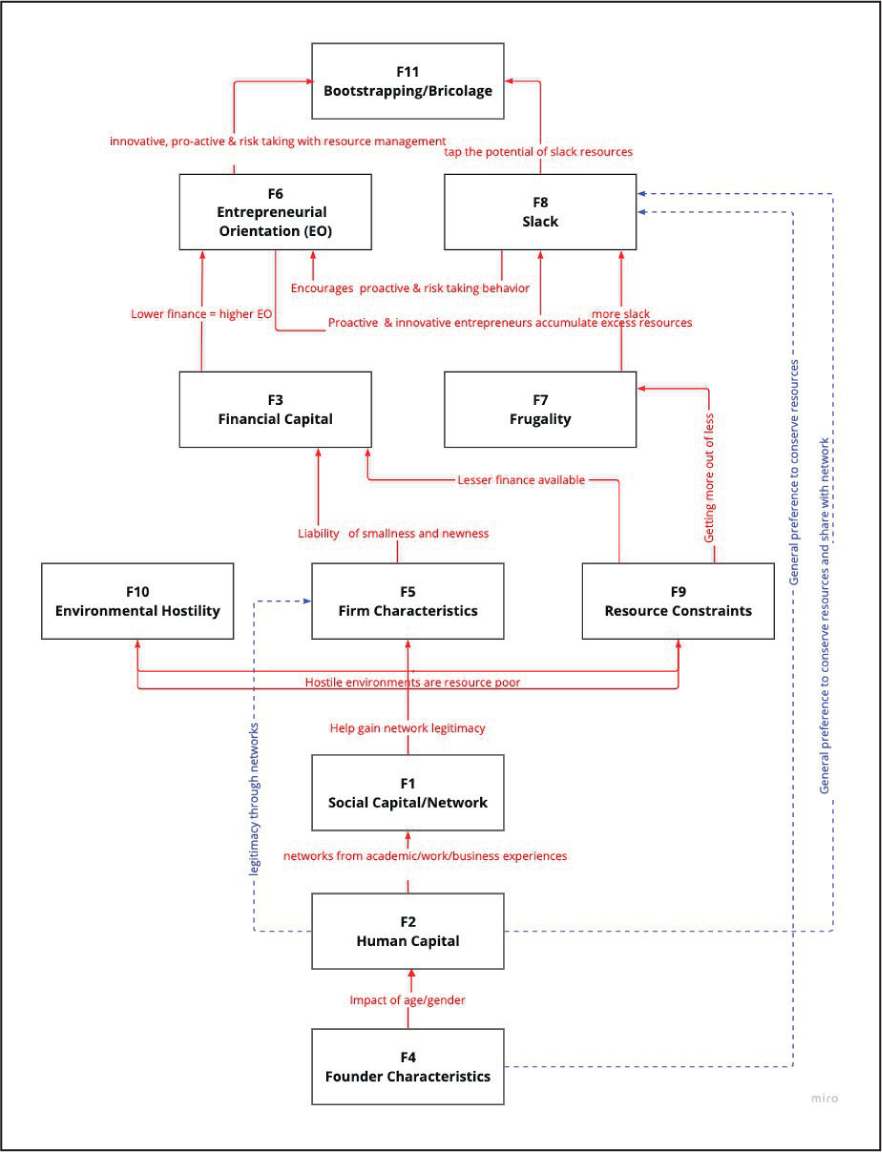
The digraph (Figure 4) is prepared using the levels of factors identified after the level partitioning iterations. The factors in the digraph appear as suggested by the iterations in Step 6, with factors identified at Level 1 placed at the top, followed by the others as identified on different levels and the reachability matrix prepared with transitivity links. Significant and meaningful transitive links (blue) are also shown with dotted lines.
m-TISM Digraph.
Step 8: m-TISM
The final m-TISM uses binary and paired comparisons table and the reachability and transitivity matrix. The final digraph briefly mentions the logical interpretations of the relationships and displays the different levels identified.
Results and Discussion
m-TISM Levels
Levels VII and VI, as identified in Table 11, consist of founder characteristics and human capital, respectively. The factors placed at the lower levels of the hierarchy are considered essential elements of the model (Singh & Dhir, 2021; Singh & Sushil, 2013). Founder characteristics affect the entrepreneurs’ human capital as gender parity impacts the level of education and their perceived capabilities (Brush et al., 2017). Further, academic research highlights that women generally suffer from a double bias due to the prevalent gender bias and lesser experience because of their age (Mcgowan et al., 2015). Scholars have also repeatedly highlighted that human capital is considerably lower in the case of women (Boden & Nucci, 2000; Brixiová et al., 2020). These factors are critical in the m-TISM hierarchy as they drive the other antecedents towards entrepreneurial resourcefulness behaviours.
Level V, as identified in Table 10, consists of the social capital of the entrepreneur, which is directly impacted by the human capital. With the increasing need for critical skills and knowledge-intensive entrepreneurship, human capital and social capital have become essential aspects of entrepreneurial success (Dakhli & de Clercq, 2007). The academic background, business experiences and work proficiency of entrepreneurs have directly affected their social networks and diversified their relationships (Felício et al., 2014). Moreover, even the academic discipline undertaken affects the difficulties faced by founders in building ties (Mosey & Wright, 2017). The social networks of the founders ultimately help them mobilise resources as per the business requirements.
Level IV, as identified in Table 9, consists of three antecedents (Resource Constraints, Firm Characteristics and Environmental Hostility). Here, the social capital of the entrepreneur impacts the firm characteristics, precisely the organisational credibility and prominence (Liao & Welsch, 2005). Firm characteristics are also indirectly affected by the human capital of the entrepreneurs as they gain legitimacy through their networks. At this level, the other two antecedents affect each other as hostile environments are characterised by a dearth of resources required by the huge number of ventures trying to sail through the reduced margins and intense competition (Grichnik et al., 2014; Grichnik & Singh, 2010). These three antecedents push the founders to resort to making do with the resources they have or accumulate resources without external help.
Level III, as identified in Table 8, consists of two antecedents (access to financial capital and entrepreneurial frugality). These are affected by antecedents at level IV as resource constraints and hostile environments directly and indirectly impact the amount of financial capital available to entrepreneurs (Grichnik & Singh, 2010; Juma & Sequeira, 2017). Further, due to their small size, the liability of newness and lack of credibility and legitimacy makes it challenging for entrepreneurial ventures to access finance from external sources (Cassar, 2004; O’Toole & Ciuchta, 2020). Moreover, the resource limitations in the business environment push entrepreneurs to be frugal and get the maximum value out of the resources available (Michaelis et al., 2020; Zahra & Garvis, 2000). A general preference to conserve and use resources optimally and lack of access to financial capital from sources such as venture capital, angel investors and bank loans nudges the entrepreneurs towards resourcefulness behaviours.
Level II, as identified in Table 7, also consists of entrepreneurial orientation and resource slack. These are directly affected by the antecedents below them. Scholars demonstrate that entrepreneurial orientation has proved to be a successful mechanism to sail through the dearth of financial capital availability. Contrary to this, in case of sufficient access to financial capital, firms have enough slack resources to experiment with (Wiklund & Shepherd, 2005). Further, the natural preference to conserve resources also translates to a preference for accumulating excess liquid or slack resources (Michaelis et al., 2020). Slack resources are also indirectly impacted by founder characteristics and human capital due to the frugal behaviours of entrepreneurs. These two antecedents at level II affect each other as well. The proactive and innovative entrepreneur tends to accumulate excess resources, thereby accumulating more slack (Wang et al., 2021). On the other hand, the presence of slack resources in a firm has encouraged explorative and innovative ways of using the existing resources, thereby showing a positive correlation with entrepreneurial orientation (Hughes et al., 2015; Voss et al., 2008). Finally, the antecedents at level II ultimately impact the top level, or the use of bootstrapping and bricolage as entrepreneurs act innovatively and proactively to manage resources at hand while also employing the excess slack resources available (Hooi et al., 2016; Ma & Yang, 2021; Paeleman & Vanacker, 2015; Sun et al., 2020).
MICMAC Analysis
The next step is an MICMAC analysis, conducted using driving and dependence powers through the reachability matrix with transitive links. The driving power is the sum total of the factors influenced by a particular factor (row total in Table 5). The dependence power is the sum total of the number of factors that influence a particular factor (column total in Table 5). This analysis helps to understand the indirect relationships post analysing the direct ones through m-TISM analysis (Dhir & Sushil, 2017). In the MICMAC analysis, the factors under study are categorised into four different quadrants in a two-dimensional Cartesian coordinate system (driving––Y-axis; dependence––X-axis). This analysis complements m-TISM as it helps understand the strength of factors that influence entrepreneurial bootstrapping and bricolage behaviours, making the modelling results more meaningful by quantifying and categorising the antecedents identified while also assisting in visualising the importance of those factors. Figure 5 shows the MICMAC analysis. Table 12 details the positioning of each antecedent in the respective quadrants.
MICMAC Analysis: Quadrant Placements.
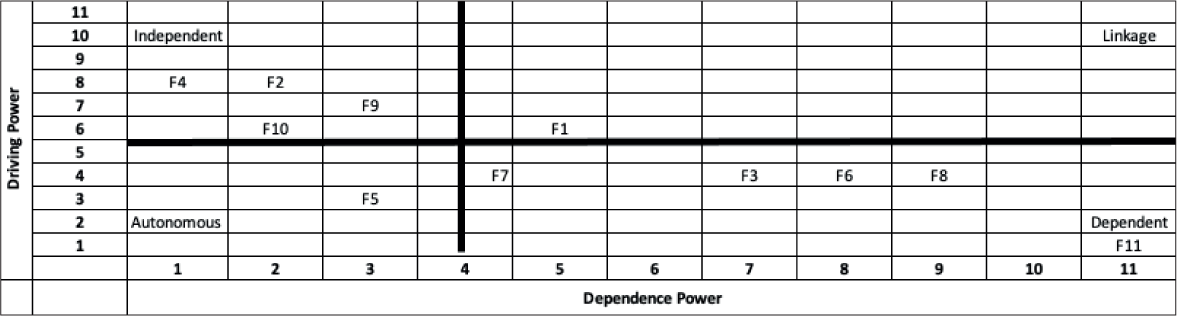
Position of Elements as Identified by Their Power (Driving and Dependence).
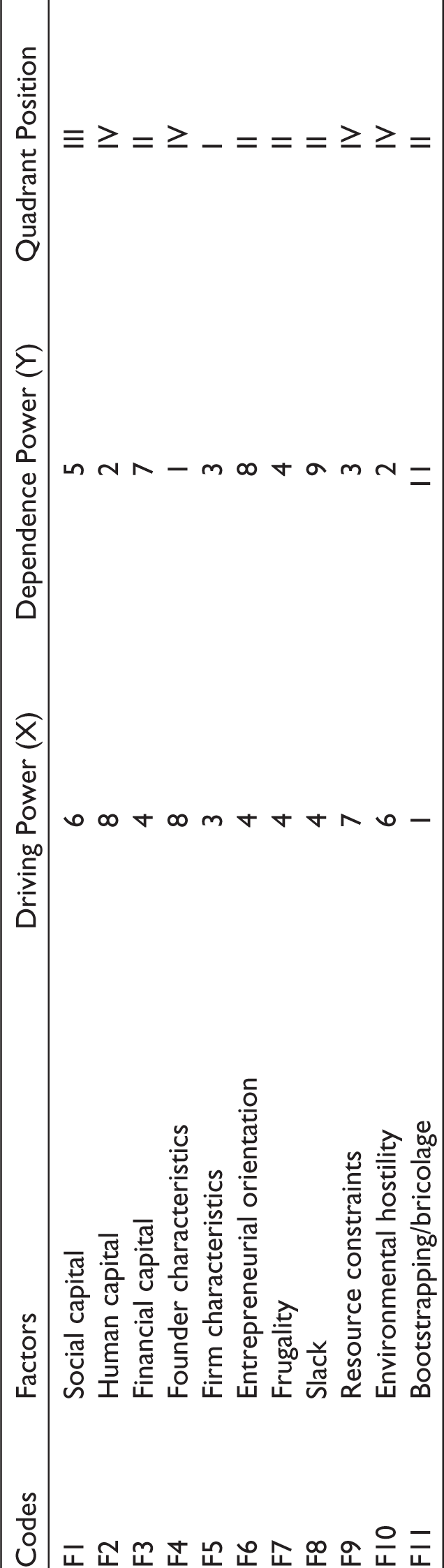
Quadrant 1: Autonomous Variables
It consists of factors that are slightly disconnected from the model with lesser driving and dependence power. The links of the factors in this quadrant are comparatively lesser and weaker than others. In this analysis, Firm Characteristics falls here as it is neither easily influenced by the drivers nor does it drive other dependent variables in the model. These variables are a part of the system but are difficult to control or influence, even with deliberate efforts.
Quadrant 2: Dependent Variables
The factors in this group have a higher dependence but lower driving power. In this analysis, all the variables at the top three levels are dependent. The use of bricolage and bootstrapping is at level I of m-TISM, followed by entrepreneurial orientation and slack, which are at level II. The two antecedents at level III, financial capital (F3) and frugality, are also dependent variables. These variables are highly driven by variables with higher driving powers (Quadrant 4), that is, by variables such as human capital, founder characteristics, resource constraints and environmental hostility.
Quadrant 3: Linkage Variables
These antecedents are relatively more unstable, with higher driving and dependence powers, connected with variables in both dependent and independent quadrants. A change in the factors here affects the factors in the other two quadrants, making them critical variables. In this analysis, social capital was identified as a linkage variable. Due to their unstable nature, any changes to the social capital may lead to outcomes that are difficult to predict.
Quadrant 4: Independent Variables
The factors in this group have a higher driving but lower dependence power. In this analysis, resource constraints, environmental hostility, founder characteristics and human capital are placed in the independent variable quadrant. These are the key influencers in the model, as these antecedents ultimately drive the other dependent antecedents. Therefore, identifying the driving factor is a critical outcome of this analysis.
Path Analysis
Finally, a path analysis (Figure 6) was undertaken to find and interpret critical interrelationships between the antecedents of entrepreneurial bootstrapping and bricolage. These paths emphasise how entrepreneurial bootstrapping and bricolage can act as key dynamic capabilities for entrepreneurs by helping them access, accumulate and enhance resources to adapt to scarce business environments (Teece et al., 1997).
Path Analysis.
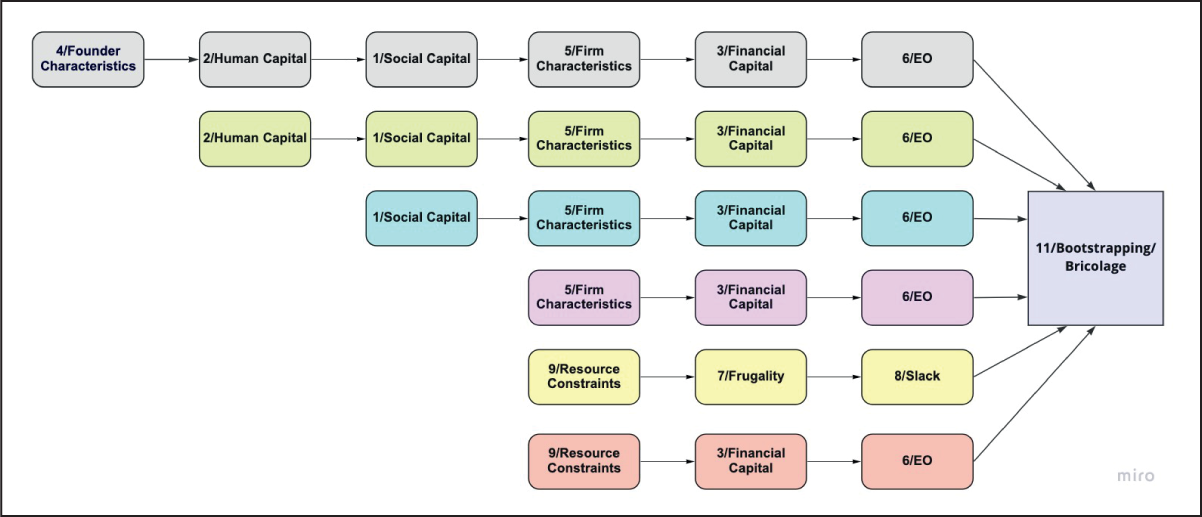
Paths 1–2–3–4: It can be noted that gender impacts education or work experience (Brixiová et al., 2020), affecting the networks (Felício et al., 2014), giving firms more credibility (Sun et al., 2020) and impacting access to finance (Du et al., 2015). Entrepreneurial Orientation is impacted according to the level of finance available (Wiklund & Shepherd, 2005), thereby impacting the application of entrepreneurial bricolage and bootstrapping (Hooi et al., 2016). The flow of these four paths emphasises on the role of human capital and social network theory and how it impacts firm resources, which are critical to a firm’s success and competitiveness according to the resource-based theory (Barney, 1991).
Path 5: It can be noted that resource constraints in the business environment push entrepreneurs to be frugal and conserve resources (Michaelis et al., 2022), which further helps in accumulating excess resources (Michaelis et al., 2020) that can be creatively employed by entrepreneurs engaging in entrepreneurial bricolage and bootstrapping (Sun et al., 2020). The flow of this path emphasises the resource dependency theory, which holds that firms need not depend on external sources for gathering resources (Pfeffer & Salancik, 2015).
Path 6: It can be noted that resource constraints often lead to an insufficient amount of financial capital available to start-ups for funding (Kim et al., 2006), which encourages them to take risks and be proactive and innovative in their resource management activities (Wiklund & Shepherd, 2005), encouraging resourcefulness behaviours (Hooi et al., 2016). The flow of this path emphasises resource constraints theory which highlights how entrepreneurs operate their ventures by combining and recombining available resources with them in case of resource limitations (Loasby & Leibenstein, 1976).
Case Study
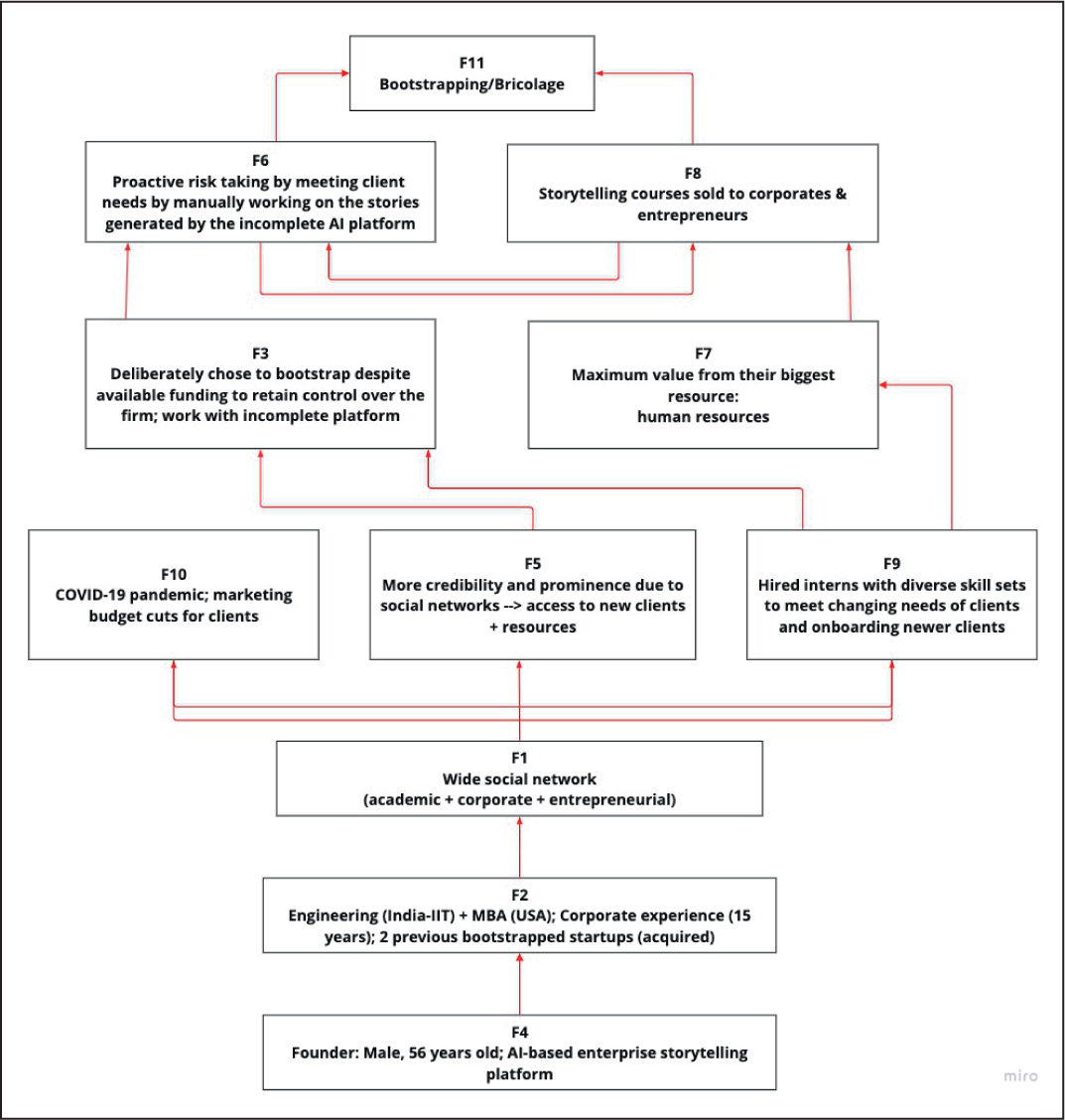
Despite the need for more empirical validation for the m-TISM modelling, the case study of an Indian artificial intelligence-based enterprise storytelling platform start-up based in Gurugram lends some support to the m-TISM hierarchy. The start-up was founded by an experienced engineer from India’s top college who has previously founded two ventures (acquired). The firm’s founder highlighted that the key factor in the success of his bootstrapped start-ups was his horizontal and vertical networking, not just during his jobs but also while getting his degrees at top institutions. The networks helped the firm sail through the pandemic when marketing budgets of most clients took a hit by helping them approach new probable clients, contractual employees and other business resources. The hostile environments with changing client needs pushed them to innovatively hire a new team of diverse interns from India’s top colleges. These interns helped them manage the onboarding of newer clients and the changing demands of existing ones due to their diverse skillsets. Working remotely also considerably reduced their overhead expenses while giving them access to global human resources. They decided to be proactive with their existing resources by getting the maximum value and revenue from them when they decided to take some risks and meet client video needs by manually working on the stories generated by the incomplete AI platform, giving them cashflows to invest back in the business. They also frugally leveraged the storytelling resources available by selling them as storytelling courses for entrepreneurs and corporates through their networks. This helped them use their existing resources by selling their product as a service before it could be used commercially. Collectively, these small steps of innovatively using their existing resources helped them stay cash positive during the pandemic while also adding newer clients and staying a bootstrapped start-up. The case is depicted in Figure 7.
Case Study Validation.
Conclusion, Implications and Limitations
This article sought to systematically identify antecedents and their relationships for entrepreneurial bootstrapping and bricolage behaviours. Further, a hierarchical interpretive model was developed using m-TISM methodology (Sushil, 2017), involving an iterative multi-step process while also interpreting the relationships simultaneously (Singh & Dhir, 2021). MICMAC analysis determined the driving and dependence powers of the factors identified in the m-TISM analysis (Dhir & Dhir, 2020). This analysis helps to understand the indirect relationships post analysing the direct one through m-TISM analysis. Finally, the case study helped validate the results.
The results highlight that founder characteristics and human capital are placed at the lower levels of the hierarchy in the m-TISM model, making them essential elements of the model. They, along with environmental hostility and resource constraints, have high driving power in the model. Social capital acts as a linkage variable, a change in which impacts the factors in the other two quadrants. Further, entrepreneurial orientation, slack, external financial capital and entrepreneurial frugality are at the top levels of the hierarchy, making them dependent variables with a higher dependence power and lower driving power.
This study makes multiple contributions to research in entrepreneurial bootstrapping and bricolage. It systematically identifies 10 critical antecedents that push these behaviours. It also builds on the existing theories in entrepreneurial bootstrapping and bricolage literature by explaining the hierarchy of factors impacting these behaviours while also understanding how they are logically related to each other, directly and transitively. This is the first study analysing the relationships between these antecedents to help build rigour in these theories by answering not only the ‘what’ and ‘how’ but also the ‘why’ aspect of relationships between these antecedents (Sushil, 2012, 2017). Therefore, it addresses not just the relationship but also the interpretation of the relationship between them. There is a need for theories that explain how entrepreneurs act innovatively to sail through resource limitations of dynamic start-up markets. In terms of methodological contribution, this is the first mixed-methods study involving a review combined with an m-TISM analysis in this field. This study will help entrepreneurs trying to implement these resource behaviours as a response to the COVID-19 crisis for tapping on new opportunities and finding their way to resilience in these dynamic and testing times. The levels of m-TISM digraph will guide them in prioritising while making resource decisions to mobilise resources following the immediate disruption due to the ongoing coronavirus crisis. Entrepreneurs around the world, striving to look for novel opportunities and protect themselves from the anticipated post-coronavirus resource limitations, can benefit by focusing on the driving antecedents to impact the dependent factors further.
The limitations of this study provide insights and outlooks for future research. First, this article has identified only 10 antecedents. Future studies could extend this study to identify more antecedents by including expert opinions of academics and entrepreneurs with real-time experiences. Scholars can also work towards building more rigour into the theories explaining these behaviours by adding newer variables and building more complex conceptual models. This will help identify newer paths towards entrepreneurial bootstrapping and bricolage behaviours. Future studies could test this m-TISM model empirically to check its validity in the actual entrepreneurial setup, given the increased employment of these behaviours post the COVID-19 pandemic worldwide. This could be done statistically using quantitative methods like structural equation modelling and further validating them through qualitative case studies or suitable mixed method studies. This will help in building on existing theories with empirical support. Future studies could also develop similar m-TISM hierarchical models for ventures across different industries and perform a comparative analysis.
Footnotes
Declaration of Conflicting Interests
The authors declared no potential conflicts of interest with respect to the research, authorship and/or publication of this article.
Funding
The authors have received no financial support for the research, authorship and/or publication of this article.