




Abstract
Green procurement is the set of procurement policies held, action taken and relationships formed in response to concerns linked with the natural environment. Green procurement has drawn major attention of supply chain practitioners and has become the theme of most of the seminars and workshops. Green procurement is gaining popularity due to its positive association with the triple bottom line, that is, sustainability. Firms implement green procurement to achieve sustainability in this dynamic business environment. There are several published papers that have adopted qualitative and quantitative methodology to build and test theories in the field of green procurement. However, existing research gaps have motivated to pursue this study. The main purpose of this article is to investigate the interrelationships of green procurement drivers. First, systematic review of literature is done to identify the leading drivers. Second, these drivers were refined through experts’ opinion with interview conducted among five procurement managers from South African manufacturing sector. Third, the comments of these experts are converted into interpretive logic of pairwise comparison, and total interpretive structural model (TISM) is developed. Finally the conclusion of research, the managerial implications and directions of future research are presented.
Introduction
Globally, researchers and industry associations are seeking innovative eco-friendly approaches to conserve the natural resources and curb greenhouse gas emissions. The level of popularity of green procurement can be estimated from the high research output in leading journals such as International Journal of Production Economics (IJPE), International Journal of Production Research (IJPR), International Journal of Procurement Management (IJPM) and Resources, Conservation and Recycling journals. Research output on green procurement has increased over the years and reached its peak in 2013, and out of which 43 were survey papers, 14 were case studies and only 5 were theoretical and conceptual papers (Appolloni et al., 2014). Environmental aspects have been an important consideration in Europe since the Treaty of Rome in 1957. However, more importance was given since the United Nations conference on Environment and Development in the year 1992. In the European Union (EU), the sustainable development strategy was launched by the heads of state and government in 2001. Sustainable development strategy did not clearly refer to green procurement. However, the world summit in 2002 which was organized in Johannesburg called for Green Public Procurement.
In June 2003, the policy paper on integrated product policy has triggered to Green Public Procurement in EU member states by 2006. Therefore, the epicentre of green purchasing, and sustainable development is Europe. The government procurement agreement (GPA) seeks to protect and preserve environment. Environmental criteria awarding for supplier selection and awarding orders, technology selection, methods and production process are all considered under EU GPA. It is mandatory for all member states to comply with the directives and allow for the integration of environmental considerations in supply and service contracts. Because of the purchasing power of the public sector the potential for Green Public Procurement is enormous. Outside the EU, Green Public Procurement initiatives have been developed in Japan, Philippines, Canada and the USA.
European commission is proud to publish their handbook on green public procurement. This handbook aims to encourage public authorities to buy eco-friendly goods. EU commission helps member states in establishing the plans and targets for Green Public Procurement. Major barriers are the lack of environmental knowledge on the right criteria to include in tender documents, budgetary constraints due to up-front prices that are higher than prices of conventional goods and services. The handbook seeks to help overcome these barriers (Day, 2005). The member countries of EU practice Green Public Procurement and have also influenced private sector to convert into green procurement practices. The EU handbook on green public procurement promotes the idea of defining technical specifications in terms of performance or functional requirements. This allows tender participants to come up with innovative solutions.
Legal frameworks such as international legal framework for GPA are important to be implemented in developing countries like India. There is scope in converting to green electricity, renewable energy, use energy efficient computers and home appliances, water saving toilets and taps, buy organic foods and convert kitchen waste to compost for gardening, recycle waste water for gardening. Government should not only ask citizens to be environmentally conscious but demonstrate the eco-friendly buying process and also the process of recycling, reuse waste.
The main objectives of this article are:
to identify the leading green procurement drivers; to determine the interactions among the identified drivers; and to understand the managerial implications of this study.
This article is structured into seven additional sections. The second section presents the systematic literature review (SLR) which helps to identify the green procurement drivers. The third section covers research methods and further introduces total interpretive structural modelling (TISM); the data analysis and findings are presented in the fourth section. In the fifth section, the discussions are presented. In the sixth section conclusions are drawn followed by managerial implications and directions of future research.
Literature Review
Literature review is an important part of any research study. Traditional review approach mostly lacks thoroughness, quality and information which ultimately do not make sense to practitioners. Here, author attempts to use the process of systematic review for exploring and understanding the links. The SLR process creates transparency and assist in developing the research question which will further enhance the knowledge base. Earlier, SLR was mainly used by researchers in the area of medical sciences, but recently SLR has gained popularity in the area of management sciences. Some of the recent published papers have adopted SLR techniques (Bag & Anand, 2014; Chakrabarty, De & Dubey, 2014; Dubey & Ali, 2014; Srivastava & Dubey, 2014). The steps of systematic review of literature followed in the present study have been adopted based on the guidelines of Tranfield, Deyner and Smart (2003).
Stage 1: Planning the Review
In this stage, researcher conducts studies to assess the relevance and size of the literature and to draw up the boundaries of the topic. Our review basically focuses on articles published in reputed peer review journals. To set up a time span, a starting position was set at 2000. Library database (EBSCO) was used through a keyword search using keywords ‘Green Procurement’, ‘Eco-friendly practices’ and ‘Environmental Purchasing’. Since the literature is interlinked when we picked up one thread, we could easily identify the rest. Finally, researcher selected only the important papers relevant for the present study. The list of cited references is presented at the end of the study.
Phase 0: Identification the Need for a Review
The objective of conducting the review is to identify the research gaps in existing published literature and further develop the problem statement, research questions and research objective for the present research.
Phase 1: Preparation of a Proposal for Review
Researchers have carried out detailed review of research articles published in IJPE, IJPR, IJPM and other reputed journals to understand the links for the present study and present a review proposal for the present study.
Phase 2: Development of a Research Protocol
In this step, the conceptual discussion of the research problem and a statement of the problems’ significance are presented.
New and innovative eco-friendly methods of production are required to develop sustainable products which generally attract customers and enhance market share (Bag, 2014). Green procurement promotes sustainable production and consumption (Liu et al., 2012). Environmental problem occur not only during production but also from consumption of products. Dawson and Probert (2007) argued that sustainable consumption necessitates a sustainable procurement commitment. Therefore, right purchasing is linked to impact of society on the environment. Every purchase decision has ethical, resource, waste and community impact implications (Young et al., 2010). Green procurement reduces negative environment impact related to product production and consumption (Green, Morton & New, 2000; Ho, Dickinson & Chan, 2010). However, the success stories of green procurement implementation in developing countries are few. The underlying reasons are numerous. First, it is due to the environmentally oriented products which are not effective in terms of their market place performance. It is necessary that the products are effective both internally versus competitors (Pujari, Wright & Peattie, 2003). Second, there are numerous barriers to implement green procurement practices, and managers lack knowledge of critical success factors (Zhu & Sarkis, 2004). Addressing these critical success factors may provide firms new opportunities for competition (Zhu & Sarkis, 2006).
Firms in developing countries cannot improve on the triple bottom line until they understand the interrelationships between the antecedents/drivers of green procurement. The present research shows the road map to firms in developing countries to dig out the benefits by implementing green procurement.
Stage 2: Conducting a Review
Green Procurement Drivers
Green procurement has thrown up unique challenges in areas such as design of eco-friendly products, inventory management, collaboration with suppliers, reverse logistics and life cycle thinking. In this study, we focus at an important area of green procurement which has not received attention so far. The present study is motivated by recent green movement in South Africa and noted developments which can be set as a benchmark for other developing countries such as India.
Hassini, Surti and Searcy (2012) conducted a review considering the published papers during the last decade (2000–2010) which gives us important insights.
Tsai et al. (2012) found that green economy has a positive influence on customer perceived value on green products and motivates manufacturers in new eco-innovation for product development.
Liu et al. (2012) found that environmental attitudes, perception of self-responsibility, greatly influence green procurement behaviour.
Arslan et al. (2010) showed that environmental attitudes, environmental behaviour and green product awareness have a positive effect on environmentally conscious purchasing behaviour. Environmental attitudes include action which contributes towards environment preservation and conservation. The environmental problems are present in human behaviour; therefore it is essential to change the behaviour and culture of organizations. Companies failing to implement environmental responsible operation will encounter a loss of competitiveness. We must note that both producers and customers have important role in environmental conservation.
There are existing studies which have identified green procurement drivers such as the study by Khidir ElTayeb, Zailani and Jayaraman (2010) where they examined the effect of four drivers (i.e., regulations, customer pressures, social responsibility and expected business benefits) on green purchasing.
Another study by Large and Thomsen (2011) also identified five potential drivers of green procurement such as green supply management capabilities, the strategic level of the purchasing department, the level of environmental commitment, the degree of green supplier assessment, and the degree of green collaboration with suppliers. The results suggest that the degree of green supplier assessment and the level of green collaboration exert direct influence on environmental performance.
Lee (2008) finds that buyer environmental requirements and support were positively linked to their suppliers’ willingness to participate in green supply chain initiatives. The government can play an important role in motivating these suppliers.
Govindan et al. Azevedo, Carvalho and Cruz-Machado (2015) used ISM approach to identify interrelationships among lean, green and resilient practices and supply chain performance. It is found that just in time (lean), flexible transportation (resilient) and green packaging (green) are the key drivers.
Green procurement can be used as a tool in managing environmental risk management (Caniëls, Gehrsitz & Semeijn, 2013). They also identified the drivers for participation of suppliers in green initiatives and are supplier readiness and customer requirements.
Other studies on green procurement give us information on supplier development and collaboration. Firms monitoring their suppliers and focusing on supplier development can help to achieve supply materials that are less polluting and generate low wastage (Gimenez, Sierra & Rodon, 2012).
Gimenez et al. (2012) studied the impact of sustainable operation on triple bottom line and concluded that supply chain collaboration has a statistically significant impact on the triple bottom line.
Vachon and Klassen (2008) argued that benefits of collaborative green practices were broadest with suppliers rather than collaboration with customers. However, environmental information is essential for all collaborative efforts aiming at sustainable competitive advantage (Soler, Bergström, & Shanahan, 2010).
The participation of suppliers in the eco-design stage is emphasized in the study by Fu, Zhu & Sarkis (2012).
Ji, Ma and Li (2014) found that top management commitment is the key factor for both green procurement and green supplier development.
Green Procurement Influence on Supply Chain Performance
We have already discussed in the previous section about the importance given to green public procurement in EU. There is an increasing recognition of the potential of green public procurement as a policy instrument (Burja, 2009). European Unions’ ‘Europe 2020’ strategy and ‘Sustainable development’ strategy portray green public procurement as an essential market-based instrument to achieve the EUs’ economic, environmental and energy goals (Kunzlik, 2013). Other respected work, such as Attri, Dev and Sharma (2013), did a further analysis of environmental criteria in public procurement contracts. Further, Azevedo, Carvalho and Machado (2011) explored the relationships between green practices and supply chain performance. The findings suggest that there is a positive relationship between green practice implementation and operational performance. There is also a positive relationship between green practices and environmental performance. Researchers, such as Kaiser, Eagan and Shaner (2001), talked about the importance of life cycle thinking and green procurement practices in context to health care industry. Green procurement can provide an easy solution to waste generation and disposal issues. In a recent article, Kunzlik (2013) talked about sustainable and eco-innovative purchases precisely to stimulate firms to innovate to attain high environmental standards, maintaining its international advantage in environmental technologies.
Green procurement supports other environmental standards (ISO 14000, Eco-labeling). It can also be used as a tool to advance corporate social responsibility (Ho et al., 2010).
The benefits of green procurement are numerous, but still many firms in developing countries fear to implement green purchasing thinking of the high costs. But we should bear in mind that the initial costs may be high but they save money during their life cycle. Therefore, it offsets the initial costs incurred in buying. It is essential to take into account the entire life cycle cost of the item.
Research Gaps
The research gaps which evolved from the review of literature are presented to further develop the research objectives for the present study. There are studies which report the drivers of green procurement. However, either those studies have not considered all the drivers or the developed models are not robust. Second, there are dearth of studies which has reported the interrelationships between green procurement drivers. Third, no studies have developed and tested green procurement model using TISM approach.
Research Motivation
The present research is motivated based on the recommendations of Azevedo et al. (2011) where they have shown potential research area in exploring the enablers and barriers which influence companies in taking green procurement decisions. Although Appolloni et al. (2014) conducted a review on green procurement considering the time frame between 1996 and 2013, they do not highlight the interrelationships between the antecedents/drivers of green procurement practices, and they have also kept it as one of the future research direction. They have also mentioned the need for strong qualitative and quantitative research to support the progress of green procurement.
Research Methods
Good research is grounded in theory. Theory is necessary for scientific understanding of the underlying phenomenon. Numerous calls have been issued describing the need for greater use of theory in operations management. More theory-driven empirical research has occurred as a result of these calls. However, the potential of qualitative research in theory building has been largely underestimated, specifically in the area of project and operations management. The objective of this research is to address this gap in the body of knowledge.
The main objective of this article is to explore the interrelationships between the enablers influencing successful green procurement practices. In this research, the boundaries of green procurement are still relatively vague. Therefore, at this initial stage of research, it is better to select qualitative approach to gain deep insights. The current study intends to develop green procurement theory based on TISM approach.
Interpretive structural modelling (ISM) methodology, transforms unclear, poorly articulated models of systems into clear, well-defined models. The ISM uses experts to judge the variables, and the relations among the variables are interpreted. The ISM depends on the experts’ knowledge and familiarity with the firm, its operations and its industry. Therefore, ISM generates deep knowledge of the subject and is greatly helpful for supply chain practitioners. The evolution of ISM dates back in the year 1974 by Warfield. The use of ISM gradually increased in the last decade where we have seminal works (Agarwal & Vrat, 2015; Attri, Dev & Sharma, 2013; Bag, in press; Bag & Anand, 2015; Dubey & Ali, 2014; Dubey et al., Gunasekaran, 2015c; Dubey et al., 2014; Jayalakshmi & Pramod, 2015; Khatwani et al., 2015; Sushil, 2005a, 2005b, 2009, 2012). The ISM technique has been explored in depth by (Dubey et al., 2015a) where researchers have demonstrated that ISM is an effective methodology for theory building in operations and supply chain management. The ISM has taken a major leap recently in one of the latest published research by (Dubey et al., 2015b) where authors argued the use of mixed methods for theory building using ISM, MICMAC analysis and confirmatory factor analysis. Based on the above principles in mind, the author has used TISM to develop theory on green procurement. The TISM is an extension of ISM methodology and has been used in this study to overcome the limitations of ISM methodology. The TISM is an advanced method and designed in a manner to capture both the statements of respondents (experts) as well as logic and interpretation.
For the purpose of study, the responses of five procurement managers from South African manufacturing sector were collected for evaluation of interrelationship among selected drivers. These experts are well experienced with the green procurement practices. A joint meeting was organized with these five experts, and the research problem and methodology was presented and explained to them in 45-minute duration. Further, three experts who are having more than 15 years of experience were requested to discuss together and fill up the interpretive logic–knowledge base. They filled up yes or no column and also explained in brief in what way drivers will influence/enhance other green procurement drivers. Finally, the compiled interpretive logic–knowledge base data were validated by the two experts who have 25 years of procurement management experience. The entire process of filling up the data and further validating the data took almost one and half hours. The interpretation of relationship between the drivers was presented in Table 3 under data analysis section.
This step of explanation of each relationship is missing in ISM method as well as other commonly used modelling approach such as AHP and ANP. The TISM is a powerful tool and can be employed in complex situations where the number of elements is more since ISM fails in that kind of situation. The TISM has greater explanatory power than other established inductive approaches. The merits of TISM have encouraged applying the interpretive logic–knowledge base for the green procurement drivers and developing the green procurement theory.
Data Analysis and Findings
Identify and Define Drivers of Green Procurement
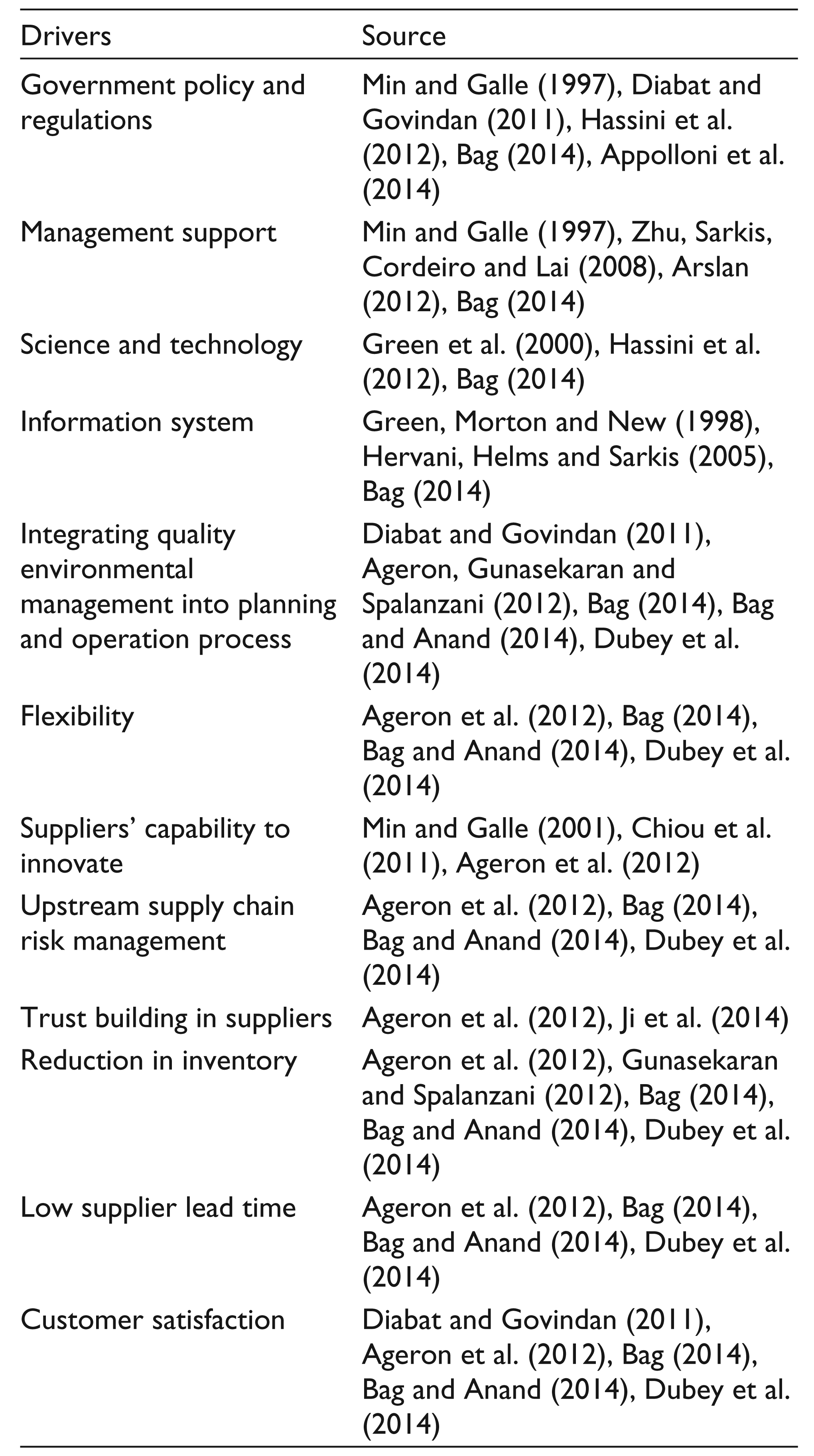
This is the first step in TISM approach. In this step, authors identify the drivers and further define the drivers. For the purpose of this study, 12 drivers are identified from literature (Table 1) which influences green procurement practices.
Drivers Identified for TISM modelling
Define Contextual Relationships
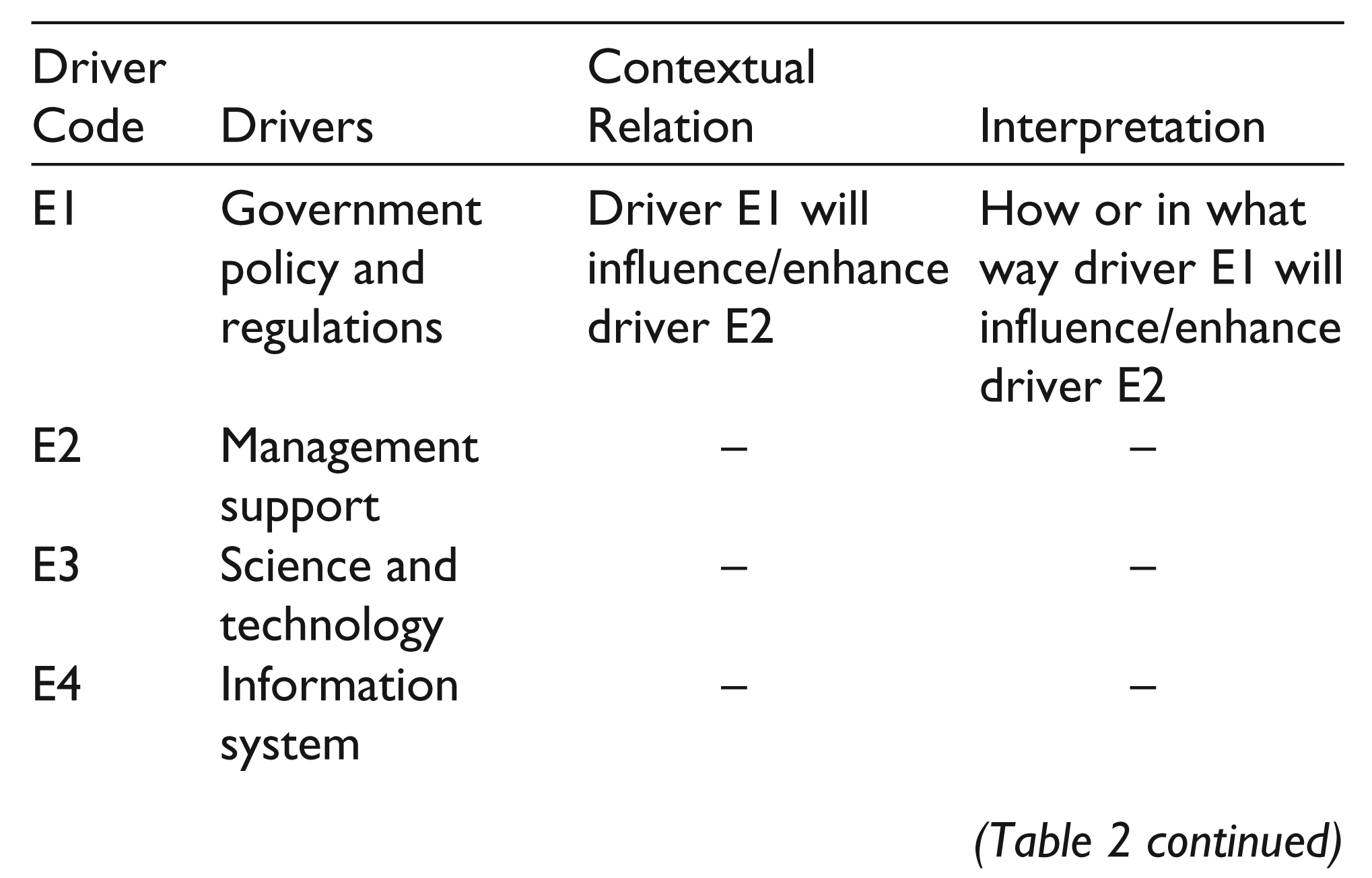
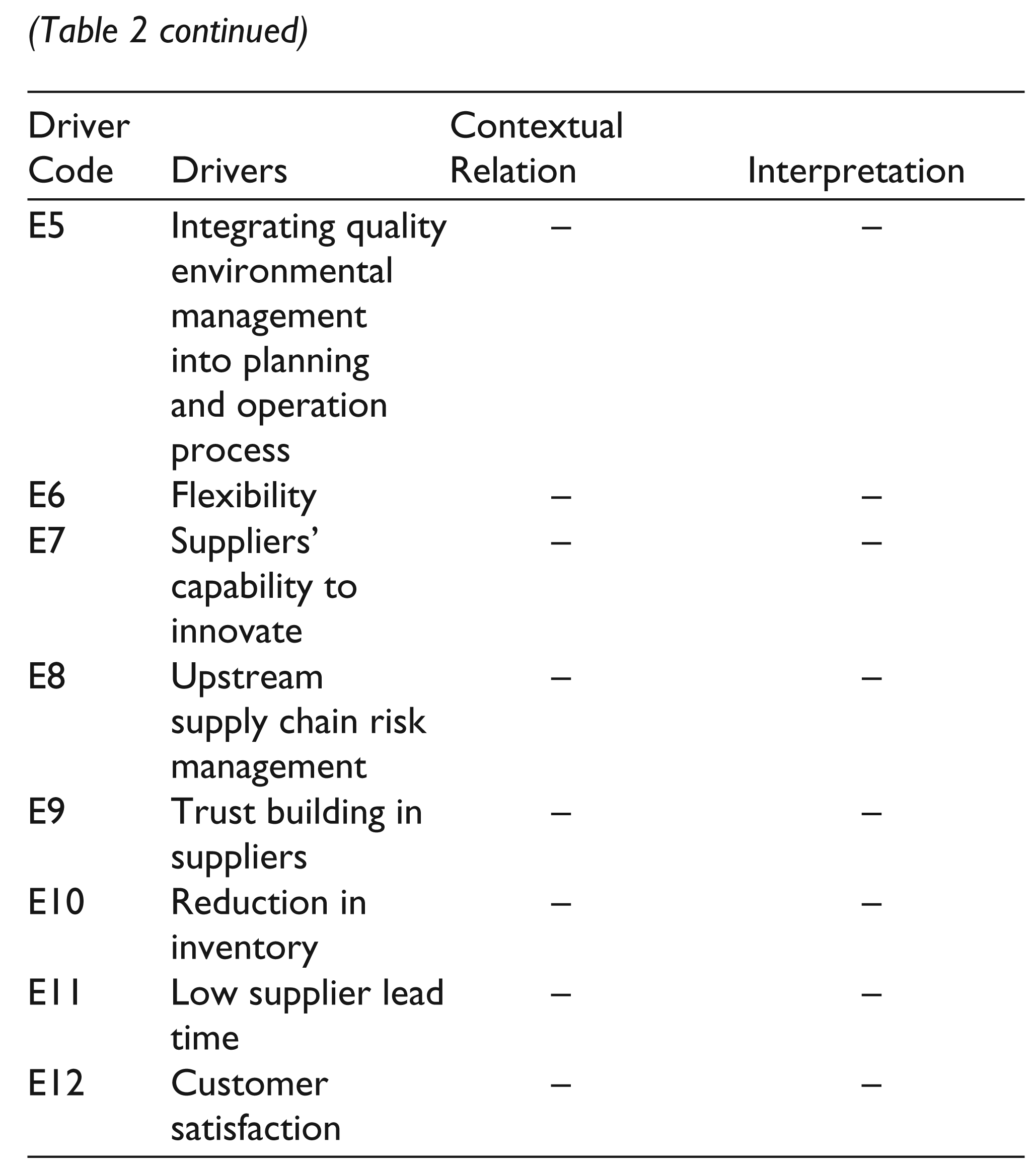
To develop the TISM, it is essential to shape the contextual relationship between different drivers which is presented in Table 2. The inputs of five procurement managers are solicited to capture the contextual relationship between the drivers.
Drivers, Contextual Relationships and Interpretation
Interpretation of the Relationship
In this step, the clarifications from three procurement managers having 15 years of working experience were asked for logic behind the expressed relationship. Experts not only indicate whether driver E1 will influence/enhance driver E2 but will also clarify the interaction. The responses were validated jointly by two procurement managers who are having 25 years of working experience.
Interpretive Logic of Pairwise Comparison
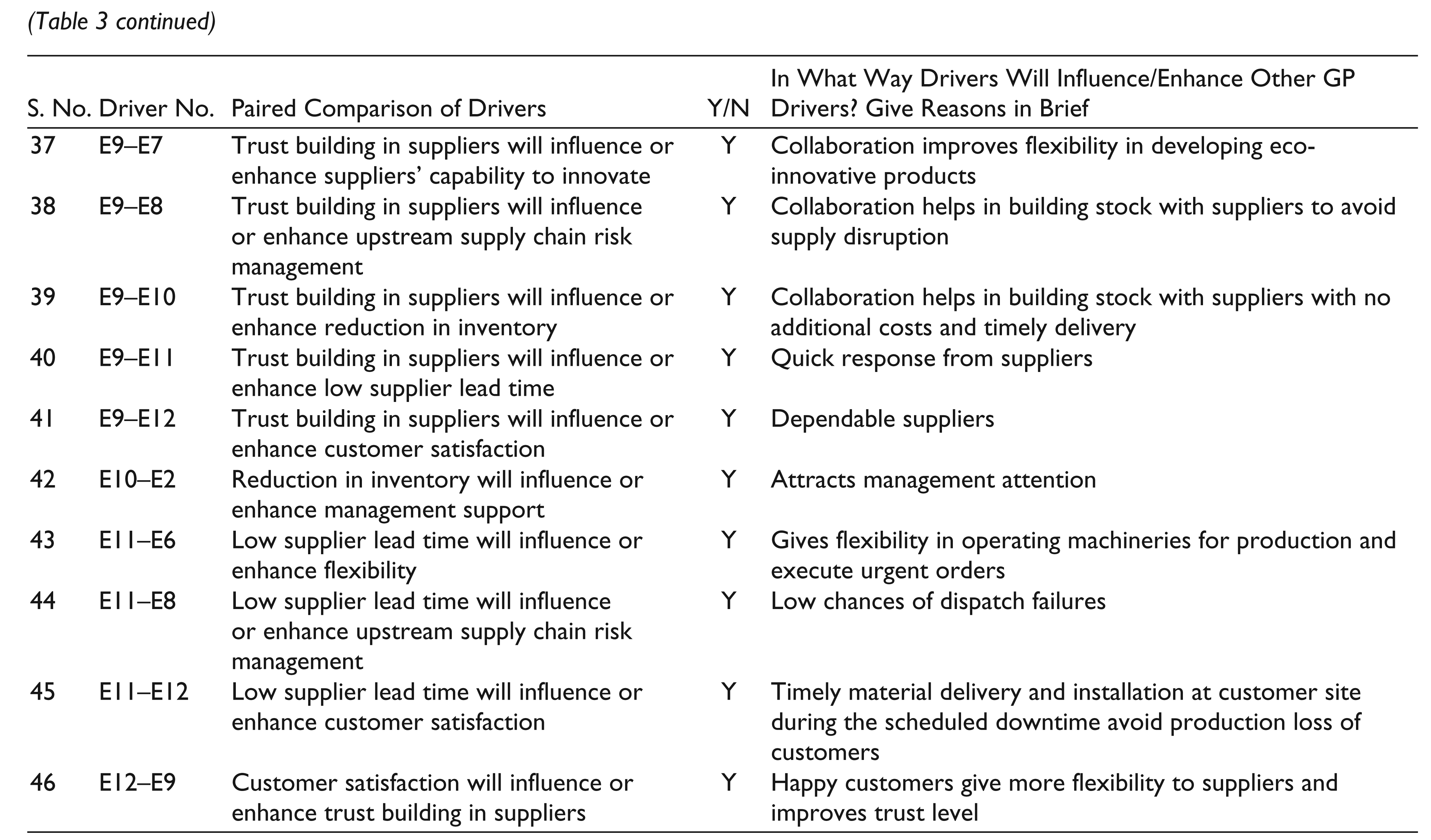
In this step, the concept of interpretive matrix is used to completely interpret each pair of comparison by explaining the interpretive query as mentioned in the previous step.
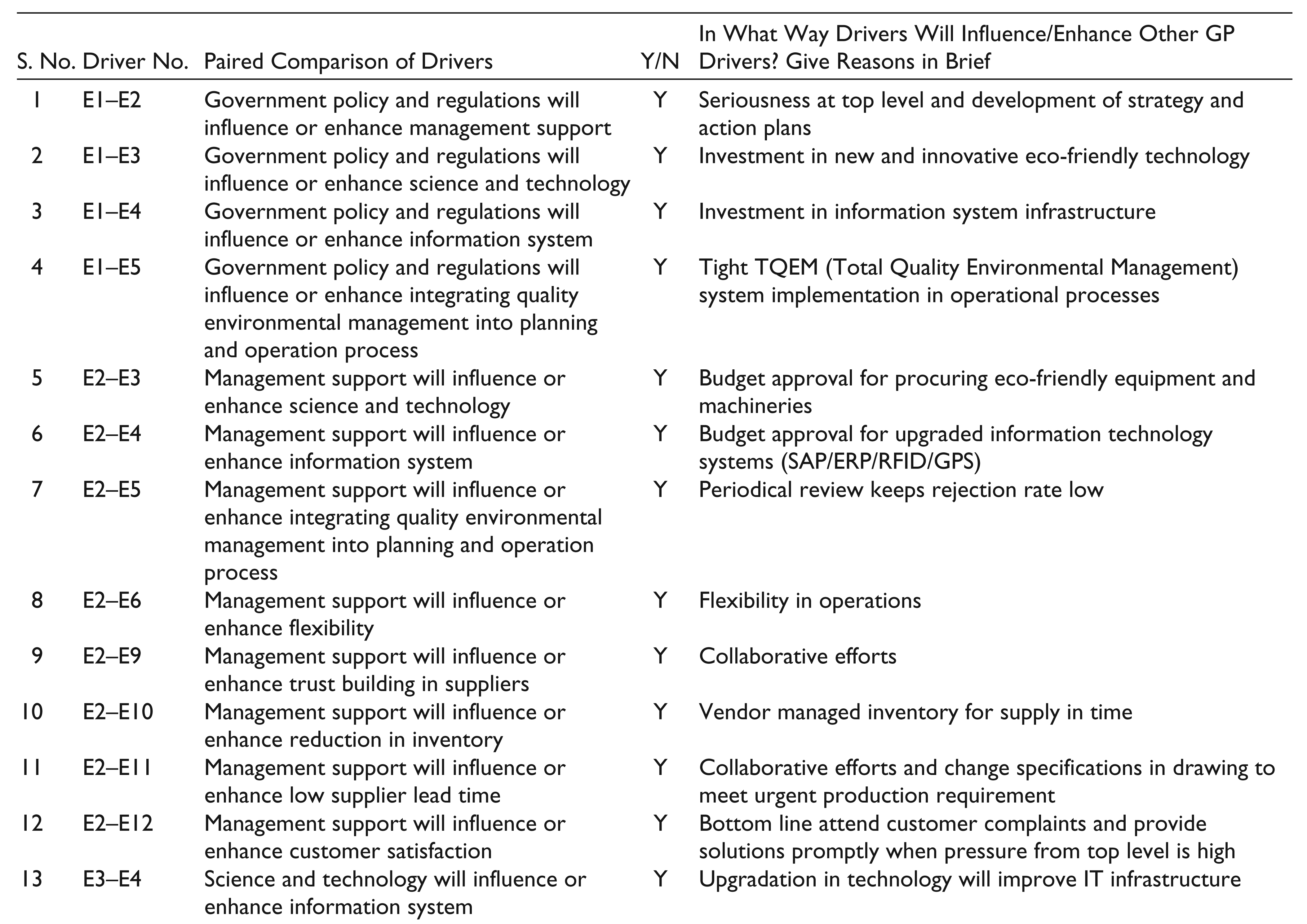
Based on the interview with five procurement managers from South African manufacturing sector, a sample of an interpretive logic–knowledge base for the drivers (only those having response Y) is presented in Table 3.
Interpretive Logic–Knowledge Base

Reachability Matrix and Transitivity Check
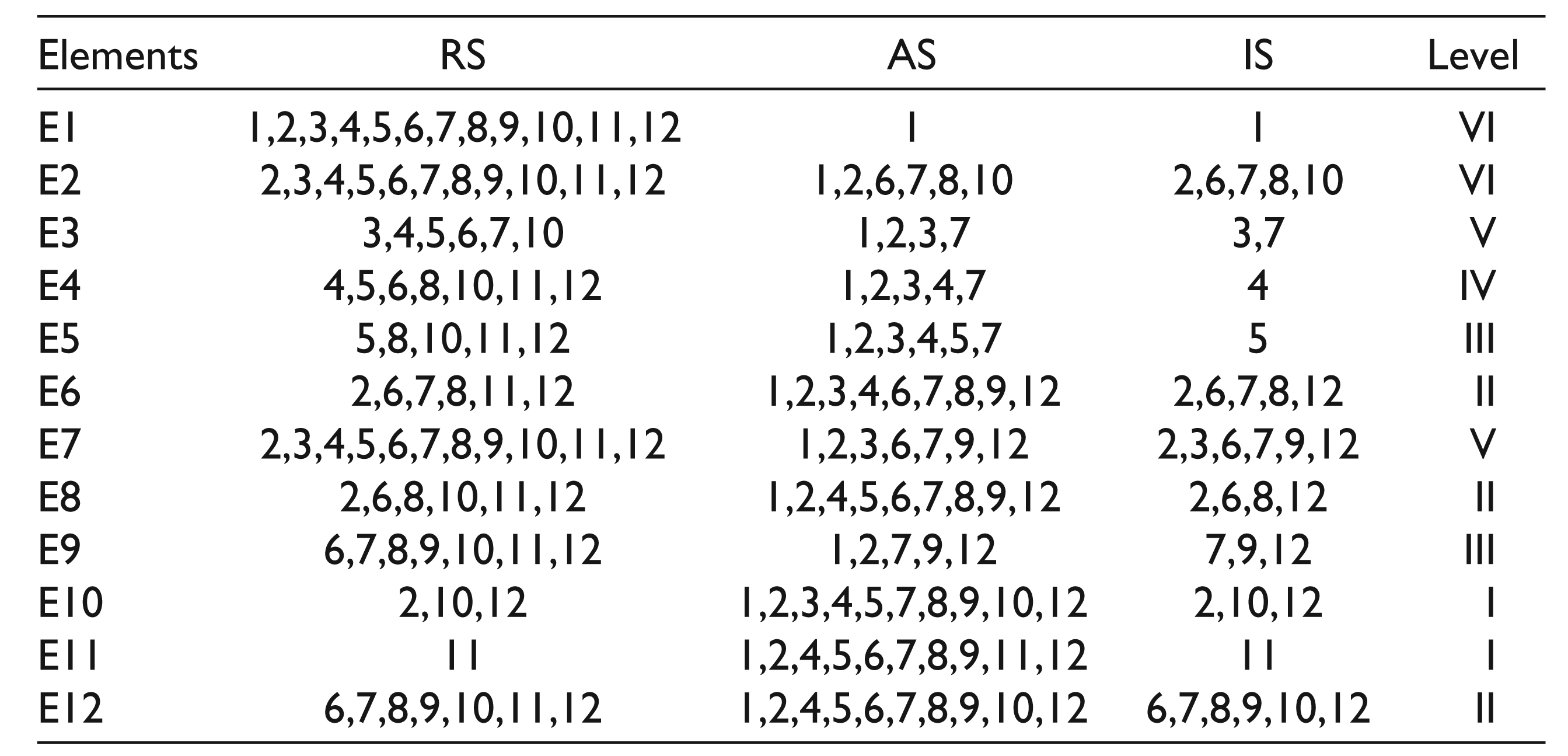
The paired comparison in the interpretive logic–knowledge base are translated in the form of reachability matrix. The matrix has been also checked for transitivity rule. A final reachability matrix, post-transitivity check is presented in Table 4.
Reachability Matrix

Partitioning of the Reachability Matrix
Level Partition on Reachability Matrix
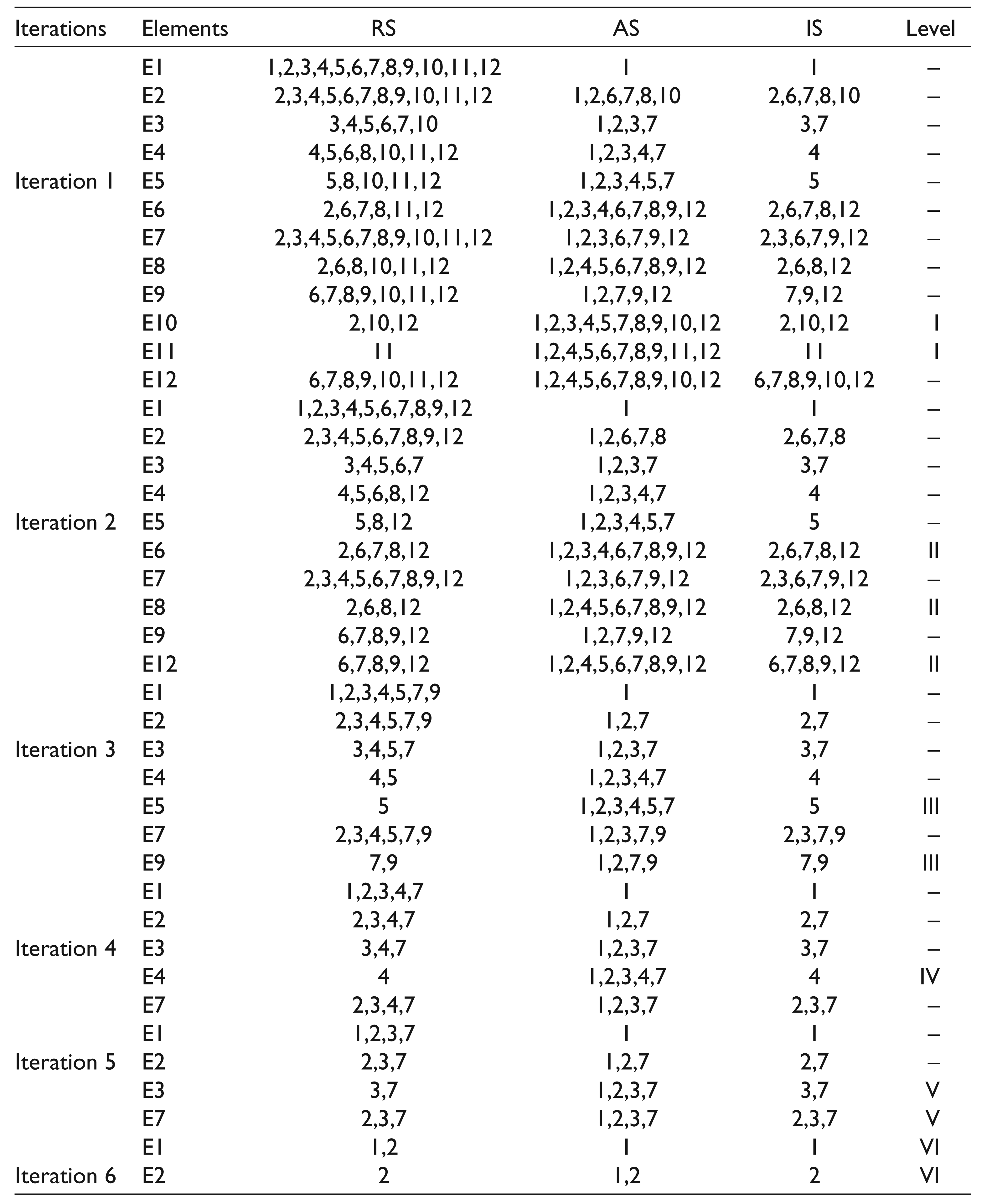
The final reachability matrix obtained above in Table 4 is now partitioned into different levels. After the first iteration, the driver classified to level 1 is discarded, and the partitioning procedure is repeated on the remaining drivers to determine the level 2. These iterations are continued until the level of each driver has been determined.
The results for iterations 1–6 are summarized in Table 6.
Developing Diagraph
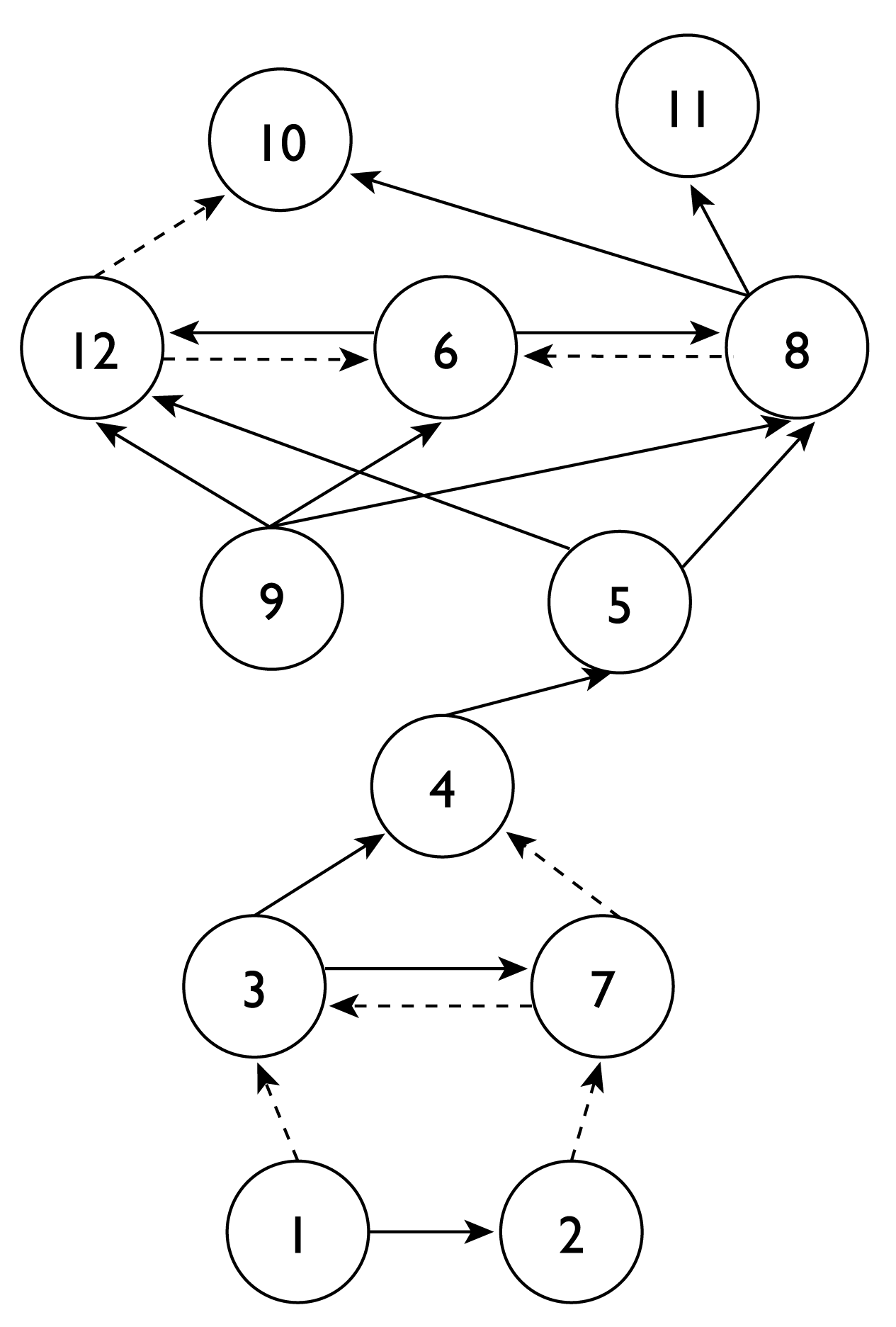
The drivers are arranged graphically in levels and the directed links are drawn as per the relationships shown in the reachability matrix. A diagraph with significant transitive links as per levels achieved in previous step is presented in Figure 1.
Interaction Matrix
The final digraph is converted into an interaction matrix (binary matrix) form depicting all the interactions by ‘1’ entry. An interaction and interpretive matrix for the above Figure 1 is presented in Table 7. Finally, the diagraph (Figure 1) is translated into TISM by removing the transitive links, and interpreting the node in box-bullet representation is shown Figure 2.
Total Interpretive Structural Model
The connective and interpretive information contained in the interpretive direct interaction matrix and diagraph is used to derive the TISM. The nodes in the diagraph are replaced by the interpretation of drivers placed in circles. The interpretation of the cells of interpretive direct interaction matrix is depicted by the side of the respective links in the structural model. The final TISM is presented in Figure 2.
Discussion
The TISM gives a clear picture on the interrelationships between green procurement drivers. Let us look at from the bottom towards top direction and understand the meaning of the links and relationships. Science and technology is essential for progress of the entire green procurement programme because it supports suppliers to develop new eco-innovative products. No company can achieve success with any obsolete and old technologies that consume high energy and emit GHG and unproductive. Second, science and technology is equally important for upgradation of information technology infrastructure. Information technology infrastructure is required to capture data and measure green procurement performance. Third, information technology infrastructure is essential to capture quality management data for identifying the rejection rates and progress. Further, we see that trust building in suppliers is important to develop collaborative relationships. Collaborative relationships reduce risks in the supply networks, develop flexibility in procurement system and enhance customer satisfaction. Ultimately green procurement converts the firm to develop lean practices. In green procurement, firms sign supplier-level agreement with selected suppliers and manage to build inventory at vendor site. Therefore, the delivery lead time is low and material is received as per production requirement. The firm gets rid of excess inventory and achieves sustainability. The findings of the current study corroborate with the earlier study conducted by Dubey et al. (2013) where researchers have used empirical approach to statistically validate the links of green procurement drivers. However, in the present study, effort has been taken to interpret the links and relationships using group decision-based approach. The current study disseminates the knowledge base of green procurement and shows research directions for further research.
The Summarized Results for Iterations 1–6
Binary Matrix


Conclusions
The purpose of the study is to build green procurement theory using TISM approach. First, the literature review is conducted based on SLR technique. The drivers identified from the review are refined and used as an input in developing the model. The TISM show that reduction in inventory and low supplier lead time are in level 1. Customer satisfaction, flexibility and upstream supply chain risk management are in level 2. Trust building in suppliers and integrating quality environmental management into planning and operation process are in level 3. Information system is in level 4, and the bottom level drivers consist of science and technology and suppliers’ capability to innovate. The TISM further interpret each relationship which is helpful for procurement mangers in designing green procurement programmes. The managerial implications of the current study are discussed in the next section.
Managerial Implications
From managerial point of view, the current study presents rich insights as under:
Supply chain managers must build collaborative relationships with those suppliers having the capacity to innovate. The selection process must be very strict. All credentials must be checked before the service-level agreement (SLA) is signed for annual supply of material and or services. Certifications such as Quality management systems, Environmental management systems, Health and safety, audit record and also the police records of suppliers must be checked.
While floating the request for quotation (RFQ) complete technical specifications and weightage to individual parameters (quality, eco-friendly product, delivery, price, etc.) must be mentioned. The final supplier selection for order awarding must be based on careful evaluation. The offer must be scrutinized from environmental and social perspective apart from the financial aspect. If a supplier is found to use 20 per cent renewable source of energy for meeting the power requirement in plant, then priority must be given to that supplier.
Second, the contract must consist of complete technical specifications and commercial terms and conditions. The annual demand of the items must be checked and divided among multiple approved suppliers. The contract will specify the delivery schedule and material will arrive based on just in time concept. Firms practicing green procurement can become lean and save lot of money apart from improving quality and reducing wastage. Therefore, green procurement promotes sustainability in inventory management, sustainability in production operations and sustainability in distribution chain operations and drives business excellence.
Limitations and Future Research Directions
The present research has certain limitations. The model is developed purely based on interview with five procurement management experts from the South African manufacturing sector. Authors propose to use mixed research methods using TISM, as well as confirmatory factor analysis to further validate the model and further extend theory in the field of green procurement.