



Abstract
Empirical evidence shows that personal values have an influence on empathy in intrapersonal relationships. We examine the relationship between the values of self-enhancement and self-transcendence among members of the majority group (Israeli Jews) and empathy towards in-group and out-group members (Israeli Arabs). Two hundred and ninety-seven Israeli Jewish students took part in the study. While the results show that self-transcendence values have a consistent effect on empathy whether it is towards in-group or out-group members, the hypotheses regarding the impact of self-enhancement values on empathy towards out-group members were partly supported. We discuss the universality of self-transcendence values in their influence on empathy in different contexts and emphasize the complex relationships among in-group members.
Introduction
Many studies have documented the role of values in personality. Values characterize the individual’s inner world (Schwartz, 1992) and have an important place in understanding and predicting attitudinal and behavioural decisions. For example, personal values serve as a compass that directs people’s decisions, choices (Cohrs, Moschner, Maes, & Kielmann, 2005), behaviour (Bardi & Schwartz, 2003) and perceptions (Gandal, Roccas, Sagiv, & Wrzesniewski, 2005; Schwartz, 1992). Studies also demonstrate the role of personal values in interpersonal emotions such as guilt, shame (Silfver, Helkama, Lonnqvist, & Verkasalo, 2008) and in moral reasoning (Myyry, Juujarvi, & Pesso, 2010).
Values also serve various functions that are relevant to intergroup relations. They may be used as standards of what one ought to do and as the basis for judging and evaluating intergroup attitudes and actions, linking them to factors such as readiness for social contact with out-group members (Sagiv & Schwartz, 1995) or attitudes towards immigration (Davidov, Meuleman, Billet, & Schmidt, 2008).
Another important psychological process that has been studied in the context of intergroup relations is empathy (e.g., Batson et al., 1997; Čehajić, Brown, & González, 2009; Stephan & Finlay, 1999; Stürmer, Snyder, Kropp, & Siem, 2006). For example, Stürmer et al. (2006) showed that empathy predicts helping members of one’s in-group, as a function of perceived similarities with in-group members. While the likelihood of helping an in-group member is higher than that of helping an out-group member (Stürmer, Snyder, & Omoto, 2005), intergroup empathy may occur across group boundaries to motivate a pro-social stance towards out-group members (Cohen & Insko, 2008).
Pettigrew and Tropp (2008) noted that intergroup contact increases empathy towards the out-group, and Tarrant, Dazeley and Cottom (2009) elaborated that empathy for out-group members is influenced by perceptions of in-group’s norms. When empathy for others, including out-group members, is an in-group norm, conformity to the norm might enable in-group members to feel good about their group and, by association, also feel good about themselves. Although studies have established that values are related to empathy in interpersonal contexts, for example, among students and among military conscripts (Silfver et al., 2008), the association of values and empathy intergroup relations has not received much attention in the research literature. Fewer studies have addressed these issues in the context of intergroup conflict.
The current study examines the relationships between personal values and empathy towards in-/out-group members in the context of Jewish–Arab relations in Israel. The social relationship between these two national groups can be characterized as a continuous, intractable conflict (Salomon, 2004) between majority (Jews) and minority (Arabs) groups, and is manifested in asymmetric economic, cultural and political group power. We focus only on the Jewish majority group who enjoys power, control and dominance in this relationship. We hypothesized that due to greater personal options and resources, personal values will be an important factor influencing the level empathy towards in- and out-group members. Comparing the relationship between personal values and empathy towards in-group (Jews) and out-group (Arabs) members should inform us about the role of personal values in the dynamics of intergroup relations, and how a majority group shapes its attitudes and intentions towards the minority.
Personal Values
Based on data collected from more than 70 cultural groups, Schwartz (1992, 2005) presented a model comprised 10 values that reflect one’s personal worldview (see Appendix 1). This set of values was intended to include the substantive motivations common to people across cultures (Sagiv & Schwartz, 2000). According to this model, personal values serve as standards for judging all kinds of behaviour, events and people. Studies show that these values are related to various social phenomena such as political voting (Barnea & Schwartz, 1998), interpersonal violence (Knafo, Daniel, & Khoury-Kassabri, 2008) and the motivation to make a contribution to open source initiatives (Oreg & Nov, 2008).
Schwartz’s model (1992) also addresses the possible dynamics among these values: some values may conflict with others. For example, the search for achievement is congruent with the search for power but may be inconsistent with the desire for benevolence. Schwartz (1992) classified the 10 values into four categories on two bi-polar, orthogonal dimensions. One axis distinguishes between self-transcendence and self-enhancement, while the second distinguishes between openness to change and conservation (see Figure 1).
The self and those with whom one identifies closely (such as members of the same social in-group, who may be regarded as an extension of the self; Aron et al., 2004) are the focus of micro concerns. Entities external to the self, on a societal or global scales, are the focus of macro concerns (Schwartz, Sagiv, & Boehnke, 2000). Prioritizing self-enhancement values (power and achievement) is associated with high-micro and low-macro concerns, whereas favouring self-transcendence values (universalism and benevolence) is associated with low-micro and high-macro concerns.
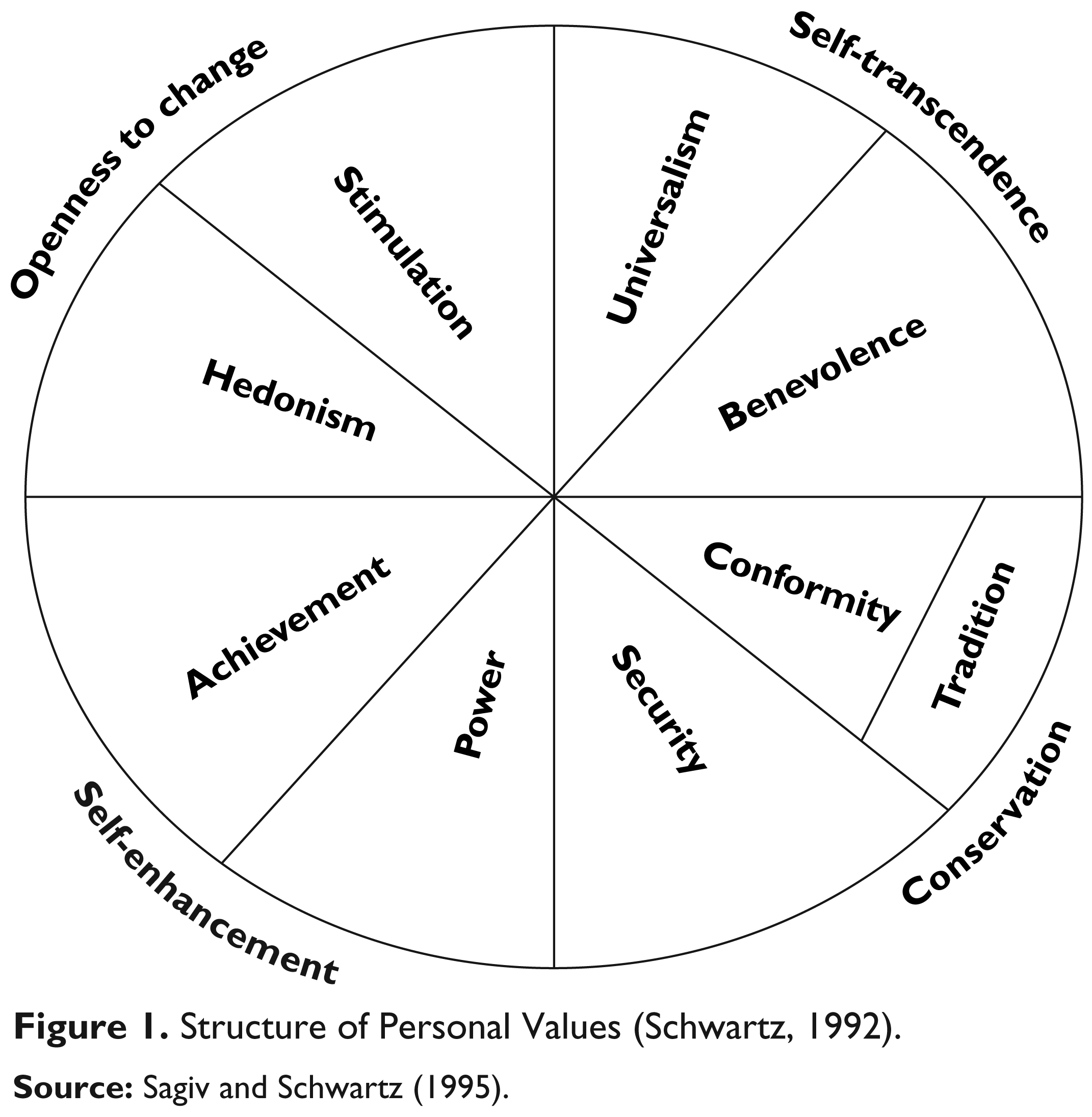
People who emphasize self-enhancement values seek prestige, social status and dominance over others, and follow their ambitions (Schwartz, 1992). They ascribe importance to power at work, at home and with friends (Bardi & Schwartz, 2003), pay more attention to personal issues (Schwartz, Bardi, &, Bianchi, 2000) and tend to vote for parties that advocate market economy, and emphasize security and national values (Caprara, Schwartz, Capanna, Vecchionne, & Barbaranelli, 2006). They also tend to be more sensitive to their in-group’s status, pay attention to information related to the group status and feel affected by it (Roccas, 2005).
On the other hand, self-transcendence values are related to concerns about justice and harm (Sverdlik, Roccas, & Sagiv, 2012). People who express self-transcendence values, emphasize tolerance and protection of others, responsibility, honesty and social justice, tend to ascribe great importance to social welfare issues, and the conservation of nature (Schwartz, Bardi, & Bianchi, 2000). These individuals tend to vote for political parties that support general welfare, social justice, equality and tolerance towards groups that challenge the social order (Caprara et al., 2006). Sagiv and Schwartz (1995) showed that readiness for social contact with out-group members correlated positively with favouring values of universalism. Cross-cultural comparisons indicated that individuals who emphasize values of tolerance for strangers also express positive support for immigration (Davidov et al., 2008).
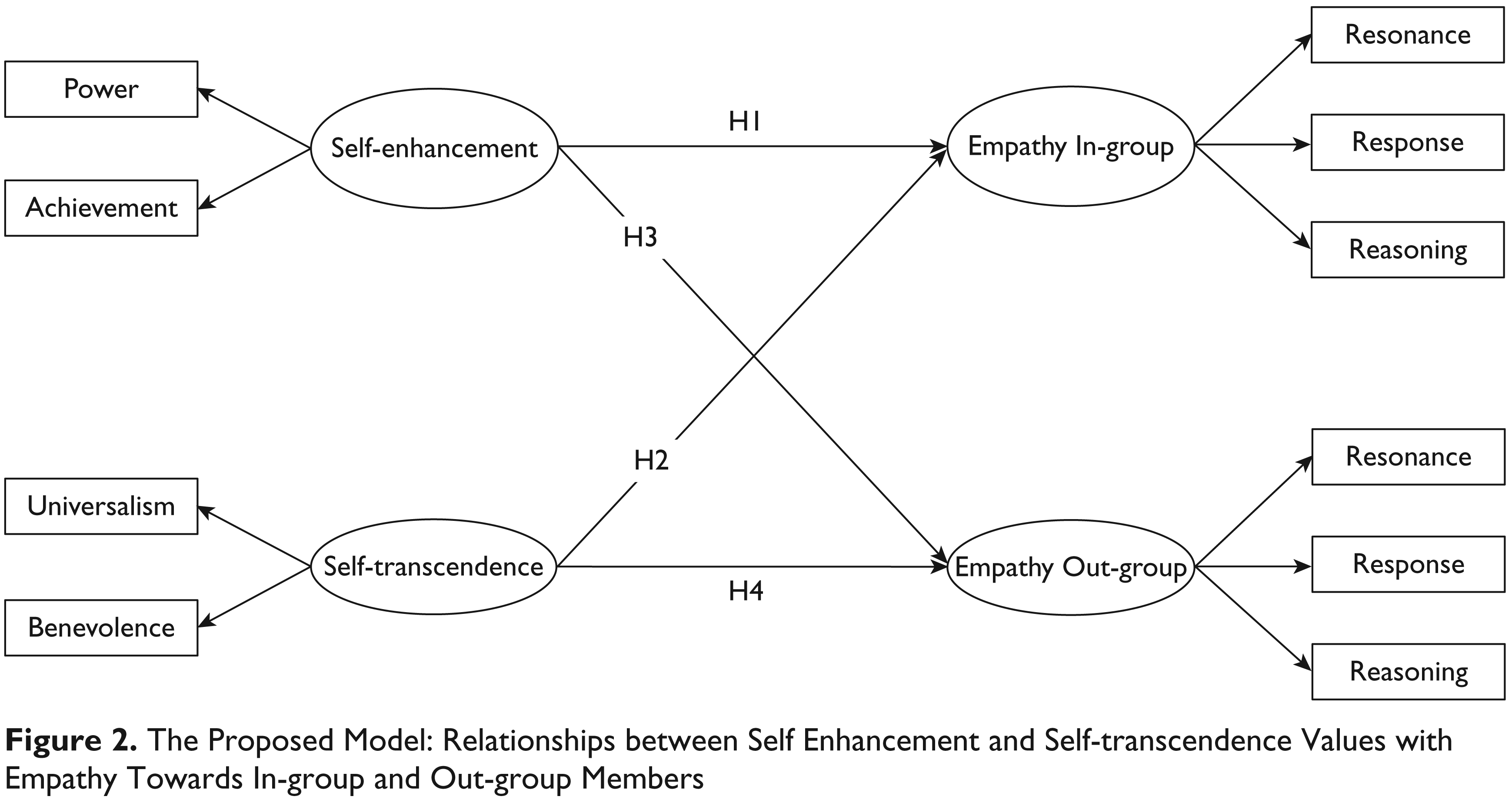
Empathy was found to be positively correlated with universalism and benevolence values (self-transcendence) and negatively correlated with power values (self-enhancement; Myyry & Helkama, 2001; Silfver et al., 2008). The current study examined whether these relationships extend to the intergroup context. We hypothesize that self-enhancement and self-transcendence values would be related to empathy towards in- and out-group members, as depicted in Figure 2. The next section defines and describes the components of empathy in interpersonal and intergroup relationships, and we then proceed to specify our hypotheses regarding the effects of personal values on empathy.
The Proposed Model: Relationships between Self Enhancement and Self-transcendence Values with Empathy Towards In-group and Out-group Members
Empathy
Empathy is an essential element of social life. Since the introduction of the term in English by Titchener (1909) as a translation of Vischer’s German Einfühlung (feeling into), numerous definitions and scholarly expositions of the concept have been suggested from diverse theoretical and applied perspectives, such as philosophy, theology, psychology and psychotherapy. Research has traditionally emphasized either the cognitive (e.g., imagining the perspective of others) or the emotional (e.g., the ability to share the feelings of others) aspects of empathy. More recently, a multidimensional model (Davis, 1983, 1996) of empathy offered to integrate these two aspects, and expanded the conceptual framework to include empathic concern (the tendency to act on behalf of the other) and personal distress (a reactive, anxiety-laden response to the plight of the other).
Ample empirical evidence systematically links empathy to altruistic, prosocial behaviour, the inhibition of aggression and antisocial behaviour, and the quality of intergroup relationships (for a comprehensive review, see Eisenberg, Eggum, & Di Giunta, 2010). Advances in social neuroscience have begun to map the brain networks underlying empathic processes, and identified three distinct facets: experience sharing, metalizing and prosocial concern (Zaki & Ochsner, 2012). A similar triadic conception was conceived in the 3R model of empathy (Zisman, 2009) that serves as the theoretical and empirical basis in the current study.
In this model, Empathic Response is the tendency for acting on behalf of the other, or in accordance with the other’s needs. Such other-oriented concern is the root of pro-social behaviour and is predicated on gathering and processing accurate information regarding the internal mental state of the other. Emphatic Resonance, a spontaneous process of emotion-sharing (shared affective experiences and representations between self and other), provides immediate insights and intuitive understanding of the other’s circumstances. Resonance is supported by the Mirror Neuron System (Rizzolatti & Craighero, 2004) and is often referred to as an affective simulation (Keysers & Gazzola, 2007) or automatic empathy (Hodges & Wegner, 1997). Higher-order Empathic Reasoning processes then bring forth a complex array of personal, cultural and ideological considerations in order to appraise the other’s situation from a broader, strategic perspective. The reasoning process is embedded in a Theory-of-Mind (Leslie, Friedman, & German, 2004) that supplies basic, a priori knowledge and (often untested) assumptions and beliefs about the mental content and functioning of others, alongside conventional interpretations of behaviour. A core element in empathic reasoning is perspective taking—the imaginative process of contemplating or inferring the others’ psychological experiences (Todd, Bodenhausen, Richeson, & Galinsky, 2011).
While most of the work on empathy focused on the interpersonal level, social psychologists have begun to explore its role in intergroup relations. Social relations between groups are typically conceived within the framework of social identity theory, by a distinction between an in-group and the out-group (Tajfel & Turner, 1979), which is often associated with a differential treatment of group members, and in particular with favouritism towards one’s own group (the in-group) relative to another group (the out-group). Accumulating evidence suggests that emphatic processes are stronger in response to in-group members and tend to diminish towards out-group members (Stürmer & Snyder, 2010). Such patterns of differential empathy are exacerbated in situations of intergroup tensions and conflicts, and are often associated with negative social phenomena such as prejudice, discrimination and aggression (Cikara, Bruneau, & Saxe, 2011). Other researchers explored the role of empathy in improving intergroup relations (e.g., Batson & Ahmad, 2009; Stephan & Finlay, 1999), and Pettigrew and Tropp (2008) concluded on the basis of a comprehensive meta-analysis that intergroup contact reduces prejudice, among other things, by increasing empathy.
As mentioned above, studies have already provided support for the effect of values on empathy in interpersonal relationships (Myyry & Helkama, 2001; Silfver et al., 2008). The current study addresses the conjecture that personal values may play an important role in shaping differential empathic responses towards in-group versus out-group members.
Empathy towards In-group Members
To assess the relationships between the values of self-enhancement and self-transcendence and empathy towards in-group members, we rely on the rationale that has been used in previous studies dealing with interpersonal relationships (Myyry & Helkama, 2001; Silfver et al., 2008; Myyrya, Juujarvi, & Pesso, 2010). Individuals who emphasize self-enhancement values would tend express less empathy towards others. On the other hand, a positive association was demonstrated between self-transcendence values and empathy (Myyry & Helkama, 2001). Individuals who share the values of universalism and benevolence that are common to self-transcendence are more focused on others and would tend to report higher levels of empathy towards others. Therefore, we expected to replicate previous findings for in-group members:
Hypothesis 1: The greater an individual’s personal emphasis on self-enhancement, the less likely he/she will empathize with in-group members. Hypothesis 2: The greater an individual’s personal emphasis on self-transcendence, the more likely he/she will empathize with in-group members.
Empathy towards Out-group Members
The relationships between personal values and empathy towards out-group members might be quite complicated, especially when we consider the context of an intractable conflict between the groups. The relationship between Jews and Arabs is particularly complex because it includes elements of two dynamics. The first is the relationship between a majority and minority group (Sagiv & Schwarts, 1995). The second is their intractable conflict, characterized as being violent, irreconcilable and involving the perception of a zero-sum game in which each party wins only at the expense of the other (Kupermintz & Salomon, 2005).
Palestinians in Israel have developed two central identity components. The first represents their connection to the State of Israel. They were born in Israel and seek full equality of rights as a minority group. The second component is related to their national affiliation with the Palestinian people and of its struggle for self-determination, including the establishment of a Palestinian state (Al-Haj, 2005). They are, therefore, involved in a constant internal conflict between these two conflicting identities, this tension is also reflected in the attitudes of the Jewish majority, who perceive them as partners to the Israeli citizenship but also as a potential threat.
Due to this complexity, we consider the relationships of values and empathy towards out-group members as less predictable. Yet, based on the definitions of self-enhancement values and in accordance with the previous hypotheses, we argue that individuals who emphasize power and achievement and feel less empathy towards in-group members are likely to express even less empathy towards out-group members.
Hypothesis 3: The greater an individual’s personal emphasis on self-enhancement, the less likely he/she will empathize with out-group members.
It appears more straightforward to hypothesize that universalism and benevolence (self-transcendence) would be positively related to intergroup empathy, as these values concern the well-being of others in general (Silfver et al., 2008), regardless of group membership. Furthermore, self-transcendence values motivate individuals to develop their moral reasoning skills or apply them to relevant intergroup situations (Myyrya, Juujärvi, & Pesso, 2010), as expressed, for example, by support for immigration (Davidov & Meuleman, 2012).
Following this idea, we hypothesize that adherence to self-transcendence values would be a positive predictor of empathy towards out-group members. We argue that in the context of an intractable conflict and a long history of violence, Jews who emphasize self-transcendence values will probably feel shame and guilt, and therefore have even a stronger motivation to expiate them through an expression of empathy towards the plight of the Arab minority.
Hypothesis 4: The greater an individual’s personal emphasis on self-transcendence, the more likely he/she will empathize with out-group members.
Method
Participants and Procedure
The study was conducted between October 2011 and January 2012 among students of four higher education institutions in Israel. Participants were 297 Jewish students (77 per cent female). The survey was administered to students on a voluntary basis and in some cases for academic credit. The questionnaires were administered using similar electronic and hard copy versions.
Measures
Empathy towards Members of In-/Out-group Members
Empathy was measured with a short version of an instrument developed by Kupermintz and Zisman (2015) based on the 3R model of empathy described above. The 10-item questionnaire includes statements reflecting the three dimensions of empathy. Resonance is represented by statements such as ‘I can easily work out what another person might want to talk about’ and ‘I am good at predicting how someone will feel’. Reasoning items include ‘I can usually appreciate the other person’s viewpoint, even if I don’t agree with it’ and ‘Before criticizing somebody, I try to imagine how I would feel if I were in their place’. Response statements include ‘When I see someone being taken advantage of, I feel kind of protective toward them’ and ‘I get very angry when I see someone being ill-treated’. Respondents were asked to rate the degree to which they agreed with each statement in reference to members of their in-group (Jews) and out-group (Arabs) on a Likert scale ranging from 1 (strongly disagree) to 5 (strongly agree). See Appendix 2.
Personal Values
Personal values were measured with Schwartz’s 57-item (1992) Value Survey (SVS). The scale has been used previously in various studies, where it was consistently found to be reliable (Bardi & Schwartz, 1996; Licht, Goldshmidt, & Schwartz, 2005; Schwartz & Boehnke, 2004). Self-enhancement and self-transcendence were measured with 21 items from the SVS. According to Schwartz’s questionnaire (1992), 8 items assessed self-enhancement values, and 13 items tapped self-transcendence values. Sample values are equality, authority, freedom and a world of beauty, national security, and honesty. Participants were asked to rate the degree to which these values were important to them as guiding principles in their lives on a 9-point Likert scale ranging from −1 (opposite to my values), through 0 (not important) to 7 (of supreme importance).
Results
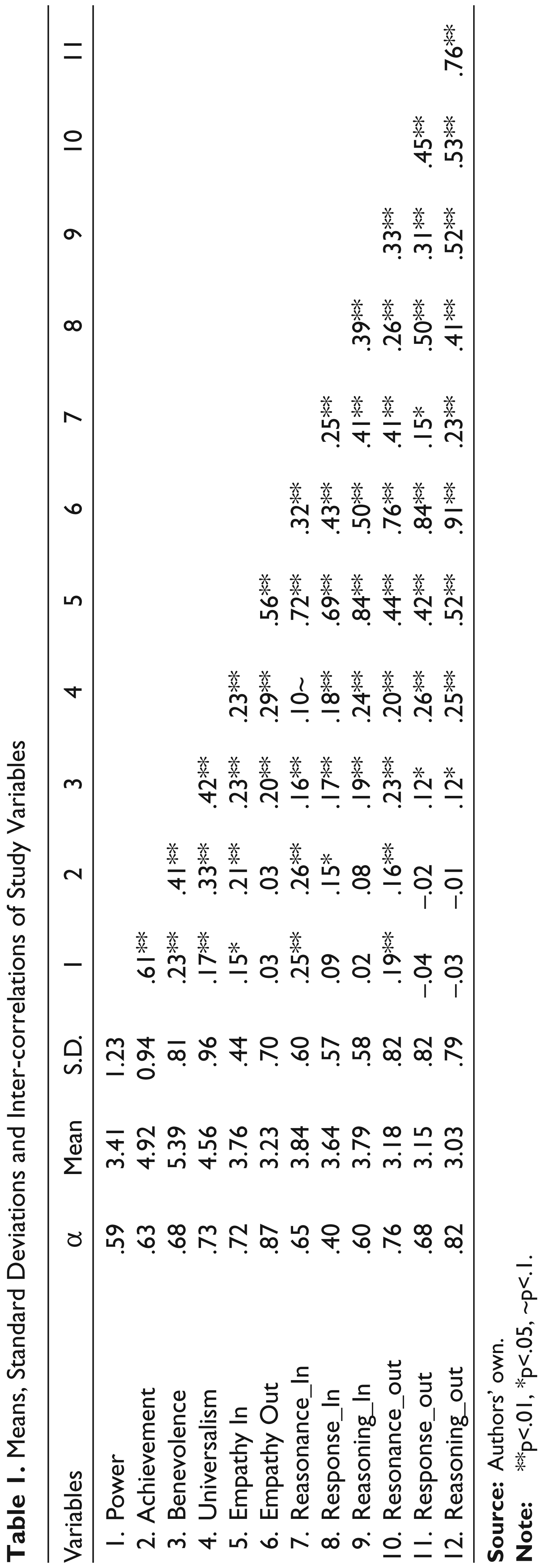
Table 1 presents the means, standard deviations, reliability coefficients and correlations among the variables.
Means, Standard Deviations and Inter-correlations of Study Variables
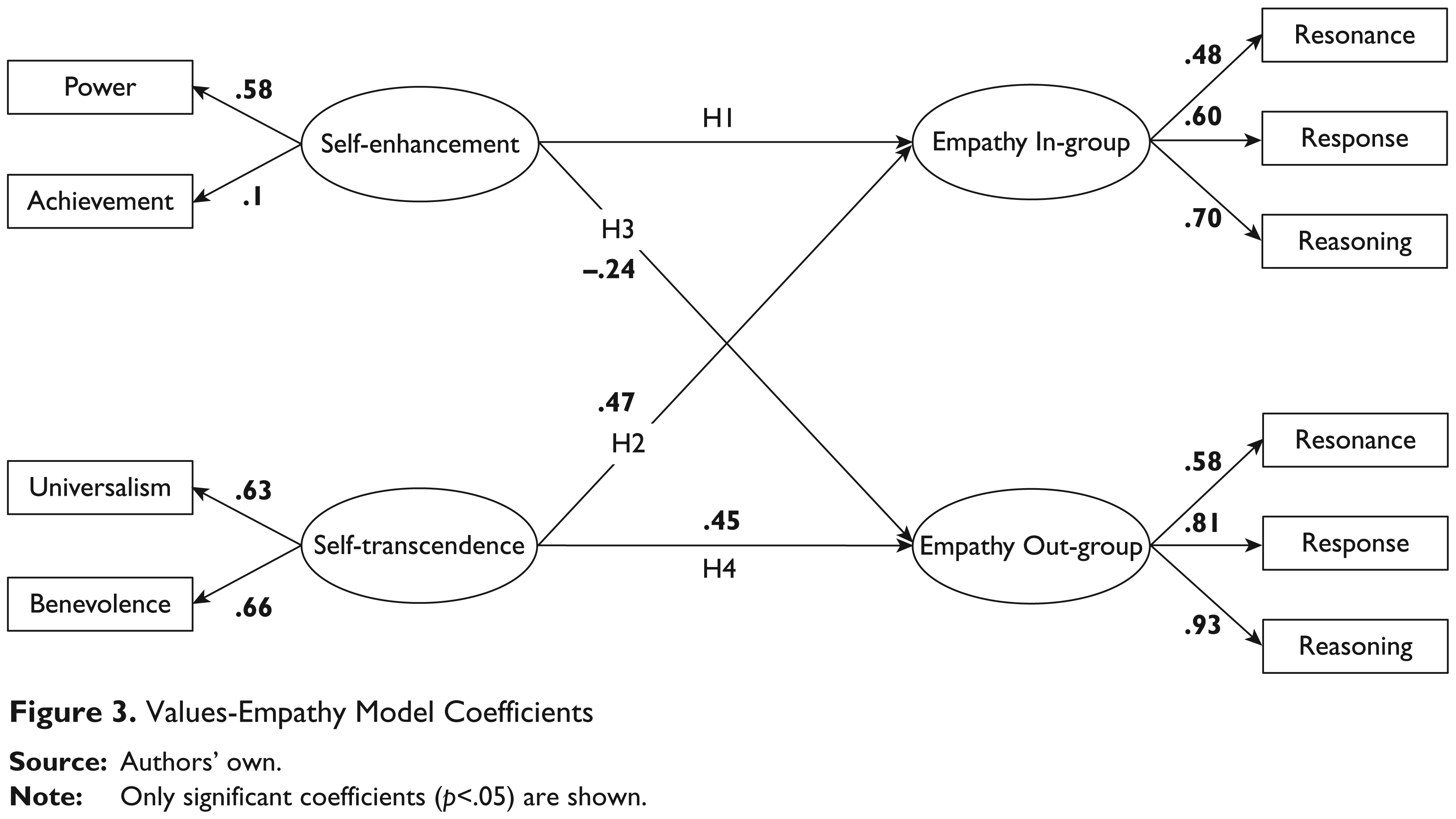
We tested the main hypotheses with structural equations modelling (SEM; Arbukle, 2010). Analysis showed a good fit of the model to the data (CFI = 0.96; NFI = 0.94; RMSEA = 0.07).
As Figure 3 illustrates, we found no support for Hypothesis 1. There was no significant relationship between self-enhancement values and empathy towards in-group members. On the other hand, the findings did support Hypothesis 2 about the relationship between self-transcendence and empathy towards in-group members (β = 0.47, p < 0.01). Those who emphasize universalism and benevolence exhibit more empathy towards in-group members. As for the empathy towards out-group members, both effects were significant (Hypotheses 3 and 4). An emphasis on self-enhancement values negatively predicted empathy towards out-group members (β = –0.24, p < 0 .01), while self-transcendence values predicted greater empathy towards them (β = 0.45, p < 0.01). In general, self-transcendence emerged as a stronger predictor of empathy for both in- and out-group members, thus lending support to the hypothesis that such values indeed transcend group boundaries and tend to be applied universally. In contrast, self-enhancement revealed a weaker and differential pattern, predicting lower levels of empathy only towards out-group members.
Discussion
The results show that self-transcendence values are positively related with empathy for both in-group and out-group members. It seems that these values allow fostering empathy for others, regardless of social or national identity. These results support the theory that self-transcendence emphasizes concern for others even if they are different from oneself (Schwartz, 1994). Our findings suggest that such concern may be extended even to those with whom one may be involved in a protracted conflict.
On the other hand, self-enhancement values were related only to empathy towards out-group members. While, self-involved individuals who focus on attaining social power, dominance and personal status might be less inclined to express empathy towards in-group members, empathy, as well as in-group loyalty may serve both benevolent and selfish interests (Boer & Fischer, 2013; Reicher & Hopkins, 2001). Thus, one could argue for a positive relationship between self-enhancement values and the empathy towards in-group members. The sum total of these two opposite effects may therefore nullify the effect of self-enhancement on empathy for in-group members.
These complex effects would hardly be expected in the impact of self-enhancement on empathy towards out-group members (Hypothesis 4). The social distance between the groups provides fewer opportunities for the majority to promote their own interests by expressing empathy for minority group members. Therefore, there are fewer reasons for self-involved individuals to be concerned about towards out-group members.
The second reason for the insignificant effect of self-enhancement on empathy towards in-group members is more complex and related to the social norms and social identity that serve as the glue between in-group members (Van Vugt & Hart, 2004). Norms capture the sense of obligation and promote the social order as a set of constraining rules. People acting in accordance with their own values do not feel as compelled and obligated as they do when acting under normative pressure (Hitlin & Piliavin, 2004). Therefore, among members of the same group, social norms rather than personal values probably have a strong effect on empathy. Moreover, in Israel, the Jewish perceptions of Arabs as an existential threat might cause members of the majority group to rally around the social norms of the group’s identity.
Consistent with the social identity theory (Tajfel & Turner, 1979), people’s sense of who they are, their identity, is partly shaped by the social groups to which they belong. When people identify strongly with their group, they see themselves primarily as group members rather than independent individuals (Van Vugt & Hart, 2004). One can argue, then, that as the result of an intractable conflict and the perceived level of threat, group identity has a strong influence on shaping attitudes such as empathy towards in-group members. Therefore, in intragroup relationships, individual-level constructs such as values (Hitlin & Piliavin, 2004) lose their ability to predict empathy, as individual differences become less prominent.
Conclusions and Recommendations
Our findings suggest that while self-enhancement may diminish empathy towards out-group members to some extent, self-transcendence is more meaningfully associated with elevated empathy towards others, regardless of group membership, even in conflict situations.
We are careful not to generalize these findings to groups that are not engaged in a prolonged national conflict. Future studies will need to explore these issues in other intergroup contexts. Another impotent context that is missing in this research and should be tested in the future is the effect of personal values among members of the minority group (i.e., Arabs in this case). It would be interesting to see whether personal values have a similar effect on empathy within the minority group.
It is also important to clarify the role of the factors that arise in conflict situations and the social mechanisms such as group identity and social norms that unify members of a group in the face of a threat. These mechanisms may moderate the relationship between values and empathy. Thus, a natural extension of the current study should use measures of group identification, perceived threat and other relevant variables to explore more nuanced hypotheses, some of which are outlined above.
The main contribution of this article is in demonstrating that the moral dimension of personality is associated with a healthier orientation in the field of human relations, not only to in-group members, but also beyond the boundaries of the group. Our findings show that empathy towards in-/out-group members is related to self-transcendence values, highlighting the universal element of human identity. The study also makes a practical contribution. Values are the combined product of socialization (Schermer, Feather, Zhu, & Martin, 2008; Sverdlik et al., 2012). Therefore, we believe that knowledge about the effects of personal values on empathy towards in-/out-group members may help social agents such educational systems (e.g. schools) design better programmes to improve intergroup relationships and reduce the negative consequences of ‘empathy disorders’ that may lead to dehumanization and a lack of emotional depth, warmth and pro-social concern (Haslam, 2006). Attempts to foster self-transcendence values, through educational or cultural programmes, may generate positive societal returns in improved intergroup relations.
Footnotes
Motivational Types of Values and the Single Value that Represent Them ( Schwartz,1992 )
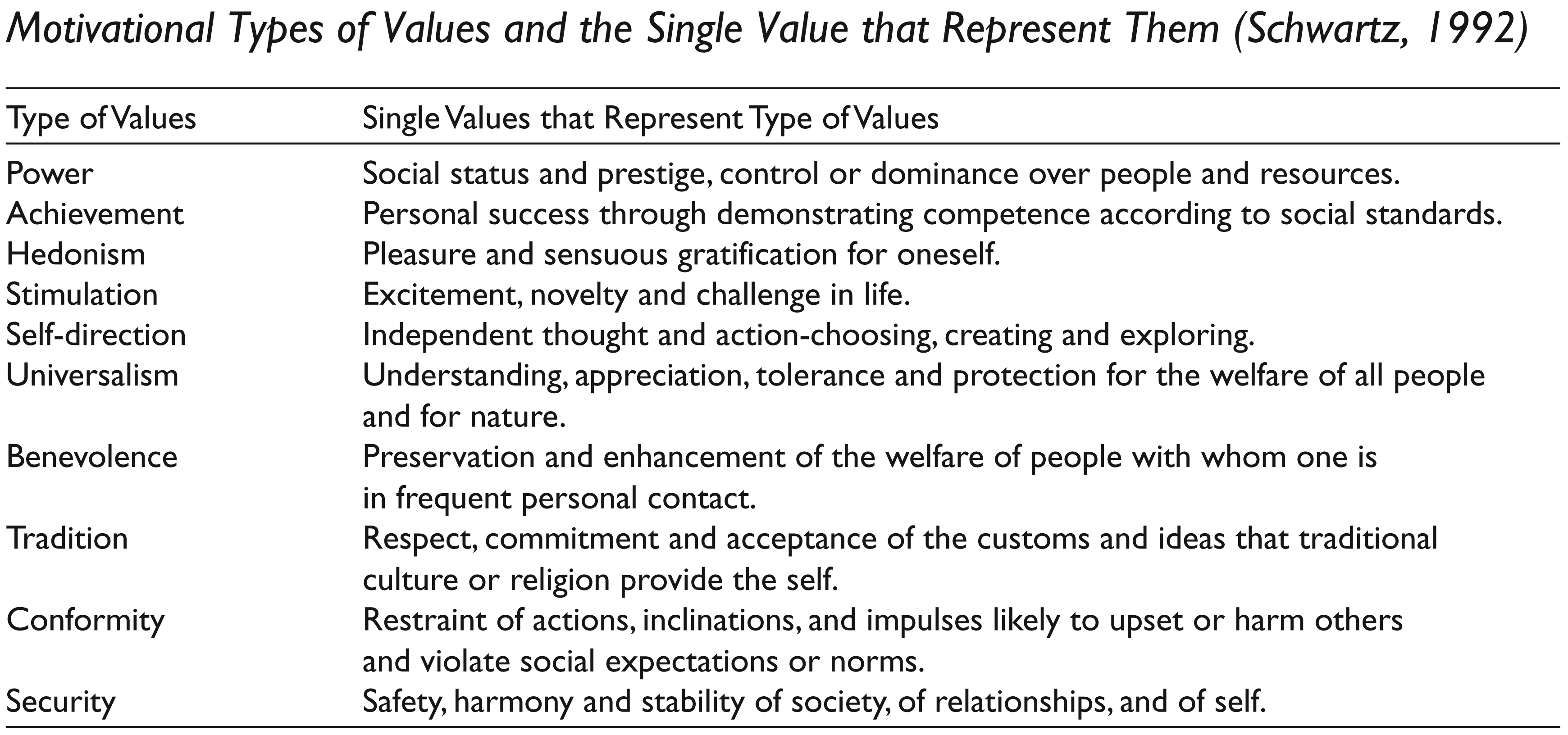
| Type of Values | Single Values that Represent Type of Values |
| Power | Social status and prestige, control or dominance over people and resources. |
| Achievement | Personal success through demonstrating competence according to social standards. |
| Hedonism | Pleasure and sensuous gratification for oneself. |
| Stimulation | Excitement, novelty and challenge in life. |
| Self-direction | Independent thought and action-choosing, creating and exploring. |
| Universalism | Understanding, appreciation, tolerance and protection for the welfare of all people and for nature. |
| Benevolence | Preservation and enhancement of the welfare of people with whom one is in frequent personal contact. |
| Tradition | Respect, commitment and acceptance of the customs and ideas that traditional culture or religion provide the self. |
| Conformity | Restraint of actions, inclinations, and impulses likely to upset or harm others and violate social expectations or norms. |
| Security | Safety, harmony and stability of society, of relationships, and of self. |
The 10-item Questionnaire Includes Statements of Empathy ( Kupermintz & Zisman,2015 )
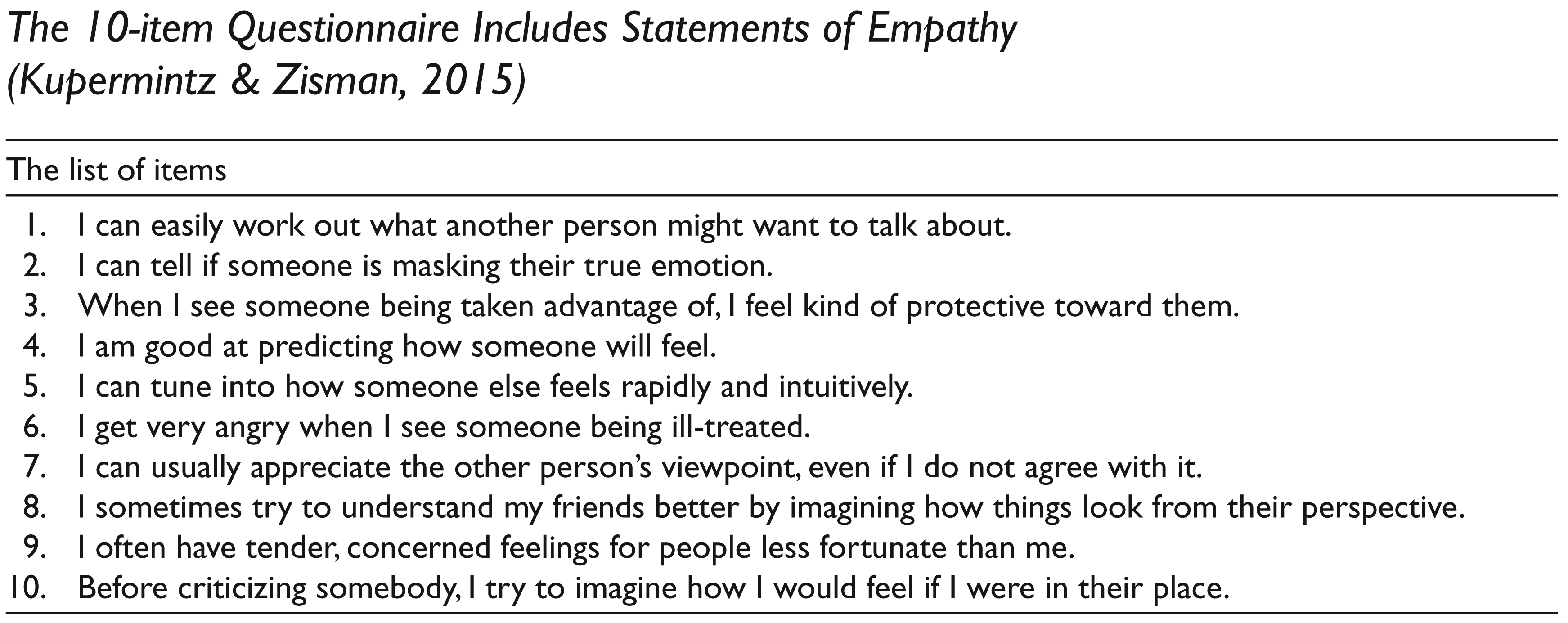
| The list of items |
| 1. I can easily work out what another person might want to talk about. |
| 2. I can tell if someone is masking their true emotion. |
| 3. When I see someone being taken advantage of, I feel kind of protective toward them. |
| 4. I am good at predicting how someone will feel. |
| 5. I can tune into how someone else feels rapidly and intuitively. |
| 6. I get very angry when I see someone being ill-treated. |
| 7. I can usually appreciate the other person’s viewpoint, even if I do not agree with it. |
| 8. I sometimes try to understand my friends better by imagining how things look from their perspective. |
| 9. I often have tender, concerned feelings for people less fortunate than me. |
| 10. Before criticizing somebody, I try to imagine how I would feel if I were in their place. |