




Abstract
Over the past few decades, information technology (IT) has played a central role in transforming society and enabling the knowledge economy. Such transformation has also introduced new problems, leading to a growing need among organisations to adopt IT governance frameworks in order to provide assurance that their IT operations meet required standards and community expectations. However, the adoption of such frameworks is a complex phenomenon fraught with risks and challenges, and is yet to attract adequate research attention. This study explores factors influencing the success of IT governance frameworks adoption by proposing an integrated research model that draws upon the technology-organisation-environment (TOE) framework and the Delone and McLean’s information systems (IS) success model. Data were collected from 126 Australian organisations that have adopted IT governance frameworks through mail surveys and analysed using the partial least-squares (PLS) method. The findings demonstrate that ease of use, innovation compatibility, training and external pressures were significant to the success of IT governance frameworks adoption, assessed through user satisfaction; while ease of use, top management support, external support and user satisfaction were found significant to organisational performance. These findings are of relevance to researchers, practitioners and a broad range of organisational stakeholders, given the growing global importance and implications of IT governance frameworks adoption to organisations.
Introduction
A
IT governance frameworks such as the IT Infrastructure Library (ITIL), Control Objectives for Information and Related Technologies (COBIT) and Information Technology–Code of Practice for Information Security Management (ISO 17799) have promised many benefits to organisations (Bermejo, Tonelli, Zambalde, Brito, & Todesco, 2012) and in turn, societies impacted by these organisations. Organisations could mitigate business strategy-related risks by bringing IT practices and operational business strategies into alignment (Ridley, Young, & Carroll, 2004). Operator errors and application failures can be largely reduced by following the specific guidelines contained within IT governance frameworks, thereby gaining IT efficiency and control (Van Grembergen, 2003). In addition, IT governance frameworks ensure that roles and responsibilities are clearly defined and assigned to prevent ‘ownerless’ processes from arising (Hwang, 2002). Paradoxically, the popularity of IT governance frameworks does not seem to stem solely from their potential benefits; it also comes from their notoriety for being difficult to adopt successfully (Pollard & Cater-Steel, 2009).
Nonetheless, IT governance frameworks are still in the early stages of adoption for most enterprises. A study conducted in North America reported that approximately 80 per cent of the organisations sampled had neither reached mature practice levels nor seen any specific benefits from the adoption of an IT governance framework (Pollard & Cater-Steel, 2009). These phenomena are consistent with Axios Systems’ observation that although many organisations worldwide are adopting IT governance frameworks, many are yet to experience positive outcomes (Pollard & Cater-Steel, 2009). For instance, Cater-Steel and Tan (2005) reported that only 56 per cent of 108 companies surveyed felt that ITIL adoption had met or exceeded their expectations. Despite these obvious challenges, academic research related to the adoption of IT governance frameworks is scarce, with IT governance research generally focusing on definitions and reporting descriptive statistics (Pollard & Cater-Steel, 2009).
Consequently, the causes of success and failure in IT governance frameworks adoption are yet to be adequately studied (Ferguson, Green, Vaswani, & Wu, 2012). The limited studies to date indicate that top management support, training, use of consultants and cultural issues have been found important for a successful adoption of ITIL (Cater-Steel & McBride, 2007; Hochstein, Tamm, & Brenner, 2005; Pollard & Cater-Steel, 2009). Moreover, previous studies often adopted the Delphi method, where a panel of industry experts participated through three phases, namely, brainstorming, reduction and ranking of success factors (Iden & Langeland, 2010). In this method, participants freely identify and prioritise factors that they consider important to IT governance frameworks adoption. In addition, another stream of research is interested in identifying benefits that organisations gain from the ITIL adoption. For instance, firms may receive a higher customer satisfaction and operational performance from ITIL adoption (Potgieter & Botha, 2006). However, while previous studies tended to either determine critical success factors or identify the benefits achieved from ITIL adoption, no study has thus far investigated and statistically assessed the relationship between the two, which explores how success factors contribute to organisational satisfaction and benefits realised from the adoption of IT governance frameworks.
To address this identified deficiency, this study investigates factors influencing the success of IT governance frameworks adoption, assessed through user satisfaction and organisational performance. We propose an integrated model that draws upon the technology-organisation-environment (TOE) framework (Tornatzky & Fleischer, 1990) and the Delone and McLean’s IS success model (Delone & McLean, 2003).
The rest of this article is organised as follows: first, previous literature on IT governance frameworks adoption is discussed and the development of the research model and hypotheses are presented. Then, the article presents the research methodology and key findings. This is followed by the contributions of this study, its limitations and proposed directions for future research.
Literature Review
Prior Research on IT Governance Frameworks Adoption and Diffusion
Success factors are often used to direct organisational focus towards key areas in which to invest time and resources (Nfuka & Rusu, 2011). Due to their importance, success factors resulting from IS innovation have attracted wide research attentions (Nfuka & Rusu, 2011). However, very few studies have been conducted on success factors in IT governance frameworks adoption. Among various IT governance frameworks, ITIL has attracted the most research attention (Iden & Langeland, 2010). For instance, Hochstein et al. (2005) conducted a qualitative case study in six German companies and found that continuous improvement, internal communication, marketing, training and continuity in the organisation are important factors of successful ITIL adoption. Cater-Steel and McBride (2007) examined the factors influencing successful adoption of ITIL by a large UK financial institution and found that top management support and training are the primary influential factors. Similarly, in a Delphi study of IT experts in the Norwegian Armed Forces about ITIL adoption, top management support, training, information and communication, stakeholders’ involvement and culture are ranked as the main success factors (Iden & Langeland, 2010). Pedersen, Kreammergaard, Lynge and Dalby Schou (2010) found that management support, ITIL training, and monitoring and evaluation are critical to ITIL implementation success. Training and interdepartmental collaboration were also found important to ITIL implementation in Shang and Lin’s (2010) multi-case study on three service-based companies. In addition, Sarvenaz, Hajiheydari & Haghighinasab (2011) conducted a qualitative meta-analysis of available ITIL research and proposed seven key success factors, namely, top management support, change management and organisational culture, monitoring and evaluation, communication and cooperation, project management and governance, training and competence of involved stakeholder in ITIL project and ITIL process implementation and applied technology. They also examined the effects of these success factors in relation to the technology acceptance model (TAM). The results indicated that training and competence of involved stakeholders and change management and organisational culture affect perceived ease of use. Perceived usefulness is influenced by competence of involved stakeholders, top management support, project management and governance and change management and organisational culture. Monitoring and evaluation had an impact on attitude towards use. Ahmad, Amer, Qutaifan and Alhilali (2013) conducted a further study based on Sarvenaz et al.’s findings (2011). They criticised the TAM model for not providing actionable guidance to practitioners. Thus, they adopted the unified theory of acceptance and use of technology (UTAUT) model and proposed a research framework to examine critical success factors of ITIL adoption in examining the relationships between the seven success factors and the four constructs of UTAUT, namely, performance expectancy, effort expectancy, social influence and facilitating conditions. However, their proposed model has not yet tested and no measurement items have been developed. In addition, Ahmad and Shamsudin (2013) conducted a further study by interviewing and surveying fifteen experts from a financial institution that failed to implement ITIL in the United Arab Emirates. They asked the experts to rank the importance of the seven critical success factors from Sarvenaz et al.’s (2011) study. They found that different stakeholders such as IT staff, management team and users have different priorities in ranking such success factors. For example, IT staff and management team ranked top management support as the most importance factor, whereas users selected communication and cooperation as the most critical factor.
While previous studies provide some initial insights into the success factors of ITIL adoption and performance evaluation, no previous study has thus far used a theoretical based perspective to explore and statistically test the relationship between success factors and the success of IT governance frameworks adoption. Thus, this study aims to expand upon our research (Aoun, Vatanasakdakul, & Chen, 2011) by providing and empirically testing a holistic theoretical model for understanding factors influencing the success of IT governance frameworks adoption.
Innovation Adoption Theories and Research Model Development
IT governance frameworks are conceptualised as ‘a unique type of innovation which falls into the category of incremental, administrative innovation’ (Othman, Chan, Foo, Nelson, & Timbrell, 2011, p. 1773). While the majority of IS literature is associated with technological innovation, another category of innovations called administrative innovations does not involve technological change. These innovations usually involve changes only in an organisation’s structure or administrative processes (Othman et al., 2011). Moreover, the adoption of such type of innovation usually involves improvements to existing practices and organisational structures, administrative policies, process and procedures (Othman et al., 2011). Thus, by conceptualising IT governance frameworks as an innovation, the use of innovation adoption theories to develop the theoretical model is justified. TOE framework is an established model to study the factors influencing IS innovation adoption. It encompasses the three leading theories in IS adoption and diffusion research, namely, diffusion of innovations theory, resource-based theory and institutional theory (Chang, Hwang, Hung, Lin, & Yen, 2007). Meanwhile, it includes a comprehensive list of factors from technological, organisational and environmental perspectives (Tornatzky & Fleischer, 1990). These three perspectives align with the success factors found in previous literature on IT governance frameworks adoption. It is suggested that the TOE framework should be combined with other theories to investigate the success of innovation adoption (Tornatzky & Fleischer, 1990). The Delone and McLean IS success model is the most comprehensive and widely adopted model to study IS success and is chosen in this study (Delone & McLean, 2003). The discussion on TOE and Delone and McLean IS success model is presented in the next sections.
Technology-Organisation-Environment Framework
The TOE framework considers three dimensions influencing innovation adoption, namely, technology, organisation and environment. The technological context refers to how perceived characteristics of a technology could influence its adoption. The organisational context generally covers various aspects of characteristics and resources within firms, such as a firm’s size, degree of centralisation, degree of formalisation, managerial structure and human resources. The environmental context refers to external pressures including size and structure of the industry, competition, macroeconomic milieu, dealings with government and regulatory environment (Tornatzky & Fleisher, 1990). An incorporation of these three fundamental dimensions is very important, as Cater-Steel, Tan and Toleman (2006) assert that technological factors along with organisational and environmental factors should be taken into account when examining the success of IT governance frameworks adoption. Thus, the TOE framework provides an appropriate theoretical lens for addressing the research objective. The TOE framework has been tested in various contexts in IS research such as Electronic Data Interchange (EDI) systems adoption (Iacovou, Benbasat, & Dexter, 1995; Kuan & Chau, 2001), e-business diffusion (Zhu, Kraemer, Xu, & Dedrick, 2004) and open systems adoption (Chau & Tam, 1997). Many studies also apply the TOE framework in IS adoption decision research to examine TOE’s influence on organisational technology adoption decisions (e.g., Chang et al., 2007; Kuan & Chau, 2001). While the TOE framework could provide important insights into internal and external factors influencing IT governance frameworks adoption as noted above, the framework does not provide a mechanism for assessing success. This deficiency necessitates the introduction of an IS success model based on Delone and McLean (2003).
Delone and McLean’s IS Success (2003) Model
To investigate IT governance frameworks adoption success, we also adopt the Delone and McLean’s IS success (2003) model, an influential and widely accepted model to study innovation adoption success (Wang, 2008). The model consists of six dimensions, namely, information quality, system quality, service quality, use, user satisfaction and net benefits. Delone and McLean suggest that system quality, information quality and service quality affect use and user satisfaction. In turn, both use and user satisfaction are direct antecedents of net benefits, which can be evaluated from individual and organisational impacts. The model has been validated in various contexts, for instance, for the assessment of website success (Liu & Arnett, 2000; Palmer, 2002) at the individual level and for the evaluation of e-commerce systems success (Molla & Licker, 2001; Wang, 2008) at the organisational level.
As emphasised in Delone and McLean (1992, p. 80), ‘no single variable is intrinsically better than another, so the choice of success variables is often a function of the objective of the study, but where possible, tested and proven measures that are widely used in the literature should be used’. The two most widely studied measurements for the IS success–user satisfaction and perceived organisational performance–are selected for this study (Delone & Mclean, 2003). These two factors are possibly the most extensively used measurements for IS evaluation (Delone & McLean, 1992). Rogers (1995) posits that an innovation adoption process can be deemed successful when user satisfaction and improved organisational performance are achieved from an innovation adoption. In this study, users refer to employees who are directly involved in the administration and management of an IT governance framework in an organisation. Importantly, IT governance literature indicated that organisational impact is a critical success dimension. An IT governance framework is considered successful at the post-implementation phase, if it enhances potential benefits through organisational cost reductions, higher operational productivity and increased customer satisfaction (Marrone and Kolbe, 2011).
To answer the research question, we have integrated independent variables from TOE with Delone and McLean’s model. Information quality, system quality, service quality and use from Delone and McLean (2003) model were not deemed suitable for the context of this study. For example, Delone and McLean (2003) asserted that information and system qualities are more applicable to the individual user of IS rather than to the entire organisational context. Moreover, measuring usage as a success factor is appropriate when IS adoption is voluntary, and it is not applicable to measure the frequency of IT governance frameworks usage. The next section discusses the development of the research model.
Research Model
In addressing the research question, the proposed model is presented in Figure 1. The model posits six predictors influencing IT governance adoption derived from prior literature on IT governance frameworks adoption (Cater-Steel & Tan, 2005; Iden & Langeland, 2010; Pollard & Cater-Steel, 2009; Sarvenaz et al., 2011). The selected factors are ease of use, innovation compatibility, top management support, training, support from external vendors and consultants and external pressures from government, industry and customers. These factors are categorised into technological, organisational and environmental dimensions according to the TOE framework. Although these factors are usually tested in technological innovation adoption studies, they can be effectively applied to the IT governance framework adoption literature (Cater-Steel et al., 2006). These factors are hypothesised to influence the success of IT governance frameworks measured by user satisfaction and perceived organisational benefits. The hypotheses are presented and discussed in the following subsections.

Hypotheses Development
Technological Factors
Ease of use is defined as the degree to which a particular system is perceived to be relatively free from operational effort (Davis, 1989). An innovation that is perceived as easy to use is more likely to be accepted by the users (Davis, 1989). Rogers (1983) holds that a lack of perceived ease of use leads to resistance in innovation adoption due to insufficient skills and knowledge. This resistance, in turn, leads to lower user satisfaction. Additionally, employees who are resistant to the adoption of an innovation may take active steps, such as not doing tasks required from them or providing misleading information to thwart its adoption (Ajjan, Kumar, & Subramaniam, 2008). Moreover, companies that perceive their adopted innovation as difficult to use will tend to diffuse it slowly and in a limited capacity, thus not realising its full benefits (Bradford & Florin, 2003). Importantly, ease of use was previously identified as one of the success factors to ITIL adoption (Pollard & Cater-Steel, 2009). The following hypotheses are therefore deduced:
H1a: Organisations that perceive an IT governance framework as easy to use are likely to have a high perceived user satisfaction. H1b: Organisations that perceive an IT governance framework as easy to use are likely to have a high perceived organisational performance.
Innovation compatibility is ‘the degree to which an innovation is perceived as being consistent with the existing values, past experiences, and needs of the potential adopter’ (Moore & Benbasat, 1991, p. 195). Innovations introduced to a company often require some degree of change or customisation to align with existing work environments and procedures. An innovation that is more compatible is less uncertain to the potential adopters and such compatibility with existing attitudes, beliefs and value systems induces familiarity that ensures less resistance to the adoption of the new innovation and greater user satisfaction (Chiu, Cheng, Huang, & Chen, 2013). Innovation that has a high compatibility with organisational culture, value and business practice is more likely to be widely used by employees and in turn produces more benefits. Previous studies found that a majority of IT innovations fail to produce benefits due to a lack of compatibility with the idiosyncratic contexts of business and organisational processes (Armstrong & Sambamurthy, 1999; Fichman, 2001; Kishore & McLean, 2007). Cater-Steel et al. (2006) found that the adoption of ITIL could lead to possible compatibility issues resulting from changes to IT strategies, organisation structures and roles and responsibilities of IT staff, clients and management. The following hypotheses are therefore inferred:
H2a: Organisations that perceive an alignment between an IT governance framework and their work environment are likely to have a high perceived user satisfaction. H2b: Organisations that perceive an alignment between an IT governance framework and their work environment are likely to have a high perceived organisational performance.
Organisational Factors
Support from top management is often seen as critical for successful IT implementation. Many prior studies have recognised the critical role top management plays in the ITIL adoption (Pollard & Cater-Steel, 2009). Top managers can provide a long-term strategic vision, initiative and commitment to create a positive environment suitable for change (Yoon & George, 2013). Top management support can also enhance work satisfaction by modifying the rules and procedures that regulate and motivate employees’ behaviour in order to overcome the resistance to implementing innovation (Purvis, Sambamurthy, & Zmud, 2001). Young and Poon (2013) assert that top management support is essential in promoting interest and employees’ satisfaction with the innovation. With the active and consistent support from top management in prioritising necessary resource allocations to support the changes, the desired benefits can be secured (Purvis et al., 2001). Therefore, we hypothesise that:
H3a: Organisations with strong support from top management for IT governance framework adoption are likely to have a high perceived user satisfaction. H3b: Organisations with strong support from top management for IT governance framework adoption are likely to have a high perceived organisational performance.
Training is an important organisational mechanism contributing to innovation implementation success (Dezdar & Sulaiman, 2009; Hwang, Lin, & Lin, 2012). Research conducted by Pollard and Cater-Steel (2009) found that training and staff awareness are important for ITIL adoption. Employees need to acquire new knowledge to be able to overcome knowledge barriers and use new IS innovations effectively. Dezdar and Ainin (2011) point out that having an adequate training programme is likely to increase employees’ confidence and reduce resistance to innovation adoption. Moreover, training has been proven to enhance employee productivity and help them utilise the innovation to its full potential, which in turn can help organisations realise the full benefits derived from an innovation (Liu, 2011; Tharenou, Saks, & Moore, 2007). Consequently, the following hypotheses are proposed:
H4a: Organisations with adequate staff training for IT governance framework adoption are likely to have a high perceived user satisfaction. H4b: Organisations with adequate staff training for IT governance framework adoption are likely to have a high perceived organisational performance.
Environmental Factors
Accessibility to external support refers to the availability of support from vendors and consultants when adopting IT governance frameworks (Li, Tan, Teo, & Siow, 2005). The role of consultants is to provide products and services (such as setup, installation and customisation of the product) (Haines & Goodhue, 2003). The ability of external experts to expedite the implementation process and help organisations recognise the best practice is deemed critical to innovation implementation success (Dezdar & Sulaiman, 2009). In addition, consultants can contribute to post-implementation success by providing continuous assistance to maintain efficiency and effectiveness, and thus sustain the benefits (Cater-Steel et al., 2006) of IT governance framework adoption. Consequently, this study hypothesises:
H5a: Organisations with adequate external supports for IT governance framework adoption are likely to have a high perceived user satisfaction. H5b: Organisations with adequate external supports for IT governance framework adoption are likely to have a high perceived organisational performance.
External pressures are exerted by resource-dominant organisations (dominant customers or suppliers), regulatory agencies and industry associations, who are powerful enough to reward or sanction a firm’s behaviour. Thus, accommodating requests from such institutions enables a firm to benefit from potential rewards and avoid negative sanctions (DiMaggio & Powell, 1983). The adoption of an IT governance framework in an organisation could be requested by businesses and customers to receive services that are more reliable and therefore increase work satisfaction and performance. Complying with industry best practice would improve control and reliability, provide further assurance to customers, suppliers and regulators and could therefore provide the organisation and its personnel with confidence in their appropriation of IT governance frameworks. In the regulatory requirements, sections 302 and 404 of the Sarbanes-Oxley 2002 Act explicitly necessitate that businesses should have IT controls in place, and this can be achieved through the implementation of IT governance frameworks. A governance standard for information and communication technology called AS 8015 was introduced in Australia in May 2005 (Cater-Steel & Tan, 2005). Therefore, this study hypothesises:
H6a: Organisations facing external pressures to adopt IT governance frameworks are likely to have a high perceived user satisfaction. H6b: Organisations facing external pressures to adopt IT governance frameworks are likely to have a high perceived organisational performance.
User Satisfaction and Organisational Performance
User satisfaction measurement suggests that improved performance will usually follow if an innovation meets users’ needs (Gelderman, 1998). In addition, Jones and Beatty (2001) and Yoon and Guimaraes (1995) argue that an organisation is less likely to realise the benefits from the innovation without user satisfaction, provided that the organisation adopts the innovation voluntarily. As proposed by Delone and McLean (2003), user satisfaction in technology adoption may have a direct influence on perceived organisational performance. Organisations are expected to benefit from IT governance frameworks adoption, for example, by enhancing competitive advantages, providing better customer service, reducing cost and increasing return on investment (Cervone, 2008; Marrone and Kolbe, 2011). Therefore, we posit that
H7: Organisations with an overall user satisfaction due to IT governance framework adoption are likely to have a high perceived organisational performance.
Control Variables
The review of the literature has demonstrated that some factors need to be controlled in assessing IT governance framework adoption success. These include respondents’ job positions, firm size, industry sectors, types of frameworks and elapsed time since implementation. Employees from different job functions have various exposures to the IT governance frameworks (Cater-Steel & Tan, 2005), which tend to influence their perceptions about the success of IT governance frameworks adoption. An organisation’s ability to adopt an IT governance framework may also be influenced by its size. It is generally believed that larger firms possess greater resources (such as availability of internal IT expertise; Young & Poon, 2013); thus, they are more likely to achieve successful innovation adoption. In addition, firms from different industries might be affected by different government regulations. Types of the industry sector in which the organisation is operating are therefore controlled for (Mendelson, 2000). Furthermore, different IT governance frameworks may vary in complexities, thereby consuming various amounts of resources in terms of training and internal IT support in order to achieve a similar level of successful adoption of innovation (Pollard & Cater-Steel, 2009). Thus, the types of IT governance frameworks are controlled. Lastly, time elapsed since implementation is included as a control variable. This variable is measured by the length of time since an organisation has been using an IT governance framework.
Research Methodology
Data Collection and Data Analysis
Empirical data for our study were collected, between August and September 2010, through survey questionnaires with large Australian companies that have adopted IT governance frameworks from cross-industry sectors. In this study, adopters refer to organisations that have IT governance frameworks already in use. Large organisations that have more than 200 employees and 50 million Australian dollars turnover were chosen. The reason for choosing relatively large organisations is that IT governance frameworks are less likely to be adopted by small- and medium-sized organisations due to high cost of implementation (Pollard & Cater-Steel, 2009). This choice to investigate organisations from multiple industries could contribute to the generalisability of the results. Companies that met the criteria were filtered through Kompass’s Australian business directory. Based on the theories used and the study’s aim, data collection and analysis were conducted at the organisational level. Although a multi-respondent design could enhance the objectivity of the data, time and resource, and respondent rate considerations led us to adopt a single-respondent approach (Lyon, Lumpkin, & Dess, 2000). In addition, the use of a single informant helps to increase sample size by allowing the researchers to target more firms and increasing the probability that firms will participate, since only one individual in the organisation is targeted (Lyon et al., 2000). Therefore, surveys were addressed to senior managers including the Chief Information Officer (CIO), Chief Technology Officer (CTO) and Chief Executive Officer (CEO) and relevant middle managers such as the IT manager. Such personnel were representatives of the selected companies and were believed to provide the best representation of the organisational viewpoint. This is further supported by the fact that IT governance frameworks adoption is often driven by a top-down approach (Hardy, 2003). Telephone calls were subsequently made to those companies to identify the adoption status and confirm the potential participants’ names, titles and postal addresses. This study targets a response rate of 15 per cent. Given that 100 valid responses are desired based on the minimum requirement of using the partial least-squares (PLS) technique (Chin, 1998), 666 surveys needed to be distributed. A total of 1200 companies were considered sufficient to pinpoint 666 companies that have adopted IT governance frameworks and this number of organisations was randomly selected from the Kompass Australian database to compose the sample. Only 600 companies remained in the sample after the removal of non-adopters, disconnected companies and companies that did not want to disclose the required information and participate in survey. This study required one respondent from each company; therefore, 600 surveys were distributed. A total of 126 valid responses (21 per cent) were received.
Data collected were analysed using structural equation modelling (SEM) with the partial least-squares (PLS) technique. The model was operationalised and analysed in SmartPLS 2.0. The PLS approach was preferable for this study because it provides a better predictive capability, and it is effective in the analysis of a high complexity model with a small sample size, compared to a large number of independent variables. In addition, it imposes no requirement for a normal distribution assumption, which suits the nature of the data collected.
Measurements of Variables
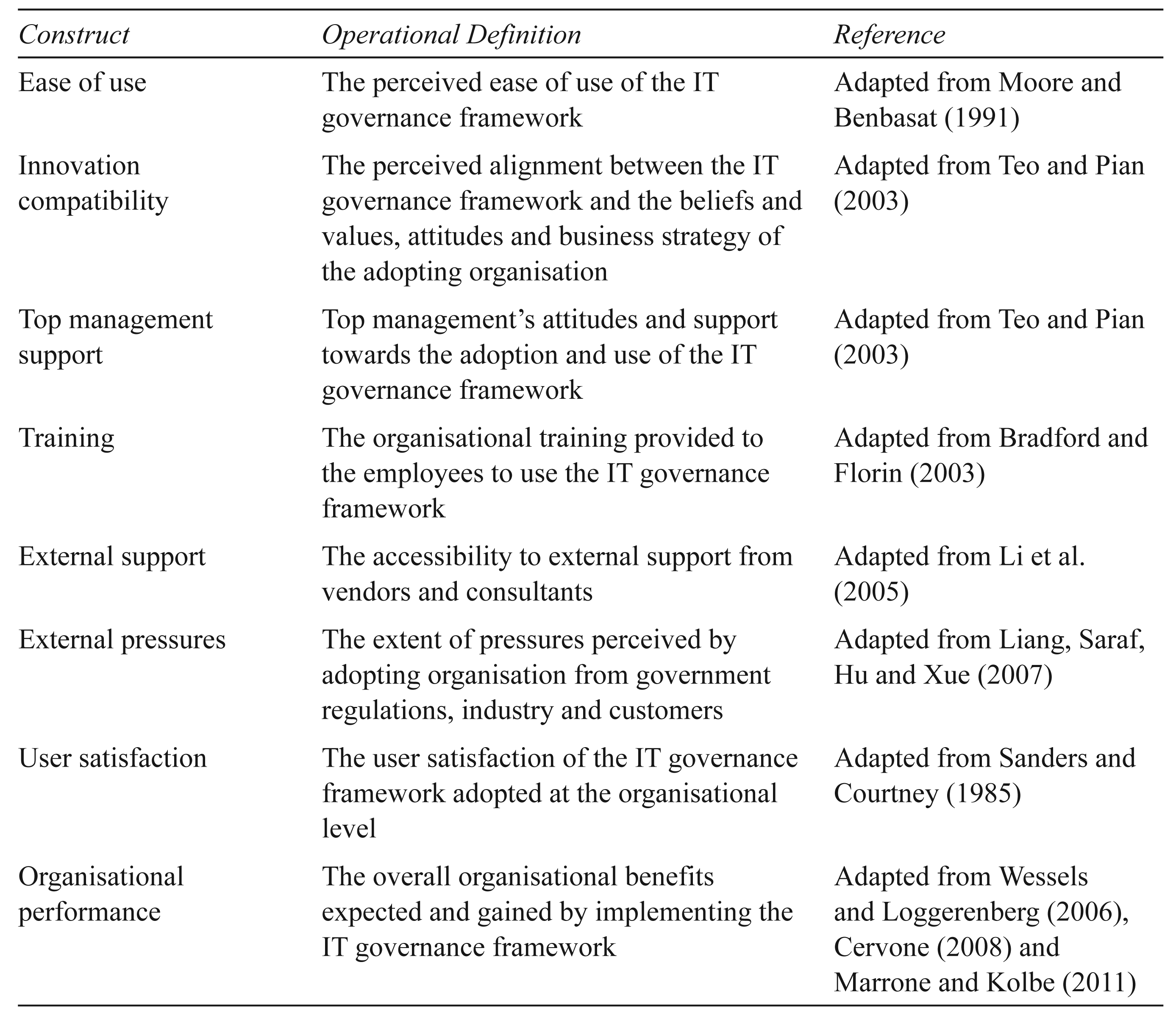
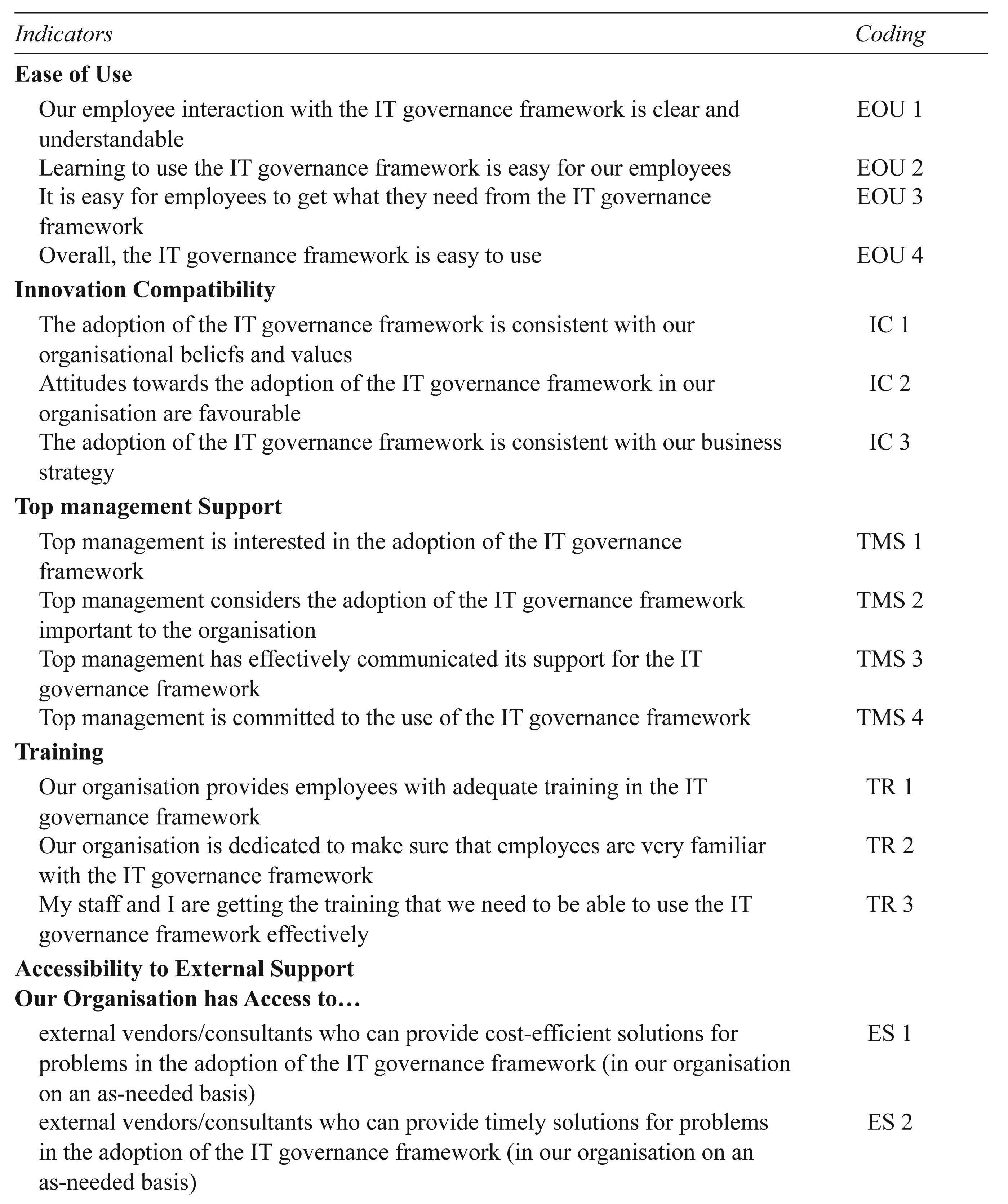
The operationalisation of constructs presented in Table 1 was adapted from existing instruments that have been tested in previous studies. All the items were measured based on a seven-point Likert scale ranging from strongly disagree to strongly agree and were operationalised as reflective indicators. The survey questions are presented in Appendix A.
Operationalisation of Constructs
Results
Descriptive Statistics
Table 2 presents the participants’ demographical information. Of 126 respondents, 88.9 per cent are male. No respondents are aged 18–21 years. Small proportions of respondents are aged 22–30 years (3.2 per cent), over 60 years (7.9 per cent) and 31–40 years (9.5 per cent); while the major age groups are 51–60 (47.6 per cent) and 41–50 (31.7 per cent). The majority of the respondents (95.2 per cent) are top and middle managers, while only 4.8 per cent are first-level managers.
Descriptive Statistics of the Respondents’ Demographic Characteristics
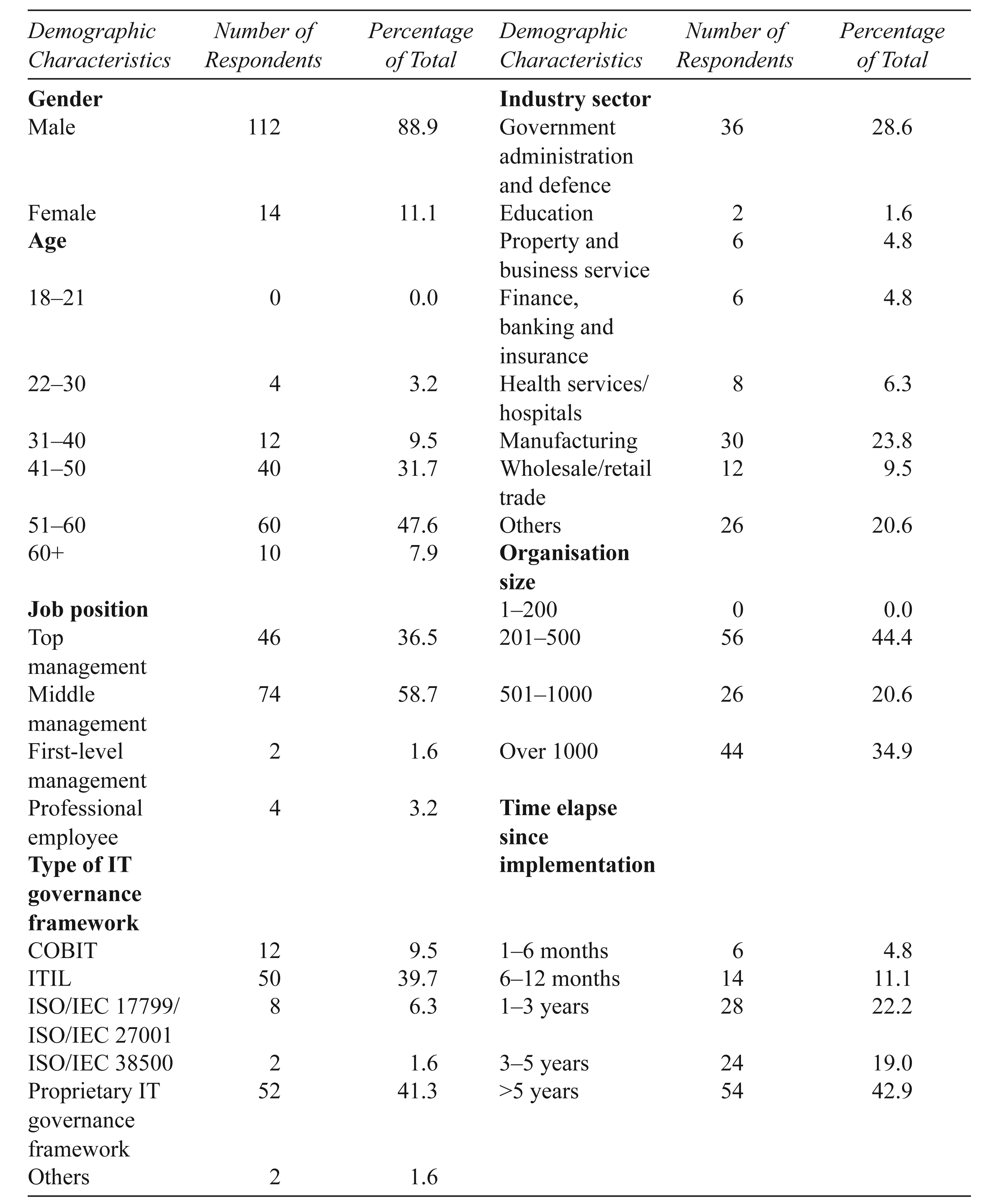
Furthermore, 44.4 per cent of the participating firms have around 201– 500 employees. A total of 28.6 per cent are identified as companies in the public sector (such as government administration and defence firms), 24 per cent are manufacturing firms, 10 per cent are wholesale or retail traders, 6.3 per cent are health services or hospitals, while property and business service, finance, banking and insurance all share the same proportion of 4.8 per cent.
ITIL (39.7 per cent), COBIT (9.5 per cent) and ISO/IEC standards (7.9 per cent) were the non-proprietary frameworks adopted by organisations. Interestingly, many companies used proprietary IT governance frameworks, represented by 41.3 per cent of total organisations. However, many of those respondents do point out that their framework is based on best practice frameworks, such as ITIL or COBIT.
The majority of the adopting organisations have been using the IT governance framework for more than 1 year (84.1 per cent). Approximately 43 per cent of these organisations have been using it for more than 5 years, which provides some assurance for the use of the organisational performance construct as one dimension of the adoption success, since it takes time for an organisation to evaluate perceived benefits from the adoption of an IT governance framework.
Evaluating the Measurement Model
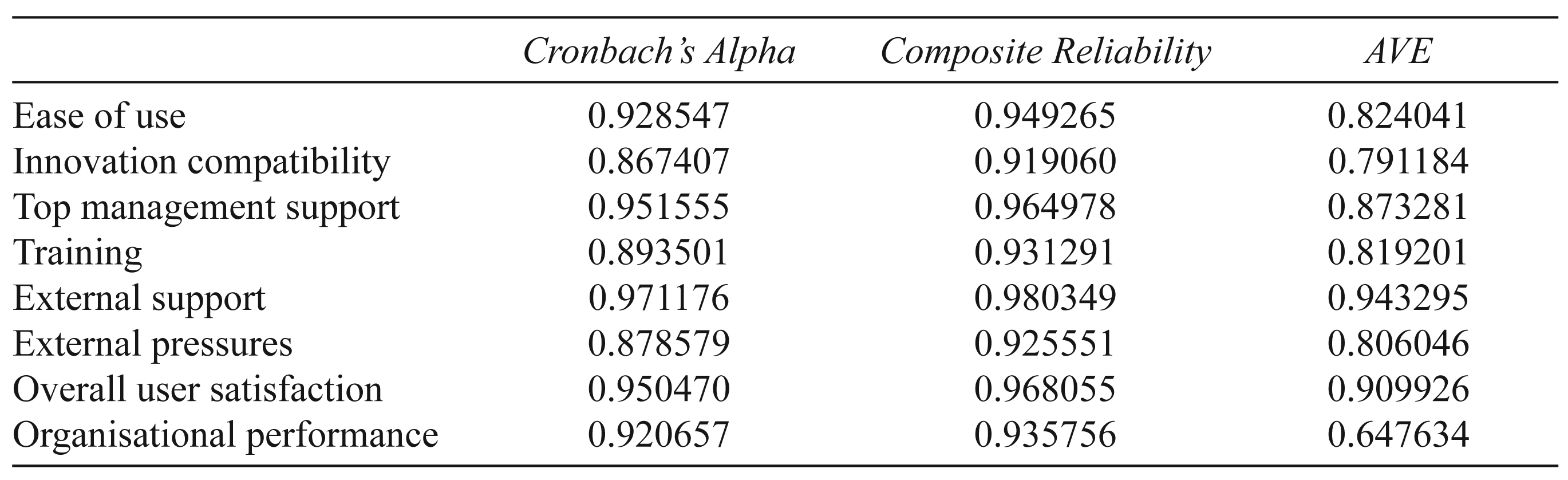
The results in Table 3 demonstrate that the internal consistency and reliability represented by Cronbach’s alpha, composite reliability and average variance extracted (AVE) are considered satisfactory, as all the indicators of Cronbach’s alpha are above 0.8. The composite reliability of all the constructs is greater than 0.9, which is over the suggested minimum threshold of 0.7 when the research is at an early stage and the general threshold of 0.8 or 0.9 when the research is at an advanced stage (Chin, 1998). In addition, the AVEs are above the minimum threshold of 0.5.
Cronbach’s Alpha and Composite Reliability
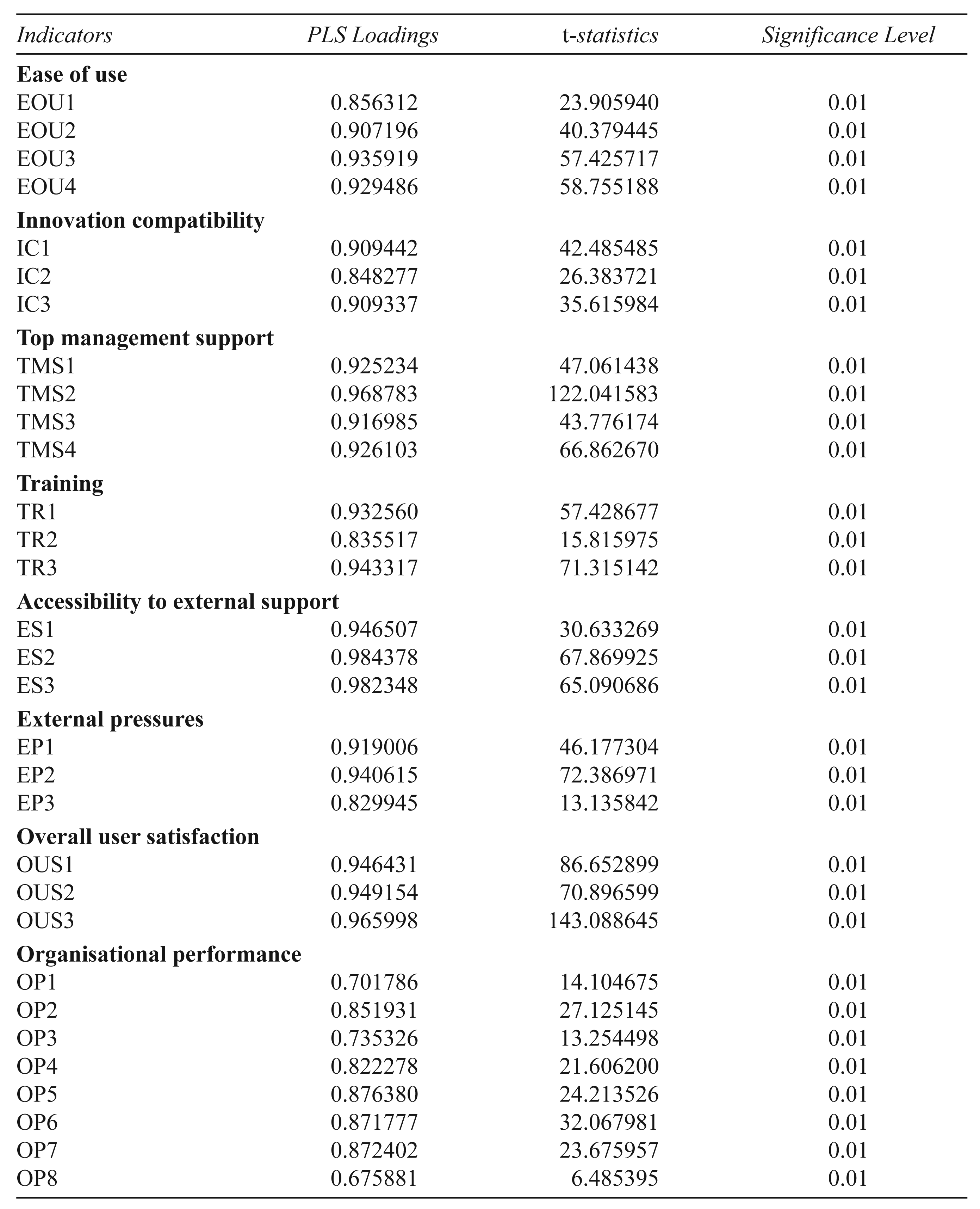
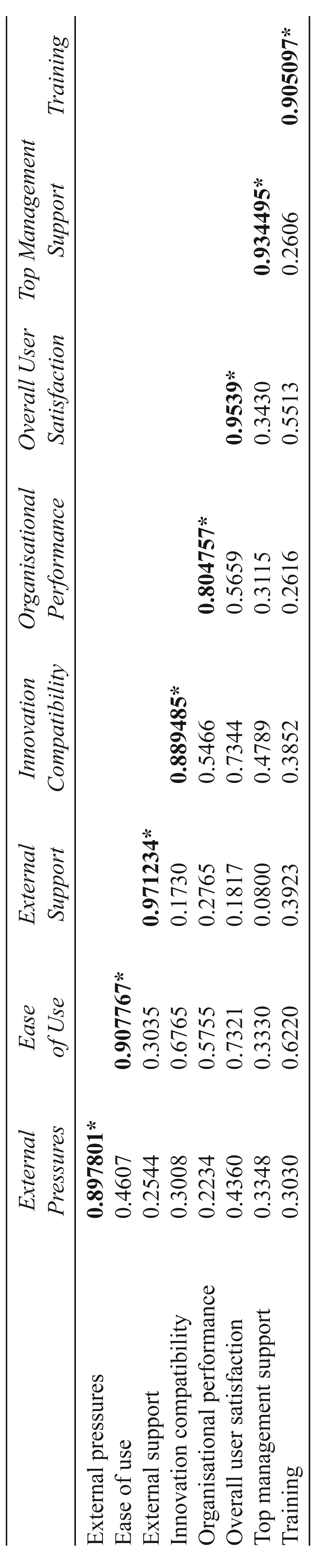
In Table 4, all items of PLS loadings are above the threshold of 0.7, except for one item under the organisational performance construct (OP8), which is marginally satisfied with a value of 0.675881. According to Chin (1998), a loading of 0.5 or 0.6 may still be acceptable in the early stage of scale development. In terms of the significance level of loadings and weights, t-statistics of 1.657 or more indicate a significance level of 0.05, and 2.357 or more indicate a significant level of 0.01. All items of PLS loadings are significant at the 0.01 level. Additionally, the results in Table 5 demonstrate that the square roots of the AVEs of the constructs are greater than the constructs’ correlations with other constructs. The results from cross-loadings analysis (see Appendix B) show that each indicator loads higher with its corresponding latent variable than any other variable. These results confirm good discriminant validity of the proposed model.
Outer Loadings for Measurement Model
Correlations of Latent Constructs
Structural Model Results
The structural model results are presented in Figure 2. R2 reflects the level or share of the latent variable’s explained variance and therefore measures the model’s predictive ability. The R2 of 0.466 for the organisational performance indicates that ease of use, innovation compatibility, top management support, training, accessibility to external support, external pressure from government, industry and customers and overall user satisfaction account for 46.6 per cent of the variance of the construct. The R2 falls into the range between 0.33 and 0.67, which represents that the predictive ability of organisational performance is moderate.
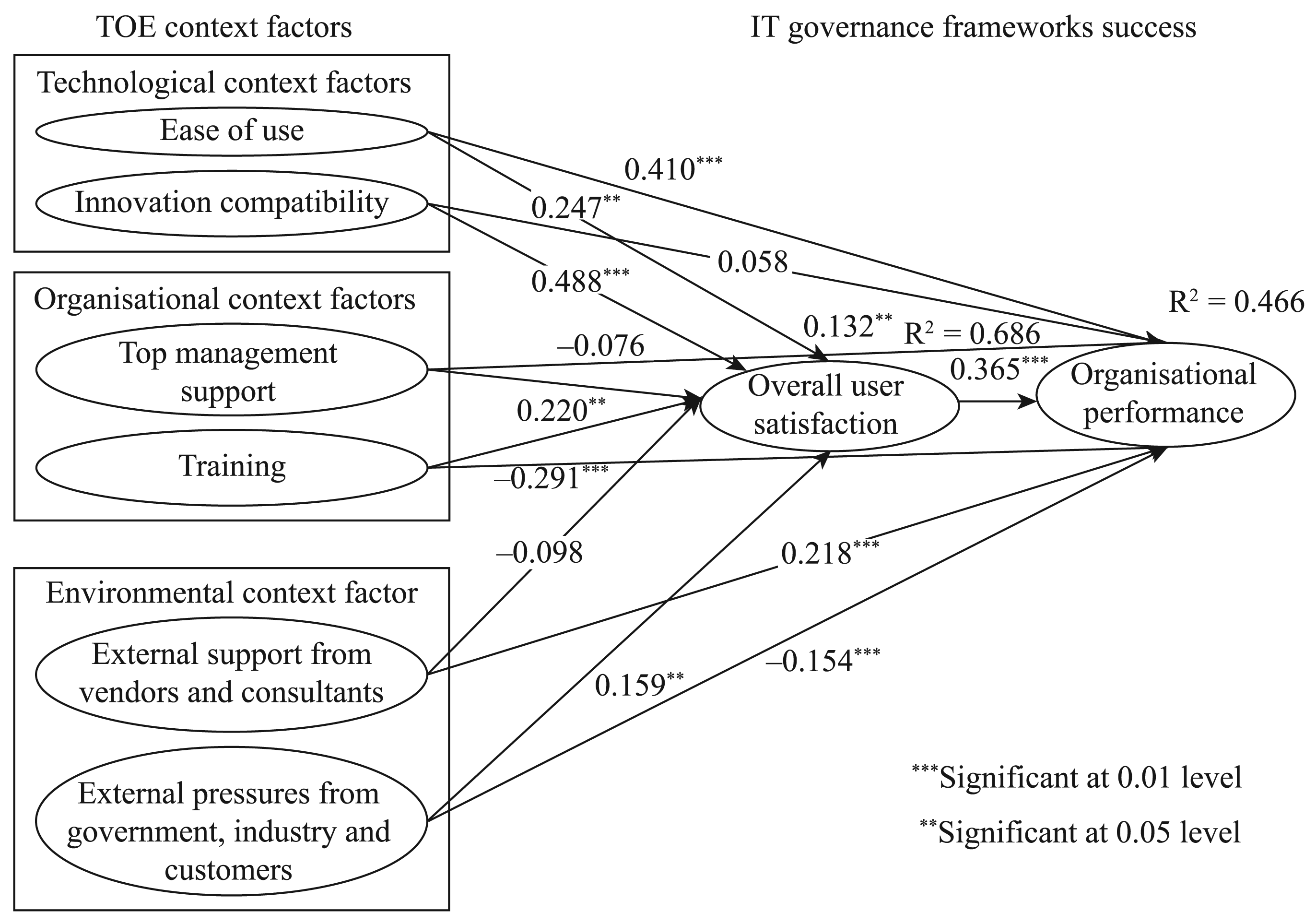
The R2 of 0.686 for the overall user satisfaction construct indicates that ease of use, innovation compatibility, top management support, training, accessibility to external support and external pressure from government, industry and customers account for 68.6 per cent of the variance of the construct. This R2 is above 0.67 and represents that the model bears a high predictive ability in user satisfaction.
The results presented in Table 6 are generated from the bootstrapping procedure. The statistics, namely, actual effect, path coefficient, observed t-statistics and significance level are reported. The acceptance or rejection of the hypotheses is based on the standard t-statistics.
Based on the results above, ease of use, innovation compatibility, training and external pressure have a significant positive influence on the overall user satisfaction with the IT governance framework, with path coefficients 0.247, 0.488, 0.220 and 0.159, respectively. However, top management support and external support have no significant effect on overall user satisfaction. Thus, hypotheses 1a, 2a, 4a and 6a are accepted, while hypotheses 3a and 5a are rejected.
Summary of Path Coefficient Test Results
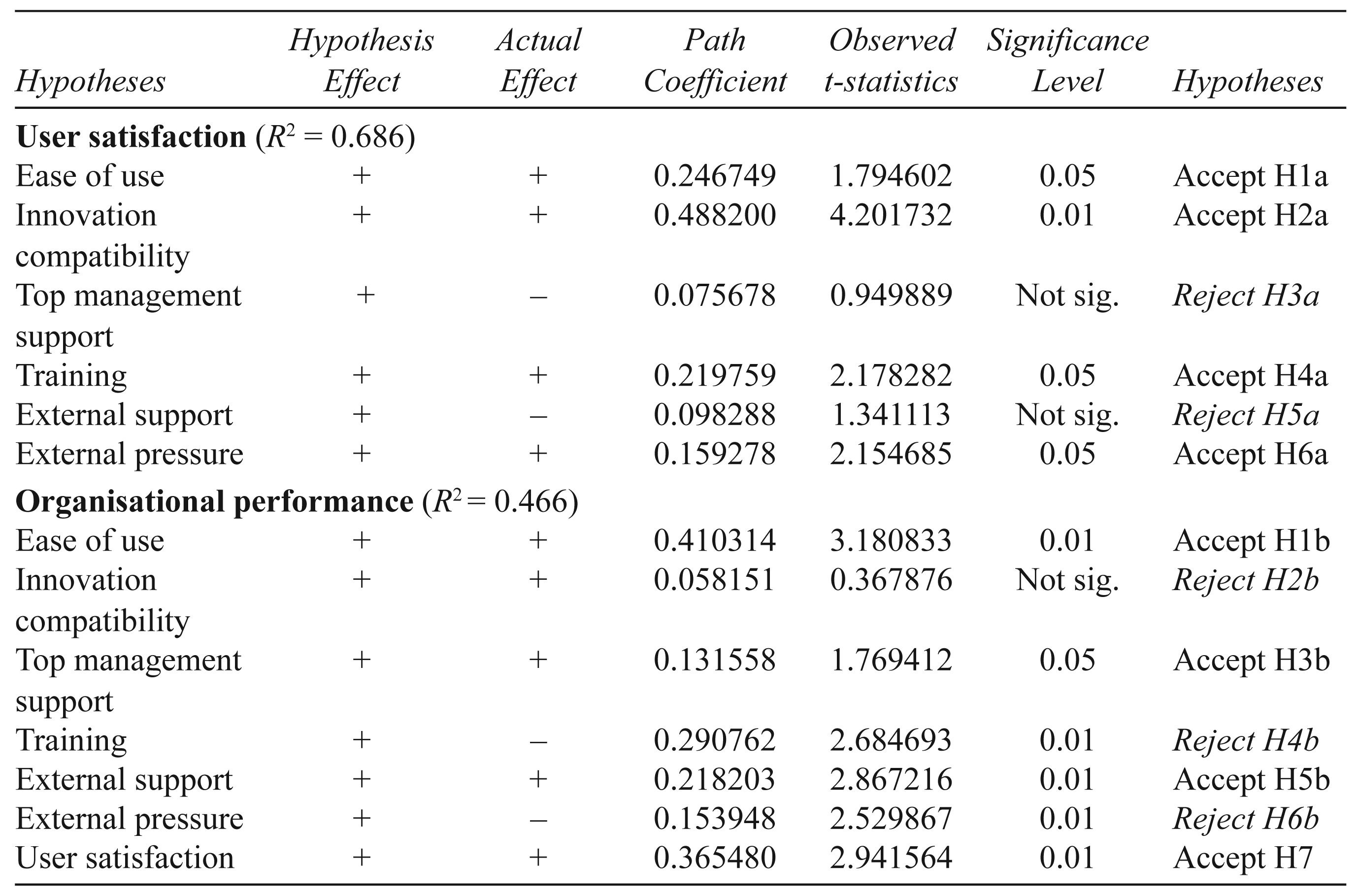
In addition, ease of use, top management support, external support and overall user satisfaction have a significant positive effect on the organisational performance, with path coefficients 0.410, 0.132, 0.218 and 0.365, respectively. Thus, hypotheses 1b, 3b, 5b and 7 are supported. Innovation compatibility has no significant effect on organisational performance. While path coefficients of external pressure and training show significance level at 0.01, they present a negative effect. Therefore, hypotheses 2b, 4b and 6b are rejected. Moreover, the results show that the introduction of the control variables to the research model does not alter the results.
Discussions
Organisations play a pivotal role in society as collective mechanisms for value creation and productivity. There is little doubt that the advent of IT has transformed organisations. Nonetheless, the many scandals arising from improper organisational dealings, particularly over the past two decades, have resulted in an erosion of social trust in many organisations, necessitating the implementation of mechanisms to enforce accountability and good corporate governance. The study investigated an innovation, namely, a governance framework, aimed at improving the diffusion of IT, along with social and organisational factors influencing framework adoption. Grounded in scholarly literature, a multifactoral research model was devised and operationalised, leading to important findings.
In relation to technological factors, the results show that ease of use has a positive influence on user satisfaction and organisational performance. The significance of the ease of use to user satisfaction is in line with previous research (Henderson, Sheetz, & Trinkle, 2012) that ease of use is important to the user satisfaction with the eXtensible Business Reporting Language (XBRL) adoption, and findings based on a meta-analysis of the large amount of empirical literature conducted by Moore and Benbasat (1991) that ease of use is an important determinant of the user satisfaction with the IS adoption. This implies that the easier the use of the IT governance framework for the adopting organisation, the greater the user satisfaction. The results from our study also confirm that the easier the use of the IT governance framework for the adopting organisations, the greater benefits they will receive. This implies that when an intuitive framework is adopted, users may feel confident and competent in applying the framework. This is consistent with prior research on innovation diffusion such as the TAM, which highlights the importance of ease of use to the ultimate use of an innovation.
In terms of innovation compatibility, our study also demonstrates a consistency with previous studies (e.g., Chiu et al., 2013; Henderson et al., 2012). The findings conclude that the better the fit of IT governance framework to the work environment of the adopting organisations, the greater the satisfaction those firms will receive. This is supported by previous findings from Iden and Langeland’s study (2010) and Pollard and Cater-Steel (2009) indicating that an ITIL-friendly culture plays an important role in ITIL adoption. Similar research has found that employees will refuse to use the technology due to a misalignment with their current work practices (Chiu et al., 2013). Interestingly, our findings show that innovation compatibility does not directly influence perceived organisational performance, but may contribute indirectly by improving user satisfaction. This is because compatibility of IT governance frameworks can create additional utilitarian values for users which increase their satisfaction, and in turn results in higher performance outcomes (Krell, Matook, & Rohde, 2009). Similar research has found that resistance to the new technology is considered as a serious obstacle preventing organisations from exploiting the potential benefits of the new technology implementation (Chiu et al., 2013).
When it comes to organisational factors, top management support was found to be important for improving organisational performance, while training was found to be a significant contributor to user satisfaction. The role of top management in the success of IT governance framework adoption has been identified in previous research. Our results therefore reinforce previous findings from studies by Cater-Steel and Tan (2005), Pollard and Cater-Steel (2009) and Iden and Langeland (2010) that identify top management support as a critical factor to ITIL adoption. This study further unveils that the role of top management has implication to the performance rather than user satisfaction. This finding is supported by Ahmad and Shamsudin’s study (2013), which found that top management support is ranked as the most critical success factor from IT staff and management’s perspectives, but it is not ranked as important from the users’ perspective. One possible explanation could be that, generally, an adoption of an IT governance framework follows a top-down approach rather than bottom-up approach, which often limits the involvement from operational level employees. Consequently, operational employees or users may view the IT governance framework adoption as a bureaucratic directive that they will have to comply with. Such directive may add to users’ existing workloads and may induce a feeling of unease and uncertainty. In this light, direction from top management on implementing IT governance frameworks may not have a direct impact on improving user satisfaction. Accordingly, Wessels and Loggernberg (2006) propose that IT governance frameworks should be implemented as a hybrid of a top-down and bottom-up approaches.
Moreover, our findings demonstrate that adequate training could assist in increasing user satisfaction with IT governance framework adoption. Training is an essential means by which users get involved, which is consistent with previous research (Cater-Steel & Tan, 2005). However, the results of our study also show that training does have a significant influence on organisational performance, but with a negative effect. This finding sheds a different light to previous studies, which generally report a positive relationship between training and performance when introducing new innovation (Ji, Huang, Liu, Zhu, & Cai, 2012). One plausible explanation could be that training usually requires extensive and ongoing spending. The more the training required from users to be able to utilise the frameworks effectively, the higher the financial expenses required by the organisation, which may impact on organisational performance as a whole (Clegg et al., 1997). It is worth noting that not all empirical literature support the critical role of top management and training for IS implementation success (e.g., Dong, Neufeld, & Higgins, 2009; Hwang et al., 2012; Sharma & Yetton, 2007, 2011). Some studies have found that top management support and training are critical only when technical complexity and task interdependence are high. Nonetheless, this calls for further research to clarify this seemingly complex relationship.
Furthermore, the results of this study reveal that, when it comes to environmental factors, external support from consultants is viewed as a catalyst for improved organisational performance. However, such support does not lead to a higher user satisfaction. One explanation could be that although firms may experience a higher organisational performance due to receiving adequate support from external consultants, employees may resent the engagement of external parties and may view that as a perceived inadequacy in their skills or an unnecessary interference in their affairs, and therefore feel resistant to cooperate with external parties. Thus, engaging external supports when implementing the frameworks does not necessarily increase user satisfaction. Consultants are often unfamiliar with internal organisation processes, which may accentuate these problems. Importantly, if consultants do not appropriately engage employees in the implementation process, this will escalate the negative perceptions of satisfaction (Lipovatz, Stenos, & Vaka, 1999).
Furthermore, our results show that external pressures such as those from government, industry and customers can significantly contribute to user satisfaction and organisational performance. Interestingly, external pressures do have a positive influence on user satisfaction but negative influence on organisation performance. Complying with industry best practice could improve control and reliability and provide further assurance to customers, suppliers and regulators, which in turn could provide users with confidence and satisfaction arising from such compliance. Conversely, the negative influence on organisational performance may be explained by findings from Kraatz and Zajac (1996) and Zhu and Sarkis (2007). These studies found that firms that face regulatory pressure tend to budget additional financial resource towards projects, which may result in a decrease of economic performance, at least in the short term.
Finally, in relation to success factors, consistent with previous studies (e.g., Delone & McLean, 2003; Jones & Beatty, 2001), our findings suggest that a higher user satisfaction with IT governance framework adoption will lead to higher organisational performance. Ease of use, innovation compatibility, training and external pressures have a positive influence on user satisfaction, while external support shows a no significant effect. Ease of use, top management support and external support have a positive influence on organisational performance, while training was found to have negative effects. Innovation compatibility and ease of use are the most significant determinants of user satisfaction and organisational performance, respectively. This also suggests that technological aspects have a stronger contribution on the IT governance success compared to organisational and environmental dimensions. This could be explained by the intrinsic perception that the innovation is more proximal, direct and immediate, prediction and explanation of users’ attitudes and the organisational performance (Malhotra, Galletta, & Kirsch, 2008).
Contributions
This study contributes to a theoretical gap in the IT governance frameworks adoption literature by proposing an integrated theoretical model to investigate factors influencing the success of IT governance frameworks adoption. It develops a novel theoretical model by combining the TOE framework with the IS success model. Consequently, it is the first study in this field to explore and statistically test the relationships among TOE factors and the success of IT governance frameworks adoption. The results provide a thorough understanding of these factors which influence the success in terms of both perceptions towards satisfaction and organisational performance. Very few studies have measured and accounted for the multiple dimensions of IS success (Delone & McLean, 2003), particularly in the IT governance literature (Potgieter & Botha, 2006). However, our results provide a comprehensive explanation of dimensions and implications on overall user satisfaction and organisational performance. Thus, the study fills an important knowledge gap in this area as only few studies (e.g., Gelderman, 1998; Law & Ngai, 2007) have examined similar implications and none in the IT governance framework context. Additionally, other studies tend to focus on ITIL adoption such as Cater-Steel and Tan (2005). Our study also includes other frameworks and hence provides a clearer empirical investigation of the IT governance framework landscape as well as enhances the generalisability of the results. It is worth noting that effects of types of IT governance frameworks were tested for and the results have not been altered.
The findings of the research may be of great practical relevance to companies that have adopted an IT governance framework, and companies who plan to adopt one. By considering the TOE factors, firms can better understand the technological, organisational and environmental aspects contributing to the success of such adoption in terms of user satisfaction and organisational performance. For instance, ease of use is one of the most important factors to perceived organisational performance, which may provide insightful guidance to firms when implementing a framework. Innovation compatibility is the most important factor influencing overall user satisfaction, and therefore should not be ignored by organisations. Previous research identified top management support as a critical success factor to IT governance frameworks adoption. Our study provides a deeper understanding on the role of top management support in IT governance success as we tested its relationship to user satisfaction and organisational performance. The study therefore provides important guidelines for organisational actors including management and operational staff on issues to consider when implementing an IT governance framework, along with potential assurance for the community of stakeholders influenced by organisational operations and success.
Limitations and Future Research
Notwithstanding its contributions, all research have limitations including this study. First, given our time and resource restrictions, we collected data from a single respondent within each sampled organisation. To overcome this limitation, future research can consider gathering data from multiple respondents within each organisation. Second, the data collected are limited to companies in Australia. The extrapolation of the findings to cross-border and cross-cultural contexts may provide interesting insight, but should be done judiciously with due consideration to cultural and national differences. Thus, future research can expand this study to different contexts. Moreover, due to the use of closed-ended questions, the survey method provided limited opportunities for the researchers to further explore unexpected statistical outcomes. One possible solution is to adopt multiple data collection methods (e.g., triangulation), incorporating qualitative and quantitative methods to gain a richer understanding of the complexities of IT governance frameworks adoption. Finally, future researchers could extend the current model by examining other success factors (e.g., perceived usefulness) affecting such adoption in particular industries and across industries. Given the global ramifications of governance issues, along with the increasingly ubiquitous use of IT in all aspects of social and organisational life, the judicious adoption of IT governance frameworks is important and would necessitate continuing investigation and research.
Footnotes
Appendix A.
Items Used for Measurement Model Testing and Data Coding
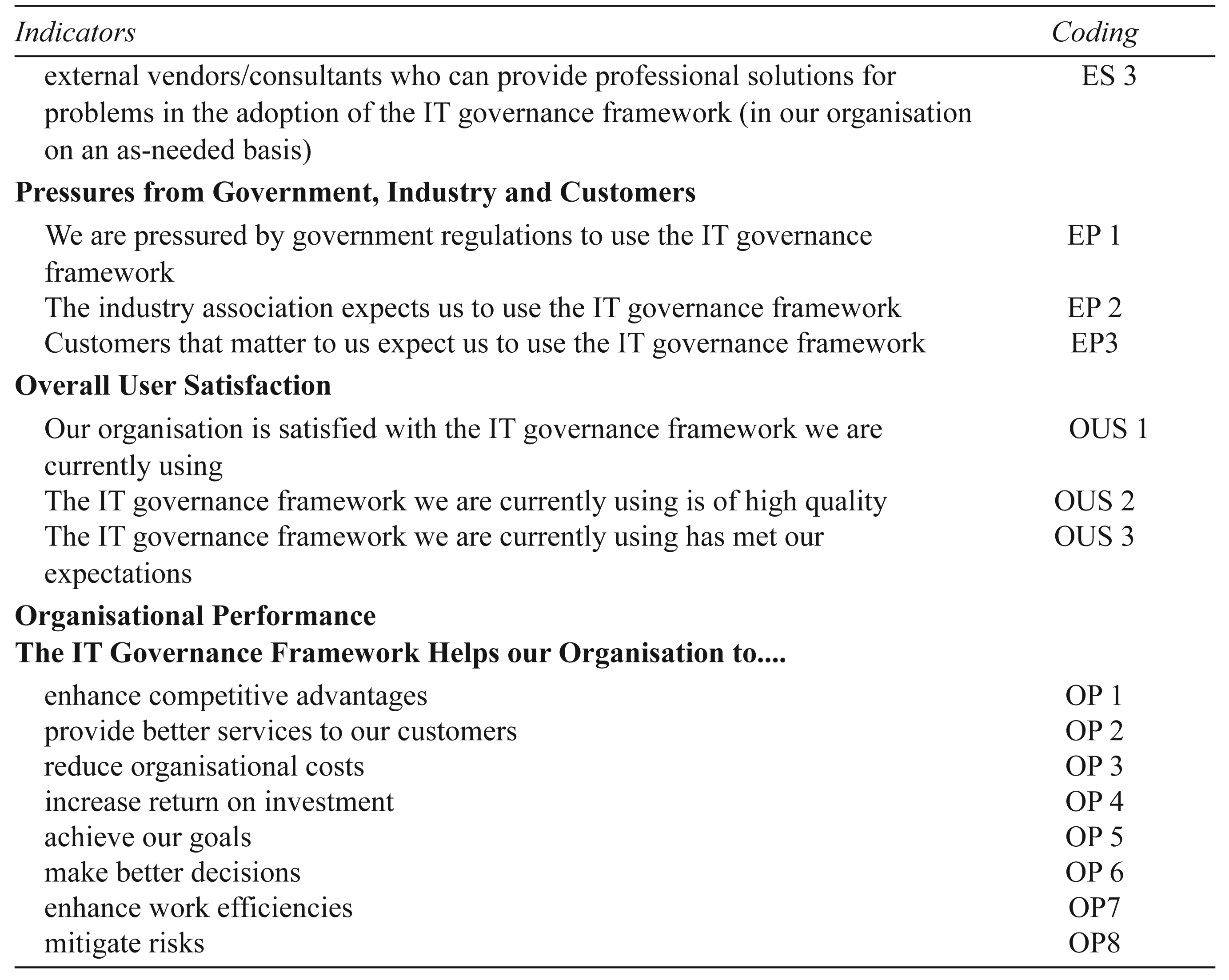
| Indicators | Coding |
|
|
|
| Our employee interaction with the IT governance framework is clear and understandable | EOU 1 |
| Learning to use the IT governance framework is easy for our employees | EOU 2 |
| It is easy for employees to get what they need from the IT governance framework | EOU 3 |
| Overall, the IT governance framework is easy to use | EOU 4 |
|
|
|
| The adoption of the IT governance framework is consistent with our organisational beliefs and values | IC 1 |
| Attitudes towards the adoption of the IT governance framework in our organisation are favourable | IC 2 |
| The adoption of the IT governance framework is consistent with our business strategy | IC 3 |
|
|
|
| Top management is interested in the adoption of the IT governance framework | TMS 1 |
| Top management considers the adoption of the IT governance framework important to the organisation | TMS 2 |
| Top management has effectively communicated its support for the IT governance framework | TMS 3 |
| Top management is committed to the use of the IT governance framework | TMS 4 |
|
|
|
| Our organisation provides employees with adequate training in the IT governance framework | TR 1 |
| Our organisation is dedicated to make sure that employees are very familiar with the IT governance framework | TR 2 |
| My staff and I are getting the training that we need to be able to use the IT governance framework effectively | TR 3 |
|
|
|
| external vendors/consultants who can provide cost-efficient solutions for problems in the adoption of the IT governance framework (in our organisation on an as-needed basis) | ES 1 |
| external vendors/consultants who can provide timely solutions for problems in the adoption of the IT governance framework (in our organisation on an as-needed basis) | ES 2 |
| external vendors/consultants who can provide professional solutions for problems in the adoption of the IT governance framework (in our organisation on an as-needed basis) | ES 3 |
|
|
|
| We are pressured by government regulations to use the IT governance framework | EP 1 |
| The industry association expects us to use the IT governance framework | EP 2 |
| Customers that matter to us expect us to use the IT governance framework | EP3 |
|
|
|
| Our organisation is satisfied with the IT governance framework we are currently using | OUS 1 |
| The IT governance framework we are currently using is of high quality | OUS 2 |
| The IT governance framework we are currently using has met our expectations | OUS 3 |
|
|
|
| enhance competitive advantages | OP 1 |
| provide better services to our customers | OP 2 |
| reduce organisational costs | OP 3 |
| increase return on investment | OP 4 |
| achieve our goals | OP 5 |
| make better decisions | OP 6 |
| enhance work efficiencies | OP7 |
| mitigate risks | OP8 |
Appendix B.
Cross-loadings for Indicators
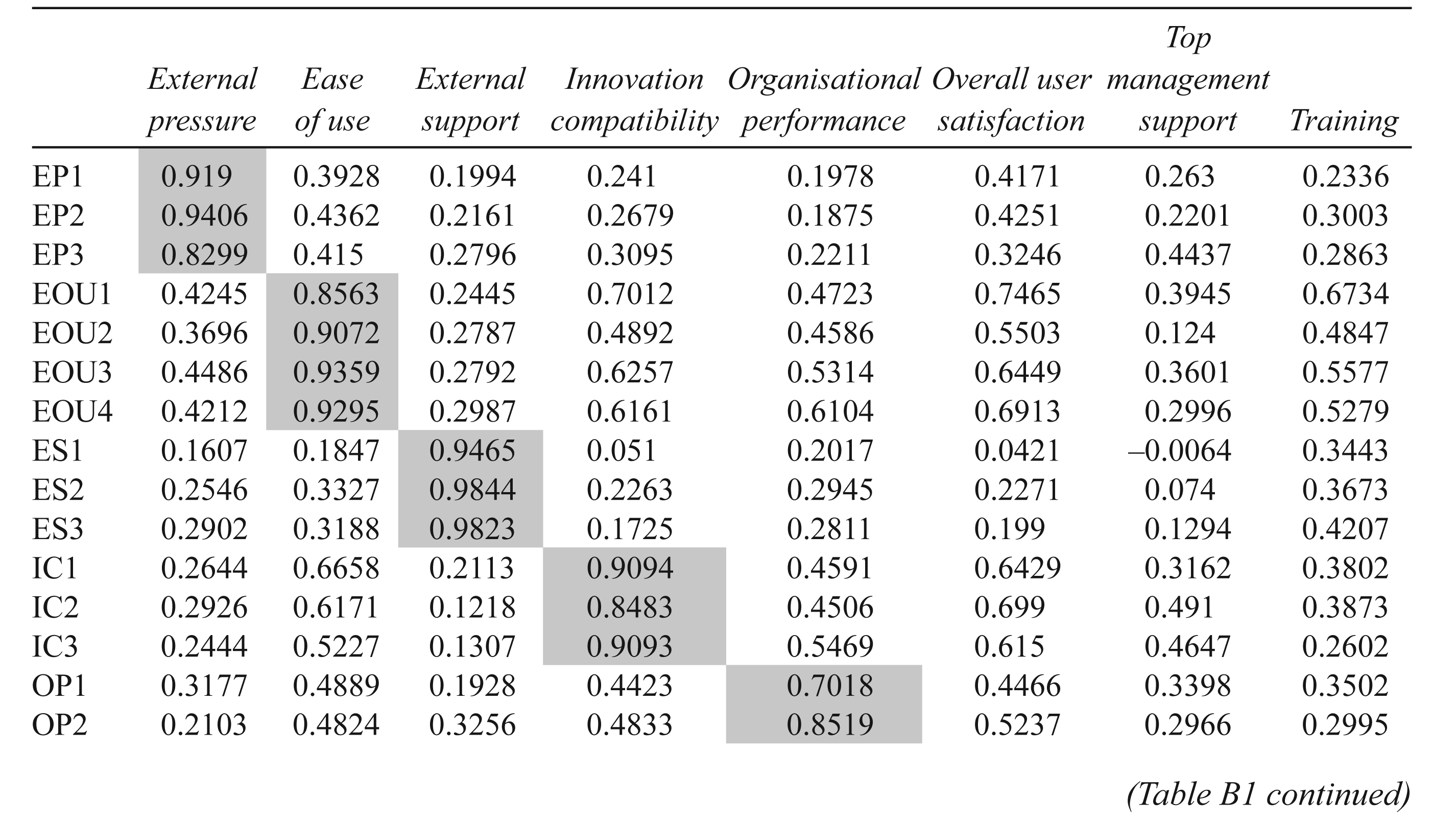
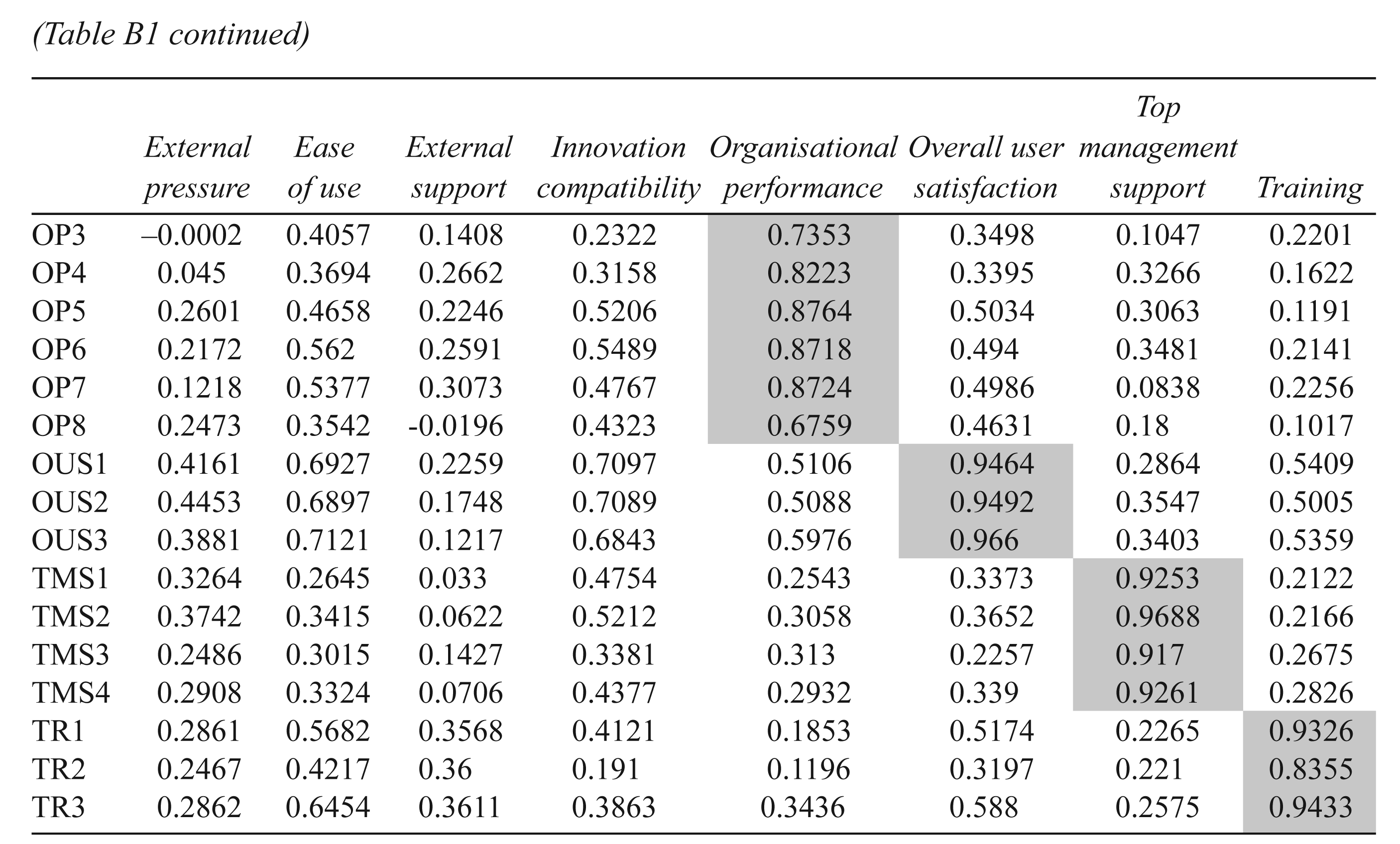
| External pressure | Ease of use | External support | Innovation compatibility | Organisational performance | Overall user satisfaction | Top management support | Training | |
| EP1 | 0.919 | 0.3928 | 0.1994 | 0.241 | 0.1978 | 0.4171 | 0.263 | 0.2336 |
| EP2 | 0.9406 | 0.4362 | 0.2161 | 0.2679 | 0.1875 | 0.4251 | 0.2201 | 0.3003 |
| EP3 | 0.8299 | 0.415 | 0.2796 | 0.3095 | 0.2211 | 0.3246 | 0.4437 | 0.2863 |
| EOU1 | 0.4245 | 0.8563 | 0.2445 | 0.7012 | 0.4723 | 0.7465 | 0.3945 | 0.6734 |
| EOU2 | 0.3696 | 0.9072 | 0.2787 | 0.4892 | 0.4586 | 0.5503 | 0.124 | 0.4847 |
| EOU3 | 0.4486 | 0.9359 | 0.2792 | 0.6257 | 0.5314 | 0.6449 | 0.3601 | 0.5577 |
| EOU4 | 0.4212 | 0.9295 | 0.2987 | 0.6161 | 0.6104 | 0.6913 | 0.2996 | 0.5279 |
| ES1 | 0.1607 | 0.1847 | 0.9465 | 0.051 | 0.2017 | 0.0421 | –0.0064 | 0.3443 |
| ES2 | 0.2546 | 0.3327 | 0.9844 | 0.2263 | 0.2945 | 0.2271 | 0.074 | 0.3673 |
| ES3 | 0.2902 | 0.3188 | 0.9823 | 0.1725 | 0.2811 | 0.199 | 0.1294 | 0.4207 |
| IC1 | 0.2644 | 0.6658 | 0.2113 | 0.9094 | 0.4591 | 0.6429 | 0.3162 | 0.3802 |
| IC2 | 0.2926 | 0.6171 | 0.1218 | 0.8483 | 0.4506 | 0.699 | 0.491 | 0.3873 |
| IC3 | 0.2444 | 0.5227 | 0.1307 | 0.9093 | 0.5469 | 0.615 | 0.4647 | 0.2602 |
| OP1 | 0.3177 | 0.4889 | 0.1928 | 0.4423 | 0.7018 | 0.4466 | 0.3398 | 0.3502 |
| OP2 | 0.2103 | 0.4824 | 0.3256 | 0.4833 | 0.8519 | 0.5237 | 0.2966 | 0.2995 |
| OP3 | –0.0002 | 0.4057 | 0.1408 | 0.2322 | 0.7353 | 0.3498 | 0.1047 | 0.2201 |
| OP4 | 0.045 | 0.3694 | 0.2662 | 0.3158 | 0.8223 | 0.3395 | 0.3266 | 0.1622 |
| OP5 | 0.2601 | 0.4658 | 0.2246 | 0.5206 | 0.8764 | 0.5034 | 0.3063 | 0.1191 |
| OP6 | 0.2172 | 0.562 | 0.2591 | 0.5489 | 0.8718 | 0.494 | 0.3481 | 0.2141 |
| OP7 | 0.1218 | 0.5377 | 0.3073 | 0.4767 | 0.8724 | 0.4986 | 0.0838 | 0.2256 |
| OP8 | 0.2473 | 0.3542 | -0.0196 | 0.4323 | 0.6759 | 0.4631 | 0.18 | 0.1017 |
| OUS1 | 0.4161 | 0.6927 | 0.2259 | 0.7097 | 0.5106 | 0.9464 | 0.2864 | 0.5409 |
| OUS2 | 0.4453 | 0.6897 | 0.1748 | 0.7089 | 0.5088 | 0.9492 | 0.3547 | 0.5005 |
| OUS3 | 0.3881 | 0.7121 | 0.1217 | 0.6843 | 0.5976 | 0.966 | 0.3403 | 0.5359 |
| TMS1 | 0.3264 | 0.2645 | 0.033 | 0.4754 | 0.2543 | 0.3373 | 0.9253 | 0.2122 |
| TMS2 | 0.3742 | 0.3415 | 0.0622 | 0.5212 | 0.3058 | 0.3652 | 0.9688 | 0.2166 |
| TMS3 | 0.2486 | 0.3015 | 0.1427 | 0.3381 | 0.313 | 0.2257 | 0.917 | 0.2675 |
| TMS4 | 0.2908 | 0.3324 | 0.0706 | 0.4377 | 0.2932 | 0.339 | 0.9261 | 0.2826 |
| TR1 | 0.2861 | 0.5682 | 0.3568 | 0.4121 | 0.1853 | 0.5174 | 0.2265 | 0.9326 |
| TR2 | 0.2467 | 0.4217 | 0.36 | 0.191 | 0.1196 | 0.3197 | 0.221 | 0.8355 |
| TR3 | 0.2862 | 0.6454 | 0.3611 | 0.3863 | 0.3436 | 0.588 | 0.2575 | 0.9433 |