



Abstract
Abstract
The aim of the present study is to identify the factors that propel tourism industry to opt for digitalization and establish a hierarchical relationship among them. The paper further seeks to address how digitalization impacts various stakeholders in tourism industry. Also, various challenges that are arising in course of digitalization in tourism industry are identified and suggestions have been made to resolve these issues. The study makes use of interpretive structural modelling (ISM) to develop a strategic framework related to digitalization in the industry. MICMAC (cross-impact matrix multiplication applied to classification) analysis is used to identify the nature of the factors identified in the framework developed. The results of strategy adopted conclude that customer demand for digitalization, growing essence of sharing economy and presence of social media are important contributors to the enhancement of digitalization in tourism industry. The study highlights the implications for the strategy makers as the outputs from ISM di-graph will allow them to identify and focus more on factors driving the digitalization system and address the various shortcomings in the process effectively.
Introduction
Broadly speaking, digitization essentially refers to the process of converting analog information into its digital form. Digitalization enhances the efficiency of working by improving the operations of business with the help of digitized data and information. The current emphasis of Government of India is on digitalization of business and economy (Keerthan & P. S., 2018). The policies such as Digital India aim to push the usage of electronic means in economy to improve the efficiency and maximize the productivity. The impetus to make digital payments more attractive for the objective of making the economy less-cash during the demonetization period, reducing the service charges on digital payments, enabling the application-based work for various services like Aadhaar enrolment, passport application, filing and verification of income tax returns are some of the initiatives taken by government towards the paradigm shift on reaping the benefits of digitalization by digitizing the information and data.
With the development of tourism industry, it is observed that it not only wears the natural attraction to promote tourism but also bolsters the economy of a nation (foreign exchange earnings). India welcomed 1628.12 million tourists in the year 2016 comprising of 1613.55 million domestic, 8.80 million foreign and 5.57 NRI tourists (Ministry of Tourism, 2018). The present data suggest a compound annual growth rate of 7.90568 per cent from 2014 for total tourists’ visits in India. The foreign exchange earnings received during the year 2016 was Rs 154146 crore showing a CAGR of 7.72 per cent during 2014–2017 (Ministry of Tourism, 2018).
The question arises that “Whether the wave of digitalization have profound impacts on the industry or not”? On the basis of comprehensive analysis, the trends and scenarios seen in the tourism industry, the answer to the question is a profound yes. Since 2014, the focus of government has been on digitalization, and tourism industry is one of the industries that has been at the forefront of digitalization and continues to be exponentially transformed. This changing arena has represented the dynamics of different stakeholders involved in the tourism industry. While talking about digitalization in tourism, it is assumed to be restricted to online booking of hotels and digital payments, but tourism industry has incorporated digitalization and has blended it with itself not only to create measures to increase tourist satisfaction but also to develop new tourism avenues. Virtual tourism is such new product which has been created recently and is gaining popularity in India to provide stimulation to the tourists. Digitalization has proved to be a competitive weapon for various stakeholders. Having run through the literature on digitalization, focus on the factors of an economy or industry to digitalize is observed. The present paper on ‘Digitalization: A Strategic Approach for Development of Tourism Industry in India’ aims to throw a light on similar aspects. With the identification of the driving forces of digitalization in tourism industry, challenges and issues pertaining to it can easily be addressed. By exploiting the concept properly, the industry can gain competitive advantage over the nations while simultaneously maximizing its economic contribution.
Review of Literature
The integration of Information and Communication Technology (ICT) and Tourism is essential for the development of Tourism Industry, The implications of ICT on the Tourism sector is widely studied (Shanker, 2008). The benefits of ICT associated with the tourism sector include fast diffusion of information, reducing the distance between countries and increased transparency. Hojeghan and Esfangareh (2011) studied the effects of digital economy on tourism industry. The study highlighted the acceptance of technologies in the industries such as airlines, hotels, car rentals, tour and travel operators and the resultant shift in their way of operations. The study suggested that standards should be set up for effective implementation of digitalization in the industry. Milović (2012) pointed the development of electronic customer relationship due to digitalization in the hospitality sector. The study analysed the impact of websites, social media and other electronic marketing campaigns on the promotion of hotel and performance of business. Aramendia-Muneta and Ollo-Lopez (2013) analysed the impact of ICT on productivity and competitiveness of travel agency firm. The study concluded that although digitalization has less impact on competitiveness and increasing productivity, it still has revolutionized the market share of the travel agencies. Egger (2013) assessed the potential prospects, benefits and challenges for near-field communications in tourism industry. The study suggested use of consistent business models in combination of push and pull market strategies to enable diffusion of technology in the industry. Chang and Jang (2014) investigated the use of mobile phones by the young and literates in availing smartphone booking services. The study concluded that price level, relative advantage and complexity significantly impact booking by smartphones. Tsokota, Solms, and Greunen (2014) examined the current usage and adoption of information and communication technology in tourism sector in Zimbabwe. The study identified lack of government policy, ICT legislation, interrupted network supply, commitment from organizations are some of the hindrances in adopting technology in tourism industry. The study suggested implementation of strategy at national level to diffuse technology in tourism sector. Bilghan and Nejad (2015) mentioned that service sector has played an important role in the development of various industrialized economy. The study identified the trends such as the concept of sharing economy, which has been emerging in the hospitality sector, courtesy to the innovation through the digitalization. The study also points out that now consumers themselves have been more demanding for digitalization. Jaremen (2016) discussed the usage of ICT in hospitality industry, particularly in hotel industry. The study suggested that ICT is applied in hotels to improve the service quality. Also, capital requirement was found to be major barrier in implementing ICT in hotel industry. The study by Maráková and Medveďová (2016) showed that decrease in number of tourists, length of stay and decreasing sales have forced the market players of tourism industry in Europe to innovate in terms of their products as well as the way they cater their customers. The study concludes that there is need for carrying out more research about innovation in tourism and hospitality sector. Further, the focus of the policies designed should be on medium and small-scale enterprises in the tourism industry. Rajamohamed (2016) studied the role and importance of ICT and its impact on tourism industry in particular. The study was conducted to determine how ICT affects the hospitality sector and the viewpoint of managers about the role of ICT in the tourism and hospitality industries. Alexis (2017) through case study model examined the impact of digitalization and automation in tourism industry. The study suggested that instead of resisting digitalization, stakeholders must embrace it. This would help in increasing customer satisfaction and would also open future research prospects in the field. Dhingra (2017) studied the impact of digital revolution through schemes such as Digital India on the tourism industry and listed out the benefits that digitalization has provided to the industry. By providing benefits such as easier payment services, more informed travel choices and developing new age travel trends, digitalization has transformed the way one travels. Greenwood and Quinn (2017) examined the influence of digital amnesia and its influence on future tourist. The study highlighted that digitalization has influence on decision-making by tourists, the way marketing messages are conveyed to them and on the way the tourist experience can be memorized. Härting, Reichstein, Härtle, and Stiefl (2017) conducted an empirical study in Germany to find out the potential benefits that digitalization could offer to the tourism industry. The study also discussed how far the tourism industry has come in respect to digitalization and how much more it needs to do. The study also identified the main drivers of digitalization in tourism industry with the help of structural equation modelling technique. Matteo, Evangelista, and Ferrari (2018) examined the impact of digital endowment and developing telecom infrastructure on domestic tourism demand in Italy. The study concluded that digital endowment positively impacts domestic tourist inflow. Increased level of literacy and level of consumer income too have positive impact on domestic tourism industry. Adeola and Evans (2019) studied the impact of mobile phones and internet on tourist inflow in Africa. The study showed a bi-directional causality relationship between internet usage, squared internet usage and tourism; unidirectional causality between mobile penetration and tourism and bidirectional causality between squared mobile penetration and tourism. Kumar and Kumar (2019) studied the effect of ICT on tourism demand. The study concludes that destination income positively impacts tourism demand but in short-run. Also, ICT had causality impact on tourism demand as conclude by study.
Research Gap
After the review of literature was done, a research gap was identified. This gap is in the form of unanswered question that needs to be answered for ensuring an effective framework of digitalization. The literature is silent on the interrelationship between the factors that promote digitalization or get impacted by digitalization in tourism industry. Further, the literature does not talk about the key factors that need to be addressed to ensure the effective digitalization framework in tourism industry. This identification is important because strategies related to digitalization will be developed around these factors.
Research Objectives
In this study, an attempt has been made to address the various factors that have an impact on or are impacted by digitalization in tourism industry. A hierarchical relationship is then established among the factors to further develop flexible strategies for digitalization. Following are the objectives of this study:
To develop a hierarchical relationship, among factors which are impacted or impact digitalization in tourism industry, with the help of Interpretive Structural Modelling Technique. To examine the benefits of digitalization to different stakeholders in the tourism industry. To discuss various issues those, pertain to digitalization in the industry and make advance suggestions to overcome it.
Research Methodology
To address the objectives of the study both primary as well as secondary data are used. The secondary data sources include previous research on the topic, published government reports, newspaper articles, online reports and journal articles. A questionnaire consisting of open-ended questions was prepared and responses from 100 experts were collected using the snowball sampling technique. Snowball sampling is best suited for data collection for this study because an expert knows others who would be suitable for becoming the sample of the study. The chosen experts are researchers who have published their articles in reputed journal along with executives working in organization in tourism industry. By extensive literature review and from primary survey, eight factors were identified which were either impacting or were being impacted by digitalization in the industry. Interpretive structural modelling (ISM) technique is then used to develop interrelationship between the factors identified. A MICMAC (cross-impact matrix multiplication applied to classification) analysis is carried out to categorize the factors into driving factors, dependent factors, autonomous factors and linkage factors. This categorization is important because it helps in development of strategies related with the digitalization in industry.
Framework for Digitalization in Tourism Industry Through Interpretive Structural Modelling
In order to develop strategies for a concept, knowledge about how that concept works is imperative. ISM helps in providing a deep insight to the concept. By answering to the questions such as what are the different factors impacting or getting impacted by the subject and how these factors are interrelated, ISM helps in understanding the concept as a whole, simultaneously providing the related details. Since long time ISM approach has been increasingly used in strategic decision-making by researchers. Jharkaria and Shankar (2005) applied ISM to understand the various barriers in IT-enablement of supply chain and their mutual interrelation. Katiyar and Badola (2018) applied ISM to investigate the interrelationships among the barriers to online banking. Formulating hierarchical relationship through ISM involves following steps:
Step 1— This step involves identifying and describing the factors that either push tourism industry towards digitalization or get impacted by digitalization in the tourism industry. Step 2— It involves development of self-structural interaction matrix (SSIM). This matrix is developed by taking the opinion of experts on pair-wise relationship among the factors. Step 3— SSIM is then converted into a matrix of zeroes and ones to form Initial Reachability Matrix. Step 4— Transitive links are then incorporated into the initial reachability matrix to form final reachability matrix. By transitivity here, it means that if A leads to B and B leads to C, then A leads to C by principle of transitivity. Step 5— The next step is to determine the partition level of each factor through the interaction set obtained from reachability set and antecedent set. Step 6— At the last step, each factor is positioned and a di-graph is obtained by incorporating the links.
Developing Interpretive Structural Modelling (ISM) di-Graph
List of Factors Affecting or Getting Affected by Digitalization in Tourism Industry

Number of tourists—Tourism industry thrives on number of tourists. The number of tourists visiting a particular destination drives the economy of that destination. Digitalization helps in increasing the number of tourists by increasing the effectiveness of marketing programme.
Classical booking—Traditional way of making reservations limits the use of digitalization by tourists. With increase in online hotel bookings, flight check-ins and transportation booking, traditional way of booking tickets has taken a hit.
Sharing economy—The benefits provided by the sharing economy has caught the attention of Indian people. The more the people are willing to share the resources, the higher is the use of digitalization for the purpose.
Process cost—Digitalization reduces the cost of operations in tourism industry. These costs are related with information search and exchange of information and goods and services among different stakeholders.
Personalized offers—Personalized offers are proven to be an effective marketing gimmick. Digitalization has increased the use of personalized offers to gain the attention of tourists.
Presence of social media—Social media acts as a catalyst in digitalization in tourism industry. Use of social media by every stakeholder for marketing, maintaining customer relationships and grievance handling has increased the efficiency of marketing programme.
Customer demand for digitalization—Tourists are the king of the tourism industry. Their demand is to be met by the other stakeholders to ensure their survival. If tourists are digitalizing, then the other stakeholders would digitalize too.
Use of virtual reality—Virtual reality has made its presence felt in tourism industry as well. Whether in development of new products like space tourism or in developing competitive edge over rivals, virtual reality is proven to be an effective measure.
Structural-Self Interaction Matrix
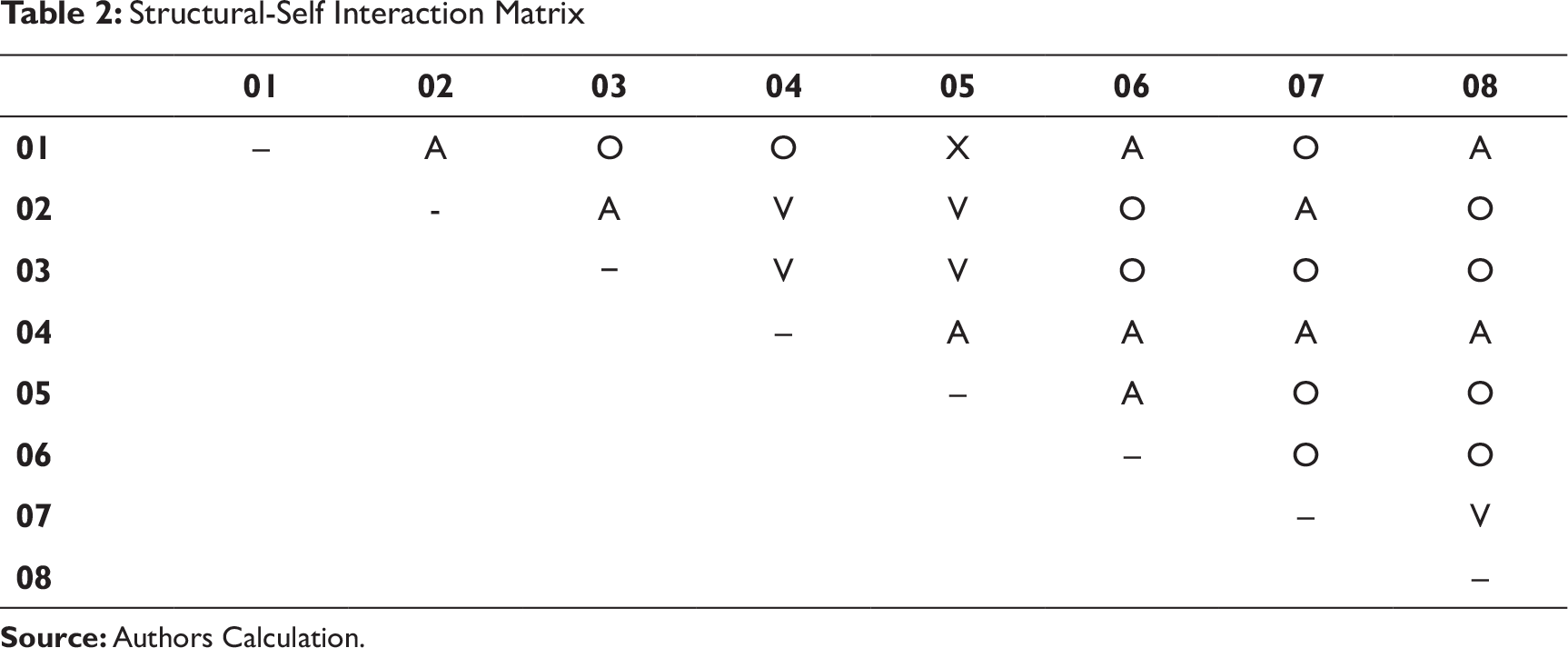
This matrix is converted into form of 0 and 1 matrix:
If the (i, j) entry in the SSIM is V, then value of (i, j) =1 and value of (j, i) = 0; If the (i, j) entry in the SSIM is A, then value of (i, j) =0 and value of (j, i) = 1; If the (i, j) entry in the SSIM is X, then value of (i, j) =1 and value of (j, i) = 1; If the (i, j) entry in the SSIM is O, then value of (i, j) =0 and value of (j, i) = 0.
After the coding has been done, Initial Reachability matrix is obtained.
Initial Reachability Matrix

Final Reachability Matrix (Post Iteration)

(* Shows Transitivity)
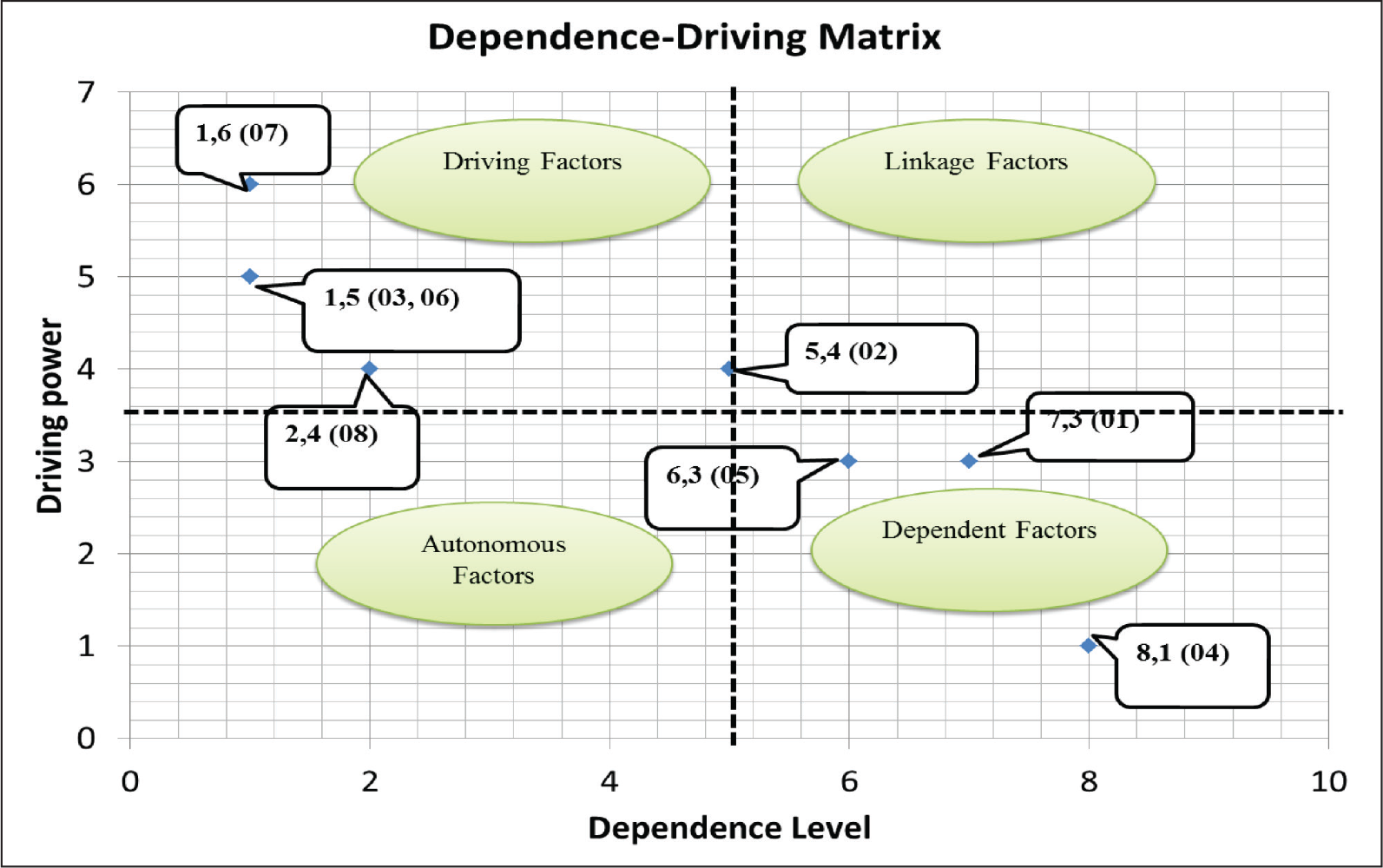
A scatter graph is drawn plotting “Dependence Level” on X-axis and “Driving Power” on Y-axis. This graph is the pictorial representation of driving power and dependence level of each factor and helps in easy identification of various categories of factors present in the system.
Determining the Partition Level
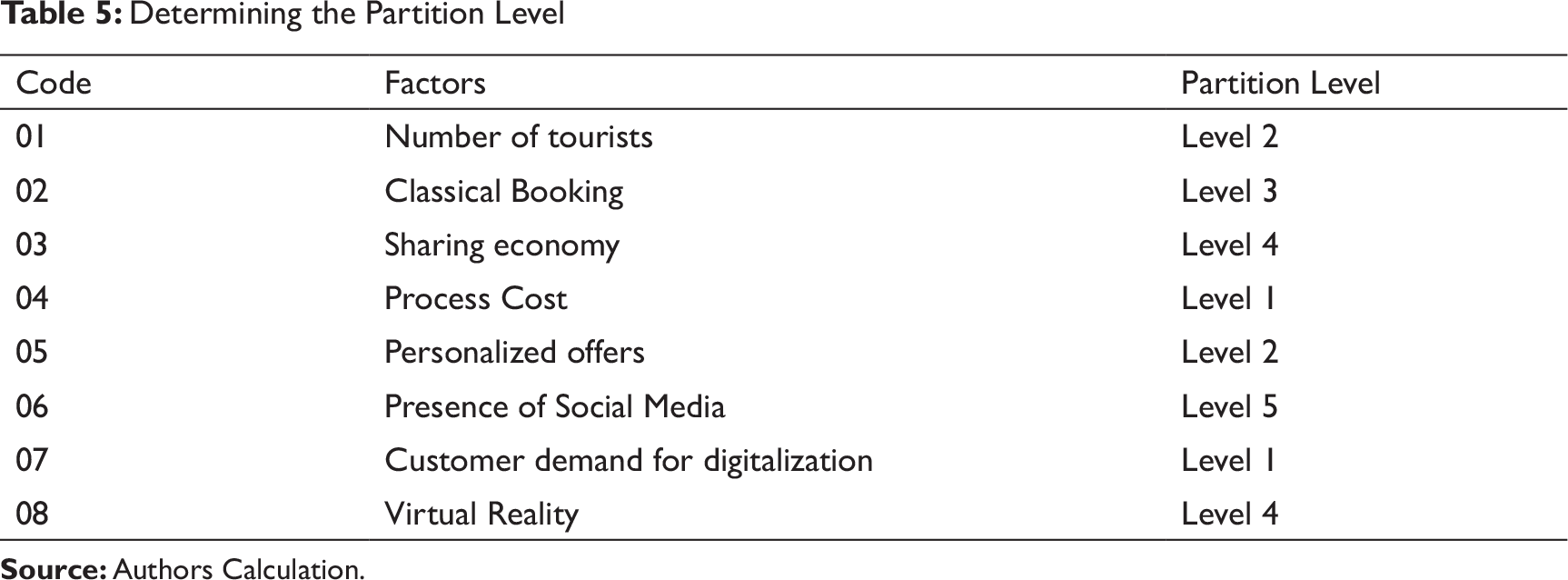
Once the partition level is determined, every factor is placed as per their level and ISM di-graph is developed depicting the linkages among the factors involved. This di-graph is pictorial representation of the relationship drawn in the final reachability matrix and demonstrates the hierarchical relationship among the factors.
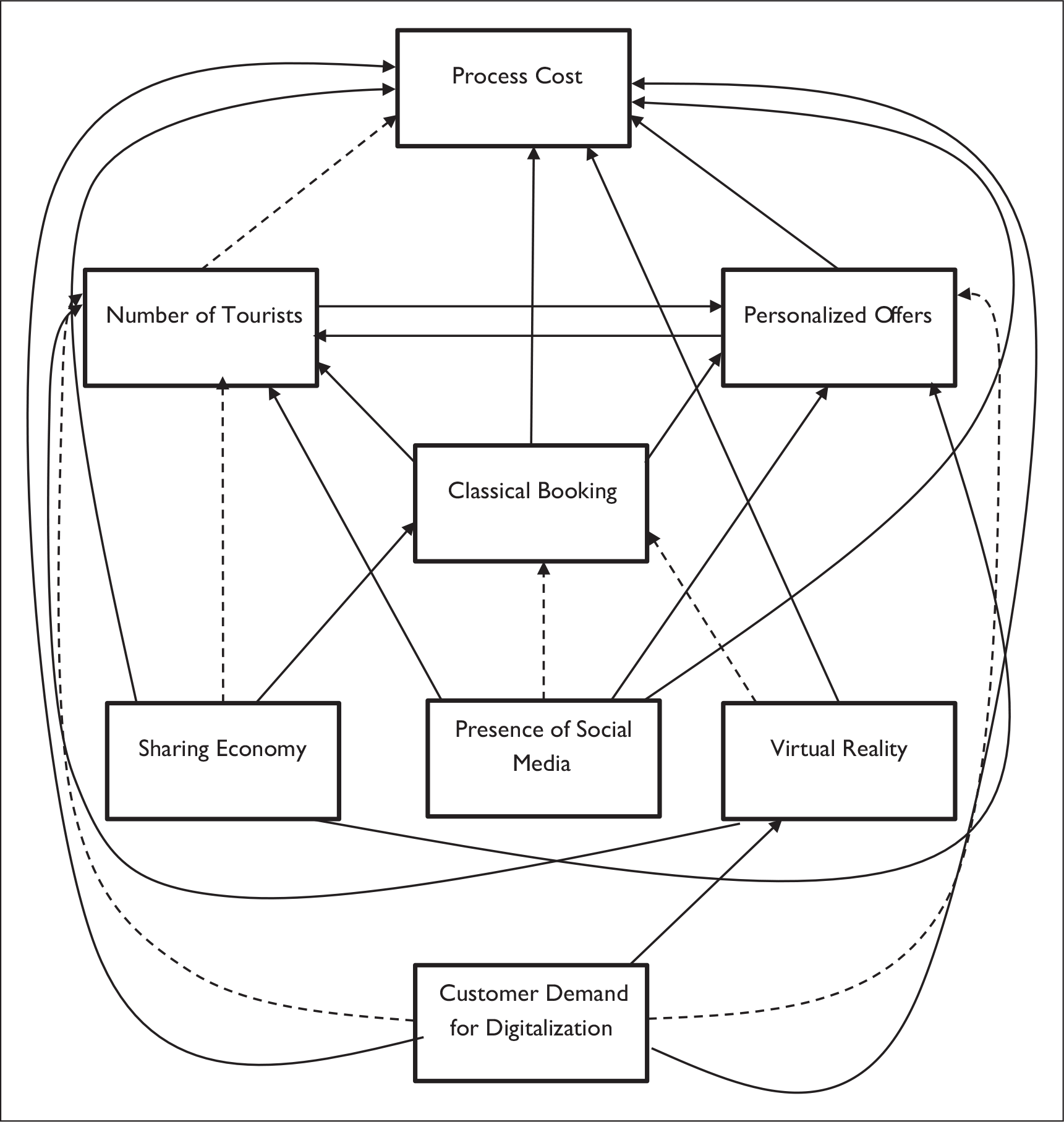

From the di-graph, the transitive links are removed to draw the hierarchical structural diagram.
Results
Using the inputs from ISM and performing the MICMAC analysis, following results are obtained with respect to nature of factors:
The results have serious implications for the policymakers. Customer demand for digitalization is the biggest driver of digitalization. To fulfil the objective of customer satisfaction, industry must opt for digitalization. Also, as digitalization seems to be affecting process cost, therefore a balanced approach for digitalization must be adopted so that overall cost in transactions in industry is reduced. Usefulness of sharing economy and its acceptability among people in the country has paved way for digitalization. More avenues must be searched where similar business models could be implemented. Social media must be effectively utilized in order to provide more personalized offers to tourist and increasing the tourist inflow. Industry could partially give up on traditional way of booking ticket and reserve some of the tickets b way of online booking only. Use of virtual reality increases the scope for digitalization in tourism industry but also affects the process cost. Therefore, a cautious approach needs to be undertaken regarding its use.
Impact of Digitalization on Different Stakeholders in Tourism Industry in India
The development of tourism industry involves crucial impact of various stakeholders. It includes tourists, who are the most important and primary stakeholder in the industry. They constitute the demand side of the industry. The hoteliers and restaurant owners act as supplier to the tourists. Travel agencies acts as middlemen who connect the demand side with the suppliers. At last are the planning agencies at the regional, state and national level that formulate and execute tourism-related policies. For sure, digitalization has impacted each and every stakeholder in the industry. On the one hand, it has revolutionized the experience of tourists, while on the other side it has changed the operation of various stakeholders in the industry. Some of the way’s digitalization has benefited the various stakeholders are listed below-
Tourists-
The key stakeholders who are most crucial to the development of tourism industry are the tourists. Every step that other stakeholders take is correlated with increasing the satisfaction of the tourists so as to increase their number. Digitalization offers potential benefits to the tourists in multiple ways. In the era of Geographical Information System, it has become much easier to access the information on weather trends of a particular place for the upcoming days. This ensures that tourists do not have to worry about the possibility of bad weather during their trip. Tourists therefore can screen destinations on the basis of temperature trends. Reservation for flights and trains as well as booking for hotels can be made easily with the help of various applications. This leads to saving of a lot of time for the tourists. As per reports, Dubbudu (2016), it is estimated that it takes only 35 seconds to book a ticket on IRCTC website. According to government reports, Dubbudu (2016), around 60 per cent of ticket booking is done online which has also increased the number of overall tickets sold. Also, the facility of online check-in ensures time saving and eliminate hassle of reaching airport early. On daily basis one receives numerous offers from websites such as Yatra.com, Make my trip or even from food delivery platforms like Swiggy and Zomato. These offers are personalized and it is because of digitalization that the companies are able to make such offers to the tourists. The benefit of sharing economy cannot be fully exploited in case of classical booking system, but digitalization has made it possible to execute the plans so as to retrieve the benefits which otherwise could not be received. With all the information being available at ease and accessible with respect to hotels, tourism attractions, guides and other stakeholders, and their ratings, it is easier for tourists to make decision. Also, now tourists can search for what is famous food of that area. Thus, exchange of information is easier as well as efficient due to digitalization. Various companies like Matoke Tours and Thomas Cook allow tourist to take a virtual tour to the destination. In case of confusion, these tours can act as the deciding factor for selection. The latest trend in virtual reality (VR) is Space Tourism. Also, VR is being adopted in hotel industry such as by Shangri-La and Marriott to provide additional value to the customers.
Planning Authorities
In India there exist agencies for development of tourism at state as well as national level. The role of agencies at state level is to determine the mission and vision of tourism activities in the state and work for their own objectives. Ministry of Tourism on the other hand works for the development of policies at national level. Digitalization has helped the planning agencies in the numerous ways. By maintaining the database of number of tourists and about the carrying capacities and other attributes of destination, planning agencies can mitigate the potential threats or lessen the damage in case of a calamity. By continuously monitoring the number of tourists, agencies can avoid breaching of carrying capacity at the destination. Let there be an assumption that a tourist is willing to visit a hill station. Normally he/she would choose a common and relatively a popular destination, but when a person is planning his trip and there is an offer of additional 10 per cent discount, one can divert his/her choice to some other place. This would fulfil our aim of protecting the exhausting destinations and simultaneously building up new destinations. By using the digitalization, new innovative products in tourism can be developed. For example, by way of virtual reality, one could develop new products like trip to ancient civilization for the history lovers.
Travel Agencies
Travel agencies act as a middleman and ensure that a regular supply of tourists is maintained. By advising the tourists in addition to organizing trip for them, the agencies play an important role in the industry. The way these agencies work has evolved over the time. These agencies use innovation through digitalization to overcome the competition in the market. Digitalization provides several benefits to the travel agencies. Digitalization has led to diversification of business by travel agencies. They now look beyond ticket bookings for flights. Business growth can be seen in the swelling balance sheets of the companies. Digitalization offers substantial benefits by providing an effective and efficient means of communication thereby increasing the competitiveness. Digitalization offers benefit in the form of reduction in costs of information exchange; speedy transfer and retrieval of information; enhancing customer involvement in decision making process and changing the way marketing mix was used in the industry. The application of digitalization provides much needed flexibility in the system with respect to utilization of resources. This leads to economic benefits in terms of lower cost and higher profitability. With around 1.17 billion Indians owning mobile phones and using the internet facility, it has become much easier for the travel agencies to market and project them with the help of digital marketing. Tourism products can be easily explained and custom-made plans can be provided without much hassles. Digitalization has surely increased the reach of travel agencies. Price war in the industry has reduced the profits of the companies. Also, there is need to gain advantage over the rivals without incurring much of the cost. Digitalization is one way by which competitive advantage could be developed. Travel agencies such as Thomas Cook have designed an altogether different user interface where they let you build your package from scratch. Coupled with virtual reality, it helps tourists in taking a well-informed decision. Strategies like these surely provide an edge over the competitors.
Hoteliers, Restaurant Owners and Transport Sector
Being the supplier side in the tourism industry, it is very important for hoteliers, restaurant and transport sector stakeholders to constantly innovate in order to beat the competitors. A lot of innovation is done with the help of digitalization. From online booking access to provide a tour to the room through virtual reality, these stakeholders have focused a lot on digitalization. Digitalization has impacted the emerging prospects in the niche tourism very well. Zomato, an app for restaurant and hotel finding provides a list for legendary outlets comprising of the most famous and long-established food ventures in the area. Similarly, other apps such as Swiggy, UberEats, Foodpanda have also have revolutionized the way we order the food (Warsi, 2018). Just a touch to the users’ fingertips, a tourist can know about the ambience, food, staff service of any restaurant. This is very helpful for small but authentic food ventures who cannot afford much on marketing. Digitalization has provided the hotel industry a means to provide rather than gain information from the tourists. E-CRM (Electronic Customer Relationship Management) works to attain twin objectives of customer satisfaction and building up of trust in the brand. For example, through visitor profiling, special guest promotional schemes could be undertaken to provide more personalized overall experience. Hoteliers and restaurant owners now order their supplies electronically. This has reduced the overall cost of ordering for them. A lot of studies have shown the positive impact of e-procurement on the performance of hospitality industry. Digitalization has increased the accessibility for these stakeholders, especially for the transport sector. If one talks about digital platforms in transport sector, Ola Cabs and Uber are fine examples of how digitalization has benefited the industry by improving the accessibility of travellers for the cab owners. These new online actors are expanding to facilitate the visitors’ experience in the destination.
Challenges in the Course of Digitalization in Tourism Industry in India
Although digitalization is a winning leap for the industry as well as stakeholders, it is yet to provide the necessary boost to the industry. Whatever lags appear are due to the fact that digitalization has not been properly exploited by the tourism industry. There are various challenges that the industry is facing in its course of digitalization. First is the issue of how much to digitalize. Digitalization is a process of change and change has always been avoided, especially in India. Even when computers arrived, people protested against it because of fear of losing the job. Thus, determining the extent of digitalization in tourism industry is one key concern for the policymakers. Lack of technical knowledge among the users is one of the most common challenges. Those who don’t have knowledge about using the technology still depend upon the classical booking method. Non availability of required infrastructure is another major issue the country. As per ANI (2019), there is a place called Jhalpi para village in Balrampur district of Chhattisgarh which received electric supply for the first time since independence. At such places, it is impossible to think of computers or internet. Genuity of claims made by stakeholder is one of the concerns impacting the process of digitalization. In order to attract visitors, stakeholders make various claims which might not be true and post fake reviews. Also, to defame the competitors, such tactics may be used. This amounts to customer being cheated. Lack of Funds has been a barrier to innovation for long. Digitalization costs and it costs a lot. Not everyone in the industry could afford to digitalize. So, this negatively affects those who are outside the system like small hotels, eateries, guides etc. Concerns such as risks of personal data theft have arisen in due course of digitalization. Recent cases of data leaks have raised questions about the seriousness of the firms towards the privacy of their customers.
Conclusion and Discussion
Through an interpretive structural model, interrelationships between factors promoting digitalization in tourism industry were identified. In the study, eight such factors were identified which impact digitalization in tourism industry. Factors such as customer demand for digitalization’, ‘concept of sharing economy’, ‘presence of social media’ and ‘use of virtual reality’ are identified as the driving factors which lead the digitalization. The major influence of digitalization is felt on the process cost and it is found to be the major dependent factor in the system.
These conclusions should outline the strategic framework for the digitalization in tourism industry. Capital requirements and knowledge of technology would make it seemingly impossible for small players in industry to survive. This would lead to concentration of stakeholders in the industry which would intensify the competition. Since customers are adopting digitalization, so other stakeholders could gain competitive advantage over the rivals by adopting it. By providing more personalized offers through digital mechanism, industry would move away from classical bookings. This would further push digitalization in the industry. Since tourist like to review their experience on social media platforms, use of digitalization by tourists and to maintain relationships with tourists, the digital engagement from the side of other stakeholders would increase. Positive customer feedbacks and reviews would further serve basis for providing lucrative and more personalized offers. Customer reviews would also ensure the authenticity of claims made by the stakeholders and would assist in acquiring new customers. The basic essence to make digitalization successful is optimum use of digitization and manpower. Thus, the extent to which the technology will be used should be carefully determined. There should not be any loss in unemployment due to same. Use of technology must assist the existing players, not harass them. In the annual budget, the government must allocate funds for the development of digital infrastructure in the tourism sector. Tourism infrastructure development bonds can be issued to raise required funds. The funds allocated then can be distributed to those small players who themselves cannot afford digitalization. Providing training to the different stakeholders about using the technology to set up and grow their business should be one key agenda in the vision and mission of the authorities. This way, stakeholders could overcome their fear of losing edge and will cooperate in transition to the digital era. The malpractices of fake claims and over rating are common in the digital era. Presence of social media has made it impossible to regulate the claims made online. But some regulations must be made for the same. By rigging their ratings, some stakeholders try to manipulate the tourist, which reduces the trust in digital system. Security and privacy risk involved in digitalization should be minimized. People are willing to share information if it helps in increasing value being provided to them. This study would serve as the basis for further studies. Personalized offers tend to increase digitalization and have positive impact on increasing customer visits, but it tends to have negative impact on the economic contributions from the industry. So, studies could be conducted on determining the leverage level for such offers. Studies should be carried out on determining the potential of digital technologies in different segments of tourism industry. The management should also make way to adopt digital technologies used in other countries. Thus, the digitalization as a vehicle for development of tourism industry presents challenges and various opportunities to offer tourists the prospect of enjoying better. These keys aspects can provide a first step to engage the theoretical ambition of sustainable development in real practice. The better understanding for the phenomenon of tourism can be considered as one of the key assets to provide a benchmark for better policy.
Footnotes
Declaration of Conflicting Interests
The author(s) declared no potential conflicts of interest with respect to the research, authorship, and/or publication of this article.
Funding
The author(s) received no financial support for the research, authorship, and/or publication of this article.