



Abstract
Objective
The main purpose of this research is to examine a research model that explores the mediation role of the organisational supportive culture in the relationship between human resources management practices (HRMP) and patient satisfaction: a case study of Rizgary teaching and referral hospital in Erbil-Iraq.
Methodology
A survey instrument was considered the main data collection tool. The survey participants were medical staff and patients who contributed to the research by replying to the questionnaire indicators. Partial least squares—structural equation modelling (PLS-SEM) was used for analysing the empirical data. The research findings revealed that human resources management practices positively related to supportive culture, results also demonstrated that supportive culture in surveyed hospitals positively and significantly impacts patient satisfaction.
Conclusions
The results displayed that human resources management practices directly affect patient satisfaction. Furthermore, supportive culture partially mediated the relationship between human resources management practices and patient satisfaction, due to human resources management practices, directly and indirectly, affecting patient satisfaction.
Contribution
The current research essentially contributes to the literature by indicating that human resources management practices within hospitals, directly and indirectly, enhance patient satisfaction through healthcare services accuracy and meet the expectations of patients, in addition, the results showed that supportive culture partially mediates the relationship between human resources management practices and patient satisfaction.
Keywords
Introduction
The human element in institutions, including hospitals, represents the source of innovation, and value creation. It has a mental and cognitive ability that is considered real capital for organisations that must be invested in and employed positively. The significance of investing in increasing the knowledge balance of human resources is to develop healthcare performance (Muhammad, 2016; Pillai et al., 2019). Human resources management practices are the main component of medical institutions (Zairi, 2002). Consequently, a hospital’s real capital and success or failure depend on how far managers, doctors, and medical staff can provide quality healthcare services to reach patients’ satisfaction (Taher & Abdulqader, 2015). In the fact that HRM practices, particularly within hospitals, were established due to a series of overlapping improvements (Hadi et al., 2010; Oduwusi, 2018) that directly or indirectly contributed to the need for dedicated medical staff (Rajendra, 2017). Whose aim is to encourage healthcare institutions’ staff to provide the best mechanisms for managing human capacities (Sultan, 2013). Therefore, the healthcare institutions’ efficiency depends on their resources’ reasonable speculation. Human resources, control the rest of the other resources and how they are used; hence the need for the independent and effective management of human resources in hospitals is critical (Rajendra, 2017; Sundari & Rao, 2017).
In the same regard, the hospital’s supportive culture is projected to help the hospital categorise and preserve an optimal arrangement or mediation with the most essentials, such as medical services (Nightingale, 2018). Accordingly, supportive organisational culture has positive factors that develop sustainability based on efficiency. The development in hospital productivity leads to staff pledges as norms, values, teamwork, effective communication, provision and objectives help improve a health institution (Awad & Saad, 2013). Public and private hospitals play a significant role in healthcare service development strategies as the primary source of a wide range of healthcare services, requiring them to continue to meet the prospects and desires of beneficiaries, thus are in urgent need (Kabene et al., 2006; Mousi, 2019). Likewise, it is essential to develop HRM practices to absorb this substantial desire and improve healthcare service performance to reach health performance excellence (Sundari & Rao, 2017). Also, interest in the patients’ satisfaction is equivalent to or outweighed by the quality of medical treatments in many countries. However, particularly in developed ones, healthcare service quality has received more attention than other services due to human beings’ health and life, which is the highest value on the planet (Surji, 2015). Accordingly, interest in patients’ satisfaction has been crystallised by those interested in this field to determine healthcare service dimensions (Sultan, 2013).
Given the limited studies on the topic which combine HRM practices, supportive culture, and patients’ satisfaction, we found it appropriate to study the possibility of establishing the dimensions of the patients’ satisfaction based on HRM practices and the potential of the supportive culture in Rizgary teaching and referral hospital in Erbil–Iraq. In light of this, the study question has identified how supportive culture plays a mediating role in the relationship between HRM practices and patient satisfaction. To remainder, this research is organised into seven sections, the first section is covered the research introduction. The second section is addressed the literature related to human resources management practices, organisational supportive culture and patient satisfaction. The third section deals with the conceptual research model and hypothesis development. The fourth section covered the research methodology, by focusing on the research participators, constructs measurement, research subjects, and data analysis techniques. The fifth section contained the results of the statistical analysis. The sixth section is a discussion of the findings. Finally, the seventh section dealt with conclusions, recommendations, contributions, limitations and suggestions for future research.
Literature Review
Human Resources Management Practices
Human resources management practices (HRMP) in healthcare play essential roles in enabling effective healthcare service delivery through staff performance monitoring, evaluation and recruitment of competent employees (Oduwusi, 2018). Regarding the significance of HRM practices in improving healthcare services, research conducted by Kabene et al. (2006) addressed the healthcare system from a global perspective. Thus, they explored the published literature and collected data through secondary sources. The researchers mentioned that several factors emerge that affect HRM practices and healthcare practices. Results showed that the appropriate HRM practices are critical in providing high healthcare quality. Therefore, a refocus on HRM practices in healthcare and more research are needed to develop new policies. Effective HRM strategies are much needed to achieve better results and access to healthcare. In healthcare services, HRM is defined by World Health Organisation (WHO, 2000) as the different kinds of clinical and non-clinical staff responsible for public and individual health intervention. In a broader term, HRMP is a dynamic management task in healthcare services as it plays an active and vital role in the success of the restructuring of the health sector (Zairi, 2002). Dessler (2013) defined HRM as the set of practices and policies required to conduct various human-related activities that need management to exercise its functions to the fullest. Sundari and Rao (2017), examined the significance of HRM in the healthcare sector of India. According to Sundari and Rao, human resources are vital components of the service industry in general, particularly in the healthcare sector. Since there is evidence of increased income levels of individuals in the community and state-of-the-art technology to provide high-quality healthcare services that have brought tremendous awareness among clients to choose better healthcare services, competition has increased in recent years between healthcare institutions to provide quality treatment to their clients. Oduwusi (2018), argued that HRM is responsible for attracting the right individuals, selecting candidates, training employees and performance evaluation. In addition to managing leadership, organisational culture and approving compliance with employment and labour laws. HR recruitment is considered the first executive practice of the HRMP and is concerned with determining the organisation’s human resources needs in terms of quantity and quality to ensure its objectives. The scope of this position is determined by estimating the organisation’s needs for human resources. Determine the sources of obtaining the necessary human resources. Select the workforce and conduct the necessary tests to select the competencies that suit the organisation’s needs through psychological tests and personal interviews (Wilton, 2013). Mousi (2019) examined the impact of medical staff training as a significant HRM component in improving the quality of healthcare services in king Abdallah hospital.
The quality of training positively reflected the quality of the healthcare services provided by the hospital. HR development is considered more effective than the development of material resources that cannot bear fruit without human capital interaction. Hence, every work needs human development of a unique nature commensurate with the type of activity, the size of the activity, the age stage and the level at which the individual performs the work (Sharbati, 2017). Performance evaluation has received a lot of attention among researchers and those concerned with the development of service organisations, especially healthcare institutions. Therefore, governments and organisations alike strive to improve their performance as much as possible, because it is a positive effect on all life activities (Sundari & Rao, 2017). The performance evaluation is important in the process of making the right decisions, especially concerning administrative aspects, such as promotion decisions, transfer, contracting, termination of service, dismissal and the disbursement of rewards that contribute to increased performance levels through the flow of sound information promptly (Wilton, 2013).
Supportive Culture
Theories of supportive organisational culture, particularly within healthcare institutions, make the concept of organisational culture complex. Organisational supportive culture is a compound concept and spectacle; therefore, management knowledge should consider perceptions from various social sciences, such as anthropology, psychology, sociology and philosophy (Dubkevics & Barbars, 2010). In the same context, Hofstede and Hofstede (2005) believed that the association among cultures, institutions, and individuality is just as everyday as the relationship between (a garden, a plant’s bouquet, and a flower). Awad and Saad (2013), in empirical research, examined the supportive culture in healthcare helps to understand the causal relationships that lead to effective organisational processes. The researcher, therefore, mentioned that culture helps the organisation to improve performance. The strategic vision and values that drive organisational culture must be practical and visible to patients and staff, particularly in hospitals. It must be more than just words. Healthcare institutions and staff should be held accountable for these values and be held accountable to staff and patients for their realisation (Nightingale, 2018; Schein & Schein, 2017). In the context of an organisational supportive culture in healthcare, a research paper conducted by Nightingale (2018), examined the development of supportive culture in the healthcare environment; the researcher stated that achieving an organisational culture requires a complete system approach, where the staff is encouraged to work jointly and collaboratively to create, implement and realise the organisation’s aspirations. This, in turn, creates the foundations on which we can build a positive organisational culture that transcends all aspects of the organisation, from board executives to front-line staff.
As indicated by Adewale and Anthonia (2013), the organisational supportive culture is closely related to the employees’ values and beliefs in an organisation or institution. Organisational supportive culture also links employees with the organisation’s principles, standards, stories, opinions and values, and integrates these expectations into them as actions and an interactive set of values. While there is no consensus on how to define the organisational culture, a common definition of SC used by Cheung et al. (2011) is a set of shared, recognised, confined assumptions apprehended by the group that determines how they perceive, think, and interact with their different environments. Therefore, the core of culture is the essence of underlying assumptions. As mentioned by Appelbaum et al. (2002), social norms and values are an appearance of these expectations, assumptions, ideals, and principles, inspiring activities that embody supportive cultural expression.
Organisational Performance
Patient satisfaction plays a prominent role in interceding the quality of health services provided, Baker (1997), in research, analysed the realistic model of patient satisfaction in general practice. The researcher mentioned that the main problem in determining patient satisfaction is that there is no sufficient theory to clarify and interpret the results. Due to the lack of adequate theory, a simple survey model was mainly used when using patient satisfaction survey questionnaires for use in general practice. Mclean (2006) surveyed a large sample of 250 hospitals that implemented patient satisfaction initiatives related to the assistance they provide to the hospital in reducing medical error, reducing cost and satisfying patients. Mclean also noted that successful implementation of total quality management (TQM) could increase patient satisfaction and improve staff quality of awareness and satisfaction. In their research, Hudak et al. (2004) mentioned that patient satisfaction theories with treatment consequences had not been developed and evaluated in healthcare backgrounds. Researchers studied 122 patients experiencing elective hand surgery. However, the research indicates that satisfaction with treatment results can be facilitated by evolving strategies to advance the self-unity, gaining and treating a patient’s most important reason to experience treatment. In research, Simon et al. (2007) confirmed that some key components should be considered when measuring patient satisfaction. Such as accurate knowledge of patients’ rights and duties, the patient’s family’s participation so that he/she becomes aware of the level of medical services, as well as continuous communication with the patient after discharge from the hospital, the degree of understanding, assimilation of patient information and patient participation in processes of continuous improvement in the reality of healthcare services.
Gill and White (2009) critically reviewed patient satisfaction. Thus, researchers mentioned that patient satisfaction’s continual use to assess a client’s awareness of health services’ quality is seriously flawed. The significant way of explaining this dilemma is perhaps for the healthcare sector to focus on the quality of perceived health services by looking at specific concepts and models that can be started in the services marketing literature. This literature presents more advanced patient satisfaction theories that are better distinguished and tested than existing healthcare satisfaction models. Desai (2011), researched patient satisfaction and service quality dimensions. As the researcher mentioned, it aimed to identify the levels of application of the quality dimensions of services provided in Indian hospitals as results found a low evaluation of patients to apply the dimensions of quality. Batbaatar et al. (2015), conducted research, to conceptualise patient satisfaction. The results presented that most patient satisfaction theories are based on marketing theories and are defined as the service’s accuracy that meets patients’ expectations. However, the review showed that the relationship between expectation and satisfaction is unclear and that the expectation of the concept itself is also not theorised as well.
Conceptual Research Model and Hypotheses Development
The conceptual research model has been designed, showing the mediating role of the organisational supportive culture in the relationship between HRM practices and patient satisfaction in Rizgary Teaching Referral Hospital in Erbil–Iraq. However, the research established this conceptual model based on theories related to HRM practices, supportive culture and patient satisfaction, as revealed in Figure 1, below. Effectively implementing HRM practices, and supportive culture in health institutions. That leads to patients’ satisfaction with the quality of healthcare service received in a public hospital. Based on these, the study hypothesised the following.
Research Conceptual Model.
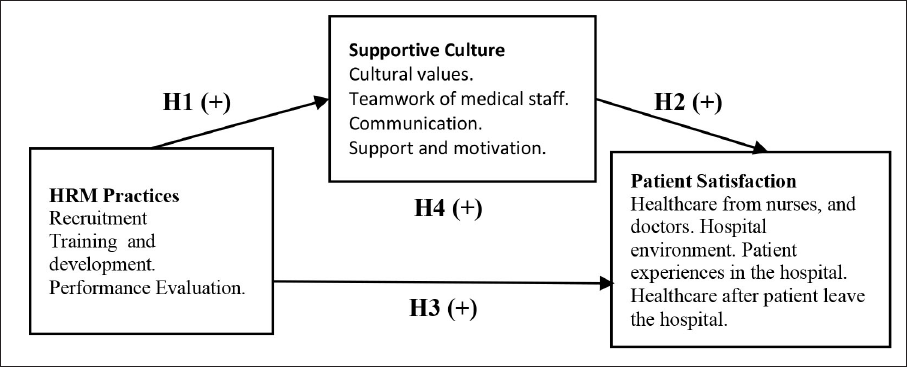
HRM Practices and Supportive Culture
HRM practices in healthcare are the process of paying attention to everything related to the human resources that any hospital needs to achieve its goals, and this includes the acquisition of these resources to use, maintain and direct them to achieve the goals of the hospital (Kabene et al., 2006). HRM practices in hospitals are related to managing the health staff professionally and effectively to attain healthcare objectives, whether the objectives of the hospital, medical staff and community, in this regard organisational supportive culture, is a significant factor that improves HRM practices (Dessler, 2013). Dubkevics and Barbars (2010), investigated the role of the organisational supportive culture in HRM. The results showed a significant link between organisational culture and HRM and also recognised a significant role of culture in an organisation’s effectiveness. Research conducted in Nigeria by Adewale and Anthonia (2013) examined the influence of supportive culture on HRM practices; as researchers mentioned, the statistical examination was based on (237) perceptions. The results showed that organisational culture has a significant relationship with HRM practices, and it is components, namely, recruitment, training staff, performance management and employee performance. Therefore, making and impacting an active organisational culture is one of the managers, organisations’ leaders, most significant works, and staff training programs and benefits the opportunities (Daft, 2010). Based on the above theory, the following hypothesis is proposed:
Supportive Culture and Patient Satisfaction
In healthcare supportive culture refers to shared values among healthcare staff, beliefs, and philosophies, besides other components such as teamwork among health staff, communication, support and motivating staff. All are created between medical staff that suits their working and communication relationships, encouraging the need to collaborate and manage to enhance the satisfaction of patients (Adewale & Anthonia, 2013). Throughout the healthcare institutions and health sector, supportive culture and work environments within hospitals have become essential to all matters relating to patient safety. In terms of values and beliefs shared by healthcare employees in the institution, organisational culture is also a term that has become equal to patient satisfaction, involvement and morbidity (Francis, 2013; Simpson et al., 2019). Pilav and Jatic (2017), examined the influence of organisational supportive culture on patient satisfaction. Researchers confirmed differences in the type of organisational culture between healthcare centres. Statistical significance (t-test) was also recorded in patients’ overall satisfaction in the healthcare centre with the prevailing culture. Simpson et al. (2019), in this research, measured organisational supportive culture in healthcare, particularly in the NHS in England. The results revealed that most healthcare institutions, which responded to surveys, were actively measuring culture. Remarkably, a variety of tools were used, with different levels of patient satisfaction and success. This provided the necessary support for the formulation of the subsequent hypothesis:
HRMP and Patient Satisfaction
HRM practices in hospitals that link to doctors, nurses, medical staff and HR managers within the hospital management, are intangible human capital. Therefore, hospitals pursue utilising their human element to the maximum level possible by developing them, which eventually reflects better healthcare service performance that improves patient satisfaction (Hajj, 2012; Muhammad, 2016; Surji, 2015). The issue of patients’ satisfaction with the medical services provided in Iraqi hospitals is an essential element in monitoring and evaluating those services. The patients’ satisfaction is related to clinical results, social relations between the patient, the nursing and medical staff, the appropriate timing of HR for conducting medical interventions, and providing the appropriate diagnosis at the right time (Surji, 2015).
In addition, effective HRM practices are related to patients’ satisfaction as measuring the degree of patients’ satisfaction with the provided medical services has increasingly become one of the good ways to improve the health status of the community and prevent wrong and unjustified spending of resources, especially in Iraq (Hussein, 2014). Patients are the preferred source of information about hospital system functioning, communication, education and pain management, and patient satisfaction has become an important indicator for measuring the quality of care provided to patients while they are in the hospital (Muhammed, 2017). Based on the above theory, the following hypothesis is proposed:
Mediating Role of Supportive Culture
Referring to the theory of ability, motivation, and opportunity (AMO) supportive culture in hospitals related to the pattern of general behaviour and the rules of conduct that HRMP within the hospital are convinced and adopt in their dealings (Hussein, 2014), as supportive culture includes rituals and practices that have been consolidated with time to form ways of thinking, achieving medical effort, making decisions, thus supportive culture mediating the relationship between hospital’s HRM and patient satisfaction (Muhammad, 2016). The supportive culture within healthcare institutions and particularly the practices of HRM affects the success of the healthcare institution, which is mainly determined by the health performance efficiency, and the qualified and integrated HR (Simpson et al., 2019). Healthcare services are greatly affected by the prevailing organisational supportive culture and thinking style of medical staff, through their enjoyment of a set of values, beliefs and ideas, such as participation and creativity and risk-taking, group spirit and team spirit, innovation, listening, support, the degree to which differences are accepted and discussed openly, and independence in carrying out tasks (Dubkevics & Barbars, 2010). All of these behaviours have an impact on the behaviour of medical staff, which may support the creation of a collective ability to act to raise the performance of the hospital enabling it to perform its functions and functional requirements to reach patient satisfaction (Hadi & Dawood, 2012). Based on the above theory the following hypothesis is proposed:
Research Methodology
The current research empirically investigated the mediation role of a supportive culture in the relationship between HRMP and patient satisfaction, based on empirical data attained from Rizgary Teaching and Referral Hospital in Erbil and hospital patients to measure the quality of healthcare services which is a significant factor for reaching patient satisfaction. Based on that the quantitative research method (QRM) was applied, and the questionnaire forms were the main data collection instrument. The QRM is normally employed in research papers when investigating numerical or empirical data. Consequently, QRM involves empirical data and analysis methods that explain, realise and establish the relational impact among model constructs (Saunders et al., 2012).
Participants
The participants in this research are two groups, the first included doctors, medical staff and HR managers within Rizgary Teaching and Referral Hospital in Erbil, Iraq. The purpose of selecting Rizgary Hospital in Erbil, and patients is that they are possible to well recall the hospital’s HRM practices and hospital-supportive culture that led to patients’ satisfaction. Hospital patients are also asked to measure the quality of healthcare services which is a significant factor in reaching patient satisfaction. The medical departments in the hospital are a good size for the research samples. Since the number of specialists reaches 200, various specialists have. In addition, about 300 nurses and 45 pharmacists work at the hospital. The teaching and referral field is about 350–400 medical staff, most of whom are bored students. The random sample process was convenience-based; evaluating the medical staff’s perceptions and patients’ experiences by coordinating various methods to narrow down the research population to sort suitable samples. The data-collecting process was taking place by sending request letters to participate in the survey to doctors, medical staff and HR managers within Rizgary Teaching and Referral Hospital. While patients’ experiences were obtained by separate surveys and personal visits to the hospital. In the last step of data obtaining, 626 completed surveys were submitted, 311 from Rizgary Teaching and Referral Hospital, and 315 from the patients who participated in the survey.
Constructs Measurement
In the measurement of the constructs, we have followed two main theories namely, social exchange theory (SET) and AMO theory according to these theories, HRM practices impact staff’s skills by improving their abilities and encouraging them to effort better and pursue opportunities that add to the hospital’s health performance (Appelbaum et al., 2002). In addition, the model constructs were adapted from relevant sources and the literature related to the current research topics. The HRMP construct was measured through three main practices such as recruitment, training and development and performance evaluation. Recruitment practice is measured through eight indicators; recruitment is the process by which a hospital can fill vacancies. In light of human resources planning, efficient recruitment processes, recruitment of qualified staff, selection of suitable candidates and legal employment measures (Hussein, 2014; Wilton, 2013). The training and development have nine indicators to measure the progress of medical employees, as one of the pre-planned human resources management functions. This aims to give individuals skills and work to modify direction, experience, knowledge, or behaviour to perform their work professionally. Performance evaluation is also measured with six indicators to assess strengths and weaknesses, and provides an information base for developing policies related to human resource needs, which were all adapted from Hussein (2014).
Supportive culture in healthcare measured cultural values, medical staff teamwork, communication among staff and support, and motivation by 15 indicators were adapted from Awad and Saad (2013), aimed at measuring common values and beliefs, collective action, communication, support and motivation. All of these were created between medical personnel that suits their working and communications relations and encourage the need for cooperation and managing healthcare services. Furthermore, the patients’ satisfaction intends to measure healthcare from nurses, doctors, the hospital environment, the experiences of patients in the hospital and care after the patients leave the hospital, which was adapted from Surji (2015) who measured patients’ awareness and experience in improving quality healthcare. However, the survey used a 7-point measuring scale, as 7 = completely agree, 6 = agree mostly, 5 = somewhat agree, 4 = neither agree nor disagree, 3 = somewhat disagree, 2 = disagree mostly and 1 = disagree completely.
Research Subjects
As mentioned earlier, the first group of participants is doctors, medical staff and HR managers within Rizgary Teaching and Referral Hospital in Erbil city and the second is hospital patients. Table 1 demonstrated that the patient’s participants who freely take part in the survey were 51.1% (n = 161) male, and female participants reached 48.9% (n = 154). Regarding their age groups, the results revealed that 33% (n = 104) were aged between 31 and 40 years, followed by those who were aged fall in 51and 60 years, by 22.2% (n = 70) of the overall patient participants. In addition, 20.3% (n = 64) belonged to the age group 41–50 years, however, 17.8% (n = 56) were aged 61 and elder. Furthermore, 5.7% (n = 18) were aged between 20 and 30, and at last 1% (n = 3) patients were aged less than 20 years.
Patients Profiles.
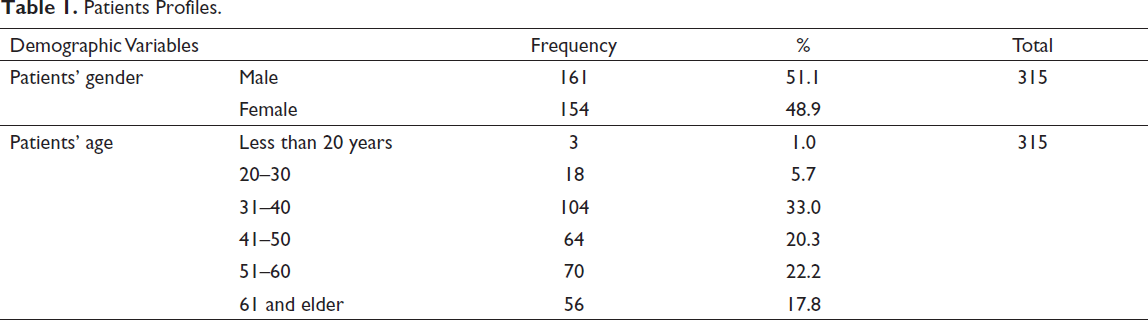
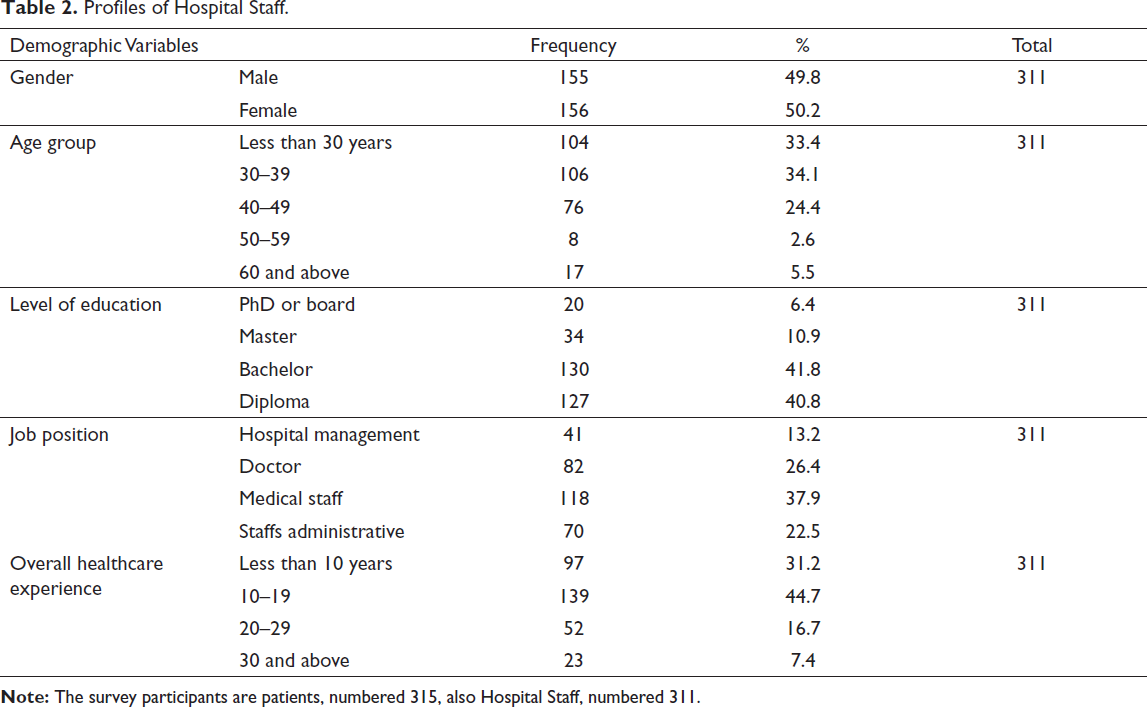
Table 2 presented that the hospital staff who contributed to the survey were 50.2% (n = 156) female, and male participants were 49.8% (n = 155). Results demonstrated that 34.1% (n = 106) were aged 31–40 years, and the hospital staff who aged less than 30 years were 33.4% (n = 104). Additionally, 24.4% (n = 76) of their age fall in the group 40–49 years, however, 5.5% (n = 17) were aged 60 and above. Moreover, 2.6% (n = 8) were aged between 50 and 59 years. The hospital staff who obtained bachelor’s degrees were a high rate of participants by 41.8% (n = 130), and most of them were hospital’s medical staff. Followed by those who hold diploma degrees at 40.8% (n = 127), and master’s degrees at 10.9% (n = 34); in addition, PhD or Board came in last place at 6.4% (n = 20), results showed that doctors were not participating significantly in the survey, as they were dealing with COVID-19 increased cases.
Regarding the job positions of the hospital staff, of those who participated in the survey 37.9%, (n = 118) were medical staff including nurses. Doctors reached 26.4% (n = 82). In addition, 22.5% (n = 70) indicated that their position is hospital’s staff administrative, while those who hold a hospital management position participated 13.2% (n = 41). Results related to the overall healthcare experience displayed that 44.7% (n = 139) experienced in healthcare are between 10 and 19 years, and 31.2% (n = 97) experienced less than 10 years. In addition, 16.7% (n = 52) experienced were between 20 and 29 years. Furthermore, 7.4% (n = 23) of the hospital staff experienced 30 years and more see (Table 2).
Profiles of Hospital Staff.
Data Analysis Techniques
For analysing empirical data and testing hypotheses, the partial least squares are based on structural equation modelling (PLS-SEM) is used. Partial least squares (PLS) is the assessment process conducted by applying the method of least squares, where the model parameters are divided into subsets, which is done using simple and multiple regression (Ringle et al., 2012). As indicated by Sarstedt et al. (2017), PLS has three considerable evaluations before testing the research hypotheses, namely, convergent reliability and validity and analytical test of the structural model. Structural equation modelling (SEM) includes path analysis and latent growth modelling. Hence, SEM models are often used to evaluate latent variables. They often refer to a measurement model that uses one or more of the observed variables, and a structural model that assumes relationships between latent variables. The relationships between structural equation model constructs can be estimated using independent regression equations or through more correlated approaches (Beins & McCarthy, 2018).
Cronbach’s alpha coefficient is used to determine the constructs’ reliability, this test assesses the reliability of the survey replies, and the reliability of the measuring instrument is intended to give the same results if the survey questionnaire is re-applied to the same sample under the same conditions. Cronbach’s alpha coefficient or loaded values ranges from 0.7 and greater values showing good reliability of the data obtained instrument (Hair et al., 2014). In addition, the composite reliability (CR) loaded values must be higher than 0.80 (Sarstedt et al., 2017). The average variance extracted (AVE) index is also used, which calculating the mean of the extracted variance requires is placed in the structural equation model since it needs to load the indices of the latent variable for which it will be computed, values of AVE must be higher than 0.5 (Hair et al., 2012). Discriminant validity is also established; this test is the extent to which a measure is related to a particular outcome. Discriminant validity is often divided into correlative validity and predictive validity. To establish discriminant validity the root of the AVE must be related to constructs (Beins & McCarthy, 2018).
Results
Establishing Validity and Reliability
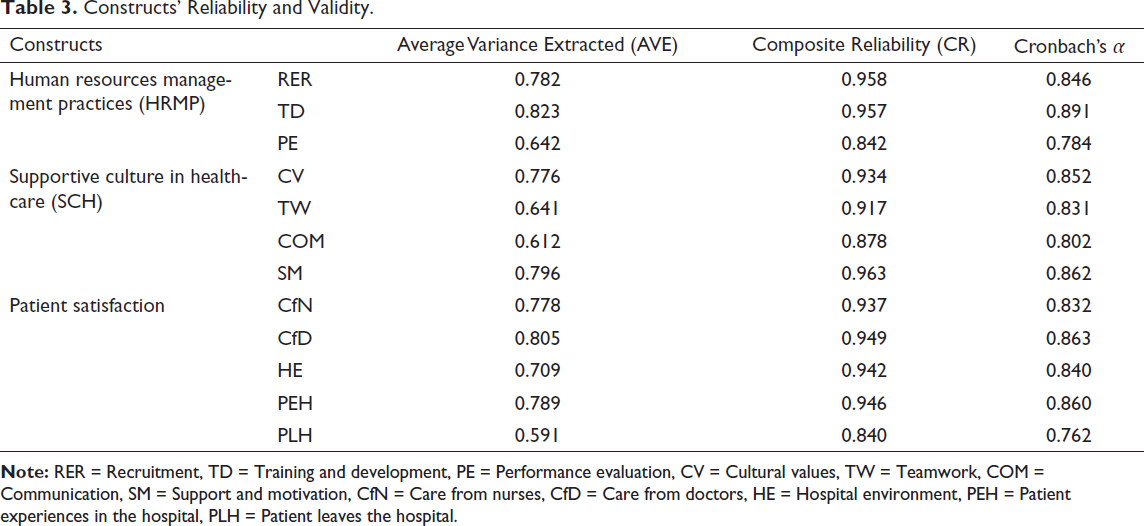
To establish covariance reliability and validity, three significant evaluations or indexes of PLS are used. These indexes are Cronbach’s α, Composite rеliability (CR) and Avеragе variance extraсtеd (AVЕ), Table 3 below shows the results. As displayed in Table 3, the results showed that the loaded values on AVE for all constructs of human resources management practices such as recruitment, training and development, and performance evaluation are higher than (0.5). Regarding the constructs of supportive culture namely, cultural values related to healthcare, teamwork among medical staff, communication, support and motivation, results also showed that the AVE-loaded values are all greater than (0.5). Furthermore, patient satisfaction constructs; healthcare from nurses, doctors’ care, hospital environment, patient experiences in the hospital, and patient leaving the hospital results demonstrated that the AVE loaded values are all greater than (0.5). The composite reliability (CR) results for all model constructs, human resources management practices, supportive culture, and patient satisfaction and their components are all high since the loaded values of CR are all greater than (0.8). The values loaded on Cronbach’s α for all constructs are greater than (0.7). These outcomes for (AVE, CR, and α) established the covariance or research model’s validity and reliability.
Constructs’ Reliability and Validity.
The measurement model was also evaluated by checking indicator loading values. Table 4 demonstrated the results of the values loaded on the human resources management practices, which are all equal to or higher than (0.7) hence, the loaded values for HRMP are accepted, which means that the indicators of HRMP significantly measure this construct. In addition, the outcomes of ILV demonstrated that the loaded values on supportive culture ranged from 0.703 to 0.863, all equal to or greater than (0.70). Hence, the loadings for supportive culture through cultural values, teamwork, communication, support and motivation are all accepted. Moreover, results indicated that the loaded values of patient satisfaction are all elevated and were reached between 0.701 and 0.935 representing that the constructs’ validity, also showed a high and positive relationship between all research constructs and their indicators.
Measurement Model.
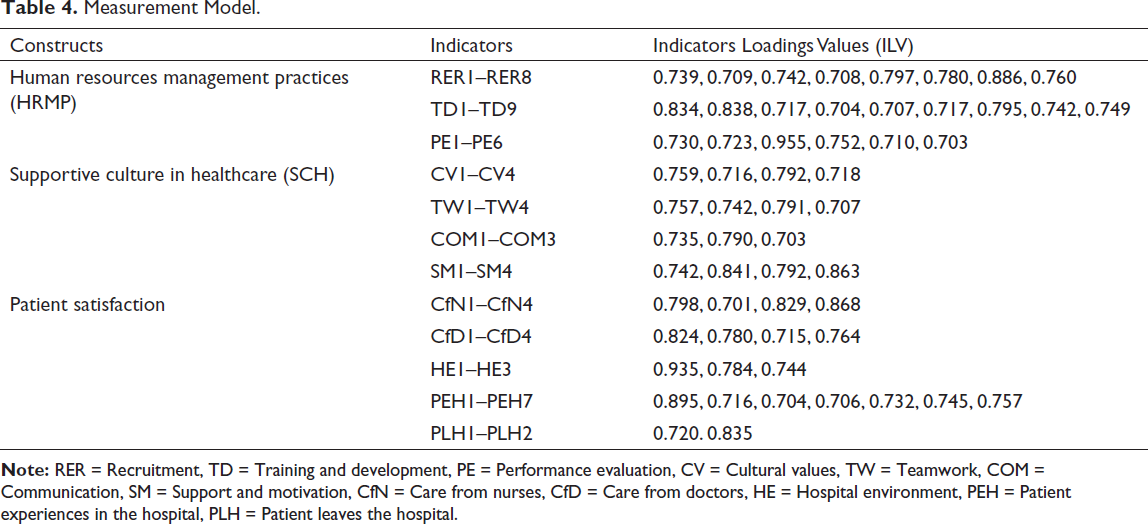
Table 5 showed the results of descriptive statistics and discriminant validity, which were tested to examine the survey respondents, descriptive statistics are applied through testing mean and Std. deviation. This analysis contributes to reaching the results of empirical data it also supports describing the nature of the data collected. The results of mean values for human resources management practices, supportive culture and patient satisfaction are high (5.4435, 5.6607 and 3.9401), while the Std. deviation scores are low (0.4837, 0.5198 and 0.8023) respectively. These results indicate that HRM practices and supportive culture are significant factors in healthcare, and the importance of having the human resources department in healthcare to provide effective and efficient medical services until the patient feels satisfied. Effective management has a strong impact on the quality of healthcare and improves the performance of the medical staff. In addition, discriminant validity was established to show the relationships between the research constructs before the hypotheses are tested. The discriminant validity was assessed over the square root values of AVE. The square root values of AVE should be displayed in the correlation matrix. Table 5 demonstrated the root square value of AVE for HRMP is (0.857), SCH is (0.831) and PS reached (0.798) were all higher than connections with any other research constructs. Based on these results, there is a relationship between human resources management practices, supportive culture in healthcare and patient satisfaction.
Measurement Model.

Structural Model and Testing Hypotheses
According to the PLS-SEM, some analysis criteria were used to evaluate the model hypotheses, namely, R Square values, standardised path coefficient, t-value and p-value. However, before the structural model and testing the model hypotheses, model fit adjustment was established with the value of Standardised root-mean-square residual (SRMR), Chi-square, variance inflation factor and normed fit index, which was recommended by Henseler and Sarstedt (2013). The result of SRMR was 0.0734, less than (0.08), which revealed a good fit. The value of the Chi-square was 1.881, this value is less than (3.0), showing a good fit for the model. In addition, the values of survey indicators ranged from 1.000 to 2.528, all less than (5). Further, the normed fit index result was 1.000, indicating a good fit (Table 6).
Path Analysis Coefficient, t-Value, and p-Value for the SEM.

Regarding the impact of model prediction provided on patient satisfaction, the R2 value reveals that the model describes 39.8% of the variance in patient satisfaction. Baѕеd оn thе rеѕultѕ, thе R2 valuе also showed a ѕignifiсant account оf thе empirical data. Results presented a positive relationship between HRMP and supportive culture with a path coefficient of impact up to (0.540), and a p-value (0.000) less than 0.05, which is significant. HRM practices in institutions, including hospitals, play an important role in raising the efficiency of healthcare services, thus improving and strengthening supportive culture and human relations.
In addition, results demonstrated that supportive culture is positively and significantly correlated to patient satisfaction with a strong path coefficient of impact up to (0.546), and a p-value (0.000) which is less than 0.05. The culture of the healthcare institutions also expresses the pattern of the general behaviour and the rules of conduct that medical staff is convinced of the hospital and adopt in their dealings with the patient to satisfy about health services. The results in the Table 7 displayed that HRMP directly correlated to patient satisfaction, where the path coefficient of impact is up to (0.496), and the p-value is (0.000) which is less than 0.05.
R2 Values (Model Summary).

As shown in Table 9, the practices of HRM are the independent variable, supportive culture is the mediation mechanism, and patient satisfaction is the outcome. As shown in Table 8 results presented the direct relationship between HRMP and patient satisfaction; in addition, supportive culture is related to patient satisfaction. However, Table 9 demonstrated the indirect effect of the mediation mechanism existence, which is supportive culture, and the path coefficient of impact up to (0.294), p-value (0.000). which means that supportive culture partially mediates the relationship between HRMP and patient satisfaction.
Path Analysis Coefficient, t-Value, and p-Value for the SEM.

Inferences for Mediation.

Discussions and Conclusions
This research was purposed to investigate the mediation role of the supportive culture in the relationship between HRMP and patient satisfaction based on perceptions obtained from Rizgary hospital staff and it is patients in Erbil–Iraq. After covariance reliability and validity were established, the research hypotheses were tested, by using the PLS-SEM analysis criteria; R Square values, standardised path coefficient, t-value, and p-value. As the result, all model hypotheses were supported. However, before the structural model was tested, the model fit adjustment was established with the value of Standardised root-mean-square residual (SRMR), chi-square, variance inflation factor and normed fit index. The findings indicated that HRM practices and supportive culture are significant factors in Rizgary hospital in Erbil–Iraq. Thus, the importance of having the human resources department in healthcare is to provide effective and efficient medical services until the patient feels satisfied. That effective HRMP and hospital-supportive culture have a strong impact on the quality of healthcare services and improving the performance of the medical staff. The results in line with Dubkevics and Barbars (2010), indicated the causal relationship between organisational supportive culture in HRMP. Culture refers to the values, beliefs, practices and procedures that improve and stabilise with time, and develops a special feature of the health institution to make a common understanding among its human resources. The results are also in line with Pilav and Jatic (2017), who examined the influence of organisational supportive culture on patient satisfaction and showed a significant relationship between supportive culture and patient satisfaction. In healthcare institutions supportive culture has become important to all matters concerning patient safety (Simpson et al., 2019). Regarding the impact of HRM practices on patient satisfaction, the results were also in line with Hajj (2012), Surji (2015), and Muhammad (2016) showed that hospitals pursue to use of their human component to the fullest extent possible through their development, ultimately reflecting the better performance of healthcare services that improve patient satisfaction. Results showed that the practices of human resources management positively related to supportive culture, indicating that the effective practices of HRM in surveyed hospitals played a vital role in increasing the efficiency of healthcare services. HRM within hospitals has undergone great and varied changes and developments, and this is according to the effects of the changing environment in healthcare institutions. HRM also become universal in application, as it has become widespread in hospitals of different types, sizes, objectives, activities and environments. In the same regard, results revealed that supportive culture in surveyed hospitals positively and significantly impacted patient satisfaction. The results displayed that HRMP directly affects patient satisfaction. Furthermore, supportive culture partially mediated the relationship between HRMP and patient satisfaction, due to HRMP, directly and indirectly, affecting patient satisfaction.
Theoretical and Managerial Contributions
The current research essentially contributes to the literature related to the mediation mechanism of the supportive culture in the relationship between the effective practices of hospitals’ HRM and patient satisfaction, since there is a lack of published literature on hospital-supportive culture and patient satisfaction. Hence, researchers (Batbaatar et al., 2015; Gill & White, 2009; Hudak et al., 2004; Mclean, 2006) mentioned that the main challenge in defining patient satisfaction is that there is no necessary theory to explain and interpret the results. In addition, most patient satisfaction theories are based on marketing theories and are defined as the healthcare services quality and accuracy that meet the expectations of patients, this made a gap in the literature. Perhaps the crucial way to explain this difficulty is for the hospitals to focus on the perceived quality of services by considering specific concepts and models that can begin in the literature on service marketing. This literature presents the more advanced patient satisfaction theories that are better distinguished and tested than current healthcare satisfaction models.
Regarding the hospital’s managerial contributions, this research presents unique and useful information to the hospitals’ management in Iraq about the significant role of HRMP and supportive culture in providing quality healthcare services to patients, principally to enhance their satisfaction. The current research realised that the quality of healthcare services is not an optional requirement that accepts the lowest levels and conditions. Nonetheless, healthcare services have a role that differs from the role of promoting competitiveness in other fields, since it is a condition that must be guaranteed at the highest levels available due to its relationship to hospitals’ human capital and particularly for reaching safety and satisfying patients.
The measurement of Healthcare services quality (HSQ) is the mechanism in this field that cannot be addressed in isolation from continuous quality improvement programs at all levels, which cannot be achieved without specifying the quality of healthcare services, to facilitate the development process, adapting indicators and standards according to their nature and objectives at each level. The indicators of the healthcare services quality are the implementation, which is used to monitor and assess the quality of important functions related to HRMP, medical, and support activities within the hospital. The indicators are not direct standards of quality but rather serve as a neutral and examining lens that raises important questions about the quality of healthcare and can lead to identifying areas for development by following these indicators, the hospital will be able to determine whether the service provided matches with the set objectives to reach patient satisfaction.
Limitations and Suggestions for Future Research
First of all, the present research may not be without limitations, one of the main limits of the research was the inability to access all the departments and medical staff of Rizgary Teaching and Referral Hospital in Erbil city due to the coronavirus epidemic, or COVID-19, as the data collection process was during early of 2020–2021. This affected the researcher’s ability to obtain a large number of medical staff and patients. An additional limit was constraining this research only to Erbil city, Iraq. Larger samples could generate better findings on the HRM practices, the supportive culture, and patient satisfaction to the broad view of results in this research. Based on that future research can measure patient satisfaction and consider hospital innovative culture as a mediation mechanism within public and private hospitals.
Footnotes
Declaration of Conflicting Interests
The authors declared no potential conflicts of interest with respect to the research, authorship and/or publication of this article.
Funding
The authors received no financial support for the research, authorship and/or publication of this article.