




Abstract
This article seeks to determine the means by which European companies can make use of Latin European countries as a springboard to emerging markets in Latin America. For the sake of this study, Germany and Spain were used as the European and springboard countries, respectively. Cultural issues experienced by German companies in Asia have made it imperative for them to explore alternative emerging economies, such as Latin American countries. However, Latin America represents an equally risky opportunity through direct market entry owing to the cultural gap across the two regions. Given the interactions between members of the European Union and the cultural similarities between Spain and Latin America, the hypothesis of former being a cultural bridge was tested. The qualitative and quantitative cultural parameters across Germany, Spain and Latin America were compared and results showed that Spanish cultural experience can bridge the German–Latin American cultural gap.
Keywords
Introduction
Economic globalization has become a necessity as capitalism-driven economies are embracing foreign direct investment. Companies have transcended national borders, motivated by growing markets, low operating costs and the tendency to follow customers. However, these internationalizing companies need to operate in diverse cultural conditions. Clear understanding and sensitivity to home and host country cultural differences are crucial to harmonious management of human relations in the global environment (Squicciarini & Loikkanen, 2008).
Many European companies have entered emerging Asian markets, only to be astonished by a distant and unfamiliar Asian environment. Significant cultural and political problems led to the withdrawal of international ventures in China and India (Johnson & Tellis, 2008). Given the drawbacks of operating in the Asian climate, European companies should consider diversifying operations into other emerging markets that have untapped potential (Thomas, 2001). Latin America provides a good alternative prospect (Fisch & Oesterle, 2003).
As operating in Latin America poses cultural dissimilarity problems for these European companies, this article seeks to determine whether they can make use of an alternative Latin European country as a springboard to emerging markets in Latin America. For the purpose of this study, Germany was used as the European country and the transnational operations of German firms in the Latin American region was the topic of our study. Countries such as Germany differ significantly from the Latin American countries culturally and since these differences result in human resource management issues, the objective of this study is to provide implications for bridging this cultural gap and enhance the cross-cultural management practices. As Spain is ideally positioned as a proximal cultural nation for European as well as Latin American countries, we seek to determine whether it can be used as a springboard by European companies for smoothening the cross-cultural human relations while operating in Latin America.
The article is organized in the following manner. First, we analyze the literature on cross-cultural gap between European nations, such as Germany and the Latin American region, and its business implications. Then, the concept of springboarding and its utility in reducing the cultural shocks is discussed. We then test our proposition by comparing the cultures of Germany, Spain and Latin American region on quantitative and qualitative dimensions, using the three cultural theories—Hofstede, GLOBE study and Lewis model. Finally, theoretical and practical implications of this study are discussed.
Literature Review
Asian Experience of German Companies
German companies, such as BMW, Continental, Siemens, SAP, DHL and Allianz, are well known for providing high-quality products and services. While these multinationals traditionally internationalized into Western markets, many have jumped on the bandwagon to ride on the growth of Asian economies. The phenomenon was inevitable as German companies sought less dependence on European markets amidst declining growth in the West and uncertainty in the Eurozone (Koeppen, 2012; Pavoncello, 2011; Winiecki, 2012).
Since cross-border collaboration is inevitable in transnational management, international staffing becomes crucial towards the success of internationalization. Three methods of international staffing exist, namely, the use of parent country nationals (PCNs or expatriates), host country nationals (HCNs) and third country nationals (TCNs). Figure 1 illustrates the international staffing strategies Continental Automotive, a German company, can undertake in its China operations.
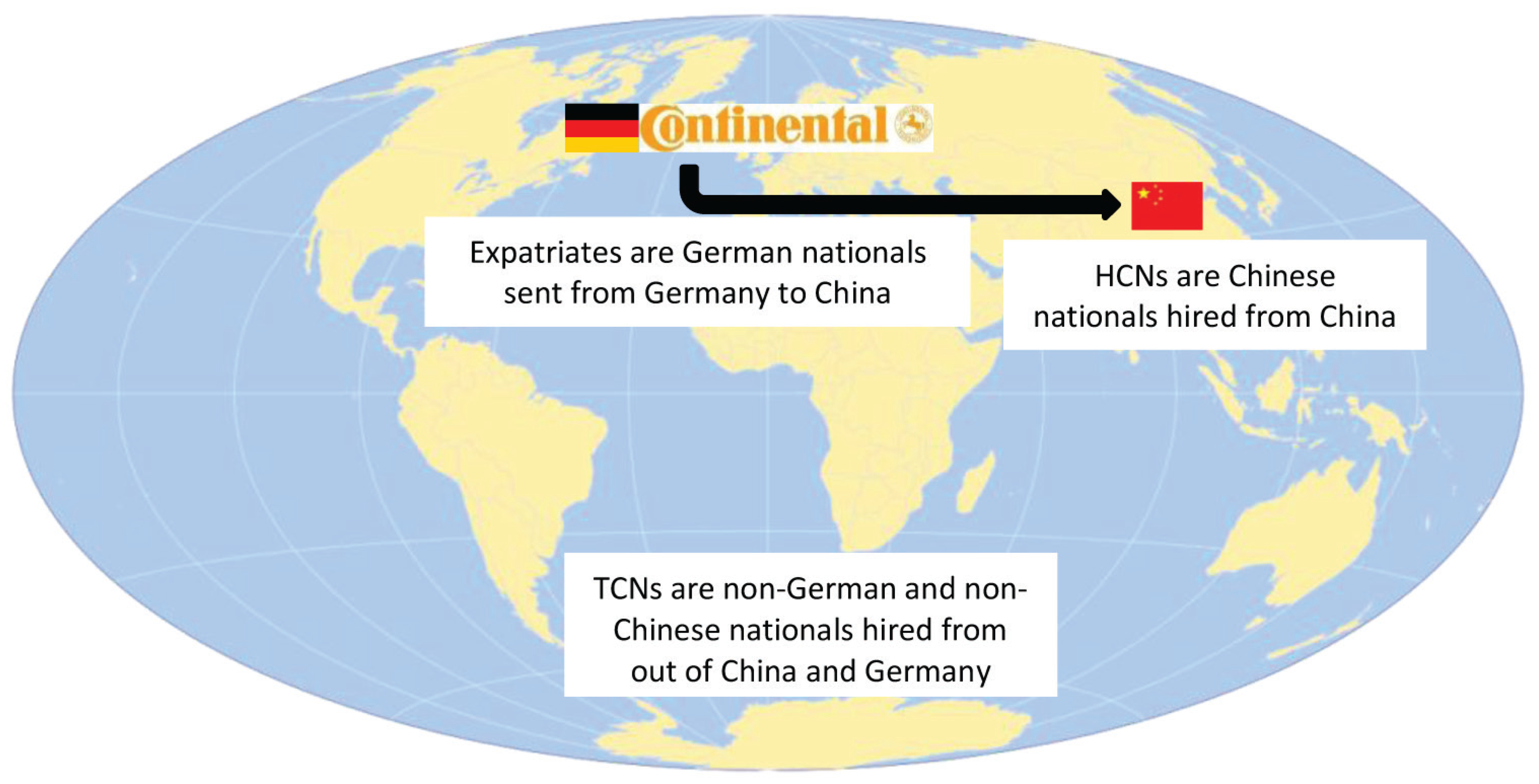
German companies have encountered economic problems in Asia, which included rising labour costs, poor market intelligence and corruption that led to 20 per cent of German companies withdrawing their investment in China (Parnell, 2002). Similarly, German firm Enercon faced huge losses in India due to cultural differences, which ultimately led to legal issues (Ewing & Bajaj, 2011).
On a sociocultural perspective, Chinese partners and employees had misperceptions about German managers (Rygl, 2012). Selmer (2001), Zimmermann, Holman and Sparrow (2003) and Selmer (2005) also found that German expatriates, despite having undergone extensive cross-cultural training, experienced difficulties adjusting to Chinese sociocultural and interactional norms and practices.
Considering the threats in Asia, it is worthwhile for German companies to consider making inroads into alternative emerging markets. Latin America represents a good option, despite the sizeable cultural differences, because of the healthy growth projection for the region in the near future (Fisch & Oesterle, 2003; Long, 2013; Molinski, 2013).
Culture, Values and Current Models
According to Hofstede (1980), culture is defined as follows:
A collective programming of the mind which distinguishes the members of one human group from another
Culture can be understood as a set of knowledge, beliefs, morals, thoughts, laws and customs beheld by members of a community and shapes the values, norms, traditions and rules expected by society. Language forms an important part of intercultural communication (Markus & Kitayama, 1998; Schwartz, 1994). Cross-border culture can be analyzed using the Hofstede model of national culture, Lewis model of cross-cultural communication and the Global Leadership and Organizational Behaviour Effectiveness Research Project (GLOBE) study.
Hofstede Model of National Culture
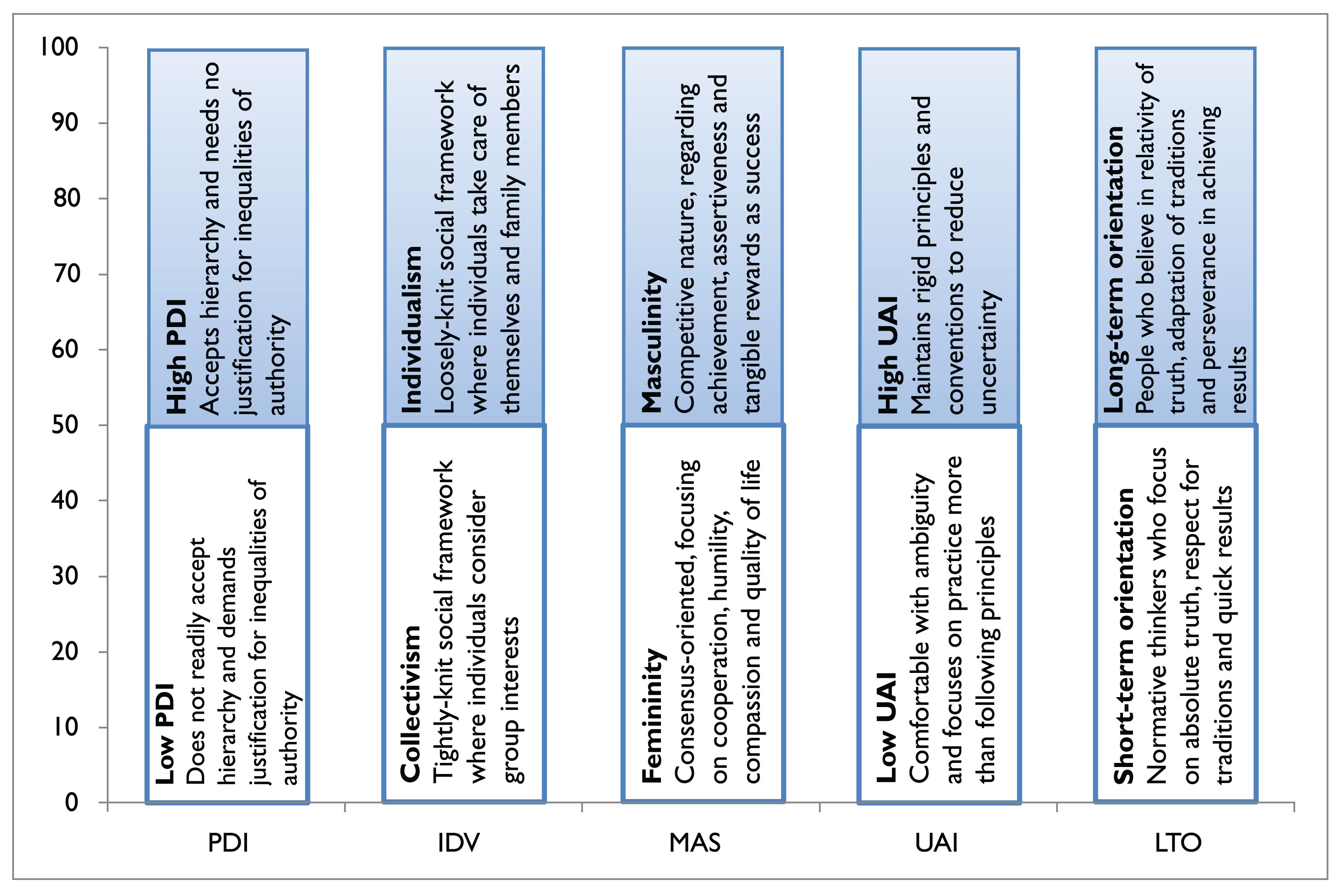
Hofstede quantifies culture into dimensions, allowing the generalization and analysis of national culture in terms of the level of power distance (PDI), individualism (IDV), masculinity (MAS), uncertainty avoidance (UAI) and long-term orientation (LTO). The model can be represented as a bar chart shown in Figure 2.
Lewis Model of Cross-cultural Communication
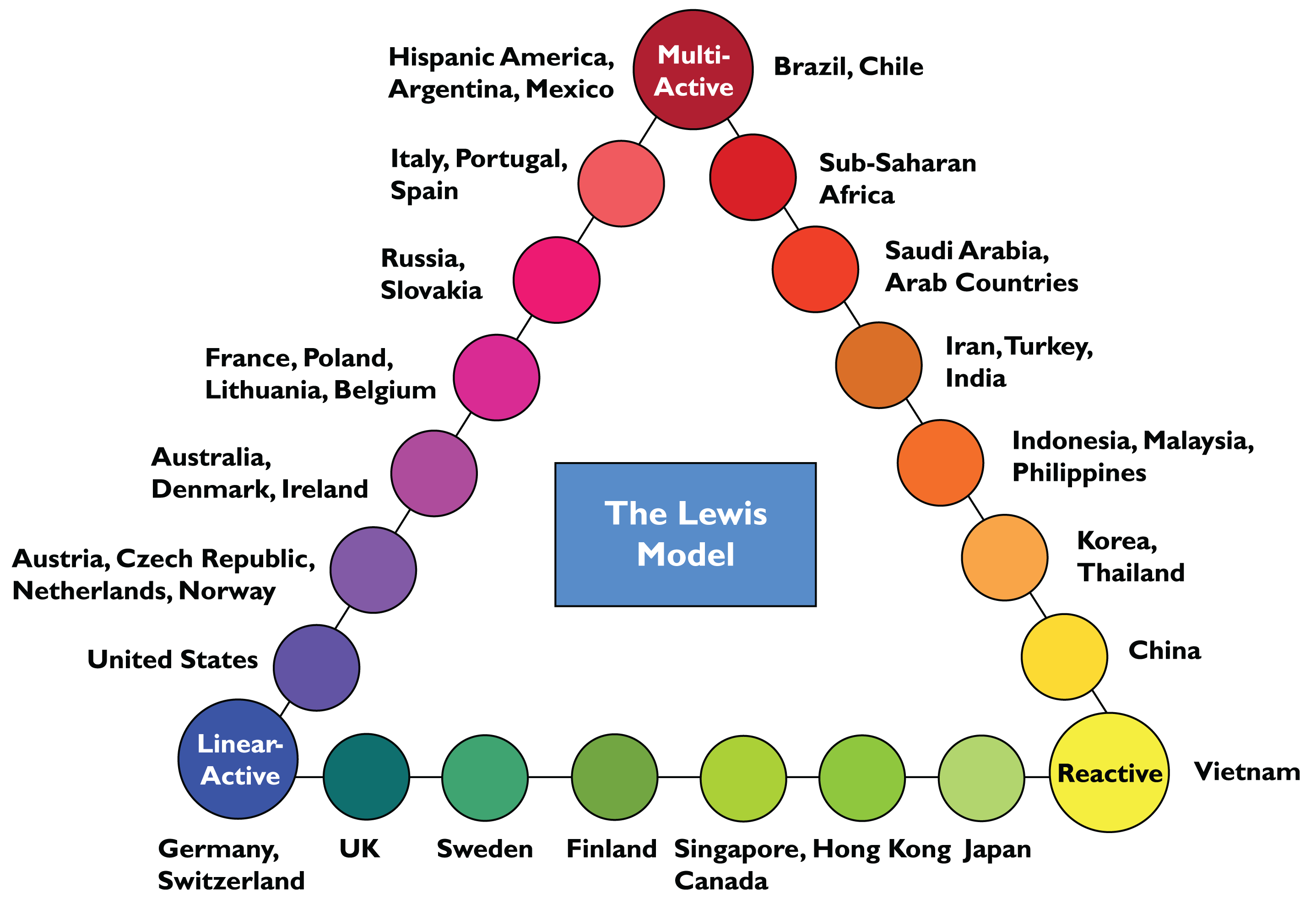
According to Lewis (2000), countries are identified as continuums of linear-actives, multi-actives and re-actives. The model is represented as a triangle in Figure 3, with countries positioned along the perimeter based on the extent of differences in interaction styles.

Linear-actives are mission-oriented, organized and logical while multi-actives are people-oriented, sociable and enjoy discussions. Finally, re-actives are introverted, traditional, respectful and excellent listeners. Figure 4 shows how countries are categorized into the continuums (Lewis, 2013).
GLOBE Study
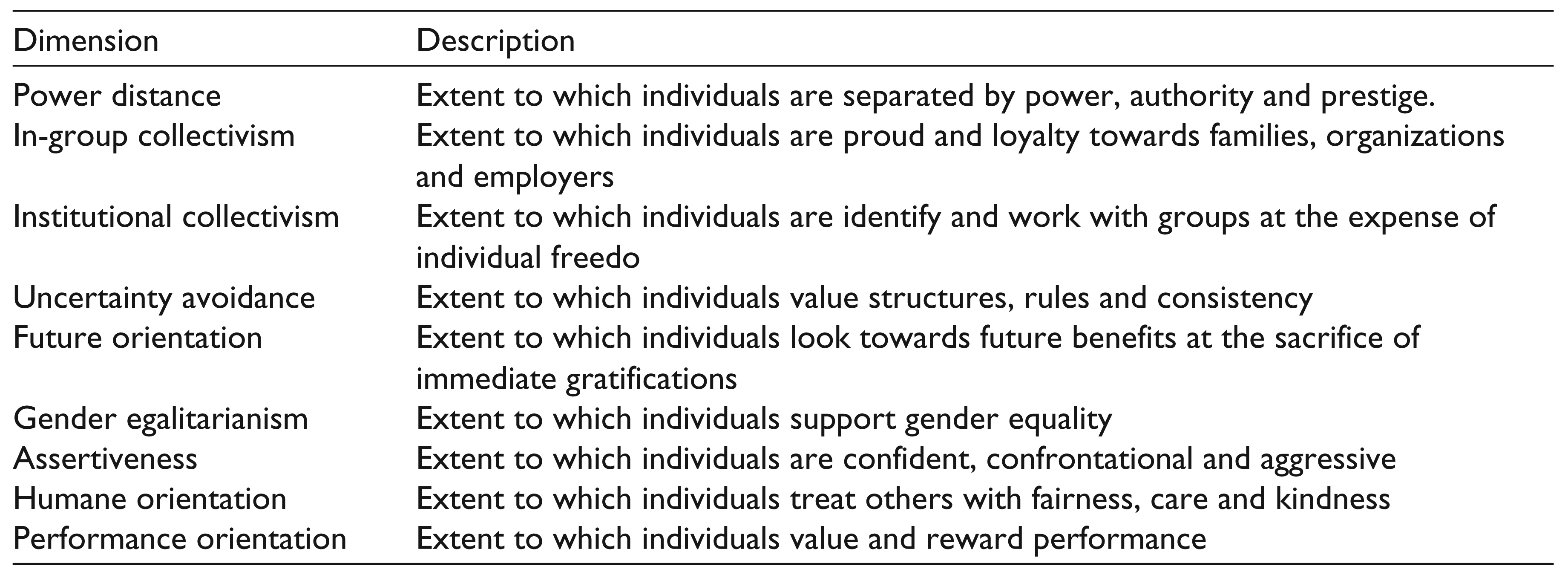
The project identified nine cultural dimensions of performance orientation, UAI, humane orientation, institutional and in-group orientation, assertiveness, gender egalitarianism, future orientation and PDI (Javidan, Stahl, Brodbeck & Wilderom, 2005). Details of the dimensions are listed in Table 1.
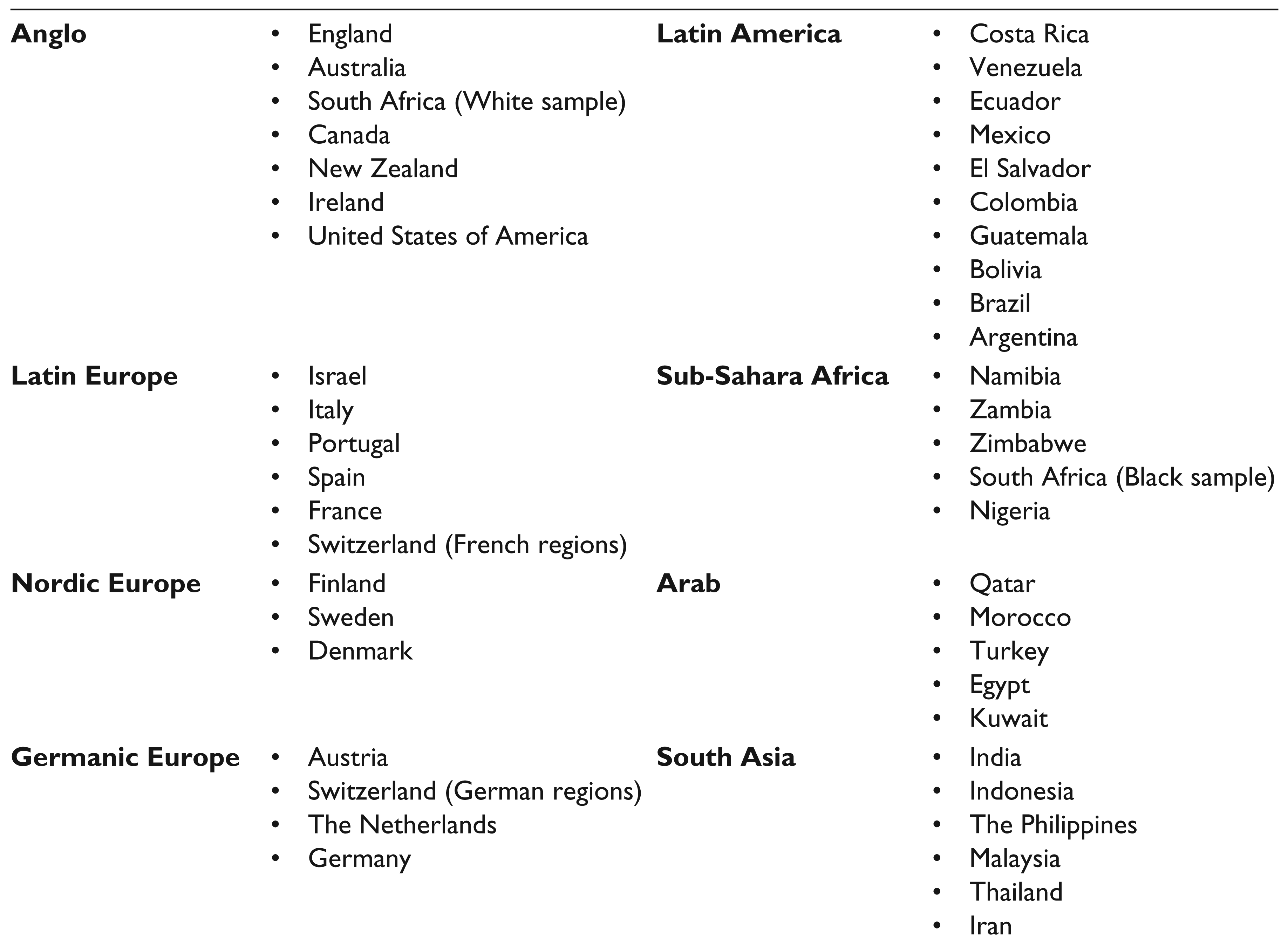
In addition to expanding the measurements, countries were categorized into cultural clusters. Table 2 shows the categorization of countries into cultural clusters, allowing for meaningful comparisons and generalizations (Gupta, Hanges & Dorfman, 2002).
Spain as a Springboard Country to Latin America
Latin America is less distant to Germany socioculturally, than it is geographically. First, Germany has historically enjoyed ties with Latin America, wherein many Germans relocated to South America after the Second World War. German trade flourished and became an integral part of the mining and publishing industries, thereby contributing significantly to Latin American development (Penny, 2013). While their presence has been steadily growing, German companies have faced multiple cross-cultural issues relating to work culture and language while operating in the region (Grosse, 2013). On the other hand, Spain has enjoyed extensive cultural and historical links to the Latin American region. From a business perspective, Spain has become the leading investor among European nations in the Latin American region (Guillén, 2006). Alternatively, as a part of the European Union, many Germans have experience of working with Spanish counterparts in personal and professional capacities. Seeking low-cost production in the South European countries, German companies have gained familiarity of Spanish culture through the management of subsidiaries, vendors and supply chain management (Chislett, 2003; Puig & Castro, 2009).
GLOBE Cultural Dimensions
GLOBE Cultural Clusters

Intuitively, familiarity with the Spanish language, institutional knowledge and working styles should serve as a springboard for German companies in overcoming and bridging potential cultural gaps faced by expatriate managers in Latin America (Forsgren, 2002; Kostova & Zaheer, 1999). Pla-Barber and Camps (2012) state that by gaining experiential knowledge of the Spanish institutional and business environment through its own subsidiary or via the supply-chain partners, European companies’ passage to Latin American market can be eased. They recommend the model in Figure 5 on how Spain could act as a springboard country for German companies entering Latin America.
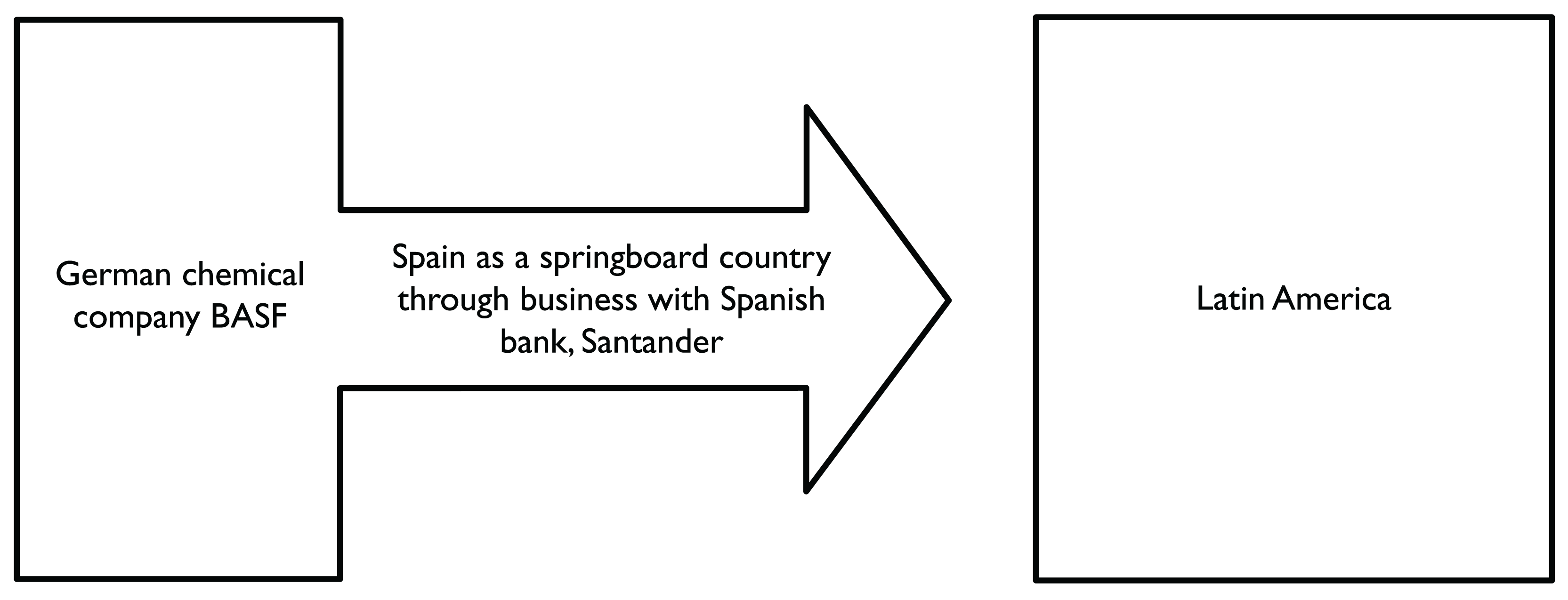
While the presence of Spain as a springboard country for German companies to enter Latin American region has been acknowledged, extant research has failed to determine how this can be achieved (Fallah & Lechler, 2008). Building further on the theoretical groundwork provided by researchers, such as Pla-Barber and Camps (2012), we seek to determine whether Spain can act as a springboard between Germany and Latin American region.
Methodology
While Lewis, Hofstede and GLOBE theories have provided generalizations on German and Spanish cultures, there is less clarity on what comprises Latin American culture. Congruence between the three models will serve in a better generalization of Latin American culture, assisting in identifying aspects of Spanish cultural experience that can cushion cultural shocks the Germans may face. Thus, we first tried to extract a quantitative representation of Latin American culture, which could then be compared across the Spanish and German cultures for drawing further implications. Among the three theories, only Hofstede (1994) provides quantitative cultural dimensions for each country in the Latin American region, and thus for comparative reasons, we first use this theory to determine the cultural dimensions of Latin America and then compare it across the dimensions of Spain and Germany. Subsequently, we compare these findings across the other two qualitative models to determine whether there exists concurrence in our findings.
Determination of Hofstede’s Cultural Dimensions for Latin America
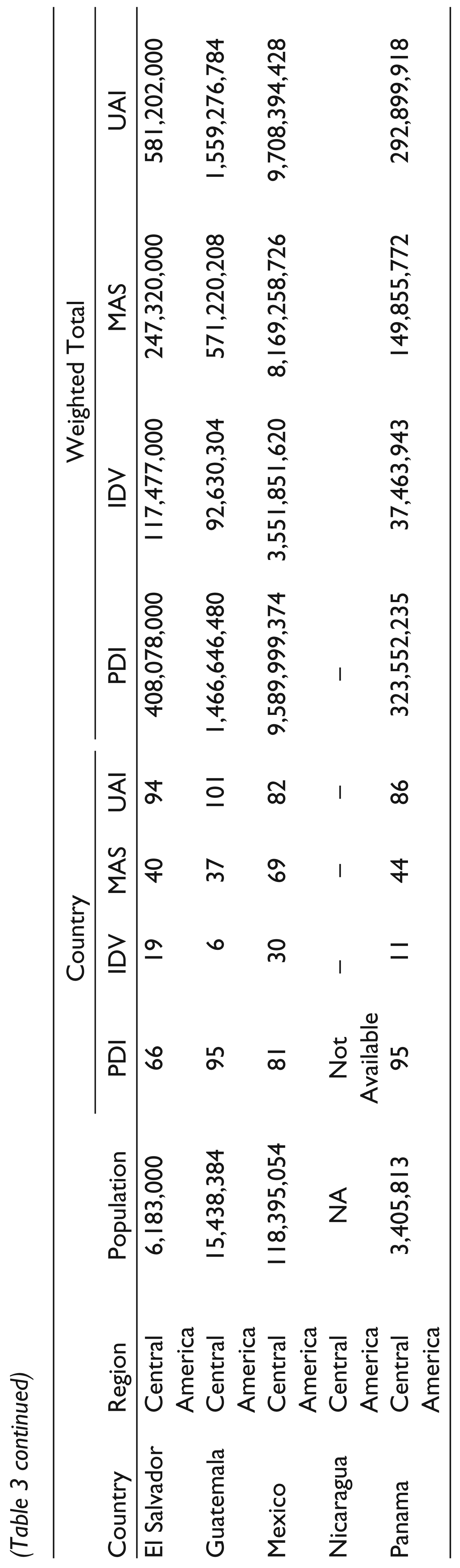
A list of 21 Latin American countries was prepared with their corresponding population, region and Hofstede’s national cultural dimensions. The LTO was omitted as information was only available for Brazil. The five Caribbean nations, Bolivia, Paraguay and Nicaragua were excluded because their dimensions were unavailable.
Equation 1 shows the weighted average approach used to compute the Latin American Hofstede cultural dimensions. Population size is used as weight to account for the relative importance of the type and number of employees German firms will interact with (Gelman, 2007; Kish, 1990).
Formulae to Compute Latin American Hofstede Cultural Dimensions
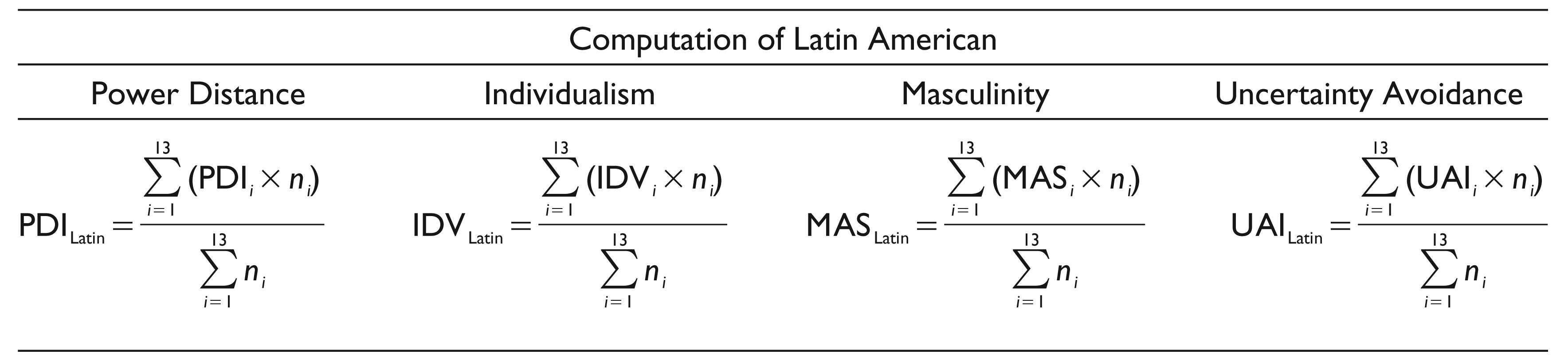
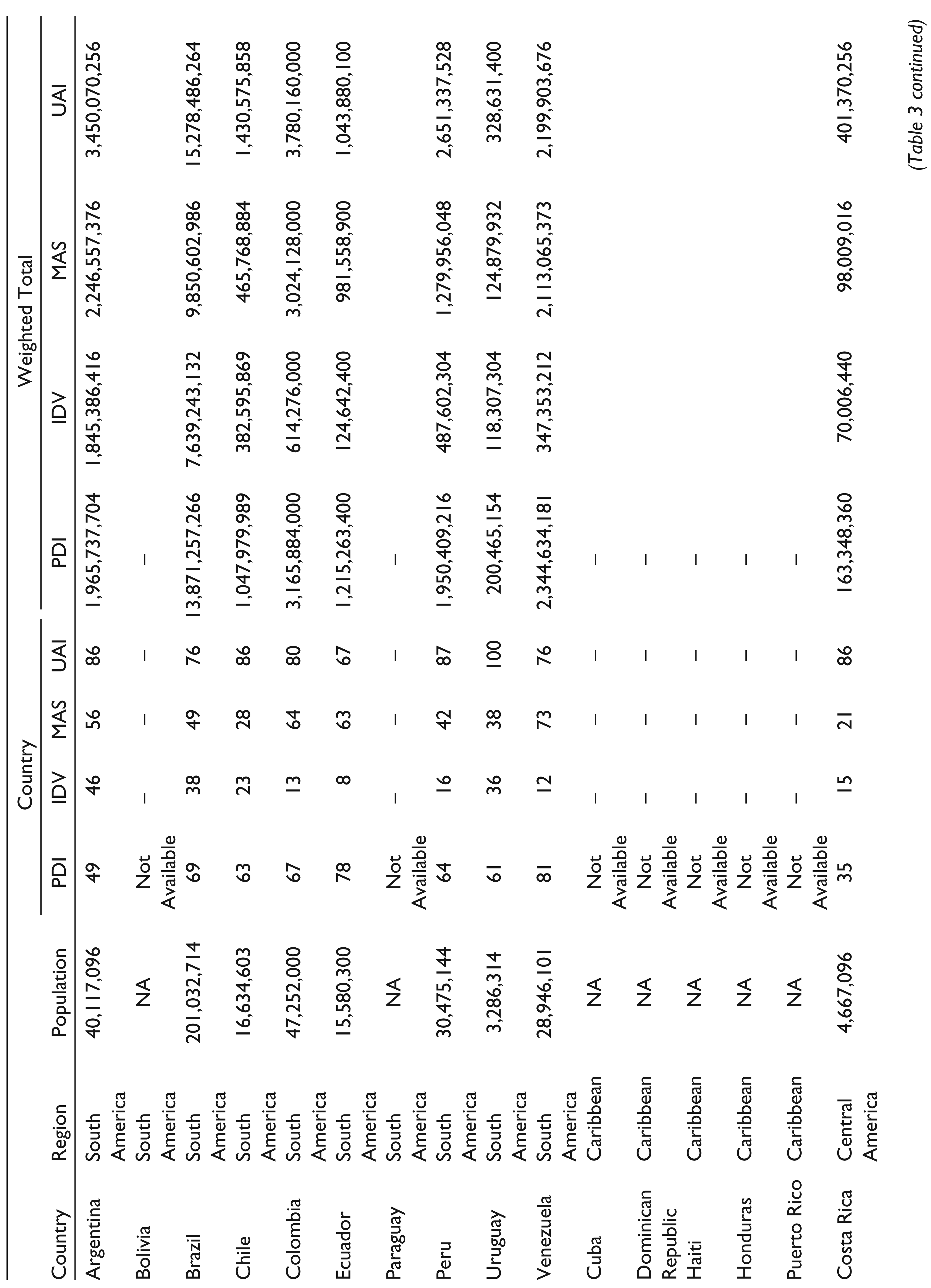
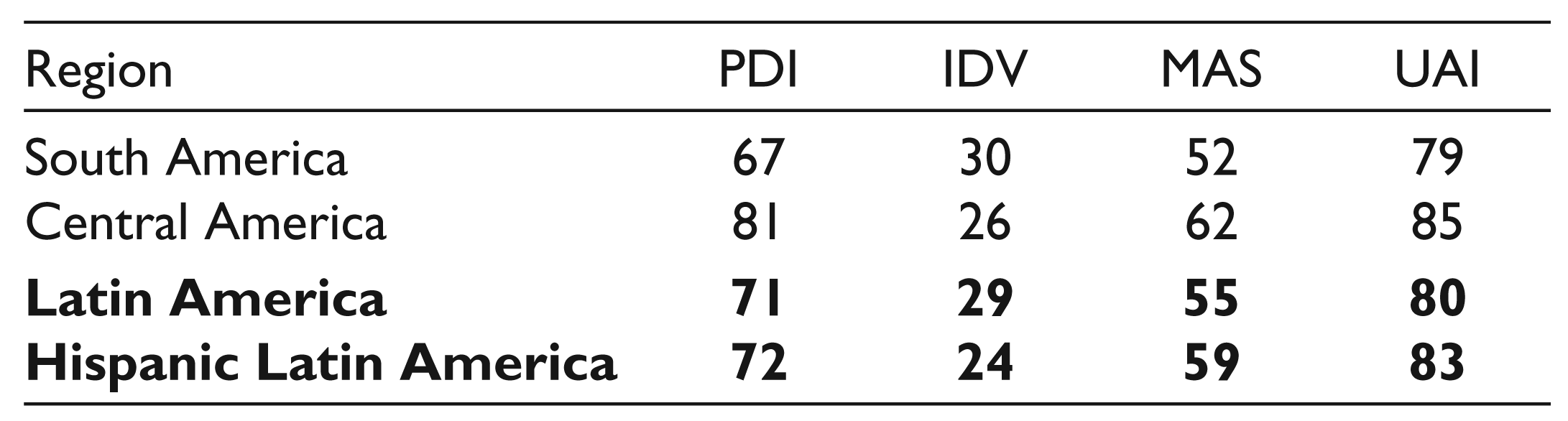
Using Equation 1, cultural dimensions of the Latin American cluster were calculated and shown in Tables 3 and 4. The quantities were subsequently interpreted based on countries that shared similar dimensions.
Computation of Latin American Hofstede Cultural Dimensions
Findings
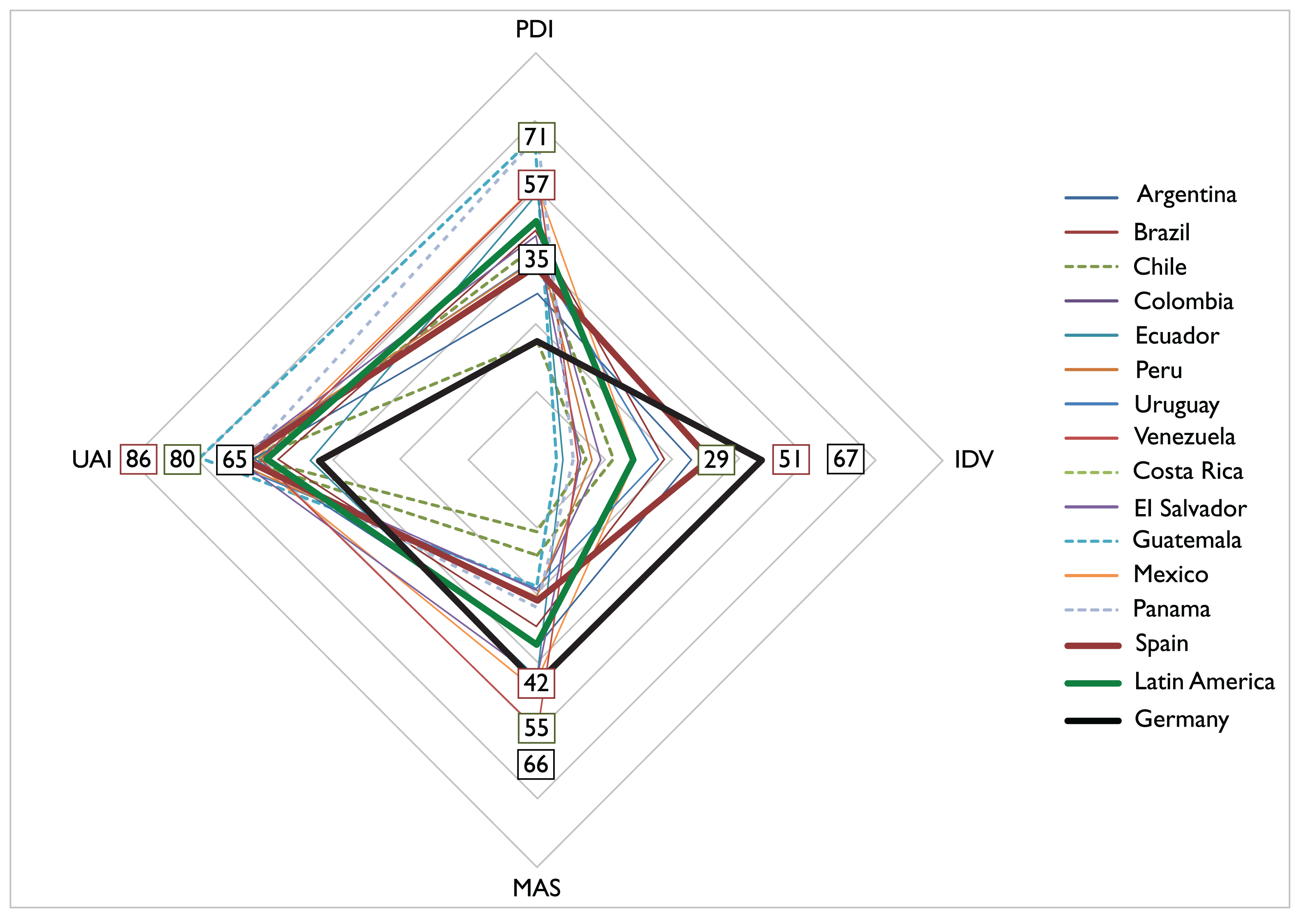
Highlighted by dashed lines in the dataset plot in Figure 6, Costa Rica, Guatemala, Chile and Panama were identified as outliers, as their dimensions fell beyond the individual calculated dimensions for the Latin American region. These findings concurred with results in the GLOBE study where Gupta et al. (2002) failed to classify these countries into the Latin American cluster. In the next section, we interpret the findings based on the cultural theories, to determine whether Spain can actually act as a bridge between German and Latin American culture.
Hofstede Cultural Dimensions of Latin America
Examination of Derived Hofstede Latin American Culture
With a PDI of 71, the Latin American society accepts hierarchy and inequalities. A consequence is the importance of Respecto for the elderly and strong sense of responsibility towards the family. At work, the managers are expected to assume full responsibility (Lenartowicz & Johnson, 2003). Latin America is a collectivist society where loyalty, commitment, relationships and Confianza to an in-group bear importance over societal rules (Brasch, 1973). This results in strong paternalistic values. Due to the fear of losing face, management at work involves group harmony, often resulting in hiring made through internal recommendations and benefits given to groups instead of individuals.
The wide statistical spread of masculinity suggests a variation of moderate-to-high masculine Latin American countries. While generally motivated to perform, the drive towards achievement and success varies. Negotiation and conflict management vary as countries with low masculinity will prefer a non-confrontation, consensus-reaching compromising Simpatia approach to remain friendly amidst disagreements (Antshel, 2002; Delgado, 1994), while those with high masculinity are straightforward. With a UAI of 80, Latin Americans fear ambiguity and seek conventions to follow, evident from their strong religious belief for a universal truth (Chaney & Martin, 2014).
Despite the extensive rules, due to the presence of strong collectivism, they may not be adhered. Individuals are influenced by group decisions, resulting in detailed work plans not executed ultimately. Thus, it becomes necessary for an authoritative figure to lead groups towards organized change.
Comparison against GLOBE Study and Lewis Model
According to Gupta et al. (2002), there are practices of high power distance, institutional collectivism, low performance orientation and uncertainty avoidance. They tend to take life as it comes, displaying Personalismo by placing importance on interpersonal relationships, showing empathy and are not obsessed over competition and results (Cuéllar, Arnold & Gonzalez, 1995). While generally collectivist, they are more concerned over in-group acceptance over institutional collective goals, which have led to a highly paternalistic society. These results match our findings in ‘Examination of Derived Hofstede Latin American Culture’ section.
The Lewis model, which identified Latin Americans as dialogue and people-oriented multi-actives, supports the importance of collectivism in the GLOBE study. They do not have a penchant for punctuality (Varela, Salgado & Lasio, 2010).
Given the congruence of the three models, the Hofstede cultural dimensions for Germany, Spain and Latin America are plotted in Figure 7.

Exmination of Hofstede German Culture
The Hofstede model characterizes German culture as low PDI, high IDV, MAS and UAI. High decentralization and a large middle class that dares to challenge and demands participation in decision-making creates disdain for control that is accepted through proven expertise. There is a strong belief in self-actualization, with loyalty defined by individual responsibility (Soyez, 2012). In communication, Germans are straightforward, honest and often tactless because of the belief to learn from mistakes.
The drive for performance pushes managers to be assertive and decisive. Social status is of utmost importance, resulting in the display of branded products, meritorious abilities or family background.
Germans do not like uncalculated risks. They compensate the lack of managerial control with technical expertise and self-discipline, adopting an approach in life that entails deductive reasoning, structures, systematic thinking and well-thought details in planning. This has resulted in traits, such as punctuality.
Comparison against GLOBE Study and Lewis Model
According to Gupta et al. (2002), Germany falls under the Germanic cluster which has practices of low PDI, institutional collectivism, in-group collectivism, gender egalitarianism and humane orientation. They focus on results, avoiding uncertainty and assertiveness. Germans adopt highly individualistic and masculine approaches that are well-defined, futuristic and often harsh.
The Lewis model places Germans as linear-actives who are mission-oriented and meticulous planners. Business meetings are conducted formally according to an agenda. This is in stark contrast to the Latinos which places little emphasis on punctuality, schedules and formality (Lewis, 2013).
Examination of Hofstede Spanish Culture
Hofstede indicates Spanish society as high power distance, collectivist, feminine and high uncertainty avoidance. Due to the influence of Roman Catholicism, Spanish accept inequalities of power and hierarchy readily (Hofstede, 1994). Managers are unlikely to receive negative employee feedback and need to identify subtle signs of workplace displeasure.
As a collectivist society, Spanish work well in teams. The feminine Spanish culture emphasizes on harmony, reflected by upholding of Familia traditions and values. Much like Latin American culture, the Spanish show respect and concern for the needy. Managers act as fathers in taking care of employees, seeking employees’ opinions before making respected decisions.
The fear of uncertainty, stress and influence of Roman Catholicism drives the Spanish to create rules and avoid changes (Hofstede, 1994). The feminine nature makes them avoid conflicts as it creates stress and damages relationships. Despite the need to follow rules, they are like the Latin Americans who are bound by in-groups not to follow the norm.
Comparison against GLOBE Study and Lewis Model
The GLOBE study places Spain as a Latin European cluster of strong PDI, institutional collectivism, humane orientation and uncertainty avoidance. The more emotionally driven society however results in low drivers of performance (Gupta et al., 2002).
According to the Lewis cultural model, Spanish are categorized as multi-actives, similar to Latin Americans (Lewis, 2013).
Comparison of German, Spanish and Latin American Cultures
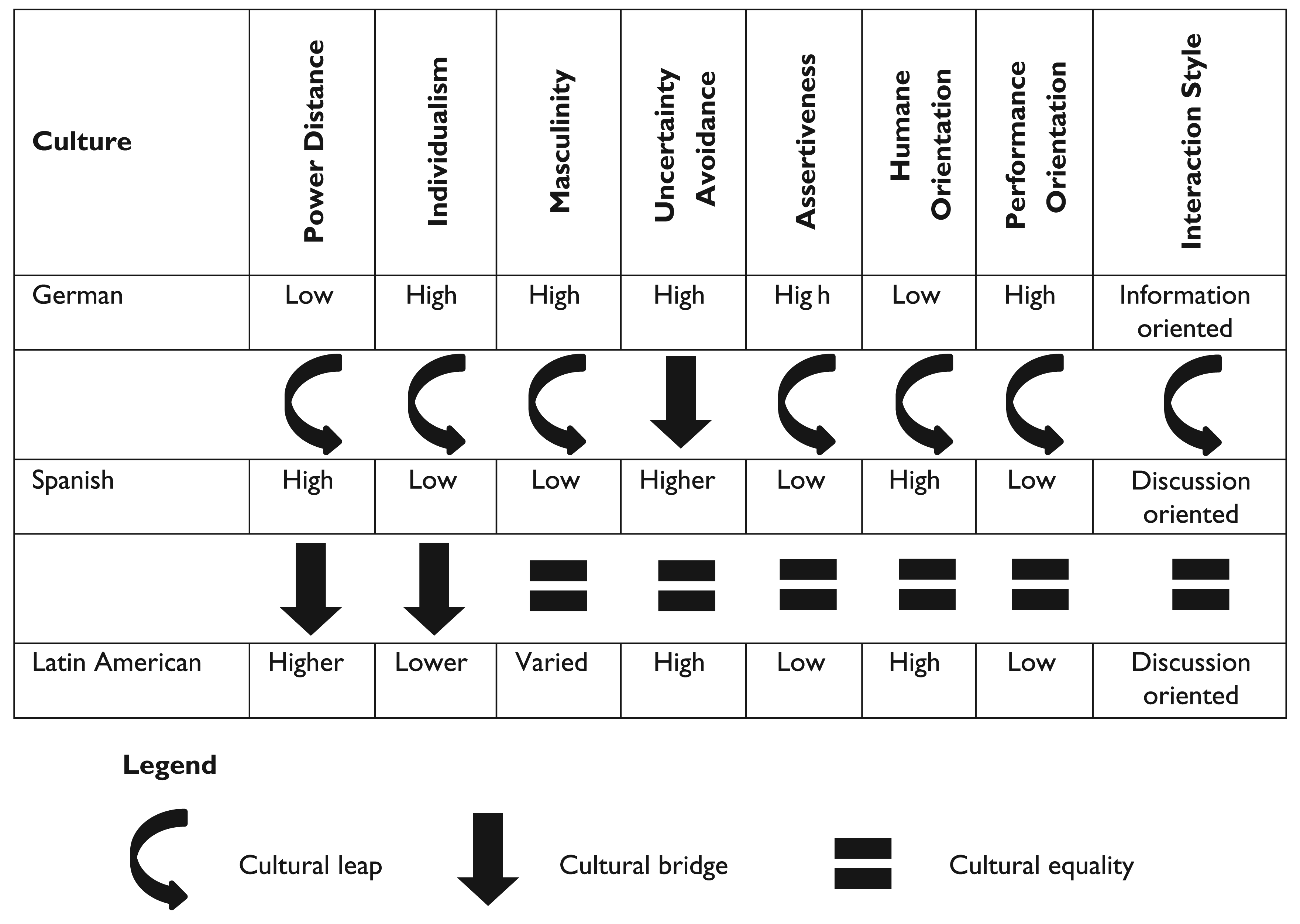
From our analysis across the three cultural theories, it can be inferred that Spanish culture bears close resemblance with the Latin American culture. Furthermore, cross-cultural comparison in Tables 5 and 6 reveals that Spanish cultural experience in most dimensions can leapfrog German companies to a Latin American culture. It can serve as a meditating intermediary to bridge and springboard Germans to the Latin American culture. The presence of Spanish springboard will help German companies in bridging the cultural distance across Latin American region, thereby resulting in improved cross-cultural management practices (Johanson & Vahlne, 2009). Thus, we find that the experience of Spanish culture can shield German companies from the sudden cultural shock that they might experience from a direct entry into Latin American region.
Contrast between German, Spanish and Latin American Cultures
Contrast of Characteristics between Germans, Spanish and Latin Americans

Discussion
Theoretically, our article builds on the framework provided by Pla-Barber and Camps (2012), determining how Spain can function as a springboard to Latin American entry for European nations. By doing so, the study answers calls for extending research on Latin American cultural management from European firms’ perspective. Researchers can further use our approach to determine how a springboard country affects the actions of investing firms in a culturally distant market.
From a practical perspective, our article provides German and European managers with important insights into cultural management in Latin America. We suggest that European companies having experience of working with Spanish suppliers, vendors, employees and customers have a distinct cultural advantage when contemplating a move to Latin America. In addition, European managers can better understand the need for having a Spanish regional headquarters (RHQ) or a Spanish subsidiary overseeing Latin American operations. In terms of expatriate assignments, the presence of a Spanish country manager overseeing a Greenfield Latin American setup will cascade headquarters (HQ) corporate objectives to Latin America subsidiaries in a more Latin-centric tone that will increase local receptiveness. Day-to-day liaison is also enhanced through better relational skills between Latin and Spanish counterparts. The presence of such rapport will reduce cross-cultural conflicts and ensure efficient human resource management in Latin American region.
Conclusion and Implications
There is a growing need for European multinationals to explore alternative emerging markets given the economic, political and cultural risks faced in Asian regions. While Latin America provides for a good alternative, failure risk remains equally high owing to cultural dissimilarity. This article sought to ascertain how the entry risk can be lowered by taking the specific case of German firms’ entry into the Latin American region.
While cultural training has been provided as an answer to reduce subsidiary-headquarters conflicts, it has failed to provide adequate solutions (Martinez, 2005). Thus, the concept of springboarding has been proposed, involving target market management via a region that is culturally similar to it (Pla-Barber & Camps, 2012). As Spain enjoys cultural and linguistic similarities with Latin American region while also being a member of the European Union at the same time, we proposed that German firms can use Spain as a springboard to enter Latin America, so as to reduce cultural and performance risks. A comparison of qualitative and quantitative parameters of the three cultures using GLOBE, Hofstede’s theory and Lewis model found that Spanish cultural experience only not bridges, but propels Germans to Latin American culture.
Though the article establishes that Spain serves as a good springboard country for managing Latin American operations, future research in this field could perhaps focus on case studies, wherein detailed operating strategies of European firms could be determined. Such an approach will assist in developing the domain of springboarding theory further, providing deeper insights into how firms use it practically.
Footnotes
Acknowledgements
We, the authors, would like to thank the anonymous reviewers for their extremely valuable suggestions to improve the quality of the article. Usual disclaimers apply.