



Abstract
Of late, the relationship between work–family enrichment and support has started gaining some attention within the organizational behaviour literature. However, support emerging from the family front has often been neglected in previous studies. The purpose of our research is to empirically estimate the role of both work support (WS) and family support (FS) as predictors of work-to-family enrichment (WFE) and family-to-work enrichment (FWE) among sales employees in Indian organizations. Data were collected through structured questionnaires from 330 employees belonging to firms from some of the major sectors of Indian industry, namely manufacturing, IT, FMCG, pharmaceuticals and financial services. The study first validated the support scale in the Indian context using exploratory factor analyses (EFA) and confirmatory factor analyses (CFA). Further, structural equation modelling (SEM) using AMOS (version 20) was used to test the model. Results supported the 20-item work support and family support scale measuring work and family support in the Indian set-up. Further, results of SEM suggested that work as well as family support significantly predicts work-to-family enrichment as well as family-to-work enrichment. The study signals the importance of ensuring a supportive organizational environment for an effective workforce. This not only can help in enriching one’s work life, but also can impact one’s family life as well. The same phenomenon also applies to family front; a supportive family results in an improved enrichment in work domain. This study contributes to work–family literature by addressing role of support—both work and family—as predictors of WFE and FEW, which has rarely been studied in the Indian context.
Keywords
Introduction
Today, balancing work and family has become a critical issue in India against the backdrop of an era of globalization and rapid socio-economic change. Not just the demographic changes but also changes in the work context, like extended working hours, frequent interactions with customers and working across varied time zones, have become a norm of boundary spanning professions. Such changes, in turn, are leading to the dilution of boundary between work and family. For sales as a profession, this is all the more true.
Selling is largely seen as the backbone of any business. Sales employees are the ones who not only cover a territory but also sustain and enhance mutually beneficial partnerships with customers (Palmatier, Scheer & Steenkamp, 2007) and that is why they are the lifeblood of any organization (Milkovich, 1988). In real terms, they are the public face of an organization, with the principal task of generating sales. Since sales employees are immensely important for organizations, firms are making huge investments on their sales force (Zoltners, Sinha & Zoltners, 2001). There is very little research focusing on work–family balance of sales employees from the Indian perspective. Also, empirical studies focusing on sales personnel with respect to positive aspects, that is, enrichment, are rare to find although it is widely accepted that sales employees are the lifeblood of any organization (Milkovich, 1988).
Furthermore, organizational support has been shown to reduce role stress (Hamwi, Rutherfors & Boles, 2011); so the support provided to sales people should also impact role stress. The more support sales people receive with respect to the roles that they perform, the more they are able to balance their time and job duty (Ahearne, Srinivasan & Weinstein, 2004), which in turn leads to enrichment. In other words, the better the organization treats its employees, better will be the responses from the employees, in terms of higher job satisfaction and lesser turnover intentions. Further, a large quantum of research focusing on work domain of sales employees and family is largely undermined. Hence, the present study incorporated both work and family domains with respect to enrichment. Studies exploring the positive work–family integrations are found to be rare in the Indian context (Baral & Bhargava, 2010; Bhargava & Baral, 2009). At a time when India has emerged as one of the major economic powers in the world, best of the global organizations have a significant presence in the subcontinent. It is therefore important at this juncture to make attempts to systematically study the positive effects of work on the family front and the family on the work domain as well as ascertain the generalizability of these concepts in Indian organizations. The study also aims to examine the role of both work support and family support as predictors of work–family enrichment among sales employees’ in Indian organizations.
Review of Literature
To understand the issues concerning the balance between work and family, researchers have often focused on the negative perspective, that is, conflict perspective—primarily laid upon the scarcity hypothesis (Goode, 1960). From this viewpoint, people with a greater number of roles are more likely to deplete their resources, resulting in role overload or role conflict, which in turn lead to burnout (Kang & Sandhu, 2012), reduced job satisfaction and higher turnover (Burke, 1988; Galinsky & Stein, 1990).
On the contrary, for almost a decade, in line with the positive psychology movement, the positive side of work–family relationships (which heavily relies upon the expansion-enhancement perspective) has started getting research attention. This view has been discussed in several ways, like work–family enhancement, positive spillover, facilitation and enrichment (Crouter, 1984; Greenhaus & Powell, 2006; Grzywacz, Almeida & McDonald, 2002; Sieber, 1974). Though slight peculiarity exits between the said terms, the fundamental postulation is that participation in one role is made easier, or benefits from enhanced performance, by virtue of participation in the other role (Karatepe & Bekteshi, 2008). In this research, we used enrichment as a comprehensive term for positive work–family interactions. As compared to work–family conflict perspective, enrichment perspective is theoretically and practically underdeveloped (Frone, 2003).
The concept of enrichment was introduced by Greenhaus and Powell (2006), which they conceptualize as the degree to which positive experiences in one role (work) improve the quality of life in the other role (family) and vice versa. In particular, enrichment is said to occur when resources (skills and perspectives, physical social capital, and material resources) gained from one role either directly (instrumental path) or indirectly (affective path) improves the performance in the other role. Both the instrumental (Kirchmeyer, 1992; Ruderman, Ohlott, Panzer & King, 2002) as well as the affective pathway (Rothbard, 2001) have indicated that enrichment or positivity improves the work as well as the family domain.
The concept of work–family enrichment is explored from both work and family dimensions, that is, work-to-family enrichment and family-to-work enrichment. Further, (Greenhaus & Powell, 2006) found that of the two types of enrichment, family-to-work enrichment (FWE) is typically stronger than work-to-family enrichment (WFE). This specifies that family enriches work more as compared to work enriching family life.
Using the framework suggested by Frone (2003), it was suggested that WFE and FWE are empirically discrete and have ‘domain-specific’ patterns (Byron, 2005). To be precise, predictors emerge from the originating role domain (i.e., work domain has predictors in work-related aspects) only. This was further supported by Wayne, Grzywacz, Carlson and Kacmar (2007) who presented the Resource-Gain-Development (RGD) perspective.
The role of resources has often been investigated in the work–family literature (e.g., Hakanen, Peeters & Perhoniemi, 2011; Halbesleben, Wheeler & Rossi, 2012; Odle-Dusseau, Britt & Greene-Shortridge, 2012; Siu et al., 2010). Researches in the current context have proven that work and family resources were more strongly related to positive interaction as compared to negative ones (Geurt & Demerouti, 2007). The theoretical foundation for the current research is provided by conservation of resources (COR) theory (Hobfoll, 2001), which suggests that employees enthusiastically seek out to conserve and recreate resources (i.e., conditions or energies valued by the individual). Support is an important job resource. Gaining support either at work or in the family is a resource that has a positive effect in one domain and which finally enhances one’s quality of life in the other domain (Greenhaus & Powell, 2006; Grzywacz & Marks, 2000). Thus, domain support is likely to be considered as a core antecedent of affective and instrumental enrichment.
Kamerman and Kahn (1987) have found that work support not only assists employees in assimilating work and family roles, but also improves work attitudes as well as overall performance. Researchers later confirmed that work support could predict job satisfaction for both British and Taiwanese workers (Lu, Siu, Spector & Shi, 2009). Siu et al. (2010) found a positive effect of work support on WFE in a sample of mainland Chinese workers.
The study undertaken by ten Brummelhuis, Van der Lippe & Kluwer (2010) investigated the impact of various work-life support measures in improving helping behaviour and performance among single employees, employees with a partner, and employees with a partner and children. It was found that those employees who are single tend to benefit from different types of support. However, the obvious work–family culture hindered them, as indicated by poorer work performance. Such employees not only appreciate telecommuting but also take advantage of flexible schedules. Further, supervisor support emerged to be of great importance in improving work performance and helping behaviour among couples. Moreover, a positive organizational culture wherein the focus is more on family-friendly aspects emerged as most important perceived support among parents, as compared to additional support strategies such as flexible work arrangements, supervisor support, etc.
Lingard, Francis and Turner (2010) in their study focused on the positive impact of work–family interface in the Australian construction industry. The study measured the work-to-family enrichment among Australian construction workers and explored linkages between job-related resources provided in the workplace and workers’ perceptions that experiences in their work role improve the quality of life in their family role and vice versa. It also investigated the impact of work schedule fit as a linking mechanism between job-related resources and work-to-family enrichment. The findings are consistent with the premise that job-related resources show a positive impact on interaction between work and family and vice versa.
It has been observed that family support has emerged as an important form of social support in western countries (Cohen & Syme, 1985). Recently, this is found true for Taiwan as well (Lu, 2006). Taking precedence from COR theory, King, Mattimore, King and Adams (1995) recommended social support as a significant resource which generates emotional feelings like love, care, etc. Such positivity facilitates individuals to transfer resources gained in the family domain to the work domain more efficiently (Wayne, Randel & Stevens, 2006). It may act as an extrinsic motivator as it may present instrumental advice and affective resources that would help employees in achieving their job goals (Grzywacz & Marks, 2000). Similar findings were reported by Yeh, Arora and Wu (2006) who suggested that family support motivates employees, especially those belonging to collectivistic societies to work harder. Indeed, family support has been found as an antecedent of both WFE and FWE in the west (Grzywacz & Marks, 2000; Lu et al., 2009) as well as in mainland China (Lu & Chang, 2014; Siu et al., 2010).
The above literature revealed that there is dearth of studies exploring the positive side of work–family integration in the Indian context (Baral & Bhargava, 2010; Bhargava & Baral, 2009). In view of this, the present research aims to empirically examine the role of both work support and family support as predictors of work–family enrichment (in both directions) among sales employees in Indian organizations. Using COR theory and the literature reviewed, we hypothesized that when employees receive support from both work and family front, they tend to acquire resources that improve their enrichment in both work and family directions in the form of work-to-family enrichment and family-to-work enrichment. The research contributes to the current literature by elaborating upon the matching as well as cross domain influence from work to family and family to work (Ferguson, Carlson, Zivnuska & Whitten, 2012; Westman, Vinokur, Hamilton & Roziner, 2004) in the Indian context.
The proposed theoretical model of the study is presented as Figure 1.
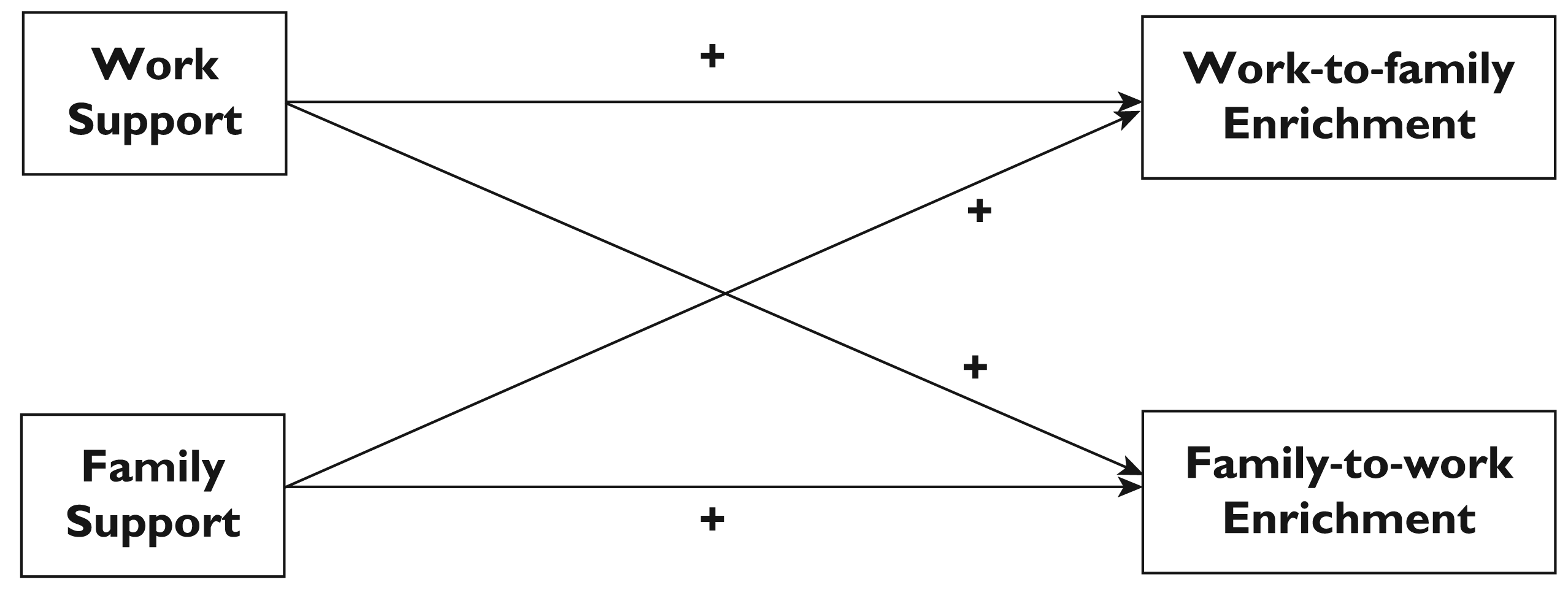
Overall the model presents the relationship between both forms of support (i.e., work and family support) and work-to-family enrichment and family-to-work enrichment. Work support (WS) and family support (FS) are independent variables; work-to-family enrichment (WFE) and family-to-work enrichment (FWE) are dependent variables in the empirical model.
Demographic Characteristic of the Participants
Methodology
Sample and Procedure
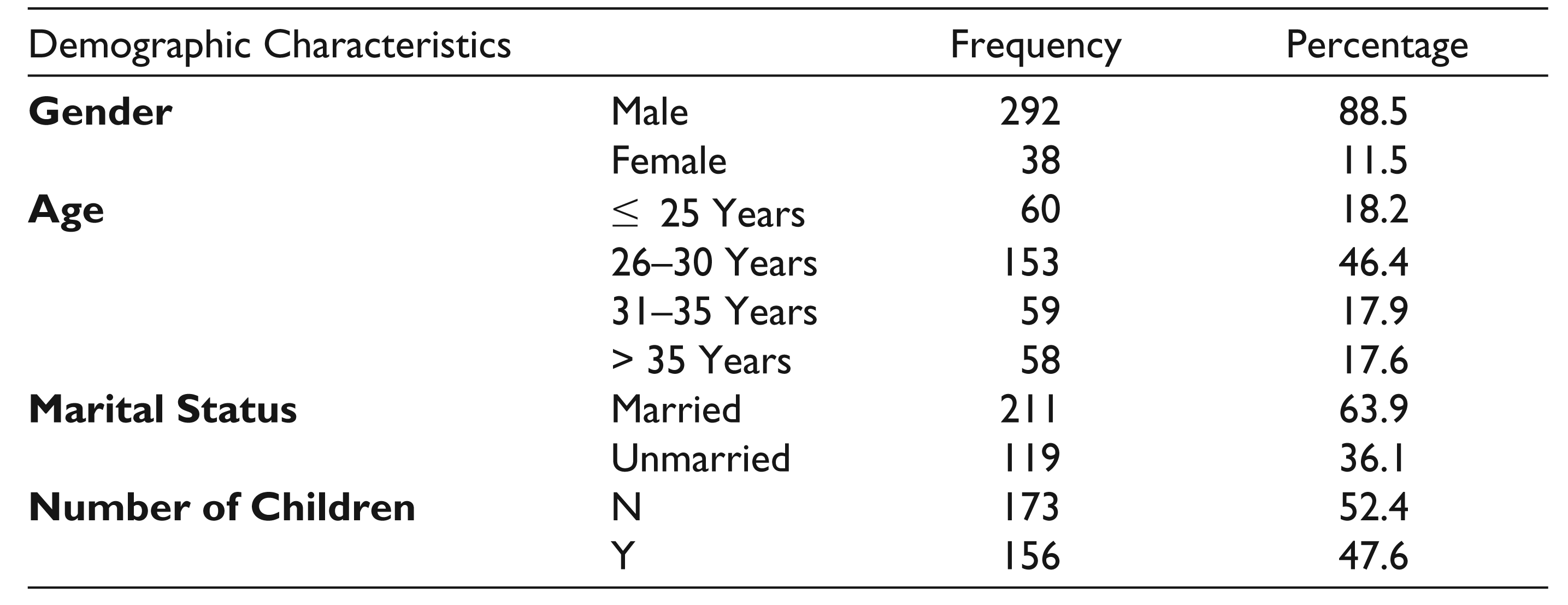
Data were collected through a self-administered questionnaire in Mumbai from a sample of 330 sales employees belonging to both service and manufacturing sectors. Sample included both married and unmarried employees (a) over 21 years of age and (b) working with an organization for at least one year. Table 1 displays the demographic profiling of the sample under study.
Measures
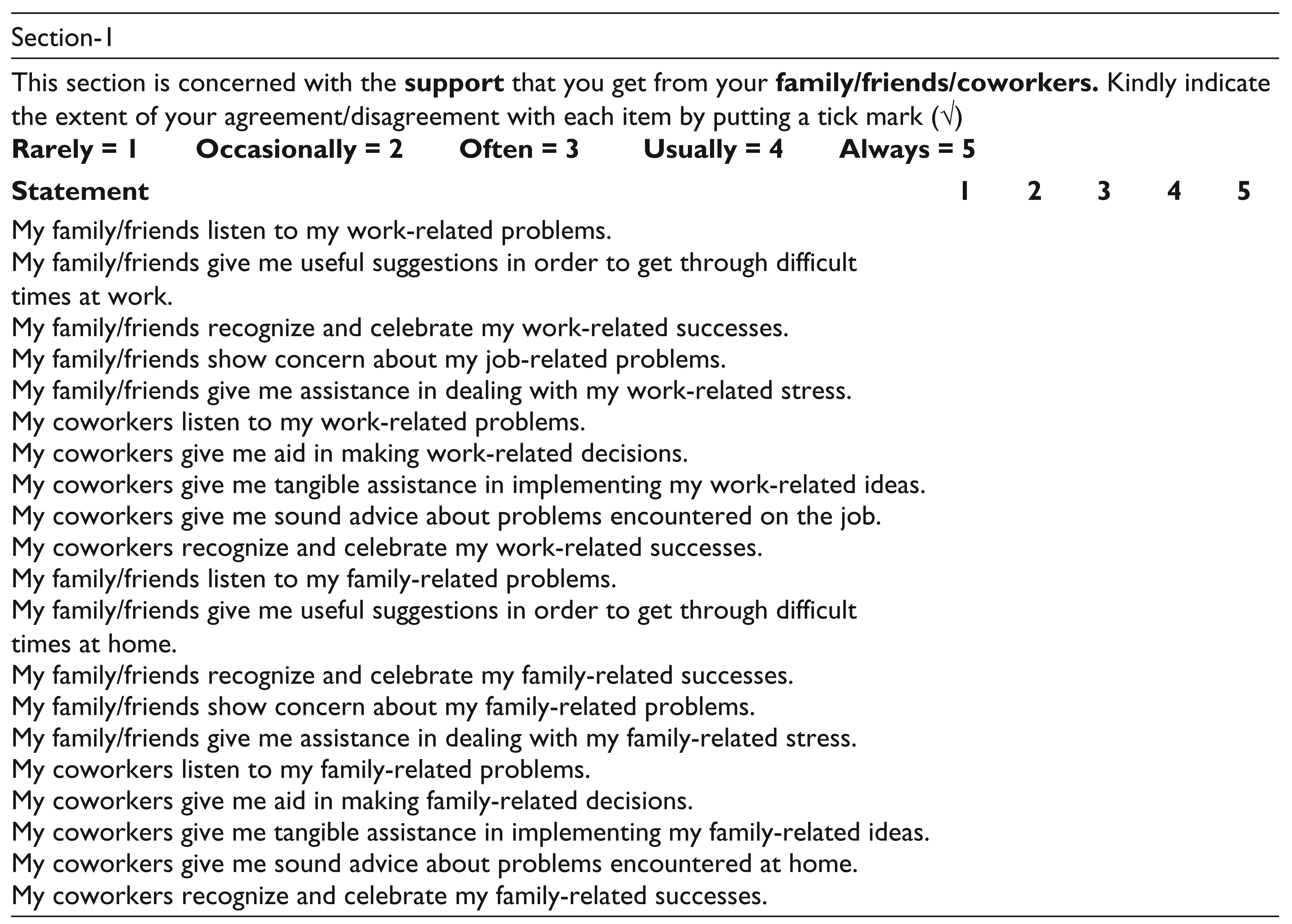
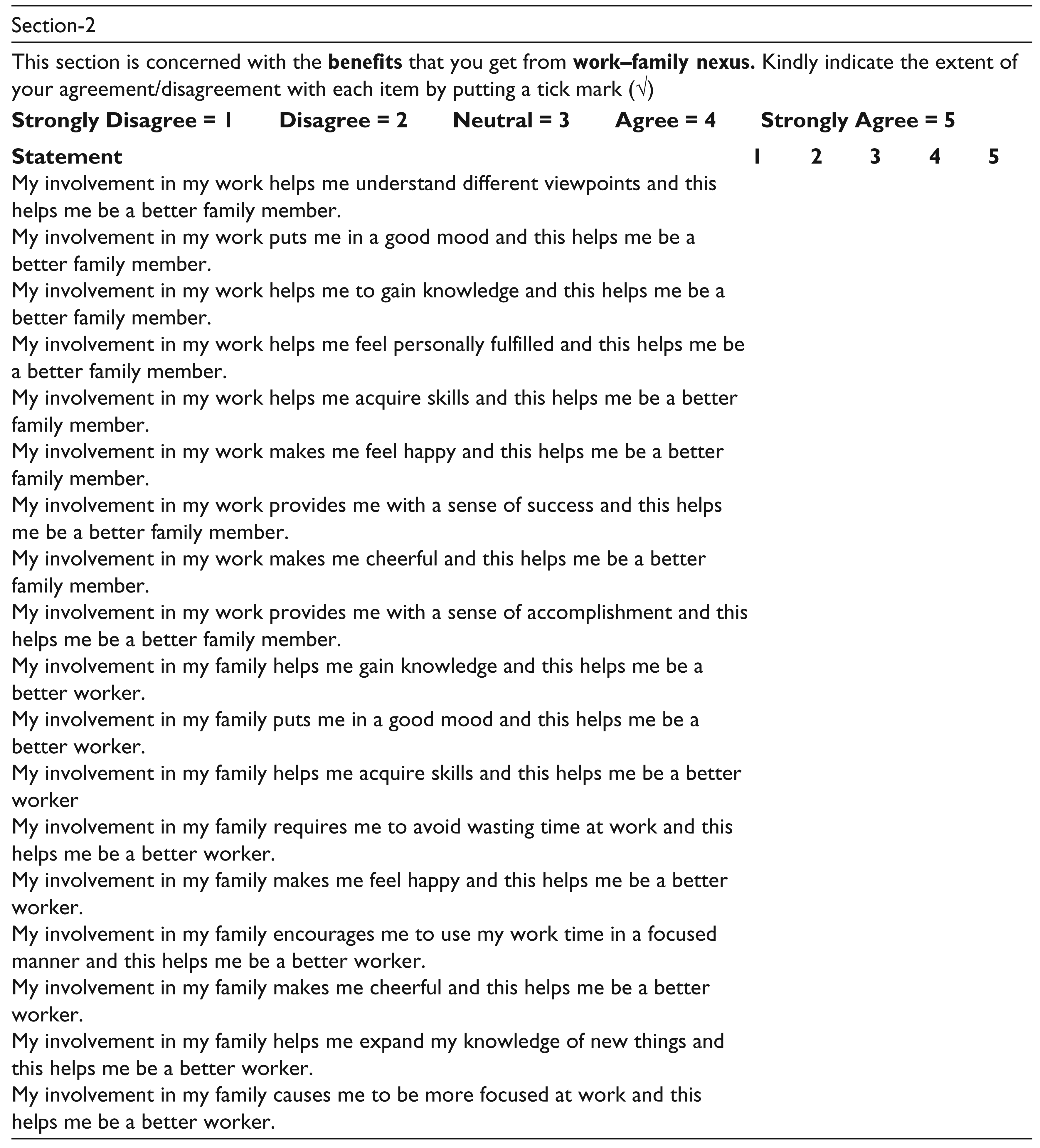
Modified version of family support scale (Hennessy, 2007) originally developed by House and Wells (1978) was used in the study. The measure gauges the nonwork-related experiences, that is, family-related experiences from family/friends and coworkers. The measure comprises of two subscales, comprising of five items each, gauging different types of support for work-related aspects from family/friends and coworkers.
However, since the scales (work support scale and family support scale) have not been widely used in the Indian context, their validity will be tested in this study.
Method
AMOS software (Arbuckle, 2011) version 20.0, which includes an SEM package with maximum likelihood estimation, was used to test both the measurement and the structural models related to the research hypotheses. Standard statistical procedures like descriptive and inferential statistics, such as frequency, means and factor analysis (to test the construct validity of work and family support scale) were conducted. The following statistical procedures were done to meet the objectives of the study:
Assessing construct validity of work support and family support scale. Assessing reliability of various scales. Exploring intercorrelations between variables (including control variables). Assessing hypothesized relation between independent and dependent variables under study. The overall fit of the models was assessed using both absolute and relative fit indices as recommended by Hair, Black, Babin and Anderson (2010).
Results
Following section presents the results of the analysis undertaken for the study. First of all, the support scales were tested for their validity. Later, the intercorrelations were presented, followed by testing the hypotheses using SEM.
Validation of Work Support and Family Support Scale
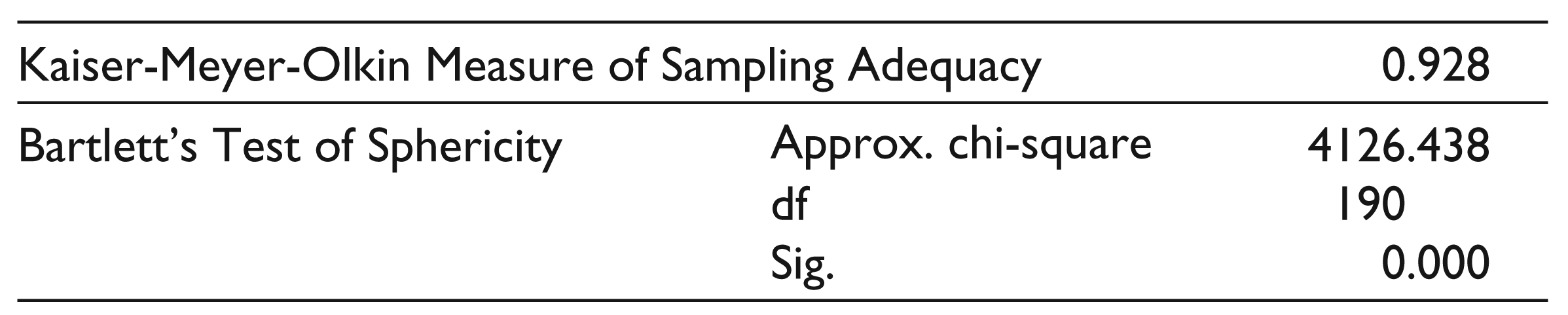
The first step used for refining measures and for evaluating construct validity was EFA (Ford, MacCallum & Tait, 1986). Thus, EFA using principal component analysis (PCA) method and VARIMAX rotation was carried out to reveal the causal factors of the work and family support. Initially, KMO and Bartlett test was conducted. According to Tabachnick and Fidell (2001), KMO values of ≥0.60 are considered good for factor analysis. Further, a significant result (sig. <0.05) using Bartlett test signified that matrix is not an identity matrix. Table 2 explores the result of KMO and Bartlett test. The results are found to be significant as per Tabachnick and Fidell (2001).
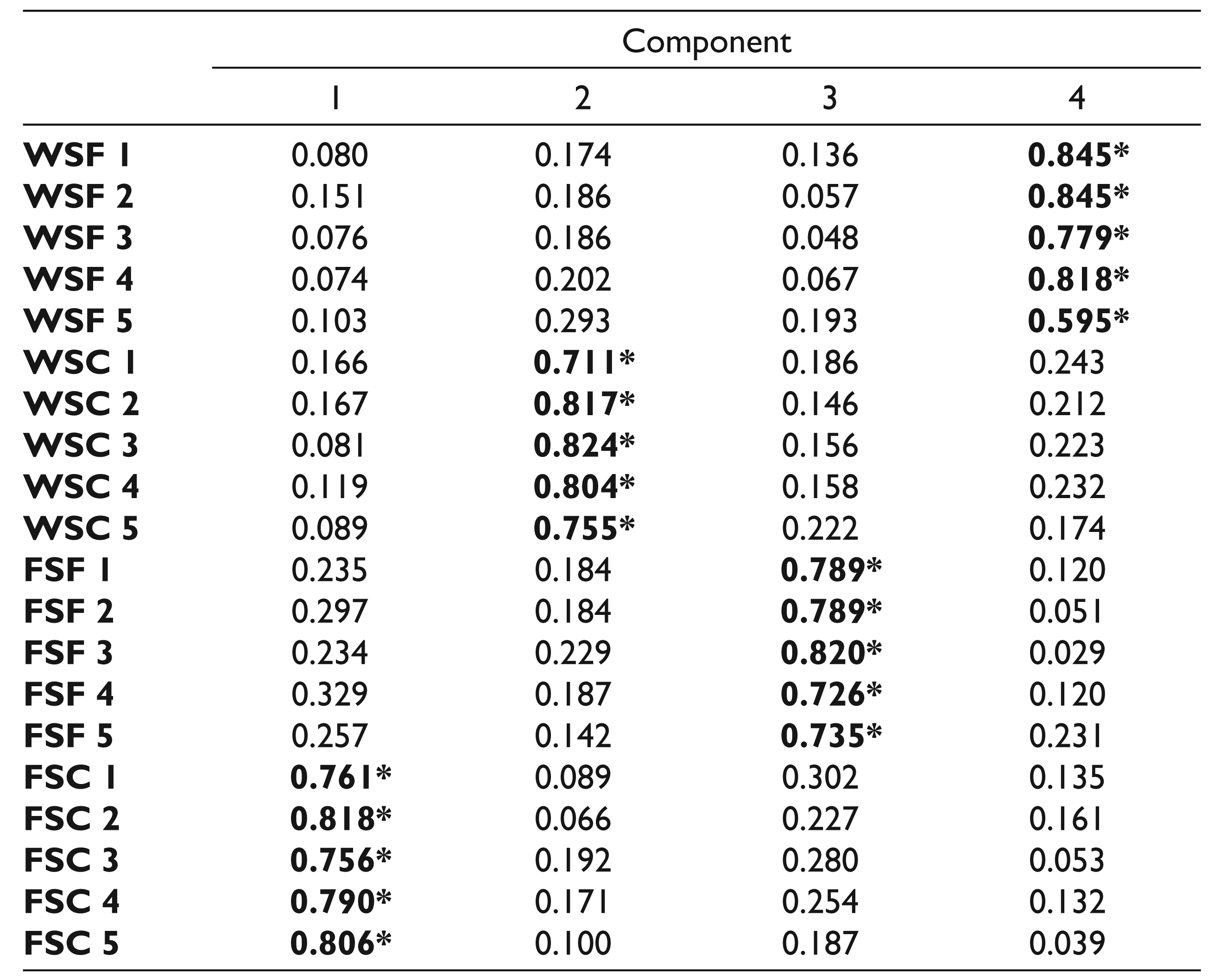
Further, multiple criteria (like Eigen values > 1.0 and variance explained of >60 per cent; factor loadings >0.5; Hair et al., 2010) were used for determining the number of factors to be retained (Hair, Anderson, Tatham & Black, 1998). All the 20 items were entered in a single analysis. A four-factor solution accounted for 70.65 of the total variance. All the 20 items corresponding to the dimensions of work support from family (ranging from 0.595 to 0.845), work support from colleagues (ranging from 0.711 to 0.824), family support from family (ranging from 0.726 to 0.820) and family support from colleagues (ranging from 0.756 to 0.818) were loaded appropriately in the pattern matrix. Table 3 highlights the factor loadings of the four factors.
KMO and Bartlett Test
Rotated Component Matrix
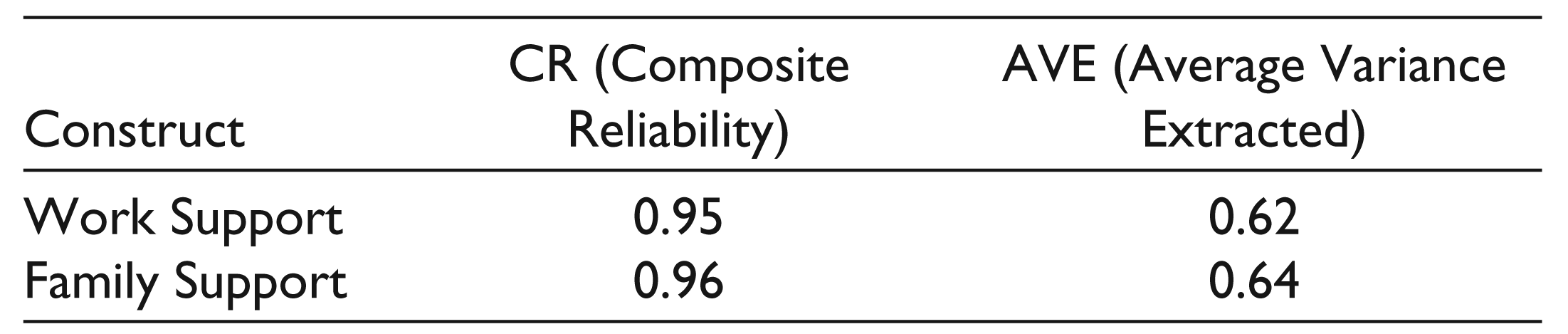
In order to ensure that the scale items converge on a single construct during measurement, the convergent validity was assessed (Steenkamp & Van Trijp, 1991). This was established from the assessment of the factor loadings (which must be between 0.30 and 0.35), composite reliability (CR) (at least 0.6) and average variance extracted (AVE) (at least 0.5) in the study (Hair et al., 2010). The results of convergent validity are found to be more than the prescribed values (CR ≥ 0.6 and AVE ≥ 0.5) (Hair et al., 2010). Table 4 presents the composite reliability and AVE values of the four factors. Both the scales are found to have appropriate convergent validity.
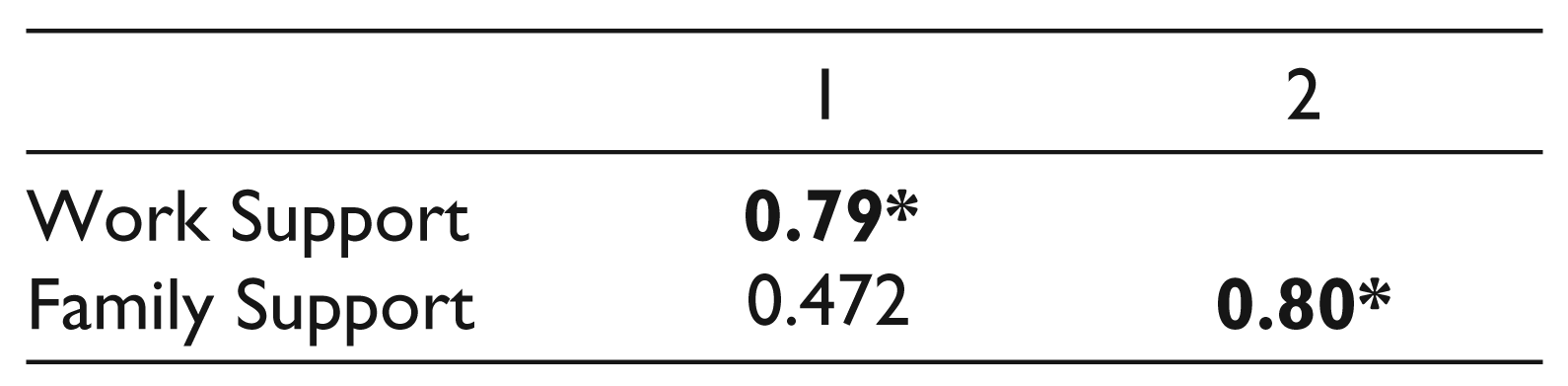
Subsequently, discriminant validity of various scales under study was worked out. It refers to the distinctiveness of different constructs (Campbell & Fiske, 1959). The rule is that variables should load significantly only on one factor. If ‘cross-loadings’ do exist (variable loads on multiple factors), then the cross-loadings should differ by more than 0.2 (refer Table 3). Also if the square root of AVE is higher than the correlation between the variables, discriminant validity is said to be achieved. Table 5 represents the discriminant validity of both support measures.
Convergent Validity
Discriminant Validity
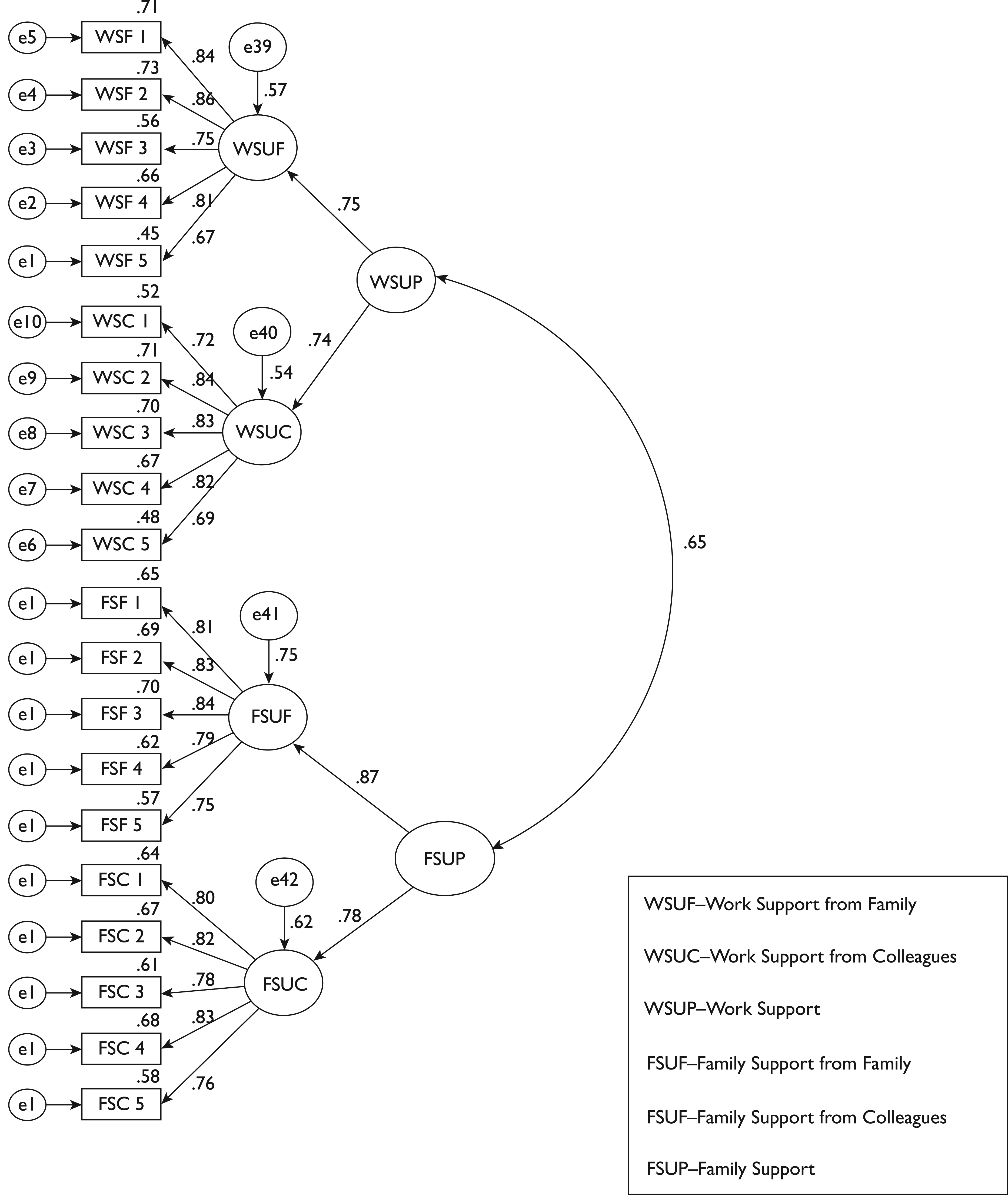
CFA was conducted on the 20-item work support and family support scale in order to acquire a robust evaluation of the quality of the measures (Jöreskog & Sörbom, 2001). Since results of EFA suggested a four-factor structure, two of which are related to work support and the other two explores the support from the family perspective. So we felt the need to confirm whether both work-related support (WSC and WSF) and family-related support (FSF and FSC) are related among each other or not. Therefore, a second-order factor analysis was conducted to understand the given aspect. The model fit statistic was found to be significant, that is, χ2 = 254.787, df = 167, p = 0.000, CMIN/df = 1.526, SRMR = 0.05, RMSEA = 0.04, CFI = 0.978 and NNFI = 0.975. The indices indicated a good fit; so the second-order factor structure was accepted and used for further analyses (see Figure 2).
Reliability of Scales
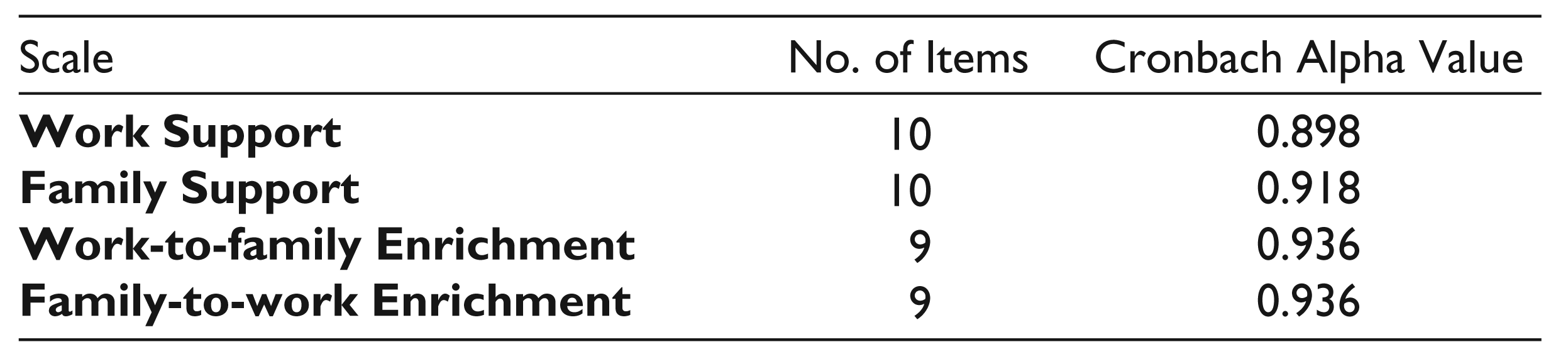
The Cronbach alpha value of all the scales exceeded the minimum standard of 0.7 (Nunnally & Bernstein, 1994), and hence, the scales under study can be considered to be reliable. Table 6 explores the Cronbach alpha values for various scales under study.
Intercorrelations
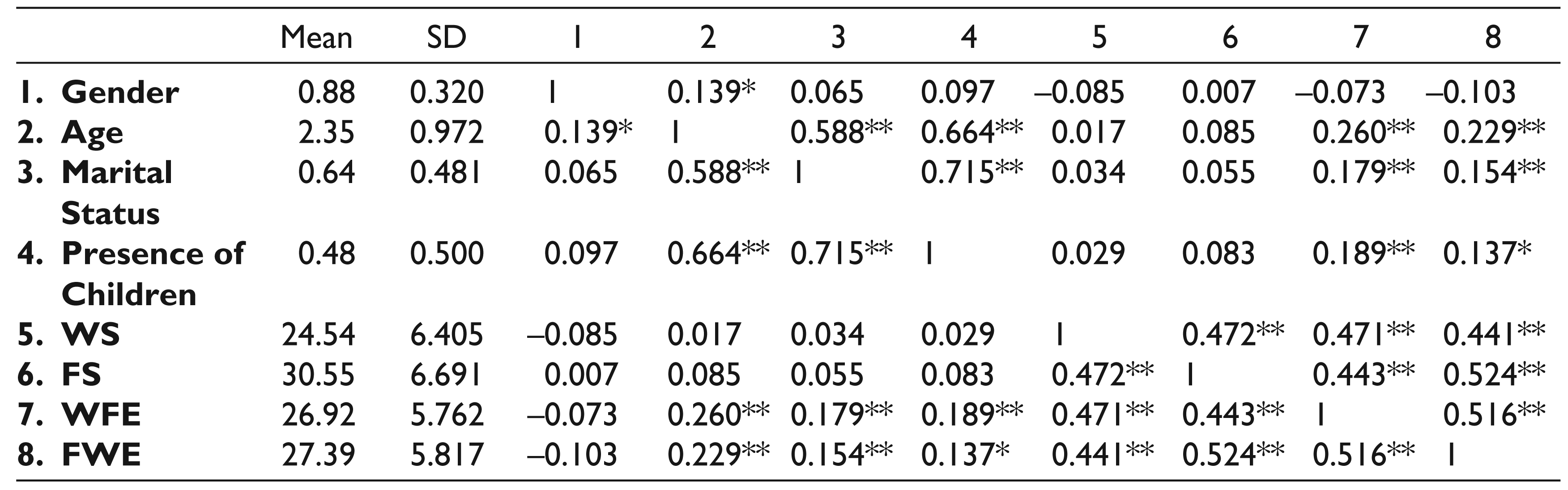
Table 7 presents the bivariate correlations among the variables (including control variables) as well as the mean and standard deviation for each variable. It is found that both work and family support were positively correlated with work-to-family enrichment (r = 0.471, p < 0.001; r = 0.443, p < 0.001) and family-to-work enrichment (r = 0.441, p < 0.001; r = 0.524, p < 0.001). Also it is observed that there is a positive correlation between WFE and FWE (r = 0.516, p < 0.001), as well as between WS and FS (r = 0.472, p < 0.001). In addition, it was found that control variables such as age, marital status and presence of children are found to be significantly correlated with both the exogenous variables.
Reliability Analysis
Means, Standard Deviations and Correlations between Variables
Results of Hypothesis Testing Using SEM
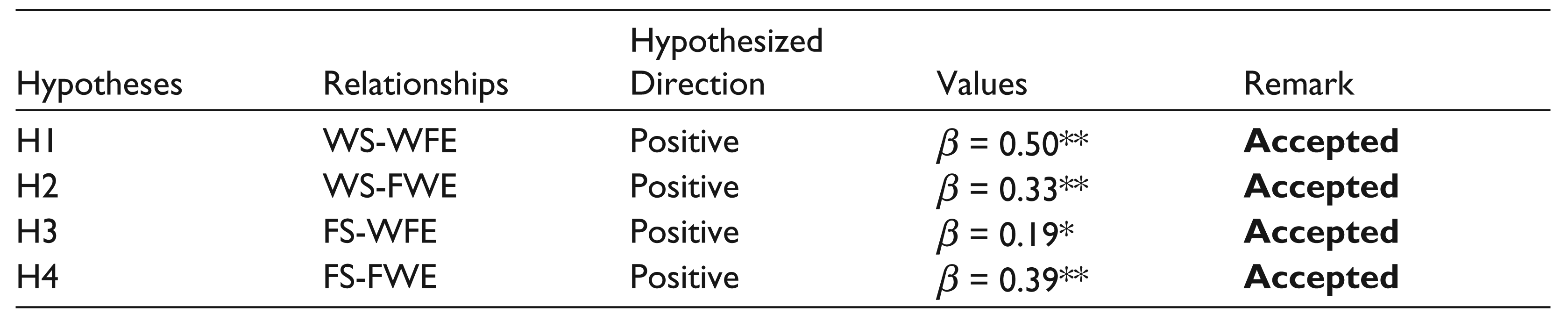
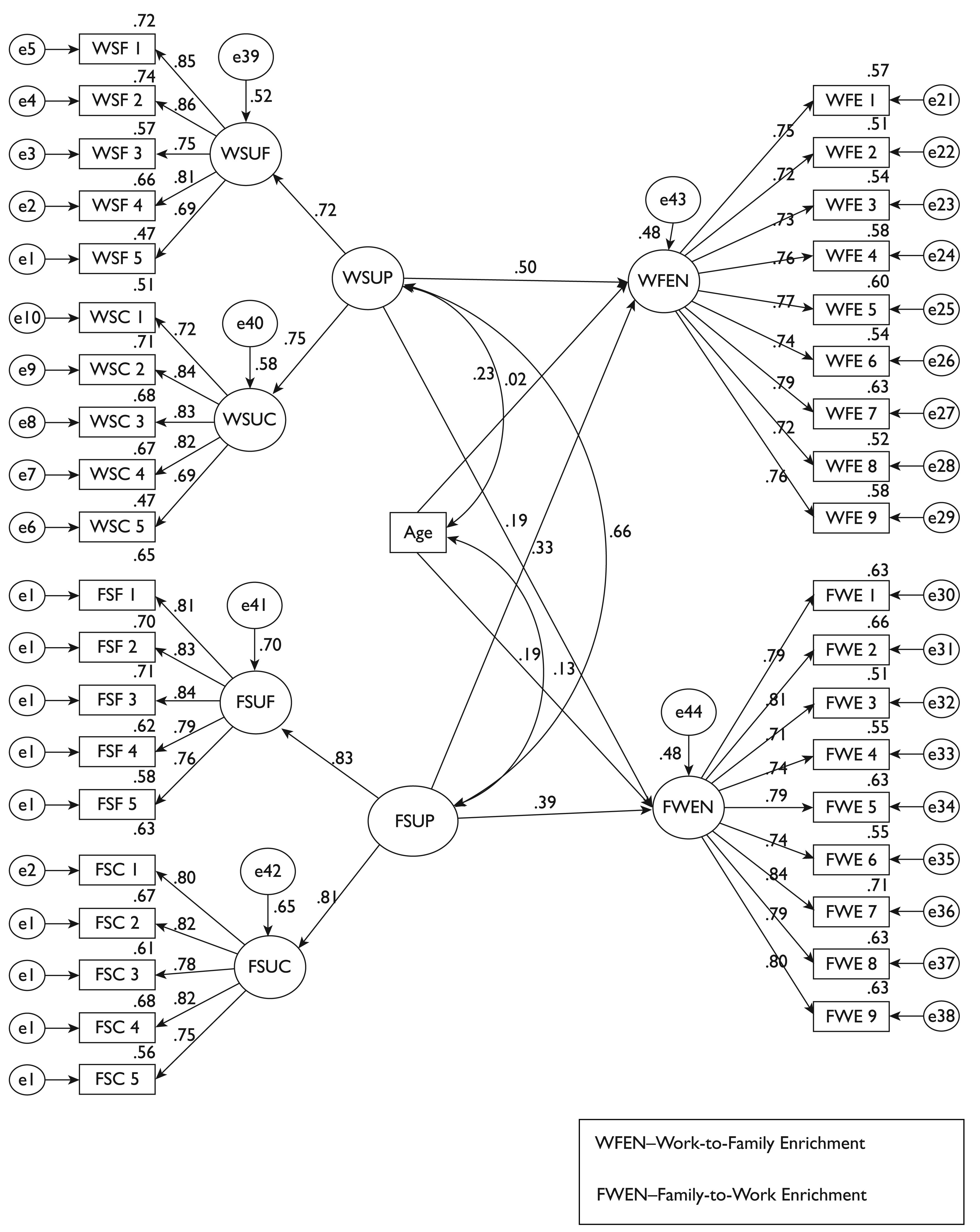
The hypothesized relations between independent variables (work support and family support) and dependent variables (WFE and FWE) were tested using structural equation modelling (SEM). SEM comprises of models wherein regressions among the continuous latent variables is projected (Bollen, 1989; Jöreskog & Sörbom, 1979). Table 8 summarizes the various relationships between variables under study. Further Figure 3 presents the result of SEM analysis using AMOS.
Model Testing
The fit measure of a structural equation model indicates to what degree the specific model matches the empirical data. In the present study, the researcher has used Hair et al. (2010) approach of reporting model fit indices values. Hence, apart from using CMIN/df and χ2 values, absolute fit indices like standard root mean square residual (SRMR) and the root mean square error of approximation (RMSEA), relative fit indices like the non-Normed Fit Index (NNFI) or TLI, and the Comparative Fit Index (CFI) are also reported and used to assess for model fit. The entire SEM analyses were done using Amos 20.0. The model fit statistics are reflected in Table 9.
Model Fit Indices
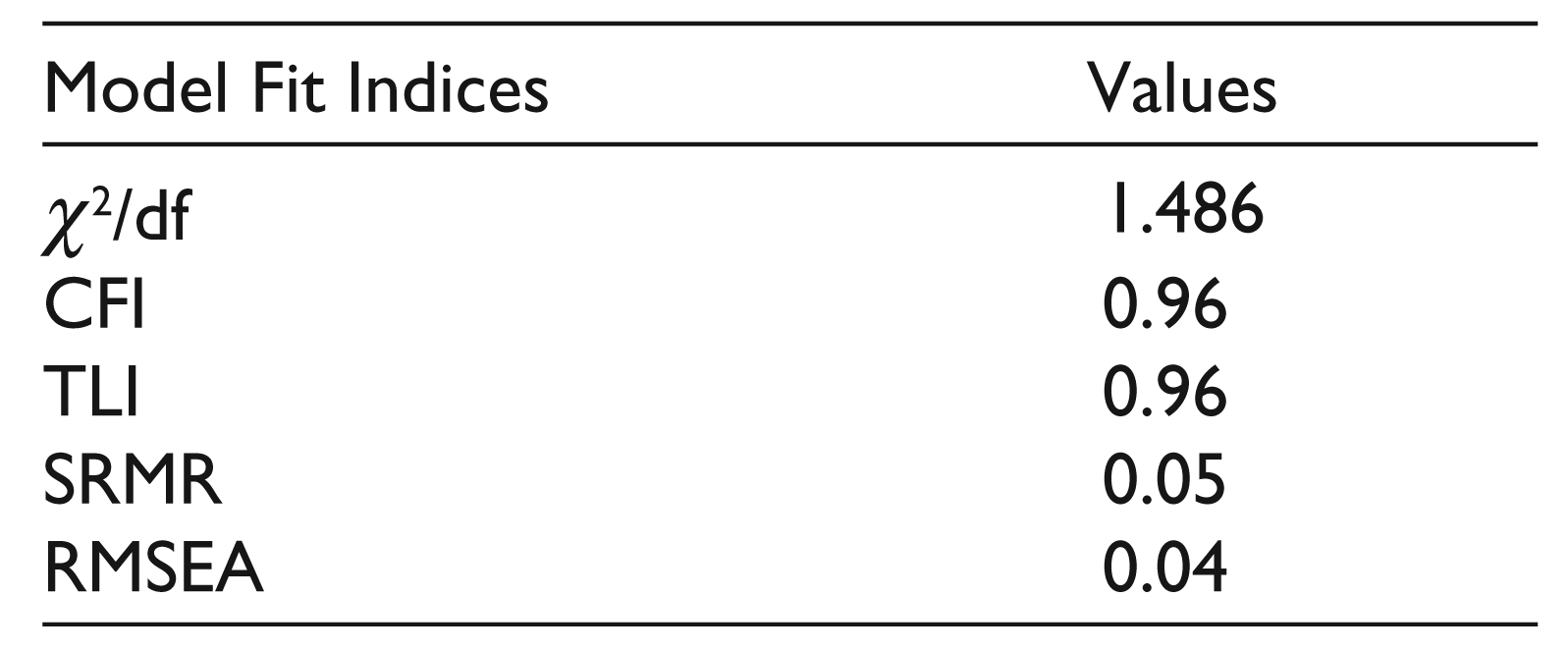
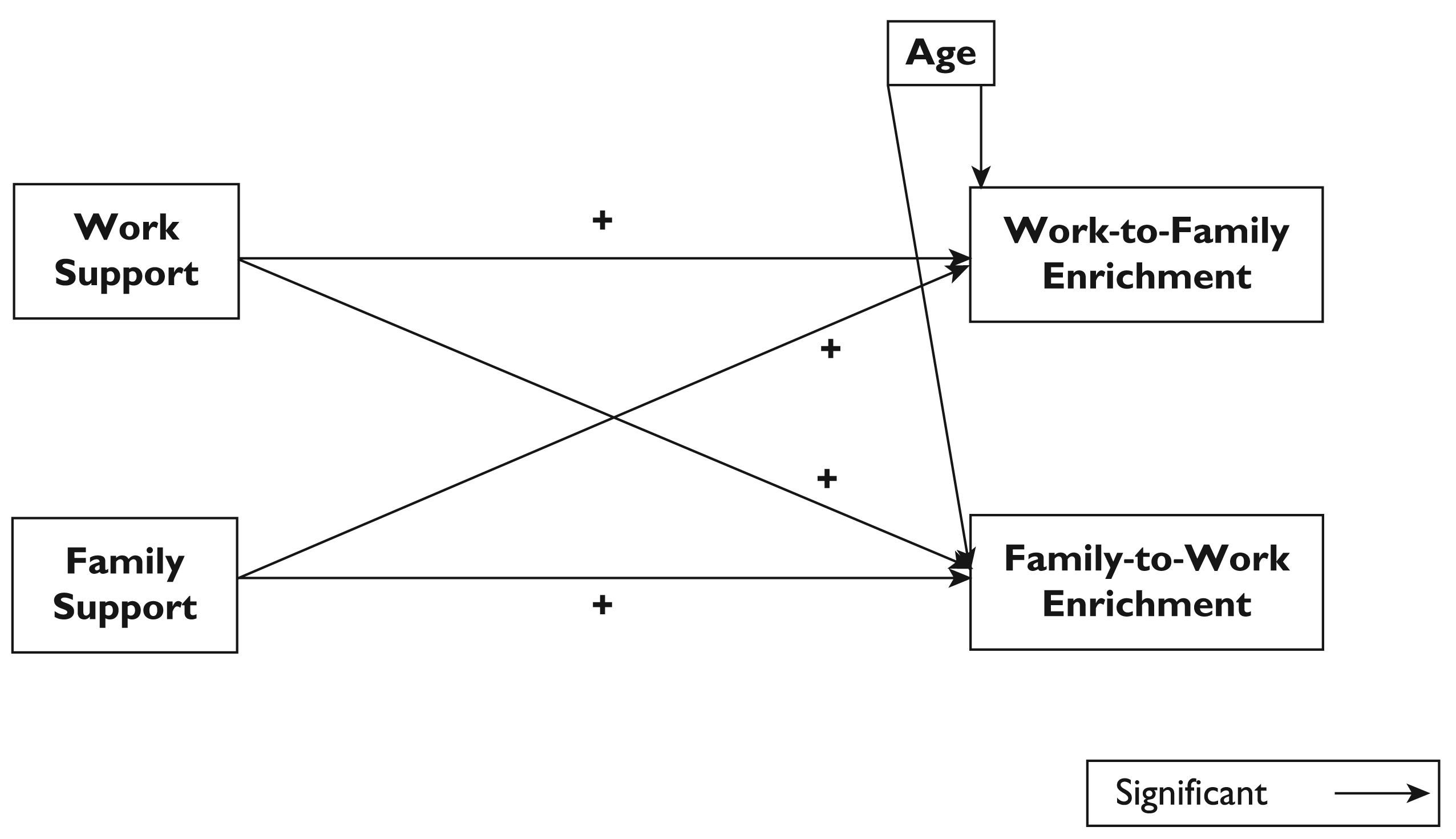
The model fit indices like χ2 (692) = 1028.473, p < 0.000; CFI (0.96); TLI (0.96); RMSEA (0.04) and SRMR (0.05) are indicative of decent fit (Hair et al., 2010). The model did account for 49 per cent of the variance in WFE and 48 per cent of the variance in FWE. In addition, only age is found to be significantly associated with the exogenous variables (see Figure 4).
Discussion
The analysis primarily started with the validation of the work and family support scale. It was found that there are four factors that represent support, of which two are related to work support and the other two explores the family support. A second-order factor analysis was conducted which indicated that two factors, work support from colleagues (WSC) and work support from family (WSF) leads to overall work support factors, whereas family support from family (FSF) and family support from colleagues (FSC) lead to overall family support. This also points out that factors in both work and family contribute positively to each other (Zhang et al., 2012). It was further found that age is significantly affecting both WFE and FWE (Jain & Nair, 2015) which seems to indicate that with increasing age, both WFE and FWE improve.
Later, the study investigated the role of support as predictors of WFE as well as FWE. Results supported that work support is an important antecedent of WFE (β = 0.50; p < 0.01) consistent with the (COR) theory (Hobfoll, 2001). Results further confirmed that work support is also an important antecedent of FWE (β = 0.33; p < 0.01). This confirms the notion that sales employees who gets higher level of support from their work tend to have higher levels of enrichment (both WFE and FWE). Further having higher annual salary (as is the case with sales people who get incentives for their efforts) or having higher flexibility/responsibility (especially sales function where responsibility and accountability are quite high) ones, WFE as well as FWE enhances. The findings are consistent with the premise that job-related resources show a positive impact on interaction between work and family and vice versa (ten Brummelhuis et al., 2010).
The hypothesized relationship between family support and work-to-family enrichment (WFE) also holds true (β = 0.19; p < 0.05). Furthermore, results confirm that family support is an important antecedent of FWE (β = 0.39; p < 0.01). This also suggest that positive experiences like having an understanding environment at home, which gets reflected from the higher level of FWE (refer Table 5) which further improves overall WFE. Again taking precedence from COR theory, King et al. (1995) recommended social support as a significant resource which generates emotional feelings like love, care, etc. Such a positive home environment facilitates individuals to transfer resources gained in the family domain to the work domain more efficiently (Wayne et al., 2006). Indeed, family support has been found as an antecedent of both WFE and FWE in the west (Grzywacz & Marks, 2000; Lu et al., 2009) as well as in Mainland China (Lu & Chang, 2014; Siu et al., 2010). Furthermore, this also reinforces the strength and power of family towards influencing positive outcomes among sales employees in Indian organizations.
Conclusions
This study tested the role of support as predictor of work–family enrichment for sales employees in Indian organizations. The relationships between both forms of support, that is, work support and family support, was studied with regard to both forms of enrichment, that is, WFE and FWE. All the four relationships emerged as positive and significant, indicating the effectiveness of the model. It was found that both forms of support, that is, work and family support, affect one’s work-to-family enrichment as well as family-to-work enrichment. This points out the fact that organizational support to employees on work-related aspects alone is not sufficient to get enriched employees who are fully dedicated to their work. In fact, ensuring family-related support systems to employees should also be taken seriously by organizations. This in turn would have a significant effect on the employees’ level of enrichment.
The study signals the importance of ensuring a supportive organizational environment for an effective workforce. Evidence from this study suggests that organizations should develop an environment or ‘culture’ of support, which intends to improve one’s WFE which has an enduring impact on one’s job, and family satisfaction as well as turnover intentions. If employees do not feel there is sufficient support from the organization and from colleagues with whom they work, then firms may not be able to achieve desired outcomes in the form of higher job satisfaction and lower turnover intentions. Hence, it can be concluded that a deeper insight into the positive side of work–family interaction may help to portray sales as a favourable profession.
Another important implication emerges in form of family support, which emerges as important for sales employees in the Indian context. So firms that intend to improve enrichment levels of their employees should build stronger ties with their families first. In recent times, it is observed that firms are inviting employees’ family members like children, spouse and parents to participate in family celebration events. Also, awards like ‘the best back-up’ (normally the spouse) and sending part of employees’ annual bonus to their parents (Zhang, Griffeth & Fried, 2012) are used in other parts of the globe. The same can be used by Indian companies to develop positive image about organizations intent towards family support and help balance employees’ work and family lives.
The present study has some limitations that need to be taken into account. First, the study is cross-sectional nature and thus causal conclusion cannot be drawn. Also, only Mumbai city has been chosen for data collection. However, choice of Mumbai was made as this city is considered to be the financial hub and hence having presence of maximum business houses.
Sample Questionnaire
Footnotes
Acknowledgements
The authors are grateful to the anonymous referees of the journal for their extremely useful suggestions to improve the quality of this article. Usual disclaimers apply.