



Abstract
Growth of career is becoming more important to an employee of the modern age. The assessment of career advancement (CA) provides such valuable information. It is quite relevant to mention that men and women employees follow different career paths. To a man his job is always important. However, a woman keeps her family on first priority and her employment on second priority. The review of available literature reveals that some studies have highlighted CA of women employees. Most of them are conceptual in nature and pursue the concept of the glass ceiling. Consequently, the research gap emerges as there is a lack of empirical work in this regard. Total absence about the measurement of CA of women employees in the Indian context amplifies this existing knowledge gap. Thus, this study tries to identify the new dimensions of CA and finally proposes a model for practical adoption. With the sample of 182 female bank employees from Uttarakhand state, exploratory factor analysis (EFA) ultimately discovers three dimensions of CA, namely future aspirations (FA), present satisfaction and career orientation (CO). Cronbach’s alpha values report high reliabilities for these dimensions and the CA instrument as a whole. In the end, conclusion, limitations and future research agenda have also been discussed.
Introduction
According to Hall (2002, p. 12), ‘the career is the individually perceived sequence of attitudes and behaviours associated with work related experiences and activities over the span of the person’s life’. However, it is more relevant and meaningful to add the concept of advancement or growth for a real assessment. For an employed person, it is not only about salary and perks. Rather, it is about the extent of success achieved so far. Career advancement (CA) is the term which is used in the literature of Organizational Behaviour (OB) to express such success. CA refers to the nature of an individual’s promotion to higher positions and incomes over time (Ackah & Heaton, 2003). This definition represents the narrow version of CA. In addition, future aspirations (FAs) from the job are also relevant to be included in CA. Individuals and organizations should create a partnership to enhance employees’ knowledge, competencies, attitudes and skills meant for their present and future job requirements (Gilley, Eggland & Gilley, 2002). Furthermore, Simonsen (1997, pp. 6–7) marked that CA is a continuous process of planning and thoughtful actions towards personal work and life goals. Advancement means development, continuous growth and obtaining and application of an individual’s skills. CA is the result of one’s career planning and the support and opportunities provided by the organization. Therefore, the notion of CA should be more sensitized under the purview of Human Resource Management (HRD), so that diverse individual needs can be addressed in a systematic manner. The concept of CA in the organizational framework is established in the management literature (Hall, 1996; Schein, 1978). Various theories covering the career research stressed upon developmental stages (Super, 1980), personality perspectives (Holland, 1985), individual characteristics (Tiedeman & O’Hara, 1963) and person–environment compatibility (Hackett & Betz, 1981).
However, the entire concept changes dramatically, when the lens of gender is used to look into the subject. CA differs for men and women employees, as they follow different career paths. Male employees focus more on their jobs and are supposed to play the role of the breadwinner for the family. On the other hand, female employees keep their families on priority and are considered to be the homemakers of the household. A number of studies depicted the reasons for women opting out of the workforce, which primarily include childcare and eldercare demands, workplace discrimination, sexual harassment and poor gender-supportive policies of their employers (Powell, 1999; Powell & Graves, 2003), boring jobs, lower chances for advancement and unreasonable working hours (Mainiero & Sullivan, 2005), due to entrepreneurial desires and instincts (Moore, 2002) and to have a balanced work and personal life (Sullivan & Mainiero, 2008). A trend was observed in the Western world, whereby women worked before marriage, stopped working after marriage to care for their children and later returned to work after their children had attained school age (Ilori, 1982). But this trend witnessed a change during the decade of 1990. More and more women are moving into the labour force, especially married women, and the highly educated are becoming more committed to work and do not interrupt their careers after marriage as it used to be (Anderson, 1997). These findings confirm that the rising levels of female employment bring about changes in the structure and functions of the family group.
In the Indian scenario, the 15th Census, conducted in the year 2011, presents some facts about female employment. The number of workers in the country is 481.7 million, and of this, men are 331.9 million (68.9%) and women workers are 149.9 million (31.1%). Furthermore, a slight decrease in work participation rate (WPR) for women is worth noting in this regard. In 2001, WPR for women was 25.6 per cent, which came down to 25.5 per cent in 2011. Nevertheless, it can still be mentioned that the Indian economy is experiencing the entry of more women workers. Therefore, it becomes relevant to research about the CA of women employees, so that the participation of women in the economy can be sustained and increased as well.
This research article is organized into seven sections. The first section has already illuminated the introductory part. Review of literature is presented in the second section. Rationale and objectives of the study constitute the third section. The fourth section states the methodology of the article. The fifth section reports the results with their interpretation, and the sixth section concludes the study. Finally, limitations and future research agenda have been discussed in the last (seventh) section.
Review of Literature
Review of antecedent work is being presented under this section. First, CA has been identified in the literature, and later on, issues regarding women employees have been clubbed for a comprehensive review.
The term ‘career’ secures its place as a point of origin, before moving on to CA. Sullivan and Baruch (2009, p. 1543) defined career as ‘an individual’s work-related and other relevant experiences, both inside and outside of organizations, that form a unique pattern over the individual’s life span’. There are two types of careers, which can be located thoroughly, namely, protean career and boundaryless career. Protean career refers to a process which is driven by a person, not an organization. It constitutes a person’s experiences and changes in different organizations (Briscoe & Hall, 2006; Hall, 1996). However, the boundaryless career refers to a career that transcends organizational boundaries (Arthur & Rousseau, 2001; Briscoe & Hall, 2006).
Traditionally, studies on CA have comprised objective career success, which is evidenced by an individual’s achievements on the front of compensation, promotion and his or her hierarchical position in the organization (Arthur, Khapova & Wilderom, 2005). On the other side, some researchers define career as subjective. Subjective CA describes that the individual makes his or her own internal understanding and evaluation of his or her career (Hall & Chandler, 2005). The advocates of the subjective perspective of CA believe that subjective CA drives objective results by providing individuals with positive psychological capital (Hall & Chandler, 2005). Additionally, the considerations to measure CA also have been explained within the purview of traditional and modern approaches. Climbing the hierarchical ladder within the organization symbolizes the CA as per the traditional view. But, the recent decades have witnessed the issues of low job security and high job mobility. Therefore, the concept of CA is now seen as unpredictable, unstable and multidirectional (Baruch, 2006). However, the modern approach states that future prospects and devotion to career require to be added to the present status of advancement (Lee, Kwon, Kim & Cho, 2016).The in-depth observation of these shifts leads to the need of determining the dimensions of CA in the contemporary business environment.
Another notable point that comes up after scanning the previous studies is that CA of women has been delimitated to the identification of barriers to this advancement (Burke & McKeen, 1996; Gunasekare & Ratnayaka, 2015; Hague & Okpala, 2017; Jayatilake, 2016). ‘Glass ceiling’ is the term which has been used more frequently. Studies conducted by Powell (1999), Ragins, Townsend and Mattis (1998) and Ryan and Haslam (2007) strongly put forward that the glass ceiling, the glass wall, the glass cliff and the sticky floor still prevent a large percentage of women from advancing to the top of organizations and being paid equitably. According to the Preference Theory, propounded by Hakim (2000), ‘women are more likely to prioritize work–family balance, whereas men are more likely to prioritize their careers, which may lead to different labour market outcomes’. Women view advancement to their career paths as more stressful, receive less recognition in their jobs (Trevino, Gomez-Mejia, Balkin & Mixon, 2015) and perceive lower career satisfaction and longevity (Metz, 2011), in comparison to men. Jandeska and Kraimer (2005) found that women face difficulties in advancing where the organizational cultures consist of masculine attributes. Similarly, other articles theoretically talk about the glass ceiling (Silva, Magro & Silva, 2016; Sommers, 2017). Another paper authored by Yusuff (2014) simply highlights CA in conceptual terms. In contrast, Bajdo and Dickson (2001) observed that employers whose members reported a humane orientation have a higher percentage of women in management. Takeishi (2016) has penned down the factors for the promotion of women managers. However, Lee et al. (2016) and Sullivan and Mainiero (2008) have attempted some principal experiments related with the topic. Additionally, Arifeen (2010) identified mentoring as an insignificant factor affecting the CA of female Pakistani managers.
A few studies in India have postulated women’s experiences with CA (Amudha, Motha, Selvabaskar, Alamelu & Surulivel, 2016; Kumar, 2016; Patwardhan, Mayya & Joshi, 2016). Amudha et al. (2016) examined the obstacles to career development of women employees in Information Technology (IT) companies in Chennai. They also pointed out that women in the corporate sector are drained because of the existing corporate cultures. Another paper discussed about glass ceiling theoretically (Kumar, 2016). However, Patwardhan et al. (2016) also found barriers to CA of working women in five-star hotels, such as more family responsibilities than men, lack of flexible work solutions and stereotypes against women. Earlier, Chugh and Sahgal (2007) reviewed the CA aspects of women and also pointed out that sex-role orientation and the stereotyping along with the glass ceiling are the main themes that explain the less number of women in positions of leadership and authority.
Objectives of the Study
A review of literature revealed that CA has been central to previous studies in more conceptual and less empirical terms. Moreover, lack of adequate research on CA, particularly with reference to women employees, poses a significant knowledge gap. Consequently, this study aims to propose a new model of CA for practical adoption. The specific objectives are to test the validity and reliability of the instrument and to identify the dimensions of CA.
Research Methodology
The exploratory design has been used to identify the dimensions of the newly developed model of CA. A self-generated instrument was conveniently surveyed among 182 women employees working in bank branches of Haridwar district in Uttarakhand state. The instrument consisted of 10 statements, which were to be rated on a 5-point Likert scale, ranging from 1 as strongly disagree to 5 as strongly agree. There was a neutral middle point also at the position of point three, which provided balance to the instrument as equality of negative and positive responses on the left and right sides, respectively. Some demographic variables, such as age, marital status, type of family, number of dependents and job experience, were also included in the instrument. Coding of the 10 statements of the instrument is mentioned in Table 1.
Coding of the Statements (Variables)

The validity of the instrument was confirmed under two categories, that is, internal and external. Internal validity ensured that all statements belong to the concerned dimensions while external validity was tested in the form of content and construct validities. Content validity was determined by experts’ opinion. To assess the construct validity, exploratory factor analysis (EFA) was conducted with the help of Statistical Package of Social Sciences (SPSS v. 22). Orthogonal rotation (varimax) has been applied to data, as it assumes all the factors are independent and unrelated.
The most widely used and trusted technique of Cronbach’s alpha coefficient was applied to check the reliability status of the main scale (instrument) and subscales (factors) as well.
Analysis
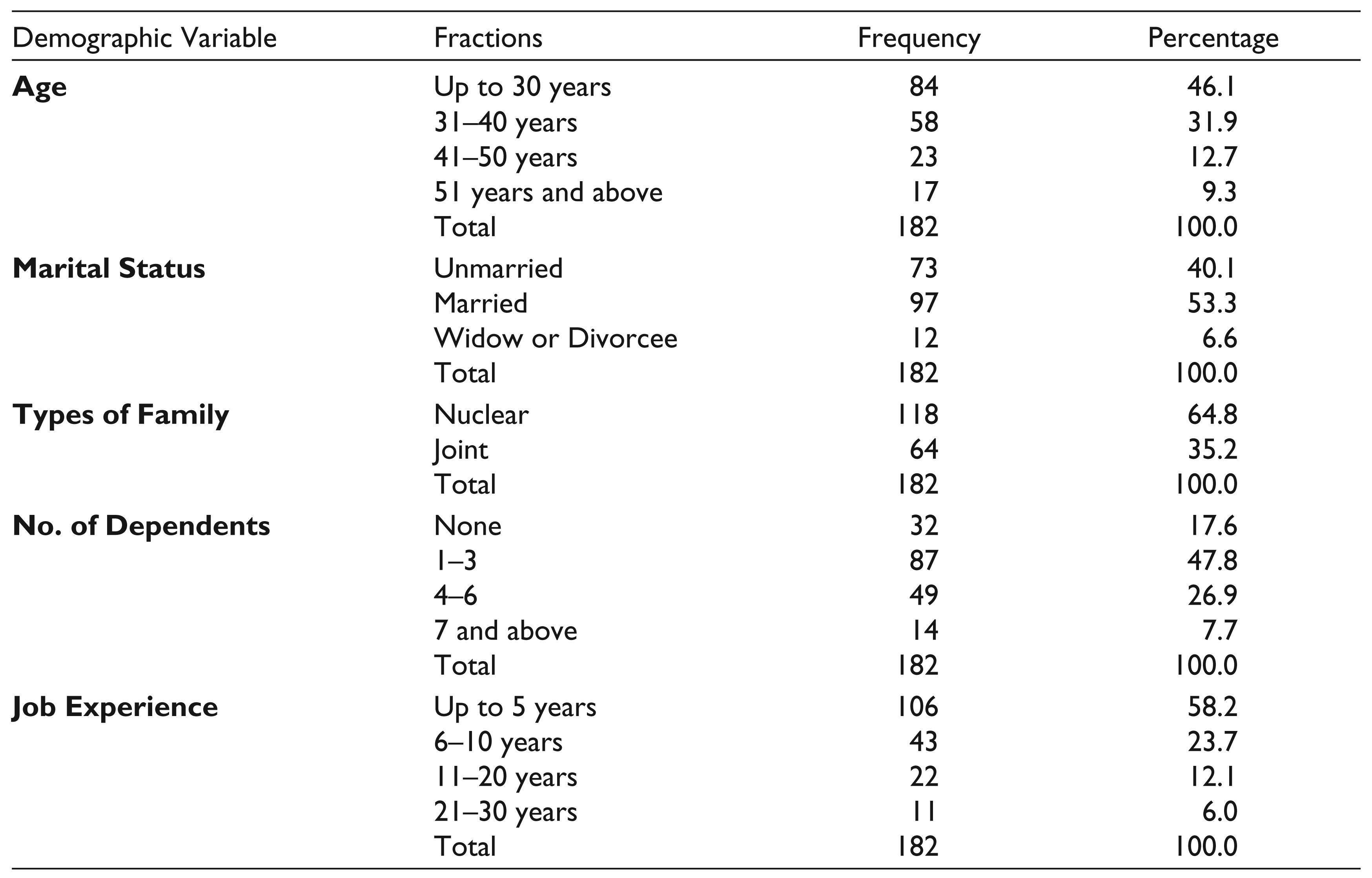
A summary of sample characterization has been depicted in Table 2. Data were collected for the five variables, that is, age, marital status, types of family, number of dependents and job experience of the respondents. Analysis made it evident that the younger group, aging up to 30 years, held the majority (46.1%) in the category concerned. However, the most-aged fraction of respondents, aging 51 years and above, had the smallest proportion (9.3%). The other two categories of age from 31 to 40 years and from 41 to 50 years contained the respective share of 31.9 per cent and 12.7 per cent. The sample description also revealed that most of the respondents were married (53.3%), while unmarried respondents were 40.1 per cent of the total. In addition, 6.6 per cent of the respondents were widows or divorcees. Data on the type of family depicted an excess of nuclear families (64.8%) over joint families (35.2%) of the respondents. It was also found that the larger part of the sample (47.8%) had the dependents in their families from one to three. On the other hand, 26.9% of the respondents reported the number of dependents from four to six. The smallest category of respondents with 7.7 per cent carried seven or more dependents. Besides this, 17.6 per cent respondents had no dependents. Finally, a gradual decrease in the number of job holders was observed with the increasing amount of their job experience. The largest proportion of the sample (58.2%) held the minimum tenure of experience, that is, up to 5 years. The next class of 23.7 per cent respondents stated their job experience from 6 to 10 years. The minor fractions of 12.1 per cent and 6.0 per cent respondents informed about their long job experience of 11–20 years and 21–30 years, respectively.
Description of Sample
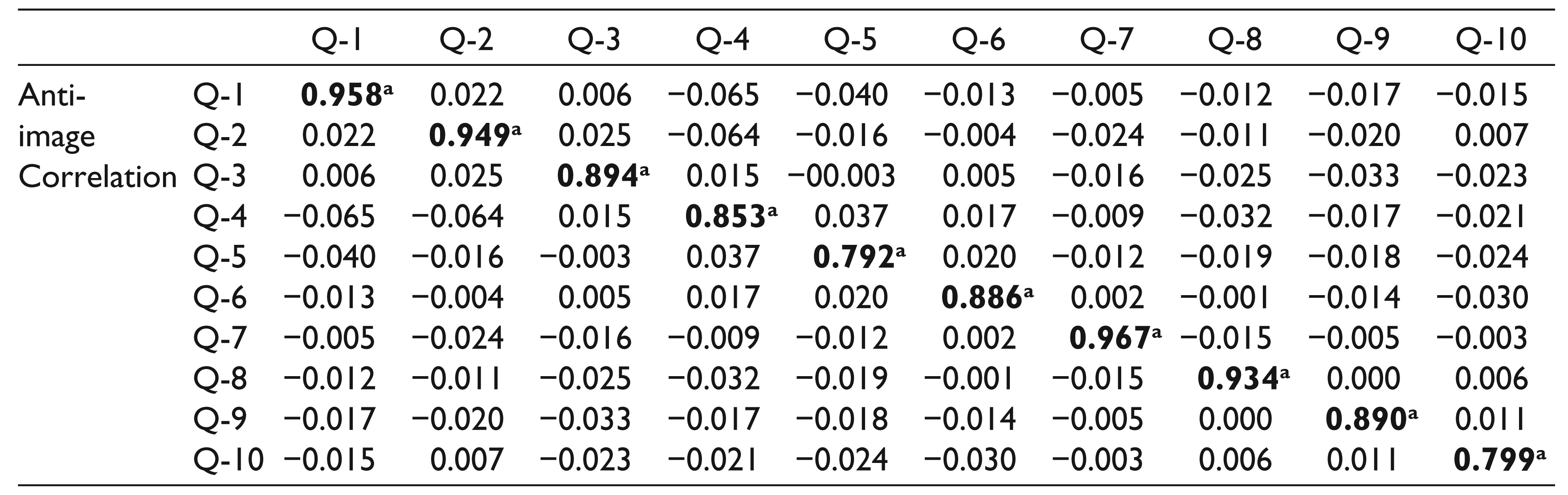
Results related to EFA reveal that no value of correlation is neither too small (less than 0.2), except 1, nor too large (more than 0.9). Furthermore, all the values are significant (p < 0.05). In addition, the value of the determinant (0.098) is greater than the least required value of 0.00001 (Field, 2009, p. 648). So, all statements in the instrument correlate reasonably well with all others and none of the correlation coefficients are excessively large. Therefore, multicollinearity is not a problem for these data, and the instrument does not require any elimination at this stage (Field, 2009, p. 658). The results reflect that the KMO value is 0.896, which may be regarded as ‘great’ (Field, 2009, p. 659). They also make it evident that the sample size is adequate for EFA. Bartlett’s test value (411.532) is highly significant (p < 0.001), which confirms the presence of some sort of relationship between variables. Therefore EFA is found to be appropriate for these data (Field, 2009, p. 660). Table 3 displays the KMO values for each individual statement (variable) on the diagonal of this matrix in bold font. As per Kaiser’s rule, the values should be above the bare minimum of 0.5 for all variables. For these data, all values are well above 0.5. Besides this, the off-diagonal elements are small, which fulfil another demand of a good model (Field, 2009, p. 659). So, all the statements constituting the measuring instrument are apposite for the model.
Anti-image Results
Values of communalities, as posed in Table 4 for all the variables after extraction, are greater than the required minimum value of 0.3. Hence, communalities also support these data.
Values of Communalities
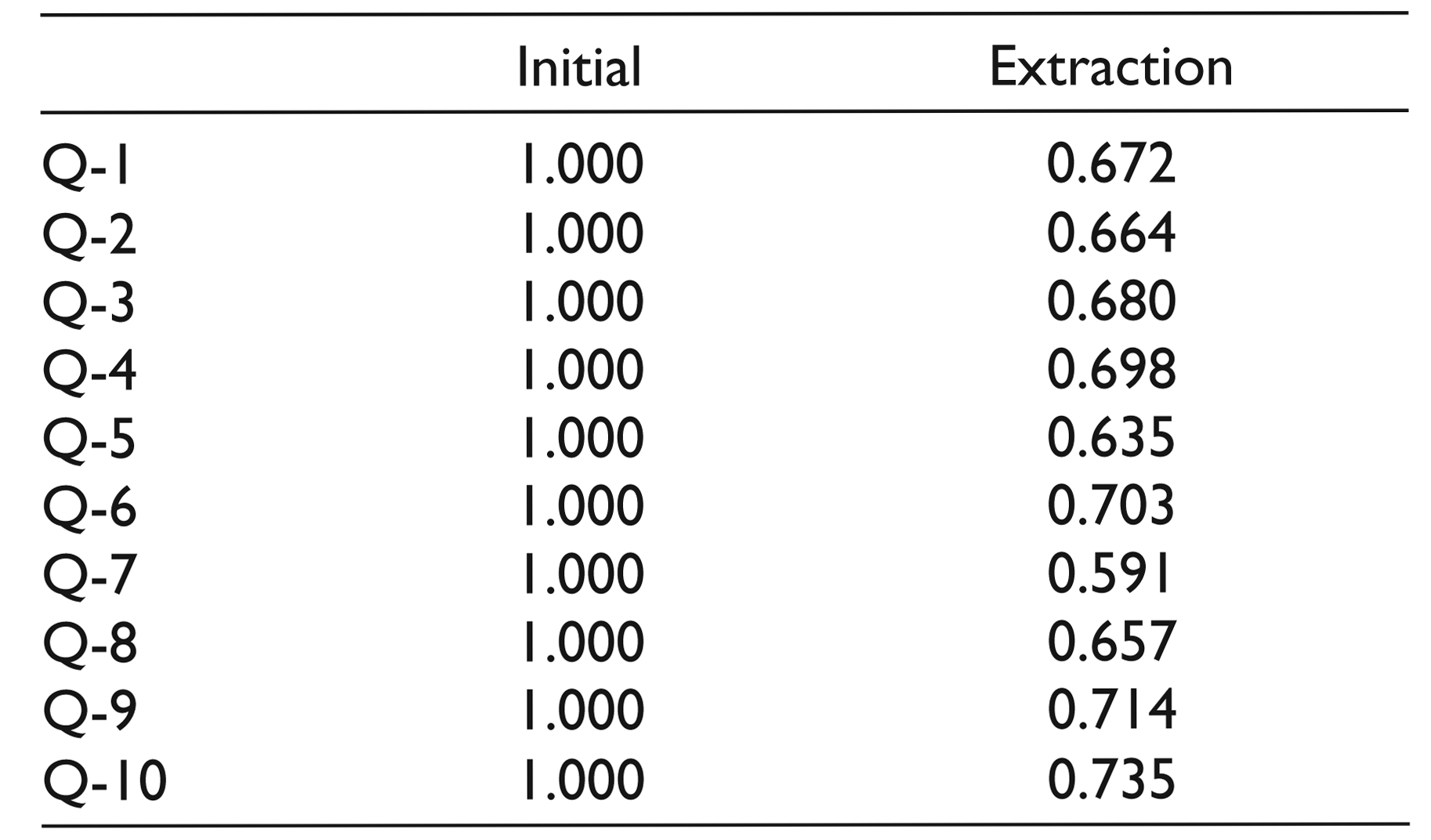
Table 5 presents the total variance explained under three categories, that is, initial eigenvalues (before extraction of factors), extraction sums of squared loadings (after extraction but before rotation applied) and rotation sums of squared loadings (after rotation). First part, initial eigenvalues, shows eigenvalues for all 10 items (statements) along with their respective percentage of variance. Following Kaiser’s rule, three factors are retained here, having eigenvalues of more than 1 (Field, 2009, p. 640). The second part of the table poses the three extracted factors with their respective values for percentage of variance. Third and last part of this table depicts the effect of varimax rotation on the extracted factors. Before rotation the first factor accounted for considerably more variance than the remaining two (32.601% compared to 22.903% and 11.995%), but after rotation it accounts for 29.368 per cent of variance, compared to 20.609 per cent and 17.522 per cent, respectively. So, it can be stated that rotation has the effect of optimizing the factor structure, and one consequence is that the relative importance of the three factors is equalized. These three factors (components) explain 67.499 per cent of variance in total.
Total Variance Explained
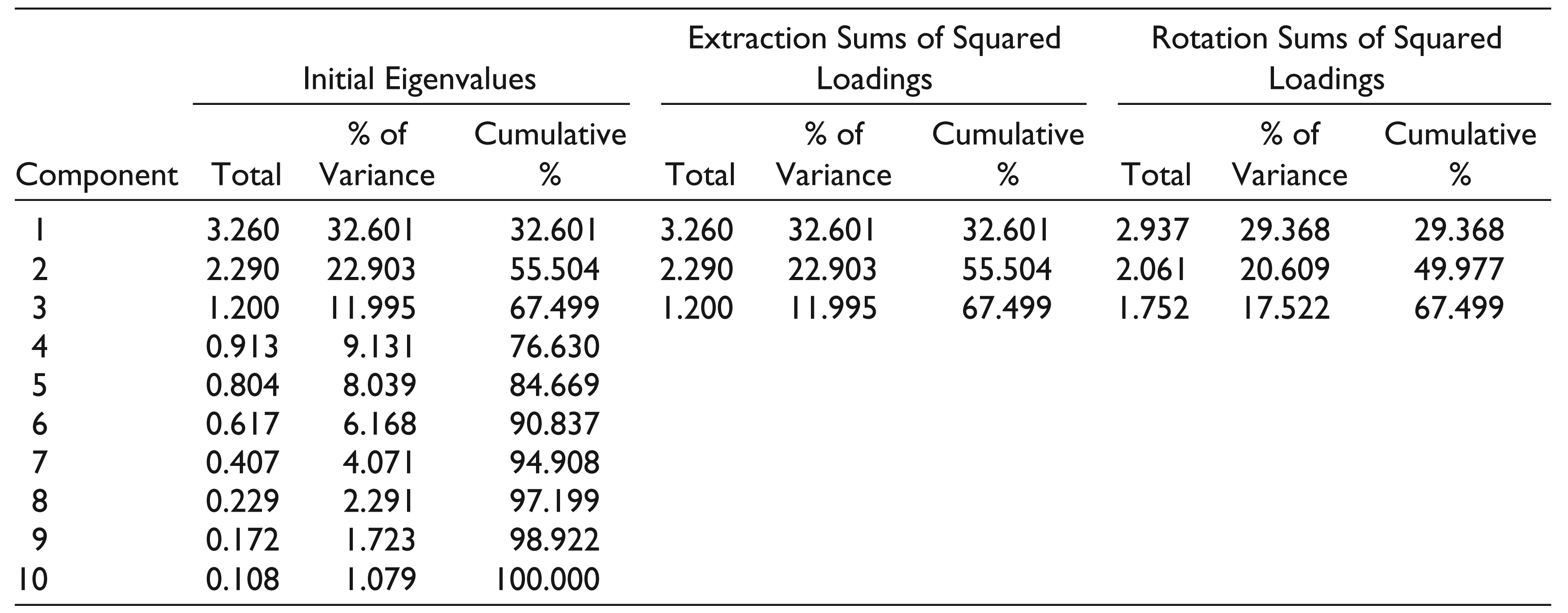
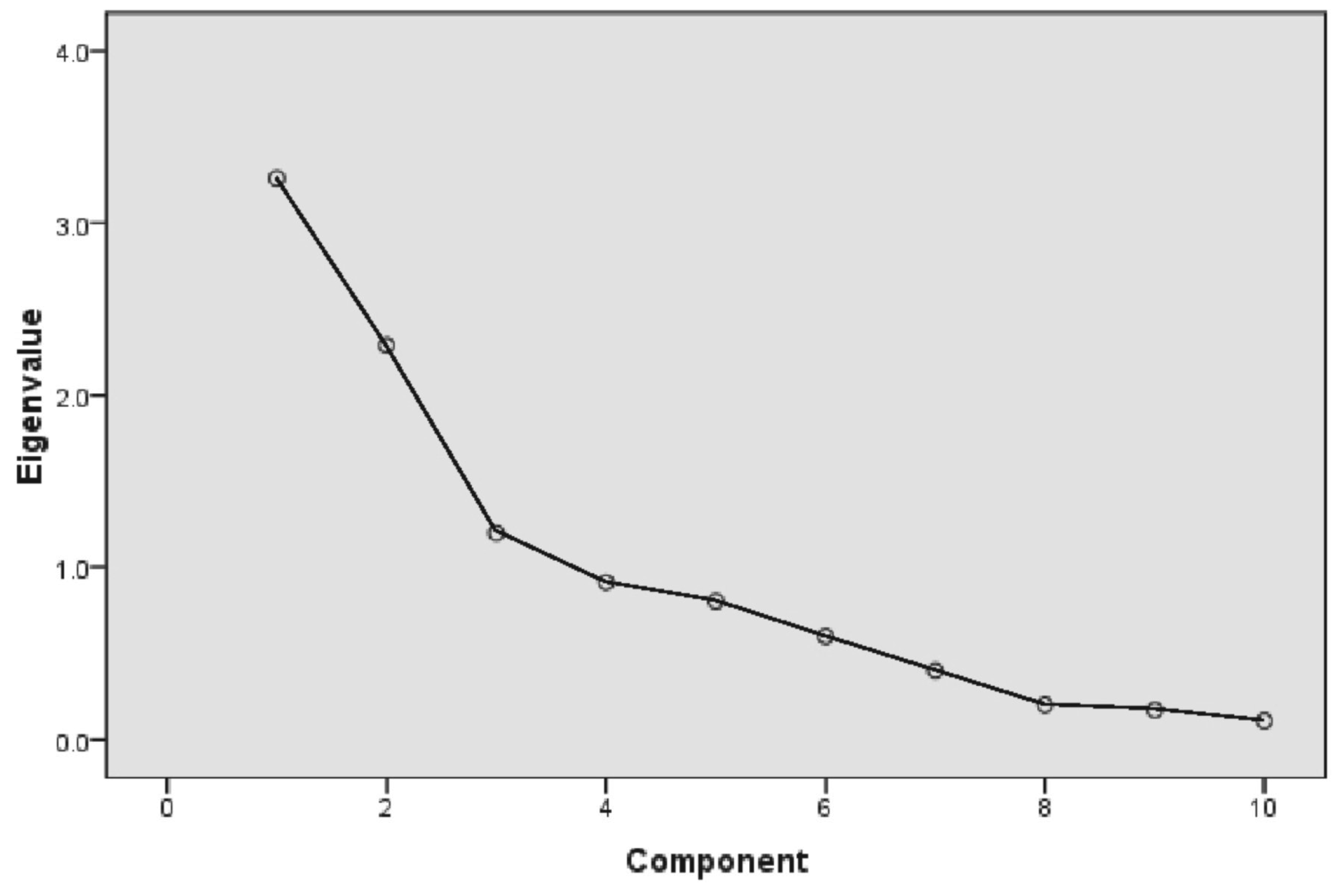
Figure 1 poses a graphical method of extracting the factors. In this figure, there are two points of inflexion, on component third and fourth. After that, the slope of the line is changed. As per the established rule, we should retain (extract) only factors, which lie on the left of the point of inflexion. Thus, two or three factors can be extracted here. Since the eigenvalues, as per Kaiser’s criterion, support the extraction of three factors the same three are extracted (Field, 2009, p. 640). Scree plot partially proves this extraction.
Results related to reproduced correlations among variables exhibit the correlation coefficients on the basis of the factor model. The difference between the observed correlations and correlations based on the model, known as the residuals, is noted as five residuals (11.10%). This percentage should be less than 50 per cent, and a smaller value is considered much better (Field, 2009, p. 664). So, the goodness of the model is confirmed. Table 6 denotes the factor loadings of the three extracted factors after the application of varimax rotation. Factor loadings over 0.40 have been taken for the analysis. The items that cluster on the same components suggest that Component 1 represents FA (including items Q-6, 9, 10 and 3), Component 2 stands for Present Satisfaction (with items Q-2, 5 and 1) and Component 3 embodies career orientation (CO) (items Q-4, 8 and 7).
Rotated Component Values
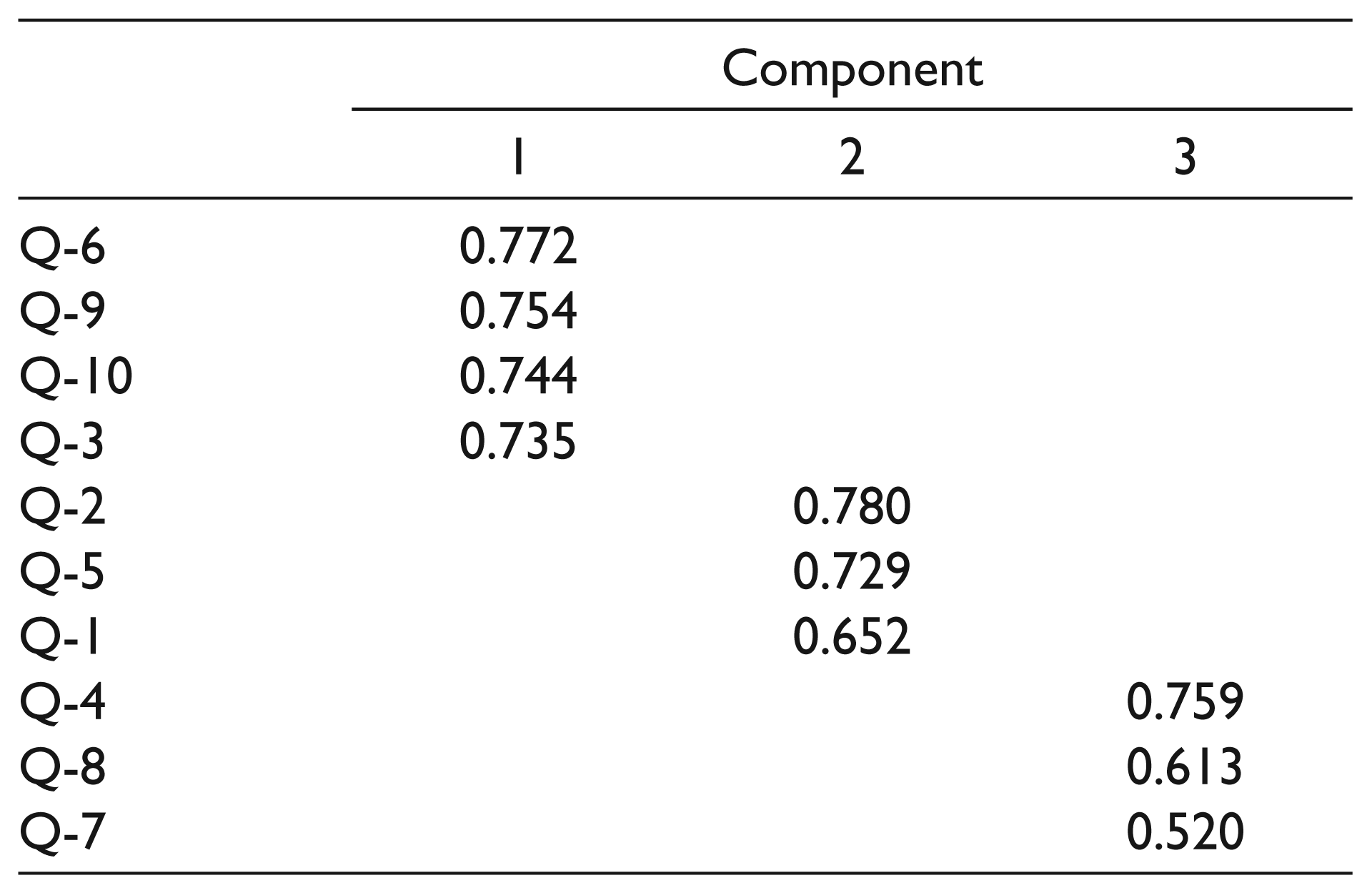
Rotation method: Varimax with Kaiser normalization.
a Rotation converged in 5 iterations.
The three extracted factors, that is, FA, present satisfaction and CO, are being assumed as subscales of the CA instrument. Cronbach’s alpha values have been calculated for each subscale and finally for the entire CA scale as a whole. FA includes total four statements (variables), that is, Q-3, 6, 9 and 10. Cronbach’s alpha value is found to be 0.789 for this dimension. In social sciences, for Cronbach’s alpha a minimum value of 0.7 is considered suitable, and the higher values demonstrate good reliability of the scale (Field, 2009, p. 675). So, the dimension of FA has high reliability. Present satisfaction (PS) consists of three statements (variables), that is, Q-1, 2 and 5. The corresponding alpha value is observed as 0.752, which again indicates good reliability of subscale. CO consists of three statements (variables), Q-4, 7 and 8 that constitute the factor of CO. The computed value of Cronbach’s alpha is 0.838 for this dimension. Thus, high reliability is also assured for CO. CA scale (overall), that is, the Cronbach’s alpha value for all 10 statements in the CA scale, is observed as 0.872, which means that overall reliability of the entire instrument, taken as a whole, is quite good.
New Model of CA
On the basis of analyses carried out, three constructs, namely FA, present satisfaction and CO, represent the new model of CA. This model symbolizes a holistic approach to the concept of CA. The aspirations about the future of the concerned employee, his or her present level of satisfaction and zeal and dedication to have a better career are the three factors of CA noted in the present study. Figure 2 demonstrates this newly evolved CA model.

As per the new model, the dimensions defined as the expectations about growth of an employee, being a part of the organization, are termed as FA; the extent of satisfaction with the present job is represented by the dimension of present satisfaction. The willingness to grab every possibility for advancement in career can be expressed as CO. The combination of present satisfaction, CO and FA jointly presents the status of an employee on the CA scale. Thus, the term ‘CA’ refers to the present level of satisfaction and hope for the FA along with the required amount of dedication to the present job, on the part of a particular employee.
Conclusion
The application of EFA, at first, found neither too small values nor too large values of correlation among the items. Multicollinearity was also not found for the model. The data passed the KMO test with a ‘great’ value, and Bartlett’s test was observed as highly significant as well. Furthermore, Kaiser’s rule confirmed the presence of all 10 items fit for the scale. The values of communalities were adequate, being greater than the required minimum value of 0.3. Keeping the eigenvalues of more than 1, three factors were retained. Thereafter, the varimax rotation impacted the optimizing factor structure, and consequently, the relative importance of the three factors was equalized. The three extracted factors (components) explained 67.499 per cent of the variance in total. A scree plot was also obtained in support of the findings. In addition, the results related to the reproduced correlations verified the goodness of the model. Finally, the factor loadings of the three extracted factors after the application of varimax rotation clarified the three extracted dimensions. On the part of reliability analysis, it was noted that the scale of CA along with the three dimensions had a high value (0.872) of Cronbach’s alpha. As it is the first study of its kind in the concerned stream of knowledge, the results could not be discussed in line.
To sum up, both the analyses, that is, EFA and Cronbach’s alpha for reliability revealed three underlying scales in the instrument tested. EFA was conducted on 10 items (statements) with orthogonal rotation (varimax). Additionally, the tests for adequacy, eigenvalues, correlation, anti-image correlation and scree plot confirmed the extraction of three factors. Accordingly, the entire analysis operationalized the three dimensions, that is, present satisfaction, CO and FA. It may also be concluded that this instrument, comprising 10 statements, does not require any addition or removal of items and is completely validated for further application.
Managerial Implications
As revealed earlier while surveying the literature, men and women pursue different career paths. Social norms also crop-up as hurdles for working women, particularly related with family and childcare issues. As a result of this, women employees encounter various hardships while advancing their career. HR managers need to constantly frame policies for the betterment of their organizations’ workforce. Therefore, the present study attempts to develop a model of CA for working women, which may be adopted by HR managers, researchers and scholars in the field. The proposed model will facilitate the policymaking for uplifting the vocational status of women employees through identifying, analysing and understanding the different dimensions of their CA.
The antecedent studies are almost silent on the topic of women’s CA. Hence, this study recommends a new model for practical adoption including three dimensions, that is, present satisfaction, CO and FA. These dimensions are thoroughly operationalized and prove to be relevant and rational for the issue under consideration. It is recommended by the researcher that managers and authorities responsible for the career management of the women employees should adopt the model and try to understand and work out new and better policies for the female workforce.
Limitations and Future Research Directions
Every study in social sciences has its downside. Likewise, this study also has some limitations. First, the instrument was surveyed among female employees, so the findings cannot be generalized on male employees. Second, the respondents from different sectors of employment may also constitute the studies in the future. However, the model of CA proposed here has its prospect for adoption in other fields also. This model of CA needs empirical application in future on the part of researchers. The assessment of CA will definitely help HRD practitioners in making superior policies for the human assets of the concerned organizations.
Footnotes
Acknowledgement
The author is grateful to the anonymous referees of the journal for their extremely useful suggestions to improve the quality of the article. Usual disclaimers apply.
Declaration of Conflicting Interests
The author declared no potential conflicts of interest with respect to the research, authorship, and/or publication of this article.
Funding
The author received no financial support for the research, authorship, and/or publication of this article.