



Abstract
The article analyses the tweets of Rahul Gandhi, President of the Indian National Congress (INC), the largest opposition party in India. The analysis covers his tweets over a period of around 6 months from the date he took over as the President of the INC. The study determines the main themes underlying his tweets, the frequency of words and phrases appearing in the text of the tweets and the sentiments conveyed through his Twitter communication. Also, as a special subset, a comparison of Gandhi’s tweets campaigning for elections to the legislative assembly of Karnataka, which were held during the sample period, has been made with those of his political rival, Prime Minister Narendra Modi, who is the most followed Indian on Twitter, and the relative strengths and weaknesses of Gandhi’s Twitter campaign in comparison with those of Modi have been brought out. Overall, the study highlights the effective use of Twitter as a political communication tool and how its data can be harnessed using different ways.
Introduction
The word brand has become integral to most fields of activity today, including business, entertainment, sports and even politics. Persons or entities wish to establish themselves as a brand to stay profitable in the market, to occupy a unique space in the consumers’ mind and to challenge competition by establishing their own appeal. Branding has a flexible dimension which can be stretched to the field of politics. In politics, successful branding and communication have a long-term impact and guide the flow of voters to the party or candidate concerned. A widely used tool of political branding is the social media. The all-pervasive presence of social media and its penetration through wide sections of the world’s population has ushered in what can be called as the social media age (SMA). Social media is widely perceived as a source of competitive advantage in widening public footprint (Jha & Ye, 2016). It also helps in content sharing, interacting, airing of opinions or sharing of sentiments of an event (Rani & Singh, 2017: Safiullah, Pathak, Singh, & Anshul, 2017) and enables a two-way interaction, allowing engagement with a wide range of stakeholders (Kulkarni, 2018), which make it a great tool for politicians. SMA politics has been increasingly influencing Western countries for quite some time. The recent US presidential election in 2016 clearly showed the power and influence of social media. A component of social media that is fast becoming a preferred mode of connecting leaders with the masses is ‘Twitter’. Born in the year 2006, Twitter has since then progressively become an inordinate subject of research (Coletto et al., 2013).
In recent years, politicians, journalists and the public have made extensive use of Twitter. Past research shows that Twitter can be a useful tool for political communication, especially during elections (McGregor, Mourão, & Molyneux, 2017). Research scholars in political science used Twitter data to see public opinion and predict electoral outcomes (Gayo-Avello, 2013). Tumasjan et al. (2010) and O’Connor, Balasubramanyan, Routledge, and Smith (2010) found a positive relationship between tweets and public opinion polls. At the first glance, it appears that Twitter data may have impressive predictive power for electoral outcomes, but scholars like Jungherr et al. (2013), Gayo-Avello (2013), McGregor et al. (2017) pointed out the tendency against reporting negative results in this line of research. They argued that Twitter has limited power in predicting electoral outcomes and also raised objections on methodological issues. In a study, McGregor et al. (2017) suggested that Twitter is best used as a tool for political communication rather than as a platform that can be harnessed to predict electoral results in the real world.
The usefulness of social media, including Twitter, for branding and advertising is increasingly being recognized by politicians in India. During the 2009 Indian parliamentary election, Shashi Tharoor, a former Union Minister, was the only notable politician with a Twitter account. This scenario completely changed during the 2014 parliamentary election. The 2014 elections were the first time that social media was used extensively for political campaigning in India (Ahmed, Jaidka, & Cho, 2016; Malge & Deshpande, 2017; Pal et al., 2017). Political parties approached advertising agencies to handle a new style election campaign. They worked on building parties’ positive image, sharing their achievements, posting online pictures of campaign rallies and speeches and also in spreading negative word-of-mouth about opponents through social media (Safiullah et al., 2017). There are two major political parties in India having a pan-India presence: the Bhartiya Janata Party (BJP) and the Indian National Congress (INC or ‘Congress’). BJP is led by Mr Narendra Modi, the current Prime Minister of India, and INC is led by Mr Rahul Gandhi. The BJP, led by Mr Modi, took the lead in the use of Twitter for the 2014 parliamentary elections (Ahmed et al., 2016; Kumar, Dhamija, & Dhamija, 2016b; Pal et al., 2017). The success of BJP in these elections was attributed to its widespread use of social media, including Twitter (Ahmed et al., 2016)
On the other hand, the INC, led by Rahul Gandhi, could not effectively build a robust and convincing brand Rahul, arguably because it could not use social media as deftly as the BJP. In fact, Mr Gandhi did not even have a Twitter account at that time (he joined Twitter only in 2015). As a result, the voters failed to develop faith in brand Rahul and his party (Ahmed et al., 2016; Pal et al., 2017; Safiullah et al., 2017). The BJP won a thumping majority in the parliamentary election, and the INC’s seat tally in the lower house hit a nadir.
But of late, Mr Gandhi appears to have realized the power of Twitter, which is indicated by a rapid surge in the number of Twitter followers of his handle during the past year. The number of his followers increased from 2.49 million in July 2017 to 3.4 million in September 2017 (Times of India, 2017, September 24) and further to 7.2 million in July 2018. As reported by the magazine India Today (October 18, 2017), the number of times Gandhi’s tweets were retweeted in the later months of 2017 even surpassed the retweets for Mr Modi, the highest followed Indian on Twitter. This speedy turn of fortunes of Mr Gandhi on Twitter merits a study of his presence and activity on the microblogging site. Accordingly, this article studies the use of Twitter by Mr Gandhi over a sample time frame of around 6 months from the date, that is, 16 December 2017, he took over as the President of the INC. It is notable that the most rapid growth in Mr Gandhi’s Twitter followership coincides with this period. It is also reported by various sections of the press that Rahul Gandhi’s popularity has improved in recent times and that his public profile has changed into a new, appealing avatar (>Gulf News, November 25, 2017; Indian Express, 2017, November 4; Society, 2018, February).
The present study attempts to discover the main themes of his tweets, the frequency of words and phrases appearing in the text of the tweets and the sentiments conveyed through his Twitter communication. There are numerous existing papers identifying public sentiment or predicting election results using tweets, but the number of papers analysing individual words in the tweets is quite low (Kouloumpis, Wilson, & Moore, 2011). It is hoped that this study will contribute towards filling this gap. Further, as a special subset, a comparison of Gandhi’s tweets campaigning for elections to the legislative assembly of Karnataka, which were held during the sample period, has been made with those of his political rival and Twitter stalwart, Prime Minister Narendra Modi, and the relative strengths and weaknesses of Gandhi’s Twitter campaign in comparison with those of Modi have been brought out.
Theoretical Background
Political brand building involves working on and projecting widely the traits of a political candidate, campaign and party. It treats voters as consumers and draws heavily from the consumer-oriented approach towards politics. It manifests itself in the tangible forms such as logos, symbols, colours along with intangibles such as trust, emotional connect, story and visual context. The associations which the voter develops with the political brand over a period of time help her/him make a choice. The consumer–citizens thus identify with the political brand. This phenomenon has been quite popular in Western democracies like the USA, which have a two-party system, where the focus is on the candidate rather than on the party. Being a multiparty democracy, India’s political system works differently but the traditional political system changed when brand Modi got projected well ahead of the brands of Mr Modi’s party and its rivals in the 2014 elections, largely through the use of Internet-based social media as a tool. India has 462 million Internet users, out of which 250 million users actively use social media (as of January 2018). Unlike traditional modes of mass communication like newspapers, television and radio which were sources of information dissemination only, social media presents an interactive way of mass communication. It gives the audience or consumers an option to respond. Another unique feature of social media is that it allows leaders to be directly in touch with their target population without any role of intermediaries like journalists or spokespersons.
Mr Modi is, in fact, being hailed as the first Social Prime Minister of India (Kumar et al., 2016b), much on the lines of Barrack Obama, who introduced the world to the power of social media, first in the 2008 presidential election and then again in the 2012 election on a much larger scale. The effect of having a significant presence on various social media platforms bore fruit for Narendra Modi. More importantly, he is not only present on social websites but also interacts through them, thus making political participation much more meaningful and relevant than traditional modes (Kumar et al., 2016a).
One social media platform that has been continuously and extensively used by Mr Modi is ‘Twitter’. Twitter enables its users to post small public messages having the maximum limit of 280 characters. The number of Twitter users in India in 2014 was 15.8 million and is projected to increase to 34.4 million in 2019. Since 2015, it has become possible to tweet in six Indian languages—Hindi, Gujarati, Kannada, Marathi, Bangla and Tamil—which may have enhanced Twitter’s reach to vernacular populace. With increasing popularity of Twitter, it is now considered as an indispensable social media tool for building community, communication and collective action (O’Leary, 2015). It may not be as widely used by people as Facebook or WhatsApp, but it is a preferred mode when it comes to political communication. Twitter success story as a political tool can be attributed to its unique interaction pattern. A twitter user can follow another user without any reciprocity (Usherwood & Wright, 2017). According to a report by Google and KPMG, the number of Indians using Internet in Indian languages is 234 million as against 175 million using Internet in English. A study by Pal and Bozarth (2018) concludes that there is increasing use of vernacular languages in tweets by politicians, and that this trend is likely to expand the role of online spaces in political discussions by broadening the social media consumption base. Also, tweets made by prominent political leaders are reported upon and discussed in the next day’s newspapers, published both in English and vernacular languages, which takes the tweet’s message even to people outside the Internet’s reach.
In today’s complex multimedia environment, the validity of an account or authorship of content is also not an issue with Twitter, as the accounts are authenticated. Twitter’s ability of worldwide information broadcast to subscribers and non-subscribers, discussions or debates along with two-way interaction with voters during election campaigns enhances its relevance. Further investigation showed how Twitter has certain characteristics which enhance its attractiveness to politicians and how tweets help political parties in faster dissemination of knowledge than traditional media. It also mobilizes support by promoting their party and requesting people to vote for their party (Ahmed et al., 2016; Evans et al., 2014; Miragliotta, 2012).
Generally, celebrities and public figures such as movie stars, politicians, leading sportspersons and journalists are active users of Twitter, whereas common people follow the tweets of these active users. All Twitter users can post any information in the form of text, video or audio, and other can respond or react to these tweets or may retweet (i.e., post on their own Twitter handle) them.
Most of the studies on the role of social media in politics have been based in countries that are economically developed, politically stable and have high Internet penetration (Ahmed et al., 2016). The need of the time is to study politics in developing nations where Internet penetration is low and where social media has just started being used for political campaigns. Ahmed and Skoric (2014), Razzaq, Qamar, and Bilal (2014) analysed the 2013 Pakistan general elections and Ahmed et al. (2016) studied the 2014 Indian general elections found that the Twitter’s popularity among young urban population is an important factor of change in the political dynamics in India and Pakistan.
These arguments motivate us to investigate the use of Twitter by a politician in a developing Asian democracy where youth has a substantial role to play. Mr Modi’s use of Twitter has already been researched upon in several existing papers such as those by Pal, Chandra, and Vydiswaran (2016), Sinha (2017), Kumar et al. (2016b) and Pal et al. (2017). Mr Gandhi, who has rapidly gained followers and retweets on Twitter in recent months and who appears to be Mr Modi’s main political rival, provides a suitable case for study.
Literature Review
The 1960s and 1970s was an era in academic literature when the term political marketing started to surface (Kotler & Levy, 1969; Shama 1973). In the 1990s, quite a lot of research in the field of political marketing emerged, which involved a comparison of mainstream marketing with political marketing (Kotler & Levy 1969), application of disciplines within marketing such as branding, advertising (Niffenegger, 1989) and public relations to politics (Kumar et al., 2016a; Upadhyaya & Upadhyaya, 2012).
Past research demonstrates that social media is now a vital tool for political advertisement and also an important platform for worldwide opinion expression (Kalampokis, Karamanou, Tambouris, & Tarabanis, 2017; Safiullah et al., 2017). Many studies, such as those by Tumasjan, Sprenger, Sandner, and Welpe (2010), Zhou, Tao, Yong, and Yang (2013) and Rathore, Tuli, and Ilavarasan (2016), among others, worked on the predictive power of election outcome through Twitter data. These studies claim that tweets’ frequency by rival political parties during election campaign can predict the outcome of the election. On the contrary, some studies, such as those by Sang and Bos (2012), Jungherr (2013), and Suresh and Ramakrishnan (2015), reach an opposite conclusion and find that tweets cannot predict election results, and that a high degree of interactivity on Twitter may not necessarily lead to a high vote share. In the Indian context, Kumar et al. (2016a) established a relation between political brand-making through use of social media and the party’s fate in elections and found that role of emotional connect through social media is important in political branding. Also, Pal et al. (2017) investigated the use of twitter as a campaign tool for elections in India and concluded that it is a good medium to influence the large segment of young, first-time voters.
There have also been studies analysing communication styles in tweets, which is the theme of the present study. For instance, Rathore et al. (2016) studied the 2-month tweets analysing the communication style of women CEO using the software like Nvivo and R-studio. In the political context, Zhou et al. (2013) analysed the sentiments of tweets made in campaigning for Australian elections. They examined the tweets of the two most important leaders in the electoral contest. Based on their analysis, they proposed a tweets sentiment analysis model (TSAM). TSAM is based on three modules: feature selection, sentiment identification and sentiment aggregation and scoring. They concluded that sentiment analysis based on lexicon is beneficial and doable.
Some researchers like Singh, Gupta, and Singh (2017) and Usherwood and Wright (2017) have used Python and TextBlob tools to extract and analyse Twitter data. Singh et al. (2017) studied Twitter sentiment during Punjab legislative assembly elections of 2017 using a machine learning approach. Sentiment analysis or opinion mining is defined as the study of emotions, opinions and sentiments in the text using computational techniques (Liu, 2012). Their research found that tweets posted by one party, the Aam Aadmi Party, were more polar, that is, expressive of a higher degree of emotions (positive or negative) than other parties in the contest.
It has also been stated that many political parties still focus on traditional style of campaigning and do not rely on social media for election campaigning and publicity (Safiullah et al., 2017; Salunkhe, Surnar, & Sonawane, 2017). The reason could be that majority of states in India have low literacy rate, lack electricity and low Internet and social media penetration; therefore, regional parties operating in these states consider social media campaigning as a wasteful usage of resources.
Research Questions and Methodology
As foreshadowed earlier, the present research aims to study the tweets of Mr Gandhi over recent times, when he has seen a rapid surge in the number of his followers and retweets of his messages on Twitter. A sample time frame of around 6 months has been taken.
This article seeks to answer the following questions:
Q1. What are the main themes, textual features and other characteristics of tweets by Rahul Gandhi? Q2. How does Rahul Gandhi’s election campaign on Twitter compare with that of Narendra Modi?
Ways to Mine Twitter
Tweets comprise at most 280 characters each but can provide a range of qualitative and quantitative information to mine such as the number and content of tweets/retweets, number of likes, number of people being followed, followers and qualitative information in terms of the actual messages posted. Table 1 summarizes different approaches that may be used for data mining from tweets.
Different Approaches to Twitter Mining
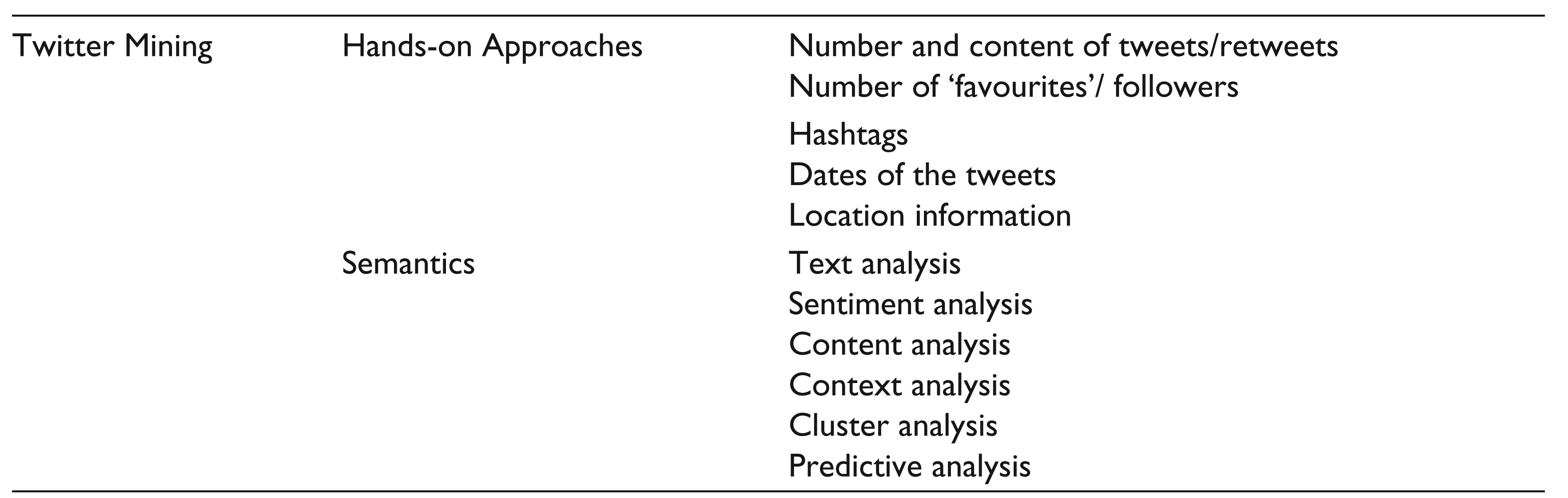
O’Leary (2015), in his analysis, concluded that different political party users posted their tweets/retweets at different times as per the importance of events according to their political needs. Tweets with attached links are expected to be more retweeted. The increase in number of favourites to a message shows the interest of audience to a particular message. Conover, Gonçalves, Flammini, and Menczer (2012), in their study, developed political information diffusion networks through Twitter messages to predict the alignment of users. Song and Xia (2016) studied Twitter sentiment polarity patterns through spatial and temporal data using geographic information systems (GIS).
Further, Twitter messages have a semantic content that is used to know the context and characteristics of a message. Since tweets primarily comprises text, one approach is to do text mining for a specific concept. This approach is typically done by examining the tweets individually. In a study by Zhang, Ghosh, Dekhil, Hsu, and Liu (2011), a pointed search is done for a specific analysis along with an in-depth search for underlying topics within those tweets.
Also, there exists a sizeable number of research on sentiments associated with Twitter messages (Go, Bhayani, & Huang, 2009). The research is based primarily on analysing keywords in tweets, with an underlying assumption that these words carry a positive, neutral or negative sentiment. This approach usually employs designated word lexicons like WordNet. For example, words conveying positive sentiment are likely to include words such as great, love or wonderful, whereas words conveying negative sentiment could be bad, stupid or waste.
While analysing individual messages, critical information on context is left out. For example, issuer of Twitter message, what is it about and what is the background behind the message to set a context that often needs to be taken into account to exclude the potential ambiguities while analysing sentiment of the message. Sentiments are studied using a lexicon-based approach or a machine learning approach or both. Existing literature suggests that the use of machine learning approaches in sentiment analysis facilitates the creation of more accurate predictive models than the ones created with lexicon-based sentiment analysis (Kalampokis et al., 2017).
Methodology
We conducted a mixed-methods study of tweets from the official Twitter handle of Rahul Gandhi, @rahulgandhi. We manually mined all tweets from @rahulgandhi from 16 December 2017 (the date on which Gandhi took over as President of the INC) to 30 June 2018, covering roughly a period of over 6 months. These tweets were 326 in number. As a subset of the study, we then separately studied the use of Twitter by Mr Gandhi for election campaigning by extracting and analysing his tweets related to legislative election in Karnataka, which was held within the sample period of our study, on 12 May 2018. Though legislative elections to the states of Nagaland, Tripura and Meghalaya were also held during the sample period of our study, we chose Karnataka election because Karnataka is one of the larger states of the country, with a population of over 64 million, whereas the other three states are very small in comparison, with a combined population of only around 8 million. National political parties like the INC and the BJP give much greater attention to elections in larger states than smaller ones; therefore, studying tweets about the Karnataka elections could give a better insight into the campaigning style of Mr Gandhi through Twitter. Apart from an analysis of Mr Gandhi’s tweets for the Karnataka election, these tweets were also compared with Karnataka election-related tweets of Prime Minister Modi. Mr Gandhi made a total of 36 tweets related to the Karnataka elections and Mr Modi made 129 (from 4 February 2017 to 23 May 2017), each of which was mined and analysed.
The present research conducts several types of analyses of the tweets. First, the main themes of the tweets have been identified by a manual study of each tweet. Thereafter, an analysis of the text as such is performed. This is performed by using word frequency analysis (WFA) through NVivo, which gives us the number of times a word is used in the entire sample set of tweets. WFA yields Word Clouds, which project the words in decreasing order of their usage. The more frequently a word is used in the tweets, the bigger is its size in the Word Cloud. The textual analysis was also performed using Lexical Density and readability indices, through the software Textalyser. Here, the lexical density or the density of lexical words (adjective, adverbs, nouns and verbs) was determined by dividing such words by the total number of words. Lexical density as a measure of how descriptive a text is or how much information the text tries to convey. Textalyser also gave certain other indices, like an index of readability of the tweets by the intended audience.
Lastly, we performed a sentiment analysis of the tweets, also known as opinion mining. As outlined in the preceding section, in sentiment analysis, the opinions or messages in the tweets are classified on a scale of positive, neutral and negative (Arun, Srinagesh, & Ramesh, 2017). It analyses the opinions and emotions expressed in the text of the tweets. It is hoped that a multilayered manual and computer-aided analysis performed in this study will provide for a refined way for understanding the content of each tweet.
Analysis
As described earlier, the analysis of Rahul Gandhi’s tweets is performed by using multiple methods like manually as well as software-assisted. Apart from making a standalone analysis of Mr Gandhi’s tweets, a comparative study of a subset of his tweets campaigning for Karnataka elections has been made with Karnataka campaign tweets of Prime Minister Modi. Mr Modi is far ahead of Mr Gandhi in the frequency of Twitter use as well as in the number of followers on Twitter. Mr Modi’s average number of tweets per month is double that of Mr Gandhi. Rahul Gandhi has 7.33 million Twitter followers, whereas Modi has 43.3 million (as on 3 August, 2018). Despite these disparities, it would be relevant to make a comparative study of the tweets of the two leaders, as such a comparison will give us an understanding of how the Twitter activity of Mr Gandhi measures up to that of the most followed and active Indian politician on Twitter. Also, since Mr Modi is the closest political rival of Mr Gandhi, a comparison of their campaign styles on Twitter will help us in our aim of evaluating Mr Gandhi’s tweets.
Content Analysis: Themes
Manual content analysis was exercised as the examination mechanism, and unit of analysis used is individual tweets. The following main themes emerge from Mr Gandhi’s tweets: (a) targeting Modi and BJP government at the centre on performance, corruption and communal violence, (b) condolences and complements, (c) crime against women and (d) state elections. Expectedly, the single most pervasive theme of Mr Gandhi’s tweets during the sample period was criticizing the Prime Minister, his government and the ruling party. An interesting finding within this theme is that Mr Gandhi has made substantial use of irony and sarcasm on a regular basis in his tweets. A few such tweets are reproduced below as examples.
Hi! My name is Narendra MODI. I am India’s Prime Minister. When you sign up for my official App, I give all your data to my friends in American companies. PS. Thanks mainstream media, you’re doing a great job of burying this critical story, as always. (24 March 2018)
Here, Gandhi uses sarcasm to attack Prime Minister Modi amidst some media reports that official mobile app of Modi was sharing subscribers’ personal details to a third party without their consent (Reuters, 2018, March 26). In another tweet, he pokes fun at the government by posting a video of the English song Don’t worry Be happy, alongside a message decrying the performance of the Indian economy. Another satirical post goes as follows: ‘Guide to Looting India by Nirav MODI 1. Hug PM MODI, 2. Be seen with him in DAVOS, Use that clout to: A. Steal 12,000Cr B. Slip out of the country like Mallya, while the Govt looks the other way. #From1MODI2another’ ‘#MODIRobsIndia’ (15 February, 2018). This was in the aftermath of escape of a jewellery tycoon Nirav Modi (and another businessman, Vijay Mallya before him) out of India after defrauding a state-run bank of billions of rupees. Another one in the series of sarcastic tweets aimed at the Prime Minster is as follows: ‘PM MODI tells kids how to pass exams for 2 hrs, but won’t speak for 2 mins on the 22,000 Cr banking scam. Stop behaving as if you’re guilty! Speak up’ (17 February 2018). In yet another tweet, Gandhi uses play of words to accuse the ruling party, BJP, of lying on an issue: ‘If BJP had a film franchise it would be called Lie Hard’ (22 December 2017). The use of play of words to create a catchy and critical effect has been used in several of his tweets. Another example is as follows: ‘MODI ji, the terror of Gabbar Singh Tax is now globally acclaimed. The World Bank says it’s the 2nd HIGHEST in the WORLD and one of the MOST complex’ (March 18, 2018). Here, Gandhi calls the newly introduced Goods and Services Tax as Gabbar Singh Tax, after the iconic Bollywood villain character Gabbar Singh, to brand the tax as exploitative.
Karnataka Election Campaign Tweets
As a subset of the overall analysis of Rahul Gandhi’s tweets, a study of his tweets campaigning for the Karnataka Legislative Assembly was also carried out. Out of the total of 326 tweets made by Gandhi during the sample period from 16 December 2017 to 3 June 2018, 36 tweets were related to the Karnataka polls. Rahul Gandhi’s tweets on Karnataka elections were also compared with those of Prime Minister Modi, who himself is a prolific Twitter user. Mr Modi posted 129 tweets regarding the Karnataka elections. Table 2 enumerates the main themes that emerged in the selected campaign tweets of the two leaders.
A Comparison of Main Themes of Election Campaign Tweets of Rahul Gandhi and Narendra Modi
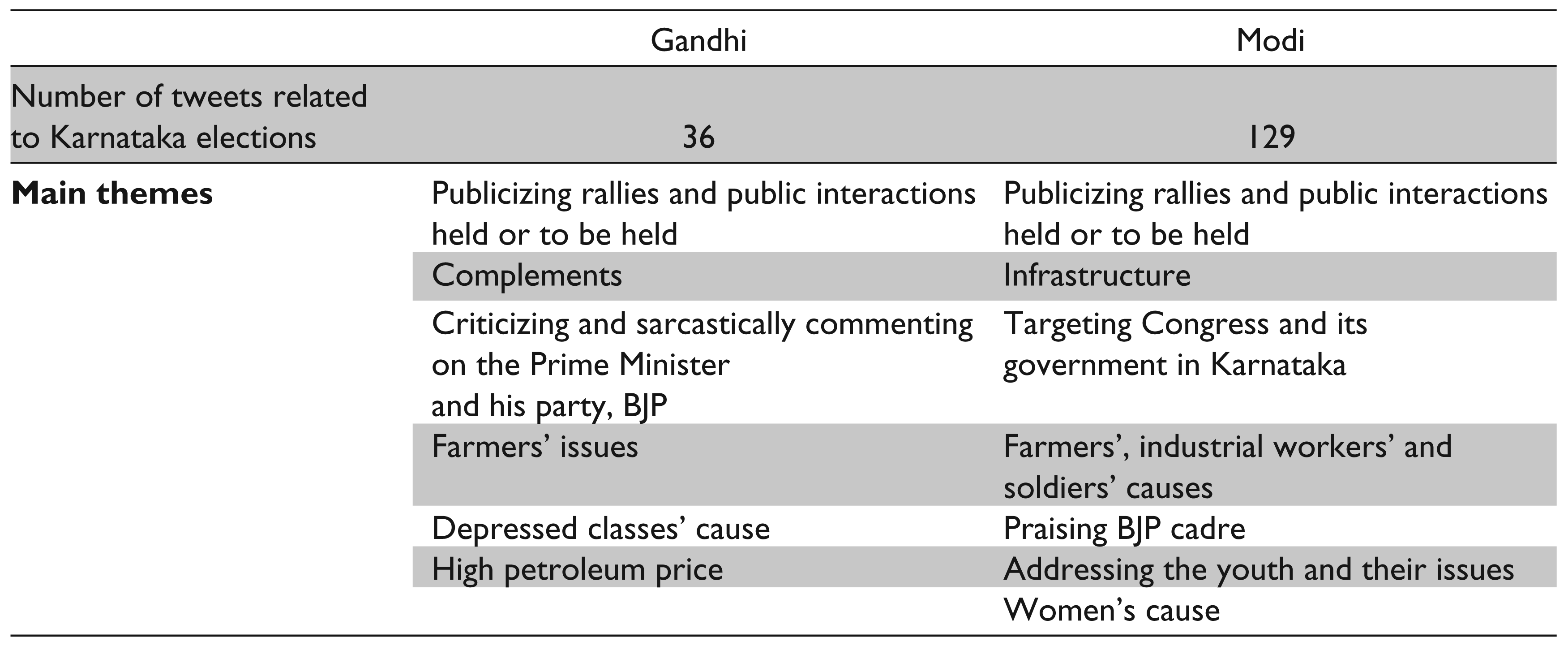
As can be seen from Table 2, there is a lot in common on the subjects touched upon in the two leaders’ campaign tweets. Both have farmers’ issues, advertisement of public meetings and unsparing criticism of the opponent as main themes of their tweets. However, there are significant differences too. Modi, who ranks 22nd in the world in terms of the number of Twitter followers (Socialblade, 2019), is a Twitter veteran and far surpasses Gandhi in the number of tweets. Also, he covers a wider span of subjects in his tweets than Gandhi. Interestingly, both have tweeted in the local language, Kannada, apart from English. A study of individual tweets also showed that Modi has very sparingly indulged in a direct attack on Gandhi in his tweets. In fact, the words Rahul or Gandhi do not appear even once in any of his campaign tweets. Rahul Gandhi, on the other hand, has targeted Modi unabatedly, the word Modi or PM (for Prime Minster) appearing multiple times, as recorded later in this study. It is relevant to note that despite Karnataka having a Congress government before the elections, Gandhi posted just one tweet citing the Congress government’s achievements. Also, there was only one tweet from Mr Gandhi on what Congress plans to do if it comes to power again in Karnataka. On the other hand, Modi’s Karnataka campaign tweets spoke several times about the achievements of the BJP government in the centre and about the agenda if voted to power in Karnataka.
Sarcasm and irony were in good measure in the tweets of both Gandhi and Modi. For instance, Rahul Gandhi tweeted: ‘Here’s a primer on your candidate selection in Karnataka. It plays like an episode of ‘Karnataka’s Most Wanted’ (4 May 2018). Again, he played with words on the same topic ‘NDTV features the Prime Minister’s new improved BJP dream team for Karnataka. FRESH out of jail, MODI-FIED and REDDY to steal’ (11 May 2018). Here, Gandhi uses puns, like Modi-fied and Reddy, to attack the BJP (the Reddy brothers are Karnataka-based politician–industrialist brothers alleged to be involved in several scams). Prime Minister Modi targeted the dynastic culture in the INC, and sarcastically, though indirectly took a jibe at Gandhi, calling him naamdaar (aristocratic) while calling himself kaamdaar (hardworker) (May 1, 2018).
Content Analysis: Word Frequency Analysis
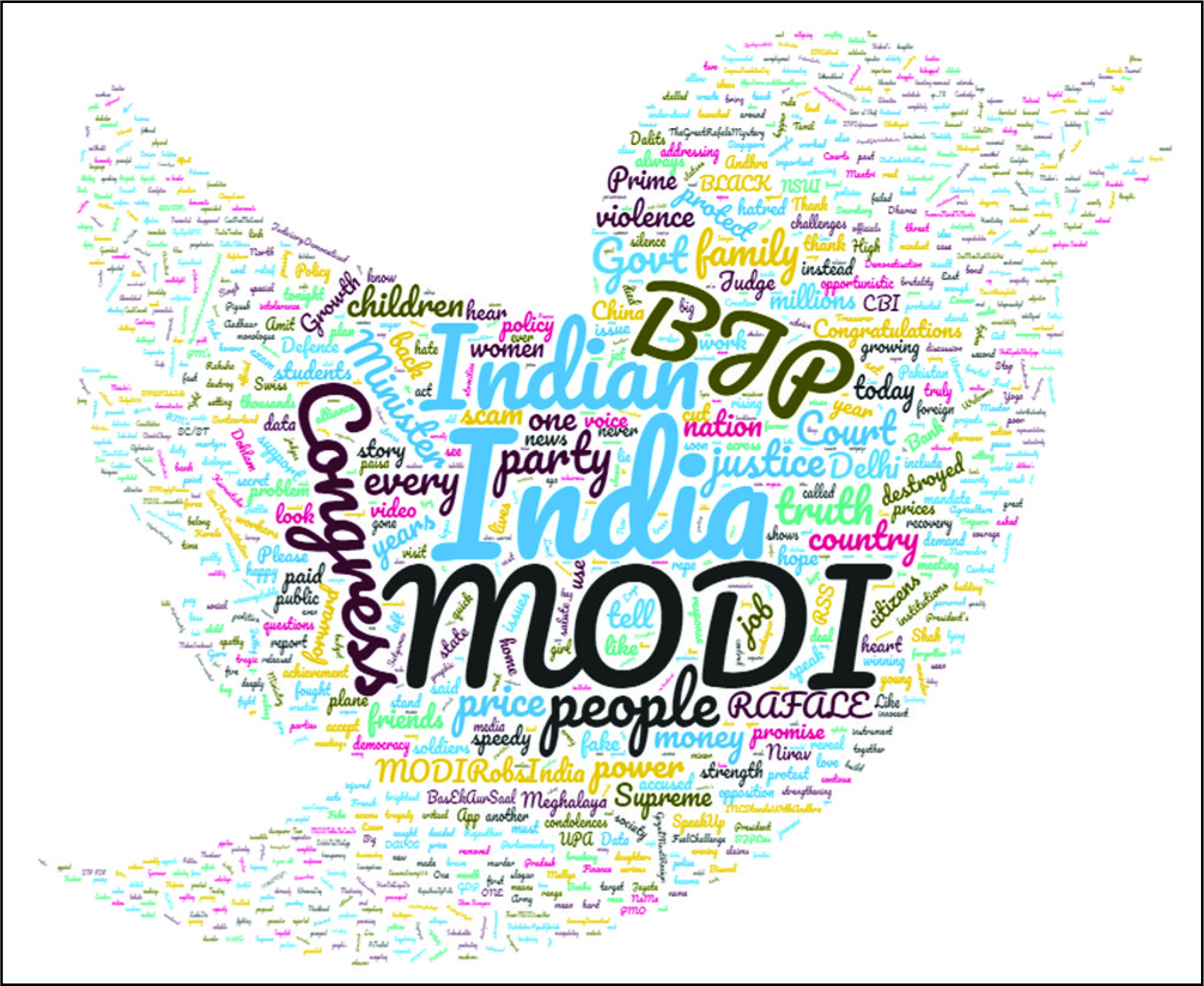
Textual analysis of Mr Gandhi’s tweets from 16 December 2017 to 30 June 2018 was also carried out. First, WFA of the tweets was made using NVivo software. WFA gives the number of times a word is used in the sampled tweets. Researchers have used it to know the characteristics and significant meanings of the tweets (Ghiassi et al., 2013). The output of WFA can be represented as word clouds. Word cloud gives a pictorial representation of the frequency of the words used and makes it easier to identify prominently used words. The more frequently a word is used, the bigger is its size in the word cloud. Figure 1 is the word cloud of Rahul Gandhi’s tweets during the sample period.
As indicated by the WFA, the most frequently used word in Rahul Gandhi’s tweets is India (34) and the second most tweeted word is Modi (33). The term BJP (the ruling party at the centre) comes third in frequency of use. This indicates that the textual content of Mr Gandhi’s tweets is overwhelmingly centred around criticism of the Prime Minister and his party. Apart from this, the words Indian (23), Congress (18) and People (13) also have been used frequently, indicating that Gandhi, being the leader of a national party, has mainly raised national-level issues in his tweets. The word Rafale (7) also figures prominently in the cloud, which shows that Gandhi has frequently accused the government of corruption in the purchase of Rafale jets from France. However, there appears to be a dearth of words that indicate tweeting of solutions or alternative approaches to problems and challenges before India. Also, words that can be associated with technology, research, education and innovation also do not prominently surface in the cloud.
Karnataka Election Campaign Tweets
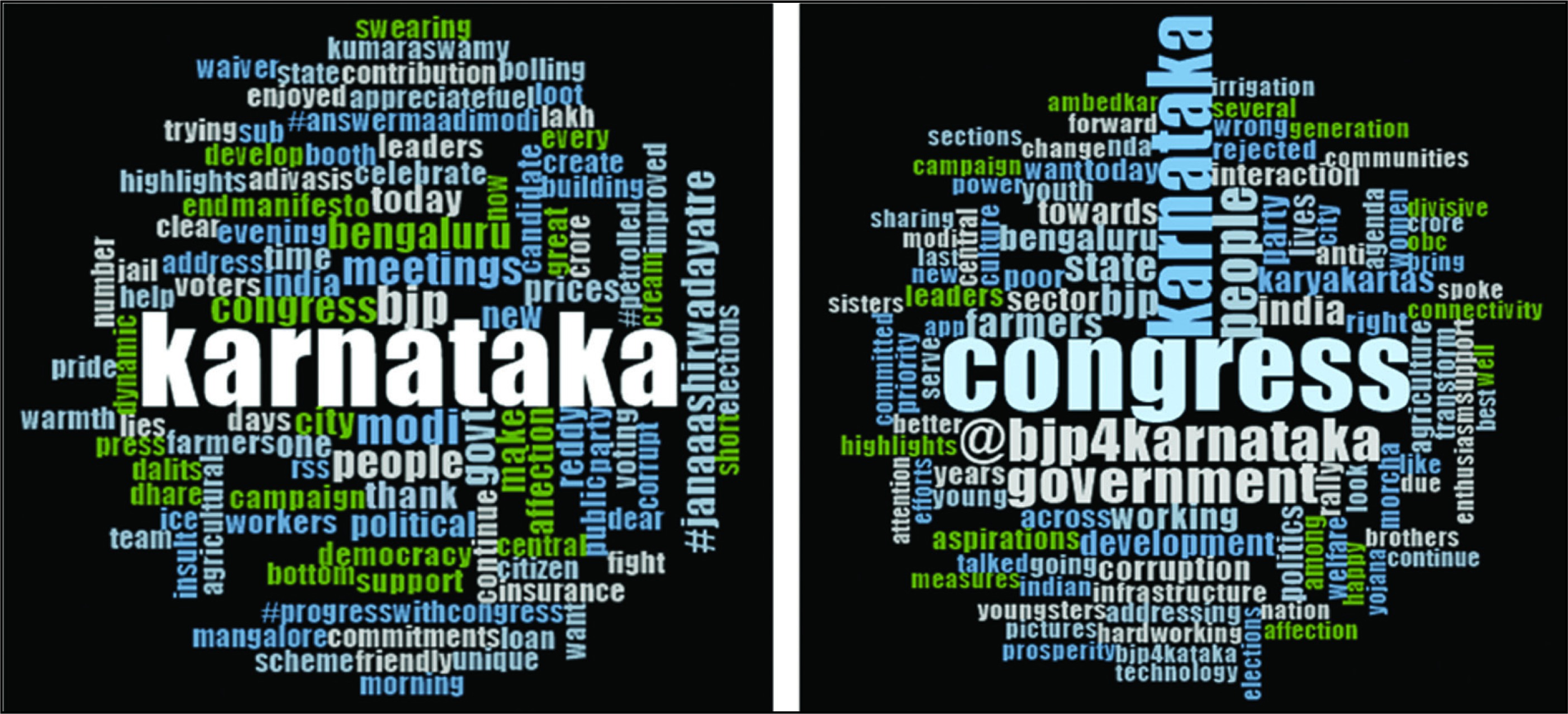
We have seen above a comparison of the themes of Mr Gandhi’s tweets for Karnataka election campaigning with the campaign tweets of Mr Modi. On the same lines, the Karnataka campaign tweets of the two leaders were compared to determine the extent to which Mr Gandhi’s style differs with that of Mr Modi. Figure 2 gives the word clouds for both leaders.
Word Clouds of Karnataka Campaign Tweets of Rahul Gandhi and Narendra Modi
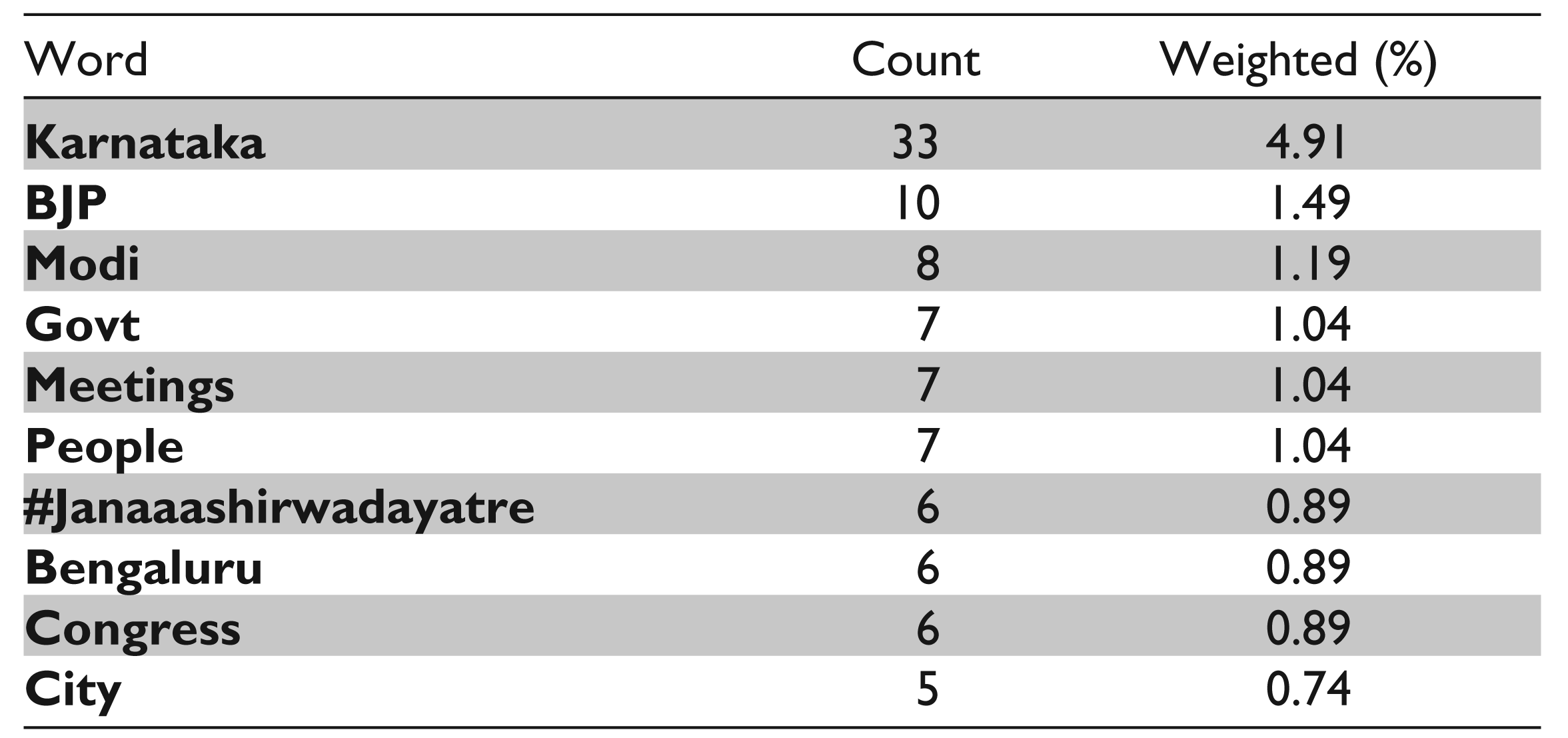
The WFA is also presented in Tables 3 and 4, which gives the count and frequency (by percentage) of the words used most commonly by the two leaders.
Rahul Gandhi
Narendra Modi
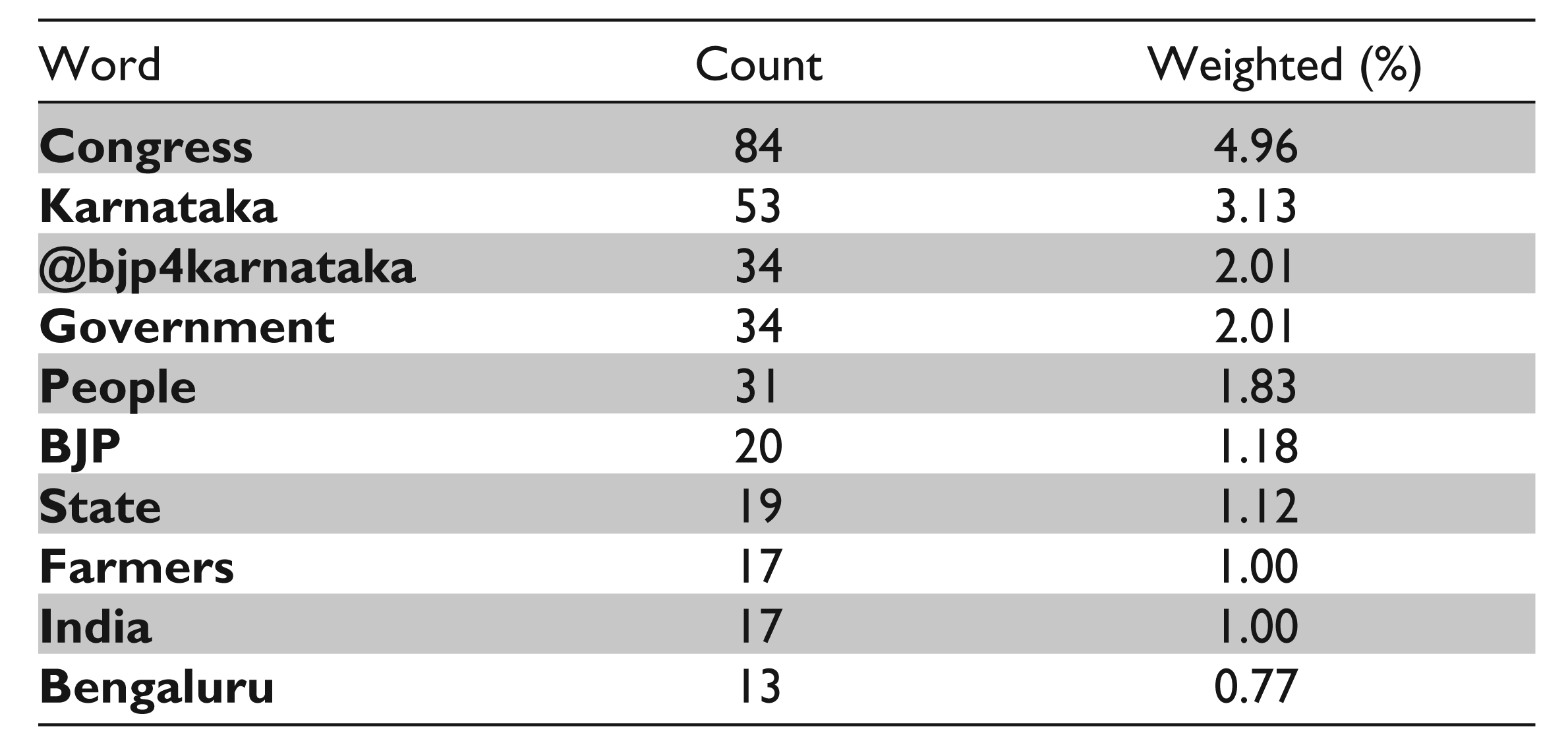
The WFA findings roughly match the findings of theme analysis done in the preceding section. The three most frequent words used by Rahul Gandhi are Karnataka (33), BJP (10) and Modi (8). On the other hand, three most frequent words used by Narendra Modi are Congress (84), Karnataka (53) and @bjp4karnataka (34). The word frequency clearly showed the priority of the two leaders and their desires to win the Karnataka election with the use of words on Twitter. Mr Gandhi has frequently used the word Modi, whereas Mr Modi has not addressed Mr Gandhi or other individual leaders of opposition parties by name in his tweets. There is no individual name that figures in his top 10 most frequently used words. The width of subjects covered by Mr Modi appears to be greater than that of Mr Gandhi, for instance, the word cloud of Modi shows the words young, youngsters, farmers, infrastructure and technology as frequently used. Mr Gandhi’s word cloud does have the words agriculture, dalits (the depressed classes) and adivasis (tribals), but the overall breadth of topics covered falls short of the coverage made by Mr Modi.
Text Analysis of Rahul Gandhi’s Tweets Using Textalyser
Content Analysis: Lexical Density and Other Indices
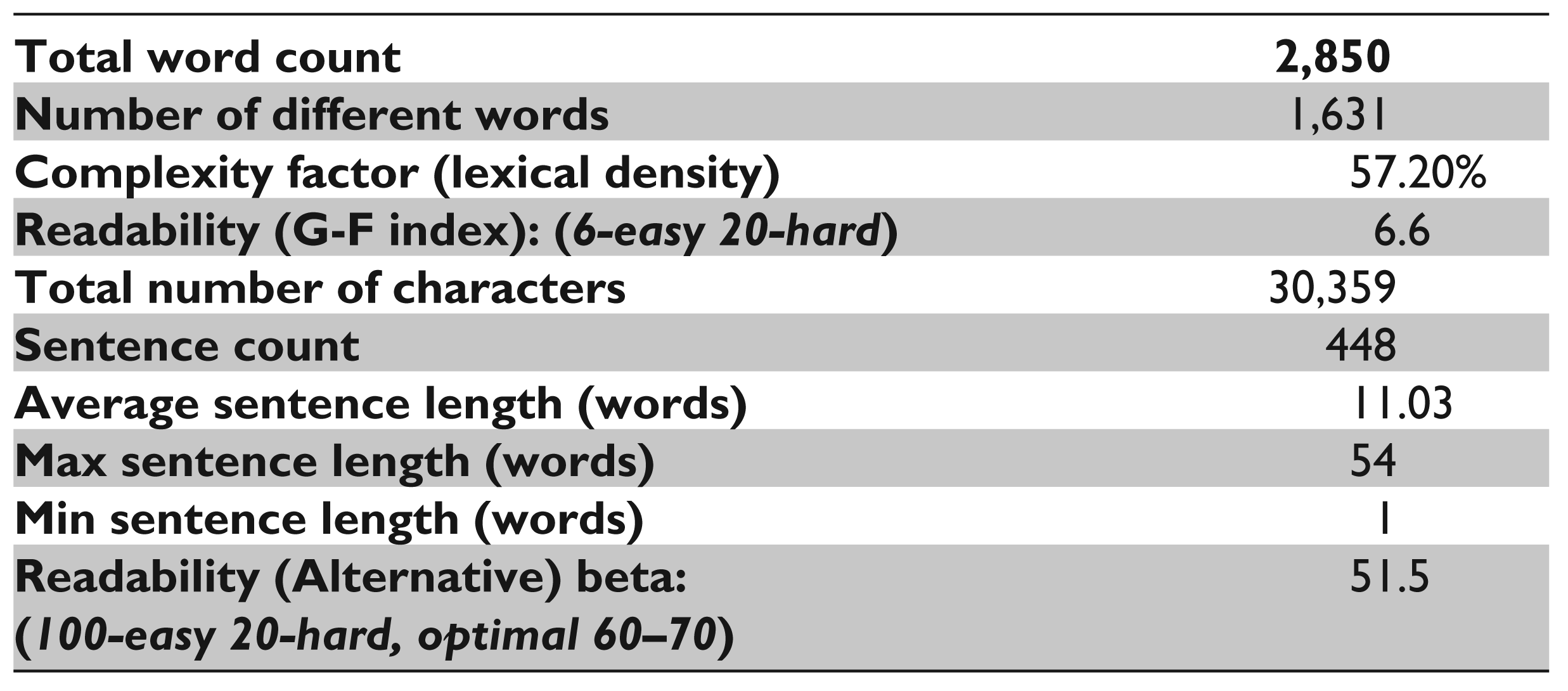
Next, textual analysis of Rahul Gandhi’s tweets in the sample period was carried out using lexical density and readability indices, using the Textalyser software. The results are summarized in Table 5. Lexical density, which has been defined in the Methodology section, informs about how descriptive a text is. It describes the ratio of content words (adjectives, adverbs, nouns and verbs, adjectives) to the total number of words. Through lexical density, one gets an idea about information packaging. The text having a higher density of content words has more information than a text with more function words, such as conjunctions, count words, interjections, prepositions and pronouns (Halliday, 1989; Johansson, 2008). Lexical density of Rahul Gandhi tweets from 16 December 2017 to 30 June 2018 was found to be 57.20 per cent. On an average, a large majority of the written texts usually have a lexical density of more than 40 per cent (Ure, 1971). Thus, the lexical density of Rahul Gandhi’s tweets is in the normal or above normal range or, in other words, the density of information conveyed through his tweets is as one would expect in an average written text.
Readability indices are another way to describe the ease of reading and appeal of a tweet. A commonly used readability index is the Gunning-Fog (G-F) index (Gunning, 1952). It estimates the number of years of formal education a person needs in order to understand the given text in first reading. For instance, a G-F index of 12 means a reader requires a reading level of a US high school senior who is around 18 years old. The G-F index is used to ensure that text used can be read and understand easily by the intended audience. The text used for a wide audience generally has a G-F index of less than 12. For a text to have a near-universal understanding by and large needs an index of less than 8. Rahul Gandhi’s tweets show a G-F index of 6.6, which puts them in the universally readable category. It must, however, be remembered that most of Mr Gandhi’s tweets are in English, which is understood by less than a fifth of Indians. Thus, the readability results from this US-based test cannot be directly applicable to India. However, it may be indicative in case of the segment of the Indian population that understands English. The G-F index indicates that within that segment, Gandhi’s tweets are universally readable. Another readability index given by Textalyser, the Alternative Beta index, scores Gandhi’s tweets at 51.5. The scale of this index ranges from 100 (easy) to 20 (hard to read), the optimal range being between 60 and 70. Thus, Gandhi’s tweets are close to the optimal readability range for the Beta index.
Karnataka Election Campaign Tweets
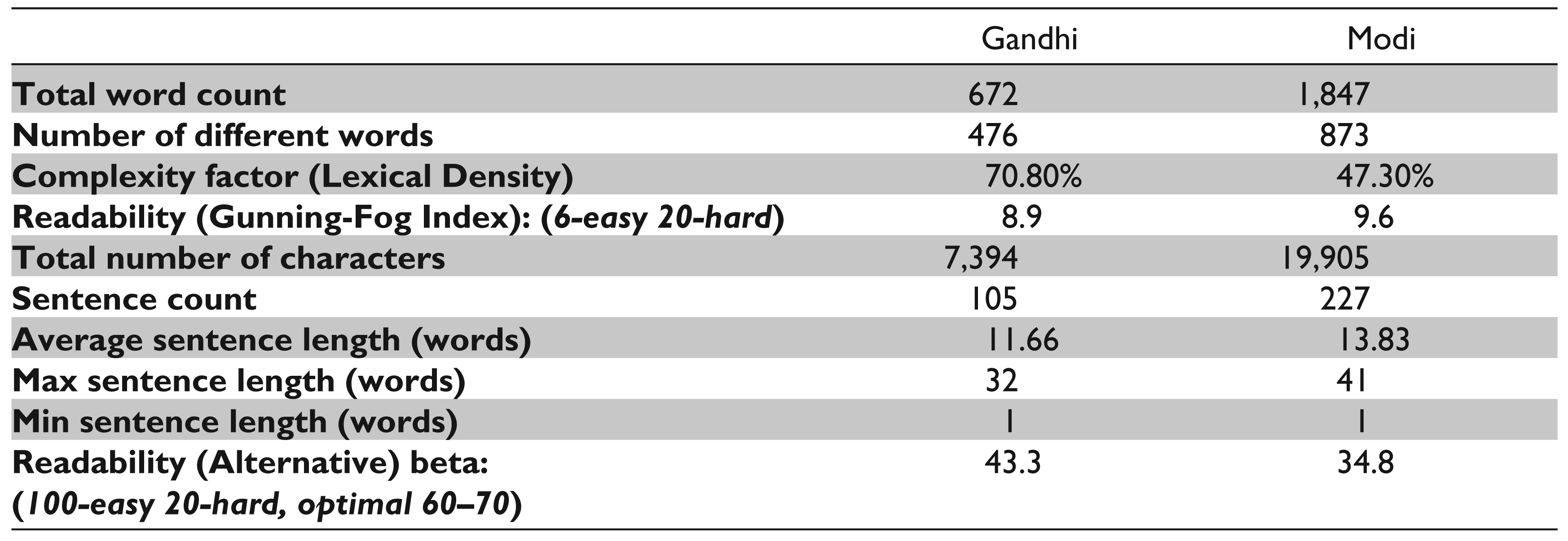
A comparison of the Karnataka campaign tweets of Gandhi with those of Modi (Table 6) shows that Gandhi had a higher lexical density than Modi. This suggests that Gandhi’s tweets had more content than those of Modi. However, this by itself does not indicate that Gandhi’s tweets were more impactful or persuasive than Modi’s. On the readability front, Gandhi scored marginally better in the G-F index, while Modi had a better score in the beta index. The result can therefore be considered as inconclusive.
Text Analysis of Karnataka Campaign Tweets of Rahul Gandhi and Narendra Modi using Textalyser
Sentiment Analysis
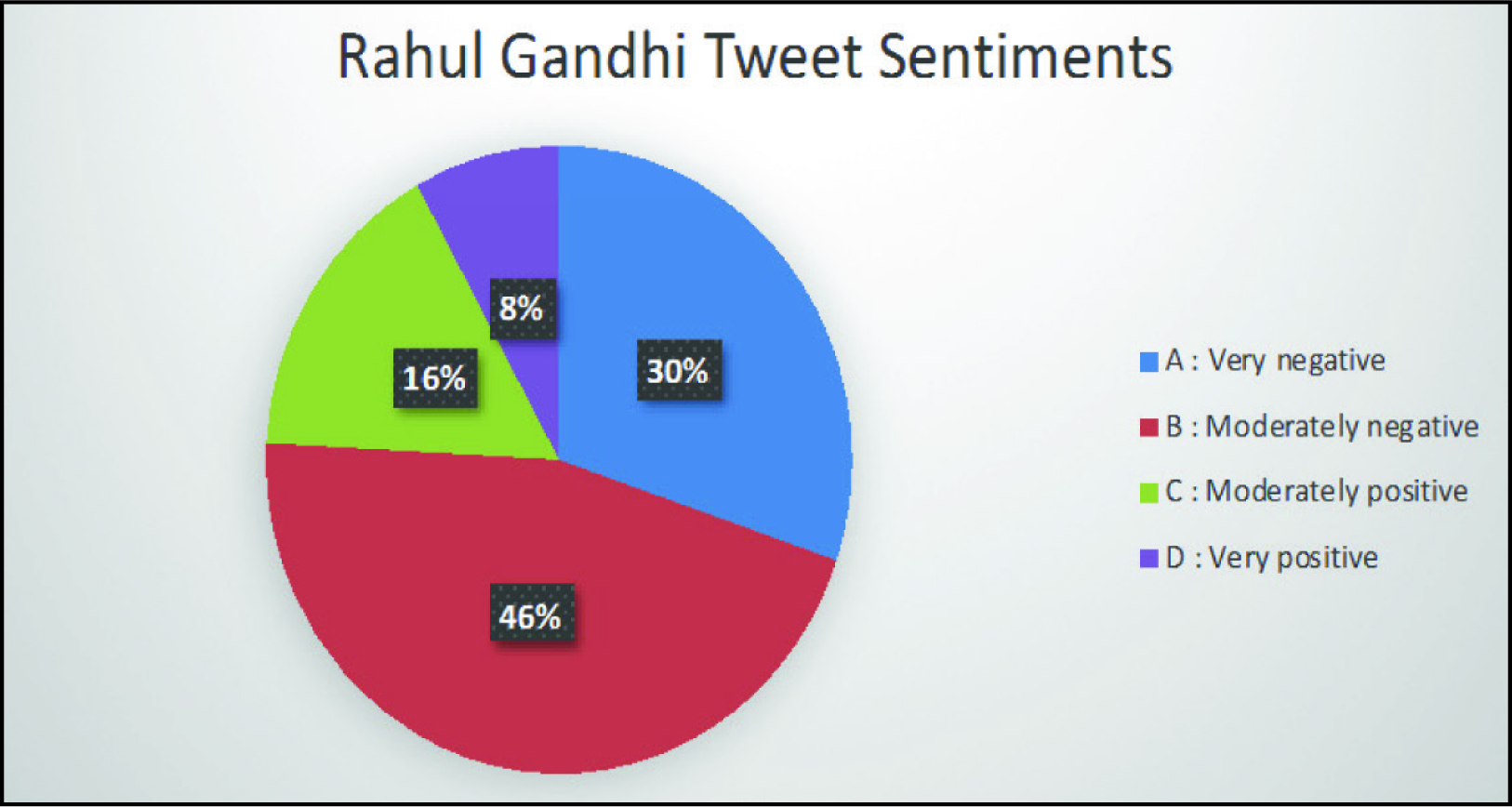
Lastly, sentiment analysis of Rahul Gandhi’s tweets was performed to understand the tone of the opinions or views he transmitted through Twitter, that is, whether his messages conveyed a predominantly positive or negative emotion. The sentiment analysis was done using auto-coding by the NVivo software. Figure 3 shows the results of the analysis. The sentiment of around a half Rahul Gandhi’s tweets is moderately negative, and around a third of the tweets have a very negative sentiment. Thus, a large majority of his tweets display a negative sentiment and only less than one-fourth of the tweets have positive tones. While it is understandable that being the leader of the opposition party, Mr Gandhi’s tweets would mainly focus on criticism of the government. However, being a leader of the largest national party in opposition which has a pan-India presence, it is expected that apart from a criticism of the government, the tweets should also convey the political agenda of Mr Gandhi and the INC, their plans and policies on various issues of national importance and the alternative dialogue they wish to present on the myriad challenges facing the country. The sentiment analysis results suggest that such a balance of negative and positive sentiment may be lacking in Mr Gandhi’s tweets.
Karnataka Election Campaign Tweets
A comparison of the sentiment analysis of Karnataka campaign tweets of Rahul Gandhi and Narendra Modi was made, results of which are shown in Figures 4 and 5.
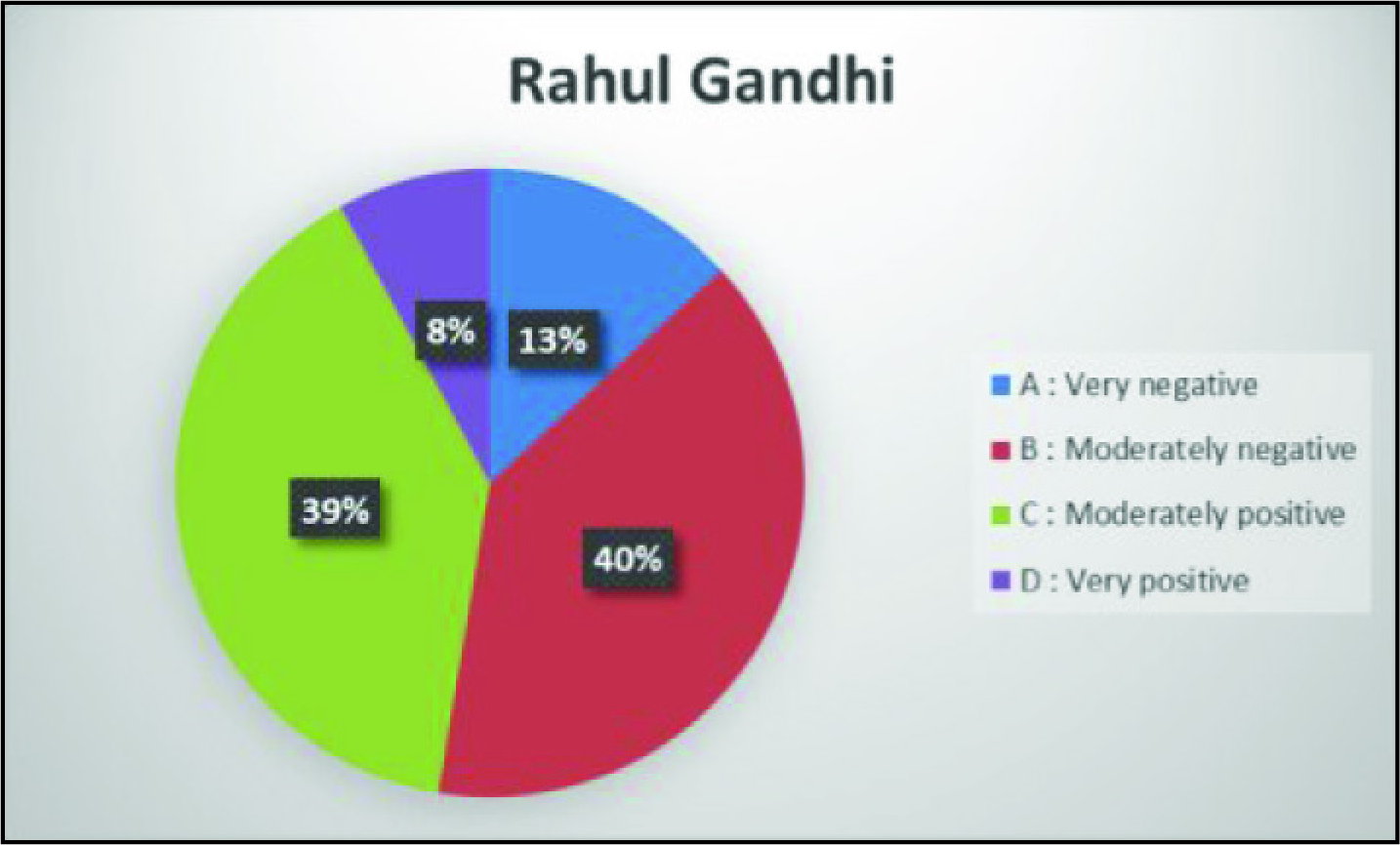
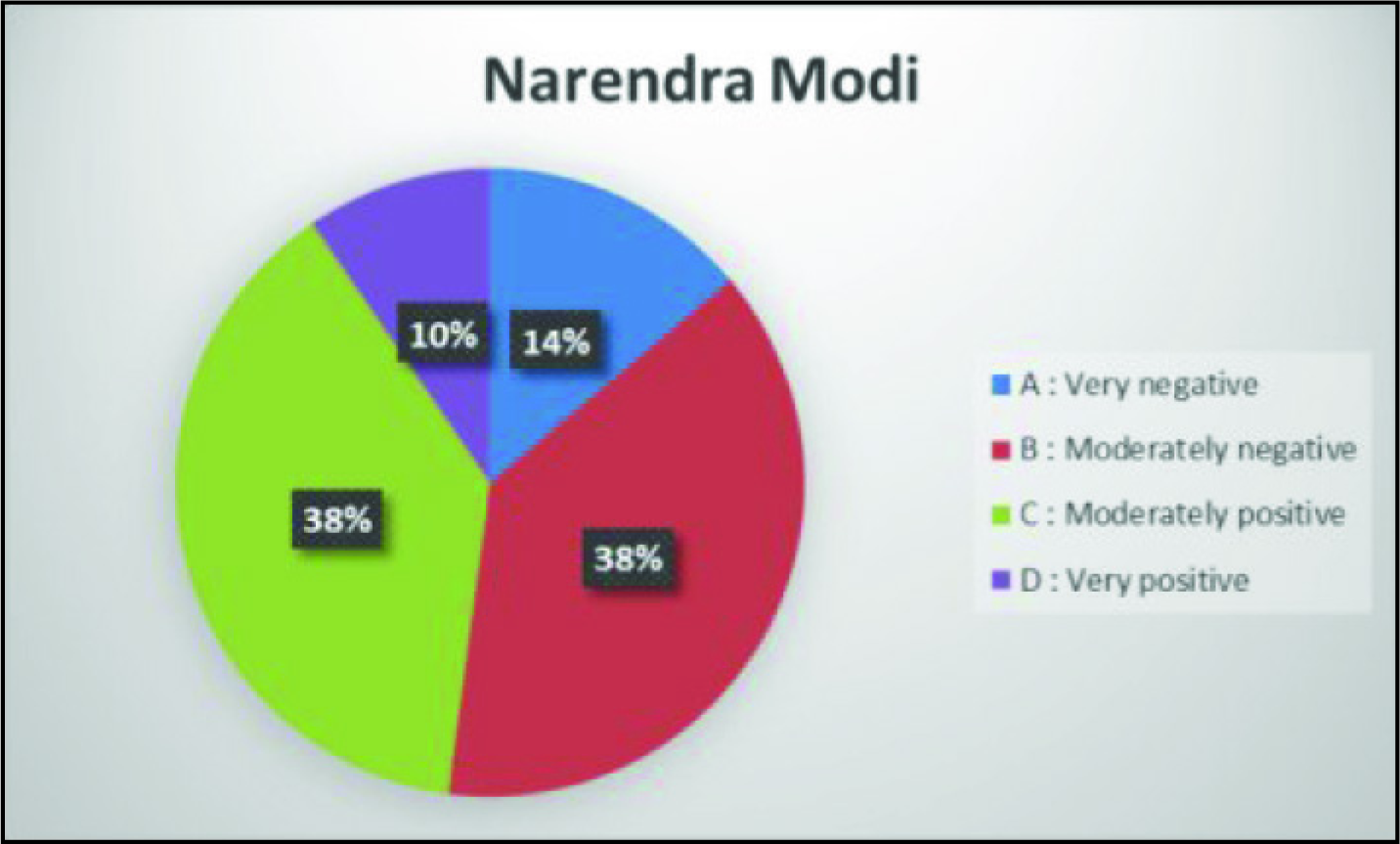
The results for both leaders are strikingly similar. Both have maintained a balance between positive and negative sentiment in their tweets. The negative sentiment is explained by the criticism of the BJP’s central government by Mr Gandhi and of the INC’s Karnataka state government by Mr Modi. The positive sentiment is reflected in the tweets seeking to attract various segments of voters and in tweets making poll promises.
Conclusion
To conclude, this research article highlighted the main themes, textual features and other characteristics of tweets by Rahul Gandhi. The main themes emerged in his tweets were primarily four: (a) targeting Modi and BJP government at the centre on performance, corruption and communal violence, (b) condolences and complements, (c) crime against women and (d) state elections. The pattern of communication in themes needs to be more diversified in terms of approaching different segments like farmers, tribals, youth, technology, and so on. The communication of Rahul Gandhi tweets is reactive, while the communication of Narendra Modi is both reactive and proactive. The ascendancy of brand Modi is unmatched and unprecedented when it comes to the use of twitter in the annals of Indian political system. When Rahul Gandhi’s election campaign on Twitter compared with that of Narendra Modi, the number of themes emerged out was more diverse. The consistency, clarity, performance, visibility, as found with brand Modi were unmatched and simply had no substitute brand as an alternative. This is clearly shown by the results of election in which BJP came to power not just in Karnataka but in most of the Indian states.
The WFA of Mr Gandhi’s does have the words agriculture, dalits (the depressed classes) and adivasis (tribals), but the overall breadth of topics covered falls short of the coverage made by Mr Modi. The Textalyser result of Mr Gandhi talked about the lexical density and readability of the tweet texts, which are found to be easily readable, and lexical density is also moderate. In Karnataka election analysis, the use of lexical words was more in Rahul Gandhi’s tweets than Narendra Modi. In terms of readability, the Rahul Gandhi’s tweets were slightly more readable than Narendra Modi.
The sentiment of around a half Rahul Gandhi’s tweets is moderately negative, and around a third of the tweets have a very negative sentiment. It is understandable that being the leader of the opposition party, Mr Gandhi’s tweets would mainly focus on criticism of the government. While analysing the sentiment of Karnataka election tweets, the sentiments of tweets of both the leaders found to be similar. A balance between positive and negative sentiment in their tweets is maintained. The negative sentiment is explained by the criticism of the BJP’s central government by Mr Gandhi and of the INC’s Karnataka state government by Mr Modi. The positive sentiment is reflected in the tweets seeking to attract various segments of voters and in tweets making poll promises.
Our findings indicate that embracing Twitter as a strategy could serve as an important precursor tool for political campaigning, for highlighting party’s achievements, to criticize opposition and most importantly to connect with the young online community. The first-time voters have potential to make political changes as they carry power in contributing to an electoral feat.
This research has some limitations, and researchers have suggested some ideas for future research. First, since start, we focused entirely on investigating online election campaign through Twitter. In case of an emerging economy like India, it is anticipated that election results also contributed by offline campaigning too. Future research about prediction and understanding election results should integrate both offline and online campaigning. Any such future research could complement the current findings. The present study, while expanding the research context of Indian politics, sheds light on the role social media plays in mobilization of young voters and its effect on electoral outcomes in an emerging democracy. The use of Twitter as an inadvertent political communication tool is yet to mature. In Western societies, scholars have established an impact of social media and its positive effect in improving openness and political participation. But the understanding of social media’s role in technologically underdeveloped democracies is limited. Also, the impact of the increasing use of vernacular languages in tweets by political leaders holds a good scope for future study.
Footnotes
Acknowledgements
The authors are grateful to the anonymous referees of the journal for their extremely useful suggestions to improve the quality of the article. Usual disclaimers apply.
Declaration of Conflicting Interests
The authors declared no potential conflicts of interest with respect to the research, authorship and/or publication of this article.
Funding
The authors received no financial support for the research, authorship and/or publication of this article.