



Abstract
Abstract
The study is an attempt to identify the preferred transparency components from customers’ viewpoint which complements customer satisfaction and loyalty through assurance and reliability in the Indian restaurant business. The study focused on the traditional restaurant settings in Madhya Pradesh (MP), India. A total of 477 usable responses were gathered from customers who dine out frequently in the traditional restaurants. The study disclosed the relative importance of transparency dimensions to improve service-quality dimensions (assurance and reliability) that in turn complement customer satisfaction and loyalty towards the restaurant business.
Introduction
In recent years, there has been a drastic change in consumer behaviour in the restaurant industry. Developing a high-quality dining experience is the prime motive of restaurant managers to attract more customers and retain the existing ones (Hoare & Butcher, 2007). If customers are satisfied, they may frequently come to dine and say positive words to others which ultimately will increase restaurant profits (Gupta, McLaughlin, & Gomez, 2007). Mattila (2001) studied that the net profit can be doubled to increase the percentage of loyal customers from 76 to 81 per cent in the restaurant business. But it has been noticed that customer dining trends have also been changed (Bijnen et al., 2002). These trends have forced a change in the entire food industry. Increasing competition in the food market is forcing traditional restaurants to change their operating strategies. The modern fast-food industry is not an exception, it has created a competitive environment for traditional restaurants (Momtaz, Alizadeh, & Vaghefi, 2013). Different fast-food restaurants are available around the world, offering customized services to achieve maximum customer satisfaction and preventing customers from going to rival traditional restaurants (Momtaz et al., 2013). Therefore, now time indicates to traditional restaurants to identify the growing demands from customers’ side. The traditional practices of serving dishes from closed kitchen have out of fashion nowadays. Earlier, there was no indication about what type of raw edible product was used, what the recipe of cooked food was, quality of food and brands of consumable products used in cooking, time consumed to prepare the food, cleanliness of the kitchen premises and so on (Tuttle, 2012). Of course fast-food restaurant chains are turning to transparent or open kitchens mainly due to space constraints, but this change may influence the entire mindset of today’s customers towards the restaurant business. They may only prefer to visit and dine in those traditional restaurants which have an open kitchen. Notably, traditional Indian restaurants are facing increasing competition from the growth of many fast-food restaurant chains (Singh & Pattanayak, 2016). But now they will have to change their strategy to serve customers.
Literature Review
Transparency
Transparency in the food chain is mentioned as one of the priority areas of research for competitiveness in the food sector (Schiefer & Deiters, 2013). The purpose of transparency is to make the system visible according to customer needs (Karsenty & Botherel, 2005). The concept of transparency in the restaurant business may be related to physical environment, service process, quality of raw materials used for cooking and so on (Ryu, Lee, & Kim, 2012). Customers who can easily see the process of cooking and the engaged staff may perceive transparency of the restaurant to be higher. It may be a valuable and less costly approach for restaurant managers to improve customer satisfaction and loyalty. Further, it may contribute a 22.2 per cent increase in customer-reported quality and reduce processing time by 19.2 per cent (UCL, 2015). Unfortunately, there is no systematic study to acknowledge the core concept of transparency and its usage in a restaurant business. The present study has gone through some relevant literature and tried to identify various variables about transparency. Rust and Oliver (1994) revealed that overall perception about service quality is based on a customer’s evaluation of service interface, product delivery and physical environment of a firm. Further, Mohammad, Barker, and Kandampully (2005) proposed that this model may be suitable for a restaurant business. Additionally, Wall and Berry (2007) disclosed that customer satisfaction in hospitality services might be linked to comprising the material product, physical environment, and behaviour of employees. It is important to mention based on the above studies that physical environment is a common factor among all. It may be considered in the form of open kitchen, display of price list and menu card and recipe of popular dishes on restaurants’ walls. Although some studies have identified related dimensions to transparency such as open kitchen trends, cleanliness of the kitchen, menu font size and style, food presentation, physical environment, service delivery process and time, price and so on, these are not sufficient as a transparency model for the restaurant business (Bouranta, Chitiris, & Paravantis, 2009; Chan & Lam, 2009; Magnini & Kim, 2016; Mohsin & Lockyer, 2010; Ryu et al., 2012; Tuttle, 2012). Therefore, the present study is an attempt to identify the various factors of transparency and its implementation in the restaurant sector.
The Effect of Transparency on Assurance and Reliability
Parasuraman, Zeithaml, and Berry (1988) contributed a lot to the service industry with SERVQUAL instruments. Although many past studies have confirmed the importance of service-quality parameters to influence customer satisfaction and loyalty in food services (Johnson & Mathews, 1997; Lee & Hing, 1995), some studies have criticized its transferability across different sectors (Smith, 1995). Bojanic and Rosen (1994) demonstrated the applicability of these service-quality parameters in the food service industry which further developed as a modified device called DINESERVE by Stevens, Knutson, and Patton (1995). It is proposed as a relatively straightforward tool for determining how the customer perceives a restaurant’s quality (Andaleeb & Conway, 2006). Stevens et al. (1995) investigated the 29-item measurement scale that comprises service-quality standards that fall into five categories—assurance, reliability, empathy, tangibility and responsiveness. Some researchers have suggested that it is employed to measure internal service quality (Frost & Kumar, 2001; Kang, Jame, & Alexandris, 2002). But the measurement of internal service quality is a too complex task to implement by merely adapting existing parameters (Bouranta et al., 2009; Marshall, Baker, & Finn, 1998). Antun, Frash, Costen, and Runyan (2010) stated that service-quality dimensions in restaurant services cover only performance and satisfaction aspects, not the expectations of customers. Earlier, it was harder for customers to evaluate the internal services of a restaurant than food quality due to the lack of tangible evidence associated with their services (Markovic, Komsic, & Stifanic, 2013). Now the industry has witnessed diversified changes and fierce competition which have fostered its customers to become more conscious and demanding (Malik, Jaswal, Malik, & Awan, 2013). Therefore, these studies force us to develop a new measurement model in the dynamic service environment of a food industry that would be firmly positioned to capture maximum customer expectation.
It has been studied that assurance and reliability are the most important parameters to uncover customer expectations of restaurant patrons (Bojanic & Rosen, 1994). Assurance has been defined as the knowledge and courtesy of the firm’s staff and their ability to build the confidence of customers on their firm, whereas reliability is the ability of a business to perform promised services to customers (Parasuraman et al., 1988). Magnini, Baker, and Karande (2013) stated that assurance is one of the SERVQUAL components that may be best projected even without an actual service experience. Also, the reliability of services within restaurant settings is a significant part and works smoothly on customers (Bouranta et al., 2009). It is one of the key attributes in restaurant success (Liu & Jang, 2009). Consistent with previous studies, Simons (2002) disclosed the importance of assurance and reliability that increase financial performance of a firm.
On the other hand, it was found that transparency strongly influences the trusting behaviour of customers towards the firm and their services (Kanagaretnam, Mestelman, Nainar, & Shehata, 2010). It engages the customer in a positive aspect and builds trust and goodwill about the firm’s services among them (Bertini & Gourville, 2012). In the context of restaurant services, the customer may judge transparency according to their need and derived value. Despite several studies in service quality and its parameters, to the best of our knowledge, no study has investigated on how transparency influences assurance and reliability of services in the restaurant business. Thus, the study proposes that transparency positively influences assurance and reliability on services in the restaurant business.
The Effects of Assurance and Reliability on Customer Satisfaction
The past literature widely acknowledges the importance of customer satisfaction in the restaurant business (Chow, Lau, Lo, Sha, & Yun, 2007; Ryu et al., 2012). Customer satisfaction is an individual’s attitude about the performance of products or services (Torres & Kline, 2006). It is an individual judgement on how much a firm’s product or service provides a pleasurable level of consumption-related fulfilment (Liang & Zhang, 2012). It is a very complicated human procedure which involves a cognitive and affective process with other psychological and behavioural aspects (Oh & Parks, 1997). Moreover, McCollough, Berry, and Yadav (2000) defined customer satisfaction as an attitude-changing attribute, resulting from consumption experience over time. Thus, the present study has employed customer satisfaction to evaluate the customer’s experience and perception about transparency through assurance and reliability of services in the restaurant business. More specifically, the study has tried to measure the customer’s dining experience as customer satisfaction in a transparent environment of a restaurant setting. Several studies have confirmed the significant relationship between service quality and customer satisfaction and its strong linkage with the profitability of business (Mohsin & Lockyer, 2010; Ramani & Kumar, 2008). It was found that SERVQUAL is one of the most famous models to determine customer satisfaction in the service sector (Chan & Lam, 2009). Malik et al. (2013) evaluated the service-quality perceptions of 407 customers in Pakistan and found that assurance and reliability are significant among them. Liu and Jang (2009) studied 284 American consumers’ perceptions of Chinese restaurants in the USA and found that reliability is one of the pivotal attributes to create satisfied customers and their positive post-dining behavioural intentions. Interestingly, Andaleeb and Conway (2006) applied regression analysis on the usable 85 questionnaires to determine the service-quality factors that explain customer satisfaction in full-service restaurants and found that physical design and appearance of the restaurant do not have a significant direct effect. It may be possible that physical design and appearance of the restaurant is limited to attract and assure of the quality of food services that are reliable from competitors to their customers. Therefore, the present study did not examine the direct impact of transparency on customer satisfaction and try to measure it through assurance and reliability. Thus, the study proposes that assurance and reliability on transparency in restaurant services positively influence customer satisfaction.
Customer Satisfaction and Loyalty
Customer loyalty is a feeling of commitment towards a firm’s products and services (Ehigie, 2006). Customer loyalty may be defined as customers’ revisits and positive word-of-mouth intentions (Kim, Li, & Brymer, 2016). It is the combination of a customer’s attitude and behaviour towards the firm and its products and services (Lee, Jin, & Lee, 2014). It is widely recognized as the key success factor in a firm’s success in the dynamic business environment (Tohidinia & Haghighi, 2011). Customer satisfaction is one of the most significant antecedents of repurchases and positive word of mouth which are the primary constructs of customer loyalty (Kim, Ng, & Kim, 2009; Oliver, 1999; Saha, 2009). The importance and linkage of customer satisfaction and customer loyalty are extensively studied in the field of hospitality (Gupta et al., 2007; Liang & Zhang, 2012; Ryu et al., 2012; Zhang, Zhang, & Law, 2013). Wu and Liang (2009) surveyed 392 customers and demonstrated that service quality directly influences customer satisfaction and in turn satisfied customers express increased loyalty. Ha and Jang (2010) discovered that customer satisfaction mediated the impact of service quality on customer loyalty. In the same vein, Ryan, Han, and Jang (2010) disclosed that customer satisfaction plays a mediating role between service quality and customer loyalty. In fact, it was observed that customer satisfaction leads to customer loyalty, which in turn enhances a firm’s profitability (Davenport & Beck, 2002; Gobe & Zyman, 2001). On the other hand, some studies have revealed that physical environment of a restaurant has a subsequent impact on customer expectation and satisfaction, which in turn affects their loyalty (Han & Ryu, 2009). Lai (2015) studied 382 customers to evaluate the roles of perceived value, customer satisfaction and affective commitment as they mediate the effect of service quality on customer loyalty and found that perceived value does not impact on customer loyalty directly in the restaurant business. It means that an overall dining experience of the customer can be improved with the assurance of excellent physical environment and highly reliable services which may positively influence customer satisfaction and then repeat patronage (Ryu et al., 2012). Thus, the study states that customer satisfaction from assurance and reliability of transparency in restaurant services positively influences customer loyalty.
Objective and Rationale of the Study
Traditional Indian restaurants are facing increasing competition from the growth of many fast food restaurant chains. Additionally, there is no holistic view of transparency on assurance, and reliability has been considered in existing literature to ensure customer satisfaction and loyalty in the restaurant business. Therefore, the present study is an attempt to identify the preferred transparency factors from customers’ viewpoint in the Indian restaurant business which complements customer satisfaction and loyalty. Although few previous researchers have examined the relationships among the dimensions of service quality on customer satisfaction and loyalty in the context of restaurant services (Chow et al., 2007; Ryu & Han, 2010; Ryu, Han, & Kim, 2008; Ryu et al., 2012), it is very important to bring to notice how the current study is unique in nature. The researchers mentioned earlier have taken variables such as food, service, physical environment, restaurant image, price and interaction quality and have investigated relationships among different customer responses in the restaurant business. However, there are some significant differences between the current study and those previous ones. The primary focus of the study is to see how transparency influences assurance and reliability on a restaurant’s services to ensure customer satisfaction and loyalty. Further, the study empirically explored the various factors of transparency from customers’ viewpoints. Moreover, the study disclosed the relative importance of transparency dimensions to improve service-quality dimensions (assurance and reliability) that in turn complement customer satisfaction and loyalty towards the restaurant business. While the importance of food and service quality, physical environment, atmosphere, restaurant image and prestige and perceived price have been intensively discussed in the past literature, to the best of our knowledge, no previous study has investigated the relationships between transparency and outcome variables as assurance, reliability, customer satisfaction and loyalty in the restaurant business. Thus, the present study aims to fill this gap by developing and testing an empirical model of transparency and its effect on customer satisfaction and loyalty through assurance and reliability in the restaurant business.
Methodology
Data Collection Instrument
To explore the observed variables of transparency in the restaurant business, an informal discussion was conducted with 40 people who dine out frequently in the traditional restaurants and belong to different demographic characteristics of Bhopal (Madhya Pradesh [MP]). In India, most of the traditional restaurants still do not have transparent kitchen trends to improve the dining experiences of customers. For introducing the same concept, the study has used some images of these types of restaurants to explore the idea of transparency in the participant’s mind. These pictures have been arranged from Google search engine (Figure 1). But the study clearly mentioned that transparency in the restaurant business is not limited to the transparent or open kitchen. It could also be something else that the present study wants to investigate.

Interestingly, participants shared excellent suggestions and views which would be helpful for developing the questionnaire. The study mentions some important ideas.
The vegetarian respondents admitted that when they go to dine in traditional restaurants (vegetarian and non-vegetarian) they have always been worried. They are afraid of the uses of same cookware and other kitchen accessories in the cooking of non-vegetarian and vegetarian food in the restaurant. These people highly admired the open and transparent kitchen restaurants. They suggested that it would help to observe the preparation and delivery of food and services to them. Even when they go to dine in a pure vegetarian restaurant, they worry about the purity of cooked food. The majority of vegetarians in India consider egg as a non-vegetarian food item, while most of the pure vegetarian restaurants use it in their kitchen. The open and transparent kitchen would assure the cooking and serving of pure vegetarian food. Most of the participants complained that many times traditional restaurants take more time to deliver the ordered food. Sometimes they feel that this delay is done purposely, and this becomes one of the reasons for dispute between customer and restaurant staff. Undoubtedly, transparent kitchen restaurants would help to avoid such misunderstandings between the customer and restaurant staff. Further, they told that it would be helpful to observe the process of preparing and delivering food, cleanliness of kitchen, water used for preparing food, proper ventilation, proper lighting in kitchens, cookware and cutlery items used for cooking food and cleanliness of the cook and other supporting staff. It would help to see the quality of raw material and brands of the edible products used in the preparation of food. It would help to assure the delivery of healthy food to customers. Additionally, they suggested that transparency in terms of prices of food items and taxes levied on dining is also important. In general, restaurants provide menu cards including the price list of food items. When we go to dine with friends, family, relatives and guests, we hesitate to ask the rate of dishes in front of them and avoid seeing the menu card. As a host, we typically insist our guest to order food by the menu card of the restaurant. Simultaneously, we try to avoid expensive dishes to take care of our budget as it is the usual tendency of a human being. It would be better if traditional restaurants display prices of food items on big boards. Also, it was observed that some of the restaurants do not charge service taxes or other taxes directly on the total bill amount. They include these taxes with separate food items and do not show this in the total bill amount. It misguides the customers, and they think these restaurants are not charging a tax which is not true. Therefore, the charges of taxes levied in restaurant services would also be mentioned explicitly on their notice board. Interestingly, the respondents suggested that the recipe of popular food items of a particular restaurant could also be displayed in the unoccupied space of the restaurant’s walls which would attract customers more and assure about the quality of ingredients in that food item.
All the discussed variables are significant to ensure customer satisfaction and loyalty. There may be some other observed constructs of transparency in the restaurant business which the present study aims to explore and support empirically.
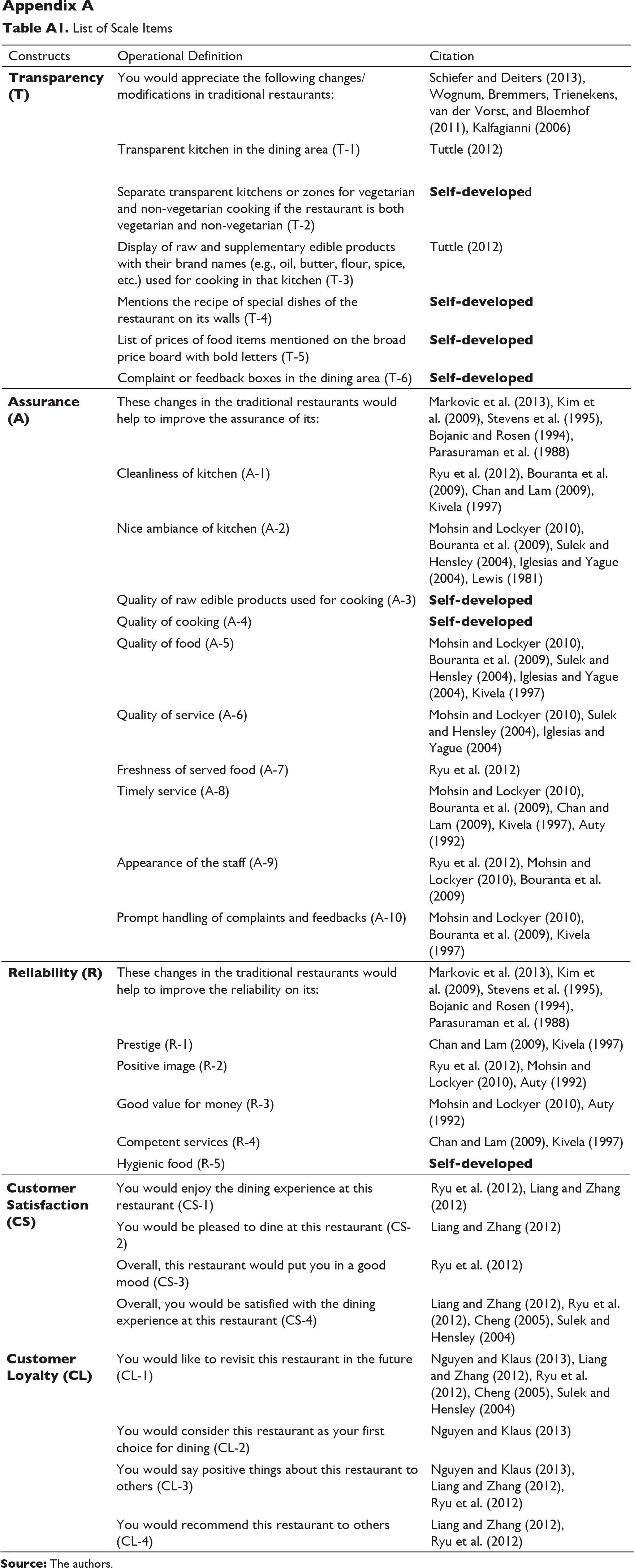
Additionally, the multi-item constructs for each latent variable were developed based on an extensive review of past literature. Among them, the latent construct is transparency, and some of the observed variables are exploratory ones suggested by restaurant managers and customers. The draft of the questionnaire was examined by two academics experienced in questionnaire design. The survey instrument was subsequently piloted with 20 different customers to access the terminology, clarity and response format. Suggested amendments were made based on their feedback. The final set of questionnaire encompassed 29 observable variables for 5 latent variables. Further, the questionnaire included some more questions to assess demographics characteristics and dine-out behaviour of customers. Table A1 presents all of the measurement constructs that were assessed using a five-point Likert scale, ranging from strongly disagree (1) to strongly agree (5).
Data Source
The study adopted a descriptive research design based on a cross-sectional survey method. The study was conducted in five major districts of MP, India—Bhopal, Gwalior, Indore, Jabalpur and Ujjain. The reason behind collecting the samples from these cities was that people would be somehow aware of the concept of a transparent kitchen environment in restaurant services. The targeted population of the study was people who had frequent dining experiences in traditional restaurants. Convenience sampling was adopted on platforms of the main railway stations of the five cities. Questionnaires were distributed personally among the passengers on the railway platforms of selected cities during their waiting time to catch the train. Before the distribution of questionnaires, it was confirmed whether the respondents are actual residents of that city or not. After confirming the same, a questionnaire with a dot pen as a gift was distributed among the respondents. They were requested to fill and return it within 5–10 minutes. Most of the respondents were bored during that time and willingly participated. The respondents were assured complete anonymity of responses. A face-to-face survey method is very useful to avoid sequential bias than a self-administered method (Churchill & Suprenant, 1996). A total of 540 questionnaires were received. A total of 477 were found to be in a usable form with a response rate of 88.3 per cent. The rest 63 were discarded due to incomplete information.
Analysis
Demographic Information
Sample Characteristics

Empirical Model Assessment
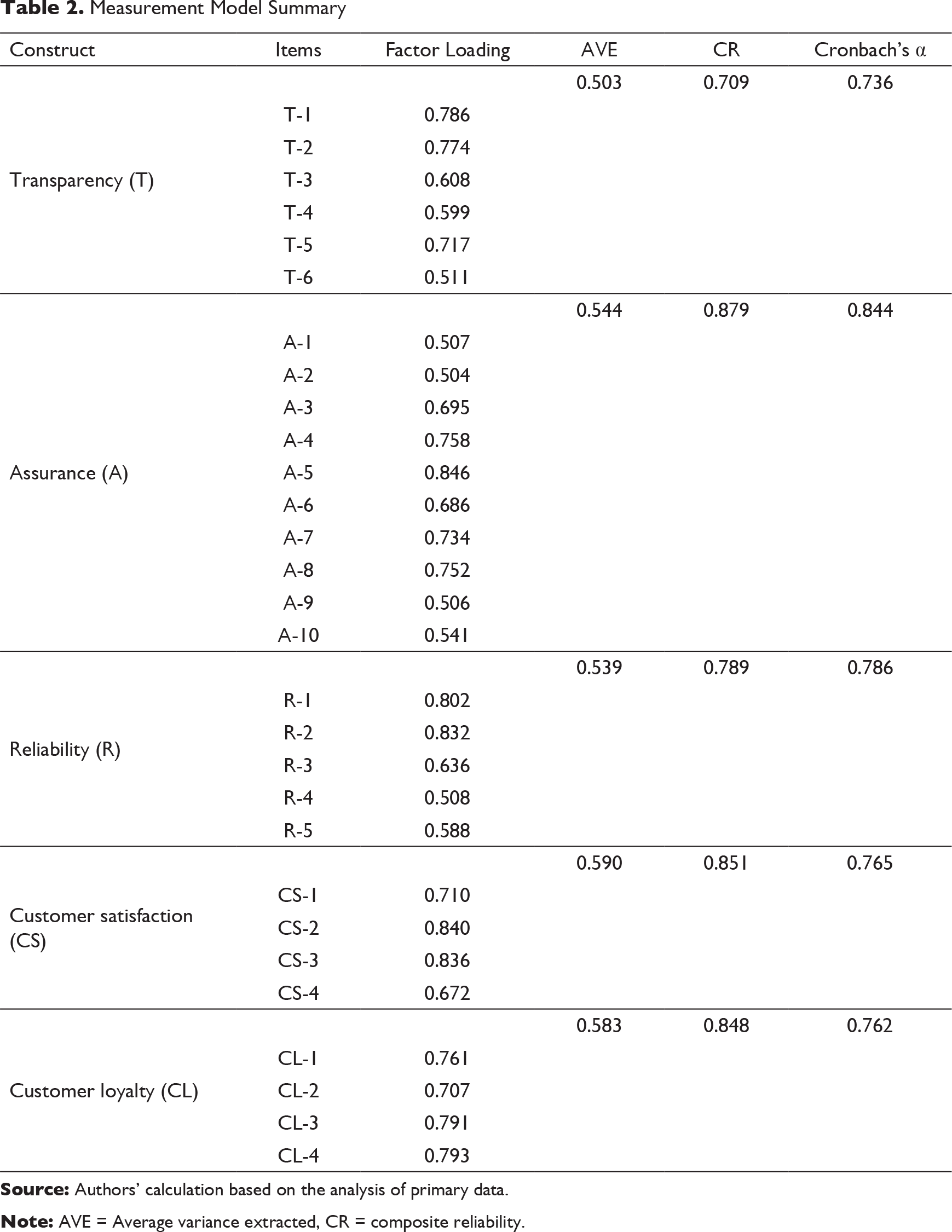
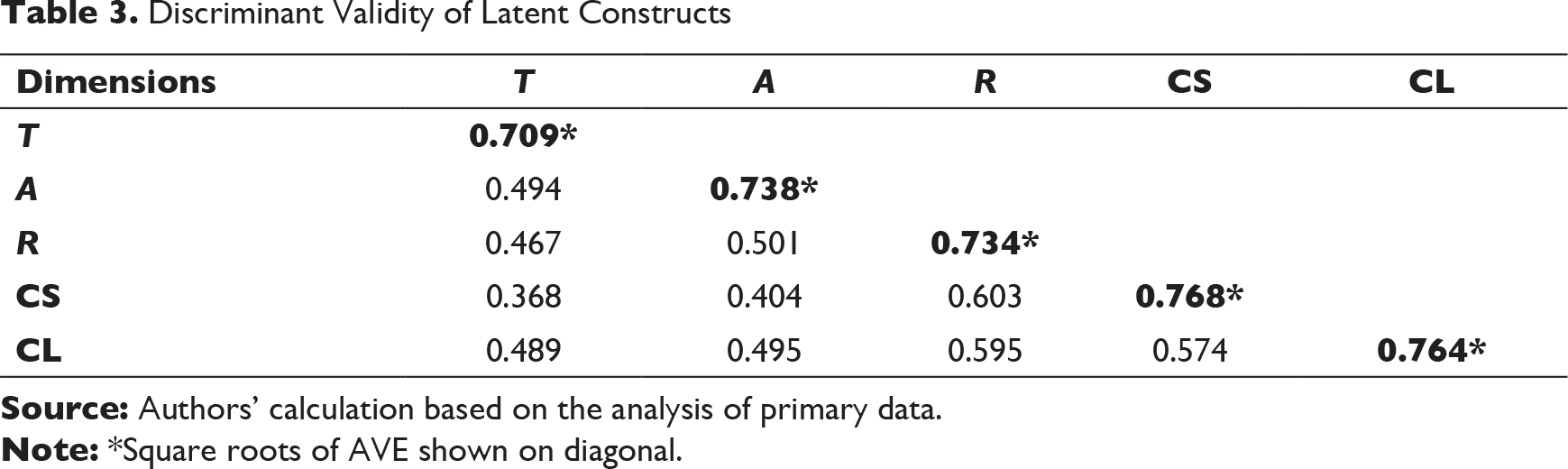
Based on the review of literature, the empirical model of the study is presented in Figure 2. The study applied exploratory factor analysis (EFA) and confirmatory factor analysis (CFA) to examine the measurement model (Anderson & Gerbing, 1988). Prior to inputting the data, it was confirmed that the assumptions of normality, linearity and homoscedasticity were not violated using the Kaiser-Meyer-Olkin Index (0.611) accompanied by Bartlett’s test of sphericity (chi-square [χ

Measurement Model Summary
Discriminant Validity of Latent Constructs
The study incorporated the ex-ante and ex-post approaches to avoid common method bias. Initially, an expert review panel helped to assure content validity by reducing ambiguity in the questionnaire items (Podsakoff, MacKenzie, Podsakoff, & Lee, 2003). The study did not collect any sensitive information from the participants to avoid their bias and assured confidentiality of their responses. CFA is also one of the best ex-post approaches to cross-check for common method variance (CMV) which indicates no substantial bias in the present study (Richardson, Simmering, & Sturman, 2009). As multicollinearity can affect the results, the study examined the variable inflation factor (VIF) values for multicollinearity assessment (Kline, 1998). The latent constructs had no values exceeding 5.0 (T = 1.961; A = 1.168; R = 1.959; CS = 1.403; CL = 1.812) which shows there is no multicollinearity between the independent variables (Grewal, Cote, & Baumgartner, 2004).
Structural Equation Modelling
Westland (2010) suggested that to test the proposed research model through structural equation modelling (SEM), we require the prior setting of a sample size based on the latent and observed constructs in the study. The study used the online Daniel Soper’s A-priori sample size calculator which recommended a minimum sample size of 463 to test the research model with a probability level of 0.05. All indices of the study model were examined; the overall model fit was examined using the SEM approach with the Analysis of Moment Structures (AMOS) 22.0 software (Byrne, 2001). The measurement model was found to fit the data well: χ
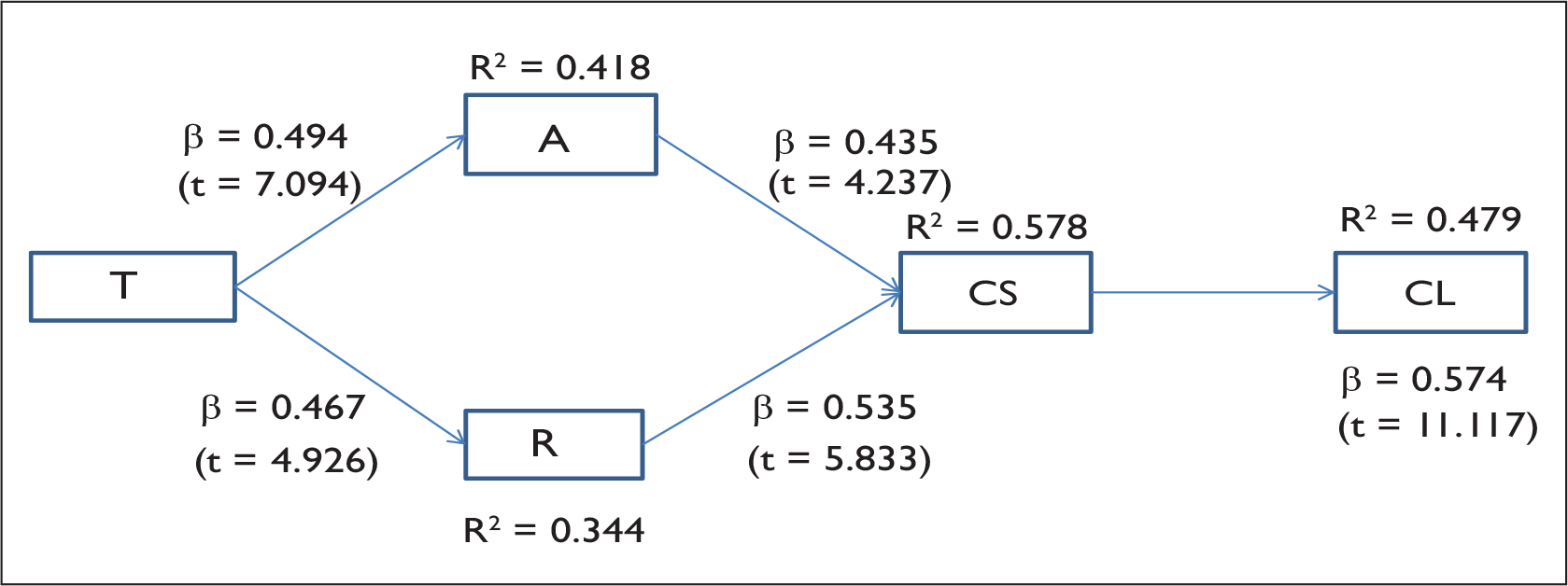
As the conceptual model of the study is relatively complex, a partial least square (PLS) approach was employed using the SmartPLS 2.0 software to test the associated relations, which provides more information including t-statistics for concluding from the data (Chin, 2001). The standardized path coefficients (β), t-statistics and associated significance levels for all relationships in the model are presented in Figure 3. The proposed relationships among the paths were all significantly supported. Transparency significantly influenced assurance of services (β = 0.494; t = 7.094; p < 0.001) and reliability on services (β = 0.467; t = 4.926; p < 0.001) in the restaurant business. Further, assurance of transparency (β = 0.435; t = 4.237; p < 0.001) and reliability on transparency (β = 0.535; t = 5.833; p < 0.001) in the restaurant business had a positive significant influence on customer satisfaction. Additionally, customer satisfaction (β = 0.574; t = 11.117; p < 0.001) from assurance and reliability of transparency had a positive significant influence on customer loyalty.
The study model had a high predictive power regarding assurance and reliability on customer satisfaction; it explained 57.8 per cent of the construct’s variance (Figure 3). Additionally, the model explained 47.9 per cent of the variance in customer loyalty of customer satisfaction and 34.4 per cent in the reliability of transparency in the restaurant services. Lastly, 41.8 per cent in the assurance of transparency in the restaurant services was found. The amount of variance explained in the study is good enough to support theoretical soundness (Awwad, 2012).
Discussion
The results indicate that the adoption of transparency factors in the restaurant business works as a significant predictor of assurance and reliability on services. Further, the study highlighted that the assurance and reliability of transparency influence customer satisfaction which in turn influences customer loyalty in the restaurant business. In the same vein, Lewis and Boom (1983) defined that service-quality parameters are primary drivers to deliver the customer’s needs and expectations. Bojanic and Rosen (1994) also used service-quality dimensions in their study and observed that assurance, reliability and tangibility are the most important dimensions to influence customer satisfaction. Moreover, all the study hypotheses were supported with high standardized regression coefficients. As hypothesized, the study obtained that transparency significantly influences assurance and reliability, with transparency appearing as the strongest predictor of assurance, but closely followed by reliability. In addition, reliability on transparency appears as the strongest predictor than the assurance on transparency of customer satisfaction. But the difference of their explained variance is less, and both appear as the leading factors for customer satisfaction. Finally, customer satisfaction had a significant influence on customer loyalty. Many studies have supported that customer satisfaction influences loyalty which in turn affects the firm’s profitability (Cheng, 2005; Rajeswari, Srinivasulu, & Thiyagarajan, 2017; Schneider & Bowen, 1995). Additionally, the present research identified some key dimensions within this domain.
The study indicates transparency as a key weapon to penetrate competitiveness in today’s dynamic scenario of restaurant services. Factor analysis of customers’ data revealed six constructs of transparency, four of which (transparent kitchen in the dining area, separate transparent kitchens or zones for vegetarian and non-vegetarian cooking, list of prices of food items clearly mentioned on the price board and display of raw and supplementary edible products with their brands) were found to be the most significant with their loadings, respectively. The remaining two items (mentioning the recipe of special dishes of the restaurant on its walls and complaint or feedback boxes in the dining area) were also placed with their loadings, respectively. Among the assurance constructs, the study obtained 10 items out of which six (quality of food, quality of cooking, timely service, the freshness of served food, quality of raw edible products used for cooking and quality of service) were characterized the most important. Some of the variables of assurance are consistent with the previous study of Kivela (1997) in the restaurant field who obtained the quality of food and speed of service as the important factors out of 14 variables. After that, the remaining four (prompt handling of complaints and feedbacks, cleanliness of kitchen, the appearance of the staff and nice ambiance of the kitchen) were also observed significantly. Mohsin and Lockyer (2010) ranked customer perception dimensions of service quality in Indian hotels and found that quality of food, quality of service, dealing with complaints, timely service and appearance of staff are in the top order. Bouranta et al. (2009) also emphasized variables such as kitchen cleanliness, ambiance, food quality, timely service, waiter appearance and prompt handling of complaints in their study and showed that firms could improve their external service quality to focus on internal service quality. The study found that the key components of reliability are a positive image, prestige, good value for money, hygienic food and competent services supported by their loadings. Auty (1992) developed the five service-quality parameters into ten where he highlighted the importance of image, prestige, an atmosphere of the restaurant and value for money in the restaurant business. Tse, Sin, and Yim (2002) reported that brand image and prestige are good indicators of service quality which directly influences customers’ perceived value that in turn influences customers’ behavioural intentions. Thereafter, customer satisfaction components (pleased to dine at this restaurant, this restaurant would put you in a good mood, enjoy the dining experience at this restaurant, and overall satisfied with the dining experience) were also found significant accordingly. Finally, factor analysis revealed that the factors, such as recommending this restaurant to others; saying positive things about this restaurant to others; revisiting this restaurant in the future; and considering this restaurant as their first choice for dining, were significantly associated with customer loyalty. The selected observed constructs of customer satisfaction and loyalty were borrowed from past studies of Liang and Zhang (2012) and Ryu et al. (2012). With the application of these constructs, both studies successfully investigated the influence of service quality on customer satisfaction and behavioural intentions. All the discussed constructs in the study highlight the importance placed by customers in the restaurant services that would help restaurant managers enhance their customer’s dining experience.
Conclusion
In recent years, fast-food restaurant chains have offered customized services to customers with open kitchen facilities across the world (Momtaz et al., 2013; Ryu et al., 2012). They have forced the traditional restaurant business to change their operating strategies accordingly. These trends are already accepted by some of the premium class restaurants in the world, and others are waiting or thinking of following the same (Chan & Lam, 2009). The traditional restaurant business in India has also started to consider these trends gradually (Sanjeev, 2007). But the acceptance and implementation process is very slow and limited to few metro cities of India (Mohsin & Lockyer, 2010). Even in these metro cities, the number of these types of restaurants is countable. On the other hand, in states such as MP, Chhattisgarh, Uttar Pradesh, Bihar, Orissa, Rajasthan and so on and their cities, we may rarely find a transparent kitchen with a restaurant’s dining hall. Anyone can find it in premium class restaurants which are two or three in a city. It does not mean that the cost of the transparent kitchen is not affordable (Chan & Lam, 2009). In the case of restaurant business settings in India, traditional restaurants are more spacious and are being renovated according to modern trends. They are trying their best to attract customers towards them. But still, the transparent kitchen system is not the part of the traditional restaurant business. Now, time demands to explore this issue in general. Thus, the present study is an attempt to fill this gap in the literature to explore the preferred transparency factors including a transparent or open kitchen from customers’ viewpoint in the restaurant business. Moreover, the study tested a model of transparency to ensure customer satisfaction and loyalty through assurance and reliability in the Indian restaurant business. Therefore, it is reasonable to conclude that assurance and reliability can be improved significantly by focusing on transparency factors which further influence customer satisfaction and loyalty in the Indian restaurant business. The present study model may be supported by a recent study in the retailing sector which indicated that price transparency has a significant positive effect on assurance and reliability to ensure customer loyalty (Mittal & Agrawal, 2016).
Although the findings of the study should be considered as a preliminary step to understanding the transparency components in the traditional Indian restaurant business, as with all research studies, the findings presented are characterized by some limitations. The present study focused on the customer’s side than on the restaurant’s staff team. Therefore, future research should include restaurants’ staff opinions to generate results that are more applicable. The transparency components in the study were exploratory. It may be possible that these could not be fully explored and should be studied shortly. However, the study was conducted in traditional restaurant settings in MP, but the scope of the research may not be limited to a particular type of restaurant and a geographical location. The study would guide all types of restaurants and their managers to understand the changing behaviour of Indian customers across the globe because it is observed that Indians are easily available anywhere in the world. Finally, the study highlighted the various transparency attributes regarding dining expectations and perceptions of customers towards restaurant services which would help different restaurant operators improve their services accordingly.
Managerial Implications
Customer satisfaction of the dining experience in various restaurants is likely influenced by different factors, but a higher level of satisfaction will only lead patrons to revisit (Chan & Lam, 2009). Therefore, the present study was an attempt to evaluate customer satisfaction and loyalty in a traditional restaurant setting through transparency components, mainly focused on the transparent kitchen in a dining area. The concept of a transparent kitchen looks more attractive with other variables from customers’ viewpoints in the context of traditional restaurants. Most of the attributes used for transparency in the study are self-developed and selected after the informal discussion with customers who dine out frequently in traditional restaurants. Out of them, two (transparent kitchen in the dining area and display of raw and supplementary edible products with their brand names used for cooking in that kitchen) are on the exploratory stage and borrowed from Tuttle (2012). All six components of the restaurant’s transparency function are significant contributors to ensure customer satisfaction and loyalty through assurance and reliability on services. Here, a manager needs to understand better the distinct role of each component of transparency. The results reveal the transparent kitchen in the dining area as the highly appreciated contributor by Indian customers. Most of the participants were eager to see it in traditional restaurant settings. Even very few customers have experienced the transparent kitchen set-up only in premium class hotels and restaurants in major cities. Further, separate transparent kitchens or zones for vegetarian and non-vegetarian cooking, if a restaurant is both vegetarian and non-vegetarian, are commonly shared as an essential dimension to ensure customer assurance and reliability on restaurant services. It is reasonable to say that the majority of vegetarians in India believed in the purity of cooking food. Earlier it was the trend that food was cooked behind the door and served after it. Vegetarian customers always worry about the purity of cooking when they dine out in restaurants that offer vegetarian and non-vegetarian food.
On the other hand, it also has been found that most Indian customers consider egg as a non-vegetarian food item, while restaurants do not. They use egg in the cooking of various dishes. The transparent kitchen set-up would help both restaurants and customers to overcome this issue. In addition, the results of the study reinforce that the list of prices of food items should be mentioned on the wide price board with bold letters, which is also the leading indicator to attract customers towards traditional restaurants. It means that customers prefer to see the displayed price list in front of them in bold letters which would help manage their budget on dining. Additionally, restaurant managers should display the raw and supplementary edible products (e.g., oil, butter, flour, spice, etc.) with their brand names used for cooking in the transparent kitchen which was found to be a significant dimension from customers’ opinion. It will automatically communicate the quality of cooking of a restaurant which may ensure proper value for money and hygienic concerns of customers. Interestingly, the study disclosed that mention of the recipe of special dishes of a restaurant on its bare walls is also an excellent transparency indicator. It has been observed that hotels and restaurants spend lavishly on the decoration of their internal physical environment. The mention of a recipe on a restaurant’s wall is a brilliant and inexpensive idea which would not only attract more customers to dine but ensure the high quality of food served in that restaurant. Simultaneously, it would educate and make aware customers about a recipe for a particular dish which is a very common phenomenon in the present scenario. There is no need to hide this fact; ultimately, the cooking process is an important one to differentiate the taste of food. Finally, the study urged to install complaint or feedback boxes in the dining area of restaurants. It has been observed that sometimes restaurants install these boxes in their premises but do not open it regularly. The restaurant managers should take the right initiative in this regard. Moreover, all study findings are interesting for restaurants and their managers. It seems to offer an opportunity for them to understand transparency factors that influence assurance and reliability on services which, in turn, complement customer satisfaction and loyalty in the restaurant business. Therefore, the present study strongly recommends the application of the transparent kitchen in the dining area with other transparency factors in the traditional restaurants’ settings.
Appendix A
Table A1. List of Scale Items
Footnotes
Acknowledgements
The authors are grateful to the anonymous referees of the journal for their extremely useful suggestions to improve the quality of the article. Usual disclaimers apply.
Declaration of Conflicting Interests
The authors declared no potential conflicts of interest with respect to the research, authorship and/or publication of this article.
Funding
The authors received no financial support for the research, authorship and/or publication of this article.