



Abstract
Commitment to change on middle managers was assumed to be an important factor that supported the success of the implementation of the organizational change plan. Based on the social exchange theory, commitment to change on middle managers could develop with a reciprocal relation between the organization and the middle managers. This research aimed to test the participation of middle managers on the commitment to organizational change with perceived organizational support as the mediator. Participation in the period of change was an exchangeable resource, while perceived organizational support was an indicator of the quality of the relationship between the middle managers and the organization. Research data were obtained from 227 middle managers on one of the government organizations in Indonesia which was in a period of change. Research results showed that perceived organizational support could have the role as a partial mediator between participation in period of change with commitment to change. Perceived organizational support and participation in period of change would increase the affective and normative commitment to change, while decreasing the continuous commitment to change. This research result could contribute practically and theoretically in the understanding and discussion regarding the role of middle managers in organizational change.
Introduction
Change was inevitable for organization, whether it was planned or not. ‘To change or to perish’ (Robbins & Judge, 2015) was a statement to reaffirm that change was inevitable. During change, commitment to change was a very important factor. Individuals with commitment to change would feel attached and strive to make the change a success (Herscovitch & Meyer, 2002). Previous research proved that commitment to change could increase behavioural support for change and creative behaviour for change (Seo, Taylor, Hill, Zhang, Tesluk, & Lorinkova, 2012); implementation of innovation (Michaelis, Stegmaier, & Sonntag, 2010); voicing concerns about change (Cinite & Duxbury, 2018); job satisfaction (Yang, 2016) and reduce resistant behaviour towards change (Seo et al., 2012); and turnover intention (Cunningham, 2006; Shin, Seo, Shapiro, & Taylor, 2015).
Middle managers had an important role in the implementation of change (Barton & Ambrosini, 2013; Rouleau & Balogun, 2011). Middle managers were the mediators between top management and employees, in communicating the change (Herzig & Jimmieson, 2006). In an organization in the middle of change, middle managers were expected to be able to communicate and ‘sell’ the change to employees, therefore motivating the employees to follow the change (Rouleau & Balogun, 2011). Middle managers must have commitment to change, in order to develop the intrinsic motivation of employees in supporting the vision of the change. The effectiveness of a leader in communicating change depended on whether the leader completely supported the values and goals attached on the vision of change and being committed to the change itself (Abrell-Vogel & Rowold, 2014).
The strategic role of middle managers during change (Giangreco & Peccei, 2005) demanded them to be more active in participating in making the change a success. Active participation would result in positive attitude towards change and required behaviour in change (Lines & Selart, 2013). Various research results showed that participation correlated positively with attitude towards change, such as openness to organizational change (Wanberg & Banas, 2000), individual readiness for change (Bouckenooghe & Devos, 2008; Bouckenooghe, Devos & Van den Broeck, 2009) and commitment to change (Ahmad & Cheng, 2018; Rogiest, Segers, & van Witteloostuijn, 2015; Van der Voet, Kuipers, & Groeneveld, 2016). Also, participation was valued as a form of organizational support towards middle managers (Reeves, Walsh, Tuller, & Magley, 2012).
What about the middle managers of government organizations in Indonesia? Was participation in period of change also perceived as a form of organizational support on middle managers? And could participation also increase the commitment of change on middle managers? As known, the situation of change commonly created ambiguity in the context of work and increased anxiety in daily work activities (Bouckenooghe, 2012). Moreover, decision-making between individuals of higher and lower hierarchy was not a generally accepted or implemented culture in government organizations in Indonesia. Indonesia had high power distance culture, high ambiguity avoidance and culture of feminism leading to dependence on the organizational system or structure. Furthermore, leaders in Indonesia had a general view that subordinates were morally obliged to follow the bureaucratic rules, and subordinates needed leaders to provide them with the correct guidelines (Irawanto, 2015). The difference between organizational culture in Indonesia and in countries researched in previous studies prompted the need for a review of the results, in order to support the effectiveness of the implementation. Based on that fact, the research regarding the role of middle managers in supporting organizational change in Indonesia was necessary.
This research was arranged as follows: first, discussion regarding the introduction, then followed in the next part which consisted of literature review of the research variables and the goals and grounds of research. The methodology part explained the data source, sample frame, empirical model, followed by analysis and results. The discussion consisted of the conclusion, implications, research limitations and direction of future research.
Review of Literature
Social Exchange Theory
The Social Exchange Theory was one of the most influential conceptual paradigms in comprehending workplace behaviour. Social exchange involved a series of responsibility-generating interactions (Cropanzano & Mitchell, 2005). This theory depicted how various resources could be exchanged by following particular rules and how exchange resulted in higher relationship quality (Colquitt et al., 2013). It was often that exchange was initiated by those of higher hierarchy to those of lower hierarchy. If those of lower hierarchy desire such relationship, then in return, they had to show beneficial attitudes or behaviours (Cropanzano & Rupp, 2008). One of the basic principles of social exchange theory was that relationship in a social exchange would develop with time, starting from trust, loyalty, to mutual commitment (Cropanzano & Mitchell, 2005).
Organizational change initiated by the top management would succeed when supported by all members of the organization. Based on the principle of social exchange theory, organization that desired commitment to change on middle managers would propose resource to exchange. In this research, participation in period of change was the exchanged resource. Organization that provided the opportunity to middle managers to participate in period of change expected a return in the form of commitment to change on middle managers. In order to strengthen the relationship between the participation variable and commitment to change on middle manager variable, perceived organizational support was involved as a mediating variable. Perceived organizational support was used as the mediating variable with the reasoning that perceived organizational support being an indicator of the quality of social exchange relationships (Colquitt et al., 2013). Also, participation was valued as the resource in the exchange between middle managers and organization when middle managers valued the participation as a form of organizational change to them in period of change.
Participation in Period of Change and Commitment to Change
Commitment to change was a form of attachment on organizational change, which was also a dynamic process (Neubert & Wu, 2009). Herscovitch and Meyer (2002) explained commitment to change based on a motivational concept where individuals may have various motivations to support change. Several individuals committed to the organization because they loved what they did, or because the organizational goal was in accordance with their own goals. Other individuals may fear losing particular matters if they did not support the change or felt obliged to the organization, or their superiors. This difference in motivation ended up differentiating the commitment to change into three components, which were affective commitment to change (feeling of desire), normative commitment to change (a sense of obligation) and continuous commitment to change (cost-based).
The three components of commitment to change were different constructs and could be differentiated between one another, as proven in various researches (Cheng & Stockdale, 2003; Herscovitch & Meyer, 2002; Kalyal, Sverke, & Saha, 2007). Previous researches also proved that the three components were affected by different antecedents. Affective commitment to change and normative commitment to change was affected by the positive condition of the organizational environment such as interpersonal justice (Bouckenooghe, De Clercq, & Deprez, 2014), involvement climate (Rogiest, Segers, & van Witteloostuijn, 2015), quality of relationships with managers and job motivation (Parish, Cadwallader, & Busch, 2008), authentic leadership (Alavi & Gill, 2017); while as the opposite, positive condition of the organizational environment correlated negatively with continuous commitment to change, for example, organizational justice (Foster, 2010) and quality of relationships with managers (Parish et al., 2008).
Participation was a positive condition created by the organization. Participation was the power distribution between members of higher hierarchy to members of lower hierarchy in the organization (Lines & Selart, 2013). The essence of participation was the conscious and implied effort on individuals of higher hierarchy in an organization to provide extra role or opportunity to individuals of lower hierarchy to have higher role or voice in one or more performance fields in the organization (Lines, 2004). Participation could be viewed as a reflection of the trust of superior to subordinates, and in period of change, could be considered to be a formation of temporary group consisting of superiors and subordinates (Lines, Selart, Espedal, & Johansen, 2005). Participation was one of the rational tactics in helping transformational leaders in keeping their positive image on subordinates, and furthermore, able to be used to affect the commitment of subordinates on the organization (Chaturvedi, Rizvi, & Pasipanodya, 2019). Participation in the strategic process of change was often assumed to have a number of positive consequences for the quality of decisions, affective response to change and the success of the implementation of strategic change (Lines, 2004).
Research regarding change tended to focus on the content of change, compared to the implementation process of organizational change (Kuipers et al., 2014). Based on change management theory, there were many different approaches on how individuals react to change, not just depending on the content of the change, but also the implementation process (Farrell, 2000). Participation on organizational change was one of the dimensions of the process of change (Bouckenooghe, Devos, & Van den Broeck, 2009) that correlated positively with the acceptance to and support on change by organization members (Devos, Buelens, & Bouckenooghe, 2007; Rafferty & Restubog, 2010). This research focussed more on the implementation process of change, particularly on participation as the antecedent factor of commitment to change.
Several previous researches regarding organizational change had tested the relationship between participation with commitment to change. Results showed that participation in decision-making had a variety of effects on several types of change. Participation in decision-making was found to be a significant predictor to affective commitment to change (Ahmad & Cheng, 2018; Soumyaja, Kamlanabhan, & Bhattacharyya, 2011; Van der Voet et al., 2016) and normative commitment to change, but of no relation with continuous commitment to change (Soumyaja et al., 2011). The research conducted by Rogiest et al. (2015) and Thien (2019) did not find direct relation between participation with commitment to change. Moreover, it was found that the relation strength difference between participation with commitment to change, a result of the research conducted by Van der Voet et al. (2016), with the context of public organization in the Netherlands, the variable of participation and commitment to change to have a stronger relationship when compared to the research conducted by Ahmad and Cheng (2018), with the context of non-Western public Islamic organization in Kurdistan, and also compared to the research conducted by Soumyaja et al. (2011) with the context of IT organization and manufacture in India in the middle of restructuration.
The Mediating Role of Perceived Organizational Support
Previous research proved that participation had a positive relationship with perceived organizational support, both directly and mediated by perceived supervisor support (Reeves et al., 2012). The positive effect of participation on perceived organizational support could be explained using two perspectives, which were (a) norms of reciprocity, if organization provided more opportunity for middle managers to participate in decisions concerning them or their work, middle managers felt supported by the organization and in return middle managers considered giving more support to the organization; and (b) organizational support theory, individuals developed a general perception regarding how much the organization valued their contribution and cared about their well-being (Eisenberger & Stinglhamber, 2011). By using the social support theory, the relationship between middle managers and the organization could be reviewed from the middle managers’ viewpoint. Participation in decision-making was an experience perceived positively by individuals, as with being given the opportunity to participate, individuals felt that the organization trusted, valued and cared about their well-being (Reeves et al., 2012). This could increase the belief regarding the organizational support to them.
The form that could be perceived as organizational support varied, such as treatment by organization members, employee organization relationship quality, human resources practices and job conditions (Kurtessis et al., 2017). Perceived organizational support acknowledged economic and social exchange between employees and organization (Naotunna & Arachchige, 2016), but even so, perceived organizational support was more closely related to social exchange when compared to economic exchange (Kurtessis et al., 2017). Perceived organizational support also fulfilled socio-emotional need, generated higher identification and organizational commitment, desire to help the organization succeed and greater psychological well-being (Kurtessis et al., 2017). Perceived organizational support generated positive behaviour, when individuals felt supported by the organization, tending to return it by showing positive behaviour that benefited the organization, such as work engagement (Ahmad & Nawaz, 2015; Caesens & Stinglhamber, 2014), organizational commitment (Ahmed & Nawaz, 2015; Kurtessis et al., 2017) and organizational citizenship behaviour (Ahmed & Nawaz, 2015). Perceived organizational support was paramount in period of change, because it could reduce the uncertainty felt and identify employees who require help to adapt with the changes at the workplace (Cullen, Edwards, Casper, & Gue, 2014).
The strength of the relation between participation and organizational commitment depended on many contextual variables, whether there were other features related to participation, such as the participation types, depth and range (Lines & Selart, 2013). Also, the role of mediator and moderator could also affect the strength of the relation between the two variables, making several researches reviewing the relation between participation and commitment to use moderators such as perceived organizational commitment (Butts, Vandenberg, DeJoy, Schaffer, & Wilson, 2009; Wickramasinghe & Wickramasinghe, 2012), length of service (Butts et al., 2009) and the use of mediator such as empowerment (Butts et al., 2009).
Objective of the Study
The research goal was testing the relationship between participation with each component of commitment to change, in the context of change in government organization in Indonesia. This research surmised that perceived organizational support could have the role as mediator between participation with commitment to change on middle managers. This research’s hypothesis was based on the social exchange relationships theory. Middle managers given the opportunity to participation in period of change felt trusted and valued by the organization, and in return, middle managers became committed to change.
Rationale of the Study
Previous researches had tested the relationship between participation and commitment to change, resulting in various different results. The variety in results was caused by the different types of change, organization and cultural context. Therefore, this research aimed to study the relationship between participation with every component of commitment to change in the context of the in-progress change in government organizations in Indonesia, with perceived organizational support as the mediator.
Perceived organizational support has the mediator was expected to be sufficient in explaining the mechanism of participation affecting commitment to change, which had not been clearly explored in previous researches. Moreover, in order to obtain the answer regarding whether participation during period of change was valued as a form of organizational support, taking into account that Indonesian government organization had a culture of high power distance, high ambiguity avoidance and feminism leading to dependence to organizational system or structure.
Methodology
Sample Frame and Data Source
The subjects of this research were middle managers of one of the government organizations in Indonesia in the process of change. This government organization conducted change to adapt to the government policy, being the ‘corporate transformation’ process and to stabilize the functional role of strategic holding. Also, the changes were conducted as a response to an increasingly competitive external environment. In ensuring the subject experienced the effect of change, each subject was given the question regarding ‘what change they directly felt’, a method also used in the research conducted by Herscovitch and Meyer (2002). Furthermore, they were also asked ‘how significant the program of change affected them.’
The range of middle managers referred to the criteria by Huy (2001), of middle managers being managers two levels below the CEO and one level above the employees and professionals. Questionnaire was given to 289 individuals, with the collected and analysable data being N = 227. Research subjects consisted of 74 per cent males and 26 per cent females. The average age being 39.86 years of age (SD = 8.9254) with the average length of service being 13.19 (SD = 8.688).
Measures
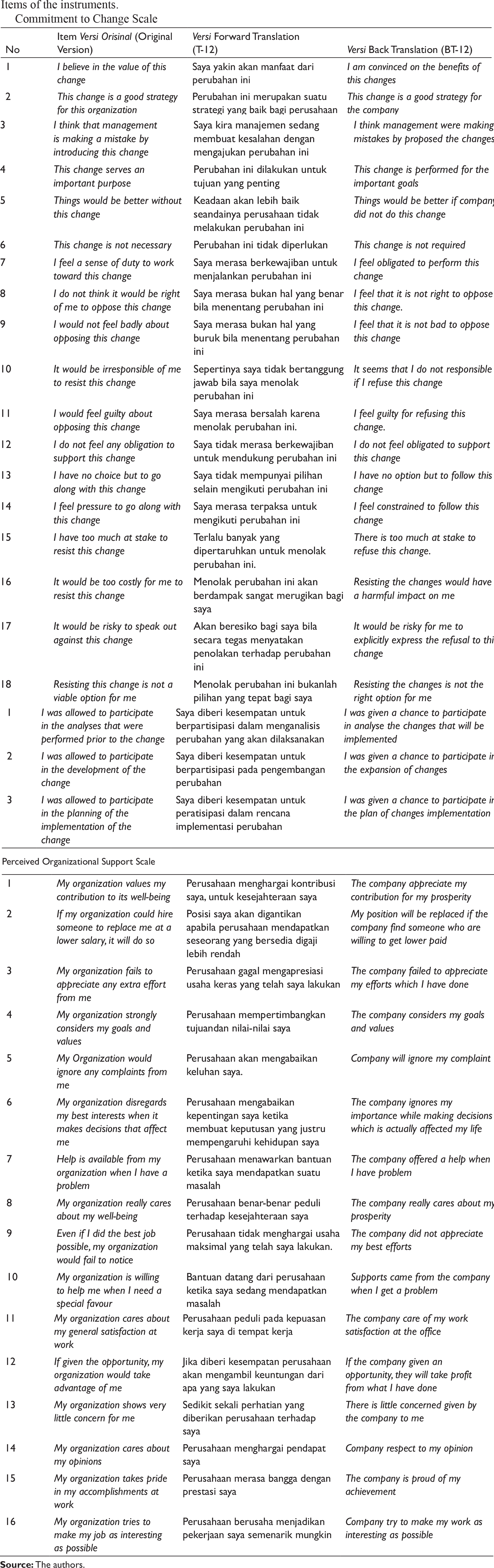
Data were measured using previously validated instruments adapted to Bahasa Indonesia. The instruments used in this research had been adapted with the adaptation process in accordance with the procedure in the International Test Commission in the year 2016. Based on the result of the adaptation, all instruments used in this research had corresponded and deemed appropriate to the culture of the population of middle managers in Indonesia. Response used the 5-point Likert scale (1 = fully disagree; 5 = fully agree). The instruments were as follows:
Commitment to Change
The commitment to change scale developed by Herscovitch and Mayer (2002), using the multidimensional concept, having three dimensions: affective commitment to change dimension consisting of six items, normative commitment to change dimension consisting of six items and continuous commitment to change dimension consisting of six items, with the total being 18 items for commitment to change.
Participation in Period of Change
Measured using the participation in period of change scale developed by Lines (2004), consisting of four items. The items depicted participations on activities different from the process of change, with three items developed by Lines et al. (2005) added. The total being seven items.
Perceived Organizational Support
Measured using the perceived organizational support scale, short version, developed by Eisenberger, Huntington, Hutchison, and Sowa (1986), consisting of 16 items.
Empirical Model
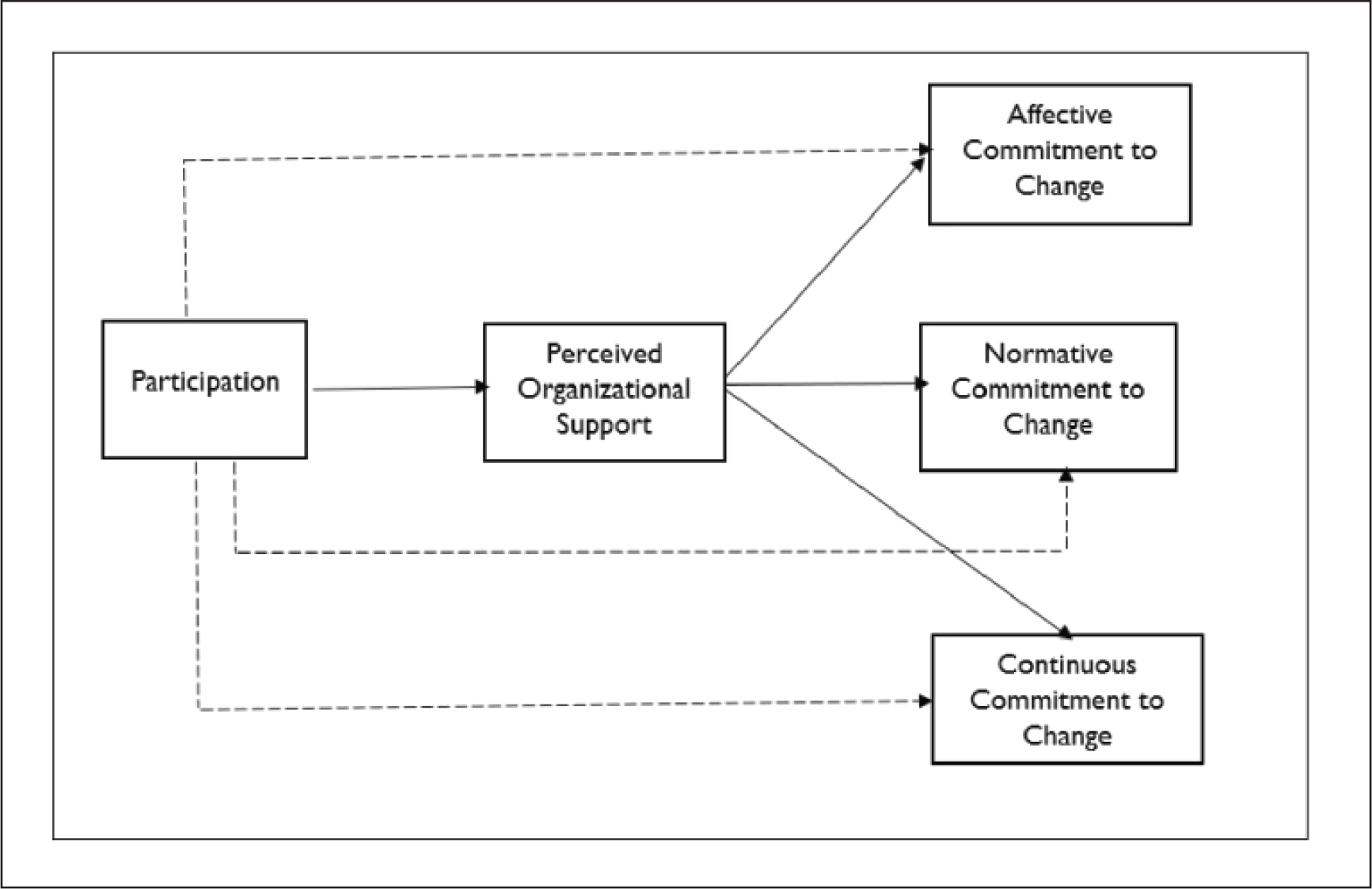
Figure 1 represents the conceptual model.
Analysis
Descriptive Statistics, Result of Validity and Reliability of Scales

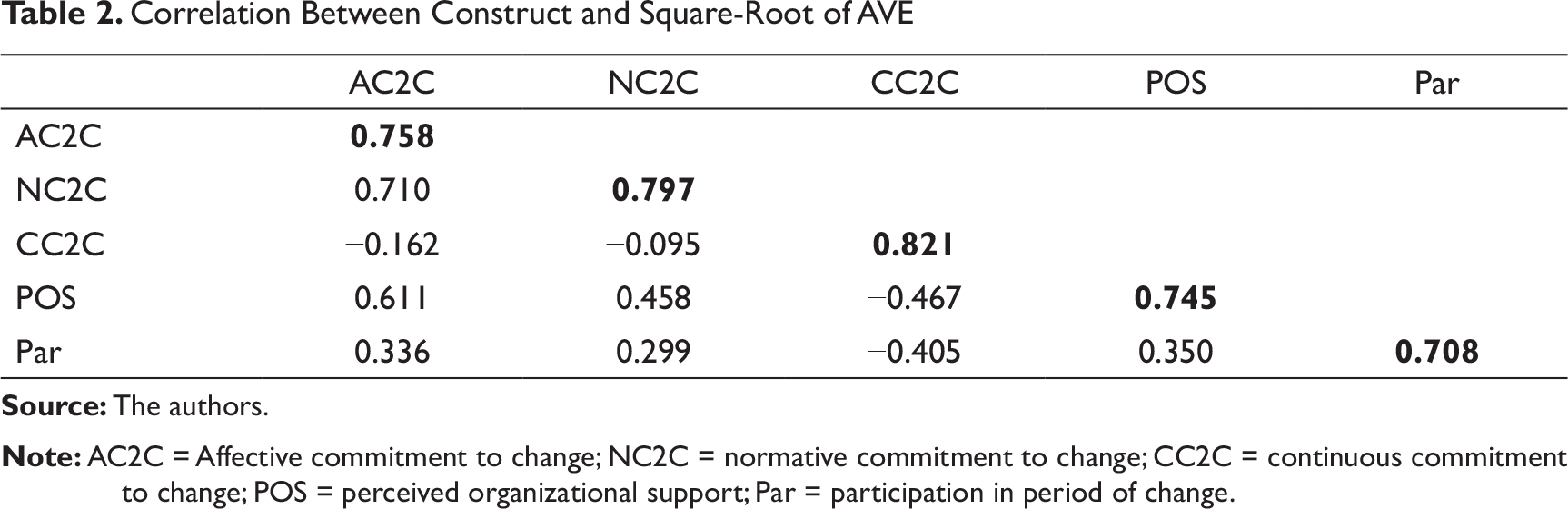
AC2C = Affective commitment to change; NC2C = normative commitment to change; CC2C = continuous commitment to change; POS = perceived organizational support; Par = participation in period of change.
Validity and Reliability Testing
Correlation Between Construct and Square-Root of AVE
Structural Model Assumption Evaluation Test
In the assumption test, it was found that the normality assumption for the structural model had fulfilled the critical ratio skewness value of 2.548. All values of relationship between latent variables had the range of smallest value −0.095 and highest value 0.710, therefore, the assumption of multicollinearity in the structural model could be fulfilled because it was smaller than the strong correlation set value of 0.9 (Dormann et al., 2013). The root value of AVE was higher compared to the correlation result between latent variables. Therefore, the discriminant validity evaluation was also fulfilled (shown by Table 2).
Full Structural Model Test
The structural equation model had fulfilled the model fit criteria, as shown with the value of Cmin/df = 1,827 (fit) with the cut-off <2.00; RMSEA = 0.059 (fit) with the cut-off ≤0.08; CFI = 0.891 with the cut-off >0.9; TLI = 0.881 with the cut-off >0.9; NFI = 0.789 with the cut-off >0.9. Because the goodness-of-fit criteria had been fulfilled, no further modification was conducted on the following level.
Hypothesis Testing
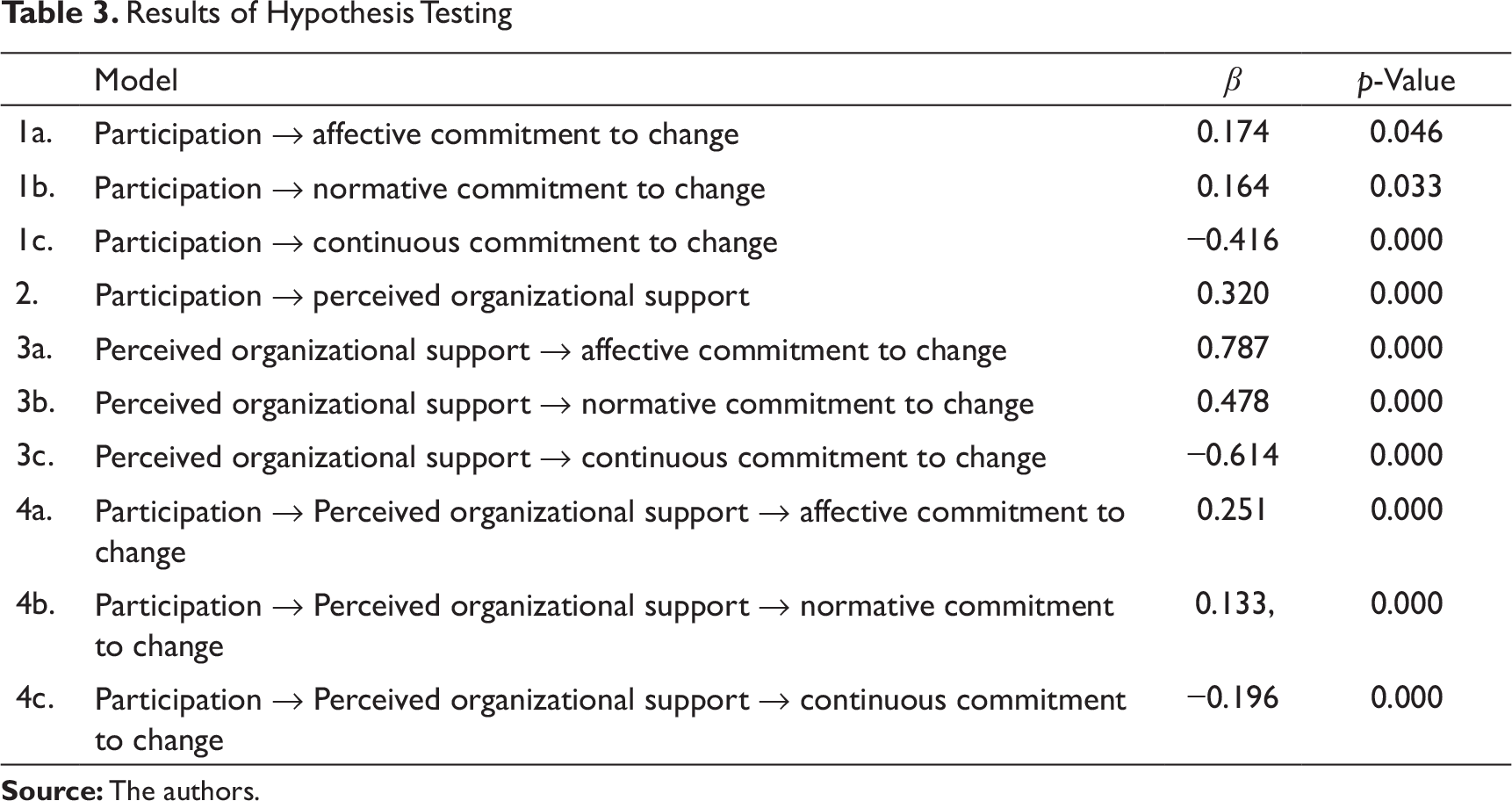
The result of hypothesis testing shown by Table 3. Hypothesis 1 was accepted as there was a significantly positive relation between participation in period of change with (1a) affective commitment to change, β = 0.174, p < 0.05; (1b) normative commitment to change, β = 0.164, p < 0.05; (1c) while having a significantly negative relation with continuous commitment to change, β = −0.416, p < 0.001.
Hypothesis 2 was accepted as there was a significantly positive relation between participation with perceived organizational support β = 0.320, p < 0.001.
Hypothesis 3 was accepted as there was significantly positive relation between perceived organizational support with (3a) affective commitment to change, β = 0.787, p < 0.001; (1b) normative commitment to change, β = 0.478, p < 0.001; (1c) while having a significantly negative relation with continuous commitment to change β = −0.614, p < 0.001.
Results of Hypothesis Testing
Discussion
The context of change in this research was initiated by the top management, in order to gain a good comprehension regarding commitment to change on middle managers, social exchange theory was used. This theory was used to explain how resource (participation in period of change) could be exchanged between top management and middle managers and how the exchange could result in a high-quality relationship (realization of commitment to change). This research also focussed on commitment to change on middle manager, to depict the relation between top management with middle managers in generating commitment to change. Commitment to change on middle managers was important, due to middle managers having a large influence on the success and failure of organizational change (Huy, 2002; Rouleau & Balogun, 2011).
Results of this research found that participation in decision-making had a significantly positive effect on affective commitment to change and normative commitment to change, while having a significantly negative effect on continuous commitment to change. This was in accordance with the reciprocity norm of social exchange theory. Middle managers given opportunity to participate in period of change felt trusted by the organization, therefore increasing the affective and normative commitment to change, felt to support the success of change, while decreasing the continuous commitment to change, less desired in period of change.
Participation had a significantly positive effect on affective commitment to change, indicating that participation could develop attachment to change because of feeling happy towards change and feeling the benefit of the change on the organization. Literature review also proved that participation could increase motivation to contribute positively to the organization, such as increasing psychological ownership, organizational commitment, knowledge sharing in the workplace (Han, Chiang, & Chang, 2010), affective commitment and work satisfaction (Wickramasinghe & Wickramasinghe, 2012).
Participation had a significantly positive effect on normative commitment to change, indicating that participation could develop attachment to change because of feeling responsible to the success of the change. Also, participation in period of change also could decrease commitment based on profit and loss (cost-based) in supporting change (continuous commitment to change). Participation was a form of trust from authority to subordinates (Lines, Selart, Espedal, & Johansen, 2005), and because of the trust and involvement in decision-making in period of change, middle managers further understood the goal of change and feel obliged to be involved in every effort to make the change a success. Trust was an important factor in period of change, previous research also proved that trust on management would decrease continuous commitment to change (Kalyal & Saha, 2008), trust on organization would decrease sceptical attitude on change and develop positive attitude on change (Kalyal & Saha, 2008).
This research also found that perceived organizational support had a role as partial mediator between participation in period of change with commitment to change. Perceived organizational support was a form of socio-emotional support and acknowledgement on employee contribution by the organization (Eisenberger, Stinglhamber, Vanderberghe, Sucharski, & Rhoades, 2002). Results of the research conducted by Cinite and Duxbury (2018) showed that individuals changed their own behaviour to support change and encouraged others to do similarly by explaining, identifying and promoting change to others when they felt that the organization supported, appreciated, contribution and cared with their needs, interests and well-being. Perceived organizational support could increase work satisfaction (Ahmed & Nawaz, 2015; Caesens & Stinglhamber, 2014; Cullen et al., 2014), organizational commitment (Shukla & Rai, 2015), decrease psychological strains (Caesens & Stinglhamber, 2014), decrease uncertainty felt regarding change in the workplace (Cullen et al., 2014). Participation in decision-making was a form of organizational support, as by given the opportunity to participate, individuals felt that the organization trusted, valued and cared about their well-being (Reeves et al., 2012).
The role of perceived organizational support as mediator could be explained with social exchange theory. Middle managers given the opportunity to participating in period of change felt genuinely supported by the organization, so in return, middle managers supported change by showing commitment to organization. Previous research proved that positive condition of organization environment such as trust on management (Kalyal & Saha, 2008) and quality of relation with managers (Parish et al., 2008) decreased continuous commitment to change; quality of change communication and degree of participation (Van der Voet et al., 2016), interpersonal justice (Bouckenooghe et al., 2014), involvement climate (Rogiest et al., 2015) increased affective commitment to change; quality of relationships with managers and job motivation (Parish et al., 2008), trust in management, quality of change communitation (Soumyaja et al., 2011) increased normative commitment to change.
Conclusions
In general, it could be concluded in this research that organization aiming for change, must be able to create a positive organizational condition. Giving opportunity to middle managers to participate in period of change and by providing support (perceived organizational support). Individuals feeling organizational support felt positive regarding the organization, making them able to develop affective and normative commitment to change while decreasing continuous commitment to change.
Managerial Implications
This research had important implication on organizations aiming for change. First, on bureaucratic organizations, middle managers were not actively given the opportunity to participate, making them resistant to change. Giving opportunity to middle managers to participate in period of change was a solution for middle managers became more committed to change in organization. Second, this research’s results strengthened the social exchange relationships, as a framework of the basic concept and to explain the psychological dynamics and prove perceived organizational support as a mediator affecting relationship quality. Therefore, in the organizational context, synergy between middle managers and organization could be developed strongly with support between both parties. Organization provide acknowledgement and ‘genuine’ support to middle managers, and in return, middle managers became attached to make the organizational change a success.
Limitations and Future Research
Several limitations of this research were: firstly, the collected data were from middle managers in government organizations in period of change, therefore the research results could not be fully generalized on other subjects from different organizations, with different organizational culture context. Future research is suggested to use different samples with different organization and change type. Secondly, data were taken using self-report questionnaire. Self-report questionnaire had a limitation of being susceptible to the possibility of subject’s tendency to only show positive matters. Third, data collection was conducted in a cross-sectional manner, so in future research; there is the need for longitudinal study to further develop the findings, by comparing the effects of participation on commitment to change, in pre- and post-change situations.
Footnotes
Acknowledgement
The authors are grateful to the anonymous referees of the journal for their extremely useful suggestions to improve the quality of the article. Usual disclaimers apply.
Declaration of Conflicting Interests
The authors declared no potential conflicts of interest with respect to the research, authorship and/or publication of this article.
Funding
The authors received no financial support for the research, authorship and/or publication of this article.
Appendix A
| No | Item Versi Orisinal (Original Version) | Versi Forward Translation(T-12) | Versi Back Translation (BT-12) | |||
| 1 | I believe in the value of this change | Saya yakin akan manfaat dari perubahan ini | I am convinced on the benefits of this changes | |||
| 2 | This change is a good strategy for this organization | Perubahan ini merupakan suatu strategi yang baik bagi perusahaan | This change is a good strategy for the company | |||
| 3 | I think that management is making a mistake by introducing this change | Saya kira manajemen sedang membuat kesalahan dengan mengajukan perubahan ini | I think management were making mistakes by proposed the changes | |||
| 4 | This change serves an important purpose | Perubahan ini dilakukan untuk tujuan yang penting | This change is performed for the important goals | |||
| 5 | Things would be better without this change | Keadaan akan lebih baik seandainya perusahaan tidak melakukan perubahan ini | Things would be better if company did not do this change | |||
| 6 | This change is not necessary | Perubahan ini tidak diperlukan | This change is not required | |||
| 7 | I feel a sense of duty to work toward this change | Saya merasa berkewajiban untuk menjalankan perubahan ini | I feel obligated to perform this change | |||
| 8 | I do not think it would be right of me to oppose this change | Saya merasa bukan hal yang benar bila menentang perubahan ini | I feel that it is not right to oppose this change. | |||
| 9 | I would not feel badly about opposing this change | Saya merasa bukan hal yang buruk bila menentang perubahan ini | I feel that it is not bad to oppose this change | |||
| 10 | It would be irresponsible of me to resist this change | Sepertinya saya tidak bertanggung jawab bila saya menolak perubahan ini | It seems that I do not responsible if I refuse this change | |||
| 11 | I would feel guilty about opposing this change | Saya merasa bersalah karena menolak perubahan ini. | I feel guilty for refusing this change. | |||
| 12 | I do not feel any obligation to support this change | Saya tidak merasa berkewajiban untuk mendukung perubahan ini | I do not feel obligated to support this change | |||
| 13 | I have no choice but to go along with this change | Saya tidak mempunyai pilihan selain mengikuti perubahan ini | I have no option but to follow this change | |||
| 14 | I feel pressure to go along with this change | Saya merasa terpaksa untuk mengikuti perubahan ini | I feel constrained to follow this change | |||
| 15 | I have too much at stake to resist this change | Terlalu banyak yang dipertaruhkan untuk menolak perubahan ini. | There is too much at stake to refuse this change. | |||
| 16 | It would be too costly for me to resist this change | Menolak perubahan ini akan berdampak sangat merugikan bagi saya | Resisting the changes would have a harmful impact on me | |||
| 17 | It would be risky to speak out against this change | Akan beresiko bagi saya bila secara tegas menyatakan penolakan terhadap perubahan ini | It would be risky for me to explicitly express the refusal to this change | |||
| 18 | Resisting this change is not a viable option for me | Menolak perubahan ini bukanlah pilihan yang tepat bagi saya | Resisting the changes is not the right option for me | |||
|
|
||||||
| 1 | I was allowed to participate in the analyses that were performed prior to the change | Saya diberi kesempatan untuk berpartisipasi dalam menganalisis perubahan yang akan dilaksanakan | I was given a chance to participate in analyse the changes that will be implemented | |||
| 2 | I was allowed to participate in the development of the change | Saya diberi kesempatan untuk berpartisipasi pada pengembangan perubahan | I was given a chance to participate in the expansion of changes | |||
| 3 | I was allowed to participate in the planning of the implementation of theChange | Saya diberi kesempatan untuk peratisipasi dalam rencana implementasi perubahan | I was given a chance to participate in the plan of changes implementation | |||
|
|
||||||
| 1 | My organization values my contribution to its well-being | Perusahaan menghargai kontribusi saya, untuk kesejahteraan saya | The company appreciate my contribution for my prosperity | |||
| 2 | If my organization could hire someone to replace me at a lower salary, it will do so | Posisi saya akan digantikan apabila perusahaan mendapatkan seseorang yang bersedia digaji lebih rendah | My position will be replaced if the company find someone who are willing to get lower paid | |||
| 3 | My organization fails to appreciate any extra effort from me | Perusahaan gagal mengapresiasi usaha keras yang telah saya lakukan | The company failed to appreciate my efforts which I have done | |||
| 4 | My organization strongly considers my goals and values | Perusahaan mempertimbangkan tujuandan nilai-nilai saya | The company considers my goals and values | |||
| 5 | My Organization would ignore any complaints from me | Perusahaan akan mengabaikan keluhan saya. | Company will ignore my complaint | |||
| 6 | My organization disregards my best interests when it makes decisions that affect me | Perusahaan mengabaikan kepentingan saya ketika membuat keputusan yang justru mempengaruhi kehidupan saya | The company ignores my importance while making decisions which is actually affected my life | |||
| 7 | Help is available from my organization when I have a problem | Perusahaan menawarkan bantuan ketika saya mendapatkan suatu masalah | The company offered a help when I have problem | |||
| 8 | My organization really cares about my well-being | Perusahaan benar-benar peduli terhadap kesejahteraan saya | The company really cares about my prosperity | |||
| 9 | Even if I did the best job possible, my organization would fail to notice | Perusahaan tidak menghargai usaha maksimal yang telah saya lakukan. | The company did not appreciate my best efforts | |||
| 10 | My organization is willing to help me when I need a special favour | Bantuan datang dari perusahaan ketika saya sedang mendapatkan masalah | Supports came from the company when I get a problem | |||
| 11 | My organization cares about my general satisfaction at work | Perusahaan peduli pada kepuasan kerja saya di tempat kerja | The company care of my work satisfaction at the office | |||
| 12 | If given the opportunity, my organization would take advantage of me | Jika diberi kesempatan perusahaan akan mengambil keuntungan dari apa yang saya lakukan | If the company given an opportunity, they will take profit from what I have done | |||
| 13 | My organization shows very little concern for me | Sedikit sekali perhatian yang diberikan perusahaan terhadap saya | There is little concerned given by the company to me | |||
| 14 | My organization cares about my opinions | Perusahaan menghargai pendapat saya | Company respect to my opinion | |||
| 15 | My organization takes pride in my accomplishments at work | Perusahaan merasa bangga dengan prestasi saya | The company is proud of my achievement | |||
| 16 | My organization tries to make my job as interesting as possible | Perusahaan berusaha menjadikan pekerjaan saya semenarik mungkin | Company try to make my work as interesting as possible | |||
