



Abstract
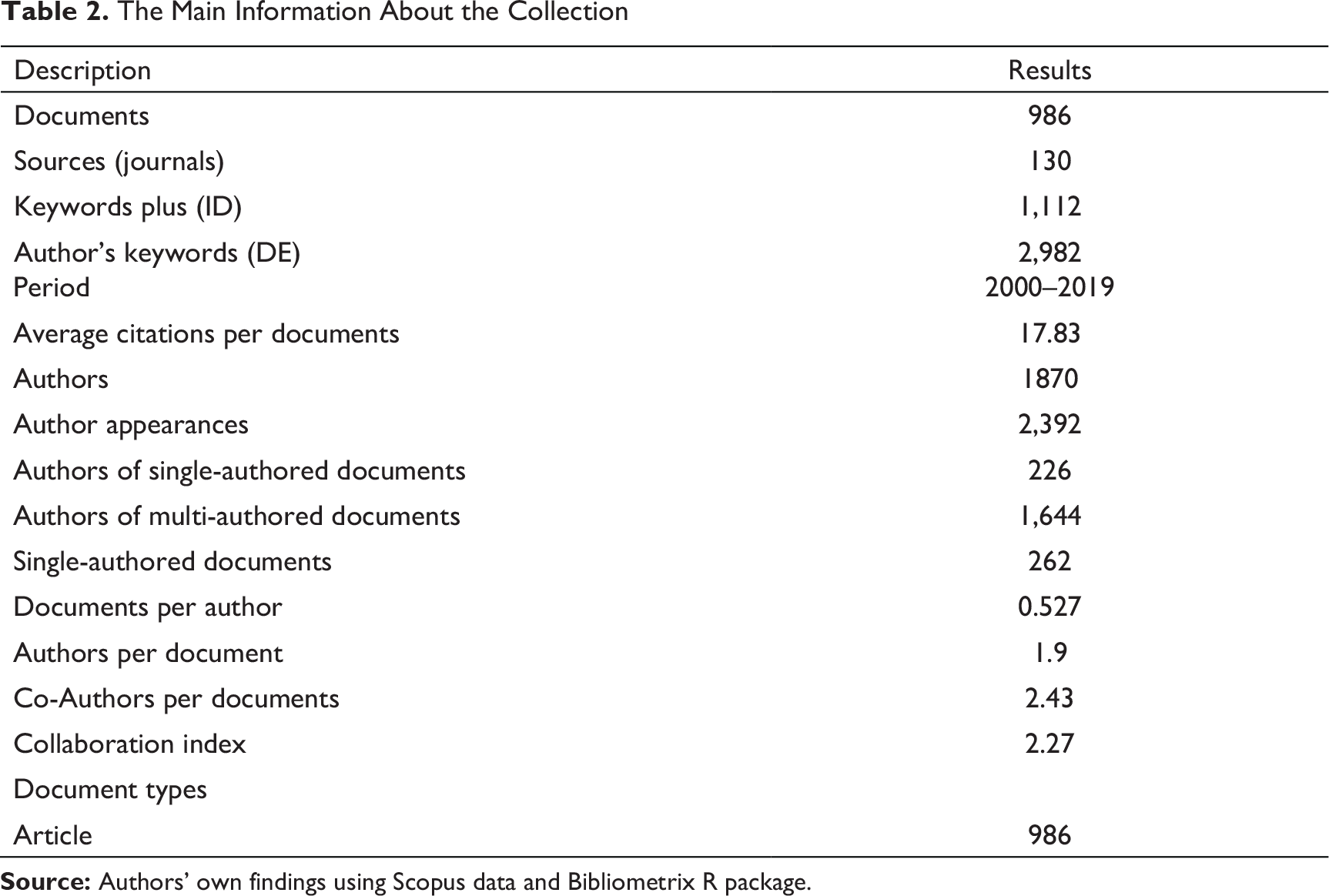
This study adopts a novel mix of scientometrics, theme-based, citation-based systematic review and interpretative aggregation approach (STCSR-IA) with the Preferred Reporting Items for Systematic Reviews and Meta-Analyses (PRISMA) method. It presents a macro-level scientometric analysis of tourism research in coastal, marine and maritime (blue tourism) environments by using 986 research articles published in 130 Scopus-indexed journals from 2000 to 2019. The thematic evolution of research in five time periods of four years each (2000–2003, 2004–2007, 2008–2011, 2012–2015, 2016–2019) was analysed using the authors’ keywords and classified as (a) preliminary (b) transversal stage I (c) transversal stage II and (d) growth stage. The massive evolution of research areas in the growth stage and their themes along with the growing nexus of conceptual relationship within blue tourism is systematically reviewed and presented as a thematic research framework.
Keywords
Introduction
Tourism research in the twenty-first century covers wide horizons from pro-poor impacts (Pillay & Rogerson, 2013) to super-luxury yachting experience (Mikulić et al., 2015); ice-cold arctic shipping (Eijgelaar et al., 2010) to hot desert safaris (Boulay, 2009); underwater scuba diving (Asafu-Adjaye & Tapsuwan, 2008) to space explorations (von der Dunk, 2011); mass tourism carrying capacity (Navarro Jurado et al., 2012) to alternative tourism (Boxill, 2003); micro-cultural preservation (Besculides et al., 2002) to mega-event impacts (Florek et al., 2008); and remote rural tourist motivation (Farmaki, 2012; Sharafuddin, 2015a) to high-tech data-driven tourist experiences (Marine-Roig & Anton Clavé, 2015). Among those, tourism in coastal, marine and maritime environments is notably attractive, popular (Sharafuddin, 2015b) and large (Gössling et al., 2018) in island and coastal countries.
Since the implementation of the ‘2030 Agenda for sustainable development’ (United Nations, 2015) by the United Nations in 2016, the concept of ‘Blue Economy’ was redefined and adopted by various global organizations. The World Bank (2017) defined it as ‘sustainable use of ocean resources for economic growth, improved livelihoods, and jobs, while preserving the health of the ocean ecosystem’. The World Bank and the United Nations Department of Economic and Social Affairs Report (United Nations, 2016) well documented the potentiality and vulnerability of coastal, marine and maritime tourism (CMMT) in the blue economy. The report also formulated suitable policy guidelines to increase the contribution of tourism in the blue economy. The CMMT termed as ‘Blue Tourism’ is a mix of established industries and is expected to be the largest among the ‘Blue Economy’ sectors by 2030 (OECD, 2016). However, to the best of the authors’ knowledge, the ontological and epistemological (Goodson & Phillimore, 2004) stances among the CMMT research remain unexplored. The following sections present the objectives of the study, rationale of the study, methodology, analysis and results, findings and discussion, conclusion, theoretical contribution, methodological contribution and limitations/future research directions.
Objectives of the Study
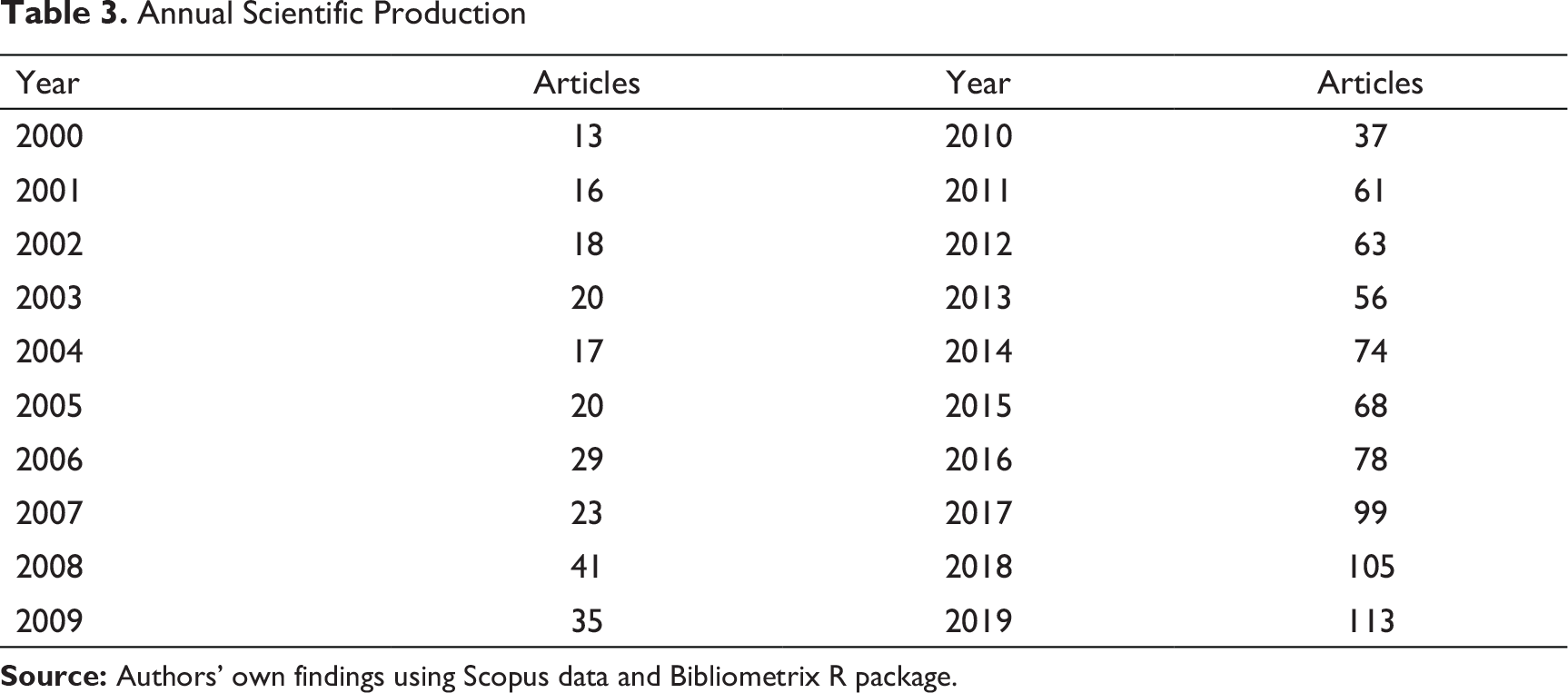
The objectives of this study are fourfold . First, to profile (Main Information, Annual Scientific production, Authors’ productivity, corresponding author’s countries and collaborations (single country publication—SCP/multiple country publication—MCP), Word dynamics) the blue tourism business and management research in the past 20 years since 2000. Second, to divide the time period into suitable time slices and to analyse the evolution of CMMT research themes under each time slice. Third, to explore the themes of highly influential articles in CMMT under each time slice; and finally, to apply interpretative aggregation (Papathanassis & Beckmann, 2011; Tranfield et al., 2003) method with top 100 most influential research article themes in the most recent time slice to synthesize the nexus of blue tourism.
Rationale of the Study
To achieve the objectives and to fill the literature gap, this article adopts a novel approach of combining scientometrics (Callon et al., 1983), citation-based systematic literature review (Ahmad et al., 2020) and theme-based systematic review (Jamali & Karam, 2018) to assess the overall research patterns and trajectories (Lamberton & Stephen, 2016) of knowledge structure along with the thematic evolution of the past 20 years (2000–2019) of business research in CMMT sectors and the evolution of blue tourism research. Also, in-line with the definitions of ‘coastal and maritime tourism’ (Ecorys, 2014), ‘blue economy’ (European Union, n.d.) and ‘blue tourism’ (Tonazzini et al., 2019), this research defines ‘blue tourism’ as ‘All tourism activities related to oceans, seas and coasts’.
It is crucial at this point to understand that this article is objective in nature and covers multiple themes within CMMT business and management research to analyse the thematic evolution and synthesize the blue tourism nexus. Also, it does not include any quality/quantity aspects of research and their outcomes, such as research frameworks, attributes, statistical outcomes, research findings and implications. However, it instigates the readers to read further and take the lead in expanding blue tourism research further.
Methodology
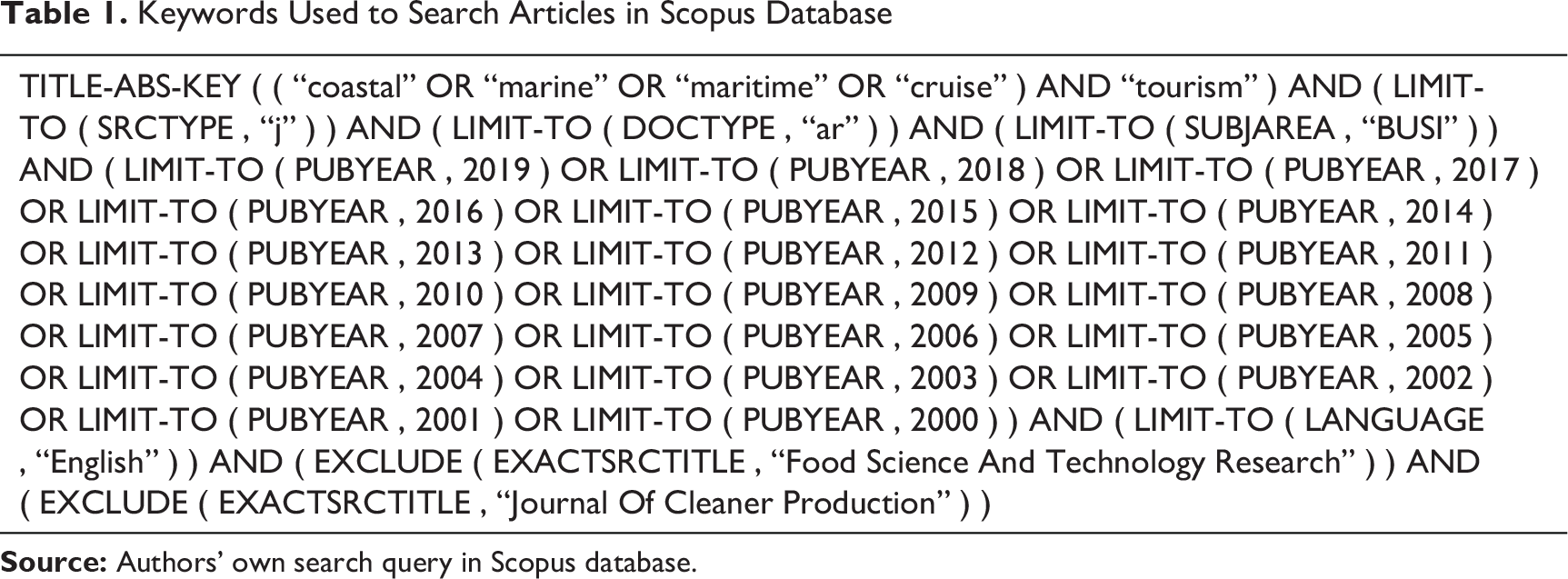
The use of words ‘marine’ and ‘maritime’ lack accuracy of exactness and are used interchangeably to mention physical ocean environment, resources, activities, transport and technology due to various background differences (Hildebrand & Schröder-Hinrichs, 2014). Hence, we decided to use both ‘marine’ and ‘maritime’ as keywords in our database search. Upon careful review and with due consideration for the objectives of this research, four macro-level keywords ‘coastal’, ‘marine’, ‘maritime’ and ‘cruise’ along with ‘tourism’ were used to search for articles in Scopus database. Since this research focuses only on CMMT, the search was limited to the business administration subject area research articles published in the English language during the period 2000–2019. The two journals (Food Science and Technology and the Journal of Cleaner Production), which had a distinct title, were carefully reviewed and excluded from the study. We manually reviewed the search results, and 986 research articles published in 130 Scopus-indexed journals from 2000 to 2019 in the business subject area were downloaded in BibTeX format on 13 January 2020 and analysed using the Bibliometrix R package (Aria & Cuccurullo, 2017) in R programming language (R Core Team, 2019). Table 1 presents the keywords included in the search query.
Analysis and Results
Keywords Used to Search Articles in Scopus Database
The Main Information About the Collection
Annual Scientific Production
Annual Scientific Production
Bradford’s Law
Top Five Sources of Coastal, Marine and Maritime Tourism Research in Zone 1 (Bradford’s Law)
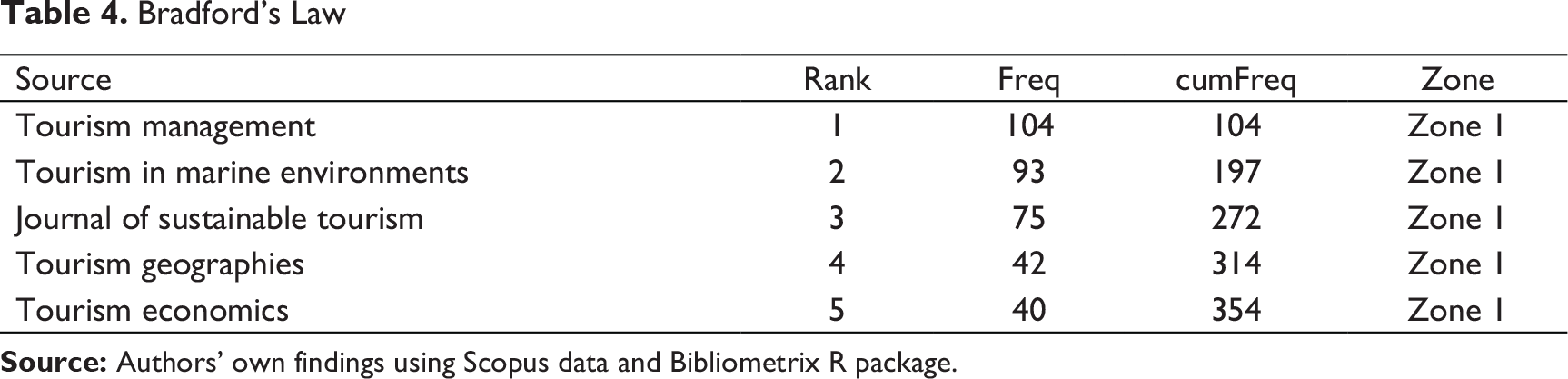
Bradford’s Law of Scattering (Bradford, 1934) was used to analyse the distribution of manuscripts in the journals. The results revealed (Table 4) that Tourism Management, Tourism in the Marine Environments, Journal of Sustainable Tourism, Tourism Geographies and Tourism Economics were ranked as the top five journals with the highest number of manuscripts in Zone 1.
Author Productivity (Lotka’s Law)
The frequency distribution of scientific productivity (Table 5) was analysed using Lotka’s law (G.F.S., 1926). Out of 1,870 authors, Saayman, with 14 articles; Petrick, with 13 articles; and Brida, with 12 articles, were highly productive during the period. From the remaining, 3 authors published 8 articles each, 7 authors published 6 articles each, 11 authors published 5 articles each, 31 authors published 4 articles each, 48 authors published 3 articles each and 197 authors published 2 articles each. A total of 1,570 authors published 1 article each.
Top Countries and Research Collaborations
Author Productivity (Lotka’s law)

Top 5 Corresponding Author’s Country

Word Dynamics (Author’s Keywords)
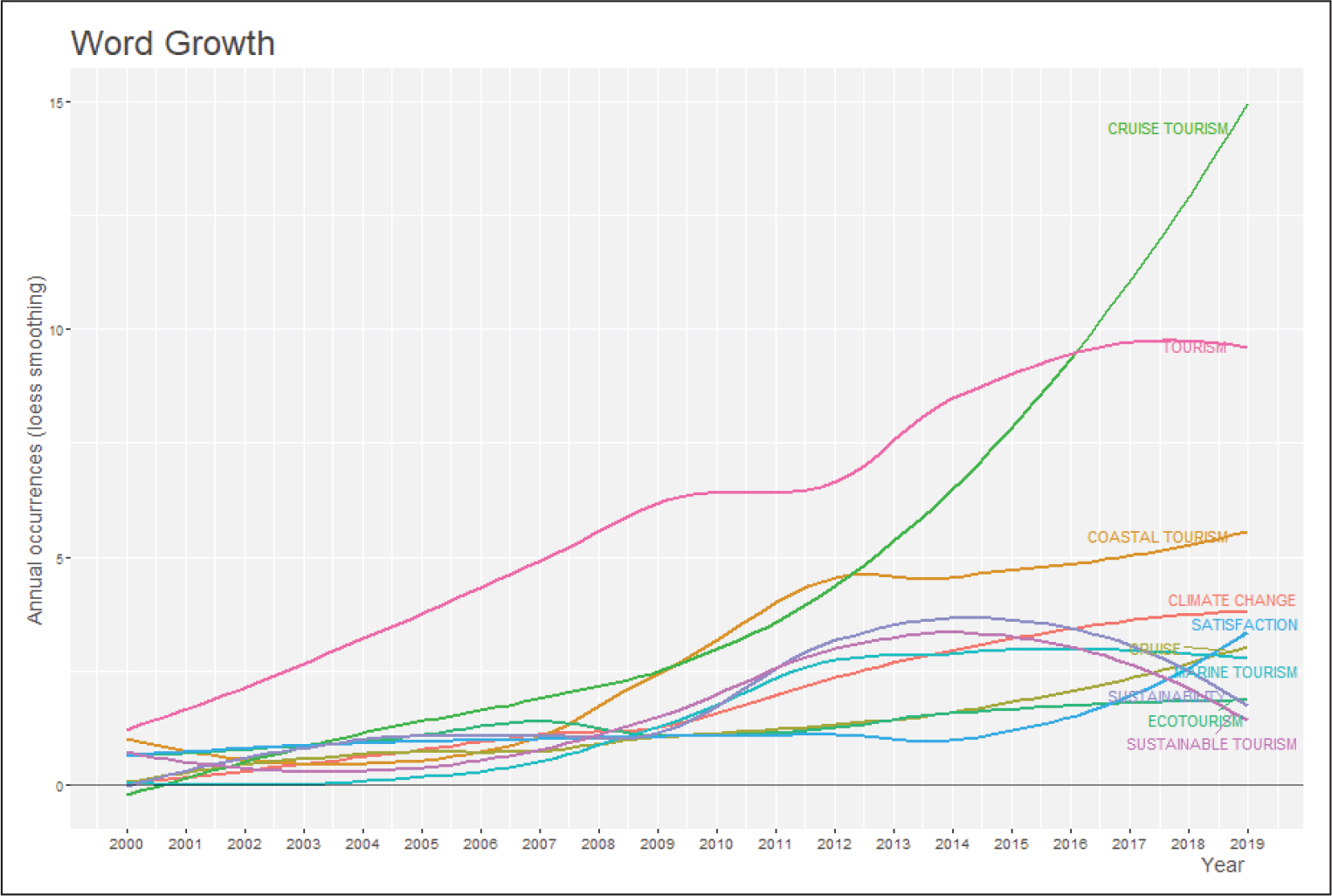
Figure 1 presents the word growth by frequency based on the authors’ keywords from the year 2000 to 2019. The results revealed that the generic word ‘tourism’ had a high constant growth until 2016, and after this period, more specific keywords such as ‘coastal tourism’, ‘climate change’, ‘satisfaction’, ‘sustainability’ and ‘ecotourism’ were used by authors in their keywords. On the other hand, the word dynamics of the author’s keywords shows that the keyword ‘cruise tourism’ has seen significant growth since 2010.
Thematic Evolution of Coastal, Marine and Maritime Tourism
Figure 2 presents the evolution of research themes in the CMMT business domain. The data were analysed using author’s keywords by applying inclusion index weighted by word occurrences method with minimum weight index of 0.1 and four cutting points during the years of 2003, 2007, 2011 and 2015, that is, five time periods of 4 years each (2000–2003, 2004–2007, 2008–2011, 2012–2015, 2016– 2019) with 250 words and minimum cluster frequency ranging from 1–5 and two labels per cluster. The results revealed the thematic evolution of conceptual structures from 2000 to 2019. Since 2000, various keywords such as ecotourism (2004–2007); tourism development, ecotourism, marine tourism, cruise tourism and sustainability (2008–2011); and coastal tourism and cruise industry (2012–2015) evolved along with the keyword ‘tourism’. From the general theme ‘tourism’ (2000–2003), the keywords ‘ecotourism’, ‘marine tourism’ and ‘sustainability’, which appeared separately in the 2004–2011 time periods, started evolving into a more unified approach in the 2016–2019 period.

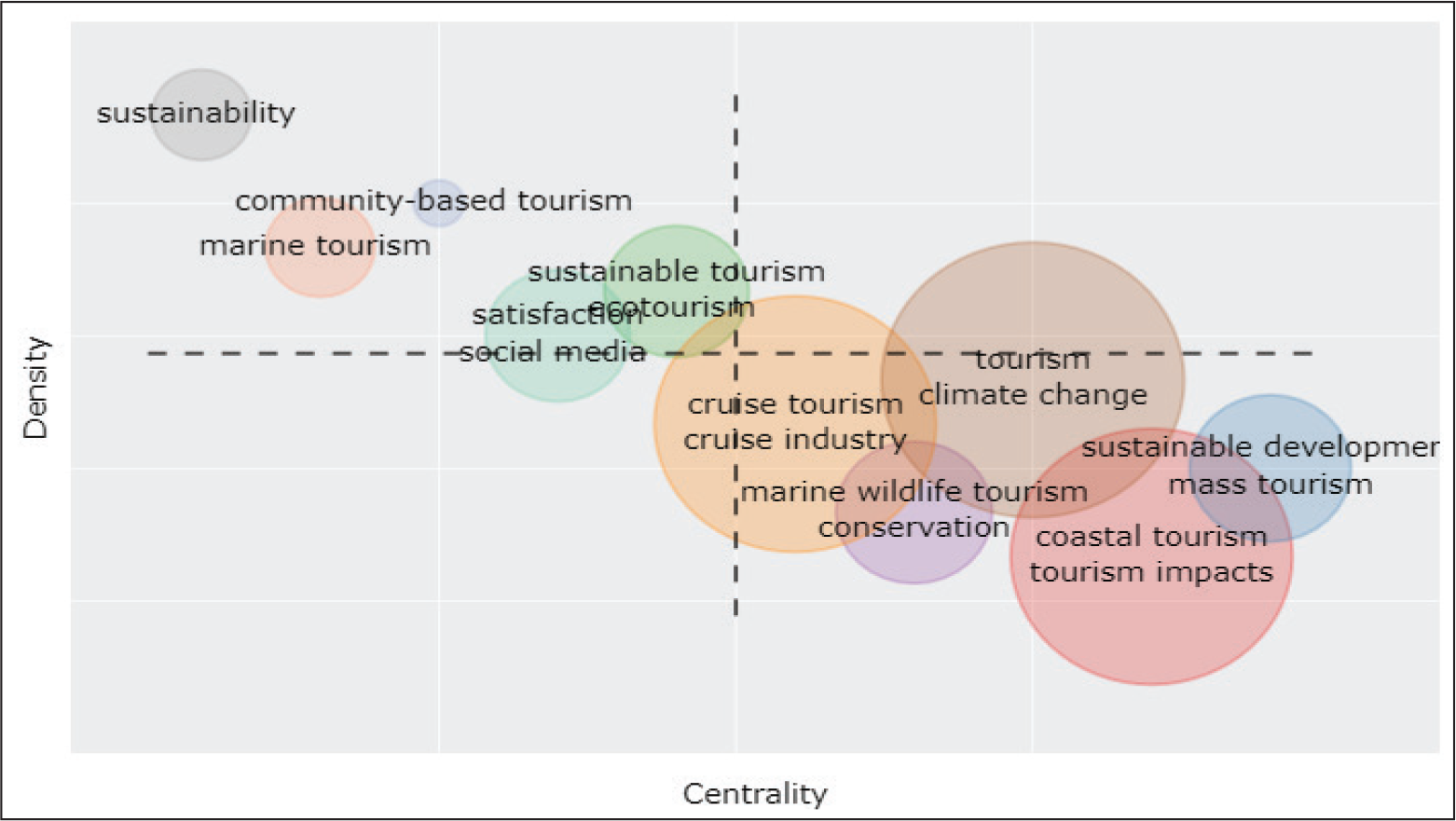
Further, to understand the evolution of research during each period, the thematic map for each time slice was analysed separately using co-word analysis. The clusters of keywords obtained using co-word analysis (Callon et al., 1983) are called research themes (Cobo et al., 2011) and classified into four kinds of themes (Callon et al., 1991; He, 1999) based on density and centrality. Strong centrality and high-density themes (upper right quadrant) are known as motor themes (well developed and vital); weak centrality and high-density themes (upper left quadrant) are known as niche themes (highly developed and isolated themes); low-density and weak centrality (lower left quadrant) themes are marginal themes (emerging or declining themes); and strong centrality and low-density themes (lower right quadrant) are known as essential but not developed (basic and transversal themes).
Thematic Evolution 1 (2000–2003)
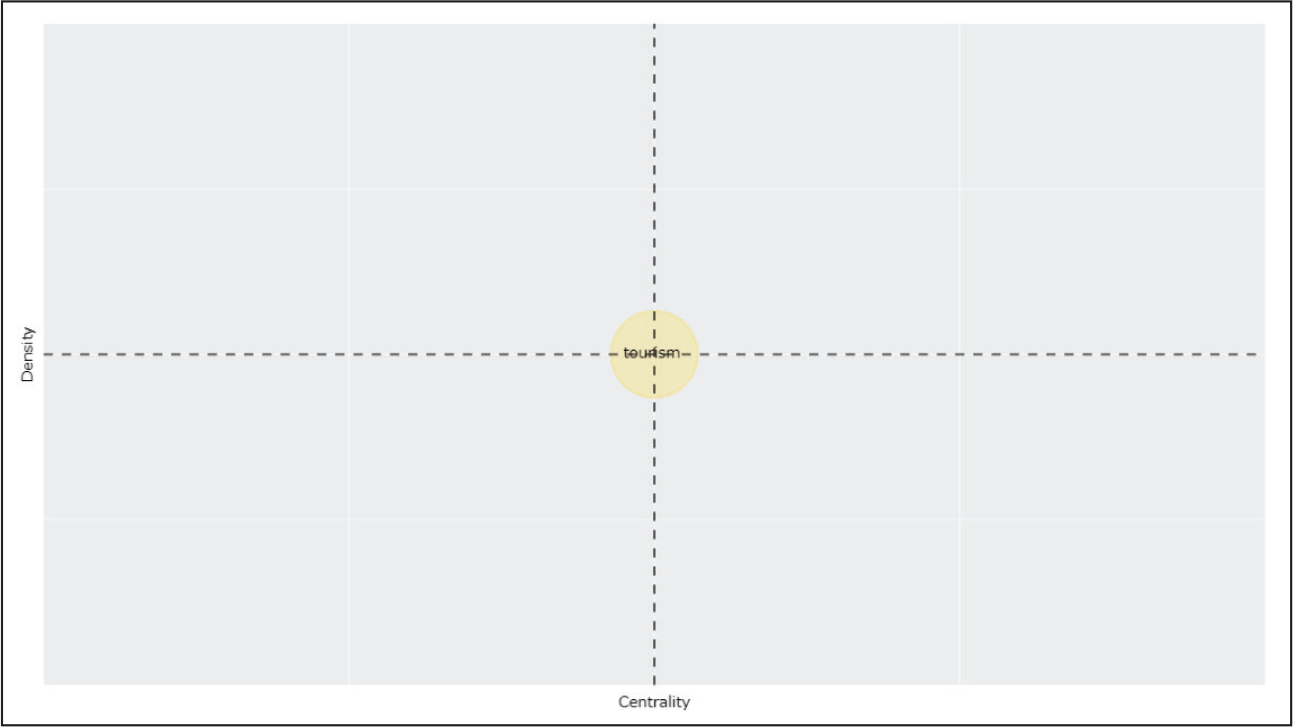
In the first time slice of 2000–2003 (Figure 3), only one theme with the general keyword ‘tourism’ was in perusal. However, some of the most significant articles were published during this time slice. The exploratory case study of challenges in coastal tourism diversification and rural agro-tourism development in hinterlands of Cyprus by Sharpley (2002); Agarwal’s (2002) findings on influence of internal and external factors in the declining stage of Butler’s resort life cycle and restructuring English coastal resorts; assessment of globalization in the Caribbean cruise industry by Wood (2000); tourist segmentation based on their holiday choices, destination activities, opinion about host community in the coastal destination of Chalkidiki, Greece and development of new tourist micro-typology (Wickens, 2002); identification of influencing factors other than that of whale’s behaviour on tourist satisfaction in whale-watching cruises at Tangalooma, Australia, by Orams (2000); investigative research on sustainable tourism development and recommendations for stepwise formulation of objectives, indicators, framework and integrated multidisciplinary panel for monitoring the results in the small island nation of Samoa by Twining-Ward and Butler (2002); new model development for assessing the economic impacts of tourist events in coastal communities, which was tested with tourism events in Rhode Island, USA, by Tyrrell and Johnston (2001); assessment of use and non-use value of tourism in self-financing Montego Bay Marine Park, Jamaica; and another then-proposed national park in Barbados by Dharmaratne et al. (2000) were some of the most influential studies during this time slice with more than 100 citations as of January 2020.
Thematic Evolution 2 (2004–2007)
The second period from 2004 to 2007 (Figure 4) has witnessed the evolution of two new themes—cruise tourism and ecotourism—but with marginal importance for ecotourism, that is, the niche theme, and cruise tourism was of high importance but not developed, that is, basic theme. Remarkable research on both themes was carried out during this period. The development of new literature on perceived value theory with affective factors and its relationship towards behavioural intention and overall satisfaction of cruise passengers by Duman and Mattila (2005); the comparative study of first-time and repeated cruise passenger loyalty, their price sensitiveness, intention to recommend to others and revisiting intention by Petrick (2004); price sensitivity–based market segmentation of cruise passengers, their relative spending patterns and experience evaluation by Petrick (2005) are the three most influential articles from cruise tourism research in this period. The conceptual model of measuring visitors’ satisfaction in the hinterland of swan estuary marine park in Western Australia by Tonge and Moore (2007); spatio-ecological analysis of the impact of tourism in dolphins’ population and marine ecotourism by Lusseau and Higham (2004) in New Zealand were the two most influential articles in ecotourism from this period.
Another significant evolution is the integrated view of ‘CMMT’. The concept can be traced back to the case study by Poske (2003) in the German language. However, in English language literature, Funck (2006) discussed the root of conflicts within and between coastal tourism, marine leisure activities, fishing, industrial growth and urban developments in Japan. Diakomihalis (2007) defined maritime tourism as ‘the activities of cruising, yachting, and coastal tourism shipping’. However, the author found that maritime tourism is beyond the activities defined by him, and it is more complex and involves other sectors. Also, the definition and findings were limited to Greece. Serrano (2007) distinguished the Antarctic maritime tourism growth into three phases, namely ‘initial development’ (1965–1985), ‘growth and consolidation’ (1985–1998) and ‘growth and diversification’ (1998–2006). The author found in the final phase that maritime tourism diversified from cruising to more added activities like visiting science stations and short walks in the South Shetland Islands. Hence, this period is the preliminary stage of researchers’ integrated approach of CMMT towards the concept of blue tourism.

Thematic Evolution 3 (2008–2011)
The first significant thematic diversification occurred from 2008 to 2011 (Figure 5), with tourism and ecotourism research becoming a well-developed motor theme. The significant change to note here is the evolution of sustainability research along with ecotourism. This change was due to the raising awareness of climate change vulnerability nature of CMMT environments. (a) Greenhouse gas emissions due to cruise trips in Antarctica and polar regions and impact of visiting climate change vulnerable destinations on the attitude of cruise passengers’ environmental awareness (Eijgelaar et al., 2010); (2) new framework for assessing the vulnerability of climate change in coastal tourism destinations (Moreno & Becken, 2009); and (3) sustainability of island destinations during their decline stage of Butler’s tourism-area-life-cycle model (Oreja Rodríguez et al., 2008) were the top three most influential articles from this period.

The adoption of experience economy theory in tourism has seen a considerable surge in the growth of CMMT research. Cruise experience (Hosany & Witham, 2010; Huang & Hsu, 2010; Kwortnik, 2008), marine-based wildlife tourism experience (Ballantyne et al., 2011) and whale shark tourism experience (Catlin et al., 2010) were the most influential experience economy-based research articles in this period. Other psychological factors of tourist and community, such as attitude, motivation, perception, and value, became focal research covering all stakeholders. New frameworks and measurement scale development for assessing cruise passenger motivation (Hung & Petrick, 2011), behavioural loyalty of cruise passengers (Li & Petrick, 2008), their attitude towards coastal community development (Huh & Vogt, 2008; Nunkoo & Ramkissoon, 2010) and coastal community perception of tourism impacts (Diedrich & García-Buades, 2009) were the most influential articles in behavioural science in this time slice. Researchers widely studied the economic, environmental and social impacts of tourism in coastal, marine and maritime environments and sustainability during this period. On the other hand, cruising and cruise tourism remained as an emerging and transversal theme during this period. Papathanassis and Beckmann (2011) in their systematic review of 145 (1983–2009) cruise-specific articles developed a cruise research framework based on thematic analysis and classified emerging cruise themes into four domains, namely ‘cruise administration’, ‘the cruise market’, ‘the cruise and society’ and ‘the cruise society’. The authors also found that cruise-related publications were concentrated towards social sciences but growing exponentially and evolving since 2000. Hence, this period was a transversal evolution stage (Stage 1) of an integrated approach towards blue tourism.
Thematic Evolution 4 (2012–2015)
The fourth time slice from 2012 to 2015 (Figure 6) witnessed another major thematic shift. Caribbean coastal region, cruise tourism, cruise industry and economic impact related research became highly developed and isolated themes during this period. The rising popularity of cruising in Caribbean regions, increase in cruise ship calls and cruise tourists’ arrivals at Caribbean ports (Pinnock, 2014) brought research interest among academia in this period.
Within the cruise tourism and cruise industry, the most instrumental research topics that widely cover concepts are as follows:
comparative studies between cruise company itinerary designs and vessel deployment strategies (Rodrigue & Notteboom, 2013), cruise passengers and non-cruise tourists’ spending patterns in coastal regions (Larsen et al., 2013); behavioural science researches like brand prestige assessment of luxury cruise passengers (Hwang & Han, 2014), travel intention assessment of cruise passengers using motivation–opportunity–ability (MOA) model (Hung & Petrick, 2012), attributes of onshore satisfaction and overall destination satisfaction on cruise passengers’ word of mouth attitude (Satta et al., 2015); decision-making science research using new methods such as fuzzy-AHP for assessing cruise port-of-call selection (Wang et al., 2014); and assessing the corporate social responsibility of cruise companies (Bonilla-Priego et al., 2014).

The most influential articles from other marine- and water-based activities are behavioural sciences-related, such as attributes of visitor satisfaction in visiting great barrier reefs in Australia (Coghlan, 2012), and motivation and satisfaction of whale shark tourists (Ziegler et al., 2012). Another noticeable article on a systematic review of surf tourism conducted by Martin and Assenov (2012) revealed the scarcity of academic research and dependence on grey literature. However, the authors mentioned that surf tourism research was evolving.
Coastal tourism research was also an emerging theme in this period. Similar to cruise tourism research, the diversification of concepts is also clearly visible in coastal tourism research. Some of the most noticeable concepts are as follows:
behavioural science–based researches such as cruise passenger experience/spending behaviour in ports and coastal regions (Larsen et al., 2013); place attachment and on-site/off-site behavioural intention of tourists visiting coastal regions and visitors’ attitude on the value of beach management and willingness to pay for the maintenance and improvement of beaches (Birdir et al., 2013);
new methodologies for assessing the carrying capacity of mass tourism in open coastal areas (Navarro Jurado et al., 2012) and coastal mass tourism life cycle (i Baidal et al., 2013);
the potential risks of climate change and sea-level rise on the coastal resorts (Scott et al., 2012);
coastal scenery classification and management (Rangel-Buitrago et al., 2013);
emerging new commercial/non-commercial activities and share of the coastal landscape like the impact of tidal farms in coastal tourism (Westerberg et al., 2013);
inclusion of the concept ‘family in tourism’ in coastal mass tourism research literature; and
spatial administration and destination management related articles such as tourist movement patterns in marine parks (Smallwood et al., 2012), tourist flow between cities and growth rate (Yang & Wong, 2013).
All three sustainability aspects, that is, social, economic and environmental developments/sustainability, were well addressed in this period. However, economic development was the motor theme. Tourism sustainability/sustainable tourism and nature-based tourism were transversal themes, whereas coastal tourism and climate change also became emerging themes in this timeline.
The most crucial point to note here is the term ecotourism, which was a niche theme in the second time period, and motor theme in the third time period evolved into sustainable tourism and nature-based tourism. Hence, this period was also a transversal evolution stage (Stage 2) of an integrated approach towards blue tourism.
Thematic Evolution 5 (2016–2019)
Thematic evolution of conceptual structure in CMMT in 2016–2019 (Figure 7) inferred that the present period is the most productive and more creative with the highest number of niche and basic themes evolving in this period. Sustainability studies, community-based tourism, marine tourism and big data analysis approach using social media mining and assessing tourist sentiments and satisfaction became isolated and niche themes, whereas marine wildlife tourism and conservation, the cruise industry and cruise tourism, tourism and climate change, mass tourism and sustainable development, coastal tourism and tourism impacts became transversal themes. Hence, this stage was the growth stage of an integrated approach towards blue tourism.
The Nexus of Blue Tourism
To pursue the final objective, this research adopted ‘citation-based systematic review’ (Ahmad et al., 2020) for article selection and ‘Preferred Reporting Items for Systematic Reviews and Meta-Analyses’ (PRISMA) approach, proposed by Moher et al. (2009), for interpretative aggregation (Papathanassis & Beckmann, 2011; Tranfield et al., 2003) of recent 4-year articles (2016–2019) to synthesize the nexus of blue tourism and develop a thematic framework. The authors reviewed 111 most influential articles (based on number of citations), and the top 100 most influential articles were shortlisted based on availability and suitability for the final study. A detailed PRISMA-based stepwise process of document selection is explained in Figure 8.
Out of 100 articles, 25 were qualitative, 59 articles were quantitative research and 16 articles adopted the mixed-approach method. The full text of the articles was carefully analysed to develop the thematic structure of blue tourism research.
The results (Figure 9) revealed the research areas—(a) cruise operations and management, (b) cruise expeditions, (c) coastal tourism, (d) coastal accommodation management, (e) beach management and (f) marine leisure activities, and their themes—(a) evolution/growth of tourism in above areas and their social, economic, cultural, environmental, ecological impacts and resilience; (b) market segmentation studies; (c) operational planning and efficiency; (d) tourists’ movement/behaviour/spending patterns; (e) tourists’ perception/attitude/motivation/experience/satisfaction/behavioural intention/loyalty; (f) policy analysis/corporate social responsibility reporting; (g) big data approach for social network analysis of user-generated contents; (h) spatial planning; (i) community development; and (j) gender studies.

The systematic review also revealed five conceptual relationships within the blue tourism nexus.
The growth in the cruise industry and the increase in cruise tourist arrivals at ports of call have created significant interest among researchers to assess the impacts of cruise expeditions and cruise tourist behaviour at coastal destinations. Such cruise tourists’ off-board experience is studied from both sides (cruise industry researchers and coastal destination management researchers) and classified as follows:
Cruise tourism-related research themes in coastal destination research, which are (a) cruise tourism impact on coastal destination (socio-cultural, economic, environmental), (b) cruise tourist interactions and behavioural science–related articles in coastal destination (attitude/perspective/perception/motivation/experience/satisfaction/intention) and (c) comparative studies between mass coastal and cruise tourist behaviour/impact. Coastal destination-related themes in cruise tourism research, which are (a) integrated approach of assessing onshore excursions along with cruise servicescape (Lyu et al., 2017), (b) cruise expedition inclusive pricing and itinerary planning and (c) port-of-call selection, segmentation and roles. Comparative studies of corporate social responsibility reporting between the cruise, coastal resorts/hotels and food and beverage industries. Social network analysis of both coastal and cruise tourists. Marine-related activities are closely related to coastal destinations with activities covering water-based sports such as surfing or organized short voyages into the marine environment for wildlife watching (whales, dolphins, killer sharks) or nature watching (reefs/corals) through snorkelling/scuba diving. Within marine tourism, (a) behavioural science–related articles in marine tourism (attitude/perception/motivation/experience/satisfaction/intention) cover operational services such as marinas/port and boat tour operators’ services, (b) education/training for scuba diving and its impacts and (c) space sharing between marine, coastal tourism and other coastal commercial activities.

The study also found that
The role of coastal (seafood) restaurants and the food service industry in blue tourism business research remains understudied.
The ports/marinas/piers play a crucial role as a hub between the coastal destinations and marine and maritime tourism. But the service quality of passenger ports/marinas/piers remains less explored from the tourism context.
Findings and Discussion
The tourism business research in coastal, marine and maritime environments has evolved substantially in the past 20 years (2000–2019). Those evolution stages are classified into (a) preliminary, (b) transversal evolution Stage 1, (c) transversal evolution Stage 2 and (4) growth stage. There was a sharp increase in the number of studies during the growth stage. Research areas in the growth stage of CMMT are (a) cruise operations and management, (b) cruise expeditions, (c) coastal tourism, (d) coastal accommodation management, (e) beach management and (f) marine leisure activities and the themes are (a) evolution/growth of tourism in above areas and their social, economic, cultural, environmental and ecological impacts and resilience; (b) market segmentation studies; (c) operational planning and efficiency; (d) tourists’ movement/behaviour/spending patterns; (e) tourists’ perception/attitude/motivation/experience/satisfaction/behavioural intention/loyalty; (f) policy analysis/corporate social responsibility reporting; (g) big data approach for social network analysis of user-generated contents; (h) spatial planning; and (i) community development and (j) gender studies. A collective approach of viewing CMMT as ‘blue tourism’ and reviewing their business and management research in the growth stage revealed the conceptual relationships within blue tourism. From the nexus, the close conceptual relationships within blue tourism business and management research are classified as (a) cruise tourism–related research themes in coastal destination research; (b) coastal destination–related themes in cruise tourism research; (c) policy assessment/comparative studies of corporate social responsibility reporting between the cruise, coastal resorts/hotels, and food and beverage industries; (d) social network analysis of both coastal and cruise tourists ;(e) leisure boating and marine-related tourism activities.
Conclusion
The dynamic, complex and multidimensional nature of tourism has been a big challenge for researchers to identify the research nexus, evolving themes and conceptual relationship within and between the types of tourism. As an approach, the adopted research method was successful in overcoming the above-mentioned challenge. The same can be tested with other tourism environments.
Theoretical Contribution
This study enhances the ‘tourism nexus’ and ‘blue tourism’ theories and significantly fills the gap in the ‘nexus of blue tourism’ research literature. The year 2020 marks the first 20 years of the twenty-first century. This article on the evolution of the nexus of blue tourism research in the first 20 years of the twenty-first century enables the growing interrelationships to be more fully understood.
Methodological Contribution
Methodologically, this article contributes a significant value-added approach towards assessing the complex relationship within the tourism industry. It offers a systematic and methodological solution to assess the ontological and epistemological relationships between entities, which remains as a challenge in the multiplexual tourism industry.
Limitations/Future Research Directions
The selection of business and management research articles written in the English language from the Scopus database; keywords used to filter the articles; and exclusion of conference papers, books, dissertations and thesis were the limitations of this research. Some critical, relevant publications could have been unintentionally missed. Including the exclusions as mentioned earlier and alternative keywords may produce different results. There is also a potential for selection bias due to the objective nature of this research. However, the researchers feel that the selection completely satisfies the research objectives.
Maritime passenger transportation plays an important role in blue tourism. Considerable amount of research has been carried out in transportation research. Further systematic literature reviews can be conducted in blue tourism, covering all academic areas, especially transportation research and other databases. Also, systematic reviews with meta-analysis on each sub-themes of CMMT may bring more insights and enrich the research domains of blue tourism and blue economy.
Short-term time-series forecasting (Madhavan et al., 2020) with the available data predicts a strong growth trend in the number of research articles to be published in this theme in the near future. Hence, following this (scientometrics, theme-based, citation-based systematic review and interpretative aggregation approach) STCSR-IA approach and further country-specific, region-specific, comparative studies between countries (de Paulo et al, 2017) can help researchers to gain the ontological and epistemological relationships and knowledge structure of the nexus of tourism industry research.
Footnotes
Acknowledgement
The authors are grateful to the anonymous referees of the journal for their extremely useful suggestions to improve the quality of the article. Usual disclaimers apply.
Declaration of Conflicting Interests
The authors declared no potential conflicts of interest with respect to the research, authorship and/or publication of this article.
Funding
The authors received no financial support for the research, authorship and/or publication of this article.
