



Abstract
The purpose of this research is to predict the influence of YouTube advertising on consumers purchase intention in India. Based on the Ducoffe’s web advertising model, this research developed a hypothetical model by combining hedonic motivation with entertainment, informativeness, credibility, incentives and irritation. A survey was conducted among 562 Gen ‘Z’ respondents in India and the data was analysed using structural equation modelling. The results indicate that informativeness, credibility, entertainment and hedonic motivation were reported as the predictors to consumers purchase intention. It was further observed that incentives and irritation were not the significant predictors to consumers purchase intention in the Indian context. The main implications of the study show that marketers and advertisers should focus on the hedonic motivation and incentives to enhance purchase intention.
Introduction
Gen ‘Z’ are the digital natives whom they account to 27% of the total Indian population and spends an average of 8 hours online per day (Businessline, 2022). In view of this, the shopping behaviour of Gen ‘Z’ is often shaped by the media content they consume through digital devices in tandem, and advertisers increasingly use social media platforms to air video advertisements. Gen ‘Z’ seeks new technologies such as social media and mobile apps to enjoy and get entertained because of their dominant hedonic motivation (Lendvai et al., 2022). Hedonism centres on self-gratification and scurries individual to maximize pleasure (Schwartz, 1994) that can also be derived from videos, which may lead to more consumer engagement (Lou et al., 2022). Similarly, hedonic motivation can be derived from entertainments that elicit unique affective experiences (Oliver & Raney, 2011). However, Shareef et al. (2018) argued that self-concept facilitates the formation of hedonic motivation among individuals for attitude towards advertisement. Advertising message binds the advertisers and consumers (Ducoffe, 1996) that enables consumer engagement. Therefore, consumer engagement is a significant aspect of advertising campaign that stems from the hedonic motivation of consumers. Among the social media platforms, YouTube plays a crucial role among the younger generation, as it is localized in more than 100 countries and is available in 80 languages. Prior studies have investigated the motivation of young adults following social influencers and their influence towards purchases (Croes & Bartels, 2021). However, studies investigating the underlying significance of hedonic motivation among the Gen ‘Z’ in viewing YouTube advertisements with the constructs of Ducoffe’s web advertising model is limited in the Indian context. Based on this discussion, the current research incorporated hedonic motivation along with the constructs of Ducoffe’s web advertising model, such as informativeness, credibility, entertainment, irritation and incentives to predict the consumers purchase intention in the light of YouTube advertisements. YouTube remains a centrepiece of marketing communication programme, which offers display, overlay, insearch discovery, sponsored cards, video and bumper advertisements. Rodgers and Thorson (2000) argued the chances of advertisements that fulfill customer’s hedonistic desires. In addition, Fischer and Reuber (2011) opined that entertainment advertising videos in social media satiate individual’s hedonic needs. YouTube is considered as the world’s largest video hosting website. Therefore, companies take advantage of using YouTube to communicate and engage with customers. To further engage the Gen ‘Z’ towards video advertisements, YouTube advertisements are necessitated to feed the hedonic needs of individuals. Surprisingly, YouTube adertisements record an attention rate of 62% over television with 45% and are quite involved in the purchase decision-making process, as 80% of shoppers watch videos related to their intended purchase (Marketing strategies, 2018). Consequently, the spending on social media ad is expected to reach $125.5 billion by 2023 (Ana Gajić, 2022). Therefore, researchers show interest to study YouTube advertising that significantly contributes to the consumer’s purchase intention. In addition, the role of individual’s hedonic motivation to predict the consumers purchase intention through YouTube advertisement is quite understudied in the Indian context.
A pioneering research conducted by Ducoffe (1995) validated the model focusing the influence of informativeness and entertainment in advertising value and suggested to consider other sources that affect the overall values for consumers. In addition to informativeness, entertainment and irritation, Sundar and Marathe (2010) viewed customization as one of the antecedents estimating the value of internet advertising. Although Dehghani et al. (2016) confirmed the sufficiency of factors such as informativeness, entertainment, irritation and customization, several researchers argued that customer purchase intention depends on the level of awareness about brands (e.g., Mkik et al., 2017). In the meantime, Jeon et al. (2019) advised to investigate the irritation aspect of digital advertising though customers’ perception influence conventional and digital advertising values. Another study stated that advertisement does not show positive attitude towards the purchase intention unless viewers already have a positive attitude towards the brand (Djafarova & Kramer, 2020). Kim et al. (2012) confirmed the relationship between Ducoffe’s web advertising model and Technology Acceptance Model to suggest a model suitable for maximizing the advertising effect. Pavlou and Stewart (2000) emphasized the need to incorporate consumers interaction when examining the effectiveness of online advertising.
In the context of using and relying YouTube advertisements, behaviour and motivation of viewers play a significant role; therefore, hedonic motivation has its impact in uploading, reviewing and relying upon YouTube advertisements. Hedonic motivation is attributed to initiate positive experience and behaviours. Hedonic motivation, as meant in two aspects, initiate behaviours to acquaint complements and keep the punishments remote, whereas another aspect considers well-being that seeks pleasure to avoid pain (Huta & Waterman, 2014). In semblance, YouTube advertisements aim at satiating the needs of people with hedonic motivation as they acquaint with creative and entertaining advertisements. This study explores all the aspects of YouTube advertisement and the influence of hedonic motivation towards purchase intention. Based on this discussion, this study attempts to answer the following questions: RQ1: What are the main factors of YouTube advertising that chiefly predict the consumers’ purchase intention? RQ2: What is the role of hedonic motivation and attributes of YouTube advertisements on consumers’ purchase intention?
The significant contributions of this research are threefold. Primarily, it acts as a guideline to marketers and advertisers about the necessity in understanding the factors that enhances and vitiates YouTube advertising. Then, it provides insight about how YouTube advertising plays a significant role in influencing consumers’ purchase decision making. Finally, this research investigated the influence of individual’s hedonic motivation on YouTube advertisement towards the purchase intention.
This research article is organized as follows: first, the literature review and theoretical background of the study is presented. Then, the development of research hypotheses is exhibited continued with the methodology, data analysis, results, discussion, theoretical and practical implications, conclusion, limitations and scope for future research.
Literature Review
Advertisement is the most important promotional tool especially for companies that target mass consumers (Baron & Kenny, 1986). Because of the changes in technology, advertising largely shifts from traditional media to digital centric platforms that prompt marketers to invest largely on digital media (Aslam & Karjaluoto, 2017). Among the digital platforms, social media significantly plays an active role because of increasing consumer engagement and interactivity. Consumer engagement and interactivity can be largely observed in YouTube advertising because Gen ‘Z’ spends much time online. Further, Mansoor Iqbal (2020) substantiated that YouTube was used by 45% of the global online population for uploading, sharing and watching videos. India stands second with respect to the YouTube visitors, accounting for 8.3% that consequently creates 75% data traffic. Therefore, YouTube is preferred as the strategic choice for marketers to advertise the products and services. YouTube advertisements are classified as Trueview ads, Preroll ads and Bumpers. Trueview ads are those that are paid by advertisers when viewers interact with the ads that also have skippable and non-skippable option, which appears before or after watching and are categorized as in-stream ads and video discovery ads. Preroll ads are in-stream non-skippable ads that are played before, mid-roll or after the main video and bumpers are the shortest type of YouTube videos that are played before a viewer’s chosen video which stands for just 6 seconds. In view of the substantial use of YouTube, marketers and advertisers largely adopt YouTube to advertise products and services. This drew the attention of several researchers to investigate the multifaced dimensions and role of YouTube advertisements. Among others, Borah et al. (2018) acknowledged that YouTube is not a mere platform that disseminates the message as traditional, but remains quite unique and different as non-traditional lengthy advertisements are innovative and eye-catching. Trivedi et al. (2020) argued that informative, entertaining and credible YouTube bumper advertisements indirectly influence purchase intention. Similarly, Dehghani et al. (2016) revealed that entertainment, customization and informativeness significantly impacted advertising value that further facilitates brand awareness and finally develops purchase intention. In addition, researchers have noticed that YouTube continues to rise among individuals between the age of 15 and 19, analyse the product reviews before making purchase and also rely solely on influencers’ recommendation for purchases (Djafarova & Rushworth, 2017). In addition, Croes and Bartels (2021) argued that individuals view YouTube videos for relaxation and entertainment that finally results in self-gratification. Another study confirmed that hedonic motivation seeks self-gratification, which can be attributed through viewing YouTube advertisements (Khan, 2017). Therefore, the current research added hedonic motivation along with the attributes of YouTube advertisements.
Individual’s hedonic motivation initiates and scuttles the behaviour to fathom positive experience and intends to assuage negative experience, which similarly results in active or passive functioning (Kaczmarek, 2017). In addition, Rodgers and Thorson (2000) observed that advertisements are made to energize and actualize consumers’ hedonic needs. Individuals with hedonic motivation spend time in activities that gives more pleasure, joy and positive experiences. YouTube advertisements give more joy because they are innovative and eye-catching. In view of this, several studies were conducted to investigate the influence of hedonic motivation. Studies have revealed that individual’s hedonic motivation stimulates to pay more attention towards social media advertisements and develops positive attitude (Shareef et al., 2018). Further, the advertisements that appear in social media platform are entertaining, which finally enhances the hedonic needs of the consumers (Fischer & Reuber, 2011). In addition, a study conducted by Alalwan (2018) exhibited the mediating role of hedonic motivation on interactivity and purchase intention in Jordan. However, Baabdullah (2018) exhibited the positive role of hedonic motivation towards trust in the use of mobile social network games and behavioural intention.
Advertisement nudges and kindles the inner feelings of the customers to enable purchases; however, ushering consumers to purchase requires several strategies and tactics that are in tune with the expectations of the customers and are informative, credible and entertaining. Accordingly, Wu (2006) validated the logic that effective advertising results in purchase intention. Purchase intention stems from the information attributed as comments, experiences and feedback recorded in the social media by the consumers (Dehghani & Tumer, 2015). A study conducted by Trivedi (2017) illustrated that informative, entertaining and credible long duration advertisements indirectly influenced purchase intention with the mediation effect of message process involvement and attitude towards brand.
The measures such as informativeness, entertainment, irritation and incentives attributes of social media advertising have been studied by several researchers; however, satiating the hedonic motivation through YouTube advertisements to predict consumers’ purchase intention in Indian context is understudied. Prior research in YouTube advertising have considered factors that influence the advertising value and their significant effect towards brand awareness and the target segments’ purchase intention. Therefore, this study adds to the existing literature by linking the hedonic motivation of consumers and the influence of YouTube advertising towards the consumers’ purchase intention.
The Ducoffe’s web advertising model studies the effectiveness of web advertising using informativeness, entertainment and irritation (Ducoffe, 1996). In addition, Brackett and Carr (2001) added credibility, and Kim and Han (2014) added incentive; several studies have been used to determine the advertising value. On the other hand, studies have integrated Ducoffe’s web advertising model (Ducoffe, 1996) with Mackenzie’s consumer attitude on mobile advertising (Mackenzie, 1989) and the Theory of Planned Behaviour (Ajzen, 1991) to determine the antecedents, acceptance of mobile advertising and intention to purchase (Hashim et al., 2018). Similarly, several researchers have adopted Ducoffe’s web advertising model in various perspectives, which remains as a powerful lense to study advertisements that appear in social media. Informativeness adopted in the current research explains the ability of advertisement to educate consumers about the products and services. Irritation is an experience of consumers upon seeing the ads that create negative impression in the minds of consumers, though ads entertain consumers by its pleasant appeal to create a positive impact about the brand. Ads should be credible to create trust among the individuals about the product or service attributes fanned in the advertisement. Similarly, the individuals who listen to ads should benefit using the incentives that may be discounts, credits and rebates. Accordingly, earlier researchers have extensively adopted informativeness, credibility, entertainment and incentives to predict the advertising value and purchase intention (Alalwan, 2018; Dehghani et al., 2016; Trivedi, 2017).
Visiting YouTube advertisements are generally bound by individual’s hedonic motivation. Several studies discovered emotion as a source of hedonic value that again strengthens emotions (e.g., Malone et al., 2014). Individuals strive for positive emotions, which significantly impacts human decisions; in addition, emotions are induced through visual stimuli that finally results in behaviour. Although emotions plays a central role in all major consumer decisions, hedonism, as concerned with the pursuit of new experiences and independent actions, results in innovative decisions. Hedonic motivation drives individual to perceive the positive attributes of advertisements and utilitarian motivation aspires to see the informativeness and credibility aspects of advertisements (Fitriani et al., 2020). Individual’s purchase intention is collectively stimulated by both hedonic and utilitarian motivation. Further, Venkatesh et al. (2012) proposed hedonic motivation to UTAUT to increase the predictive power of behavioural intention among the younger generation when new technology is introduced. Based on this discussion, hedonism is believed to be a strong attribute that ushers individual towards purchase intention. In that way, the current research integrates the antecedents considered by Ducoffe (1995) to study the effectiveness of advertisements and hedonic motivation proposed by Venkatesh et al. (2012) as an impetus to propose the hypothetical model. However, few studies have used hedonic motivation to predict the consumers’ purchase intention in the Indian context. Therefore, by assimilating the results made by researches on the factors of YouTube advertising, hedonic motivation was incorporated and the hypotheses have been formulated.
Hypotheses Development
Informativeness with Consumers’ Purchase Intention
Informativeness is the extent to which advertisement can provide sufficient and pertinent information that guide individuals to make better purchase decisions (Rotzoll & Haefner, 1990). Informativeness of advertisement rationally attracts and enables individual’s cognition to accept the messages provided in the advertisement (Lee & Hong, 2016). Because of its varied significance, several researchers attempted to investigate the role of informativeness on individual’s attitude. Amongst them, Taylor et al. (2011) identified a positive relationship between informativeness and customers’ attitude. Maseeh et al. (2021) discovered a positive relationship between informativeness and intention to accept advertisements. However, Kang et al. (2020) stated that informativeness influences the purchase decision-making process in different ways. Therefore, Alalwan (2018) construed a positive relationship between informativeness of social media ads and purchase intention. Accordingly, the following hypothesis postulates that: H1: Informativeness in YouTube ads positively influences consumers purchase intention.
Entertainment with Consumers’ Purchase Intention
Entertainment is ascribed as a state of cheerfulness that serves as a measure to escape from pressure. However, Aaker and Bruzzone (1981) defined entertainment in ads as the ‘content that is lively, amusing, imaginative or clever’. Therefore, consumers and advertisers seek benefits from entertaining advertisements (Schlinger, 1979). Advertisers intend to provide entertaining advertisements to enable the effectiveness of advertising message (Logan et al., 2012). Indeed, the entertainment value significantly affects individual’s attitude towards social media advertising (Taylor et al., 2011). Further, entertainment in ads positively impacts advertising that finally results in consumers purchase intention (Kim, 2007), based on that the following hypothesis proposes that: H2: Entertainment in YouTube ads positively influences consumers purchase intention.
Credibility with Consumer Purchase Intention
Credibility refers to the individual’s trust towards the content of advertisement that enables the advertising value of web advertising (Brackett & Carr, 2001). It is understood from prior studies that favourable consumer attitude towards advertisements are developed through credible and reliable sources of advertisements (Mukherjee & Banerjee, 2017). Further, earlier studies stated that social media advertisements are credible that finally influences advertising value (Van-Tien Dao et al., 2014). In addition, Kim and Park (2017) unravelled that credibility determines a positive effect on the usefulness of ads that finally represents individual’s intention towards a brand. Similarly, several researchers argue YouTube advertising as one of the significant influencers because of high credibility (e.g., Xiao et al., 2018). Accordingly, a study conducted by Jaeger and Weber (2020) demonstrated a positive relationship between message credibility in Germany. Thus, the next hypothesis is as follows: H3: Credibility of YouTube ads show positive influence on the consumers purchase intention.
Irritation and Consumers’ Purchase Intention
Irritation is referred to as a state that individuals perceive the advertisements as irritating or annoying, which finally gives a negative feeling about the advertisements (Yang et al., 2013). Therefore, earlier studies construed a negative relationship between irritation with advertising value that consequently reduces the effectiveness of advertising (Okazaki, 2004). Yang and Kim (2008) posited that irritation has a significant negative effect on advertising attitude that deters individual’s buying intention. Surfers restrain to visit online ads if it seems to be irritating (Cho & Cheon, 2004). In addition, irritating aspect of YouTube advertising affects the advertising value, awareness of brands, and consequently, the consumers’ purchase intention in Italy (Dehghani et al., 2016). In addition, Yang et al. (2017) confirmed that irritation aspects of advertisement negatively affect the consumers’ purchase intention. It is further understood that the frequent exposure of popup advertisements and membership for YouTube premium remain an irritation to viewers. Therefore, we considered the following hypothesis for this empirical research: H4: Irritation aspect of YouTube ads negatively influence the consumers purchase intention.
Incentives and Consumers’ Purchase Intention
Incentives are referred as the monetary and non-monetary benefits enjoyed by the consumers. The monetary attributes can be gifts, coupons and discounts (Varnali et al., 2012) and the non-monetary benefits are either a product or information (López et al., 2021). A research conducted by Kim and Han (2014) underlined that incentives depicted a positive relationship with advertising. Similarly, incentives act as a major predictor to customers responses (Varnali et al., 2012). In addition, the incentives construct added to Ducoffe’s web advertising model by Kim and Han (2014) suggested that an increase in incentives for receiving smartphone advertisements influence consumer flow experience, as consumers pay more attention to advertising message. In view of this, the following hypothesis is proposed as: H5: Incentives on YouTube advertisement positively influence the consumers purchase intention.
Hedonic Motivation and Consumers’ Purchase Intention
Hedonic motivation is an individual’s intrinsic motivation that aspires for fun, pleasure and creativity. It has been reported by several researchers that social media platforms are considered as a significant place to derive fun and entertainment (e.g., Alalwan et al., 2017). This can also be enhanced by visiting more YouTube advertisements. Customers are mostly attracted towards social media ads because of their level of creativity (Lee & Hong, 2016). Studies have also construed a positive relationship between creative advertisements and hedonic motivation (e.g., Benoit & Miller, 2019). In addition, Martín-Consuegra et al. (2019) is of the opinion that hedonic motivation stimulates to visit social media sites that positively create a predisposition about the products, which finally results in purchase intentions. Further, hedonic motivation depicts a significant role in predicting customers’ action (Alalwan, 2018). In addition, Dey and Srivastava (2017) is of the opinion that hedonic motivation positively influences the impulse buying intention of young consumers. In addition, hedonic motivation significantly impacted centennials to purchase green products (Shanmugavel & Solayan, 2021) and intention to adopt electric vehicles (Rezvani et al., 2018). Based on this discussion, the following hypothesis is proposed: H6: Hedonic motivation positively influences customers purchase intention for the brands that are advertised in YouTube platform.
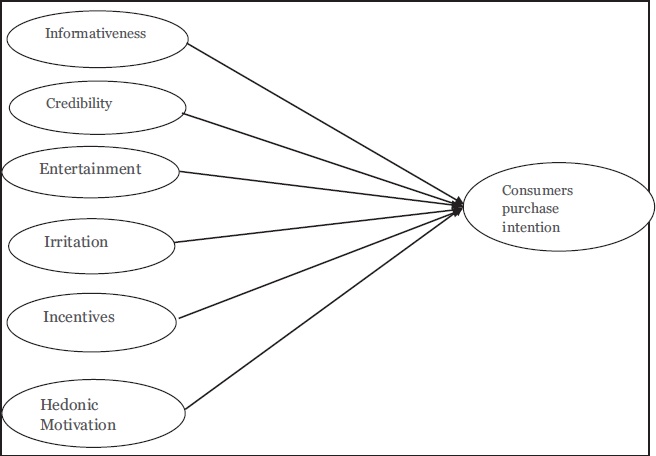
In view of the above discussions, the hypothetical model is exhibited in Figure 1.
Proposed Hypothetical Model.
Research Methodology
Research Design and Sample
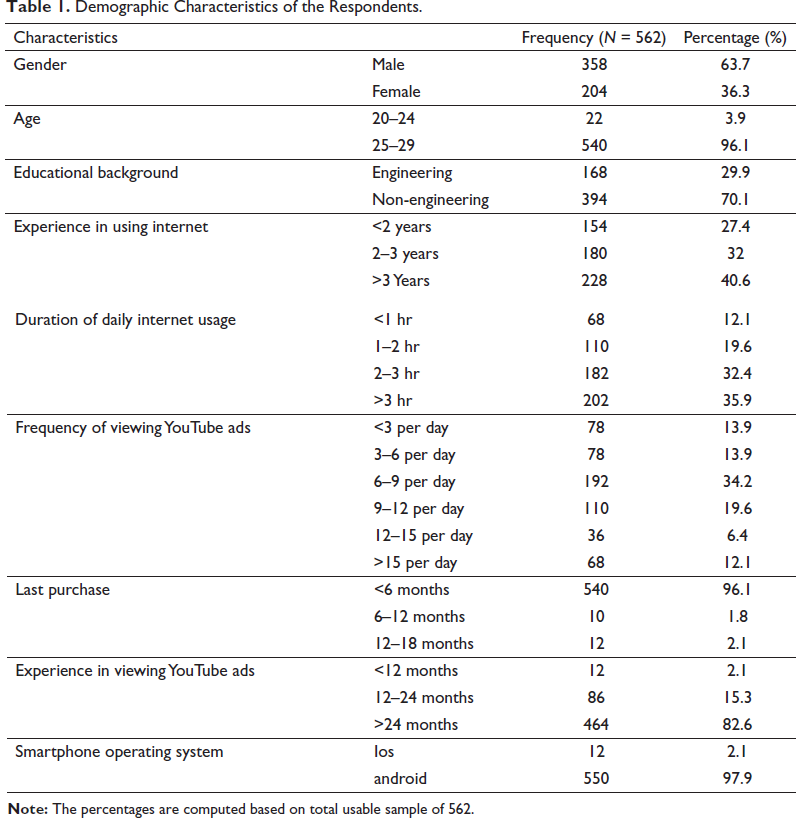
A cross-sectional design was executed to examine the hypothetical model developed in this study. Judgmental sampling technique (non-probabilistic) was used to choose the participants for the current study and the data was collected with the help of a research scholar during his literature survey among the government-run universities in India during February 2020. Five hundred and ninety surveys were distributed to MBA students who undergo either marketing communication or digital marketing courses and were considered for the study and were requested to fill the survey. Of the 590 surveys, 28 surveys were incomplete; therefore, 562 surveys were finally used for the study. However, the current study fulfills the sample-to-item ratio as 20 to 1 as recommended by Hair et al. (2018), whereby 500 samples were sufficient, as the survey consists of 25 items which further fulfills Kline’s (1994) contention that large samples are always better. In addition, the samples for the current study were greater than the recommended level as argued by Boomsma (1987) to execute the structural equation model. To predict the consumers’ purchase intention, the study consists of seven constructs with a composition of four items for informativeness, four items for credibility, four items for entertainment, three items for irritation, three items for incentives, three items for hedonic motivation and four items for consumers purchase intention. The demographic characteristics of the samples are presented in Table 1.
Demographic Characteristics of the Respondents.
Measures
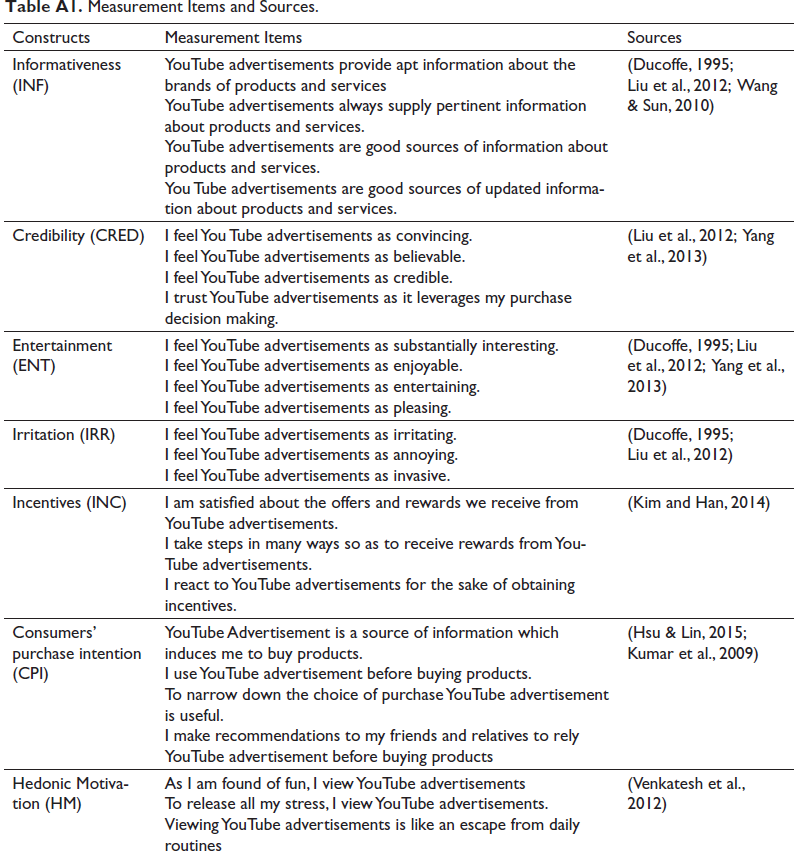
In order to fulfill the objectives of the research, the validated measures were adopted from earlier studies. It was identified that all the respondents used YouTube through either smartphone or computer for generalized and customized purposes. After briefing the objectives of the present research, the respondents were asked to fill the survey. All the manifest variables were measured using Likert’s five-point scale ranging between 1(strongly disagree) and 5 (strongly agree). Few items were reworded to suit to the study context. Moreover, the survey consisted of questions to know the demographic, internet and YouTube usage-related information of the respondents. Appendix A exhibits the measures and their sources.
Data Analysis
The data analysis was executed with the use of Microsoft Excel, SPSS 23.0 and AMOS 23. In order to test the proposed hypotheses of the research, the two-stage structural equation modelling (SEM) approach suggested by Anderson and Gerbing (1988) was used. In the first stage, the confirmatory factor analysis was executed to check the reliability and validity measures of the constructs; then in the second stage, the causal relationship between the variables was examined by assessing the structural model suggested by MacCallum and Austin (2000). Both the assessment of measurement model and structural model were tested by executing the maximum likelihood estimation model as adopted by Byrne (2010). In addition, as testing the normality of data remained as an essential criteria to execute SEM (Hair et al., 1998), Mardia’s coefficient and critical rate (Mardia, 1970) were examined. To test the goodness-of-fit (‘GOF’), CMIN/DOF (chi-square of CMIN to degree of freedom), CFI (comparative fit index), GFI (goodness-of-fit index) and RMSEA (root mean square error of approximation) were used. Hair et al. (2010) suggested the RMSEA (Root Mean Square Error of Approximation) value as ≤ 0.08 and ≤ 0.05 scores as a good fit. Chin and Todd (1995) proposed that GFI (Goodness of Fit Index) and NFI (Normed Fit Index) should be ≥ 0.9 and AGFI (Adjusted good-of-fit Index) should be ≥ 0.8. Hu and Bentler (1999) suggested that CFI (Comparative Fit Index) ≥ 0.9 demonstrates good model fit.
Results
Demographic Statistics
From descriptive statistics, Table 1 summarized that this study consists marginally a higher number of male and non-engineering respondents. Most of the respondents use the internet for more than 3 years with daily internet usage for more than 3 hours, and the frequency of viewing YouTube ads was between six and nine ads per day. Most of the respondents had their last purchases within 6 months and have experience in viewing YouTube ads for more than 24 months and the smartphone operating system as android.
Assessment of Measurement Model
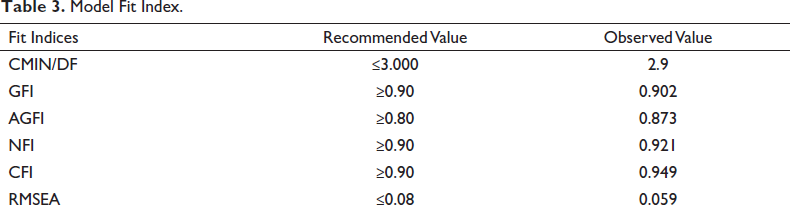
Testing the normality remains a main concern when SEM is used; therefore, Mardia’s coefficient and critical rate were calculated as 1.71 and 2.3, respectively, and satisfied the recommendation of Bayram (2010), as the Mardia’s coefficient was less than 1.96, and also satisfied the recommendations of Tabachnick and Fidell (2001) as the critical rate was less 5. Then, in the first stage of the two-stage SEM, the measurement properties of all the constructs were analysed by examining internal consistency (reliability), construct validity, convergent validity and discriminant validity with the use of confirmatory factor analysis. To test the internal consistency, Cronbach’s alpha was executed; the values were between 0.81 and 0.91 and satisfied the recommended value above 0.70 (Nunnally & Bernstein, 1994). The characteristics of all the measures employed in this study are presented in Table 2. The current study measured the item loadings above the recommended value 0.5 (Hair et al., 2017) as seen in Table 2. It further explains that the loadings of individual constructs are high and confirm the presence of construct validity. Further, in accordance with the suggestions of Hair et al. (2017), the convergent validity is tested with the use of factor loadings, composite reliability and average variance extracted (AVE). The factor loadings for the current study are greater than 0.68 and exceed the recommended 0.5; the AVE ranges between 0.54 and 0.78 and remain above the recommended value of 0.5; further, the composite reliability values ranged between 0.81 and 0.91 fulfills the threshold level and greater than 0.7 fulfilled the recommendations of Hair et al. (2010) to ensure convergent validity. In addition, discriminant validity for the current research is ensured, as the square root of AVEs is equal to the diagonal values of inter-construct correlation as seen in Table 4 and the diagonal values exceed the intercorrelations of the construct. Based on this, the current research demonstrates the presence of discriminant validity as recommended by Fornell and Larcker (1981). Thus, adequate level of reliability and validity has been determined in the study. The values of fit indices are given in Table 3, which fulfills the threshold levels suggested by Hair et al. (2010) and Leong et al. (2019).
Results of Measurement Model.
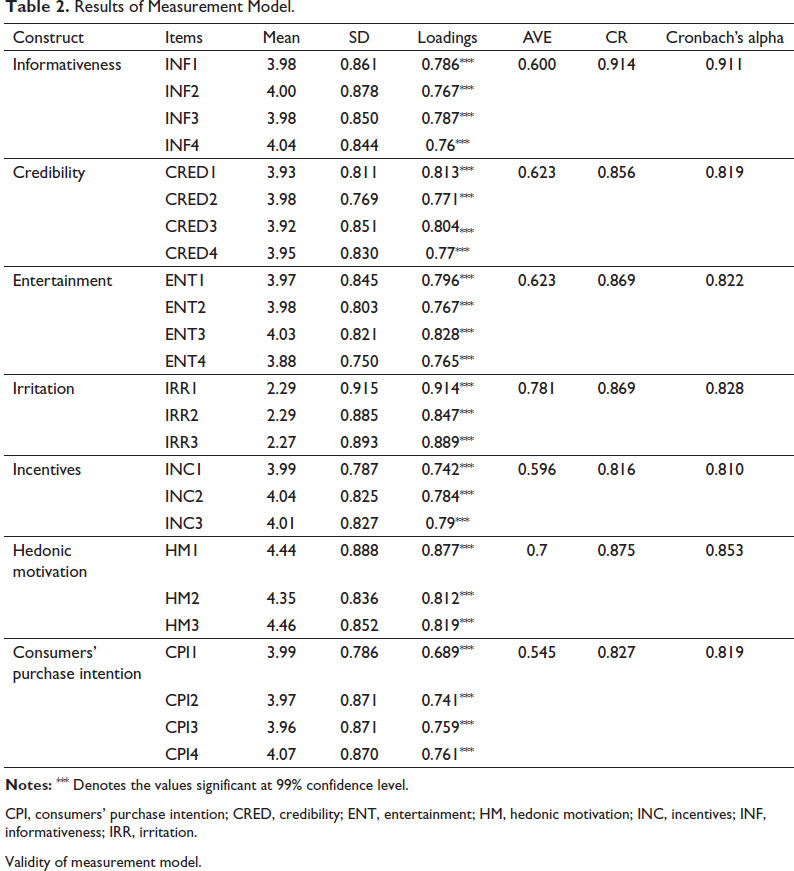
CPI, consumers’ purchase intention; CRED, credibility; ENT, entertainment; HM, hedonic motivation; INC, incentives; INF, informativeness; IRR, irritation.
Validity of measurement model.
Model Fit Index.
Discriminant Validity Requirements.
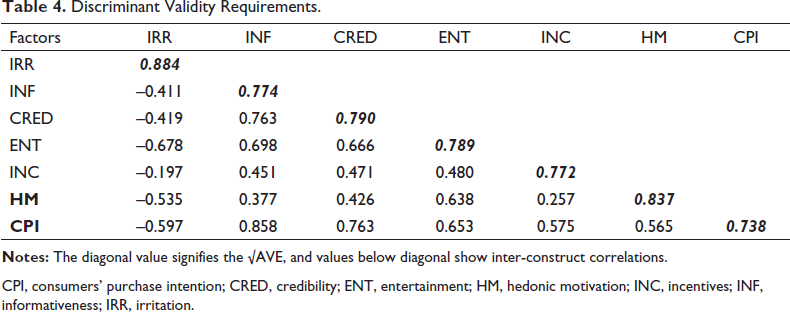
CPI, consumers’ purchase intention; CRED, credibility; ENT, entertainment; HM, hedonic motivation; INC, incentives; INF, informativeness; IRR, irritation.
Analysis of Common Method Bias (CMB)
To examine the common method bias, the current research adopted Harman’s single-factor analysis suggested by Wong et al. (2015) because researchers have suspected the presence of common method bias when a common instrument is used to measure all variables. Therefore, the exploratory factor analysis through unrotated factor solution was executed. The result confirms the threshold level to attain single factor based on the items loadings. To describe further, the first factor contributes 43.7% of the total variance extracted, which is lesser than 50%; thus, the current research assured that CMB is not a major issue (Lin et al., 2014).
Structural Model Evaluation
Structural model shows the causal relationships among constructs in the model. Therefore, the R2 value along with the path coefficients is given in the study, which further shows how well the hypothesized model is supported by the data. Informativeness of YouTube advertisement is positively related to the consumers purchase intention (R2 = 0.383; β = 0.381; p < .01). Similarly, consumers’ purchase intention was positively influenced by credibility of YouTube advertisements (R2 = 0.431; β = 0.617; p < .01). Entertainment in YouTube advertisements positively influences consumers’ purchase intention (R2 = 0.644; β = 0.879; p < 0.01). Further, hedonic motivation of the consumers positively influences consumers’ purchase intention (R2 = 0.315; β = 0.1 and p < .05).
Irritation (β = -0.061; p > .05) and incentives (β = 0.072; p > .078) are not the significant predictor of consumers’ purchase intention. Further, by means of measuring the fit indices, the study arrives 2.64 for CMIN/DOF where the ideal value is <3.0; GFI = 0.902 as greater than the ideal 0.900; AGFI = 0.851 as greater than the ideal 0.8; NFI = 0.913 as greater than 0.9 and the root mean square approximation (RMSEA) as 0.059, which is lesser than 0.08 indicates the hypothetical model as excellent fit. The results of hypothesis testing are presented in Table 5.
Results of Hypotheses Testing.
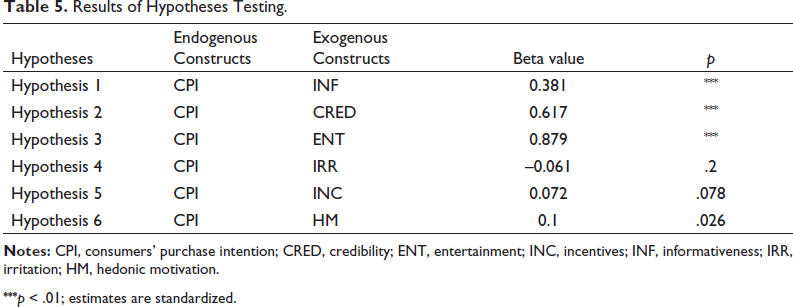
***p < .01; estimates are standardized.
Discussion
This research predicts the consumers’ purchase intention with the attributes of YouTube advertisement and individual’s hedonic motivation in Indian context. Informativeness, credibility, entertainment, irritation and incentives of YouTube advertisements along with hedonic motivation of individuals were used to predict the consumers’ purchase intention. The factors such as informativeness, credibility, entertainment and hedonic motivation explain 0.383, 0.431, 0.644 and 0.315 of variance, respectively, to the consumers’ purchase intention. Whereby, the current research approves the hypothetical model to predict the consumers purchase intention. In addition, the results of path coefficient analysis confirmed most of the proposed hypotheses similar as earlier studies.
Results from this study reveal that the informativeness element of YouTube advertisement positively influences the consumers’ purchase intention. This result is in consonance with the results obtained by Hashim et al. (2018). With the advent of web 2.0 in this information technology era, the market is fettered with abundant information about products. However, necessary, timely and up-to-date information is needed for the consumers to rely on advertisements. This has become a crucial role of YouTube advertisements in the current context amidst several forms of advertisement.
Additionally, credibility of YouTube advertising positively influences the consumers’ purchase intention. This supports the argument of Jaeger and Weber (2020) and Xiao et al. (2018), as credibility of advertisement positively influences consumers’ attitude towards advertisement that finally results in the positive attitude towards brands. YouTube advertisements is a high credible source of information because of more viewers, and the credibility can be further established through providing comprehensive information that are fair, accurate and trustworthy. Similarly, entertainment is another influential factor of advertisement, whereby the current study exhibits the influence of entertainment aspect of YouTube advertisement on consumers’ purchase intention. This result synchronizes with the results obtained by Singh and Banerjee (2018) and states that advertisement with high entertainment value leads to purchase intention. Further, the current study evidenced that hedonic motivation significantly influenced consumers purchase intention. This supports the argument of Alalwan (2018) and draws the attention of advertisers and marketers to stimulate and satiate the Gen ‘Z’s hedonic motivation through innovative and eye-catching YouTube advertisements.
Incentive was not able to predict consumers’ purchase intention, as there was no significant relationship between incentive attributes associated with YouTube advertisements and consumers purchase intention. This remains crucial to signify that incentives received less attention from the Indian consumers’ perspective because prior study has wended a positive relationship between incentives and consumers’ purchase intention through the advertising value and flow experience (Martins et al., 2019). Similarly, the empirical results of the current study failed to confirm the impact of irritation aspect of YouTube advertisement in predicting the consumers purchase intention. More recently, Herrando and Martín-De Hoyos (2022) confirmed the insignificant relationship between irritation and advertisement value. Accordingly, in line with the other studies, the results of the current study confirms that Indian Gen ‘Z’ engages with YouTube to pass the time.
Theoretical Implications
This research offers significant contribution towards a finer academic understanding on the role of hedonic motivation towards consumers’ purchase intention, as limited number of studies have tested the influence of hedonic motivation along with the dimensions of Ducoffe’s web advertising model in India. Consequently, the present study identifies the antecedents of Ducoffe’s web advertising model and hedonic motivation as significant predictors to the consumers’ purchase intention in India. Moreover, the perspective of Indian consumers on YouTube advertisements needs extensive understanding, as YouTube offers different options to the consumers based on the types of membership. Prior studies signified the positive role of incentives towards consumers purchase intention through advertising value and flow experience (e.g., Martins et al., 2019); however, the current research contradicts their argument. This is because consumers in India reported that they were not able to receive any incentives, which do not finally results in consumers’ purchase intention. Another major contribution is the insignificant relationship between irritation and consumers’ purchase intention; this is because Indian Gen ‘Z’ consumers view YouTube advertisements to pass time. One of the attributes associated with hedonic motivation that individuals intend to alleviate negative experiences is to enjoy pleasure.
Practical Implications
Besides the theoretical contribution, this study offers significant practical implications that can be used by the advertisers who choose YouTube platform to advertise their products and services. YouTube advertising is an unprecedented marketing communication technology in the social media era. Although YouTube channel is on the rise in view of the increasing users and inbuilt mobile app, YouTube offers premium membership options that is free of advertisements. In addition, the reach of advertisements aired through YouTube channels is very high and remains a significant revenue to the YouTubers. Studies have revealed hedonic motivation as one of the dominant characteristics of Gen ‘Z’ that centres on self-gratification through viewing videos. In view of this, marketers need to have a better understanding of Gen ‘Z’s hedonic motivation to satiate their hedonic needs by providing entertaining, credible and informative information through YouTube advertisements. In addition, the respondents’ perception about the incentives associated with YouTube advertisements was not able to posit a positive influence with consumers’ purchase intention in line with Martins et al. (2019). Therefore, marketers are advised to understand the perspectives of Gen ‘Z’ about the incentives associated with YouTube advertisements to further enhance the attribution of YouTube advertisement towards consumers’ purchase intention. In accordance with the results of this current study, advertisers and marketers are advised to revisit the informativeness, credibility, entertainment, incentives aspect of YouTube advertisements and hedonic motivation of the Gen ‘Z’ in designing and offering advertisements that enables customers’ engagement and responsiveness.
Conclusion
Trigerred by the substantial use of YouTube platform by the Gen ‘Z’ in the social media era, this study predicted the consumers purchase intention with the execution of Ducoffe’s web advertising attributes and hedonic motivation in the Indian context. Data was collected from the Gen ‘Z’ in India and was analysed using SEM. Based on the results, there were significant effects exhibited by the informativeness, credibility, entertainment and hedonic motivation. In contrast, incentives and irritation were not able to positively influence the consumers purchase intention because this study discloses that Indian Gen ‘Z’ consumers reported that they were not able to receive any monetary and non-monetary incentives either from the marketers or advertisers for viewing and clicking the like symbol of the YouTube ads. In view of this findings and discussions, both academicians and practitioners will be interested to explore further the impact of hedonic motivation and incentives to enhance the consumers purchase intention through YouTube advertisements.
Limitations and Future Research Directions
Regardless of the significant contributions to YouTube advertising literature, few limitations of this research may give opportunities for future improvements. The current study is cross-sectional in nature, which remains susceptible to capture data that could change over time. Therefore, a longitudinal study can be conducted in future to discover how YouTube viewers react to different experiences over time. This study is conducted in India and the results are based on the perspectives of Indian socio-demographic variables, which may change across different countries. Therefore, comparative studies can be made in future. Although the current study uses factors such as informativeness, credibility, entertainment, irritation, incentives and hedonic motivation to predict the consumers’ purchase intention, the moderating effect of entertainment on hedonic motivation can be considered in future research. The proposed conceptual model explains a moderate level of variance; therefore, researchers are suggested to find and integrate other individual-related variables that boost the predictive power (e.g., personal innovativeness, personality, ostentatious), which can be measured in future research.
Appendix A
Measurement Items and Sources.
Footnotes
Acknowledgement
The authors are grateful to the anonymous referees of the journal for their extremely useful suggestions to improve the quality of the article. Usual disclaimers apply.
Declaration of Conflicting Interests
The author declared no potential conflicts of interest with respect to the research, authorship and/or publication of this article.
Funding
The author received no financial support for the research, authorship and/or publication of this article.
