




Abstract
The current study examines the relationship between transformational leadership and the followers’ affective organizational commitment and their contextual performance. Transformational leaders through their compelling vision and moral guidance arrest their follower’s commitment and motivate them to exert more effort and engage them in extra-role behaviours which are not explicit part of their job description. The follower’s commitment and decision to stay in the organization are guided by an emotional bond with the leader and the organization rather than by any logical reasoning. The study also explores the effect of affective organizational commitment on contextual performance. An individual who is firmly committed towards the goals of the organization will look beyond his/her vested interests and will demonstrate more of discretionary prosocial behaviours. These positive desirable behaviours otherwise called contextual performance will add to the overall performance of the organization. This cross-sectional study includes a sample of 480 software professionals working in several information technology (IT) companies across India. SPSS 18 and AMOS 16 were used for data analysis and result interpretation. Results suggested a significant positive influence of transformational leadership on the follower’s affective organizational commitment and their contextual performance. Affective organizational commitment is also found to have positive linkage with the contextual performance of the followers. The results are consistent with previous findings which also claimed positive and significant linkage among the transformational leadership, affective organizational commitment and contextual performance.
Introduction
In the twenty-first century, organizations across the globe face the daunting task of having satisfied, committed and cooperative workforce. Previous transactional methods have failed to attract and retain the best talents by offering better salary, incentives and perquisites. Although these transactional ways provide immediate respite, they are not enough to retain the talented ones for long and solve the talent crunch. Organizations need more than exchange means to engage or involve employees in its growth. They require inspiring leadership, an appealing vision and meaningful engagement of employees to transform organizations into a meaningful, soulful social entity (Singh & Bhandarkar, 2002).
Leadership is one of the significant driving forces that can radically improve the organizational performance and its fortunes. Leaders are responsible for key organizational decisions, such as, the determination of mergers and acquisition, development, allocation of critical organizational resources and conversion of these critical resources into valuable products and services, and finally creating and passing value to various stakeholders (Avolio, 1999). Their role in value creation at all levels of the chain is what makes it indispensable.
Transformational leadership (TL) is refreshingly different from all previous leadership theories in a way that it empowers or enables the followers. The leader engages with followers in a way where both the leader and the follower transcend to a higher level of motivation and morality. The relationship between superior and subordinate turns into partners in the quest of common organizational goal, each making the requisite contribution and in the process increases their capacity to perform (Nicholls, 1994).
TL creates a high level of commitment, trust and inspiration in its followers which leads to performance beyond expectation (Bass, 1985). Leaders displaying transformational style of leadership tend to arrest the commitment of their followers by offering them an appealing vision of the future; such leaders genuinely try to create content and satisfied employees by empowering them (Kirkpatrick & Locke, 1996). Previous empirical studies and meta-analyses indicate a positive relationship among TL, employee performance and organizational outcomes (Howell & Hall-Merenda, 1999). Three meta-analytic reviews (e.g., Dumdum, Lowe & Avolio, 2002; Fuller et al., 1996; Lowe, Kroeck & Sivasubramaniam, 1996) have also reported a positive relationship between TL and various job outcomes, such as, job satisfaction, job commitment and employee performance. Similar findings of positive relationships between TL and numerous outcomes at both individual and firm levels have been reported by Avolio (1999) and Kirkpatrick and Locke (1996). Still, there is a need for further investigations of transformational style of leadership in the Indian context (Singh & Krishnan, 2007). In this study, we explore the causal relationship between TL with affective organizational commitment (AOC) and contextual performance (CP). TL inspires their followers to demonstrate unflinching loyalty towards their organization and its goals; their commitment towards the leader and the organization is based on their emotional attachment rather than on any logical calculation. Similarly, transformational leaders urge their followers to look at the larger picture, that is organizational goal rather than their own goal and to exert extra efforts to achieve it. This philosophy triggers an unselfish cord among the followers, thereby motivating them to engage in positive prosocial behaviours.
Previous studies claim organizational commitment to be positively associated with extra-role behaviour of employees (Gautam et al., 2006). It is quite logical that employees those who decide to stay with the organization because of their emotional attachment with the organization tend to engage in positive prosocial behaviour which includes cooperating, helping and sharing with various stakeholders of the organization. Thus, an empirical study exploring the relationship between the two job attitudes will corroborate the assertion. Hence, this study also explores the relationship between AOC and CP.
Review of Literature
Transformational Leadership and Job Outcomes
In the past three decades, TL has evolved as one of the most popular leadership styles to understand the leader’s effectiveness. TL theory is based on the assertion that certain behaviours displayed by transformational leaders can arouse followers to an elevated level of motivation and morality (Bass, 1985; Burns, 1978). Such a relationship transforms followers into leaders and leaders into moral agents. Transformational leaders demonstrate four critical behaviours that inspire their followers and ascertain their commitment towards the organizational goals. The four dimensions of transformational leaders are idealized influence, inspirational motivation, intellectual stimulation and individual consideration (Bass & Avolio, 1990). Unlike transactional leaders, transformational leaders urge their followers to look beyond their vested goals and strive for superordinate (organizational) goals. Previous studies have highlighted the positive association between TL and several follower behaviours (Fuller et al., 1996; Judge & Piccolo, 2004; Lowe et al., 1996). The relationship between TL and several job outcomes, such as, AOC (Chandna & Krishnan, 2009; Ekeland, 2005) and CP (Judge & Piccolo, 2004; Podsakoff, MacKenzie & Bommer, 1996) is well documented, yet there is a dearth of similar studies in the Indian context. Several researchers have claimed the need for further empirical investigations of TL studies in the Indian context (Singh & Bhandarkar, 1990; Singh & Krishnan, 2007). Therefore, it would be interesting to empirically explore the relationship among transformational style of leadership, AOC and CP.
Transformational Leadership and Affective Organizational Commitment
According to Popper, Ori and Ury (1992), the defining characteristic of transformational leaders is their ability to secure subordinate’s commitment towards the organizational goal. A transformational leader creates meaning in otherwise mundane activities, a meaning that arrest subordinates’ commitment towards the organization’s goals. A transformational leader acts as a catalyst who translates subordinates’ motivation to commitment and their commitment into extraordinary performance.
In a recent study, Mert, Keskin and Bas (2010) found TL to positively affect organizational commitment of the followers. Tseng and Kang (2008) also found a significant positive relationship between TL and organizational commitment. Similar findings are also reported by Avolio et al. (2004). In both the studies, the findings claim that leaders demonstrating transformational style of leadership have direct bearing on the commitment level of their employees. Rai and Sinha (2000) have found a similar linkage between supervisor’s TL style and subordinate’s organizational commitment in Indian non-banking sectors.
Meyer and Allen (1997) defined affective commitment as the emotional attachment of an employee to an organization; such an attachment leads the employee to identify with the vision and mission of the organization. Several empirical studies have reported positive association between TL and employee’s affective commitment (Bycio, Hackett & Allen, 1995; Rhoades, Eisenberger & Armeli, 2001). In another study, Ekeland (2005) found TL to positively influence follower’s affective commitment. Few of the studies in the Indian context have also recorded a significantly positive association between TL and affective commitment (Chandna & Krishnan, 2009).
Ramachandran and Krishnan (2009) in their cross-cultural study found that TL is positively linked to normative commitment in both India and China, but such a linkage is not present in the case of US, while TL was found positively linked to affective commitment in the US and India but not in the case of China. This study helps clear the confusion and contributes towards our understanding of transformational leaders influence on employee’s overall affect and thereby secure their commitment towards the organization in the Indian context.
Transformational Leadership and Contextual Performance
In today’s hyper-competitive business world, an employee is expected to do more than his/her share of work and to engage in positive activities which are beyond one’s job description, that is not categorically incorporated in the formal job roles and responsibilities (Borman & Motowidlo, 1993; Motowidlo & Van Scotter, 1994; Van Scotter & Motowidlo, 1996). Such extra-role behaviours that are not formally asked of but supplement the task behaviours of the employee are called contextual behaviours. These extra-role behaviours encompass behaviours, such as, voluntarily assisting or helping peers who are lagging behind in assignments or tasks, acting amiably so as to carry on good working relationships, exerting additional effort for the timely completion of a job, introducing a new employee to his/her work, etc. Unlike the task behaviours, the contextual behaviours are same or similar across the rank and file of the organization. Another important distinction between the two performances is that unlike task performance, CP does not depend on one’s competency or talent rather than on one’s attitude and compassion towards others (Borman & Motowidlo, 1993).
Transformational leaders exhort their followers to move beyond their selfish interests and act according to the larger interest. The larger interest that includes concern and caring for the peers and the helping attitude towards the colleagues is more in line with the ideas of CP, that is the performance that go beyond formal roles and obligations. Unlike transactional leaders, transformational leaders look at long-term goals and holistic development of employees; they motivate employees to focus on deeper concerns associated with the organizational growth rather than concentrating on fulfilling their basic security concerns (Avolio & Bass, 1991). Transformational leaders inspire their followers to exert extra effort and go the proverbial extra mile to achieve personal, group and organizational goals (Bass, 1985; Yammarino & Bass, 1990).
Previous studies and meta-analyses point out the positive effect of TL on individual-level performance and organizational outcomes (Howell & Hall-Merenda, 1999). Similar findings are also claimed by several studies reporting positive relationship between TL and outcomes at both individual and organizational levels (Avolio, 1999; Avolio & Bass, 1995; Lowe et al., 1996; MacKenzie, Podsakoff & Rich, 1999; Walumbwa, 2002).
Unfortunately, only a handful of studies (Judge & Piccolo, 2004) had examined the effects of TL on CP. The apathetic treatment towards the research of CP can be attributed to previously hold flawed and narrow definition of performance which was restricted only to task performance, that is the role mentioned in one’s job description. Hence, the study of CP in the context of TL is important and imperative.
Affective Organizational Commitment and Contextual Performance
Previous studies reveal that organizational commitment is one of the antecedents of extra-role behaviours (O’Reilly & Chatman, 1986). Several researchers, such as, Scholl (1981) and Weiner (1982), have proposed models that predict direct and indirect linkage between organizational commitment and prosocial behaviours. Thompson and Werner (1997) have found that organizational commitment has a strong relationship with extra-role behaviours. According to Mowday, Porter and Steers (1982), organizational commitment comprises ‘(a) a strong belief in and acceptance of the organization’s goals and values; (b) a willingness to exert considerable effort on behalf of the organization; and (c) a strong desire to maintain membership in the organization’ (p. 27). These components of organizational commitment suggest dispositions towards prosocial behaviour, and those individuals who are organizationally committed ‘are willing to give something of themselves in order to contribute to the organization’s well-being’ (p. 27). An individual who is committed towards the organization engages in discretionary behaviours that are beyond the official requirements of the role, such as, helping others, cooperating and sharing of resources. These extra-role behaviours, although hard to quantify and calculate, contribute immensely to overall organizational efficiency and effectiveness (Garg & Rastogi, 2006). Of all the three forms of commitment, AOC is found to have strongest correlation with the organizational citizenship behaviour (Meyer et al., 2002). Previous findings prompt us to study the effect of AOC on CP.
Research Objectives
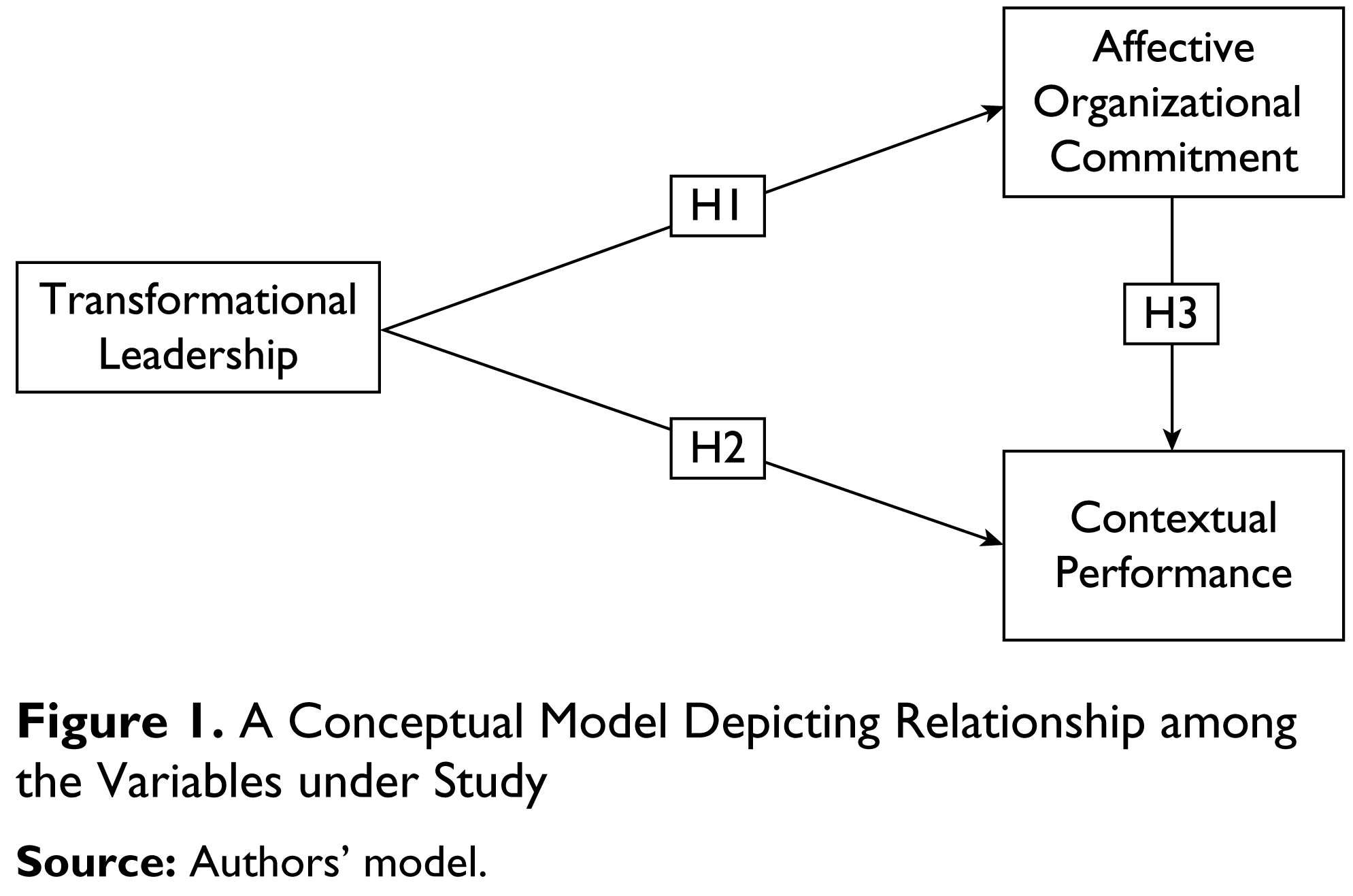
This study attempts to serve two purposes: first, to investigate the effect of TL on the followers’ job outcomes, such as, AOC and CP in Indian information technology (IT) industry and, second, to explore how AOC influences CP.
The three objectives formulated based on gap areas identified from the literature review are
To assess the influence of TL on AOC. To test the impact of TL on CP To examine the effect of AOC on CP
Hypotheses
The following hypotheses are developed on the basis of the review of the literature:
Method
Research Design
This study was conducted to investigate the predictive relationship between TL and job outcomes, such as, AOC and CP. Furthermore, the study will also reflect upon the causal linkage between AOC and CP. This study is quantitative as reliable questionnaires were used to collect the data from the participants (i.e., IT professionals). The unit of analysis for this study was at individual level. This study was cross-sectional as the data were collected at a single point of time from the respondents. The data were analyzed with the help of SPSS 18.0 and AMOS 16.
Sample
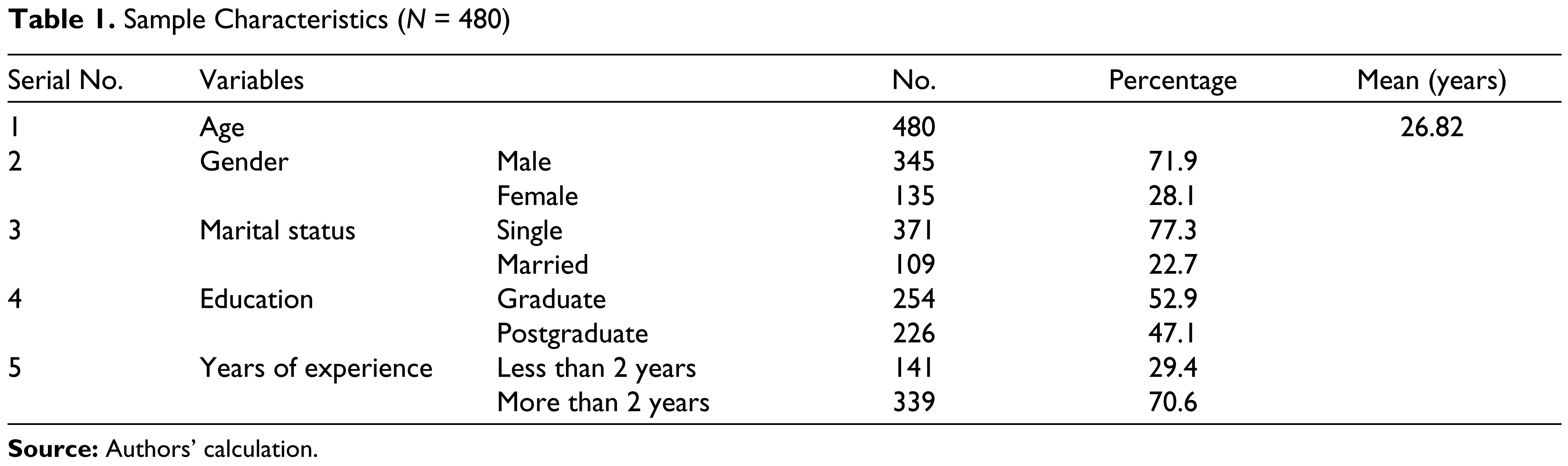
The subjects of this study were IT professionals working in private IT companies located in several Indian cities, such as, Bhubaneswar, Kolkata, Hyderabad, Chennai and Bangalore. Out of 900 survey questionnaires sent to the human resource (HR) manager of the respective companies to distribute and collect the filled-up questionnaires from their software professionals, only 564 (i.e., 62.67 per cent) were received back. After rejecting the incomplete questionnaires, 480 (i.e., 53.33 per cent) subjects were retained for the purpose of study (Table 1).
Sample Characteristics (N = 480)
Measurement and Scales of Items
Measures
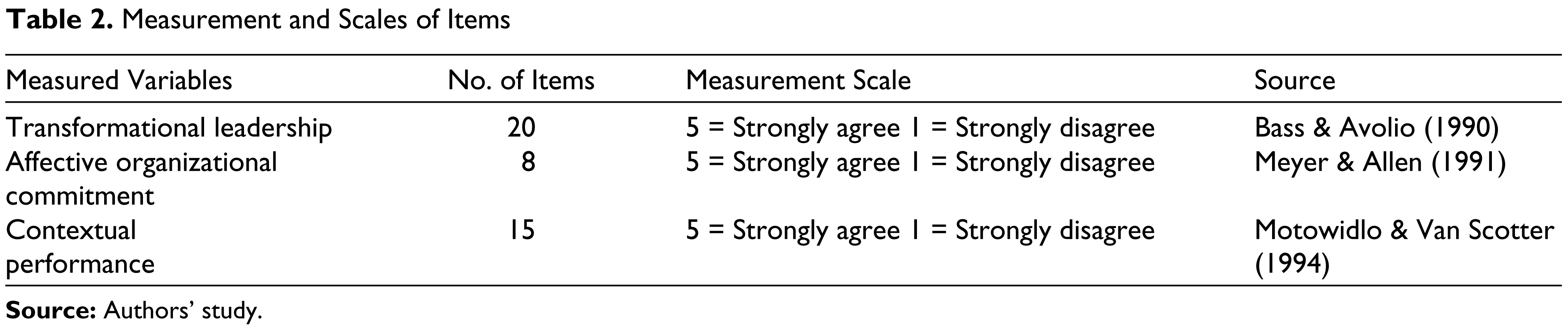
The following section explains the measurement scales and the number of items used in measuring the constructs used in this study (Table 2).
Multifactor Leadership Questionnaire by Bass and Avolio (1990) was used to assess the extent to which employees attribute TL to their superior. The scale has four dimensions: (a) idealized influence (attitude and behaviour), (b) inspirational motivation, (c) intellectual stimulation and (d) individualized consideration. This questionnaire has 20 items capturing the four dimensions of TL. All the 20 items are positively keyed. AOC was measured using Meyer and Allen’s (1991) Affective Organizational Commitment Scale. The scale has eight items and four of the items are negatively keyed. The Motowidlo and Van Scotter’s (1994) CP scale was used to measure the CP. It has 15 items and all the items are positively keyed (Figure 1).
Conceptual Model
Results
Several statistical analyses were performed to satisfy some critical assumptions underlying regression analysis. Data cleaning and screening were conducted to check for normality, linearity, homoscedasticity and multicollinearity and to ensure that the standards of these assumptions were satisfied. Tabachnick and Fidell (2007) proposed that the percentage of missing data ideally should not exceed 5 per cent of the total collected data. Descriptive statistics were used to find the missing data, which were less than the suggested 5 per cent of the total data. Finally, the missing values were substituted with appropriate modal numbers as prescribed by previous researchers (Tabachnick & Fidell, 2007). The data were then checked for outliers (both univariate and multivariate). Hair et al. (2010) argued that outliers have a tendency to influence mean and inflate the standard deviations (SD) and cannot be considered problematic. By exploring the Mahalanobis distance for the data set, four cases of multivariate outliers were determined and addressed. This study has used Pearson correlation to determine the linearity between all of the constructs. All the independent variables demonstrated significant correlation with the dependent variables. The normality of the data was tested with the help of the values of kurtosis and skewness. The data showed that some of the variables are moderately skewed; however, this was not found to be a problem for the regression analysis given the large sample size (n = 480) in the study (Hair et al., 2010; Pallant, 2007).
The reliability and validity of the constructs were tested. The instrument is considered valid unidimensional for goodness-of-fit score >0.90 and considered reliable for construct reliability score >0.70 (Nunnally, 1967). All the three constructs showed adequate reliability and validity. The scores of the three constructs are presented in Table 3.
The descriptive statistics and zero-order correlations among the three variables are presented in Table 4. All the three variables show a significant correlation with each other (p < 0.001) in the hypothesized direction.
Reliability and Validity Score

Descriptive Statistics and Correlation Table
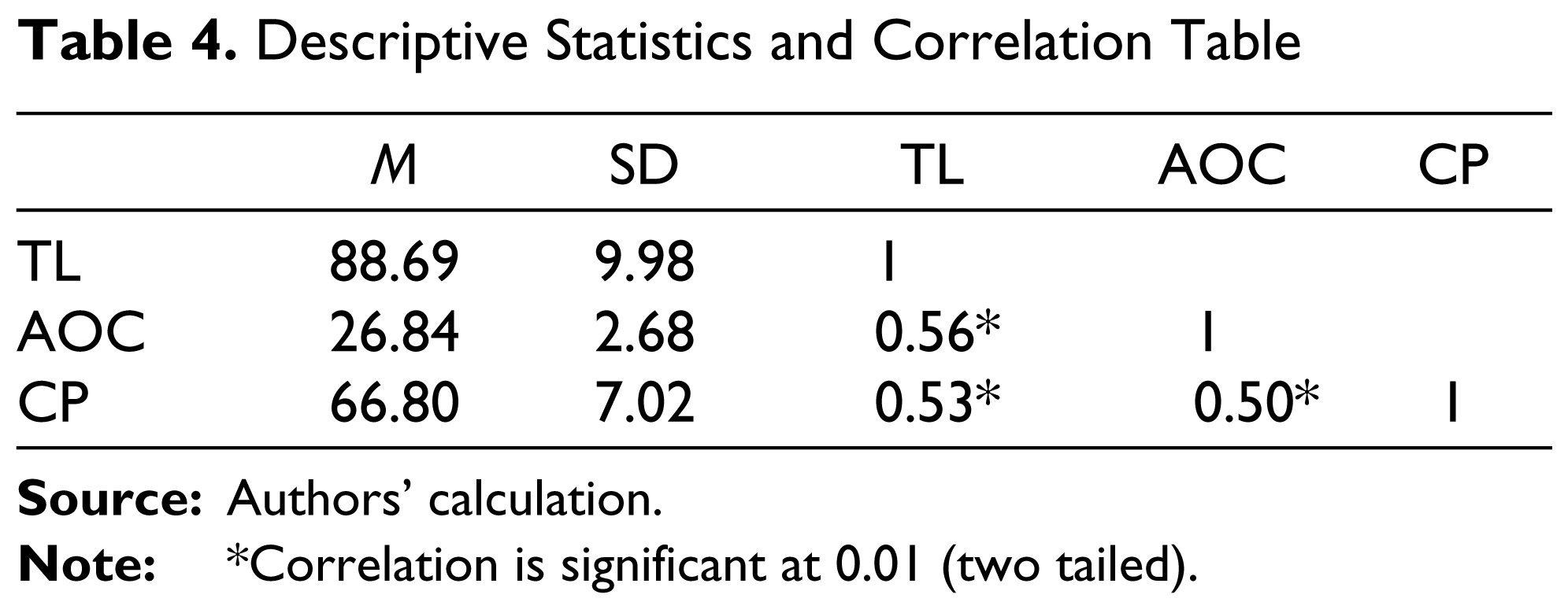
Table 4 offers the inter-correlation among the three variables used in this study. The table shows that TL is positively correlated with AOC (r = 0.56, p < 0.01) and CP (r = 0.53, p < 0.01). In addition, there is a positive correlation between AOC and CP (r = 0.50, p < 0.01). This lends initial support to hypotheses 1, 2 and 3.
Structural equation modelling (SEM) was used in this study to test and analyze the relationship among the three research variables. We have used the AMOS 16.0 software to carry out SEM. SEM is a sophisticated statistical technique that incorporates both the measurement (confirmatory factor analysis) and structural models (regression or path analysis) into a simultaneous statistical test that examines proposed causal linkages among several predictor and criterion variables (Byrne, 2010). SEM is preferred over traditional multivariate procedures as they are capable of assessing the measurement error meticulously.
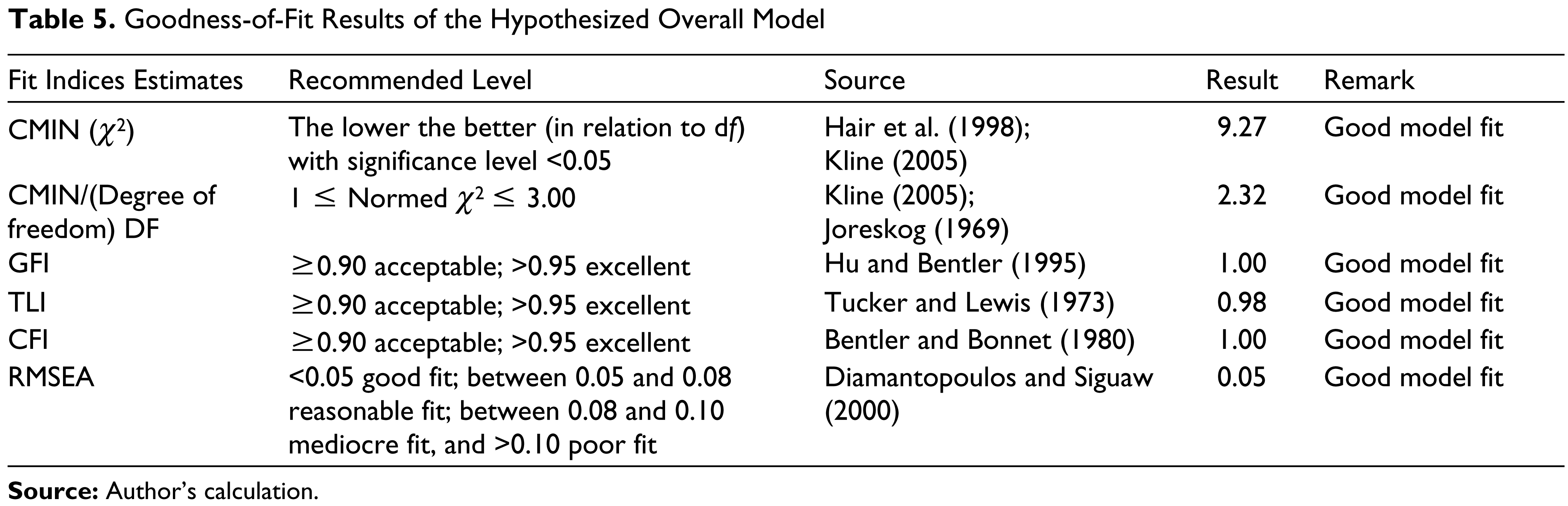
To test the proposed hypotheses, the model fit of the overall model is done. The scores of the test suggest whether the hypothesized model supports the empirical data or not. Hair et al. (2006) recommended that along with χ2 value, researchers should also report one Incremental Fit Index, one Absolute Fit Index and at least one of the Badness-of-Fit Indices. As prescribed by Keith (2006), this study has reported the value of χ2 but not considered its value to evaluate the model fit. In this study, multiple indices, such as, Goodness-of-Fit Index (GFI), Comparative Fit Index (CFI), Tucker and Lewis Index (TLI) and Root Mean Square Error of Approximation (RMSEA) have been used. The review of the overall model shows adequate fit, and all the indices are fulfilling the requisite cut-off score. Table 5 presents the hypothesized model along with their respective indices values.
Results of the hypotheses between the proposed variables along the respective paths are presented in Table 6. All the results are significant and are in proposed direction. In hypothesis 1, we proposed that TL will be positively related to AOC of the employee. The standardized β coefficient is 0.33 (p < 0.05). Hence, hypothesis 1 is supported. In hypothesis 2, we proposed that TL will be positively related to CP of the employee. The standardized β coefficient is 0.32 (p < 0.05). Hence, hypothesis 2 is also supported. Finally, we proposed in hypothesis 3 that AOC of the employee will be positively related to the CP of that employee. In this case, the β coeficient value is 0.29 (p < 0.05). This lends support to hypothesis 3.
Goodness-of-Fit Results of the Hypothesized Overall Model
Results of Hypothesis Test

Discussion
The study has served two purposes: first, revealing the causal linkage between TL and the follower’s AOC and CP and, second, establishing the relationship between AOC and CP. Consistent with previous empirical studies, we found TL to positively influence the AOC of an employee (Rai & Sinha, 2000; Tseng & Kang, 2008). Transformational leader brings a change in the perception of their follower towards work by attaching societal or organizational significance to it. This fosters an emotional attachment between the follower and the organization. Hence, the decision of an employee to stay in an organization hinges on the TL style of the supervisor. Another explanation of this relationship is that transformational leaders show personal attention towards the personal and professional development of their subordinates; this, in turn, leads to an emotional attachment towards the leader and the organization which he/she represents. Similarly, transformational leaders inspire followers to look at the larger picture and urge them to go above and beyond the call of duty; hence, the followers exert more efforts and display positive discretionary behaviours. Previous studies have endorsed the fact that supervisors demonstrating transformational style persuade their subordinates to engage in prosocial behaviours (Gagné & Deci, 2005; Judge & Piccolo, 2004). The reason can be since transformational leaders lead their troops by example, they act as role model to them. Transformational leaders display self-sacrificial behaviours by prioritizing others’ interests and organizational interests above their own, this tendency triggers a similar response in their followers too. Another possible reason can be as TL is associated with collectivism (Jung, Bass & Sosik, 1995); hence, the followers take the cue from their leader and behave accordingly by supporting, cooperating and helping others at the workplace. The study also ratifies the positive influence of AOC on CP. Previous findings have also reported the positive relationship between these two important job attitudes (Meyer et al., 2002; O’Reilly & Chatman, 1986). One of the plausible reasons can be an individual who is emotionally attached to the organization and has pledged his/her loyalty towards the organization will exert extra efforts to achieve organizational goals. These extra efforts are neither part of his/her job description nor formally recognized by the organizations, yet leads to organizational growth and sustainability. Such extra-role behaviours, such as, volunteering, obeying organizational rules, involving in extra duties and showing initiatives are hard to quantify and less recognized but complement the task performance adequately. Hence, this study corroborates earlier findings and lends support to the assertion that transformational leaders positively influence the AOC and CP of their followers, and also AOC of an employee positively affects the employee’s CP.
Implication
This study has practical implications as most of the organizations understand the need to offer a valid reason to an employee to stay committed to the organization and dispense efforts which are beyond one’s job description. This reason can be a strong, transforming leadership of the immediate supervisor. Organizations understand that TL plays a vital role in developing a committed and dedicated workforce that contributes towards organizational growth and its development. When the IT industry is struggling to attract and retain their best talents, a visionary and dynamic leadership can provide them a reason to stay committed to the cause and also can exhort them to go beyond their call of duty. This study also presents empirical proof in validating the influence of AOC on CP. The findings of this study along with previous studies will strengthen our understanding of the relationship among these three important job variables and will throw some fresh insights that will facilitate future investigations.
Limitation and Future Research
A major limitation of this study is that the study is survey based, and the responses are collected from a single source, that is the employee. Although adequate measures have been taken to defeat single-source bias, yet future researches can ensure a robust and credible research design by choosing multiple sources for response. In addition, this study has not taken into consideration the boundary conditions affecting the following relationship. In future, it would be interesting to see how certain moderators affect the relationship between the concerned variables. The role of mediators explaining the relationship can also be investigated in the near future.
Conclusion
The results of this study supports the findings of previous studies that TL has positive influence on subordinates’ job outcomes, such as, AOC and CP. Therefore, it can be safely concluded that an employee who perceives his/her immediate supervisor as transformational will tend to be more committed towards the organization and will also display extra-role behaviours that are not the explicit part of their job roles. The study also ratifies the positive influence of AOC on CP. Hence, a committed and loyal employee will contribute more than what is expected of her.