



Abstract
Recent research shows that traditional business tactics do not support an organization’s goal to be environmentally-friendly as is expected by today’s stakeholders. The increasing demand by stakeholders to go green has pressured firms to adopt ‘green marketing’ as a viable organizational strategy. This study offers a conceptual model demonstrating the influence of green marketing strategy (GMS) on sustainability performance in the apparel manufacturing industry, specifically in the B2B context. By achieving sustainability performance in terms of economic, environmental and social parameters, an organization can simultaneously consider the needs of the environment, society and company. Despite numerous empirical researches on various environmental strategies, there is a dearth of literature regarding GMS and the sustainability performance of the apparel manufacturing industry. Hence, through this proposed model, the authors argue that comprehensive implementation of green marketing throughout the business operations would play a substantial role in attaining sustainability performance.
Introduction
Growing environmental vigilance has pressured today’s corporations to acknowledge sustainability as a critical objective because of its far-reaching effects on a firm’s competitiveness. This awareness has led them to adopt environmental practices into their business operations. Research shows that companies are employing green strategies, not as a choice but a necessity for survival by ensuring sustainable growth and competitiveness. The strong urge for environmental awareness by different stakeholder groups is the foremost cause behind these changes. Green marketing strategies (GMS) have become the leading approach globally to deal with these changes and attain sustainable business performance (Eneizan, Zainon, Tareq, & Obaid, 2016; Papadas & Avlonitis, 2014; Saxena & Khandelwal, 2012; Sitnikov, Vasilescu, Ogarcă, & Tudor, 2015; Zhu, Geng, & Sarkis, 2016).
Today, GMS have become one of the most conversed and popular topics in industry and academia (Yadav, Dokania, & Pathak, 2016). By espousing GMS, an organization can undertake green practices such as producing, targeting and promoting offerings in a way to satisfy the increasing demand for green products and meet the concerns of other stakeholders to successfully generate sustainable competitive advantage (D’Souza, Taghian, Sullivan-Mort, & Gilmore, 2015). As a consequence of this growing acceptance of GMS into daily business activities, it is regarded as a dynamic instrument for sustainability performance (Cronin, Smith, Gleim, Ramirez, & Martinez, 2011).
Most industries are being pressured by customers, regulatory bodies, shareholders, employees suppliers, competitors and the public to go green (Zhu et al., 2016). To date, the manufacturing industry, especially the textile and apparel industry, has been considered an extremely contaminated industry because of the high usage of toxic chemicals, water discharge and air pollution that harm the environment (Abd Rahman, Ho, & Rusli, 2014; Islam & Khan, 2014; Islam, Mahmud, Faruk, & Billah, 2011; Patwary, 2016a). Thus, sustainability dictates an oath by the manufacturers to provide special attention to the environment by maintaining ‘green’ business practices to achieve environmental targets (Villena-Manzanares, 2016).
Like other developing countries, Bangladesh has undergone rapid industrialization through what could be termed reckless economic growth (Rahman Belal & Owen, 2007). It is now seeking to sustain in industrialization and growth ambitions through sustainable industrial activities. Among all the industries, the sector contributing most to Bangladesh’s GDP is the textile and clothing industry (Hasan et al., 2016). The clothing industry alone makes up 83.49 per cent of annual exports and 15 per cent of GDP. Its clothing industry is responsible for 45 per cent of all industrial employment and pays 5 per cent of the total national income. With this contribution, Bangladesh is the world’s second largest exporter of clothing after China (BGMEA, 2019; Islam, Khan, & Islam, 2013). Over the last two decades, the industry has expanded significantly and been a key focus of development policy in Bangladesh (Chowdhury, Ahmed, & Yasmin, 2014).
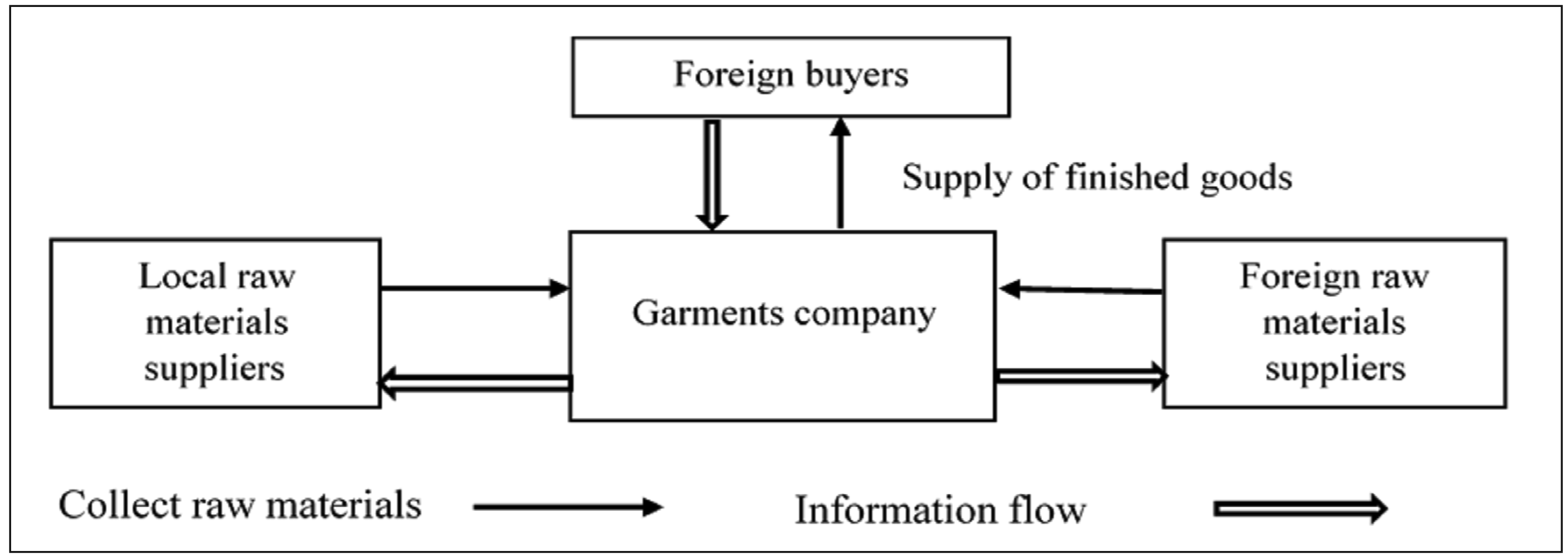
Figure 1 shows the business structure of the ready-made garments industry in Bangladesh.
The industry has seen phenomenal growth during the last two decades, from 180 to more than 4,000 clothing factories. Despite its significance to Bangladesh’s economy, textile and clothing, it is one of the most harmful industries due to excessive water consumption for washing and dyeing fabrics for which it consumes some 1,500 billion litres of groundwater a year (Akter, 2017). Among the factors contributing to the industry’s poor environmental performance is that most ready-made garment (RMG) factories are located in non-industrial zones, many supplier factories and manufacturing sites fail to meet building and safety codes or appropriate industrial standards (Rashid, 2016), the highly inflammable nature of raw materials and products (Haque & Azmat, 2015), production and use of toxic chemicals throughout the apparel’s product life cycle, and wastewater discharges from dyeing, finishing and washing processes (Islam & Khan, 2014).
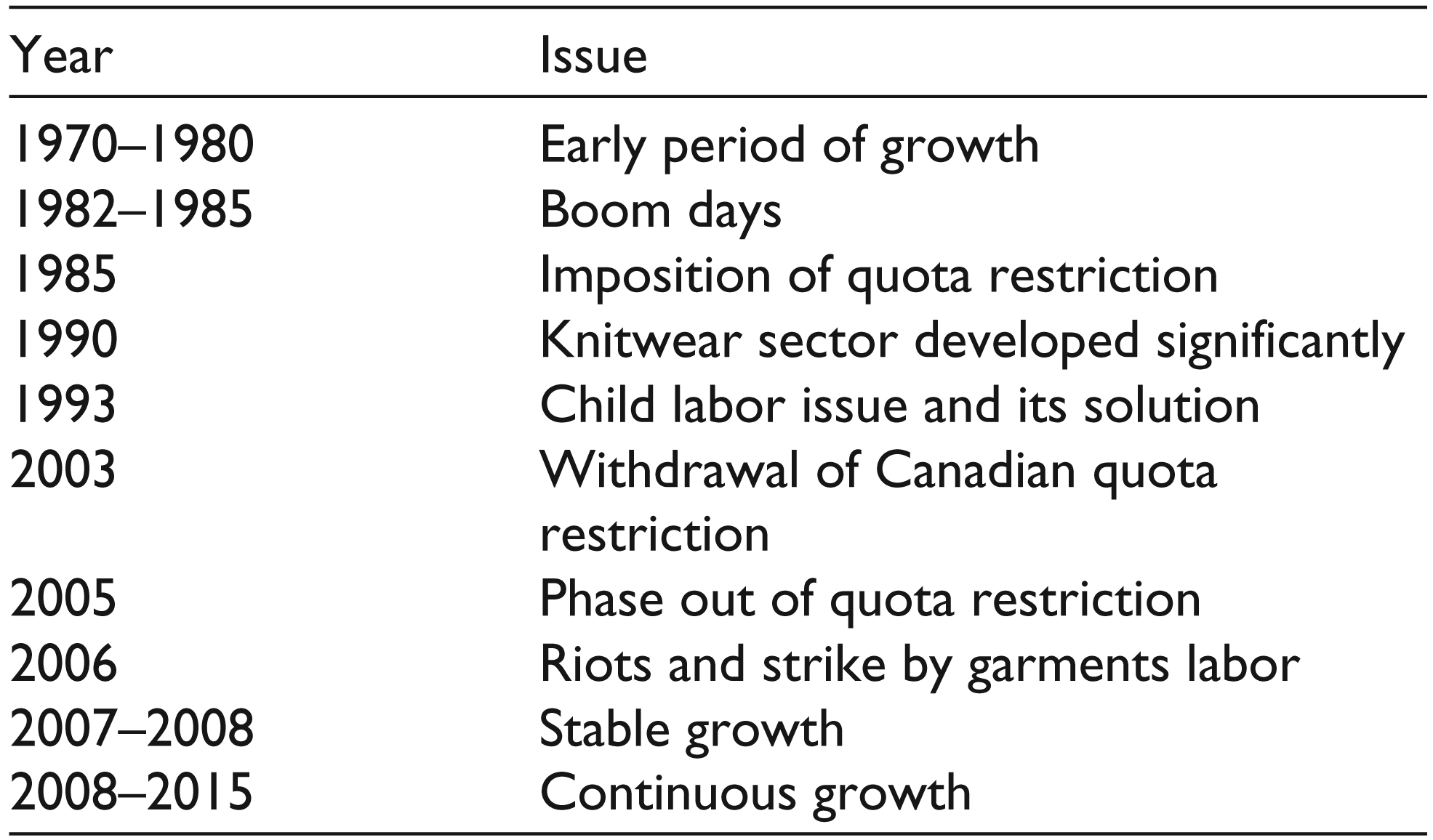
These issues affect human health and the environment adversely in several ways such as water pollution through the discharge of water (Islam & Khan, 2014), increased fire hazard, domestic power fall caused by the huge consumption of supplies by the industry, and air and sound pollution (Haque & Azmat, 2015). Table 1 lists some of the significant issues associated with Bangladesh’s clothing industry.
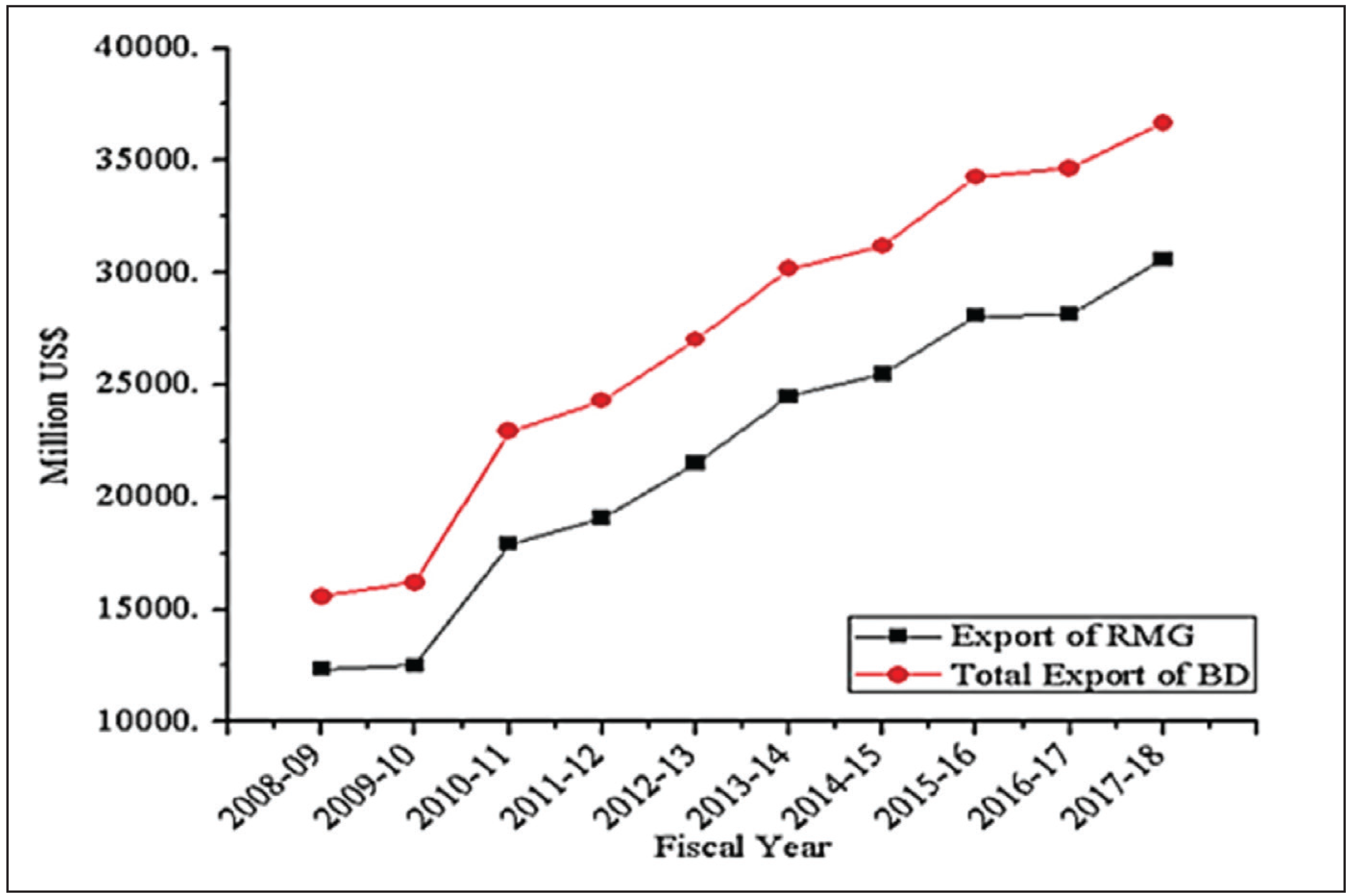
Being an export-oriented country, Bangladesh has proven its competitive strength and vigorous performance in its woven and knit exports. The total foreign currency earnings of this industry as assessed in US dollars is more than 70 billion since its first export (Hasan et al., 2016). With the growing global environmental awareness and several past incidences, this industry has been pushed by its all stakeholders, especially customers, competitors, international bodies and media towards adopting more environmentally-friendly processes. The demand for green products at low prices, rise in the cost of production, intense competition, stricter regulations by international bodies, the appearance of fast fashion, etc., are forcing changes to the industry (Textile Today Research, 2017b). Due to the above challenges, the export earnings for the RMG sector have declined in both volume and prices in the 2016–2017 fiscal year (Textile Today Research, 2017a). In the 2018 fiscal year, the industry documented insignificant export growth and the overall GDP is decreasing (Ovi, 2018). Figure 2 compares the RMG export and total export of Bangladesh from 2008–2009 to 2017–2018.
Major Issues in the Garments Industry of Bangladesh
Currently, the representative organization of this apparel sector of Bangladesh,
In the 2017 fiscal year, the revenue of Bangladesh’s apparel export increased slightly to USD 28.15 billion from USD 28.1 billion in the preceding year. Nevertheless, it is the lowest export rate in the last 15 years. The Export Promotion Bureau (EPB) of Bangladesh stated that the apparel export growth was only 0.19 per cent in 2017 from 10.2 per cent in 2016 which signifies insignificant growth to reach the goal of USD 50 billion of export earnings by the year 2020 (Desk Report, 2019; Patwary, 2016b; Textile Today Research, 2017b; Uddin, 2017). Hence, to meet the demands of all the stakeholders and be competitive in the global apparel market, Bangladesh needs to embrace relevant and effective sustainable strategies that integrates green practices, leading to the achievement of sustainability performance (Haider, 2007; Textile Today, 2017; Textile Today Research, 2017b).
The implementation of GMS as a holistic approach would help Bangladesh’s clothing industry improve not only its financial performance but also achieve healthier environmental and social performance. By integrating an environmental strategy to obtain better sustainability performance, organizations can easily demonstrate a clear message to their stakeholders about their environmental and social concerns. Eventually, the expectations of all the stakeholders can be met and hopefully Bangladesh can be competitive enough to achieve its sustainability goals and secure the top rank in the global apparel industry.
Conceptual Framework
Gordon, Carrigan, and Hastings (2011, p. 147) defined green marketing as ‘companies applying sustainable thinking holistically, from production to post-purchasing service, aiming to balance the company’s need for profit with the wider need to protect the environment’. Many scholars advocate that the foremost approach to sustainability performance is to implement GMS in a firm’s operations (Kushwaha & Sharma, 2016; Sitnikov et al., 2015).
Many empirical studies have pontificated countless motives of employing green marketing as value creation strategies such as reducing the adverse effects on the environment (Miroshnychenko, Barontini, & Testa, 2017), advancement in innovation, product and process (Roy & Khastagir, 2014), growth in efficiency (Miroshnychenko et al., 2017) reduction in cost, access in new marketplaces, new product launches (Baker & Sinkula, 2005), differentiation in products (Dangelico, Pontrandolfo, & Pujari, 2013), improvement of corporate image (Ko, Hwang, & Kim, 2013; Leonidou, Katsikeas, & Morgan, 2013; Yadav et al., 2016), develop sustainable competitive advantage (C. N. Leonidou & Leonidou, 2011; Miroshnychenko et al., 2017), better economic performance (Chan, He, Chan, & Wang, 2012; De Souza, Giro, & Caldeira, 2016; Richey, Musgrove, Gillison, & Gabler, 2014), increase in environmental performance (Roy & Khastagir, 2014), and fortification of natural resources (Miroshnychenko et al., 2017). This implies that the contribution of green marketing is foreseeable in chasing the goal of protecting the environment and society as well as creating revenue by satisfying customers including all stakeholders. However, a vast number of academic researchers have argued that the acceptance of this GMS results in generating a win-win state (positive) (Fraj-Andres, Martínez-Salinas, & Matute-Vallejo, 2009; Gordon et al., 2011; Wang & Sarkis, 2013; Wymer & Polonsky, 2015) or win-lose state (negative) (de Burgos-Jiménez, Vázquez-Brust, Plaza-Úbeda, & Dijkshoorn, 2013; Miroshnychenko et al., 2017) for organizations, society and the ecosystem. Pragmatic evidence for understanding the association between GMS and its effectiveness on organizational performance is still erratic and inconsistent (Fraj-Andres et al., 2009; Hassan, 2015; Raska & Shaw, 2012).
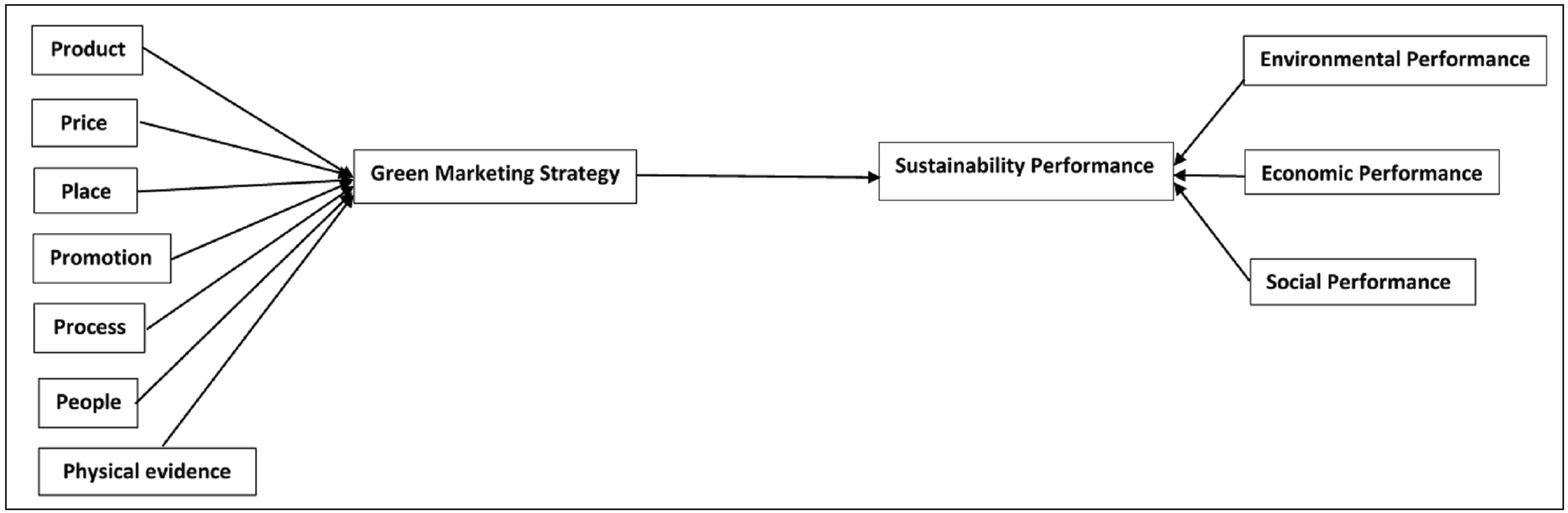
However, regardless of the eclectic presence of green marketing in marketing studies and the growing literature relating to the sustainability performance evaluation, there is a dearth of empirical research on how this approach can be amalgamated with daily business operations to progress in the direction of greater sustainability (Fuentes, 2015; Goyal, Rahman, & Kazmi, 2013; Papadas, Avlonitis, & Carrigan, 2017; Raska & Shaw, 2012). Consequently, to gain a more comprehensive understanding of environmental strategies, the present study conceptualizes the role of ‘GMS’ and offers a proposition based on a review of the literature review that adopting a GMS can lead to a better sustainability performance (economic, environmental and social performance; Figure 3).
Methodology
The author performed a systematic review of the literature related to green marketing and organizational performance to discover the practices and consequences of green strategies in small to large organizations in numerous industries across different sectors. The review of the literature helped clarify the concept of sustainability, green marketing, sustainability performance and how this strategy has been employed to achieve the target outcomes in several industries, particularly in Bangladesh. The studies were prudently examined to establish the propositions of this conceptual model. To retrieve the literature, several keywords were used such as environmental marketing, ecological marketing, green marketing, green practices and organizational performance, sustainability performance, the apparel industry in Bangladesh, current green practices of the apparel industry in Bangladesh, etc., to posit the proposed model for apparel manufacturers. Different reputed and dependable journals and databases of peer-reviewed literature were searched to retrieve the relevant literature such as the Web of Science, Scopus, Taylor & Francis Online, emeraldinsight, ScienceDirect, EBSCOhost.
Literature Review
Currently, in Bangladesh, the foremost underlying focus is on achieving environmental sustainability for the apparel manufacturing industry. Most clothing businesses across developed and developing countries are pursuing environmental practices, but the apparel manufacturers of Bangladesh are lagging behind this awareness which is one of the reasons for the decreasing number of buyers and discontent of other parties (Asif, 2017). The companies in this industry are under huge pressure to improve their social and environmental sustainability (Huq, Chowdhury, & Klassen, 2016; Huq, Stevenson, & Zorzini, 2014; Islam et al., 2011).
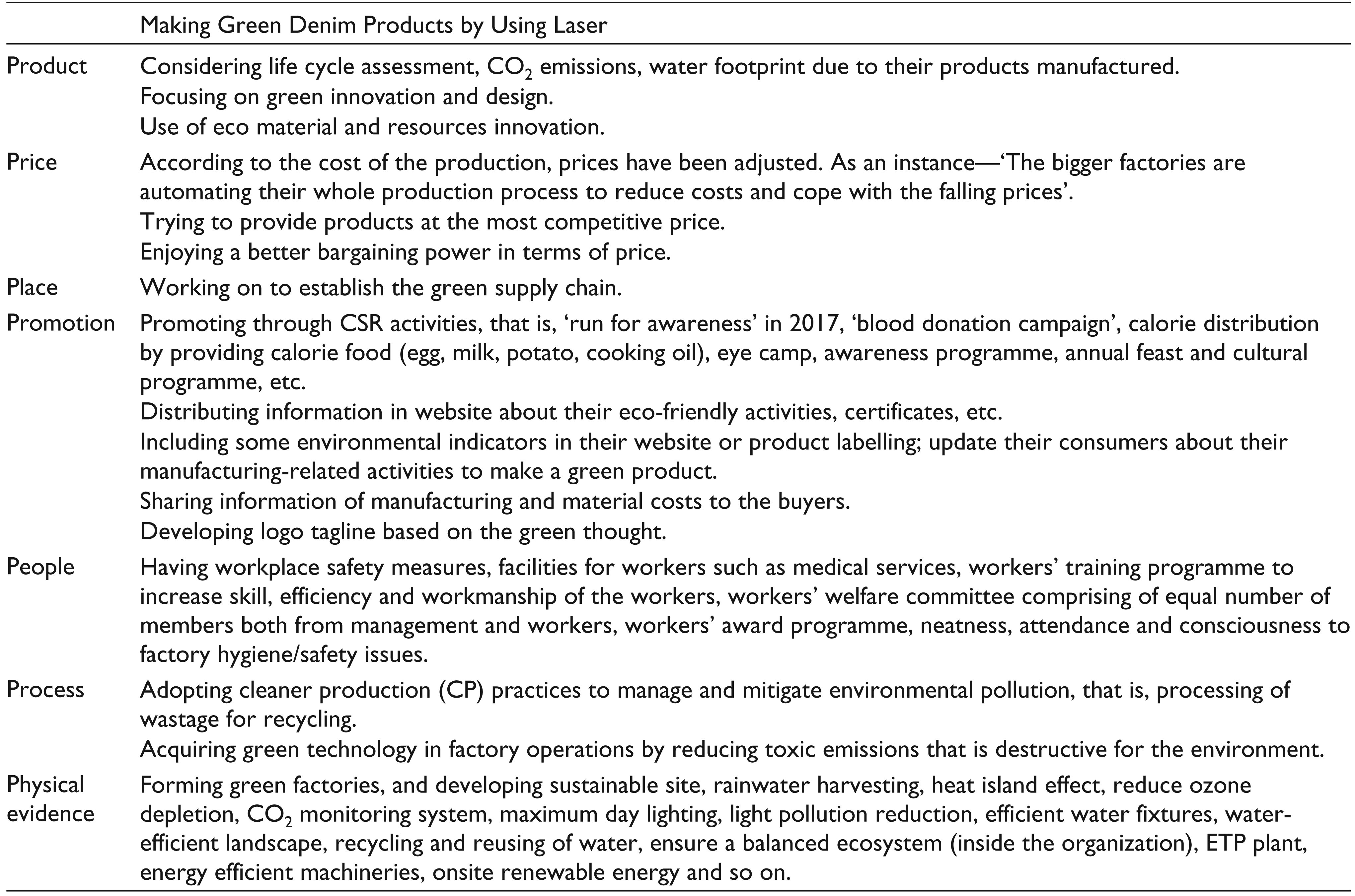
To attain the goal of sustainability, though these apparel manufacturers have adopted several green practices (these practices can be categorized as ‘green marketing’ practices), many more actions need to be undertaken while considering the triple-bottom-line concept and green marketing as a holistic approach. Some of the green practices they have undertaken are listed in Table 2.
Accordingly, BGMEA together with the apparel manufacturers is working on all domains of sustainability (Asif, 2017; Hassan, 2015). Moreover, Bangladesh’s apparel manu-facturing industry needs to be cognizant of their environmental, social and economic sustainability by manufacturing green products, saving energy, reducing waste, having sustainable thinking in all business operations (Huq et al., 2014; Islam et al., 2011).
Green Marketing Practices Undertaken by Apparel Manufacturers of Bangladesh
The Key Construct: Green Marketing
The growing sensitivity of stakeholders for the detrimental effects of the natural environment has changed the competitive structure radically and yielded new tasks for organizations to survive (Eneizan et al., 2016; Fraj, Martínez, & Matute, 2011). Hence, over the past few decades, a mounting number of companies have incorporated a holistic approach to sustainability as a new influential environmental tactic for their corporate decisions to manage the growing consumer demand for green products, ensure the competitive position, and achieve external permissibility with the overall protection of physical envi-
ronment (Bocken, Short, Rana, & Evans, 2014; Leonidou, Christodoulides, Kyrgidou, & Palihawadana, 2017; Miroshnychenko et al., 2017; Sezen & Çankaya, 2013; Yadav et al., 2016). In this regard, practitioners creatively integrate sustainability notions into marketing which is referred to as green marketing (Ottman, 1993). It is also cited in different literatures as ecological marketing (Kassarjian, 1971), environmental marketing (Coddington, 1993), enviropreneurial marketing (Menon & Menon, 1997), greener marketing (Charter & Polonsky, 1999) or sustainable marketing (Fraj-Andres et al., 2009; Gázquez-Abad, Jiménez-Guerrero, Mondéjar-Jiménez, & Cordente-Rodríguez, 2011; Ham & Lee, 2011; Kumar, 2016; López-Rodríguez, 2016; Sitnikov et al., 2015). Though different labels have been used in most salient journals, the terms impart a similar meaning and are collectively and most commonly referred to as ‘green marketing’ (Ham & Lee, 2011; López-Rodríguez, 2016)
Green marketing appeared in the late 1990s and evolved through three phases: ecological, environmental and sustainable (Ansar, 2013). It is derived from social marketing (Sitnikov et al., 2015) and is found predominantly in management due to its unique ability to integrate business operations and natural environment (Kumar, 2016; Papadas et al., 2017; Yadav et al., 2016). Green marketing is a business philosophy which involves a holistic marketing process executed to manufacture the products and services while keeping in mind environmental concerns and increased economic performance (Fraj-Andres et al., 2009). The term ‘green marketing’ refers to the systematic incorporation of environmental concerns into the organization’s marketing mix activities to meet customer’s needs, society’s expectations and the organization’s objectives by reducing the adverse effect of business activities on the environment (Budica, 2015; Dsouza, 2015). Correspondingly, another group of scholars stated that green marketing also includes the process of recycling organizational resources and the development of factory building with the employment of marketing mix elements by manufacturers (Chahal, 2014). Following Kirchoff, Koch, and Satinover Nichols (2011), it can be characterized as a way of diminishing the negative effects of the bio-physical environment by combining efforts (sources of supply, resource consumption and production processes) with outcomes (finished products, product end-of-life and waste) and consumer preferences. The foremost job of green marketing is to tie up an organization’s marketing practices with the current environmental realities by formulating it into greener practices (Papadas et al., 2017).
In the twenty-first century, embracing this green view is not an extravagance but an inevitable solution to environmental issues by implementing environment-friendly activities and modifying consumer’s actions and the organization’s responsible image favourably (Fraj et al., 2011; Leonidou et al., 2013; Vlad, Vasile, Macovei, & Tuclea, 2016; Wymer & Polonsky, 2015).
To identify the reasons behind the adoption of green marketing, Polonsky (1994) cited five issues: green marketing a business opportunity, social commitment, strict regulations imposed by the government, competitor’s pressure and considerations for costs and profit. Chen and Chang (2013) added: to establish a favourable organization image, to manage ecological pressure from external authorities, to utilize it as a business opportunity, to obtain sustainable competitive advantage and to gain more customer satisfaction (Vlad et al., 2016).
Sustainability Performance
As the earlier thinking of increasing only the financial returns of the organization has been superseded. Currently, the focus of every organization is on how they can improve their performance, specifically sustainability performance. To gain significant improvements in their performance levels, these companies are emphasizing environmental, social and economic performance simultaneously as ‘sustainability performance’ by meeting the hopes of their key stakeholders. (Chin, Tat, & Sulaiman, 2015). It is used as a contemporary business view to attaining improved economic performance through managing and solving environmental issues (Papadopoulos, Karagouni, Trigkas, & Beltsiou, 2014).
Hence, from the past few years, the term sustainability is gaining momentum among scholars as well as practitioners as a prominent field of study. The concept of ‘sustainability’ first appeared in organizational research such as operations and management and has extended to various disciplines of businesses like marketing. Sustainability with the key stakeholders’ benefits is still difficult as companies have inconsistent aims (Bathmanathan & Hironaka, 2016; Carter & Rogers, 2008; Fraj, Martínez, & Matute, 2013).
To develop this study, another key variable is sustainability which emphasizes providing balanced importance on environmental protection (planet), social well-being (people) and financial success (profit). This is termed as the ‘triple-bottom-line’. The concept of ‘sustainability’ is defined as ‘development that meets the needs of the present without compromising the ability of future generations to meet their own needs’ (Leonidou et al., 2013). Another popular definition of sustainability is ‘an intergenerational philosophical perspective of considering the needs of today without compromising the needs of future generations’ (Wang & Sarkis, 2013). Table 3 depicts the major three dimensions of sustainability performance.
Definition of Three Dimensions of Sustainability
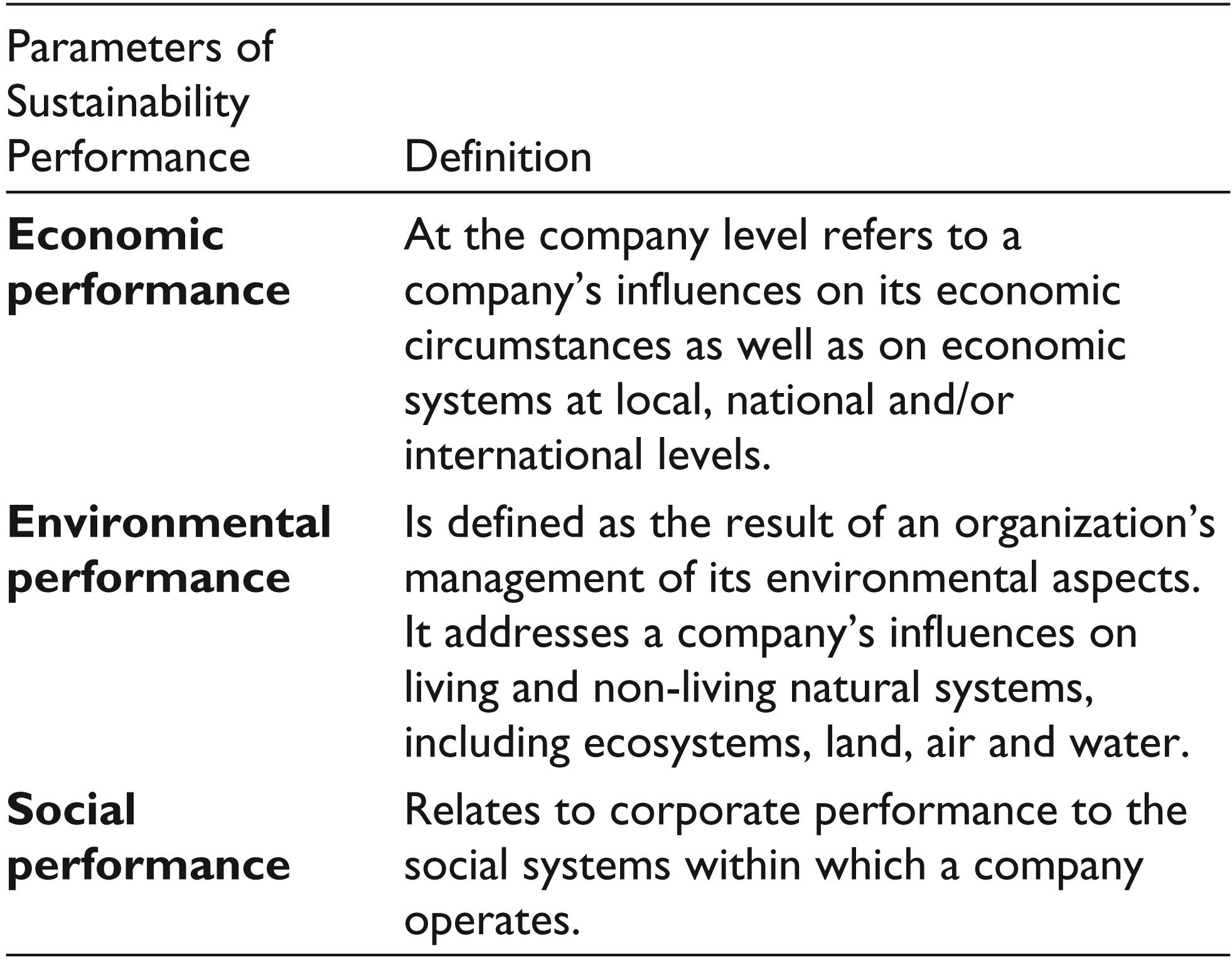
Through these parameters, many businesses have stabilized or improved their organizational growth (Sezen & Çankaya, 2013). To achieve a superior competitive advantage and provide significant value to the environment and society, the triple-bottom-line approach cannot be ignored. Improvements in these three dimensions support an organization to fight and meet the expectations of the current and future stakeholders. Regardless of the high importance and special attention from academics and practitioners for sustainability performance, little research has been conducted on this issue (Bathmanathan & Hironaka, 2016; Goyal et al., 2013). Nonetheless, the interminable importance of this concept underscores how today’s organizations have an urgent need to embrace green elements throughout all the business operations to gain optimum levels of satisfaction from their stakeholders (Couto, Tiago, Gil, Tiago, & Faria, 2016).
Conclusion
Implementing a GMS to achieve sustainability has become fundamental for business growth. In the business-to-business context, it is even more imperative to employ this strategy to gain the confidences of key stakeholders. Such strategies could help the manufacturing industry protect the environment, well-being of society members as well as improvement in economic returns. Despite the type of industry, academics in organizational research have established that environmental practices can enhance firm performance.
Nevertheless, studies relating to GMS and sustainability performance are scarce. The proposed model suggests that investigating the impact of GMS on the three dimensions of sustainability performance would be the right decision for an organization to prove their environmental responsibility to their stakeholders. Hence, the authors argue that having a GMS is a more appropriate environmental method for the apparel manufacturing industry to attain sustainability performance. The natural resource-based-view (RBV) is used in research related to environmental strategies to enhance business performance and competitive advantages. This theory could be applied to develop a model that can assess the role of green strategies in the clothing industry to boost sustainability performance. The authors of this study suggest that future research can be done by empirically examining the proposed framework in the context of the apparel manufacturing industry to validate its aptness.
Footnotes
Declaration of Conflicting Interests
The authors declared no potential conflicts of interest with respect to the research, authorship and/or publication of this article.
Funding
The authors received no financial support for the research, authorship and/or publication of this article.