



Abstract
The possibility of including financial instruments, such as equity, debt, derivative and market-based funds, in a portfolio varies with their market sensitivity. Cryptocurrency (crypto) has been of recent origin and interest to investors and policymakers. The study has attempted to explore opportunities for Indian and international investors in equity and crypto markets. Bivariate analysis between the crypto index and Indian market indices revealed few causal linkages between crypto and other indices. Standard VAR and Granger causality have been used for exploring the association between the variables. DCC-GARCH has been applied for checking further on volatility spillover and the relationship between indices. Granger results indicate the presence of linkages between crypto and energy, media, and oil & gas indices. However, spillover results have shown an absence of such linkages in the short run but a significant presence in the long run except for a few indices.
Introduction
Cryptocurrency based on blockchain is, nowadays, a new centre of attraction for alternative investment by investors. Being decentralized and in absence of backing by central authorities nowadays, it is becoming a conventional topic of discussion. It is also used online at various platforms for discharging payments (European Central Bank [ECB], 2012). Even the role of social media cannot be ignored in making crypto a huge success (Mai et al., 2018). Security of such virtual currency is ensured using an open-source algorithm. Greater emphasis on digitalization and cashless economy across the nations has paved the way for the emergence of such currency. Like money, the circulation of cryptocurrency is fully controlled and its scarcity generates its value. Essentially, its value is determined by market forces of demand and supply (Ciaian et al., 2016). Its limited supply offers a cushion to its value (Becker et al., 2013). But is cryptocurrency a real currency or money or medium of exchange or investment? (Baek & Elbeck, 2015; Baur et al., 2018; Böhme et al., 2015; Bouoiyour et al., 2015; Yermack, 2013).
Crypto was first introduced in 2008 by Satoshi Nakamoto, a pseudonymous person when the global financial crisis of 2008–2009 followed by the housing bubble was in place. Since then, it is gaining popularity and its varied forms are being considered for portfolio diversification. It is also evident with the emergence of the first purpose Bitcoin ETF in North America which is a great success. Recently on 7 September 2021, Bitcoin is adopted for the first time as legal tender by the country EI Salvador. A report in the recent past in India Today (2021) revealed that India has the highest number of crypto owners in the world. The total number of owners stands at more than 100 million despite suspicion of its ban in India. This can be attributed to demonetization in the year 2016, a huge population and an exponential increase in the trading volume of crypto exchanges in India (Aggarwal et al., 2018).
The crypto market, particularly in Bitcoin, is continuously gaining an all-time high spike in prices. A shift of investors from gold to the digital spectrum led to the adoption of virtual currency. As of November 2021, the global crypto market cap stood at the US$2.94 trillion mark with its market volume at US$123.51 billion (Nahar, 2021). There is also a grey area circumambient the regulations related to crypto around the world. Many governments are considering the ban on the usage of cryptographic currency as its demand increases. They are also identifying such policy measures which can deter its use.
Authorities are concerned that Bitcoin and other related cryptocurrencies can be used for unlawful proceedings and can intervene with government monetary measures (Hendrickson et al., 2016). According to Grinberg (2012), a larger chunk of society still prefers local currency for discharging payments as compared to decentralized cryptographic currency. But all these limitations and speculations on ban do not deter its use. Higher returns are attracting investors resulting in a continuous rise in crypto owners across the globe.
Cryptocurrencies being viewed as digital financial assets are now highly used for portfolio diversification for increased returns by investors (Bouoiyour & Selmi, 2017; Corbet et al., 2019; Qarni & Gulzar, 2021). Cryptocurrencies have controlled supply which also checks inflationary tendencies as compared to any other legal tenders (Kajtazi & Moro, 2018). Despite being risky and highly volatile, it can give reasonable returns to investors. Its poor correlation with traditional assets makes it a viable option for portfolio diversification. Several techniques have also been adopted for portfolio optimization of cryptocurrencies, such as Markowitz mean-variance portfolio optimization framework, 1/N naive diversification model and Black–Litterman (BL), by various researchers (Bessler et al., 2017; DeMiguel et al., 2009).
Since, digital currencies are highly volatile and are subject to estimation errors that need to be controlled in a portfolio (Chaim & Laurini, 2018). The Markowitz mean-variance framework put forward the inclusion of low correlation assets in a portfolio for risk diversification (Markowitz, 1952) but is highly sensitive to estimation errors (Levy & Levy, 2014; Platanakis & Urquhart, 2019). The BL model adds value to the Markowitz framework and makes the Markowitz model allocational-efficient considering the risk appetite of investors for computing implied returns (Oikonomou et al., 2018; Platanakis & Sutcliffe, 2017). The ARCH-GARCH framework considers minimizing the negative effects of the spillovers and maximizing its potentialities to gain higher returns (Caporale, 2019; Gyamerah, 2019; Kim et al., 2021).
Hypotheses Statements

Such capabilities may be explored with digital currencies inclusion in a portfolio (Chan et al., 2019). The emerging popularity of digital currency has generated interest among researchers to explore its financial dynamics in varied areas. Crypto is being contemplated as an alternate to government-backed currency by various groups of society in the recent literature. Such currency aids in accelerating the growth of e-business. The extant literature in the international domain looked into the possibility of adding cryptocurrency in a portfolio for maximizing returns by investors (Kajtazi & Moro, 2018; Liu, 2019; Mazanec, 2021; Mensi et al., 2021; Platanakis & Urquhart, 2019). But there is a dearth of such investigation in the context of the Indian economy where crores of investors use cryptocurrency.
Investors consistently look for improving their gains and losses from the portfolio of financial instruments. Cryptocurrency being an emerging instrument for investment purposes may offer ample opportunities. The growing popularity and chances of a higher return from digital currencies have remained a key driver for investors’ renewed investment motivations. If there are some linkages of cryptocurrency with the different sectors, it may offer financial benefits along with other equity instruments over a range of different sectors in the Indian economy. The study aims to explore this original research query in the literature. With this context, the objectives of the study have been laid down as follows:
To explore linkages between the crypto index and Indian market indices. To investigate investment possibilities across crypto and Indian markets. To figure out specific sectors which can be linked in a portfolio with crypto. To examine the possibility of maximizing gain with the inclusion of crypto in a portfolio.
Aforementioned objectives have been achieved with a set of hypotheses (Table 1) using standard VAR and Granger causality. Furthermore, volatility spillover has been investigated with the DCC-GARCH model. These models have been explained in the research methodology section in detail.
Literature Review
Digicash being introduced in 1990 specifies that the concept of cryptocurrency has been three decades old (Chaum et al., 1998). This form of currency being free from any intermediaries has become popular and can be foreseen as a mechanism for worldwide transactions. Also, it may be capable of checking inflation owing to its scarce and controlled supply (Böhme et al., 2015). Mixed notions exist as to its valuation, and arguments state that these currencies may have a fundamental value. However, critics suggest that it may be purely regarded as a speculative asset (Hayes, 2017). In addition, the norms and regulations related to cryptocurrencies prevail ambiguously. The recent ban by Chinese authorities further adds to this confusion and mistrust in this currency (Androulaki et al., 2013; Clark & Essex, 2012; Hendrickson & Luther, 2017; Karame et al., 2012; Vranken, 2017).
Such characteristics of this currency may lead to money laundering, hacking of wallets, misappropriation of funds, etc. (Corbet et al., 2019; Grigg, 2011). Despite the haziness and risks attached to this currency, its usage has been on the rise since its inception. Worldwide, the number of applications in use for cryptocurrency has shown increasing trends in downloads (Luther & Olson, 2014; Luther & Salter, 2017). The poor banking system, inflationary trends and informal financial markets structure in a few emerging nations have motivated the masses to go for this currency (Hendrickson et al., 2016).
Crypto may also be regarded as an emerging asset from being just a digital currency (Kajtazi & Moro, 2019). The association of crypto as an asset with the exchange rate, commodity prices and stock markets has been investigated in various studies (Bouri et al., 2018; Isah & Raheem, 2019; Li & Wang, 2017). Their relationship in asset capacity has also been viewed with gold, and the former has been found more volatile (Dwyer, 2015). However, likewise gold the returns from crypto can also be forecasted with their trading volume. Thereby, crypto may offer better returns supported by the strategic approach of investors (Balcilar et al., 2017; Chen et al., 2001). Its high volatility has also been compared with the dollar and similarities have been documented (Dyhrberg, 2016; Whelan, 2013).
Especially in financial crisis crypto has emerged as a potential asset for portfolios and is capable of providing positive returns to investors (Stensås et al., 2019; Titcomb, 2017; Urban, 2017). In comparison to digital gold, it has shown similar diversification and hedging capabilities. However, with physical gold inverse outcomes have been realized. All these findings are commensurate with crypto’s nature and unorganized market structure (Corbet et al., 2018; Feng et al., 2018; Klein et al., 2018; Popper, 2015). Portfolio development with crypto has gained momentum in the recent past and has attracted researchers to analyze it (Gil-Alana et al., 2020; Tzouvanas et al., 2020).
A related study carried out with Bitcoin and stock markets demonstrated crypto as a potential asset for portfolio optimization (Brière et al., 2015; Jin & Masih, 2017). Traditional assets and a combination of crypto have also been regarded as a good option for US investors (Bianchi, 2020; Bouri et al., 2017a; Brière et al., 2015). Using the mean-CVAR approach, Bitcoin reflected higher returns for portfolios as compared to other financial instruments (Ciaian et al., 2018).
Mazanec (2021) used the bibliographic analysis and Markowitz portfolio theory to build an optimal portfolio comprising cryptocurrencies. The study suggested a mild correlation among virtual currencies and the inclusion of Bitcoin, Cardano and Binance Coin led to an ideal portfolio. Interdependence between Bitcoin and altcoin prices has been present in the short run. But in the long run, crypto remains a potential asset for hedging with other instruments (Akhtaruzzaman et al., 2020; Tiwari et al., 2019). Another study has shown investment in multiple cryptos to be detrimental owing to the strong correlation between them. In addition, this association becomes stronger during bearish markets (Lahajnar & Rožanec, 2020). Mensi et al. (2021) demonstrated that there may be uneven dynamic risk spillovers among cryptocurrencies contingent upon different frequencies more precisely in short term. Investors must be cautious during portfolio decisions as cryptocurrencies behave differently as to risk spillovers with some being transmitters and others being receivers.
Using the VAR-GARCH model, it has been found that the benefit of portfolio diversification from cryptocurrencies gets reduced by cyberattacks. Such attacks build up cross-market linkages and result in shifts in contagion parameters (Caporale et al., 2021). Thus, more comprehensive techniques may be used for estimating errors in forecasting portfolio returns with crypto. This may offer better planning and strategies for investors (Platanakis & Urquhart, 2019).
On the other hand, few studies have also shown crypto as a speculative asset rather than just a store of value (Glaser et al., 2014; Kristoufek, 2013). However, its potential to provide greater returns covers the high risk because of its speculative nature (Eisl et al., 2015). Still, higher returns from this asset may not attract investors during adverse movements in the financial markets (Dyhrberg, 2016). In the short run, however, crypto may be useful to deal with global shocks (Aggarwal et al., 2018).
The recent studies on crypto motivated an in-depth analysis of their linkages with emerging indices. Crypto may offer multiple benefits along with hedging for inflation while including it in a portfolio of equity markets. Investors’ perspective towards the possibility to include crypto with emerging indices like India may be experienced.
Their spillover and bi-directional causality may be examined to explore crypto as a financial instrument for maximizing returns. In this approach, cautious strategies may be required as crypto remains to be a risky instrument owing to its regulatory environment. The association and co-movement between crypto and other sectoral indices may hint at the framing of tactics by investors and speculators to gauge returns from a defined portfolio. Furthermore, investigation of emerging indices with crypto may signal regulators for developing crypto’s acceptability in financial markets. A cautious approach may motivate investors to include crypto in their portfolios along with emerging market instruments. They may select its proportion depending on their risk appetite and return expectations. In context to the above discussion, the hypotheses of the study have been shown in Table 1. These hypotheses have been investigated with a set of methodology which includes primary check for stationary series. Furthermore, Granger causality to check interdependence between indices if any. Thereafter, the DCC-GARCH model from GARCH family has been included to examine spillover among indices.
Research Methodology
This section elaborates the methodology and techniques applied to study the causal relationship among variables. The daily historical index values have been taken from January 2015 to December 2019 consisting of 1,084 data points. The sample period has been restricted to December 2019 to take away the impact of COVID-19 which has not been a normal period. The data sources and variables have been detailed in Table 2.
Variables of the Study
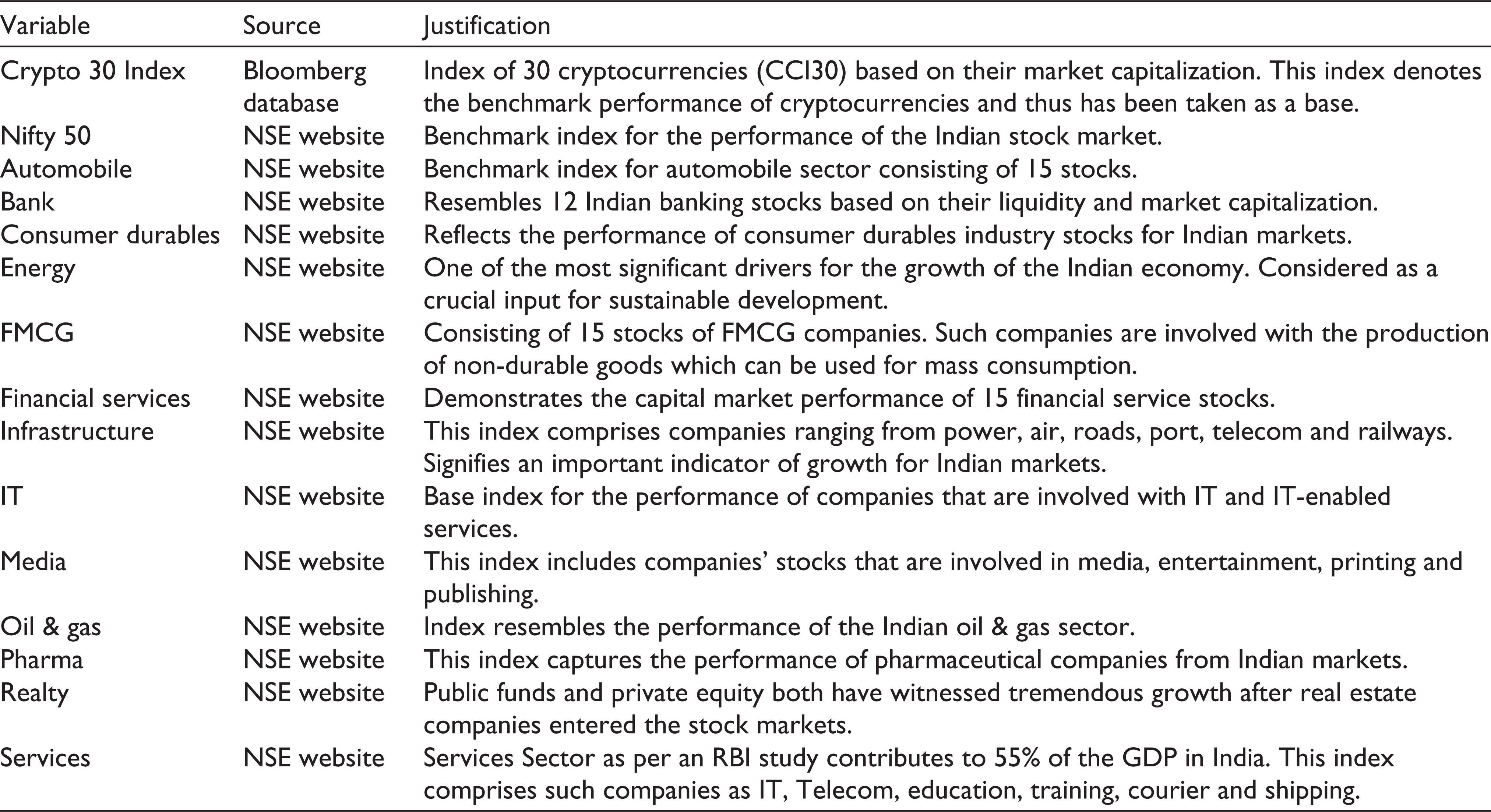
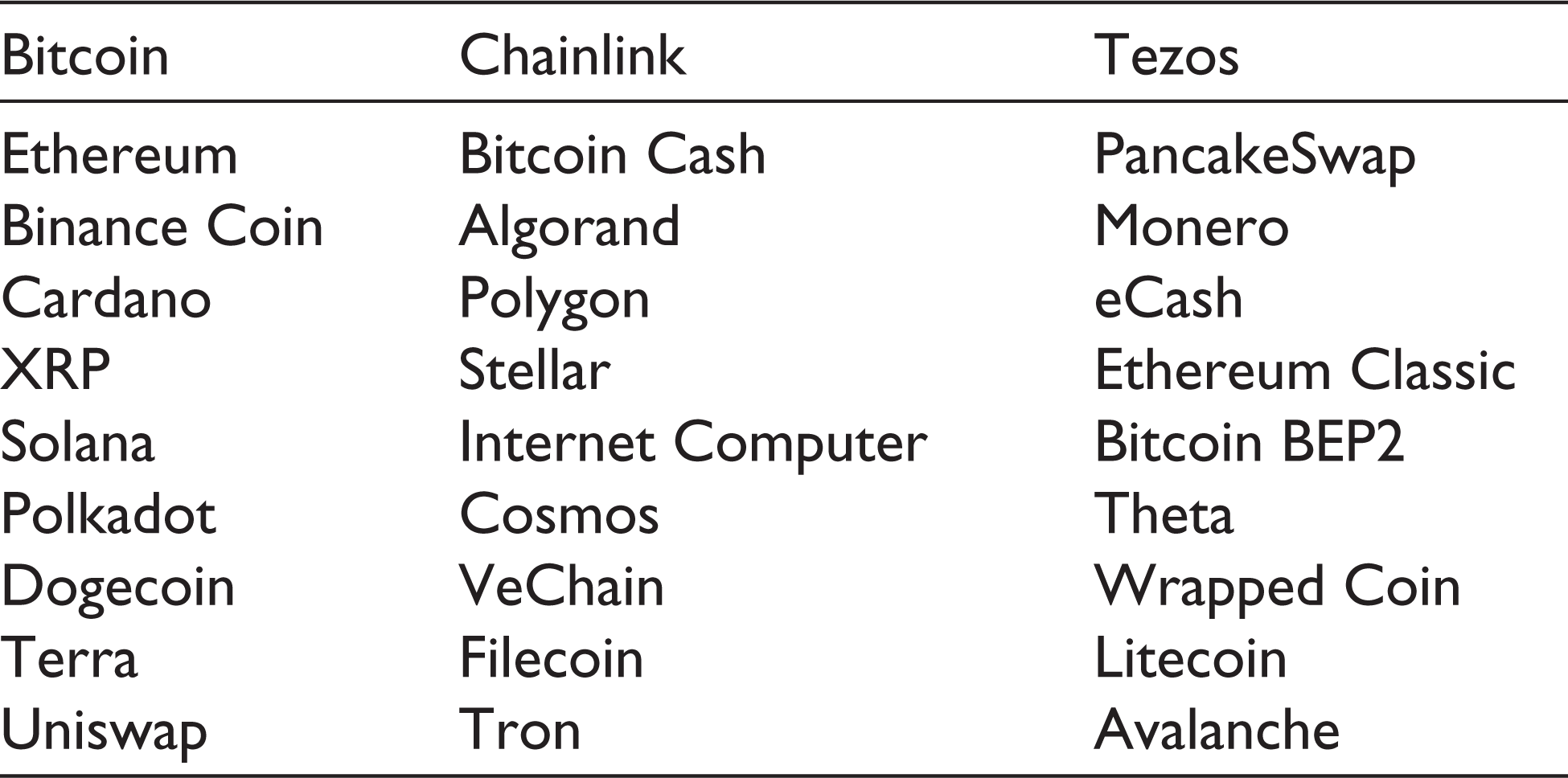
Appendix 1 shows the cryptocurrencies that contribute to the CCI30 index at present. This index consists of a mix of oldest to recent additions to cryptocurrencies. Their market capitalization remains the base for the value of CCI30.
Furthermore, the log-returns for all indices have been tested for unit root, and their analysis has been carried out with statistical approaches explained as follows:
Techniques Used
Unit Root Test
Augmented Dickey–Fuller (ADF) Statistic has been used for checking unit root which remains the base for all-time series analysis (Cheung & Lai, 1995; H0: Series has a unit root). The examination of all CCI30 and other 14 indices from Indian markets has been done with this test at the level and first difference. It may be anticipated that a series with unit root issues may lead to inefficient forecasting and thus may not be consistent and dependable (Timmermann & Granger, 2004).
Granger Causality
Standard vector autoregression and Granger causality have been used to check causal linkages between the crypto index and the other 14 indices (Granger, 1969). Optimal lag length criteria have been applied from the VAR window using the Schwarz information criterion (Schwarz, 1978).
DCC-GARCH
The spillover from the crypto index to other indices has been investigated with the dynamic conditional correlation GARCH model. The DCC-GARCH model (Engle, 2002; Bouri et al. 2017b) enables bivariate analysis for each index with crypto index to find out the linkage between them. The benefit of using this model may be its ability to explore dynamic behavior between the variables investigated (Celik, 2012; Tiwari et al., 2019). It can also measure correlation coefficients (standardized residuals) for accounting heteroskedasticity (Chiang et al., 2007; Cho & Parhizgari, 2008). Hence, it eliminates bias from volatility with its time-varying conditional correlation (Forbes & Rigobon, 2002). The analysis of this model involves two steps: first, to estimate the univariate GARCH model, and second, to measure conditional correlations over varying time. The model may be expressed as follows:

In the above model, yt being m × 1 vector of a dependent variable, C being m × k matrix of parameters, Xt as k × 1 vector of an independent variable containing lags of yt,
The DCC-GARCH model had been recently used for exploring Bitcoin with the US industry portfolios (Akhtaruzzaman et al., 2020). However, the cautious approach for using its estimations has also been documented (Aielli, 2013; Caporin & McAleer, 2013; Fermanian & Malongo, 2017). The outcomes from the DCC-GARCH model may be used as a diagnostic check rather than a model. Due attention should be paid to the fact that DCC would show conditional covariances of the standardized residuals and not dynamic conditional correlations. Thus, one must be cautious while using this model for analyzing the dynamics of relationships. However, the stationarity assumption and related issues can be resolved with trajectories proposed for advanced analysis of portfolio diversification (Caporin & McAleer, 2013). The cDCC-GARCH model may further be used for obtaining dynamic conditional correlations for exploring portfolio designing in addition to conditional covariances (Aielli, 2013).
Results and Findings
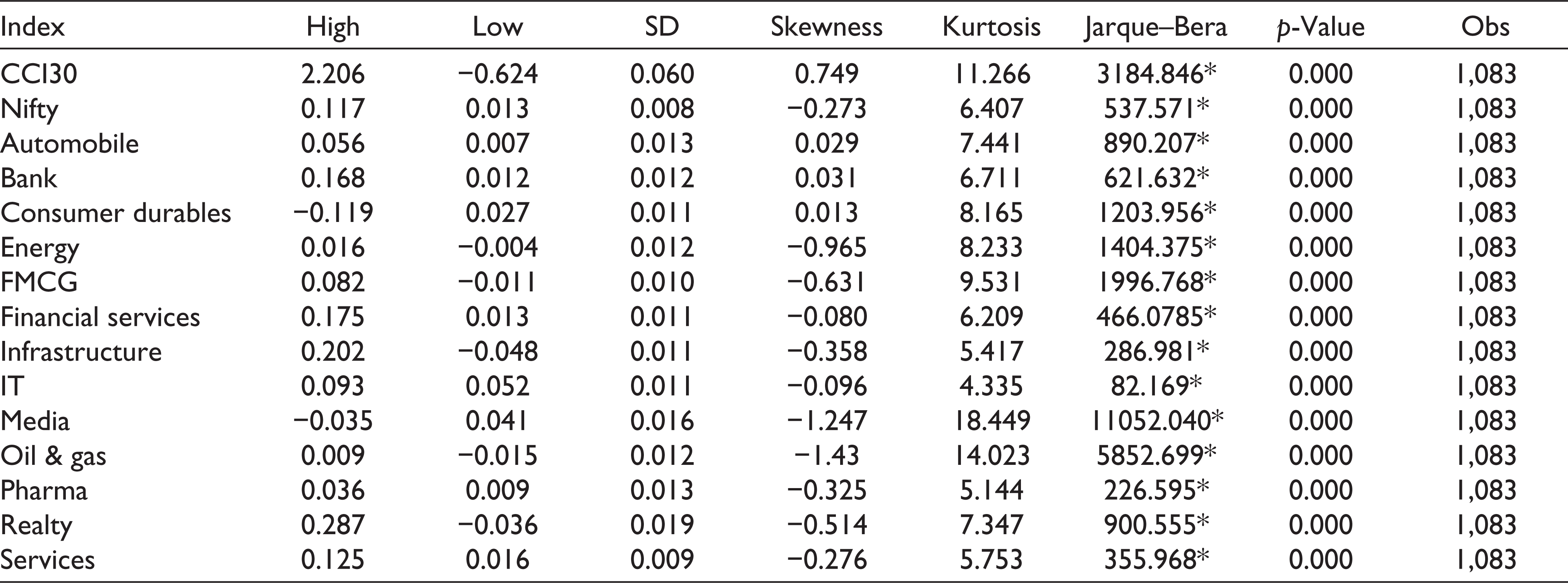
Table 3 in this section presents the descriptive statistics for all variables explained in Table 2. The probability value from the Jarque–Bera statistic (<0.05) indicated that data for all variables are not found to be normally distributed. The highest return values indicate crypto as a lucrative option for investment as its potential for capital gains may be very high. The standard deviation, on the other hand, indicates the highest value for the crypto index and the least for the services index. Thereby, it may be observed that crypto may be a doubled-edged asset in one’s portfolio. Due attention and strategies should be devised before investing in this asset through its potential for high returns can act as a great motivation.
Descriptive Statistics
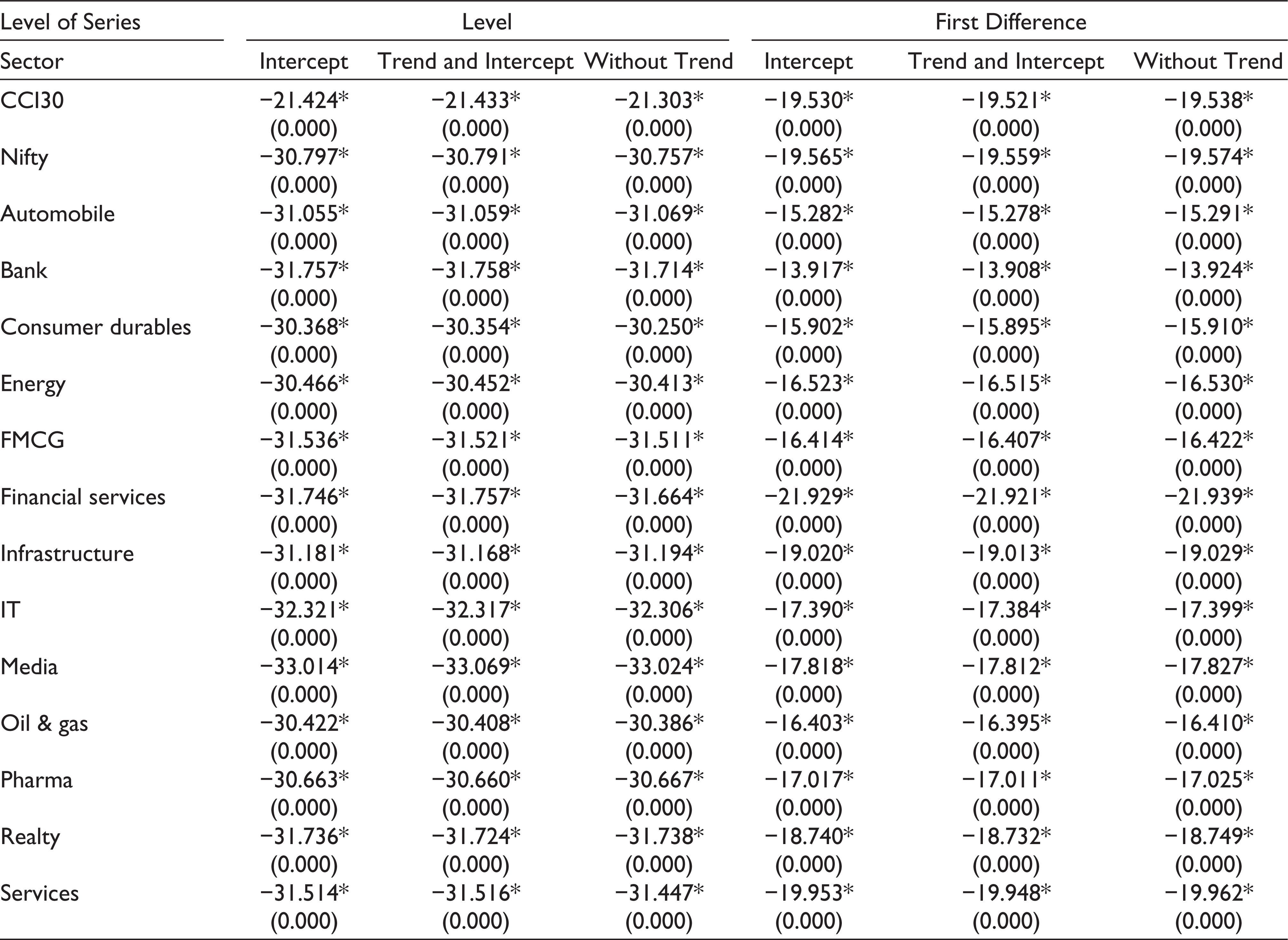
The unit root test (H0: Series has a unit root) remains the first and foremost assumption for analyzing any time series data. The probability value from the ADF statistic has been within the threshold limits (<0.05). The unit root results both at the level and first difference (Table 4) have shown that the index returns for variables have been stationary. Thus, Granger Causality may be applied in the standard VAR window with optimal lag length selected from the model. In addition, the first condition for the application of the DCC-GARCH model (data should be stationary) also holds good.
Granger Causality Results
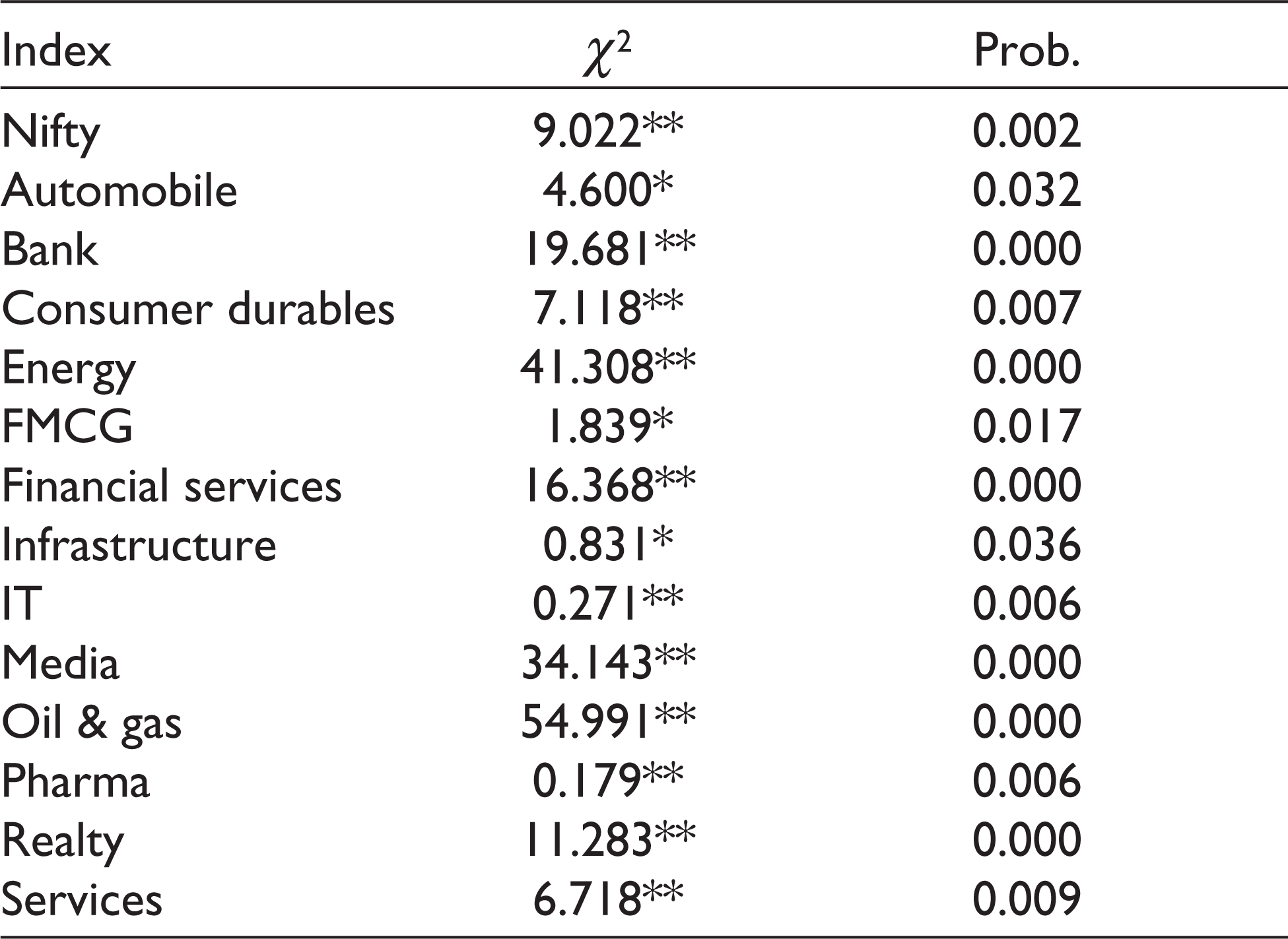
The comparative analysis of CCI30 with other indices across Indian markets with Granger Causality has been shown in Table 5. The results reflected that the performance of CCI30 has been independent of Nifty 50, automobiles, banking, consumer durables, fast-moving consumer goods (FMCG), financial services, infrastructure, IT, pharma, realty and services. However, there has been a causality running from CCI30 to energy, media, and oil & gas indices. These linkages may be due to the blockchain technology utilized for managing supply chain disruptions in the oil & gas and energy sectors. On the other hand, the mining of cryptocurrency also requires resources that belong to the energy sector. During this process, climatic changes may be encountered and that is how these sectors have a direct link with this digital asset. The association of cryptocurrency mining and supply chain management in these sectors could be the major reason for such connections. The reverse has been true only in the case of the Media index. Media plays a major role in influencing the valuation of digital currencies. Primarily, the role of media cannot be ignored because of its happening nature and market information base provider. Market news and other updates related to cryptocurrency may influence its pricing positively or negatively. Thus, the relationship depicted by Granger results for media and cryptocurrency may be due to the pricing effect from media. Hence, few rare cases of linkages have been found for the crypto index with Indian market indices.
Clustering Volatility
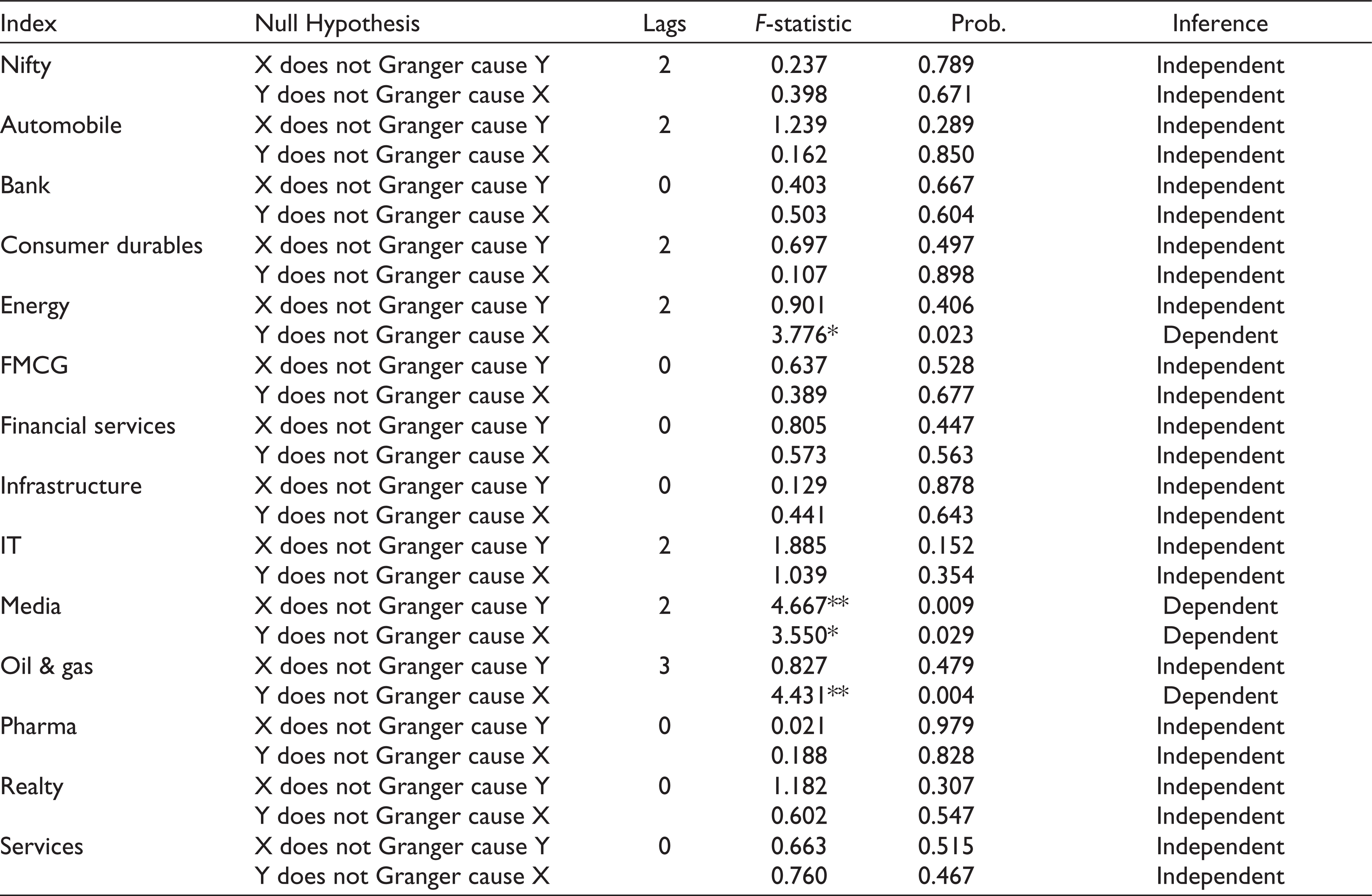
Volatility clustering refers to a phenomenon where large changes in data shall be followed by large changes. On the other hand, small changes in data shall be followed by small changes. This persistence of clustering effect must hold good to apply dynamic conditional correlation GARCH model. This may be examined with two approaches: graphical analysis or heteroskedasticity ARCH test. In the present study, this effect has been investigated with the later approach of the ARCH test (H0: There is no volatility clustering). Table 6 elaborates the results for the volatility clustering from the respective market and sector index to the crypto index. The probability values for all indices have been within threshold limits (<0.05). Hence, it may be assumed that the clustering effect existed and the null hypothesis may be rejected. Thus, the application of DCC-GARCH has been carried out further for a bivariate analysis between the crypto index and other market indices.
The preliminary condition of stationary data for the application of the DCC-GARCH model has been tested and presented in Table 7. The next important assumption related to the clustering effect has been tested with the heteroskedasticity ARCH test and has been shown in Table 5. Bivariate analysis between CCI30 and other respective indices has been shown in Table 6. The univariate GARCH equation and DCC-GARCH equation coefficients have been represented along with their probability values.
DCC-GARCH Results
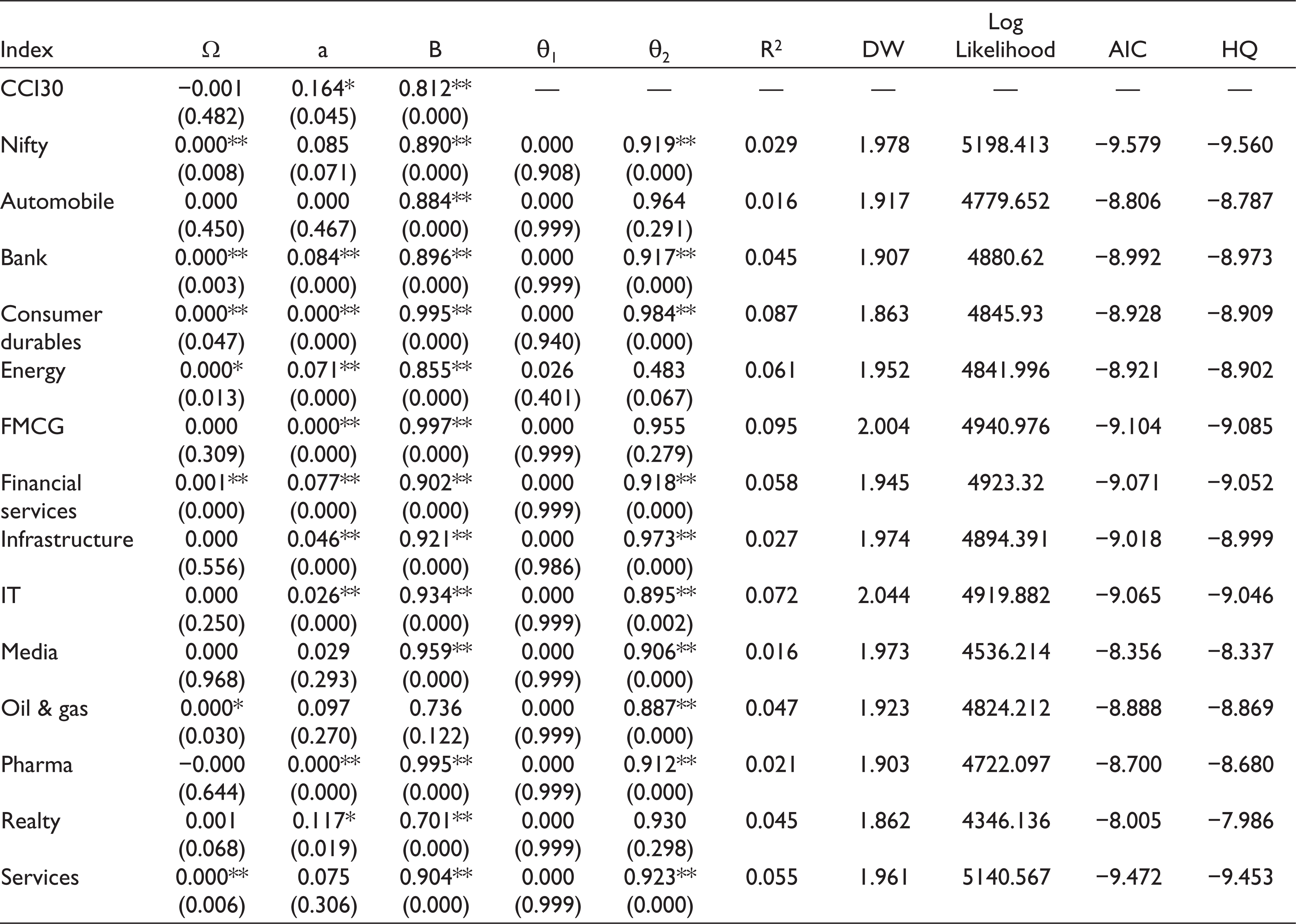
The spillover existed neither from the crypto index to other indices nor from other indices to crypto in the short run. The absence of such linkages may be explored and a timing strategy for investing in crypto along with other indices may be analyzed. Investors may follow a cautious approach in the entry and exit owing to different associations in the short run and long run.
The phenomenon has not persisted for all indices during the long-run period. Thus, investment timings and strategies may be differently explored in the long-run period. The association of cryptocurrency with these indices, in the long run, has been found for all indices except automobiles, energy, FMCG and realty. Therefore, opportunities to explore cryptocurrency with these market indices may remain more prevalent in the short run as compared to the long run.
Unit Root Results
Discussion and Summary of Results
Results from the Granger causality and DCC-GARCH model have been summarized in Table 8 for locating strategies for diversification. The findings have reflected mixed outcomes from investors’ angles to decide and plan a portfolio with crypto (Mikhaylov et al., 2019; Platanakis et al., 2018). The unidirectional linkage from crypto to energy and oil & gas sectoral indices signal lesser diversification options among them (Wang et al., 2019). The bidirectional causality between crypto and media index shows the least possibility to diversify with crypto and media stocks (Aliu et al., 2020; Klein et al., 2018). The short- and long-run analysis between crypto and other indices have shown that spillover effects have not existed in the short run (Conlon et al., 2020; Guesmi et al., 2019). The linkages, in the long run, have shown a different shape than the short run (Liu, 2019; Petukhina et al., 2018). It indicates that short- and long-run strategies shall require modification with a portfolio consisting of equity instruments and cryptos (Akhtaruzzaman et al., 2020).
Summary of Results
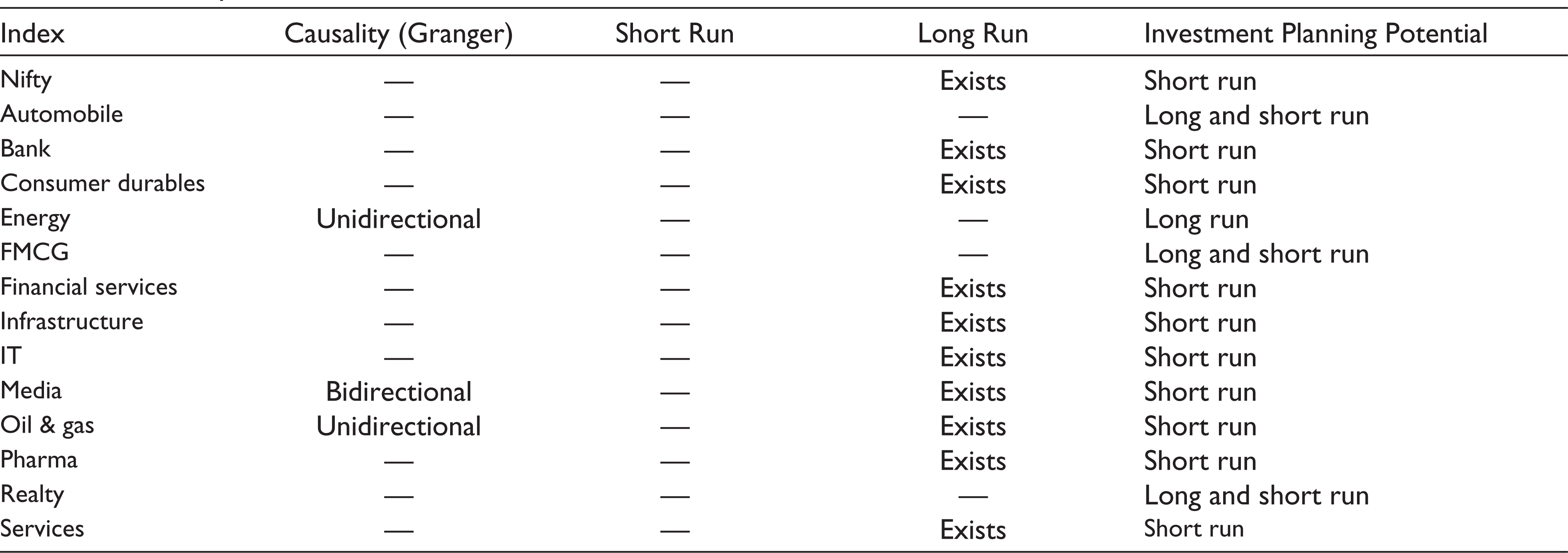
Energy, media and oil & gas being where linkage between blockchain-based cryptocurrency may prevail in a strong form due to the nature of their services and products. This phenomenon has been found with Granger causality for all three sectors but has not been confirmed with DCC-GARCH results. Thus, linkages persist but their spillover in case of Energy sector has not been confirmed. Automobiles, FMCG and realty have been independent of crypto index movements as per both statistical approaches. The overall results have been indicative of possibility of linkages between sectoral indices and crypto index.
Conclusion
The study has explored causal linkages among cryptocurrency index and sectoral indices across the Indian markets. The results have reflected cryptocurrency as an innovative instrument but with a cautious approach. There have been interesting findings for crypto and other sectoral indices. The unidirectional linkage from crypto to energy and oil & gas and a bidirectional causality with media and crypto may be foreseen for devising investment strategies. Moreover, the spillover effects in the long run and short run may be discovered by investors, policymakers, regulators and institutional investors in Indian markets. The short-run results signal a high possibility to discover crypto as a modern investment option.
Portfolio planning may be done based on the spillover effects from crypto to respective indices and vice versa. Benefits from this digital currency may be explored to maximize gains and minimize volatility. The risk constituent from crypto may be minimized by developing combinations with sectors that have been least linked. There may be a variety of retail and institutional investors whose objective is directed only in the short run. These kinds of participants look for short-term gains with minimal risk options. For such a class of investors, the outcomes of the study have shown very thought-provoking results as regards investing during the short run.
The study provides a direction of a possibility to use crypto for refining portfolios in the short run. Similar results for the long run could not be found as per the spillover effects from crypto to respective index and vice versa. A spillover has been found in long run among Nifty, banking, consumer durables, financial services, infrastructure, information technology, media, oil & gas, pharmaceuticals and services. Thus, the results from these sectors have been indicative of a different approach in the long run. Investors may try to include in their portfolios stocks from automobiles, energy, FMCG and realty sectors with crypto. Therefore, benefits from crypto may be explored differently in these two periods. Appropriate strategies may be framed depending upon the investment objectives and expectations of risk and return mix.
Regulators’ attention may be desired to bring in transparency in crypto trading and such investments may generate confidence in investors. Policymakers and regulators may utilize the causal linkages derived from the study to plan out the operatives. More transparent platforms may be set up to provide access for small-scale investors for promoting crypto as a financial instrument. The legal tender and medium of exchange status may be improvised worldwide to provide opportunity and confidence to the investors while dealing with crypto instruments.
Government and regulatory authorities may play a vital role in creating crypto as an option to maximize returns from portfolios. Strict and radiant mechanisms for investing in these currencies and trading with them may act as a key driver in their growth and acceptability. The outcomes and results have been limited to Indian markets inspection. National and foreign investors locking their money in Indian stocks, thereby stand to benefit from the results indicated in the study. However, the equity markets across the world stand as an area to be travelled for diversification options with crypto markets. Thus, the study may be extended to other equity instruments and markets across the globe. Linkages between crypto and other financial markets or instruments in the world markets may be of interest to study further.
Footnotes
Declaration of Conflicting Interests
The authors declared no potential conflicts of interest with respect to the research, authorship and/or publication of this article.
Funding
The authors received no financial support for the research, authorship and/or publication of this article.
Appendix
Present Constituents of CCI30
| Bitcoin | Chainlink | Tezos |
| Ethereum | Bitcoin Cash | PancakeSwap |
| Binance Coin | Algorand | Monero |
| Cardano | Polygon | eCash |
| XRP | Stellar | Ethereum Classic |
| Solana | Internet Computer | Bitcoin BEP2 |
| Polkadot | Cosmos | Theta |
| Dogecoin | VeChain | Wrapped Coin |
| Terra | Filecoin | Litecoin |
| Uniswap | Tron | Avalanche |