




Abstract
Influencer marketing is an emerging area in the field of marketing. Specifically, this topic grabs the attention of several academicians and practitioners because of the key role played by influencers to stimulate consumer behaviour. Significantly, a systematic way of analysing and summarising the works of literature in this nascent area is necessary. A systematic literature review provides a comprehensive overview of the whole literature studied. From this knowledge, a systematic literature review has been undertaken from the period of 2016 to 2021 based on 65 articles from the ABDC journal to fetch relevant research themes, methodology, theories, variables, antecedents and consequences and potential research gaps. From this information, this research proposed an integrative framework which depicts the role of social media influencers in activating consumer behaviour. Future research direction has presented comprising of knowledge gap in the existing literature from key areas such as theory, methodology and settings. This research provides implications for both theories and practice.
Keywords
Introduction
Social networking sites are prominent channels for disseminating information in this digital era, which facilitate two-way communication among the audience (Carr & Hayes, 2015). Carr and Hayes (2015) defined social media as ‘Internet-based channels that allow users to opportunistically interact and selectively self-present, either in real-time or asynchronously, with both broad and narrow audiences who derive value from user-generated content and the perception of interaction with others’. In a social networking environment, executed content is consumed by the audience and they actively participate in the process of sharing, liking and commenting on content. Surprisingly, global social networking users are increasing, Facebook shares the utmost number of social media users, around 2.1 million users, followed by Instagram, which is, 1.28 million (Williamson, 2022). Consequently, the popularity of these sites such as Facebook and Instagram are potential game-changers for the companies to shift from traditional channels to these platforms. Thus, this content creation and sharing feature of social media platforms (Carr & Hayes, 2015) have been used by several companies on behalf of promoting their brands. Furthermore, content is a powerful tool to persuade consumers and social media is a platform intended for the creation and execution of content.
A social media influencer is a person, not popular among the public prior to posting content, these people are popular overnight through their viral content (Lou & Yuan, 2019) and marketing through this kind of personality is known as influencer marketing. These personalities are dealing with range of subjects, for instance food, fashion, beauty and travel (Lou & Yuan, 2019). In addition, these people have a vast follower base across diverse social media platforms. For instance, Huda Kattan is a beauty influencer who has 49 million followers on Instagram and is popular, solely through her make-up tutorial (Digital Marketing Institute, 2021). Companies are endorsing brands through social media influencers aimed at creating brand awareness among people. Interestingly, data shows that 93% of marketers have utilised influencer marketing (Santora, 2022) for sponsoring brands. In addition, bloggers are a powerful medium to sway consumer behaviour. Besides, credible influencers have a significant role in consumer attitude formation (Munnukka et al., 2018) and purchase intention (Sokolova & Kefi, 2020) as well as have the power to establish consumer psychological relationships (PSI) towards them (Sakib et al., 2020). Also, the credibility of information is vital in an effective communication process and equally affects consumer behaviour.
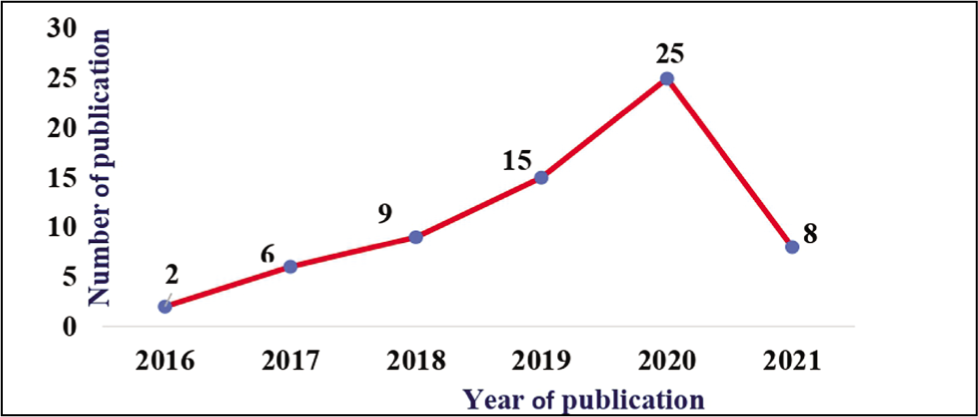
Influencer marketing is an emerging area in the marketing domain; henceforth, research on this area is increasing in past 5 years (Figure 2). In other words, the authors have stated social media stars have a noteworthy influence on forming the behaviour of consumers, which offers a direction for the researchers to explore the understudied parts of this nascent area. Moreover, practitioners have been using influencer marketing to stimulate consumers’ purchase decisions. But, regulatory authorities such as the Federal trade commission (Boerman, 2019) clearly stated that transparency of influencer posts should be maintained to increase consumer ad recognition. Consequently, the implementation of the disclosure statement and associated negative consumer outcomes are significant challenge for the marketers.
This study addresses the major research gaps in the works of literature and this review would benefit future research on influencer marketing related to consumer behaviour. This article has three aims:
To identify recent researches into the area of influencer marketing published in ABDC journals in the period of 2016–2021. To identify major research themes, materials and methods, theories, variables, antecedents and consequences relevant to social media influencer literature. To reveal the major research gaps from articles to provide future research directions to academicians. To propose an integrative framework based on research themes, major antecedents, independent variables, dependent variables, and consequences as well as mediators and moderators.
Methodology
A review is deemed to be systematic when the review incorporates a key question where the researcher needs to address on a particular subject matter without predisposition (Harris et al., 2013) and resolves the answer by following a systematic approach and unambiguous methodology to collect, identify, synthesis and report the findings (Khan et al., 2003; Pati et al., 2017). Particularly, a systematic review is split into domain-based, theory-based, and method-based (Paul & Criado, 2020); Hence, a domain-based review approach has been adopted to gain a detailed understanding of the literature reviewed for this study. This study was selected primarily three databases EBSCO, Science direct and ProQuest because they offer vast content coverage and size (Gusenbauer, 2020). To identify the relevant keywords, the study initially uses the keyword ‘influencer marketing’ and discovered major search keywords from the title to amass appropriate studies. The initial search extracted keywords such as ‘social media star’, ‘content generator’, ‘Youtuber’, ‘blogger’, ‘vlogger’, ‘influencer marketing’ and ‘micro celebrity’. Then, real search is carried out by applying the BOOLEAN operator OR with phrases. Finally, this study uses the search formula such as ‘social media star’ OR ‘content generator’ OR ‘Youtuber’ OR ‘blogger’ OR ‘vlogger’ OR ‘influencer marketing’ OR ‘micro celebrity’.
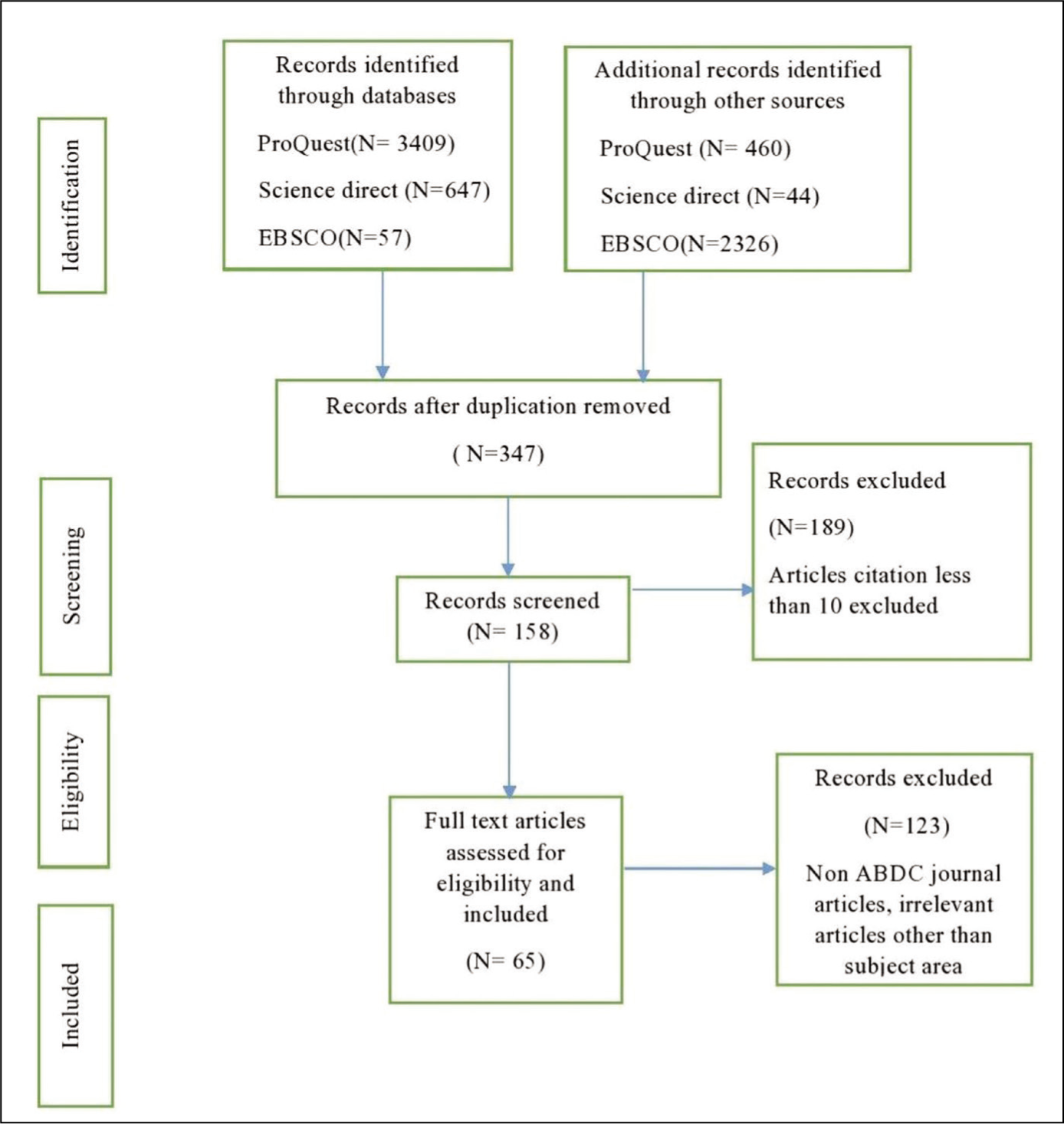
This study includes academic journal articles which are published in the English language from the period of 2016 to 2021 and excludes grey literature such as books, book chapters, trade publications, conference papers, editorials, news, and magazines. Solely, ABDC (Australian Business Dean Council) journals ranked under A*, A, and B are considered in this study. Furthermore, title review and abstract review (Pati et al., 2017) has been carried out to omit irrelevant articles. The search identified 3,409 articles (see Figure 1) from ProQuest, Science Direct (N = 647), and EBSCO (N = 57). Based on this identification, duplicate articles presented in databases are eliminated which yielded 347 literatures. Next eligibility criteria required is articles should have received minimum 10 citations. This produced 158 articles by eliminating articles which received less than 10 citations. Finally, non ABDC journals and other irrelevant articles that cannot be included in this topic has been excluded and it resulted in the final data set of 65 articles. Moreover, titles, authors, keywords, and database details are recorded in Microsoft excel to remove duplicate data. An in-depth critical review of articles (Pati et al., 2017) has been carried out to extract the information such as title, author, year, the aim of the study, methodology, theory, variables, findings and future research direction of each study, which is recorded in a Microsoft excel. A descriptive analysis and thematic analysis are depicted using details from the data extraction. Data visualisation tools such as tableau has been used to better representation of data.
Results
A descriptive analysis is a beneficial tool for data interpretation. The data such as year of publication, social networking sites used, countries of study, types of industry, variables and methods used are portrayed descriptively for the better cognition of the literature studied.
Year of Publications
Number of publications related to social media influencers have increased from 2016 to 2020. A total of 65 publications have been included in this study, others are excluded based on the number of citations (less than 10), less journal quality and irrelevant articles other than the subject area. Moreover, an important observation is that there is a rise in the number of publications in the year 2021, but has been excluded because of less number of citations. The graph (Figure 2) plots that the most number of articles published in 2020 (n = 25).This indicates that influencer marketing is an emerging topic of discourse among academicians.
Journal Ranking
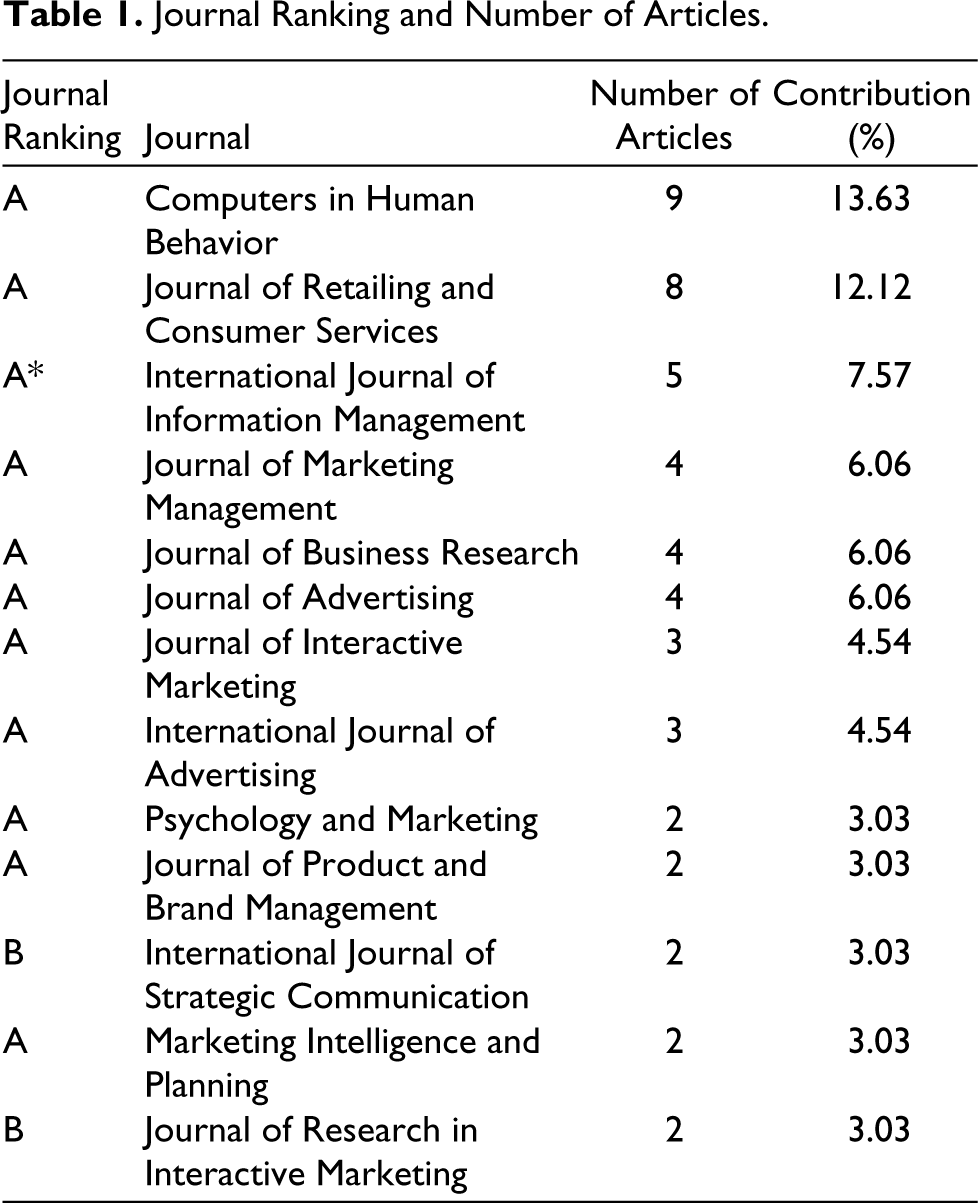
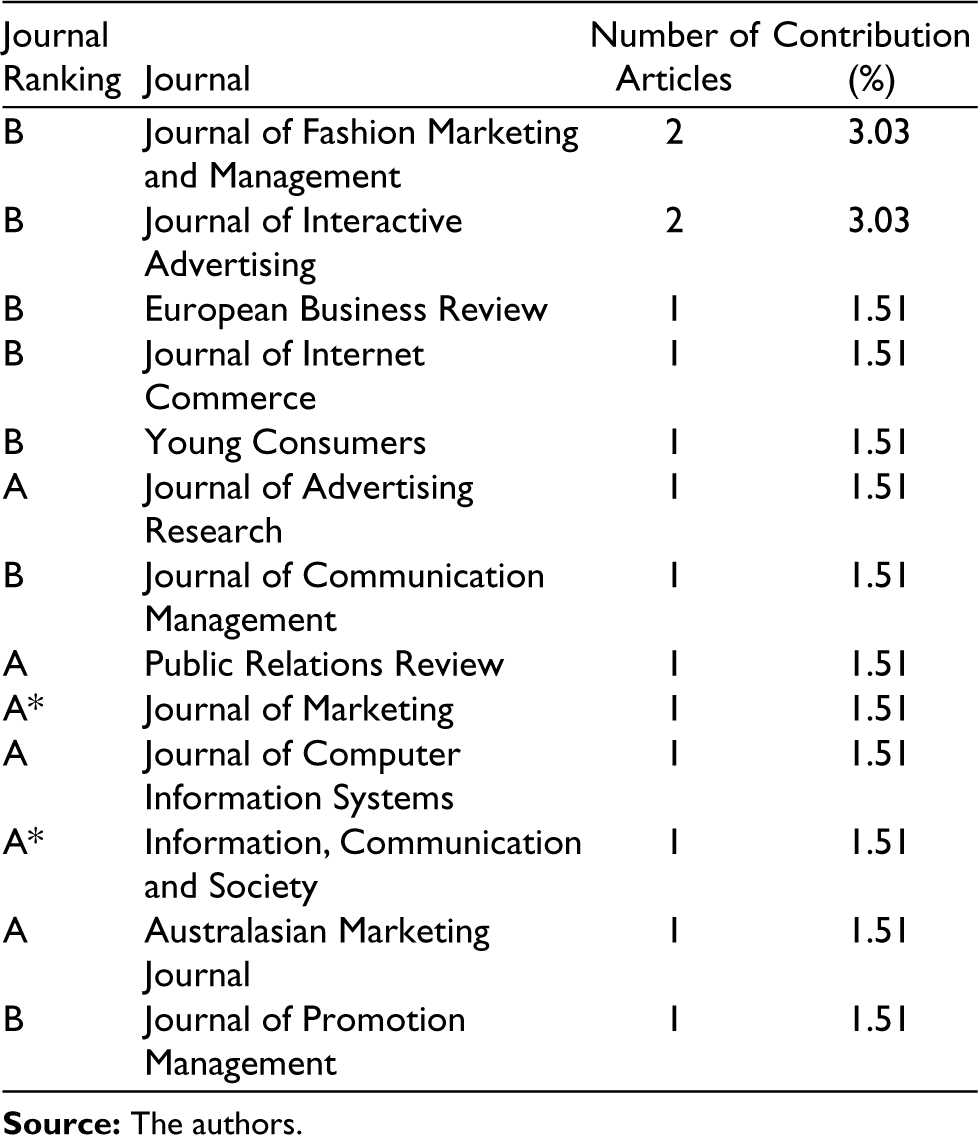
Table 1 illustrate the journal list, journal ranking and article count corresponding to each journal included in this study. Most of the ABDC journal contained within this review article is ranked A (n = 13,20%),least from A* category journals (n = 7,10.77%).Most of the contribution to influencer marketing literature originated from computer and human behaviour (n = 9),ranked as A. The journals incorporated are both interdisciplinary and multidisciplinary in nature.
Journal Ranking and Number of Articles
Citation Analysis
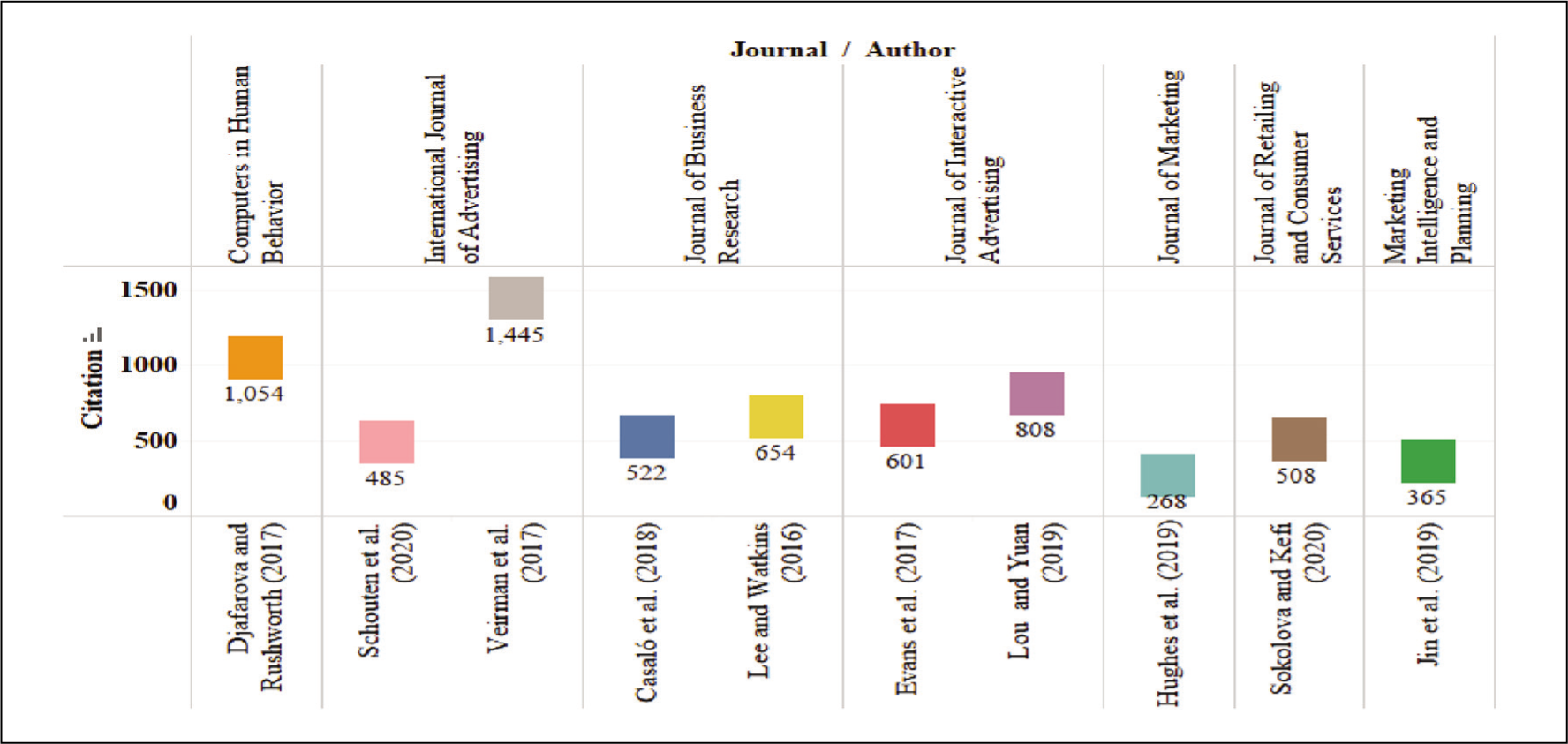
Google citation was used to identify the citation count of authors. From that, listed top 10 cited authors are depicted in Figure 3. The top 10 cited authors are: De Veirman et al. (2017); Djafarova and Rushworth (2017); Lou and Yuan (2019); Lee and Watkins (2016); Evans et al. (2017); Casaló et al. (2018); Sokolova and Kefi (2020); Schouten et al. (2020); Jin et al. (2019); and Hughes et al. (2019).
Materials and Methods
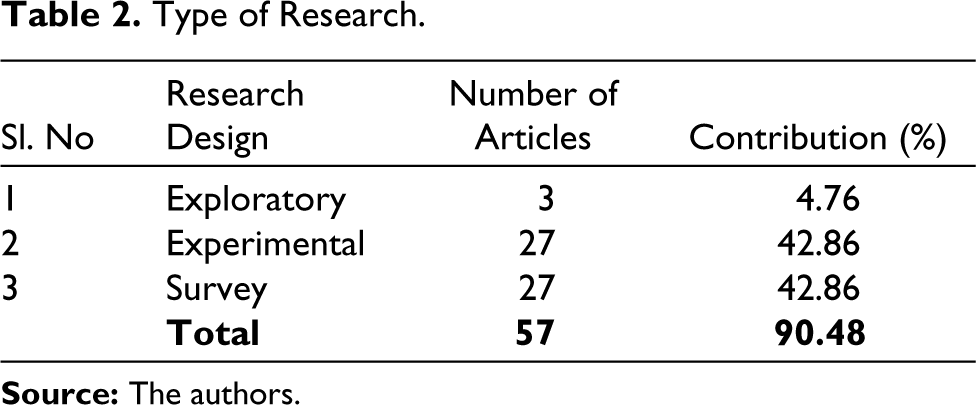
Saliently, 97% (n = 63) of the literature comprises empirical research and merely 3% (n = 2) of the studies contributed to theoretical research, refer to Figure 4. Specifically, empirical research includes quantitative, qualitative and mixed methods, given in Figure 5. An ample amount of literature followed a quantitative approach (91% of literature, n = 57) while solely 6% (n = 4) of the studies focused on the qualitative method and 3% (n = 2) of studies followed a mixed method.


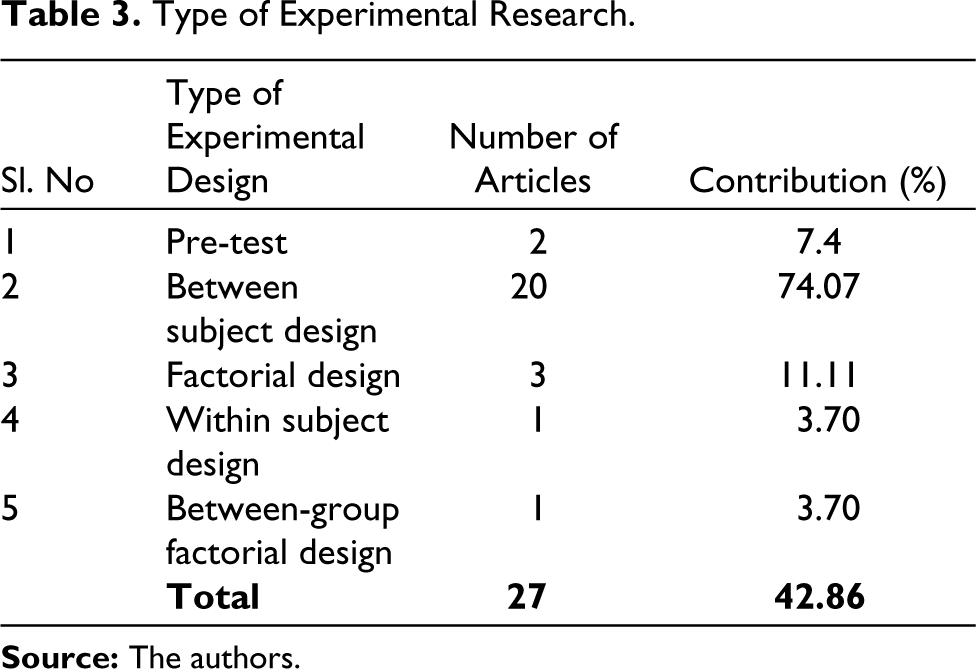
Table 2 shows that most articles followed an experimental and survey research design (n = 27 each, 42.86%). Moreover, a very limited number of studies concentrated on exploratory research design (n = 3; 4.76%). Specifically, among experimental research designs, between-subject design is followed by most researchers (n = 20; 74.07%), refer to Table 3.
Type of Research
Type of Experimental Research
Sampling Procedures
Sampling method and sampling audience used
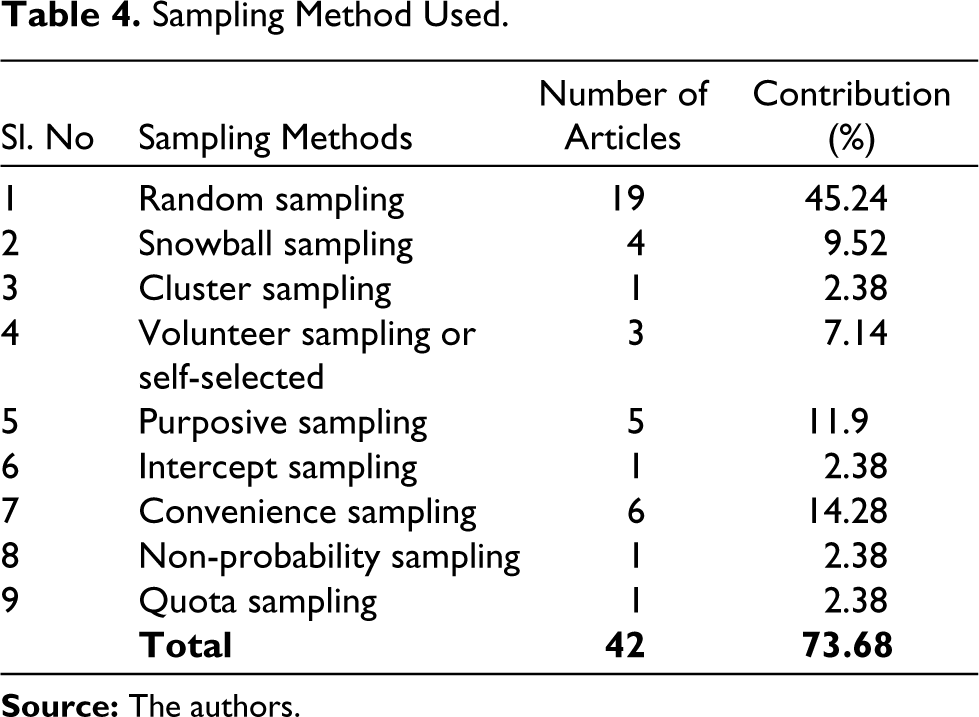
Table 4 shows the sampling methods followed in previous studies. The data indicates that most studies followed non-probability sampling in the publications (n = 21,50%), following probability sampling (n = 19,47.62%). Among that, random sampling is the frequently used sampling method (n = 20; 45.23). Table 5 shows the sampling audience used in various articles. Additionally, mostly used sampling audience is social media users (n = 21; 33.87%).
Sampling Method Used
Sampling Audience Studied

Variables
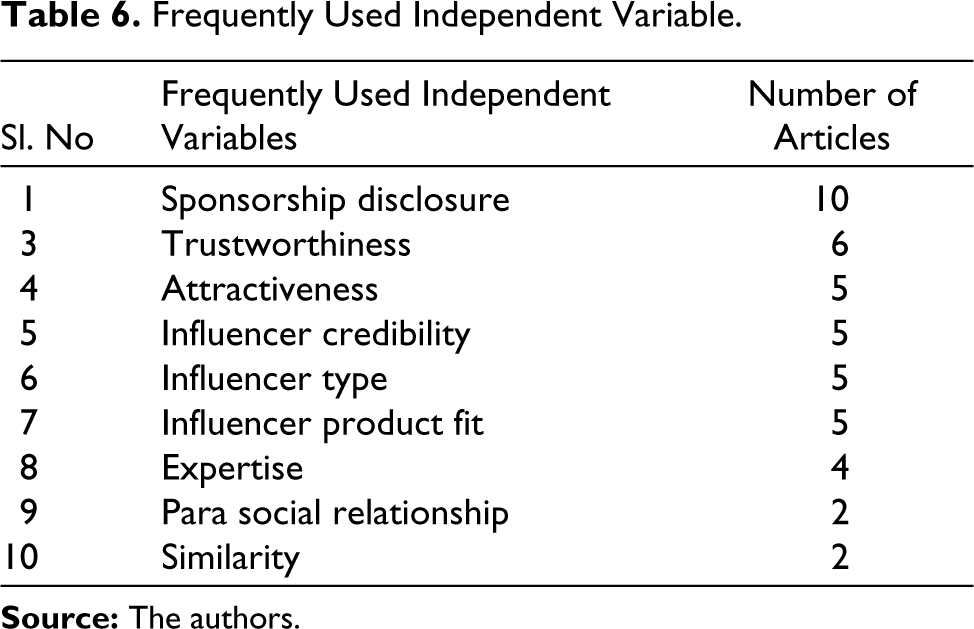
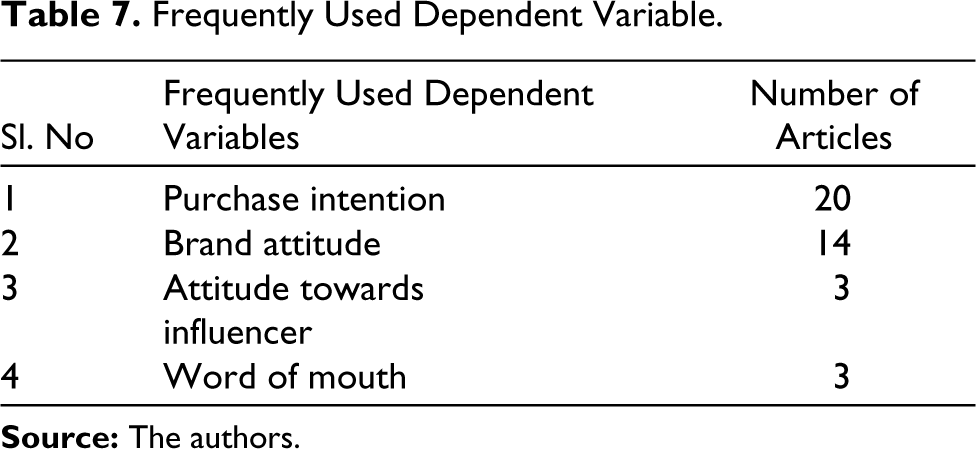
Table 6 shows the list of frequently used independent and dependent variables. Data clearly indicate that mostly used independent variables in existing literatures is sponsorship disclosure (n = 10). Likewise, Table 7 represents the data on the frequently used dependent variable. According to the data, most common dependent variable studied is purchase intention (n = 20).
Frequently Used Independent Variable
Frequently Used Dependent Variable
Social Networking Sites Used
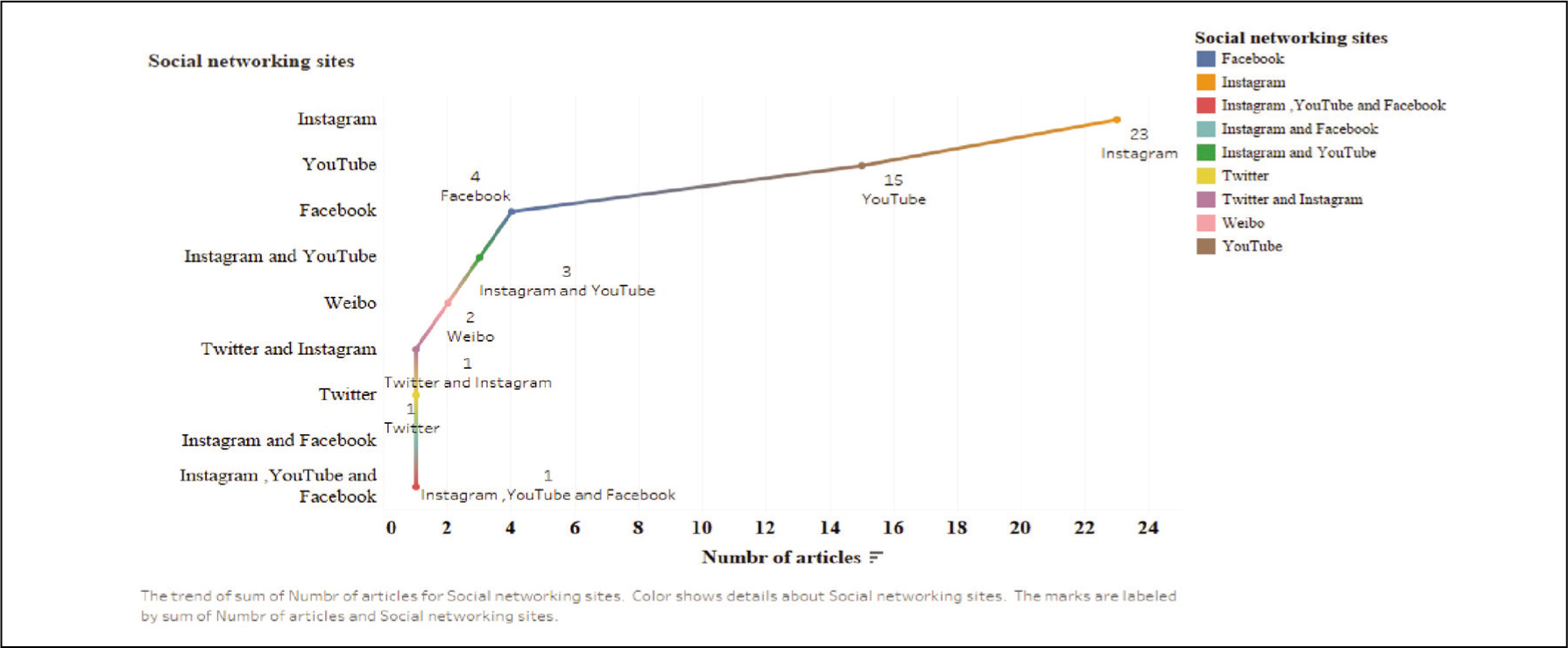
Most of the literature studied are Instagram (n = 23) and YouTube (n = 15) platforms (see Figure 6). This is because these two platforms are widely used by social media influencers for promoting their content. Only a few articles studied Facebook (n = 4), Weibo (n = 2), and Twitter (n = 1) platforms. Other studies (n = 6) are focused on multiple platforms: YouTube and Instagram; Instagram, Facebook and YouTube; Facebook and Instagram; and Twitter and Instagram.
Territorial Coverage
The data plotting that most studies are conducted in the US (n = 17), followed by Germany and Spain (n = 4). Three studies are carried out in countries such as China and Belgium (refer Figure 7). The research was conducted twice in India, Australia, and France.

Theories Studied
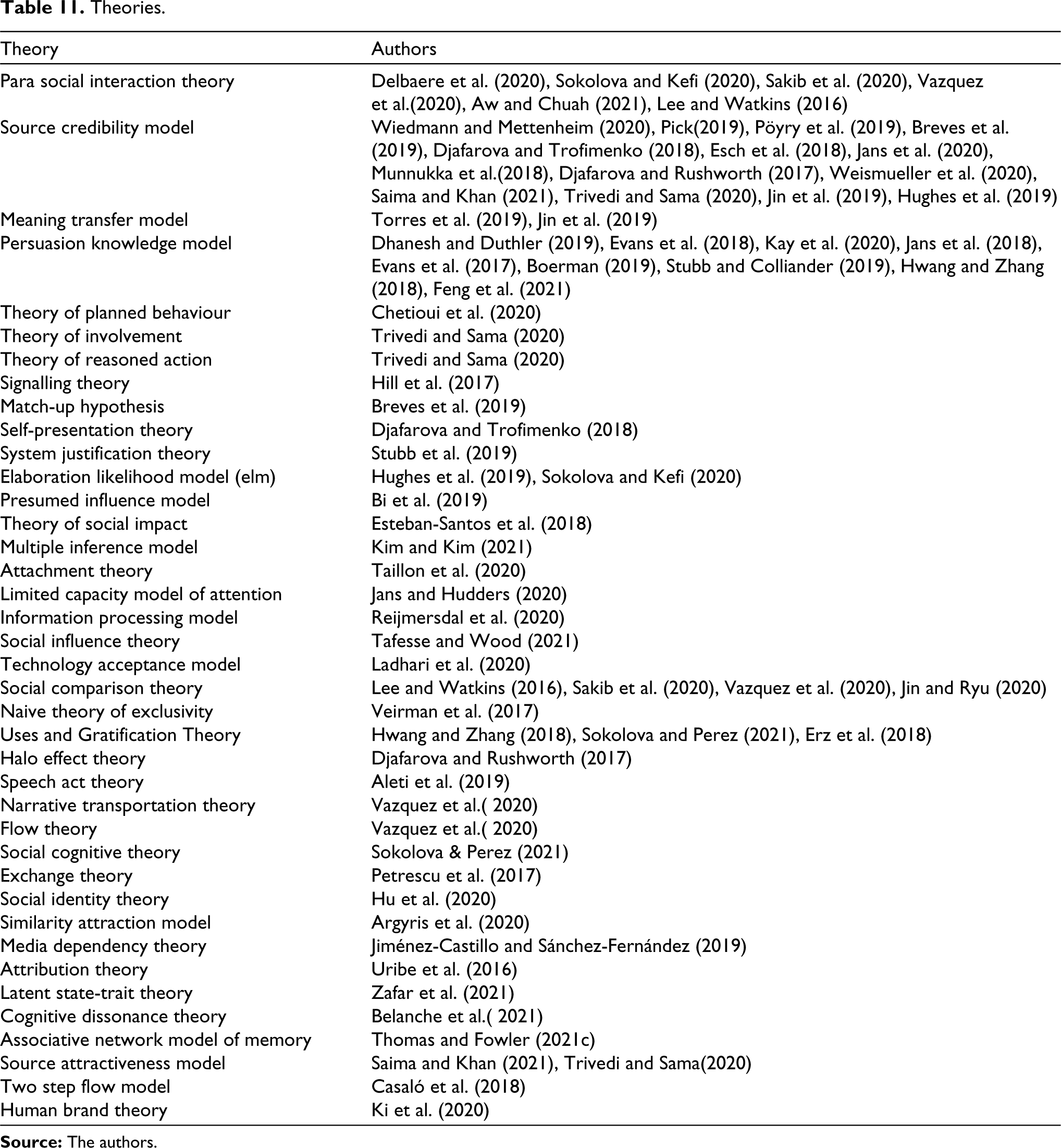
From Table 11, most of the literatures are built on theories such as Source credibility model, followed by persuasion knowledge model, and para social interaction theory. Some studies follow multiple theories in the research.
Antecedents and Consequences
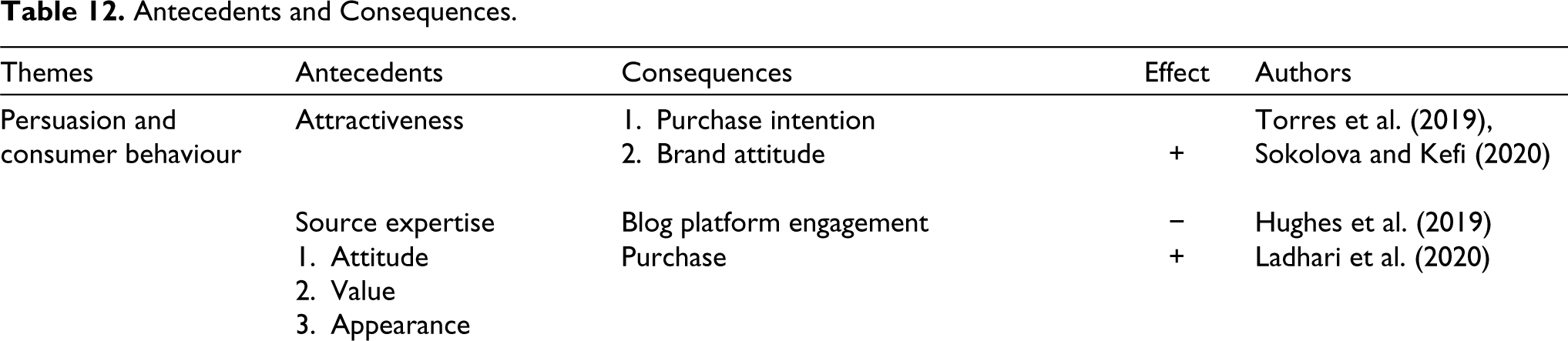
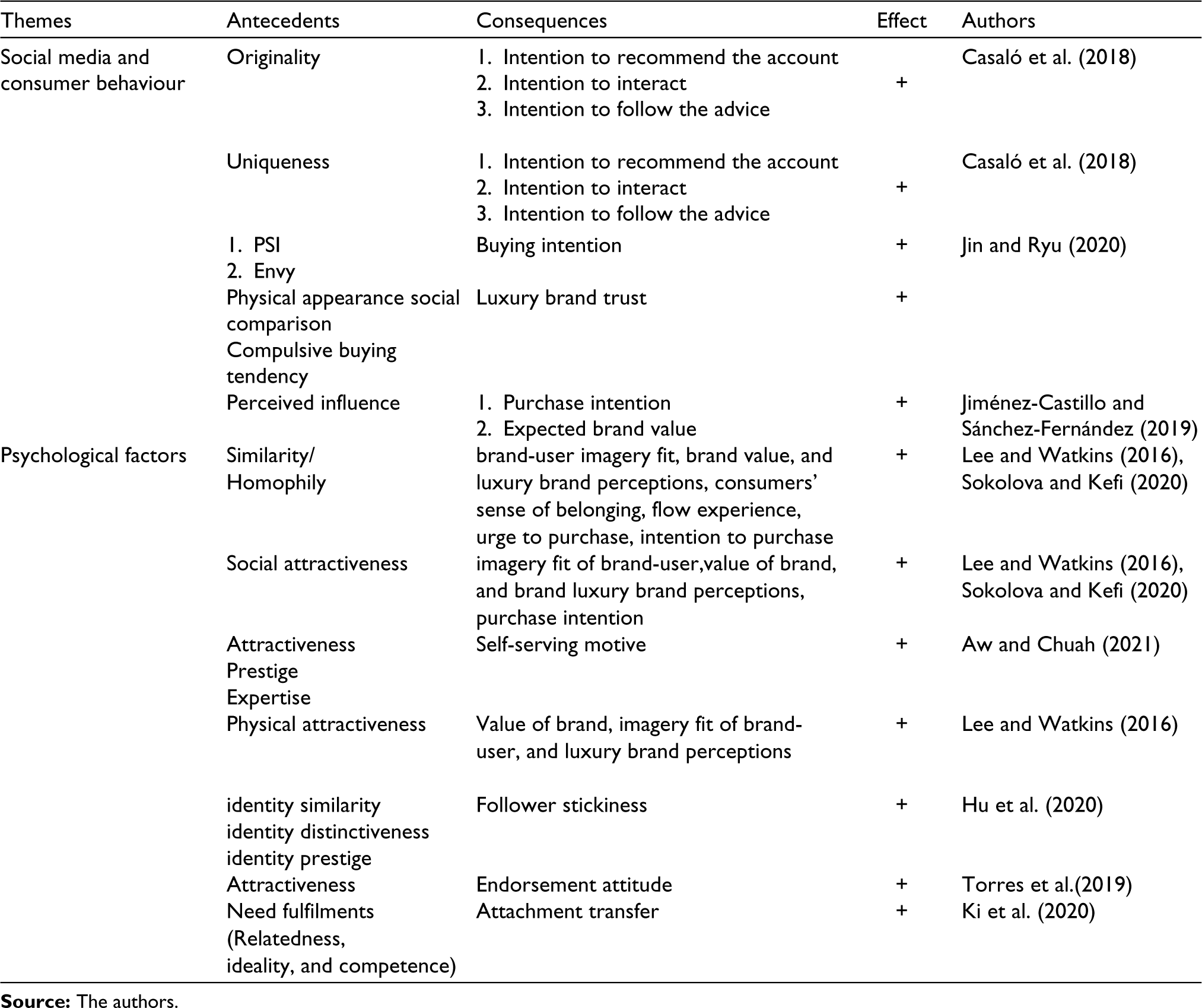
From Table 12, most number of antecedents and consequences is identified related to theme psychological factors and consumer behaviour (n = 12 each), followed by theme social network and consumer behaviour (n = 7 each). Moreover, the number of antecedents and consequences distributed to theme persuasion and consumer behaviour is, n = 4 for each (refer Table 12).
Thematic Analysis
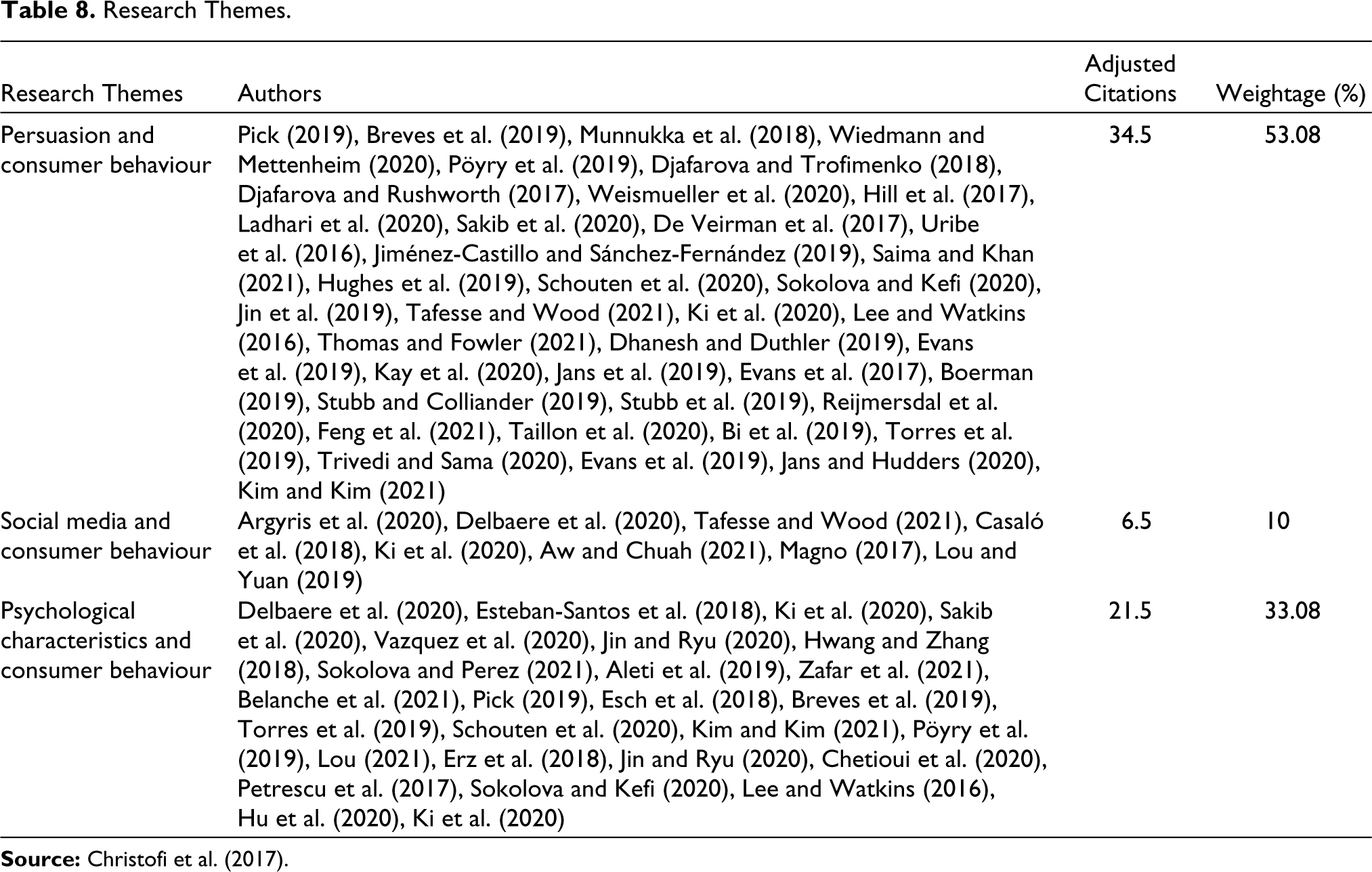
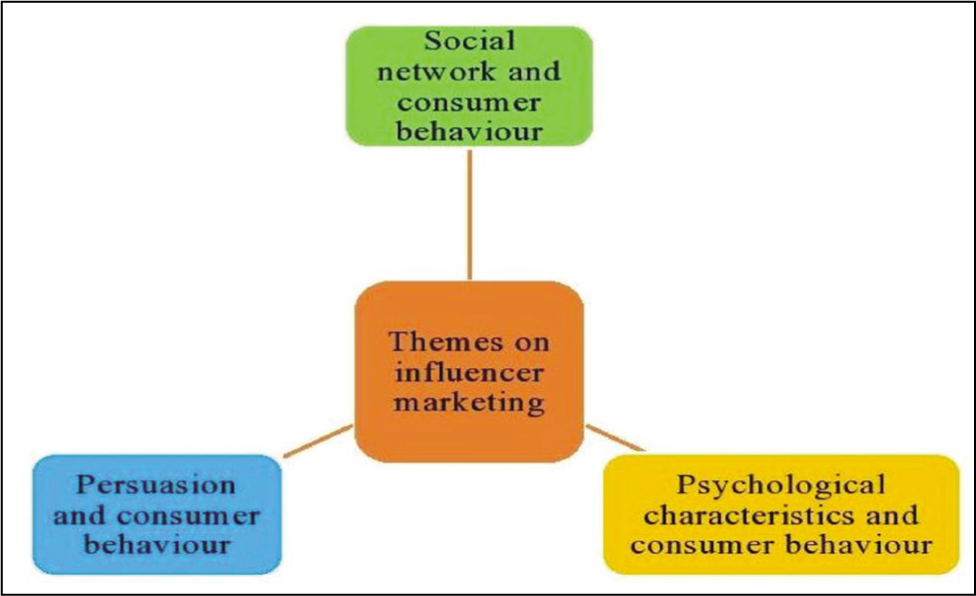
Thematic analysis is a vital part of every framework based systematic review paper. Furthermore, the similarities (Pati et al., 2017) of the works have to be recorded and grouped into themes is essential to understand the path of research. In addition, various themes are found in the literatures on influencer marketing and presented in Table 8. The major themes identified are: (a) persuasion and consumer behaviour (b) social network and consumer behaviour (c) psychological factors and consumer behaviour (see Figure 8). Moreover, adjusted citation (i.e., 0.5 for each) has been given for papers containing more than one theme (Christofi et al., 2017).
Research Themes
Persuasion and Consumer Behaviour
One of the most significant themes appeared in the literatures is persuasion of digital influencers and their effect on consumer behaviour. Moreover, several studies have documented the effect of persuasion of social media influencer posts using theories such as the source credibility model and persuasion knowledge model. Furthermore, source credibility theory and signalling theory focused on influencer characteristics whereas the persuasion knowledge model explains on persuasion tactics of the agent (Friestad & Wright, 1994), here, influencer. Also, the articles constructed on source credibility and signalling theory explain the bright side of influencer characteristics, on the other hand, research built on the persuasion knowledge model reveals the unethical aspect of influencer marketing.
Influencer characteristics
Most of the research encompassed in this study explored the pivotal role of influencer credibility in the process of persuasion. Additionally, influencer characteristics includes source credibility, popularity of vlogger, authenticity, types of influencer, inspiration and perceived influence. Moreover, some studies extended the studies from source credibility to factors of source credibility such as attractiveness (Djafarova & Trofimenko, 2018; Pöyry et al., 2019), trustworthiness and expertise (Breves et al., 2019; Wiedmann & Mettenheim, 2020). Another important characteristic of an influencer is the vlogger’s popularity which is predicted by the number of followers. However, consumers’ likability is low for influencers with follower number is high and vice versa (De Veirman et al., 2017). Moreover, the follower count of influencers affects follower engagement (Tafesse & Wood, 2021). Evidence shows that personal characteristics of influencers such as influencer credibility include attractiveness (Djafarova & Trofimenko, 2018; Pöyry et al., 2019), expertise and trustworthiness (Breves et al., 2019; Wiedmann & Mettenheim, 2020), type of influencer, authenticity, vlogger popularity affect the purchase intention of consumers (Djafarova & Rushworth, 2017; Hill et al., 2017; Ladhari et al., 2020; Pöyry et al., 2019; Schouten et al., 2020; Torres et al., 2019; Weismueller et al., 2020). Indeed, influencer credibility increases consumer attitude (Munnukka et al., 2018; Pick, 2019; Pöyry et al., 2019), and PSI (Para Social Interaction) (Sakib et al., 2020); Besides, vlogger physical attractiveness has a positive influence on PSI (Lee & Watkins, 2016). Additionally, source expertise increases brand engagement (Hughes et al., 2019).
Furthermore, evidence shows that consumer trust- worthiness and brand attitude are high toward celebrity influencers (Jin et al., 2019; Trivedi & Sama, 2020). Equally important, inspiring influencers have the power to satisfy the consumers’ needs such as the need for ideality (Ki et al., 2020). At the same time, when an endorser (AI or celebrity influencer) is involved in some wrongdoing, which negatively affects purchase intention and consumer attitude (Thomas & Fowler, 2021). In addition, the type of influencer has an influence on product knowledge and subsequently on purchase intention (Kay et al., 2020). Besides, wishful identification has an effect between endorser type and purchase intention (Schouten et al., 2020). Furthermore, perceived influence of influencer leads to brand engagement in self-concept (Jiménez-Castillo & Sánchez-Fernández, 2019). Moreover, Ladhari et al. (2020) found that key antecedents of vlogger popularity are attitude, value and appearance (dimensions of homophily) and its consequence is purchase among consumers.
Sponsorship disclosure
The ethical part of influencer marketing has been questioned by academicians and policy makers. The concern from the academician’s side is the transparency of the post created by the influencer. Many academic practitioners mentioned that influencers are collaborating with the brand and purposefully they are avoiding the disclosure part from the consumers. As a result, most of the articles raised this concern about consumers’ inability to recognise the influencer post as an advertisement (Boerman, 2019). In addition, other theories connected to these studies are the limited capacity model of attention and the information processing model. Likewise, Dhanesh and Duthler (2019) revealed that paid endorsement awareness by influencers positively influences purchase intention and ewom intention through ad recognition, as well as increases the influencer follower relationship. Besides, another study focused on disclosure types (platform generated v/s influencer generated) and its effect on children’s response (Jans & Hudders, 2020). Furthermore, influencer generated disclosure increases the brand attitude and brand recall, and platform generated disclosure negatively affects brand attitude and brand recall (Jans & Hudders, 2020). Another aspect of sponsorship disclosure such as disclosure timing has been studied among children through eye-tracking (Reijmersdal et al., 2020). The disclosure shown before starting the video increases disclosure recognition and understanding the content is sponsored (Reijmersdal et al., 2020). In addition, studies havse been conducted to examine the parental response to text sponsorship disclosure (Evans et al., 2019) regarding unboxing videos of influencers. Evidence reveals that text sponsorship disclosure does not have any effect on sponsorship transparency and conceptual persuasion knowledge (Evans et al., 2019).
Furthermore, evidence indicates that disclosure of sponsorship by micro-influencers increases the purchase intention among consumers (Kay et al., 2020). Also, Jans et al. (2019) shows that disclosure increases adolescents’ ad recognition. Moreover, some researchers give attention to the topic related to the impact of disclosure language on consumer outcomes (Evans et al., 2017). Literature shows that influencer posts contain paid ads as a disclosure language to produce more ad recognition (Evans et al., 2017). The disclosed influencer produces more ad recognition, and further positively effect intention to engage and brand recall through ad recognition (Boerman, 2019). At the same time, the indirect influence of advertising disclosure on purchase intention has been found through affective advertising literacy, PSI and trustworthiness of the influencer (Jans et al., 2019). Furthermore, Boerman (2019) revealed that disclosure positively affects online behavioural intentions via ad recognition. Additionally, advertising disclosure in an influencer post positively affects purchase intention via source attractiveness (Weismueller et al., 2020). However, negative outcomes of disclosure timing have been revealed as disclosure timing negatively affects behavioural intentions through disclosure recognition, understanding that content is sponsored, visual attention to the disclosure, and critical attitude (Reijmersdal et al., 2020). Besides, Stubb and Colliander (2019) introduced novelty in existing literature on disclosure types by adding explicit and impartial disclosure which produce negative outcomes. As a result, impartiality disclosure leads to lower activation of persuasion knowledge and higher credibility of source, attitude towards brand and purchase intention (Stubb & Colliander, 2019).
Social Network and Consumer Behaviour
The next key theme that has arisen from literatures is the role of social networks on consumer behaviour. Notably, social media channels are popular among consumers, and influencers on these channels are the prominent information source about products. Especially, influencers share their content through social networking websites, for instance, Instagram, YouTube, Facebook, TikTok, etc. The content generated in these social networks has a significant impact on consumer behaviour. Empirical evidence shows that influencer reviews and tutorial videos posted on YouTube generate more brand engagement among consumers (Delbaere et al., 2020). Moreover, the hedonic value and informative value of the post increase blog and Facebook platform engagement, and reinforce the trust in posts among followers (Hughes et al., 2019; Lou & Yuan, 2019).On contrary, Tafesse and Wood (2021) found that the content volume of Instagram influencer posts negatively affects follower engagement. Furthermore, a study related to influencers’ Instagram account characteristics revealed that the characteristics such as uniqueness as well as perceived originality influence opinion leadership, and subsequently affect the behavioural intention of consumers (Casaló et al., 2018). According to the findings of Argyris et al. (2020), visual congruence of the post increases follower engagement with Instagram post generated by the influencer. Moreover, the content quality of blog posts intensify consumer engagement and purchase intention (Magno, 2017). Additionally, informative content of the influencer posted on Instagram increase the competence need of consumers (Ki et al., 2020). Specifically, prestige, attractiveness and expertise attributes of content posted by social media influencer on social media are positively related to parasocial relationships (Aw & Chuah, 2021).
Psychological Characteristics and Consumer Behaviour
The next theme that appeared in this systematic review is the effect of psychological characteristics on consumer behaviour related to the marketing strategies of digital influencers. Indeed, influencers in the social networks are proficient in establishing psychological connections with the consumers. Moreover, evidence reveals that influencer video has the power to sway the emotion of followers (Delbaere et al., 2020). Additionally, Consumers feel parasocial relationship with an influencer, which has a strong effect on the intention to watch the video created by an influencer (Sokolova & Kefi, 2020; Sokolova & Perez, 2021), consumer attitude, purchase intention, and ewom intention (Esteban-Santos et al., 2018; Hwang & Zhang, 2018; Jin & Ryu, 2020; Sokolova & Kefi, 2020; Sokolova & Perez, 2021). According to Pick (2019), psychological ownership positively impacts the attitude of consumers towards products as well as purchase intention. Besides, the consumers’ psychological feeling of similarity to the ad creator has a positive impact on their attitude towards the blog, authenticity, credibility of brand as well as trustworthiness of the blogger (Esch et al., 2018). In addition, Ki et al. (2020) showed in the study that consumers feel that the influencers can satisfy their needs such as ideality, relatedness and competence which leads to the act of developing an attachment to influencers. Surprisingly, contradictory findings have arisen from literatures, as research study has shown that homophily increases PSI (Lee & Watkins, 2016). On the contrary, previous literature states that homophily does not have an impact on PSI (Sakib et al., 2020).
Furthermore, psychological factors such as empathy and low self-esteem have a positive effect on PSI (Hwang & Zhang, 2018). Additionally, para social interaction increases the impulse buying among consumers (Vazquez et al., 2020). Besides, according to Vazquez et al. (2020) result was confirmed to be consumers’ motivation to use social media positively affects social comparison among viewers. Also, wishful identification and parasocial relation affect follower stickiness in different revenue genre models (Hu et al., 2020). Moreover, positive sentiment polarity positively affect the urge to buy impulsively (Zafar et al., 2021). High influencer product fit increases the consumer attitude (Pöyry et al., 2019), affective motive, calculative motive (Kim & Kim, 2021) and behavioural intention (Pöyry et al., 2019). On the contrary, brand endorser fit does not have any interaction effect between the type of endorser and trust or expertise (Schouten et al., 2020). Finally, research by Breves et al. (2019) revealed to be influencer product fit increases the behavioural intention via Perceived influencer credibility and brand attitudes.
Future Research Agenda
This systematic review provides a comprehensive idea about how influencer marketing is related to consumer behaviour. Moreover, this review found that further investigation is needed in some of the areas of personal characteristics of influencers, settings, theories, methodologies and variables.
Theories
This research revealed insufficiency in studies based on numerous theories related to influencer marketing. Multifarious research on influencer marketing is built on the source credibility model, persuasion knowledge model, and parasocial interaction theory. There is a paucity of research found in the theories, for instance, the theory of involvement, uses and gratification theory, similarity attraction model, Signalling theory, self-presentation theory, two-step flow model, theory of reasoned action, etc. Besides, some researchers encompassed multiple theories on social media influencers related to consumer behaviour (Dhanesh & Duthler, 2019; Jans et al., 2018; Kim & Kim, 2021; Lee & Watkins, 2016; Taillon et al., 2020). Moreover, the studies on diffusion of innovation theory, and social learning theory, as well as research on consumer culture based on Hofstede’s cultural dimensions theory and narrative theory (Arnould et al., 2021) are missing in the reviewed literature. Moreover, consumer behaviour outcome related to influencer marketing will vary based on different social media platforms, types of influencer and countries. So, the theories mentioned in the Table 11 has to extend to different social media platforms, type of influencers, and countries.
Variables
The deficiency of studies related to variables like the type of influencer and vlogger popularity is found in the literatures. Reviewed literatures show deficiencies in the studies related to mega v/s macro-influencers, and other celebrity types with nano influencers and AI influencers. In addition, future studies are needed in these underexplored areas. Moreover, only a handful of studies are conducted on the popularity of beauty celebrity influencers on the YouTube platform and the results are not generalisable. So, In the future, studies will have to conduct on vlogger popularity of mega, macro, micro, celebrity, and nano influencers on other social networking sites such as Instagram, Facebook, Snapchat, etc. (Ladhari et al., 2020). More study is needed on influencer characteristics such as trustworthiness and attractiveness related to vlogger popularity and its effect on attitude towards the brand as well as purchase intention (Ladhari et al., 2020). Future studies should incorporate socio-demographic factors including ethnicity, cultural values and gender (Ladhari et al., 2020) related to vlogger popularity.
Mediator and moderators
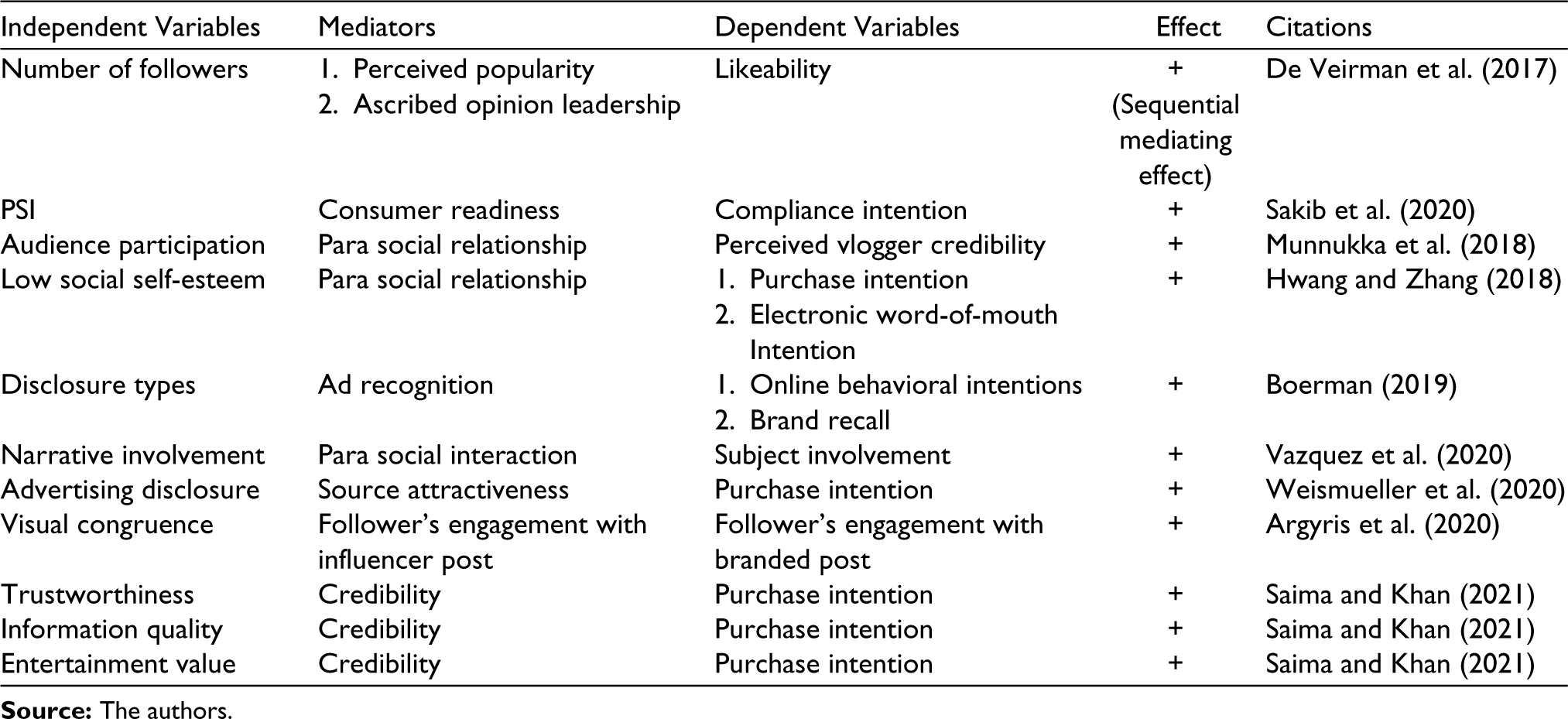
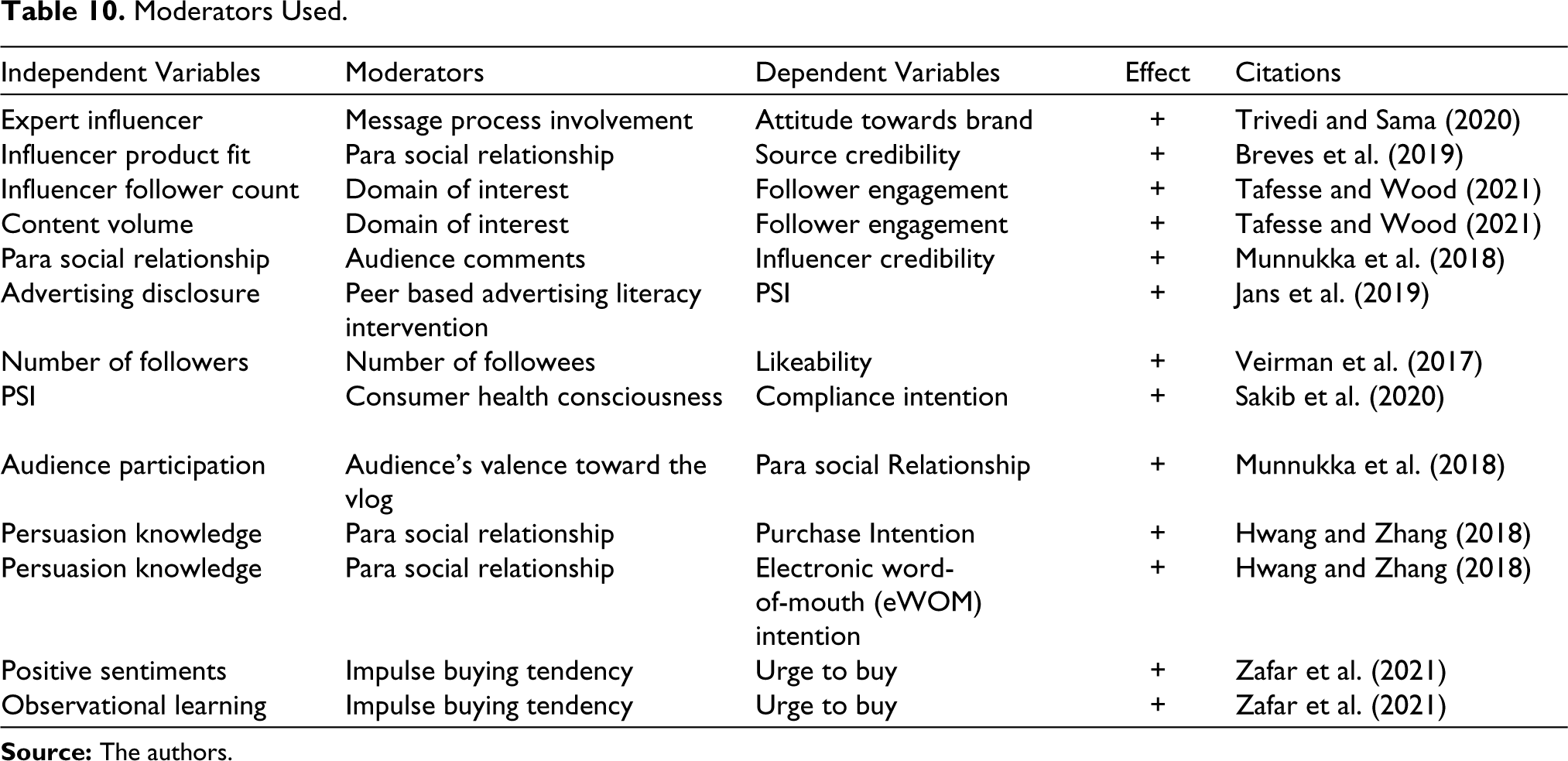
Future research can explore closeness as a mediator related to influencer product fit (Taillon et al., 2020). Moreover, other dimensions of attitudinal and conceptual persuasion knowledge should be studied as a mediator in the context of sponsorship disclosure (refer Table 9). Similarly, brand recall, brand loyalty, and influencer reputation should be studied as mediators. From reviewed literature (see Table 10), It has been noticed that no moderator studied repeatedly other than the parasocial relationship. Moderators such as high-income groups, familiarity and product involvement should be studied in future (Trivedi & Sama, 2020).
Mediators Used

Antecedents and consequences
The literatures explain the effect of influencer marketing on consumer behaviour through antecedents of influencer characteristics, PSI, and brand engagement. Future research can focus on ethnicity as an antecedent of influencer characteristics (Ladhari et al., 2020). The future studies have to examine the antecedents such as knowledge contribution, reciprocity (Xiong et al., 2018), group affinity, and affiliations (Thakur et al., 2015) of opinion leadership on consumer behaviour.
Moderators Used
Theories
Antecedents and Consequences
Settings
Product categories
Lack of studies in different product categories indicate that findings cannot be generalised. So, further studies should be needed in all product categories, for instance, wearables, jewellery, online furniture (Trivedi & Sama, 2020) as well as drink, food, cosmetics etc, including search goods and experienced goods. Furthermore, follower engagement with influencer videos has to be extended to other product categories such as fashion and electronics (Delbaere et al., 2020). Studies on product categories such as cosmetics, fashion, and beauty related to influencer product fit have to be conducted in future (Breves et al., 2019). Moreover, Covid 19 has impacted various industries and should be studied with consumer behaviour towards influencers. From observation, it is noticed that influencers from the specific area are endorsing products other than their expertise during the pandemic period. So, product fit between influencers and products during a pandemic can be an area for study in the future.
Territorial coverage
Figure 7 indicates that the contribution of countries to influencer marketing literature is insufficient. Most of the research conducted related to influencer marketing in the United States (Kim & Kim, 2021; Stubb & Colliander, 2019), following Germany (Pick, 2021; Wiedmann & von Mettenheim, 2020), and Spain (Esteban-Santos et al., 2018; Martínez-López et al., 2020).
Surprisingly, the world’s largest social networking users are from the Asia-Pacific region (Cramer-Flood, 2022) followed by US markets (Enberg, 2022). So, this indicates that there is a scope for future research in emerging markets of the Asia-Pacific region. More studies are needed in both established and emerging markets as the contribution of studies from these countries is very less as influencer marketing is an emerging area (Chetioui et al., 2020). Moreover, the cultural difference among various countries will affect consumer behaviour outcome and the generalizability of finding possible only if more numbers of research are carried out in different countries (Tafesse & Wood, 2021). In addition, a comparison of the consumer behaviour outcome between countries (Esch et al., 2018) of similar geography and economy should be needed and be a point of study in the future.
Social networking sites
This study noticed that works of literature overlooked Tiktok, Facebook, Twitter, and Snapchat platforms. Therefore, future studies should focus on these social media platforms (Pick, 2019). Recently, it has been noticed that Influencers on Instagram are tagging the brands (Geyser, 2022; Pentina et al., 2018) in their content. Thus, no research has been emerged on this phenomenon, and these areas should be explored in future.
Materials and Methods
Most studies carried out in the area of influencer marketing is empirical studies using quantitative methods. This shows that there is a paucity of literature in theoretical research, qualitative and mixed methods. Future research related to influencer marketing should have built on qualitative research (Chetioui et al., 2020) tools such as face to face-to-face interviews, in-depth interviews, and case studies to fill this gap. Moreover, literature on mixed-method is relatively less, and more studies should be conducted on this method (Sokolova & Kefi, 2020). Moreover, experimental studies are mostly built on between-subject design which means that future studies have to explore this area using other types of experimental approaches. Surprisingly, more studies on non-probability sampling techniques (Chetioui et al., 2020) have been found which will affect the generalizability of findings. So, future studies have to follow a probability sampling method to generalise the findings. Likewise, students are the sampling unit of much literature which will affect the generalizability of finding as it is a homogenous group (Taillon et al., 2020).Future studies have to look into other non-student samples (Taillon et al., 2020) such as generation X, generation Y, and generation C as well as digital natives (Kim & Kim, 2021). The studies follow a cross-sectional approach, future studies have to follow a longitudinal approach to analyse the long term impact on consumer behaviour when brands use social media influencers as part of marketing activities (Trivedi & Sama, 2019).
Limitations
Limitation is a part of most number of research and researchers may not able to incorporate every aspect of a topic in a study. So, this study has some limitation, such as this review article chose databases EBSCO, Science direct and ProQuest and excluded other databases and publishers. Moreover, this study includes ABDC academic journals (ranked A*, A, and B) and includes articles available in English language from the period 2016 to 2021 and excludes grey literatures in the form of books, chapters of book, trade articles, proceedings in the conference, editorials, as well as other forms publications. Moreover, many of the articles published in 2021 were not included in this study because the citation was less than 10. The citation is expected to increase in future because the studies were published after the middle of the year.
Research implications and Conclusion
The key aim of this systematic review article is to analyse the literature on the topic of the role of influencer marketing in transforming consumer behaviour. For that, this study has chosen three databases EBSCO, ProQuest and Science direct. Four objectives are framed to arrive at relevant answers to knowing the influencer’s role in shaping the behaviour of consumers.
The objectives are listed below:
This research identified recent researches in the area of influencer marketing published in the ABDC journal from 2016 to 2021.The result shows that most of the articles are published in 2020 and least in 2016.Most of the articles incorporated are from ABDC Journals ranked as A. In addition, top-cited author is De Veirman et al. (2017), the article is published in the International journal of advertising.
From the results, key research themes were identified as persuasion and consumer behaviour, social networks and consumer behaviour, and psychological factors and consumer behaviour. Moreover, most number of studies are conducted in the United States. Besides, a vast number of literatures are conducted based on Instagram platform. Evidently, the majority of studies are empirical in nature as well as quantitative methods are followed by majority of literatures. In that, survey and experimental research design are used by most of the researchers. Besides, between-subject design is adopted by the greatest number of researches. Additionally, results indicate that most number of studies follow non-probability sampling. Moreover, the targeted sample for most works of literature is social media users, followed by students.
From the results, most of the research is built on the source credibility model. Moreover, the most of the antecedents and consequences were identified for the theme of psychological factors and consumer behaviour. Moreover, the most frequently used independent variable is sponsorship disclosure. Also, the most repeatedly studied dependent variable is purchase intention.
The study identified major research gaps in theories, materials and methods, variables, antecedents and consequences. Moreover, knowledge gaps are found in the areas such as product category, territorial coverage and social networking sites. The most common research gap found across literatures are related to social media platforms, countries, and methodologies.
An integrative framework has been proposed on research themes, major antecedents, independent variables, dependent variables, and consequences as well as mediators and moderators (see Figure 9). The integrative framework provides a comprehensive understanding of the whole literature studied.

This study has implication to both researchers and practitioners. In addition, this article gives a comprehensive overview of the antecedents and consequences as well as mediator, moderator, and independent and dependent variables as well as theories and major themes related to influencer marketing. Moreover, this review identified several research gaps that help the academicians to extend the literature on the role of social media stars in transforming the behaviour of consumers, which will enrich the literature in the marketing field. Also, this study is responsible for providing some suggestions to marketers. Specifically, this study gives an overview to marketers on how they can effectively utilise social media influencers to stimulate consumer behaviour. This review will give insight on which social media platform has to choose for conducting an effective influencer marketing campaign. Besides, additional insight for marketers is, that influencer product fit is an important factor that should consider in the decision of choosing an influencer. The marketers have to reveal the influencers’ connection with the brand as part of sponsorship transparency although disclosing will create negative consumer outcomes, in the long run consumers will accept the brand and influencers. Social media influencers are a powerful medium in marketing communication and marketers have to utilise them effectively in the future.
Footnotes
Declaration of Conflicting Interests
The authors declared no potential conflicts of interest with respect to the research, authorship and/or publication of this article.
Funding
The authors received no financial support for the research, authorship and/or publication of this article.