



Abstract
School building is one of the vital activities in the realisation of educational justice in Iran, and given the effective cooperation and participation of educational non-governmental organisations (NGOs) with the government in this field, having a local model and overall framework appropriate to these organisations will certainly play a very important and influential role in realising and facilitating things. Therefore, this research aims to present a model for educational NGOs active in the field of school construction. The research approaches used were mixed methods (qualitative and quantitative) and exploratory analysis. In the qualitative part of the research, the grounded theory method and purposive sampling were used, whereas in the quantitative part, the cross-sectional survey method and random stratified sampling were adopted. The data collection tool used for the qualitative part was semi-structured interviews, and for the quantitative part a researcher-made questionnaire with 117 questions was used. The validity of the questionnaire was established by the Cronbach’s alpha of 0.90. Results of the quantitative part confirmed the chi-square (χ2), goodness of fit, adjusted goodness of fit, mean deviation root and rounded squares of the qualitative part of the research. The results also show that the combination of the management’s characteristics and beliefs and organisational and social factors influences the management of educational NGOs. Also, the consequences of the utilisation of the management pattern for educational NGOs are divided into two: individual and social aspects. In terms of influencing the manner of management, contextual factors were influential in two environmental and policymaking aspects, and intervening factors were influential in two internal and external aspects. Furthermore, it was found that non-localised execution and implementation of patterns shall result in the failure of most management programmes throughout these organisations. As a result, the organization shall gain productivity and success if it manages educational NGOs with reliance on factors effective in paradigmatic model of grounded theory.
Keywords
Introduction
Undoubtedly, every institution, company and organisation has an existing philosophy that is established to achieve its goals and objectives. Then, based on that philosophy of existence, certain tasks and activities are determined, the optimal management of which accelerates the achievement of the organisation’s goals. Some of the concerns of any organisation are: (a) Is the management process aligned with the set goals and strategies? (b) Is the management process tailored to the prevailing culture and existing capacities in order to be more effective and to have more effective consequences? and (c) Will the organisation’s activities ultimately lead to the expected results of the organisation’s founders and stakeholders?
Answering such questions requires a comprehensive management model that includes the dimensions, components, and characteristics which can best guide the activities of an organisation, especially in a particular case like school building.
Today, the importance of schools as a platform for teaching and learning in a knowledge-based economy is clear. All experts believe that education, as the engine of prosperity, economic development and social welfare, plays an important role in today’s industrial societies. The role of schools as predisposing bases in this regard is quite clear. Therefore, the role of organisations active in this field, especially non-governmental organisations (NGOs), is very important and noteworthy because NGOs play an important role in providing the necessary platform in this regard. Barekat Foundation is one of such NGO in Iran. It has the special and unique objectives of providing the required resources and facilities to schools and helping realise educational justice in Iran.
NGOs active in the field of school construction in Iran, especially Barekat Foundation, help students continue their education through building thousands of schools in deprived areas of the country.
NGOs are most commonly defined as private organisations established to solve problems of the people and to improve their living standards. These organisations play an essential role in decreasing social predicaments (Samadi Miarkolayi 2016, 134). They are volunteer, individual or organisational—mostly non-profit—groups that are normally independent from any government, and they are present at the local, national or international levels to render services and influence public policies (Karns 2016). NGOs are variedly perceived; some regard them as connected to humanitarian and charitable concepts, while others see them inside more political frameworks, such as civil society organisations (Lewis 2014). Development of NGOs is nowadays an effective global method to solve social, cultural, environmental and sometimes political and economic problems. Some governments try to handle these non-governmental bodies through an interactive approach, seeking their help to solve regional and national crises (Karami, Sookhakian, and Farhadi 2018). In advanced countries, research projects are also assigned to specialist NGOs, and in some cases, the decision-making of these organisations outweighs even that of governments (Kheyri 2018). Presently, developments in the bodily organisations of governments and intergovernmental organisations have created opportunities at the domestic and international levels for the emergence of NGOs (Modabber 2015). Now the question is posed: In the third millennium, how can NGOs play their role correctly? The management of these organisations, especially those in educational fields, is highly important for gaining more acceptable results. Management, which controls the movement of an organisation from status quo toward optimal status, is the most important factor in the life, growth and progress or downfall of organisations. Educational NGOs, as special organisations with administrative approaches and activities different from those of other bodies, and regarding the importance of the field of education, require a separate managerial pattern in compliance with the social, cultural and demographical circumstances governing their country. Using existing library and field resources and assessing comparative studies based on a systemic approach, this article tries to explain the role of NGO management in the educational development of Iran through presenting a comprehensive and indigenous model within the framework of mixed methods (qualitative and quantitative) analysis.
Explaining the Problem
Modelling for optimal management is one of the main pillars of the strengthening, empowerment and productivity of organisations, especially educational NGOs. With the help of a holistic and inclusive model that incorporates the main dimensions, components and indicators of NGOs, the activities of an organisation (Barekat Foundation), especially in a particular case (to build a school), can be best managed. Therefore, as school building is one of the vital activities in the realisation of educational justice in a country, and given the effective cooperation and participation of educational NGOs in this field with the government and the ministry of education, having a local model and overall framework appropriate to these organisations will certainly play a very important and influential role in realising and facilitating things.
NGOs are the executive colleagues of governments, and their presence in planning and execution, especially in the field of learning and education, is an unavoidable requirement. Regarding the existing costs, governments cannot carry the burden of all responsibilities in the field of education by themselves; therefore, statesmen try to have people, especially NGOs, help them through the latter’s sense of responsibility and concern.
The concept of management of NGOs is crucial for organizations’ optimized performance and role. It stems from the works of Stark Biddle (1984) and Dichter (1989) on whether NGOs should follow basic, customary management rules, or should develop their own alternative methods. However, consolidating local managerial methods may dramatically help attain more acceptable results in this respect. Without regarding the cultural roots, customs and habits, and also legal bases and circumstances, and the situation of laws, policies and general guidelines of the system of the Islamic Republic of Iran, a managerial pattern prescribed by other countries may not be adopted by these organisations. Therefore, regarding the above points, this research was carried out to study the functioning of NGOs and to present a local model for the management of educational NGOs based on a systematic approach.
There are various models of NGOs, but from the studies and analyses conducted, it may be stated that most of the researches in this respect have either focused on the general activities of NGOs in the fields of development, employment, environment, urban management, etc. or dealt with the features such as the entrepreneurship and social capital of these organisations. Therefore, previous models have some imperfections in this regard. This article shall take into consideration the above points and aim to present a model for the management of educational NGOs extracted from exploratory mixed methods (qualitative and quantitative) analysis of the manner of activities and management methods of NGOs. The model extracted from this research, with a focus on a mixed and systemic approach, shall be an important step towards integrating management strategies in the educational NGOs of Iran.
Importance and Necessity of the Research
Although several researches have been conducted on the management of NGOs from a quantitative point of view, there has been no exploratory mixed-methods (qualitative and quantitative) research related to educational activities in Iran. The few studied conducted in the field have special characteristics. Some studies have dealt with NGOs from an organisational-management point of view. James (1994) indicates: ‘managerial ability is a vital factor for all organizations, be they private organizations, governmental agencies, non-profit companies or NGOs’. Also, as the budget for education is not entirely financed in Iran due to financial problems, the existence of such organisations in the country, especially in education sector, appears to be imperative. Therefore, if an appropriate local pattern is not utilised for these organisations, Iran would be doomed to repeat the experiences of other countries, which may not be effective in the country’s context. This problem necessitates the development of a local managerial pattern for organisations in Iran, which may be expected to reflect the potential capacities of these organisations.
Literature Review
Rodrigues and Prideaux (2017) have formulated a basic society-based conceptual framework for the management of local NGOs in the field of tourism. The main focus of their research was on management structure, manner of leadership, services management and financial management.
Richfield and Grant (2007) studied manners of management in 12 successful non-profit organisations. Their findings invalidated the old hypothesis that regarded the improvement of internal systems as a key factor for the improvement of effectiveness. In other words, effectiveness is related less with how non-profit bodies manage their internal operations and more with how they function outside their boundaries.
Edwards (1999) studied the management methods of two NGOs. The findings of this research indicated that the first organisation, which had higher success, made use of an ‘inspiring and not imperious (dominant) leadership’ respected by the staff members of the organisation and members of the societies in which the NGO worked. In contrast, the other NGO had lower success as per the assessment of this study. Among its characteristics was the existence of a powerful manager whose personal influence resulted in actions being taken to the disadvantage of mid- and low-level staff members in the organisational hierarchy.
In a research, Paton (1991) prioritised managerial actions in non-profit bodies, stating that values and actions should be segregated in this respect. He came to the conclusion that managerial obligations (such as control, planning, inspiration, leadership and supervision) may be segregated from managerial styles and methods (such as consultative, participative, cooperative and top-down). This divergence is especially important regarding third-sector organisations, like NGOs, which tend to accentuate the priority of the ‘values’ they try to manifest in their functioning.
Some other studies have observed NGOs from an educational point of view; these include the research of Vishwakarma and Sthapak (2017), who studied the role of NGOs in educational development. They considered education as the backbone for every country, which may be rendered by various mediums, such as official organisations and unofficial organisations like NGOs. After analysis, they came to the conclusion that NGOs working in various fields play a pivotal role in the development of education. Further, Kinh Kieu and Singer (2017) dealt with the participation of NGOs in teachers’ training for sustainable development. Their findings have shown that the NGOs with participatory and experimental trends have a considerable share in the worldwide Education for Sustainable Development (ESD) programme.
Some other researches of the sort take a general look at NGOs. For instance, a research titled “Introduction to Popular Participation and NGOs” (Saeidi 2015) deals with factors affecting the development of Iranian NGOs. Also, a research aiming to design a model for the acceptance of NGOs in Iran regards the acceptance of NGOs as the result of actions and he effect of various organisational, social, environmental and individual factors (Shojaei et al. 2018).
Research has also been conducted focusing on NGOs active in the fields of social problems and harm. For instance, Afzali, Irankhah, and Momeni (2018) conducted a research aiming to study the role of NGOs in preventing social harm. Their findings showed that most NGOs that deal with welfare and harm are active in combined and structural manners, and their activities are mainly in the forms of training, social work, empowerment and culture.
Alayi (2014) has also designed a management model for NGOs. His research was conducted based on Henry Fayol’s hypothesis. In his research, he has formulated a hypothesis for each of the five important management tasks of planning, organisation, coordination, steering and leadership and function control as the independent variables and ‘success of NGOs’ as the dependent variable.
De Graaf (1987) made use of the ideas pertaining to organisation theories to design a framework for strategic management of NGOs. This study shows that in addition to managing events and internal processes within their boundaries, NGOs need to recognise and penetrate into an organisational environment that extends beyond the spectrum of their principal operations. The idea that the model proposes is that NGOs should prioritise their strategies based on opportunities and limitations in order to be effective.
Paul and Light (2006) studied general reform trends for NGO management in the United States based on macro-scale surveys of non-profit organisations in 19 states. He recognised a set of existing pressures on organisations to reform their managerial methods. Light distinguished four reform periods, each of which is based on various hypotheses on governmental organisations and their tasks. Each of these periods has unique weaknesses and strengths. The main dimensions of the said model are: scientific management, liberation management, waste management and supervision management.
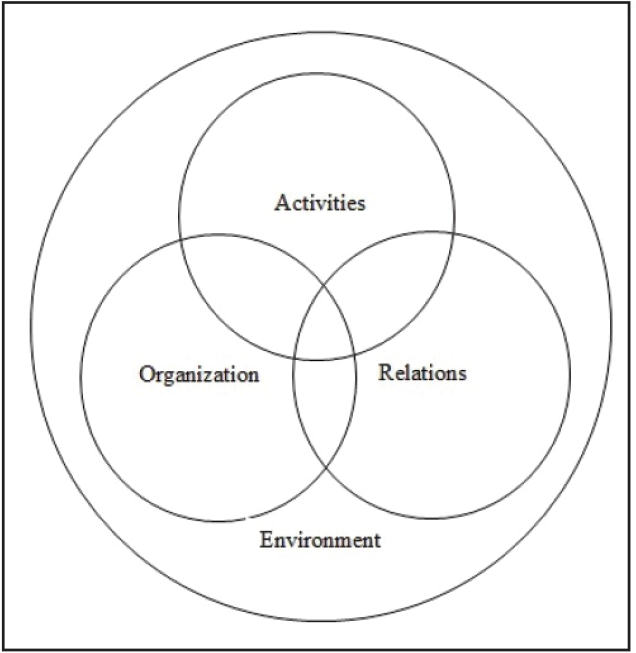
Lewis (2014) has presented a basic conceptual framework for NGO management, drawing on three related areas of NGO activities. He believes that all NGOs should be managed in terms of three aspects disregarding their diversity: ‘(a) organizational level, internal structure and their procedures; (b) activities they undertake in line with their objectives and prospects; and (c) managing their relations with other bodies, government, private sector, and other NGOs’. These areas may be drawn as overlapping circles that, although individually regarded as separate realms of activity, have an internal unity.
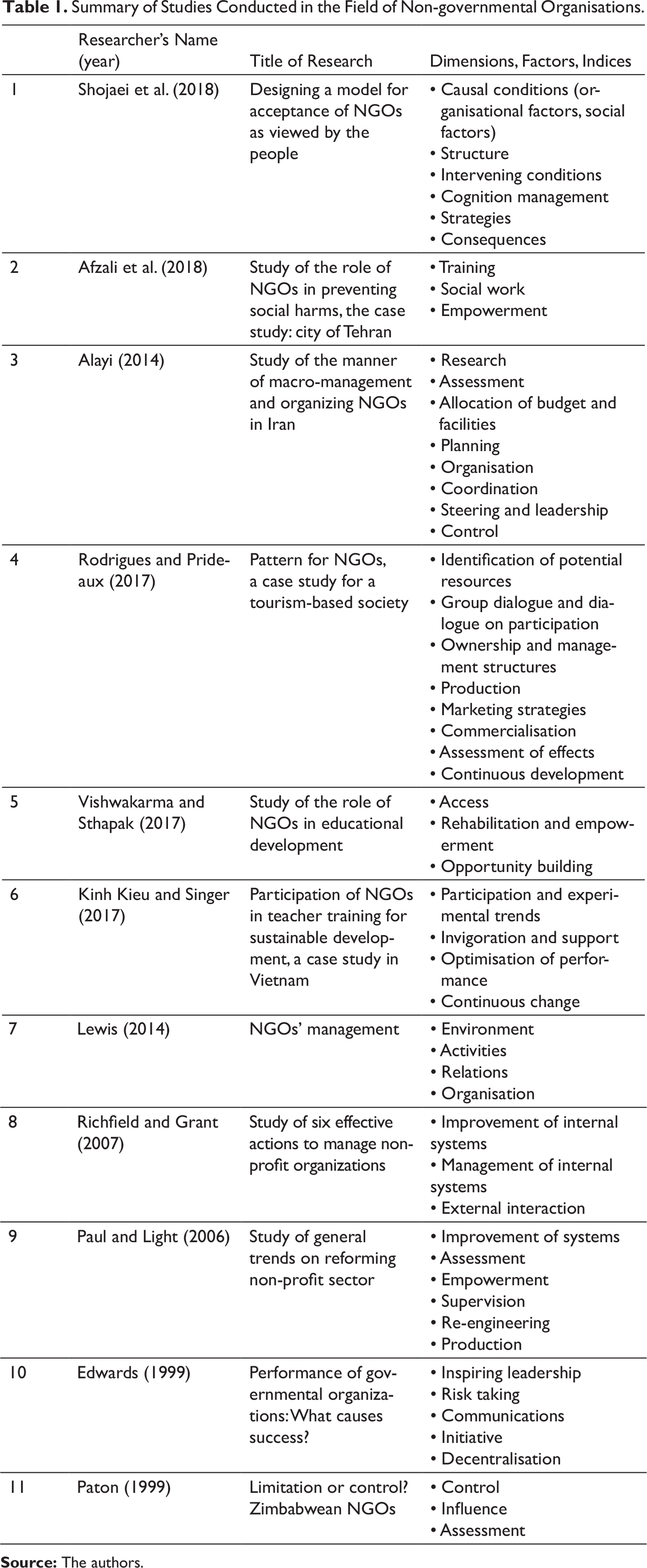
Summary of Studies Conducted in the Field of Non-governmental Organisations.
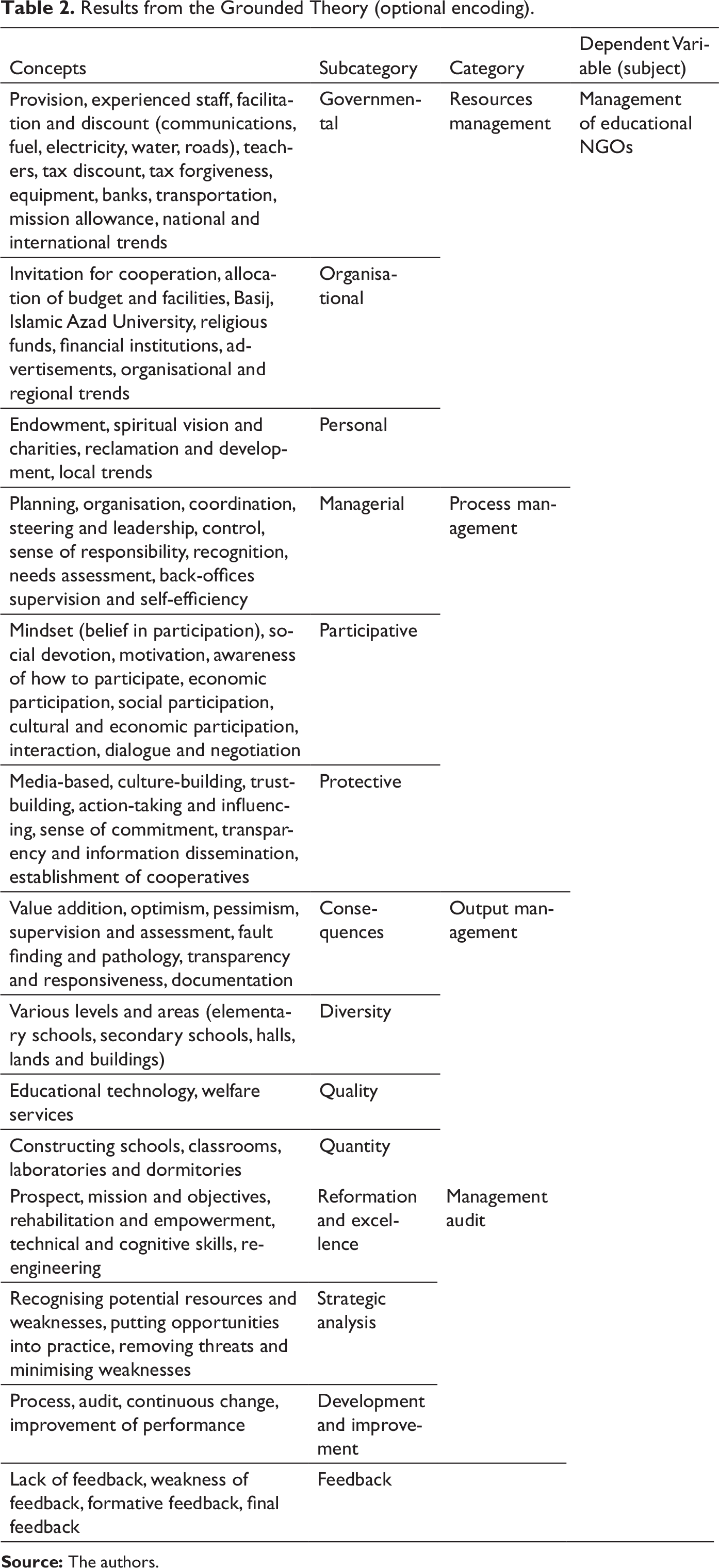
Results from the Grounded Theory (optional encoding).
Adaptive Comparison of Related Patterns Analysed Based on Table 2, in the Field of Management of NGOs.

Research Questions
The following are the research questions that this study seeks to address:
What is the appropriate model for the management of educational NGOs active in the field of school construction in Iran? and What are the building components of the management model of educational NGOs active in the field of school construction in Iran?
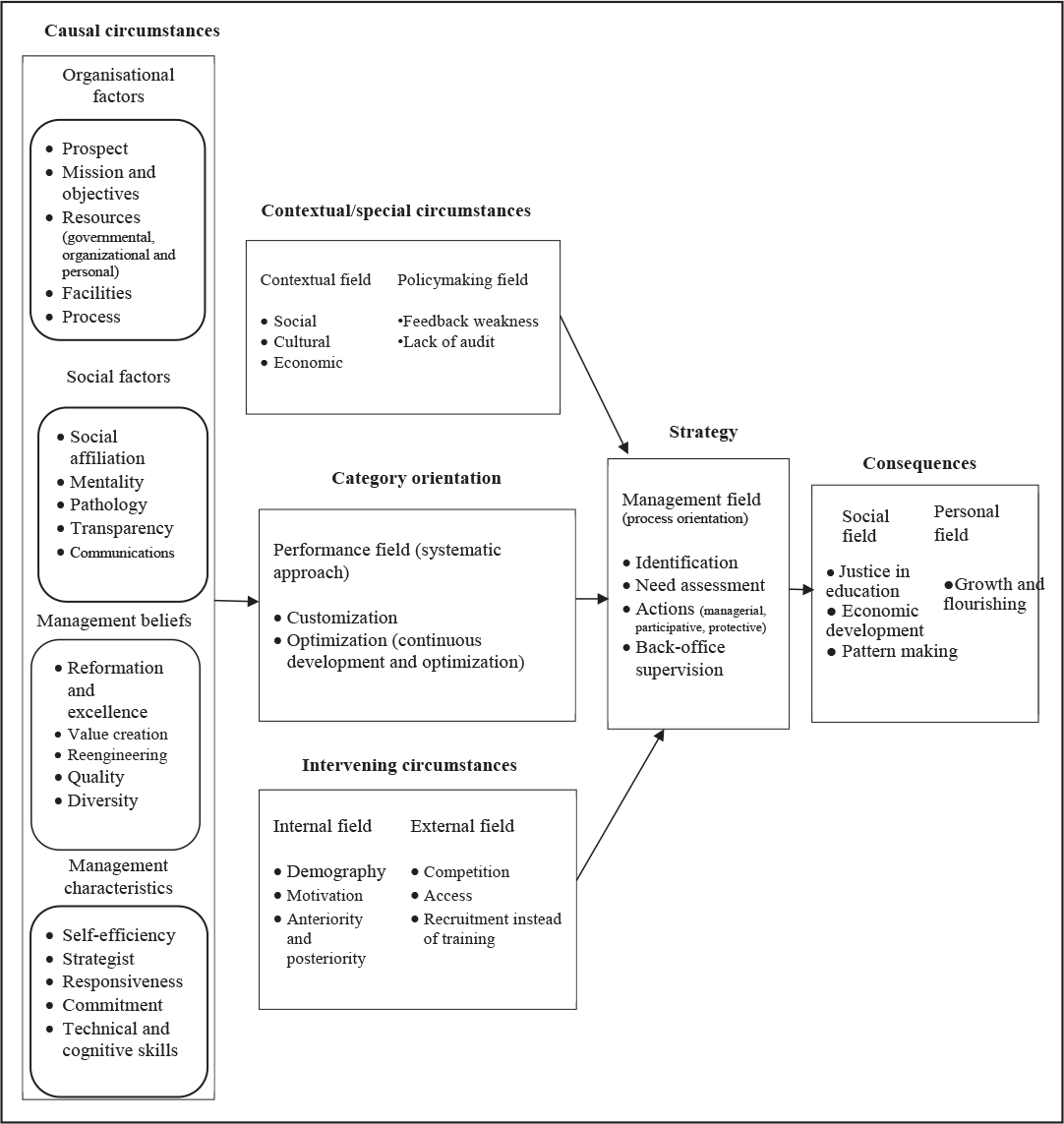
After the extraction and analysis of concepts from the interviews and studies, and after theoretical saturation among the scholars, the main concepts related to NGO management and resulting from open encoding were divided into smaller components in the form of axial encoding factors. Then, based on the optional encoding (Table 2), an analytical framework for the pattern that results from the grounded theory was extracted (Figure 1), and consequently a research model appeared and was drawn (Figure 4).
Methodology
The research is applied in terms of its objective, is mixed-methods and exploratory (qualitative and quantitative) in terms of its data analysis and is grounded (qualitative stage) and cross-sectional (quantitative stage) in terms of the method of its execution. Purposive sampling was used for the qualitative part and random stratified sampling for the quantitative part. The data collection tool for the qualitative part was semi-structured interviews, and for the quantitative part it was a researcher-made questionnaire with 117 questions. The study sample of the qualitative part was composed of distinguished persons in the field of management and also managers of Barekat Foundation.
Using purposive snowball sampling, 30 people were selected as the sample. Data were gathered through semi-structured interviews. After the 24th interview data saturation was reached, and the interviews were stopped. The initial sample for the quantitative part comprised all managers, advisors, deputies, experts and employees of Barekat Foundation, totalling 154 people, of whom 109 were chosen for the final sample using the Morgan–Krejcie table. For the qualitative section, the data collection tool used was investigation of national and international documents related to the subject, as well as exploratory, semi-structured interviews. In the quantitative section, data were gathered through questionnaires. The validity of the questionnaires was measured using Cronbach’s alpha, which was 0.90. Also, the content and confirmatory validity of the research was established. In the first part, qualitative data in the execution of the grounded theory were analysed in the three stages of open encoding, axial encoding and optional encoding, and accordingly an analytical pattern for the management of educational NGOs based on the grounded theory was designed. This led to the extraction of 75 primary codes or concepts from interviews and 57 concepts from the literature. Regarding the limited measurement units and judgement criteria, and based on the objective, the research was conducted within the quantitative framework. The analyses led to the determination of five main categories and 13 other concepts as elements creating the studied process. The main categories include resources management, process management, output management, management audit and feedback. As parts of the mixed method of research to extract the final model for research, adaptive comparison and development of a combined model were utilized as follows:
Adaptive Study
Based on the study conducted and regarding the objective of the research, Lewis and De Graaf models (Figures 2 and 3) were chosen to extract the final model as the basis for the study (base paper). Other pertinent models were studied to identify the required components to be employed in the final model, and the results are shown in Tables 1–3. This approach is valuable for the determination of the gaps between models.
A combined model is developed through adaptive studies based on imperfections of models.
Findings
Quantitative Findings
To employ parametric tests, we need to make sure the population is normal before administering the test.

Kolmogorov–Smirnov Test Results.

The results obtained from the Kolmogorov–Smirnov test show that (K–S) is not meaningful, and this indicates that the distribution is normal. Therefore, it is also possible to use parametric tests to analyse the data of this study.
Goodness-of-fit Indices for the Dimensions of the Management Model of Educational NGOs in Barekat Foundation Schools.

2Adjusted goodness-of-fit index.
3Root mean square error of approximation.
4Comparative fit index.
5Normed fit index.
6Incremental fit index.
Qualitative Findings
In this research, a comparative study is employed after the mixed-methods approach is regarded as a basis to attain a new method for the management of educational NGOs. Figure 4, with a systematic approach, shows the five-stage model for the management of educational NGOs. This pattern defines important elements within the framework of the model, based on which and according to the stages explained hereunder, the model is determined as a model for local management. The objectives, tools and techniques involved in each stage of the proposed model (Figure 4) are explained hereunder:
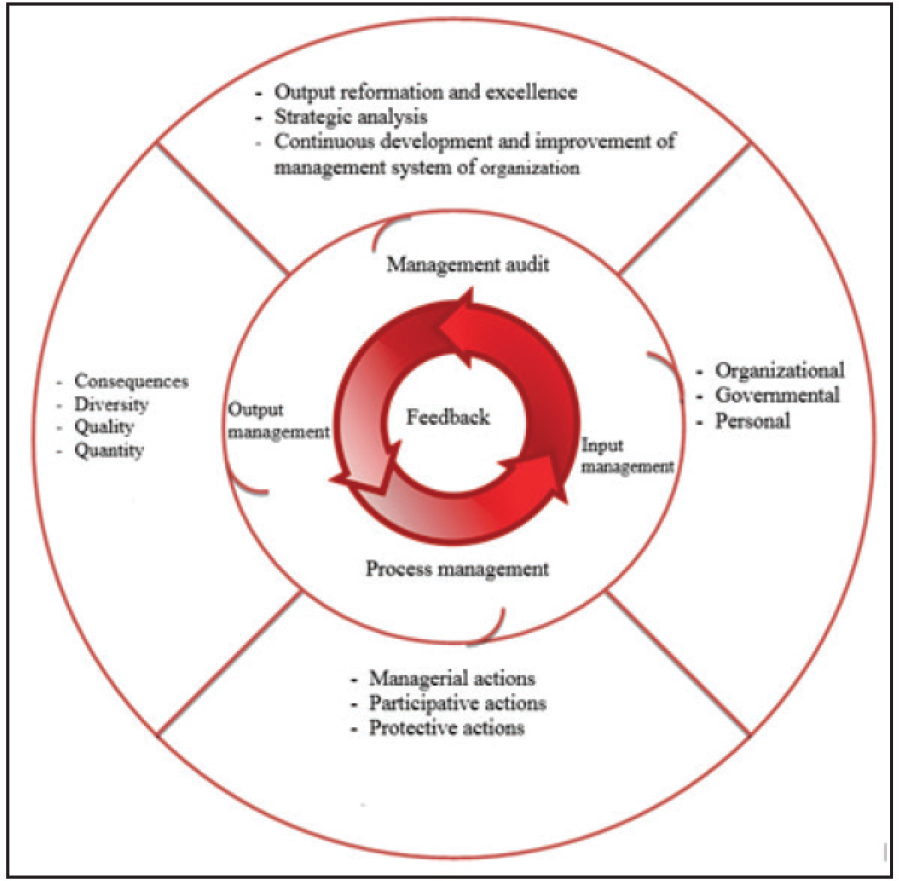
The first objective of this stage is to identify all input resources. Developing a clear picture of the resources, including financial and human resources, as well as facilities, for planning in the process management stage is essential. The second step is determination of the components involved in an NGO, such as philanthropists and other participants, including organisations like banks, and also examination of the status quo of the organisation. Other than the checklist, the most important tool in this stage is the ‘distribution chain’.
1
The objective of this stage is planning, organising, coordinating, steering and executing the processes related to organization. This is carried out to organise and coordinate with participants related to all operational processes and pertinent actions that require management, support and protection. The success of any business is dependent on its processes. Processes and their interactions should be analysed one by one in order to improve the general performance, and for the sake of optimisation. These analyses must take place within the science of management and are prerequisites to the success of any organisation. The second objective of this stage is to determine priorities and to select the main processes that are directly related to the performance of the organisation (using defined measurement criteria, including statistics on reclamation, renovation and equipment). The third objective of this stage is to identify, motivate and satisfy the key individuals and legal entities directly linked with this process. The managerial tools in the second stage include advertisements, quantitative/qualitative reports and documents.
The objective of this stage is to control and supervise for the purpose of assessment. In systemic thinking, one or two factors are never independently considered in a system as regards the concept of controlling; the status of a system should be assessed with numerous and diverse indices. Support tools at this stage are standard indices and ISO
2
standards.
The main objective of this stage is achieving excellence in the organisation. In the fourth stage, attempts are made to manage the strengths and weaknesses, as well as opportunities and threats. Another objective of this stage is analysing the pattern of management flow in the organisation. The final aim of management audit is to demonstrate graphically the current status of the organisation. The most important tool at this stage is the management dashboard, which graphically represents the most important information required to achieve one or several specific objectives, which are accurately and neatly arranged on a sheet so that managers are able to assess the current and optimal status at a glance.
This stage is the result of comprehensive application of control systems. The objective of this stage is to provide guidelines obtained from the management audit. The results of the feedback stage as achievements and output are injected into the organisation as new input to complement the systemic approach of the model.
Discussion and Conclusion
To summarise, it may be stated that studies on NGOs in Iran have mainly either considered general NGO activities in the fields of development, employment, empowerment, environment, etc. or dealt with such characteristics as the entrepreneurship and social capital of these organisations. However, this research deals with the capacities of NGOs for renovation and development of the education sector, considering the local facilities and capacities and regarding the cultural factors of Iran.
In addition, as the budget of the education sector is not adequately financed due to financial adversities in Iran, the presence of such NGOs, especially in the education sector, appears to be necessary and imperative. If an appropriate local method for the management of these NGOs is not adopted, Iran would be doomed to imitate methods of other countries, which may not be practical for it. This enhances the necessity for utilization of a local managerial pattern in these organizations, because with utilizing a local managerial pattern, the plan that will be designed to manage these organizations may be expected to reflect potential capacities of these organizations.
As previous models had some deficiencies and were not culturally appropriate for Iran, this research was conducted aiming to present a model for the management of educational NGOs in Iran. The research also takes into consideration the strengths and weaknesses, as well as local and cultural factors, of Iran, employing a mixed-methods (qualitative and quantitative) approach and a comparative study of the manner of activities and management methods of NGOs. Thus, the said model takes a crucial step towards the integration of management strategies throughout Iranian educational NGOs.
Data required for the research were gathered for exploratory analysis in two parts: qualitative (based on the grounded theory) and quantitative (based on cross-sectional surveys). The sample for the qualitative part comprised distinguished people in the field of management and also managers of Barekat Foundation, of whom, using purposive snowball sampling, 30 were selected. Data were gathered through semi-structured interviews. After the 24th interview data saturation was reached, and the interviews were ceased. The initial sample for the quantitative part comprised all the managers, advisors, deputies, experts and employees of Barekat Foundation, totalling 154 people, of whom 109 were chosen for the final sample using the Morgan–Krejcie table. The findings of the qualitative part of the research were confirmed based on the results of the quantitative part: through the chi-square, goodness-of-fit, adjusted goodness-of-fit, root mean square deviation and squares of approximation indices.
The results of the qualitative part also showed that management characteristics and beliefs, along with organisational and social factors, influence the management of educational NGOs. Also, the consequences of the utilisation of a management pattern for educational NGOs were divided into two: personal and social. Contextual factors influenced the manner of management in two areas: environment (social, economic and cultural factors) and policymaking (feedback weakness and lack of audit). Intervening conditions influenced the manner of management also in two areas: internal (demography, motivation, anteriority and posteriority) and external (competition, access and recruitment, instead of training). Basically, the management pattern of an educational NGO becomes effective in its administration when it is internalised and synchronised with the structure and factors that have formed it. In addition, non-localised execution of patterns shall result in the failure of most management plans in these organisations. Therefore, if an educational NGO relies on factors mentioned in the paradigmatic model of the grounded theory for its management, it will achieve productivity and success.
In the light of lack of adequate research on NGO management in Iran, this study intended to design a managerial pattern solely for educational NGOs active in the field of school construction, through identifying the relevant dimensions, factors and priorities. Consequently, in addition to the filling of the research vacuum, a basis has been established for future studies in this field of research.
Footnotes
Declaration of Conflicting Interests
The authors declared no potential conflicts of interest with respect to the research, authorship and/or publication of this article.
Funding
The authors received no financial support for the research, authorship and/or publication of this article.
