



Abstract
Local communities have different perspectives, uses and values ascribed to the diversity of plant and animal species at their service. Yet, local knowledge of the species diversity and use values, alongside conservation decisions and practices, received inadequate scholarly discussion. This article explores how local knowledge of species diversity (flora and fauna) and use values inform decisions for conserving natural resources in the Zukpiri Community Resource Management Area (CREMA).
Using the qualitative research approach, seven focus group discussions were held with the Zukpiri CREMA Committees and supported with key informant interviews. The results showed that the CREMA hosts a great diversity of plant and animal species. Customary rules and regulations embedded in customs, traditional beliefs and practices are used in governing, protecting and conserving CREMA’s resources. Drawing on the organisational structure of the CREMA framework in Ghana, we suggest that the Forestry Commission of Ghana should intensify its collaborative role with the Community Resource Management Committees (CRMCs) to monitor illegal logging in and around the CREMA. Furthermore, traditional knowledge systems in line with conservational practices should be projected by the responsible state institutions.
Keywords
Introduction
For several decades, indigenous settlers have used their innovations, creativities and experiences to sustainably manage and conserve their natural environments (Diawuo and Issifu 2015; Jarvis et al. 2021). This body of knowledge has developed based on their interaction with nature, experiences and innovations, which has helped them to meet their aims of forest and wildlife conservation (Diawuo and Issifu 2015; Alexander et al. 2017). Conservation in this context explained the activities and processes masterminded by the local people in managing, maintaining, protecting and sustaining forest and wildlife resources (Mavhura and Mushure 2019). For instance, the use of taboos and totems are important approaches to regulate natural resource overexploitation (Diawuo and Issifu 2015). Taboos, as applied in natural resource conservation, are prohibitions largely based on customs regarding the use of forest and wildlife resources, while totems explain living creatures, including plants used by a clan or family to associate and identify themselves with an ancestry (Alexander et al. 2017). The greatness of the diversity of forest resources (biodiversity) in providing ecosystem goods and services is indispensable. These ecosystem goods and services are categorised into regulating services, provisioning services, supporting services and cultural services, and constitute the bedrock of human survival (Baskent 2020; Gilli et al. 2020).
Despite the significance of forest resources to the enhancement of human well-being, the alarming rate at which these resources are being depleted worldwide is a matter of worry. According to the Food and Agriculture Organization (FAO 2014), the annual forest depletion is around 13 million hectares worldwide and that of Africa alone is about 3.4 million hectares. Furthermore, between 2010 and 2017, the depletion of the net forests, valued at US$1.578 billion (2010), increased to US$3.134 (2017), representing more than 98% of the depletion of the net forests over the period (World Bank 2019). Africa comes second in the global forest degradation records. This is largely attributed to the increasing demand for food and fibre, culminating in the expansion of croplands (FAO 2014). The focus of this article is to draw attention to the alarming rate at which natural resources in protected areas are diminishing in Ghana (Amoah and Korle 2020) and, in so doing, recognising the indispensable nature of forest and wildlife resources to Ghanaians and the high rate of decline in forest cover. In response, the Government of Ghana has implemented several collaborative natural resource management (CNRM) approaches, including the CREMA model geared towards involving local communities in the governance and management of forest and wildlife resources (Amoah and Korle 2020; Baruah 2015).
In Ghana, several policies and regulatory frameworks have been formulated and implemented to bolster forest and wildlife resources protection and conservation (see Baddianaah and Baaweh 2021). However, recent literature has argued that the majority of these frameworks are state centred–top-down in approach and do not necessarily address the demands of indigenous settlers regarding the exploitation and management of their natural resources (Baddianaah and Baweh 2021; Baker et al. 2018). As a result of the aforementioned policy gaps, the use of local ingenuities and creativities in natural resource governance requires further attention in the scientific literature. The Zukpiri CREMA is home to a plethora of flora and fauna, explaining the need for this study. The CREMA shares a boundary with the Black Volta, making it unique combining aquatic and wildlife within the same landscape (Baddianaah and Baweh 2021; Baker et al. 2018). Moreover, the CREMA has come under several stressors, namely some community members sidestepped the existing regulatory structures to engage in unlawful exploitation of the CREMA resources; land-use conflicts underpinned by the CREMA extending its boundaries; farmers versus herders’ conflicts; and leadership conflicts among the CREMA executives (Baddianaah and Baaweh 2021). Nevertheless, the Zukpiri CREMA has defied the odds to become the leading CREMA among its contenders in northern Ghana. In 2016, the CREMA came third in the worldwide environmental assessment and ranking of CREMAs by the United Nations Development Programme (Baker et al. 2018).
IUCN Categorisation of Plant Species, Use and Trade.

Literature Review
Traditional Practices, Norms and Beliefs in Natural Resource Conservation
Even though the extant literature has highlighted the relevance of indigenous knowledge in managing exclosures like forest landscapes (Gebregziabher and Soltani 2019; Keats and Evans 2020), little insight has been generated regarding the specific knowledge systems and how they have been put to use in the context of natural capital conservation. In a culturally inclined and diverse society like Ghana, the role of traditional beliefs and practices cannot be undermined in efforts to protect and conserve its natural resources. Relevant studies have proven that traditional practices are deeply rooted in the governing and conserving of a host of forest resources. This includes Ghana’s protected areas (Alexander et al. 2017; Baker et al. 2018).
For instance, in the conservation of sea turtles along the coastal towns of Ghana, Alexander et al. (2017) argued that the use of taboos has been the main catalyst behind the success story achieved. These taboos were socially and culturally constructed in such a way that fisher folks with significant knowledge of these taboos willingly apply them in their daily fishing practices. This suggests that a careful construction and integration of traditional practices, norms and taboos, as well as getting the local people involved, are major trajectories to natural resource conservation. Similarly, Diawuo and Issifu (2015) found that the local practices and beliefs involving the use of taboos and totems were triggered in successfully conserving wildlife in the specific study of the Sankana and Tongo-Tenzuk resource sites. Aside from that, these scholars revealed that the adherence and reverence demonstrated by the communities to the taboos and totems were shaped by the presence of well-established local norms, rules and regulations. Similar observations were reported by Baddianaah and Baaweh (2021) in a study focused on the strategies, challenges and prospects of managing the resources in the Zukpiri CREMA.
Taking the discussion outside the geographic confines of Ghana, the scholarly work of Bruah (2014) in the Rajbongshi Community of Northeast India adds a more nuanced perspective to the significance of using beliefs and practices of the local people in natural resource conservation. It was argued that local communities are now placing greater interest in the socio-economic aspects of natural resources than the ecological benefits and sustainability. However, in other geographies, the rich knowledge of the local people regarding the governance of natural resources was relied on to explore how the indigenous knowledge systems influence the protection and conservation of natural resources in forest reserves (Mavhura and Mushure 2019). These scholars found that the residents of Nharira community under the Chikomba local government area, Zimbabwe, depended greatly on the existing customs and regulations, including rituals, taboos and totems, as well as extended metaphors and proverbs to conserve the resources in forest reserves.
Natural resource use efficiency goes a long way to enhance better management and sustainable exploitation of natural capitals across local communities. Thus far, to promote sustainable resource extraction by indigenous communities, the role of local stakeholders, and national and international bodies ought to be projected on a common platform to ensure that a common standard is followed in extracting the resources. Hence, a strong nexus among the CREMA communities, local, national and international stakeholders is recommended (Figure 1).

Methodology
Study Area
The study was conducted in Nadowli-Kaleo District, Ghana (Figure 2), in which the Zukpiri CREMA is geographically located. The total land area of the CREMA is about 420 km2. The CREMA is located approximately 30 km away from Nadowli—the district capital. It is bordered by the Black Volta in the east and constitutes the boundary between Ghana and Burkina Faso (Ghana Statistical Service [GSS] 2014). The CREMA is under the care of 16 communities (Asare et al. 2013). It was initiated by a group of local medicine men (Zintang Healers Association) to provide regular herbs to support the local medicine industry (Zintang Healers Association 2009). Currently, the Zukpiri CREMA is managed by the CREMA Executive Committee (CEC) made up of a representative of the Community Resource Management Committees (CRMCs) and a chief as the chairman. The CREMA communities share similar socio-economic characteristics. The inhabitants are largely peasant farmers. They domesticate livestock, hunt and gather wild fruits and non-timber forest products (NTFPs) within the CREMA for their livelihood (GSS 2014).

Research Design
An exploratory design was used to investigate the knowledge that the local people had concerning the governance and conservation of the Zukpiri CREMA. This offered the researchers the opportunity to have an in-depth interaction with the study respondents, leading to a broader understanding of their perspectives and knowledge regarding the plethora of animal and plant species in the CREMA. Overall, 7 out of the 16 CREMA communities were involved in the study (Figure 2). This was based on the nearness of these communities to the CREMA and the existence of CRMCs in them. The selection of these communities was based on a preliminary field visit undertaken by the researchers to familiarise themselves with the study setting. It also offered them the opportunity to examine the entire management structure of the CREMA and establish strong ties with some key stakeholders that helped in overcoming major barriers in the collection of field data.
Data Collection
The data collection involves sourcing primary data from seven focus groups, one in each of the CREMA communities, supported with key informant interviews and observation. In each focus group, about seven to eight members of the CRMCs were involved and reflects Murray and Agyare’s (2018) composition of focus groups in CREMA communities. The pertinent theme of the focus groups in this study was on the CREMA committee members’ knowledge regarding the CREMA resources, customary and traditional implications, and their importance and motivation behind the protection and conservation of these resources. The local language (dagaare) was used during the focus group discussion because all the researchers could speak dagaare fluently, and this enabled them to further probe for the local knowledge concerning the CREMA resources, their traditional implications and rationale behind their conservation.
In addition, the CEC chairperson—a chief—and a leading member of the Zintang Healers Association were interviewed. The chiefs enforced rules and regulations and ensured that the customs and traditions guiding the extraction of some plant and animal species in the CREMA were duly observed. They also punished offenders—community members or strangers—who defied the customs and traditions regarding the extraction of some species. However, the CEC chairperson had the final say regarding the sort of punishment to be meted out to an individual or group of persons who failed to abide by the guidelines regulating exploitation of the CREMA resources (Asare et al. 2013). Likewise, we embarked upon transit walks within the CREMA to enable us acquaint ourselves with the diversity of plant and animal species in the CREMA and the management strategies employed by the CRMCs. The CREMA guard, who voluntarily devoted his time to work in protecting the CREMA from illegal harvesting and poaching, took us around the CREMA, and he was also interviewed. Each interview session lasted for 35–50 minutes, giving the researchers time to probe further for an in-depth perspective of the local people. The entire field data collection process lasted for about three months (June–September 2018). Since human subjects were involved in the study, strict ethical standards were followed (Creswell 2014). The data collection instruments (key informant interview guide and the focus group guide) were taken through ethical scrutiny by the University for Development Studies Ethics Committee and the informed consent of the respondents was sought in the data collection process.
Data Analysis
Qualitative methods were used to analyse the data. This was based on content analysis of the data sourced through focus group discussions and in-depth interviews held with the CREMA committees. Thus, the data were tape-recorded, transcribed and the frequent emerging themes were identified, harmonised and presented. The identification of the dominant themes depended on Charmaz and Belgrave’s (2012) grounded theory perspective, paving way for the dominant themes to be identified alongside the transcription. In so doing, specific discussion with respect to the study’s overarching aim were captured. In addition, qualitative data presentation strategies involving direct and indirect quotes, including tables and figures, were used to present the data.
Significantly, determining the importance of flora and fauna to humans is vital because it can help provide data to test a hypothesis and inform statistical validation and comparative analysis (Hoffman and Gallaher 2007). Although several methods are used in estimating the use values of plant and animal species, the uses’ total method was chosen for this study because it works with the smallest amount of data collected (a list of species and associated uses) and assists the researchers to manage time in the field better than the other methods (Hoffman and Gallaher 2007). The method works as follows: the most ‘important’ species is simply the one with the most use–citations (index) obtained during the discussion with key informants. Therefore, the species use value index based on Hoffman and Gallaher’s (2007, 208) formula is calculated as follows:

Results
Reported Tree Species in the Zukpiri CREMA.

Tree (Flora) Species in the Zukpiri Community Resource Management Area
The results (Table 2) show that about 38 different tree species are found in the Zukpiri CREMA, including mahogany, mango, neem, cassia, teak, baobab, shea, moringa, cashew and rosewood. However, not all tree species that exist in the CREMA are known to the CRMC members. This was disclosed in a focus group discussion. A respondent intimated: ‘The CREMA is too large an area for us to be able to count every single tree species. This is because most of the trees have grown naturally and some few ones might go undetected’. However, the CRMC members’ submission and knowledge demonstrated in listing the rich diversity of flora in the CREMA suggest that they have in-depth knowledge of a vast majority of the tree species in the CREMA. Our transit walks through the CREMA validated the list of species given by the respondents. Besides, the respondents recognised each tree species in the CREMA by its local name (Table 2).
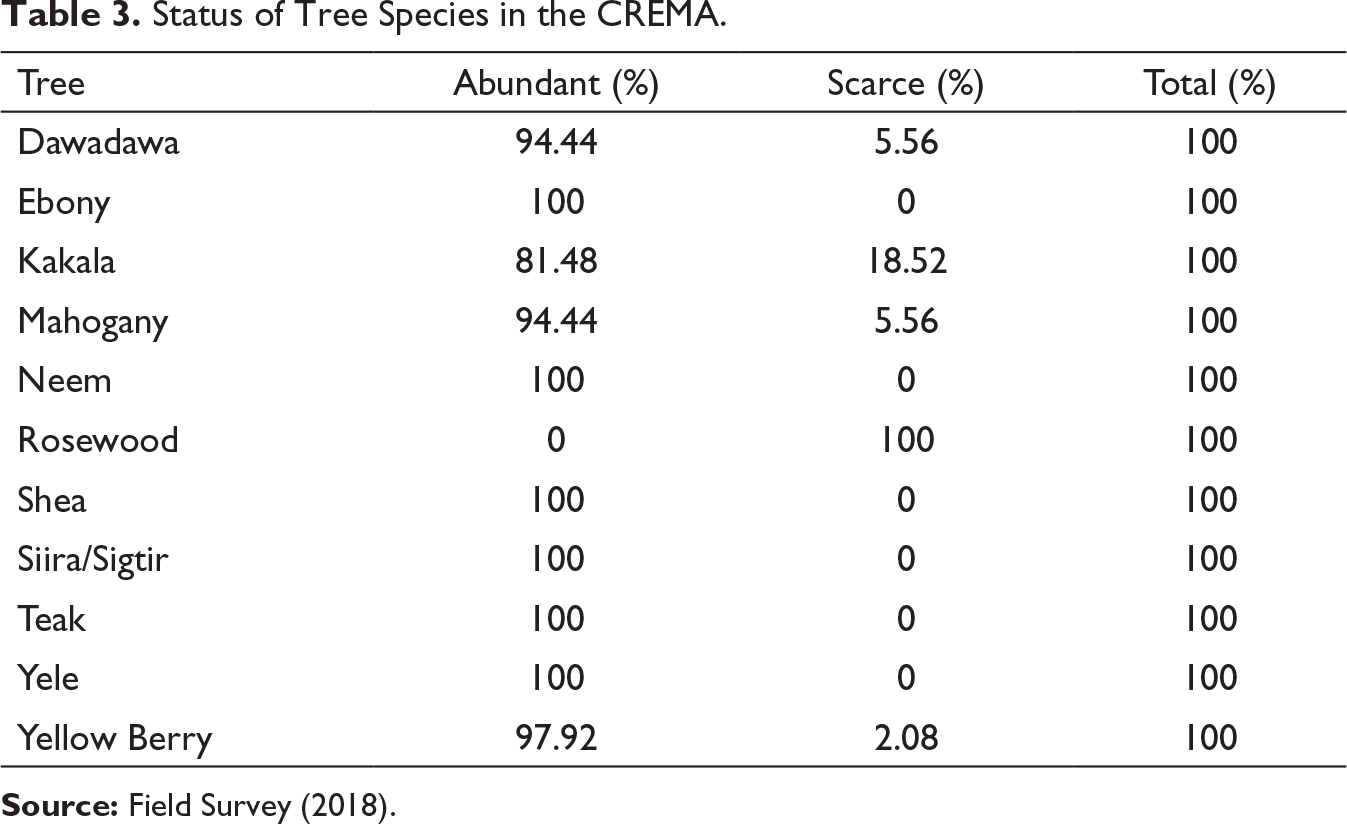
The status of the tree species in the CREMA (Table 3) reveals that the shea, siira, teak, yele, and ebony were the most abundant species (100 per cent). Further, dawadawa (94.44%), mahogany (94.44%) and kakala (81.88% cent) have recorded marginal levels of decline in their status, respectively. Conversely, rosewood recorded the greatest decline (100%) in its status within the CREMA. This is attributed to the increase in demand for rosewood by expatriates, specifically the Chinese. The Chinese established strong ties with the local actors (chiefs, assembly members and landlords) who defy the guidelines of the CREMA to engage in illegal harvesting and trading of rosewood, and other valuable tree species. A chief lamented:
Status of Tree Species in the CREMA.
As you can see, the CRMCs are doing a good job in protecting the tree species within the CREMA for environmental safety and posterity … we are dealing with a large group, you will not expect everyone to be genuine. Some of our members collude with the Chinese illegal rosewood harvesters and illegally harvest all the rosewood in the CREMA. This is done mostly at night; you won’t believe it. We caught them when they were about to cart it to Wa (the regional capital) but the harm has already been caused.
Tree species that have high demand are likely to be subjected to intense pressure in terms of illegal harvesting. An assemblyman reported:
The back and forth of the whole matter is that, initially, we did not know the true value of the rosewood. The majority of us consider it as just an ordinary tree compared to trees such as the shea, dawadawa and ebony which we depend on directly, day-in-day-out. We only harvest the leaves of rosewood to feed our sheep and goats and nothing else. So, in the beginning, the idea was like, why must we be prevented from harvesting a tree species deemed useless? It was only the traditional healers and some few chiefs who know its value and were fighting us not to harvest it…the sad thing is that the rosewood takes several years, even older than our grandparents to mature, and we just used less than a month to destroy everything. We will soon pay dearly for our actions. (FGD August 2018)
Strict monitoring and supervision of CREMAs must go on with in-depth knowledge of the uses and importance of the diversity of tree species in them. The shea, neem and ebony are abundant because they are of significant use to the local communities. These tree species are used for medicinal purposes and/or traded for income. Further, some tree species like mahogany, kakala and yellow berry are becoming scarce probably due to overuse and the fact that their regeneration rate is low. The abundance and scarcity of the tree species (Table 3) was sourced from Zintang Healers Association that initiated the CREMA and take inventory of the resources.
Use Values of Tree Species
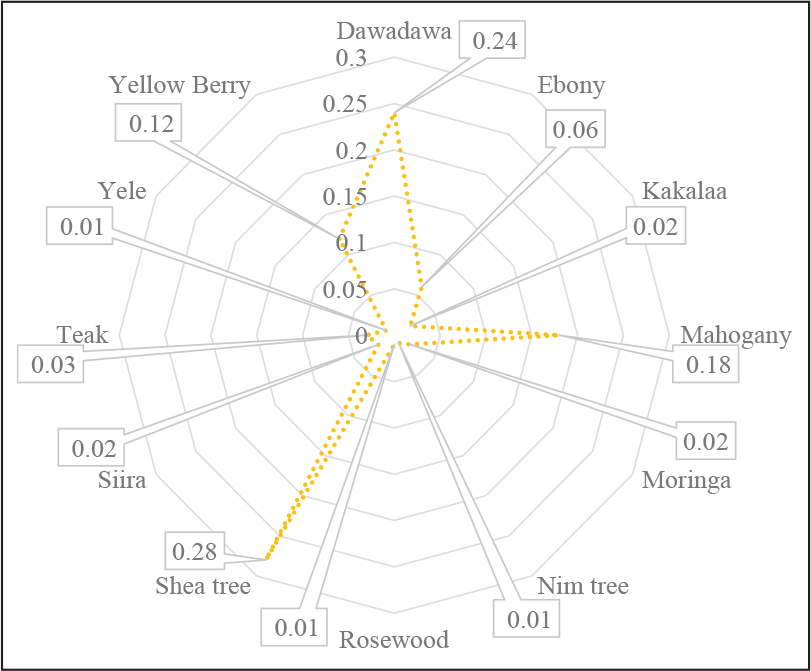
The use values of the tree species (Figure 3) show that the shea recorded the highest use value. The shea fruits are widely used and consumed by the CREMA communities. Shea nuts are locally processed into butter and used for cooking in the local communities. Besides, the butter has numerous medicinal uses, and it has the natural effect of healing open wounds, boils and burns. The shea drives the local economy by providing enormous income to women and children who collect the nuts, process and dry them for sale in the local markets. A traditional healer had this to say concerning the use value of the shea:
The shea, to us, is like cocoa in southern Ghana. I called it the northern Ghana cocoa. Our entire livelihood as rural dwellers depend on the shea. In our case, I will say we are fortunate because we don’t incur any cost in cultivating the shea as compared to cocoa in southern Ghana. They are wild plants that God in his wisdom has decided to bless us with. We in the Zintang Healers Association are very much particular about losing the shea because it is the backbone of our entire medicinal activities. It has its natural healing power and so when mixed with any herb it works to perfection.
The dawadawa recorded the second highest value. Dawadawa fruits are locally processed into a nutritious cooking ingredient (kali), consumed by the majority of the populace in northern Ghana. In a focus group, a woman hailed the nutrients’ capability of dawadawa as follows: ‘dawadawa is very rich in protein, I remember the other time, when I went to the Zukpiri Clinic, the nurse there told me to increase my daily consumption of dawadawa mixed with vegetable soup because I have low blood count’. Women sell dawadawa either in its raw state or processed to supplement their household income. Mahogany recorded the third highest use value. Mahogany is a hardwood preferred by the construction industry and is a raw material used in the local craft industry. The woodcarvers carve mahogany into various shapes due to its hardwood feature. Household utensils such as stools, benches, pestles and mortars are carved out of the mahogany. Other useful tree species include moringa, siira, kakala and yele. Thus, the number of uses a tree species is put to significantly inform its use value (Figure 3).
Animal (Fauna) Species in Zukpiri Community Resource Management Area
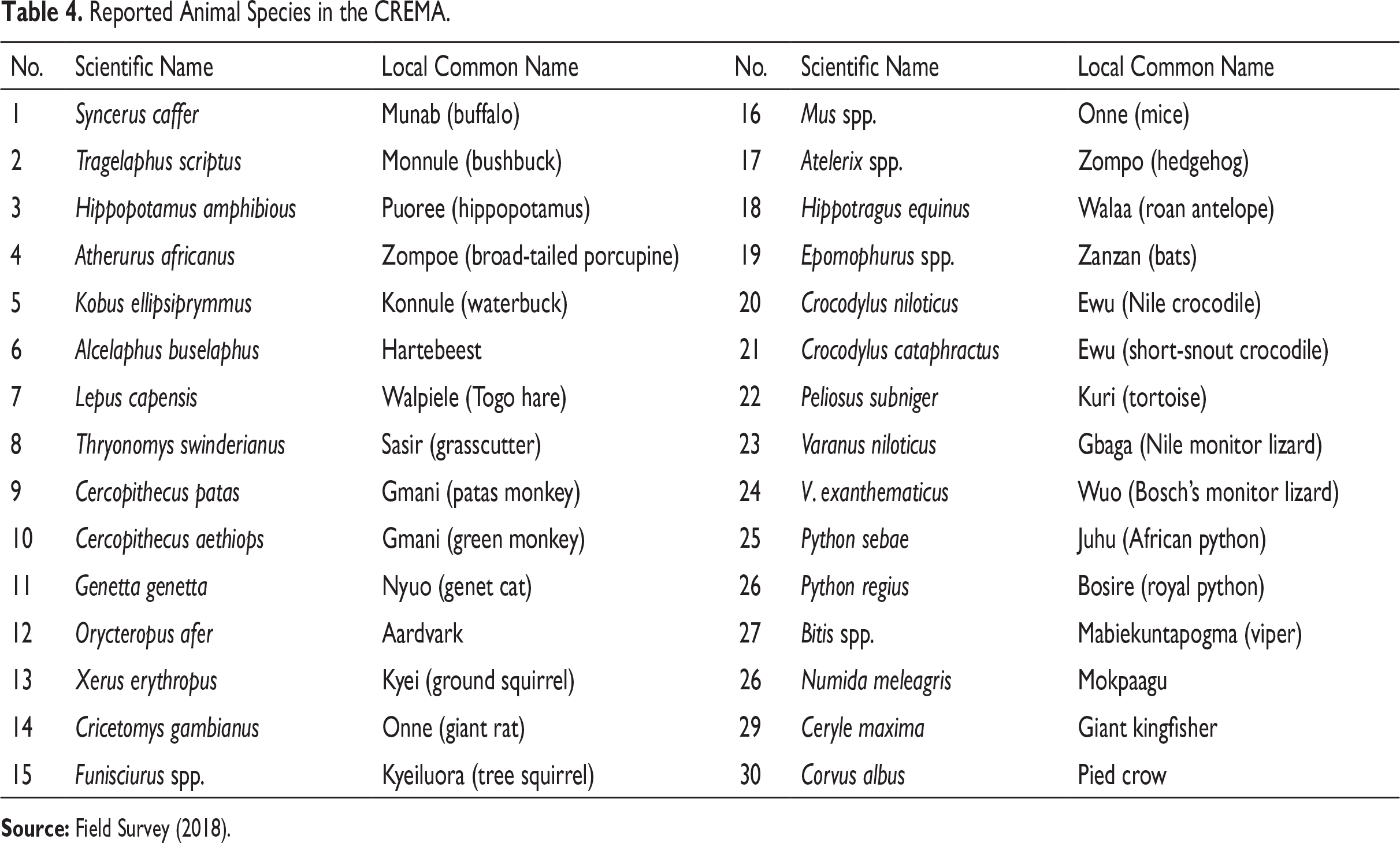
Reported Animal Species in the CREMA.
It is very difficult to capture the actual number of animal species inhabiting the CREMA … some animals are migratory, they come in, stay for a while and move into other places when conditions are not favourable. So, such animals might not be captured during our inspection tour. However, they form a small proportion of the animal species. (FGD August 2018)
The CREMA is home to many animal species whose population is not easily deduced due to their pattern of movement. Birds, for instance, are migratory in nature. Many animals opt to stay in places where conditions are favourable, implying that the CREMA serves as a home to many animal species because it provides the needed conditions for them. For instance, the Black Volta, which forms a useful part of the CREMA, provides drinking water for the animals and hosts the aquatic species and other animals that love to associate with water.
The animals enjoy protection from the CRMCs. These resources could have been overexploited if the guidelines for protecting the resources in the CREMA were not strictly enforced. This explains the continued existence of the diversity of plant and animal species in the Zukpiri CREMA. Hence, adhering to the rules and regulations guiding the CREMA has manifested in the conservation of the CREMA resources.
Use Values of the Animal Species
Monkeys recorded the highest use value (0.22). Naturally, monkeys are the most common animals in the CREMA. Monkeys often visit people’s farms to destroy food crops, and as a result, they are frequently killed by farmers. Rabbits recorded the second highest use value (0.183). Rabbit’s meat is a delicacy, and it is enjoyed by many and constitutes the most popular bush meat often craved for by city dwellers in northern Ghana. Thus, these animals are under constant attack whenever they are found outside the CREMA core zone. The people consider killing and selling these animals as a source of income to support their household needs. A discussant retorted ‘We are not killing animals like the rabbit because we are abiding by the guidelines of the CREMA … I don’t encourage the illegal killing of these animals but if I find it outside the CREMA, I won’t let it go’ (FGD August 2018). The dwellers are adhering to the CREMA guidelines and that explains why they are not killing the animals. Hippopotamus recorded the third highest use value (0.142) because it attracts tourists—a source of income generation to the communities. Moreover, the hippopotamus is a totem to the people of Zukpiri, giving it a major spiritual reverence. Other animals that are of value include the grass cutters (0.128), birds (0.069), antelopes (0.069) and gorillas (0.046). Conversely, buffaloes (0.032), bush mice (0.023) and pythons (0.005) have all recorded low use values. Pythons recorded the lowest use value because it is a totem of some communities, and frantic efforts are put in place to protect other communities from causing harm to it. A chief intimated:
What! Python? It is not allowed for anyone to use python for whatever purpose in this community. The python symbolises our forefathers. It once protected our great grandfather from external aggression, and he decreed that no member of our clan should harm or even disrespect the python. They do visit our homes to register their displeasure whenever any member of our clan defiles the norm. They are spiritually related to us and we revered them. (KII August 2018)
Thus, customs and traditions are used in protecting and conserving some animal species in the CREMA.
Social Significance of the Community Resource Management Area Resources
Social Importance of Animals and Trees in the CREMA.

From Table 4, the hippopotamus and kakala are totems and taboos, respectively, of the people of Zukpiri; Namuo community regarded the antelope as their totem, and mahogany and kakala as taboos; the Jerimwama community regarded the vulture and python as totems and mahogany as a taboo; Mantare community considered the porcupine and the hedgehog as totems, and vaga and ebony trees as taboos; the Puni community considered the antelope as a totem and kakala as taboo; the Meguo community regarded the python and the hedgehog as their totems and mahogany and kakala as taboos; and the Siiru community regarded the python and tiger as totems, and kakala and ebony as taboos. In line with the aforementioned, each community forged harder to ensure that its totem(s) and taboo(s) is/are protected. The killing of a totem knowingly by a member of a different clan is a sign of disrespect to the clan whose totem has been killed. This ensures checks and balances among these communities in preserving and conserving the plant and animal species in the Zukpiri CREMA.
Discussion
The results (Tables 2 and 4) present empirical evidence of the position of CREMAs as the home for a wide diversity of plant and animal species (Bruah 2014; Murray and Agyare 2018; Owusu-Ansah 2020). These resources are managed based on the local people’s ingenuities, innovations and creativities (Bruah 2014; Murray and Agyare 2018). The results show that the CREMA communities have in-depth knowledge of the rich diversity of plant and animal species that inhabit the CREMA and their uses (Figure 3). Gebregziabher and Soltani (2019) opined that knowledge of the uses and significance of natural resources greatly influence the adoption of better management and conservation approaches by indigenous communities. Thus, the local communities demonstrate a strong commitment towards protecting and conserving the CREMA resources due to the fact that they draw a lot of benefits from these resources (Baker et al. 2018; Bruah 2014; Diawuo and Issifu 2015). Besides the ecosystem services derived from CREMAs (Baskent 2020; Gebregziabher and Soltani 2019), they contain a host of NTFPs that support the livelihoods of the underprivileged, especially women (Asare et al. 2013; Baddianaah and Baaweh 2021). With specific reference to the Zukpiri CREMA, women harvest shea, dawadawa and other valuable tree species for direct consumption, and sell some to boost their income.
Furthermore, tree species that offer immediate benefits received significant attention and protection from all the stakeholders. The shea has been one of the leading economic trees in northern Ghana with global attention (Gilli et al. 2020). Apart from the shea being an immediate edible fruit, its nuts are used in diverse ways in the cosmetic industry. The traditional healers also draw their ‘healing power from the shea’ (Zintang Healers Association 2009). This supports the findings of related studies that argued that the CREMA concept does not only support the livelihoods of the local communities but also act as a major store for accessing medicinal plant and animal species (Baker et al. 2018; Jarvis et al. 2021). The Zukpiri CREMA offers several opportunities for local communities to improve their well-being. Consequently, illegal logging is a notable activity that is derailing the Zupkiri CREMA of its status. This is likely to jeopardise the sustainability outlook of the CREMA. Forest and wildlife resource depletion as a result of illegal logging has become a common spectacle in the developing world in recent years, including Ghana (Baker et al. 2018; Baddianaah and Baaweh 2021). This is often blamed on policy failures and the poor capacity of responsible institutions like the Forestry Commission of Ghana to timely discharge their duties of supervising and monitoring illegal harvesting of forest resources (Baker et al. 2018).
The inhabitants were able to identify several of the animal species that inhabit the CREMA (Table 4). This may enhance their attitude towards protecting and conserving these species (Gebregziabher and Soltani 2019). The rich diversity of animal species recorded in the CREMA implies that these animals enjoy some form of protection from the CREMA management committees. Proper management of the CREMA suggests preventing these animals from being illegally and unsustainably harvested, thereby creating a conducive environment for their continued stay and survival. This is achieved based on the community members’ commitment and positive attitude towards conservational practices and support from external organisations (Amoah and Korle 2020; Gebregziabher and Soltani 2019). Thus, although not all animal species have religious or cultural reverence with the CREMA communities, their decision not to kill them might have been coordinated by the guidelines regarding the use of the CREMA resources (Asare et al. 2013; Baddianaah and Baaweh 2021). However, the killing of animals like rabbits and monkeys outside the CREMA core zone appears to suggest that some individuals within the communities are not abreast with the implications of wildlife conservation. Protection and conservation of forest and wildlife resources not only create ecological balance from the replenishment of the natural ecosystem but the issue of mitigating climate change and its related consequences are also suggested (Amoah and Korle 2020; Asare et al. 2013; Baskent 2020).
The CREMA species have several social, cultural and religious relationships with the communities (Table 5). These species are considered as totems and taboos, and are, therefore, treated with the greatest reverence. The term ‘totem’ originates from the North American Indian language, explaining the position of plants and animals that are well regarded by individuals, most especially a group of people, as sacred. A totem is considered as an emblem comprising an object like a plant or an animal that serves as a symbol of a family or clan. The word taboo is derived from the Polynesian term ‘Tabu’ meaning something that is ‘forbidden’ (see Alexander et al. 2017). Taboos are the prohibitions on the use of items that are considered sacred and regulate human behaviour. This finding corroborates the findings of related studies on the cultural and religious implications of flora and fauna in protected areas in local communities. This is often considered as a major factor that informs indigenous communities’ decision to use their knowledge, experiences and ingenuities in governing, protecting and preserving natural resources within their geographical sphere (Jarvis et al. 2021; Keats and Evans 2020; Murray and Agyare 2018).
Although a recent study conducted by Murray and Agyare (2018) found that people who have formal education and share Western religious beliefs (Christianity) assigned higher reverence to CREMA outcomes as compared to those that share the African traditional religious faith, the role of indigenous knowledge systems and practices in the conservation of forest resources cannot be relegated to the background. A recent study by Mavhura and Mushure (2019) found that adherence to local rules, associated customs and rituals, including the use of totems and taboos, aided significantly in the conservation of natural resources in Zimbabwe. These customary rules and regulations, customs, norms and rituals, including taboos and totems, are deeply rooted in traditions and form the entire indigenous knowledge systems of local communities (Diawuo and Issifu 2015). These traditional knowledge systems are equally contributing to the protection, management and conservation of the animal and plant species in the Zukpiri CREMA. Traditional knowledge and practices have been relied upon, particularly by indigenous communities in the Global South, to regulate natural resource use and ensures conservational fields. In effect, we posited that the success of the Zukpiri CREMA is showcased in the provision of ecosystem services and NTFPs to the local communities. Nevertheless, the CREMA has been bedevilled with land tenure and resource use conflicts (Baddianaah and Baaweh 2021). In addition, illegal logging, hunting and harvesting of the CREMA resources pose a significant threat to sustainable management of the CREMA.
Conclusion and Policy Implications
The study explored how local knowledge of species diversity (flora and fauna) and use values inform decisions for conserving natural resources by local communities. The findings showed that the Zukpiri CREMA host a rich diversity of plant and animal species. The CREMA communities have in-depth knowledge of the diversity and uses of the CREMA resources. Tree species like the shea play multiple roles in improving people’s livelihoods, especially women, and in the ecological well-being of the area as the shea and dawadawa have both economic and medicinal importance to the local people. Despite the contribution of these tree species to livelihoods, illegal logging, which is often perpetrated by foreigners in collaboration with the local dwellers, has threatened the sustainability of the CREMA. Moreover, customs, traditional beliefs and practices have significantly influenced the conservation of the CREMA resources. We, therefore, argue that the CREMA concept possessed a greater opportunity for biodiversity conservation and sustainability across local communities. On this note, we recommend that the Forestry Commission of Ghana should intensify its collaborative role with the local communities in ensuring that the CREMA concept is fully embraced and practised by many communities. Moreover, local knowledge, customs, traditional beliefs and practices that are fading out of the Ghanaian society must be revived by integrating aspects that are in line with natural resource conservation into our educational curriculum.
Footnotes
Acknowledgements
The authors would like to acknowledge the support of Zintang Healers Association for their positive contributions and valuable knowledge shared with us. We are also grateful to the chiefs and members of the Zukpiri Community Resource Management committees for their willingness to participate in the focus group discussions. We appreciate the contribution of Mr Boye Dakurah, who took us around the CREMA. Finally, our thanks go to Mr Naazie Godwin for transcribing the key informant interviews.
Declaration of Conflicting Interests
The authors declared no potential conflicts of interest with respect to the research, authorship and/or publication of this article.
Funding
The authors received no financial support for the research, authorship and/or publication of this article.
