




Abstract
This study explores the role of diverse climatic vulnerabilities and socio- economic variables in explaining Bangladeshi rural households’ livelihood choices and the synergies that exist across the choices. We develop a multivariate probit model for analysing a dataset of 5,604 households that is representative of rural Bangladesh. The findings reveal a landscape where agriculture-based strategies predominate, with households strategically combining various approaches. Households complement agriculture-based strategies, while substituting beyond agriculture-based strategies. Climate stressors such as flood, salinity, river erosion, drought, storms and cyclones induce notable shifts in livelihood choices. Among these, the most prominent is the substantial influence of storm and cyclone vulnerability. Migration is more prevalent in areas susceptible to salinity, storms and cyclones, while casual labour prevails in drought-prone and flood-vulnerable regions. Households residing in the economically marginalized and environmentally vulnerable feed-the-future (FtF) zone make distinct decisions regarding income strategies compared to their counterparts in other rural areas across the country. Households in this zone exhibit a higher likelihood of opting for specific agriculture-based income sources and casual labour, while self-employment, migration and salaried jobs are less favoured. Furthermore, we elucidate the pivotal role of infrastructure, information access and institutional factors in shaping income sources. Households in different divisions make distinct livelihood choices, especially in agriculture. Ultimately, the findings advocate for precise interventions tailored to climate vulnerabilities. This includes enhancements in road connectivity, the utilization of mobile banking and the provision of extension services, with a specific focus on geographically marginalized and climate-vulnerable regions.
Keywords
Introduction
Households diversify their livelihood strategies and invest available resources and labour to maximize utility or income. Coping with the adverse and continuously changing climatic and economic environment is another concern (Ellis & Freeman, 2004; Khatiwada et al., 2017). In the process, households’ socio-economic and demographic characteristics and the available resource base along with the prevailing institutional and natural settings are critical in shaping the decisions and, hence, exploring these factors is important from a policy perspective.
Globally, agriculture was the prime source of livelihood in rural areas, while variations in choices among agricultural sub-sectors, that is, crop, fisheries and livestock, were common (Kapur, 2019; Rahman & Akter, 2014). Nevertheless, the potential transformation to non-agricultural livelihood choices has been increasingly recognized (Sharma et al., 2020). Rural people no longer depend solely on agriculture for many reasons, including low yield and return from farming, largely caused by a gradual decline in the availability and quality of the natural resource base and the changing climate. Meanwhile, there has been a tremendous increase in demand for non-farm activities fuelled by economic development and population explosion (Kapur, 2019). Moreover, increasing farm mechanization is reducing on-farm labour demand. It is common for farm households to follow a mixed strategy where they continue subsistence agriculture, but have some labour and time allocated to off-farm works (Khatiwada et al., 2017).
The domain of the factors influencing households’ livelihood decisions is wide and diversified. Households’ ability to adopt diversified and remunerative livelihood strategies is related to their adoption capabilities which are likely to be higher for the wealthy and literate households (Kapur, 2019). People’s livelihoods are frequently disrupted or devastated by natural hazards (Kwazu & Chang-Richards, 2021). The effects of such disasters on livelihood resilience vary. Wei et al. (2019) focused on earthquake-stricken areas in rural China, revealing that earthquakes, floods and droughts decrease livelihood resilience. Climate change disproportionately impacts the livelihoods of the poorest and rural communities, increasing vulnerability and undermining their ability to establish sustainable livelihoods (Abid et al., 2016; Fang et al., 2018; Habib et al., 2023; Tanner et al., 2014). The existing natural settings and the changing climate not only impose a severe threat to agriculture and the people dependent on it but also affect other occupations (Mahmood, 2012), especially in developing nations since the adaptive capabilities of the people living there are likely to be lower (Ellis & Freeman, 2004). Livelihood diversification is often viewed as an essential strategy for addressing vulnerabilities to climate change (Habib et al., 2023). Recognizing livelihoods and resilience within broader transformative shifts is a critical priority (Tanner et al., 2014). Conducting a comprehensive mapping and analysis of economic conditions in the face of climate hazards is crucial to understand how these hazards influence livelihood choices. Equally important is the consideration of demographic characteristics encompassing households’ human, natural and financial assets, as well as the condition of infrastructure and access to information. This comprehensive evaluation is crucial for understanding livelihood resilience and unravelling the intricacies of livelihood systems (Fan et al., 2022; Kwazu & Chang-Richards, 2021; Rahman & Akter, 2014).
We explore the role of these factors in the context of Bangladesh—a growing economy with vibrant and diversified economic activities and exposed to multiple climatic threats. The country has recently gained the status of a middle-income country. From a subsistence crop agriculture-based economy, the centroid of the economy is shifting towards the manufacturing and service sectors. Meanwhile, there has been a noticeable paradigm shift within agriculture, and livestock, fisheries and non-cereal crop farming are becoming more important. The contribution of the rural non-farm sector is increasing at a higher pace than that of the farm sector. During the last four decades, labour force participation in agriculture has been halved while participation in off-farm activities is increasing with new and diversified activities (MoF, 2019).
Moreover, Bangladesh is in the lens of the international community since it is vulnerable to multiple types of climatic anomalies and hazards (IPCC, 2014; USAID, 2020). The north-western part is facing drought, the middle part is prone to riverine floods, flash flood is common in the north-east and the southern part is exposed to a variety of threats, including riverbank erosion, storm, cyclone and salinity (Ayeb-Karlson & Geest, 2018; Goosen et al., 2018). The frequency and intensity of these natural disasters strongly influence the lives and livelihoods (Goosen et al., 2018), which is context- and region-specific. Households that differ in socio-economic characteristics also behave differently depending on the type of vulnerability and the associated stress they face. We consider Bangladesh an interesting case to study how in the face of various climatic conditions and vulnerabilities, households that differ in demographic, socio-economic and biophysical resources choose among competing farm and off-farm livelihood strategies.
Literature on lives and livelihood, particularly on determinants of livelihood choices, is growing. Nevertheless, there are some backdrops. First, to the knowledge of authors, the earlier literature focused on a specific location or community (Akter et al., 2020; Asravor, 2018; Khatiwada et al., 2017; Mukwedeya & Mudhara, 2023; Salam & Bauer, 2020; Shan & Ahmed, 2020). Mukwedeya and Mudhara (2023) dissected the drivers of livelihood choices among rural African youth. Mao et al. (2020) highlighted the diverse strategies adopted by ethnic minorities in China. Meanwhile, Liu et al. (2023) delved into how livelihood strategies adapt in fragile alpine ecosystems. Salam and Bauer (2020) explored determinants of rural households’ livelihood diversification in purposively selected three districts of Bangladesh. Since policies are mostly designed at the national level, these community and region-specific studies have limited appeal at the policy level. While these studies provide valuable insights, they might not capture the full spectrum of contexts across the entire nation. They shed light on pivotal factors influencing livelihood decisions, underscoring the importance of nuanced policy integration that goes beyond regional confines. Second, the available literature lacks a holistic approach and primarily focuses on socio-economic and institutional determinants, and none has explored the role of climatic factors on livelihood decisions. A few pertinent studies focus on a single climatic event in a particular agro-ecology. For instance, Anik et al. (2018) focused on coastal communities of Bangladesh to find out the effect of salinity, and Adamseged et al. (2019) revealed the impact of rainfall on livelihood choices in the Ethiopian highlands. Third, binary/multinomial types of models (i.e., probit/logit) are commonly used in the literature exploring the determinants of livelihood (e.g., Mahato, 2020; Rahman & Akter, 2014; Tesfaye et al., 2011; Yobe et al., 2019). Such models assume that livelihood choices are mutually exclusive and do not accommodate the associations between different choices, though people may depend on multiple livelihoods simultaneously. The only exception is Anik et al. (2018), who opted for the multivariate model and showed the synergies across different livelihood options in their region-specific study.
Stretching out the knowledge from existing studies, we broaden our focus towards incorporating the climate concerns along with the socio-economic, infrastructure and institutional factors on livelihood choices. We have used the multivariate approach, so that along with determinants of livelihood strategies, the synergies between multiple livelihood choices are revealed. Above all, since we utilized a nationally representative large dataset that covers all the agro-ecology of Bangladesh, the findings have more appeal to the national policy design and can provide insights to other countries with similar settings.
Methodology
Data
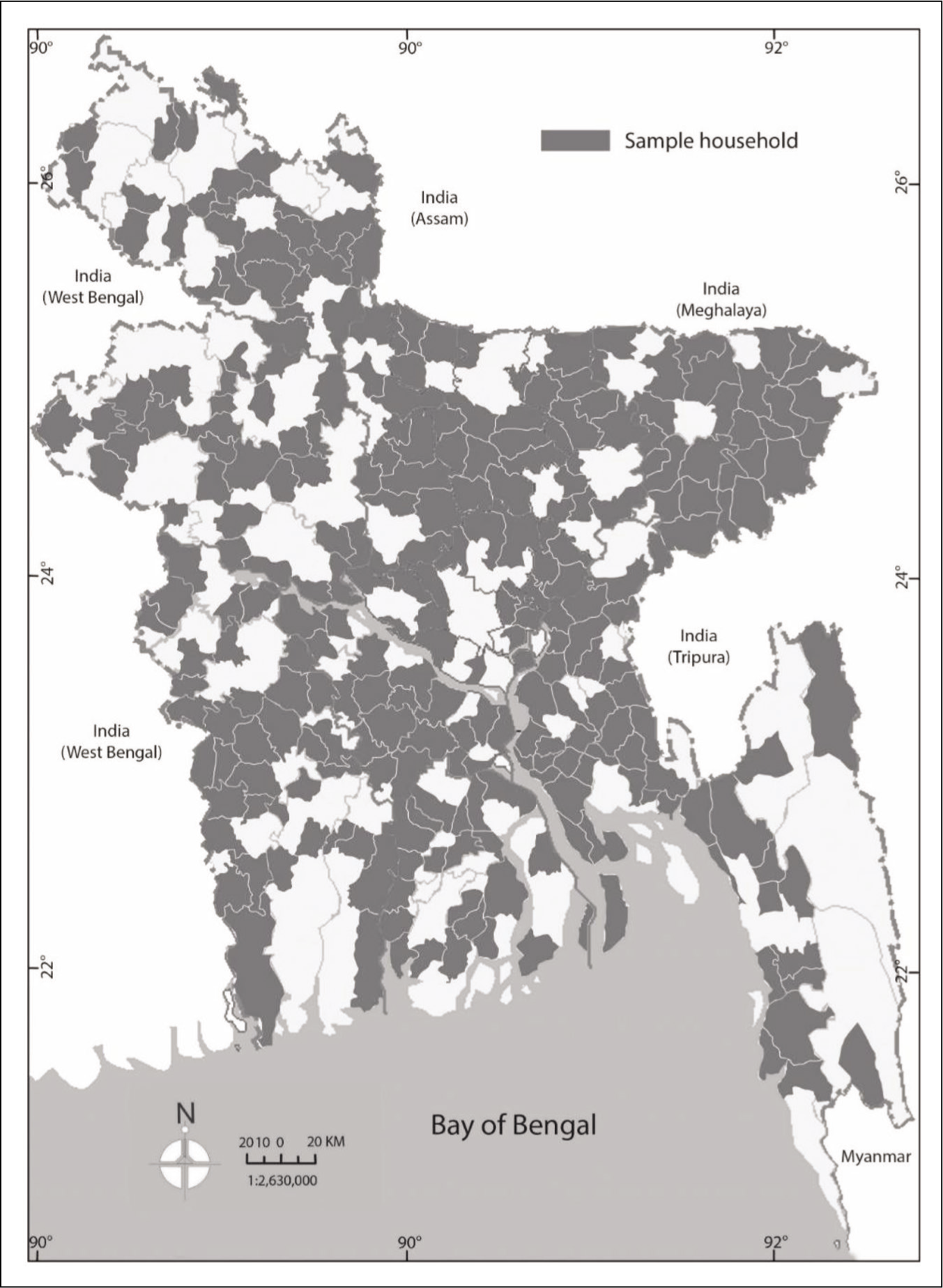
The third round of the Bangladesh Integrated Household Survey (BIHS 2018–2019) 1 of the International Food Policy Research Institute, which is representative of rural Bangladesh, is explored in this study. The survey followed a multi-stage sampling technique and interviewed 5,604 rural households belonging to 325 primary sampling units of all the 64 administrative districts of Bangladesh. Figure 1 presents the geographic distribution of the sampled households. The BIHS questionnaire addressed different possible dimensions of rural livelihood with detailed questions on both farm and off-farm income sources; households’ assets, socio-economic and demographic profile; women empowerment in agriculture; information on area-specific contextual factors, etc. In addition, to explore the relationship between climate vulnerabilities and livelihood options, we have collected data on salinity, storm and cyclone, and flood from the vulnerability maps developed by the Bangladesh Agro-Meteorological Information Portal. 2 Information about drought was collected from the drought-vulnerability index prepared by the Ministry of Disaster Management and Relief (MoDMR, 2013).
Households’ Livelihood Choices
The BIHS 2018–2019 survey recorded a total of 92 income sources, where many households had multiple income sources. The income sources were categorized into seven broad categories for which we explored determinants and the synergies among them. The categories are crop, fisheries, livestock, casual labour, self-employment, migration and salaried job. The descriptions of these income sources are presented in Table 1. While categorizing, we excluded a few income sources where a household’s decision was not endogenous, rather, was subject to several observable and unobservable factors which may be beyond the households’ control. For instance, a household qualifies for a social assistance programme based on some pre-determined characteristics. Another household may have income from inherited assets.
Description of the Variables Used in Econometric Analysis.
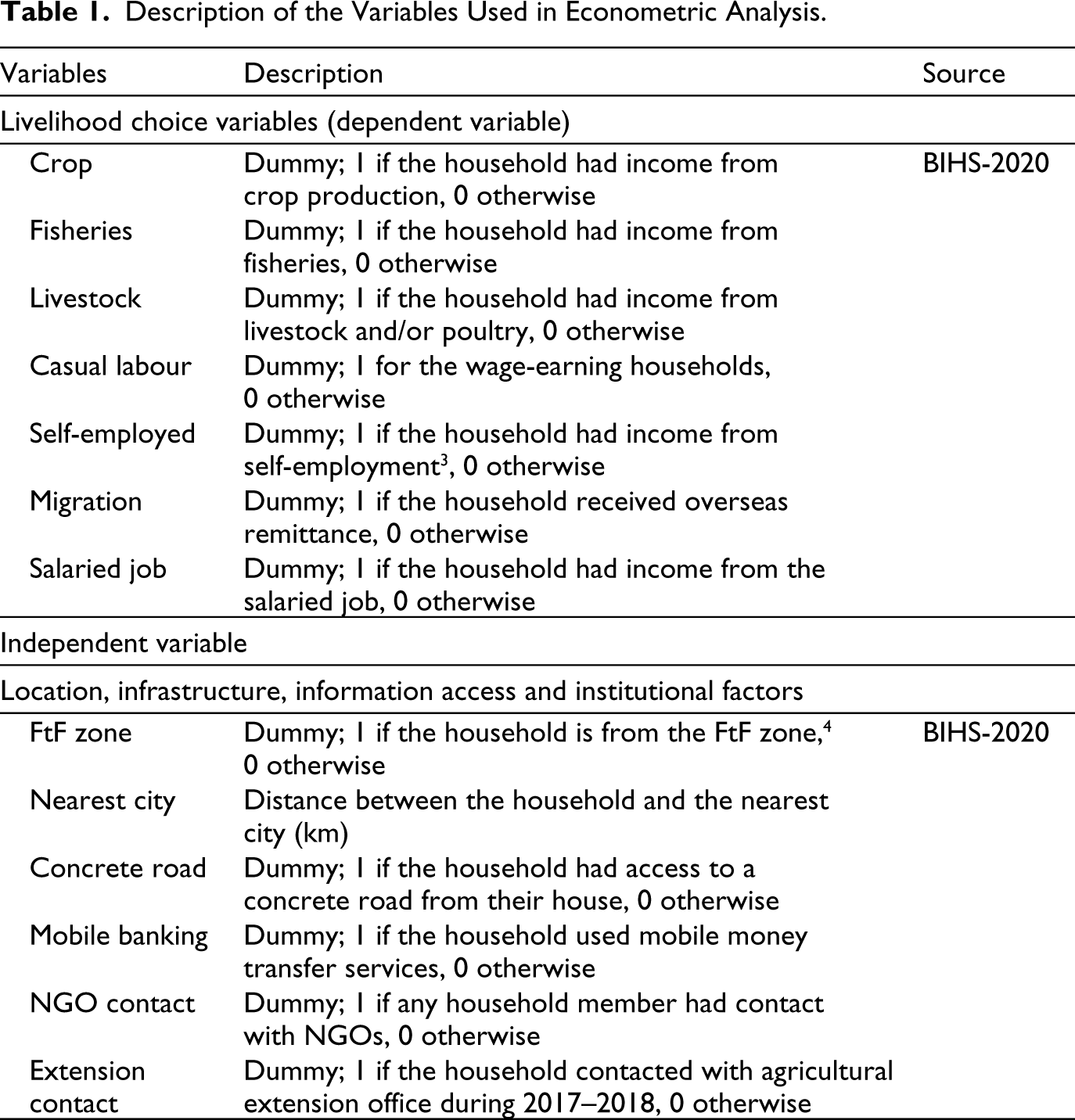
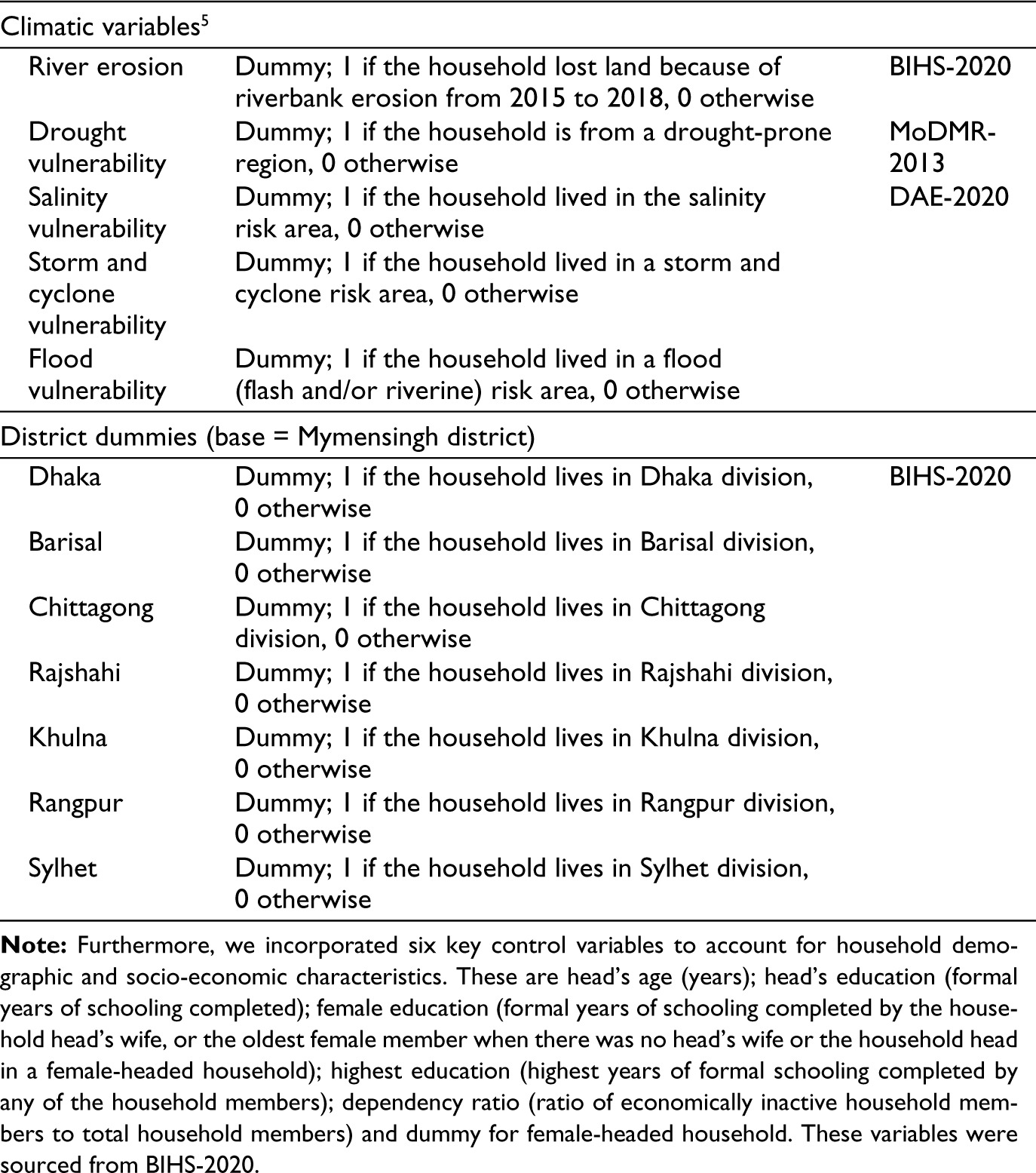
Figure 2 delineates that agriculture was the most common income source in rural Bangladesh. Among the households, 71% reported income from livestock, which echoes Selvaraju and Baas (2007) who reported that possessing a few livestock, either large animals or poultry birds, is common in most of the rural Bangladeshi households. The next common earning strategy was crop production (42.38%) followed by fisheries (40.91%) and self-employment (39.28%). Salaried job and migration were the least frequently reported, roughly around one in every ten households.
Percentages of Households with Income from Various Livelihood Activities.
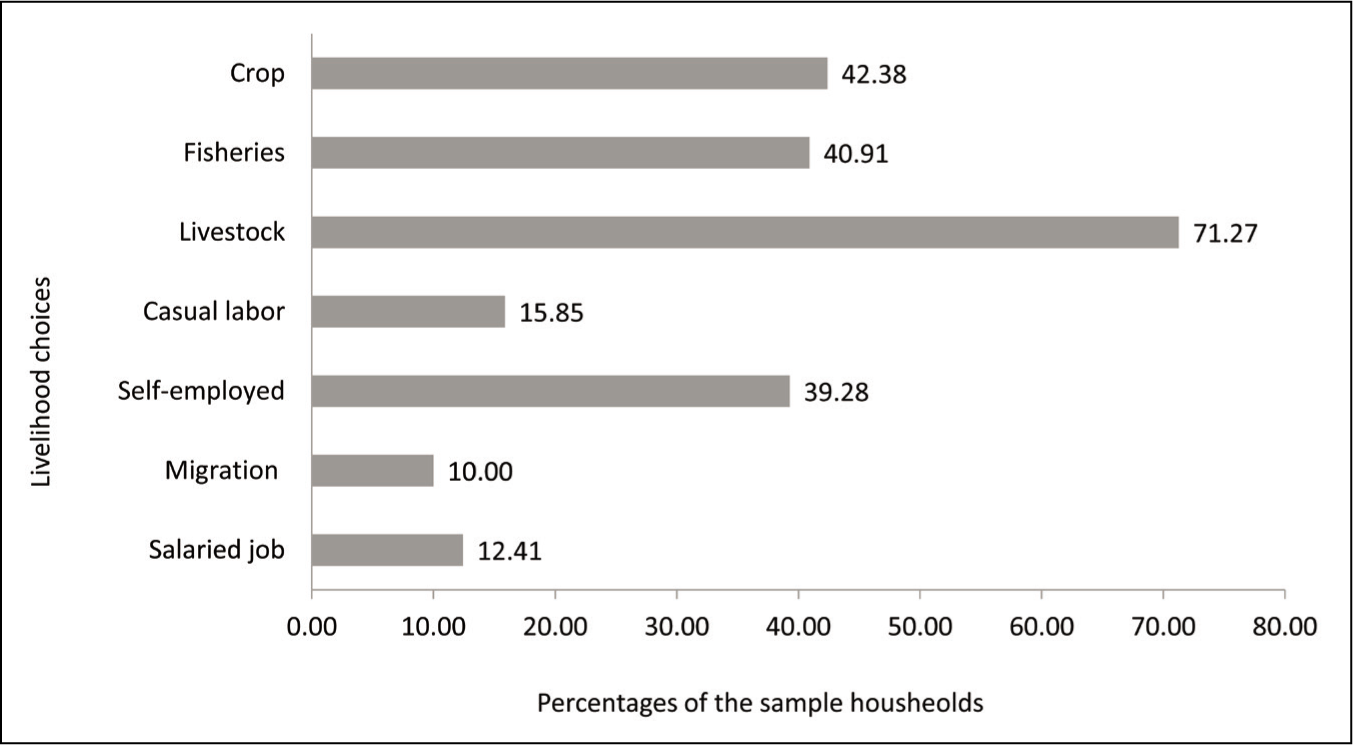
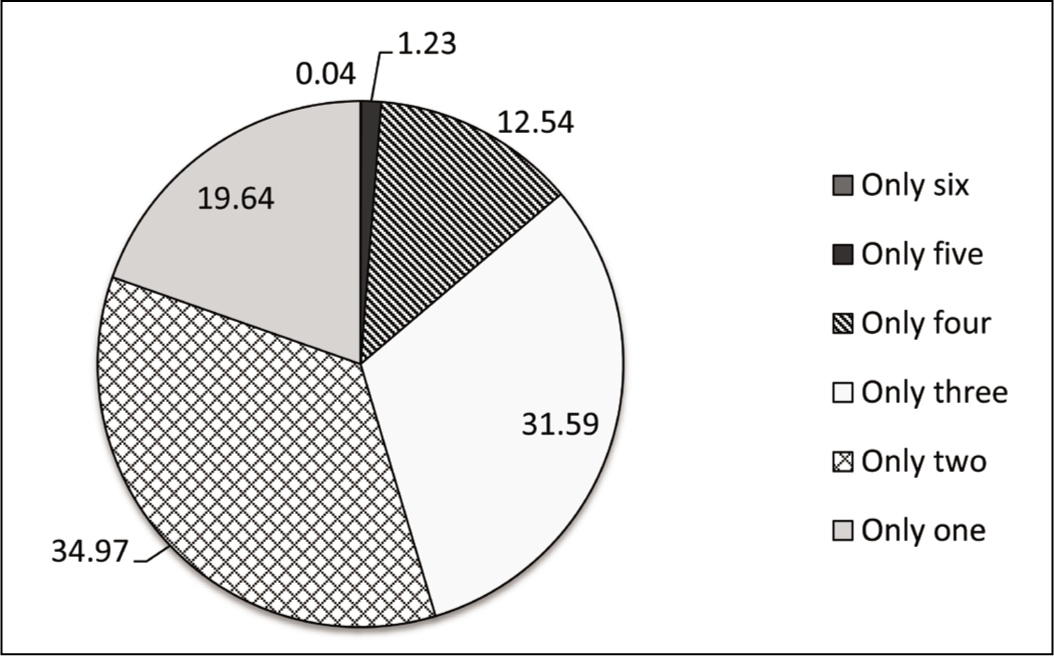
Figure 3 illustrates that having multiple income sources was common among rural households. Instead of conventional agriculture-based livelihood alone, households integrate farming and non-farming sources to maximize their total income and to avoid seasonality and climatic risks associated with agricultural activities (Hess et al., 2002). More than 80% of households had at least two income sources. None of the households reported having more than six income sources simultaneously.
Percentages of the Households with Multiple Livelihood Strategies.
Multivariate Probit Model for the Determinants of Livelihood Choices
We have developed a system of multiple equation probit model, i.e., multivariate probit model (MVP), to jointly identify the determinants of multiple income sources and the synergies that may exist between each pair of sources. The developed MVP model has seven separate equations, one for each of the identified seven income options mentioned in Table 1. The dependent variable in each of the equations is the dummy variable measuring participation in a specific earning activity (i.e., 1 if the household had income from that activity during 2018–2019, 0 otherwise).
The general form of the MVP model with M number of equations, where the probability to choose a livelihood option is a latent variable determined by observed explanatory variable (xm) can be specified as (Greene, 2012):

The stochastic component (εm) comprises all the unobservable factors which describe the marginal probability of deciding to adopt the mth livelihood strategy. The joint possibilities of the observed events [yi1, yi2, …, yiM | xi1, xi2, … xiM], i = 1, …, n, built the base for the likelihood function as (Greene, 2012):

where
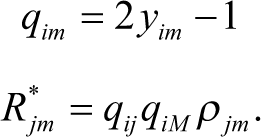
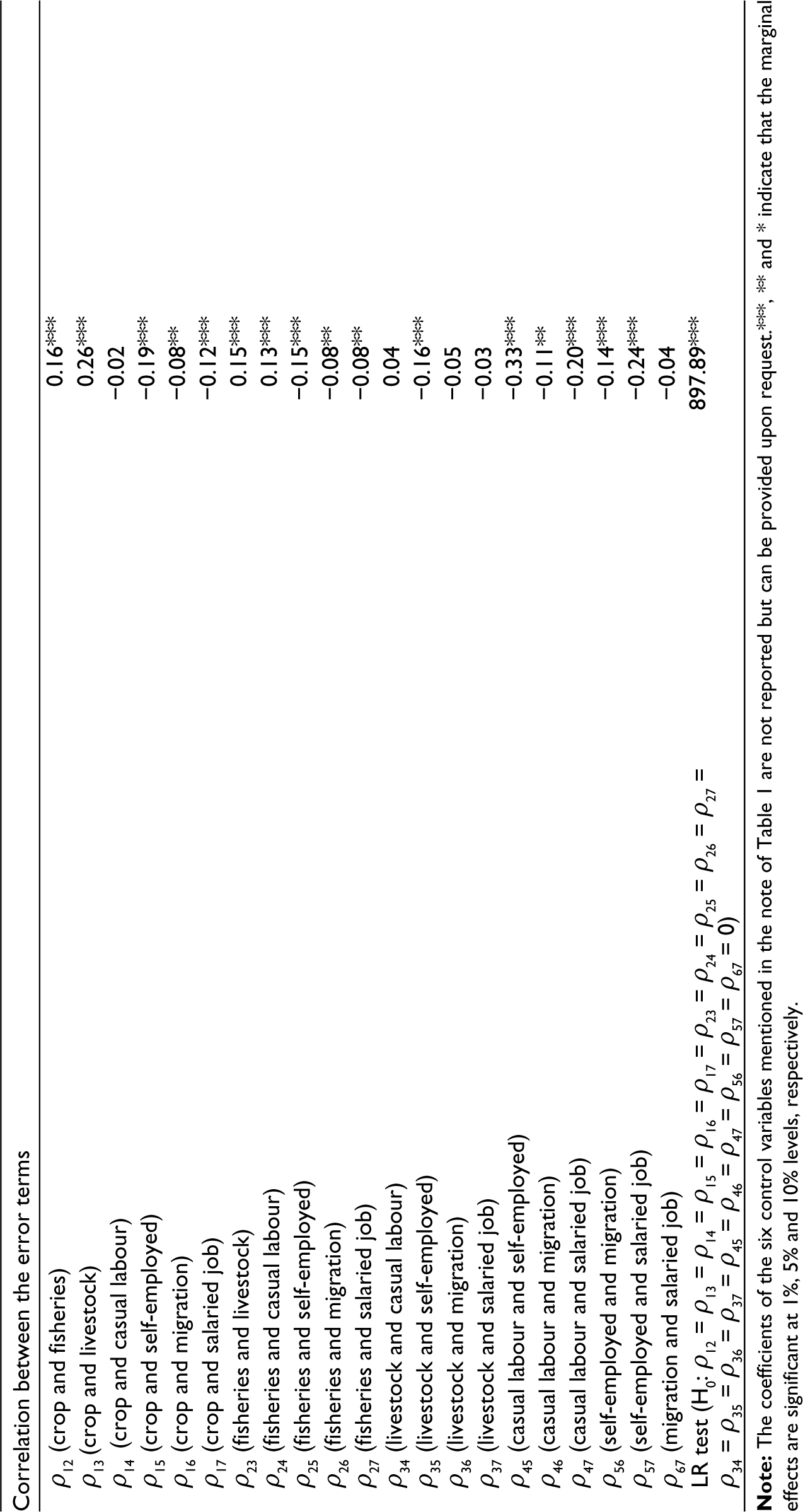
Here ρjm denotes the unobserved correlation between εj and εm, which are the stochastic components of the jth and mth types of livelihood decisions, respectively (Young et al., 2009). The distributions are independent only if ρjm = 0, whereas positive and negative correlations imply complementary and substitution relationships.
The marginal probability of observing mth livelihood option adoption can be expressed as (Young et al., 2009):

where Φ(.) is the cumulative density function of the standard normal distribution.
The explanatory variables (xm) are different household- and community-level factors utilized to predict households’ livelihood choice decisions. Following an extensive review of the literature, we have identified four broad categories of explanatory variables. These are six variables depicting aspects such as location, infrastructure, information access and institutional factors of households; five variables related to climatic conditions; seven divisional indicators and six variables representing the socio-economic demographics of households, which are considered as control variables in the study. The variables are explained in detail with their measurement technique in Table 1. While selecting the socio-economic and demographic variables, we were concerned that some of these may have simultaneous causality with livelihood choice decisions, a potential source of endogeneity. To address this challenge, we specifically included variables that are exogenous so that our results are unbiased and robust.
Results and Discussion
Summary Statistics of the Explanatory Variables Used in Explaining Livelihood Choices
Table 2 provides a summary of the explanatory variables used in the econometric analysis. A significant majority of households (95%) are from flood-vulnerable regions, which is not surprising since Bangladesh is situated at the low-lying Ganges delta (less than 5 metres above mean sea level) (Brammer, 1990). However, merely less than 1% reported land loss due to river erosion. Storm and cyclone vulnerability affected 68% of households, followed by drought vulnerability at 37% and salinity vulnerability at 29%. There is significant variation in livelihood choice adoption across different climate vulnerabilities, except in flood-vulnerable areas. While certain options like agriculture remain prominent across the spectrum of vulnerability, there are noticeable shifts in choices, particularly in response to specific vulnerabilities. For instance, migration emerges as a more prevalent strategy in areas susceptible to flood, salinity and storms and cyclones, while casual labour is the most common in drought-prone and flood-vulnerable areas.
Descriptive Statistics (Mean) of the Explanatory Variables.
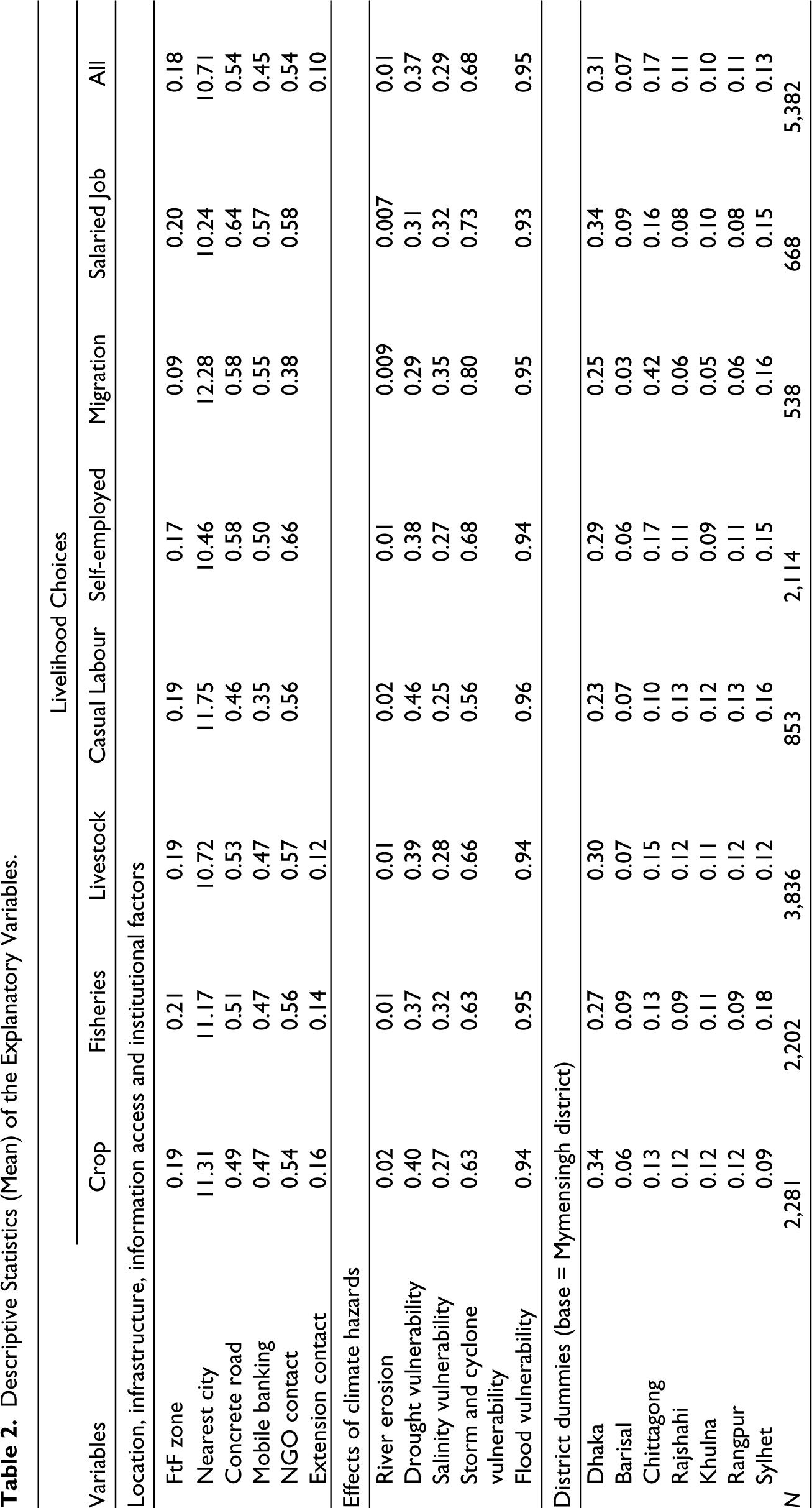
In the feed-the-future (FtF) zone, agriculture and casual labour are prominent choices, while in areas with concrete roads, self-employment and salaried jobs have higher adoption rates. Mobile banking is widely utilized across various livelihoods, particularly among households with self-employment and salaried job, with a slightly lower utilization rate among households with income from casual labour and livestock farming. Engagement with NGOs is notably high across various livelihoods, particularly in self-employment and salaried job sectors. Notable differences also exist across the divisions. Given the substantial disparities in livelihood choice adoption observed, conducting a thorough livelihood determinant analysis becomes imperative to inform targeted interventions and enhance adaptive strategies for vulnerable communities.
The Mvprobit Model Estimates for Determinants of Livelihood Choices
Climatic Factors and Hazards Shaping Households’ Livelihood Choices
The descriptive statistics and the MVP model results argue that climatic factors are important in explaining households’ livelihood decision uptake. Climate stresses affect households’ agricultural adaptation strategies along with other non-agricultural strategies (Duffy et al., 2021; Mishra & Pede, 2017; Mishra et al., 2018). However, their direction of effects varies depending on the nature of the hazard and type of strategy.
Among the five climate vulnerability variables introduced in the MVP model, storm and cyclone vulnerability has the most pronounced role in explaining households’ income strategy choices. Households living in areas vulnerable to storms and cyclones are less likely to adopt agricultural activities and casual labour but are more likely to migrate and uptake self-employment and salaried jobs (Table 3). Storms and cyclones cause instant crop loss, can destroy aquaculture infrastructure and fishing equipment and sometimes even cause the loss of fishers’ lives. The events make livestock vulnerable through livestock displacement and death, as well as the aftermath continues with feed and shelter shortage and spread of rapid infectious disease (Goosen et al., 2018). Moreover, as early predictions about these events are challenging, many households, particularly the risk-adverse ones in the areas prone to storms and cyclones, may prefer to avoid agriculture. Storms and cyclones significantly reduce overall economic activities in affected areas, resulting in fewer opportunities for daily labour work. These natural calamities also lead to initial forced-out migration, while a vast majority may become permanent migrants out of fear of limited employment opportunities in their localities (IOM, 2010). Meanwhile, the people with the necessary skills and resources are better equipped to adopt, often choosing more remunerative options like self-employment and salaried jobs. Households living in drought-vulnerable areas have a higher likelihood to engage in livestock and casual labour, while there is a decrease in the likelihood of choosing fisheries (Table 3). Drought is defined as the non-availability of rainfall, leading to a decrease in base and surface water flow, consequently, depletion of soil moisture significantly below the normal level (Nandargi et al., 2010) and drying up water bodies (Goosen et al., 2018). Thus, fisheries are unsuitable and have been becoming uncommon over time in drought-affected areas of Bangladesh (Selvaraju & Baas, 2007). On the other side, households maintain livestock as a risk management strategy to cope with the adverse drought impact on farms and having a few poultry birds is a tradition and customary practice in Bangladesh, which one can observe from the high number of households engaged with livestock and poultry (Table 2). Anik et al. (2021) also recommend promoting livestock rearing to combat climate change–induced challenges in farming in drought-prone areas. Although the lack of grazing facilities in drought-affected areas constrains the mass rearing of cattle and goats, the severity of drought is not that much higher in Bangladesh to make an area completely barren. In response to these challenges, day labour has emerged as a common strategy in drought-vulnerable areas. This trend has gained prominence due to the expansion of off-farm activities, providing households with an alternative source of income and livelihood diversification (Selvaraju & Baas, 2007). Diversification between farm and off-farm income sources is the most undertaken strategy in the drought-prone areas of Uganda (Damalie et al., 2017) since this can ensure resilience towards drought (Gebru & Beyene, 2012).
Determinants of Livelihood Choices (Marginal Effects from MVP Model).
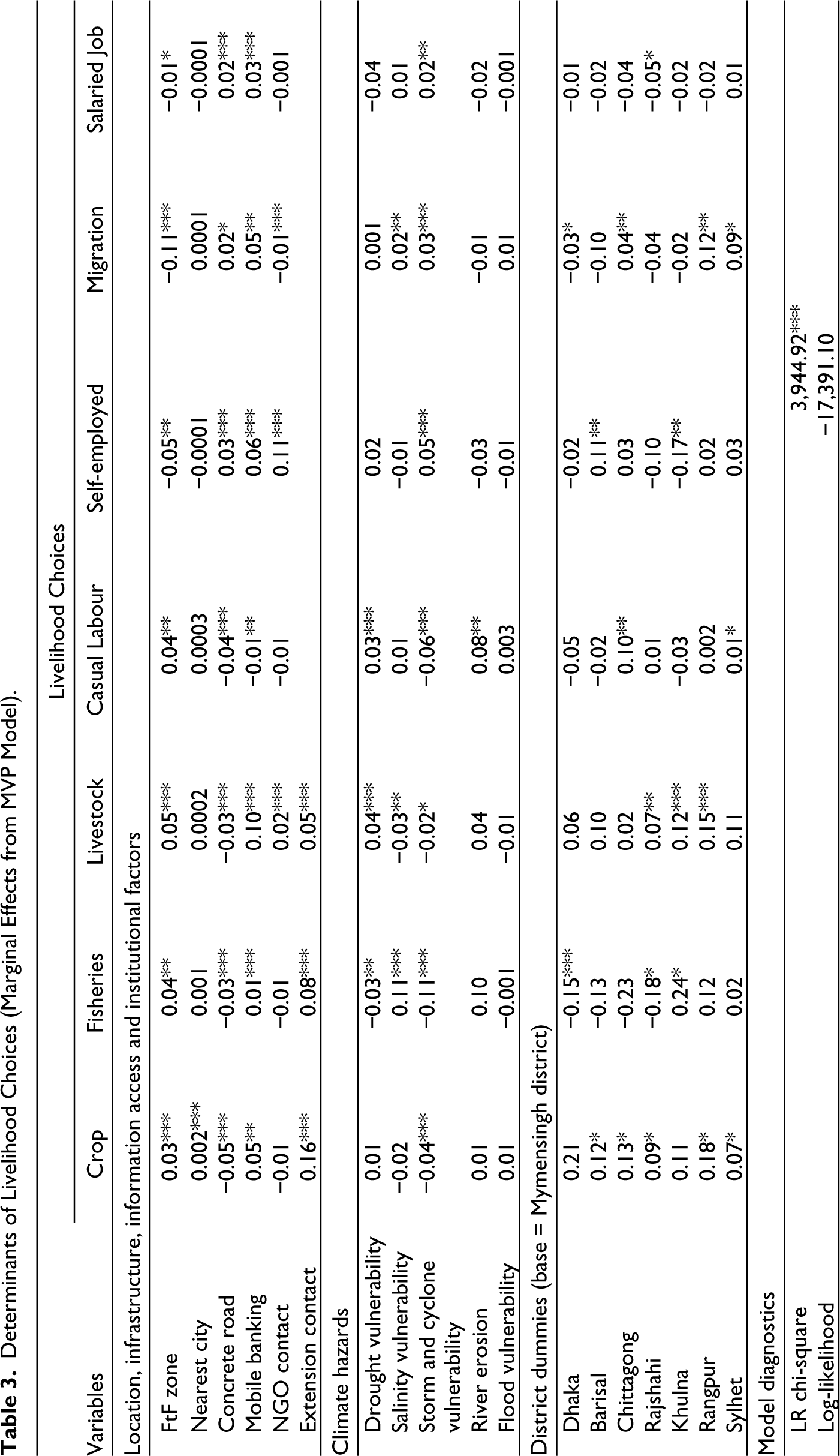
People are more likely to act in response when they have been exposed to the physical impacts of climate hazards (Trinh et al., 2018), like salinity intrusion in southern Bangladesh. In these regions facing salinity stress, households shift away from livestock rearing and often opt for fisheries and migration as preferred livelihood strategies (Table 3). This shift is in response to the vulnerability of livestock due to salinity intrusion, which leads to the depletion of drinkable water and pastureland (Goosen et al., 2018). Salinity intrusion directly threatens livestock’s viability, prompting households to seek alternative livelihood options. Under salinity stress, some individuals may migrate to escape the environmental degradation caused by high salinity levels in affected areas (IOM, 2010). Alternatively, individuals with some land and knowledge may employ an innovative approach by converting their crop fields into saline water fisheries. This adaptive strategy not only showcases the resourcefulness of households but also highlights the capacity for creative solutions in the face of environmental challenges. Moreover, owning a larger agricultural landholding is advantageous for involvement in saline water-based fisheries (Anik et al., 2018). This is particularly true for shrimp culture, which has gained popularity due to its high profit potential (Bernier et al., 2016). The cultivation of high-value species like shrimp underscores the economic incentives that drive households to invest in this sector, further illustrating the dynamic nature of livelihood adaptation in the context of salinity stress.
Interestingly, though historically Bangladesh is known for its vulnerability to flood and 95% of the households are from flood-vulnerable areas, we did not find robust effects of flood vulnerability and riverbank erosion in households’ decisions (Table 3). Two underlying reasons can be placed to explain this insignificant effect. First, there has not been any nationwide massive flood incidence after 2008. Therefore, the households may not require adjusting their strategies. Second, historically floods have been a regular event in Bangladesh. The government and international development partners have funded several massive programmes to make dams and embankments for river management. In addition, there were rehabilitation and adaptation programmes focusing on agriculture and livelihood of the flood victims. Following these, the flood severity may have been much lower than earlier, and households may have already adapted.
Table 3 illustrates that dwellers who lost land during 2015–2018 because of riverbank erosion are more likely to pursue casual labour selling, a trend noted common by Rahman (2010) and Tuyen et al. (2014) among the Bangladeshi and Vietnamese households who lost land due to riverbank erosion. Changes in livelihood strategies require time for learning new skills, developing market connections and investing (Nkonya, 2004). The land-losing dwellers are less likely to have these options, but an easy switchover to occupations that have low entry barriers like informal labour supply (Tuyen et al., 2014).
Livelihood Choices in the FtF Zone
The dummy for the FtF zone is introduced to know whether belonging to economically marginalized and environmentally vulnerable areas affects households’ income strategy choices. Households living in the FtF zones have a higher likelihood to opt for the selected three agriculture income sources and casual labour selling, while they are less likely to uptake self-employment, migration and salaried job (Table 3). Compared to other parts of the country, the FtF zone is prone to poverty, hunger and malnutrition and less vibrant in terms of economic opportunities and activities and more vulnerable to several climatic factors and hazards (Feed the Future, 2020). This ascertained that people of such areas are resource-poor and are constrained by several other institutional and environmental factors, and consequently are less capable of adopting income sources such as self-employment, salaried job and migration that require more capital, education and skills. Ultimately, they opt for conventional livelihood strategies like agriculture and casual labour that have limited entry barriers.
Infrastructure, Information Access and Institutional Factors as Determinants of Income Sources
The variable nearest city, which is measured as the distance between the nearest city and the household, has a significant effect only in the equation for crop production, while the variable concrete road has a significant effect across all the equations (Table 3). The differences in effects between the two variables highlight the importance of improved infrastructure over physical distance.
The estimated negative coefficient with the variable nearest city implies that crop farming is preferable in remote villages. Alternatively, when a household gains connectivity through concrete roads, its likelihood to join agriculture and casual labour reduces, while the probability of up-taking self-employment, salaried job and migration increases (Table 3). The results are supported by Rahman and Akter (2014) and Salam and Bauer (2020), who noted the importance of rural infrastructure in remunerative occupational choices.
The households who use mobile banking to transfer money are more likely to engage in all income-generating activities except causal labour selling (Table 3). Mobile banking eases and boosts economic activities by ensuring relatively safe and convenient money transfer facilities at times of need (Lee et al., 2021). Ultimately, a household’s domain of choices increases where laborious activities get less priority. There is empirical evidence that mobile phone–based money transfer services significantly increased farm-level input availability and contributed to agricultural commercialization and income. The implications can be at a much higher level to resolve a market failure (Kirui, 2013).
Contact with NGOs increases a household’s probability of undertaking strategies like self-employment and livestock rearing while reducing the probability to migrate (Table 3). NGOs distribute credit and provide training on different income-generating activities (Fruttero & Gauri, 2005; Roy & Basu, 2020; Sarker et al., 2020). In the process, a household gains the basic skills, knowledge and financial capital to uptake entrepreneurial activities (Amevenku et al., 2019). Ultimately, the beneficial households may not feel the necessity to migrate.
As accepted, extension services positively contribute to the adoption of all three agriculture-based income strategies. Extension services provide agriculture-related knowledge, training and skills (Asravor, 2018), and therefore, act as a source of agricultural information (Yobe et al., 2019). Ultimately farming households can produce and earn more from farming. The finding is in accordance with Amevenku et al. (2019), where fisher households with access to extension services were found to diversify their farming activities.
Regional Dynamics in Livelihood Choices
The MVP model reveals the significant influence of divisional dummies on households’ decisions regarding livelihood choices (Table 3). Particularly noteworthy is their impact on crop farming, with five out of seven divisional dummies exhibiting significant positive effects in the equation for crops. This indicates a preference for crop farming in Barisal, Chittagong, Rajshahi, Rangpur and Sylhet divisions compared to the reference division, Mymensingh. Khulna’s geographical location makes it conducive to both fresh and salt-water fisheries (Bhowmick et al., 2016), leading to a higher likelihood of households engaging in this sector. Anik et al. (2018) also support this, citing higher incomes from fisheries in Khulna. Conversely, Rajshahi is a drought-prone area with scarce water, where fisheries are infeasible (MoDMR, 2013). The divisional variables have a relatively lower impact on the likelihood of choosing salaried employment. This underscores the importance of tailoring interventions and policies to address the specific needs and opportunities in different divisions, given the regional variations in livelihood preferences.
Synergies Across Different Livelihood Options
The bottom part of Table 3 presents the correlations between the error terms of each pair of equations, which shows the synergies that exist between the two livelihood strategies. The likelihood ratio test represents the null hypothesis referring to the correlations of the error terms across seven equations that are jointly zero (ρjm = 0). The plausible explanation for the rejection of the hypothesis is the interdependencies among various livelihood choices in a household. The positive and significant association between the disturbance terms of all the agricultural strategies (i.e., crop production, livestock and fisheries) equation implies that uptake of one of these strategies increases the adoption probability of the other since all the agricultural strategies require some similar sets of labour, skills and assets. A farm household is more likely to diversify within the domain of agriculture to mitigate the adverse impact of environmental vulnerability and other uncertainties associated with farming (Adnan et al., 2020). Nkonya (2004) argued that households could hardly switch over from agriculture to non-agricultural options and vice-versa and among these non-agricultural options, because these changes require new skills along with different forms of investment which is challenging over a short period of time. This is evident from the negative association that exists between agriculture and other strategies, at least in the case of those having significant relationships.
The error term of the equation casual labour has a negative correlation with the equations for self-employed, salaried job and migration. Casual labour activities are stressful, sometimes seasonal and less remunerative and prestigious. Hence, a household with income from more remunerative sources is less likely to work as day labour. The only exception was the positive association between casual labour and fisheries. This may be very likely due to small-scale fisheries households, who may not earn enough from the fisheries and lack assets (e.g., land) and skills for other agriculture and non-agriculture income sources and, hence, casual labour may be the immediately available income source for them.
The negative correlations between migration and all other income sources except salaried job imply that with regular remittance flow households are less likely to seek other income sources. With remittance, household members either become reluctant to work since remittance ensures the household’s economic stability (Raihan et al., 2009). Remittance may allow some foresightful households to try to accumulate proper education, training and skills opting for better livelihood opportunities.
Conclusion
Studies on rural livelihoods have been at the centre of attention for policymakers because livelihood amelioration is important for economic development. Through exploring a nationally representative database, this study identified the determinants of rural livelihood choices in Bangladesh using the MVP model approach. Different agriculture-based income sources were the most common among rural households. Among agriculture, livestock rearing was the most common source, followed by crop production and fisheries. Beyond agriculture, the most commonly adopted income-generating activities were self-employment, followed by casual labour, salaried jobs and migration. Around four in every five households simultaneously relied on multiple income sources. There exist notable synergies in households’ livelihood decision uptake, which argues for the limitation of the binary/multinomial types of models that are commonly used in literature. Adoption of one agriculture-based strategy increases the probability of adopting other agricultural strategies, while reducing the probability of adopting other strategies, except households involved with fisheries have a higher probability of adopting casual labour. Households doing casual labour supply are less likely to be involved with other livelihood strategies. Similarly, households substitute between migration, salaried job and self-employment.
The estimated MVP model reveals that climatic factors are critical in explaining households’ livelihood adoption decisions. The vulnerable communities living in the FtF zone depend more on agriculture and casual labour selling. Improved road connectivity has a more robust effect across income strategy choices than the distance between households and the nearest city. Since mobile banking facilitates ensure safe and easy money transfer services, households with the facility are more likely to adopt all the income-earning options, except casual labour selling. Extension service is another critical factor that can facilitate households’ agricultural decision uptake, while NGOs help in up-taking self-employment and agricultural enterprises like fisheries.
The role of various climate hazards on livelihood uptake decisions is also explored in this study, which has not been profoundly noted in earlier literature. The climate hazards which deteriorate the environment in a gradual process and have trends, such as drought and salinity, as well as sudden extreme events including storm and cyclone and river erosion, all affect livelihood decisions. Households in drought-vulnerable areas can rear a few livestock and do labour selling to earn money but do not choose fisheries because it is not feasible in water-scarce areas. On the contrary, salinity imposes challenges in livestock rearing as well as makes daily life difficult due to the unavailability of fresh water; thus, some are forced to migrate, while some may cope by shifting to saltwater-based fisheries. Other extreme events such as storms and cyclones impose adverse impacts on all agricultural activities, thereby reducing opportunities for casual labour. Hence, people migrate for earnings and choose self-employment and salaried job which are less affected by these natural calamities. Among all the climatic events considered, flood vulnerability and riverbank erosion had the least profound effect on livelihood decisions, which is likely to be the outcome of Bangladesh’s long experience and success in the fight against these events. However, households who lost their land due to riverbank erosion are more likely to participate in the casual labour market. Regional variables in terms of divisional dummies mostly affect agricultural livelihood choices while some specific division has an impact on non-agricultural livelihood choices.
Several policies can be prescribed based on the study findings. First, more investment should be directed at improving road connectivity and transport facilities. It would foster high remunerated non-farm income sources along with making the marketing of agricultural goods cheaper and faster. Mobile banking facilities can have an important supportive role here. Second, specific need-based policy should be undertaken for the FtF zone to expand the adaptive capacity of those vulnerable people, so that, they can explore more diversified livelihood alternatives rather than depending on the subsistence livelihood activities. Third, context-specific initiatives are required to address different climatic stresses. For instance, extension services should prioritize promoting different climate-smart crops, varieties and technologies that are resilient to abiotic stresses such as drought, heat, flooding and salinity. Involvement in non-farm activities can assist rural households to stabilize their earnings and balance their income from both farm and non-farm sectors in the face of devastating natural calamities. Visualization of all these policy measures will be challenging; nonetheless, it will strengthen rural livelihoods and promote economic growth.
Footnotes
Declaration of Conflicting Interests
The authors declared no potential conflicts of interest with respect to the research, authorship and/or publication of this article.
Funding
The authors received no financial support for the research, authorship and/or publication of this article.