



Abstract
Augmenting low income or subsistence lifestyles in developing countries with knowledge, skills and values to enable communities to live in a more sustainable manner is becoming increasingly important as the demands to simply survive increase. Consequently, education for sustainable development (ESD) has emerged strongly in recent years to become a key mechanism for a more sustainable future. Using a case study approach to determine a non-formal ESD programme’s response to the United Nations Educational, Scientific and Cultural Organization’s (UNESCO’s) (2005) ESD ‘characteristics’, this study aims to gauge the success and value of non-formal ESD. A qualitative research was undertaken in 2017 employing various data collection methods, including interviews, focus group discussions, observations and the examination of national policy documents and the non-formal ESD curriculum. The study found that the non-formal education sector provided significant support to the formal education system, leading to improved vertical integration from international guidelines to local-level implementation. The findings demonstrate the potential of the non-formal sector to augment ESD in developing contexts where the national government may lack policy or the ability to provide schools with adequate educational resources.
Keywords
Introduction
In the end, we will conserve only what we love; we will love only what we understand, and we will understand only what we are taught. (Baba Dioum)
A Senegalese forestry engineer, Baba Dioum, said these words as part of his speech at the International Union for the Conservation of Nature meeting in New Delhi in 1968. This signifies the importance of education in ensuring the management and conservation of natural resources for future generations. Education for sustainable development (ESD) has emerged strongly in recent years as a key mechanism for moving towards a more sustainable future, as it is ‘fundamentally about values, with respect at the centre: respect for others, including those of present and future generations, for difference and diversity, for the environment, for the resources of the planet we inhabit’ (UNESCO, 2005, p. 5).
While there has been a growing body of ESD research in recent years, gaps have been identified in three areas. These include: ESD that ‘occurs outside the formal system, but through other organized learning settings’ (the non-formal sector) (Buckler & Creech, 2014, p. 20); ESD in developing contexts; and the involvement of primary-school children in ESD. Research on non-formal education programmes has shown the potential contribution that the non-formal sector can make to the formal education system (Brennan, 1997; Mahruf et al., 2011). Furthermore, as children are the future custodians of the planet, ensuring that they are active participants in the sustainable-development movement is critical (UNCED, 1992, 25.12.). This article addresses these gaps in the current ESD literature through a qualitative analysis of a non-formal primary school ESD programme in a developing context.
This study aimed to gauge the success and value of non-formal ESD using a case study of the Zambezi Region Children in the Wilderness (CITW) Eco-Club programme in southern Africa.
To achieve this aim, the following objectives as modes of analysis were met:
Eco-Club programme alignment with international guidelines for ESD; National education policy alignment with international guidelines for ESD; Eco-Club programme alignment with national education policy; and CITW’s achievement of its aim and vision through the Eco-Club programme.
Background
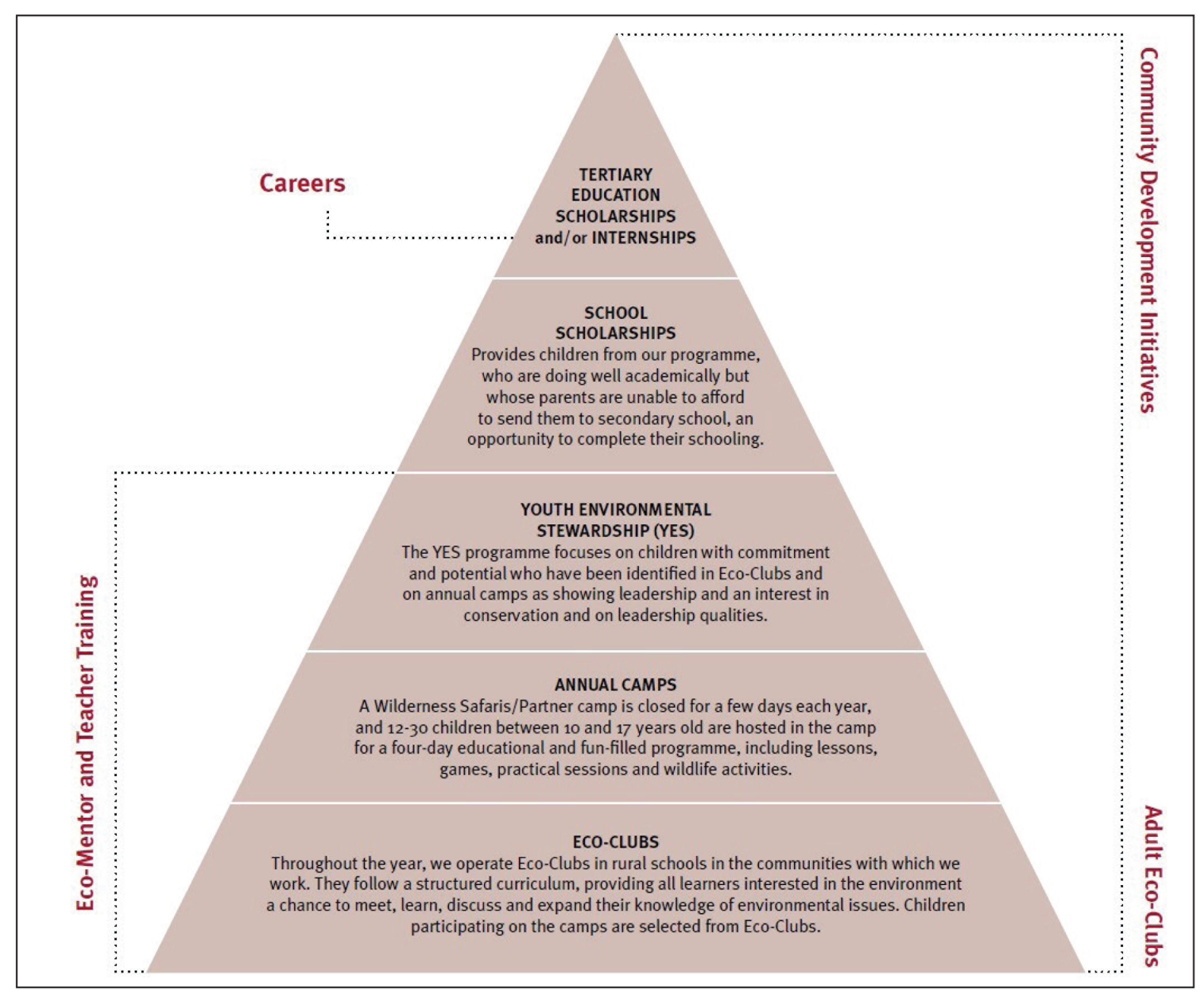
CITW is a non-profit organization, supported by the ecotourism company Wilderness Safaris, that focuses on ESD and life skills (Wilderness Holdings Limited, 2017). The organization aims to ‘facilitate sustainable conservation through leadership development and education of rural children in Africa’ (Wilderness Wildlife Trust & Children in the Wilderness, 2018, p. 65). In line with this aim, the vision of the organization is ‘to inspire the children to care for the environment so that they can become the custodians of these areas in the future’ (WWT & CITW, 2018, p. 66). Structured into a five-tier programme as shown in Figure 1, CITW provides opportunities and support for local children from the primary level through to the tertiary level. This article focuses on the lower tier of the programme: eco-clubs. These are extracurricular groups that have been established at primary schools in communities in which Wilderness Safaris works. These groups operate near camps and on the periphery of national parks. The Eco-Club programme is a recent addition to CITW’s programmes to complement the organization’s aim by providing for the consistent presence of a large number of primary-level children through weekly lessons facilitated throughout the school year.
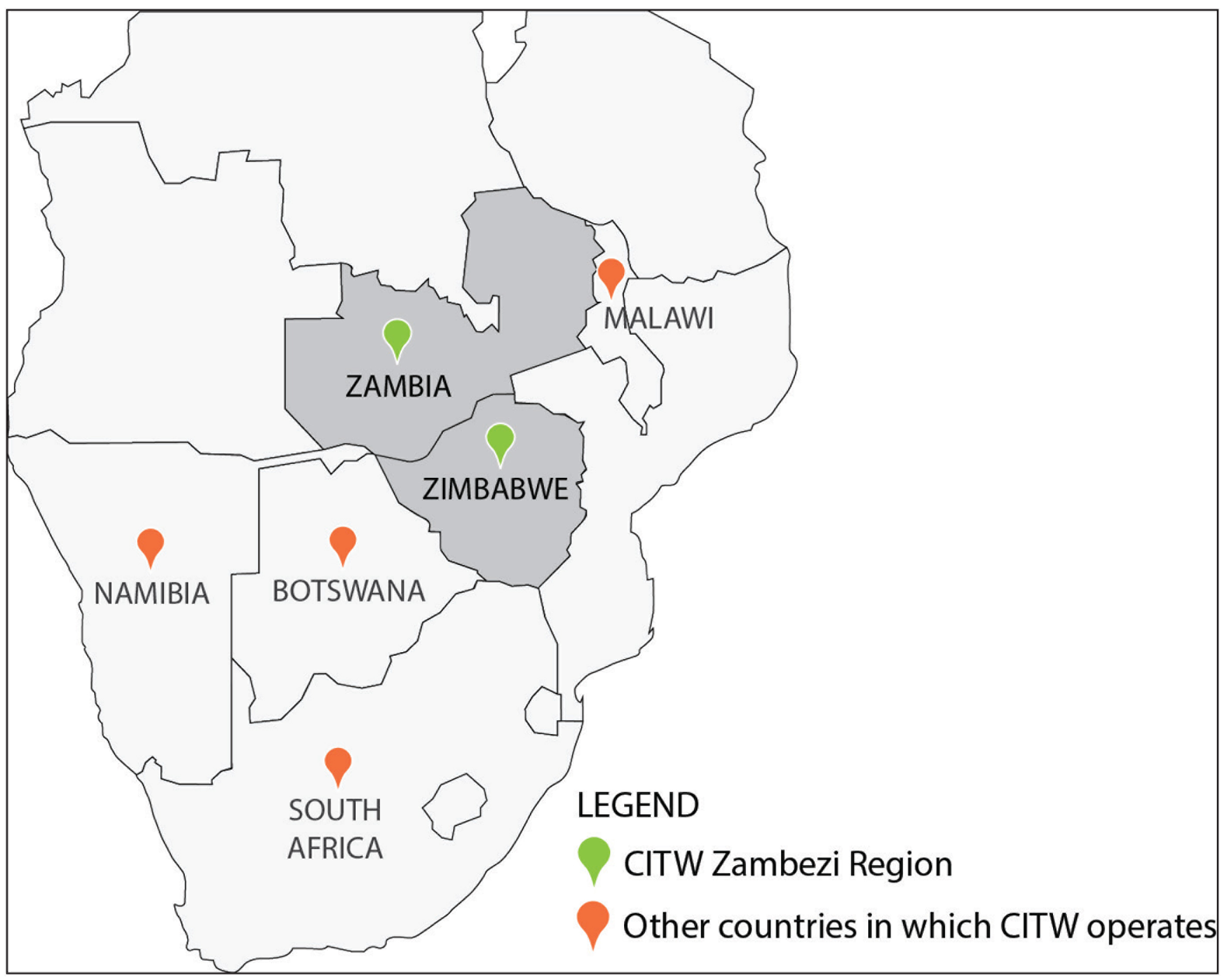
While CITW operates in several African countries (see Figure 2), this article focuses on the Zambezi Region: eco-clubs in Zambia and Zimbabwe. At the time of research, 17 schools were supported by CITW Zambezi: 7 in Zambia and 10 in Zimbabwe. During 2017–2020, this programme has grown, and now 29 schools are supported: 11 in Zambia and 18 in Zimbabwe.
Literature Review
The Non-formal Education Sector and ESD
Non-formal education is defined as ‘education that takes place outside of formal schooling’ (Jackson, 2016, p. 64). It is widely agreed that non-formal education is a critical component of the education sector (Brennan, 1997; Buckler & Creech, 2014; Kieu & Singer, 2015; Sultana & Haque, 2019), particularly in developing countries where a lack of financial resources often leads to the inability of the formal sector to provide quality education (Kieu & Singer, 2015; Sultana & Haque, 2019). Therefore, the non-formal sector can augment the formal sector and provide ESD at little to no additional cost to the government, while enabling increased access to education for marginalized groups (Mahruf et al., 2011). A distinction should be made between the terms ‘non-formal’ and ‘informal’. According to Eaton (2010), non-formal education, while not recognized by the government, is often an organized and structured programme associated with a voluntary or non-profit organization. Informal education, on the other hand, is described as more spontaneous, such as a parent, friend or acquaintance imparting knowledge in an unguided way (Eaton, 2010). Although there is sometimes confusion between the terms, CITW’s work would be considered non-formal, as it is structured but not part of the formal curriculum.
Existing research on ESD tends to focus on case studies within the formal education sector. As a result, non-formal ESD has had less focus, even though it is an ‘area of growing importance’ according to Buckler and Creech (2014, p. 109). Over recent years, however, this body of literature has been expanding (Calvente et al., 2018; Sultana & Hague, 2019; Wals et al., 2017). In many African nations, the uptake and implementation of ESD, particularly in the formal sector, has been slow. This was highlighted at the end of the United Nations Decade of Education for Sustainable Development (DESD), where ESD was described as an ‘emerging interest’ in many African countries (Buckler & Creech, 2014, p. 85). Just 15% of the African countries use the term ‘ESD’ in their policies, which suggests that it is still an emerging interest (UNESCO, 2019a). While the final report on the follow-up programme to the DESD, the Global Action Programme, which ran from 2015 to 2019, has not yet been published, a progress report from this programme has stated the importance of ‘Expand[ing] transformative education approaches’ as a way forward (UNESCO, 2019b, p. 13). Furthermore, it was stated that more research regarding what is happening on the ground is required to gain a more holistic understanding of the implementation of ESD—something that this study addressed (UNESCO, 2019c). Through the expansion of the research undertaken on ESD in developing contexts, the increased knowledge in this area could lead to further uptake of ESD and enhance grassroots sustainable development. Mahruf et al. (2011) undertook a study on non-formal education in Bangladesh. Their conclusions led them to advocate strongly for an increase in non-formal education, as many characteristics for ESD as stipulated by UNESCO (2005) surfaced to a greater degree in the non-formal education setting. This is supported by Buckler and Creech (2014), who highlight that ‘non-formal education can be a powerful driver of change towards sustainable development’ (p. 144).
Brennan (1997) argues that non-formal education can be just as effective as, if not more effective than, the formal sector. This is corroborated by Haigh (2006), who examined the potential of integrating ESD in higher education with non-governmental organizations (NGOs) and the non-formal sector. Haigh argues that the practical work carried out by NGOs provides a contrast to the more ‘factual, technical and objective’ teachings in a classroom, and that non-formal education regarding the environment is ‘involving and emotionally affective’, as it is immediately lived, sensorial and experiential (p. 344). This suggests that non-formal education is more holistic than formal education, providing students with a more enriching learning experience. Furthermore, the reason for the effectiveness of non-formal education could be that the non-formal sector is able to provide a specific curriculum that is based on locally relevant issues (Bran et al., 2016; Mahruf et al., 2011) while not being bound by academic requirements (Young & McElhone, 1986). In a rural and developing context, this could be more valuable to students, as they would have the opportunity to learn about locally relevant issues, gaining skills to effectively resolve them.
Policy Integration
To gauge the success and value of non-formal ESD, the study analysed the vertical policy integration between international guidelines, national policy and the ESD programme. Vertical policy coherence and integration is crucial for policy effectiveness and improving national outcomes (Fien, 2012; May et al., 2005; OECD, 2006). As national strategies for sustainable development are guided by international organizations, such as UNESCO (Steurer et al., 2010), these should reflect international guidelines, which in turn should filter down to local government policies (Roosa, 2010), in this case CITW’s Eco-Club programme. Although vertical policy integration is acknowledged as an important factor in the improvement of national outcomes, there is a lack of research focusing on ESD and education policy integration. The few studies that have been undertaken regarding ESD are recent (Kadji-Beltran et al., 2017; Kuzich et al., 2015; Læssøe & Mochizuki, 2015). This suggests that ESD policy integration is a growing body of research, thus providing further support for the relevance of conducting studies in this area.
Where vertical policy integration is weak, fragmentation and weak links exist within and between levels of government (Læssøe & Mochizuki, 2015; Nordbeck & Steurer, 2016; Sedlacko, 2007). The lack of vertical integration is also stressed in the United Nations’ DESD report: ‘ESD is not integrated coherently across relevant sectorial or sub-sectorial policies’ (Buckler & Creech, 2014, p. 36). Nordbeck and Streurer (2016) examined by what means various European Union (EU) countries structure their national sustainable development strategies. They found that many strategies were ‘fragmented’ (p. 746) and therefore ineffective, because they were not able to respond to current ESD research or international-organization guidelines. This is pertinent to the research, as determining the degree to which the Eco-Club programme and national policy align with international guidelines for ESD will highlight the value of non-formal ESD to the formal sector. Nordbeck and Streurer’s work is supported by Læssøe and Mochizuki (2015), who arrived at a similar conclusion in their study of ESD and climate change education policy. As Nordbeck and Streurer’s and Læssøe and Mochizuki’s studies include developed and developing case studies, it appears that challenges in achieving vertical policy integration is of equal value across developing and developed contexts.
Key ESD Characteristics as Analytic Codes
The DESD, which ran from 2005 to 2014, established and defined the concept of ESD. The DESD’s vision for ESD was ‘a world where everyone has the opportunity to benefit from quality education and learn the values, behaviour and lifestyles required for a sustainable future and for positive societal transformation’ (UNESCO, 2005, p. 26). The DESD articulated key ESD ‘characteristics’: interdisciplinary and holistic; values-driven; critical thinking and problem solving; multi-method; participatory decision-making; applicability; and locally relevant (UNESCO, 2005, p. 18).
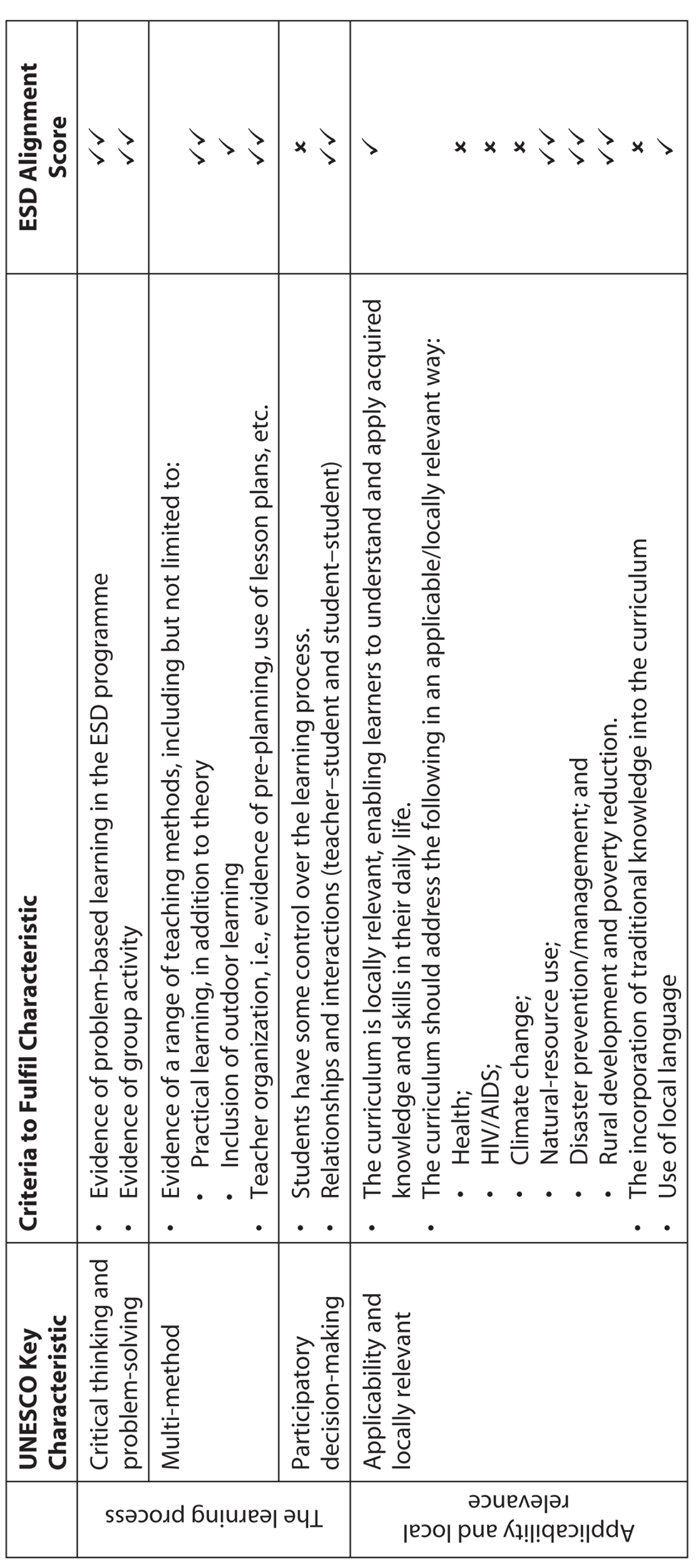
These characteristics have been applied in this study as a set of criteria against which to analyse an ESD programme. This includes the analysis of the vertical integration between international guidelines down to implementation at the local level of the case study. In addition to the ESD characteristics, UNESCO (2005) also stipulates strategic perspectives that should be incorporated in the planning and implementation of ESD. These include sociocultural, environmental and economic aspects, some of which include human rights, health and HIV/AIDS, natural resources and poverty reduction. As the strategic perspectives align with the key characteristics, they have been incorporated within the criteria into one ‘checklist’. The ESD characteristics using the strategic perspectives as the criteria needed to achieve them are set out in Table 3. While some of the criteria are not explicitly stated in UNESCO’s 2005 document, they do emerge in research undertaken by other authors (Davis, 2010; Dreyer & Loubser, 2014; Stanišić, 2016; Sterling, 2012), or they are acknowledged in Buckler and Creech’s (2014) final report for UNESCO at the culmination of the DESD. As more recent research, particularly Buckler and Creech, has highlighted the importance of these criteria in achieving ESD, it is important to include them. It is also important to note that many of these characteristics are linked, and the achievement of some criteria may contribute to several characteristics, particularly with regard to values. In terms of the terminology used throughout this article, ‘characteristics’ refers to the ESD characteristics explicitly stated by UNESCO, and ‘criteria’ refers to the individual aspects that are needed to achieve each characteristic. While UNESCO (2005) separates ‘applicability’ and ‘locally relevant’ into two characteristics, little can be distinguished between them. Thus, they have been combined into one characteristic for this study.
Method
A qualitative research approach was adopted to elicit participants’ perceptions of, and experiences with, the ESD programme (Camfield et al., 2009; Hesse-Biber & Leavy, 2011). The CITW Eco-Club programme was chosen as a case study for this research, as it is a non-formal ESD programme facilitated in developing countries and enabled the research aim and objectives to be achieved. As CITW Zambezi includes Zambia and Zimbabwe, eight CITW eco-clubs across the two countries were included in this study. A range of data collection methods were incorporated to gain a holistic understanding of the vertical integration between UNESCO’s (2005) characteristics for ESD, national education policy and the CITW Eco-Club programme. Interviews and focus group discussions are the most common forms of qualitative data collection used in the existing literature on ESD (Ampuero et al., 2015; Breunig, 2013; Davis et al., 2008; Redman, 2013; Salter, 2013), as they are flexible and can be applied in a range of contexts. Primary data collection in this study also included interviews with the CITW programme coordinator, eco-mentors and parents, focus group discussions with Eco-Club members and observations.
Determining the level of vertical policy integration required the analysis of national-education-policy documents and CITW reports alongside relevant international documents (see Table 1). The CITW Eco-Club curriculum was analysed to determine the level of integration with UNESCO’s (2005) characteristics and the national education policy. This was done through comparing the Eco-Club curriculum with the characteristics and criteria described in the literature review. The national education frameworks and science-related syllabi for Zambia and Zimbabwe were studied to gain an understanding of the importance placed on ESD by each country. Existing ESD-related research in these countries was also examined, as it provided current data on some of the issues and challenges faced at the time. The CITW Eco-Club curriculum was also analysed to ascertain whether the organization was achieving its aim and vision and whether there were consistency and coherence between the aim and vision, the curriculum and the implementation in the eco-clubs. This multi-method approach enabled a robust study, as the data could be triangulated across the eco-clubs and participant groups. The framing of questions for the participants was guided by UNESCO’s characteristics for ESD.
Primary and Secondary Data Collection Methods Employed in this Study
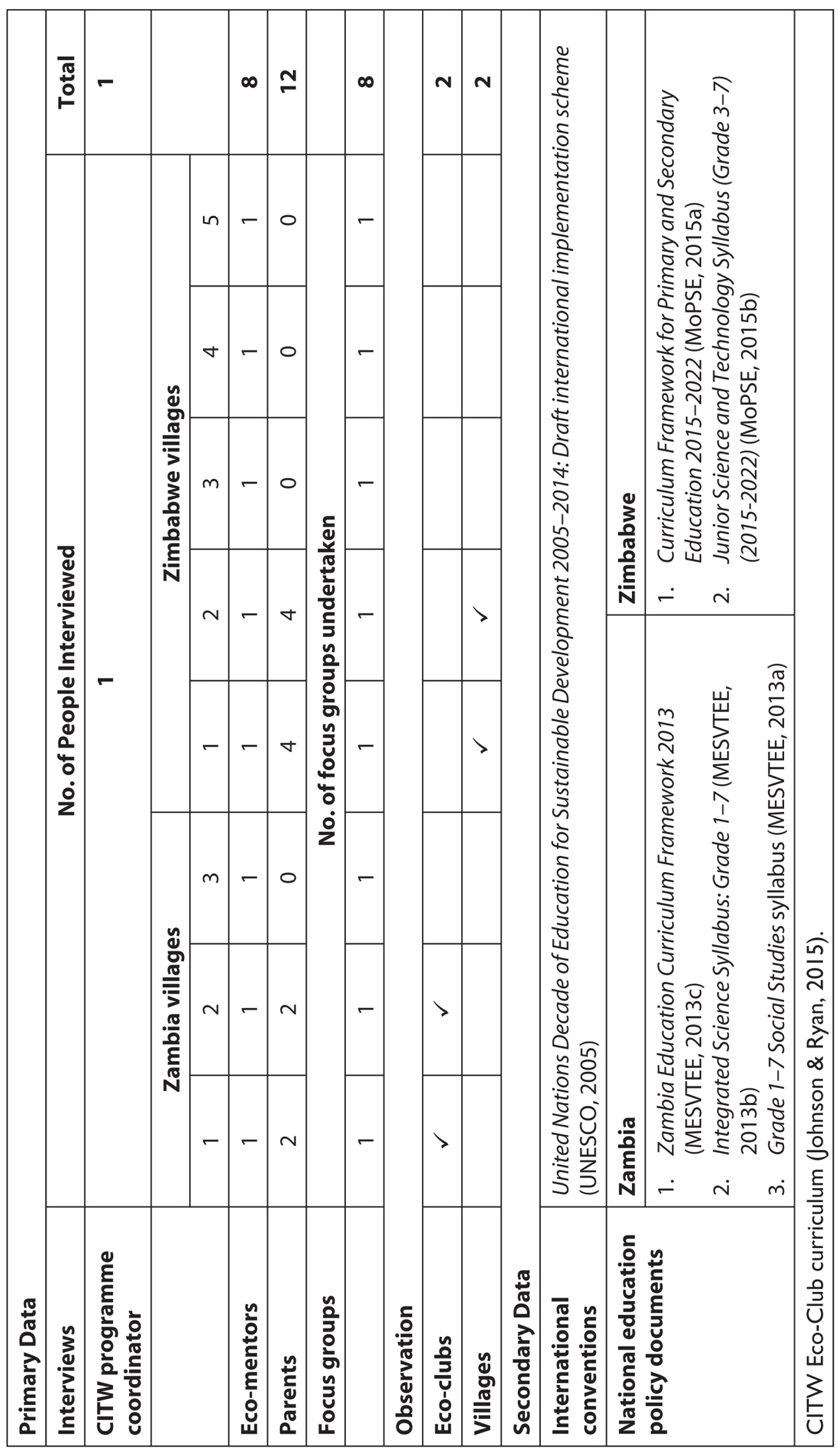
Due to fieldwork constraints, it was not possible to observe CITW eco-clubs and villages in both countries. Eco-Club lessons were observed only in Zambia, while observations around the villages were only carried out in Zimbabwe (see Table 1). Thus, observation could only be used as a method of further validation for the country where observations took place and could only be inferred for the other country through the interviews undertaken.
Following data collection, the oral recordings of the interviews and focus group discussions were manually transcribed to facilitate an intimate and critical relationship with the data from an early stage. It became apparent that through transcribing one’s own data, certain aspects came to light that were previously missed during the fieldwork phase, emphasizing the value of this initial step. The data were then organized into broad themes (Creswell & Plano Clark, 2011; Hesse-Biber & Leavy, 2011; Spencer et al., 2014), a process that was guided by UNESCO’s (2005) characteristics for ESD (see Table 3) and CITW’s aim and vision. Following this, the key points from each interview and focus group discussion were sorted into tables, so that the researcher could compare participants’ responses at a glance and then go back to the transcript for further details and quotations.
Findings and Discussion
The Zambezi Region CITW Eco-Club programme aligns well with UNESCO’s (2005) characteristics for ESD. Upon examining the national curricula of Zambia and Zimbabwe, it became clear that the Eco-Club programme provides a comprehensive learning experience for students, enabling them to gain a deeper understanding of many environment-related topics.
National Policy Response to International Guidelines
Considered a ‘national concern’ in the 2013 Zambia Education Curriculum Framework (ZECF), ESD should be incorporated at all levels of the school curriculum (MESVTEE, 2013c), but it is not integrated into the framework. Instead, it is mentioned as a separate component to be considered, with the responsibility to incorporate ESD into the curriculum resting with schools and teachers. As there is an overall lack of detail, explanation, and guidance as to how to incorporate ESD, a disparity arises between the national policy and what occurs at a local level. The Zimbabwean science-and-technology syllabus provides slightly more detail and guidance (MoPSE, 2015b) than the Zambian syllabus, such as suggested notes, activities and resources for each topic, but nothing specific to ESD. Like Zambia, ESD is classified as a ‘cross-cutting’ issue that teachers are expected to integrate into all existing subjects (MoPSE, 2015a, p. 32). While this aims to be interdisciplinary, which would demonstrate a response to UNESCO’s (2005) characteristics, a lack of further guidance limits teachers’ ability to do this.
The lack of detail and guidance from national policy to ensure that ESD is incorporated into everyday teaching is a notable finding of this study. This, however, is not unique to a developing context. Kuzich et al. (2015) found that a lack of guidance on ESD in Australia meant that teachers were unfamiliar with how ESD should be incorporated into lessons and were reluctant to adapt teaching material. Several eco-mentors and the CITW programme coordinator stated that teachers purely follow guidelines and do not make adaptations. While this was in the context of the Eco-Club programme, which encourages eco-mentors to modify lesson content, this suggests that teachers do not adapt national curricula either. Monde (2011) and Sitali (2014) both reported that teachers lacked knowledge and resources around ESD, limiting their effectiveness in teaching it. As these studies were undertaken in the Zambian context, Monde’s and Sitali’s findings provide a potential explanation for the reluctance of teachers to adapt material and provide further support for the lack of national guidance on ESD. The research findings are supported by those of Kuzich et al. (2015), who suggest that national incorporation of ESD is mostly a token effort. There is clearly a gap between national policy and the resources allocated to ensuring that teachers are provided with the knowledge and means to implement ESD at a local level, hindering vertical integration.
CITW Response to National Policy
With regard to the CITW Eco-Club programme’s response to Zambia and Zimbabwe’s national education policy, there is much alignment (see Table 2). Many of the topics in the Eco-Club curriculum align with topics in the Zambian science syllabus, such as the environment, water supply, plants and animals and materials and energy. Several eco-mentors in Zambia also highlighted that the Eco-Club curriculum provides more details than the national curriculum and that by addressing these topics in the eco-clubs, students are able to gain further understanding of the concepts addressed. One eco-mentor mentioned that often, topics that are not covered to an adequate extent in the national curriculum arise in examinations. However, ‘those who attend the Eco-Club are advantaged’ because of their exposure to the topic through the Eco-Club programme (Zambian eco-mentor, personal communication, 10 July 2017). In terms of the Eco-Club curriculum’s response to the Zimbabwean education policy, many of the topics in the Eco-Club curriculum align with topics in the science-and-technology syllabus. These include water, energy, electricity, soils, plants and animals, sustainable resource management and landforms and maps. Responses from eco-mentors provide additional support for the secondary findings, with unanimous agreement from them that the Eco-Club programme aligns well with, and acts as a support for, the national curriculum. One of the eco-mentors stated that Eco-Club members ‘gain more than those who are not there’, while another noted that ‘children who are in the Eco-Club do well when they go back and mix with the whole class’ (personal communications, 10 July 2017).
Alignment Between Zambian and Zimbabwean Curricula and the CITW Eco-Club Curriculum
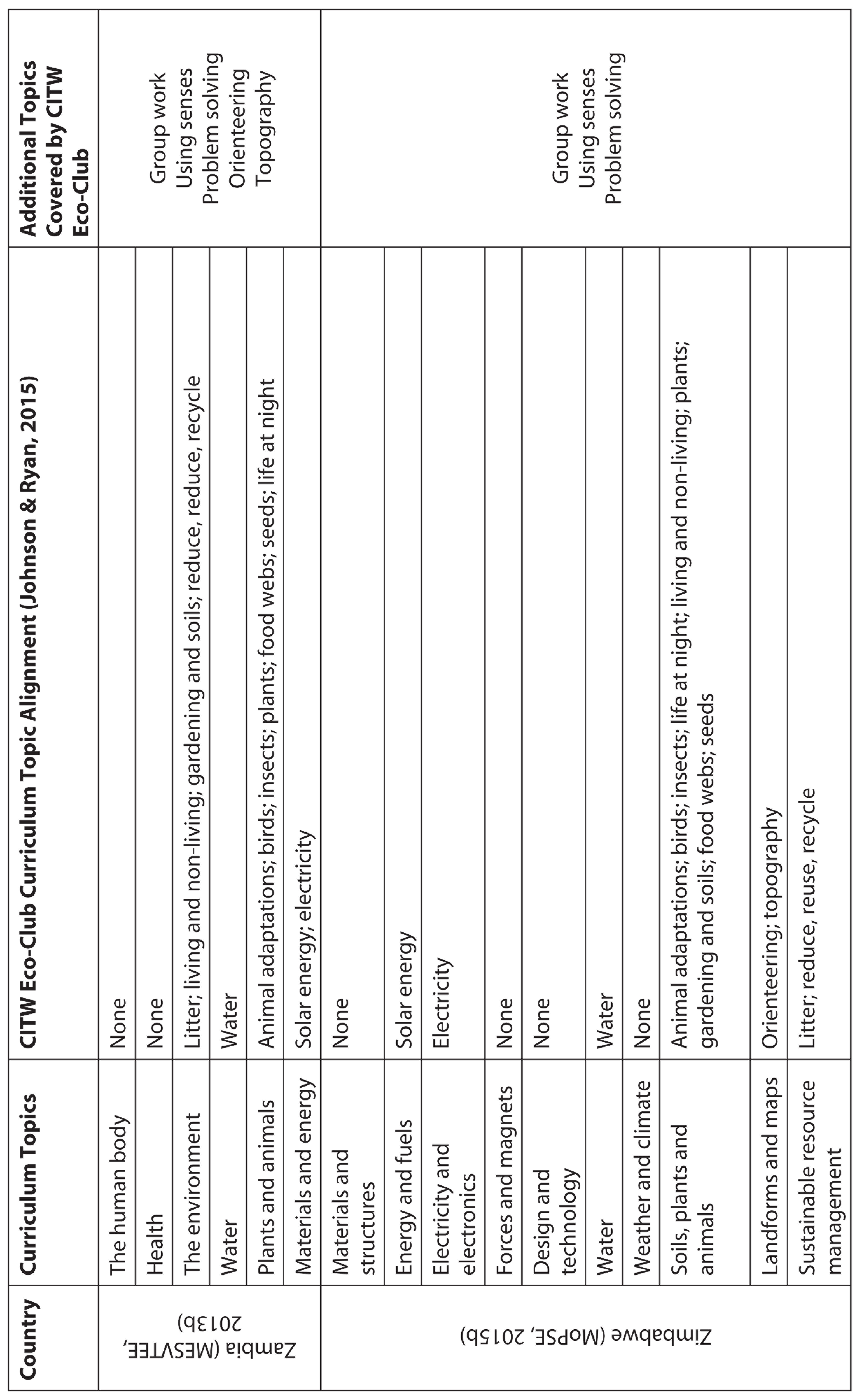
The Eco-Club programme demonstrates a stronger response to UNESCO’s (2005) characteristics than both countries’ national curricula through providing teachers with training and resources to teach in the eco-clubs—resources that complement and add to the national curricula. One of the eco-mentors gave an example of a topic that was ‘better understood when we did it in the Eco-Club through a rhyme’, noting that ‘the [Eco-Club] resources are very helpful’. This strongly suggests that teachers are better equipped through the Eco-Club programme than they are by the national government for classroom teaching. This corroborates Jackson’s (2016) statement that generally, in Africa, more progress is being made towards ESD in a non-formal capacity. As an organization unaffiliated with the formal sector, CITW has a greater opportunity to provide an extracurricular programme that can align with both international guidelines and the national education frameworks (Young & McElhone, 1986), while providing further resources and training on teaching methods to educators that national governments have not been able to provide (Kieu & Singer, 2015). This contributes evidence to the existing literature by reinforcing the importance of the non-formal sector in furthering the uptake of ESD (Buckler & Creech, 2014).
CITW Alignment with International Guidelines
Table 3 shows the degree to which the Eco-Club programme aligns with UNESCO’s characteristics and criteria for ESD. Three evaluation scores have been identified:
A high response to a criterion () If there was evidence in the Eco-Club curriculum of a criterion and support was consistently provided through primary data, a high response was determined. ‘Consistently’ requires the criterion to have been referred to and agreed upon by the majority of the interview participants. A partial response to a criterion () A partial response to a criterion was determined if evidence arose of the criterion’s existence in the Eco-Club curriculum, but it was not implemented on the ground or was only mentioned by one or two interview participants. No response to a criterion () This was determined if a criterion was not included within the Eco-Club curriculum and no evidence of the criterion arose during the primary data collection.
Characteristics and Criteria for ESD Adapted from UNESCO (2005) and the Alignment Score as to How the CITW Eco-Club Programme Aligns with These Characteristics

The Learning Process
With regard to the learning process, the Eco-Club programme aligns with UNESCO’s (2005) characteristics of ‘critical thinking and problem-solving’ and adoption of a ‘multi-method’ approach. This is demonstrated through the Eco-Club curriculum, wherein each activity has an informative, problem-solving, critical-thinking and group-activity element. Many of the problem-solving activities are carried out in groups and require sound communication. Teamwork is also encouraged: ‘Eco-Club instils that feeling of working together so that [the students] help each other and they can transfer that into other situations. They know that working together leads to success’ (Zimbabwean Eco-Mentor, personal communication, 7 July 2017). Furthermore, all the eco-mentors agree that practical learning is crucial to developing a deep understanding of concepts, as students ‘can assimilate the activity and the word they are using’ (Zambian Eco-Mentor, personal communication, 12 July 2017). The findings from this study resonate with Haigh’s (2006) finding that non-formal ESD can provide a contrast to traditional classroom learning. Providing support for Haigh’s finding, an eco-mentor aptly remarked that the Eco-Club members ‘become much more participative in the Eco-Club lessons because they feel free… and they learn through fun unlike when they are in class’ (Zambian Eco-Mentor, personal communication, 12 July 2017). This suggests that the Eco-Club environment is providing a markedly different educational experience for students. Many teachers are not used to practical and student-centred learning. This is supported by Chikunda (2007), who found that most teachers prefer the more traditional, authoritarian method of teaching wherein active participation of students is not encouraged, as this is how they were taught and it is what they are used to. However, the Eco-Club programme and the introduction of a more practical and learner-centred approach are showing teachers the benefits of practical learning. This demonstrates another way in which non-formal education may complement the formal system. If teachers are provided with training on how to adapt their teaching to be more learner-centred, this may transfer into their classroom teaching.
Applicability and Local Relevance
With regard to applicability and local relevance, the programme was found to respond well to the inclusion of topics that focus on natural resource use, disaster prevention and rural development. Positive relationships within the clubs and with the wider community were also evident. The strength of community relationships was a key finding from this study that contradicts Kadji-Beltran et al. (2017), who reported that community relationships in a Cypriot ESD programme did not align with UNESCO’s (2005) guidelines. This difference could be due to an understanding by CITW that community support is crucial to the success of the programme. CITW works with Wilderness Safaris to ensure ‘that neighbouring communities benefit from ecotourism’ (Wilderness Holdings Limited, 2017, p. 62). The establishment of positive and sustained relationships between the school and surrounding community has always been a priority for CITW (CITW Programme Coordinator, personal communication, July 13, 2017). Eilam and Trop (2013) studied sustainability initiatives between schools and communities in a developing context. They found that community relationships were seldom sustained due to conflicting, changing and entrenched value systems across generations. The opposite was found in this study: community relationships helped build a strong and respected foundation essential for the eco-clubs’ sustainability. Several parents openly expressed their gratitude for the programme, as it had enabled them to make positive changes in their daily lives. In Zimbabwe, one parent stated the following:
This programme is very important because we are catching [the children] very young and even for us, we are seeing a direct benefit just because our way of living has transformed as opposed to yesteryear when we never had this knowledge. We have changed and followed what our kids have taught us and starting at primary school will even change the old generation, as it does not only change the young generation. (personal communication, 7 July 2017)
This statement encapsulates the effect that the Eco-Club programme has had on children’s parents, demonstrating that the learnings are being taken into the wider community, helping strengthen school and community relationships, as there are benefits arising for both sides. The Eco-Club programme supports Young and McElhone’s (1986) view that the non-formal sector should not be bound by national requirements and should be allowed to provide locally relevant content that can be adapted for the needs of a community (Bran et al., 2016). The activities within the Eco-Club curriculum make use of local examples, including animals, birds, trees and the issues such as boreholes, poaching and deforestation (Johnson & Ryan, 2015). This aligns with Ezeanya-Esiobu’s (2017) assertion that locally relevant examples will enable greater association and appreciation of the learner’s own environment. This also supports Poole et al.’s (2013) recommendation that a locally relevant curriculum is needed to build knowledge and skills ‘to enhance the activities of everyday life’ (pp. 74–75).
Holism and Values
UNESCO (2005) advises that ESD be integrated into the whole school curriculum. However, as the CITW Eco-Club programme is an extracurricular programme, it cannot respond to the ‘interdisciplinary and holistic’ characteristic in the way UNESCO recommends. Nevertheless, the programme does demonstrate interdisciplinary and holistic attributes in other ways, partially aligning with this characteristic. While the Eco-Club curriculum is mostly science-based, it also includes other life skills topics, such as orienteering, and elements of geography in the topography-and-map-skills topic (Johnson & Ryan, 2015). Furthermore, the use of English as the main language of teaching in the eco-clubs could also be regarded as interdisciplinary, particularly as English is not the students’ first language. In both Zambia and Zimbabwe, lower-grade students are taught in the vernacular language, and English is gradually brought in as they get older. However, grade 7 examinations at the culmination of primary school are in English. Thus, students need a good understanding of it, and encouraging its use in the eco-clubs gives students much more exposure to it through speaking, reading and writing.
Areas of Non-alignment
There are areas where the Eco-Club programme does not align with international guidelines, including participatory decision-making, the inclusion of traditional knowledge and the inclusion of health, HIV/AIDS and climate change topics that are suggested by UNESCO. While briefly encouraged in the curriculum through the election of student representatives to ensure shared responsibility between eco-mentors and students, participatory decision-making does not feature in the eco-clubs. This could be linked to Chikunda’s (2007) finding that teachers are more comfortable with the authoritarian method of teaching as opposed to further engaging students in decision-making. The lack of inclusion of traditional knowledge in the curriculum is also notable. However, the programme coordinator believes that this is a crucial component and should be included, particularly because there is still much knowledge held by community elders that could be harnessed. These findings are supported by those of Kadji-Beltran et al. (2017), who also found that traditional knowledge was not apparent in the Cypriot ESD programme. Further support is thus provided for the argument that Western influence and the externally imposed colonial education system have the potential to marginalize traditional knowledge (Chikunda, 2007; Lotz-Sisitka et al., 2017). The non-formal sector is thus provided with an opportunity to incorporate traditional knowledge alongside what is taught through the formal curriculum. However, as traditional knowledge is likely to differ across countries and the areas where CITW operates, it is important that this knowledge is harnessed and applied as appropriate and relevant for each region.
Achieving CITW’S Aim and Vision
CITW emphasizes leadership development, as this is a central component of the organization’s aim. ‘Leadership’ was a common theme that arose from each participant group, providing much support for its prevalence in the programme. An eco-mentor from Zimbabwe stated that the Eco-Club members ‘are the leaders in the school’ (personal communication, 6 July 2017), and most mentors gave examples of leadership that they had observed, such as students watering the eco-garden (gardens that put agricultural skills into practice through vegetable planting) after school, picking up litter and ensuring that their peers did not litter. An eco-mentor from Zambia noted that the students demonstrate leadership as they ‘try to teach others, especially their families at home’ (personal communication, July 11, 2017). Furthermore, Eco-Club members from two schools—one in Zimbabwe and one in Zambia—mentioned that they like attending their Eco-Club because they can help and pass on information to others. Almost all the parents interviewed also noted that they had learned something through their child as a result of the Eco-Club, as students came home and imparted knowledge on what they had learnt. This strongly signifies that CITW is achieving its leadership aim, as well as aligning with UNESCO’s (2005) criterion for intergenerational responsibility. This finding is supported by Breunig (2013), Davis et al. (2008) and Redman (2013), all of whom found that ESD led to leadership among learners. The leadership shown by Eco-Club members at school and the knowledge transfer to the home environment demonstrate that students are inspired to care for the environment, reflecting CITW’s vision. Their building leadership skills from an early age through ESD will hopefully lead to Eco-Club members becoming leaders in the future, supporting Leeming et al.’s (1995) notion that instilling knowledge at an early age will influence thinking later in life.
CITW addresses four issues through the Eco-Club programme: poverty, deforestation, poaching and pollution (CITW Programme Coordinator, personal communication, 13 July 2017). UNESCO (2005) stipulates that ‘educational activities have to be linked to the specific needs of the rural community for skills and capacities to seize economic opportunities, improve livelihood and enhance quality of life’, so that rural development can occur (p. 21). Poverty is a key issue that CITW seeks to address. Eco-gardens established within the clubs have given members new knowledge and skills, which they are able to take home and impart to their parents. For example, conservation tillage is a method of agriculture introduced by CITW whereby individual holes are dug for every two seedlings in a smaller area, as opposed to using oxen to scatter seedlings over a large area. This technique has proven much more effective, with one community member stating that his yields have increased dramatically. Leadership is reflected here, as Eco-Club members have shared this knowledge with their families. This provides much support for Fien and Guevara’s (2013) finding that non-formal education is ‘more innovative and effective as a poverty alleviation strategy’ for marginalized groups (p. 261), as CITW has empowered communities and motivated them to make positive changes.
With regard to poaching, Eco-Club members in every focus group discussion highlighted that wild animals should not be poached. All participant groups also had a heightened awareness of the link between wildlife and national economic gain through tourism. Wildlife is ‘a source of income for the state’ (Zimbabwean parent, personal communication, July 8, 2017), and there is a realization that ‘if people are poaching, tourists will stop coming’ (Zambian parent, personal communication, July 11, 2017).
In Zambia and Zimbabwe, deforestation, and its subsequent effect of soil erosion, is a prominent issue, and much effort is directed towards this within the Eco-Club programme. In addition to learning about the importance of trees within the curriculum, afforestation activities that are undertaken together with the eco-gardens emphasize the importance of planting and protecting trees. When asked for some examples of how they could look after the environment, Eco-Club members at every school highlighted that trees must not be cut down and that more trees should be planted. During the interviews, parents and eco-mentors acknowledged that tree cutting had been a common pastime for children, but they had noticed a change in behaviour, as children no longer cut down trees ‘haphazardly’ (Zimbabwean Eco-Mentor, personal communication, 7 July 2017). This, together with a number of Eco-Club members reporting their planting of trees at home, supports Roy et al.’s (2014) notion that ESD influences students’ behaviour, as the authors found that students planted trees on their own initiative.
Waste management is not specified among UNESCO’s (2005) characteristics or strategic perspectives for ESD. However, CITW has identified pollution as a key issue that needs to be addressed in the areas in which the organization works, and much emphasis has been placed on the importance of keeping the environment litter-free. There are two topics in the Eco-Club curriculum regarding waste: litter and the concept of ‘reduce, reuse, recycle’. This knowledge has been transferred to the Eco-Club members, and several parents also stated that their children were active in keeping the home environment tidy and educating members of the household on why they should not litter. As these communities are isolated and do not have municipal waste collection or recycling, burning of rubbish is still a common way to dispose of waste, due to the lack of alternative options. This includes the disposal of hazardous waste, such as e-waste, solar panels, plastics and tyres. Furthermore, the introduction of solar equipment, such as lights and small panels for charging mobile phones, has emphasized the issue of solar-panel disposal. In this regard, much needs to be done, as the incorrect disposal of solar panels could release harmful metals into the environment, creating more degradation (Kelly, 2017). While the Eco-Club curriculum addresses the 3Rs, and the knowledge gained is important, this education does not align with the local context, where there is no formal waste management or education on hazardous waste, meaning that people are limited in their capacity to act on the knowledge they obtain.
Conclusion
This research valuably contributes to the existing literature on non-formal ESD, because it presents insights from a case study in southern Africa, a region that has been slow to implement ESD in the formal sector (Buckler & Creech, 2014), with an age group that is relatively unresearched in a developing context. UNESCO (2017) states that individuals ‘require the knowledge, skills, values and attitudes that empower them to contribute to sustainable development. Education, therefore, is crucial for the achievement of sustainable development’ (p. 7). There is a lack of guidance in the national policy with regard to ESD. This, combined with the lack of resources allocated to ensuring that teachers are provided with the knowledge and means to implement ESD at a local level, hinders vertical integration. Through facilitating the Eco-Club programme and addressing issues like poverty, deforestation, poaching and pollution, CITW is providing knowledge, skills and resources that local communities previously lacked, enabling positive changes to be made. The programme provides an enriching learning experience for children, and the relationships that CITW establishes between the schools, parents and the wider community mean that knowledge and skills can be shared, leading to benefits for all stakeholders.
Footnotes
Acknowledgements
We thank Wilderness Safaris and Children in the Wilderness for hosting and allowing us the opportunity to conduct our research.
Declaration of Conflicting Interests
The authors declared no potential conflicts of interest with respect to the research, authorship and/or publication of this article.
Funding
The authors received no financial support for the research, authorship, and/or publication of this article.