



Abstract
Investing in sustainable businesses not only increases financial returns but also adds to Environmental, Social and Governance (ESG) value by solving social and environmental issues while promoting economic growth and human development. In the present paper, an attempt has been made to present a systematic literature review, analyse the relevant literature, identify emerging themes and to suggest future research areas related to sustainable investments. To accomplish this exercise, seventy-two research papers published between 2014 and 2022 were meticulously selected from the Web of Science database using the PRISMA protocol and which were then analysed using R-studio’s Biblioshiny 2.0 and VOSviewer. The findings revealed that sustainable investments play a critical role in investment decision-making and promoting sustainable development which is evidenced by the growing number of research papers published on this domain. Furthermore, the citation analysis facilitated the identification of the most influential works in the field, while thematic mapping identified dominant themes such as ‘sustainable investments’ and ‘sustainable development’ as well-matured theme, ‘ESG investing’ as an emerging theme, ‘portfolio selection’ as a niche theme and ‘ESG financial performance’ as a motor theme. In addition, the authors proposed a framework titled, ‘Barriers, Mitigation Strategies and Opportunities’ to guide future research and overcome obstacles in sustainable investments.
Introduction
Sustainability is a concept that has been at the forefront of our minds for decades, dating back to the Latin word ‘sustinere’ which implies, ‘to hold and maintain’. The 1987 UN Brundtland Commission defined sustainability as fulfilling the requirements of the present without jeopardising the future generations’ ability to fulfil their own needs (UN, n.d.). The journey of sustainability in investments started with a focus on the social and environmental performance of companies (Boffo & Patalano, 2020), but as the years went by, the focus expanded to people, planet and profit, also known as the Triple Bottom Line, a term coined in 1994 by John Elkington. In 2004, Environmental, Social and Governance (ESG) swept the investing industry and broadened investors’ perspectives by including corporate governance (UN, 2004). Therefore, the terms ‘sustainable investments’ and ‘ESG investments’ are often used interchangeably because they both refer to investment strategies that aim to generate financial returns while also considering the ESG factors of the companies or assets being invested in. In ESG, environmental dimension focuses on impact of companies’ activities on the overall environment which includes factors such as its carbon footprint, energy consumption, waste management, pollution and natural resource depletion. Companies are evaluated on how they manage these factors and their commitment to sustainability. Social dimension considers impact of companies’ activities on local communities, society and other stakeholders. Companies are evaluated on how they treat their stakeholders and contribute to society. Governance dimension focuses on the internal governance of a company, including its board structure, executive compensation, shareholder rights and risk management. It also covers issues such as business ethics, transparency and anti-corruption practices. Companies are evaluated on how they manage their operations and ensure accountability and transparency to their stakeholders (Jethmalani, 2021; Brock & Courage, 2013). Based on these dimensions ESG ratings are now the standard for investors assessing investment sustainability which are used by environmentally and socially conscious investors to assess investment opportunities (Brock & Courage, 2013). Furthermore, by disclosing such data on ESG, a company’s performance in these three dimensions can be measured against predetermined metrics. ESG reporting evaluates the extent to which businesses consider and act upon these factors. They consist of plans and actions that provide real value for the business and its constituents (Courtnell, 2022; Gupta & Jain, 2017). Companies can also use readily accessible reporting frameworks to provide sustainability information to investors. UN Sustainable Development Goals (SDGs), Global Reporting Initiative, Sustainability Accounting Standards Board, Climate Disclosure Standards Board and Task Force on Climate-related Financial Disclosures are popular reporting frameworks (Deckelbaum, 2020).
Sustainable Investments
Sustainable investments refer to such activities where investors aim to maximise their financial returns without compromising with the environmental standards and social values in the long run. Combining traditional investment approaches with ESG insights has led to investors generating more comprehensive analyses and making better investment decisions (Beisenbina et al., 2022). The adoption of such investment strategy by the investors ensures that the firms’ performances are evaluated not solely on financial parameters but the impact of firms’ activities on environment and society is also taken into consideration. The integration of ESG insights into traditional investment approaches has resulted in more comprehensive analyses and better investment decisions (Sciarelli et al., 2021; Boffo & Patalano, 2020). As such, it is important to continue to innovate in sustainable investing and strive towards a future where investments and sustainable development are mutually reinforcing (Stobierski, 2022). This requires a collaborative effort from investors, policymakers and other stakeholders to promote sustainable practices and support responsible investment strategies that account for ESG factors (Naomi & Akbar, 2021). The sustainable investments and sustainable development have an important bearing on human development also.
Several studies have revealed that a growing number of investors want their money to fund companies that are committed to making the world a better place to live (Eccles & Klimenko, 2019; JP Morgan, 2020; Katelouzou & Micheler, 2022; Owadally et al., 2021; Mohin, 2021). The success of the United Nations Principles for Responsible Investment, which calls for the incorporation of ESG factors in investment and ownership decisions, is also a significant indicator of the growing importance of sustainable investments (UNCTAD, 2021).
The evolution of sustainable investments as a distinct academic field in recent times is being witnessed by variety of writings in reputed of journals, academic conferences, seminars, debate and discussions focusing on sustainable investments (Beisenbina et al., 2022). Studies on sustainable investments can provide valuable insights for investors, policymakers and other stakeholders to drive positive changes towards a more sustainable future. It can also provide insights into the effectiveness and scalability of sustainable investing strategies and help identify areas where further innovation and improvements are needed. Several studies have found a link between good investment performance and the use of ESG factors (Chen et al., 2022; Jain et al., 2019; Qi & Li, 2020; Singh & Kansil, 2018). This has led investors to choose portfolios that reflect their values. While many studies on sustainable investments focus solely on financial returns, it is important to consider the broader benefits that contribute to both human and global development. ESG considerations are becoming increasingly important in attracting investors. However, when businesses do not disclose ESG data, stakeholders must seek information from other sources to gain insights into the companies’ past and projected performances (Adams & Abhayawansa, 2022). Therefore, companies must provide transparent and reliable ESG information, as this will help in improving stakeholder confidence as well as making a more sustainable and responsible business environment. Through a systematic analysis, this study aims to synthesise existing studies on sustainable investments, giving an idea of where the field is now and where it could go in the future. The present study endeavours to answer four research questions which are as follows:
RQ1: What is the current status of research trend in the area of sustainable investments? RQ2: Which sources and studies have had the greatest impact on the literature? RQ3: What are the newest and most widely discussed research subjects and concerns in the field of sustainable investments? RQ4: What are the future research directions for researchers and academicians in this domain?
The present paper consists of eight sections. Section 1 explains the meaning of sustainable investments and why this area has assumed importance in recent times. Section 2 sheds light on methodology, highlighting the paper selection process and analysis. Section 3 of the paper presents the results of the systematic analysis of the selected literature. In Section 4, the authors present a cluster analysis highlighting various emerging themes in the domain of sustainable investments. Section 5 discusses the conceptual framework presented by the authors. Section 6 deals with summary and conclusion of the study. Section 7 focuses on the implications of the present study. Finally, Section 8 sheds light on the directions for future research and its limitations.
Methodology
To present a precise analysis a 3-step methodology has been followed. First, a dataset of papers was constructed by using the PRISMA protocol. Second, bibliometric analysis was performed on the selected dataset to analyse evolving patterns in the underlying research area. Third, proposing a conceptual framework regarding the adoption of sustainable investments.
Selection of Database
Web of Science (WoS) was chosen for searching literature on sustainable investments since it offers advantage over Google Scholar and Scopus databases. As compared to Google Scholar and Scopus databases, the range of sources available on WoS is more selective and the search engine returns results that are more reliable and precise (Singh & Gupta, 2020). There is a possibility that Google Scholar and Scopus databases provide access to a broader variety of sources; nevertheless, some of those sources may be irrelevant or substandard, which may influence the accuracy of the literature review (Li et al., 2017). The final search string utilised to extract the research papers from the WoS database are as follows: ‘ESG invest*’ or ‘sustainable invest*’ or ‘ethical invest*’ or ‘responsible invet*’ or ‘green invest*’ (Topic) and ‘mutual funds’ or ‘funds’ or ‘investor’ or ‘psych*’ or ‘stock*’ or ‘dividend’ or ‘human development’ or ‘sustainable development’ (Topic) and 2014 or 2015 or 2016 or 2017 or 2018 or 2019 or 2020 or 2021 or 2022 (Publication Years) and Environmental Studies or Business Finance or Green Sustainable Science Technology or Economics or Business or Management or Regional Urban Planning or International Relations or Development Studies or Social Sciences Interdisciplinary or Multidisciplinary Sciences (WoS categories).
Data Extraction and Data Cleaning
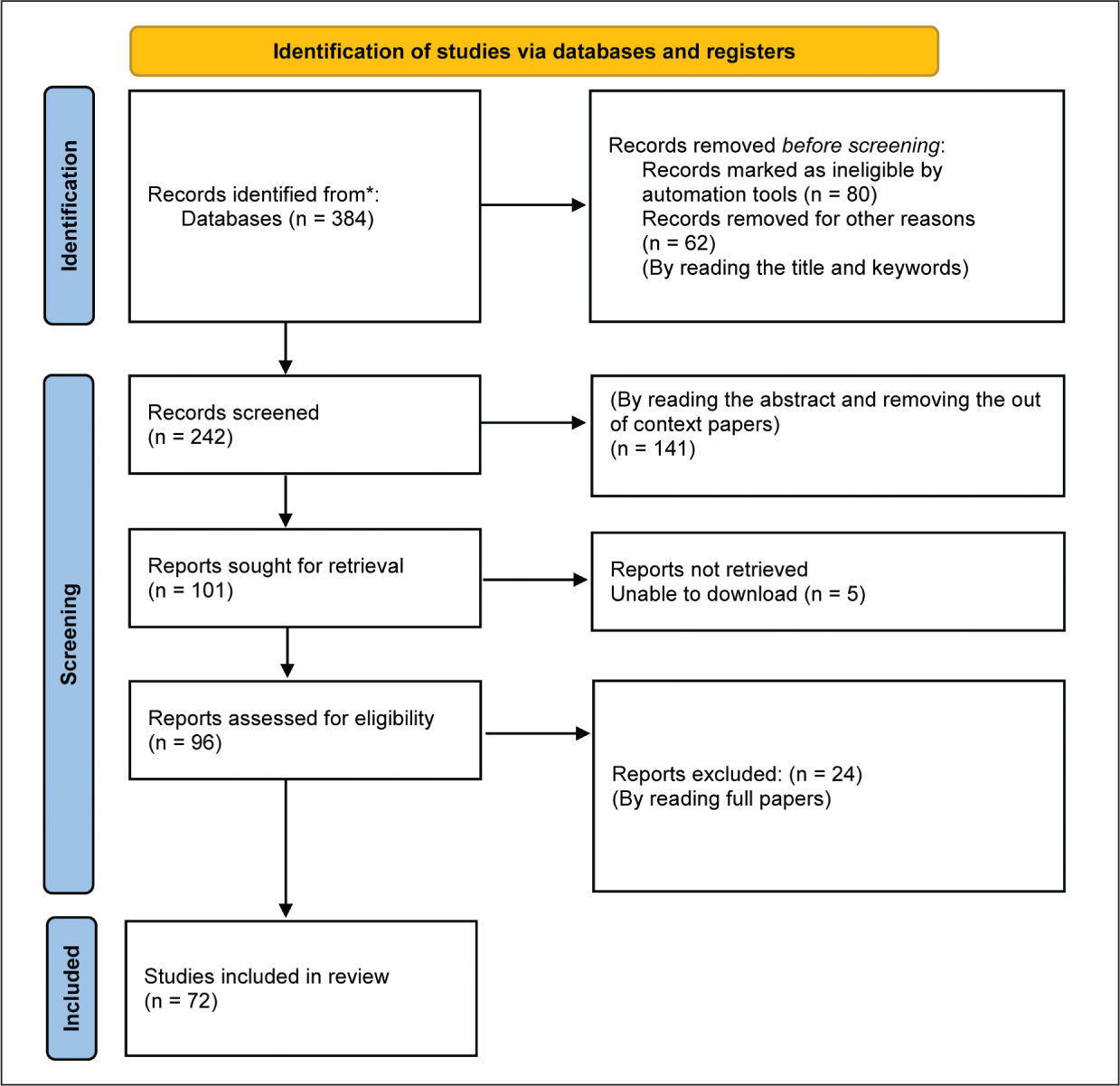
PRISMA protocol is utilised to retrieve literature on sustainable investments. A total of three hundred and eighty four (384) papers were obtained with the use of this method. The final sample for analysis consisted of seventy two (72) research papers, which were deemed suitable after undergoing the data extraction and cleaning process described in Figure 1. Interestingly, publications in the sustainable investments’ domain started gaining momentum since the year 2014. The period 2014–2022 is highly relevant and useful period for a systematic study of sustainable investments due to the increasing global focus on sustainability and the growing popularity of sustainable investing. This period witnessed significant growth in sustainable investments products and strategies, as well as increasing efforts by governments, investors and corporations to address environmental and social challenges. Moreover, the availability of comprehensive ESG data and analytical tools have facilitated a more rigorous and systematic analysis of the relationship between sustainability and investment performance, making this period an ideal time for in-depth research on sustainable investments.
PRISMA Protocol.
Data Analysis
The field of bibliometrics applies statistical and mathematical techniques to analyse the data which offers an in depth and comprehensive understanding of knowledge distribution (Donthu et al., 2021). Additionally, to address the research questions, the study has made use of Biblioshiny 2.0 in R-studio. This web-based application analyses data parameters such as production patterns, leading countries, prolific authors, prominent organisations, local and global citations and keyword analysis (Muñoz et al., 2020). Furthermore, this study has also used VOSviewer to identify various clusters emerging from the selected papers. These clusters are based on co-occurrences of keywords in the selected papers. This analysis is helpful in conducting a thematic analysis based on clusters, which would further help in providing future research directions to researchers and academicians.
Findings
Annual Scientific Production
Figure 2 depicts an increasing trend in ESG investments or sustainable investments, over time. Notably, sixty four percent of all articles ever published have been published during the preceding four years (2019–2022). The results of this assessment show that academics are becoming increasingly interested in sustainable investments. Although the notion of ESG was initially presented in 2004, the reporting of its influence on investment decisions has only recently gained traction.
Annual Scientific Production.

Three-fields Plot
Biblioshiny 2.0 has been used to graphically evaluate the link between popular authors, cited sources and author keywords. The rectangular diagrams are colour-coded to highlight the most essential characteristics, and the rectangles’ vertical dimension shows the extent of the links between authors, sources and author keywords. The bigger the rectangle, the more connections are there between its components (Aria & Cuccurullo, 2017).
Figure 3 depicts a network diagram illustrating the link between authors (on the left), author keywords (in the middle) and sources to further examine the study on sustainable investments (on the right). The study looked at as to how often the authors and publications have used particular terms linked to sustainable investments. The most significant terms are ‘ESG’, ‘sustainable investments’, ‘environmental’ and ‘sustainable development’ which were published in reputed sources such as Sustainability, Business Strategy, Environmental and Finance Research Letters.
Three Fields Plot.

Most Relevant Sources
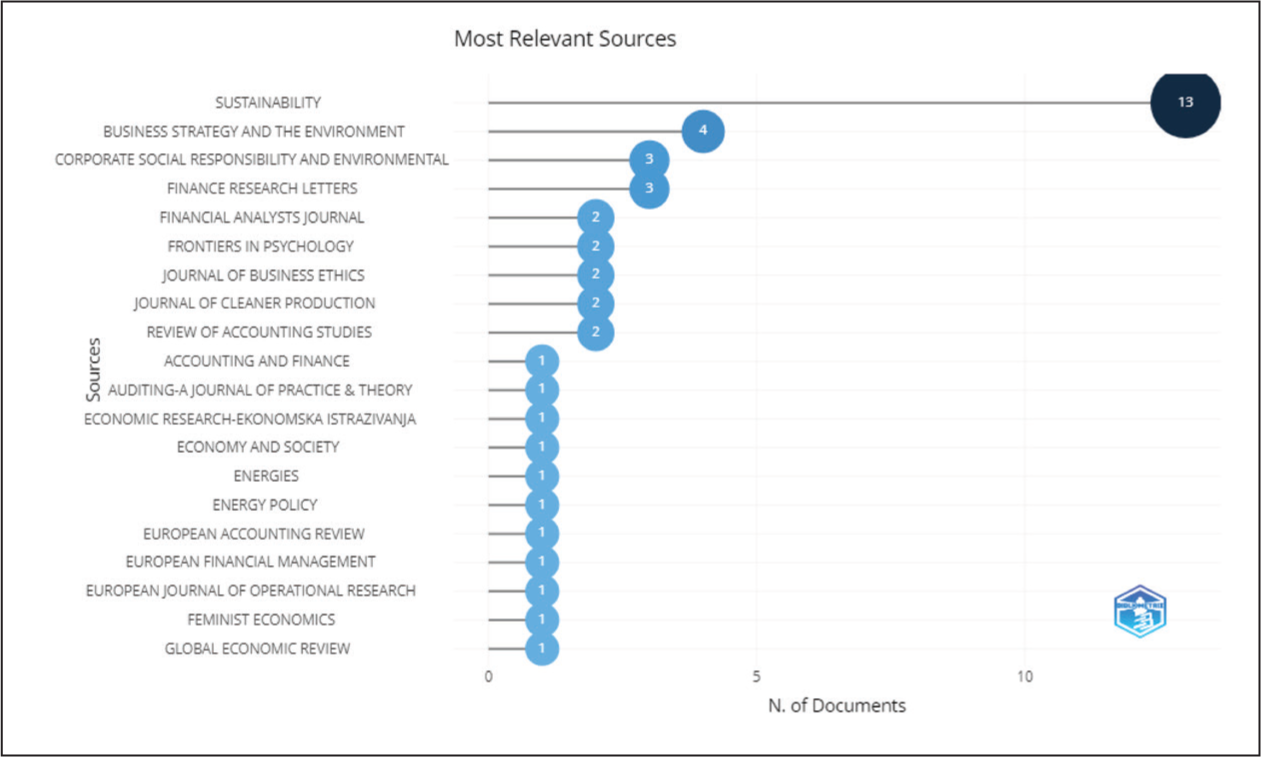
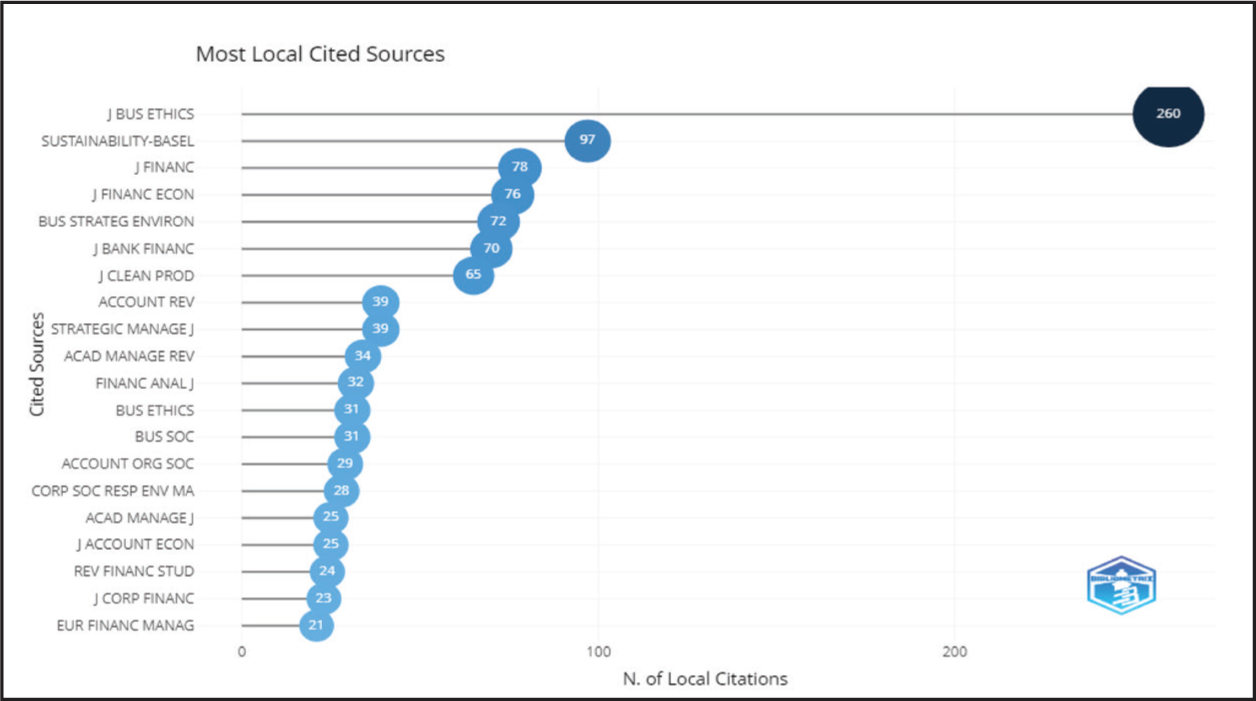
This section offers the findings of a bibliometric study of the most pertinent and frequently referenced sources on sustainable investments. The journal namely Sustainability was observed to be the most significant source having published thirteen papers on the subject of research as presented in Figure 4. Further, the Journal of Business Ethics was observed to be most locally referenced source, with two hundred and sixty citations as presented in Figure 5. The study of citations identifies the works that have had a major influence on a research topic. Local citation analysis focuses on the citations contained in the dataset, whereas global citation analysis considers all citations a publication has received (Aria & Cuccurullo, 2017).
Most Relevant Sources.
Most Local Cited Sources.
Most Relevant Documents
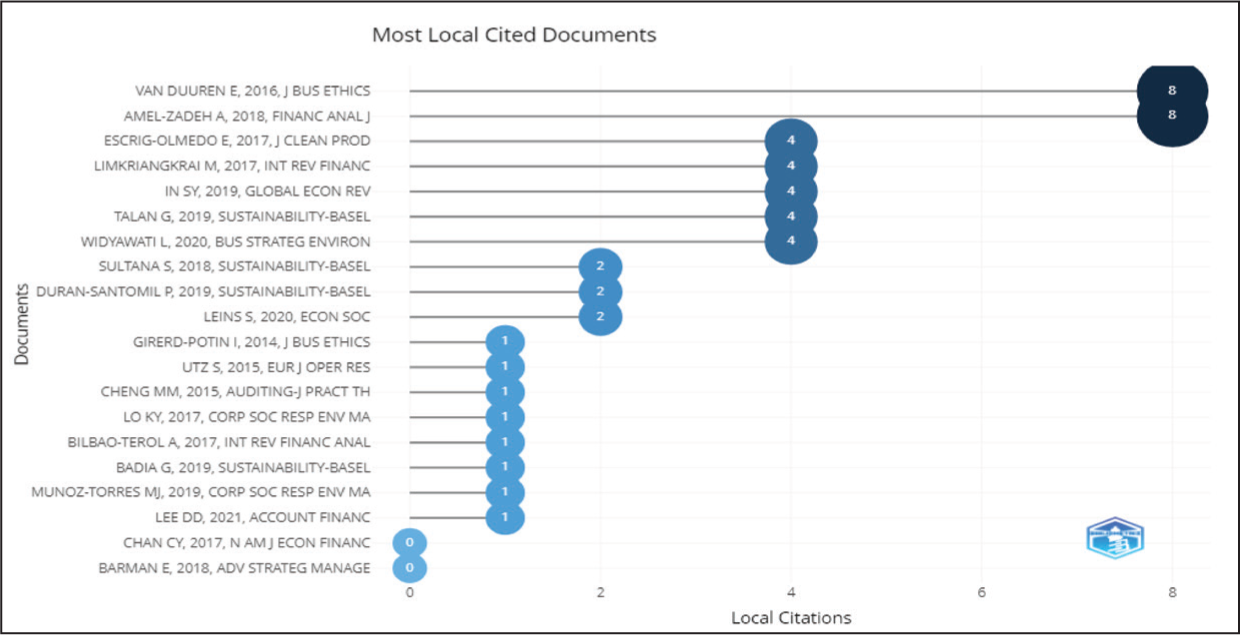
The results of top twenty global and local citations related to research on sustainable investments published between 2014 and 2022 have been displayed in Figures 6 and 7. Global citation analysis considers citations from a global viewpoint across all fields, whereas local citation analysis is limited to citations within the specific subject under study (Aria & Cuccurullo, 2017). In addition to scientific production, the number of citations mentioned in any publication is a measure of its relevance and intellectual effect. Amel-Zadeha’s ‘Why and How Investors Use ESG Information: Evidence from a Global Survey’ published in 2018, was the most popular article with the highest global citations and Van Duuren’s ‘ESG Integration and the Investment Management Process: Fundamental Investing Reinvented’, published in 2016, had the highest local citations.
Most Globally Cited Documents.

Most Locally Cited Documents.
Most Productive Countries
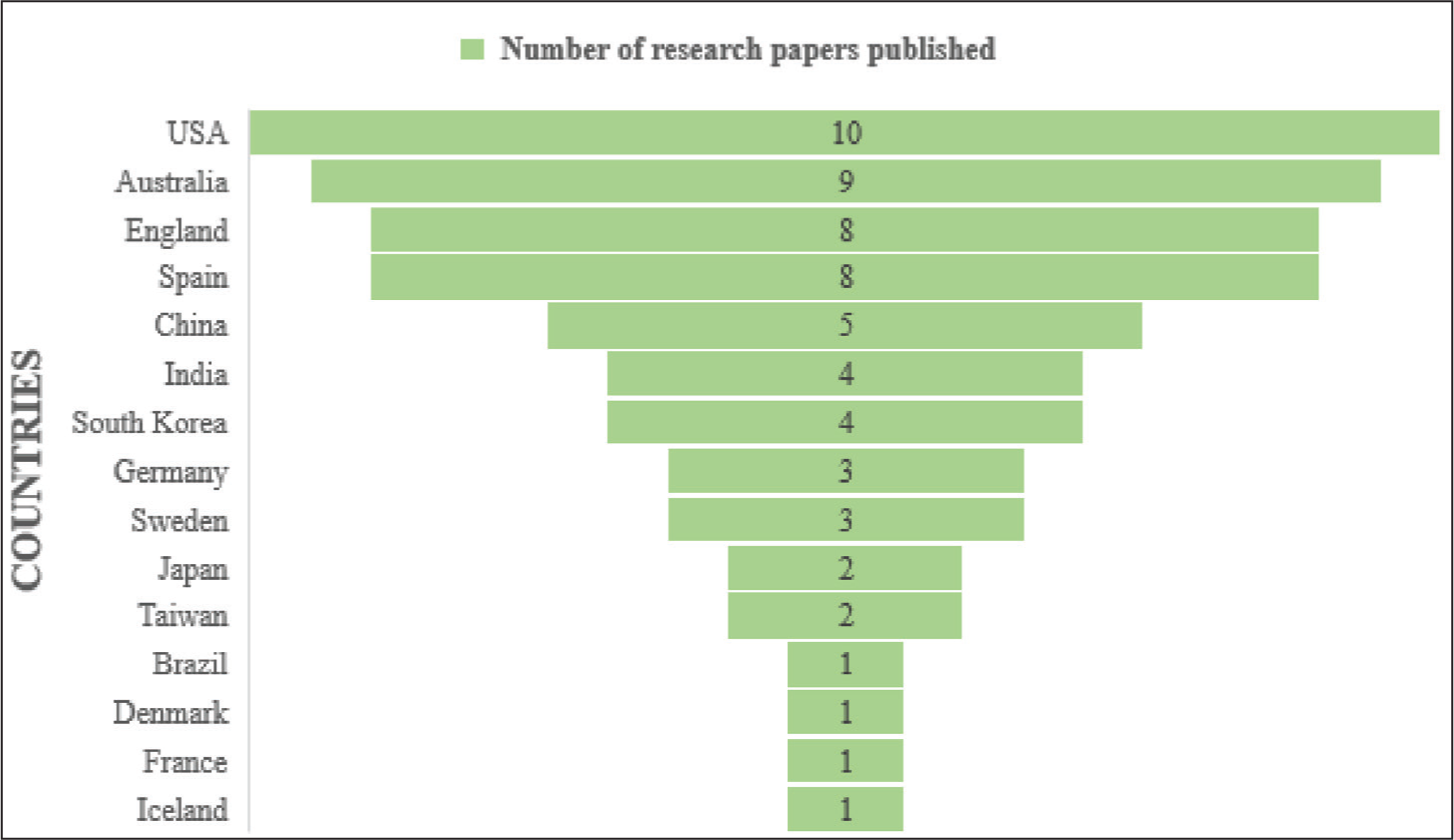
This section illustrates the nations that have been the most productive and important in the field of study concerning sustainable investments. This illustration and description is based on the number of documents produced in different countries. Figure 8 lists the top fifteen contributing nations out of the total of twenty six countries across the world that have made significant advancements in this area. The list incorporates publications from both the developed as well as developing countries at the same time. The United States, Australia, England and Spain are the top four countries that have published the maximum articles worldwide. The contributions of emerging countries such as India, South Korea, Germany and Sweden are also significant.
Most Productive Countries.
Thematic Analysis
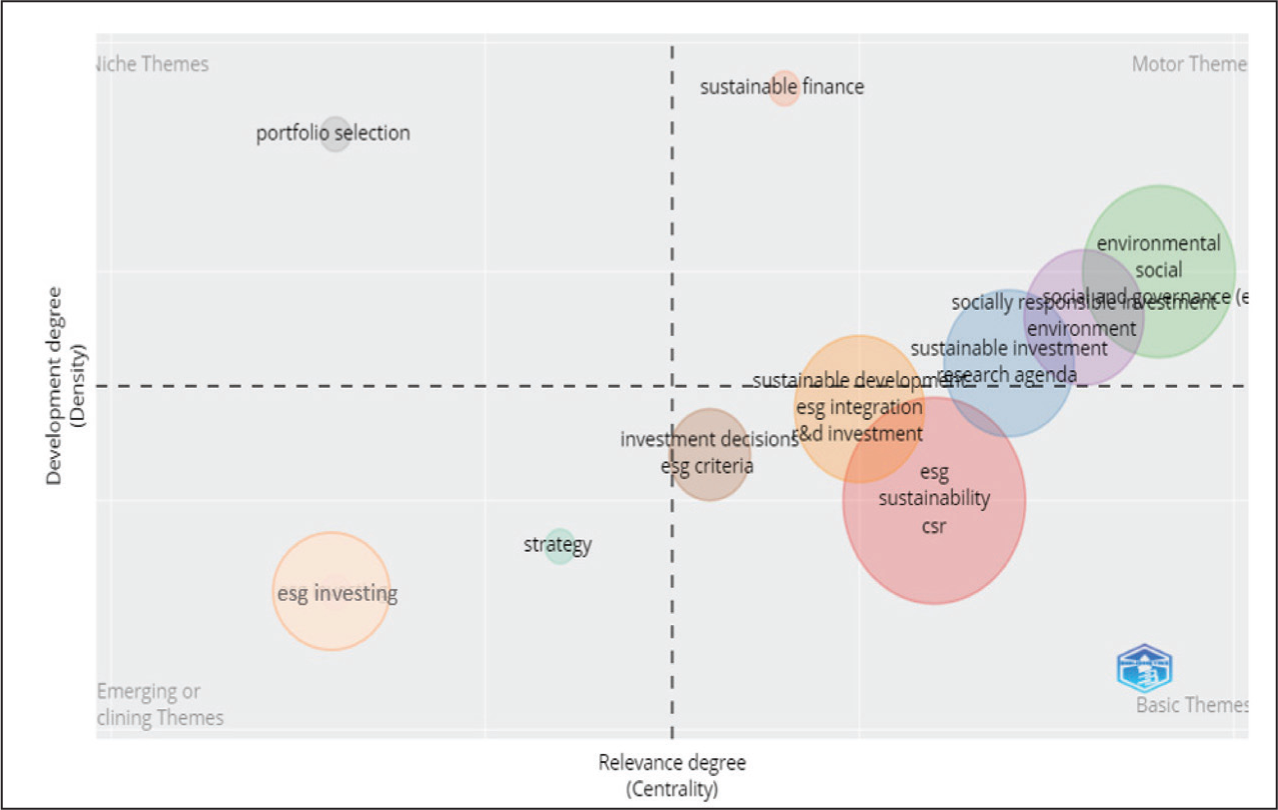
The goal of thematic mapping is to find connections between different pieces of text. A thematic map is a way to show information in a way that makes it easier to understand (Aria & Cuccurullo, 2017). Keywords, article titles and abstracts are used to make the map. The ideas are put into a two-dimensional diagram based on how important and common they are. The X-axis in this analysis focuses on measuring how important a particular research topic is. It shows centrality of the topic. The Y-axis focuses on the extent to which a particular research topic has evolved and progressed. It shows density of the topic. Various measure of central tendency like mean and median are generally used to figure out the centrality and density of a particular research topic. Figure 9 shows four groups of themes found by using the authors’ keywords and a minimum cluster frequency of five per thousand documents in the thematic analysis.
The following four sub-sections deal with the four quadrants of relevant themes on sustainable investments
Q1: Upper-right Quadrant: Motor Themes
The research topics in this quadrant have a high density as well as a high centrality, which means that they are necessary and that they have been thoroughly explored. ‘Sustainable investments’, ‘sustainable development’ and ‘socially responsible investment’ are placed in this quadrant. The topics that fall under this section have been studied extensively and hence are highly suitable for undertaking systematic literature reviews and bibliometric analyses. Although many studies have attempted to address the question of what Socially Responsible Investing (SRI) means from the investor’s point of view (Rosen, 2022; McLachlan & Gardner, 2004; Nilsson, 2008; Beal and Goyen, 1998). These studies are mainly based on the opinions of the investors who are already invested in SRI funds. Sustainable investments encourage practices that are good for the environment and society, which lead to sustainable development. By giving money to projects and businesses that care about sustainability, these investments move us closer to a more equitable and sustainable future (Beisenbina et al., 2022).
Q2: Lower-right Quadrant: Basic Themes
Since the concepts in this area are important but not fully explored, this quadrant has high centrality but low density. In this subsection, sustainability, ESG integration and investment decisions are the focal points (Figure 9). Growing concerns for emerging climatic and social challenges are pushing the emergence of ESG integration and sustainability as essential subjects. In recent years, ESG investing has grown in popularity, and there are several assets and funds based on these initiatives. The Portfolio Decarbonisation Coalition, a United Nations-sponsored group of twenty seven primarily European institutional investors and asset managers controlling $3.2 trillion in assets, has committed $600 billion to fund green projects and investments (Bernoville, 2022). However, as noted above, the study of ESG is relatively young discipline, and substantial research in this area has started since the 2014. It was further expanded since the year 2020 during COVID-19 (Zhou & Zhou, 2021). Recent calamities have highlighted the need to protect society and businesses against long-term threats (Adams & Abhayawansa, 2022). It is believed that the current economic scenario is driving ESG trends, indicating that companies’ environmental and social impact will remain a priority even after the current economic concerns are over.
Thematic Mapping.
Q3: Lower-left Quadrant: Emerging Themes
Since these topics are not fully explored and are still in the process of developing, further research is required. ‘ESG investing’ and ‘ESG strategy’ are prominent here. Even though most investors consider ESG investments a novel approach to investing, it is a key method for evaluating smart investments and analysing evolving risk factors for firm sustainability, particularly considering global issues such as climate change and income inequality (Atif et al., 2022; Amon et al., 2021). To solve these obstacles and promote human development, a comprehensive ESG approach is required. This involves actively investing in and supporting businesses that contribute to positive social and environmental outcomes. In the next five to ten years, ESG investments are anticipated to transition from a niche interest to a mainstream investing strategy, necessitating that each country adopts a customised approach (Folqué et al., 2022). In developing nations, for instance, cooperating with enterprises in the energy industry to move towards sustainability and equity may have a significant impact on human and global development (Puranik, 2021).
Q4: Upper-left Quadrant: Very Specialised Themes
This quadrant has a high population density but low centrality. Themes that have reached a high degree of development, such as ‘portfolio selection’, however, continue to be separated from ESG since they have a low level of centrality. Sustainable and responsible investments integrate financial analysis with ESG criteria in the selection of portfolios (Amon et al., 2021; Cesarone et al., 2022). In doing so, they can apply different approaches to portfolio composition and asset allocation (D’Hondt et al., 2022). These strategies include the exclusion of securities from the eligible investment universe (negative screening), best-in-class selection (positive screening), sustainability-themed investment, norms-based screening, impact investing, engagement and voting on sustainability issues (Wang et al., 2021).
Cluster Analysis
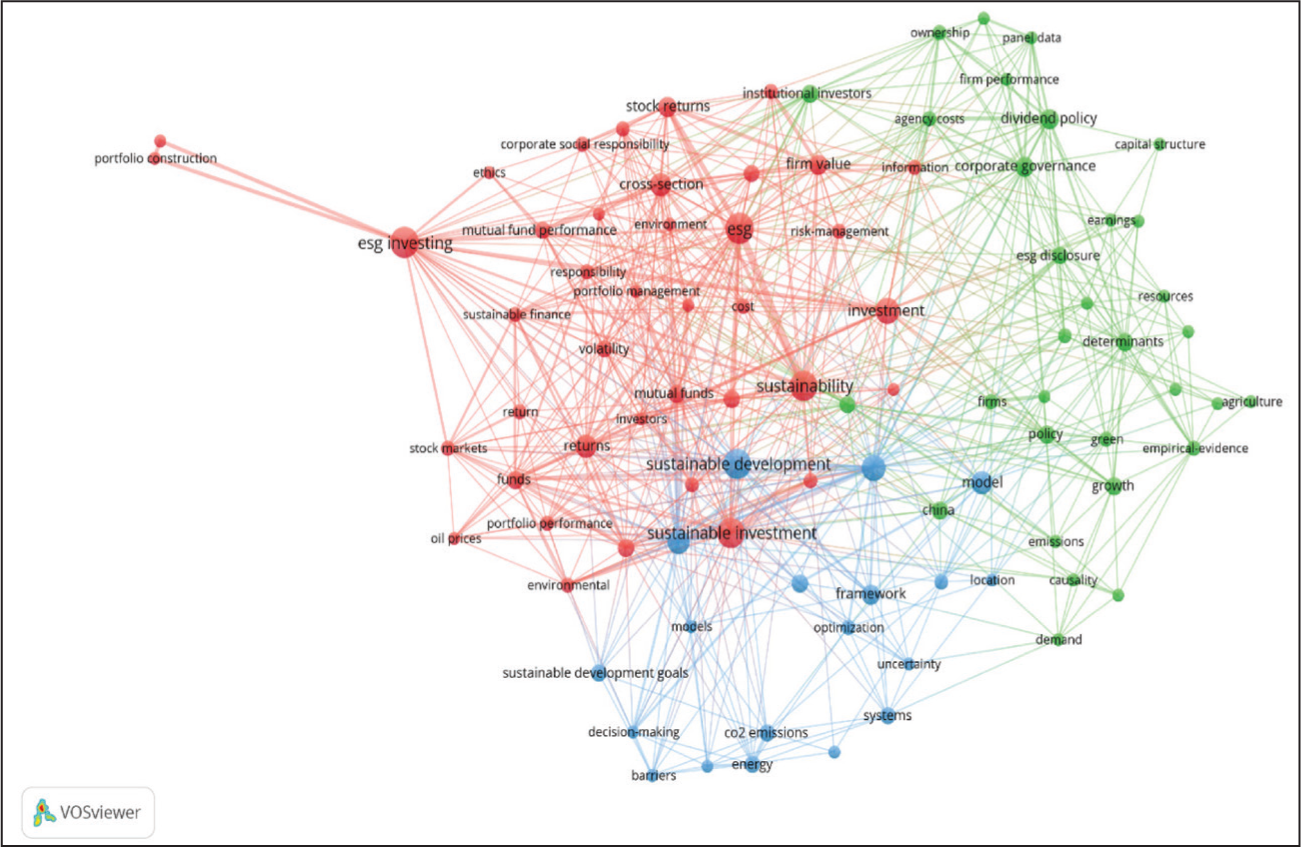
The VOSviewer software has been used for cluster analysis and thematic synthesis in this section. The keyword co-occurrence across the literature has been examined to form three significant themes, which are represented by different colours. Each colour signifies a different theme (Figure 10).
Cluster Analysis.
Cluster 1 ‘Red’: Interface of ESG with Portfolio Performance
According to the Global Sustainable Investments Alliance (GSIA), sustainable investments combine traditional financial analysis with evaluations of an investment’s impact on the environment, its social responsibility and its governance (ESG). By doing this, the investors can use different strategies for building their portfolios and diversifying their assets (GSIA, 2020). These strategies include the exclusion of securities from the eligible investment universe (negative screening), best-in-class selection (positive screening), sustainability-themed investment, norms-based screening, impact investing, engagement and voting on sustainability issues (Aich et al., 2021). The role of investors was looked into as a factor that could affect the performance of a portfolio (Segal, 2021). Albuquerque et al., (2012) presented an industry equilibrium model where firms can choose to engage (or not) in responsible behaviour. When it comes to systematic risk, companies with comparatively higher responsible performance tend to have lower systematic risk. Furthermore, responsible investors are shown to be more loyal and less reactive to market shocks, which is consistent with the hypothesis of mixed utility functions with profit and sustainability goals (Ielasi & Rossolini, 2019). Several studies have classified portfolios into two primary groups: the responsible and the conventional, to verify the effect of ESG screening on compromising diversification as well as to test whether and to what extent responsible investments can affect risk-adjusted returns (Green Portfolio, 2022; Ielasi & Rossolini, 2019; Qi & Li, 2020; Shushi, 2022).
In the case of mutual funds, with specific reference to risks, a Morningstar study has analysed 4,900 funds classified as sustainable and compares them to their peers in Morningstar categories (Bioy, 2020). The empirical findings demonstrate that more than sixty percent of sustainable funds have volatility levels that are comparable to or are lower than those of standard funds (Bioy, 2020; Ielasi & Rossolini, 2019). There is a possible connection between the skills of asset managers and the success of responsible investment funds. Managers who follow ESG principles demonstrate deeper knowledge of the companies in which they invest, which leads to better management of financial portfolios (Jain et al., 2019; Ielasi & Rossolini, 2019). A deeper analysis of the relationship between the market risks of financial portfolios and their level of responsibility has been carried out by distinguishing portfolios according to their sustainability scores (Boffo & Patalano, 2020). Moreover, the negative correlation between ESG score and stock volatility becomes even stronger when market volatility is higher (Zhou & Zhou, 2021). Additionally, securities with the highest ESG scores show the lowest residual volatility, whereas stocks with a poor ESG evaluation have greater unknown risk (Boffo & Patalano, 2020). Cohen, (2023), found that traditional Capital Asset Pricing Model ‘beta’ carries environmental and corporate governance risks for the S&P 500 stocks. The literature on equity portfolios’ risk-return performance based on ESG scores is not unanimous. Prol & Kim, (2022) refined New York Stock Exchange equity portfolios between 2018 and 2019 using the Markovitz mean-variance methodology, which was based on ESG assessments, to better align with financial agent behaviour. Most studies adopt the Fama-French approach. After a thorough examination of optimal and efficient portfolio performance, he concluded that portfolios with high ESG scores exhibited decreased volatility and returns, leading to a lower Sharpe ratio.
Cluster 2 ‘Green’: Potential of Sustainable Investments
ESG investments have been shown to have a positive impact on both human and global development, as noted by Boffo & Patalano (2020). In fact, the United Nations Development Programme has highlighted the potential of sustainable investment to reduce inequality and promote inclusive growth, leading to enhanced human development outcomes. By encouraging long-term and fair economic growth, ESG investments play a critical role in human development. Moreover, the ESG approach aligns with several of the United Nations SDGs, including eradicating poverty (SDG 1), promoting quality education (SDG 4), achieving gender equality (SDG 5), ensuring access to clean water and sanitation (SDG 6), supporting decent work and economic growth (SDG 8), promoting responsible consumption and production (SDG 12) and taking action on climate change (SDG 13) (Folqué et al., 2022; Beisenbina et al., 2022).
Investors with a highly diversified, long-term portfolio are exposed to a lot of different risks, which are mostly concentrated in corporations and other business entities. Therefore, investors play an irreplaceable role in indirectly supporting the growth of businesses, markets and economies that can sustain (SustainoMetric, n.d.). Many authors frequently use the ESG performance index because it illustrates how sustainable investments affect a company’s overall performance (La Torre et al., 2020). Previous studies have examined the benchmarking of businesses with a fixed effect of time and industry to identify the most successful (the top 10 percent) and least successful (the bottom 10 percent) industries (Rosen, 2022). Research on the relationship between corporate social irresponsibility and financial risks has shown that negative media coverage on ESG issues increases the credit risks of enterprises and leads to an increase in enterprise financial risks (Kolbel et al., 2017). According to a report by Bloomberg, the ESG assets could touch $53 trillion by 2025, which would make up a one third of global assets under management. Out of this, 69 percent would be broad ESG, while only thirty-six percent would be environment, impact, or other theme-specific ESG (Bloomberg, 2021).
Several studies have examined the relationship between corporate sustainability, dividends and stakeholder engagement. According to Seth and Mahenthiran (2022), Ellili (2022), Mishra (2022) and Kharbanda and Singh (2018), companies that perform well in corporate social responsibility (CSR) tend to pay out more in dividends to shareholders. Trihermanto and Nainggolan (2018) found that companies with high CSR scores also tend to pay more stable dividends. This highlights the importance of compatibility of the interests of all the stakeholders in corporate decision-making. Mittal et al. (2008) further argue that focusing on ESG initiatives can help companies achieve high scores in all three areas, leading to positive outcomes for both shareholders and stakeholders. By prioritising sustainable practices and stakeholder engagement, companies can foster long-term value creation and promote more equitable outcomes for all parties involved.
Cluster 3 ‘Blue’: Factors Affecting Sustainable Investments for Investors
ESG scores provide crucial information about a company’s fundamentals and can influence investors’ decisions (Pedersen et al., 2021). Analysts often use ESG ratings as market signals to compare and filter data (Leins, 2020). The ecological and social dimensions of sustainability act as primary regulators of sustainable economic development. The ESG rating of a company is directly proportional to investment and improves based on the company’s environmental response (Aich et al., 2021).
Several factors influence investors’ decision-making process. For instance, investors may investigate the relationship between investments, decision-making, factors and firm-level corporate governance (Kamal & Deegan, 2013; M. Jain et al., 2019). Governance and behavioural characteristics are critical factors for investors when deciding where to invest (Chen et al., 2022). Furthermore, revenue conservation is identified as a critical factor for sustainable investments (Weston & Nnadi, 2021). It is essential to consider the impact on conservation when making an investment, as an investment made solely for monetary gain cannot help the environment. Thus, revenue conservation is also a critical factor for ESG investors (Gupta & Singh, 2016; Weston & Nnadi, 2021).
ESG ratings can give investors a better idea of a company’s long-term potential when used in conjunction with financial analysis. Duuren et al. (2015) noted that governance is closely linked to the quality of management in ESG. Developing countries that respect human rights are more attractive to foreign direct investment or investors (Gillan et al., 2021). Overall, high ESG scores consider the rights and expectations of both shareholders and other stakeholders, making them an essential factor for investors when making investment decisions (Mittal et al., 2008; Trihermanto & Nainggolan, 2018).
Conceptual Framework
The present section deals with the ‘Barriers, Mitigation Strategies, and Opportunities’ framework, which is helpful in identifying and describing the problems as well as providing solutions associated with implementing ESG practices for investors and corporates. This framework can assist various scholars and academicians in addressing the causes and effects of various inhibitors and providing strategies and solutions to remove them. The framework provides a structured and segregated outlook on factors and drivers associated with a particular theme (Aggarwal & Manaswi, 2022). This approach would assist in providing global uniformity to regulatory bodies as well as financial markets. This may further allow diverse constituencies to focus their efforts inside and across markets to avoid market fragmentation. This framework may help financial markets foster long-term value and economic growth.
Barriers in Implementation of ESG Practices
Many studies have highlighted various elements that operate as barriers to the successful implementation of ESG practices for sustainable growth (Kumar & Singh, 2014). This is especially true in the case of investments based on ESG criteria. The factors identified are shown in Figure 11.
Conceptual Framework.

Environmental, Social and Governance (ESG) disclosures have become increasingly important for investors looking to make sustainable investment decisions. However, according to Mohin (2021), a lack of consistent standards and assurance backed by regulations makes it difficult to compare ESG disclosures. This lack of consistency in ESG analytics has been a demotivating factor for many investors. In contrast to financial reporting, which focuses solely on monetary matters, ESG considerations cover a wide range of issues that are frequently incomparable with one another, as highlighted by Sheehan et al. (2022). Moreover, Jonsdottir et al. (2022) note that in many cases, there is currently no mandatory reporting on ESG factors, and therefore any data published by corporations might not be authentic. Among the barriers that have been brought to light are the absence of ESG benchmarks, lack of metric consistency, lack of awareness among investors and lack of environmental rules and regulations, as identified by Gleißner et al. (2022).
Additionally, Brenden (2022) and Sinha et al. (2009) state that scant resources are allocated to both direct and indirect inclusion of small-scale businesses due to greater capital investment, high costs associated with technology infusion, a skilled workforce and other factors. These challenges may further delay acceptance among Micro Small and Medium Enterprises (MSMEs). Finally, Zeidan (2022) suggests that a lack of awareness regarding ESG among investors and a lack of appropriate regulatory frameworks are among the various challenges faced by investors in adopting sustainable investment practices.
Overall, these challenges underline the need for consistent standards and assurance backed by regulations, as well as mandatory reporting on ESG factors, ESG benchmarks, metric consistency and improved environmental rules and regulations.
Mitigation Strategies for Effective Implementation of ESG Practices
After discussing barriers that were identified in the previous section, this section deals with various mitigation strategies that have emerged from a thorough analysis of the literature (Figure 11). Mgbame et al., (2020) propose the monetisation of ESG externalities and the incorporation of such monetary values into the financial reporting framework of organisations. The reasoning behind this strategy is that it would create an awareness about the positive impact of ESG among the corporations and the investors.
Developing and implementing a standardised set of metrics and reporting practices can help increase transparency and comparability of ESG information and reduce information asymmetry between investors and issuers (Chiaramonte et al., 2021). Raising awareness among investors and stakeholders about the importance and benefits of ESG investing can help increase demand for ESG information and encourage companies to improve their ESG performance (Cerqueti et al., 2022; Thomas & Gupta, 2021). Governments can play a critical role in promoting ESG investing by establishing regulations and incentives that encourage companies to prioritise ESG considerations in their business practices (Li et al., 2017). This can include creating tax incentives for companies to invest in sustainable practices, setting mandatory ESG reporting standards and imposing penalties for companies that do not meet ESG criteria. Another important strategy for overcoming barriers to ESG investments is to increase funding for ESG research and analysis. This can help to develop more sophisticated ESG metrics and methodologies, which will make it easier for investors to compare and evaluate ESG performance and make informed investment decisions (Zeidan, 2022).
Opportunities Associated with ESG Practices
The various opportunities associated with ESG practices are shown in Figure 11. A study conducted by McKinsey found that having strong ESG criteria may assist organisations in entering new markets and expanding their presence in existing ones (McKinsey, 2021). Investment opportunities are increasing in sustainable alternatives such as renewable energy, clean transportation and green building solutions, as the demand for environmentally conscious solutions rises (Mckinsey, 2021). The integration of digital technologies such as artificial intelligence, blockchain and the Internet of Things has created new opportunities for ESG investment by improving the tracking and monitoring of ESG performance and creating more transparent and efficient processes (Cohen, 2023; Li et al., 2017).
Implementing a full ESG strategy could increase investment returns by putting money into sustainable and appealing areas like renewable energy, waste management and controlling emissions. Additionally, it can assist businesses in avoiding stranded investments, which are financial commitments that may not bear fruit due to longer-term environmental concerns (such as massive write-downs in the value of oil tankers) (Brenden, 2022). Studies have shown that ESG investments have the potential to deliver comparable or better financial returns than traditional investments, while also having a positive impact on society and the environment (Li et al., 2017). Corporations that have a robust ESG structure tend to have better operational efficiencies, stronger relationships with stakeholders and reduced risks from potential negative impacts, resulting in higher overall firm performance. The authors also observed that a strong presence in ESG helps lower the likelihood of adverse government action for corporations (Dhandharia, 2022).
These opportunities can assist organisations in achieving flexibility, stability and cost reductions through the proper implementation of ESG practices, all of which can be beneficial to the corporations (Dhandharia, 2022). The authors believe that such an integrated system has the ability not only to bring about an improvement in company operations but also to bring about a change in global economics.
Conclusion
The literature on sustainable investments has been prolific in recent times. In this study, the authors analysed published studies on sustainable investments using bibliometric methods to identify research topics and knowledge gaps. The PRISMA protocol was applied to obtain 384 documents from the WoS database, which were analysed using Biblioshiny 2.0 and VOSviewer software. The study analysed yearly scientific output, citations and co-occurrences of keywords to determine the most significant papers, nations and journals contributing to the field of sustainable investments. The study also makes important recommendations for future ESG investment studies through trend and thematic analysis. The top five countries in terms of the number of papers published on ESG investing are the United States, Australia, the United Kingdom, Spain and China. However, countries such as India, South Korea, Germany and Sweden, which are still emerging economically, have made very little but significant contributions, highlighting the need for increasing their contributions on sustainable investments. The authors found that the term ‘ESG’ is used in most sources associated with the sustainable investments’ domain. The expansion of research on ESG investing in recent years has uncovered several new emerging themes. The three prominent themes that emerged from cluster analysis are ‘portfolio performance’, ‘potential of sustainable investments’ and ‘factors of sustainable investments’.
The study of the field of sustainable investments remains a major topic of discussion in academic world. The study illustrates the current trends and primary topics that have emerged in the field of sustainable investments. The findings point to new areas of study and rising trends, mainly in the field of finance, both of which can be seen in a variety of research articles published in this area. In addition, the study gives an integrated view based on ‘Barriers, Mitigating Strategies and Opportunities’, which may help researchers, academics and managers to get a full grasp on investments based on ESG. Further, the integration of the goals of human development and Sustainable Development with ESG investment strategies is likely to contribute to the achievement of both financial and social returns.
Implications
Policy Implications
The present study aims to encourage and motivate policymakers and ESG practitioners to construct and implement such ESG structures which may prove to be beneficial to all sections of the society. The findings of the present study may contribute in framing appropriate guidelines and regulations for optimal ESG practices both at local and global scale in the interests of all the stakeholders of the society. By drawing inferences from the present study, the governments and corporates could collaborate with each other for creating an environment for sustainable finance, bringing clarity and transparency with regard to definitions, benchmarking and standardisation of ESG ratings.
Policymakers can also use the study to identify barriers to sustainable investments and take appropriate steps to encourage them. For instance, lack of transparency and standardisation in ESG reporting which has been identified as a significant barrier in this study can be addressed through regulations that require companies to disclose their ESG performance and standardise ESG reporting. Additionally, policymakers can promote financial literacy programs and awareness campaigns to educate investors about the benefits of sustainable investments.
Ultimately, the findings of the study can create an enabling environment for investments that foster sustainable development, leading to more resilient markets and industries, higher living standards, increased productivity and reduced poverty. Encouraging sustainable investments can also address societal and environmental issues like global warming, resource depletion and inequality, benefiting health, education and other aspects of human development.
Implications for Investors and Managers
According to Vincent Triesschijn, an institutional investor from ABN AMRO, companies that perform well on ESG are generally less risky, better positioned for the long term and possibly better prepared for uncertainty (Bell, 2021). Therefore, this study can help investors gain insights about investments based on ESG and how they can affect them. Investors should familiarise themselves with sustainable practices and interact with businesses to develop a solid ESG strategy. This research will aid investors in investigating this possibility. This present study may also help investors in realising the significance of issues related to ESG, such as poor compliance related to protection of environment, ecological balance and human rights.
As the importance of ESG grows in asset management, the present would also help fund managers understand how ESG considerations can affect investors’ decisions. They can get insight from this study, which can further help them to make appropriate decisions regarding investment and construction of portfolio. Asset managers can use the findings of this study to better engage with the businesses in which they have invested. In addition, this research can help fund managers and investors better understand which activities are sustainable and which are not, allowing them to make more informed decisions about which investments are ‘environmentally sustainable’ and which are not.
Future Research Directions and Limitations
The present study has made an attempt to identify numerous limitations as well as potential future research directions in the field of sustainable investments (as presented in Table 1). Firstly, it should be noted that this is a systematic review and hence may contain some subjective bias. Secondly, this study has examined research articles published between 2014 and 2022, and future researchers may choose to investigate by increasing this time span to acquire a morebetter picture. The data for this study was gathered from the Web of Science database to avoid duplication of efforts and due to its vast coverage; however, data from other sources such as Google Scholar and Scopus database can make the study more comprehensive. In the study, the R package Biblioshiny 2.0 has been was utilised, and VOSviewer was used for visual representation of clusters. Other visualisation and network representation techniques, such as NVivo and Citespace may be used to get better insights into the underlying domain.
Future Research Directions.


The future research scope of each selected research article was examined to discover research gaps and future research directions in the clusters discussed above. Table 1 depicts prospective future research directions, which are segregated in the form of clusters that are presented in Figure 11.
Footnotes
Declaration of Conflicting Interests
The authors declared no potential conflicts of interest with respect to the research, authorship and/or publication of this article.
Funding
The authors received no financial support for the research, authorship and/or publication of this article.