




Abstract
Between 1950 and 2018, the global urban population spiralled four-fold from about 0.8 billion accounting for just 30% of the total world population to 4.2 billion in 2018 with a 55.3% share in the world population. At present, it is estimated that 57.4% of the total global population is urban and is projected to cross 60% by 2030. Given the growth and scale of urbanization, this brings forth irreversible challenges, limiting land and water resources at its disposal. This makes it difficult to meet the increasing demand for affordable housing and viable infrastructure besides other challenges. In this context, the local-level planning and development approaches that have been experimented with globally are studied to understand the potential of neighbourhoods in sustainable development. The authors conducted a systematic literature review based on the SCOPUS database to identify relevant scholarly literature. The study identified the most significant associations within various domains based on phased iterations with the VOSviewer analyser tool to gain confirmatory results. The study has explored planning interventions at the neighbourhood level that would assist in sustainable development. The article concludes that there is a lot of scope for stakeholders to channel their efforts innovatively for leveraging the potential of neighbourhoods in sustainable development.
Keywords
Introduction
The advance of industrialization has revealed its side effects, gradually leading to uncontrolled urbanization. It has been stated that the world is undergoing the most enormous wave of urban growth in history. More than half of the world’s population now lives in towns and cities, and by 2030, this number will rise to about 5 billion (United Nations, 2023). Urbanization popularly relates to a steady growth in human settlements called urban areas, with a maximum number of people engaged in economic activities other than agriculture. Loss of the original character and functionality of open spaces, along with the degradation of ecological precincts, incompetent and limited land, urban sprawls and spill-over immature expansions of towns and cities, are a few sizable impacts of urbanization. Some accounts mention that globally, urbanization is transforming everything on its path, including air, land, water, ecology, institutions, customs and lifestyles, leading to irreversible changes in cities and peri-urban areas (Onyebueke et al., 2020). Thus, the concentration of activity near areas fostering trade and commerce has brought about alterations beyond the absorption capacities of towns and cities.
This situation has prejudiced inclusive development and impacted cohesive social development. Development has turned out to be handicapped, supportive of a mere economy-centred approach, hampering the environmental and social sustainability perspectives. The evident symptoms can be traced to ever-increasing pressure on urban municipal infrastructure due to an upsurge of urban population emerging from rural to urban migration. The challenges of providing the people with municipal-serviced land to accommodate this growth in cities within existing and limited physical and social infrastructure like water supply, sanitation, roadways, affordable housing, schools, healthcare, parks, recreational facilities and alike are immense.
Therefore, it is a massive task for city management and other stakeholders to make this interrelationship more sustainable and resilient. According to census data, the percentage of people living in urban areas in India increased from 11.4% in 1901 to 28.53% in 2001, while their proportion increased to 31.16% as per the census of 2011. By 2036, the World Bank expects India’s urban population to reach about 40%. The World Bank also predicts that by 2050, India, China, Indonesia, Nigeria and the United States will lead the world’s urban population growth. Furthermore, the 193-member countries of the United Nations (UN) adopted the 17 sustainable development goals (SDGs) in 2015, interwoven with objectives to be achieved by 2030 (United Nations, 2019). The basic philosophy behind these global goals is to ensure that there is peace and prosperity for all people through creating a sustainable planet. The Government of India was one of the member countries committed to actualizing the SDGs—the 2030 Global Agenda, including the SDGs. It is stated that while there is coherence between India’s national development goals and the SDGs, it is also widely recognized that the states of India mirror enormous geographic and demographic diversity, as well as socio-economic gaps. The SDG India Index was created as a historic monitoring initiative to rate the states and UTs. It highlights large disparities between nations and emphasizes the importance of tailored methods. Due to these discrepancies, sub-national development programmes must be planned, budgeted, implemented and monitored while considering various economic, social and environmental aspects to keep India focused towards the realization of these varied goals. This will depend on the actions taken by states, districts, cities and villages attempting to localize the goals, with state governments being primarily responsible for accomplishing the SDGs (NITI Aayog & United Nations, 2019). Contextualizing SDGs to urbanization and sustainable neighbourhoods in the present study takes us to SDG 11 which advocates making human settlements inclusive, safe, resilient and sustainable with a focus on sustainable cities and communities. There is a strong need to investigate the possibilities of interventions at the spatial and policy levels that could promote sustainable and socio-environmentally oriented development as opposed to an exclusively economy-centred or socio-environmentally defiant approach while protecting the natural environment. Understanding and reviewing local-level, bottom-up planning strategies in established communities, such as local area planning and neighbourhood regeneration or retrofit, have also become inevitable. Hence, the objective of the study is to review grassroots-level interventions at the neighbourhood scale for sustainable development. This article has been structured in a manner wherein the first part highlights the background of the study, emphasizing the increasing pace of urbanization and the need for inclusive development through localized neighbourhood-level planning and development approaches. Part two elaborates on the theoretical framework of sustainable development, while part three provides the methodology concerning the systematic literature review, addressing the study in phases, by undertaking phased iterations and categorization of literature. The fourth segment of the article presents the analysis of the data and results generated through the VOSviewer software, while part five presents the systematic literature review. The final segment highlights the conclusions of the study.
The Theoretical Framework
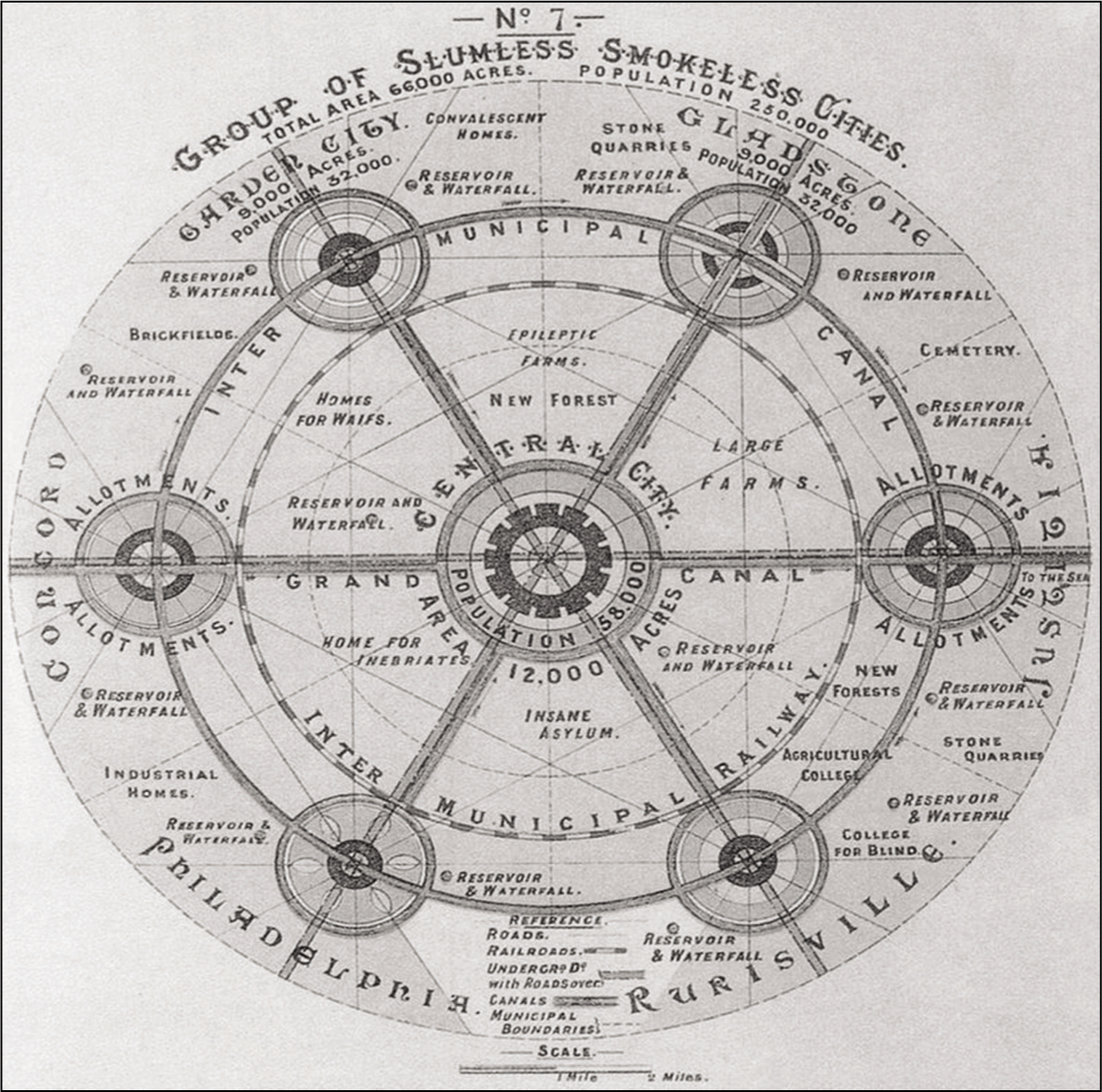
One of the most pioneering interventions in spatial planning for sustainable cities by Ebenezer Howard in 1902 highlighted the blend between man and nature through his work, with an attempt to achieve balanced growth for towns and villages—rural and urban areas—through the Garden Cities concept. The Garden City model attempted to seize the advantages of a countryside and an urban environment by evading the drawbacks offered by both. Howard suggested the three-magnet theory, in which he diagrammatically represented the differences between the city and the village and listed the combined amalgamation, focusing only on the advantages of both environments.
The garden city model envisaged self-sufficient communities surrounded by green belts, which signifies a type of land use in planning. Green belts attempt to conserve mostly undeveloped, wild or farmland zones around or close to urban areas. The garden city was idealized to inhibit 32,000 people over 9,000 ac (3,600 ha) of land. The model displayed a concentric pattern with open spaces, community parks, a large central park and six boulevards radiating outwards from the core with a width of about 120 ft (37 m). Further, Howard opined that when the total capacity of the garden city is reached, another garden city would be developed in its vicinity, forming a cluster of garden cities linked with roadways and railways, with a central city having a population of 58,000 since land in single ownership, prevented overcrowding. Thus, the main principles of the garden city concept were planned dispersal, a limit to town size, sufficient amenities, a town-country balanced relationship and ward or neighbourhood-level planning. The cities of Letchworth and Welwyn were the first cities built on this concept to establish the best of town and country living. This model was considered one of the more sustainable forms of urban development and control of urban sprawl.
Furthermore, Church (2014) highlighted that sustainability could be ushered into cities through the development of sustainable neighbourhoods. The author believed that cities in either growth or decline face regulatory obligations and crumbling infrastructure. These issues are compounded by the pressing need to address sustainable development and resilience in the face of uncertainty around climate change and the need for reduced oil use. She opined that incremental urban restructuring of neighbourhoods through planning and designing to the specifics of local ecology has the potential to restore a balance between urban areas and natural systems and believed that innovative planning should reconsider the relationship of urban residents to green space, which has been perpetually neglected due to the separation of green spaces and natural systems away from public domains. Similarly, early attempts of architects, planners, and urban designers were crucial for the development of sustainable settlements globally.
In this regard, the concept of the ‘neighbourhood unit’, which emerged from the socio-cultural setting of the early 1900s, was created by Clarence Perry. The neighbourhood unit was conceptualized diagrammatically as a planning tool for residential development in metropolises. Perry’s neighbourhood unit as seen in Figure 1 was referred to by planners of the twentieth century to design self-sustained and appropriate neighbourhoods.
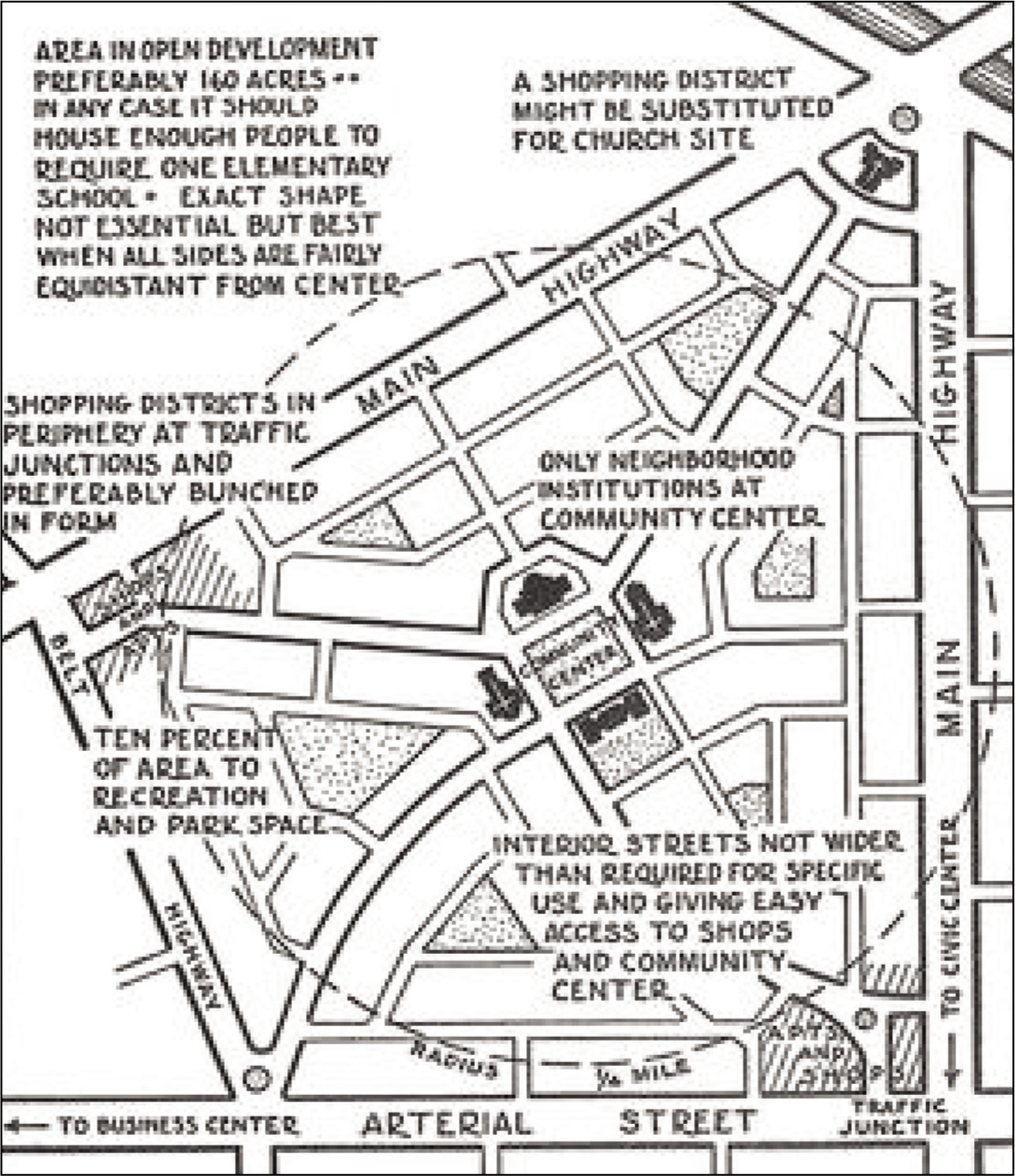
This concept of the neighbourhood unit employed a variety of institutional, social and physical design principles, such as the separation of vehicular and pedestrian traffic and arterial boundaries demarcating the inwardly focused neighbourhood cell from the greater urban lattice (Banerjee, 1984). The neighbourhood unit contains a community centre and hierarchical road networks along with shopping districts in a clustered format at the peripheries and junctions of the roads. Interior streets are not wider than specified for a purpose, giving easy access to the community centre amenities and shops, with open areas identified to house additional migration, along with an elementary school. The highways and the arterial streets connect the neighbourhood to the central business district. Areas are demarcated for religious centres as well. The overall radius does not exceed a one-quarter mile distance to primary amenities, which are meant to be within walking distance. Conceptually, it continues to be an utilized resource for designing and arranging novel residential settlements, such that it stands up to the contemporary social, administrative and service requirements of urban life.
Given these practices, it becomes essential to consider the role of neighbourhood-based micro-approaches in physical planning and design towards making a city sustainable as a whole. The central notion is that these approaches can evolve a balanced urban ecology, ease defragmentation, enhance the networking of green spaces and build socially balanced and economically viable settlements. Consequently, it has become inevitable to understand and review local neighbourhood-level planning and development approaches that can transform cities into resource-conscious settlements, more sustainable for their people and environment. It has become essential to work at the local levels, closer to the inhabitants within urban areas that can tap into physical elements of built infrastructure to help mitigate the adverse impacts of urbanization. The context of the ‘neighbourhood’ thus becomes critical here. One of the pioneers who experimented with planning interventions at the local level was Lewis Mumford, who propagated the idea of re-defining and re-planning the city based on neighbourhoods (Mumford, 1954).
Some recent insights on neighbourhood-level sustainability are essential to achieving the UN’s SDGs at the local level. However, large-scale infrastructure projects may obscure the cumulative positive effects of many local urban developments at the neighbourhood levels (Saiu et al., 2022). It has also been pointed out that densification has an impact on social sustainability indicators, which include safety, social interaction and community stability. However, this has not been adequately researched (Soltani et al., 2022). Further, urban renewal and regeneration have gained importance in the post-industrialization era. It has been observed that ‘adopting adaptive renewal strategies to integrate the use of resources can effectively promote the construction of low-carbon neighbourhoods’ (Cheng et al., 2022).
Similarly, neighbourhood micro-renewal is one parameter that further plays a critical role in revitalizing old neighbourhoods, while rising public demand for upscale urban districts demands the revitalization of older neighbourhoods (Tang et al., 2022). Thus, while the inherent dynamics of the design and the structure of a neighbourhood habitat can impact the sustainability of an entire urban settlement and vice versa, the neighbourhood becomes the pivot, which must be studied for its untapped potential to address the call for sustainable development.
The framework for sustainable development became a concrete concept in the post-industrialization phase in the West and was based on the need for the conservation of forest land and the necessity to avoid over-exploitation of resources. The Brundtland Commission later defined sustainable development as ‘development that meets the needs of the present generation without compromising the ability of the future generations to meet their own needs’ (United Nations, 1987). In another study assessing various facets of urban poverty through the Multidimensional Poverty Index (MPI), a secondary African city in Ghana was evaluated with spatially exclusive data.
It was observed that the MPI was significantly lower in core neighbourhoods than in fringe neighbourhoods. It was also observed that upscaling the adoption of clean cooking energy in all secondary cities can also play a key role in addressing multi-dimensional urban poverty and advancing urban sustainability (Ahmed et al., 2023). It is, therefore, quintessential to unleash the potential of neighbourhoods to address the call for sustainable development.
Methodology
Scholarly literature in the background of the described evolution of neighbourhood habitats has been reviewed in this article. It has aimed to investigate the roles of neighbourhoods in the urban built environment to facilitate sustainability. In the first phase, a scientific analysis of available scholarly literature was conducted based on the SCOPUS database.
This was followed by a categorical review process in the second phase of the study, which considered the social and ecological parameters and the neighbourhood’s potential to catalyse sustainability. Notably, few studies have graphically mapped scholarly literature using various bibliometric techniques, such as bibliometric coupling, co-citation, citation, co-authorship and keyword co-occurrence. It is a widely accepted fact that ‘Bibliometrics is an important tool for assessing and analysing the published scientific literature from a quantitative perspective’. In recent years, a wide range of bibliometric studies have been developed covering journals, topics, countries, and institutions (Verma et al., 2021).
According to many authors, we can create a graphic mapping of the bibliometric data by utilizing the visualization of similarities (VOS) viewer software.
Based on similar guidelines, the authors have categorized available research papers built on relevant practices in neighbourhood planning and design. Figure 2 is a graphical representation of the methodology deployed for this study. Regarding the area of exploration, three-phased iterations were performed with permutations and combinations of search terms within the domain area-specific subjects in the SCOPUS database. In the first iteration, a SCOPUS-indexed journals search was carried out on a subscribed SCOPUS database on the terms neighbourhood and sustainability, which revealed 1,658 publications; of these, 1,245 published articles appeared in multiple high-ranked journals between 1995 and 2019. This was the first iteration and was conducted as a part of the continuing study to capture developments along a timeline in the standard scenario.
Methodological Process.
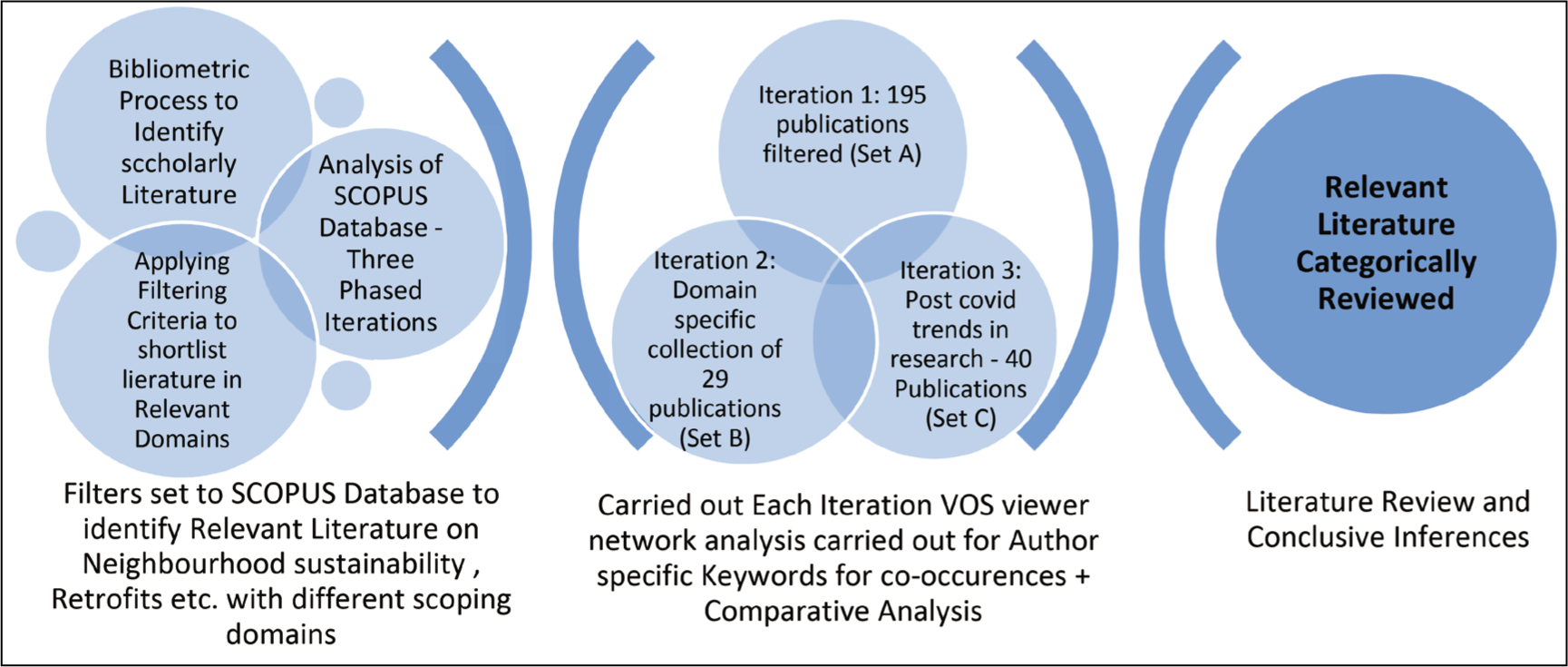
These articles were then filtered based on the relevance of the subject matter and sorted for sub-disciplines of engineering, environmental science, social science, energy, arts and humanities. They were further categorized based on the timeline to arrive at Set A of 195 publications. The search results were then limited to relevant keywords like neighbourhood, retrofitting, social and urban housing, public policy, sustainability, sustainable development, green infrastructure (GI), architecture, urban planning, neighbourhood regeneration, urban redevelopment, land use, quality of life, urban governance and sustainable development. The search results were analysed in VOSviewer software to base the study on a quantitative scientific technique to identify the strengths and linkages between the major domains. A second iteration was conducted, with a degree of alteration in search terms, which were made more domain-specific, to obtain a scoped-down version of the results obtained from Set A. Thus, a more domain-specific collection of 29 publications (Set B) was obtained after delimiting the relevant parameters, and the VOS viewer analysis was repeated for Set B. These results were compared with Set A, and their associations between key domains were analysed based on the same keyword co-occurrence method for their linkages and strengths. It was found that Set B validated Set A with regard to domain linkages despite alterations done during the filtering of the SCOPUS database as a scoping exercise.
Nevertheless, since it was significant to capture the latest domain-specific research trends in the post-pandemic scenario, the third and last of the iterations was conducted to capture the most recent trends in neighbourhood sustainability, limited to select areas based upon the researchers’ domain knowledge, which focused on journal articles published explicitly between the years 2020–2023.
The final iteration yielded the most recent and specific trends in research within the subject area. It fetched 40 relevant articles published between 2020 and 2023, mapped for their linkages and reviewed, in addition to the earlier trend results obtained to attain confirmatory results. Consequently, particular selected articles were ‘categorically’ reviewed, and the content was summarized based on overall orientation, field, coverage of study, intent and outcomes. Furthermore, the overall timeline scenario for domain-specific research articles published between 2001 and 2023 revealed results based on SCOPUS Analytics, as displayed in Figures 4 and 5.
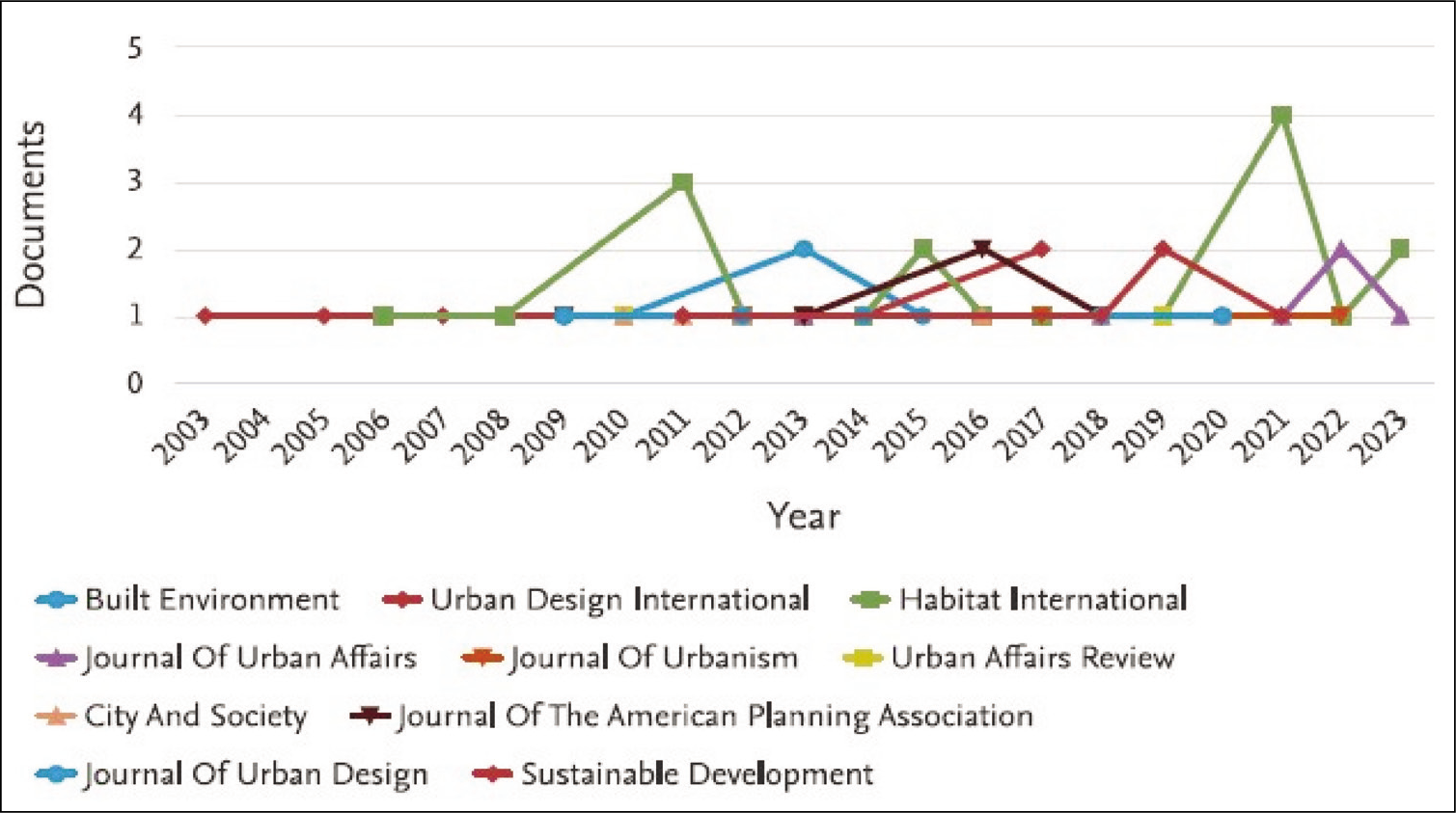
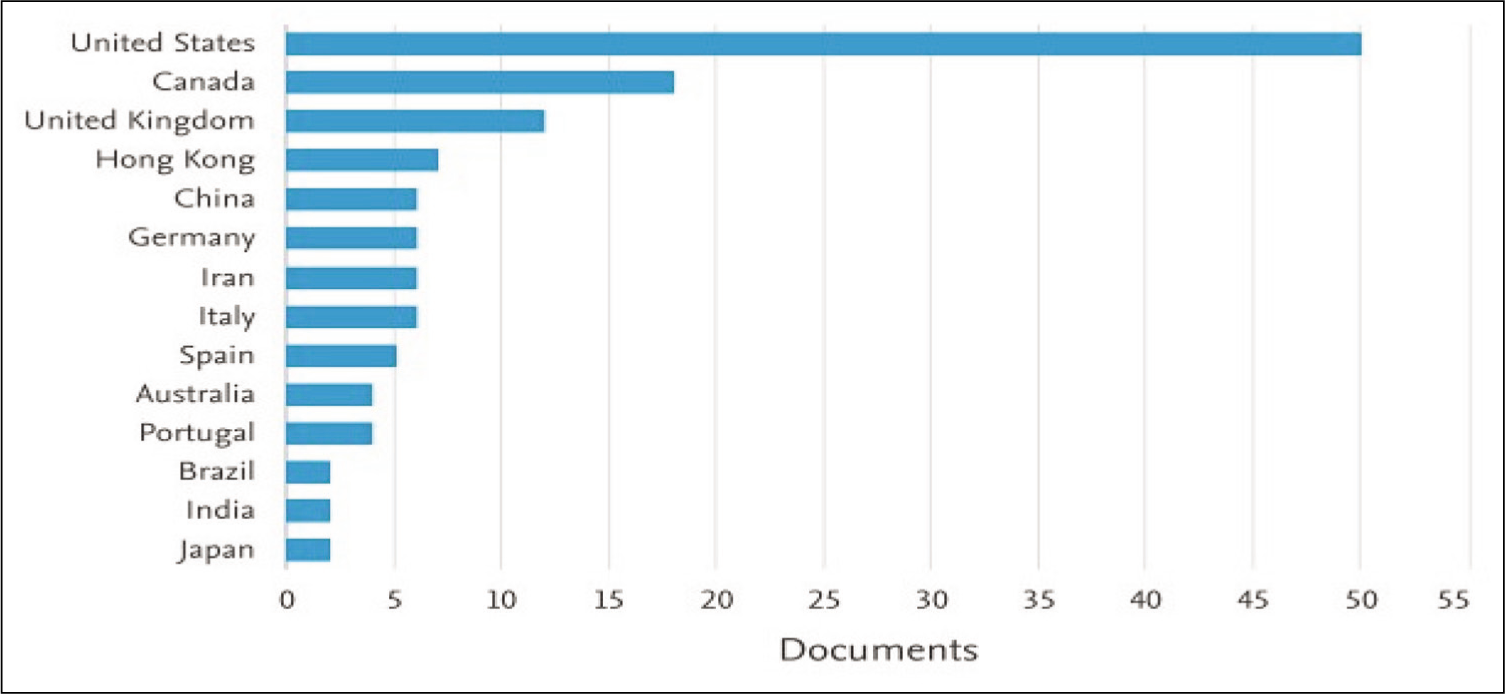
Figure 4 shows the vast and increasing necessity of research within the related domain, indicating the rising need to address the challenges in neighbourhood sustainability. A striking feature here is a constant decline in research during the pandemic’s peak. Research contribution started to increase post-pandemic and continues to rise. Further, while most research has emerged from the Western countries indicating immediate action in sustainability-related issues, India is still dormant. It needs to develop a more substantial research base, as seen in Figure 5.
Data Analysis and Results with VOSviewer Software
It has been observed that commendable research on the various parameters of neighbourhood planning in terms of capability in generating sustainability has occurred in the last decade globally. The analysis of the SCOPUS-generated keywords was carried out through VOSviewer software. VOSviewer is a scientific tool for network visualization of essential terms extracted from a body of scientific literature, such as co-authorship networks, citation networks etc., based on citation, co-citation or co-authorship relations, which offers text-mining functionality that can be used to construct and visualize co-occurrence networks.
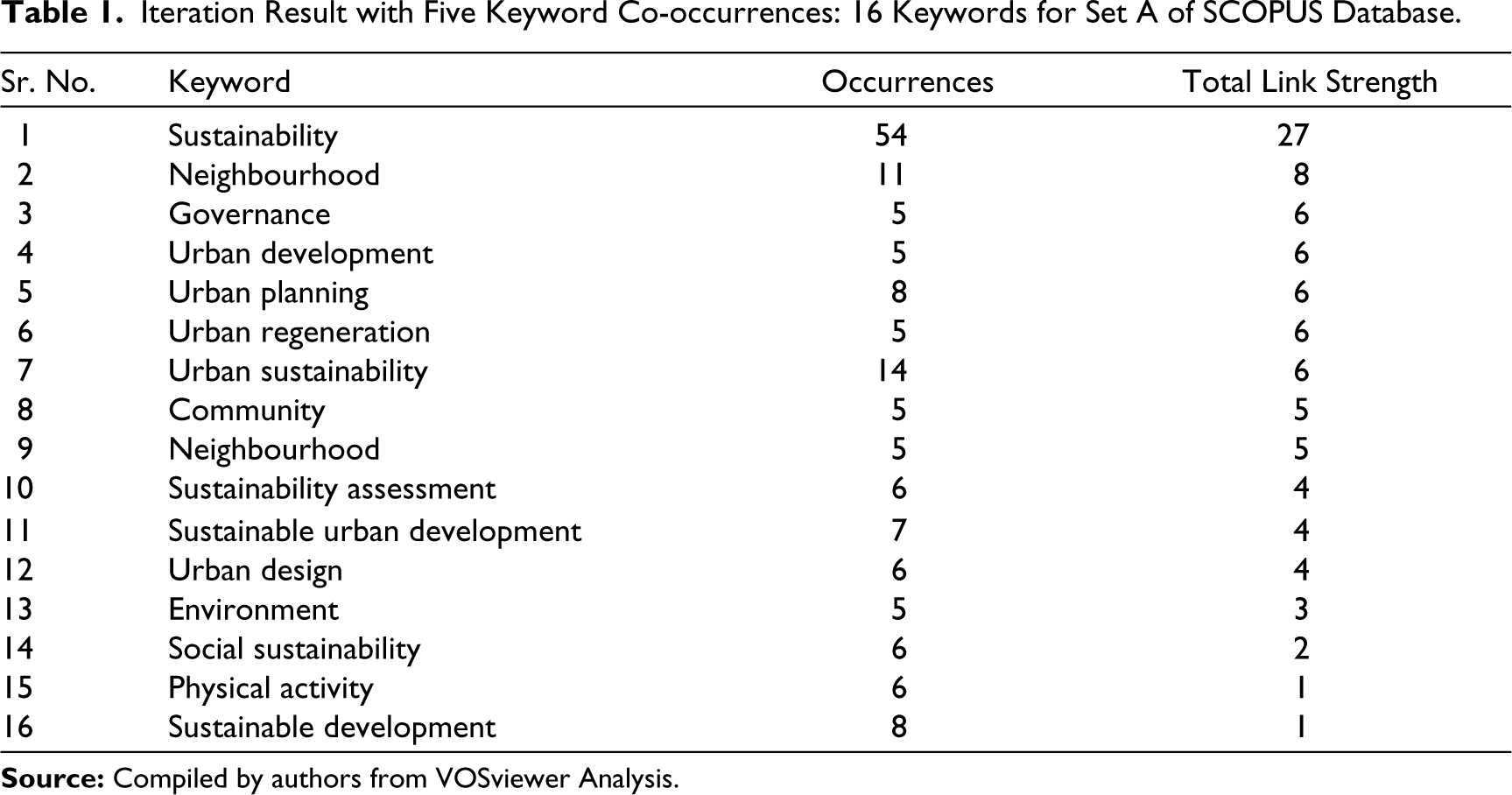
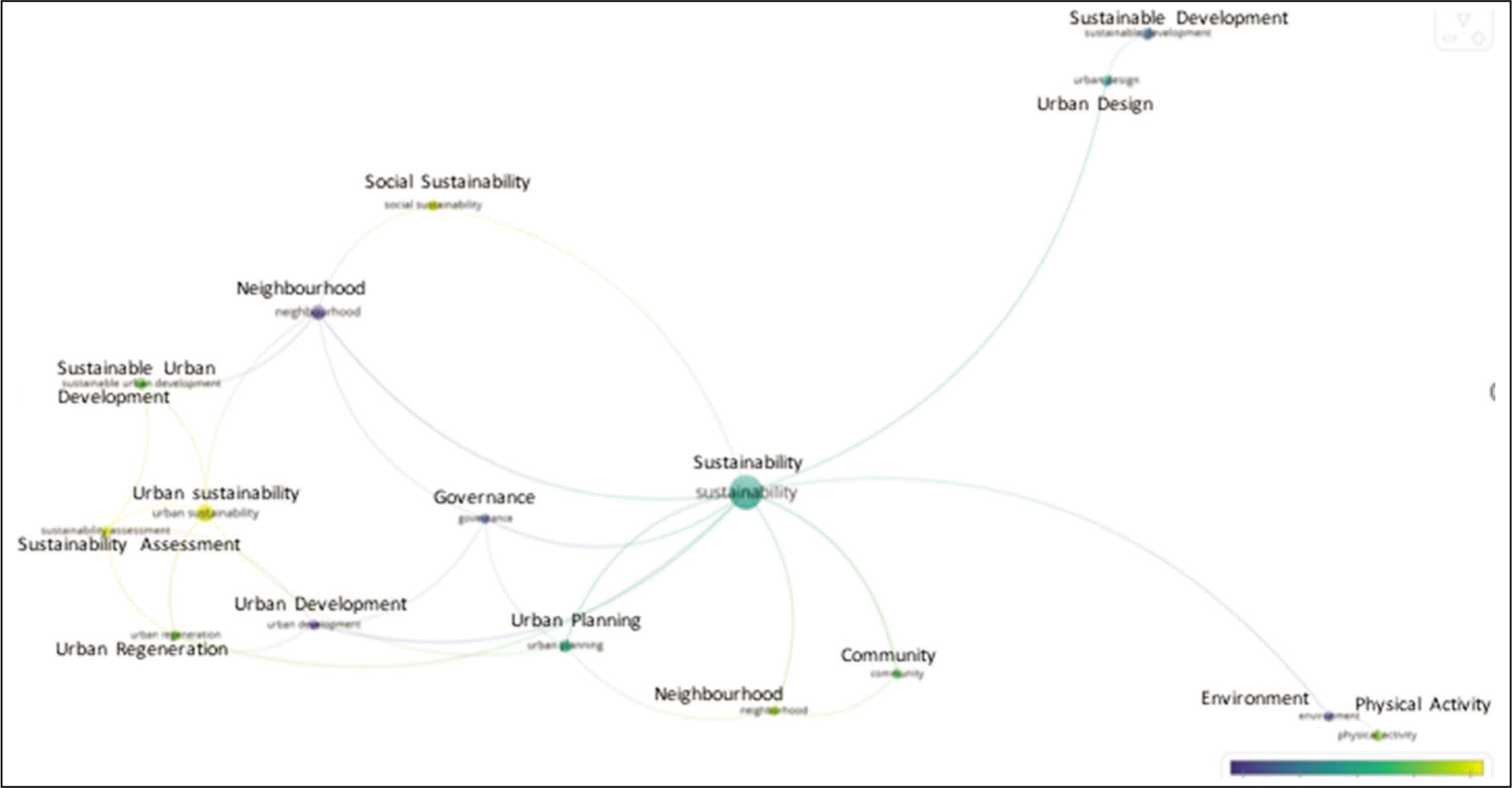
It is to be noted that in VOSviewer software’s terminology, a ‘network’ refers to a graphical representation of the connections between domain areas. Thus, a network consists of a node or a vertex, which is the prominent or central keyword under discussion. Then, there are sub-nodes and links connecting the various sub-nodes as well. The strength of a link is representative of the degree of interdependency between the domain areas (keywords). In order to gain a broader perspective initially, a direct link between keywords of all 195 papers from Set A was analysed, which helped to identify the directly dependent domains. Successively, an author–keyword analysis was run in the software, based on a combination of co-occurrences of keywords. It derived an understanding of the significance of the linkages along a timeline. It is essential to understand that co-occurrence, as a parameter, is being perceived as a measure of the significance of a specific domain, where the greater the number, the more significant the domain area. Thus, when a restraint of minimum X occurrences was set on keywords appearing in publications, the model delivered link strengths for those keywords that have occurred X number of times, at least in the articles. Thus, the co-occurrences of keywords were analysed in VOSviewer, with the restraint of a minimum of five co-occurrences, given the large number of publications to be analysed. Out of 841 keywords, 16 met the criteria above, showing evident linkages.
The generated model of the network diagram and an overlay link strength table revealed strong linkages between the following domains: quality of life, governance approach, urban policy, urban form, community, land use, sustainable development, urban design and planning, neighbourhood, urban regeneration and renewal.
It was inferred that these areas represent significant potential for sustainable development through neighbourhood interventions.
Table 1 represents the link strengths between dependent domain keywords for Set A. As evident in Table 1, ‘sustainability’ displayed the most vital total link strength of 27 with 54 occurrences, followed and linked by ‘neighbourhood’, displaying a link strength of eight for six occurrences. Figure 6 displays linkages between domains through the VOSviewer. The next step was to analyse Set B of research articles with the related SCOPUS database, carrying out iterations for ‘neighbourhood’, ‘sustainability’ and ‘retrofitting’ domains for specific disciplines, followed by an ‘author-keyword’ analysis in VOSviewer.
Iteration Result with Five Keyword Co-occurrences: 16 Keywords for Set A of SCOPUS Database.
Out of the 120 interlinked keywords (domains), there were nine keywords with a minimum of two co-occurrences among the research papers. Notably, the restraint was lowered to two co-occurrences since this iteration yielded just about 29 publications over the delimiting criteria applied in the SCOPUS search. It was observed that the visualization for the interlinkages for all 120 domain keywords revealed the cluster network visualization map, as seen in Figure 7.
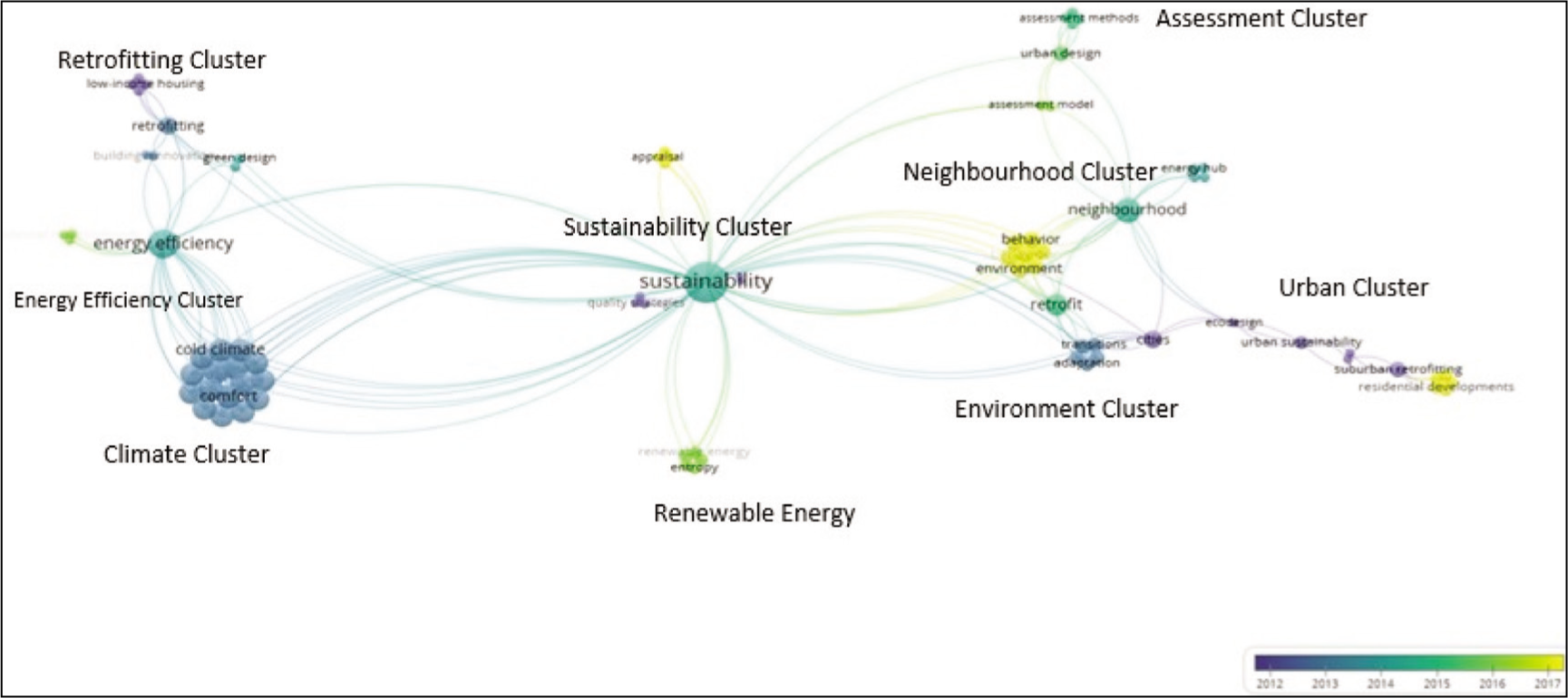
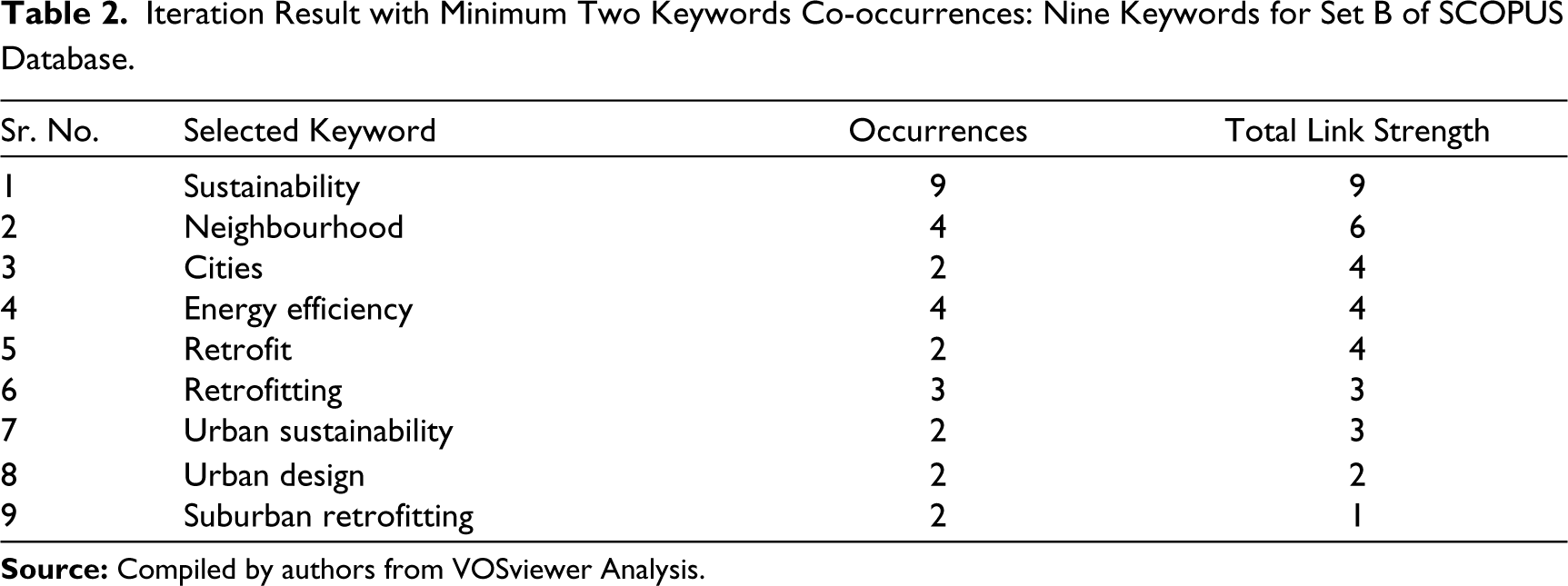
Figure 8 also displays the network visualization map under the restraint of two co-occurrences for this set. In comparison, Table 2 highlights the link strengths for the co-occurring keywords under the restraint of two co-occurrences.
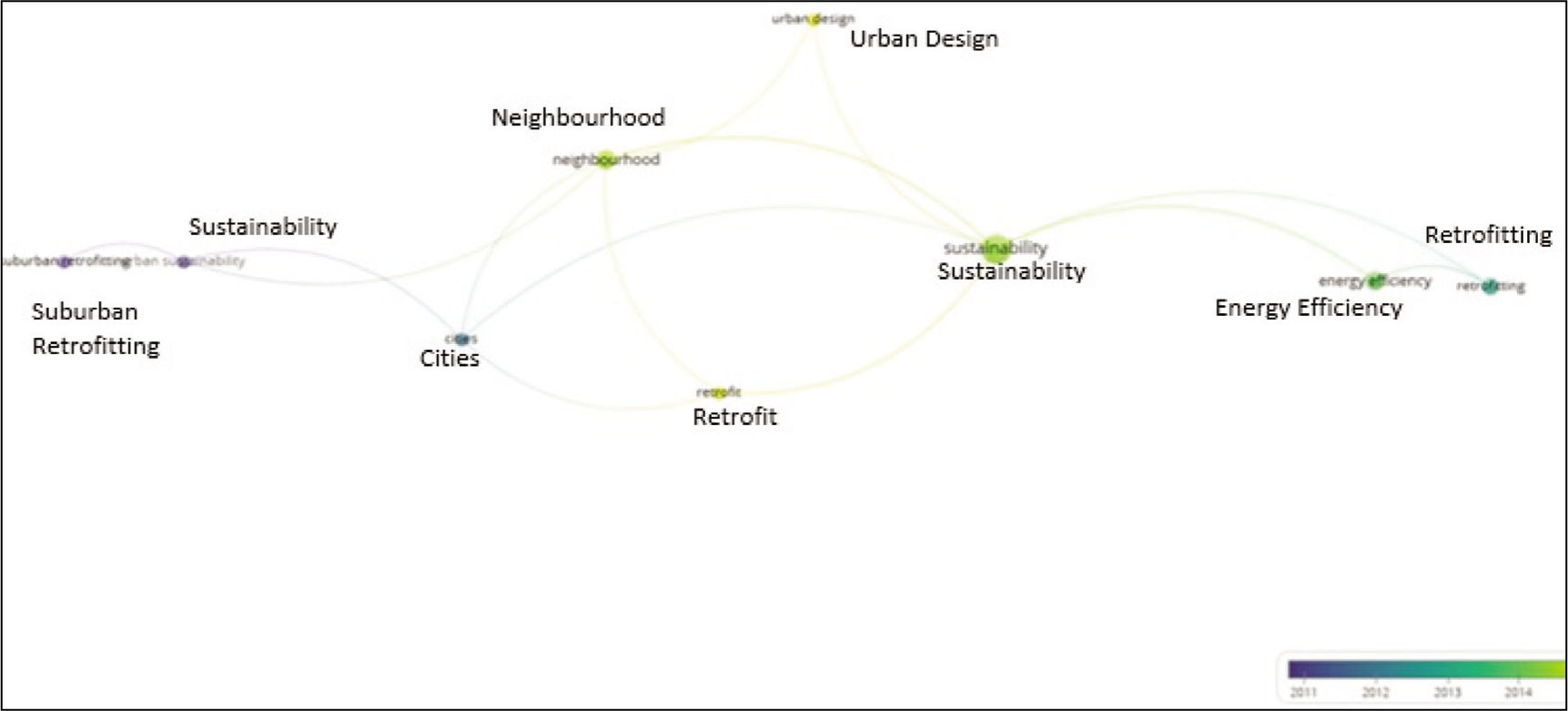
It is evident from Table 2 that the domain keywords ‘sustainability’ and ‘neighbourhood’ have emerged to have the strongest linkage, followed by ‘energy efficiency’, ‘cities’, ‘retrofit’ and others. ‘Sustainability’ is the highest occurring term (nine times) with a total link strength of nine and is strongly linked with the immediately following term ‘neighbourhood’ with four times occurrence and a total link strength of six. Meanwhile, the appearance of the keyword ‘cities’ suggests that there is a strong potential for developmental interventions in urban precincts. Retrofitting/retrofit measures in urban areas have the potential to impact urban sustainability positively through neighbourhood-level interventions.
Iteration Result with Minimum Two Keywords Co-occurrences: Nine Keywords for Set B of SCOPUS Database.
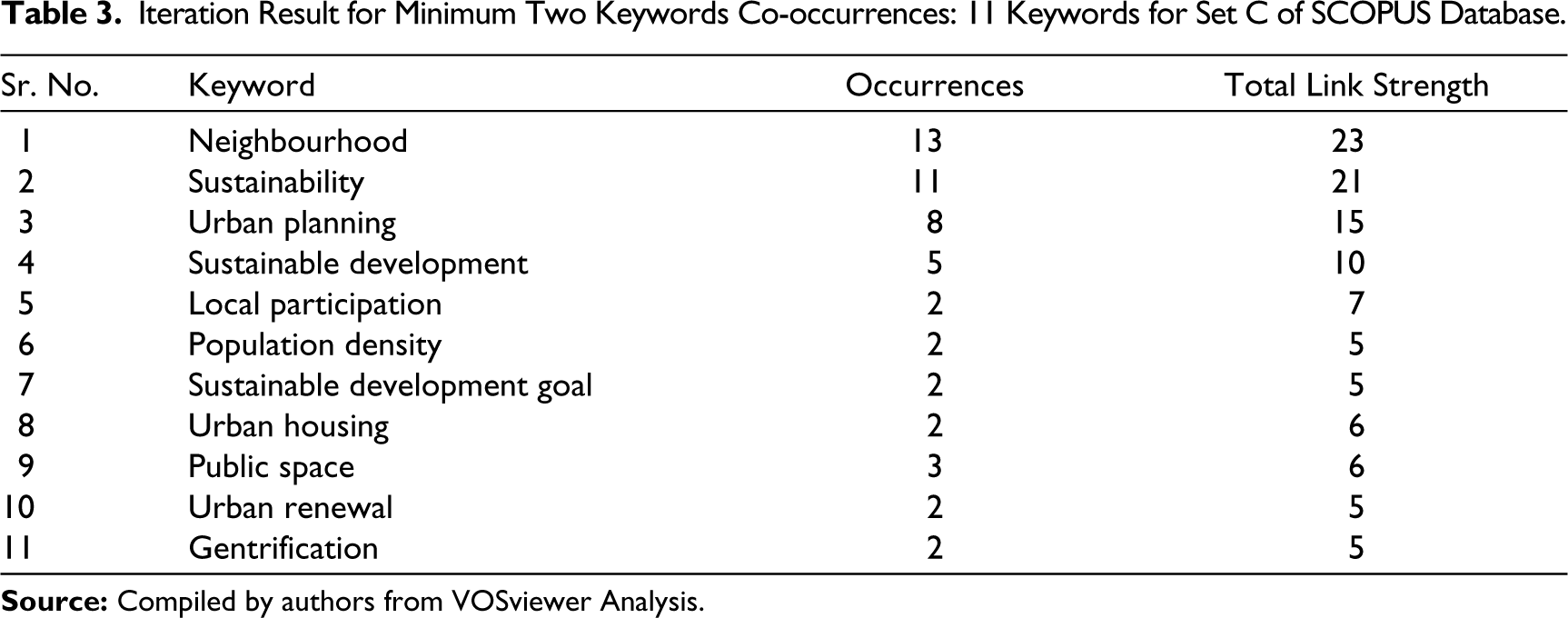
Finally, the last iteration closely reinforced the earlier findings, mainly to reinforce research trends between 2020 and 2023. Among the 40 publications derived to form Set C, the VOSviewer Analysis procedure was repeated for 153 specific author keywords with the limiting criteria of occurrence at least two times; this yielded 11 keywords with the most substantial linkages. The link strengths for association in this iteration can be seen in Table 3, indicating that neighbourhood, sustainability, urban planning and sustainable urban development domains have direct and robust associations as denoted by their link strengths. Table 3 highlights the link strength associations between the keywords for the three years.
Iteration Result for Minimum Two Keywords Co-occurrences: 11 Keywords for Set C of SCOPUS Database.
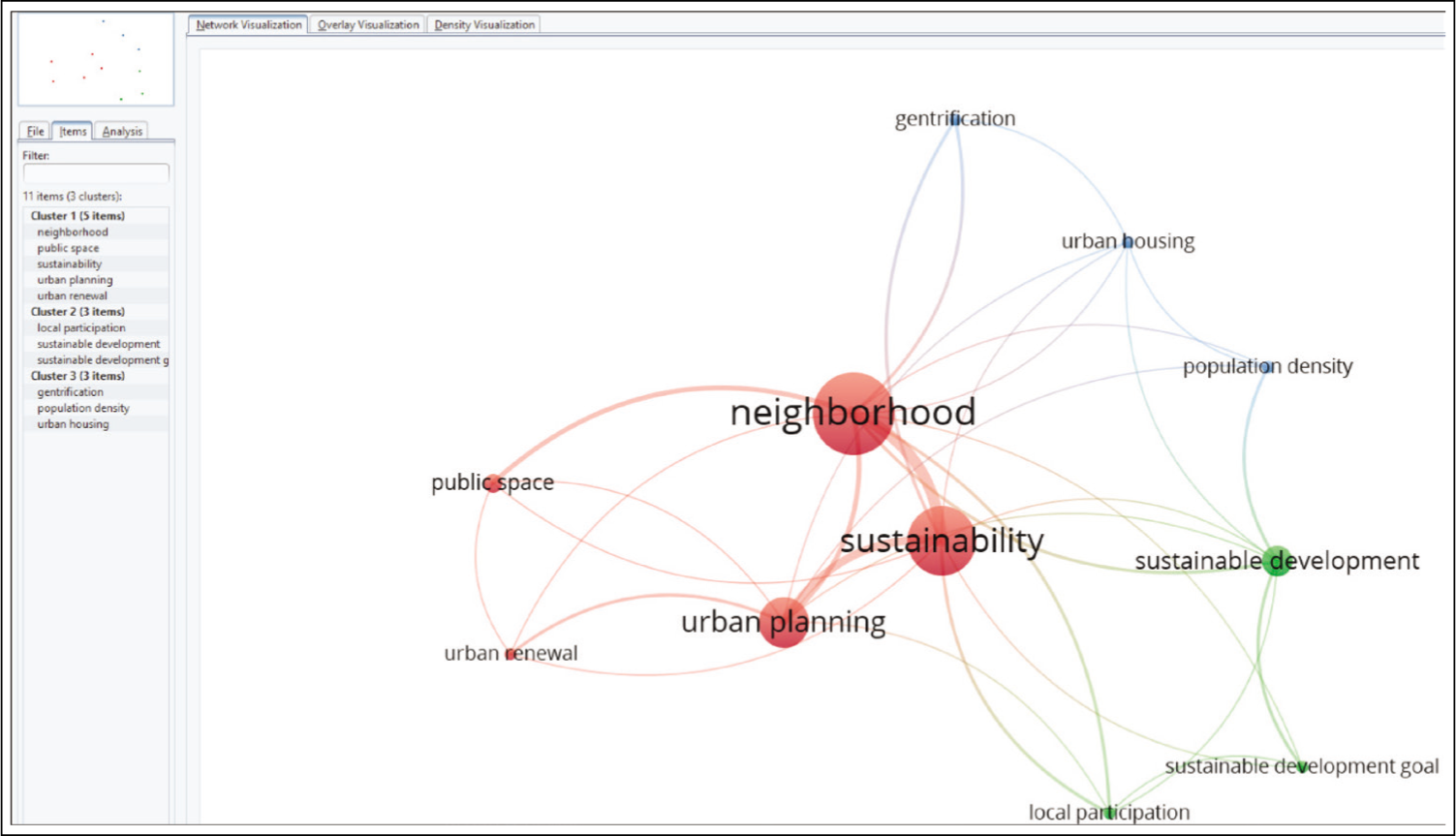
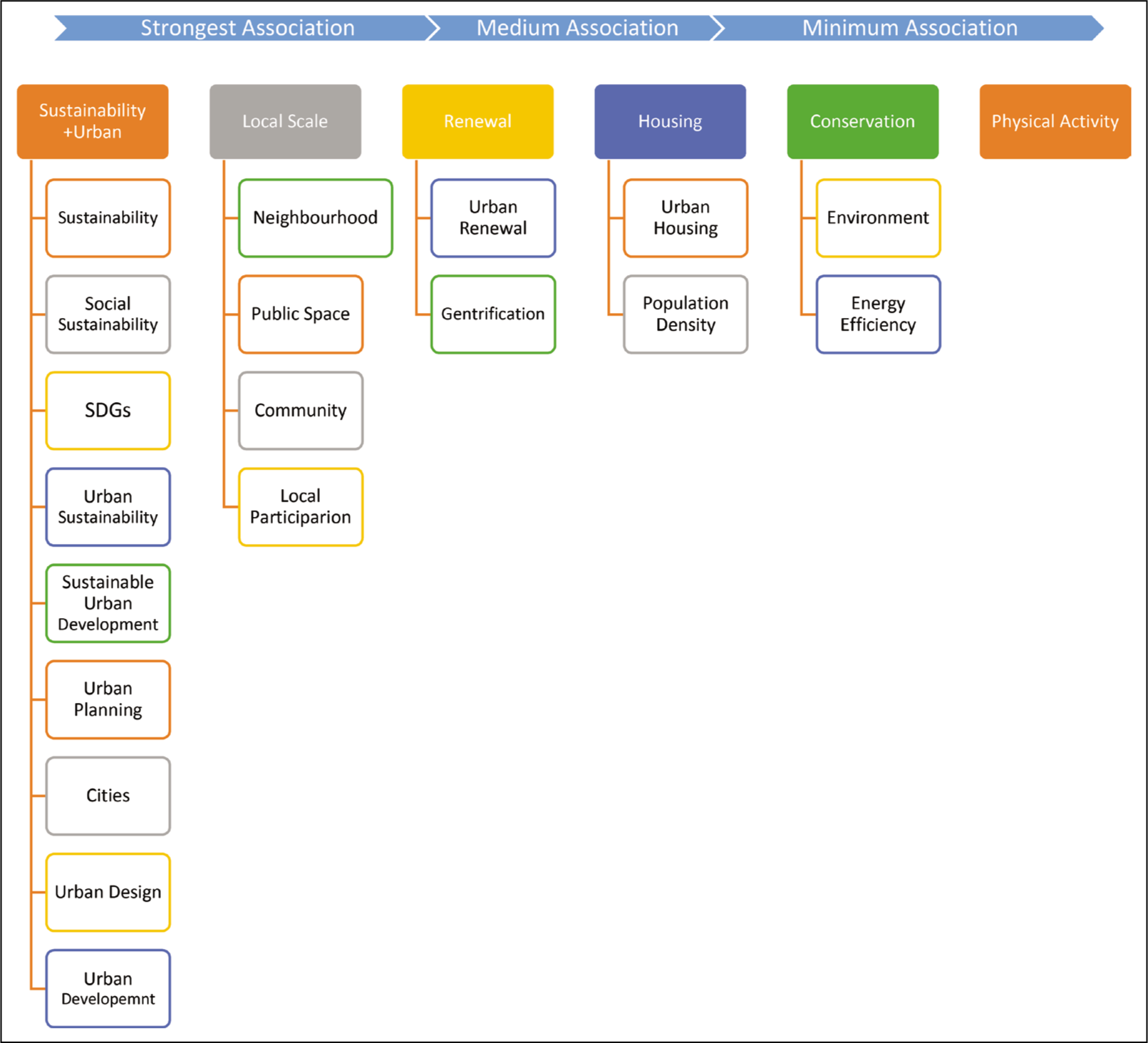
The associations in this iteration analysed for the 11 unique keywords also delivered clustered associations wherein the terms neighbourhood, sustainability, urban planning, public space and urban renewal formed one cluster, each item closely related to one another; the next cluster comprised sustainable development, local participation and SDGs closely influencing each other, and the last cluster comprising population density, gentrification and urban housing directly related to each other, as can be seen from the network diagram represented in Figure 9.
Thus, all three iterations helped the researchers gain a perspective on active research areas within the broad domain. A significant finding between all three iterations revealed that the most potent domains influencing each other are found among the terms neighbourhood, sustainability, urban planning, sustainable development, energy efficiency, retrofitting, governance etc., implying that interventions in any one domain can potentially create impacts on the other, which shows high research relevance. It is also evident that there are strong linkages between the quality of life, governance approach, urban policy, urban form, community, land use, urban design, neighbourhood retrofitting, urban regeneration and renewal domains representing scope for advances.
Thus, the cross-comparison of all three iterations helped to analyse the domains with the strongest associations within the study area. Set B endorsed strong connections between the domain areas already identified through Set A, while the latest trends in research captured through Set C were considered specifically to identify the variations in domain-specific research after the pandemic.
Repetitive domains throughout the three iterations were analysed to reveal results as seen in Figure 10, thereby projecting a holistic perspective on the strongest and weakest associations among the concerned domains. Synonymous keywords and closely related domains have been clubbed into common clusters in Figure 10 based on their relative importance. Through this exercise, it was established that sustainability is closely associated with sustainable urban development through neighbourhood-level urban design, planning, assessment and community participation, thereby influencing urban renewal, environment and energy efficiency. Furthermore, a more holistic perspective has been taken for a detailed literature review.
Clustering of Similar Keyword Domains in Order of Their Link Strength Associations.
Review of Literature
To probe into scholarly literature on neighbourhood-level planning and development approaches that have been practised and experimented with globally, a systematic literature review was conducted to study the scholarly articles obtained earlier, where selective articles revealed the relevant observations given below. The research papers thus shortlisted have been classified based on the following criteria.
Environmentally Friendly and Conservational Approaches for Sustainable Neighbourhoods
Research revealed that in the 1990s, many cities in Europe saw ‘district management’ as a prominent tool of ‘neighbourhood engagement’ while attempting to encourage sustainable towns (Stienen, 2004). Steinen attempted to study the role of a participatory policy based on the local reorganization of contrary interests and its impact on social and geological high-risk districts in Medellín in Colombia. Her study thus documents District Management as an essential executive tool to balance multi-sectoral and multi-stakeholder sustainability requirements.
The necessity of neighbourhood-level approaches in managing sustainable habitats is further emphasized by Humber and Soomet (2006), who describe the neighbourhood as an ‘intimate local place’ in the present-day context of an urban precinct. Their study portrays the neighbourhood as the basis for achieving equity in disseminating public resources and social capital. They outline the neighbourhood as a place which supports homegrown economies, sustainable technologies and infrastructure, ensuring people’s participation, intrinsic to the renewal of contemporary cities.
Similarly, the likelihood of appraising the sustainability of urban systems by measurement of the developments and interaction between buildings and their external environments has been studied, where restoration and conversion of existing structures with minimal investments is propagated (Pulselli et al., 2006). The authors mention that as newer structures require resources for manufacturing processes, while the growth of developed areas is unsustainable, hence an environmental housing strategy is desperately needed. Such practices can be measured through the ‘energy analysis’ method, which is essentially a part-to-whole and bottom-up planning approach in sustainable development.
A few authors have established that to lessen inequalities between groups, development must take place with sensitivity to place, history and cultural distinctiveness (Nogueira et al., 2006). They correlate the state of health of communities based on well-planned neighbourhoods through a case of the Lisbon metropolitan area, Portugal. The authors implement logistic regression models to measure the relationship between the material and social surroundings, as well as self-reported health as an indicator set, representing well-being and quality of life, aptly describing the interrelationship with the neighbourhood. They conclude that massive political engagement, community participation and easy access to public transportation and healthcare enhanced self-reported health (Nogueira et al., 2006).
In a Turkish study by Özcan and Eren (2006), the authors have attempted to prepare a township model for the city based on sustainable urban development possibilities, which depends upon assessing the ecological likelihoods which are the basis of urban open spaces. They have reorganized the neighbourhoods in the city as clusters and based their research methodology on the comparative cluster analysis of neighbourhoods; they have further reassigned data onto overlays per sustainable urban development principles. The proposed urban model for a sustainable Kırıkkale city thus focuses on planning sub-parts and green systems in the setting of green Kirikkale city, as it is found to be one of the better examples of bottom-up planning approaches for sustainable cities.
Another study highlights that as transportation distances increase, protection and quality deteriorate, and infrastructures become more complex and less resilient, resulting in a decrease in user commitment and behaviour (Timmeren, 2008). According to the author, the foundation for achieving environmental improvement is resource reduction and integrated waste management in close coordination with urban planners, infrastructure developers and representatives of major socio-economic groups. The author further emphasizes that the strategic interconnection of the most critical essential flows like waste-related flows, energy, water and nutrients, at scales closer to users, is most sustainable.
In another study concerning community-level green spaces, Park (2017) states that green spaces are crucial yet rarely studied topographies of the urban ecological system. This study explores four planned populaces in the Phoenix municipal area of Arizona, of which two are conventional neighbourhoods, while two others are community-development types of neighbourhoods. These locales have been studied for their greenspaces, size, physical features and environmental potential, through the application of GIS and landscape connectivity indices. The study concluded that careful community design combined with ecological considerations can deliver sustainable neighbourhoods that optimize both spatial ecosystems and visible human well-being.
Research also proposes that the landscape should be incorporated as an archetypal element within the city while it eventually transforms into an eco-urban system (Belanzo, 2007). It has been argued that improved urban landscapes will transform the metropolis into a more balanced and human environment, allowing for contemplation and sustainable expansion. Nevertheless, suburbs are vital for changing city scenarios and redevelopment, while the social, technical and functional influences over the quality of the habitat along with the responsible deterrents against improvement measures have been highlighted. According to the authors, architectural and social qualities are the two factors to strive for in an effective neighbourhood rehabilitation and regeneration strategy (Boeri & Longo, 2012). Some authors who have explored the socio-ecological context, thereby forecasting subsistence and growth of foliage in non-profit neighbourhood plantation projects of Indianapolis, conclude that tree characteristics, biophysical environment, the community at large, as well as administrative establishments, seem to affect urban tree planting achievements (Vogt et al., 2015).
Evaluation Mechanisms
Vandevyvere’s (2013) study on evaluating the sustainable performance of a complex urban system, suggests that recent approaches for assessing the sustainable performance of urban areas have focused on providing a distinct score, presumably for benchmarking, communicative impact or marketing purposes, which often obscure the intricate quantitative–qualitative trade-offs required to reach a decision. The author suggests a substitute method of ‘quantitative analysis’ and ‘qualitative assessments’ and a measure for ‘reflexive governance’ as an alternative.
A study conducted an assessment of urban habitats aimed at determining locational potential to achieve the programme’s specified objectives, in which a ‘premium’ was placed on the ‘locational qualities’, under the smart location and linkages credit category of proposed projects under the LEED→-ND™ programme, which was designed to provide a ‘green rating system’ that would enhance people’s quality of life through the incorporation of sustainable development principles (Smith & Bereitschaft, 2016).
In another study, it has been argued that less attention has been paid to neighbourhood disparities and differences in public infrastructure, which puts social sustainability and cities’ abilities to address environmental concerns at jeopardy (Sampson, 2017). The author further concludes that the mission of sustainable cities in the United States and internationally is attainable through a theoretically steered framework on neighbourhood inequality and through measurements, along with developing sources of urban data. Nevertheless, the introduction of neighbourhood sustainability assessment (NSA) technologies has aided in the planning and construction of more sustainable urban landscapes (Doussard, 2017). The author argues that though such tools may be culturally specific, it does not necessarily suggest that the project evaluation parameters make it specific to a geographical region. Also, substitute methods have been studied in a work that discusses a temporary legal street occupation case in Belfast, Ireland, where it became evident that the quality of life varies significantly based on the location of residing, urban or rural contexts, and between diverse neighbourhoods (Golden, 2014).
A few authors also proposed an index to enable them to give a precise and honest weight to each sustainability indicator; the developed index that emerged to become a ready tool was provided to the local governing body for optimum use in urban planning and management, while it aided in prioritizing solutions based on sustainability principles and the unique needs of people, particularly the elderly (Astiaso Garcia et al., 2017). According to a recent study, new systems for GI assessment that have emerged will need to place a larger emphasis on social and perceptual values and focus more aggressively on the neighbourhood scale (Zheng & Barker, 2021). Research also shows that neighbourhoods are fundamental units of change in large-scale projects for sustainable approaches, where socio-economic indicators need to be replicated in urban development models (Ferrari et al., 2022).
Participatory Governance at Neighbourhood Level and Inclusivity
Responsive governance is widely seen and discussed by experts and researchers as a key to inclusive, balanced and harmonious development. In a study addressing the issue of sustainability using collective mechanisms, the project design proposed to optimize energy usage, implement mixed land uses and walkable neighbourhoods with well-distinguished street patterns for different traffic loads through various modes of transport. Passive solar heating and daylighting approaches were also used for building designs. It concluded that feasibility of such ventures should be safeguarded by a policy-level framework by ‘incentivizing’ project proponents (Shirgaokar et al., 2013).
In another case, the author challenges the existing system of planning on its ability to deal with sustainable development. It is argued that while large-scale programmes in areas such as renewable energy and energy efficiency can improve national environmental indicators such as carbon emissions profiles, this approach appears unlikely to achieve sustainability (Gibberd, 2013). The author contends that further comprehensive as well as local approaches would be required to address sustainability at the neighbourhood level, such that they can enable routine practices and eventually transform to be more sustainable. This research identifies certain key elements in the built environment along with facilities supportive of sustainability known as neighbourhood facilities for sustainability, particularly self-governance practices, wherein people and organizations develop locally sustainable systems that improve their quality of life, while reducing adverse environmental impacts. Thus, in terms of adapting to the local environment and sense of local ownership and capability, ensuring proper system administration and maintenance, and being a trustworthy mechanism to ensure that sustainability is swiftly realized, local initiatives have the potential to be more efficient and effective than national ones. Similarly, in another study, Choi (2016) explores what it means for a public space to represent the city amid rapid urban change in modern urban development, and how a space can transform by embracing the culture of the city in the context of Putuo, Shanghai in China. Nevertheless, a recent research project in Binghamton, New York, demonstrates that sustainability policies may fail or backfire if officials fail to directly involve citizens, especially those who are disenfranchised (Homsy & Hart, 2021).
Ecological and Social Sustainability
Social equilibrium is a significant contributor to the sustainability of any habitat. A study inferred that new parks in the old town and formerly industrialized neighbourhoods appear to have undergone green gentrification; in contrast, the majority of economically depressed areas and working-class neighbourhoods with less desirable housing stock and farther from the city centre, gained ‘vulnerable residents’, indicating a possible relocation and greater concentration of such residents throughout the city (Anguelovski et al., 2018).
It is also evident from research that compact cities and their urban shapes have consequences for sustainable city development due to high-density urban settlements, enhanced accessibility and an equitable land use mix (Lai et al., 2018). The authors use quantitative means of urban morphology with the various elements of the urban form such as street layouts, building volumes, land uses and greenery. A few authors discuss the benefits for businesses through retrofitting and GI. The authors conclude that providing accessible green space in office environments improves morale, team communication and satisfaction with work among the employees benefitting from such enhancement (Cinderby & Bagwell, 2018). Also, researchers who have worked on a project involving reorganizing the urban structure into superblocks in the Poblenou neighbourhood in Barcelona, Spain, state that the design can reduce direct traffic and encourage different uses of street space; additionally, temporal synchronicity across the city and neighbourhood levels appears to be especially helpful in reducing confrontations and criticalities (Scudellari et al., 2020).
Conclusion
It is commonly understood that multiple stakeholders like the residents, the government, the environmentalists, the developers, community organizations, NGOs and consultants in all sectors need to integrate their initiatives at a local level to attain a balance between environmental resources and social well-being to sustain the economic growth of a city. The same is most meaningfully achieved at the smallest spatial region, which may be a combination of common broad cultures and necessities and functions, namely, the neighbourhoods. Neighbourhoods are also seen to support more native economies, sustainable skills and infrastructures, which are of utmost importance to accomplish people’s involvement in the built-up ecosystem. Thus, the neighbourhood approach becomes a good bottom-up approach to development within a sustainable framework at the grassroots level. Furthermore, better resident health is linked with neighbourhoods providing a better quality of life.
Similarly, quality of life can be achieved through the development of neighbourhoods around indigenous economic hubs while planning for ecologically sensitive neighbourhoods. The neighbourhood role becomes imperative in sustainable development as it is seen that closing loops and waste-related flows at scales closer to residents is expected to achieve better cyclical resource efficiency, which aids sustainability. Landscape fragmentation has proven to be a deterrent to sustainable development; hence, landscape connectivity indices can help integrate the landscape management of cities, working through the neighbourhood scale. Suitable retrofit and conservation measures, along with GI planning and integration, have been propagated for sustainable habitats and better urban ecology.
Improved social sustainability can be achieved only at the neighbourhood scale by integrating the specific needs of all ages, cultures and livelihoods; it has, therefore, become essential to assess these planning and development approaches through suitable frameworks, indices and similar measurement methods. Indigenous NSA tools for micro-scale analysis can be adopted and need to be encouraged for wider application in upcoming developments, based on major sustainable development principles.
The systematic review of scholarly literature for sustainable development through neighbourhood interventions over the past few decades gives a holistic perspective to innovate further in the domains that have emerged as gaps. Further, the domains of urban renewal, gentrification and retrofitting can be explored to generate neighbourhood-level interventions through community engagement and local governance for sustainable development. The outcome of this study thus offers a holistic perspective to all stakeholders.
Footnotes
Declaration of Conflicting Interests
The authors declared no potential conflicts of interest with respect to the research, authorship and/or publication of this article.
Funding
The authors received no financial support for the research, authorship and/or publication of this article.