



Abstract
This review delves into the advancements of TiFe alloy for solid-state hydrogen storage, highlighting its structure, properties, preparation method, and hydrogen storage performance. The impact of alloy composition and microstructure of the TiFe alloy upon the hydrogen storage kinetics were explored and summarized, as well as on hydrogen storage capacity. The work details the synthesis methods, from induction melting to mechanical alloying, and discusses strategies to enhance TiFe's hydrogen absorption/desorption rates and cycling stability. Emphasis is placed on the role of process control agents and nanostructuring in improving the hydrogen storage performance of TiFe alloy. This review underscores the potential of TiFe alloys in realizing a sustainable hydrogen economy and outlines challenges in activation conditions and cost reduction, providing a roadmap for future research directions.
Introduction
Driven by the global energy transition and the Sustainable Development Goals, the innovation and application of clean energy technology leads the frontier of science and technology economy.1,2 Significant increase in research in the areas of renewable energy production, storage, distribution and end-use. 3 Hydrogen, with its wide range of sources, 4 zero-emission environmental properties, 5 and renewable, high energy density, 6 is recognized as an ideal candidate to replace fossil fuels. 7 , 8 The concept of the hydrogen economy envisages the replacement of fossil fuels with hydrogen to support the infrastructure of society's energy needs.9–11 The efficient and safe storage of hydrogen energy is a key bottleneck for commercial application. 12 , 13 Therefore, the R&D and optimization of hydrogen storage materials have become the focus of research in the field of hydrogen energy. 14
Hydrogen is the essential element having profound significance to the evolution of the solar system and the human's understanding of the physical world that is the simplest element in the universe, consisting of a single proton and an electron.Hydrogen, as a main group element, exhibits various states,Under standard conditions, it primarily exists as diatomic molecular hydrogen (H2),also including proton (H+), hydride (H−), and radical (H·) states.
Proton (H+) is a positively charged hydrogen ion. In aqueous solutions, hydrogen typically appears in the form of protons, such as in acids, where H+ ions are the main component. In addition to aqueous solutions, protons also exist in other environments. In plasmas, such as those within stars, hydrogen exists primarily in a plasma state, with protons being a major component. In certain chemical reactions, protons can act as catalysts or intermediates. For instance, in the protonation and deprotonation processes of biomolecules, protons play a vital role in regulating biological activities.Hydrides are compounds where hydrogen combines with other elements.
Compounds of hydrogen with less electronegative elements are known as hydrides. So, when hydrogen reacts with any other element, the product formed is considered to be a hydride. But hydride formation is not seen from Nitrogen group elements, and this condition is known as the hydride gap. Hydrogen molecule usually reacts with many elements except noble gases to form hydrides. However, the properties may vary depending on the type of intermolecular force that exists between the elements, their molecular masses, temperature, and other factors.Depending on the elements hydrogen bonds with and the type of chemical bonding, hydrides can be classified into three categories: ionic hydrides, covalent hydrides, and metallic hydrides.They are formed when hydrogen molecule reacts with highly electropositive s-block elements (Alkali metals and alkaline earth metals).
Ionic or Saline Hydrides are formed when hydrogen molecule reacts with highly electropositive s-block elements (Alkali metals and alkaline earth metals).
They do not dissolve in conventional solvents, and they are mostly used as bases or reducing reagents in organic synthesis.Covalent hydrides are formed when hydrogen reacts with other similar electronegative elements like Si, C, etc. The most common examples are CH4 and NH3.A hydrogen compound that forms a bond with another metal element is classified as a metal hydride. The bond is mostly covalent type, but sometimes the hydrides are formed with ionic bonds. These are usually formed by transition metals and are mostly non-stoichiometric, hard, high melting and boiling points.
A hydrogen radical (H·) is a neutral atom or molecule with an unpaired electron. In molecular hydrogen, the two hydrogen atoms share a pair of electrons to form a covalent bond. When this bond breaks homolytically, a hydrogen radical is formed. Hydrogen radicals are highly reactive and tend to quickly combine with other atoms or molecules. For example, in the reaction between hydrogen gas and chlorine gas under light, hydrogen radicals are generated, which then react with chlorine molecules to produce hydrogen chloride. Hydrogen radicals are significant in combustion processes. When hydrogen burns in oxygen, hydrogen radicals are produced, which further react with oxygen molecules to form water.
According to the classification of hydrogen storage state, it is generally divided into solid hydrogen storage, 15 liquid hydrogen storage and gaseous hydrogen storage. 16 , 17 Solid-state hydrogen storage is known for its large capacity, safety and efficiency. Figure 1 illustrates various hydrogen storage technologies and their classifications. 18 Among these, physical hydrogen storage encompasses methods such as compression, freezing, and liquefaction. In contrast, material-based hydrogen storage primarily involves metal hydride systems.19,20 Metal hydride hydrogen storage offers several advantages over other methods, including enhanced safety, high hydrogen storage density, stable pressure conditions, and straightforward processes for hydrogen filling. 21 Notably, the volumetric density of stored hydrogen in metal hydrides is approximately 1000 times greater than that of gaseous hydrogen under equivalent temperature and pressure conditions. Metal hydride hydrogen storage, as a promising hydrogen supply solution, offer several advantages. They have high bulk hydrogen density, ease of operation and transportation, low cost, good safety, and favorable reversible cycling performance. However, their low mass efficiency is a drawback. 22 If this issue can be effectively addressed, metal hydride hydrogen storage could be highly suitable for fuel cell vehicles. In contrast, high-pressure gaseous hydrogen storage technology is more mature and currently the most commonly used method in China. Its benefits include low storage energy consumption, relatively low cost (especially at moderate pressures), and the ability to regulate hydrogen release via pressure reducing valves. Nevertheless, the pressurization process for hydrogen storage tanks is costly, and safety risks, such as leaks and explosions, increase with pressure. 23 Therefore, improving the safety and performance of high-pressure gaseous hydrogen storage is crucial.
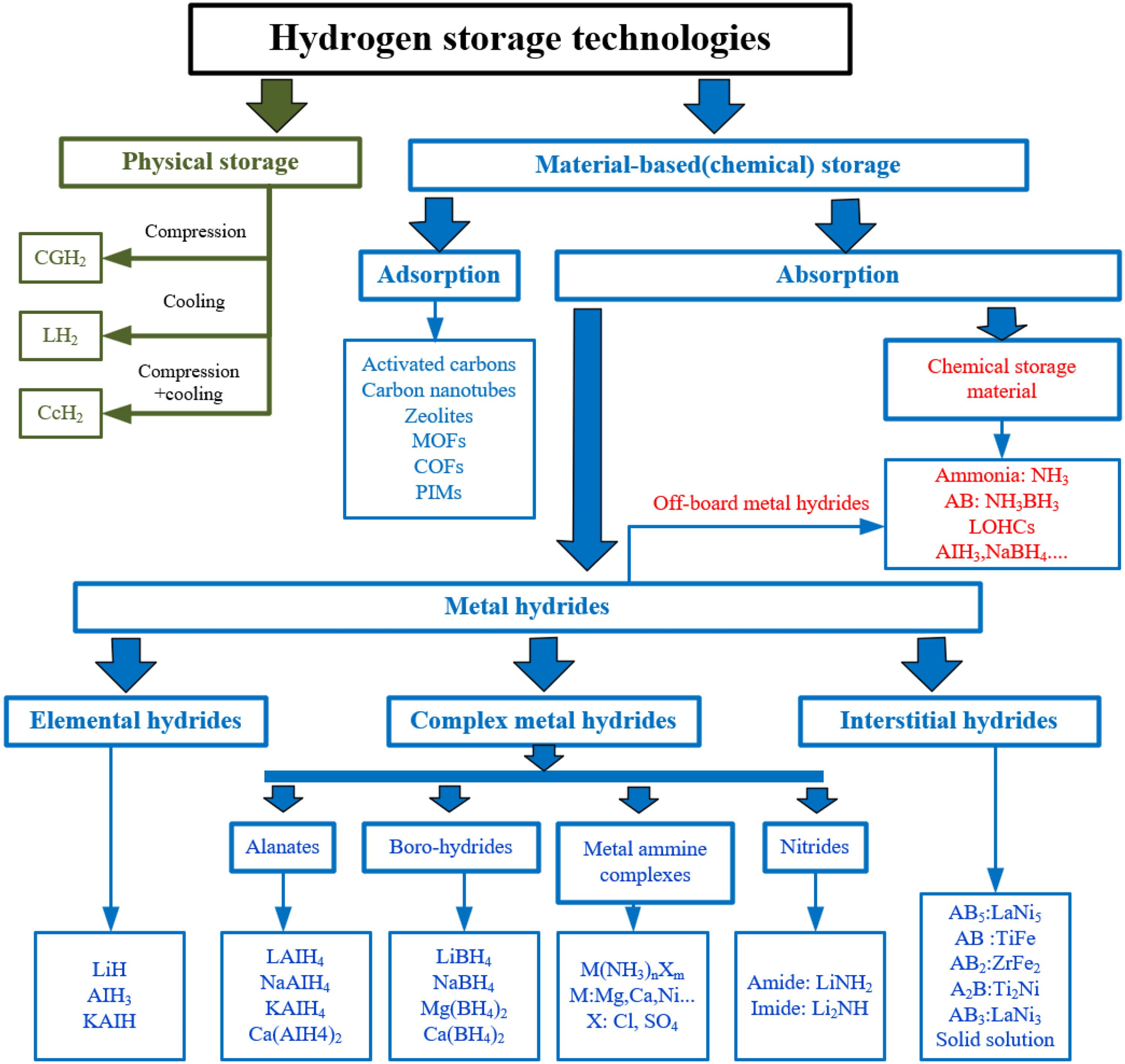
Technologies for hydrogen storages.
As the demand for hydrogen energy rises, technological innovation is imminent. The focus is on improving the performance of hydrogen storage materials, reducing costs and expanding commercialization. 24 Gregory J. Kubas 25 has found, by neutron diffraction structural analysis, that the H-H bond in the W(CO)3(PR3)2(H2) complex is laterally bonded to the metal (with a W-H distance of 1.89 Å), and that the H-H bond length is lengthened from 0.74 Å for the free H2 to 0.82 Å. Also, H2 can be reversibly removed in the complex to form a ligand-unsaturated precursor complex. The metal-hydrogen molecular system exhibits a rich dynamic behavior including rotation of H2, isotopic exchange, exchange with a hydride ligand, and dissociation into two hydride ligands. This study not only changes the traditional understanding of metal-hydrogen bonding, but also has important implications for catalytic hydrogenation mechanisms and hydrogen storage.
The discovery that hydrogen can act as a ligand to form stable σ-bonded complexes with transition metals has overturned the traditional understanding of hydrogen-metal interactions and opened up a new field of research. The study of hydrogen coordination complexes not only helps to understand the activation and transformation of small molecules on metal centers, but also provides new ideas and possible solutions for practical applications such as energy storage, homo- and hetero-cleavage of acids. 26 Metal hydrides, 27 such as TiFe alloys, 28 have become a research hotspot in the field of solid-state hydrogen storage technology. 29 TiFe hydrogen storage alloy has high hydrogen storage performance and its hydrogen storage capacity can reach 1.86 wt.%. 30 which is an ideal hydrogen storage material. The reaction pressure of the TiFe alloy at room temperature 31 (about 30°C) is 3 MPa. The achievable equilibrium pressure is 0.3 MPa, and the maximum mass (energy density) at room temperature is 1.86%, 32 the slope of the hydrogen absorption and discharge platform of the alloy is small. In addition, Fe and Ti are abundant, lower cost, 33 which is very suitable for industrial hydrogen storage. There are much efforts to improve the hydrogen absorption and desorption kinetics, cycling stability and operating temperature range of TiFe-based alloys to meet the stringent requirements of different application scenarios, such as hydrogen storage in fuel cell vehicles, portable power systems, industrial gas storage, and grid scale energy buffering. This review paper focuses on TiFe-based hydrogen storage alloys. Focusing on the structure and properties of the hydrogen storage system, the preparation methods of TiFe hydrogen storage alloys in recent years are summarized and discussed. The influencing factors of hydrogen storage performance were analyzed. It is of theoretical and practical significance for the research and development and performance optimization of high-performance TiFe-based hydrogen storage alloys.
The structure and properties of the solid hydrogen storage alloy TiFe
Crystal structure of TiFe alloy
The TiFe binary alloy phase diagram 34 reveals that in the binary alloy system, TiFe and TiFe2, exist as intermetallic compounds (Figure 2). TiFe2 is a Cl4-Laves phase structure, 35 which does not react easily with hydrogen, and Ti2Fe intermetallic compounds only appear when the temperature is higher than 2000 °C. When the temperature is lower than 1000 °C, Ti2Fe can only exist as TiFe and Ti monomers. 36 From the point of view of practical applications, TiFe2 does not have hydrogen storage properties.

Phase diagram of TiFe binary alloy.
The crystal structure of the TiFe alloy has a CsCl-type structure, 37 and the space group is PM3 m 38 with a lattice constant of a = 0.2976 nm.39,40 TiFe alloy, as a typical hydrogen storage alloy, has unique crystal structure and chemical composition. It mainly includes the following points. Fixed melting point; Anisotropy; A polyhedral shape that spontaneously presents a certain symmetry. Normal valence compound composition is fixed, can be expressed by chemical formula, generally AB type. 41 Each cell contains three flattened octahedral voids, and each octahedral void can be divided into four deformed tetrahedral voids. Each tetrahedral void is made up of two atoms of A and two atoms of B. Although there are more tetrahedral voids in AB hydrogen storage alloys, hydrogen can only partially occupy the tetrahedral voids. 42 This is mainly because it is limited by Shoemaker's fill incompatibility rules. The hydrogen atoms entering the TiFe alloy are located only in the center of the regular octahedron surrounded by two iron atoms and four titanium atoms. 43
Physical and chemical properties of TiFe alloy
The main physical and chemical properties of TiFe alloy are listed in Table 1. Thermal stability and melting point. The high thermal stability of TiFe alloy ensures its stable structure and reliable performance under a wide range of high temperature conditions, and has broad prospects in high temperature applications. The melting point reaches 1320 ° C, 44 ensuring excellent performance at extremely high temperatures.
Physical and chemical properties of TiFe alloy.
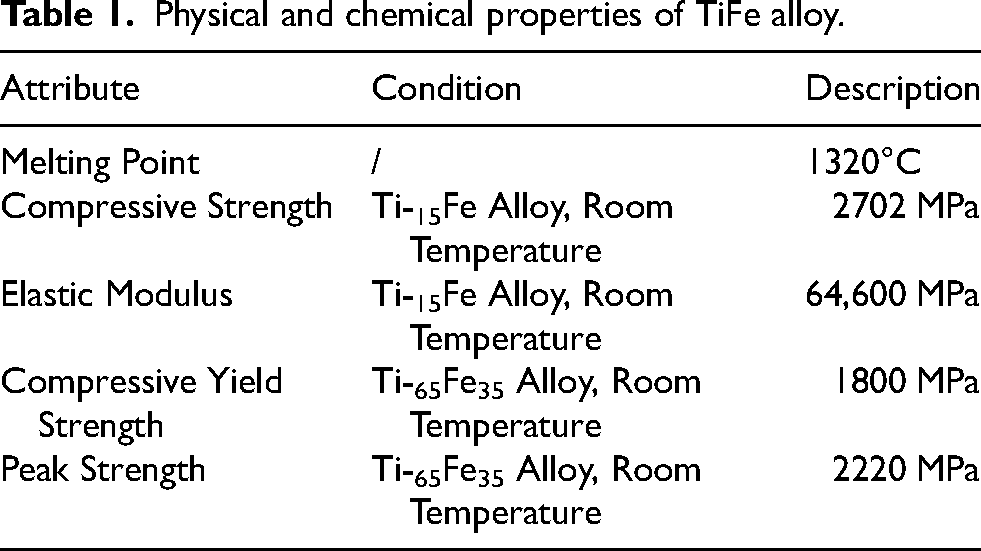
Mechanical properties and strength. TiFe alloys exhibit excellent mechanical properties, including high strength and toughness. Studies have shown that Ti−15Fe alloy has a compressive strength of 2702 MPa and an elastic modulus of 64,600 MPa at room temperature. 45 The compressive yield strength of Ti−65Fe35 alloy at room temperature is 1800 MPa, and the peak strength is 2220MPa. 46 These properties are due to its unique crystal structure and the interaction between alloying elements. At the same time, TiFe alloy has excellent ductility and fatigue resistance, which ensures the integrity and functional stability of the structure under complex stress environment, and maintains continuous working efficiency.
The hydrogen storage properties of TiFe hydrogen storage alloys are significantly affected by thermal stability, mechanical and physical properties. Thermal stability determines the structural and property stability of the alloy at different temperatures, affecting its hydrogen absorption/release efficiency and cycle life. Mechanical properties such as strength and toughness affect the durability and reliability of the alloy in practical applications, and alloys with high strength and good toughness are less susceptible to damage during cycling. Physical properties such as density, electrical and thermal conductivity affect hydrogen diffusion and storage efficiency in alloys, e.g., low-density alloys can increase the specific energy density of hydrogen storage systems. Synergistic optimization of these properties can significantly improve the hydrogen storage efficiency and practical application potential of TiFe alloys. 47
Material preparation methods of TiFe alloy for solid hydrogen storage 3.1 melting method
Induction melting is the main method for preparing TiFe alloys. 48 This method can quickly deal with a large number of raw materials, quickly realize the melting of metals or alloys, suitable for large-scale production, melting process technology is mature, easy to apply and control in large scale production, equipment requirements are relatively simple, process control is direct, with obvious cost effective. However, despite these economic advantages, the induction melting process has some significant disadvantages. Induction melting requires the metal to be heated to a high temperature, which is energy intensive to maintain. The thermal efficiency of the melting equipment is not 100% and there are problems such as heat loss, resulting in wasted energy, which may offset some of the cost advantages. The structure of the alloys formed by this method is difficult to control accurately and may lead to inconsistent alloy properties. In addition, reactions between the molten metal and the crucible material can occur, and small amounts of crucible material may melt into the alloy. This contamination can reduce the purity of the TiFe alloy.49,50
In this method, the melt homogenization is promoted by medium and high frequency induction heating and electromagnetic stirring in an inert atmosphere, and the homogeneous TiFe alloy can be prepared. Induction smelting method uses high purity titanium and iron as raw materials, according to a certain stoichiometric ratio to mix. The prepared raw material is put into the vacuum arc melting furnace, and kept at the appropriate melting temperature for a certain time, so that titanium and iron are fully melted and alloyed. After smelting is complete, turn off the power and let the alloy ingot cool naturally in the furnace. After the alloy ingot has cooled to room temperature, it is removed for subsequent treatment, as shown in Table 2. Subsequently, the ingot obtained by smelting was analyzed and tested. However, the reaction of the molten metal with the crucible material affects the purity of the alloy and requires multiple cycles of activation at 450°Cand 5 MPa hydrogen pressure.51–53 Compared with the mechanical alloying method, the activation process of induction melting method is more complicated and the conditions are more stringent.
Experimental data of TiFe prepared by smelting method.
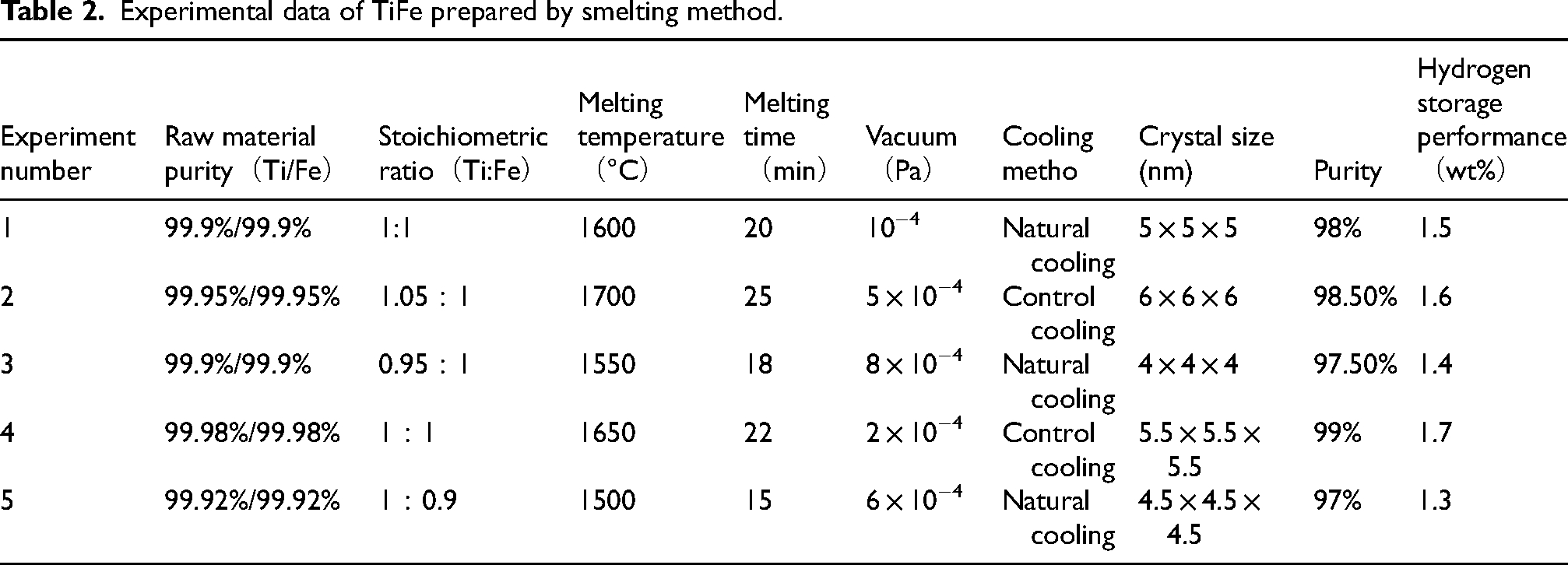
By X-ray diffraction (XRD), it is found that the grain size of the alloy is uniform and the grain boundary is clear. Further performance tests show that the TiFe alloy has good hydrogen storage performance, and its hydrogen storage capacity reaches the expected target. Dematteis and co-authors reported the development of Ti-Fe-Mn ternary alloys through induction melting, followed by annealing and quenching processes. 54 The as-prepared TiFe0.85Mn0.05 alloy exhibited a hydrogen capacity of 1.73wt%, and it can be activated at 25°C under a hydrogen pressure of 2.5 MPa. Barale and co-authors conducted a study on the TiFe0.85Mn0.05 alloy for hydrogen storage applications through induction melting. 55 A 5 kg batch of this alloy demonstrated a hydrogen storage capacity of 1.0 wt% H2 at 55 °C, with its sorption properties remaining stable over 250 cycles. It was found that the homogeneity of the alloy could be improved by increasing the melting temperature properly, while the volatilization of some elements could be caused by excessive temperature. Extending the melting time is conducive to the full reaction of the alloy, but excessive extension will increase energy consumption and cost. The adjustment of the ratio of raw materials has a significant effect on the composition and properties of the alloy, and optimizing the ratio of raw materials can improve the comprehensive properties of the alloy.
Mechanical alloying method
The mechanical alloy method enables TiFe alloying at room temperature. The mechanical alloying method can enhance the hydrogen absorption and desorption properties of the alloy by mechanical deformation of the powder to improve the specific surface area, activity and internal defects. 56 TiFe alloy prepared by mechanical alloy method has the advantages of large hydrogen storage capacity, easy activation, fast hydrogen absorption and release rate and simple process. 57 However, fresh surface activity is too high, easy to oxidation passivation at room temperature, rapid loss of hydrogen absorption capacity, and the use of high-purity raw materials lead to high costs. These two points seriously restrict its industrial application. Nevertheless, this method still opens up a new path for the preparation of high-performance TiFe crystals.
The process of preparing TiFe alloy by mechanical alloy method can be generally divided into the following five stages. (1)Ti and Fe metal particles are flattened in the early stage of ball milling, forming Ti and Fe layered structures; (2) Cold welding occurs in Ti and Fe of layered structure; 58 (3) The Ti and Fe composite structure is continuously refined and crimped to form a spiral structure; (4) the healing and fracture reached a balance, and the particle size remained stable; (5) Finally, the Ti-Fe alloy powder is mixed evenly and reacts at the atomic level to form an amorphous equilibrium product with a nanostructure.
High purity titanium powder and iron powder were used as raw materials for TiFe preparation by mechanical alloy method, and mechanical alloying was carried out by planetary ball mill. The titanium powder and iron powder are mixed according to a certain atomic ratio, put into the ball mill tank, and add the grinding ball and process control agent. Adjust the speed and interval of the ball mill. Different ball grinding times (e.g., 10, 20, 30 h, and etc.) were set to study their effects on crystal formation. 59 In high energy ball milling, with the extension of milling time, the energy transferred by the ball to the powder through collision and extrusion increases continuously, resulting in a series of remarkable phase transformation processes of the mixed powder. After the ball milling, the sample is put into a vacuum drying oven and dried at the appropriate temperature to remove the adsorbed water and gas. The specific results is shown in Table 3.
Structure and performance parameters of TiFe prepared by mechanical alloy method.
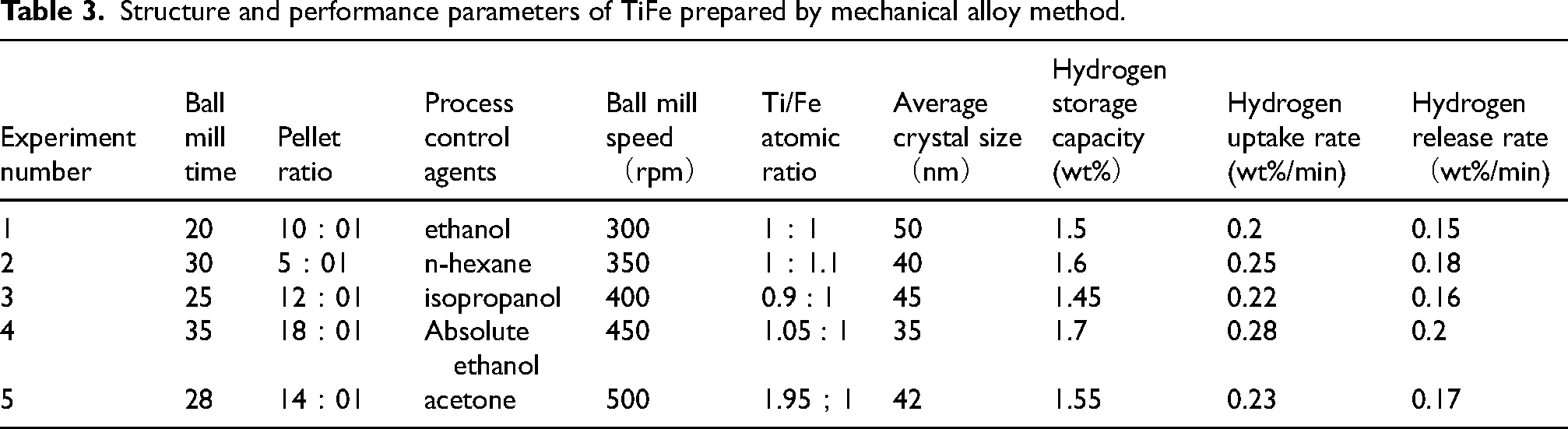
Mechanical alloying depends on energy conversion during ball milling, and collision frequency and energy are crucial. The process parameters, such as medium, atmosphere, speed, pellet ratio and time, all affect the alloying process by adjusting these two factors. In addition, process control agents can affect the process of mechanical alloying. Falcao and co-authors performed the mechanical alloying of TiFe using different organic Process Control Agents (PCAs), such as ethanol, stearic acid, low-density polyethylene, benzene, and cyclohexane. 60 Cold welding can be controlled by the addition of PCAs (10 wt% or over) and replacing Ti with fragile TiH2, the as-produced TiFe exhibit yields ranging from 90–95 wt%. After subjecting the milled samples to post-heating at 873 K under vacuum conditions, the alloy demonstrated a maximum hydrogen capacity of 0.94 wt% at room temperature. Vega and co-authors propose a method by using a pre-milled vessel with stearic acid as PCAs. 61 Nanocrystalline TiFe was synthesized in this way with low oxygen contamination, and full yields for milling time of 6 h or longer, requiring no heat treatments for the first hydrogen absorption. The hydrogen storage capacity of 1.0 wt% at room temperature under 2 Mpa was attained by the sample milled for 6 h.
Hydride cycle
In IChPh of Armenian National Academy of Sciences, a principally new technique based on a high efficiency “hydride cycle” is elaborated for receiving the alloys of refractory metals. 62 Compared to conventional methods, the Hydride cycle (HC) method offers important advantages over conventional alloy production methods: low energy consumption, simple equipment, and short alloy formation times. The method is based on metal hydrides as precursor materials. The alloy formation process takes place at a temperature of about 1000°C between two (or more) metal hydrides or between a metal hydride and a pure metal. For the production of alloys by the HC method, metal hydrides synthesized by the self-spreading high temperature synthesis (SHS) method are used as starting materials. 63
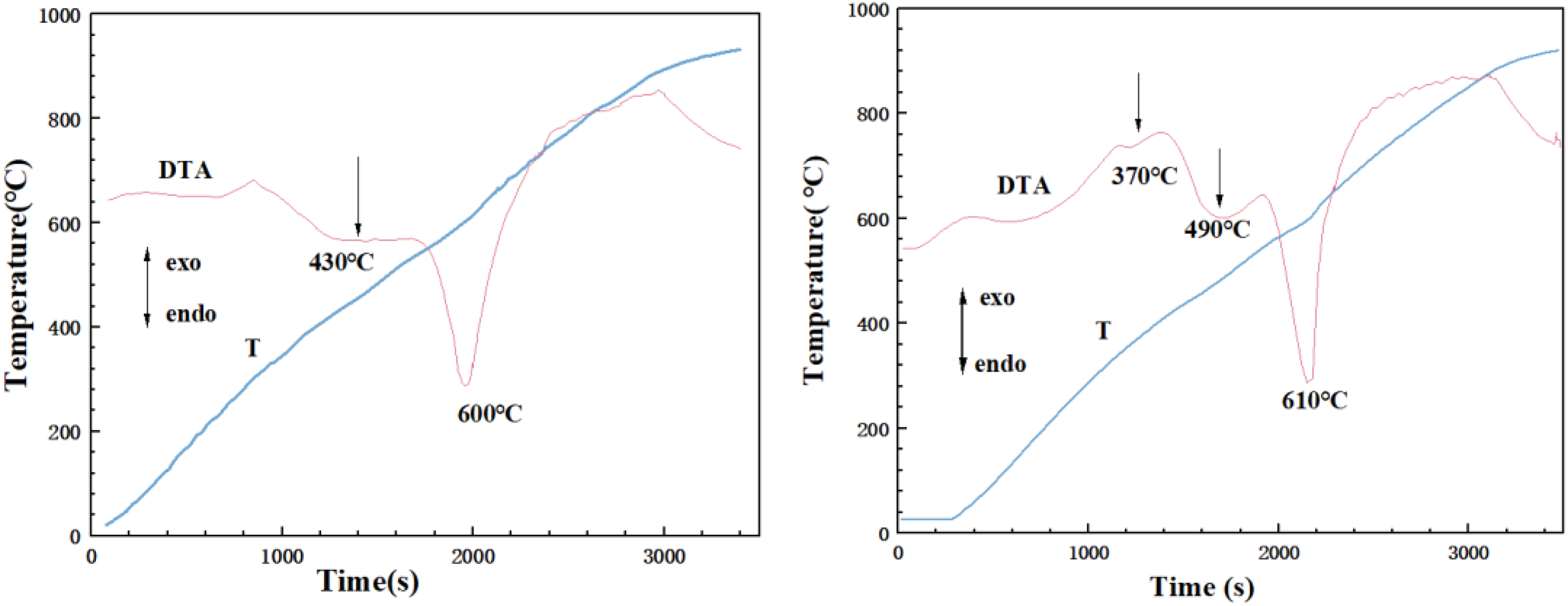
Davit Mayilyan and co-authors first used the unconventional “Hydride Cycle” method to produce TiFe and [TiFe + 4 wt%] Zr alloys, using TiH2 and ZrH2 as precursors. 64 XRD analysis determined the crystal structure and lattice parameters, while Scanning Electron Microscope (SEM) and Energy Dispersive Spectrometer studied the microstructure. The alloys contained Fe2Ti and TiFe phases. The study investigated the first hydrogenation of these alloys via different processes, finding that compacted pellets could react with hydrogen without pre-crushing. Regardless of composition and hydrogen pressure, SHS combustion temperatures for the alloys were 80–150°C, and the reactions were reversible. Conventional high-pressure first hydrogenation of [TiFe + 4 wt% Zr] gave the best hydrogen absorption capacity (1.52 wt%). Figure 3 shows Thermogravimetry Analysis (TGA) curve of TiFe + 4 wt % Zr alloy sample hydrogenated by conventional processat room temperature.

TGA and DTA curves of TiFe + 4 wt % Zr hydrogenated alloy.
Aleksanyan and co-authors achieved the synthesis of Ti6Al4V alloy from TiH2 and Hydride of V (VH) hydrides via a developed HC method, uncovering the alloy's formation mechanism. 65 The study explored the synthesis possibility and established the formation and structure phase mechanisms during continuous hydrogen concentration changes in TiH2 and VH hydrides, based on dehydrogenation sintering conditions. Experimentally, using TiH2 and VH powders as starters, Ti6Al4V alloy formed at 1000–1050 °C through rapid solid-phase interaction. Within the α→β polymorphic transformation temperature range, an α+β two - phase alloy emerged. Additionally, the SHS synthesis of Ti6Al4VHx hydride was demonstrated. Like TiH2, it's an un-sintered, highly porous, easily dispersible product with high hydrogen content. Figure 4 is the Differential Thermal Analysis (DTA) of the [TiH2 + 6Al + 4VH] charge and Ti6Al4VH1.606 hydride of alloy.
The DTA of the TiH2 + 6Al + 4VH and Ti6Al4VH1.606.
Aleksanyan and co-authors explored the formation mechanism of ternary alloys in the Ti-V-Mn system via the “hydride cycle” method, synthesizing TiV1.2Mn0.8, TiV0.8Mn1.2, and Ti0.37V0.25Mn0.25 alloys. 66 Their interaction with hydrogen was examined in combustion mode and at 25–50 °C post short term activation. X-ray, DTA (Figure 5), and chemical analysis revealed that both modes yielded hydrides with identical structures, hydrogen contents, and thermal properties: TiV1.2Mn0.8H3.7, TiV0.8Mn1.2H2.35, and Ti0.37V0.25Mn0.25H1.56. These hydrides remained stable during sorption - desorption cycles and long - term storage.
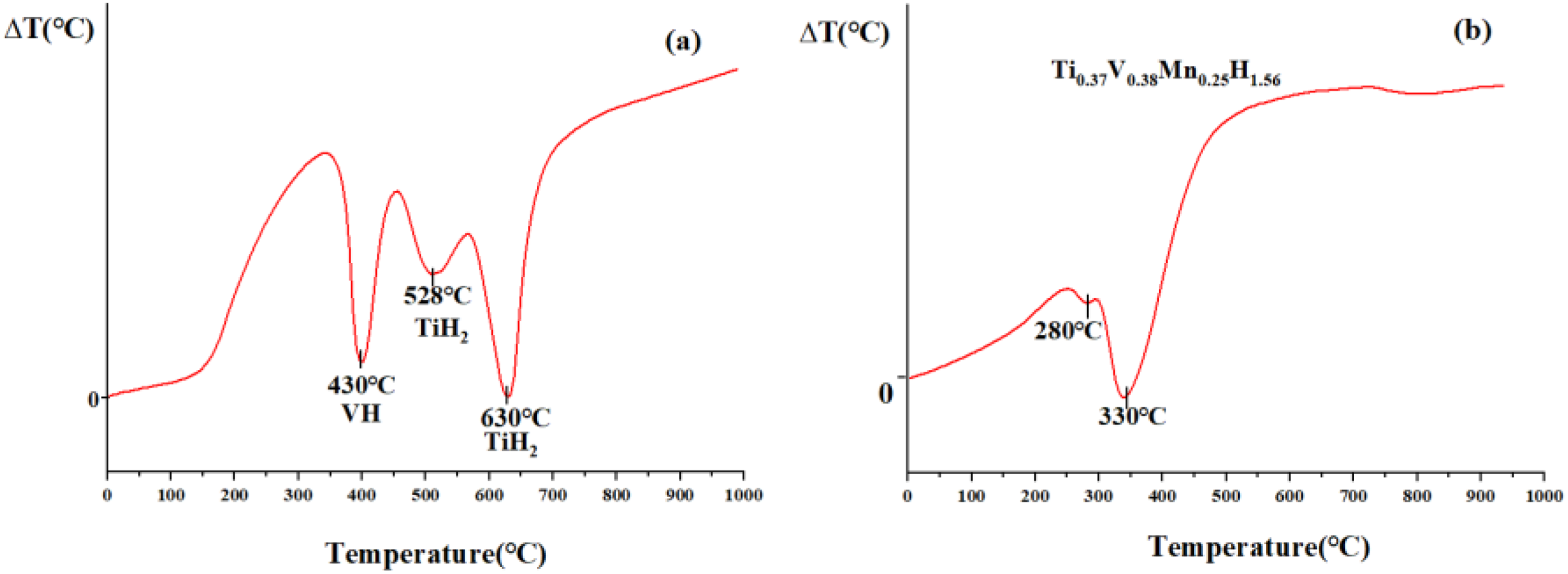
The DTA curves of: a) 0.37TiH2 + 0.38VH + 0.25Mn; b) Ti0.37V0.38Mn0.25H1.56.
Hydrogen storage properties of TiFe solid hydrogen storage alloy materials
First hydrogenation
Hydrogenation of TiFe hydride is the succession of first formation of α-solid solution TiFeH0.1 followed by the TiFeH1 monohydride (β) and dihydride TiFeH2 (γ). Compared to other metals hydrides such as magnesium or body-centered cubic (BCC) alloys, its main advantage lies in the reversibility of hydrogen storage at room temperature. However, the first hydrogenation, the so-called activation process, is a lengthy and difficult operation because of the presence of a passivating oxidized surface. Therefore, before the first hydrogenation, the alloy usually needs to be prepared by submitting it to high temperature and hydrogen pressure. Reilly and co-authors reported that pure TiFe sample had to be exposed to high temperatures (about 400 °C) and high hydrogen pressures (6.5 MPa) before being able to absorb/desorb hydrogen at normal conditions. 67
Lv and co-authors studied the microstructure and initial hydrogenation characteristics of TiFe with 4 wt.% Zr addition, prepared by casting, ball milling, and cryomilling. 68 Figure 6 shows the first hydrogenation process at room temperature and under 4.5 MPa of hydrogen.Results show ball milling and cryomilling effectively reduce particle and crystallite sizes, mostly in the first 15 min. However, cryomilled samples have no hydrogen absorption capacity. Ball milling improves initial kinetics compared to ascast samples but reduces hydrogen storage capacity. This improvement is likely due to reduced crystallite size with increased milling time. Prolonged ball milling may cause capacity loss from new grain boundaries. Despite faster kinetics, the rate - limiting step remains unchanged, as all kinetic curves fit the 3D growth, diffusion - controlled model with decreasing interface velocity.
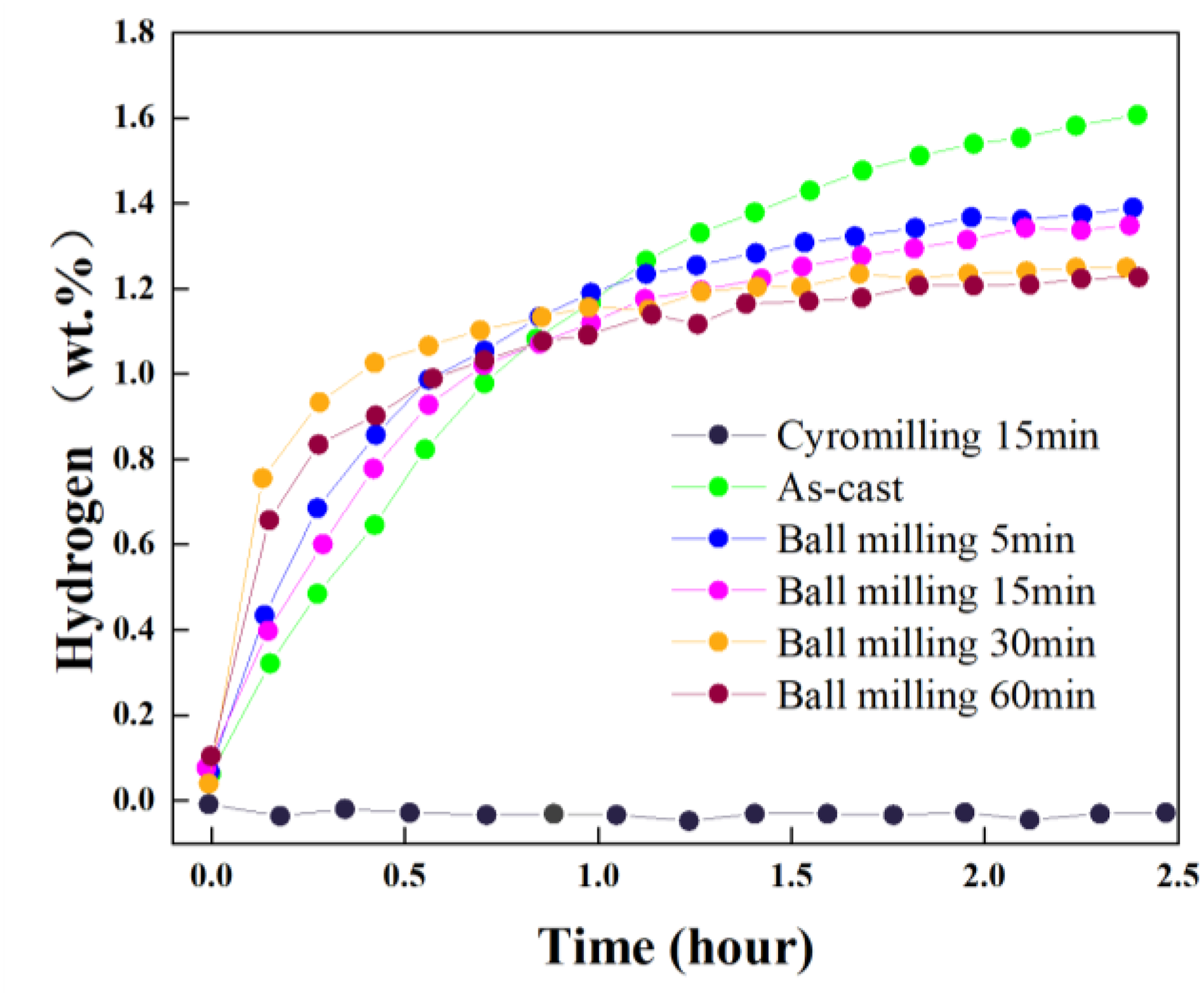
First hydrogenation at room temperature and under 4.5 MPa hydrogen of the TiFe + 4 wt.% Zr alloy at different states.
Patel and co-authors studied how adding Zr + V or Zr + V + Mn to TiFe alloy affects its microstructure and hydrogen storage properties. 69 They found that adding only V doesn't produce enough secondary phase for room - temperature hydrogenation at 2 Mpa. But adding [2 wt.% Zr + 2 wt.% V or 2 wt.% Zr + 2 wt.% V + 2 wt.% ]Mn creates a fine Ti2Fe like secondary phase. These alloys show fast initial hydrogenation and high capacity, with the rate limiting step being 3D growth, diffusion - controlled with decreasing interface velocity. This suggests Ti2Fe like secondary phases may act as hydrogen gateways. Razafindramanana and co-authors studied the effect of adding hafnium to TiFe alloy on its hydrogenation process. 70 They synthesized TiFe + x Hf alloys (x = 0, 4, 8, 12, 16 wt.%) by arc melting and analyzed their microstructure using scanning electron microscopy and electron microprobe analysis. The alloys consisted of B2-TiFe, C14-Laves, and BCC phases. They found that at least 8 wt.% hafnium is needed to enhance the first hydrogenation. The material with this addition reaches maximum hydrogen capacity in under two hours at room temperature and 2 Mpa of hydrogen. Hafnium also lowers the plateau pressure in the pressure-composition isotherm, indicating a positive effect on TiFe's activation properties. Gosselin and co-authors of investigation was to improve the first hydrogenation of TiFe by adding yttrium. 71 Figure 7 is first kinetics hydrogenation at room temperature and at a pressure of 2.5 MPa of hydrogen TiFe alloys + x wt.% Y .The compositions studied were TiFe + x wt.% Y with x = 4, 6, and 8. From electron microscopy it was found that all alloys were multiphase with a matrix of TiFe phase containing less than 0.4 wt.% of Y and a secondary phase rich in yttrium. When x increased, the chemical compositions of the matrix changed and the secondary phase changed. The sample with 8% of yttrium had the fastest kinetics. The hydrogen capacity increased with the amount of Y.
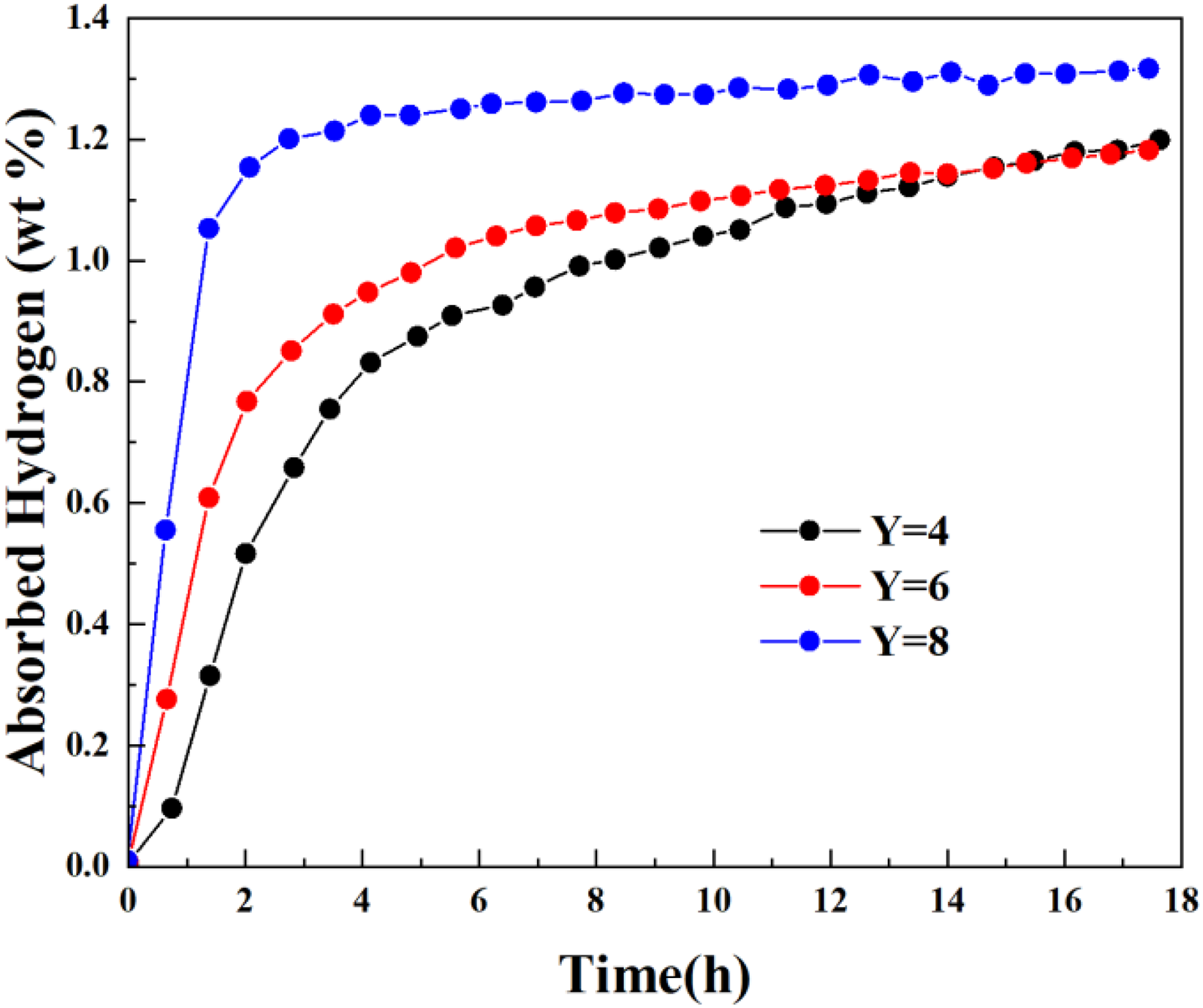
First kinetics hydrogenation at room temperature and at a pressure of 2.5 MPa of hydrogen TiFe alloys + x wt.% Y for x = 4, 6, and 8.
Hydrogen storage capacity
The theoretical hydrogen storage mass fraction of TiFe alloy is about 1.86%, which has high hydrogen storage potential. The hydrogenation of TiFe results in the formation of one TiFe-H solid solution and two ternary hydrides: TiFeH0.1, (α-phase, solid solution), TiFeH1.04 (β-phase, hydride), and TiFeH1.95 (γ-phase, hydride). The reactions which take place stepwise can be expressed as follows.
72
From the chemical composition and reaction mechanism, the reaction of TiFe with hydrogen can be expressed as:


The theoretical hydrogen storage mass fraction of TiFe alloy is based on the perfect chemical reaction and crystal structure. However, in practical application, it is often difficult to reach the theoretical level. In actual measurements, the hydrogen storage capacity of TiFe alloys is usually between 1.4% and 1.8%.
The hydrogen storage properties of TiFe alloy are affected by five factors. First, the purity of raw materials, impurities will affect hydrogen adsorption, reduce the actual hydrogen storage capacity. Second, the microstructure, 73 grain size and grain boundary 74 characteristics limit the adsorption and diffusion of hydrogen. The third is the surface state, the oxide layer will prevent hydrogen contact. The fourth is thermodynamics and kinetic. 75 The high energy barrier and the slow process of hydrogen atom diffusion inside the alloy result in the alloy failing to achieve the ideal hydrogen storage amount in the required time. 76 The fifth is the number of cycles, phase transition or fatigue resulting in hydrogen storage capacity attenuation. 77 These factors together determine the hydrogen storage efficiency of TiFe alloy.
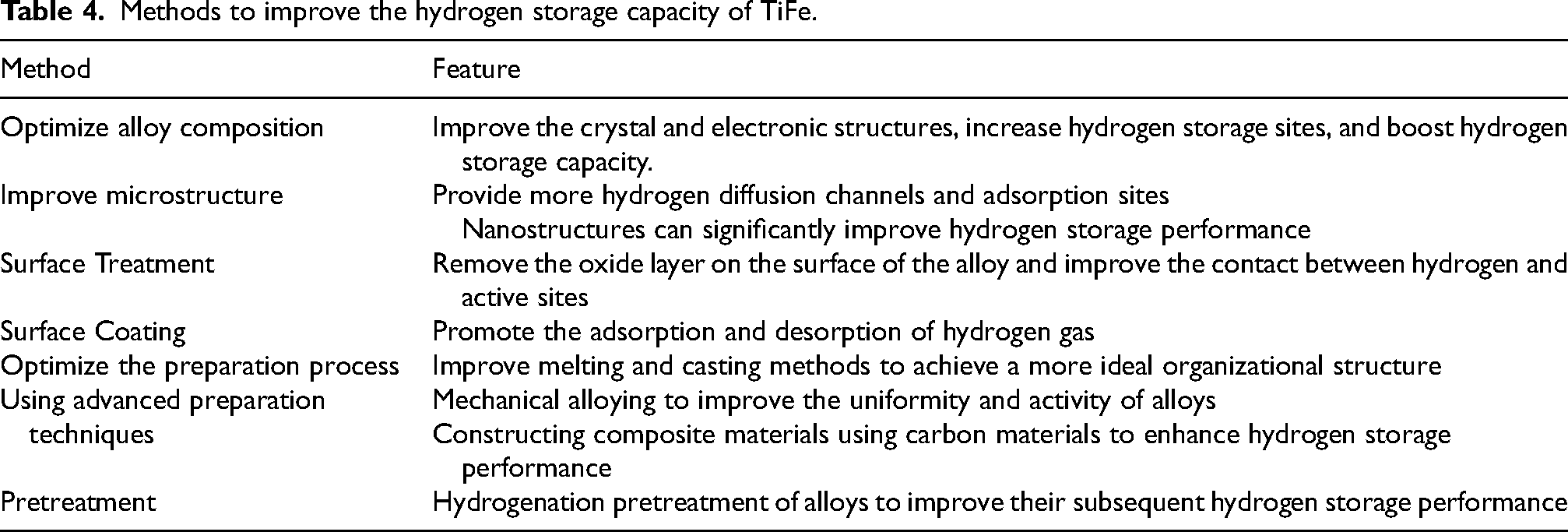
The following methods are generally used to improve the hydrogen storage capacity of TiFe(Table 4) . (1) Optimize the alloy composition:78,79 add Ni, Mn, Cr and other elements to form a multi-component alloy, improve the crystal and electronic structure, increase the hydrogen storage site, and improve the capacity. (2) Improve the microstructure: 80 refine the grains, increase the number of grain boundaries, and provide more hydrogen diffusion channels and adsorption sites. The preparation of nanostructures, such as nanocrystals, wires, tubes, etc., can significantly improve the hydrogen storage performance (3) Surface treatment to remove the surface oxide layer: chemical or physical methods are used to clean the oxide on the surface of the alloy to improve the contact between hydrogen and the active site. (4) Surface coating: Apply an appropriate coating, such as a precious metal coating (such as palladium), to promote hydrogen adsorption and desorption. (5) Optimize the preparation process, improve the melting and casting methods: 81 control the cooling speed, hot processing conditions, etc., to obtain a more ideal organizational structure. (6) The use of advanced preparation technology: such as mechanical alloying, etc., to improve the uniformity and activity of the alloy. The composite material is constructed with carbon material, and the high specific surface area and good electrical conductivity of carbon material are used to enhance the hydrogen storage performance. (7) Pretreatment: hydrogenation pretreatment is performed on the alloy to improve its subsequent hydrogen storage performance.
Methods to improve the hydrogen storage capacity of TiFe.
Hydrogen absorption and desorption kinetics
The hydrogen absorption and desorption kinetics of TiFe alloy is very important. Hydrogen molecules are first dissociated and adsorbed on the surface of the alloy, and then diffused to the internal lattice Spaces and active sites of the alloy. The hydrogen absorption rate is mainly limited by the hydrogen diffusion rate. The initial adsorption is fast, but the diffusion rate decreases with the increase of hydrogen content. Diffusion is affected by temperature, pressure and microstructure. Higher temperature generally accelerates the diffusion of hydrogen atoms, while increasing the pressure of hydrogen provides a stronger driving force to push more hydrogen atoms into the alloy. 82 The high efficiency hydrogen absorption and desorption kinetics of TiFe alloy can greatly enhance its hydrogen storage application value. However, the hydrogen absorption and desorption kinetics of the alloy is often limited by factors such as impurities, crystal defects, grain size, and surface oxidation. Therefore, it is necessary to optimize the composition of TiFe alloy, improve the preparation process and surface treatment. The pressure-composition-temperature (P–C–T) curves of TiFe alloys at different temperatures are shown in Figure 8. As can be seen in Figure 8(a), the curves have two plateaus when the temperature is below 55 °C.From P–C–T curves of TiFe-H system at 40°C in Figure 8(b), it can be seen that the hysteresis is obvious because of the large equilibrium pressure difference of hydrogen absorption and desorption, 2 hysteresis loops are formed in the hydrogen absorption. The P-C-T curve in the hydrogen absorption and discharge process can provide thermodynamic information of the alloy and help to analyze the thermodynamic driving force of hydrogen absorption and discharge.

P-C-T curves for TiFe-H system at different temperatures (a) and 40 °C (b).
In order to improve the hydrogen absorption and desorption kinetics of TiFe alloy, many ways can be adopted. The alloying of nickel, manganese and other elements can adjust the crystal and electronic structure of TiFe alloy, optimize the diffusion path and adsorption position of hydrogen atoms, and thus accelerate the absorption and release of hydrogen. 83 Patel et al. 84 discovered that the combination of zirconium (Zr) and manganese (Mn) additions to the titanium-iron (TiFe) alloy demonstrates significantly enhanced hydrogen storage properties compared to the individual addition of either Zr or Mn alone. Specifically, the TiFe alloy with 2 wt% Mn and 4 wt% Zr initially absorbed 2 wt% of hydrogen at room temperature under a pressure of 2 MPa, whereas the TiFe alloy with only 4 wt% Zr absorbed merely 1.2 wt% of hydrogen under identical conditions. Guéguen et al. 85 reported that the incorporation of vanadium (V) into TiFe0.8Mn0.1 significantly reduced hydrogen sorption hysteresis and flattened the hydrogen sorption plateaus. Furthermore, the alloy exhibited excellent activation properties at room temperature.
In order to achieve the reversible hydrogen storage capacity of 1.81% within 15 min, Li et al. 86 is close to the theoretical hydrogen storage capacity of 1.86% of TiFe alloy. The effect of Pr content on hydrogen storage properties of Ti1.1−xPrxFe0.8Mn0.2 (x = 0, 0.02, 0.04, 0.06, 0.08) alloy was also studied. It is pointed out that when Pr content is greater than or equal to 0.04, the alloy can be activated directly without incubation period. After the incorporation of Pr, the surface energy of the crystal surface of TiFe (111) is smaller, and hydrogen atoms are more easily diffused from the surface to the interior. In addition, the addition of Pr also refines the grains, introduces a large number of grain boundaries and defects, and improves the activation rate and kinetic properties, as shown in Figure 9. The physical adsorption results show that the specific surface area of ferrotitanium alloy after hydrogen absorption increases significantly after Pr doping.
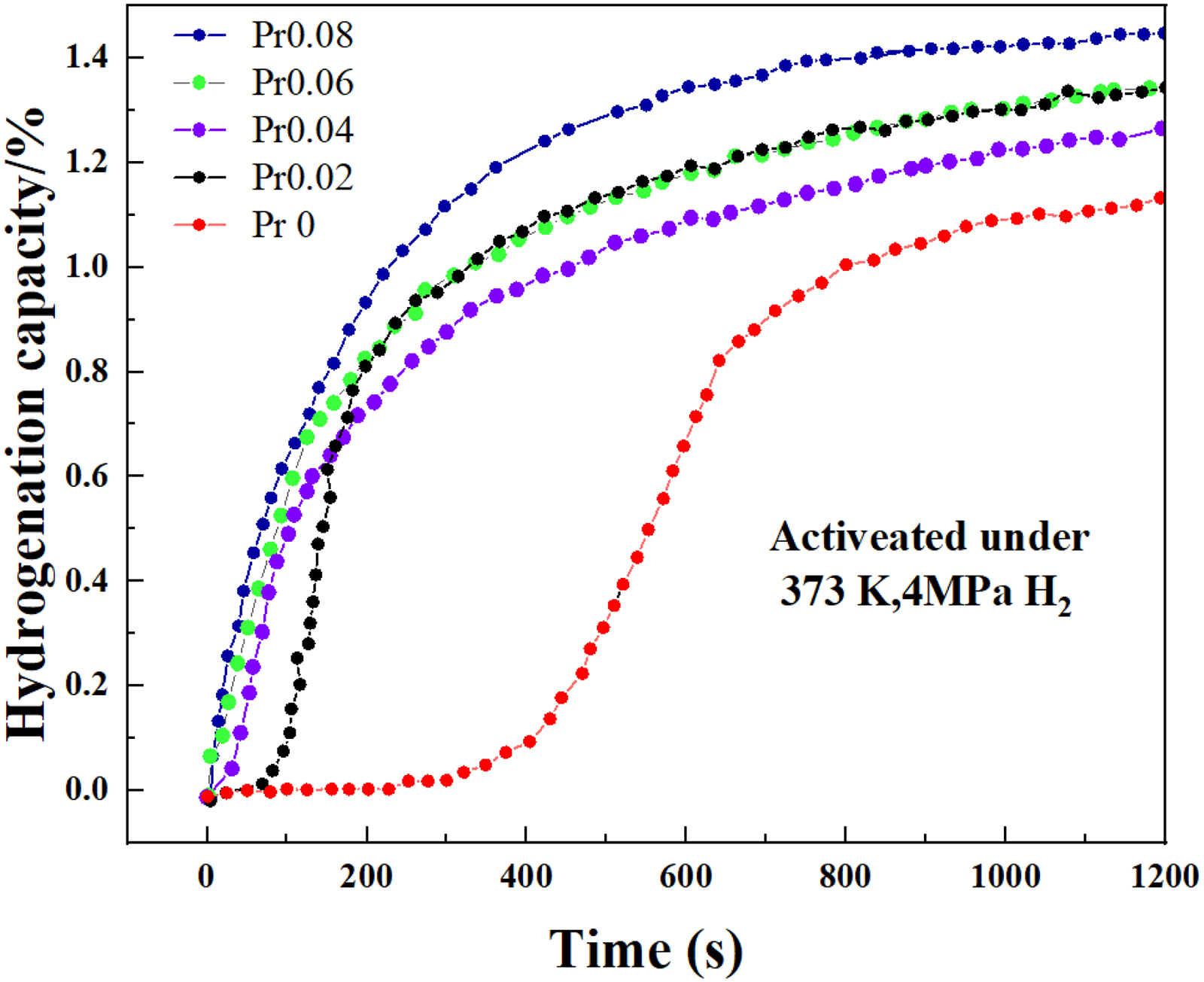
Activation curves of Ti1.1−xPrxFe0.8Mn0.2 alloy.
Adjusting the microstructure of materials, such as refining grains, can increase the number of grain boundaries, provide more paths for the diffusion of hydrogen atoms, and accelerate the process of hydrogen absorption and release. 87 Vega and co-workers 88 prepared TiFe -based alloys by high-energy ball milling for 2, 6 and 10 h. The hydrogen storage capacity of the samples for 2, 6 and 10 h reached about 0.9%, 1% and 1.09%, respectively. After grinding, the sample needs to be thermally-activated (or reactivated) to provide conditions for the first hydrogen absorption. At the same time, with the extension of milling time, the absorption kinetics of the sample is faster and faster. By SEM and Transmission Electron Microscope (TEM), it was found that the average grain size and microcrystal size of the alloy decreased to 7 nm and 11 nm, respectively. Therefore, ball milling makes sample activation easier and the hydrogen pressure for activation smaller by changing the grain size of TiFe.
Emami and co-workers 89 reported that the 36 h-milled TiFe alloys can absorb hydrogen up to 1.5 wt% of hydrogen at 303 K. They further claimed that ball-milled TiFe powder is not deactivated after being kept under air for 1 month, which would be a remarkable result if true. The TEM tests revealed that the ball-milling processing of TiFe results in the formation of nanograins, with minimal generation of cracks or dislocations. The nanograin boundaries were postulated to act as pathways for the transportation of hydrogen atoms through the oxide layer in ball-milled TiFe, with the oxygen molecules unable to penetrate these ultrafine pathways.
The majority of ultrafine-grained and nanostructured alloys exhibit a high density of lattice defects as a result of severe plastic deformation (SPD) techniques. 90 It is thought that SPD induced by high-pressure torsion (HPT) represents a viable method for activating passivated TiFe alloys.91,92 In a seminal contribution, Edalati et al. 93 introduced the use of HPT for the activation of TiFe alloys. The microstructure of the HPT-processed TiFe is heterogeneous, comprising nanograins, coarse grains, amorphous-like phases, and disordered phases. Additionally, the material exhibits the capacity to absorb 1.7 wt.% of hydrogen at room temperature.
In addition, surface alloying mainly uses physical and chemical methods to deposit an alloy layer on the metal surface to improve the performance of hydrogen storage alloys, which can also effectively promote the adsorption and desorption of hydrogen and improve the kinetic performance. As early as 1993, 94 Lue et al. modified the surface of TiFe alloy by adding a small amount of LaNi5, which was used for short-term ball milling, and could enable the TiFe alloy to absorb hydrogen at a hydrogen pressure of 4 MPa and room temperature, and improve the activation performance and resistance to oxygen poisoning.
The hydrogen absorption and release kinetics of TiFe alloy is centered. Compared with the LaNi5, TiFe exhibits slower hydrogen uptake at room temperature, and the LaNi5 has a faster hydrogen diffusion rate and more favorable hydrogen adsorption/desorption thermodynamic characteristics. However, compared with some complex chemical hydrogen storage materials such as sodium borohydride, TiFe has a simple hydrogen absorption and release process and good cycling. TiFe has more potential for comprehensive performance in specific scenarios.
TiFe alloys have been considered for automobiles. Several hydrogen-powered vehicles have been built using TiFe alloys as fuel storage media. 95 TiFe alloys can also be employed as thermal energy storage materials. 96 The Australian company Electromagnetic Compatibility Solar has developed a concept for a concentrated solar tower plant that incorporates a CaH2 heat storage system and a Stirling engine, delivering a continuous output of 100 kWel. During the energy storage process, the hydrogen released is stored in the form of TiFe hydride. At the beginning of the twenty-first century, due to the versatility of hydride energy storage systems for wind power generation, 97 applications of TiFe-based hydrogen storage alloys in the field of solar and wind energy have been proposed to collect the energy generated by solar and wind energy, generate hydrogen by electrolysis of water and store it in TiFe-based hydrogen storage alloys to achieve energy recycling with high application value. 98 However, the demand for high hydrogen absorption and discharge rate needs to be optimized or better materials should be considered. In practical applications, the selection of hydrogen storage materials requires comprehensive consideration of hydrogen storage capacity, hydrogen absorption and desorption kinetics, cost, safety and other factors.
Challenges and prospects
The commercialization of TiFe solid-state hydrogen storage alloys faces three major challenges, including cycle stability, activation conditions and cost reduction (Table 5).
Cycle stability. The hydrogen storage performance of TiFe alloy may be attenuated after several cycles of hydrogen absorption and discharge, which will affect its long-term application reliability. In order to improve the cycle stability of TiFe alloy, researchers are focusing on the optimization of alloy composition, the improvement of preparation technology, and the addition of efficient catalysts to enhance the performance stability of TiFe alloy in the process of repeated hydrogen absorption and discharge. Activation conditions. The harsh activation conditions of TiFe alloy limit its application potential and affect its applicability in specific scenarios. The “First Hydrogenation” is a crucial step in the activation process. Through alloying treatment, nanostructure regulation and other technical paths, researchers are trying to reduce the activation conditions of TiFe alloy, in order to broaden its application field and improve its environmental adaptability. Cost reduction. To realize large scale commercialization of TiFe solid state hydrogen storage alloy materials, production costs must be cut. This is crucial for their broad application. Current research focuses on reducing costs through optimizing raw material procurement, streamlining production processes, and boosting large scale production efficiency. Energy efficient methods like the Hydride Cycle and combustion techniques (SHS, self-ignition combustion synthesis (SICS)) are particularly promising. The Hydride Cycle leverages the reversible hydrogen absorption/desorption of TiFe, lowering energy consumption during production. SHS and SICS initiate reactions via initial energy input, generating heat to sustain the process, thus saving energy. By applying these strategies, it's expected to greatly reduce the preparation cost of TiFe alloy materials. This will speed up their adoption in the hydrogen economy, promoting sustainable energy solutions and advancing the hydrogen energy based economy.
Key challenges and solutions for commercial applications.

As for solid hydrogen storage materials, TiFe based hydride materials have been the main focus of hydrogen storage alloys due to the richness of raw materials, excellent reversibility and low cost. The current research trend of TiFe hydrogen storage alloy is mainly to improve its activation properties, kinetics, thermodynamic stability and cycle life by changing the matrix structure and innovating the process route. As a potential material for the hydrogen energy economy, TiFe has shown remarkable development prospects.
Looking forward to the future, with the continuous progress of material science and engineering technology, the hydrogen storage performance of TiFe alloy is expected to achieve a qualitative leap. The activation properties of TiFe alloys can be significantly improved through more accurate adjustment of alloy composition, combined with advanced preparation processes such as mechanical alloying, plasma spraying, electrochemical deposition, etc., so that it can quickly react with hydrogen under mild conditions. By optimizing the microstructure and surface properties of TiFe alloy, the kinetic properties of hydrogen absorption and desorption can be significantly improved to meet the urgent demand of modern energy systems for rapid hydrogen charging and desorption. This not only enhances the utility of TiFe alloys, but also provides the possibility to build efficient and flexible hydrogen energy infrastructure. With the breakthrough of a series of key technologies, TiFe alloy will gradually show a more mature and extensive application prospect, laying a solid foundation for the realization of a clean, safe and sustainable hydrogen energy economic system.
Footnotes
Acknowledgements
This work is financially supported by NSFC (No. 22478206), basic scientific research project of Liupanshan Laboratory (No. LPS-2025-KY-D-JC-0019) and Ningxia University Graduate Student Innovation Program(CXXM2025109).
Author contribution
Funding
The authors received no financial support for the research, authorship, and/or publication of this article.
Declaration of conflicting interests
The authors declared no potential conflicts of interest with respect to the research, authorship, and/or publication of this article.