




Abstract
The function of nonprofit organisations (NPOs) in managing healthcare and poverty relief and the role of accounting and reporting in their management control systems have many implications for accounting historians. The present research examines the relationship between NPOs and local governments in the management of public services, particularly during health emergencies. Specifically, this study examines the institutional cooperation between the Grand Duchy of Tuscany, the Misericordia of Florence and the Santa Maria Nuova Public Hospital during the cholera epidemic of 1855–1862. This research applies a conceptual framework based on Michel Foucault's concepts of ‘governmentality’, ‘nosopolitics’ and the ‘government of the poor’ and Mitchell Dean's ‘technologies of government’ to the study of archival primary sources. This research makes several contributions to the accounting history literature regarding the involvement of NPOs in healthcare, including an original analysis of the role of accounting and reporting in the ‘government of the sick’ from a nosopolitical perspective.
Keywords
Introduction
Since the Renaissance spread through Europe, public sector entities have faced the challenge of providing relief to poor people (Fouarge, 2004: 1; Servalli, 2013). Scholars have examined government policies for those living in poverty from different points of view, including from the perspective of business (Black, 2003; Cohen, 2005a, 2005b; Critchlow and Parker, 1998; Kelly and O'Gráda, 2011; McIntosh, 2005). In Europe, after the transition from the Middle Ages, local administrations often endorsed poverty relief policies in which nonprofit organisations (NPOs) served as key actors; NPOs had the management expertise needed to aid poor people in times of pandemic and famine (Manetti et al., 2020; Servalli, 2013; Van Leeuwen, 1994). Nevertheless, the function of NPOs in the management of healthcare and poverty relief and the role of accounting in their management control systems have seen limited investigation by accounting historians (Manetti et al., 2017; Sargiacomo and Gomes, 2011). Scholars have pointed out how the public apparatus has resorted to using NPOs to create and disseminate opinions and how accounting has played a significant role in gathering consensus within civil society (Bigoni, 2021; Vermiglio et al., 2023). Some research has investigated the ‘integration’ of the Italian state with NPOs, specifically after the 1862 third-sector reform, opere pie (pious entities), with explicit reference to the educational sector (Sian et al., 2020). Other studies have investigated similar aspects in other local contexts (Fowler, 2009, 2010; Fowler and Cordery, 2015).
The logical recourse to NPOs has become extremely clear during natural disasters, when emerging needs must be urgently met but public resources are insufficient (Sargiacomo et al., 2021a). During epidemics, citizens and public institutions are usually more driven to donate to NPOs involved in countering the crisis, seeing the identified organisations as those to whom they can turn to for solving the emergency (Cai et al., 2021). As resources are donated for the NPOs to pursue an ideal mission, which in our case coincides with limiting the spread of cholera and enabling the affected population to receive adequate treatment, this morally obliges NPOs to manage such resources wisely, and adequately to account for the activity to legitimise their work (Connolly and Hyndman, 2013; Costa et al., 2011).
Against this background, we investigated the role of the cooperation between the Grand Duchy of Tuscany, the Santa Maria Nuova Hospital (SM Nuova) and the Misericordia of Florence in providing health services during a cholera epidemic and related emergencies. This research contributes to the literature on the history of accounting based on an examination of the cooperation between public institutions and charitable organisations and the related reporting and management practices that were used to manage the cholera epidemic during the years preceding the national unification of Italy. The present research uses accounting as a lens through which to interpret the phenomenon of the ‘government of the poor’ during the historical period under scrutiny since this phenomenon's detection, measurement and representation system represents a set of ‘technologies of government’ as proposed by Dean (1992, 1996).
We also consider the period immediately after which cooperation between the state and NPOs was embodied in the new national law on the previously mentioned opere pie (Caprioli, 1980; Lorandi, 2019). The Opere Pie are charitable institutions governed by the Italian law of 17 July 1890, with the aim, in whole or in part, to (a) provide assistance to the poor, whether healthy or ill, and (b) offer the poor education, instruction, vocational training in a profession, art, or trade, or any other means of moral and economic improvement.
Agreements were reached among the various institutions in the field according to a logic of cooperation consistent with the principle of horizontal subsidiarity; these agreements are evidenced by particular technologies of government that can be found in the set of accounting and reporting rules the Misericordia and its partners implemented.
As part of this endeavour, the Confraternita of Misericordia was a charitable organisation offering poverty alleviation and health services (Henderson, 1994). Inspired by religious and social values (Corbellini and Hoogvliet, 2013), associations such as the Misericordia were found throughout medieval Europe, especially in Italy, France, Belgium and Spain (Black, 2003). In addition to engaging in charity work, the brothers of the confraternity gave some of their time and expertise to serve in many ways in support of the poor and contribute to hospital management and the burial of the dead. As reported by Paglia (1984; as cited in Manetti et al., 2017: 511), the works of the Misericordia, following the evangelical pattern by Matthew 25, were one of the hinges of the confraternity action; these associations in the Middle Ages added to the other six evangelic works of the Misericordia, a seventh one: the burial of the dead.
1
Through the work of the brotherhoods – which became the most popular form of voluntary associations in Europe from the fourteenth century onward – citizens could participate in the social and political life of the community.
The remainder of the article is structured as follows. First, we introduce and discuss the conceptual framework we use for analysing our archival sources (‘Conceptual framework’). We then introduce the historical period to be analysed and the context of institutional cooperation during the cholera epidemic (‘The Italian scenario’). The following section (‘Methods’) analyses the applied methods we use to investigate the original accounting books and documents contained in the historical archives of the Misericordia and explains the accounting processes employed to record the various operations related to the management of the cholera epidemic. In the subsequent section (‘Findings’), we discuss our results and, more specifically, the role of Misericordia's accountability practices in the context of a ‘liberal mode of government’ pursuing the ‘government of the poor’. Finally, in the last section (‘Discussion and conclusions’), we formulate conclusions about the role played by the Misericordia and its accountability systems in managing the epidemic and related emergencies and outline both the limits of our study and potential avenues for future research.
Conceptual framework
As discussed in Riccaboni et al. (2006); Rose and Miller (1992) and Servalli (2013), extraordinary difficulties often stimulate stronger responses from the government than ordinary problems because in adverse situations, authorities can plan stronger interventions and expect greater acceptance from the public. With reference to the management of the cholera endemic in Florence in the latter part of the nineteenth century, this study relies on the conception of ‘governmentality’ elaborated by Michel Foucault in the early 1980s and the related concepts of the governing/policing of the poor and technologies of government developed by Mitchell Dean (1992, 1996) to understand the relationship between the state and NPOs.
Foucault's notion of governmentality is understood as ‘a certain way of thinking and acting embodied in all those attempts to know and govern the wealth, health and happiness of populations’ (Rose and Miller, 1992: 174; see also Sargiacomo et al., 2021a). The premise of this conceptual framework is that Foucault (2010) encourages thinking about power not only as the sovereign power of the state imposed from above but also as a form of control provided by educational, religious or medical institutions through various forms of knowledge (Nikidehaghani et al., 2021). With reference to the role of health policies in the eighteenth century, Foucault (1980) elaborated the notion of ‘nosopolitics’, that is, ‘the establishment of disease classifications and treatment protocols in reference to a new regime of social sanitation’ (Hancock, 2018: 452). This structured system of social sanitation aimed at improving the population's health but also created a normalising system of power and knowledge that adjudicated the normality or abnormality of people (Foucault, 1977).
During the nineteenth century, the links between medical personnel and the administrative apparatus intensified, which increased the power of political sanitation and changed the social role of hospitals and clinics. The advent of ‘medical police’, especially during periods of frequent epidemics, was the prodrome of a novel ‘pastoral power’ (Foucault, 1982: 784; see also Foucault, 2007). For more than a millennium, pastoral power had been linked to the Church. However, across the eighteenth and nineteenth centuries, a new form of normalising power based on health knowledge and policies was diffused across the whole society and permeated families, education, and businesses (Foucault, 1982: 784). In this context, epidemics are among the few cases that justify enacting exceptional measures and treatment for the population (e.g., through the adoption of ‘emergency plans’), as well as limiting individual freedoms and introducing authoritarian medicalisation. In such situations, according to Elden (2003), sickness must be isolated and removed, and an emergency plan must be adopted.
The European cholera epidemics of the nineteenth century have many commonalities with previous plague epidemics since both types of situations created ‘disciplinary diagrams’ (Foucault, 1973, 1984a, 1984b). These disciplinary diagrams must be constructed through rigorous spatial partitioning, meticulous surveillance, and holistic inspection (Elden, 2003). This ‘disciplined society’ represents a proactive form of political power (Elden, 2003: 243) with the adoption of administrative and political strategies based on a military model of organised discipline (Evenson et al., 1996). The role of subsidiarity mechanisms and related accounting and reporting practices during crises and emergencies, is of great relevance for accounting and management scholars (see, e.g., Baker, 2014; Lai et al., 2014; Perkiss and Moerman, 2020; Sargiacomo et al., 2014; Sargiacomo, 2015; Sciulli, 2018; Taylor et al., 2014, Walker, 2014).
With reference to accounting practices, Foucault (1991: 84) emphasises that research on governmentality is valuable since it highlights ‘how accounting helps to facilitate normal governance, […when] things do not always proceed according to plan’ and, particularly, that ‘unexpected events require departures from the “normal”’. The role of governance and accounting studies is particularly relevant in situations where local and national governments collaborate with social institutions, especially NPOs, to confront a crisis and protect the health of the populace (and the related wealth of the country), especially during epidemics.
In the liberal states of the nineteenth century, what Foucault (1984a) called ‘policing of the poor’ started to play a fundamental role; the policing of the poor refers to the ‘ensemble of mechanisms serving to ensure order, the properly channeled growth of wealth and the conditions of preservation of wealth “in general”’ (Foucault, 1984b: 277).
In a context of nonideal sanitary conditions and with medical knowledge yet to make progress even in the twentieth century, poverty and public health were closely related issues, and both were part of the ‘politics of the poor’. Here, the activity of organisations in the public sector may be insufficient to cover the primary needs of the categories of people most in need and they must rely on NPOs as flexible instruments to increase the provision of services. In particular, charities, which were always connected to the Church and inspired by religious values, played an important role (Cordery, 2019; Manetti et al., 2017; Minson, 1985; Servalli, 2013).
Among the apparatuses used to realise the policing of the poor according to a specific ‘political rationality’, Dean distinguishes various means of caring, schooling, surveilling and punishing, which he places under the umbrella expression of technologies of government (Dean, 1996); the authorities use such technology to shape the behaviours of citizens through disciplinary diagrams (Elden, 2003; Hoskin and Macve, 2016; Manetti et al., 2020; Miller and Rose, 1990).
The technologies used for calculating, accounting, and reporting can be instruments emanating from national and local authorities for the crafting of a government of the poor (Rose and Miller, 1992). Thus, formalised models of accounting and reporting, such as formalised models of healthcare and assistance, can be interpreted as signs of a technology of government (Rose and Miller, 1992) in the context of the government of the poor.
Many scholars have focused on the modern Italian context to highlight the role of the concept of governmentality and the related role of accounting tools. For instance, Lazzini and Nicoliello (2021), using the lens of Foucault's governmentality, explore how unforeseen events and misconduct can deeply change governance and control mechanisms, implying the adoption of empowered accounting practices, while Madonna et al. (2014) examine the role of accounting in the power/control relationship between the Papal State and an eighteenth–nineteenth-century Italian University using a Foucauldian episteme of disciplinary power and governmentality. Similarly, Capocchi et al. (2022) critically analyse the social and technical practice of accounting within the context of the Real Liceo of Lucca in the nineteenth century, especially the nature, roles, uses, and impacts of accounting information in allocating resources and evaluating accountability.
However, specialised literature has given only limited attention to the juncture between the calculative accounting and reporting practices used in times of crisis when major public health emergencies emerge (Sargiacomo et al., 2021b), as well as to the related role of NPOs and hospitals in coping with an emergency (for example: Baker, 2016; Capocchi, 2001; Ianniello and Di Toro, 1998; Riccaboni et al., 1997; Vagnoni, 2003). There is still a gap in the historical understanding of the role of NPOs and their accounting, control and reporting mechanisms in the ‘government of the sick’ from a nosopolitical perspective. A theoretical framework based on Foucauldian concepts can help elucidated the institutional cooperation between NPOs and the state in times of medical emergencies, on the characteristics of quantitative bulletins as forms of governmentality and nosopolitics, and on the role of accounting and reporting as a form of transparency in the use of public resources and donations.
The Italian scenario
The activities of the archconfraternities in the nineteenth century were already well known among the population and local governments (Manetti et al., 2017). One of the oldest charitable organisations – still operating today – is the Venerabile Arciconfraternita della Misericordia di Firenze (Venerable Confraternity of the Misericordia of Florence), which was founded in Florence by a Dominican friar in 1244. In its early years, the Misericordia of Florence mainly provided help to people in need, such as destitute women, through the provision of a dowry that otherwise they would not have been able to afford. Later, in particular, when great pandemics hit the city of Florence hard in the fourteenth century, the Misericordia began to engage in increasingly complex and intertwined activities involving local health providers; these activities entailed the transport of sick patients from their homes to hospitals and the burial of the deceased in the city's cemeteries (Gazzini, 2013; Henderson, 1994; Kendall and Knapp, 1996; Manetti et al., 2017). Since these services were particularly important to citizens but were not provided by any other public entity, the Misericordia earned fame and respect and consequently received more donations and bequests (Tombaccini, 2009; Torricelli et al., 1975). The brotherhood showed it was so committed to these activities and were competent in performing them, that in March 1329, the city of Florence recognised the Misericordia as a public institution through an official provision. This decision had, on the one hand, the symbolic effect of bringing the Misericordia and the township of Florence closer in terms of institutional cooperation and public services provision and, on the other hand, the substantial effect of allowing the members of the brotherhood to take part in the elections of the ‘captains of the people’ (capitani del popolo), public administrators who represented the interests of the commoners (merchants, professionals, craftsmen, etc.) and counterbalanced the power of the nobles in the Italian city states.
Although the role of the Misericordia as a public service provider – particularly during health emergencies – was historically rooted in the fourteenth century, Tuscany experienced deep changes during the nineteenth century. The entire territory of Tuscany was characterised by the strong influence of the House of Habsburg-Lorraine (Fasano Guerini et al., 2014). More specifically, after the collapse of the Napoleonic order in 1814 and the Congress of Wien in 1815, Ferdinand III (an exponent of the Habsburg-Lorraine family) resumed his rule before dying in 1824. Ferdinand's eldest son, Leopold II, succeeded him on the throne. The Misericordia was greatly esteemed during that time. It was spared from the acts of suppression that decimated religious orders between the eighteenth and nineteenth centuries, and the Hapsburg-Lorraine government even mandated that local institutions connected to the Misericordia be established throughout Tuscany, one town at a time. These local institutions were intended to take over the duties of all the other brotherhoods (Torricelli et al., 1975). All heads of the Italian state, except Napoleon I, had been honorary guards of the Misericordia, and all the authorities recognised the privileges of the Misericordia that strengthened its ability to safeguard public interests. As discussed in this article, governance and accounting practices were fundamental for the transparency of Misericordia, an organisation funded by both private and public resources and influenced by political, economic and religious powers (Campagnano, 2015; Manetti et al., 2023). During Leopold's reign, Italy was engulfed in a popular rebellion, which culminated in the revolutions of 1848. In Tuscany, Leopold II sanctioned a liberal constitution and instituted a liberal ministry. Despite these attempts at acquiescence, Tuscany, like many other regions of Europe in the middle of the nineteenth century, experienced popular uprisings by people determined to abolish monarchical power (the Risorgimento) (Martini, 1948). In February 1849, Leopold II had to finally relinquish Tuscany to the Republicans and seek refuge near Naples.
The Second Italian War of Independence resulted in the Armistice of Villafranca on 12 July 1859 and allowed Leopold to return to power. He abdicated in favour of his eldest son, Ferdinand, but the House of Habsburg-Lorraine was formally deposed by the National Assembly on 16 August 1859 (Rogari et al., 2008). On 22 March 1860, after people voted in a referendum in favour of a union, Tuscany and Sardinia were united; in 1870, Italy was ultimately unified.
During the nineteenth century, the system of local charities was important in supporting the Italian population, especially in the case of people lacking the means to purchase ‘personal’ assistance and in a context of needs that were unmet by local authorities across the whole society (Bertini, 2007).
The role of charitable organisations was ‘formalised’ and regulated in the new Italian state on August 1862 by Act 3, Sull’amministrazione delle Opere pie (then known as the Legge Rattazzi), whose Article 1 states that: pious entities, the recipients under the Act's requirements, are provided by the Istituti di Carità e di Beneficenza and any moral entity having integrally or partially the purpose of sustaining the less well-off classes, whereas it is necessary for these entities to assist these classes on issues concerning medicine or sickness and to support them through education, professional training, teaching, or employment. (Fiori, 2005)
The Misericordia of Florence was obviously included in the scope of the Act.
The above legislation formed the foundation for the content of the Legge Rattazzi, which required certain information about the opere pie that was frequently provided by local acts and administrative circulars (Commissione Reale d'inchiesta sulle Opere pie, 1887; Ministero dell’Interno, 1863; Piccialuti Caprioli, 1980).
The evolution of the legislative acts shows that they encapsulated the will of the state to regulate and exercise control over the Catholic institutions that, in the unification period, represented the most relevant force in the sociomedical sector. The first act was complemented by the related Regio Decreto n. 1007, which was published on 27 November 1862. The opere pie was then converted into the Istituzioni Pubbliche di Beneficenza (a publicly charitable institution) by Decree 99, which was enacted on 5 February 1891. Thus, the opere pie has traditionally been considered by institutional actors and, in particular, regulators as surrogates for public administration, even if they are charitable organisations (Catturi and Sorrentino, 2017).
Methods
The present study adopts a qualitative approach grounded in historical analysis and archival research. We analyse a multitude of primary and secondary sources to reconstruct the history, governance and accounting systems of the Misericordia of Florence.
The actual conditions and operational life of the Confraternita can largely be observed through the plentiful original documentation produced by the organisation itself, which can then be used to tell a story comprising relevant facts and events that illustrate the animus of the people managing and ‘living’ in the institution (Stanford, 1987).
Even if the material often includes objective data, its interpretation and examination nevertheless require judgments to be made (Ferri et al., 2021; Fleischman et al., 1996: 64). The documentation needs to be studied, discussed and compared to highlight its implications and reach an empirical understanding of the investigated phenomena (Bowen, 2009; Rapley, 2007).
Table 1 includes the main sources from the Misericordia archive that we base our research on, although there are many other documents extracted from various sources in the Misericordia archive.
Main sources

*Veneranda Arciconfraternita della Misericordia di Firenze
The main sources came from the archive of the Misericordia of Florence. The Misericordia's archive maintains approximately four thousand original documents dating from the fourteenth century to the present that demonstrate the strong link between the city of Florence and the Misericordia.
In this context, we investigated different types of documentation. One significant type is the correspondence between the Misericordia and local governments. There are many documents confirming the relationship between the confraternity and public sector organisations, especially in reference to managing services provided by the confraternity.
Notably, especially after the unification of Italy in 1861, documentation regarding the control of public authorities increased. This material included ‘statistics’ from the reports periodically provided by the confraternity to the Deputazione Provinciale (Provincial Deputation), the executive body of the Province of Florence responsible for controlling the Confraternita, and therefore the opere pie, and to the Prefettura (Prefecture), the executive body of the Grand Duchy; these reports were meant to keep public administrations updated on the use of available resources. In considering the correspondence, we sometimes encountered only ‘one-sided’ documentation, such as when the material included a response to the previous request of a local institution but not the original letter (or vice versa). The correspondence was complete for only a few patients. Furthermore, the documentation examined for this study also includes the different forms of financial reporting kept by the Misericordia, and within these types of reports, we use the financial statements produced during the period under study.
Other meaningful sources include documents produced by the internal reporting of the institute regarding the reddere conta (pay back) of their operations. This kind of documentation includes the minutes of the Magistrato, that is, the board of directors of the confraternities, and the minutes kept by the secretary of the Capi di Guardia, the strategic body comprising representatives of the various categories of associates. The minutes evidence the vivacity of the organisation and contextually account for its day-to-day operations. For our purposes, the minutes provide a picture of how the cholera outbreaks were managed, including for instance, the regulations regarding the disease, the activities carried out for the protection of citizens and, in general terms, models of the effects that cholera had on the city. In terms of the financial view, the minutes also include reports from the Collegio dei Revisori, an internal audit committee composed of qualified associates dedicated to the financial and internal control of the board of directors (Magistrato).
Contextually, the information in these main sources was triangulated through investigations in related disciplines to confirm and build more comprehensive knowledge about the activity and role of the examined subject within the community. This allows us to combine the best available information about the same phenomena (Sy and Tinker, 2005), accounting for different sources with potentially different views and perceptions (Tinker et al., 1982).
We connect organisational documentation to other public sources from the same period, such as books, newspapers, and other publications, to contextualise Misericordia's operations within the analysed period; we particularly focus on the management of cholera. These other materials, shown in Table 2, were used as auxiliary sources.
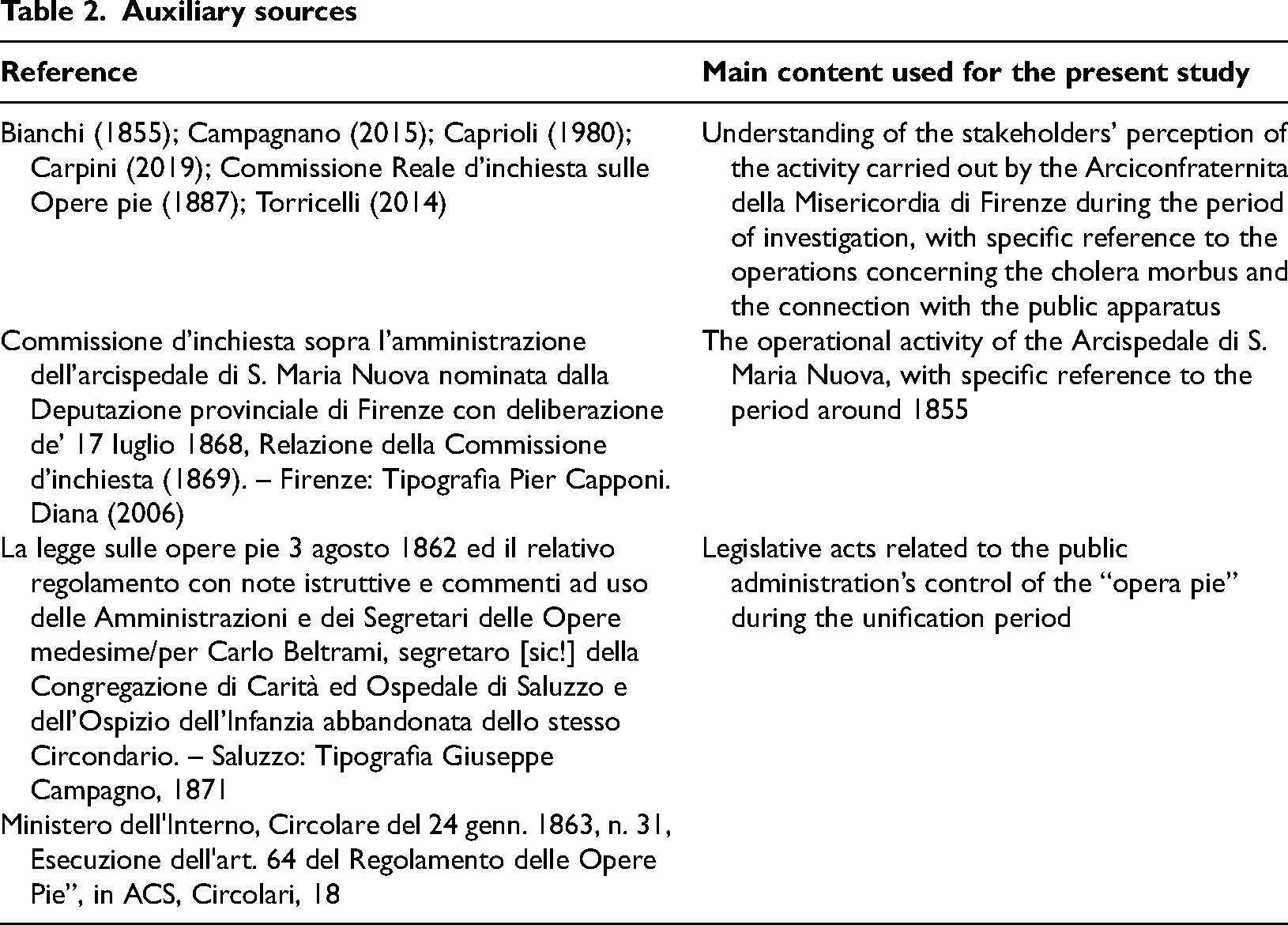
From this point of view, the documents of the period are important for contextualising the operations of the Misericordia and its role within the city of Florence. The auxiliary sources are significant, as they provide a picture of the same phenomena from different perspectives, allowing us to consider the views of third parties.
Findings
Although the relationship between local governments and the Misericordia di Firenze has always been solid, the activity of the latter, like that of other similar organisations, has gained new importance during difficult times, such as epidemics. In this context, the social role of NPOs is emphasised as providing support for poor people and those who are otherwise unable to access doctors and specialised operators.
The impact of the cholera epidemic on the Tuscan population starting in 1855 was dramatic: it has been estimated that during 1855, the number of people in the Grand Duchy afflicted with the disease exceeded fifty thousand, and approximately fifteen thousand people in Florence died from it (see Figure 1).
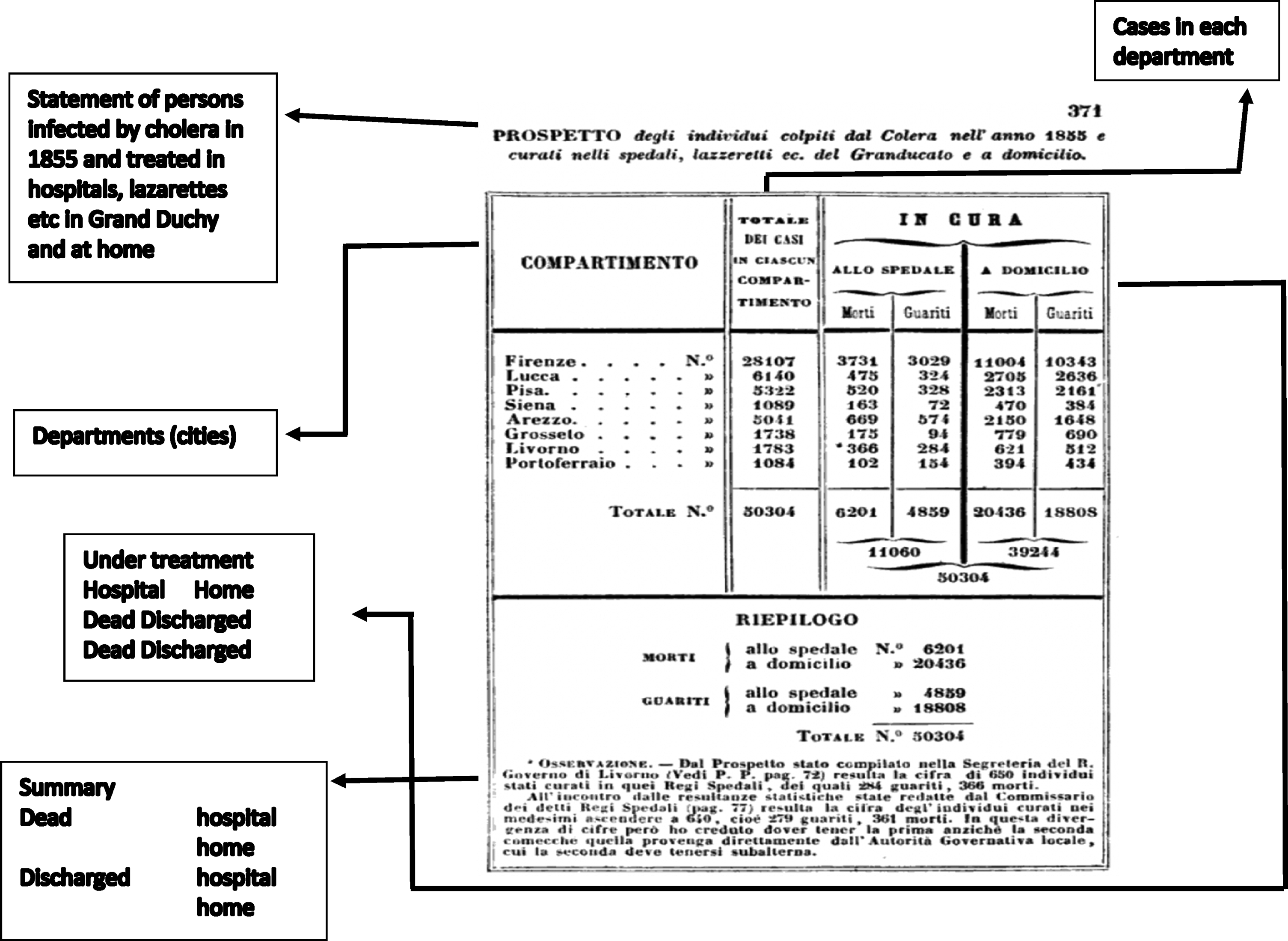
Register showing the number of people affected by the disease or who died because of morbus cholera in Tuscany (1855).
The valuable documentation kept in the historical archive of the Misericordia maintains the data kept at the time on the people infected by the cholera morbus and assisted by the Confraternita. This latter institution gathered periodic data to monitor the trend of cholera (Figure 1), publishing a bulletin regarding the prevalence of the disease to direct the management activities of the institute. The Confraternita kept a register with a ‘statement of persons infected by cholera (..) and treated in hospitals, lazarettes, etc., in the Grand Duchy and at home’. The data were segmented by ‘departments’ (cities), place of ‘treatment’ (‘home’ or ‘hospital’) and outcome (‘dead’ or ‘discharged’) (Betti, 1858). The daily bulletins also became a form of disciplinary power and technology of government, as they created a climate of fear among the population threatened by the spread of cholera and persuaded the citizens of Florence, through the typical mechanisms used by the government to control the poor and the sick, to behave in accordance with the medical and political-administrative directives of the Grand Duchy.
The Grand Duke introduced an emergency plan for Florence with a series of conduct rules for all citizens, which can be framed within a disciplinary diagram, following the ‘scientific’ recommendations elaborated by Pietro Betti (1784–1863), who was the head of the public health security department and responsible for the lazarette organisation of the Grand Duchy. Betti was one of the first Italian and European physicians to confidently affirm the infectious nature of cholera and is known in the history of medicine above all for his ‘decalogue’ to combat the cholera epidemic (Betti, 1857; see also Lippi, 2008; Signorini, 2004). This decalogue provided hygiene and disinfection rules, as well as more general rules of conduct, and recommended quarantines and sanitary cordons. These rules and recommendations made a decisive contribution to the fight against cholera. This result was achieved not only thanks to the health regulations introduced, but above all thanks to the climate of fear among the population regarding the possibility of contracting cholera, the probability of death or serious damage to health resulting from the disease or the possibility to be punished by the police of the Grand Duchy (Betti, 1857). The bulletins and the decalogue were in fact widespread among the population thanks to the town-criers of the City of Florence. Since a large part of the population was illiterate, the only way to make known figures, statistics and written rules was to resort to town-criers who, during the Middle and Modern Ages, widely and quickly disseminated the main news in the city, starting from the most populated neighbourhoods and at times when people were likely to be present. The crier took on an indispensable role, given the lack of any means of information.
The Grand Duchy recognised the usefulness of his prescriptions, so much so that his decalogue was disseminated to the entire regional territory in the form of ‘Instructions for Surgeons and Parish Priests of the countryside’, published by the Prefecture of Florence on 18 April 1854.
Inspired by this decalogue, the anticholera plan of the Grand Duchy included the following: the obligation to stay at home or in isolated places, especially for people suspected of having contracted the disease; the division of the town into districts and territorial areas with the appointment of health inspectors for each district who had the task of patrolling the streets and houses; the provision of periodic reports by health inspectors that were then collected and centrally consolidated; the consideration of those who did not present themselves for the inspectors’ checks as ill or potentially ill and who were then forced to transfer to the lazarettes outside the city; and the constant cleaning and sterilisation of homes, workplaces, and public offices.
In other words, a disciplinary diagram was implemented that required territorial distribution of the areas to be controlled, accurate surveillance, sanctions for those who did not comply with the rules, continuous monitoring, and periodic reporting. This system had significant consequences for citizen behaviours and contributed to effectively fighting cholera in Florence. All these prescriptions and rules contributed to the climate of fear in the population both for the fear of contracting the disease and for the fear of being sanctioned by the public officials of the Grand Duchy (Betti, 1857).
To reinforce this disciplinary diagram, the Grand Duchy used its institutional cooperation with SM Nuova and the Misericordia to influence the behaviour of the population to secure its political objectives of maintaining control and the stability of social dynamics and the health of the population.
Figure 2 shows the act that contains a ‘report on the services provided by the Confraternita when dealing with cholera morbus’. The activities of the Confraternita were very popular among Florence's citizens, as currently recognised by scholars. Bianchi (1855: 2–3 – authors’ translation), who was a popular Florentine teacher, journalist, and politician, observed that: An admirable institution lives in Florence, which for five centuries has exercised its pitiful offices toward the unfortunate, without ever losing its industriousness, without making its zeal tepid. Five centuries have seen the Brothers of Misericordia pass silently every day wrapped in their black cloaks, hiding their faces in the funny negro, carrying the litters at a slow and measured pace on their shoulders; they carry to the places of refuge and relief, or to the tomb, the unhappy people caught by illness or sudden death. For five centuries, how many times has the deadly breath of pestilences blown over the City of Flowers and decimated its inhabitants? On those occasions, the Compagnia della Misericordia of the admirable became sublime: on those occasions, to grow in danger, to multiply in travails, he never gave up anything of his indefatigable charity; with the dangers his courage has grown, with the travails his industriousness has multiplied. The flame of the evangelical spirit truly burns in her. […] Who is it that works so well? Who is it that brings the sick to Hospitals? Who is it that brings the dead to the tomb? Who is it that takes care of the sick? The Compagnia della Misericordia, the Brothers of Misericordia. If there is a prevalence of zeal, charity and merit, God alone knows. The Brothers of the Misericordia separate after having completed their pitiful offices, repeating each other ‘God reward them’: they seek nothing else, nor do they expect anything else.

Cholera statistics and bulletins.
The Misericordia, always supported and valued by the Grand Duchy, played a significant role during cholera epidemics, and even the self-declaration of the organisation's sustained efforts fed its role as a government-oriented technology, on the one hand, toward conveying its strategic position in the public apparatus and thus legitimising its condition and, on the other hand, toward applauding and promoting itself to citizenship, providing information on its activities and creating an implicit contract between the institution and the city of Florence. This is demonstrated by the public list of Misericordia members involved in transporting people infected with the cholera morbus. The public list, routinely updated, allowed the people involved to be recognised and appreciated for their meritorious actions to benefit the Florentine population, and strengthened the role of the Misericordia as an NPO capable of facing the emergency while supporting both the population and the political aims of the Grand Duchy.
In facing the epidemic from the government of the poor/sick perspective, institutional cooperation was strengthened thanks to the natural and ongoing relationships and collaboration between the Confraternita and SM Nuova. The hospital is the terminal point in the transport of sick people, and the Misericordia had contact with other traditional hospitals, including San Giovanni di Dio in Borgognissanti, and new hospital units opened specifically to receive citizens suffering from cholera, such as San Clemente, San Matteo, and Imperialino (Torricelli, 2014). Cooperation was implemented under the political and religious leadership of the Grand Duchy, creating a network for supporting local welfare in the most acute period of the epidemic.
The strong relationship between the two organisations is confirmed by the Statute of the Confraternita, which explicitly names SM Nuova responsible for appropriately managing the modus operandi of volunteers and employers.
SM Nuova, formally founded and built in 1285–1288, was directly managed by the government and played an important role during the pestilences and diseases that occurred in the early modern period (Diana, 2010).
The Grand Duchy Leopoldo then distinguished the hospitals as either Ospedali regi (royal hospitals), managed by the state, or as Ospedali comunicativi (hospitals located in smaller territorial areas), managed by local communities (Bufano, 2009). Furthermore, Leopoldo reorganised the healthcare model, enacting an ad hoc regulation in 1783 to reduce administrative burdens and systemise the organisation of public hospitals.
During the Italian unification process, the hospital of SM Nuova was a well-known and recognised institute that included the hospital itself and other smaller stabilimenti (establishments). The services of SM Nuova were particularly solicited during the cholera epidemic, and it is no accident that many studies on cholera are based on cases that occurred in the hospital (Lippi and Gotuzzo, 2014).
The Misericordia had significant experience dealing with pestilence, having faced an earlier plague of typhus in 1817. The Confraternita's efforts to care for and transfer sick people to public hospitals were well recognised at the time by the public officers and health consultants of the Granducato della Toscana (Stolberg, 1994). The head of the Misericordia, Tempestini, was in direct correspondence with Professor Betti even after the epidemic ended, and when it was time to report on the success of the operations that mitigated the epidemic. On 10 April 1856, Tempestini wrote to Professor Betti to confirm that the members of the Misericordia had grown from 1,549 to 1,797, somewhat justifying the enormous efforts of the organisation and, at the same time, the gratitude of the populace.
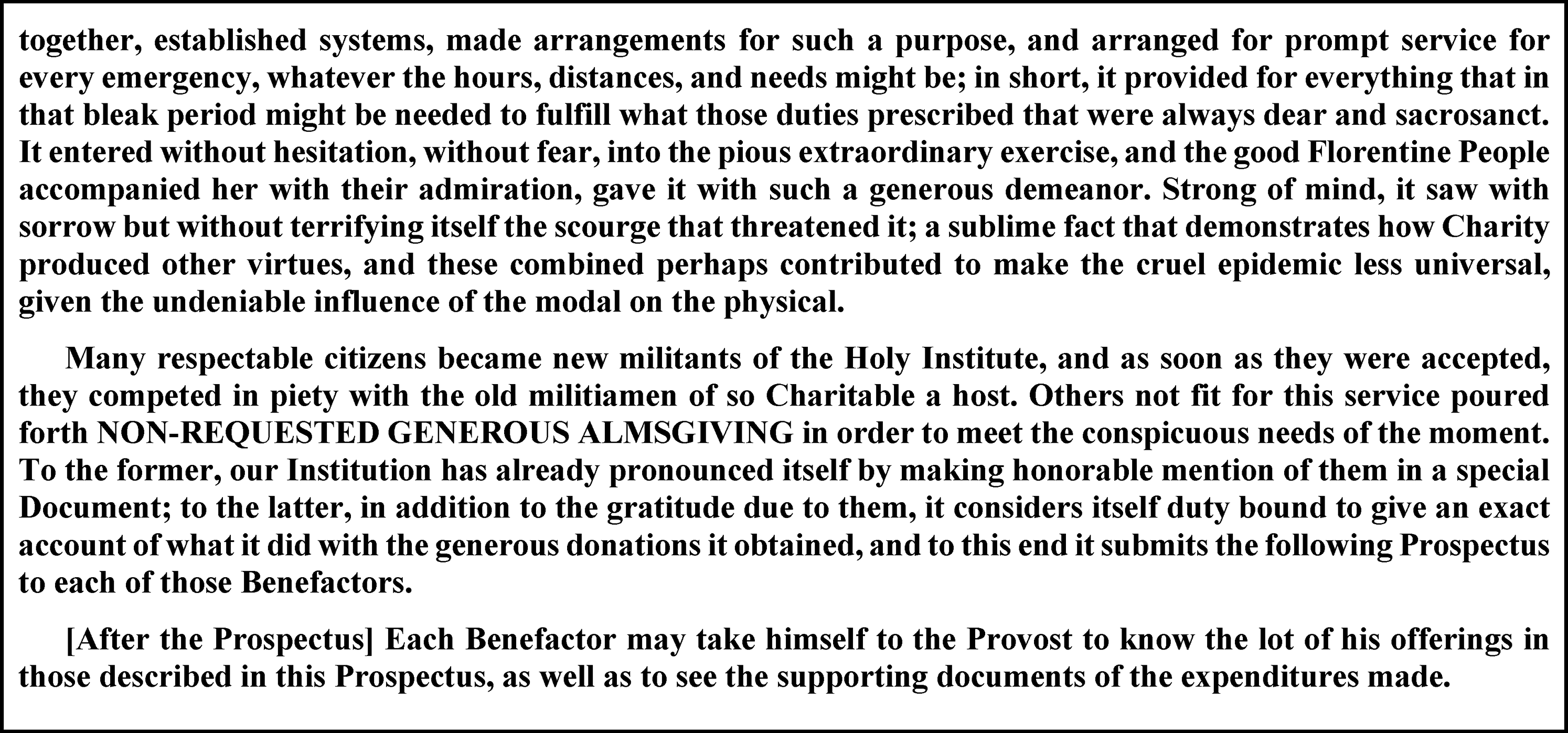
The gratitude of the citizens was also expressed by Grand Duke Leopoldo II to the head of the Misericordia of Florence, Tempestini. During the epidemic, Leopoldo II stayed in Florence and made frequent trips between the hospital and the headquarters of the Confraternita. Professor Betti recognised the fundamental role of institutional cooperation, praising Confraternita's operations during the epidemic and the fact that the local government had delegated some power to the Misericordia to deliver public services such as the transport of sick people (Betti, 1855). Civil society attributed to the Misericordia a major role in managing the town's social and health affairs. Thus, their donations, together with the shared values of charity pursued by the institute, are an implicit recognition of the role of Misericordia in safeguarding the interests of the city. During the epidemic, the Confraternita kept a register specifically dedicated to the ‘management of giving’ to people requesting support because they had suffered financial and/or physical harm from the cholera morbus and periodically reported on the use of resources (Figure 3). As also shown in Figure 3, Misericordia stated the following: When our Archconfraternity heard that the deadly disease of cholera was afflicting the quarters of this beautiful metropolis, it already knew what its sacred obligations were, what part it had to play in such a mournful circumstance, and therefore it did not hesitate or doubt, but full of the zeal of charity, it gathered together, established systems, made arrangements for such a purpose, and arranged for prompt service for every emergency, whatever the hours, distances, and needs might be.

Public report on the use of donations that the Misericordia di Firenze received to manage the effects of the cholera outbreak.
The Misericordia maintained internal accounting registers to potentially illustrate the use of donations received in specific celebrations and circumstances (Figure 4).
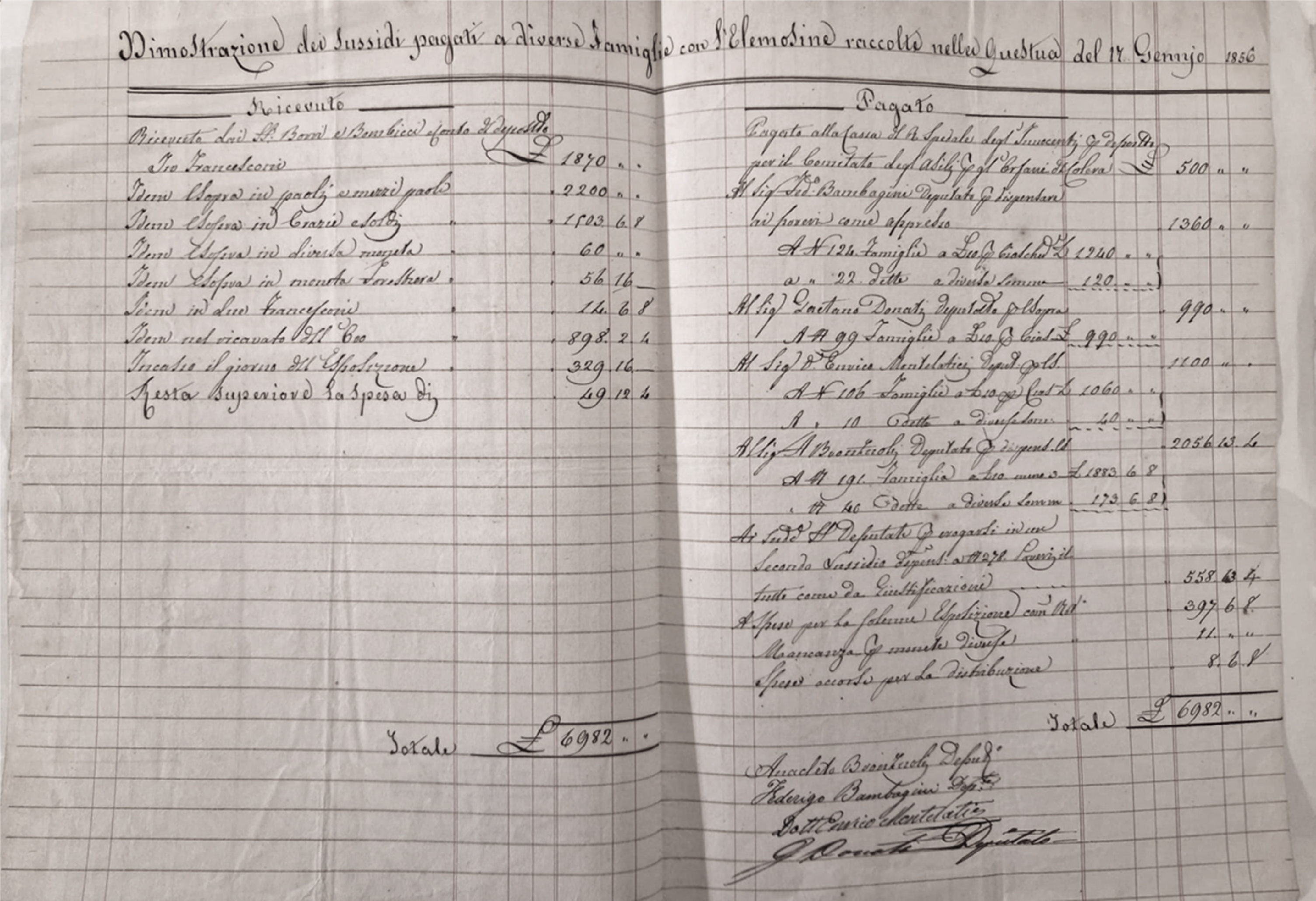
Subsidies paid to various families from the alms collected in the quest of 17 January 1856.
Accounting played a crucial role in legitimising Misericordia's operations, creating a feeling of trust, which is vital for charities. Trust helps form a virtuous circle where citizens and institutions, pinning their hopes on the organisation, contribute to its operation by donating time or resources. This was made possible by disclosing, for example, the use of donations in favour of those citizens harmed by the cholera disease and by making the population aware of the results of charity operations. The Misericordia itself published general information about the use of the donations to counteract the cholera morbus allowing benefactors to be aware of the supporting documents for the expenditure made thanks to their specific donation.
According to Foucault, accounting practices represent a spatiotemporal ordering instrument that reduces spatiotemporal distances, provides administrators with a tool for managing the control system and stimulates managers to operate in the most efficient manner (Carmona et al., 2002; Foucault, 1977).
Even in periods of conflict between the government and the Church, the Misericordia played a super partes role, always highlighting the Institute's strategic and vital role in providing essential services for the city. The Grand Duke Pietro Leopoldo, for instance, exempted the Misericordia from the scope of the legge delle Mani Morte (literally ‘law of dead hands’), which targeted the buildings and properties belonging to certain secular and ecclesiastical institutions (Cantini, 1807; Bianchi, 1855).
Examining the minutes of the board of directors (the Magistrato) in this period highlights the importance of the cholera management.
On 21 July 1855, when the disease situation was extremely critical, the Magistrato enacted an ad hoc regulation regarding the management of cholera (Figure 5).
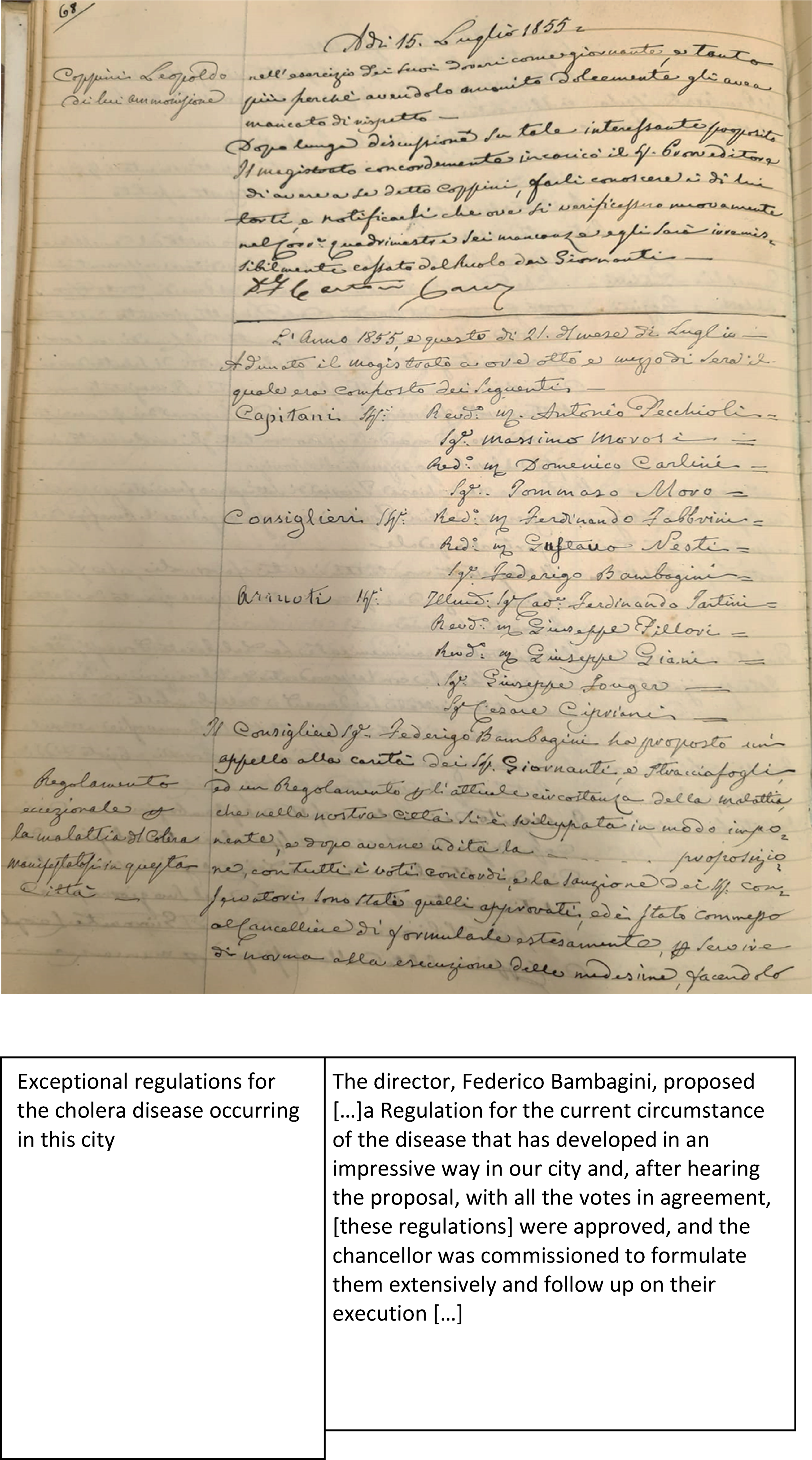
First page of the cholera regulations.
Despite this, the Magistrato and the body of auditors did not neglect to monitor the financial situation as well. The lessons learned during the cholera period were echoed in subsequent periods as well, not only from a social perspective but also from a managerial view. Indeed, the ‘management commentary’ from 1857 shows that the Confraternita bore exceptional expenses during the 1854–1856 period but that the evaluation of the operations during that period was also extremely positive, as the relevant operations were extremely effective.
The Misericordia closed the 1855 period with a profit over that period, especially thanks to the gifts and donations made by individuals who supported the entity's operations during the period of cholera management. The recognition of the role of the confraternity became so great during that period that the institution received more income through gifts than it had during the epidemic, so the Magistrato decided to donate the surplus directly to families affected by cholera (Figure 6).
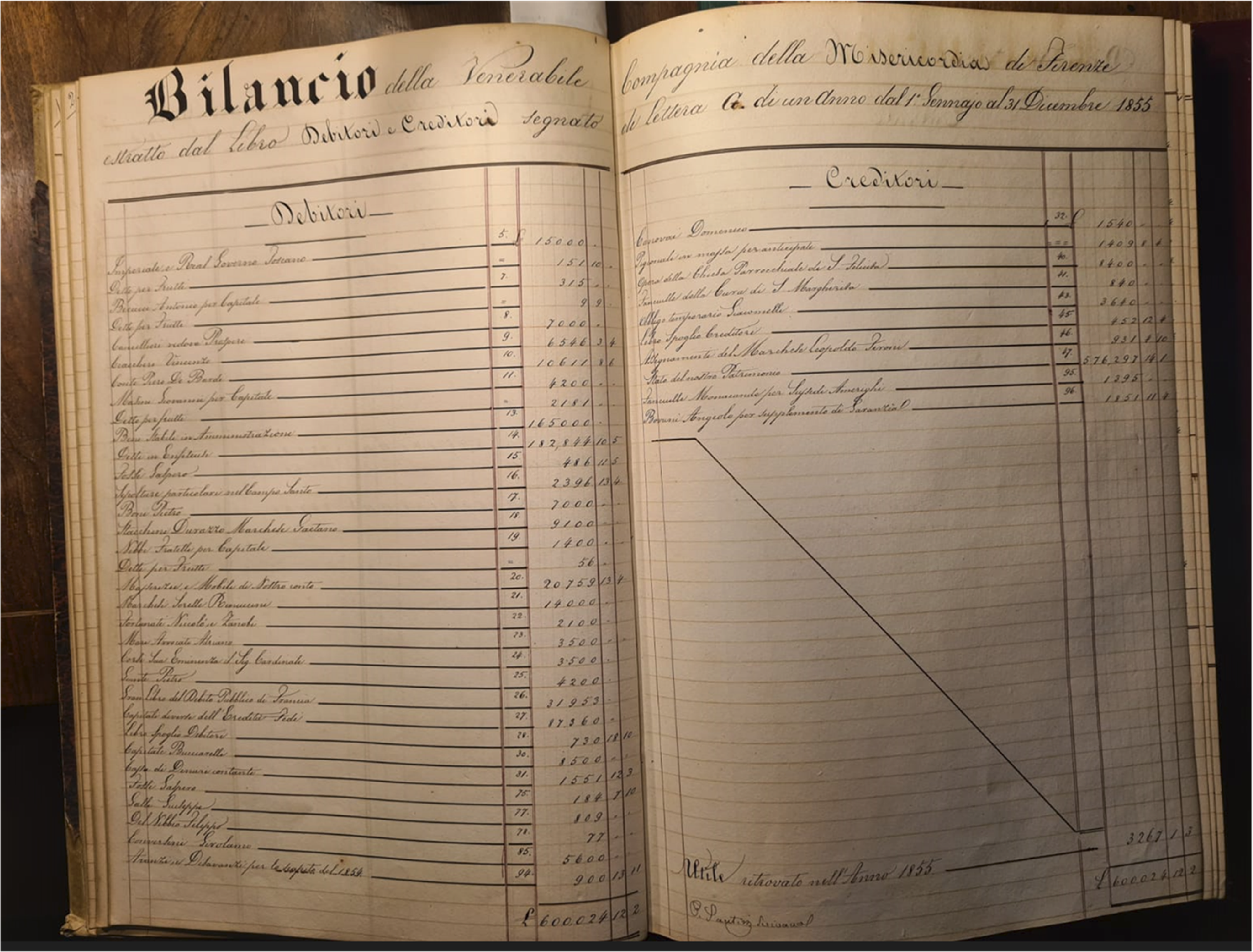
Venerabile Compagnia della Misericordia di Firenze. 1855 financial statements.
In 1857, SM Nuova called on the Misericordia to transport patients with medical certificates to the hospital, and the head of the Misericordia responded to SM Nuova, explaining that parish priests had greater knowledge than the hospital of the health and economic conditions of the sick people and their families. Nevertheless, the relationships among the Misericordia, SM Nuova, and the parishes, with the support of the Grand Duchy, were fundamental for assuring the safety and health of the local population.
Many doctors and health operators were also part of the Misericordia, which constituted an implicit recognition of the symbiotic relationship between the two institutions and the Misericordia's role as a subsidiary (Bertini, 2017) and a manifestation of the nosopolitical approach that characterised the epidemic period.
After the dismantling of the Grand Duchy and the beginning of the Italian unification process under a monarchical state, the Rattazzi Law (3 August 1862, no. 753) formally sanctioned the strict public control over NPOs that was already present, albeit under informal control because of the trusted relationship between these local entities and the authorities during the years of the Grand Duchy. The adoption of the Rattazzi Law (3 August 1862, no. 753) placed the Misericordia, that was also forced to review its bylaws to comply with the new requirements, under stricter and more rigid control by the national public authorities (Arrigoni, 1882). By applying the Act, the public sector apparatus aimed at monitoring the legitimacy of the operations undertaken also aimed at monitoring the consistency of the activity promoted through the mission of the institution and the adoption (and the content) of the Opere Pie budget and financial statements, which entailed an inventory and an account of losses and profits (Figure 7). For example, it is stated in the act that: all those expenses that by law need to be authorised by the Provincial Deputation, and that are contrary to the respective Articles of Association and regulations or that modify them, cannot be carried out in the financial statements without this prior authorisation. (Rattazzi Law, 3 August 1862, no. 753)
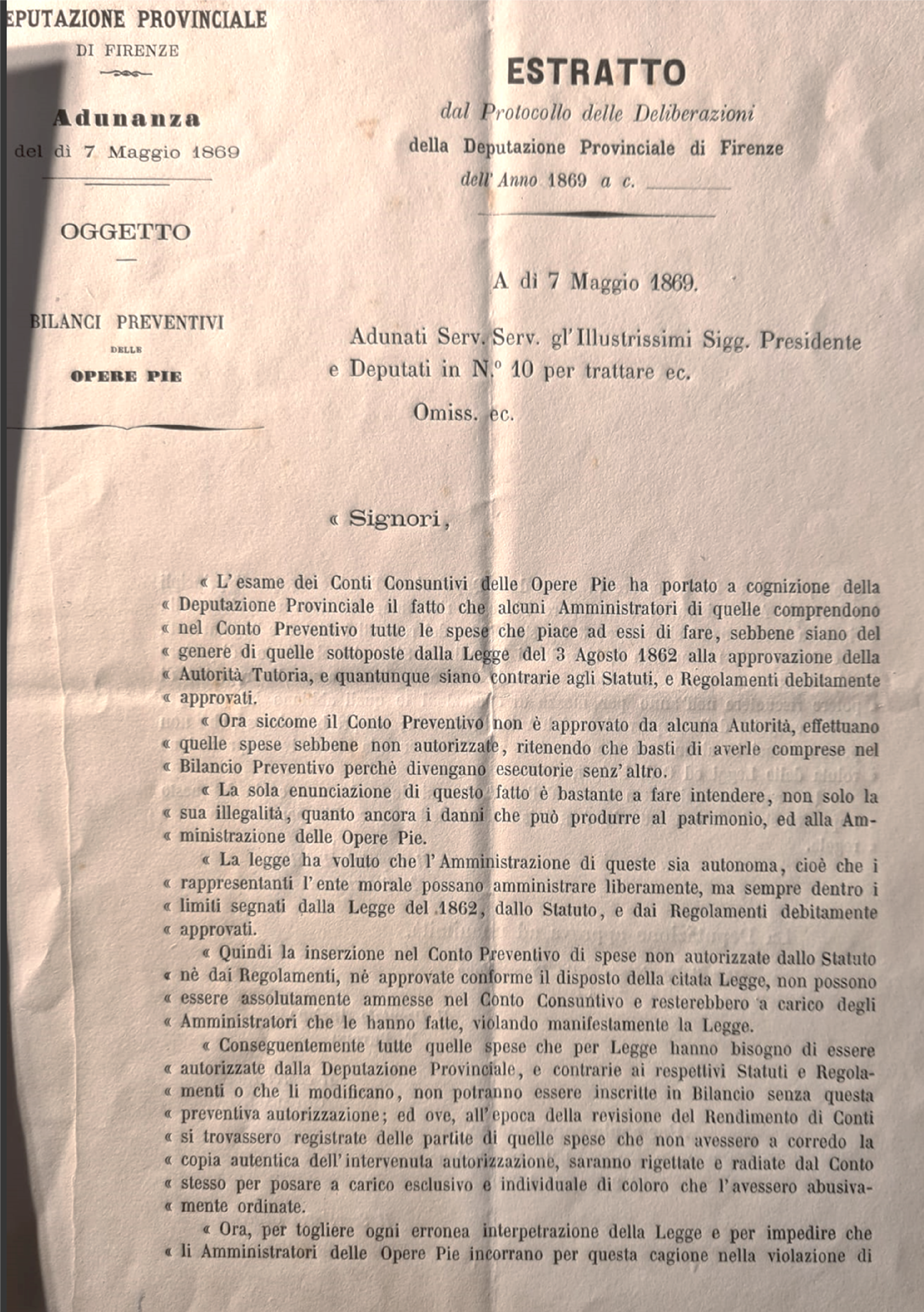
Deputazione Provinciale of Florence, protocol of resolutions budgets of the Opere Pie, 7 May 1869.
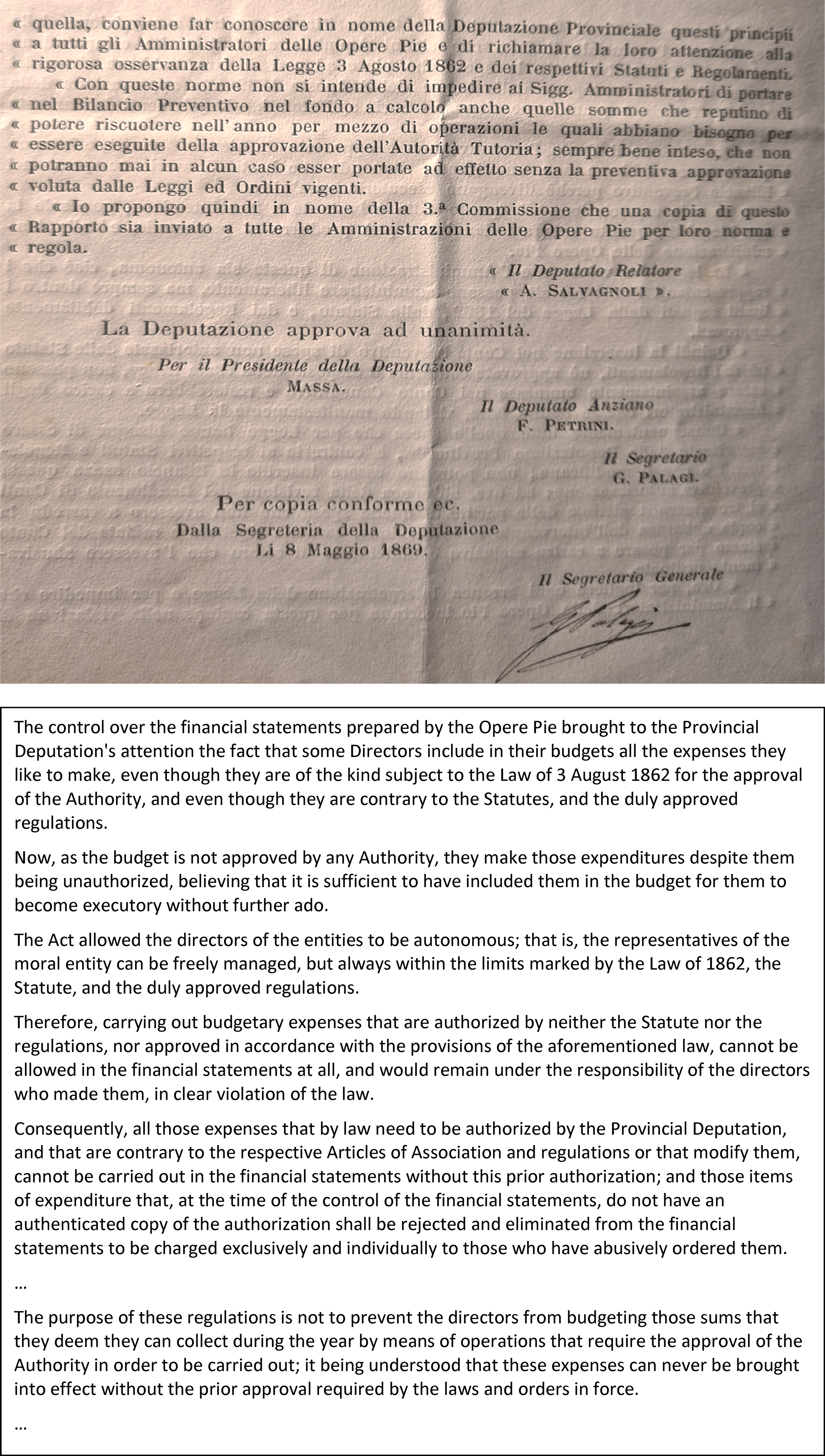
Indeed, according to some civil societies and even more conservative political parties, the resources of charities were being inefficiently managed. In this context, the new ruler of Italy, through local prefectures, issued a complex set of rules for charities to report about their financial activities, charities had to guarantee more careful and sustainable resource management. The requirement to adopt ‘fixed’ financial statements was accompanied by frequent and periodic ‘statistics, in response to accurate and detailed questionnaires aimed at demonstrating compliance with the laws and acts in force at the time and showing the origin and use of the resources. As the public officers noted, the new financial reporting system was similar to that of the local government, supporting the idea that in view of many, the activities carried out by the Misericordia were essentially a ‘public’ service (Campagnano, 2015). Even the decision to require opere pies to establish financial statements in compliance with public sector organisations’ techniques is a clear signal of the desire to comprehend and orient the management of available resources.
After the unified Reign of Italy started in 1861, the tensions between the central state and the institutions with strong Catholic roots like the Misericordia worsened. The unification of the state resulted in the propagation of associational forms of philanthropy with a secular matrix that partly removed the ‘monopoly’ of intervention to support the neediest classes (Campagnano, 2015; Ciampi, 2002). The sentiment of the secular part of the unified state misunderstood certain behaviours of the Misericordia so much so that even the Diritto, a secular daily Turin newspaper that moved to Florence when it became the capital, called the Misericordia an ‘indecent masquerade’ and an ‘absurd monopoly of a work of charity’ (Paolini, 2016). In addition, the Legge Rattazzi entrusted the control of the opere pie to the territorial bodies of provincial deputations, which applied state law, often without regard for local relationships. The Crispi government (1887–1889) identified the confraternities as useless institutions and attempted to nationalise these charitable organisations (Carpini, 2019). The Crispi Law (n.6972/1890) established that all private bodies providing public services had to assume the legal role of ‘public charitable institutions’, effectively becoming public entities. The state, in other words, injected its own authority into the management of tertiary sector organisations, subjecting them to strict public control. This situation was reversed, returning to the principles of authentic horizontal subsidiarity and greater trust in state – NPO collaboration, but only during the republican era in the twentieth century.
Discussion and conclusions
This research investigated the role of institutional cooperation among the Grand Duchy of Tuscany, Santa Maria Nuova Hospital and Misericordia of Florence in providing health services during the 1855 cholera epidemic and related emergencies. We examined these events through a conceptual framework inspired by Foucault's concepts of governmentality, nosopolitics and government of the poor and Dean's technologies of government. We found signs of government intervention in the accounting and calculative practices adopted by Misericordia and other local institutions. The relationship between the Misericordia and local governments has been characterised over the centuries by a varying level of ‘empathy’, and historical events have sometimes determined the fortune of the Misericordia among the community it served (Crum and Paoletti, 2006). However, our results on the years of cholera endemicity demonstrate a strong commitment of the local government (the Grand Duchy of Tuscany) to pursuing poverty relief policies that depended upon the support and assistance of the Misericordia and local hospitals (in particular, SM Nuova) to manage the health emergency (Servalli, 2013; Van Leeuwen, 1994).
The Misericordia's task in managing healthcare was particularly relevant in the decade before the unification of Italy, and reporting, accounting or calculative practices were used as technologies of government to ensure the strong alignment between government policies and the behaviour of the population (Sargiacomo and Gomes, 2011; Servalli, 2013).
The emphasis on the merits of the Misericordia as an institution, as well as of its members and volunteers, and the continuous updates and bulletins on the spread of the epidemic stimulated and strengthened the government of the poor/sick with the aim of effectively addressing the emergency. The adoption of accounting methods and financial reporting was a fundamental source of support during the cholera morbus period, helping maintain a relationship with the threatened population. The Grand Duchy enforced a system of downward accountability, ensuring that even those who could not read were made aware of the health impacts of the epidemic and the penalties for disregarding public health directives. This principle of downward accountability also extended to the prudent management of resources, enabling an informed utilisation of assets in light of the financial constraints. Moreover, through transparent financial reporting, Misericordia was able to communicate the extent of its charitable activities, which were made feasible by the contributions received in the wake of the cholera outbreak, as depicted in Figure 3.
The main difference between the methods of implementing the principles of governmentality during that and during other epidemics in Italy and Europe in the same period or in prior centuries lies in the relationships among the various institutions and the history of institutional cooperation. Given the political weakness that characterised Tuscany and other European states in the years following the 1848 revolutionary uprisings against monarchies and authoritarian governments, the Grand Duchy of Tuscany also relied on the services of the Misericordia in cooperation with SM Nuova. This was no coincidence; in contrast, it was a targeted political choice linked to the fact that not only did the Misericordia already boast a dense and extremely effective network of relationships and a high specialisation in transport and medical assistance, but it was, above all, close to the Catholic Church and to Florentine citizens.
Similarly, it is no coincidence that thousands of Florentines voluntarily served in the Confraternita over the centuries. The Misericordia was the first notable institution in the city to provide in-home social and health services, medical transportation, and funeral assistance. In other words, while collaboration between local governments and NPOs over providing social, health and cultural services is an element of horizontal subsidiarity that has characterised Italy since the Middle Ages (see, for instance, Manetti et al., 2017), in the case of the 1855 cholera epidemic in Florence, entrusting the Misericordia with rescue and transport services was also a means to counterweigh the weaknesses of the political system in a context in which public authority was being severely tested by the consequences of the 1848 uprisings.
We believe that this study advances the knowledge in the field of accounting history in several ways. First, this article analyses, in an original and innovative way, the institutional cooperation among the Grand Duchy of Tuscany, the Misericordia of Florence and SM Nuova to manage the epidemic from a government of the poor and sick perspective.
The activity of transporting sick people demonstrates the strong link between Misericordia and SM Nuova under the supervision and political promotion of the Grand Duchy (Diana, 2006; Torricelli, 2014). The cooperation, in fact, was oriented according to the political and religious leadership of the Grand Duchy to create a network for enhancing local welfare in the most acute period of the epidemic. It is no coincidence that this cooperation aimed at managing epidemics –already centuries old in the city of Florence (see Manetti et al., 2017) – was strengthened in the last period of the Grand Duchy of Tuscany, when political pressure and social and cultural agitation toward the unification of Italy – and the consequent dissolution of the Grand Duchy – were particularly significant. The Misericordia of Florence, in fact, continues to be supported and valued by the citizens of Florence, which has enabled it to effectively address health emergencies even in periods in which political power has been weak.
Second, the routine bulletins and reports on the number of infected, hospitalised and dead people and on the transport activities performed by the Misericordia, combined with explicit advertisement about the Misericordia's members and volunteers engaged in public service, can be understood as manifestations of governmentality and nosopolitics (Dean, 1992; Foucault, 1977). In contrast to a disciplinarian form of power, governmentality is generally associated with the willing participation of the governed. In different phases of health emergencies, such as the cholera epidemic of the mid-nineteenth century, routine data reports on the progress of the emergency can be particularly effective in influencing the behaviour of the population together with more general behaviour rules and disciplinary diagrams. All these mechanisms represent implicit or explicit forms of governmentality, with an important role played by the medical profession and health professionals (so-called nosopolitics), which allow the alignment of individual and collective behaviours and the general acceptance of political action to safeguard public health and ensure continued social order. The Grand Duchy's public officials implemented an array of stringent prescriptions, comprehensive health guidelines, and regular updates. These measures were pivotal in fostering a pervasive sense of apprehension among citizens. The dread of falling ill, coupled with the fear of facing penalties for noncompliance, effectively steered the populace toward disciplined conduct. As noted by Betti (1857), this atmosphere of trepidation was instrumental in the meticulous regulation of public behaviour, ensuring societal order during a time of crisis.
Furthermore, regarding the internal reporting practices of the Misericordia, we argue that the minutes and periodic statistical reports can also be understood as technologies of government and manifestations of governmentality, where data and qualitative information outline the actions taken to assist citizens, recognise the laudable efforts of members or other affiliates of the Misericordia, and shape the management control system of the organisation. The reporting of the executed actions reveals the vision and operational goals of the Misericordia for the community, prompting those who were so inclined to become part of or contribute to the activity of the organisation. At the same time, financial and nonfinancial reporting justified the confraternity's role in public administration by highlighting their cooperation and social functions. Financial and nonfinancial reporting continue to play a key role in establishing ongoing engagement with affected constituents, who see the entity's reporting and communication as a tool for transparency and a real demonstration of the impact their efforts have on the management of the entity and the public.
Third, internally, financial reporting determines a method through which the entity can optimise the management of resources and, at the same time, externally represents an instrument of transparency that corroborates the goodness of the operations being carried out, informing affected constituents about the choices of the institution (Behn et al., 2010). From this point of view, Misericordia's case confirms the literature's orientation on the historical role of charities in struggling epidemics and natural disasters by involving other local actors (Manetti et al., 2017; Sargiacomo et al., 2021a).
Fourth, the fundamental role of the Misericordia as a partner in the public health and social system was incongruent with the unification process of Italy and with the consequent Rattazzi Law (3 August 1862, no. 753). The latter maintained a fair level of autonomy for NPOs but took a different approach than that pursued during the last decades of the Grand Duchy in Tuscany. The adoption of the Rattazzi Law placed the confraternity under stricter and more rigid control by national public authorities. Particularly significant was the process of institutional isomorphism (DiMaggio and Powell, 1983; Scott, 1995), which led to the transformation of the financial reporting system of the new opere pie to make it more like that applied to local governments. After a few decades, the Italian unification process led to even more drastic decisions about NPOs. The conservative parties accelerated the nationalisation process of charities under the assumption that relying on these entities led to the inefficient management of public resources. The political will to strengthen authoritative control over NPOs inspired the Crispi Law (no. 6972/1890). In this context, the new Kingdom of Italy, through local prefectures, came to issue a complex set of rules for the financial reporting of charities that had to guarantee more careful and sustainable resource management. As the public officers noted, the new financial reporting system was similar to that for the local government, supporting the idea that in view of many, the activities carried out by the Misericordia were essentially a ‘public’ service. Not coincidentally, the tensions between political authority and the Confraternita grew after the unification of Italy.
This study has limitations and leaves space for further research. The present study focuses on a narrow, although original, set of main sources (see Table 1). These sources show that the institutional cooperation that formed in the last decades of the Grand Duchy in Tuscany was the result of a centuries-old bond between local institutions (characterised by a fundamentally oligarchic regime) and NPOs active in the sociomedical sector. The behaviour of the Grand Duchy, therefore, was particularly opportunistic and oriented toward the principles of the government of the poor and sick in the context of a health emergency. We believe that this research opens many interesting opportunities for future scholars studying the history of accounting who are interested in collecting new evidence regarding the use of reporting, accounting and calculative practices as government technologies during epidemics.
Footnotes
Acknowledgments
We extend our gratitude to the Misericordia of Florence for granting us access to its remarkable historical archive. We are especially grateful to Barbara Maria Affolter, Riccardo Beconcini, and Laura Rossi for their guidance and expertise, which have been fundamental in shaping our interpretation of the historical documents discussed in this article.
Declaration of conflicting interests
The author declared no potential conflicts of interest with respect to the research, authorship and/or publication of this article.
Funding
The authors received no financial support for the research, authorship, and/or publication of this article.
