



Abstract
As the number of unmarried adults in the workforce is on the rise, employees increasingly have to navigate lifestyle differences between single, married, and divorced members of their work groups. To understand the impact of this new form of diversity in groups at work, we introduce the concept of marital diversity as an important predictor of group performance outcomes. We argue that marital diversity may benefit group outcomes by providing members with complementary life experiences and skills, without instigating the stereotyping or conflict often associated with other less mutable forms of diversity. In Study 1, an archival study of rock bands reveals that marital diversity positively affects group outcomes when band tenure is high. In Study 2, this pattern is replicated in a study of project groups. Overall, the studies show that marital diversity can positively affect groups, especially groups with longer tenure.
Organizations usually strive to insure that one’s personal life is off limits during the recruitment and hiring process. Such a perspective is consistent with “a cultural sentiment that affective and relational concerns ought to be put aside to direct one’s attention to the task at hand” (Sanchez-Burks, 2002, p. 919). However, once hired, such information often becomes recognized. For example, although considering marital status in hiring decisions is illegal in the United States, once hired, work group members usually quickly identify whether one is married, single, or divorced. Unfortunately, the desire to ignore personal characteristics also means that a scholarly consideration of how such characteristics influence groups at work is also missing from the literature.
This is particularly problematic at the moment, as diversity in marital status is on the rise. In 1950, only a minority of the U.S. workforce was not married (33%), compared with nearly half the workforce (46%) in 2017 (U.S. Census Bureau, 2017). As such, groups at work face an increasing diversity in members’ marital status. Although diversity can often lead to misunderstandings and conflicts (Jehn, Northcraft, & Neale, 1999), we argue that marital diversity, as a unique form of group diversity, can provide groups with a complementary set of differences and resources that can improve group performance outcomes, especially when the group has sufficient time to learn to leverage such diversity. Marital-status diversity is a particularly interesting form of diversity to consider, as it reflects deep and potentially complementary differences in members’ lifestyles, yet may be less likely to provoke stereotypes and backlash, given its malleability and the likelihood that people in the group have held different marital statuses (e.g., any married person used to be single) at different points in their lives.
Investigation of the implications of such malleable, lifestyle-based forms of diversity is largely absent from the literature on diversity in groups (for reviews, see Joshi & Roh, 2009; Van Dijk, Van Engen, & Van Knippenberg, 2012), which has nearly exclusively focused on diversity in terms of social categories (i.e., gender, race, age) and work-related differences (i.e., expertise, tenure, education). We extend this literature by construing marital diversity as an exemplar of a potentially different category of group diversity–lifestyle diversity. Lifestyle diversity includes characteristics of individuals that reflect life situations and have an important influence on one’s identity (Dovidio, Kawakami, & Beach, 2000; Miller & Major, 2000) and well-being (Coombs, 1991). In contrast to many previously studied forms of diversity, many lifestyle variables reflect volitional choices (e.g., whether to be married, whether to engage in hobbies or leisure activities), and often lead to different behavioral patterns (e.g., imagine the differences in daily routines, demands, constraints, and behaviors between a single and married person) and consequences than would be the case with inviolate diversity characteristics (e.g., race, gender, and age; Eagly & Chin, 2010). In addition, people may at different points in their lives have held different lifestyles, offering potentially more empathy for and understanding of lifestyle differences than is possible with other diversity characteristics. Hence, lifestyle diversity may be a form of group diversity that can improve group performance outcomes. This makes it all the more surprising that research has yet to investigate lifestyle differences in the context of group diversity.
To address this gap and bring awareness of lifestyle differences to the group diversity literature, we examine an important and relevant type of lifestyle diversity, given the rapidly increasing number of single people in the workforce—marital diversity. We explore the possibility that marital diversity may often benefit group outcomes. Through this investigation, we enhance the conceptualization of diversity by including lifestyle differences among group members, which have until now been relatively ignored in organizational diversity and group research, despite being prevalent in organizations (Clair, Beatty, & Maclean, 2005). We investigate marital diversity here as a specific form of lifestyle difference in groups, contributing to the group diversity literature (e.g., Joshi & Roh, 2009; Van Dijk et al., 2012) by developing and testing theory about effects of an important, yet understudied, form of interpersonal difference in groups. In addition, we build on related work in group diversity (e.g., Harrison, Mohammed, McGrath, Florey, & Vanderstoep, 2003) and group development (Ancona, Okhuysen, & Perlow, 2001; Bales & Strodtbeck, 1951; Tuckman, 1965; Waller, Zellmer-Bruhn, & Giambatista, 2002) to identify the phase in a group’s life when marital diversity is most influential on outcomes by examining the changing effects of marital diversity in groups over time.
We hope our work makes several contributions to the literature on diversity and group performance. First, we enhance the conceptualization of diversity by including lifestyle differences among group members, which have until now been relatively ignored in organizational diversity and small group research, despite being a prevalent form of differences in organizations. Second, we extend research on lifestyle diversity in teams by examining the changing effects of lifestyle diversity in teams over time. We build on related work in the area of team diversity as well as research on group development to identify the phase in a group’s life in which lifestyle diversity is most influential on group outcomes. Third, by examining marital diversity’s effects on different operationalizations of successful group performance in two very different samples (rock bands and student project teams), we enhance the generalizability of our findings in different settings. Although some prior work on teams has examined multiple indicators of group success (Murnighan & Conlon, 1991), this has rarely been the case in diversity research. Together, our studies allow a high ecological validity for our research and provide interesting contexts for these first examinations of the effects of lifestyle differences on team outcomes.
Marital Diversity and Group Outcomes
We suggest that marital differences can provide a wealth of complementary resources, support, and information for group members to share and benefit from, and that because marital differences are unlikely to provoke conflict, these resources will actually be shared and applied to the task. Marital diversity may allow for optimal levels of member distinctiveness within groups (Brewer, 1991), promoting collaborative relations between members, and enhancing group performance. Members with different marital status differ in experiences and behavioral choices. But because these experiences and choices are volitional, members may more easily perspective-take and discover commonalities. Many other forms of diversity do not allow the possibility for members to actually flow from one category to another. For example, a White person might find it challenging to take the perspective of a Black person, compared with a married person taking the perspective of a single person, because in the latter case, the married person has some historical experience with the behavioral repertoires that both single and married people engage in. Imagine a single person asking a married colleague for relationship advice, or a married colleague hearing the adventures of a single colleague. Because the information discussed reflects experiences people might have had in the past or could have in the future, it can motivate members and provide cohesion more so than an unvarying group characteristic would.
Marital differences can allow members to develop close relationships and commonality without threat or direct competition to distinguish themselves (Brewer, 1991) and to balance needs for inclusion and distinctiveness (Leonardelli, Pickett, & Brewer, 2010), creating a sustainable group and a cooperative atmosphere. Indeed, research shows understanding another member’s experiences allows feelings of identity comprehension (Thatcher & Greer, 2008) and self-verification (e.g., identity fusion; cf. Swann, Jetten, Gomez, Whitehouse, & Bastian, 2012), which promotes positive affect and member contributions within the group. Marital diversity may not only reduce categorizations and competition, but enhance members’ motivation to cooperate and share resources. Because group members can more easily perspective-take, they may be more accepting. Members may even be curious to learn what drives different choices of their group members and may even enjoy living vicariously through another. Indeed, research on sense making suggests social interactions motivate individuals to engage in intentional effects to cognitively process information, helping them to understand differences in surroundings and explain their environment (Goffman, 1969; Weick, 1995).
This curiosity and motivated information processing can increase group cohesion and cooperative interactions within the group (Nijstad & De Dreu, 2012), allowing marital differences to enhance the exchange of resources and benefits without competition or tension (Russel, Delpriore, Butterfield, & Hill, 2013). This positive effect is compounded by the important resources that people with different marital statuses can share with one another. For example, married people are shown to be healthier and emotionally more stable (Wood, Rhodes, & Whelan, 1989), whereas unmarried people possess bigger positive helping networks (Barrett & Lynch, 1999) and higher involvement in social organizations (Arber, 2004). Building on these differences, married people could draw on the networks of their unmarried colleagues in seeking advice and help, and unmarried people could rely on their married colleagues to provide a stable, healthy group environment. Indeed, marital differences have been shown to reduce work–family conflicts in groups (Bhave, Kramer, & Glomb, 2010), as ostensibly, single members may help meet needs of married members in balancing multiple roles, and married members may provide emotional support for single members. In short, the reduced time devoted to misunderstandings, conflicts, and stereotypes leaves more time for group members to focus on the task at hand.
Temporal Effects of Marital Diversity on Group Outcomes
Although we hope that marital diversity brings such rich complementary resources and experiences to a group that it can be immediately transformed in ways that enhance group performance, the reality of past diversity research suggests that this is not likely to be the case. Meta-analytic reviews have not been able to show a consistent positive relationship between now-workplace forms of diversity (which is where marital diversity would be categorized) and team performance (e.g., Webber & Donohue, 2001), and, as van Knippenberg and Schippers (2007) note, the literature on work group diversity “has been dominated by studies focusing on ‘main effects,’ testing relationships between dimensions of diversity and outcomes without taking potentially moderating variables into account” (p. 518). Given that the study of main effect relationships has not been shown to be a productive avenue in the literature, we focus our attention on the relationship of marital diversity with the moderating variable of time.
Temporal stability is one of the key elements of group context as posited by Hollenbeck, Beersma and Schouten (2012). In their taxonomy of groups, they describe groups on the high end of the temporal stability continuum as groups that “are stable and have a history and future together, with membership that does not change often or very easily” (p. 95). Harrison et al. (2003) state that “time serves as a medium for collaboration in groups, allowing members to exchange personal and task-related information” (p. 1029). The temporal phase in a group’s life likely plays a central role in determining its success. The transitions groups engage in over the course of their time together have been documented by a number of scholars (Tuckman, 1965).
Groups that have been together longer are more familiar with one another, and perhaps, as a result, have higher quality outputs (Harrison et al., 2003). Theoretically, this should increase the likelihood of marital diversity, enhancing group outcomes as time goes by. However, there are some studies that suggest that diversity (demographic diversity, Watson, Johnson, & Merritt, 1998) is more negatively related to outcomes over time. Although studies can be found on both sides, we would argue, consistent with the studies reviewed by van Knippenberg and Schippers (2007), that there is more support for the position that, given sufficient time, diversity can serve to positively affect group outcomes. Moreover, because many lifestyle characteristics do not have the same barriers to entry as demographic diversity constructs (one can join or leave from hobbies or other lifestyle choices—even from a marriage—more easily than one can join or leave demographic categories), such differences should lead to less conflict, leaving more time to focus on the work at hand.
Of course, theory and research on traditionally studied diversity characteristics suggest task and informational diversity may lose potency over time, consistent with the too-much-of-a-good-thing effect noted by Pierce and Aguinis (2013). However, given the sometimes sensitive nature of marital differences (e.g., a group member may be embarrassed admitting to a previous marriage), group members will be cautious in early stages of group tenure (Clair et al., 2005; Haidt, Rosenberg, & Hom, 2003), in terms of revealing some of these differences to others, and in terms of leveraging these differences to influence the creative and performative aspects of the group task. Indeed, work by Harrison et al. (2003) suggests deep-level forms of diversity are more visible and impactful in the long, rather than short, run in groups, an argument also made by van Knippenberg, De Dreu, and Homan (2004). This suggests a group’s ability to positively leverage marital differences should increase over time. Interestingly, the likelihood that marital differences are slower to influence group performance may be highly beneficial for groups possessing such diversity, as this may be the point in the group’s life when the utility of other differences starts to wane. Therefore, we propose the following hypothesis to test:
Research Overview
We investigate the impact of marital diversity and time on group outcomes in two studies. First, through an archival analysis of musical groups, we examine how the Marital Diversity × Time interaction influences the creative and popular success of the products (i.e., albums) produced by the groups. We then conceptually replicate these ideas in a study of MBA project groups. Both studies support the idea that marital diversity affects the outcomes of the groups, particularly when they have been together longer. Together, these studies allow high ecological validity for our research and provide interesting contexts for these initial examinations of the effects of marital differences on group outcomes.
Study 1
Because they represent an unusual context and differ in so many ways from groups based within organizations, musical groups may provide insights missed in traditional organizational studies (Heath & Sitkin, 2001). This sample allows us to examine understudied diversity characteristics in organizations, some of which are off limits in the United States due to protected class law, but may have great influence on work groups (e.g., marital status; Jackson, Joshi, & Erhardt, 2003). In addition, the archival data available on these groups allows us to track the impact of lifestyle differences on a variety of group outcomes over the course of 20 plus years.
Method
Sample description and procedure
The initial set of bands for the current study comes from a larger data set of punk and new wave rock bands (Conlon & Jehn, 2010). Five assistants spent considerable time (3 years) procuring data from a variety of sources to gather as complete as possible information about band members’ lifestyle characteristics. Two assistants worked on each band; their research included reading old issues of music-related periodicals such as Rolling Stone, Billboard, and other music-related magazines and books, visiting fan websites and chat rooms devoted to particular bands, perusing other media sites that covered music of this genre (e.g., websites for MTV and VH1), and viewing television documentaries that highlighted particular bands in the sample (e.g., VH1’s “Behind the Music” series). We used the coding rule that all information collected through these sources had to be verified by finding it in at least two sources; thus, all data have been confirmed by two independent sources.
The sample of bands includes bands who would be viewed as punk (e.g., The Sex Pistols, The Ramones, The Dead Kennedys) and new wave (Duran Duran, Blondie, Talking Heads), and included some bands who enjoyed both critical and popular appeal (e.g., U2, REM, The Clash, The Pretenders) as well as bands who toiled in relative obscurity (The Meat Puppets, The Minutemen, The Fleshtones). The data set included albums and tenure data for bands in the sample who released albums from 1967 through 2005.
Diversity and tenure measures
The lifestyle variable, marital diversity, coded for each band member as 1 = never married, 2 = first marriage, 3 = divorced, 4 = second marriage, and 5 = living together but not married. Group-level diversity scores were then calculated for marital diversity using Blau’s index, as recommended by Harrison and Klein (2007). These data were updated (when required) for each band whenever a new album was released to account for changes that might occur in diversity due to band member changes over time (e.g., getting married or getting divorced).
Diversity control variables were age, gender, ethnic, and band member tenure in the band to show that any differences explained by marital diversity go above and beyond traditionally expected effects of social category forms for diversity. These diversity measures were also operationalized into group-level diversity scores using Blau’s formula.
Band (or group) tenure was measured in terms of how many years the band had been together since inception.
Performance measures
In this sample, we examine two different operationalizations of group performance: (a) creative success and (b) popular success. Creative and popular success are obviously important performance outcomes for many groups, especially in cultural industries such as music, movies, video games, and other entertainment contexts (Lampel, Shamsie, & Lant, 2005).
Creative success
Conceiving new ideas for artistic expression through music and lyrics, and conveying those ideas to an audience through recorded material may actually be enhanced through the existence and awareness of lifestyle diversity within the group. Recognition that band members have unique experiences and divergent perceptions that stem from marital differences can provide the band with a wider range of insights and discussion points that could be authentically translated into songs and performances. The willingness of band members to share this lifestyle information—either directly in conversation with group members or indirectly through the lyrics and music they generate—could lead to higher creative (musical) outcomes. The integration of such divergent lifestyle characteristics, combined with the divergent musical and lyrical topics that are typically integrated in punk and new wave music (rock, reggae, ska, and rockabilly), is likely to present a situation where marital diversity can be an asset rather than a liability to success, and is likely to be recognized as such by evaluators with musical expertise.
Expert ratings are often used as a measure of the creativity of an outcome (Shalley, 1995). Similarly, our measure of creative success stems from two periodicals that critically review albums in this musical genre. One source was the Rolling Stone Album Guide (Decurtis, George-Warren, & Henke, 1992), a compendium of album reviews first published in Rolling Stone magazine, a U.S.-based periodical. This resource provided written reviews of albums and rated them on a scale from one to five stars, with higher ratings indicating more favorable reviews. We used the numerical star rating information as part of our measure for creative success. The second source was the Trouser Press Record Guide (Robbins, 1991), a compendium of reviews first published in Trouser Press magazine, a British-based magazine. This resource provided written reviews of albums. To transform these qualitative reviews into a numerical score, we photocopied each album review; deleted words that mentioned the album name, the band, or any band member; and then had two coders with specific expertise in music of this era read each review and rate it using the 1 to 5 scale used by Rolling Stone. A similar procedure was used by Murnighan and Conlon (1991) to transform string quartet concert reviews printed in British newspapers into a numerical equivalent. Ratings by these two coders were highly correlated, ICC(2) = .80, and these Trouser Press ratings were averaged with the Rolling Stone ratings to form our measure of creative success. Creative success data were available for 273 of our 314 albums.
Popular success
Having one’s recorded music received positively by a large audience is critical to the survival of a band because it produces the resources necessary to compensate the band and to allow them to continue to produce new creative products. Ashby’s (1991) theory of requisite variety suggests that complexity in an organism (a work group in our case) needs to match its environment (e.g., audience) to be successful. For the bands in our sample to reach a broad audience (i.e., sell albums, high rankings on charts), their creative outputs must resonate with customers from all walks of life, or lifestyles. By having marital diversity and leveraging it in a positive way, a band can potentially be more successful by reaching a more diverse (and potentially larger) audience, thereby enhancing their popular success.
We created a measure of popular success for each album by determining its highest charting position on the Billboard 200 chart. As higher charting positions are represented by lower numbers, we reverse scored this number by subtracting each album’s highest charting position from 201, so that for analysis purposes, higher numbers would indicate more popular success. Billboard 200 data were available for 187 of our 314 albums; the remaining albums did not chart in the Billboard 200 and, thus, were excluded from the popular success analysis as we were unable to accurately determine their popularity.
Results
From this research, we were able to procure four reliable measures of diversity (age, race, gender, and marital) for 56 of the 84 bands that comprised the Conlon and Jehn’s (2010) sample. Analyses comparing the final sample and the sample of excluded bands due to missing data show no significant differences on general diversity and performance levels, therefore demonstrating that there is no attrition bias. The 56 bands in our sample had collectively released 314 albums through calendar year 1992 (the end date for collecting album data, and a date by which most of the bands had ceased to exist), an average of 5.61 albums per band. Table 1 provides means, standard deviations, and correlations among the variables of interest. Table 2 presents the results of multilevel modeling designed to test our hypothesis. Given that our performance measures exist at the album level, and because many of our predictor variables change between albums in these bands, we control in our multilevel analyses for potential band-level variation in our variables of interest.
Study 1: Means, Standard Deviations, and Correlations Among the Variables.
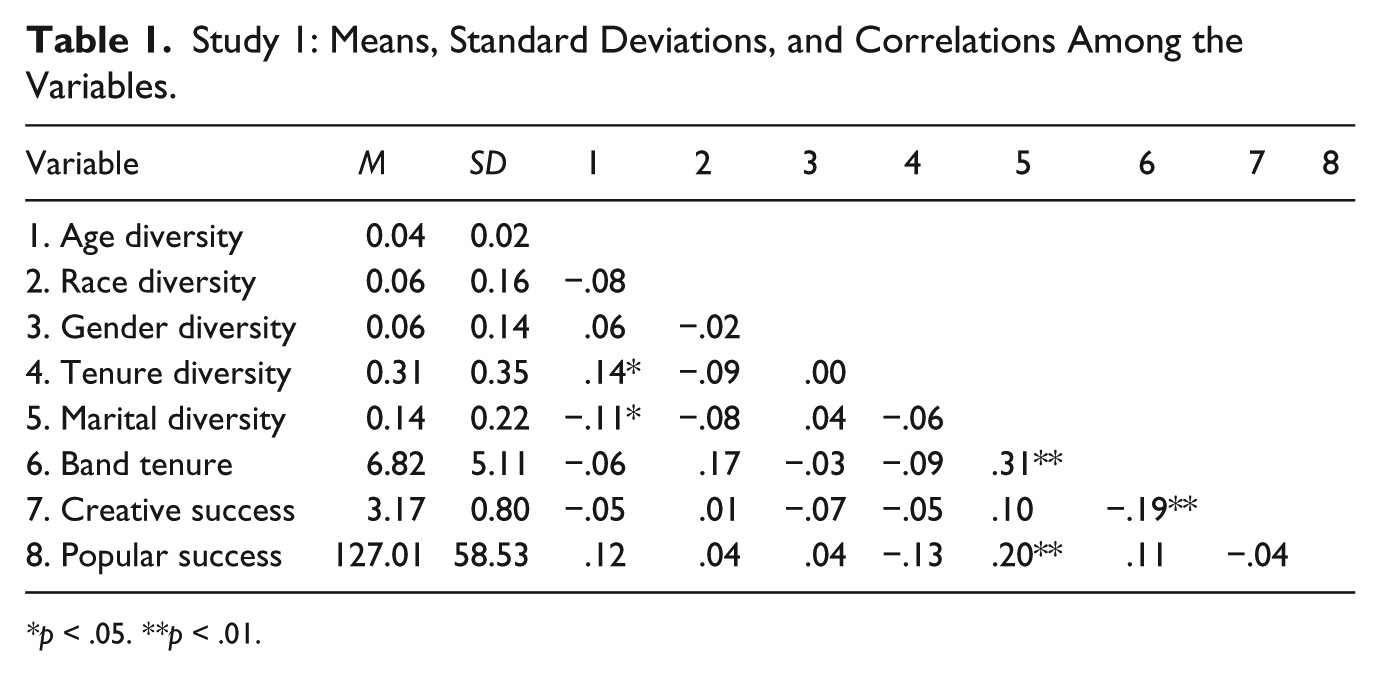
*p < .05. **p < .01.
Study 1: Multilevel Modeling Results Examining the Main Effects of MD and Its Interaction With Group Tenure.
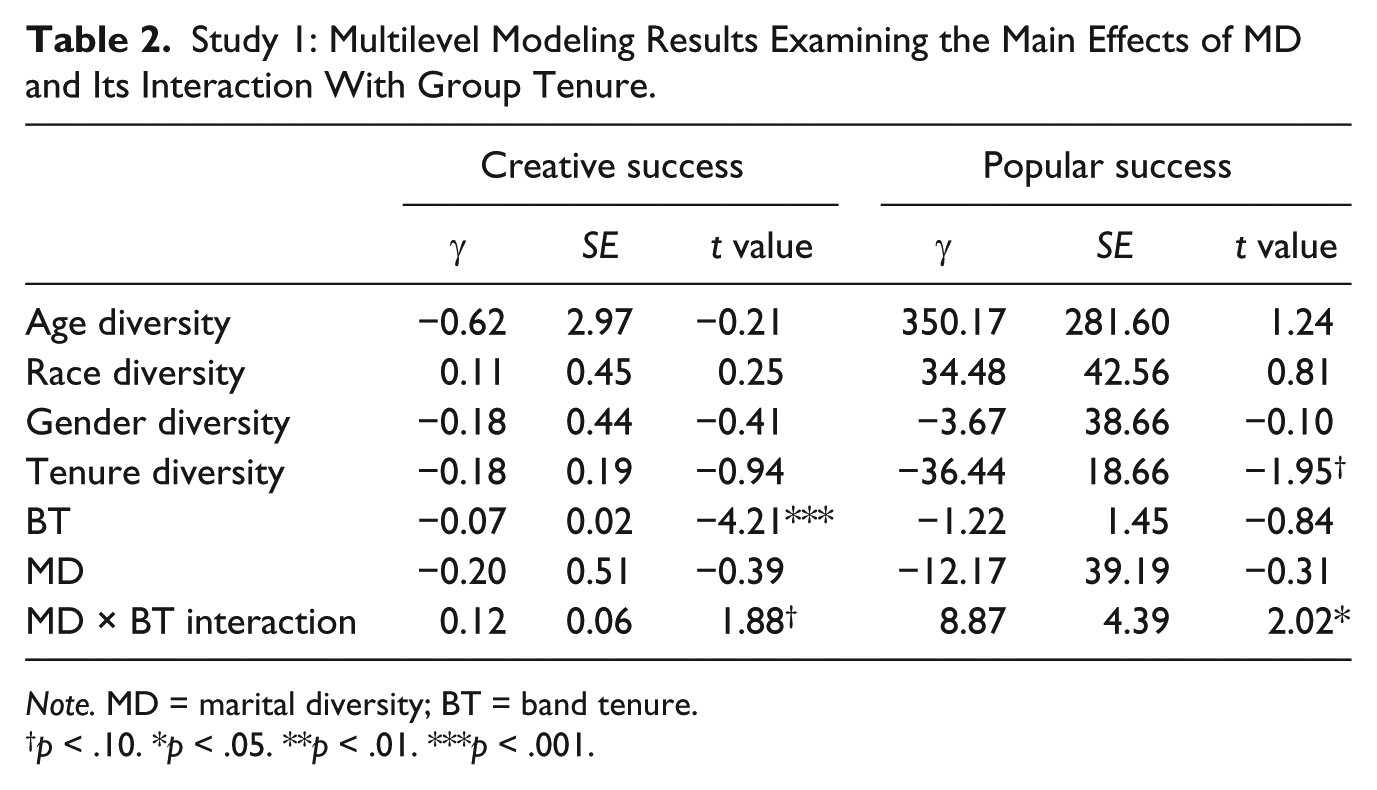
Note. MD = marital diversity; BT = band tenure.
p < .10. *p < .05. **p < .01. ***p < .001.
Results can be evaluated in Table 2. Beginning with creative success (the left half of Table 2), we see that none of the diversity variables exerts a main effect, though time (band tenure, row 5) is negatively related to creative success evaluations, γ = −0.07, p < .001 (the longer a band is together, the less creative success, as measured by critical reviews). Turning to the predictors of popular success (the right half of Table 2), we see one marginally significant negative effect of tenure diversity (γ = −36.44, p = .053) on this measure.
Our hypothesis predicted that the relationship between marital diversity and group performance outcomes will be moderated by time, such that marital diversity will be more positively related to performance outcomes (more creative success, more popular success) later, rather than earlier, in a group’s existence. This hypothesis can be evaluated by considering the information in the last row of Table 2. Evaluating the Marital Diversity × Band Tenure interaction, we see that this interaction is marginally significantly related to creative success (γ = 0.12, p = .062). The form of this interaction can be found in Figure 1. As seen in the figure, for long-tenured bands, the relationship between marital diversity and creative success is positive and significant (γ = 1.32, p = .032), but not for bands with short tenure (γ = −0.01, ns).
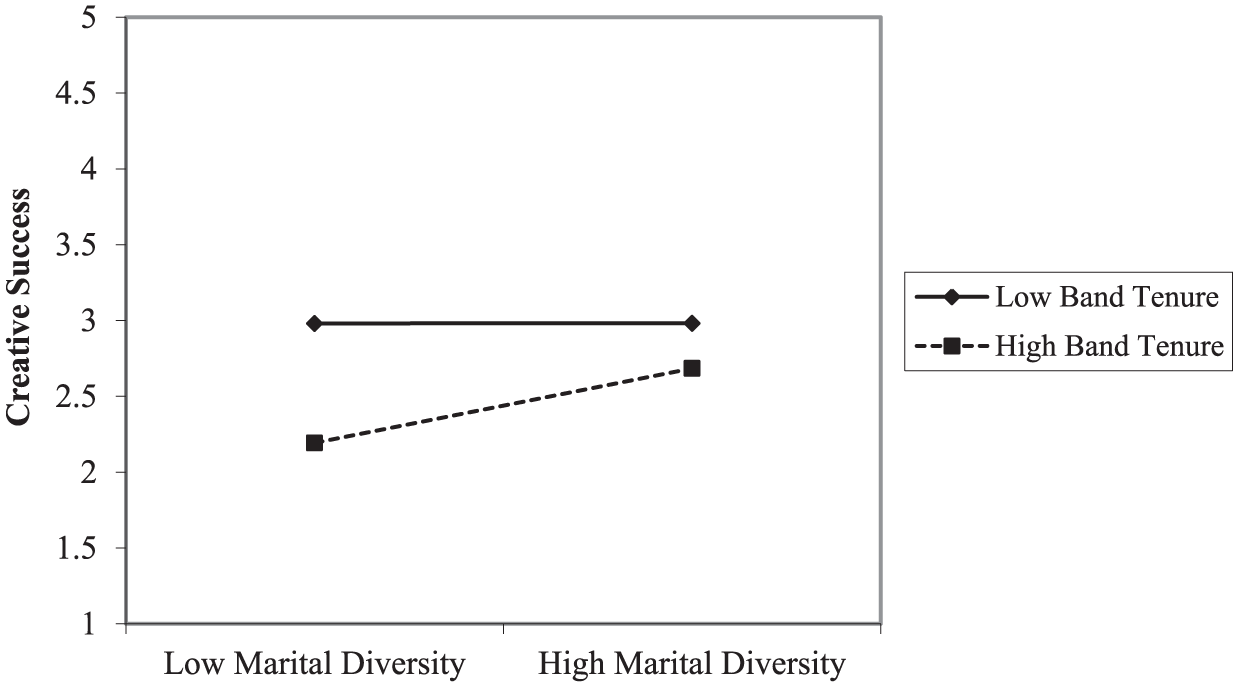
Study 1: The interaction of marital diversity and group tenure on creative success.
Turning to popular success, we see that our Marital Diversity × Band Tenure interaction was also a significant predictor of this performance measure (γ = 8.87, p = .045). The form of this interaction can be seen in Figure 2. Again, consistent with expectations, we see that for long-tenured bands, the relationship between marital diversity and creative success is positive and significant (γ = 93.07, p = .036), but not for bands with short tenure (γ = 71.44, ns). Thus, we find support for our hypothesis with our two performance measures.

Study 1: The interaction of marital diversity and group tenure on popular success.
Study 2
In Study 2, we examine how marital diversity affects group performance using a more traditional sample of MBA students developing semester-long projects. Obviously, there are numerous differences between the bands in Study 1 and MBA groups in Study 2. For example, MBA groups frequently do not self-select but are instead created by administrators who often strive toward a diversity goal based on social or informational characteristics (though not marital diversity). Thus, group members (and their diversity) are externally imposed on groups. In contrast, the bands in our first sample are self-created and self-selected. If a group determines its own membership, members are likely to be strongly committed to one another, as the decision was theirs and the choice, public. Volition and publicity are two of the key features noted by Salancik (1977) in his discussion of what makes people more committed to decisions and behaviors. In addition, the time horizon of the two samples differs. MBA groups know their time has a fixed end point measured in months, whereas our bands typically did not have a fixed end point and continued for years, sometimes decades, making the two samples very different in temporal stability, using the language of Hollenbeck et al (2012). Our samples also differ in terms of the work performed. Whereas the groups in our first study primarily engaged in what McGrath (1984) would describe as creativity tasks (conceiving material to record or perform) and performance/psycho-motor tasks (playing music in rehearsal or onstage), the groups in Study 2 primarily engaged in decision-making tasks. This expands the types of performance outcomes that we seek to relate to our form of lifestyle diversity.
In this study, we again consider how marital diversity influences performance (measured here as the group project grades received at the midpoint and end of the semester). If, despite the large number of contextual differences between Study 1 and Study 2, we continue to find that marital diversity interacts with time to affect performance, it would provide useful support for the validity and generalizability of our results.
Method
Sample description and procedures
This sample entailed 73 MBA student groups performing comparable organizational tasks over a semester. Group members consisted of 280 students at an Australian business school; they were primarily full-time employees in a part-time MBA program. Seventy-two percent were male and 42% were Australian (with 43 different nationalities represented in total). Prior to group formation, the diversity measures were collected. The following week, the groups were randomly formed by the instructors. The groups worked as consulting teams to various organizations throughout the entire 12-week semester on projects involving strategy formation and implementation in actual firms. For example, one group helped a mining corporation develop a plan for change management and conflict resolution strategies following a merger.
This project comprised most of the students’ grades for this semester-long course. Groups spent an average of 5.2 hr a week together working on the project and individuals spent an average of 6.3 hr a week on the group project component. The task included information collection, problem identification, analysis and recommendation development, and presentation to the organization, in addition to attending organizational meetings of their company. The participants reported biweekly on their progress and group meetings by completing questionnaires.
Measures
All the diversity measures (age, gender, racial, and marital; tenure diversity was a constant in this study) were measured in the same way as in Study 1. For each measure, a group-level diversity score was then calculated using Blau’s index, as recommended by Harrison and Klein (2007). Group tenure was a dichotomous variable, reflecting the time point when performance was measured (either mid-semester or end of semester). Performance of the group was measured at two time points during the semester (midterm report, final project/presentation). Two independent raters graded each product based on thoroughness of the problem identification, data collection and analysis, and summary recommendations. Because the two performance measurements were measured on different scales (at Time 1, 0-10, and at Time 2, 0-100), we standardized these two measures before comparing them in analyses. We also note that we did not have final performance data for nine groups.
Results
Table 3 presents the means, standard deviations, and correlations for the measures in Study 2, whereas Table 4 presents the results of our multilevel modeling designed to test our hypothesis. As can be seen in Table 4, and in line with results for creative success in Study 1, there are again no diversity main effects, though time (group tenure) was again negatively related to task performance (γ = −0.26, p = .047). In support of our hypothesis, the effect of marital diversity on group performance was significantly moderated by group tenure (γ = 0.64, p = .032), and Figure 3 reveals that marital diversity was marginally more positively related to group performance when group tenure was high (i.e., at the end of the semester, γ = 1.11, p = .055) and was unrelated to performance when group tenure was low (i.e., at the midpoint of the semester, γ = 0.16, ns).
Study 2: Means, Standard Deviations, and Correlations Among the Variables.
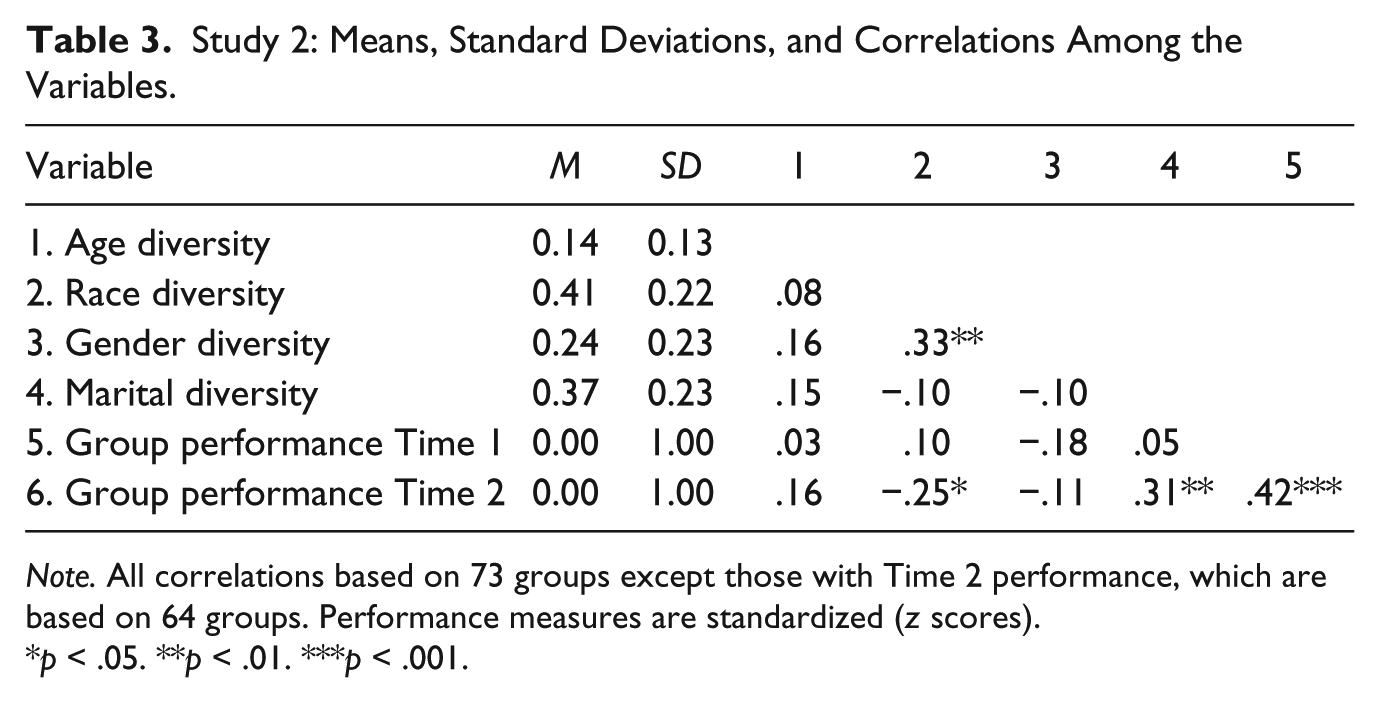
Note. All correlations based on 73 groups except those with Time 2 performance, which are based on 64 groups. Performance measures are standardized (z scores).
p < .05. **p < .01. ***p < .001.
Study 2: Multilevel Modeling Results Examining the Main Effects of MD and Its Interaction With GT.
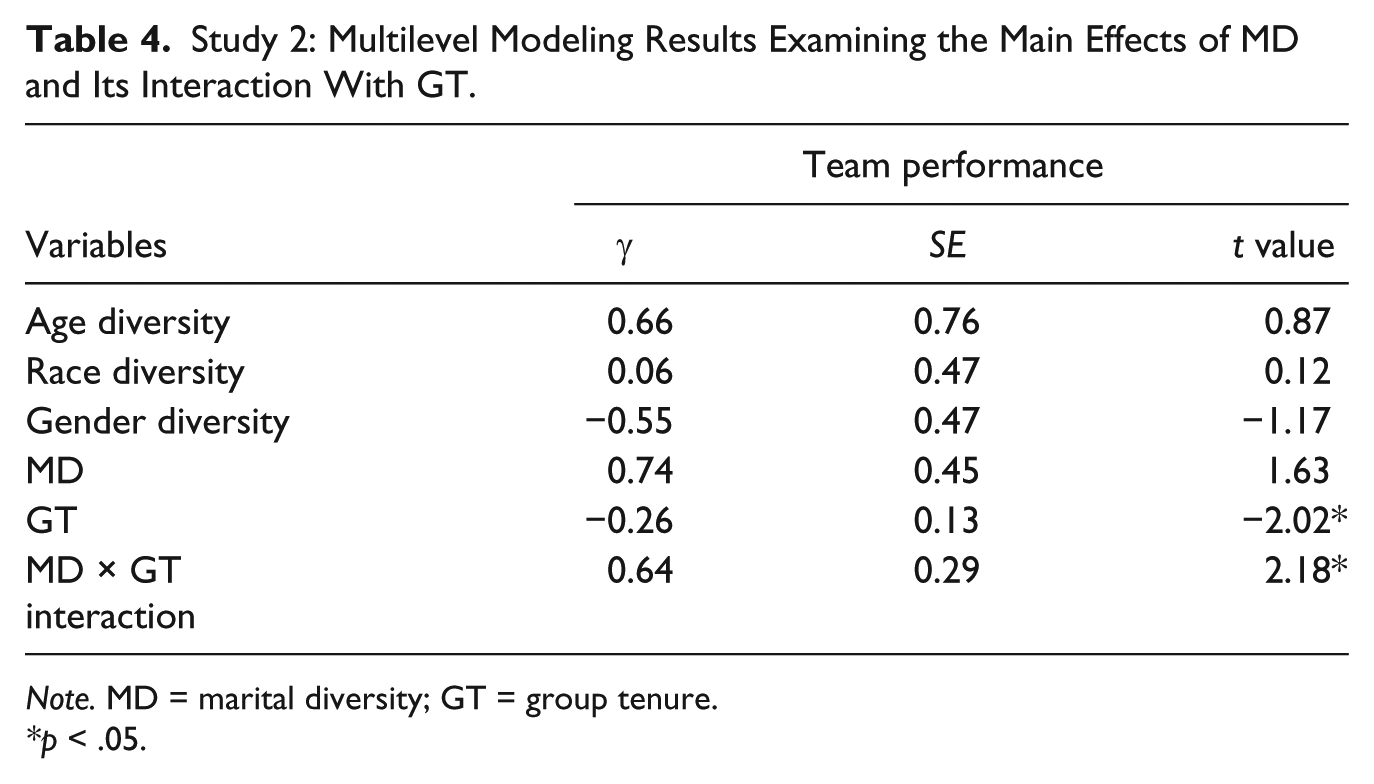
Note. MD = marital diversity; GT = group tenure.
p < .05.
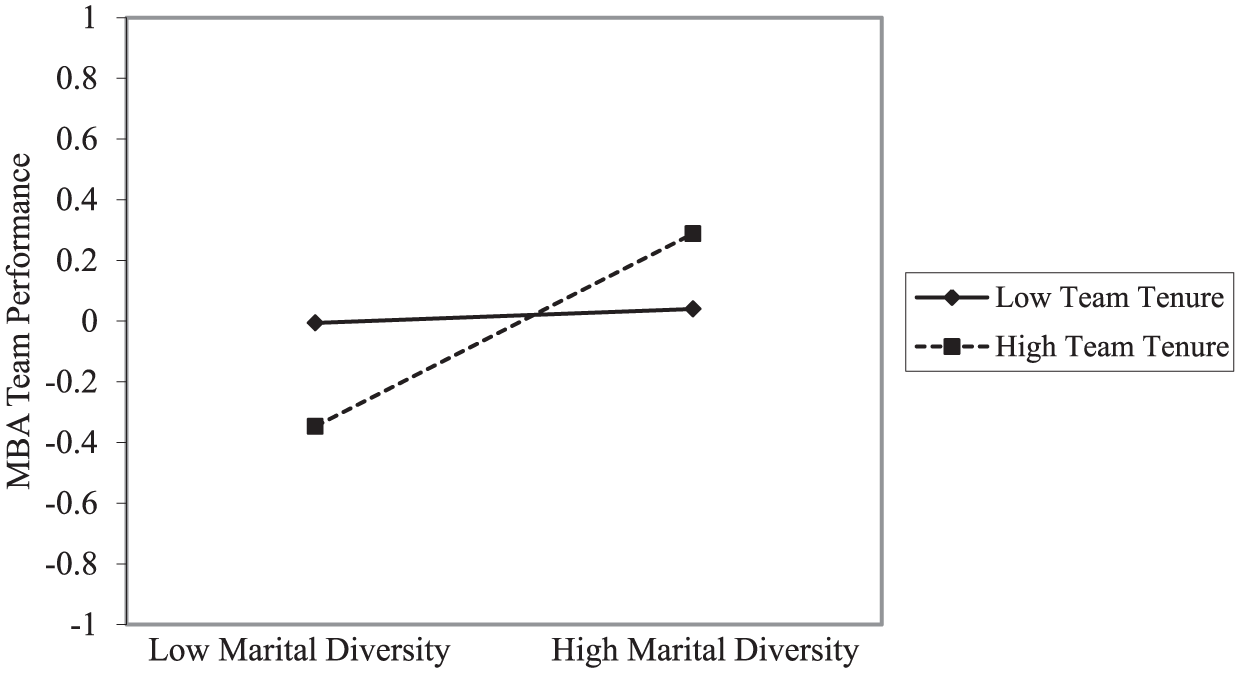
Study 2: The interaction of marital diversity and group tenure on team performance.
General Discussion
Many of the differences among people who may be critical to a team’s success are relatively ignored in organizational research (Joshi & Roh, 2009; Roberson, 2012), especially those related to employees’ lifestyles (De Wit, Greer, & Jehn, 2012). In this research, we introduced and examined the construct of lifestyle diversity, defined as differences among group members related to their way of life or manner of living (e.g., marital status). This perspective has been understudied in the organization behavior literature but is a very common difference confronted by team members and organizations (Clair et al., 2005). In addition, we contribute to the research on work group effectiveness and diversity by examining the relationships of marital diversity over time, another important, understudied aspect of groups and teams (Harrison et al., 2003; Hollenbeck et al., 2012), to determine when lifestyle diversity is most critical and beneficial to various outcomes. We find here across two very different samples—rock bands and MBA student project teams—that marital diversity, when considered simultaneously with the temporal characteristics of a group, matters.
Our results show that lifestyle diversity (measured here as marital diversity) can at times be useful for teams. Note that in our first sample, a historical sample of rock bands, marital diversity facilitated critical success (more positive reactions from music critics) as well as popular success (albums charting on the Billboard 200 list) for bands when they were later in their careers, while having no effect on bands earlier in their careers. In our second sample, using MBA students in a semester-long group project, the results were similar to those in Study 1, namely, that marital diversity enhanced team performance under conditions of high team tenure, whereas having little effect for low team tenure.
This suggests that lifestyle diversity, at least when operationalized as marital diversity, is generally positive for groups. This is particularly impressive when one considers the substantial differences across our two samples in terms of both temporal characteristics (our rock bands were together for years, if not decades, whereas our MBA teams existed only for 12 weeks) and how team performance was measured. We argued that the different backgrounds, experiences, and perspectives associated with different life situations and choices may help the members engage in deeper information processing and more divergent thinking, allowing for more creative and exciting end products and popular success with the public. In short, these groups were able to leverage their lifestyle diversity. They likely generated more alternatives given their varied resources and were able to make informed decisions that led to good outcomes. Lifestyle diversity allows for levels of optimal distinctiveness without threat and competition to promote collaboration and performance (Brewer, 1991; Russel et al., 2013). Groups are able to balance their needs for inclusion and distinctiveness (Leonardelli et al., 2010) to create sustainable and successful teams.
We also contribute to the growing literature on the temporal dynamics of teams (e.g., Hollenbeck et al., 2012) by showing that these positive effects of diversity on team performance may be most likely to occur later in the life of a team. In both our samples, marital diversity was positively related to the performance of teams with high tenure. We proposed this enhancement effect was because issues related to lifestyle diversity might be some of the last sources of difference to work themselves into the creative or performative aspects of a team’s work, due to their sensitive and, sometimes, controversial nature (Clair et al., 2005; Haidt et al., 2003). Given that groups often develop routines over time, it may be that the processes that caused success initially (e.g., leveraging task or informational differences) may become routine over time and that continued adherence to old routines that once worked will reduce the variety and initiative needed for creating new products and pleasing the public (e.g., Geletkanycz & Black, 2001). Lifestyle diversity offers groups a new, largely untapped source of inspiration that might help teams unshackle themselves from the chains of routinization. Thus, there may be increasing returns on lifestyle diversity and diminishing returns on other forms of diversity as time passes and as more creative outputs are produced.
Limitations and Future Research Directions
Obviously, our band sample is not the typical type of group studied in organizations, and our MBA teams also have limited similarities to intact work groups. However, we do find consistent results across both these divergent settings. In addition, each of these settings offered several unique benefits. For example, the team literature does not often examine the financial or commercial relevance of team outcomes. For example, of the 116 studies meta-analyzed by De Wit et al. (2012), only 13 included a team outcome related to financial performance. Thus, one contribution of our first sample is our attempt to go beyond expert ratings and calibrating financial performance in terms of popular success. In addition, the diversity literature often does not examine the longitudinal effects of groups working together over time, which both our samples address, one across years (and for some bands, decades) and the other across months.
As we only studied marital diversity, we must acknowledge that we still do not know whether other forms of lifestyle diversity, such as religion, substance (ab)use, or even differences in hobbies or other creative pursuits, might produce similar results. 1 The answer may well depend on the stereotypes and connotations held about that particular form of lifestyle diversity. In fact, it may well be that parental diversity (being a parent vs. not, and how many children one has) may be more influential than marital diversity. Such a construct may share more similarities to demographic diversity measures due to the relative permanence of parental status, when compared with marital status. We hope that such questions will be resolved over time by future research on other neglected forms of lifestyle diversity.
We also note that although our studies allow us to examine when marital diversity can facilitate group outcomes, our data cannot speak to the issue of why marital diversity influences group outcomes in teams that have been together for longer periods of time. Certainly, factors such as conflict, in terms of its management and expression, are ripe targets for investigation. For example, discussions about lifestyle differences may occur in a more indirect fashion and with less oppositional intensity than would discussions over demographic or job function differences (cf. Weingart, Behfar, Bendersky, Todorova, & Jehn, 2015). However, there may be many others. Although the present work focused on the identification of one important moderator, future work that examines mediators of these relationships will be necessary to better understand relationships between lifestyle diversity variables and group outcomes.
Finally, we recognize that characteristics of our samples (e.g., limitations inherent in archival data), small sample sizes (52 rock bands for Study 1, 63 student teams on which final performance data were procured in Study 2) and modest correlations between our diversity and performance measures will produce at best modest effect sizes. Nevertheless, small effect sizes can have important implications. For instance, we note from Study 1 and Figures 2 and 3 that for relatively older bands (high band tenure), moving from a standard deviation below to a standard deviation above the mean in group marital diversity is associated with an improvement of 31 positions on the Billboard 200 list, and just less than a half-star improvement in critics’ ratings. A higher chart position will have a positive financial impact (selling more albums does provide the group with more money), though the rankings cannot tell us with precision how much financial gain has occurred, as the number of albums that need to be sold to achieve any ranking position is not necessarily the same from one week to another. However, recent work using customer reports of music downloads has documented how small effects on individual purchase prices can have large implications for bands when those individual-level decisions are considered in the context of selling thousands (if not hundreds of thousands) of albums (Sleesman & Conlon, 2017).
Similarly, in Study 2, MBA teams with longer tenure and higher marital diversity received final project evaluations that were more than half a Z score higher than similarly tenured teams with lower (−1 SD) marital diversity, which may well have produced better final grades in the course. Thus, the data are relatively consistent for different types of tasks and different forms of evaluations.
Conclusion
In conclusion, lifestyle diversity is an understudied, yet important, factor in examining work group performance, creativity, and viability. Members’ differences can enhance the pool of information that increases team performance, especially in the long term of a group’s life. We close by noting that our results certainly paint a more favorable picture of the impact of diversity than has some prior work, and we hope we have encouraged other scholars to attack the topic of team diversity using a wider variety of measures and samples.
Footnotes
Declaration of Conflicting Interests
The author(s) declared no potential conflicts of interest with respect to the research, authorship, and/or publication of this article.
Funding
The author(s) received no financial support for the research, authorship, and/or publication of this article.