



Abstract
Synthetic biology is a newly emerging interdisciplinary field that aligns engineering principles with biological equipment for adapting life. This article describes an incremental rhetorical experiment to insert human-focused (ethical) equipment into a technical project that adapted a clustered regularly interspaced short palindromic repeat/Cas9 gene-editing system. This ethical equipment was inserted via a contemporaneous study of the public instantiation of synthetic biology. The findings from this experiment show that by enacting multiple representations, accounts of synthetic biology have elicited similar discourse forms and actions as prior emergent technologies. But the discourses associated with synthetic biology have not (yet) coalesced into stabilized forms, suggesting that synthetic biology has yet to be instantiated as formal practice, so its meanings remain alterable. This article concludes by documenting an attempt to influence this emerging interdisciplinary field with an integrated ethical narrative.
The emergence of a new technical practice or, in rare occasions, a potentially new field of scientific knowledge offers a unique and timely synthesis of rhetoric and technical communication. In 2004, one of us (Faber) had the opportunity to trace the emergence of nanoscience and technology over what became two decades of claims announcing this new scientific field, nanotechnology (Faber, 2006; Faber, MacKinnon, & Petroccione, 2005). As these claims would have it, nanotechnology was about to displace legacy fields of chemistry, biology, and physics; create new sources of plentiful and renewable energy; provide cures for unyielding diseases; and create a new generation of boundless agricultural and manufacturing products.
Tracing this new field had implications for technical and professional communication that were equally practical and theoretical. Practically, we could trace and learn from a flamboyantly successful marketing campaign that delivered approximately $21 billion in federal research funding between 2001 and 2015 and was more-or-less successful in situating a new discourse within historically stable and enduring technical practices. Theoretically, tracing the emergence of a new scientific technology contributed to an anthropological corner of the field often described as the rhetoric of science (e.g., Baake, 2003; Bazerman, 1999; Coppola & Karis, 2000; Gross, 1990; Harris, 1997; Hull, 1988; Kuhn 1962; Latour & Woolgar, 1979). Such work has remained interested in understanding the cultural (and acculturating) discursive processes that direct and inform scientific discovery. As such, this long-term study was able to show how efforts to instantiate nanotechnology aggregated relevant and, at times, irrelevant popular discourses. These aggregations were accomplished not so much to make future commitments as they were to practice various identities and public faces, what Burke (1966) might have called terministic screens, in order to manufacture acceptable popular, commercial, and academic (social) investments. Eventual discursive formations established what Hull (1988), in other contexts, had called “causal connections” that, often retroactively, ordered and formalized the field (p. 116).
As is often the case with dramatic insurgencies, nanoscience eventually became enfolded within nanotechnology, and both concepts became subordinated within the very disciplines their proponents had once anticipated displacing. We are not writing about failed efforts or intentionally false claims, as nanotechnology has indeed influenced engineering and science disciplines. The planned transformation was simply less revolutionary than what early discourses signaled.
A decade after the nanotechnology projects, over conversations about gene-editing technologies, clustered regularly interspaced short palindromic repeats (CRISPR), and a joint senior honors thesis proposal between biochemistry and writing to adapt a CRISPR/Cas9 (CRISPER-associated 9) gene-editing system to enable precise mRNA cutting and insertions of mRNA from Escherichia coli (E. coli) cells, we noted that much of the same machinery that hailed the nanotechnology revolution had resumed production in service of a new synthetic biology revolution. Recognizing multiple similarities between early nanotechnology discourse and what we were reading about synthetic biology, we designed a new study to complement and extend the nanotechnology project.
From the outset, we had multiple ambitions for designing a renewed iteration of this project. Rhetorically, we wanted to examine the extent to which the emergence of synthetic biology tracked similar discursive contours to those nanotechnology had tracked two decades earlier. We also wanted to see whether synthetic biology would follow the predictable forms and actions of instantiation that we had seen in prior technical rhetorics. Experimentally, as we will explain, we were interested in whether and how, working equally and simultaneously in biology and rhetoric, we could interpolate an ethical human-focused discourse into the technical practice, a result that proved unobtainable for the earlier nanotechnology work.
Instantiating Discourses
Instantiating discourses are specific rhetorical tools that enable new or revised human practices in order to achieve what Bazerman (1999) has called “stabilized representations” (p. 308). Studies have shown that discourses associated with change typically iterate through processes of emergence, instantiation, legitimation, and enforcement; that is, “change occurs as a transitional process in which advocates will initially destabilize a current network, introduce new elements into that network, and then re-stabilize that network with new meanings and practices” (Faber, 2007, p. 329). For example, studies have examined emergent discursive forms and events in what became microbiology (Halloran, 1984), electricity (Bazerman, 1999; Marvin, 1988), disease (fibromyalgia, Haller, 1998), genetic medicine and commercial pharmacogenomics (Rabinow, 1999; Turner, 2005), analytics (McNely, 2012; Pflugfelder, 2013; Salvo, 2012), the craft beer industry (Rice, 2015), and proposals to crowdfund scientific research (Mehlenbacher, 2017). These studies have shown novelty to be simultaneous processes of discursive, human, and material aggregation. At the discursive level, this research has looked at how stabilized representations were able to successfully aggregate historical, cultural, and material forms in order to provide explanatory power, justification, and reinforcement for “the new” human practices.
Rather than depict change as instantaneous, reactionary, or immediately disruptive, such studies have shown that displacement typically occurs incrementally and across multiple spaces. Stabilizing representations compete with and, if successful, eventually displace existing knowledge and practice. The new becomes instantiated as an aggregation of discursive forms and events and material practices that mark the emergence as legitimate, necessary, and eventually, natural. Our recognition of change as an incremental process informed this project’s experimental objective. Rabinow (1999) has observed that humanistic inquiries related to synthetic biology (and we would extend this critique to other new technologies such as nanotechnology and big data) have remained largely external to the science itself. He articulated two implications of this externality: [First], the work on exploring, constructing, discovering, and inventing “the genomic” is left to scientists and physicians (whose striving for advancing knowledge and health always carries the potential for excess) as well as to venture capitalists and the large multinational pharmaceutical firms. (p. 110)
Rabinow and Bennett (2012) argued that humanists’ contributions to new technologies have been less significant because ethical and other human-facing discourses are imposed either as guidelines restricting scientific practice or as after-the-fact critiques of scientific excess or malfeasance: “Many bioscientists and bioethicists hold the view that the role of ethics is principally to restrict scientific excess.” This view, they continued, “tends to presume that the most urgent problems can be known in advance of ongoing scientific practice and that concerns arise primarily from the use of technology.” They further argued that such a presumption “limits understanding of how past problems bear on contemporary situations” and “undervalues the extent to which ethics can play a formative role in the very development of both biological and human science and technology” (p. 4). The outcomes of such perspectives are isolated and siloed discourses—ethical discourses that remain bracketed from actual scientific and technical practices—and emergent technologies operating without simultaneous ethical collaborations.
These critiques were indeed relevant to Faber’s nanotechnology project because his teaching, publications, and presentations—when directed alternatively to engineering, humanities, news media, and technical communication audiences—were situationally framed by himself, editors, and organizers to accommodate that specific audience’s expectations for relevance to the rhetoric, manuscript editing, public relations, and public dissemination of the engineering accomplishments. The externality of this work was made most apparent when, after having been included to address the broader impacts within a nanotechnology research proposal while teaching at a large land-grant university, Faber’s team was abruptly removed from the grant once the funding was received in order to sponsor an additional engineering graduate student. In short, the engineers on the project could not fathom what humanities faculty could contribute to a nanotechnology project, and the humanities leadership could not comprehend why humanities faculty would work with engineers.
Regardless of who might be to blame for such blunders, Rabinow (2003) has suggested that new sciences that promise to fundamentally alter our understanding of what constitutes human must be met and engaged with new and different humanist tools. Arguing that our existing machinery for developing ethical and human interventions was formed for a different time and different set of problems (p. 29), Rabinow and Bennett (2012) challenged humanists to engage new technologies “not through the prescription of moral codes, but through mutual reflection on the practices and relationships at work in scientific engagement and how these practices and relationships allow for the realization of specified ends” (p. 5). What they envisioned is a mutually constituting and integrated ethics that occurs simultaneously with science.
Technical communication, in its various iterations, can be both embedded within and estranged from the humanities. Yet our assignations within the humanities have placed us, as nominal humanists, closer to engineering and the sciences than are most of our humanities colleagues and in spaces that Rabinow and Bennett (2012) envisioned for mutual collaboration. At the same time, we went into this project not yet convinced that when it comes to the sciences of human alteration, our field has forged what Rabinow (2003) would call “the right tools for the right job” (p. 29). To be clear, we are not proposing here a new theory, a reenvisioning, a radical departure, or a grand question, the sorts of tools that Rabinow suggested belong to a different set of problems (pp. 30–31). Instead, we offer a study of the early instantiation of synthetic biology in public discourse that was intended to experiment with potential points of entry: to introduce the science of synthetic biology to technical communication, to explore potential sites for meaningful edits within the still-to-be instantiated forms of synthetic biology, and to forge incremental new equipment for working internally rather than externally on the human problems that genomics and synthetic biology pose.
Synthetic Biology: An Engineering Aggregation of Biological Forms
Synthetic biology, colloquially known as synbio, like nanotechnology in the 1980s, is a newly emerging interdisciplinary field that deploys engineering principles to devise new biological equipment for adapting life. While stabilized representations of synthetic biology have not yet reached formal consensus within the scientific community, synthetic biology’s centripetal force as an emerging science appears to be reaggregating considerable research across the life sciences. Stephane Leduc (1853–1939), whose la biologie synthétique (1912) claimed that structures he obtained through osmotic growth and diffusion created forms similar to living systems and as such constituted “synthetic” life, has been attributed with making synthetic biology a recognizable term (Clement, 2015; Tirard, 2009). Claiming that biology was a subset of fluid physics, Leduc’s experiments with pressure gradients became associated with mechanical spontaneous generation and self-organization. His claims that physical forces alone could organize living matter disputed both principles of vitalism and key material and ontological distinctions between organic and inorganic matter. As an apparent consequence, the term synthetic biology and the concept as a scientific practice never achieved stability and lost influence throughout most of early 20th-century science (Clement, 2015, p. 7).
A contemporary understanding of synthetic biology emerged during the 1970s when geneticist Waclaw Szybalski described the “new era of synthetic biology” as one “where not only existing genes are described and analyzed but also new gene arrangements can be constructed and evaluated” (Szybalski & Skalka, 1978). Unlike Leduc, Szybalski did not attempt to synthesize life within inorganic structures but instead proposed using laboratory practices from genetic engineering to introduce new components within genomes in order to create novel organisms.
In the 1990s, working with discoveries resulting from the Human Genome Project, researchers experimented with splicing control mechanisms into the bacterium E. coli’s genetic code. The first synthetic biological circuits were created in E. coli in 2000 in two separate projects. At Boston University, Gardner, Cantor, and Collins (2000) created a synthetic toggle switch by cutting and pasting genes, and at Princeton University, Elowitz and Leibler (2000) created a similar switch but within three genes that cyclically inhibited each other. A decade later, Venter (2011) rebuilt a bacterial genome and inserted the synthesized structure into the nucleus of a different bacterium. His project was able to show that a cell could function with an artificially synthesized genome (see also Akst, 2011). Figure 1 presents major milestones and key players (stabilizing events) in the advent of synthetic biology from 2000 to 2015 (Cameron, Bashor, & Collins, 2014; Mali et al., 2013; Purnick & Weiss, 2009; Specter, 2009; Zimmer, 2006).
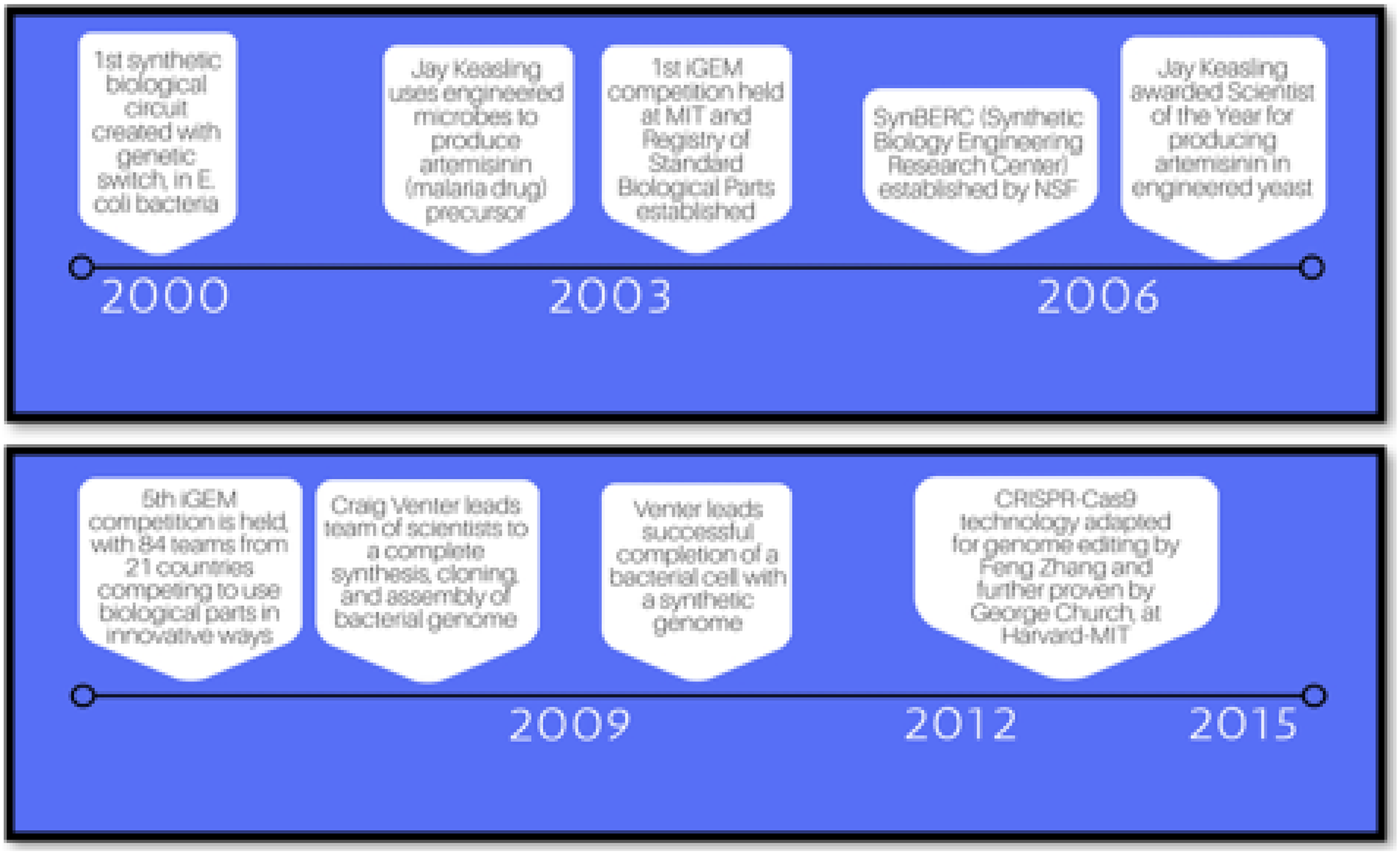
Stabilizing events in synthetic biology.
Early conceptual projects in synthetic biology have become materially possible through advanced gene-editing technology such as the CRISPR/Cas9 system, higher rates of industry-produced DNA, and improved and reiterated molecular manufacturing laboratory methods (Akst, 2011). Institutionally and disciplinarily, proponents of synthetic biology have claimed that these new techniques effectively remake biology into an engineering discipline (Rabinow & Bennett, 2012, p. 3). This claim brings with it destabilizing claims about the utility and value of a science that is divergent from engineering as well as issues regarding hybridization, new beings, and the rightful limits of manipulation.
Methods of Data Collection and Analysis
Our data collection methods were based on Faber’s (2006) prior nanotechnology study with the alteration that Codding was simultaneously working in a synthetic biology lab attempting to develop methods for editing mRNA in order to address known technical problems related to expression and toxicity.
Synthetic biology began to generate sustained attention in popular media reporting in 2006. The nanotechnology study collected any article using the terms nanotechnology or nanoscience in its text, but that process resulted in an overwhelming number of duplicate articles. To simplify the data collection process, we limited our search to two national sources, The Washington Post and New York Times, and eight regional sources corresponding with known synthetic biology research centers, The Boston Globe, San Jose Mercury News, Chicago Tribune, Orlando Sentinel, Houston Chronicle, Seattle Times, Los Angeles Times, and The Day (New London, CT). We selected the 10-year time frame from January 1, 2006, to December 31, 2015, because it represents a growth period in synthetic biology’s contemporary popular emergence and potential instantiation as a scientific practice. Our keyword search term was synthetic biology, and we limited our data set to those articles that had their full text available online.
At the early stage of the research, we were familiar with Rabinow and Bennett’s (2012) challenge for humanists to engage new technologies and took it up as our own. But we did not yet have sufficient data about the historical instantiation of synthetic biology to understand or anticipate if or how we could do so. We determined that this challenge would remain part of our weekly research meetings, but any potential intervention would become dependent on the study’s eventual findings.
The first search with these parameters generated a total of 563 articles. Codding read each abstract and article, eliminating duplicate articles and those not considered relevant to the scientific field or representation of synthetic biology (in the case of duplicates, the earliest article was selected). The final data set consisted of 162 articles. Table 1 displays the number of articles in the data set by newspaper and by year.
Synthetic Biology Article by Source and Year.
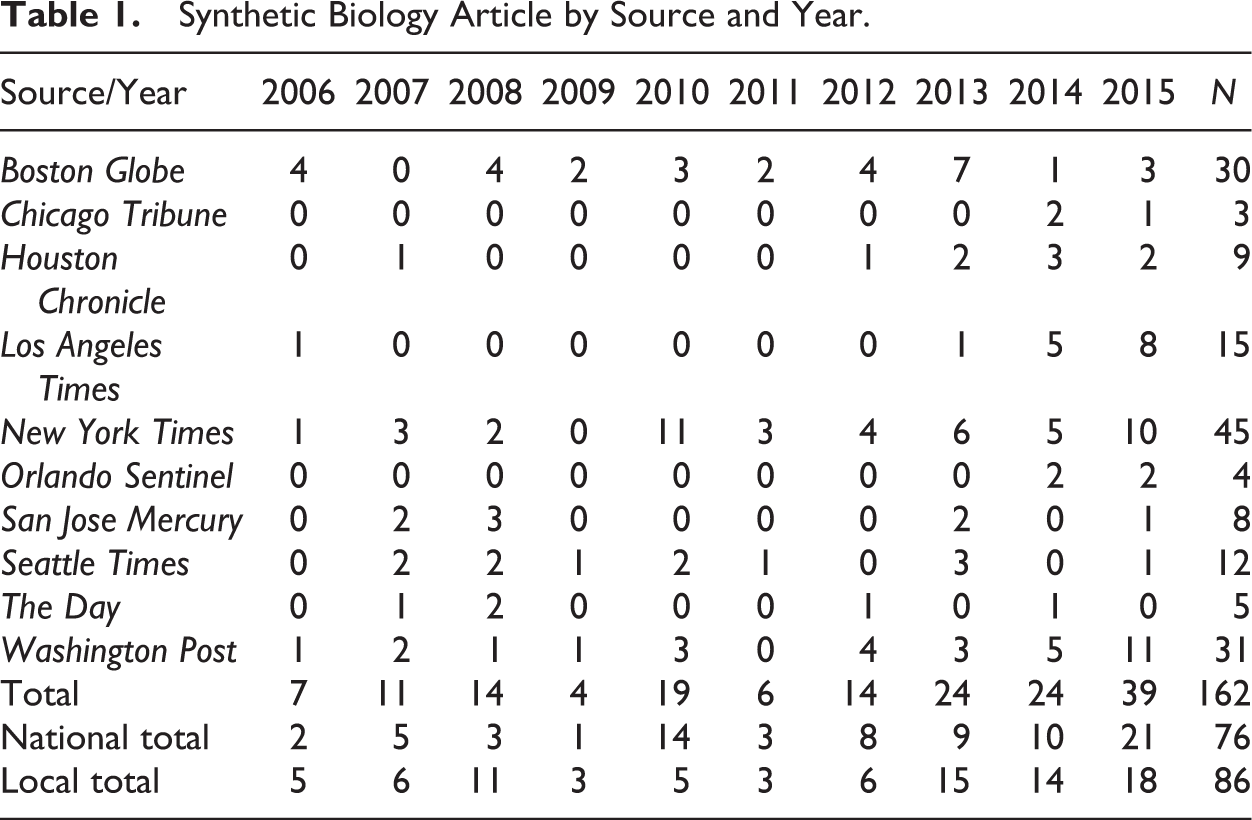
Our “keep rate” using the more selective initial criteria was higher (29%) than that for Faber’s nanotechnology study (23%), and the data sets were comparable, considering the synthetic biology study covered 10 years and the nanotechnology study covered 13 years. Articles in the synthetic biology data set ranged from a few sentences to 16 pages in length. Figure 2 shows the number of articles about synthetic biology by year.
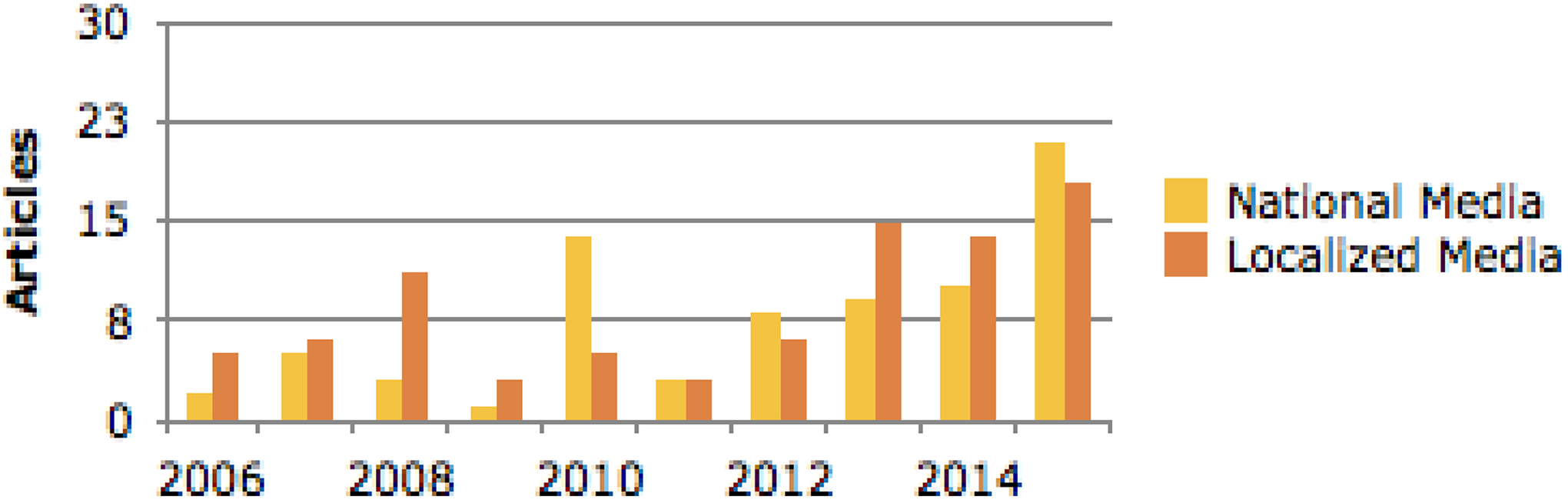
Synthetic biology articles by media type (local/national) and year.
First, we examined the articles to see whether they presented a primarily positive, negative, neutral, or mixed (both sides) value claim about the emerging science. Then, we examined the articles in order to categorize the prominent topics or representations aggregated to synthetic biology. As we examined each article, we compiled the representations that emerged contextually from the data (Huckin, 2002, 2004). Following the methods developed for the nanotechnology study, we examined theme and rheme as clausal constituents within each sentence, identifying and recording dominant topics within each clause. Our unit was semantic. For example, representations could include practical applications of the science, existing sciences affiliated with synthetic biology or from which it emerged, biographical accounts of prominent scientists working in synthetic biology, social or cultural events associated with the science (competitions, grants, policies, and regulations), or other similar formations. We were conservative and descriptive in generating these representations. In most cases, the representation was the vocabulary used (“genetic engineering,” “biofuels/energy,” “genetic circuitry”) in the text. In aggregated representations, the vocabulary needed to be semantically tied to the aggregating term. For example, the medical applications representation aggregated terms such as “health,” “cancer,” “drugs,” “physicians,” or “medical.” The bacteria representation would aggregate “bacteria” or specifically identified bacteria, such as E. coli.
Finally, we examined the context of each article to ensure that we agreed with each other’s topic interpretation. This process was initially conducted over 4 weeks on a training set of randomly selected articles from our data set. Each of us coded a duplicate set, and we compared our results. The training continued until we consistently achieved agreement on the representations in any selected article. After training, we coded the full data set and reviewed coded articles for accuracy each week.
After generating a list of 24 representations from the data set, we returned back to each of the 162 articles to record which representations occurred in each article (an article could include more than one representation); when, temporally, the representations emerged; and how (or if) representations endured over the study time frame. We then arranged the representations into three categories: high count (N ≥ 39 occurrences), moderate count (N ≥ 26 and ≤ 38 occurrences), and low count (N ≤ 25 occurrences) across the entire data set. We then returned to the 2006 nanotechnology study (Faber, 2006) to compare the representations associated with both sciences (nanotechnology and synthetic biology) as they initially emerged in popular media.
Our hypothesis throughout this study was that synthetic biology would initially emerge with an increasing number of possible representations. Over time, these representations would compete for legitimacy, and eventually several would stabilize while others would dissipate. The stabilized representations would persist as instantiated representations, at that point marking the transitional discourse from emergent to instantiated.
Empirical Findings: Positive Value Claims and Representations
Our analysis of value claims in the newspaper coverage of synthetic biology showed that overall the articles maintained a positive but nuanced depiction of the science. Figure 3 shows the percentage of articles that had positive, negative, both positive and negative, or neutral coverage by year. Between 2007 and 2009, no overtly negative accounts were proposed, and the average amount of negative representations in 2006 and 2010 through 2015 combined was just 13%. The trend, then, appears to be toward positive depictions, but a sufficient amount of nuance in value claims persisted from 2012 to 2015 to suggest that by 2015, the value of synthetic biology had yet to be fully stabilized as being beneficial or positive in the popular science media.
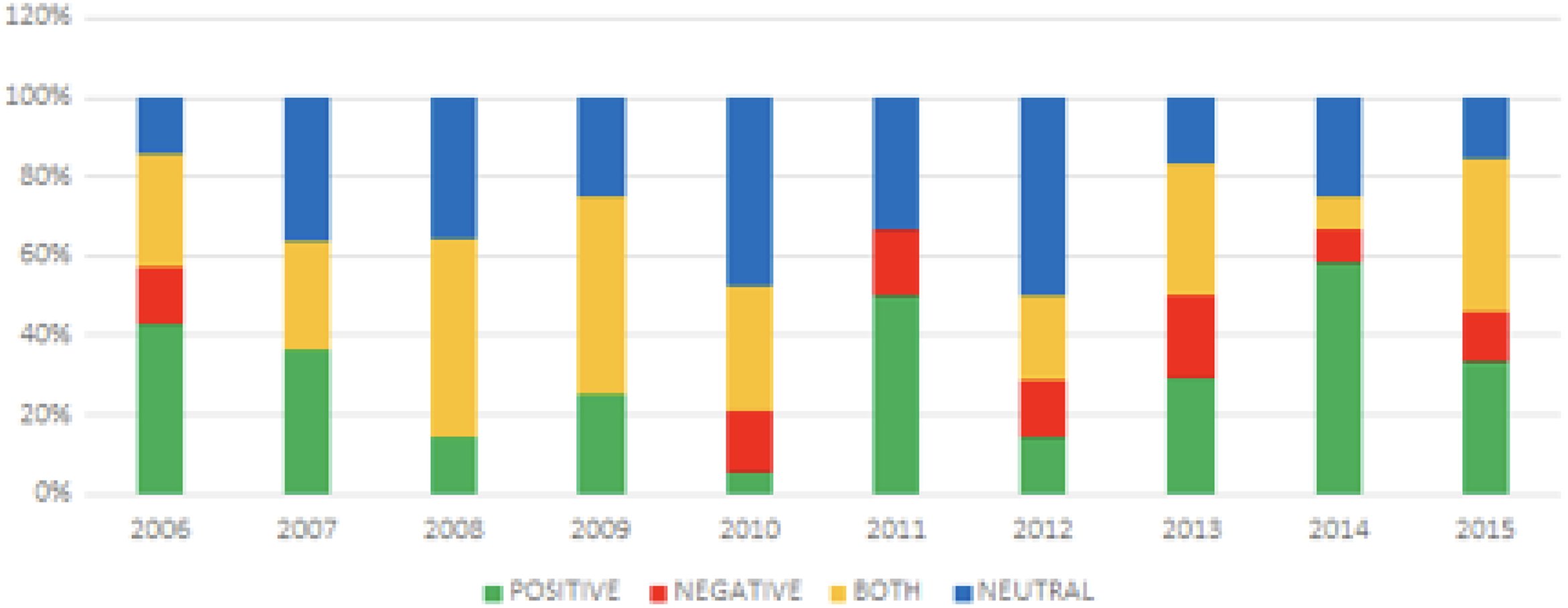
Nuanced representation of synthetic biology value—positive, negative, both, and neutral.
The 24 representations that were aggregated to synthetic biology occurred a total of 764 times. A representation, on average, appeared in 32 different articles, and the articles, on average, each contained 7 different representations. We categorized these representations according to their number of occurrences in the articles: For each category, we show the total number of occurrences, any occurrence by year, and the percentage by year for each representation.
High-Occurrence Representations
Table 2 lists the seven high-occurrence representations (N ≥ 39), and Figure 4 shows any occurrence for these representations by year (2006–2015). Representations with high occurrence appeared in each of the 10 years from 2006 through 2015. Synthetic biology was represented most prominently as medical applications (68 occurrences) and genetic engineering (63 occurrences). As Figure 5 shows, five of the seven high-occurrence representations (medical, genetic, policy, bacteria, and environmental applications) increased their occurrences and became substantially more prominent by 2015, but their prominence appears sporadic and not cumulative. The representations for biofuels/energy applications appeared to peak in 2007 and 2008, and genetic circuitry (standards and parts) peaked in 2008 but appeared to again gain interest in 2015.
Synthetic Biology: High-Occurrence Representations.
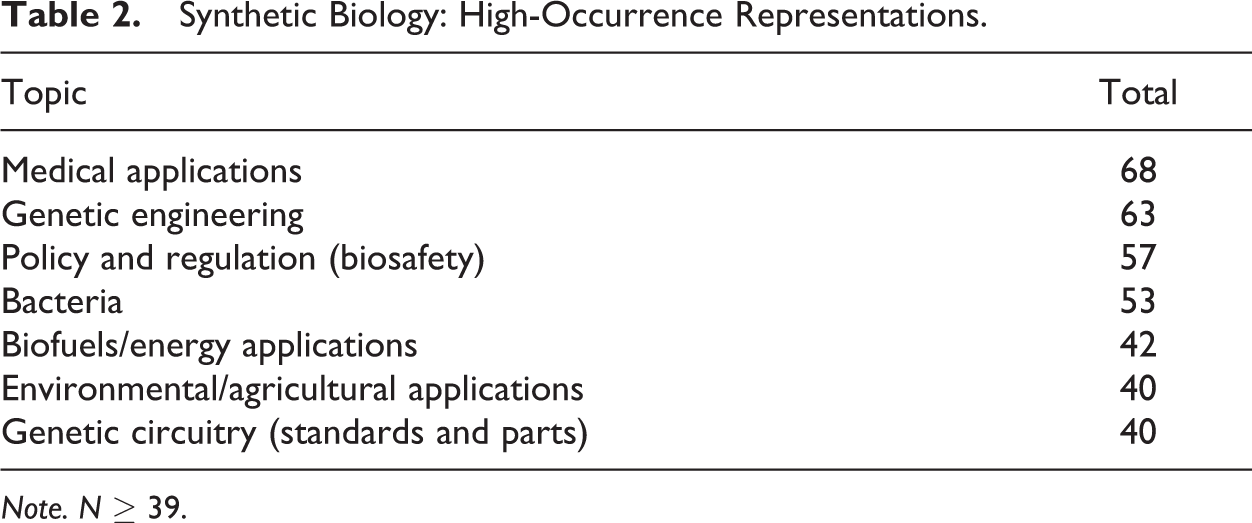
Note. N ≥ 39.
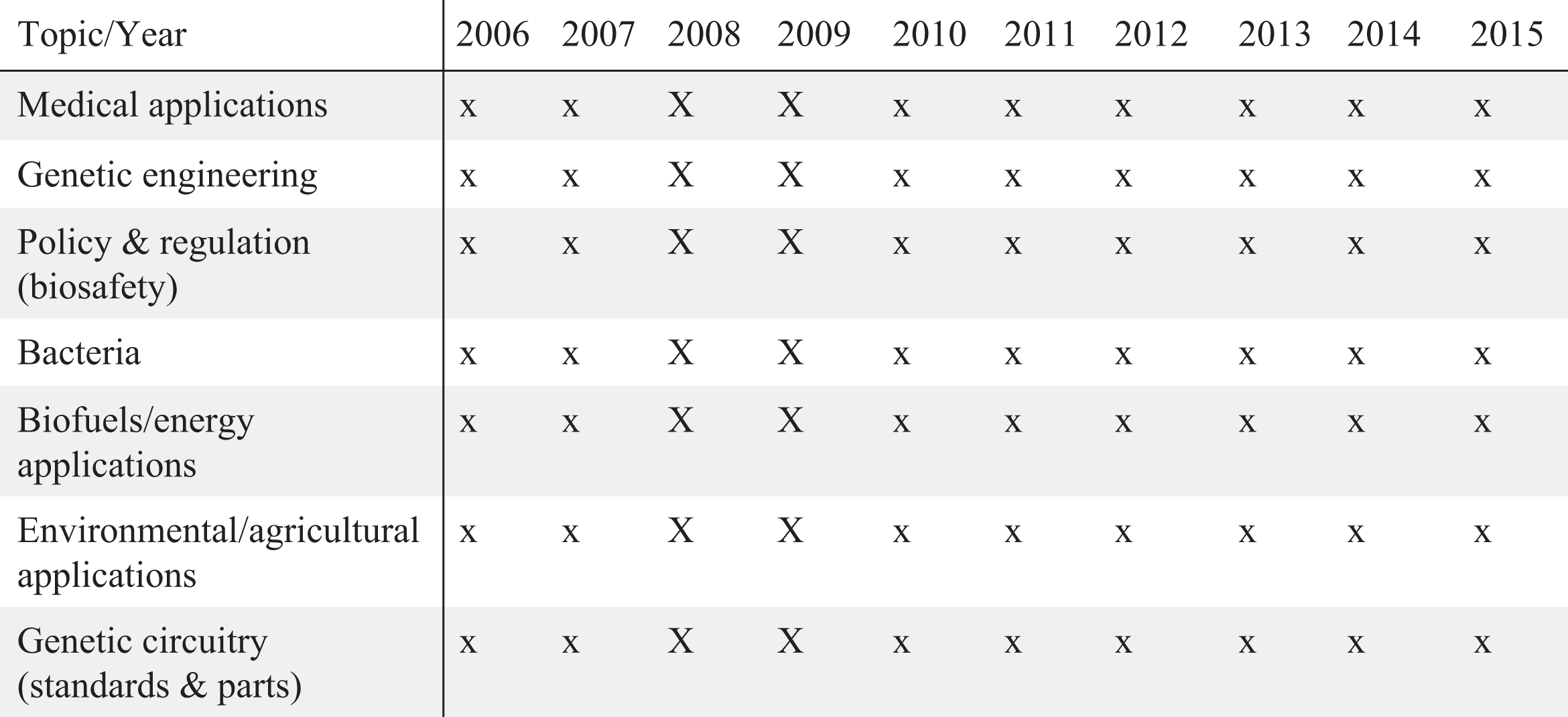
Any mention of a high-occurrence representation (N ≥ 39) by year.
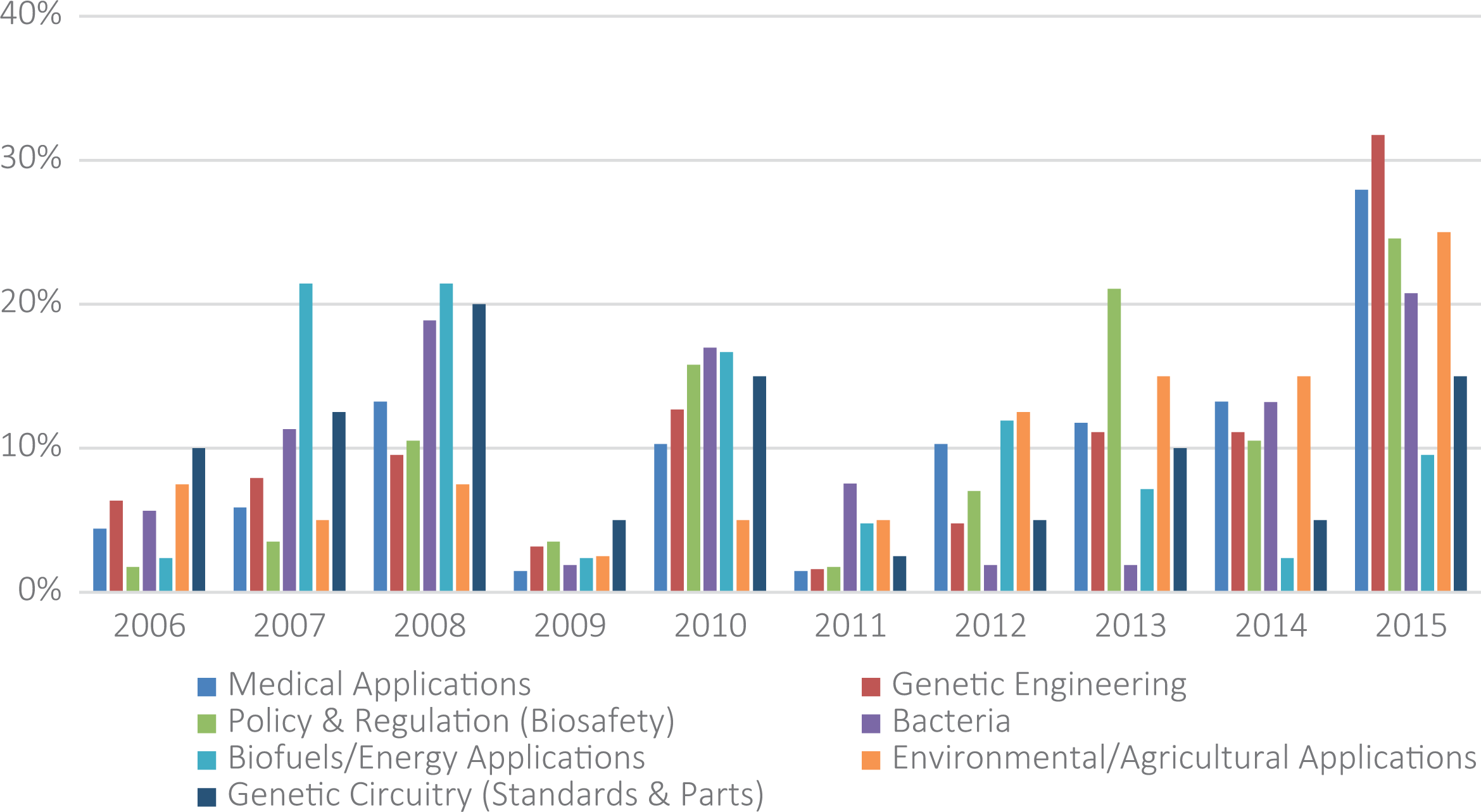
Percentage of mentions for representations with high occurrences by year.
Moderate-Occurrence Representations
Table 3 shows the eight moderate-occurrence representations (N ≥ 26 and ≤ 38), and Figure 6 shows any mention of these moderate-occurrence representations by year. Moderate-occurrence representations were more sporadic, and only industry and funding/investment and competition persisted, if in low numbers, across the entire data set. As Figure 7 shows, industry and funding, genetically modified organisms (GMOs) and foods, morality (bioethics), and globalism increased in their mention toward 2015 whereas competition, synthesizing artificial life, biographical accounts of scientist Craig Venter, and bioterrorism decreased. Figure 7 shows the percentage of mentions for each moderate-occurrence representation by year.
Synthetic Biology: Moderate-Occurrence Representations.
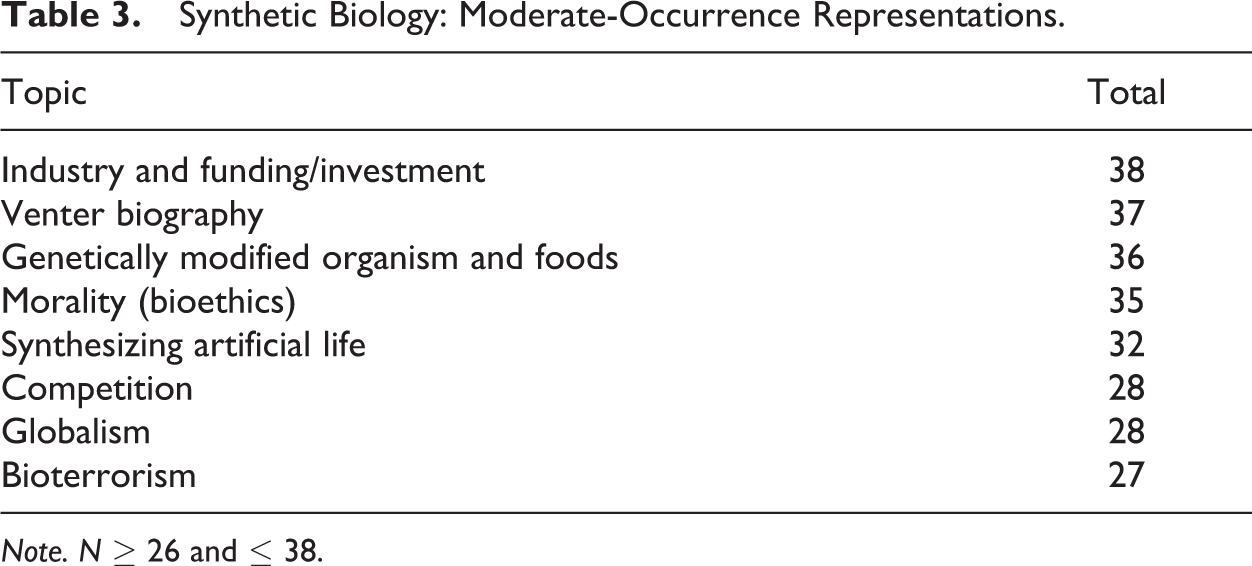
Note. N ≥ 26 and ≤ 38.
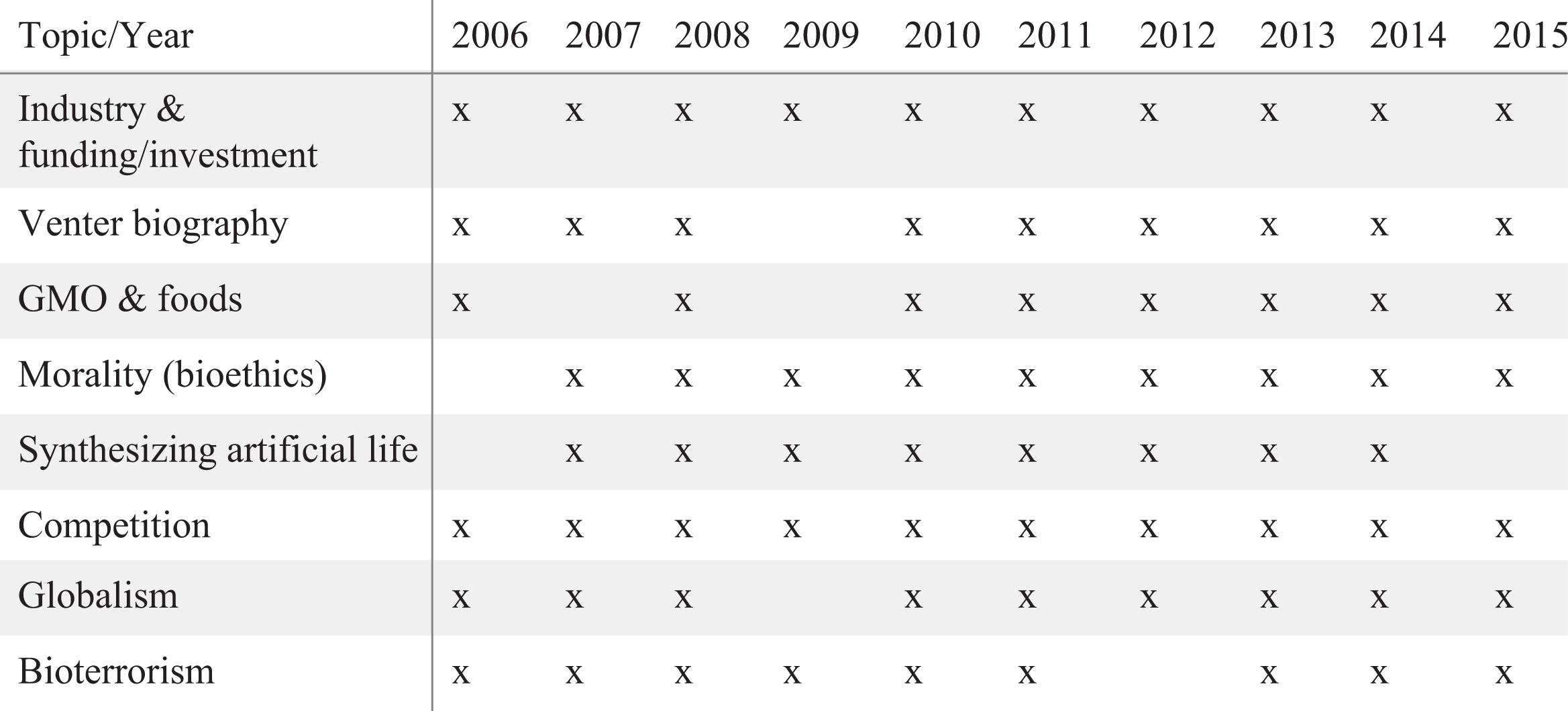
Any mention of a moderate-occurrence representation (N ≥ 26 and ≤ 38) by year.
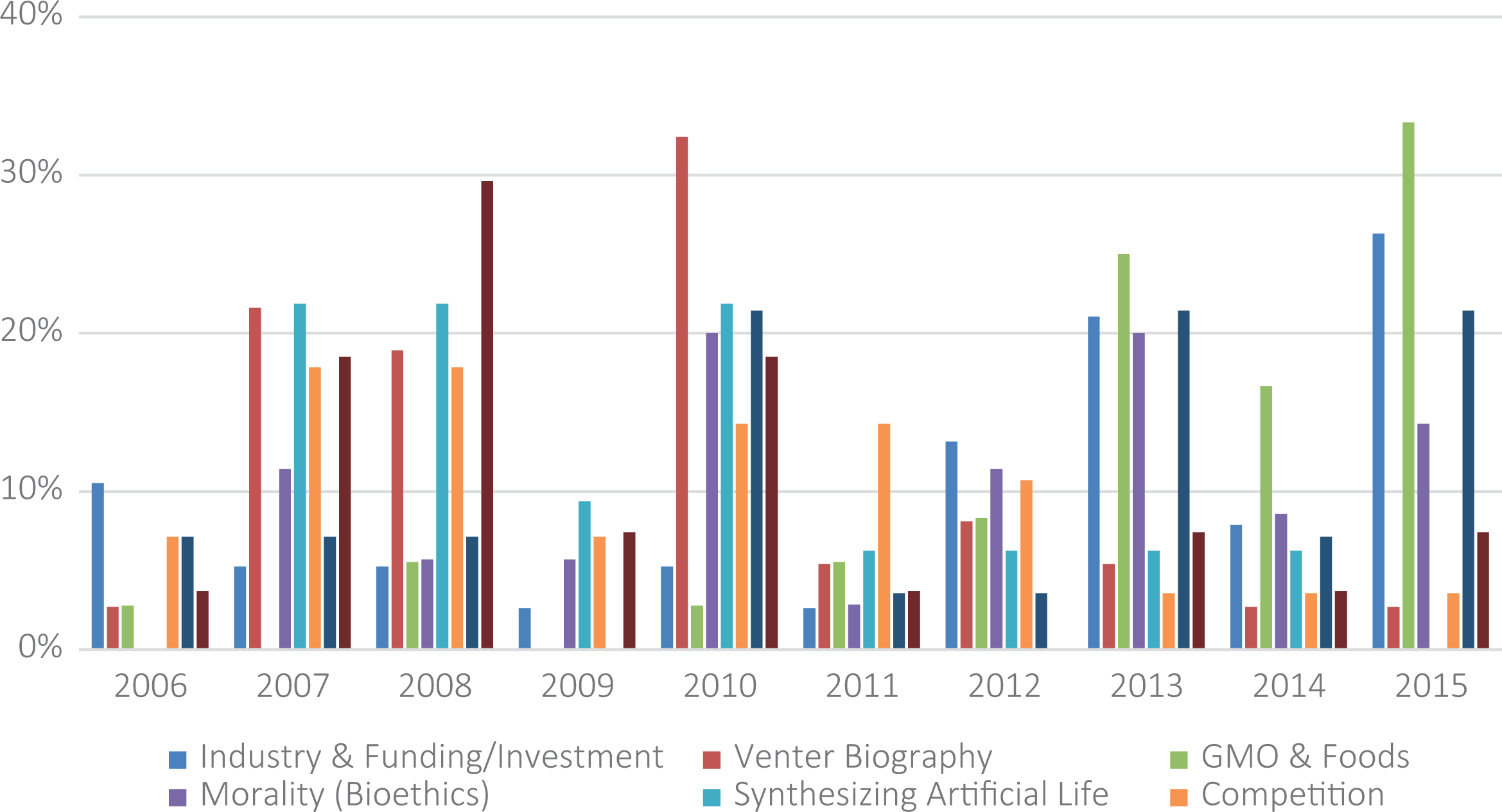
Percentage of mentions for representations with moderate occurrences by year.
Low-Occurrence Representations
Table 4 shows the nine low-occurrence representations (N ≤ 25 occurrences), and Figure 8 shows any mention of a low-occurrence representation by year. Low-occurrence representations were also sporadic, with 2013 being the only year in which each of these low representations occurred. None of the low-occurrence representations persist throughout all of the years. Figure 9 shows the percentage of mentions for each low-occurrence representation by year. Despite their limited appearances, most of these less enduring topics generated increased occurrences from 2013 through 2015. We discuss this pattern, which suggests a possible experimentation with new representations, in the following section.
Synthetic Biology: Low-Occurrence Representations.
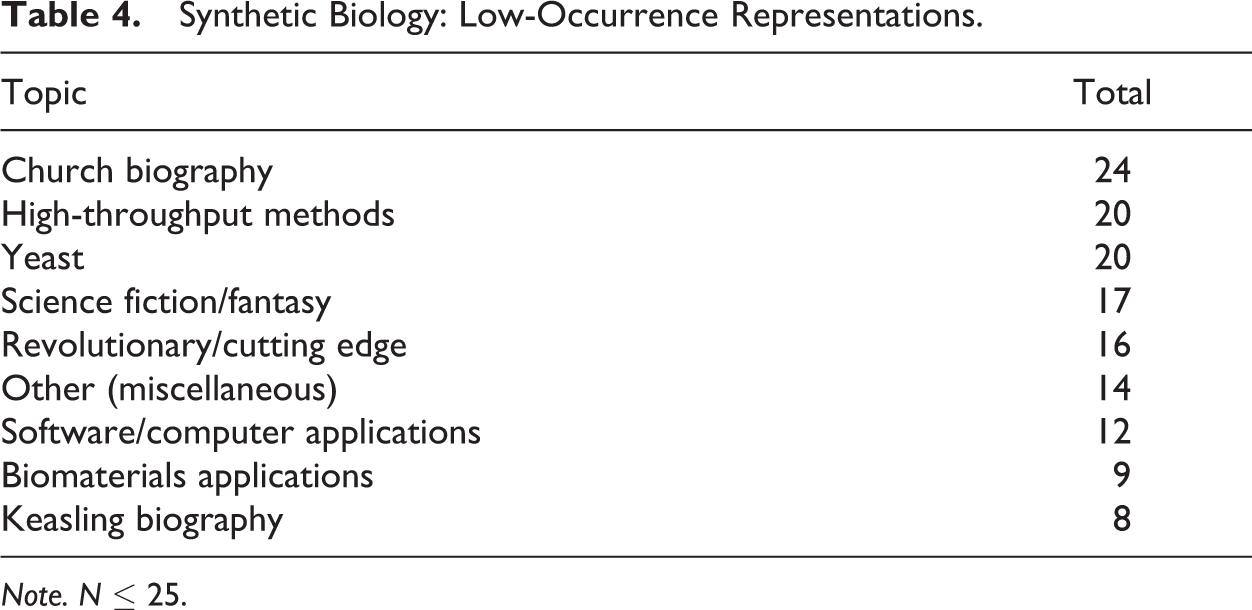
Note. N ≤ 25.
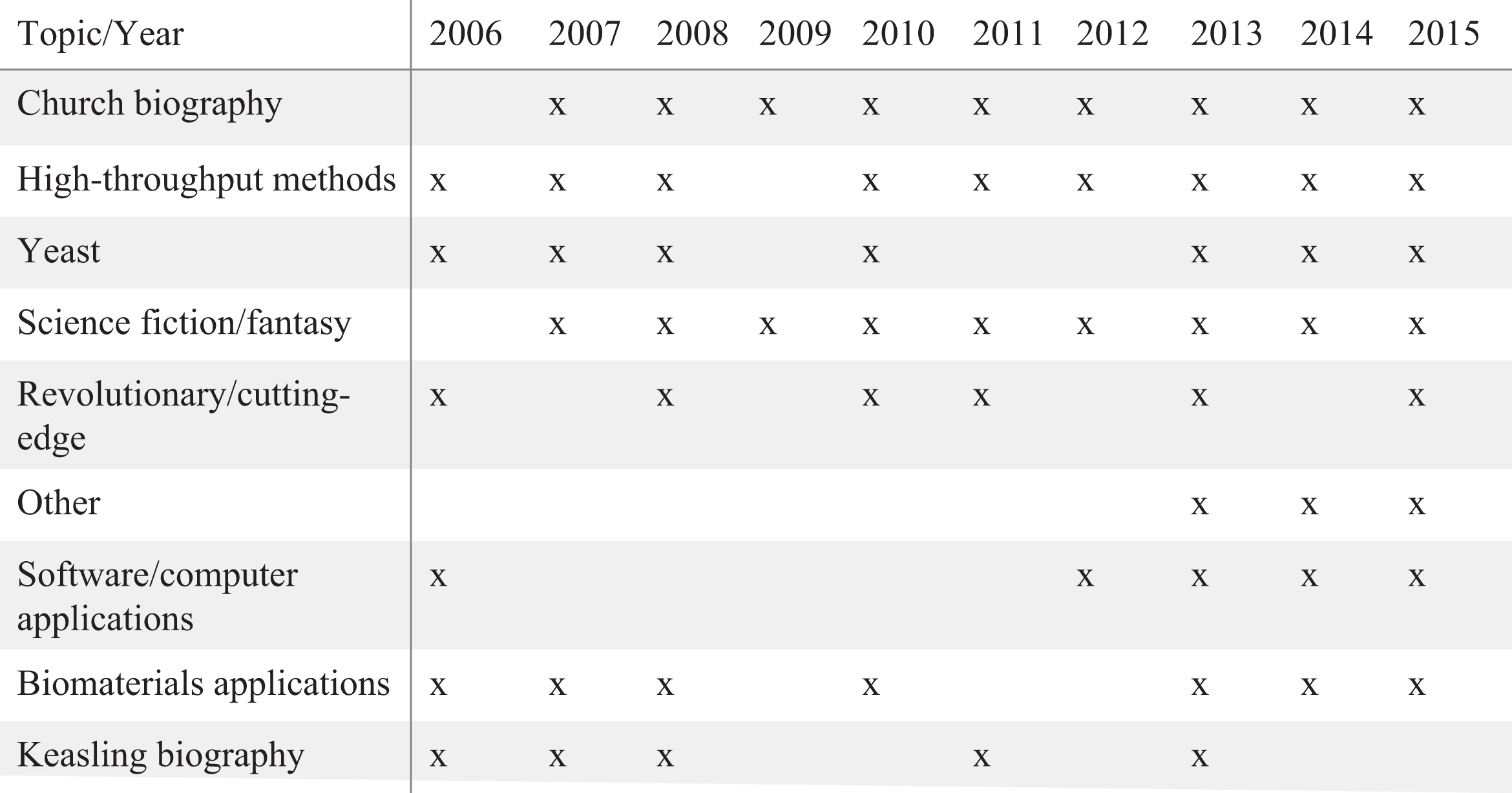
Any mention of a low-occurrence representation (N ≤ 25) by year.
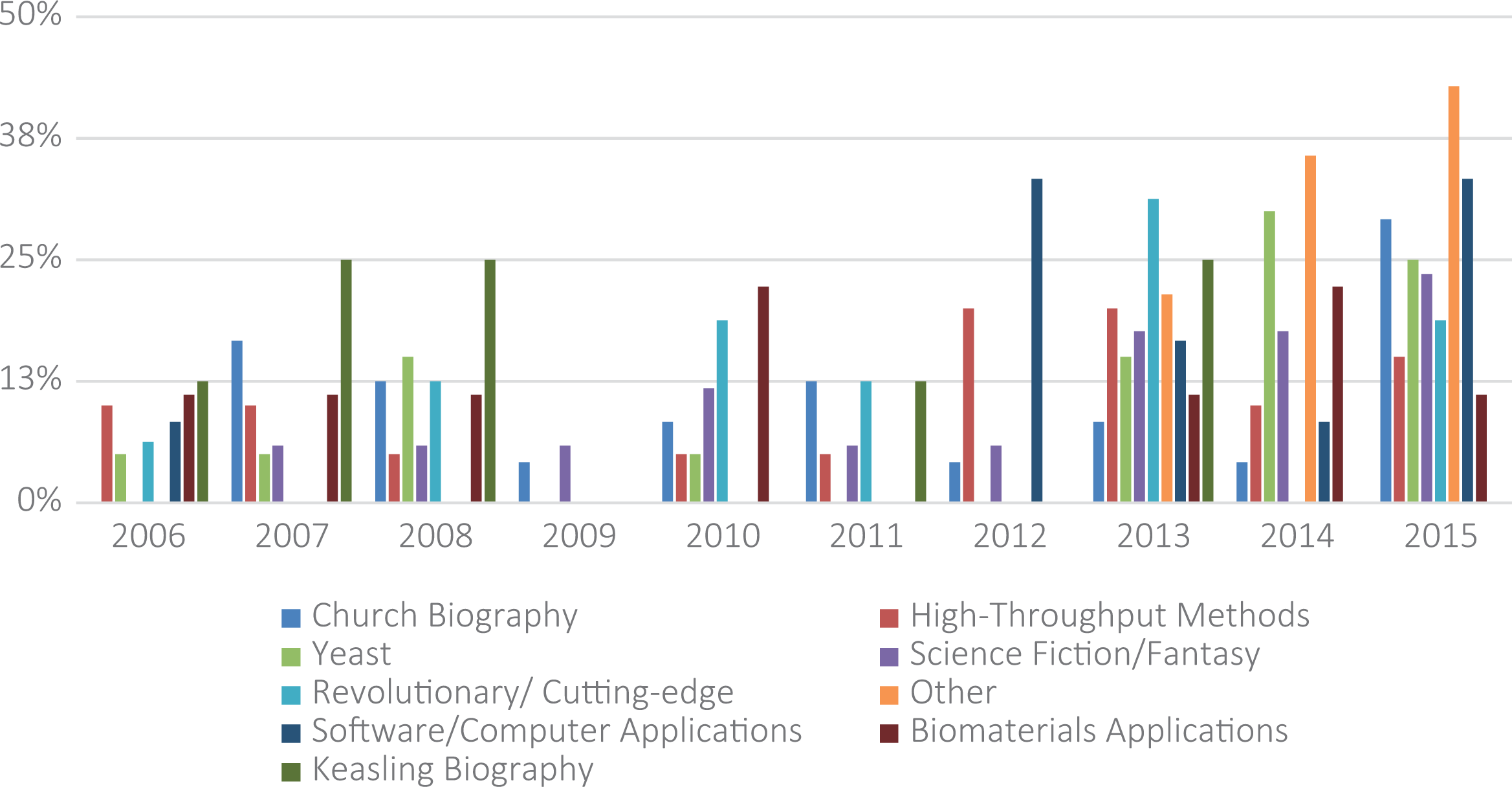
Percentage of mentions for representations with low occurrences by year.
Discussion: Iterating the Dynamic Face of Synthetic Biology
Our findings suggest that although synthetic biology had emerged as a new scientific practice in 2006, by 2015 that practice had yet to be fully instantiated as a stable, coherent field. Whereas the nanotech study concluded with a greater narrowing of representations, with 6 of the 12 high-count representations and 15 of the 39 total number of representations occurring in the final year, our synthetic biology study concluded with 7 of the 7 high-count representations and 22 of the 24 total number of representations occurring in the final year. While some representations were sporadic, our study showed no narrowing of representations over time. We resist interpreting this finding as a null result but instead view it as an indication that the opportunity persists to influence the continued instantiation of the field. By 2015, technical laboratory practices, including genome editing (CRISPR/Cas9) commercially available DNA, and molecular manufacturing methods had become widely available and integrated within most research. But the meanings and implications of these technical advancements and practices remain vague, disaggregated, and unsettled. We return to this opportunity in the conclusion.
A Still-Iterating Field With Persistent Multiple Representations
The 10-year span between 2006 and 2015 encompasses much of synthetic biology’s earliest formative years. In 2006, artemisinin (an antimalarial) became known as the first “marketable product” attributed to synthetic biology, and the National Science Foundation’s Synthetic Biology Engineering Research Center was created—both were key events for a still-emerging field. Yet 7 years later, in 2013, each of the 24 representations occurred in public media, suggesting that narrowing toward stabilized representations had not yet been achieved. While no field would limit itself to a single application (representation), we have followed prior studies in change and instantiation to hypothesize that a multiplicity of generally divergent representations depicts a field not yet fully instantiated. This hypothesis seems reasonable for synthetic biology given the generic, broad, and largely disconnected representations that have persistent through 2015.
Most of these representations were also aligned with nanotechnology throughout early portrayals of that science in public media. For example, both nanotechnology and synthetic biology were aggregated to medical applications with little more explanation than that the new science might “cure cancer.” Both sciences had proponents who claimed applications in biofuels, biology–cybernetics, manufacturing, DNA research–genetic engineering, software and computer applications, environmental and agricultural applications, global competition, government regulations, policy and safety, and industry funding and investment opportunities. Both of these new sciences were also introduced with biographies of prominent scientists, Venter, Church, and Keasling in synthetic biology and Drexler, Regis, Feynman, and Smalley in nanotechnology.
But alternatively, the expanding number of representations could mark 2013 as the year in which those practicing synthetic biology assumed, or enfolded, sufficient foundation and recognition to propose new directions and areas for application. Our findings could also mark an alternative process for scientific instantiation, given the heightened ethical concerns associated with synthetic biology and the public relations problems, complaints about hype and exaggeration, and human and environmental confrontations (real and imagined) that nanotechnology provoked (Berube, 2006). This alternative process would place a greater emphasis on constituting synthetic biology as a technique or tool, seeking representation with minimal effort or desire to establish its capacity as a new field. Thus, whereas nanotechnology emerged as a disruptive form and event, an instantiation formed to reorganize spatially as well as intellectually and politically, synthetic biology appeared by 2015 as a technological deployment, a capacity designed to make new aggregations possible.
Science Fiction as Wayfinding for Skeptical Audiences
Rhetorically, it is important to understand the formative and legitimizing function of science fiction for both synthetic biology and nanotechnology. López (2008) claimed that as science fiction is “a key site for the construction of alternative worlds,” it can also be a productive space for legitimizing new sciences (p. 1266). Echoing findings from both the nanotech and the synthetic biology studies, López described “the exuberant hype that now underwrites the launch of vertiginously expensive and complex scientific research endeavours” (p. 1267). He asked if such excessive discourse is simply scientists becoming more and more desperate for legitimacy and funding or if it attenuates a “realignment of the relationship between ‘science’ and ‘society’” in which nonscientists are increasingly skeptical of the assumed benefits of scientific research (p. 1267). Here, he postulates a both–and scenario, suggesting that in a context in which a science has “no stable and commonly accepted definition” (p. 1269) and in which publics are increasingly skeptical and disillusioned, alternative narratives, like science fiction, provide symbolic capital that “bridges the distance between what can now be achieved and what its promoters promise it will realize” (p. 1280).
Thus, to use López’s metaphor, science provides a vehicle, and science fiction provides the roads and wayfinding to the yet-to-be-realized world (p. 1281). The metaphor seems especially appropriate here, given the larger human issues evoked by synthetic biology and engineering DNA. If such practices take place within social contexts that are already fearful and skeptical about scientific contributions, much more rhetorical work must be accomplished to legitimize the science and orient audiences toward conceivable alternatives.
Conclusion: Tenuous Biology and Projects
Synthetic biology coverage deviated from the patterns of emerging sciences in several considerable ways. Rather than narrow potential fields of application, proponents maintained multiple simultaneous and even competing trajectories for the practice. We use the word practice here because it attributes the form and event in which synthetic biology was situated. Rather than appear to compete with or destabilize legacy systems, disciplines, and resources, synthetic biology emerged as praxis within such systems. Nanotechnology’s proponents attempted to substantiate a new field by claiming a radically different science, arguing that its knowledge would make traditional sciences unnecessary and obsolete. They also claimed territory for unique programs, departments, labs, and National Science Foundation directorates. But synthetic biology’s proponents have instead articulated the practice as a deployment that brings together existing forms and actions in engineering and biology. Rather than pressing for separate recognition, the accounts we examined here consistently portrayed a convergence and practical alignment between biology and engineering. While some biologists will no doubt be concerned about a proposed transformation of their discipline into a branch of engineering, these accounts capitalize on a known practice (genetic engineering) and leverage its credibility in order to insert productive alignments.
When nanotechnology and synthetic biology were first presented to the public, nearly identical criticisms appeared in the media. As was found in the nanotech database, we found reports about synthetic biology that criticized overreaching technology, the need for public safety regulations, out-of-control experiments, and laboratory monsters (nano swarms and genetically alerted organisms). While such concerns are merited, over time, their reappearance suggests generic motion and little effort to differentiate one science or practice from another or to explore richer and more accurate understandings of the emerging science itself. As we cited earlier, such generic criticism “limits understanding of how past problems bear on contemporary situations” and “undervalues the extent to which ethics can play a formative role in the very development of both biological and human science and technology” (Rabinow & Bennett, 2012, p. 4). Such criticism also does little to engage with the science under critique or to influence it as science or in the moments of science.
Rabinow and Bennett’s (2012) challenge to engage science as a science and in scientific moments helped us to locate an operational space for intervention. Recognizing in our data considerable public hesitancy about synthetic biology and working from our findings that the field had yet to be fully instantiated, Codding saw an opportunity for the ethical and human-facing insertion we had proposed. She concluded that the rhetorical analysis detailed here established warrants for inserting a human–ethical component within the technical project. Codding (2017) described this apparent warrant in her senior honors thesis this way: There is little doubt that synthetic biology is in an exciting era of technological advancement, benefitting from a snowball effect of enthusiasm and support from a variety of stakeholders: Students, teachers, researchers, the government, and industry. It is important to recognize, however, that in very recent years, there are a stable percentage of negative articles. Rather than overwhelmingly positive coverage as more information about synthetic biology and its applications are published, the public remains hesitant. (p. 21)
As we described, the technical project proposed adapting the CRISPR/Cas9 gene-editing system to enable more precise mRNA cutting and insertions. In the introduction to the technical component of her project, Codding (2017) wrote the following: While CRISPR technology has become a rather valuable tool in modern molecular biology, the current system is not without its issues, both technically and ethically. Biologically, Cas9’s ability to cut so efficiently at specific sequences on the genomic level is what makes it such a useful tool; however, sequences similar to the target sequence are often also cut, resulting in unpredictable and irreversible off-target effects (Harrison et al. 2014). After the initial cut by Cas9, cells routinely use the NHEJ repair pathway to repair the genomic DNA. This repair mechanism is often inaccurate and leads to frequent insertions, deletions, and changes of nucleotides. These indel and single-point mutations are unpredictable and irreversible, with the potential to yield drastic, undesirable results (Harrison et al. 2014). Lastly, the extent of complex post-transcriptional modifications and splicing variation allows for a myriad of uncontrollable outcomes, due to the nature of editing primary genetic material. Our project was motivated partially due to these technical concerns, and partially due to the share of ethical and safety concerns that naturally come from genetic engineering. (p. 27)
By inserting ethical practice within the technical project, Codding synthesized a new assemblage of scientific discourse that appeared more internal and within the moment of science than did those interventions attempted by prior attempts and during previous times. Situating methodological concerns within overtly ethical problems (the accidental release of GMOs, proliferation of experimental organisms within ecosystems, patenting of DNA sequences, editing of human genomes with consequences for inheritable DNA) creates alternative reasons for addressing such problems, and it challenges routine capacities within scientific inquiry. As such, her efforts, like those forms and actions we ascribed to synthetic biology, were not so much to displace, critique, or disrupt the science as they were to reformulate its tools and equipment toward different problems, even if those problems were self-imposed.
Rabinow’s (1999) advocacy of “conceptual advances” appears prescient here. Such equipment, as inserted by Codding, remains reflexive and self-aware of its problems even as it proposes new, if incremental, advances (pp. 180–182). These potential passages are, of course, not without their own problems. For example, few of the humanities or science colleagues at venues where we simultaneously presented both our technical and rhetorical results saw the relevance of the other discipline. But setting such rebuffing aside, we claim some initial progress from our experiment in forming better equipment for similar collaborative efforts.
So with both sympathy and excitement, we view synthetic biology as a hybrid reconstruction of biology, engineering, and humanistic practices. As an emergence and a possibility, the technology evokes a compelling interface between the lifeless and the life altering. Yet how other scientists, humanists, regulators, ethicists, patients, and other stakeholders will perceive, value, and deploy such a technical aggregation remains a dynamic and risk-prone proposition. For now, scientists, and (we hope) potentially some accompanying humanists, will continue to tinker with DNA, repress genes, transplant bacterium genomes, alter foods, ask questions, pose problems, and compose narratives, deploying simultaneously new and old scientific practices that might (or might not) become rebranded under the new forms and events of synthetic biology.
Footnotes
Declaration of Conflicting Interests
The authors declared no potential conflicts of interest with respect to the research, authorship, and/or publication of this article.
Funding
The authors disclosed receipt of the following financial support for the research, authorship, and/or publication of this article: This project was partially supported by the National Science Foundation. Award # 1659529: REU Site: Membrane Biochemistry and Bioinspired Synthesis.