



Abstract
Background
Although prior studies have thoroughly investigated the effects of safety training on construction workers’ safety behaviors, the role of prior accident experience has received comparatively less attention within this domain.
Objective
This study seeks to evaluate the influence of construction safety training on workers’ safety behaviors, exploring the mediating roles of safety knowledge and safety motivation, as well as the potential moderating effect of accident experience.
Methods
A cross-sectional study was conducted with a sample of 1026 workers from 53 construction sites spanning 12 provinces.
Results
Findings demonstrate that safety training enhances workers’ safety knowledge, motivation, compliance, and participation. Notably, safety knowledge significantly predicts safety participation, whereas safety motivation predominantly influences safety compliance. Furthermore, safety knowledge and motivation serve as mediators in the relationship between safety training and safety compliance. Workers with prior accident experience exhibit lower levels of safety knowledge and motivation compared to those without such experiences, yet they demonstrate elevated levels of safety compliance and participation. However, accident experience does not significantly moderate the association between safety training and safety behavior.
Conclusions
Safety training should be mandatory for all workers prior to site deployment. For individuals with prior accident experiences, customized training and support services are essential to address their specific needs.
Keywords
Introduction
The construction sector is widely recognized as one of the most hazardous industries globally, employing 7.5% of the global workforce while accounting for 16.4% of occupational injuries and fatalities. 1 According to the International Labour Organization (ILO), the construction industry records approximately 60,000 fatal accidents annually, with a fatal injury rate of 6.3 per 100,000 workers, surpassing rates in other sectors, including agriculture (6.0 per 100,000), metallurgy (3.5 per 100,000), mining (5.1 per 100,000), and manufacturing (2.8 per 100,000).2,3,4 In China, the non-fatal accident rate in construction is notably high, at approximately 3500 per 100,000 workers, nearly double the all-industry average of 1800 per 100,000 workers.5,6 This significant disparity has heightened focus on construction safety, attracting substantial attention from academic researchers and industry practitioners. Studies indicate that unsafe worker behaviors contribute to up to 80% of incidents on construction sites.7,8
Safety training is widely considered a fundamental strategy for addressing this issue. 9 Academic discourse on safety training emphasizes three primary areas. First is the integration of advanced technologies, including virtual reality, 10 augmented virtuality, 11 extended reality, 12 conversational AI-based VR, 13 and 3D BIM simulation. 14 Second, optimizing safety training programs remains a critical focus, seen in initiatives such as the Construction Safety Training Program, 15 the Construction Safety for All Framework, 16 and safety training parks. 17 Third, some research highlights the need for tailoring safety training to individual worker characteristics. For instance, Başağa et al. (2018) argue that factors like workers’ educational background, age, and experience should shape training approaches, 18 while Xu et al. (2019) demonstrate that personalized training enhances effectiveness by addressing distinct learning traits. 19 Despite these developments, there remains limited exploration into how safety training impacts worker behavior, especially from the perspective of individual cognitive factors.
Individual cognition is pivotal in shaping decision-making tied to actions. 20 This cognitive sequence occurs in four stages: information acquisition, comprehension, response selection, and execution. 21 For construction workers, safety training serves as the primary mechanism for obtaining relevant information, 22 while safety behavior represents the observable result of the execution stage. 23 The stages of comprehension and response selection are heavily influenced by personal factors, such as safety knowledge and safety motivation. 24
However, prior research often overlooks the role of previous accident experience in shaping safety cognition and behavior. This gap limits understanding, as accident experiences can significantly impact safety awareness and behavioral patterns.25,26 Workers with accident histories may gain a deeper understanding of safety protocols, strengthening their ability to self-monitor and adhere to safety practices. Additionally, prior accidents can heighten psychological sensitivity to hazards, reinforcing a worker's focus on safety. 27 Including accident experience in research is thus essential for comprehensively understanding safety awareness and behavior, thereby supporting more effective training and management strategies.
Based on these considerations, this study seeks to (1) explore the mechanisms through which safety training impacts safety behavior via individual factors, namely safety knowledge and safety motivation, and (2) assess the influence of prior accident experience on safety behavior, safety knowledge, and safety motivation, while also evaluating its potential moderating effect on the relationship between safety training and safety behavior.
Literature review and hypothesis development
Safety training
Safety training is broadly acknowledged as a vital element in managing construction site safety, enforced in China through the Production Safety Law of the People's Republic of China and the Regulations on the Administration of Safety in Construction Projects. Before entering the construction site, workers must complete a structured “three-level education” program, consisting of training at the company level, project management department level, and construction team level. This tiered training system aims to enhance construction workers’ safety-related (1) knowledge and skills, (2) attitudes and beliefs, and (3) behaviors,28–30 thereby reducing workplace injuries and accidents by preparing workers to manage safety risks and contribute to a safer work environment.
Research evidence supports the positive impact of safety training on construction workers. For example, Wong et al. (2000) reported significant improvements in safety knowledge following mandatory safety training in Hong Kong's construction sector.
31
Similarly, Chang and Mosleh (2007) argued that safety training empowers workers by imparting critical safety knowledge and enhancing their awareness.
32
Further studies by Zhang et al. (2022) and Nykänen et al. (2020) also demonstrate that safety training plays a key role in improving workers’ safety behavior.29,33 These findings collectively underscore the vital role of safety training in fostering a safer construction environment. Based on this evidence, we propose the following hypotheses: H1: Safety training enhances construction workers’ safety knowledge. H2: Safety training increases construction workers’ safety motivation. H3: Safety training improves construction workers’ safety compliance (H3a) and safety participation (H3b).
Safety behaviors
Safety behavior is commonly categorized into two distinct types: safety compliance and safety participation. 34 Safety compliance refers to adherence to prescribed safety obligations, including the proper use of personal protective equipment, compliance with workplace safety regulations and procedures, and participation in safety inspections. 34 These behaviors are typically mandated by law or company policy to ensure employee health and safety and to reduce accident risk. In contrast, safety participation consists of voluntary actions that employees undertake to foster a safety-oriented workplace culture and improve overall safety management. Examples include engaging in regular safety drills, suggesting improvements to mitigate hazards, reporting safety risks, and participating in safety committee activities. 34
Distinguishing between these two interrelated safety behaviors is essential, as they are influenced by different factors and have distinct relationships with various determinants. Influencing factors include work environment, organizational culture, management practices, training levels, and personal characteristics. For instance, safety knowledge and safety motivation, as essential individual factors, are instrumental in shaping the safety behavior of construction workers.35,36 Notably, Vinodkumar and Bhasi (2010) underscored safety knowledge and safety motivation as significant predictors of both safety compliance and safety participation.
37
Additionally, Rajabi et al. (2022) employed a structural equation modeling (SEM) approach to identify factors influencing safety performance, establishing a clear correlation between performance improvements and increases in safety knowledge and motivation.
38
Drawing on this foundation, we propose the following hypotheses: H4: Safety knowledge positively influences construction workers’ safety compliance (H4a) and safety participation (H4b). H5: Safety motivation positively affects construction workers’ safety compliance (H5a) and safety participation (H5b).
Safety knowledge and safety motivation
Safety knowledge, defined as an individual's “personal safety capabilities and resources,” encompasses an understanding of safety regulations, procedures, and the ability to identify and mitigate workplace hazards.
39
This knowledge is foundational to effective safety behaviors in high-risk environments, such as construction.
40
Research identifies safety knowledge as a critical outcome of safety training, enabling workers to make informed decisions that enhance compliance with safety protocols and proactive participation in safety initiatives.32,41 For instance, Burke et al. (2011) found that safety knowledge mediates the relationship between training and safety performance by equipping workers with cognitive tools to recognize risks and respond appropriately.
40
Similarly, Santi et al. (2020) showed that safety knowledge mediates the relationship between safety training and workers’ engagement in safety compliance.
42
Accordingly, we propose: H6: Safety knowledge mediates the relationship between safety training and safety compliance (H6a) / safety participation (H6b).
Safety motivation reflects the extent to which workers prioritize safety in their actions
43
and serves as a proximal antecedent of safety performance, influencing how workers translate safety knowledge into actionable behaviors.44,45 In construction settings, safety motivation is critical due to the high-risk nature of the work, where intrinsic motivation drives adherence to safety protocols despite time pressures or competing demands.
46
Empirical studies, such as those by Heryati et al. (2019), indicate that safety motivation mediates the relationship between safety interventions and safety outcomes by fostering commitment to safe practices.
47
Additionally, Jiang et al. (2017) found that motivated workers are more likely to comply with safety regulations and participate in safety programs, such as suggesting improvements or attending safety meetings.
48
Thus, we propose: H7: Safety motivation mediates the relationship between safety training and safety compliance (H7a) / safety participation (H7b).
Furthermore, the interplay between safety knowledge and safety motivation significantly shapes construction workers’ safety behaviors. Safety knowledge, encompassing an understanding of safety protocols and hazard identification, influences workers’ cognitive and motivational states.
49
For example, Oah et al. (2018) found that workers with greater safety knowledge exhibit heightened safety motivation, driven by increased risk awareness and confidence in mitigating hazards.
50
This relationship is particularly pronounced in the construction industry, where knowledge of safety protocols fosters intrinsic motivation to prioritize safety.
51
In this context, workers apply learned safety principles to develop a proactive safety mindset, leading to improved compliance and participation.52,53 Therefore, we propose: H8: Safety knowledge enhances the safety motivation of construction workers. H9: Safety knowledge and safety motivation collectively establish a sequential mediation between safety training and safety compliance (H9a) and safety participation (H9b).
Accident experiences
Accident experience encompasses safety incidents that individuals have personally encountered, whether in professional or personal contexts. 54 For this study, the term specifically denotes occupational accidents experienced by construction workers on construction sites. Such experiences profoundly influence the psychological and behavioral dynamics of these workers.55,56
Research indicates that individuals who have been involved in accidents often gain a more profound understanding of safety principles and regulations.
57
For instance, Oah et al. (2018) studied Korean manufacturing workers and found that accident experience significantly enhanced workers’ risk perception.
50
Similarly, Gonçalves et al. (2018) identified a positive association between accident experience and safety behavior.
25
In addition, Gharibi et al. (2016) examined 689 workers involved in tunneling projects and found that accident experience contributed to changes in safety attitudes.
57
Collectively, these findings underscore the significant role of accident experience in shaping workers’ safety perspectives and behaviors. Based on this evidence, we propose: H10: Accident experience positively influences construction workers’ safety compliance (H10a) and safety participation (H10b). H11: Accident experience significantly moderates the relationship between safety training and safety compliance (H11a) / safety participation (H11b).
Building on these hypotheses, a conceptual research model is proposed, as illustrated in Figure 1.
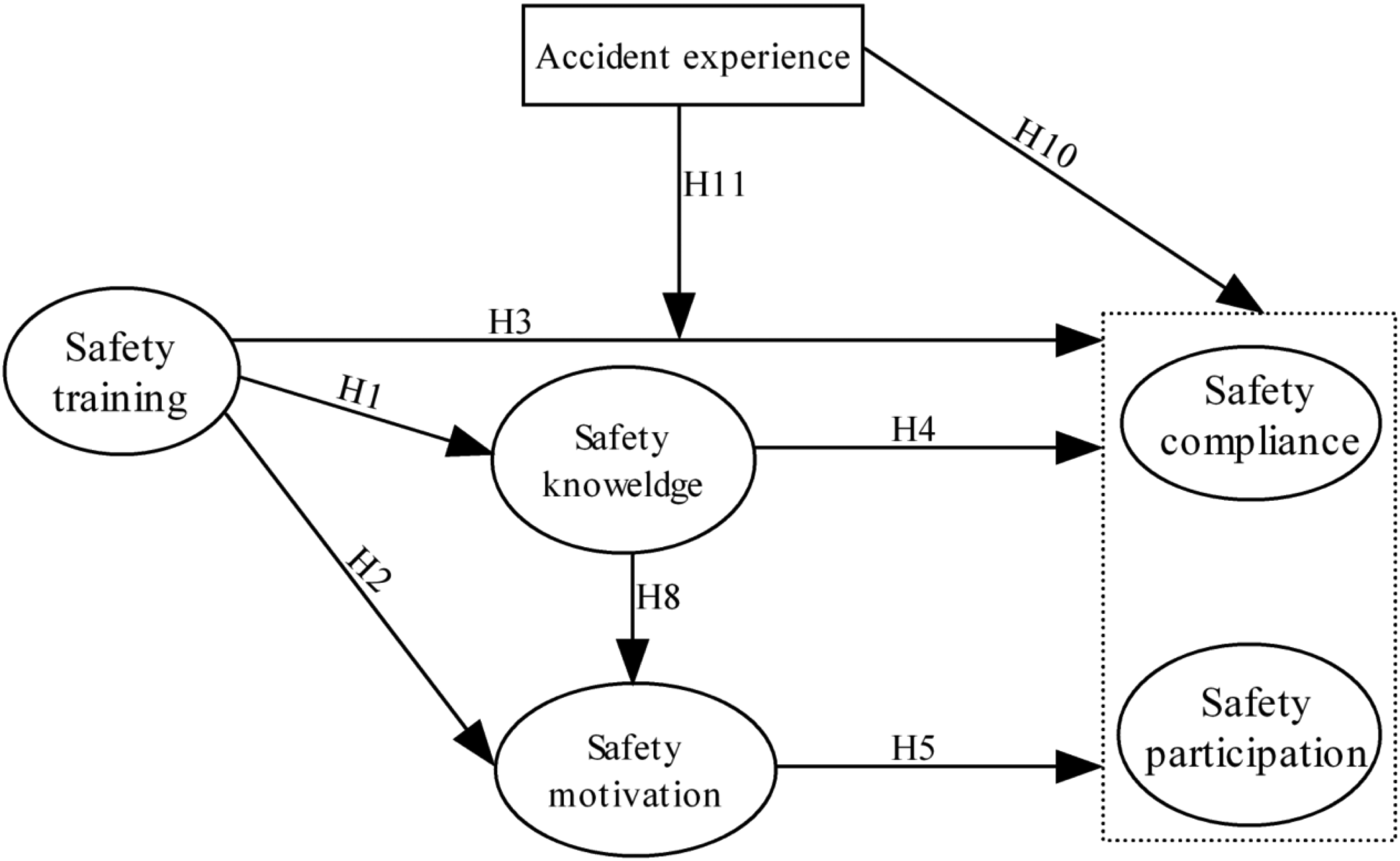
Proposed research conceptual model.
Method
Participants and procedure
Questionnaires were distributed to construction workers across 53 projects located in 12 provinces of mainland China, namely Sichuan, Chongqing, Guizhou, Yunnan, Shanxi, Gansu, Hubei, Jiangsu, Zhejiang, Shandong, Anhui, and Henan. To ensure a representative sample, a stratified random sampling technique was used, with workers selected from various types of construction projects within each province, including residential, commercial, industrial, and infrastructure projects. With the approval of senior management, a random selection of 8 to 35 workers per project participated in the study. Participants were assured of anonymity, with no requirement to disclose personal or identifying information, and were informed that participation was voluntary, with the option to withdraw from the survey at any time without consequences.
In total, 1102 questionnaires were distributed to the workers. Given the transient nature and generally lower educational attainment of Chinese construction workers, 58 all surveys were conducted and completed on-site. To address any confusion about the questionnaire items or their options, workers were encouraged to seek assistance from our survey team. This support involved clarifying any unclear questions and guiding workers through the survey process. As a result, all 1102 questionnaires were completed. After excluding incomplete, duplicate, or inattentive responses, we obtained a final total of 1026 valid questionnaires.
Instruments
The questionnaire was organized into two distinct sections. The first section collected demographic details, including variables such as gender, age, education level, participation in prior safety training at the current site (indicated as “yes” or “no”), and past accident experience in construction (categorized as “no,” “witnessed,” or “experienced”). The second section consisted of standardized scales designed to measure key constructs, specifically safety training, safety knowledge, safety motivation, and safety behavior.
Each scale assessing safety training, safety motivation, and safety knowledge comprised six items, adapted from Vinodkumar and Bhasi (2010). 37 The safety behavior scale, also consisting of six items, was developed based on Neal and Griffin's (2006) framework, with three items designated for safety compliance and three for safety participation. 45 Prior to implementation, these established English scales were translated into Chinese using Brislin's (1980) translation-back-translation approach. 59 A native Chinese graduate student first translated the scales into Chinese, followed by a second translator converting the Chinese version back into English. The original and back-translated English versions were then compared and refined to ensure accuracy and minimize translation errors.
Responses to all items in the questionnaire were captured using a five-point Likert scale, ranging from 1 (strongly disagree) to 5 (strongly agree). The reliability and validity of these scales have been substantiated in prior research.1,39,60 In the present study, Cronbach's alpha coefficients were as follows: safety training (α = 0.901), safety knowledge (α = 0.892), safety motivation (α = 0.907), and safety behavior (α = 0.909), indicating strong internal consistency across all measures.
Analysis
Data analysis for this study was conducted using SPSS 26.0 and Mplus 8.7, following a structured five-step process. First, SPSS 26.0 was used to generate descriptive statistics and assess reliability, providing an overview of the sample's demographic characteristics and confirming the dependability of the scales. Second, independent sample t-tests were performed to examine differences in safety knowledge, safety motivation, and safety behavior scores between workers who had received safety training (Yes = 1) and those who had not (No = 0). Additionally, one-way analysis of variance (ANOVA) was employed to compare these scores across three accident experience groups: none (0), witnessed (1), and experienced (2). In the third step, Mplus 8.7 was utilized to conduct confirmatory factor analysis (CFA) to confirm the unidimensionality of the scales and calculate convergent and discriminant validity metrics. The fourth phase involved structural equation modeling (SEM) in Mplus 8.7 to test hypotheses H1 through H9. Finally, linear regression analysis in SPSS 26.0 was applied to assess hypotheses H10 and H11.
Results
Demographic characteristics
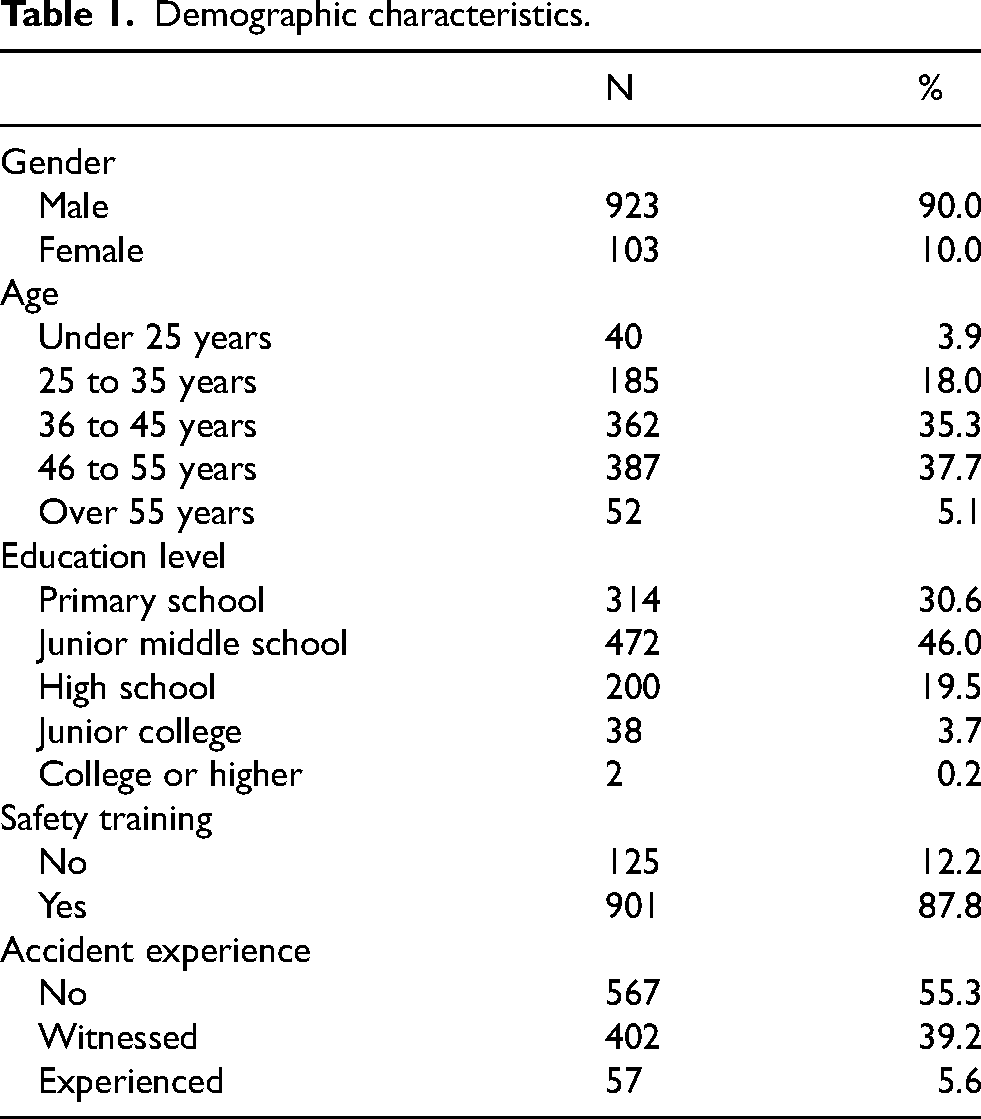
As illustrated in Table 1, the study included 1026 construction workers, with males forming 90% of the group and females making up 10%. Of these, 21.9% were 35 years old or younger, while 78.1% exceeded this age. The data revealed that 96.1% possessed a high school education or less, with just 3.9% holding a college degree or above. Moreover, 87.8% had undergone safety training at their current site, whereas 12.2% had not. Concerning accident history, 5.6% had encountered prior accidents personally, 39.2% had observed incidents affecting others, and 55.3% had no exposure to such events.
Demographic characteristics.
Descriptive findings
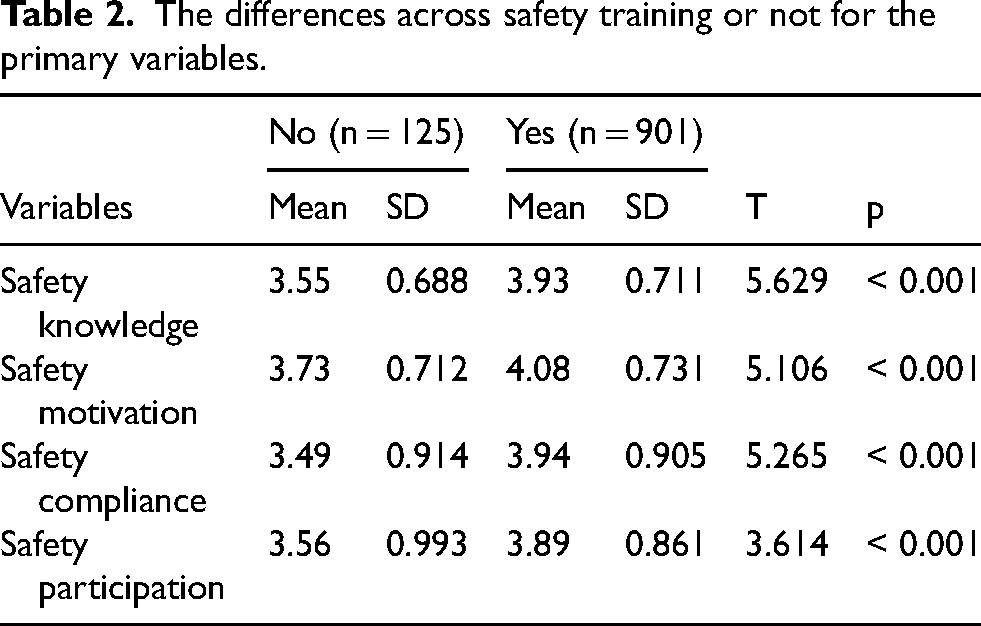
As presented in Table 2, workers who completed safety training displayed notably elevated average scores in safety knowledge, safety motivation, safety compliance, and safety participation compared to their untrained peers.
The differences across safety training or not for the primary variables.
Additionally, Table 3 indicates that construction workers with direct accident experience show markedly reduced safety knowledge and safety motivation relative to those who have observed incidents or lack any accident exposure. In contrast, those with prior accident experience exhibit substantially greater safety compliance and safety participation than peers who have merely witnessed incidents or encountered no accidents.
Differences in primary variables based on accident experience.
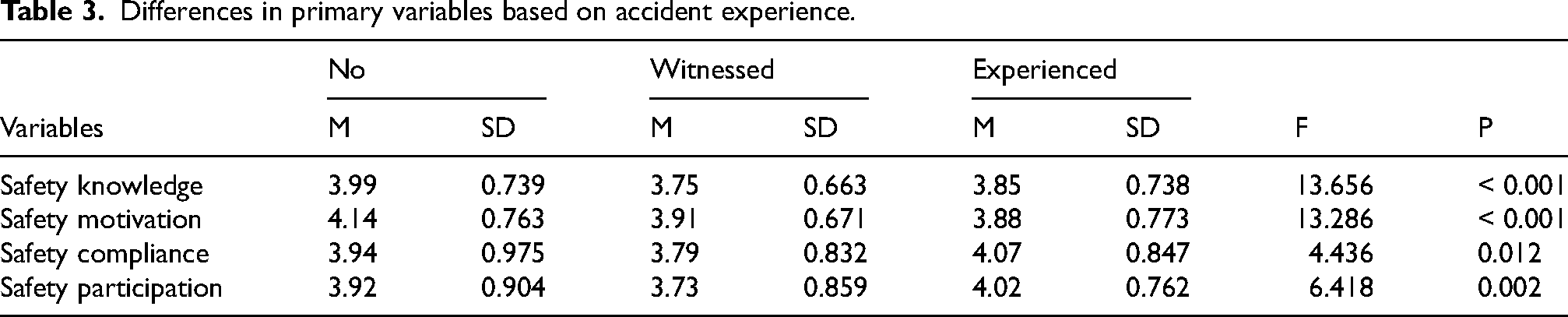
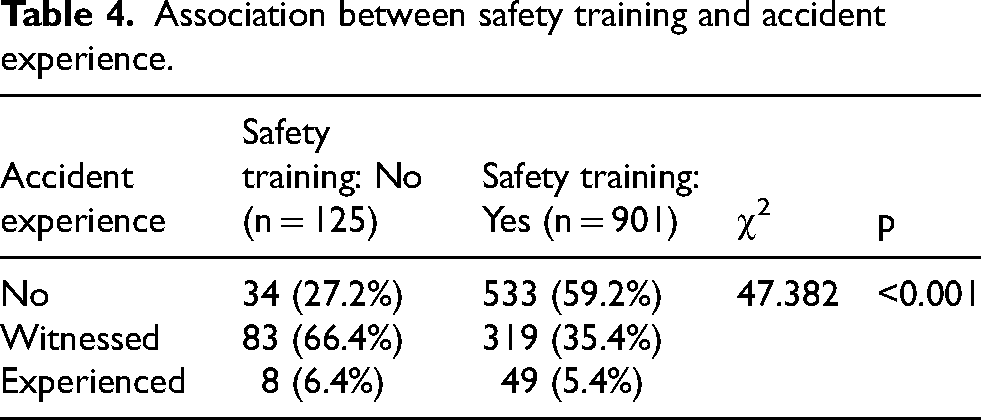
Table 4 shows the association between safety training and accident experience among construction workers. Of the 125 untrained workers, 27.2% reported no accident experience, 66.4% witnessed an accident, and 6.4% experienced an accident. Conversely, of the 901 trained workers, 59.2% had no accident experience, 35.4% witnessed an accident, and 5.4% experienced an accident. A chi-square test confirmed a significant association (χ2 = 47.382, p < 0.001), indicating that safety training is associated with lower accident exposure, suggesting a protective effect on safety outcomes.
Association between safety training and accident experience.
Measurement model evaluation
The assessment of model fit was performed utilizing several widely recognized indices, including the Comparative Fit Index (CFI), Tucker-Lewis Index (TLI), Root Mean Square Error of Approximation (RMSEA), and Standardized Root Mean Square Residual (SRMR). As reported in Table 5, the fit indices for all measurement models demonstrated satisfactory levels, aligning with the benchmarks established by Bagozzi and Yi (1988) and Van de Schoot et al. (2012).61,62 Although the RMSEA values for models associated with safety training and safety motivation exceeded 0.08, other fit indices remained within acceptable thresholds. Thus, these models were deemed suitable based on the standards outlined by Van de Schoot et al. (2012). 62
Result of convergent validity for variables.
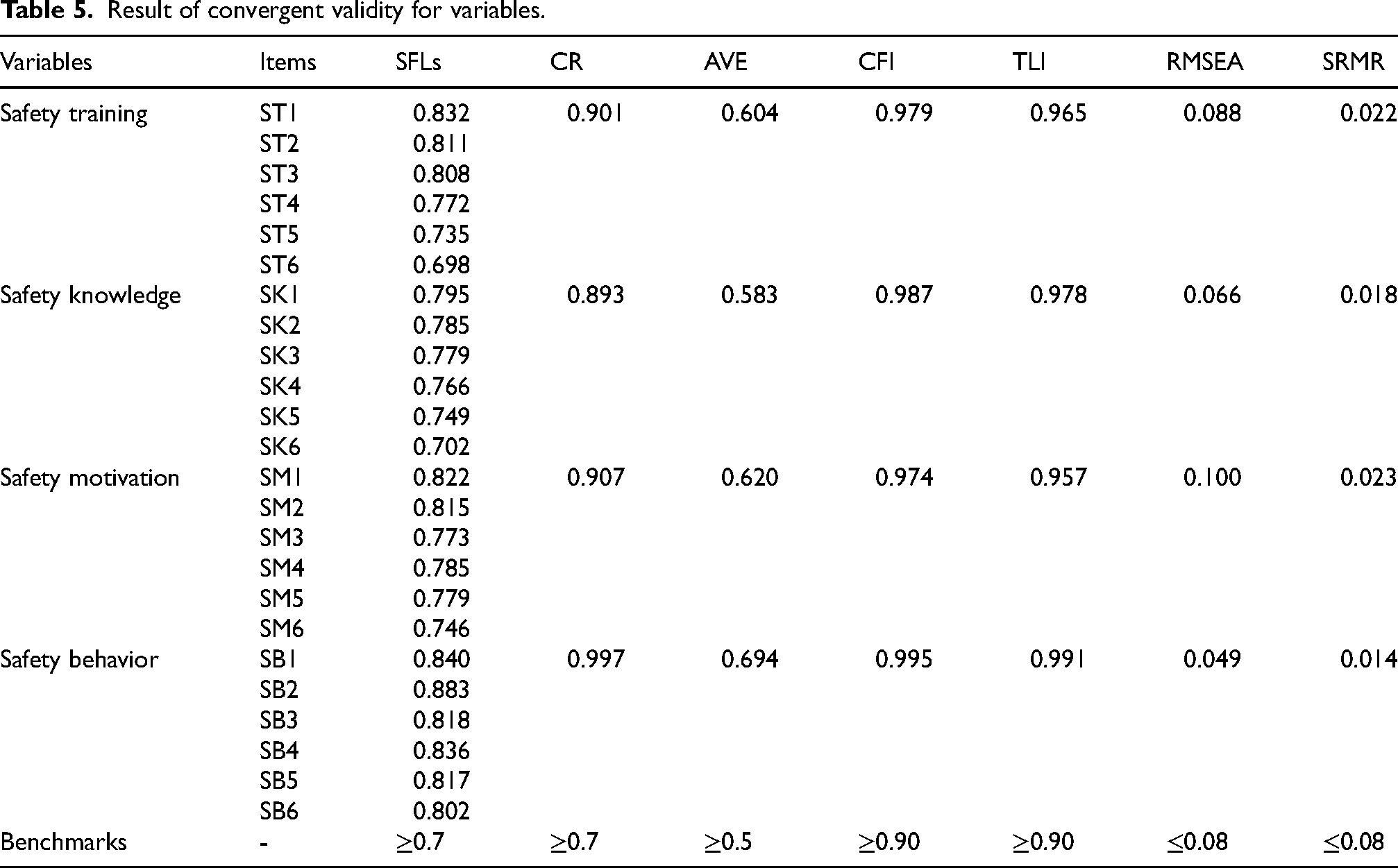
To evaluate convergent validity, Composite Reliability (CR), factor loadings, and Average Variance Extracted (AVE) were calculated for each construct. 63 As evidenced in Table 5, all constructs met the thresholds recommended by Hair et al. (2014), thereby supporting the establishment of convergent validity across the measurement models. 64
Discriminant validity was verified using the criterion proposed by Fornell and Larcker (1981), which requires that the square root of a construct's AVE exceeds its correlation coefficients with other constructs. 65 Table 6 illustrates that the square root of AVE (shown in brackets) consistently surpassed the corresponding correlation coefficients, thus affirming the presence of discriminant validity.
Descriptive statistics, correlation of constructs, and discriminant validity.
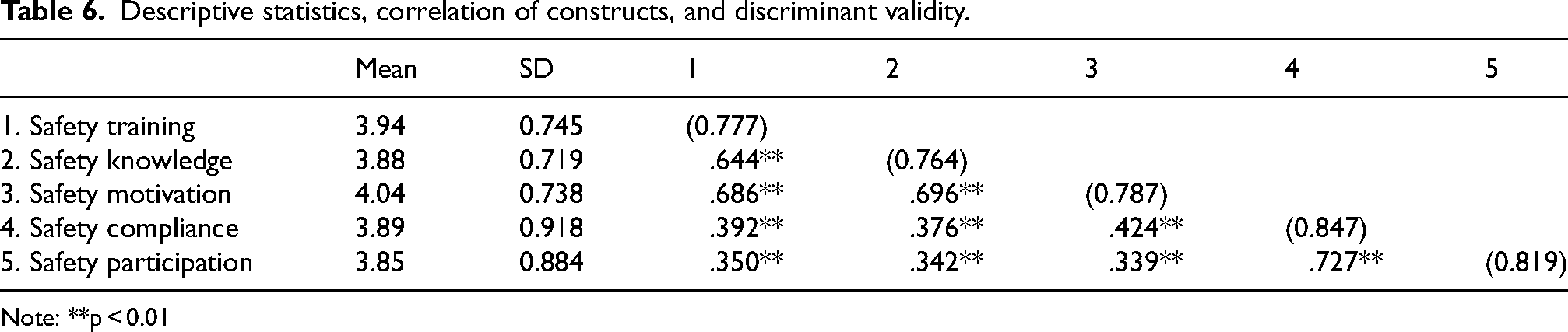
Note: **p < 0.01
SEM results
The structural model evaluated in Figure 1 demonstrated a satisfactory fit to the data, as indicated by the following fit indices: χ² (264, N = 1026) = 889.382, p < 0.001, RMSEA = 0.048, SRMR = 0.040, CFI = 0.961, and TLI = 0.956. The standardized path coefficients are presented in Figure 2. The analysis revealed that safety training exerted a significant positive impact on safety knowledge (β = 0.717, p < 0.001, confirming H1), safety motivation (β = 0.414, p < 0.001, confirming H2), safety compliance (β = 0.167, p = 0.005, confirming H3a), and safety participation (β = 0.198, p = 0.002, confirming H3b). Additionally, safety knowledge positively influenced safety participation (β = 0.481, p < 0.001, supporting H8; β = 0.150, p = 0.029, supporting H4b), though its effect on safety compliance was not statistically significant (β = 0.086, p = 0.200, leading to the rejection of H4a). Furthermore, safety motivation significantly affected safety compliance (β = 0.289, p < 0.001, supporting H5a), but its impact on safety participation was not significant (β = 0.120, p = 0.098, resulting in the rejection of H5b).
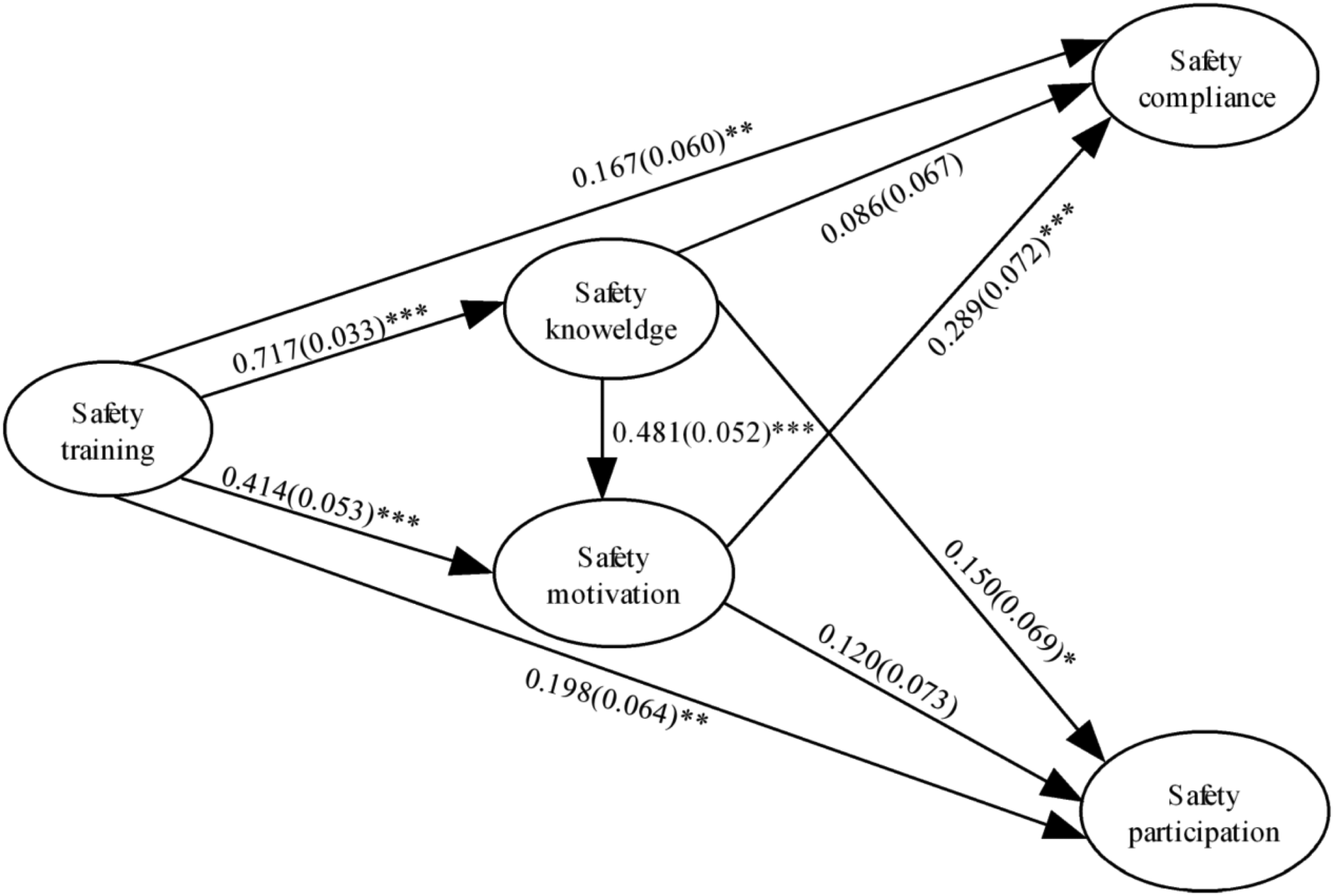
Structural equation model of the influence of safety training on safety behaviors (safety compliance, safety participation) through safety knowledge and safety motivation. *p < 0.05, **p < 0.01, ***p < 0.001.
Mediation results
Table 7 presents the mediation effects within the association between safety training and safety behavior. The results indicate that safety knowledge served as a mediator in the relationship between safety training and safety participation (β = 0.107, p = 0.034, confirming H6b), though it did not mediate the link between safety training and safety compliance (β = 0.062, p = 0.206, leading to the rejection of H6a). Similarly, safety motivation mediated the connection between safety training and safety compliance (β = 0.120, p < 0.001, supporting H7a), but its mediating role was not significant for the relationship between safety training and safety participation (β = 0.050, p = 0.114, rejecting H7b). Furthermore, the combined mediating effects of safety knowledge and safety motivation were significant in the pathway from safety training to safety compliance (β = 0.100, p = 0.001, supporting H9a), yet no such effect was observed for the pathway to safety participation (β = 0.042, p = 0.107, rejecting H9b).
Mediation effects in accounting for relations between safety training and safety behavior.
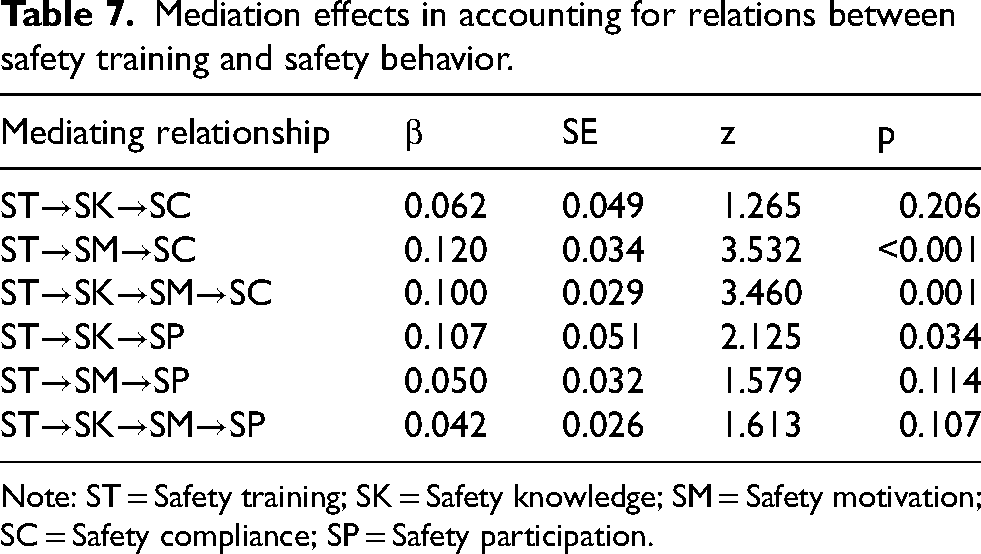
Note: ST = Safety training; SK = Safety knowledge; SM = Safety motivation; SC = Safety compliance; SP = Safety participation.
Moderation results
Table 8 displays the outcomes of the moderation analysis exploring the influence of accident experience on the association between safety training and safety behaviors. The findings reveal that accident experience exerts a notable positive impact on both safety compliance (β = 0.141, p = 0.018, confirming H10a) and safety participation (β = 0.111, p = 0.017, confirming H10b). Nevertheless, accident experience does not significantly moderate the relationship between safety training and safety compliance (β = 0.133, p = 0.394, leading to the rejection of H11a) or between safety training and safety participation (β = 0.104, p = 0.533, resulting in the rejection of H11b).
Results of the moderating effect of accident experience on the relationship between safety training and safety behaviors.
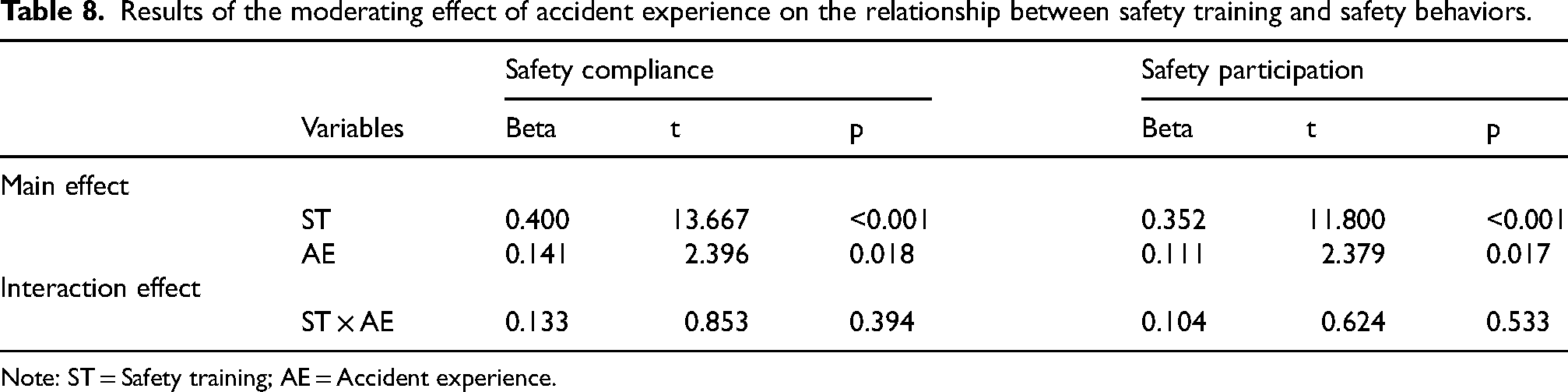
Note: ST = Safety training; AE = Accident experience.
Discussion
This research examines the effects of safety training and previous accident experience on the safety behaviors exhibited by construction workers. The findings specifically indicate that safety training directly contributes to improved safety behaviors while also indirectly fostering these behaviors by enhancing workers’ safety knowledge and motivation. Additionally, although accident experience significantly influences the improvement of safety behaviors, it does not play a moderating role in the relationship between safety training and safety behaviors. Notably, workers who received safety training experienced significantly fewer accidents compared to those who did not receive such training.
Demographic characteristics of workers on construction sites in China
Demographic analysis indicates that female construction workers constitute only 10% of the workforce, while young workers account for just 21.9% of the total population. Furthermore, a mere 3.9% of workers hold a junior college education or higher. These statistics reflect a construction workforce in China predominantly composed of males, with an aging profile and limited educational attainment. This pattern can be attributed to a combination of factors, including harsh working conditions, the physically taxing nature of construction work, and extended, rigid schedules, all of which reduce the sector's attractiveness to younger and more educated individuals. 66 Compounding these challenges are negative societal views of the industry and difficulties in achieving work-life balance, which further impede recruitment efforts. Additionally, limited prospects for career advancement and low compensation levels deter the attraction and retention of a diverse, skilled workforce. 67 Female workers encounter further obstacles, such as gender-biased language, social isolation, and instances of sexual harassment, all of which hinder greater inclusivity within the industry. 68 Consequently, there is an urgent need to promote diversity, equity, and inclusion (DEI) initiatives in the construction sector.
Despite the enforcement of mandatory safety training regulations—such as the Production Safety Law of the People's Republic of China and the Regulations on the Administration of Safety in Construction Projects—12.2% of construction workers report not having received adequate safety training at their current sites. This finding underscores a notable deficiency in the consistent application of these policies, suggesting that enhancements to the existing “three-level” safety training framework are necessary to improve its thoroughness and effectiveness. In particular, greater emphasis should be placed on rigorously implementing the “training before work” requirement to ensure workers are well-prepared prior to commencing tasks. Moreover, government agencies must strengthen their oversight and enforcement of safety training protocols within the industry to guarantee compliance.
The research reveals that 5.6% of construction workers have personally experienced accidents, while 39.2% have observed incidents involving colleagues, indicating that 44.7% of the workforce has encountered construction-related events. Prior studies suggest that individuals exposed to accidents or traumatic experiences face a substantially elevated risk of mental health challenges, including stress, anxiety, depression, and post-traumatic stress disorder (PTSD).69–71 Given this heightened susceptibility, prompt psychological support and social assistance are vital to aid the mental well-being and recovery of affected workers. As such, both governmental bodies and construction firms should prioritize the provision of robust mental health counseling services for this vulnerable segment of the workforce.
The impact of safety training on construction workers’ safety behavior
Descriptive analysis indicated that construction workers who underwent safety training displayed markedly elevated levels of safety knowledge, motivation, compliance, and participation compared to their counterparts who did not receive such training. Additionally, safety training was associated with reduced accident exposure, with 59.2% of trained workers reporting no accident experience versus 27.2% of untrained workers, suggesting a protective effect that may enhance safety behaviors. Structural equation modeling further confirmed robust positive associations between safety training and these safety-related dimensions, consistent with prior studies that emphasize the pivotal role of safety training in bolstering safety knowledge, motivation, and behavior. 37
Moreover, the study established that safety knowledge positively affects safety motivation among construction workers, with varying knowledge levels contributing to diverse cognitive outlooks. 50 Enhancing safety knowledge can mitigate deficiencies in workers’ safety awareness stemming from inadequate understanding. 39 Although safety knowledge significantly influences safety participation, its effect on safety compliance was found to be non-significant. Conversely, safety motivation positively impacts safety compliance but does not significantly influence safety participation. A favorable safety attitude fosters adherence to regulations, yet it may not necessarily translate into discretionary safety behaviors. 72 In contrast, workers possessing substantial safety knowledge are more inclined to partake in safety initiatives and disseminate their expertise. 73
The results substantiate three distinct mediating mechanisms through which safety training shapes safety behavior. First, safety knowledge acts as a mediator between safety training and safety participation, suggesting that training augments workers’ understanding of safety, which in turn heightens their involvement in safety-related efforts. This highlights the critical need to provide workers with foundational safety knowledge to stimulate proactive engagement in practices such as hazard identification and safety meeting attendance. Second, safety motivation mediates the linkage between safety training and safety compliance, underscoring the importance of intrinsic drive in promoting adherence to safety protocols. Third, safety knowledge and motivation operate in sequence to mediate the association between safety training and safety compliance, revealing a progressive process wherein training initially strengthens safety knowledge, subsequently fostering motivation that enhances compliance. Together, safety knowledge and motivation constitute an essential conduit for converting safety training into improved safety behavior. These insights emphasize the need for safety training initiatives to extend beyond technical instruction to cultivate intrinsic motivation, thereby ensuring a lasting impact on safety behaviors and fostering a safer workplace.
The impact of accident experience on construction workers’ safety behavior
Concerning individual internal attributes, notably safety knowledge and motivation, the research indicated that construction workers with no prior accident involvement exhibited markedly higher levels of both attributes compared to those who had observed an accident. These two groups, in turn, surpassed workers who had directly encountered an accident. This finding implies that deficiencies in safety knowledge and motivation play a critical role in the occurrence of accidents among construction personnel. 74 Although individuals who have observed accidents may possess a certain degree of safety awareness, this exposure does not seem to substantially bolster their safety knowledge or motivation. This could stem from the limited cognitive transformation triggered by merely witnessing an incident or from a desensitization effect due to prolonged exposure to onsite hazards. 25 Consequently, construction safety managers should emphasize targeted safety education and psychological support for these workers, promoting their safety knowledge and motivation through consistent training, information sharing, and emotional reinforcement.
In contrast, when examining external manifestations such as safety compliance and participation, workers who had directly experienced accidents outperformed those who had only witnessed them, while the latter group outdid those with no accident exposure. This pattern suggests that prior accident involvement may spur workers to strengthen their safety behaviors. Linear regression analysis further confirms a notable positive correlation between accident experience and both safety compliance and participation. This relationship likely arises because direct or indirect exposure to accidents heightens workers’ recognition of safety's critical importance, sharpening their self-protection instincts and encouraging greater diligence in daily safety practices. Additionally, workers with such experiences tend to exhibit heightened vigilance toward potential risks and are more inclined to adopt proactive measures to prevent incidents. 56 As a result, construction firms should leverage workers’ past accident experiences when developing safety training and management initiatives, treating these incidents as opportunities to reinforce safety culture and drive behavioral improvements.
Nevertheless, accident experience does not appear to mediate the relationship between safety training and safety behavior, a phenomenon potentially influenced by multiple factors. Firstly, the psychological burden of an accident often generates emotions such as fear and anxiety, 75 which may foster short-term caution but could also impair workers’ ability to fully engage with and apply safety training material, thus constraining behavioral enhancements. Secondly, without structured opportunities for post-accident reflection and analysis, workers may rely solely on negative recollections, which can impede their deep understanding and assimilation of safety training. In the absence of reflective processes, accident experiences are unlikely to translate systematically into practical strategies for improving safety behavior, creating a gap between training and its application.25,76 Moreover, the success of safety training hinges on its quality and relevance; if it fails to address the specific circumstances and needs of workers with accident histories, it risks being viewed as disconnected or unhelpful. To fully harness the potential of accident experiences in shaping safety behavior, safety training programs must be customized to align more effectively with workers’ real-world experiences and requirements.
Theoretical and practical implications
This research positions accident experience as a central element in exploring how safety training influences the safety behaviors of construction workers, thereby deepening the understanding of the intricate dynamics at play in this relationship. By integrating accident experience into the analysis, the study enriches theoretical perspectives on the factors shaping the effectiveness of safety training and its impact on worker conduct. Beyond its theoretical contributions, the study offers three significant practical implications for the construction industry. First, there is a pressing need to proactively enhance the sector's appeal while advancing diversity, equity, and inclusion (DEI) initiatives to address the challenges posed by an aging workforce. Strengthening these efforts can help sustain a robust and capable labor pool, ensuring long-term safety and productivity. Second, the industry should prioritize rigorous enforcement of safety training as a mandatory requirement for all workers prior to site access, adhering firmly to the principle of “training before deployment.” Evidence from this study underscores that such training significantly bolsters workers’ safety knowledge, motivation, and adherence to safe practices, laying a strong foundation for risk prevention. Third, tailored safety training and support services are essential for workers with prior accident experiences. Despite their tendency to exhibit stronger compliance with safety behaviors, these individuals often demonstrate notable gaps in safety knowledge and motivation. Customized interventions can address these deficiencies, leveraging their experiences to further enhance overall safety performance.
Limitations and future research
While this research explored the influence of accident experiences on the safety behaviors of construction workers, it did not address their effects on other pertinent factors, such as mental health and safety-related stress. To gain a more holistic insight into how accident experiences shape worker behavior, future investigations should delve deeper into these dimensions, examining their interplay with safety outcomes. Expanding the scope in this way would enhance the understanding of the broader psychological and emotional mechanisms at work. Additionally, this study depended solely on self-reported data from construction workers, which may limit its perspective. Future research should shift toward assessing the effectiveness of different safety training approaches and programs, with a particular emphasis on their suitability and impact across varied work settings and among workers from diverse backgrounds. Such an approach would provide a more robust evaluation of training efficacy and its adaptability to distinct contextual and demographic factors. Third, the study's focus on Chinese construction workers, within a specific demographic and regulatory context, may limit the generalizability of its findings. Future cross-national studies should test the model in contexts to confirm applicability and distinguish universal from context-specific factors, guiding global safety training strategies.
Conclusion
This research examines the effects of safety training on the safety behaviors of construction workers, with a particular focus on its role in bolstering safety knowledge and safety motivation, alongside an evaluation of prior accident experience as a moderating factor. The results reveal that safety training markedly improves workers’ safety knowledge, safety motivation, and overall safety behavior. More specifically, safety knowledge significantly enhances safety participation, while safety motivation strongly contributes to safety compliance. Detailed analysis further indicates that safety knowledge serves as a mediator in the link between safety training and safety participation, and safety motivation plays a pivotal mediating role between safety training and safety compliance. Additionally, the combined effect of safety knowledge and safety motivation forms a chain-mediating pathway in the association between safety training and safety compliance. The study also highlights that workers with prior accident experience exhibit reduced levels of safety motivation and safety knowledge, even though they demonstrate greater safety compliance and participation. However, the findings suggest that accident experience does not significantly alter the relationship between safety training and safety behaviors among construction workers, indicating its limited moderating influence in this context.
Footnotes
Acknowledgements
The authors express their sincere gratitude to all participants for their time and valuable contributions to this study.
Ethical considerations
This study was exempt from formal ethical approval as it involved anonymous surveys with no collection of personally identifiable or sensitive data. All procedures were conducted in compliance with the Declaration of Helsinki, ensuring participant confidentiality and voluntary participation.
Consent to participate
All participants were informed about the study's purpose, procedures, and their right to withdraw at any time. Written informed consent was obtained from all participants prior to data collection.
Funding
The authors received no financial support for the research, authorship, and/or publication of this article.
Declaration of conflicting interests
The authors declared no potential conflicts of interest with respect to the research, authorship, and/or publication of this article.