



Abstract
Background
Occupational stress can lead to various physical and psychological issues, including fatigue, anxiety, and burnout. Fatigue, in particular, influences drivers’ behavior, and resilience is a key factor in mitigating occupational stress and fatigue.
Objective
This study aims to explore the relationship between coping styles, occupational fatigue, occupational stress, and resilience in female school service drivers.
Methods
A cross-sectional descriptive study was conducted in 2024 among 206 female school service drivers in Isfahan, selected through random sampling. Data were collected using the Swedish Job Fatigue Questionnaire (SOFI-20), Connor-Davidson Resilience Scale, HSE Questionnaire, and the Coping Inventory for Stressful Situations (CISS). Statistical analysis was performed using SPSS22 at a 0.05 significance level.
Results
The study found that female drivers had mean scores of 61.44 (±11.37) for resilience, 109.31 (±21.95) for occupational fatigue, and 118.10 (±31.68) for occupational stress. Emotion-oriented coping was the most frequent strategy (37.5%), while avoidance-oriented coping was the least frequent (26.4%). A significant negative correlation between resilience and occupational fatigue indicated that higher fatigue levels reduce resilience, increasing the risk of health-related issues.
Conclusion
The study reveals that occupational fatigue negatively impacts resilience and shifts coping strategies toward emotion-oriented approaches, increasing accident risks among female school service drivers. It emphasizes the need for interventions to reduce fatigue and enhance resilience through targeted training programs for safer driving behavior.
Background
Occupational stress refers to the physiological and psychological pressure caused by the imbalance between objective needs and the capacity to adapt to specific job conditions. This stress can have far-reaching consequences, not just for individuals but also for organizations.1,2 Individuals dealing with high levels of occupational stress may exhibit a range of physical and psychological symptoms, including fatigue, anxiety, depression, and burnout.3,4 This can lead to reduced job satisfaction, decreased productivity, and increased absenteeism and turnover, significantly hampering the organization's performance and effectiveness.5–7
Driving is a complex and challenging task that requires a wide range of cognitive, perceptual, and motor skills. Drivers must constantly monitor their surroundings, make quick decisions, and move precisely. 8 However, the nature of the driving job often leads to a high intensity of psychological factors and stress. 9 Among the stressors are long and continuous work, unsuitable physical conditions, the possibility of accidents and safety issues, monotonous and repetitive work, lack of job support, lack of proper organization and union, traffic, and driving factors. 10 It's crucial to understand that occupational stress is one of the effective predictors of high-risk driving behavior. This can impact the driver's performance, leading to more errors, violating driving rules, and increasing the risks of accidents, potentially harming other people on the road. 11
To reduce stress, people use ineffective coping styles. 12 There are three general coping styles, including avoidance-oriented, problem-oriented, and emotion-oriented coping styles. In problem-oriented styles, a person seeks more about the problem and changes its structure regarding cognition, calculations, and problem-solving. 13 Avoidant styles are strategies in which a person seeks to avoid stressful situations. 14 Emotion-oriented styles include strategies in which a person tries to reduce unpleasant feelings through fault-finding, mental preoccupation, anger, sadness, and crying instead of solving problems. 15 The coping styles of drivers determine the consequences of Occupational stress, which ultimately guarantees or endangers the driver's safety and health. Importantly, Lotfi et al. found that drivers with an emotion-oriented coping style commit more traffic violations than drivers with a problem-oriented coping style. 16 This finding underscores the relevance of this research.
One crucial element that can have a big impact on employe well-being is the capacity to handle work-related stress and exhaustion. Resilience and coping mechanisms are essential for handling work-related stress and adjusting to demanding work settings. However, there is still a dearth of comprehensive research on the complex relationships among female drivers’ coping strategies, occupational fatigue, occupational stress, and resilience, especially in the understudied context of Iran. By analyzing these intricate relationships and creating and evaluating a novel conceptual model using the Partial Least Squares Structural Equation Modeling (PLS-SEM) approach, the current study significantly contributes to filling this particular gap in the literature. By concurrently examining the predictive pathways among these variables in this particular occupational group, this integrated modeling approach offers a unique contribution that is more comprehensive and nuanced than earlier fragmented studies. The hypotheses of the present study were as follows: H1. As drivers’ occupational stress increases, their occupational fatigue increases.
Job fatigue, also known as burnout, is a significant and growing concern among the working population.
17
Job fatigue is a state of emotional, physical, and mental exhaustion caused by long-term exposure to stressful factors caused by work.
18
A study showed that job burnout affects more than 20% of the working population in the United States alone.
18
The annual cost of this phenomenon is not just a number but a staggering $136.4 billion in productivity and healthcare costs, a financial burden that cannot be ignored.
18
According to Hassanzadeh-Rangi et al., 32.6% of train drivers reported moderate to high exhaustion at the end of their shift.
19
These findings are informative and engaging, as they shed light on the urgent real-world implications of job fatigue. Importantly, these studies consistently show that job fatigue is significantly related to Occupational stress.20,21 This finding underscores the relevance and importance of our research in the field of occupational health and safety in Iran. H2. Drivers’ occupational stress affects the coping strategies type.
Coping styles, which are cognitive and behavioral efforts to increase control and management of stressful situations, matching the person with the environment, or efforts to prevent the negative consequences of stressful situations,22,23 can sometimes be counterproductive. Ineffective coping styles, in particular, are coping strategies that are ineffective or inconsistent in reducing Occupational stress.
24
These strategies may temporarily relieve Occupational stress but fail to address the underlying causes of the stressor or contribute to long-term adverse outcomes such as chronic health issues, relationship problems, or decreased productivity.
25
Unlike ineffective coping styles, effective coping strategies include addressing and actively managing the stressor. Understanding the difference between effective and ineffective coping strategies, especially the concept of ineffective coping styles, is essential to Occupational stress management.
13
H3. Drivers’ occupational fatigue affects the coping strategies type.
Occupational fatigue can modify coping strategies, increasing the likelihood of accidents.
26
A study by Öz et al. discovered that drivers who employ conflictual coping strategies, such as expressing themselves or engaging in conflict to relieve frustration, are more likely to experience higher levels of occupational fatigue.
27
H5. As drivers’ occupational fatigue increases, their resilience decreases.
Resilience is a factor that can reduce Occupational stress and fatigue.
28
It is about the collective well-being and success of the organization.
28
Resilience refers to a person's ability to adapt and recover from Occupational stress and adversity, a combination of personal characteristics and coping strategies.29,30 Research has shown that resilience can help people cope with work-related stressors, including workload, interpersonal conflicts, and job insecurity.
31
Nevertheless, it is not just about surviving; it is about thriving. Building resilience can improve well-being, making individuals more productive, engaged, and committed to their work. Resilient employes are more likely to be productive, engaged, and committed to their work, leading to improved organizational performance and reduced absenteeism and healthcare costs
31
Connor and Davidson, who studied resilience in social fields, believe that resilience is not only stability against injuries or threatening conditions but also the active and constructive participation of the individual in the environment.
32
They consider resilience as a person's ability to establish biological-psychological balance in dangerous conditions.
32
Resilience capacity is a predictive factor that prevents and reduces tension and professional stress.
33
Research shows that resilience is an essential factor in improving job satisfaction and longevity in different sectors, and the results indicate that resilience effectively reduces Occupational stress and burnout.
34
H6. Drivers’ resilience affects the coping strategies type.
Luthans et al. discovered that individuals who use adaptive coping strategies, such as problem-solving and seeking social support, show higher flexibility and better overall occupational performance. 35 These strategies are in active engagement with the stressor and will lead to greater employe resilience and improved performance. Conversely, employees with less resilience exhibit ineffective coping styles. These individuals tend to exhibit avoidance-based approaches such as denial and withdrawal, which are often associated with increased burnout and more adverse outcomes. 36 In a challenging driving environment, higher levels of resilience have the potential to enable drivers to more effectively employ appropriate coping behaviors, thereby having a significant and positive impact on their driving behavior, safety, and ease of movement. 36 Therefore, these findings have practical implications for psychology and occupational health professionals, highlighting their crucial role in understanding and addressing coping strategies to combat occupational fatigue.
The built model based on the mentioned assumptions is presented in Figure 1.
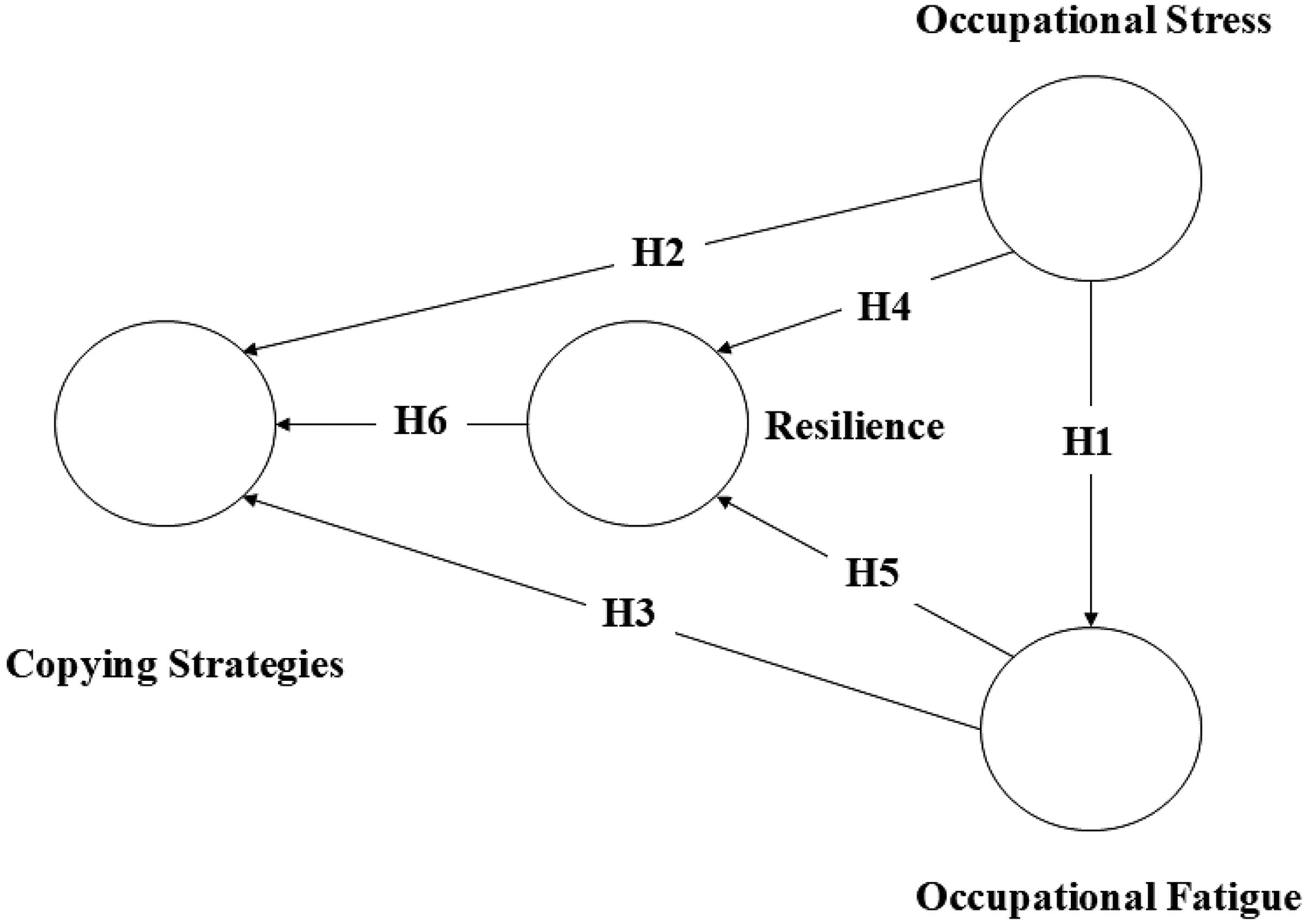
The hypothesis model of study.
Methods
Study design
This research, a meticulously conducted cross-sectional descriptive study, was carried out among all female drivers of school services in Isfahan City in Iran in 2023. The variables examined in this study, including demographic information, job fatigue, resilience, Occupational stress, and coping styles, were collected using rigorously designed questionnaires provided to the participants. The robust methodology of this study ensures the validity and reliability of its results.
Participants and sampling procedure
The statistical population for this study comprised all registered female school service drivers in Isfahan City in 2023. A comprehensive list of contact information for these drivers was obtained from the Isfahan Taxi Organization. From this complete list, a sample of 206 female school service drivers was selected using a simple random sampling method. To ensure true randomness, random numbers were generated using a random number generator program to identify the participants from the complete list. Each driver on the list had an equal chance of being selected for the study.
Study inclusion and exclusion criteria
Inclusion criteria for participation were: no history of taking any neuropsychiatric drugs, no history of hospitalization due to mental health problems, having at least 1 year of driving experience, and providing informed consent to participate. Participants who did not meet these inclusion criteria or had musculoskeletal disorders were excluded from the study. The importance of consent was upheld throughout the study, and participants were informed of their right to withdraw at any time.
Study sample size
The determination of the sample size for this study was primarily guided by recommendations pertaining to PLS-SEM. Hair et al. recommend that the sample size should be at least ten times the number of indicators in the most complex construct or ten times the largest number of structural paths leading to a latent variable. Considering the complexity of our model and the presence of 11 structural paths in our study, the minimum required sample size was estimated to be 110 participants. Given this, our obtained sample size of 206 participants is considered robust and sufficient to ensure the stability and reliability of the PLS-SEM results, aligning well with the recommendations for such analyses. This sample size enables the detection of medium to large effects with reasonable statistical power. 37
Tools
Swedish Occupational Fatigue Index (SOFI-20)
The Swedish Job Fatigue Index is presented to evaluate job fatigue. This questionnaire has five main dimensions, including lack of energy, physical effort, physical discomfort, lack of motivation, and sleepiness. This questionnaire has 20 questions, and its purpose is to measure perceived support in people (family, friends, and others). 38 The ten-option Likert scale classifies occupational fatigue into three distinct levels. If the average of each component is between 1 and 4.66, the situation is unfavorable. A range of 4.67 to 7.32 indicates a relatively favorable situation, while an average between 7.33 and 10 suggests a favorable condition of the investigated components. The confirmatory factor analysis results showed that the Persian version of the questionnaire is not just a fit but a good fit, reassuring its applicability. The overall Cronbach's alpha coefficient of the SOFI-20 questionnaire was 0.95. The Cronbach's alpha coefficient of the different dimensions of the questionnaire was between 0.88 and 0.69. 38
Connor-Davidson standard resilience questionnaire
Connor and Davidson prepared this questionnaire in 2003 after reviewing research sources on resilience from 1979 to 1991. The questionnaire includes five subscales (perception of individual competence, trust in individual instincts, tolerance of negative emotions, positive acceptance of change and secure relationships, control, and spiritual influences). 32 The Connor and Davidson Resilience Questionnaire, a tool for measuring resilience, is composed of 25 items. Each item is meticulously scored on a Likert scale, ranging from zero (completely false) to four (always true). The final score, falling between zero and one hundred, serves as a clear indicator of one's resilience. A score of 0–33 suggests low resilience, 34–67 indicates moderate resilience, and a score exceeding 68 signifies high resilience. Geraminejad et al.(2018) demonstrated the global applicability of this questionnaire by showing that the Persian version, with a Cronbach's alpha of 0.75, is a reliable tool. Its validity, determined through factor analysis, further supports its credibility. 39
Health and safety executive (HSE) occupational stress Questionnaire
The HSE Occupational stress questionnaire, a comprehensive tool, encompasses 35 questions and seven domains. Developed in the late 1990s, it was explicitly designed to measure the occupational stress of English workers and employes. The questionnaire covers demands, control, peer support, manager's support, relationships, role, and change. Low scores in the questionnaire, indicating high Occupational stress and pressure, can be a cause for concern and may require intervention. Conversely, high scores, indicating low Occupational stress and pressure, are a positive sign of a healthy work environment. 40 Marzabadi et al.'s study examined the validity and reliability of the Persian version of the HSE occupational stress questionnaire; the Cronbach's alpha coefficient indicated that the questionnaire's reliability was 78%. 41
Coping Inventory for stressful situations (CISS) questionnaire
Endler and Parker created this questionnaire for the first time in 1990.
24
The CISS questionnaire covers three main areas of coping behaviors, which include:
Problem-oriented coping strategy or active dealing with the problem in order to manage and solve it Emotion-oriented coping strategy or focusing on emotional responses to the problem Avoidance-oriented coping strategy or running away from the problem
According to a 5-point Likert scale, the minimum score of the individual is 48, and the maximum is 240. For each coping style, it ranges from 16 to 80. The score of each style is higher, and the individual's behavior is considered. The validity of the mentioned questionnaire has also been proven during the research conducted in Iran. In order to calculate the correlation of the Occupational stress-coping questionnaire factors, Pearson's correlation coefficient was used, and the following results were obtained: problem-oriented 0.58, emotion-oriented 0.55, avoidance 0.93. 42 According to Khodaei et al. study, Iranian nurses had Cronbach alpha coefficients of 0.83, 0.78, 0.77, and 0.77 for emotion-oriented coping style, task-oriented coping style, social diversion, and distraction, respectively. 43
Data analysis
The data analysis was conducted with utmost rigor using SPSS22 software. Descriptive statistics were employed to analyze the data thoroughly. The Kolmogorov-Smirnov test was used to check the data's normality rigorously. Furthermore, Pearson's correlation coefficient test was used for normal variables, and Spearman's correlation coefficient was used for non-normal variables, ensuring the robustness of our analysis. Modeling of structural rates was done using Smart Pls software, adding another layer of reliability to our findings. SEM modeling was performed based on the hypotheses to be investigated. The proposed model, meticulously constructed based on a comprehensive literature review, is based on the relationship between the coping strategies and resilience of school service female drivers with occupational stress and fatigue. Given that modeling of these parameters has not been done so far, a conceptual model was presented. The model's validity has been investigated, and its fit results are presented in the results section.
Results
The present study focuses explicitly on female drivers and examines the relationship between coping strategies and resilience to fatigue and occupational stress. 206 female drivers, with an average age of 39.82 (±5.53) years and an average work experience of 7.42 (±4.14) years, participated in this study. The results (Table 1), which showed that the emotion-oriented coping strategy was the most frequent (39.3%) and the avoidance-oriented coping strategy was the least frequent (27.7%) among the drivers, provide valuable and enlightening insights into the unique challenges female drivers face (Table 1).
Descriptive statistics of coping strategies among female school service drivers (N = 206).

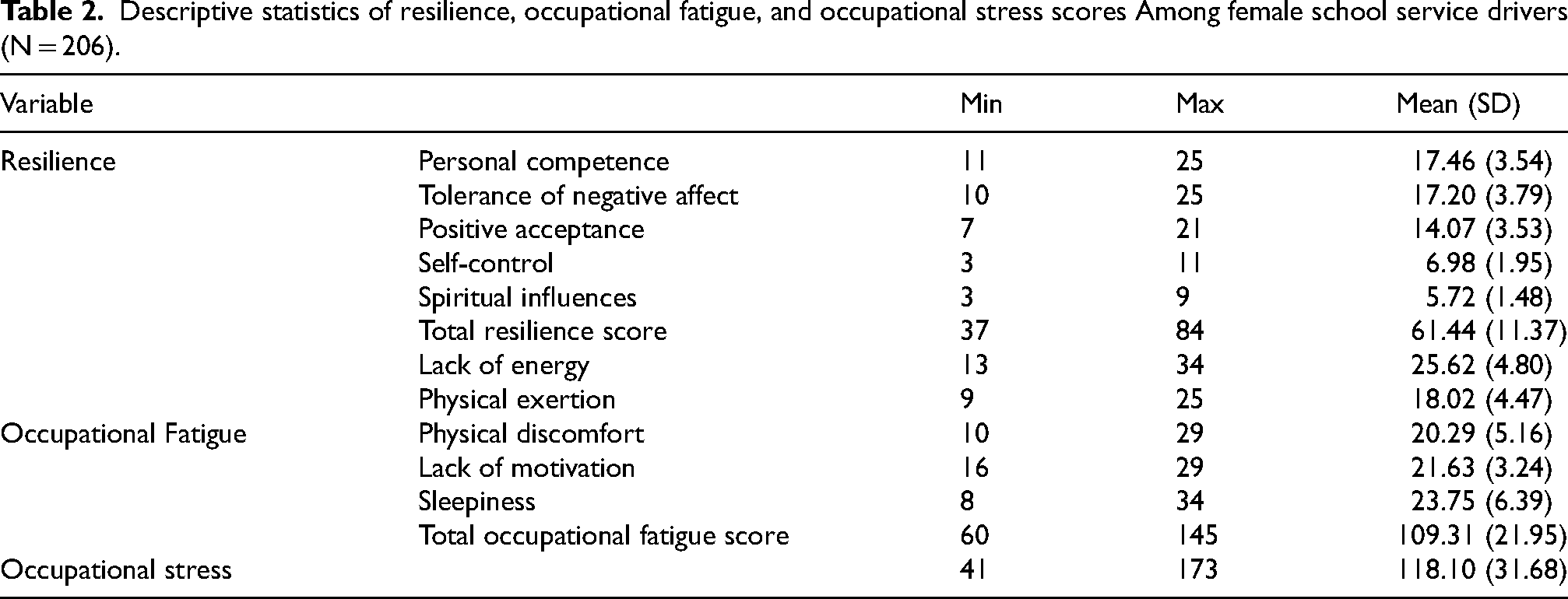
The mean scores of resilience, occupational fatigue, and occupational stress among female drivers were 61.44 (±11.37), 109.31 (±21.95), and 118.10 (31.68), respectively. Table 2 presents the scores of resilience and occupational fatigue dimensions, further underlining the weight of these findings.
Descriptive statistics of resilience, occupational fatigue, and occupational stress scores Among female school service drivers (N = 206).
The research findings (Table 3), as revealed by Pearson's correlation, showed a statistically significant negative difference between resilience, occupational fatigue, and occupational stress. This indicates that as occupational fatigue and occupational stress levels increase, the resilience of female drivers decreases. This underscores the need for interventions to reduce occupational fatigue and occupational stress among female drivers. Moreover, the significantly positive relationship between occupational stress and occupational fatigue suggests that managing occupational stress is crucial in preventing occupational fatigue among female drivers.
Pearson's correlation coefficients among occupational fatigue, occupational stress, and resilience.

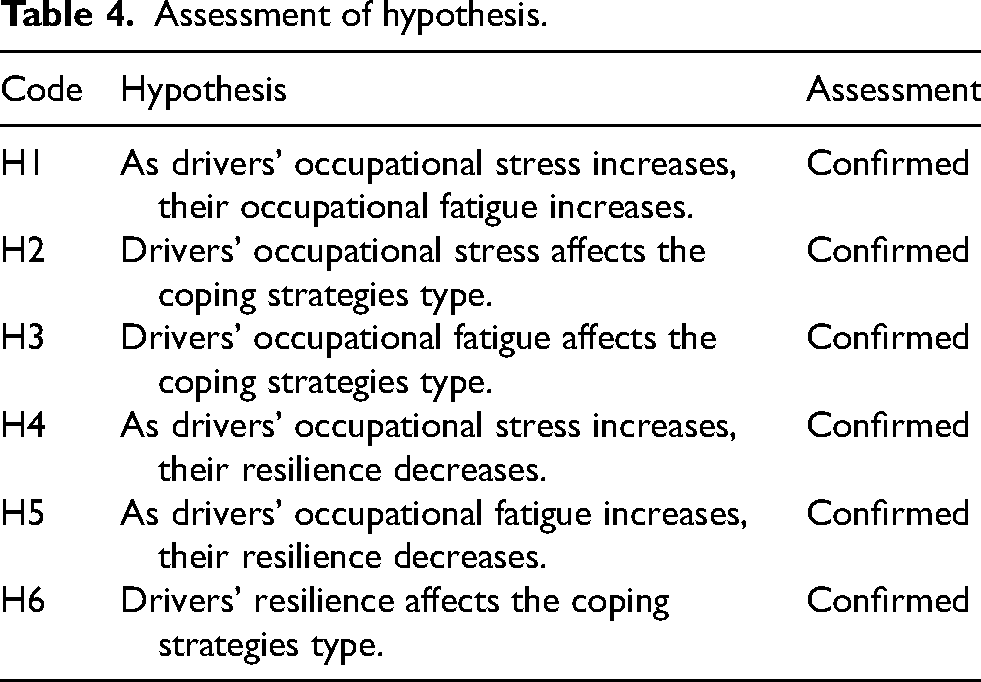
Modeling was done using structural equations. Figure 2 shows the final SEM model of the study. Based on the modeling results, occupational stress and fatigue had the highest negative statistical correlation with emotion-oriented strategies and the lowest correlation with avoidance-oriented strategies. Resilience also had the highest statistically significant negative correlation with problem-oriented coping strategies. The related results of confirming or rejecting the hypotheses are shown in Table 4.
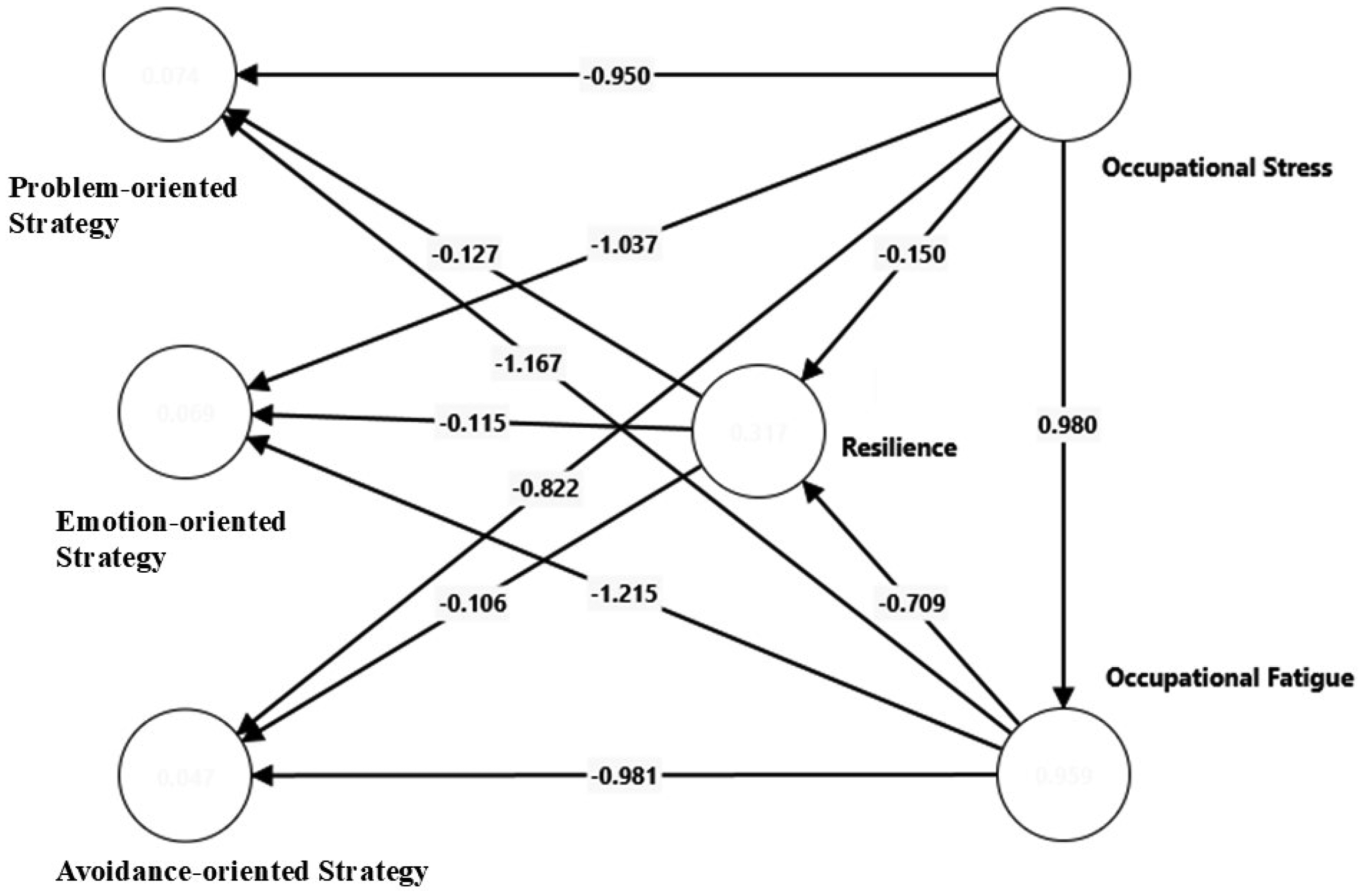
The SEM model demonstrates resilience and occupational fatigue as mediators of the relationship between occupational stress and stress coping styles (signifies path is significant at 0.05).
Assessment of hypothesis.
The values presented in Table 5 show the model's solid fit and, importantly, its high predictive power. The values of AVE suggest excellent convergent validity and that the measurement model effectively represents the underlying construct. The SRMR value of 0.081 in the SEM model indicates a good fit, as it is below the commonly accepted threshold of 0.10. This indicates that the predicted covariance matrix of the model is aligned with the observed covariance matrix.
Model fitness assessment.

Discussion
Occupational fatigue and occupational stress, on the one hand, and the level of resilience, on the other hand, can significantly influence drivers’ behavior. The ability of a driver to respond effectively to critical and stressful situations and their coping strategies are crucial. This category, known as occupational stress coping strategies, is a critical study area. Psychological factors such as job fatigue and individual resilience can alter these coping strategies, increasing the likelihood of accidents. 26 Given the profound implications of this research, we undertook a study to explore the relationship between coping strategies, job fatigue, occupational stress and resilience among 206 female school service drivers in Isfahan City.
The descriptive results of the occupational stress coping strategies in the present study showed that the emotion-oriented coping strategy was in first place among female drivers, followed by the problem-oriented coping strategy, which is a state in which a person focuses on the problem, collects, and processes information in the mind, and tries to solve it logically after evaluation. Finally, the avoidance-based coping strategy was in third place. When people do not reason, they use an emotional or avoidance coping strategy. 44 In line with the results of the present study, Graves et al.)2021(showed that women experience a higher level of occupational stress than men, and the dominant coping strategy among the women participating in this study was the emotion-oriented coping strategy. 45
The predominance of emotion-oriented coping strategies among female drivers indicates a tendency to focus on emotional responses to occupational stress instead of addressing the leading causes of stressful factors. Emotion-focused coping strategies can include seeking emotional support, expressing feelings, or engaging in comforting behaviors. While these strategies can provide temporary relief, they may not effectively reduce underlying stressors associated with driving, such as traffic congestion or the aggressive driving behaviors of others. 46
The results showed that among female drivers, resilience was evaluated at a relatively desirable level. The relatively desirable assessment of resilience among female drivers suggests that many can cope with the challenges and occupational stresses associated with their driving roles. This finding is consistent with and reinforces existing literature that emphasizes the importance of resilience in stressful jobs, where the capacity to adapt and recover from adversity is critical to personal well-being and job performance. 47 This alignment with existing literature should reassure our readers and instill confidence in the research findings. Most drivers (74.8 percent) in the relatively desirable category indicate a strong capacity for flexibility that can help manage driving demands.
The present study's findings, which showed that occupational fatigue among female drivers was observed at a relatively desirable level, highlight the need for further research in this area. Fatigue, as demonstrated, can impair reaction time, alertness, concentration, and all attention-based activities. 48 In 2014, Wang and Pei's evaluation of the effect of long-term driving on the mental performance and fatigue of 33 professional drivers provided crucial insights. Their study showed that after 2 h of continuous driving, subjective fatigue increased and the driving performance of participants decreased, which in turn can affect their attention, reaction, and perception. 49 Furthermore, Liu and Wu's conclusion that fatigue leads to more unfavorable driving behavior underscores the urgency and importance of further research in this field.(40)(2009)
The results showed that resilience and occupational fatigue had a statistically significant negative difference. There was a high negative correlation between these two variables; This means that with the increase of occupational fatigue, people's resilience decreased. A noteworthy finding from our structural equation model is the exceptionally strong positive relationship observed between occupational stress and occupational fatigue (path coefficient = 0.98, p < 0.001). This indicates that occupational stress is a near-complete predictor of occupational fatigue in our sample of female school service drivers, suggesting a profound and almost inseparable connection between these two constructs in this specific occupational context. While such a high correlation might raise concerns about multicollinearity in traditional regression analyses, it is important to clarify that within our PLS-SEM framework, this strong path coefficient reflects the hypothesized direct and substantial influence of occupational stress on fatigue, aligning with existing literature that often conceptualizes fatigue as a direct consequence or severe manifestation of prolonged occupational stress. This strong linkage underscores the critical importance of effective stress management strategies as a primary intervention for mitigating fatigue among these drivers, as reducing stress is highly likely to directly and substantially reduce fatigue levels.
As occupational fatigue increases, drivers may struggle to maintain resilience, leading to adverse outcomes, including burnout and reduced occupational satisfaction. For example, Luthans et al. found that drivers who perceived high levels of social support and occupational satisfaction also reported higher resilience. 35 Creating a positive work culture can increase resilience and enable drivers to better cope with fatigue and occupational stress. Smith et al. found that resilience moderates the relationship between occupational strain and satisfaction, suggesting that resilient drivers are better equipped to manage demanding work environments. 50 These results are consistent with the present study's findings, which state that resilience and occupational fatigue have a statistically significant negative correlation. This means that resilience tends to decrease as occupational fatigue increases. In line with the results of the present study, Yusefi et al. showed a significant inverse correlation between occupational fatigue and the resilience of healthcare workers. 51 Also, Mansourian et al. showed that resilience was favorable among faculty members and had a statistically significant negative difference with occupational fatigue. 52 Zahednezhad et al. also showed that resilience negatively and significantly affected all dimensions of occupational fatigue. 31
The results of this research are of significant importance, as they show that individuals with different coping strategies had a statistically significant difference in the average total score of occupational fatigue. Research indicates that how individuals manage occupational stress can significantly impact their level of occupational burnout. In a study by Öz et al., it was found that drivers who employ conflictual coping strategies, such as expressing themselves or engaging in conflict to relieve frustration, are more likely to experience higher levels of occupational burnout. 27 The resilience score and its dimensions did not show statistically significant differences among people with different coping strategies. Another study discovered that individuals who utilize adaptive coping strategies, such as problem-solving and seeking social support, demonstrate higher flexibility and better overall occupational performance. 35 Conversely, avoidance-oriented coping strategies, which include denial and withdrawal, are often associated with less resilience and increased occupational burnout. 46 These findings underscore the importance of understanding and addressing coping strategies in the context of occupational burnout.
However, the findings that resilience scores and their dimensions did not show statistically significant differences among drivers with different coping strategies suggest that the relationship between these variables may be complex. Contextual factors affecting resilience and the effectiveness of coping strategies in fostering resilience can differ significantly depending on the context in which they are applied. The lack of significant differences between drivers may indicate that factors such as the work environment, social support, and individual personality traits play a more critical role in determining resilience levels. 53 In addition, Hosseini et al. emphasized that continuous exposure to stressful factors at work without effective coping mechanisms can lead to occupational burnout and reduced resilience. 54 This suggests that although coping strategies are essential, they may be insufficient to increase resilience if underlying stressors are not added. In their study, Louis et al. stated that resilience is related to coping skills, and older adults with higher resilience may be able to more effectively engage in appropriate coping behaviors, which could significantly impact driving behavior, safety, and mobility. 29
Shamoa-Nir et al.'s study provided evidence for the relationship between occupational stress and aggressive driving, as well as between problem-solving strategy as a coping tool in stressful situations and hostile behaviors. 55 In their study, Lotfi et al. showed more errors, violations, and accidents among emotion-oriented and avoidance-oriented drivers than problem-oriented people. 16 Lotfi et al.'s study showed that people who adopted a problem-oriented coping strategy, such as seeking solutions or taking action, were less likely to have car accidents. 16 Pourabedian et al. stated in their study that there is a significant difference in the coping strategy of drivers before and after the trip, and the percentage of people with an emotion-oriented strategy, such as venting or avoiding the problem, increases after the trip. Their study showed that travel fatigue can change subjects’ coping strategies from problem-oriented to emotion-oriented and avoidance. This can increase the number of traffic accidents. 56 As in the present study, more people have an emotion-oriented coping strategy, which can increase the probability of traffic accidents.
In their study, Marzabadi et al. showed that only an emotion-oriented strategy can predict occupational stress. Also, in their study, the problem-oriented strategy is the most used among military employes in stressful occupational situations, 57 while the problem-oriented strategy was the second most frequent in the present study. In their study, Hosseini et al. stated that problem-oriented coping strategies and emotion-oriented coping strategies were positively related to secondary traumatic occupational stress symptoms in employes. Also, in their study, coping strategies explained 0.31 of the variance of secondary traumatic occupational stress symptom scores. 54 The adoption of an emotion-oriented coping strategy in the present study aggravated the symptoms of occupational stress and increased the level of occupational fatigue of these people. Parikh et al.'s study showed that the problem-oriented coping strategy was the most common among nurses. In the present study, the problem-oriented coping strategy was in second place. 58 People with increasing occupational fatigue use emotion-oriented coping strategies instead of problem-oriented coping strategies to solve the crisis due to a decrease in cognitive function and as a result of weakness in decision-making ability. 44
It is crucial to recognize some limitations that may affect the generalizability and interpretation of our findings, even though this study offers insightful information about the connections among coping strategies, resilience, occupational stress, and occupational fatigue in female school service drivers. The exclusion of study participants with musculoskeletal disorders is one particular methodological consideration. This exclusion may have unintentionally introduced a selection bias, even though its goal was to guarantee a more homogeneous sample and avoid confounding effects from physical health issues on psychological variables. Professional drivers frequently suffer from musculoskeletal disorders as a result of the ergonomic demands and extended periods of static posture that come with driving. These physical health problems may affect a person's coping mechanisms and general resilience, and they may be inextricably linked to elevated levels of work-related stress and exhaustion. As a result, our results may not accurately reflect the experiences of female school service drivers who deal with these prevalent issues. To obtain a more thorough grasp of these intricate relationships within the larger population of drivers, future research should think about incorporating drivers with musculoskeletal disorders, possibly using a stratified sampling approach. Furthermore, this study's cross-sectional design restricts our capacity to draw conclusions about the causal relationships between the variables under investigation. It is crucial to remember that causality cannot be conclusively established in the absence of longitudinal data, even though our PLS-SEM model indicates predictive pathways. Longitudinal designs would be useful in future studies to monitor changes over time and validate causal relationships.
Conclusion
The results of this study offer important new information about the psychological health of female school service drivers, showing that resilience, occupational stress, and occupational fatigue were all reported at levels that were comparatively acceptable in this group. Importantly, the complex dynamics between these constructs were revealed by the structural equation modeling, which validated all proposed relationships (H1-H6). The important mediating role of resilience and occupational fatigue in the relationship between occupational stress and coping strategies is one of our model's main conclusions. According to the model, there is a noticeable shift toward emotion-oriented coping mechanisms as occupational stress and fatigue rise. These coping mechanisms are linked to increased risks of negative consequences, such as accidents. These results have important ramifications for driver support systems and policy. Interventions are critically needed given the established pathways through which occupational stress and exhaustion can impair resilience and lead to less adaptive coping strategies. The creation and execution of focused support networks for female school service drivers should be given top priority by policymakers and transportation authorities, with an emphasis on: Stress and Fatigue Management Programs, Enhancing Resilience Training and Encouraging Problem-Oriented Coping. We can greatly improve drivers’ coping mechanisms, improve their general well-being, and eventually lead to safer driving practices and a lower likelihood of accidents on the road by proactively addressing occupational fatigue and stress and building resilience through such focused programs.
Footnotes
Acknowledgements
This article was extracted from a thesis written by Elham Nasr Esfahani (Project code: 3402582). The authors express their sincere gratitude to the student research committee of Isfahan University of Medical Sciences. We would also like to extend our heartfelt thanks to the esteemed professors of ergonomics and occupational health across the country that participated in this study and provided valuable support. Their contributions were instrumental in the success of this study.
Ethical considerations
This study was approved as a research project in the ethics committee of Isfahan University of Medical Sciences with code number IR.MUI.DHMT.REC.1402.065 and was performed in accordance with Declaration of Helsinki. In the present study all participants were above 18 years old and signed an informed consent form prior to taking part in the study. Before starting the measures, the necessary explanations about this study were given to the workers and their written consent was obtained to participate in this study. Workers were also assured that their personal information would be kept confidential. All methods in our study were performed in accordance with the guidelines and regulations approved by the Ethics Committee of Isfahan University or Medical sciences.
Informed consent
All participants were over 18 years old and provided written informed consent. The study was conducted in accordance with the guidelines of the Ethics Committee of Isfahan University of Medical Sciences, which approved both the protocol and the consent procedure.
Funding
The authors received no financial support for the research, authorship, and/or publication of this article.
Declaration of conflicting interests
The authors declared no potential conflicts of interest with respect to the research, authorship, and/or publication of this article.
Generative AI deceleration
We utilized AI-Powered tools to check grammar and enhance the academic quality of the text, which was primarily written by authors.