



Abstract
Background
Brazil is one of the leading global pork exporters, operating approximately 1100 slaughterhouses where manual labor often exposes workers to repetitive strain and poor postural conditions.
Objective
This study aimed to evaluate the effectiveness and usability of an exoskeleton in reducing upper-limb physical effort during dynamic, repetitive tasks common in meat processing lines.
Method
Seventeen workers performed 17 production tasks involving repeated arm elevations above 45°, both with and without the use of an exoskeleton. Muscle activity in the medial and anterior deltoids was measured using surface electromyography (sEMG). Subjective workload was assessed using the BORG scale and a usability questionnaire.
Results
Among the four muscles analyzed based on normalized mean values relative to maximum voluntary contraction (MVC), a statistically significant reduction in activity was observed in the right medial deltoid when using the exoskeleton (p = 0.0440). For normalized peak values, no muscle showed statistically significant reductions (left anterior deltoid, p = 0.3192; left medial deltoid, p = 0.0552; right anterior deltoid, p = 0.3708; right medial deltoid, p = 0.0552). However, Cohen's d indicated medium-to-large effect sizes for the right and left medial deltoids and the left anterior deltoid, suggesting reduced biomechanical demand during exoskeleton-assisted tasks.
Conclusion
The exoskeleton demonstrated potential to reduce the load on specific muscles, indicating possible ergonomic and industrial benefits. However, limitations include the need for anthropometric adjustments and additional operating space. These findings support the device's relevance and highlight the need for further research on optimization and industrial adaptation.
Keywords
Introduction
Brazil ranked fourth in global pork production during the 2024 season, with an output of 4.5 million tons. Brazilian pork exports reached 1.352 million tons in the same year, according to the Brazilian Association of Animal Protein. 1 “Brazil is home to some of the world's leading meat producers and exporters”. 2
Southern Brazil is responsible for 67% of total production and hosts most meat slaughtering and processing industries. These companies present “situations with the potential to compromise worker health and safety”. 3
The prevalence of musculoskeletal disorders among slaughterhouse workers has been widely documented in international studies, revealing a consistent pattern of physical impairment associated with the working conditions in this sector.
A total of 40.97% of evaluated workers were found to have soft tissue musculoskeletal disorders, with most performing repetitive movements (89.6%) and working shifts longer than six hours (78.9%). 4 These findings strengthen the link between physical overload and the development of occupational injuries.
The overall prevalence of musculoskeletal disorders among slaughterhouse workers was 64,9%, with symptoms most commonly affecting the hands and wrists (54.8%), elbows (45.2%), and lower back (43.5%). 5 Similarly, in another recent study of poultry slaughterhouse workers, 61.5% reported shoulder pain, 60.3% reported pain in the hands or wrists, and 35.9% reported pain in the lower back. 6 These findings demonstrate that musculoskeletal disorders represent a global and persistent issue, regardless of geographic location or slaughterhouse type.
The use of innovative technologies plays a fundamental role in improving working conditions and preventing occupational injuries, especially in jobs with high physical demands and repetitive movements, which are common in the meat processing and slaughter industries.
In industrial environments such as meat slaughtering and processing, ergonomic issues have been a constant challenge to worker health, representing significant biomechanical risks that require effective technological solutions. In this context, the use of passive exoskeletons has emerged as a promising approach to mitigating these risks.
The introduction of new technologies and applications is crucial in ergonomics, as they promote worker safety and well-being, prevent injuries, and improve performance.7,8
The use of upper limb exoskeletons reduces muscle effort, particularly in the lateral and medial deltoids, thereby lowering biomechanical risk. 9
In addition, electromyography has proven effective in quantitatively identifying muscle contractions. 10 These approaches aim to improve working conditions and promote the health and comfort of workers.
Several studies involving various exoskeleton models applied to laboratory simulations have been conducted.11–26
These studies indicate that wearable technologies positively impact the risk of injuries to the shoulders, elbows, spine, and hands and provide strong evidence that surface electromyography (sEMG) is a safe and effective method for muscle evaluation.
Some reports emphasize the need for field studies, in which other variables may interfere with the results. This observation underscores the importance of field tests with exoskeletons in real work situations, such as the practical studies conducted by some authors.27,28 These investigations tested exoskeletons in production environments—the first in the vehicle assembly sector of the Ford Motor Company in Glendale, MI, USA, and the second in two John Deere factories.
Despite the growing interest in using exoskeletons to improve ergonomics and prevent injuries in the workplace, researchers have paid little attention to their applicability in environments such as slaughtering and meat processing industries. This study aimed to analyze the effectiveness of the exoskeleton in reducing physical effort in the upper limbs during repetitive dynamic activities in meat processing production lines, considering its usability.
Materials and methods
A field study was conducted at a representative meat processing company using a purposive sampling technique. The sampling was not based on the number of individuals evaluated but on the significance of their relationship to the investigated problem. This study employed a within-subjects design in which the same participants performed the tasks both with and without the use of the exoskeleton. Therefore, group randomization was not required, as each individual served as their own control.
Ethics
The University's Research Ethics Committee reviewed and approved this study in November 2021 in accordance with the Declaration of Helsinki. The experiments were conducted in this study took place at a meat-processing facility in southern Brazil.
Participants
Participation was voluntary, with participants providing consent after reading and signing the Informed Consent Form (ICF) and the free consent form for image and voice-sound use (FCFIVSU).
After reviewing the outpatient medical records, the researcher selected participants who had no pre-existing shoulder injuries or limitations. The experimental protocol was conducted in two distinct phases, both monitored using sEMG. Phase 1 involved performing the designated task while wearing the exoskeleton, and Phase 2 involved performing the same task without the exoskeleton.
Seventeen males participated in the study, with an average age of 30 years, average company tenure of three years, average stature of 173 cm, and average weight of 72 kg. Tasks involving arm lifting were performed exclusively by men. They were engaged in 17 production tasks involving repetitive effort and dynamic arm elevation and abduction postures, as well as shoulder flexion at angles above 45°. These postures can significantly increase the risk of injuries and a potential increase in muscle fatigue and musculoskeletal disorders in the neck and shoulder regions.8,24 The study included only male participants because of the nature of the tasks involving arm exertion, which, in the context of meat packing plants, is exclusively performed by men. Although this choice reflects the ergonomic reality of the evaluated environment, it limits the generalizability of the results, because women may present physiological and biomechanical differences that influence the effectiveness of the exoskeleton. The absence of female participants prevented a comprehensive assessment of how the device adapts to different body types. Therefore, future research should include both sexes to validate the performance of the exoskeleton more effectively in diverse populations and ensure its adaptability to varying physiological and ergonomic needs.
Each participant answered two questionnaires. Questionnaire 01 contained questions related to the participants’ profiles and physical effort using the BORG scale to identify the perceived effort level in performing tasks without the exoskeleton. Questionnaire 02 was answered after using the exoskeleton. The BORG scale was applied again to assess participants’ perceived exertion, together with Brooke's System Usability Scale (SUS), which is a reliable, low-cost usability scale that can be used for global assessments of systems usability. 29
The Likert scale questions, scored from 0 to 5, were:
Odd-numbered questions
Do you think you would like to frequently use this exoskeleton? Do you find the exoskeleton easy to use? Do you find the exoskeleton comfortable? Do you think people would learn to use the exoskeleton quickly? Do you feel confident about using an exoskeleton? Even-numbered questions:
Do you find the exoskeleton very complex? Would you require help from someone with technical knowledge to use the exoskeleton? Do you find that the exoskeleton has many problems with use? Do you find the exoskeleton difficult to use? Do you need to learn how to use the exoskeleton from someone else?
The SUS score was calculated by adding the individual item contributions and adjusting them according to the scale methodology. The final result was obtained by multiplying the sum by 2.5. 29
Electrodes placement
Four electrodes were placed on the upper belly of the medial and anterior deltoid muscles on both the right and left sides. These two muscles were selected for two reasons. First, the equipment had four channels owing to technical limitations.
Second, because of the function of the muscles, the anterior portion of the deltoid is primarily responsible for shoulder flexion, lifting the arm in front of the body, while the medial deltoid portion abducts the shoulders, especially after the first 15° to 30°, where the supraspinatus muscles also play a role.
The electrodes were placed on the anterior deltoid at the midpoint between the acromion and the medial part of the clavicle. This was located at the center of the anterior portion. The electrodes placed on the medial deltoid were positioned at the midpoint between the acromion and lateral region of the humerus. In both cases, the distance between the electrodes was 2–3 cm. The electrodes were disposable and the attachment sites were cleaned with alcohol. Shaving was unnecessary because no hair was removed from the areas where the electrodes were placed.
Evaluated tasks
Seventeen activities were selected in which the shoulders performed dynamic flexion and abduction movements at angles between 45° and 90°.
The 4 first tasks (1-stocking sausage trolley, 2-stocking calabrese sausage, 3- hanging bacon, and 4-hanging fresh pork sausage) have similar characteristics involving the actions of hanging and unhanging processed products on trolleys. Each task requires a worker to walk very short distances to pick up products from a table or machine output and place them in trolleys.Tasks 5 and 6 (5-hanging reels on the overhead rail system and 6-unhanging reels from the overhead rail system) were performed by two workers who adopted an upright posture and repetitive upper limb movements. One worker performs the task of hanging reels, grabbing them with both hands, and lifting them to a position on the rails; the other worker unhangs the reels from the overhead system, grabbing them with both hands, and placing them on a side table.
Tasks 7 to 17 were 7: swine tenderloin removal, 8: belly primal separation, 9: shoulder primal deboning, 10: ham primal deboning, 11: deboning humerus, 12: detaching muscle, 13: swine carcass shoulder removal, 14: neck bone removal, 15: manual belly scraping, 16: total deboning, and 17: final trimming. They are performed in an overhead rail system in which pigs are brought to workstations where the workers are positioned standing facing the production line.
The line is continuous, and the pigs hung on the overhead rail system pass in front of the workers who must perform their tasks by cutting parts of the pig's carcass. Using knives in one hand and holding the pig with the other, workers performed specific tasks of cutting, scraping, and detaching meat from the pig carcass. On the other hand, the device that does not hold a knife is used to hold a piece of meat during cutting or hair scraping. In this overhead rail system process, 11 workers perform similar tasks with the same goal of cutting pork but removing different parts of the pig.
Figure 1 presents a macro flowchart of the industrial process, with the tasks selected for the study highlighted in black.
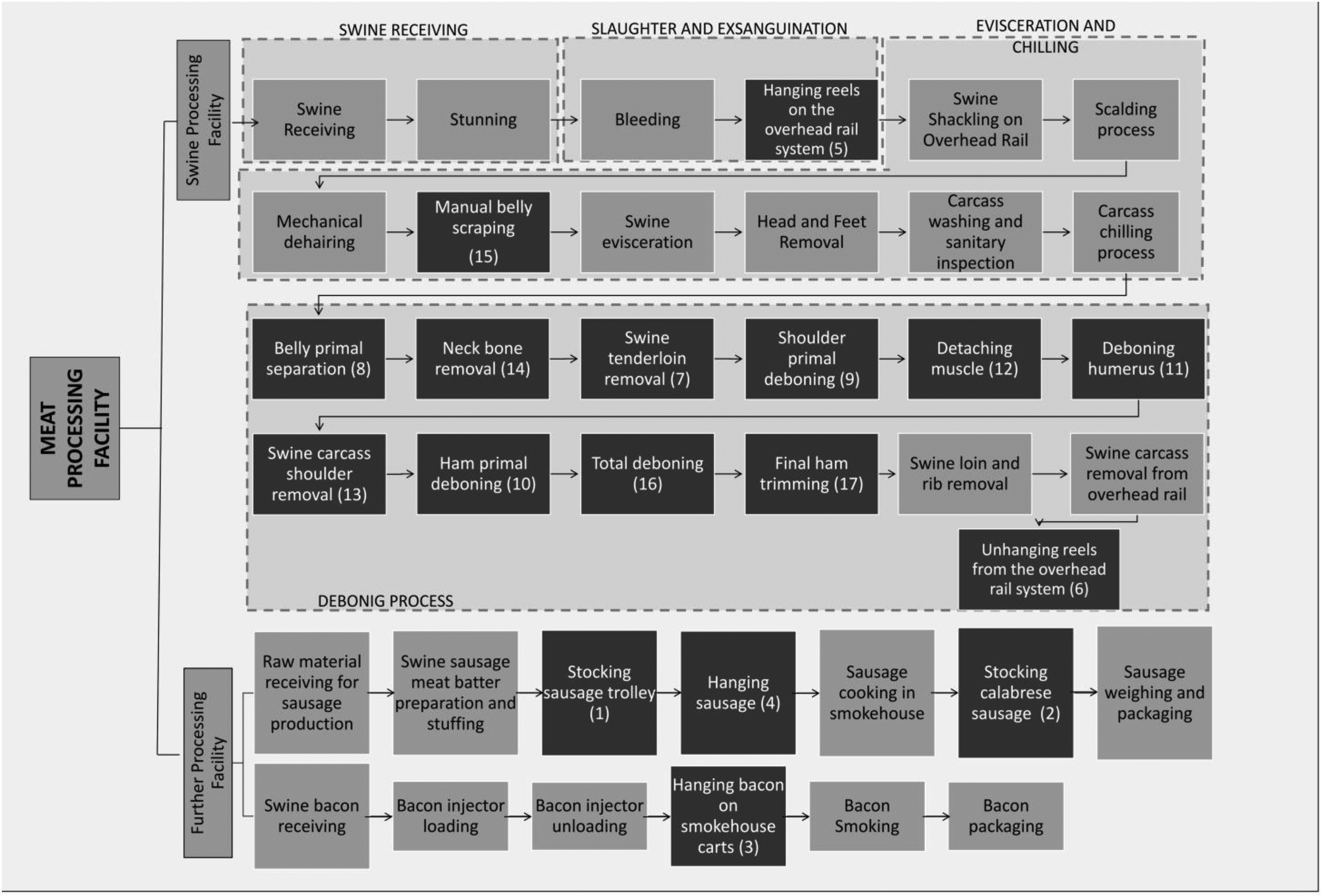
Industrial process flowchart.
Practical application of the exoskeleton and electromyograph
The exoskeleton model used in this study was EXYONE, manufactured in Brazil by Exygroup – Industrial Exoskeletons, designed to reduce the physical effort of the upper limbs. Figure 2 represents the use of the EXYONE exoskeleton by one of the 17 participants in the studied tasks in the meat slaughtering and processing industry production system.
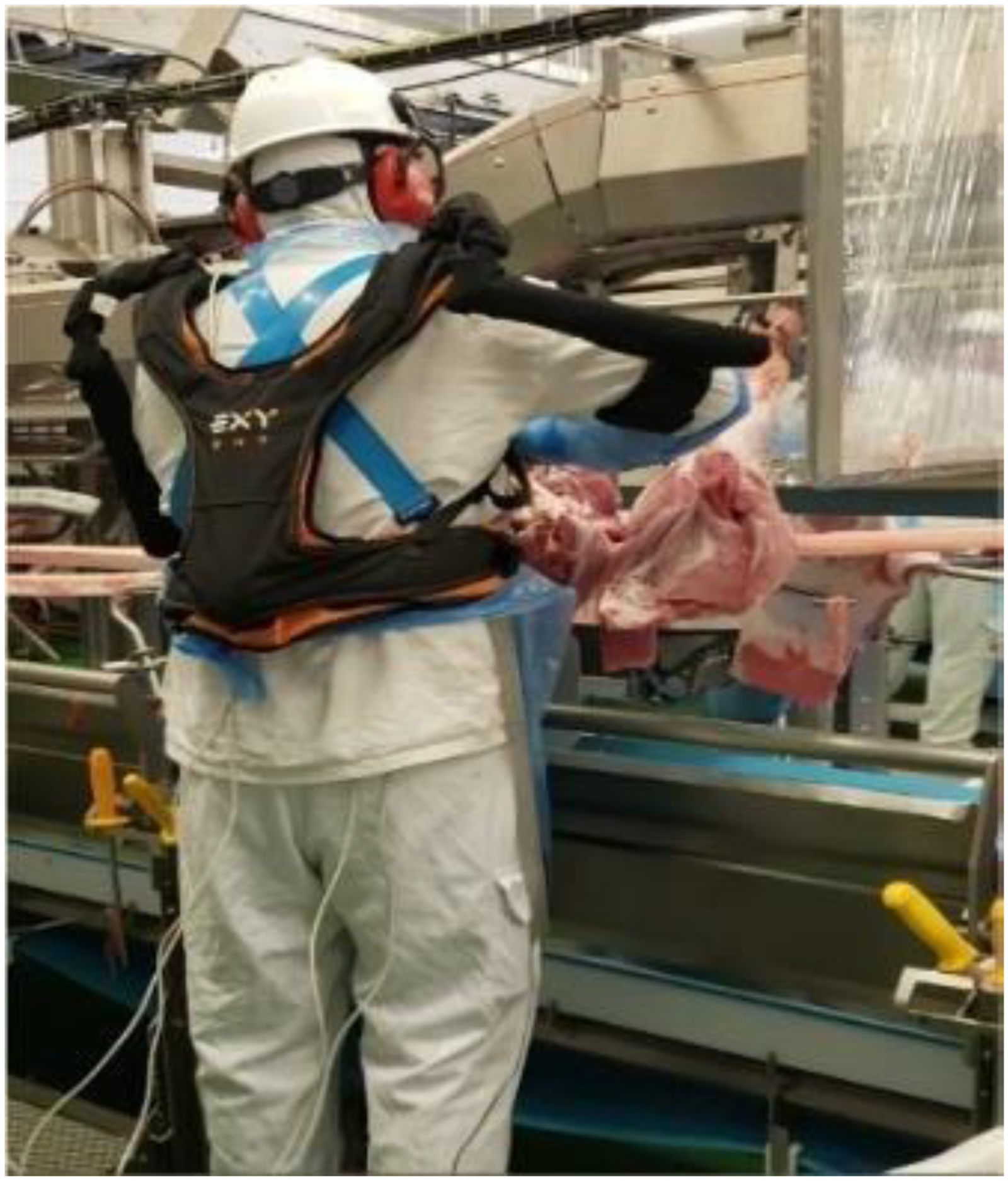
Using the exoskeleton.
The electromyograph used was the Miotool – 400® model, featuring four channels, a 14-bit analog-to- digital converter board, surface sensors for acquisition at 2000 samples per second, common mode rejection of 100 dB, and signals amplified with a gain of 1000 times. A disposable foam (3 M model 2223BRQ) was used as the electrode.
For this study, signal filtering was performed using a low-pass filter with a cutoff frequency of 500 Hz to remove high-frequency noise, and a high-pass filter with a cutoff frequency of 20 Hz to eliminate low-frequency components such as motion artifacts.
Study procedures
A signal normalization test was conducted to identify the peak forces. To determine the maximum voluntary contraction (MVC) of the anterior and medial deltoid muscles, two distinct movements were performed: shoulder flexion to assess the anterior deltoid, and shoulder abduction following the same protocol to assess the medial deltoid.
After electrode placement, the following protocol was applied: participants stood upright with their arms alongside the body and thumbs facing forward. They were then instructed to perform shoulder flexion and exert maximum force against the manual resistance applied by the researcher, with the aim of reach a 90-degree angle. Following the same procedure, participants were instructed to perform shoulder abduction. Each participant completed three repetitions for each muscle, with a five-minute rest interval between sets. MVC values were recorded thrice after the tests, and the highest value obtained was used for the analysis.
Although all electrode placement preparations and MVC determination took place in a clinic adjacent to the workplace, the practical application of the study for collecting electromyographic signals during the use and non-use of the exoskeleton occurred at the workstations of the production line during the actual cycle of each task selected for research.
Following all preparations, including the placement of sEMG electrodes on the study participant and training focused on the placement and removal of the exoskeleton to habituate the subjects to the equipment, the participants were directed to the production system using the exoskeleton to initiate data collection.
Data collection
To compare the results of exoskeleton use and non-use, data collection was performed using a standardized time interval of 30 s. During this period, each participant performed an average of three cycles of the scheduled task by dynamically flexing and abducting the arms above 45° shoulder angles for at least half of the time in each cycle, as required by the task performed. The participants had up to 60 s to remove the exoskeleton and data to be discarded later. A researcher's assistant remained beside the participant to hold the exoskeleton after its removal, while the participant began another 30 s of task execution without using the exoskeleton to continue the sEMG signal collection.
All 17 tasks consisted of cycles requiring dynamic shoulder postures above 45° angles, 5–15 s each, granting the same sEMG data collection, with the repetition of similar movements during a standardized 30-s period, with and without the exoskeleton. Some tasks exhibited cycles that were repeated more than thrice, whereas others were repeated twice.
Although the task duration was standardized for data collection purposes, task assignments varied among participants. The activities encompassed distinct operations related to pork processing, such as fillet removal, belly cutting, and severing, which were allocated according to each participant's routine within the production line. Thus, while the participants executed similar movement patterns, each performed a specific task embedded in their workflow cycle, thereby introducing inherent variability across task types. This variability reflects the actual working conditions in the industry, although it may influence the interpretation of the results. Therefore, despite methodological controls aimed at minimizing variability, the dynamic and human-centered nature of tasks precludes absolute standardization, which is a common limitation in field studies conducted in real-world occupational settings.
Data analysis
The adjusted normalized average (MVC) was selected for a comparative analysis of the results between exoskeleton use and non-use during the task cycles. Normalized peak values were used to compare the behavior of the data between the use and non-use of the exoskeleton, preventing the average value from obscuring significant results.
These peak values indicate the effect of the exoskeleton on muscle activation. A lower peak value of the exoskeleton may indicate a reduction in muscle load, which is beneficial for preventing fatigue and injuries.
To assess the statistical significance between the conditions with and without exoskeleton use, data normality was first verified using the Shapiro-Wilk test. For muscle groups with normally distributed data, a paired Student's t-tests was used. For non-normally distributed data, the non-parametric Wilcoxon test was used. To account for multiple comparisons across muscle groups, Bonferroni correction was applied directly to the p-values obtained from the statistical tests. 30 The adjusted p-values were then compared against the reference threshold of p = 0.05 to determine statistical significance. Differences were considered statistically significant when the corrected p-values were below this threshold. In addition to statistical analysis, effect sizes were calculated using Cohen's d to evaluate the magnitude of differences between the conditions with and without exoskeleton use. Effect sizes were interpreted according to Cohen's guidelines, with thresholds of 0.2 (small), 0.5 (medium), and 0.8 (large). 31 All statistical analyses were performed using R software, version 4.5.1.
Results
Regarding the results presented by sEMG, the variables generated by Miotec Suit 1.0 software were: Peak (μV) and, Adjusted Mean (μV). The Adjusted Normalized Mean (%MVC) was selected to compare the values obtained during exoskeleton use and non-use as shown in Figure 3.
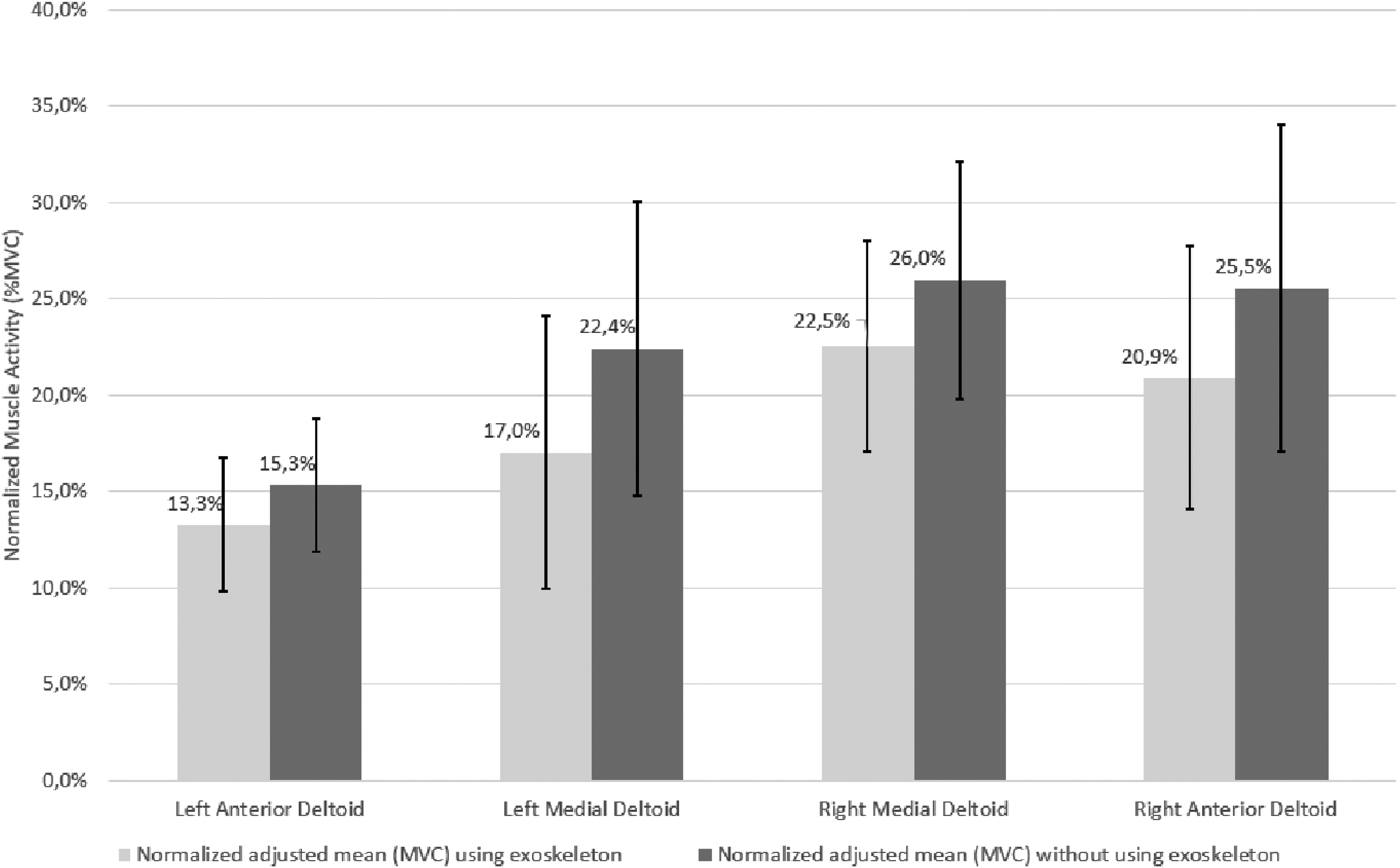
Normalized adjusted mean of the 4 studied muscles: columns indicate mean values; error bars represent 95% confidence intervals derived from Table 1.
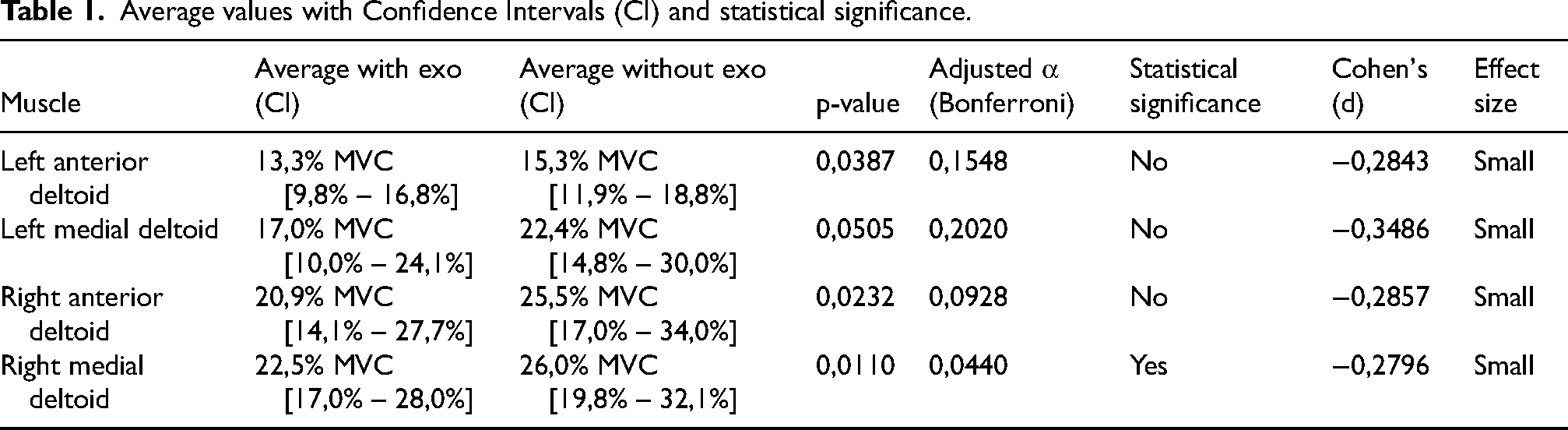
Average values with Confidence Intervals (CI) and statistical significance.
The graphic indicates a reduction in the intensity and frequency of the signal captured by the sEMG when the exoskeleton was used. Therefore, there were gains in this aspect compared to non-use.
Table 1 presents the mean values of muscle activation with and without exoskeleton use, including the confidence intervals, p-values, and corresponding effect sizes. Overall, a trend toward reduced muscle activity was observed with the use of the device, although only the right medial deltoid showed a significant difference.
Figure 4 depicts the statistical analysis of the four muscles studied for each participant, where the average of the normalized peaks (peak) of the 17 participants was applied considering the use and non-use of the exoskeleton.
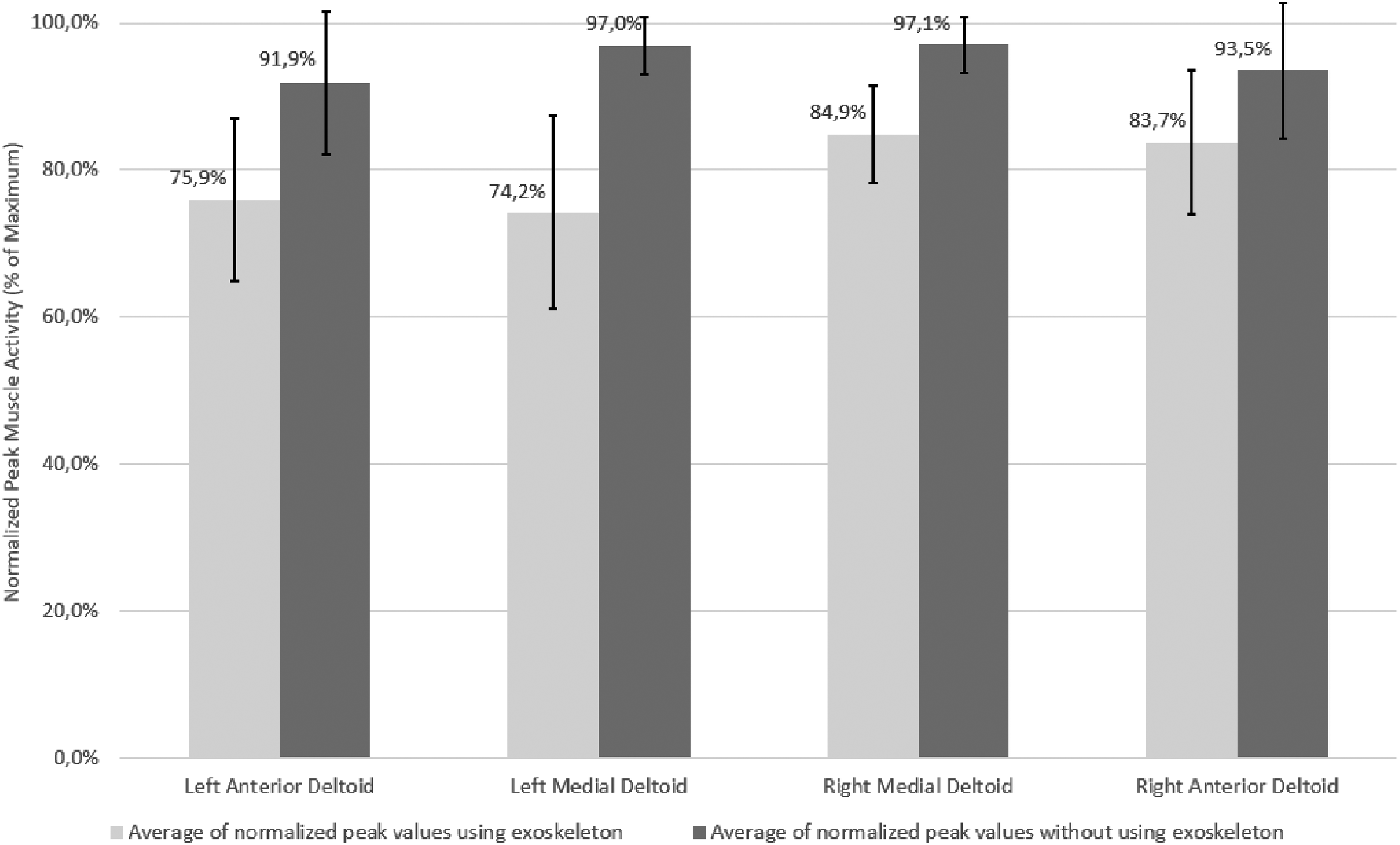
Average of normalized peak values (peak): columns indicate mean values; error bars represent 95% confidence intervals derived from Table 2.
Peak values with Confidence Intervals (CI) and statistical significance.
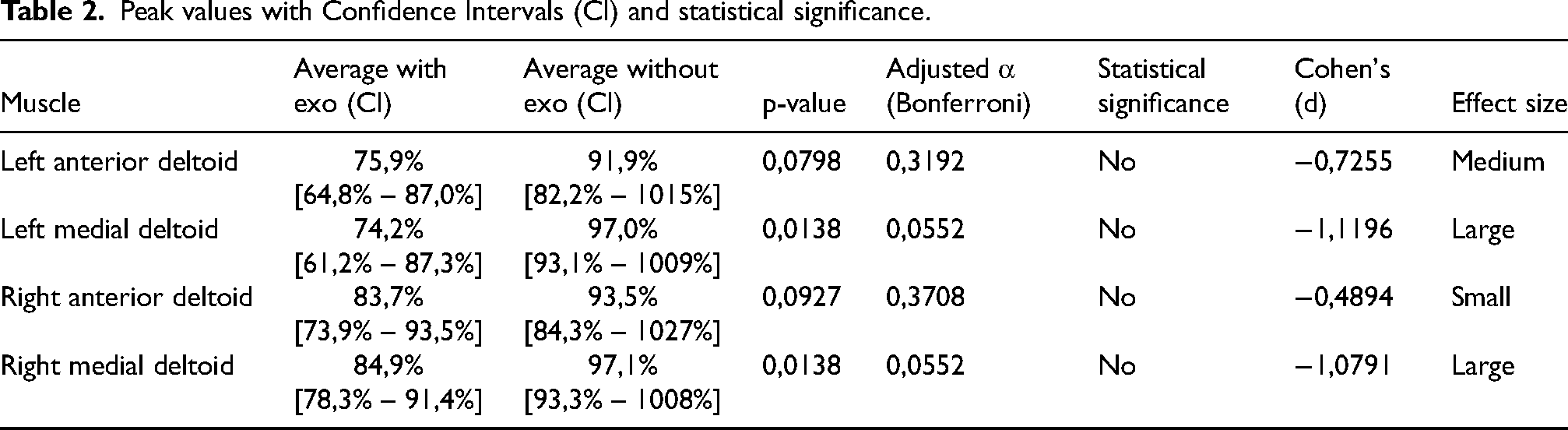
Considering the normalized sEMG peak values of the four muscles evaluated across the 17 tasks, none showed a statistically significant difference.
However, overall, the mean normalized peak values were reduced with exoskeleton use compared with non-use, as shown in Table 2.
Of the 17 individuals who participated in the study, Figure 5 shows that during exoskeleton use, 23.5% reported applying very light effort (score 1) on the Borg Scale, while 76.5% indicated light effort (scores 2 and 3). In contrast, in the absence of the exoskeleton, 41.2% of the participants reported light effort (scores 2 and 3), and 58.8% reported moderate effort (scores between 4 and 6)
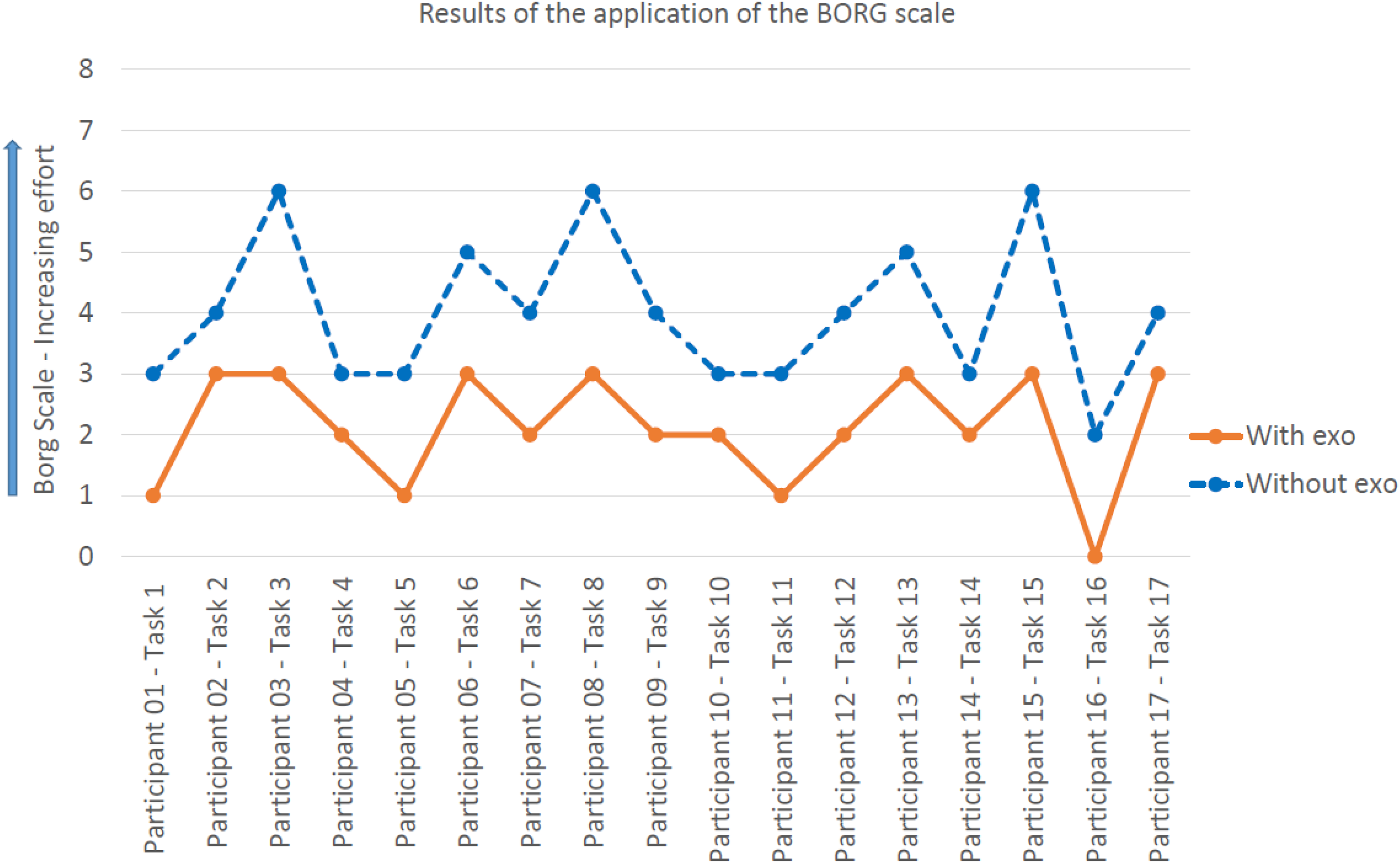
Borg Scale: Comparison of force application in the upper limb with and without exoskeleton use.
According to Questionnaire 02, the responses shown in Figure 6 demonstrate the results related to the usability of the passive upper-limb exoskeleton.
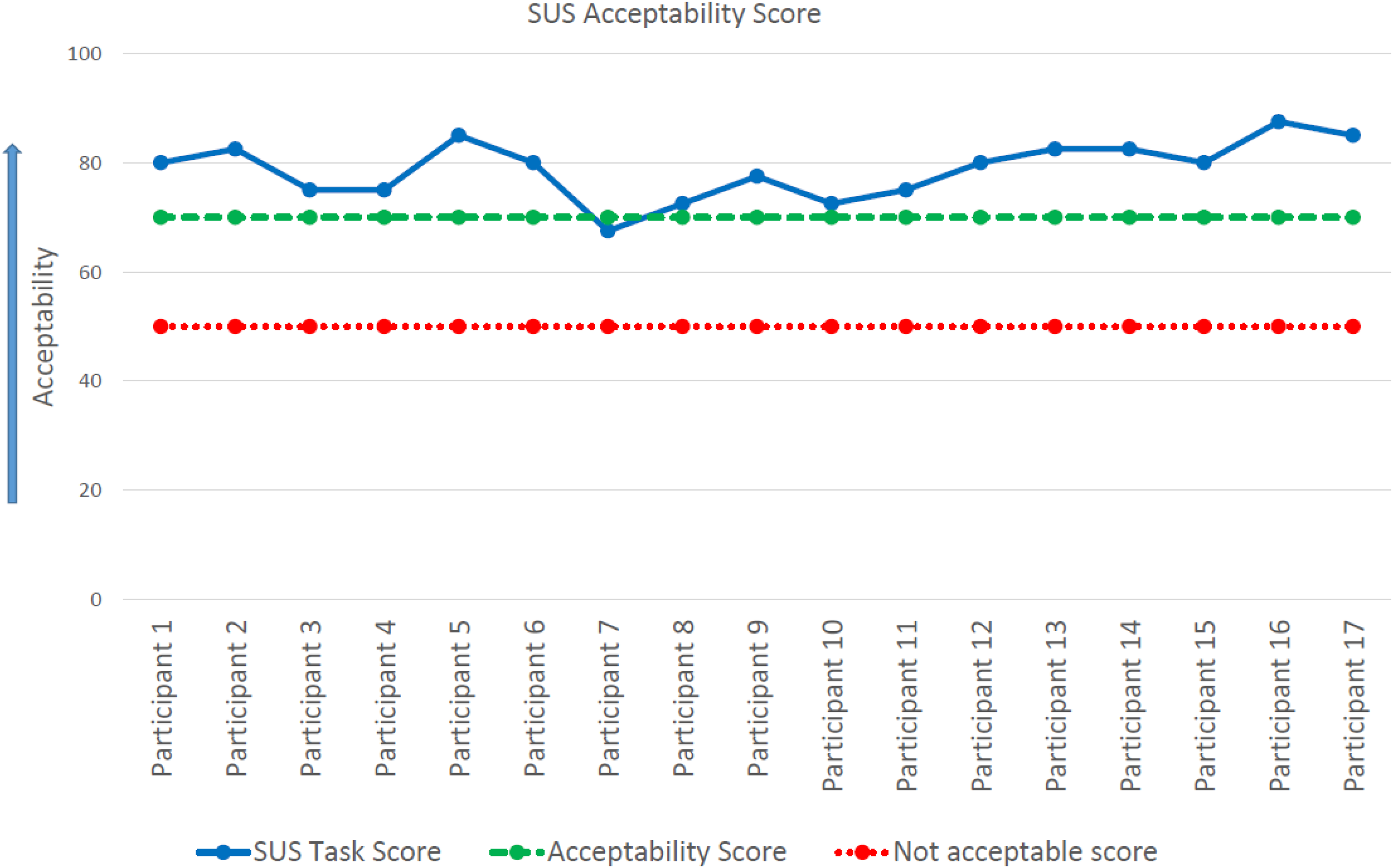
System Usability Scale (SUS).
Conceptually, the SUS establishes the acceptability parameters for a system. In this study, the concept of the system was adapted for the usability of wearable technology in the upper limbs of an exoskeleton.
The average score established by the SUS is 68. Of the 17 participants, 15 demonstrated excellent usability, one showed good acceptance of the usability of this exoskeleton, and one participant showed neutral acceptability.
Discussion
The results indicate a general trend of reduced muscle activity with the use of the exoskeleton, as demonstrated by the average activation levels presented in Table 1. Statistical analysis, conducted using Student's t-test and the Wilcoxon test with Bonferroni correction, revealed statistical significance only for the right medial deltoid muscle. In contrast, Table 2, which presents the peak muscle activation values, shows no statistically significant differences between the evaluated conditions.
Additionally, the calculation of effect size using paired Cohen's d coefficients allowed for a deeper analysis of the magnitude of the observed differences. For the muscles evaluated using MVC, the d values indicated small effects, suggesting that although there was a trend toward reduced muscle activation with the use of the device, this difference was modest and statistically uncertain. In contrast, the peak data revealed moderate to large effects in three muscles, with negative estimates, reinforcing the practical relevance of these findings even in the absence of statistical significance.
The negative direction of the estimators (d < 0) in all analyzed muscles suggests that, on average, the use of the exoskeleton is associated with lower muscle activation, which may reflect a reduction in biomechanical demand during task execution. These findings support the hypothesis that the device contributes to reducing muscular load, especially in the shoulder muscles, although the intensity of the effect varies depending on the muscle group and the type of measurement used (MVC vs. peak).
Considering these results, it is pertinent to discuss the applicability of exoskeletons in occupational settings. Their use has emerged as a promising strategy for improving ergonomics and mitigating the risk of injuries in activities involving repetitive physical effort and biomechanically unfavorable postures, such as those in meat production lines. The observed reduction in muscle activity, particularly in the deltoid muscles, suggests that the device may help reduce fatigue, discomfort, and physical strain.
For effective implementation, aspects such as anthropometric adjustments, physical space suitability, and adaptation to workers’ physiological characteristics must be considered. The possibility of incorporating the exoskeleton as personal protective equipment (PPE) reinforces its potential for integration into work routines. Moreover, evaluating its impact on productivity, worker acceptance, and organizational culture is essential for its adoption on an industrial scale.
Discussions on applicability should also consider other sectors with similar demands, such as vehicle assembly, logistics, and cargo handling, to extend the benefits of this technology beyond the meat processing sector. The incorporation of exoskeletons aligned with ergonomic strategies can foster safer, more efficient, and more sustainable work environments, thereby promoting occupational health and business competitiveness. The evolution of this technology, combined with longitudinal studies and adaptation to the specificities of different contexts, reveals its transformative potential for industrial environments.
Conclusions
This study aimed to analyze the usability of a specific passive exoskeleton model developed for the upper limbs, focusing on reducing physical effort during repetitive dynamic activities in meat processing production lines. The choice of field research was motivated by the need to expand studies related to exoskeleton applications in slaughterhouses.
For data collection, field research was conducted integrating the use of exoskeletons by workers in production lines, surface EMG, and two questionnaires to address the research problem. The collected data enabled the identification and analysis of results, ultimately providing answers to the research question.
The results of the sEMG analysis indicated a reduction in muscle activity in the left anterior deltoid, left medial deltoid, and right medial deltoid muscles during task execution with the exoskeleton. This suggests that its use may contribute to lowering muscular load in repetitive and biomechanically demanding tasks, such as those performed in industrial environments. This reduction may have a direct impact on the prevention of musculoskeletal injuries, reduction of fatigue, and improvement of workers’ occupational health.
Results consistent with those of the present study were observed in the evaluation of similar muscle groups, as reported in previous research. 25 The hypothesis that the exoskeleton can be applied to other similar activities, regardless of whether they involve the processing of pork, beef, or poultry, was confirmed. This is particularly relevant when considering tasks involving continuous and repetitive lifting of the arm at angles greater than 45° for at least half of the task cycle time.
The technological model used in this study presented some fitting limitations reported by participants, indicating the need for improvements to accommodate different anthropometric profiles.
One of the main limitations of this technology, specifically the exoskeleton model for production lines, is related to spatial requirements. This exoskeleton expands the individual workspace area; therefore, additional physical space is required to prevent collisions and allow free mobility.
The effective contribution of this wearable technology is directly related to the reduction in biomechanical risk resulting from upper-limb physical effort, especially in the anterior and medial deltoid muscles of both arms. This was confirmed by the results of the subjective perception of the Borg Scale as well as by the sEMG findings, which indicated differences between the use and non-use of the exoskeleton. Given this background, the use of exoskeletons in meat-processing production lines has the potential to promote better performance with reduced physical effort, enabling application in a wide variety of similar work situations. Except for prolonged static activities involving arm lifting—which were not the focus of this study—the findings suggests that the studied exoskeleton could benefit both workers and companies.
The usability of the exoskeleton in a slaughterhouse setting presents a realistic opportunity to minimize the physical effort resulting from excessive arm flexion and abduction postures commonly observed in production lines, which over time can lead to discomfort, illness, and absenteeism.
The reduction in applied force with exoskeleton use was evident, as sEMG captured electrical signals in microvolts (μV) and revealed differences between conditions. The adjusted mean statistics for each evaluated muscle group highlighted modest differences between the use and non-use of the exoskeleton. However, participants’ perceptions of reduced subjective effort were clear.
The upper-limb exoskeleton can become an important ally for meat processing industries seeking to improve quality of life at work. However, other factors such as broad applicability, use by women, individuals with disabilities, and those with varied physical characteristics, must be explored to ensure inclusivity. Another potential area of study is the implementation of this technology as PPE, which would require further specific investigation for regulatory approval.
Footnotes

Ethical approval
The Research Ethics Committee of the Federal University of Technology – Paraná reviewed this study and approved its conduct in November 2021, under protocol number CAAE 52774521.6.0000.5547, following the Declaration of Helsinki. The experiments conducted in this study took place in a meat processing industry in southern Brazil.
Consent to participate
All subjects signed consent forms in accordance with ethical approval.
Consent for publication
Participation was voluntary, with participants explicitly consenting to the publication of their data after reading and signing both the Informed Consent Form (ICF) and the Free Consent Form for Image and Voice Sound Use (FCFIVSU).
Author contributions
The following statements should be used “Conceptualization, Defani JC; methodology, Defani JC; software, Defani JC; validation, Michaloski O; formal analysis, Defani JC; investigation, Defani JC; resources, Michaloski O; data curation, Defani JC; writing—original draft preparation, Defani JC; writing— Defani JC; visualization, Michaloski O; supervision, Michaloski O; project administration, Defani JC.
Funding
The authors received no financial support for the research, authorship, and/or publication of this article.
Declaration of conflicting interests
The authors declared no potential conflicts of interest with respect to the research, authorship, and/or publication of this article.