




Abstract
Background
In the contemporary organizational environment, outcomes can be both positive and negative. Personality characteristics are significant contributors. Machiavellianism is a significant correlator of work-related counterproductive work behavior.
Objectives
This study investigates whether perceived organizational fairness mediates the relationship between Machiavellianism and counterproductive work behavior and whether job autonomy moderates this relationship among employees in the private sector banking industry.
Methods
This study used a cross-sectional research design. Primary data were collected using a structured questionnaire from 435 banking professionals. Stratified random sampling was used to obtain a representative sample of major private-sector banks in South India. The analysis was performed using SmartPLS (v.4.1.0.6).
Results
The findings suggest that Machiavellian workers tend to exhibit negative work behaviors more than their counterparts with non-Machiavellian traits in an organization believed to have low levels of organizational fairness. In contrast, job autonomy was observed to have a strong moderating influence on the correlation between Machiavellianism and counterproductive work behavior.
Conclusion
This study emphasizes that promoting fairness in organizational actions and empowering employees based on job autonomy are viable measures for discouraging destructive behaviors in the workplace. These insights offer important guidance to organizational leaders, indicating that by adopting a holistic approach, a work culture where negative behaviors occur infrequently and behaviors that lead to sustained performance can be established.
Keywords
Introduction
Personality traits, particularly dark ones such as Machiavellianism (Mach), are factors in the contemporary workplace that contribute to positive and negative organizational performance.1,2 Mach has been defined as manipulation, exploitation, and deceit for personal gain and has been shown to lead to counterproductive work behaviors (CWBs), including behaviors that are injurious to an organization or its members. 3 Employees who exhibit Machiavellian characteristics are inclined to exhibit untruthful behavior when manipulating their coworkers and violating the workplace. 4 Research has linked Mach as a Dark Triad trait with negative impacts on organizational health. 5 The relationship between Mach and CWBs operates through several intervening factors and not directly. Perceived organizational fairness (POF) and job autonomy (JA) are related to the relationship between Mach and CWBs. A sense of fairness among employees regarding how they are treated, paid, and opportunities can reduce or amplify the negative impacts of Machiavellian behavior. 6 Studies have also indicated that employees who perceive fairness in their organizations show a decreasing tendency toward CWBs, irrespective of their Machiavellian tendencies. 7 The degree of control that employees possess over their work positions moderates the impact of Mach on workplace behavior. The level of autonomy in job roles allows employees the freedom to pursue constructive decisions or for Machiavellian individuals to search for self-serving outcomes. 8 According to Langfred and Moye, 9 a structured and supportive environment that provides autonomy diminishes the negative effects of Mach. This study investigates how POF functions as a mediator between Mach and CWBs and examines how JA modifies this mediated relationship. The results of this study offer organizations key information on reducing harmful workplace behaviors and creating a positive work environment through improved job structuring and fairness.
Although the available literature has consistently associated Mach with undesirable traits in the workplace, the interaction between personal characteristics and organizational environment variables has scarcely been studied.10,11 This study extends prior research on Mach and CWB by integrating POF as a mediator and JA as a moderator, thereby offering a clearer understanding of how these constructs shape the behavior of Mach traits among banking sector employees. The synthesis of the constructs assists the study in contributing to theory more in-depth and provides practitioners with approaches to reducing destructive behavior at work through the promotion of fairness and autonomy within organizational systems based on empirical evidence.12,13
Theoretical background and hypotheses development
Machiavellianism (Mach) within personality theory demonstrates traits of manipulation in combination with a strategic mindset and personal benefit acquisition through exploitative methods. 14 Organizations with high Mach personalities capitalize on self-interested opportunities, which modifies company relations and resulting actions in the workplace. Individuals with such traits consistently engage in manipulative and opportunistic behaviors to achieve their personal goals. 15 Disciplinary professional behaviors that damage organizations or their staff members 16 often appear when individuals display Mach. Personal goals supersede ethical standards for individuals high on the Mach scale, producing behaviors such as attempted sabotage, deception, and thievery. 17 Organizational success suffers, and workplace conditions deteriorate into toxicity when these behaviors take effect. Social exchange theory 18 explains workplace interactions through reciprocal benefits, and Mach people tend to view organizational systems as toolsets that they can exploit for their personal gain. Mach employees use their belief in favorable fairness perceptions to take advantage of situations that work in their favor. 19 According to Greenberg, 20 Mach employees view organizational fairness through a strategic lens because it serves their self-interest rather than following ethical standards.
Organizations should focus on perceptions of inequity in the allocation of resources, as they shape employees’ behavior at work. 6 Employees’ perceptions of workplace fairness directly impact their trust, organizational commitment, and willingness to return organizational support. However, in the eyes of Machiavellian personalities, fairness can be judged based on the opportunism concept and how resources and results can be used to benefit them instead of a real sense of justice. 20 This view coincides with the notion that Machiavellian employees consider organizational fairness a strategic asset rather than a moral value. JA is a fundamental principle of job design theory, 21 which is connected to the degree of autonomy and discretion given to employees in their workplace decision-making. It can be an element of engagement, as well as a behavioral reaction, since employees can be empowered, and there can be a lesser perceived constraint. A high degree of autonomy can be a two-sided phenomenon for Machiavellian people; on the one hand, the high degree of control can lead to a greater degree of manipulative behavior due to less supervision; on the other hand, the high degree of control may be beneficial to the extent of less CWB due to less frustration and dissatisfaction caused by the absence of control. 22 The interaction between Mach, perceived fairness, and JA provides intricate insights into how personality traits and contextual factors shape workplace behaviors, especially counterproductive or opportunistic behaviors.
Machiavellianism (Mach) and counterproductive work behavior (CWB)
Mach is a major feature of the dark personality triad, reflecting manipulative intentions, self-interest, and the absence of emotions.
1
People with high Mach scores tend to use others to fulfil their own needs, and workplace relationships are viewed as tools rather than a source of mutual gain.
23
This behavior corresponds to instrumental motives and lax moral regulation, which heightens the risk of committing CWB, that is, purposely doing acts that damage the organization or its members.24,25 Recent meta-analyses have shown that Machiavellians are consistent in predicting interpersonal deviance and organizational misbehavior, especially in contexts where moral and social restrictions are minimal.2,26 In this regard, people with higher Mach scores are likely to demonstrate greater CWB. This theoretical framework supports the following hypothesis:
Machiavellianism (Mach) and perceived organizational fairness (POF)
POF is an assessment made by employees concerning fairness in decision-making, distribution of results, and the way employees are treated by one another.
27
Highly Machiavellian people tend to have cynical views of the world and little trust in authority, which may corrupt fairness perceptions.
23
Recent research indicates that Machiavellian workers are more likely to experience subpar organizational justice and interpret organizational policies and feedback as selfish or corrupt.28,29 This negative perception shows that they prefer to view organizational exchanges as unbalanced and competitive, but not cooperative.
2
According to Jones and Paulhus,
30
manipulative tendencies influence workplace attitudes, resulting in negative perceptions of organizational fairness. Thus, we hypothesize:
Perceived organizational fairness (POF) and counterproductive work behavior (CWB)
According to social exchange theory, employee behavior depends on perceived fairness.
6
Employees are likely to respond positively to their employers when they perceive that they have been treated fairly and are less likely to engage in deviant behavior.
28
In contrast, feelings of injustice lead to resentment and dissatisfaction, resulting in moral disengagement, which increases CWB.
23
Recent results affirm the defensive properties of organizational fairness in the behavioral implications of dark personality traits.25,31 Fairness perceptions act as mediating factors that shape employees’ reactions to organizational policies and interpersonal treatments. This relationship underpins the following hypothesis:
Moderating role of job autonomy (JA)
JA refers to the freedom granted to employees in their work.21,22 According to self-determination theory, autonomy encourages intrinsic motivation and reduces maladaptive behavior.
32
Recent research has established that autonomy moderates the adverse behavioral manifestations of dark traits by facilitating self-regulation and psychological ownership.25,33 High levels of autonomy may reduce the likelihood of CWB by fostering a sense of control and responsibility for one's work.
16
Employees with high autonomy perceptions tend to have greater self-control and ethical judgement, which may undermine the relationship between Mach and CWB. Thus, JA may act as a moderator, influencing the extent to which Mach's tendencies manifest in CWB.
34
Accordingly, we propose the following hypothesis:
Thus, based on the formulation of the hypotheses, Figure 1 provides a clear picture of the constructs and their relationships. This served as a framework for the entire study, and the hypotheses were tested and discussed in the Results section.
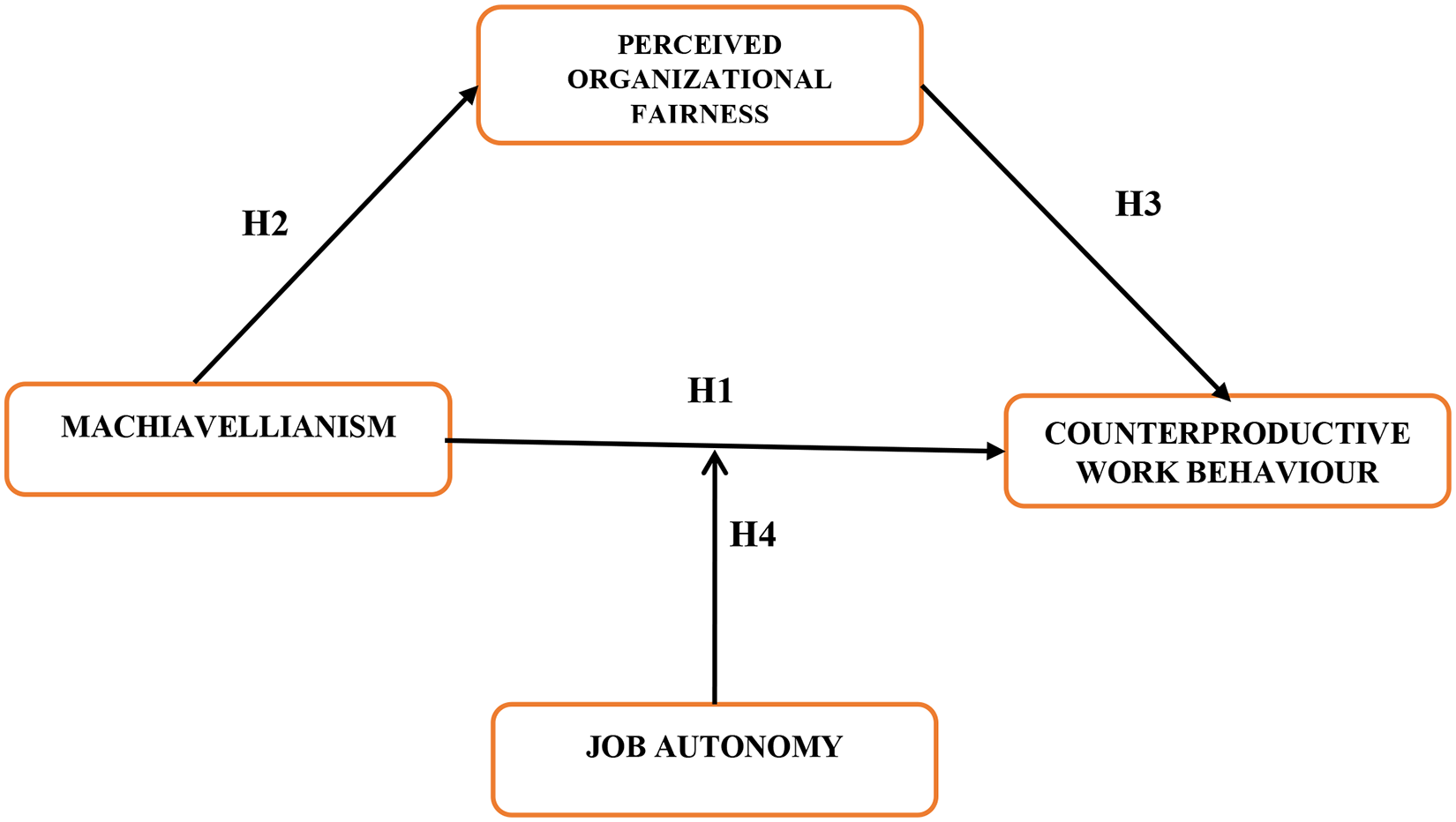
Proposed research framework.
Methodology
Sampling and data collection
This research had a cross-sectional approach aimed at targeting banking professionals from the top five private-sector banks as per the Forbes 2024 financial magazine. The banks included HDFC Bank, ICICI Bank, Axis Bank, Kotak Mahindra Bank, and IndusInd Bank. Data were collected using a structured questionnaire that was distributed using Google Forms, with the aim of receiving 500 responses. The sampling technique was stratified sampling based on five banks from South India, which were the target banks, and for each bank, 100 responses were considered a stratum. A total of 467 responses were received, of which 32 were excluded after data cleaning and screening. Thus, 435 participants were included in the final sample. This study used a stratified random sampling technique to ensure a representative distribution of respondents from the selected banks.
Measures
Machiavellianism (Mach)
The Mach scale, based on Jonason and Webster, 5 was used to evaluate Machiavellian tendencies and comprised four items. Some of the sample statements used are: “I have used deceit or lied to get my way” and “I tend to exploit others to achieve my goals.” Responses were measured on a five-point Likert scale ranging from 1 (strongly disagree) to 5 (strongly agree). The scale showed high internal consistency (Cronbach's alpha = 0.883).
Counterproductive work behavior (CWB)
The CWB Scale is a revision of the CWB Questionnaire developed by Spector 35 and has 10 items. Among them are “Came to work late without permission”, “Started an argument with someone at work”, and “Purposely wasted your employer's materials/supplies.” Participants provided responses on a five-point Likert scale, with 1 indicating strongly disagree and 5 indicating strongly agree. The scale proved to be very reliable, with a Cronbach's alpha of 0.868.
Job autonomy (JA)
The three items in the JA scale were developed by Hackman and Oldham. 21 Sample items included the following: “I have significant autonomy in determining how I do my job” and “I can decide on my own how to go about doing my work.” Participants’ responses were evaluated using a five-point Likert scale, with answers ranging from strongly disagree (1) to strongly agree (5). Cronbach's alpha for JA was 0.846.
Perceived organizational fairness (POF)
We modified six items from Ambrose and Schminke's 36 instrument for measuring POF. The sample items were: “In general, I count on this organization to be fair,” “ Most of the people who work here would say they are often treated unfairly, “ and “I believe that the processes in this organization are fair.” The reliability of this scale was 0.827.
Control variables
This study includes control variables such as age and gender, which may affect work attitudes and behavioral responses. 25 Work experience, employment duration, and job level also influence employees’ perceptions of autonomy and fairness. 23 Income and departmental differences influence employee expectations and behaviors.28,33
Respondents profile
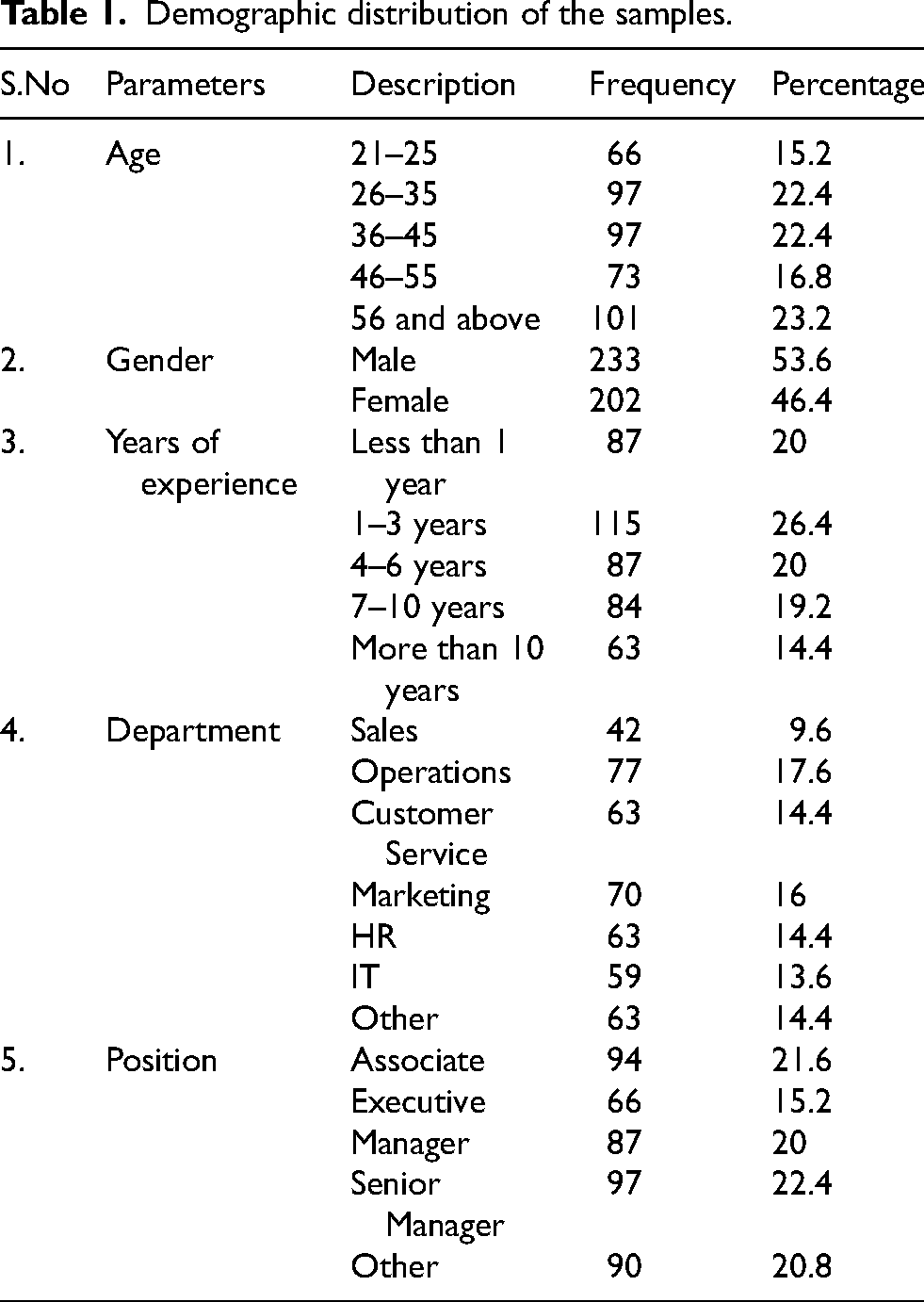
The demographic data Table 1 reveal that the sample comprised participants from diverse backgrounds.
Demographic distribution of the samples.
Data analysis and results
The analysis was divided into two sections: the first assessed the confirmatory factor analysis (CFA) and model fit. The second section verifies the direct and indirect relationships between the constructs and their linkages. SmartPLS v. 4.1.0.6 was used for data analysis. 37 CFA results were obtained to assess CFA by calculating the PLS-SEM algorithm, and bootstrapping was performed to determine the effects on the structural model. CFA results were obtained to assess the CFA by calculating the PLS-SEM algorithm, and bootstrapping was performed to determine the effects on the structural model.
Measurement model
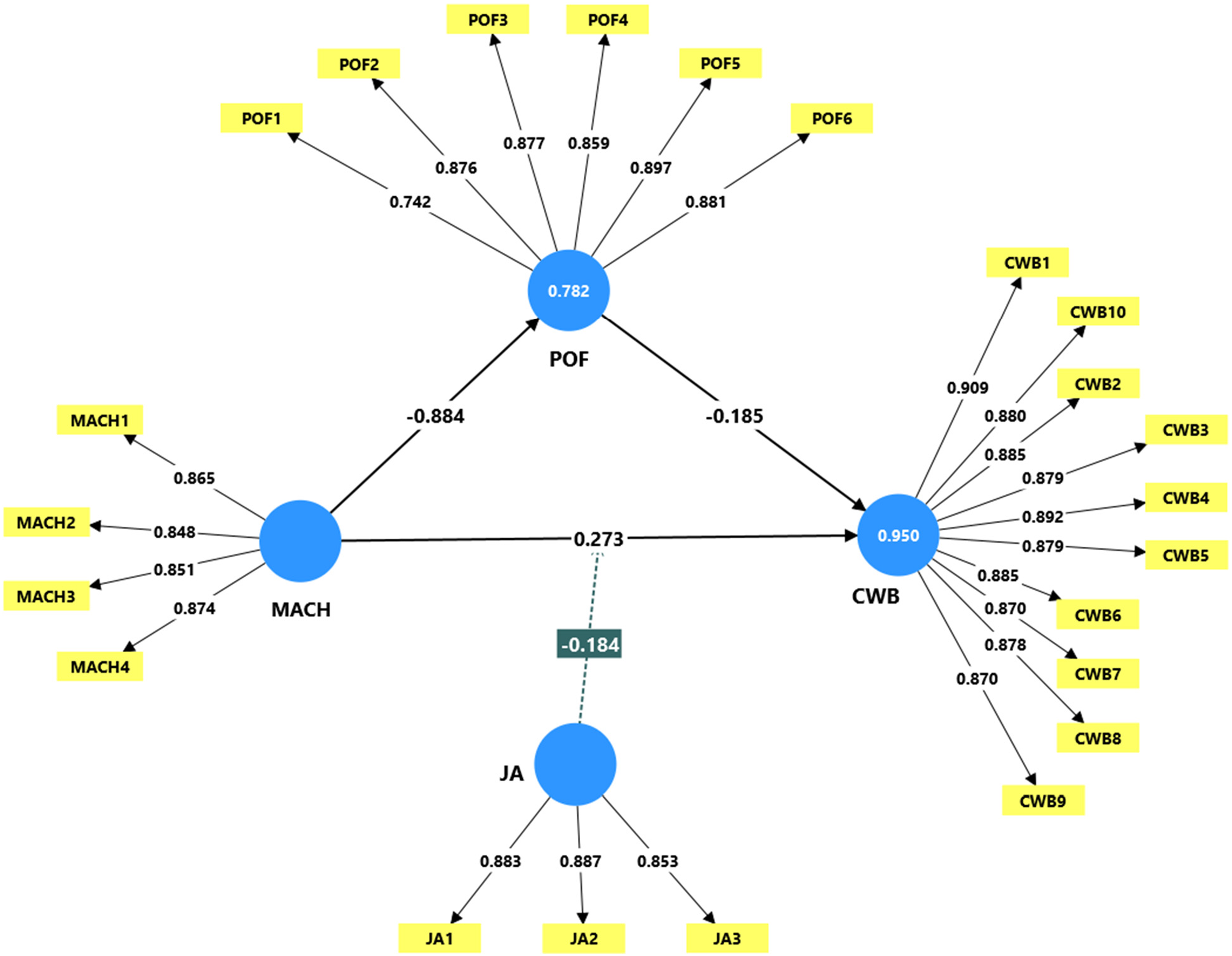
Confirmatory Factor Analysis (CFA) was conducted using SmartPLS V.4.1.6 to evaluate the measurement model. Table 2 presents the results for reliability, validity, and factor loadings of the measurement scales. The factor loadings for all items ranged between 0.742 and 0.909, which is more than the recommended value of 0.7, thus retaining all items for further analysis. 38 Cronbach's alpha values for all the constructs varied between 0.827 and 0.883 (i.e., more than 0.70), demonstrating the satisfactory reliability of all four constructs, as suggested by Nunnally and Bernstein. 39 Furthermore, the composite reliability (CR) values of the constructs ranged between 0.826 and 0.883, which is above the cutoff value of more than 0.70, as recommended by Hair et al. 38 Finally, the average variance extracted (AVE) values of the constructs varied between 0.734 and 0.779 (i.e., more than 0.5), as per Fornell and Larcker's 40 recommendation. Hence, we confirmed the convergent validity of the constructs used in this study.
Item loading, reliability and convergent validity.
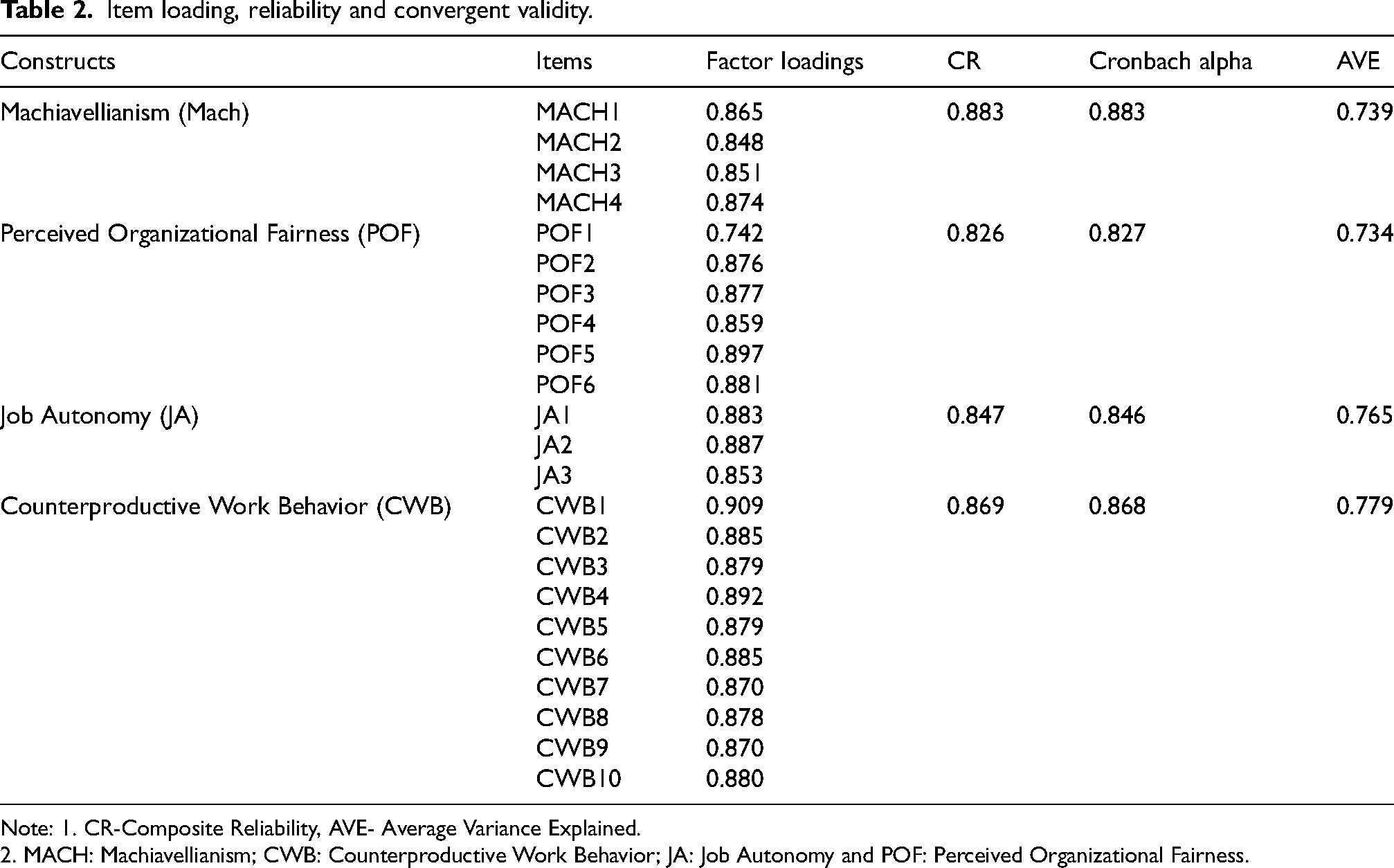
Note: 1. CR-Composite Reliability, AVE- Average Variance Explained.
2. MACH: Machiavellianism; CWB: Counterproductive Work Behavior; JA: Job Autonomy and POF: Perceived Organizational Fairness.
The discriminant validity of the constructs was assessed using the Fornell and Larcker criterion. The results are presented in Table 3. As suggested by the Fornell–Larcker criterion, the square root of the AVE of all the constructs was greater than the correlations between the constructs used in the study, confirming the discriminant validity of all the constructs.
Discriminant validity - Fornell - Larcker criterion.
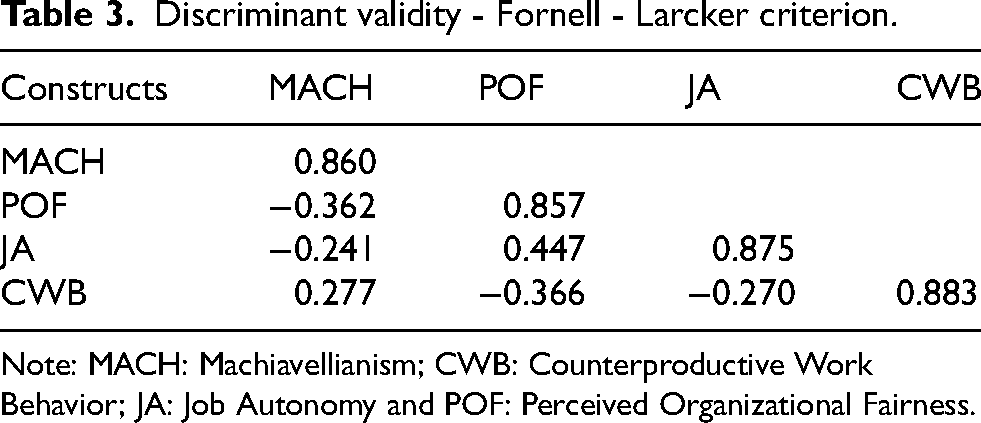
Note: MACH: Machiavellianism; CWB: Counterproductive Work Behavior; JA: Job Autonomy and POF: Perceived Organizational Fairness.
Hypothesis testing of a structural model
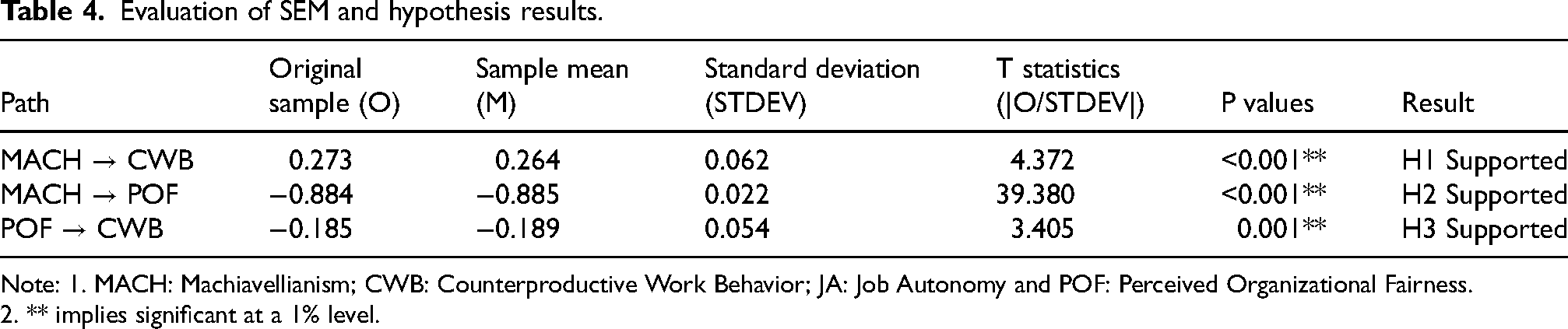
Table 4 presents the hypothesized relationships between the constructs. The estimates, standard errors, and p-values derived from the bootstrapping process were used to evaluate the relationships between the constructs. Hypothesis 1 proposes that Mach has a positive and statistically significant influence on CWB. The findings confirm this relationship (β = 0.273, p < 0.001); thus, H1 is supported. Hypothesis 2 suggests that Mach negatively affects POF at the 1% significance level. This is supported by the results, which have a path coefficient of (β = − 0.884 and p-value = 0.001), supporting H2. Hypothesis 3 states that POF adversely influences CWB. The results prove the adverse correlation between POF and CWB, and the path coefficient (β = − 0.185, p < 0.001) supports H3.
Evaluation of SEM and hypothesis results.
Note: 1. MACH: Machiavellianism; CWB: Counterproductive Work Behavior; JA: Job Autonomy and POF: Perceived Organizational Fairness.
2. ** implies significant at a 1% level.
Figure 2 shows a diagram of the structural equation model tested using SmartPLS. This figure depicts the proposed correlations among the study constructs.
Structural model.
Mediation analysis through structural model
Table 5 presents the findings of the mediation analysis. The significance of the indirect effect of Mach on CWB, mediated by POF, is 0.164, which is significant at the 1% level and validates that POF mediates the relationship between Mach and CWB. The t-value of 3.209 exceeds the threshold for significance, affirming the robustness of this relationship.
Hypothesis results of mediating effects.

Note: 1. Mach: Machiavellianism; CWB: Counterproductive Work Behavior; POF: Perceived Organizational Fairness.
2. ** implies significant at a 1% level.
Moderation analysis
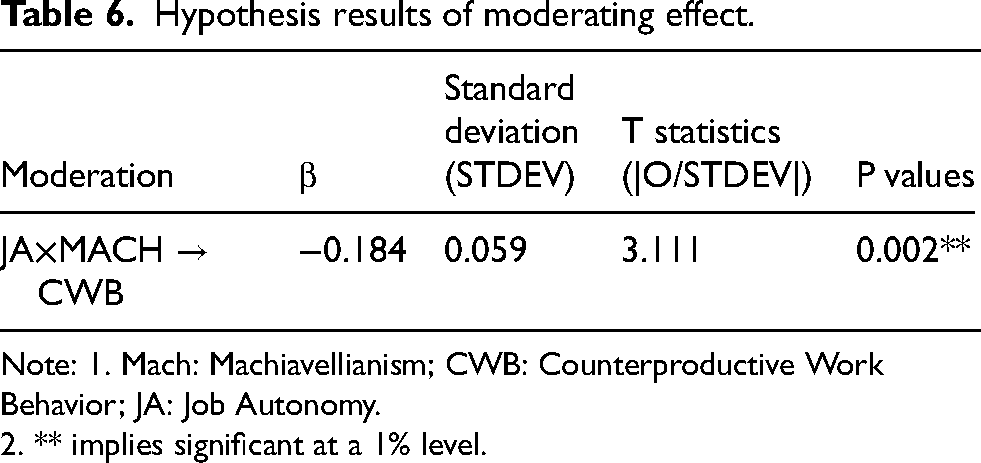
Table 6 presents the moderating effect of JA on Mach and CWB. A negative β value of −0.184 indicates that an increase in the level of JA lowers the effect of Mach on CWB and thus shows a buffering or moderating effect. The T-value of 3.111 was well above the critical threshold, confirming the robustness of this moderation effect. These results indicate that JA plays a crucial role in weakening the direct influence of the Mach–Westerly Jet on CWB, highlighting the importance of JA as a mitigating factor in CWBs.
Hypothesis results of moderating effect.
Note: 1. Mach: Machiavellianism; CWB: Counterproductive Work Behavior; JA: Job Autonomy.
2. ** implies significant at a 1% level.
Figure 3 shows the moderation plot of JA on the relationship between Mach and CWB. Mach had a positive relationship with CWB at all levels of JA, although the relationship was stronger at certain levels of JA. The largest positive influence of Mach on CWB appeared when JA was low (–1 SD); thus, when limited by JA, people high on Mach were the most likely to engage in CWB. This association becomes less significant at average levels of JA, and at high levels of JA (+1 SD), the positive association between Mach and CWB is the least significant. This implies that an increased JA will buffer and minimize the degree to which Mach tendencies are moderated into CWB, but low JA will enhance these tendencies.
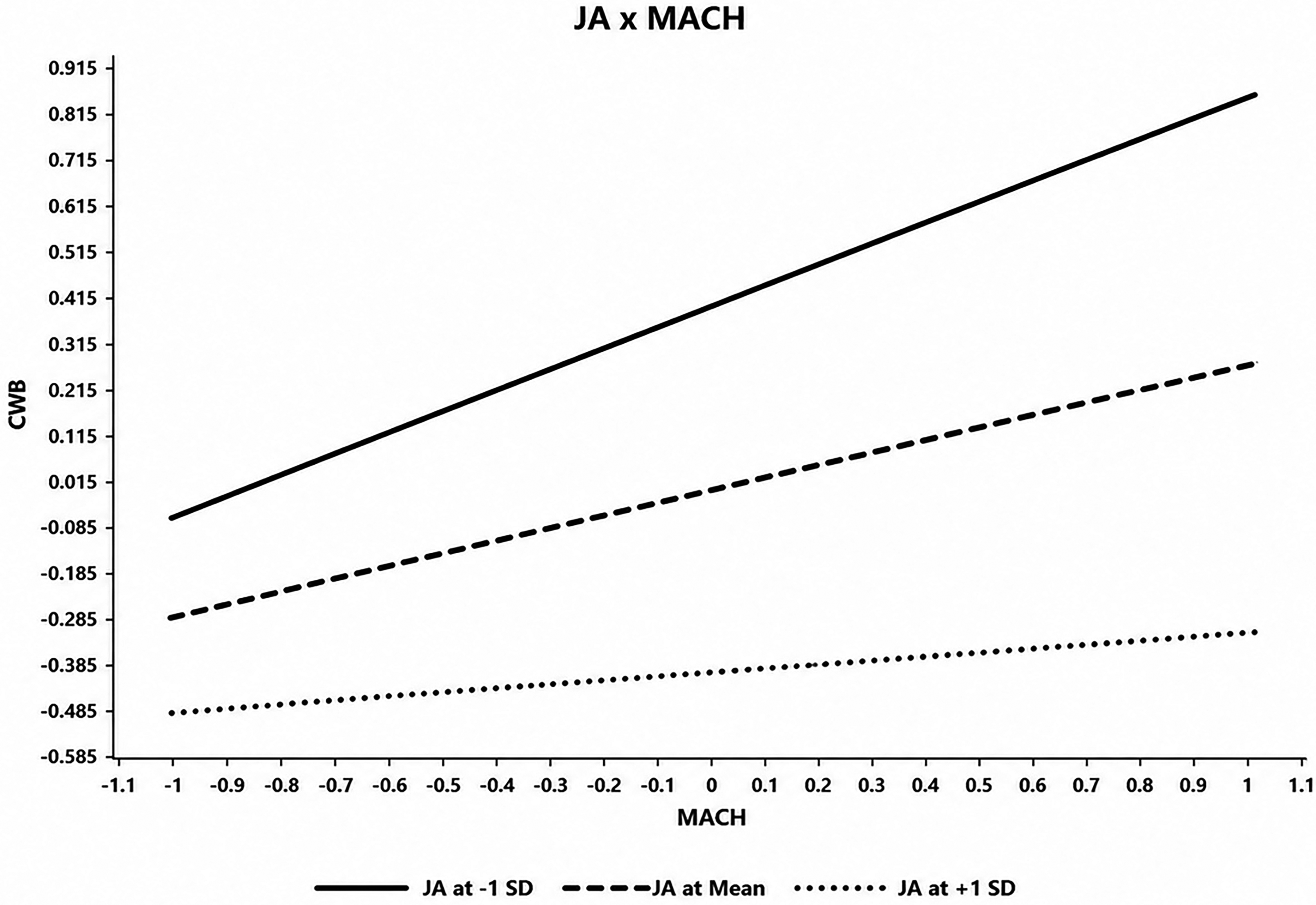
Moderation of job autonomy.
Discussions
The current investigation focused on determining the effects of Mach on CWB via POF and JA. The results demonstrate that POF can be considered an important psychological mechanism that converts Machiavellian tendencies into deviant behavior, which expands the logic of Social Exchange Theory by demonstrating that a perceived unbalanced exchange can be returned by the negative behavior of employees.2,6,28 In turn, considerations of fairness decrease CWB, irrespective of Machiavellian disposition, which confirms earlier evidence that equitable treatment enhances trust and reciprocity within an organizational environment. 29 Moreover, JA proved to be a fruitful boundary condition: the direct influence of Mach on CWB attenuated in the case of increased JA of employees. This observation is in line with the Self-Determination Theory, which states that satisfying JA needs increases intrinsic motivation and reduces maladaptive behavior.22,25,32,33
These results, based on previous studies, complement and update earlier studies and introduce Mach and self-serving manipulative behaviors, such as sabotage, theft, and deception.3,17 They further confirm that perceived justice operates as a situational buffer of deviance,27,31 which is congruent with recent findings that POF also mitigates the behavioral connotations of dark traits. 28 Lower CWB also appears in darker-skinned workers who are more likely to feel fairness, thus justifying the old assertions of Van den Bos and Lind 41 and Miller et al. 42 These results highlight the modifying effect of environmental situations on the expression of consistent personality traits.
In a practical sense, these results have enormous implications for human resource and organizational leaders. HR practices that encourage fairness (e.g., clear communication, fair performance feedback, and frequent rewarding) should be coupled with job designs and practices that encourage autonomy (e.g., job designs that encourage responsibility and empowerment). This mixed-method approach has the potential to minimize the negative impact of Machiavellian tendencies and create ethical workplaces with high trust. Overall, this research will be useful in offering a two-path theory explaining how fairness and autonomy interact in combination with the relationship between Mach and CWB. This synthesis contributes to the science of the important problem of personality-context interaction in organizational behavior and the fact that it alters undesirable traits to those that are manageable within organizational systems.
Conclusion
Research has shown that Mach and CWB are linked to their responses to POF and JA factors that influence the management of organizational behavior. This study illustrates how the alignment of fair practices in banks reduces the destructive effects of Mach behavior. Work environment quality improves when individuals possess autonomy in their roles, and private banks can maintain fair processes because these factors jointly erode manipulative behaviors. The findings also highlight the importance of fairness and autonomy.
Theoretical and managerial implications
This study adds to the literature on organizational behavior by combining personality and situational approaches to elucidate CWB. The study makes two theoretical contributions based on fairness heuristic theory and self-determination theory by analyzing POF and JA as reinforcements of the behavioral expression of Mach. The findings build on fairness heuristic theory by showing that fairness perceptions are a cognitive shortcut, resulting in employees making judgments of organizational trustworthiness, thus undermining the propensity of Machiavellian personalities to manipulate or harm. Similarly, this study complements self-determination theory by showing that workplace autonomy contributes to intrinsic motivation and perceived psychological ownership, which decreases the encoding of dark personality attributes into deviant behaviors. Such integration brings available knowledge to a new level of understanding in that the effects of personality are not deterministic but can be moderated and mediated by variables in the organizational context.
The findings indicate that fairness and autonomy are structural resources influencing the moral reasoning and behavioral control of employees, which assists us in developing a more refined view of the relationships between dispositions and environmental traits to generate workplace effects. The importance of contextual design and personality management has also been identified as a potential future research direction. Other contextual moderators, such as moral climate or leadership style, can be added to this framework to assist in determining how dark traits are manifested in various organizational situations. Overall, this study elaborates on the theory of the integrative approach to explaining workplace deviance by relating cognitive evaluations of fairness processes, motivational autonomy processes, and personality interactions to organizational systems.
Limitations and future scope of the study
Although this study contributes to the literature, it has certain limitations that must be considered when interpreting the results. The cross-sectional research design does not allow causal inferences between JA, POF, and CWB; longitudinal research conducted in the future may provide a more sophisticated view of the evolution of relationships over time. Such self-reported data could lead to potential biases, including social desirability and common method variance; hence, the usefulness of the incorporation of multi-source or behavioral data in future studies. In addition, the study sample was restricted to employees of the top five private banks in South India, which may confine the generalizability to a moderate and context-specific range and therefore represent organizational dynamics within this setting.
Contextual influences, such as organizational culture, technological orientation, and dynamics at the branch level, were not explored and may be meaningful in influencing perceptions of autonomy, fairness, and behavioral outcomes of the AI system.
Based on these limitations, several promising areas for future research have emerged. Longitudinal studies can investigate the dynamic interactions between JA, POF, and CWB at various points in a career or during various organizational transitions. Examining the moderating effects of individual characteristics (e.g., emotional intelligence, ethical orientation, and resilience) may explain in more detail how individual characteristics influence people's reactions to autonomy and fairness. Extending research to various industries and cultural environments would increase the external validity of the results and demonstrate differences in employee behavior depending on the context. Finally, combining technology-driven methods, such as artificial intelligence (AI)-enabled tools for monitoring societal fairness perceptions and designing personalized and autonomy-enhancing interventions with training programs to develop optimism and positive coping mechanisms, can help provide novel methods for reducing CWB and developing healthier organizational climates.
Footnotes
Acknowledgment
The authors express their sincere gratitude to SRM Institute of Science and Technology and Saveetha Institute of Medical and Technical Sciences for providing the academic support necessary to carry out this research. The authors also acknowledge the valuable suggestions offered by anonymous reviewers, which contributed to improving the quality of the manuscript. The authors extend their appreciation to the respondents for their participation and cooperation in this study.

Ethical approval
Ethical approval for this study was obtained from the Institutional Ethics Committee of Saveetha School of Management, Saveetha Institute of Medical and Technical Sciences (SIMATS), Chennai, India (Approval No.: 2024/07/016).
Informed consent
This study has obtained informed consent from all participants.
Author contributions
The first author, Mrs. Vijayalakshmi M, was responsible for the development of the research framework, formulation of hypotheses, data analysis, and preparation of the full manuscript. The corresponding author, Dr Subramani AK, contributed to the validation of the research design and provided critical inputs to refine and improve the manuscript. Mrs. Hasine J supported the study through literature review, and contributed to the development of the discussion, implications, and formatting of the manuscript. All authors reviewed and approved the final version of the manuscript.
Funding
The authors received no financial support for the research, authorship, and/or publication of this article.
Declaration of conflicting interests
The authors declared no potential conflicts of interest with respect to the research, authorship, and/or publication of this article.
Data availability
The data supporting the findings of this study are available from the corresponding author upon reasonable request.