



Abstract
Background
Existing research has largely focused on the early-career challenges and career choices of young lawyers in Western countries, yet the reasons why young lawyers in China continue in the profession despite labor remuneration being insufficient to cover work-related costs remain unclear.
Objective
This study aims to investigate the factors that motivate young lawyers in China to remain in this profession despite labor remuneration that does not fully cover their work-related costs.
Methods
This study employed a inductive reflexive thematic analysis of interviews with 28 young and senior lawyers in China.
Results
The findings indicate that young lawyers’ career choices are influenced not only by economic considerations but also by symbolic and lifestyle-oriented motivations. A favorable family financial background reduces dependence on immediate income, while the social prestige and professional identity associated with being a lawyer fulfill important psychological and symbolic needs. At the same time, limited case sources create greater discretionary time, enabling some young lawyers to maintain a more desirable work-life balance.
Conclusions
This study addresses a gap in international research concerning the career choice behavior of young lawyers in the Chinese context and provides insights for countries facing similar situations to optimize policies and systems for young lawyers’ career development.
Introduction
The global economic deterioration caused by the COVID-19 pandemic has subjected labor markets worldwide to an unprecedented shock, and the process of recovery remains uneven across different regions and sectors. Specifically, a wide range of industries have been affected by economic downturns and structural adjustments, leading to rising unemployment rates, unstable job opportunities, and an increasing proportion of workers shifting to new occupations. 1 The intensified risks of career uncertainty arising from the adverse macroeconomic environment have placed even greater employment pressure on young people. 2 According to the International Labour Organization (ILO), decent work refers to workers aspirations for fulfilling employment, which generally encompass elements such as fair income and social protection, a safe working environment, respect in the workplace, and promising career development prospects. 3 Among different age groups, young people are more likely to experiment with diverse jobs in pursuit of the type of work that best meets their expectations for decent employment. 4
Even within the highly specialized legal profession, young lawyers face considerable challenges. A survey conducted by the International Bar Association among 3056 young lawyers across multiple countries revealed that more than half expressed a desire to leave the profession due to concerns over income levels and job stability. 5 In the U.S., young lawyers experienced a reduction in case sources, layoffs, and even the closure of law firms following the global economic downturn, which forced many law graduates to delay entering practice or to change careers altogether. 6 In South Korea, the growing number of lawyers has intensified market competition, leading to widespread income inequality within the profession. 7 With regard to such phenomena, some studies have found that lawyers are more likely than individuals in other professions to experience symptoms of anxiety, depression, and burnout due to work-related stress. 8 Other studies, however, have presented entirely opposite conclusions, indicating that the prevalence of mental illness among lawyers is significantly lower than in many other sectors. 9 The coexistence of these conflicting findings reflects the varied perceptions lawyers hold toward their profession, which in turn influences their decisions either to remain in the field or to pursue alternative career paths. Existing studies on professional occupations suggest that career persistence cannot be understood solely through economic rationality, and may also involve complex social, cultural, and identity-related factors.10,11 Although young lawyers face survival challenges such as relatively low income, a considerable proportion are nevertheless reluctant to leave this profession. This raises a further question: why are some young lawyers still willing to remain in the profession when their earnings are insufficient to cover the necessary expenses associated with working in a law firm, and what factors primarily influence this persistence?
Existing research on the employment challenges faced by young people has primarily focused on Europe and North America, while much less is known about the specific circumstances in Asia. 12 Unlike other professions, inequality and opportunity always coexist throughout a lawyers’ career. 13 Although increasing attention has been directed to the difficulties faced by young lawyers, there remains limited understanding of why some of them continue to pursue this profession even when their earnings are insufficient to cover the essential costs of working in a law firm. Against this backdrop, the present study investigates young lawyers in a Chinese city who encounter situations in which their labor remuneration falls short of covering work-related expenses. Drawing on interviews with 28 young lawyers and senior lawyers to enable mutual verification, this research explores from multiple dimensions the reasons why young lawyers persist in the profession despite such challenges. Examining this phenomenon not only addresses a common issue within the global legal profession but also contributes to understanding the non-economic motivations that underlie career choices among young people in highly specialized fields with low initial financial returns. In addition, this study contributes to the broader literature on job precarity and careers by illustrating how individuals may continue to remain in precarious professional positions despite economic insecurity. It also enriches discussions on occupational well-being by demonstrating how symbolic meaning, professional identity, and perceived lifestyle flexibility may shape young professionals subjective experiences of work beyond material income.
Literature review
Individuals’ career choices and career resilience are often shaped by a range of interrelated factors. Existing studies have explored the combined effects of economic constraints and non-monetary motivations on individuals’ career decision-making. For example, a newly developed Motivations for Career Choice Scale distinguishes career choice motivations into intrinsic and extrinsic dimensions, providing a useful reference for more refined measurement of how extrinsic factors, such as financial income and employment conditions, and intrinsic factors, such as personal career aspirations and professional identity, influence individuals’ career choices. 14 In addition, research adopting a career sustainability perspective suggests that, beyond the economic returns associated with employment, non-monetary factors including career interest, opportunities for career development, and career satisfaction are closely associated with individuals’ career choices and their ability to maintain career resilience.15,16 In the legal profession, although longitudinal studies focusing on the mid and peak stages of legal careers have shown that most lawyers are satisfied with their profession,17,18 young entrants to the field frequently encounter unpaid or low-paid internships. 19 A study on job satisfaction among lawyers found that their social background and life experiences influence how satisfied they feel with their work. 20 In other words, the widespread tacit practice of unpaid or poorly compensated work within the global legal profession may implicitly increase young lawyers tolerance of the income insufficiency they face during the early stages of their careers. However, under the complex interplay between professional aspirations and the structural characteristics of the legal industry, young lawyers experience not only a shared set of expectations for the future of the profession but also significant pressures, discomfort, and dissatisfaction. 21 Their career development depends not only on personal effort but also on external factors such as the availability of senior mentors within law firms. 22 If they are unable to balance the influence of these various factors, young lawyers often choose to leave the profession. 23 Therefore, examining how and why those who remain manage to reconcile these tensions provides an important point of entry for understanding their career decision-making process. Although young lawyers across the world face similar challenges, most existing research on employment conditions in this profession has been conducted in Western contexts,24,25 while studies on how young lawyers in Asia navigate such early-career contradictions remain relatively limited. This gap offers a rationale for focusing on young Chinese lawyers who face these challenges as the object of this study.
Although entry into the lawyers profession worldwide generally requires passing professional examinations,26,27 differences remain across countries in the regulatory systems that govern the profession. Clarifying the relevant institutional framework in China is therefore a necessary prerequisite for subsequent analysis. In China, the remuneration system for lawyers affiliated with law firms (excluding interns and administrative staff) is primarily organized under two models, namely the performance-based system and the salary-based system. Law firms adopting these two approaches are often referred to as traditional firms and corporatized firms, with the former tending to specialize in litigation and the latter in non-litigation services. 28 In traditional firms operating under the performance-based model, lawyers retain their business revenues after deducting a portion collected by the firm, which may take the form of fixed annual or monthly management fees or a proportional share of income, used to cover general operating expenses. By contrast, corporatized firms pool all revenues and distribute fixed salaries to practicing lawyers. The essential distinction between the two systems lies in the sources of casework: under the performance-based model, lawyers must independently secure clients, whereas under the salary-based model, they primarily undertake cases assigned by the firm without the burden of client acquisition. Overall, however, the performance-based system remains the predominant remuneration model in the majority of Chinese law firms. 29
Against this backdrop, the phenomenon of relatively low or even absent income among a considerable proportion of young Chinese lawyers is not exceptional. 30 In response, Shanghai has introduced regulations such as the Measures for Minimum Wage Protection of Young Lawyers, and special career support loans specifically targeting lawyers have also emerged. 31 One lawyer has explicitly noted that the Chinese legal profession differs from production-oriented industries, and its particular characteristics mean that most law firms do not provide salaries to newly affiliated lawyers, meaning that without clients there is no income. 32 At the same time, the legal sector in China exhibits a pronounced “80/20 rule”, whereby 20% of lawyers control 80% of available cases, while the remaining 80%, particularly young lawyers, compete for the remaining 20%. 33 Furthermore, differences in regional economic development affect lawyers access to cases. Compared with more developed cities in eastern and central China, which offer relatively abundant but highly competitive client sources, less developed western cities have legal service markets where cases are more dispersed, individual case values are smaller, and the market is more stable. 34 Many law firms in these regions often lack team structures and cannot provide young lawyers with sufficient platforms for acquiring clients. Senior lawyers may also worry that mentoring younger lawyers could reduce their own opportunities, which makes the lack of case sources for young lawyers even more pronounced.35–37 Consequently, attrition rates among young lawyers in some areas are relatively high. 38 Empirical research supports these observations. For example, a field study conducted in a small- to medium-sized law firm in western China found that 40% of all lawyers relied on the firm or supervising lawyers to receive cases rather than generating their own, and nearly half of the young lawyers primarily handled legal aid cases with lower compensation, while still being responsible for essential expenditures such as social insurance contributions and firm management fees. 39 Taken together, these findings indicate that young Chinese lawyers who pay fixed management fees to their law firms yet receive little to no support in obtaining cases, and thus face economic shortfalls, represent a relatively common phenomenon.
Overall, existing research has primarily focused on exploratory analyses of the specific challenges faced by young lawyers and on examining the macro-professional environment to understand the causes of these difficulties. However, relatively little attention has been given to the factors underlying the professional resilience that young lawyers demonstrate when they continue to pursue a career in the legal field despite encountering such challenges. It is against this background that the present study focuses on young lawyers in a city in western China who face the challenge of earnings that are insufficient to cover the costs of their work, aiming to explore the specific reasons why they remain willing to continue in this profession despite this economic hardship.
Methods
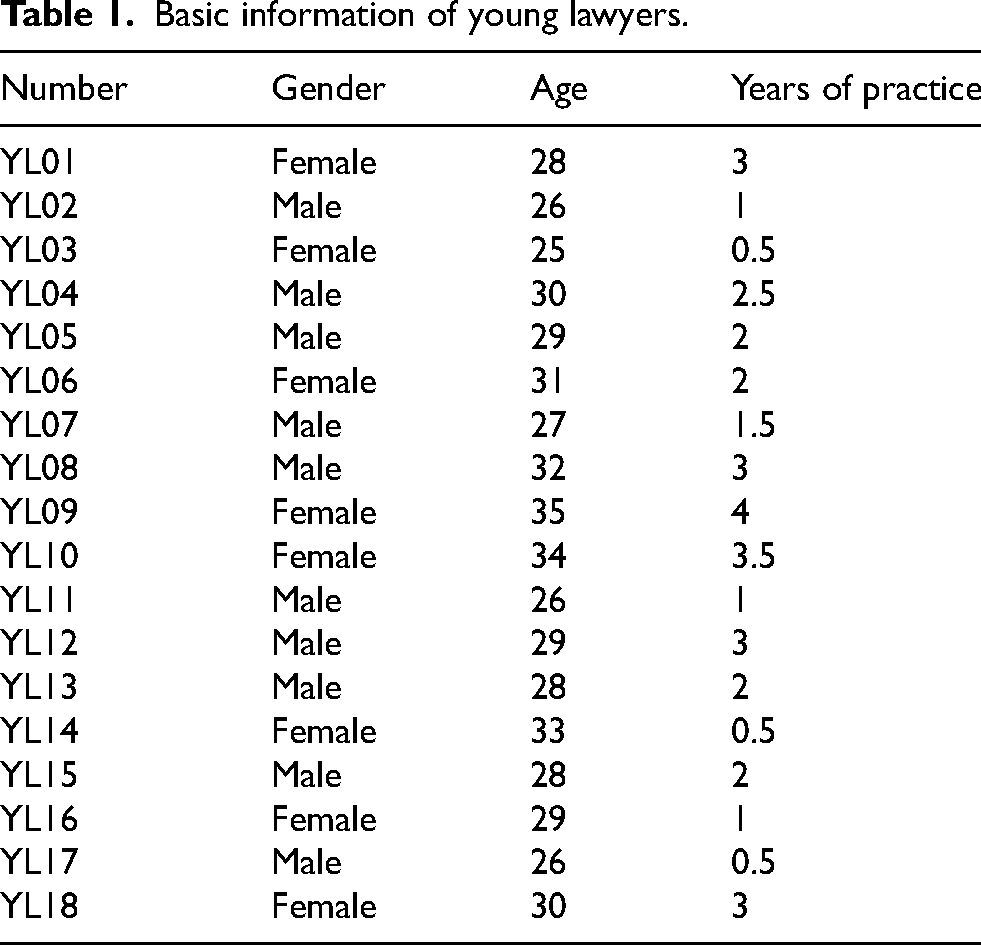
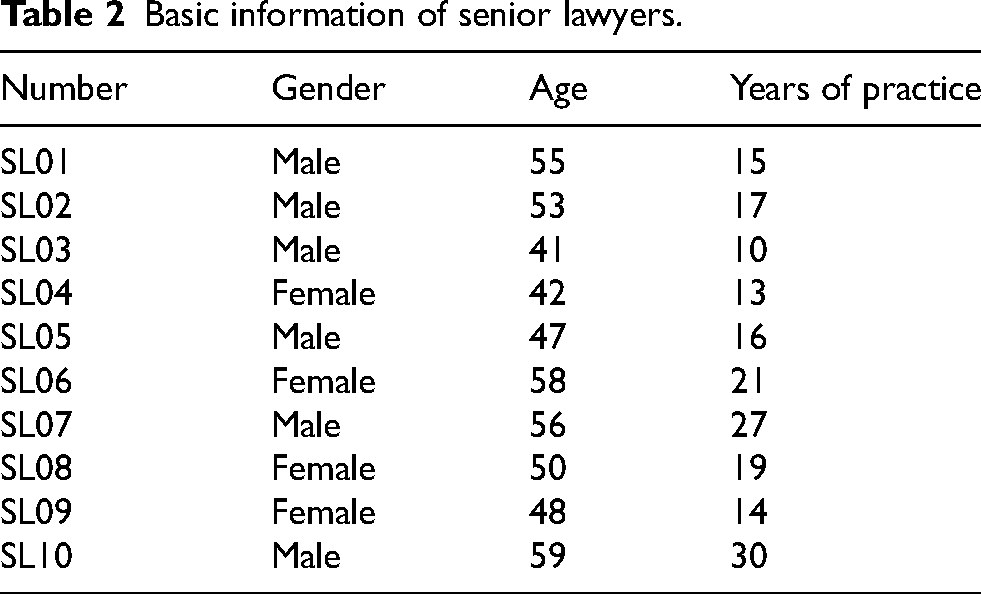
This study was conducted in accordance with the American Psychological Association Code of Ethics and received approval from the ethics committee of the corresponding author's institution, with approval number XZFX2502. In line with the research objective of investigating why young lawyers continue to pursue the profession despite facing career-related challenges, interviews were conducted with lawyers in H City, located in western China. Several factors informed the selection of this city. First, compared with the diversified legal practice in economically developed regions, the legal industry in H City is primarily composed of traditional small- and medium-sized litigation cases, which helps to control for differences in work content arising from differences in case types. Second, corresponding to the nature of the cases, most law firms in H City charge practicing lawyers a fixed annual or monthly management fee rather than taking a proportion of case revenue (at the time of this study only one firm in the city employed a revenue-based fee structure). Investigating young lawyers’ career challenges under a consistent remuneration model thus enhances the validity of the findings. Third, as of the completion of this study, neither the judicial administrative authorities nor the local bar association in H City had introduced subsidy policies specifically targeting young lawyers, which helps this research exclude the influence of external policy factors on the career development of young lawyers. Potential participants were identified using criterion sampling and snowball sampling. Criterion sampling was first employed to ensure that all participants met predefined inclusion criteria. Specifically, young lawyers were identified as potential participants only if they met all three of the following conditions: (1) they fit the definition of young lawyers according to the China Lawyers Association, being under 40 years of age with fewer than five years of practice; (2) they paid a fixed management fee to their law firm on an annual or monthly basis; and (3) their necessary work-related expenditures at the firm exceeded the total income derived from their own cases. Subsequently, snowball sampling was used to identify additional eligible participants through recommendations from initial respondents. Considering that the interviews involved sensitive information such as income levels and family circumstances, relying solely on self-reports may be limited by social desirability bias or participants’ reluctance to disclose. To enhance the reliability and validity of the data, multiple interview perspectives were incorporated through snowball sampling. In addition to interviewing young lawyers, senior lawyers with more than ten years of practice who had supervised the relevant young lawyers were also interviewed. This approach allowed for cross-verification of information and strengthened the robustness of the study's conclusions. Ultimately, 28 lawyers meeting the study criteria were selected as participants, including 18 young lawyers and 10 senior lawyers. After obtaining informed consent, the researchers collected basic information relevant to the study and assigned anonymous random identifiers to each participant. The basic information of young lawyers is presented in Table 1, and that of senior lawyers is presented in Table 2.
Basic information of young lawyers.
Basic information of senior lawyers.
The interviews for this study were conducted in person in August 2025 by the first author and the corresponding author. Each semi-structured interview between the researcher and the participant lasted between 30 and 50 min. Informed consent was obtained from all participants, and the interviews were audio-recorded by the researcher. Following each interview, the recordings were transcribed verbatim within 48 h. The interviews were conducted in Chinese. The transcripts were translated into English by the first author and reviewed independently by the corresponding author. Any discrepancies were discussed and resolved through iterative comparison with the original Chinese transcripts. To protect participants privacy, the transcripts were de-identified before the data were subjected to data analysis. This study adopted an inductive reflexive thematic analysis approach, allowing themes to be generated from the data rather than being guided by a pre-existing coding framework. 40 The interview data were actively and reflexively interpreted to generate patterns of meaning and develop key themes, guided by the six-phase approach to thematic analysis. 41 Both authors have academic knowledge in law and sociology, which informed their sensitivity to professional identity formation, legal practice contexts, and the socio-economic conditions shaping legal careers. This background shaped how the data were read, particularly in relation to participants accounts of economic constraints, symbolic recognition, and lifestyle considerations in career decision-making. Throughout the analytic process, reflexive notes were maintained to critically examine how the researchers disciplinary positioning and prior understandings may have influenced the development of themes. To enhance transparency, the analytic process was documented and reflexively examined throughout the study. Participant feedback on the interpretive resonance and clarity of the themes was considered as part of the ongoing reflexive engagement with the data.
Results
Sound personal financial situation as a prerequisite for continued practice
Possessing a certain level of financial capacity can help mitigate the economic and living pressures that arise when labor remuneration is insufficient to cover work-related costs, and this serves as an important safeguard for young lawyers who remain willing to continue in the profession under such circumstances. The interviews revealed that, although there were variations in the financial situations of the young lawyers, all participants had access to economic support beyond their legal work. For example, some young lawyers, who had not yet established independent households, typically chose to live with their parents. This family arrangement substantially reduces financial pressure related to basic living costs such as housing and food, and in some cases, provides additional economic support from parents.
“Right now, I am living with my parents, so I do not really have any rent or food expenses. I am not under much financial pressure. In addition, my dad work is related to law, so he can give me some support.” (YL02)
“The junior lawyers I have mentored, just out of university, all come from relatively well-off families. Everyone knows that in the first few years in this profession, you basically cannot make any money. Without support from home, you simply cannot survive.” (SL06)
For relatively older young lawyers with greater social experience, their financial support after establishing a family primarily comes from their spouse, or from the wealth they accumulated while working in other industries prior to entering this profession. These conditions constitute important factors that enable them to withstand the early-stage financial deficits associated with practicing law.
“After I graduated, I worked as a teacher for a few years before switching careers to become a lawyer. Also, my husband earns a decent income, so I do not need to support the family. That is why working in this profession does not put much financial pressure on me.” (YL09)
“I am different from fresh university graduates. Before becoming a lawyer, I worked for a few years in the public security bureau, the judicial office, and the town government. After all those years, I have managed to save a bit, so I have some financial cushion.” (YL14).
The motivating role of professional symbolism and social identity
In addition to the economic factors mentioned above, the association of this profession with high social prestige and strong social identity functions as a driving force that motivates young lawyers to remain in the profession even when material rewards are relatively limited. For example, in the course of their practice, young lawyers derive a sense of professional achievement not only from judicial recognition in court decisions and expressions of gratitude from clients, but also from the satisfaction gained through providing informal and unpaid legal advice to family and friends in everyday life.
“Most of the cases I handle are labor dispute cases. When I see my clients actually getting the wages they deserve, I genuinely feel a sense of accomplishment.” (YL01)
“My friends often come to me when they have problems. It is like, after I became a lawyer, their lives gained an extra layer of security.” (YL18)
Of course, the young lawyers interviewed rarely defined the nature of their profession in a simple binary manner of good or bad. Instead, they tended to highlight the relative advantages of working as lawyers through direct comparisons with other occupations.
“I used to work at a real estate company, mainly in sales. Not only did I hardly make any money, but I also had to grovel and serve others. Besides, real estate is kind of a sunset industry now, so it's definitely not as good as being a lawyer.” (YL12)
“These days, people driving for ride-hailing services probably make more money than I do, but that is physical work. Driving all day is exhausting, and you cannot compare it to being a lawyer, which is more of an intellectual job.” (YL06)
Furthermore, although young lawyers generally face situations of insufficient income, they maintain strong expectations of increased case sources and higher earnings once they overcome the bottleneck stage in their careers. The formation of such expectations is closely linked to the symbolic significance long associated with this profession as a high-income occupation within societal discourse.
“I have spent so many years working in the public sector, just going to work and coming home, and the income was just what it was. But being a lawyer is different. Everyone knows it is a high-paying profession, and after a few more years of experience, I will not have to worry about my income.” (YL04)
“I always tell the junior lawyers I mentor that when you first start out, there is this low point financially. There is no way around it, but as long as you stick with it, work hard, and get through it, the future looks really good.” (SL06
This symbolic meaning is largely reinforced by the institutionalized entry requirement in China, where becoming a practicing lawyer necessitates passing the National Legal Professional Qualification Examination, which has a pass rate of no more than 15 percent. This gatekeeping mechanism, grounded in professional specialization, not only secures the monopolistic status of this profession but also implicitly fosters a strong sense of social identity and professional superiority among practitioners. For young lawyers, the scarcity and recognition conferred by this qualification can partly compensate for the insufficient economic returns they encounter at the early stage of practice and strengthen their intrinsic motivation to continue in the profession.
“Being a lawyer is a professional job, not just anyone can do it. My friends around me were quite impressed when they heard I passed the exam.” (YL17)
“The pass rate for the legal professional qualification exam is famously low, so society sees this profession as pretty prestigious. For many young lawyers, even if their income is not ideal at the beginning, having finally earned this qualification makes them feel it is worth sticking with.” (SL09)
The appeal of professional autonomy and work - life balance
Compared with other traditional occupations, this profession provides greater flexibility for individuals to organize their work and personal time, thereby offering young lawyers more opportunities to balance career development with personal needs. This is one of the important reasons why they are willing to remain in the profession. The interviews showed that young lawyers consistently placed high value on professional freedom. In contrast to other roles within the legal community that carry greater institutional authority, such as judges and prosecutors, lawyers may not enjoy the same level of social prestige but they benefit from considerably greater flexibility in terms of work arrangements and professional autonomy. For young lawyers who seek freedom in their professional lives, this flexibility is often more appealing than social prestige.
“Elders in my family definitely prefer me to work in the public sector since it is a stable job. But compared to being a lawyer, jobs in the system are more restrictive. There are lots of rules, you have to listen to your superiors, and many tasks are not things you can choose to do yourself. Being a lawyer mostly depends on your own effort to get cases.” (YL05)
“Young people these days like freedom. In our line of work, you are your own boss, and there is basically no concept of managers overseeing subordinates. This way, they have more energy to spend on things outside of work.” (SL01)
Although the absence of case sources limits young lawyers economic gains, it simultaneously provides them with a significant increase in discretionary time. This, to some extent, enables them to better reconcile the potential conflicts between family responsibilities, leisure needs, and professional development.
“For us, once we finish the cases we have, the rest of the time is basically our own. For example, if I want to go somewhere for a trip, it is really convenient and I do not have to ask anyone for leave. I am quite happy about that.” (YL11)
“I am kind of like a part-time housewife. Mainly because my child is still young and needs care, and the father doesn’t really get involved. Being a lawyer offers a lot of flexibility. If conflicts come up, I would definitely take care of things at home first, since as a woman I have to contribute more to the family.” (YL10)
In addition, some young lawyers choose to engage in other forms of work during their discretionary time to compensate for insufficient income, while others regard this time as an opportunity to invest more in the study of professional knowledge and the improvement of legal skills, thereby laying the groundwork for their future career development.
“I am currently running a business with some friends. Even though I do not have many cases as a lawyer, the company side is doing pretty well.” (YL13)
“My workload is not very heavy right now; work only takes up about 30% of my time. The rest of the time I spend taking care of my family, and I also read professional books and classic cases, learning from others’ approaches. That definitely helps my future practice.” (YL08)
Discussion
Through a inductive reflexive thematic analysis of interviews with young and senior lawyers in China, this study identifies three main reasons why young lawyers continue to engage in this profession despite the dilemma of labor remuneration being insufficient to cover work-related costs. These reasons are as follows: they possess a relatively good financial situation; the symbolic meaning and social identity conferred upon this profession by the broader social environment enhance their professional resilience; and the high degree of temporal flexibility within the profession allows them to better coordinate work and life. Some of the findings of the present study are in fact consistent with phenomena identified in studies of other occupations and organizational contexts.42–44 This convergence suggests that the mechanisms identified in this study exhibit a degree of transferability within the field of career research, rather than being confined to the specific occupational context of lawyers.
First, this study reveals that young lawyers possession of relatively strong economic capacity constitutes a necessary condition for sustaining their practice in a profession where remuneration often fails to offset work-related expenses. As demonstrated by other empirical research, family capital often plays a critical role in the early stages of one's career. 45 In this study, young lawyers were not the primary financial providers for their households and were able to receive economic support from their families for both living and professional expenses. This finding reflects the positive influence and supportive function of family capital on career development. 46 Indeed, legal education itself represents a form of elite education. Previous scholarship has noted that in the U.S., elite legal education has led to the problem of social stratification, largely due to the prohibitive costs of tuition, a problem that remains unresolved. 47 Although in China, the financial burden of legal higher education is somewhat alleviated by state subsidies, 48 the extended duration of study required to meet the profession's high entry thresholds significantly increases the overall financial investment. 49 In this sense, a strong family economic background is already an important guarantee for pursuing a legal education.50,51 Returning to the early career stage of young lawyers, although a small portion of interviewees in this study benefited from family capital within the legal profession, the majority encountered the challenge of being unable to secure case sources due to limited litigation experience and lack of recognition. This aligns with findings from another empirical study, which reported that 82.32% of young lawyers identified insufficient social connections as the main obstacle to acquiring case sources. 29 Taken together, although it cannot be concluded that favorable family economic conditions and social resources are sufficient conditions for sustaining a lawyer career, for young lawyers facing the dilemma of remuneration failing to cover work costs, these factors often constitute crucial supports for their decision to remain in the profession.
Secondly, this study finds that the symbolic meaning and social identity conferred upon this profession by the broader social environment exert a motivating influence on young lawyers willingness to remain in the profession even when their earnings are insufficient to cover work-related expenses. For young lawyers, this profession provides a form of symbolic professional identity that functions as meaning compensation. More specifically, the symbolic distinction attached to the profession fosters a sense of occupational superiority relative to most other occupations. As a result, when confronted with unfavorable economic working conditions, young lawyers tend to reinterpret these difficulties as temporary and meaningful sacrifices made in pursuit of long term career development. It is precisely this reinterpretation of economic hardship that enables them to demonstrate a relatively high level of career resilience despite unsatisfactory income prospects. The realization of such meaning compensation is typically produced through the joint influence of objective social conditions and individuals’ subjective agency. According to Social Cognitive Career Theory (SCCT), in addition to subjective factors such as self-efficacy, outcome expectations, and personal goals, objective contextual factors such as family, school, and sociocultural environment also play a significant role in shaping individuals career decisions.52,53 On the subjective side, the young lawyers in this study maintained a relatively high level of self-efficacy despite facing low economic returns, which further fostered positive expectations for their career development beyond the bottleneck stage and enabled them to establish clear professional goals for the future. In fact, two important determinants of self-efficacy include verbal persuasion (social persuasion) and sociocultural and environmental factors,54,55 which correspond closely with the objective factors emphasized in SCCT. With regard to social persuasion, encouragement from senior figures often enhances individual self-efficacy. 56 In this study, senior lawyers frequently reinforced among young lawyers the belief that professional prospects would become more promising once the initial career stage is overcome, thereby strengthening young lawyers sense of efficacy in persisting within the profession. The reason senior lawyers convey such positive developmental expectations is itself linked to sociocultural and environmental factors. On one hand, through long-term professional practice, senior lawyers have habitually cultivated the image of successful professionals to maintain clients’ and the broader public's expectations of themselves and the profession. After all, few would believe that lawyers with a modest or unassuming appearance possess sufficient professional competence, which leads senior lawyers to convey these expectations of a promising career to younger lawyers in their daily interactions. On the other hand, as a form of elite education, legal education in China endows this profession with symbolic meaning as a prestigious occupation associated with high knowledge and respectable income. 57 Consistent with empirical research suggesting that individuals tend to demonstrate greater persistence in careers with higher levels of social recognition, 58 this study also finds that the external recognition afforded to this profession substantially motivates young lawyers to remain in practice. Moreover, the institutional barriers to entry also shape both societal and self-perceptions of the profession. To practice law in China, individuals must hold at least an undergraduate degree in law and pass the National Unified Legal Professional Qualification Examination, which is widely perceived as one of the most demanding and prestigious examinations in the country due to its low pass rate. 59 This institutionally embedded social recognition further reinforces young lawyers identification with a profession that commands legitimacy both internally and externally. Survey data from young lawyers in Shenzhen further support our findings. Specifically, 62.72% of respondents reported experiencing pride and a sense of honor in practicing law. 29 These overlapping social influences not only alleviate but may even reconstruct young lawyers perceptions of their current disadvantages in income, thereby enhancing their willingness to remain in the profession.
Finally, this study finds that the autonomy in time management associated with this profession and its compatibility with personal life constitute another important factor attracting young lawyers to remain in the profession. This finding stands in stark contrast to multiple studies conducted in Western countries. For example, research has shown that lawyers in Western contexts often face significant challenges in balancing work and family responsibilities. 60 Another empirical study on U.S. lawyers further indicated that excessive work engagement and conflicts between work and family life are linked to decisions to leave the profession, with female lawyers being particularly susceptible to career changes due to these conflicts. 61 The substantial difference observed among young lawyers in China is primarily attributable to the relatively flexible management of law firms. Most Chinese law firms do not impose strict office-hour requirements similar to those in corporate settings, nor do they assign lawyers to handle a series of complex administrative tasks. 62 This flexibility provides favorable conditions for young lawyers to coordinate their work and personal life more freely. In addition, discretionary control over time not only facilitates the coordination of work and life but also enables young lawyers to strategically allocate more time to intensive professional learning during the early stages of their careers. This flexibility allows them to endure short term economic pressure in exchange for future opportunities and career advancement. In this sense, time autonomy reshapes individuals’ perceptions of risks and returns in the early stages of their careers, supporting their investment in learning while also enhancing career resilience.
It is important to emphasize that the three reasons identified in this study, explaining why young lawyers continue in the profession despite the challenge of labor remuneration being insufficient to cover work-related costs, are not independent of one another but are causally interconnected. Specifically, a supportive family financial foundation reduces the pressure on young lawyers to depend on their personal earnings to mitigate living costs. The high institutional entry thresholds for the profession, combined with the symbolic and socially recognized value of this profession, further satisfy their psychological need to achieve professional fulfillment. Finally, the lack of case sources increases the freedom in their work schedule, creating a cycle of “few cases, low income, more discretionary time.” Under the combined influence of the first two factors, the conventionally negative view that low income results from a lack of work is unexpectedly transformed into a positive perspective, in which greater work flexibility makes it easier for young lawyers to coordinate their professional and personal lives.
Conclusion
The findings suggest that young lawyers combined engagement in the profession despite financial constraints is shaped by the interplay of three key factors: a favorable family financial situation, the motivating effect of the symbolic meaning and social identity associated with this profession, and a high degree of flexibility in managing work time. In terms of research significance, this study focuses on the young lawyer population in China, thereby partially addressing the gap in international research concerning the career choice behavior of young lawyers specifically within the Chinese context. Furthermore, it enriches the understanding of how young lawyers make career decisions when confronted with financial difficulties, revealing how personal and family economic conditions, professional social identity, and work characteristics collectively shape professional resilience. These mechanisms may be transferable to other countries facing similar early-career challenges, helping to inform the optimization of policies and systems for young lawyers’ career development. For example, strengthening one's passion for and respect toward the profession can to some extent compensate for the limitations of material rewards, and from a longer-term perspective, it may even expand an individual's opportunities for career development. In particular, with regard to reducing young lawyers’ reliance on family financial support during the early stages of their careers, a potential policy direction is to establish transitional support mechanisms. Such mechanisms could include the provision of modest financial stipends by mentors or the allocation of allowances in return for undertaking administrative tasks within law firms.
It cannot be denied that this study has certain limitations. Owing to the qualitative research design and the limited sample size of this study, it was not possible to examine differences in career experiences across demographic groups. Future research may build on these findings by employing quantitative or mixed methods approaches to further investigate such variations. Secondly, economic conditions in different regions can significantly influence the number of cases and income levels for lawyers. For example, young lawyers in major developed cities may handle higher caseloads and have access to more potential high-income opportunities, which in turn can influence their career decisions. This study focused on young lawyers in a city in western China, where the professional environment may differ from that in more economically developed regions. Therefore, future research could expand to include more economically developed areas in order to gain a more comprehensive understanding of the career decision-making behavior of young lawyers in China when faced with income challenges.
Footnotes
Acknowledgments
Not applicable.

Ethical approval
This research obtained ethical approval from the Institutional Review Board at the School of Law, Xingzhi College Zhejiang Normal University (Approval No. XZFX2502).
Informed consent
Informed consent was obtained from each participant.
Funding
The authors received no financial support for the research, authorship, and/or publication of this article.
Declaration of conflicting interests
The authors declared no potential conflicts of interest with respect to the research, authorship, and/or publication of this article.
Data availability statement
Due to privacy considerations, data related to this study are available from the corresponding author upon reasonable request.