



Abstract
Background
A hearing impairment is associated with reduced work participation. Research suggests a lack of focus on vocational rehabilitation among a growing population of employees with hearing impairment.
Objective
This study aimed to explore the lived experience of people with hearing impairments managing their everyday work situation and conditions that promote work participation.
Methods
Ten participants – six woman and four men – participated in two audio-recorded focus group interviews, with five participants in each group. The mean age was 57 years (range: 45–70 years). Five participants reported having a sensorineural hearing impairment, two had combined of neurological and conductive hearing impairments, and three were unsure of their diagnostic classification. Eight participants had an acquired hearing impairment, whereas two participants had congenital hearing impairment. The audio-recorded interviews were transcribed and analysed by systematic text condensation.
Results
The analysis resulted in four intertwined concepts: control; disclosure; support and understanding; and accommodation and technical aids. Further reflection on what it means for participants to be at the ‘top of things’ revealed three overarching interpretive themes: chasing consistency, managing inconsistency and expecting normalcy.
Conclusions
This study emphasises the importance of for professionals, employer and the employees themselves recognising the vast complexity and dynamic challenges associated of having a hearing impairment in working life. A stronger emphasis on vocational rehabilitation has the potential to enhance work participation for individuals with hearing impairment, with substantial benefits for both individual well-being and broader societal welfare.
Keywords
Introduction
According to the World Health Organization (WHO), it is estimated that over 5% of the world's population will have a hearing impairment and have a need for rehabilitation. That amounts to as many as 430 million people who will need audiological rehabilitation at some point. The WHO also points out that a hearing impairment affects work participation, as adults with hearing impairment have a higher degree of unemployment compared to the general workforce. 1
A growing body of evidence suggests that traditional audiological rehabilitation fails to prepare patients for the everyday challenges of living with a hearing impairment in general and, more specifically, at work. A significant difference has been found in paid work participation between people with normal hearing (67.6%) and people with hearing impairment 61.2%. 2 Svinndal et al. found high work participation among their respondents but hearing impairment negatively impacted respondents’ workdays. 3 The Trøndelag Health Study (HUNT) reported a prevalence of hearing loss of 5.8% among employed individuals. Jørgensen et al. (2023) note that HUNT is regarded as an extensive cohort study, 4 given its large sample size, repeated data collections, and long-term follow-up of the Norwegian population. These characteristics make HUNT a robust and scientifically sound foundation for research.
Hearing impairment in working life
Some qualitative studies have explored the conditions that facilitate work participation for people with hearing impairment. Svinndal et al. have created a conceptual framework that highlights some of the complexity of work participation for people with impaired hearing. They suggested that a person may experience the three phases in the acknowledgement of hearing impairment impact: pre-acknowledgement, acknowledgement, and post-acknowledgement. Further their findings indicate how the qualities of the contexts; the personal, workplace, and service provider (variety of professionals) influenced the probability of whether the person continued in work or dropped out. To counteract dropouts, support in the workplace must be broadly strengthened, including those who work closely with people with hearing impairment like the manager, colleagues and professionals. This will also help prevent exhaustion, which many working people with impairments experience. 5
Knudsen et al. have stated that qualitative research can provide a deep understanding of the experiences, intentions, and evaluations that are relevant to people with hearing impairment. 6 Granberg et al. points out that quality interviews would deepen the knowledge about healthy working life for people with hearing impairment. 7
Objectives
The aim of the study was to explore conditions that promote work participation among people with hearing impairment. The research question addressed in this study was: What is the lived experience of people with hearing impairments managing their everyday work situation?
Methods
Research strategy (study design)
To gain an in-depth understanding of people's lived experiences, a qualitative and interpretive approach was chosen. Qualitative research methods involve collecting and interpreting data in a systematic manner and allow for gaining in-depth understanding of complex social phenomena.8,9
Recruitment
Participants were recruited from a registry of 75 individuals with hearing impairment who had previously consented to be contacted regarding educational and research activities associated with the university study program of audiology program, with which two of the authors are affiliated.
Individuals in the registry were originally recruited through information disseminated at hospital-based hearing centres, private ear-nose-and-throat clinics, the Norwegian University of Science and Technology (NTNU) website, as well as through the Norwegian Association of the Hard of Hearing. The registry contains self-reported information on age, employment status, type of hearing impairment, whether the impairment is congenital or acquired, and hearing aid (HA) use.
The inclusion criteria required that participants were currently employed or had work experience within the past five years. Accordingly, an email invitation was sent to 40 eligible individuals, providing a brief description of the study and referring to an attached document with more detailed information. Participants were informed about the purpose of the study, potential benefits and risks, voluntariness, the right to withdraw at any time, and the procedures for data handling and confidentiality.
Participants
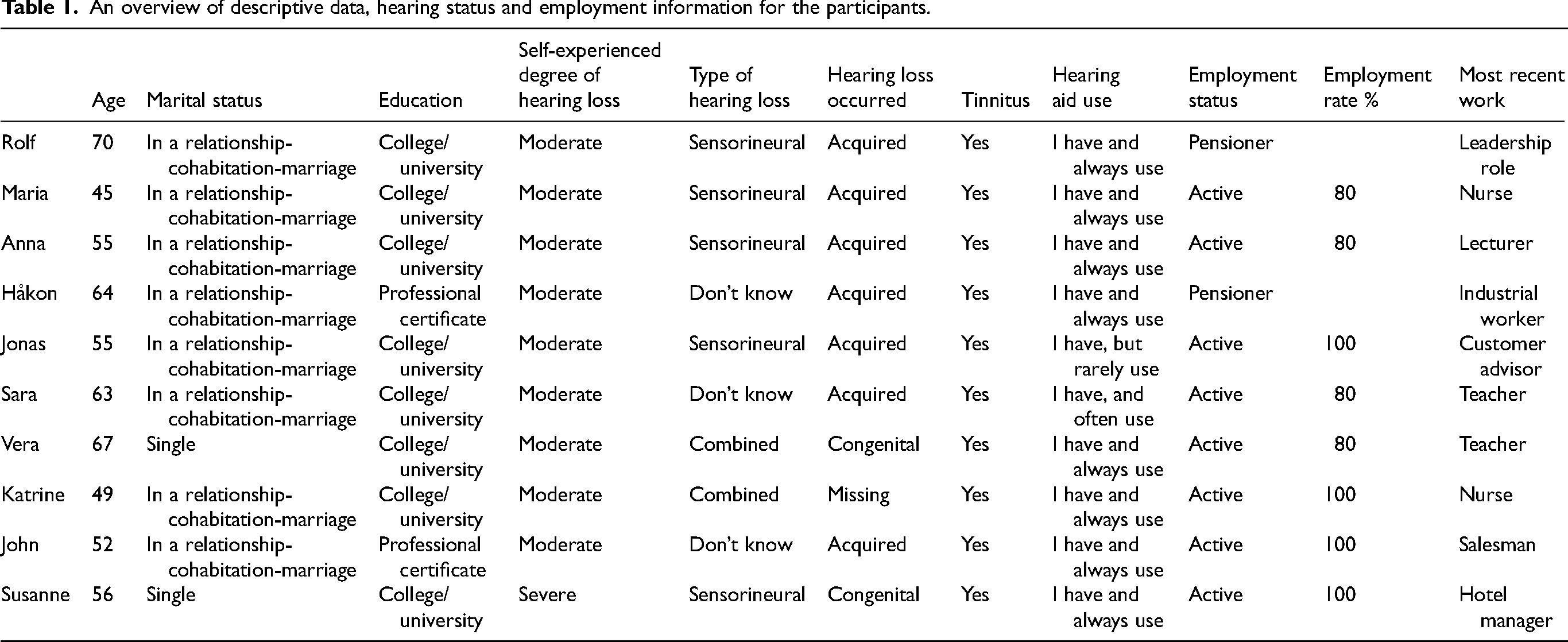
Of 40 requests for participation, we received a positive response from ten people who met the inclusion criteria. These ten participants – six woman and four men – took part in the study as participants in two focus groups with five participants in each group. The mean age was 57 years, with an age range from 45–70 years. Eight of the ten participants were in a relationship (cohabiting or married), whereas two were single. Eight participants held a college or university degree, while two had vocational certificates.
Eight participants had an acquired hearing impairment, and two had a congenital impairment. Because this was a qualitative study, representativeness was not required; however, the distribution of hearing impairment types in the sample resembles what is commonly observed clinically. 10 Five participants reported a sensorineural hearing impairment, two reported a mixed sensorineural and conductive impairment, and three were uncertain of their diagnostic classification. Nine participants described their hearing impairment as moderate, and one as severe. Eight participants used hearing aids consistently at work, one reported using hearing aids very often, and one used them seldom.
Two participants were retired, however they left work within the past five years. The remaining eight were employed with an average work week ranging from 30 to 37.5 h (the latter representing full-time employment in Norway). An overview of the participants and their recent work history is presented in Table 1.
An overview of descriptive data, hearing status and employment information for the participants.
Procedure
The interviews were conducted in 2016 in a major city in central Norway and took place in an informal meeting room at the university's audiology program. The location was selected to ensure appropriate acoustic and lighting conditions that would facilitate effective communication. The number of participants in each focus group was deliberately limited to five, a decision made to minimise potential communication challenges and to ensure that all participants had sufficient opportunity to engage in the discussion. A brief break was included during the sessions, during which coffee and cake were served.
All interviews were conducted in Norwegian, which was the participants’ first and primary language. To ensure accuracy in the English presentation, particularly of direct quotations, a translation–back-translation procedure was carried out. The interview guide had been made available to participants beforehand, and if any misunderstandings arose during the interviews, the researchers had the opportunity to clarify these immediately.
Data generation
Two of the researchers (EL and ABB) collaborated in preparing the interviews, conducting the data collection, transcribing the material, and carrying out the first phase of the analysis. 11 Two focus group discussions were conducted, and audio was recorded. To provide time for transcription, the interviews occurred at one-week intervals. The focus groups consisted of five participants per group.
The interviews followed a semi-structured interview guide with suggestions for specific questions for each topic. The interview guide was prepared based on previous research and using the International Classification and Disability Function and Health framework (ICF). 12 The groups were asked to discuss questions such as: How do you experience being an active worker and have hearing impairment? What do you succeed in, and what is perceived as challenging? What has affected your work participation? How is the professional part of work participation experienced versus the social part? What context or situations have typically influenced or affected your experience of work participation?
A short summary of the interview guide was sent to the participants prior to the interviews to give them information of the theme and to initiate a reflection process. Each interview lasted between 120 and 180 min and proceeded until no new themes emerged.
Data analysis
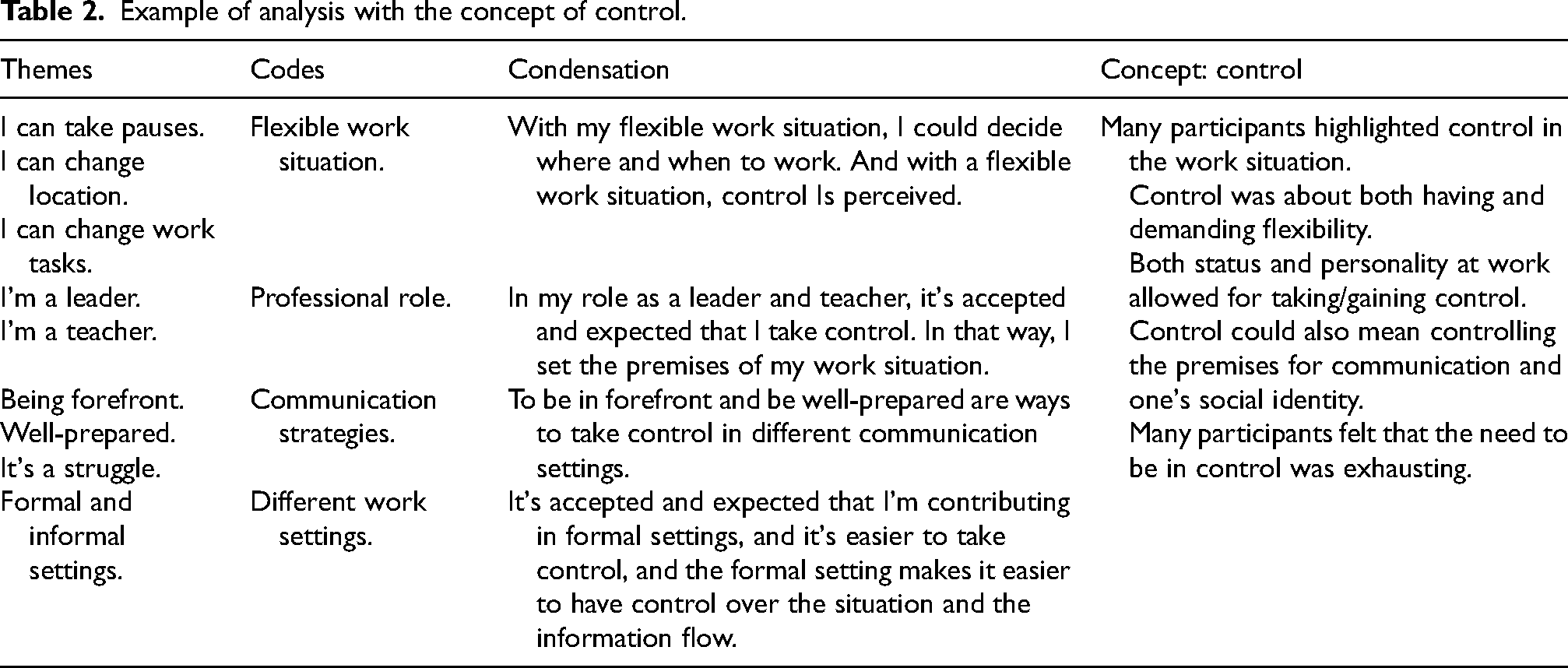
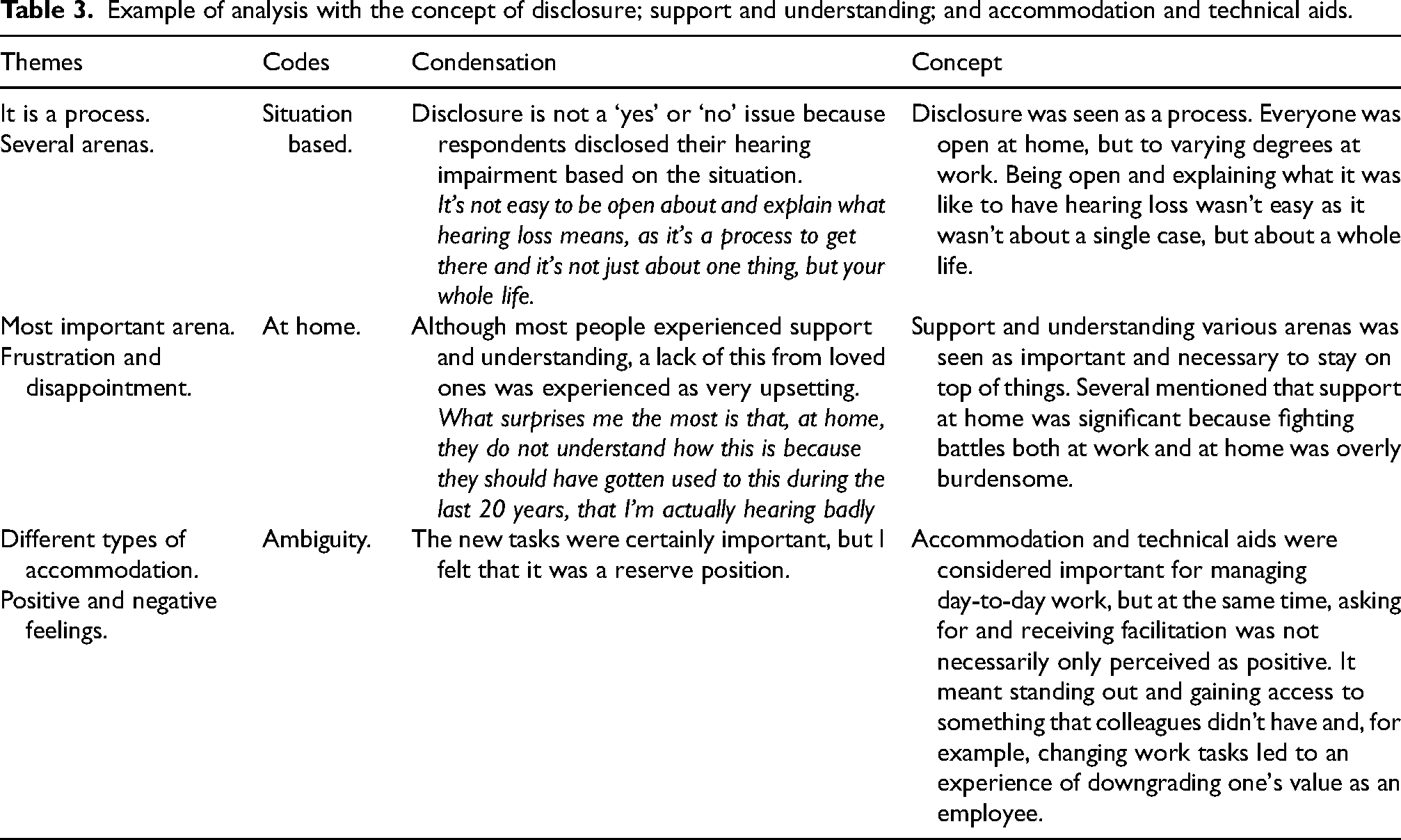
Analyses of the data were conducted based on the full transcripts of audio recordings after the interviews, which is important for thorough analysis of the data for scientific purposes. 11 The transcribed material resulted in 74 typed pages. The data was analysed following the method of systematic text condensation. 8 In the first step of the analysis, the researcher read through the material repeatedly and discussed overall impressions and possible themes. In the next step, the transcript was read again to identify ‘meaning units’ 13 (see Tables 2 and 3). In this stage, all sections of the text that were relevant to the research question, organized the meaning units into groups, and assigned a code to each group. In the next stage the research group discussed decontextualizing the meaning units in each code group, and finally in the last step, analytical concepts were described based on the text condensate. An example of the analytic process – from themes to concepts – is provided in Tables 2 and 3.
Example of analysis with the concept of control.
Example of analysis with the concept of disclosure; support and understanding; and accommodation and technical aids.
Results
The interview findings showed that the hearing impairment affected participants’ working lives in multiple ways. Eight participants reported that verbal communication was an expected and central component of their job. Nevertheless, five participants stated that they regularly struggled to retain all verbal information at work. Four were dissatisfied with the general acoustic conditions in their workplaces. Five participants reported that their hearing impairment influenced the amount of work they were able to perform, and several had sought to reduce their working hours as a result.
The analysis generated the overarching concept of negotiating to be on top of things. This overarching concept comprised the sub-concepts control, disclosure, support and understanding, and accommodation and technical aids. These concepts were understood as being continually shaped by two underlying dynamics: chasing consistency and expecting normalcy. The relationships between these concepts are illustrated in Figure 1.
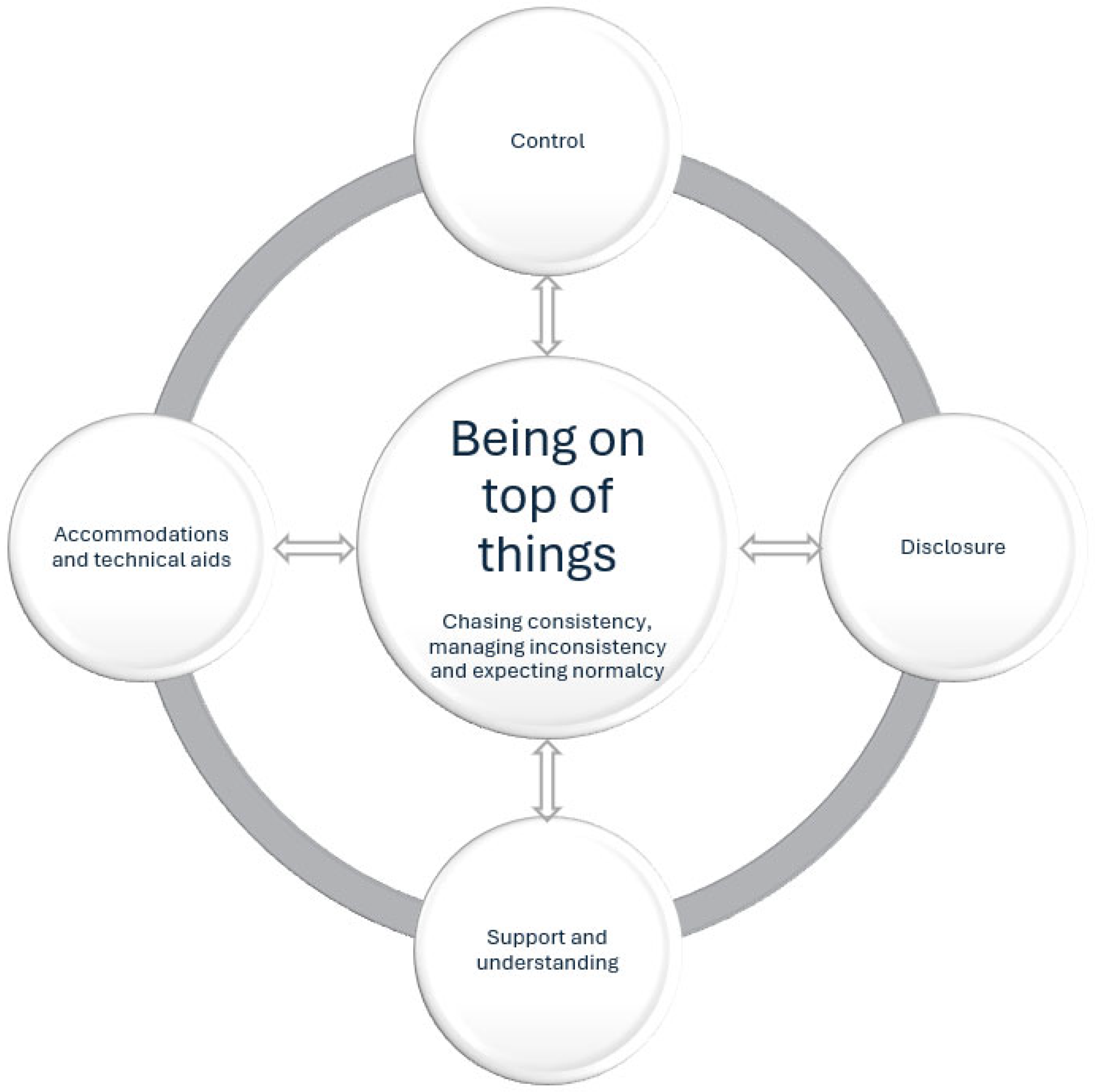
An overview of the concepts.
The concepts all shed light on important conditions that facilitate work participation for people with hearing impairments and contributed to stay on top on things. The concepts are presented under the following headings: 1) control, 2) disclosure, 3) support and understanding, and 4) accommodation and technical aids.
Control
All participants elaborated on the concept of control and identified it as a crucial factor in their daily work situation and even in their motivation to work. One participant put it this way: “I could not function at work if I did not manage to control my work situation (Rolf)”. However, the concept is not experienced as one-dimensional and positive. Being in control is considered important, but the struggle to obtain control and stay on ‘top of things’ can be so demanding that it can have severe physical and psychological health consequences. Thus, control could be described as a multifaceted concept and involves several aspects, such as a flexible work situation, a professional role, and optimising one's hearing ability.
Several participants described flexible work situations such as control over work tasks, the opportunity to withdraw from situations and take breaks, when necessary, as important. Not all had the opportunity to decide for themselves and thus had to work hard to secure provisions they viewed as important.
Their professional role and job title had an impact on the ability to control various situations. This was evident, for example, when one participant, a manager, described how his position helped him manage different situations as he wished. He said he made others adjust to him. Another example comes from Sara, a lecturer: “I still have control in my classroom. And can decide who will speak and who won’t”. The authority that accompanies professional roles makes it natural and possible for some people to take control in various situations.
One reason to take control was to optimise hearing ability in communication situations. A situation's level of predictability fundamentally influences the opportunity to establish control. Formal settings were experienced more predictable and less complex in terms of social interaction, as people take turns talking in a meeting, and it is expected that people contribute based on their professional roles. In these settings, the participants often felt that it was more acceptable to ask others to repeat themselves than in informal settings. They also said that having adequate preparation strategies was one way to stay in control of communication in formal settings. For example, one respondent described the need to be punctual or even to arrive early for meetings: “So, for me, arriving five minutes late for a meeting is, ‘Actually, the end of the world’. (Katrine)”.
In contrast, informal social settings were often experienced as more complex because informal social interaction can take forms and directions that are impossible to predict or have strategies to meet. One of them put it this way: “You can’t set the standard for what people should be doing in the staff room and in their leisure time (Sara)”. Since participation in social events is typically voluntary, many respondents discussed avoiding social work-related settings. One respondent said that he deliberately chose not to attend lunch breaks despite describing himself as a very social person.
Disclosure
The analysis revealed that the willingness to be open about hearing impairment was a process. Disclosure was not a ‘yes’ or ‘no’ issue; respondents disclosed their hearing impairment based on the situation and the response they received from the people in their surroundings. The interpretation of the result of the analysis pointed to that the energy the participants need to spend to maintain control and stay on top could be related to the decision to disclose. The concept of disclosure involves several aspects such as disclosure at work, disclosure at home and self-conception.
The results suggest that being open about the hearing impairment was experienced as constructive in several ways for the participants. First, disclosure prevented a loss of reputation if the participants did not understand what was said. Further, it seemed to distribute responsibility for accommodation to colleagues and even provided an opportunity to teach those with normal hearing about hearing-impaired people's needs: I’m fully capable of working if I get accommodating right. So, that's why I’ve gradually become very good at saying that, ‘This doesn’t work for me, this works fine’. So … and it's my responsibility because I can’t expect any of my colleagues or my boss to understand. … So, I have to speak up for myself. (Katrine)
This quote indicates that being open about hearing impairments also means assuming the responsibility for explaining one's needs and describing related problems to colleagues and managers. The analysis showed that this presupposes that the hearing-impaired person knows about what it means to be hearing impaired and tell other people how they should act and accommodate.
Interestingly, all participants were open about their hearing impairment with their families, but they were only open to their employers and colleagues to varying degrees. One participant described a challenge of disclosing their hearing impairment at work as follows: It's very difficult to tell everything at once, what it's like to have a hearing impairment. Because it comprises several areas. It's not just the one thing, but a whole life. (Susanne)
The analysis showed that disclosure presupposes that hearing-impaired persons have a comprehensive insight into their own situation, not only regarding their clinical hearing status, but also concerning the impact of their hearing on their daily life and work situation. They must also be able to communicate their perspective and insight to their colleagues. One participant reflected on how the onset of the hearing impairment could influence the difficulty of disclosing: But I did it [reveal my hearing impairment] ever since I was little. It will be something else for those of you who have reached the middle of life. It will be a completely different setting, a completely different understanding. (Susanne)
Susanne was the only participant who reported having a severe hearing impairment. This may contribute to the need to disclose the hearing impairment, as it not as easy to hide it to the same extent. At the same time, she has a congenital hearing impairment which means she has had many years to adapt to the situation and experience what works and what doesn’t.
According to the analysis, disclosure could result in assuming the full responsibility for accommodations and interventions. This is an undesirable paradox, as passing can ameliorate the unpleasantness that colleagues may face when confronted with impairment. Disclosure may also create vulnerability to rejection and prejudices from others. Even if the discloser is met with understanding, they could still be expected to take most of the responsibility for managing their hearing impairment.
Interestingly, the participants described that being open about the hearing impairment in the family at home, the home could become a training area for the participant to gather experience that could be helpful at work: [I]t's one thing that I’m open, but it started at home. Because you have to practice on someone, you know, you have to practice. Because it's so important that it works at home! And then you might dare more at work, as well. (Katrine)
Choosing to disclose the hearing impairment or not, was also related to the individual's self-conception. The analysis identified self-conception as being confident as an employee and being seen an equal colleague. The fear of being seen as unintelligent or as a less competent worker may prevent disclosure and promotes the idea that it is better to keep one's head down and keep quiet. Self-conception is affected by how people with a hearing impairment viewed themselves as hearing-impaired. Some respondents stated that not being reconciled with their impairment meant struggling for control, hiding their impairment from others, and downplaying its significance to themselves. On the other hand, some participants stated that their hearing impairment should not define them; it was simply part of them.
Humour could be perceived as a relatively harmless way of disclosing the hearing impairment: No, perhaps I have an advantage in the profession I have because the one I have is apparently a bit funny: ‘I'm an ammunition man, speak a little louder, I'm “dead heard"’. It kind of fits in, it should be like that. So, it's not a deviation that I can’t hear well, it's completely normal! (John)
In addition, people who can make others laugh are generally likeable and humour can also neutralise the misunderstandings that arise due to the hearing impairment. However, the situation can still be perceived as vulnerable for those with hearing impairment, but one can at least hide this with humour. What is also interesting is that here the participant also uses his previous profession to his advantage; he has had a noisy profession, and it is therefore normal for him to have poor hearing. The hearing impairment is related to his former profession and not to him in person.
Support and understanding
Experiencing support and understanding in various arenas was seen as important and necessary to stay on top of things. Several mentioned that support at home was significant because fighting battles both at work and at home was overly burdensome. Some experienced high levels of understanding from employers, while others had recourse to other actors, such as union representatives, to achieve the benefits to which they were entitled. Those who experienced support from health professionals had easier access to the necessary arrangements and thus have support from them to achieve benefits.
As mentioned earlier, for some participants, the home was a training area to disclose their hearing impairment, and several stated that support at home was very important to be able to function at work. Although most participants experienced support and understanding, some did not, which led to frustration and disappointment: What surprises me the most is that, at home, they do not understand how this is because they should have gotten used to this during the last 20 years, that I’m actually hearing badly. (John)
This quote describes the additional burden of not having the support and understanding of one's family. Interestingly, one participant described how a failure to understand the challenges of a hearing impairment changed when he brought his spouse to a course that addressed this issue.
Disclosing the hearing impairment mostly resulted in support and understanding from colleagues and employers. Because I explained to him in detail what the problem was that I had, and he understood that. Luckily! So, I've met only goodwill, as far as the employer is concerned, that is! I have. … And that means a lot to me! (Håkon)
This participant, an industrial worker, explained how important it was that his employer was understanding. Several participants also experienced a lack of understanding when requesting accommodation, only one reported that she had to fight for her rights by engaging her union representative and corporate health services: And she [representative from the occupational health service] took action! And she tried to explain to the employer. … But … it was very difficult to find any understanding. (Anna)
Most participants with a similar experience chose not to respond this way. This may be understandable due to the vulnerability associated with asking for accommodation and for it to be worth being vulnerable, one must experience that a lot is at stake.
Although colleagues showed support, they occasionally had to be reminded of the hearing impairment, and the participants found that it could be somewhat frustrating to make themselves vulnerable again and highlight their difference.
Accommodation and technical aids
This concept included conditions such as the importance of acoustics, technical aids, the experience of having a value as an employee, personal resources and the health system. Noise and poor sound conditions were seen as barriers to participation at work, and for some, these conditions contributed to the use of sick leave. All respondents used a HA and other types of technical aids such as a microphone or an induction loop to at least some extent. Access to information about relevant and existing aids was perceived to be insufficient, and several participants mentioned that they wished audiologists would focus more on various aids because it is difficult to learn how different devices suit individual needs. Some felt that they finally received help because they were stubborn and did not give up.
Accommodation can consist of many things as mentioned earlier, to have a flexible workday and the opportunity to choose when to perform different tasks, or to be exempt from certain tasks. Some participants had difficulty accepting that they depended on special accommodations, even if doing so helped them remain employed. One participant stated that the accommodations made him feel less appreciated and recognized: And then I got to work for myself away in a corner, like. … It was, of course, important to do that job, so there was nothing wrong with that. But it was sort of like a second-rate position. (Håkon)
Managing duties and being exempt from some regular tasks illustrate the ambiguity related to asking for and receiving accommodations. This was also associated with social identity, a sense of personal worth, and one's value as a colleague: There is no alternative. … I can’t route all orders over to those I work with because that reduces my personal value as a person. My personal value as a person lies in the fact that I have customer contact with a number of customers. So, at the moment, I have to start giving away a part of that. … Then I’m at a disadvantage when we’re going to negotiate pay for next year. So, you just have to grit your teeth. (John)
Some were offered reduced work hours, which could be perceived as relevant and desired for some participants, but offensive for participants who wanted to work full hours. One participant, however, felt that she had been forced to reduce her position by 30%: The labour and welfare administration didn’t [want me to work full hours], and my employer didn’t. … There was the state pension fund, and you could get temporary disability pension at 30%. … So, that was the solution. I was so angry, so sad. And I refused. … I was very much against it! (Anna)
This participant also addressed the issue of employer using more creative methods to help her work full-time.
To gain access to accommodation, many participants felt that it was their responsibility to define their own needs. As mentioned, even those who chose to disclose their hearing impairment regularly found that their hearing issues were reduced to an individual matter for which they were solely responsible. They perceived the fight to obtain the necessary accommodation tiresome even though Norway has a system that should contribute to people with hearing impairment being able to participate in work. Our findings indicate that this system does not work optimally. One participant expressed an expectation that access to technical aids must be easy and fast and that one must get sufficient and proper training.
Discussion and reflections
This study aimed to explore the lived experience of people with hearing impairments and how they managed their everyday work situation. The results primarily shed light on four concepts that are important for people with hearing impairment to stay in on top of things at work: control, disclosure, support and understanding, and facilitation and technical aids. The results of this study share similarities with several other qualitative studies. For example, in line with our findings, Svinndal et al. found that knowledge about hearing impairment, flexible workday, use of technical aids, and support from various service providers was positive contributors to maintain a sustainable working life. 3 The importance of control is also described in the job-demand-control model developed by Karasek & Theorell designed to study psychosocial stressors in working life and how these affect health and well-being. 14 At the same time, Danermark and Gellerstedt found that people with hearing impairment experience a greater imbalance between job demands and control - often referred to as a high-strain work type - and that this imbalance affects both physical health and mental well-being to a greater extent compared to their reference group. 15 Furthermore support, accommodation and disclosure were found to facilitate managing work.16–20 The importance of support is also recognized in the further development of the job requirement control model where support is now included and is seen as a buffer for stress. 21
Descriptions of the struggles of people with hearing impairment encounter at work have become comprehensive over the past decades.22–25 Granberg argues that “[….] conducting additional inductive qualitative interviews to explore aspects that promote a healthy working life in relation to HL would deepen our knowledge regarding sustainable work situations” [page 14]. 7 There is still much work to do in order to gain a firmer grasp on the complex interaction between the individual employee with a hearing impairment and their social and physical environment. Even though there is knowledge about what can facilitate work participation, there are still many who struggle to stay on top of things in everyday working life. From the data in our study, it is reasonable to interpret the narratives of our participants as stories about struggles to negotiate between, and maybe reconcile, several mutually excluding ambitions. To expand the understanding of “How to stay on top of things” in working life, we will elaborate on and reflect upon our findings and thus contribute to more knowledge of the complexity involved.
Chasing consistency
Our participants emphasise that they are ordinary employees and family members. They see themselves as persons fitting into their social communities at work and at home on par with other members. As such, they see themselves as persons representing skills, attitudes, interests and competences they have in common with colleagues and family members. They also see themselves as persons with skillsets and faculties that set them apart from others in a positive manner. Such a self-presentation as both ordinary yet holder of unique faculties represents a typical and – in lack of better words – completely normal way of perceiving oneself. That which sets us apart and earn us appreciation and merit for our faculties is also an important part of the foundation for our self-esteem and self-respect.
However, being hearing impaired does not always fit the positive narrative when our participants talk about what set them apart and make them unique. Being hearing impaired is not necessarily depicted as completely negative, but more frequently as a neutral, yet special aspect. Notwithstanding, in the context of work and family life, the hearing impairment gives rise to all manners of challenges that, in sum, threatens the self-display as simultaneously ordinary and unique.
As basic as spelling this out might be, it is still an important result: the hearing impairment is not conceived as a natural thing, a potential resource or a positive asset. Our participants are identified with a medical discourse where the hearing impairment is an individual health deficit and a burden that the participants must carry. Such individualisation of the hearing impairment places the chief responsibility for handling the consequences of the hearing impairment with the person whose ears are affected.
The process of placing responsibility is interesting. To a certain extent, it seems that our participants have assumed this responsibility themselves, but responsibility is also largely tacitly placed upon them by their colleagues, by family members, by the clinicians treating them, and the society. This despite the legislations and rights that are intended to facilitate work participation. In the Nordic context there is a strong tradition for describing disabilities as a relational phenomenon. Historically, the “Nordic model of disability” suggested that the persons with impairments should strive to improve their functional abilities, whilst society had a responsibility for the provision of increased accessibility and services that enhance the possibility for participation. 22 In many ways, our participants have a lived experience with this relational model: Technical aids – both personal hearing aids as well as installed technology such as induction loop systems at work – are provided free of charge by public services, and several support systems – both financial and practical – lend assistance. Hence, our participants do not assume complete responsibility for functioning at work, but they are often left to deal with whatever still needs to be solved when clinicians and public support systems have done their part. To keep up their “end of the bargain” our participants must function at work to the most “normal” extent possible, something that might very well be in accordance with their own needs, expectations and ambitions, at least initially. However, functioning as if the hearing impairment is a solved problem after rehabilitation and accommodations made at work, is a task fraught with challenges, frustrations and inconsistencies, both for themselves, colleagues and family.
We have reported above that the participants navigate through everyday life whilst trying to be an “ordinary yet unique” colleague. At the same time, our participants frequently experience situations where they find themselves reduced to being the “hearing-impaired person” who needs and asks for accommodations and concessions from colleagues or employer. Often the participants find themselves in situations where the promotion of claims for concessions as “hearing-impaired” is something that means alienation as “ordinary”. Likewise, trying to be an “ordinary” colleague, might mean playing down needs for accommodations to the extent where the participant is left with no other choice than to pretend to take part and “pass” as “hearing” instead of “hearing-impaired”. In a study of Jennings et al., 18 social identity management is referred to “as an art” [page 175], which further highlights the multifaceted nature of this process. None of our participants accept the notion that their hearing impairments define them completely as persons, and thus they struggle to strike the balance between the need for recognition as “ordinary” and the need for recognition of one's particularity as a hearing-impaired person. To have demands for accommodations as a “hearing-impaired person” accepted is of crucial importance and a prerequisite for having and keeping a job. The processes of obtaining necessary and reasonable accommodations are, nevertheless, also something that can threaten to remove the hearing-impaired person from their colleagues, single them out as ‘different’ and lessen the chance of being seen as the ordinary colleague and employee they also want to be. In addition, in some cases the provision could be perceived as a downgrading and made them feel less valuable, even if it helped the person to be able to stay in work. Striking the right balance to stay “on top of things” thus means striving for the form of consistency in one's life that permits sociability and different forms of predictability, both in one's own life and as a colleague and employee while experiencing being a valuable contributor. The dilemmatic negotiations are also described by Koskela et al.. 23 They describe the need to negotiate different group membership, including considering being a part of the nondisabled employees’ group or the disabled group. Koskela et al. point out that “The dilemmatic negotiation of new group memberships and the other social aspects involved in HA rehabilitation tend to remain invisible to rehabilitation professionals, occupational healthcare, and employers” [page 226]. Jennings et al. identified five themes that were important for how they are managing their social identity at work and were managing the situation, having a buddy system, feeling comfortable, using personal resources and “it gets easier with time”. These themes highlight the complexity of managing social identity in the workplace. 18
Managing inconsistency
The complexities involved when using technical aids is an example illustrating the challenges involved when striving for a consistent self-representation: Asking that technical aids such as a microphone or and induction loop is used, may signal to colleagues that using such technical aids will “solve the problem” the hearing impairment has created. Additionally, the person with a hearing impairment risks standing out as “special” in a socially negative way when asking for the use of the technology. Unfortunately, using aids such as a microphone demands both an understanding of the technology's limitations and consistent practices to compensate for its shortcomings. For example, when using a microphone, people must take turns speaking as the microphone works best when only one person speaks. When the need for such a practice is neglected, the question of giving priority to the ordinary or the special arise again. If our participant in one situation emphasises the importance of using the microphone, but in the next situation says that it contributes very little (e.g., in an informal setting), like in informal setting, may be perceived as inconsistent. In addition, there might be a chance of being perceived as ungrateful when you have to say that facilitation with technical aids that you have been given does not work in all settings/contexts.
Expecting normalcy
The underlying tacit expectation our participants encounter, both from colleagues, employers - and even from family, is that after completing audiological rehabilitation, one should gradually transition to a “normal” situation where hearing impairment no longer poses challenges. For some, this will be the case as there will be some who find that handling everyday work when conditions are favorable requires less energy and they feel that they are on top of things. At the same time, some have not been prepared for the slow, yet exhausting, circular processes where they must negotiate their way between the irreconcilable expectations – both own and other people's – outlined above.
The insight in the nature of the irreconcilability of expectations makes it easier to understand the seemingly inconsistent way many of our participants navigate through their workday. Here, the question about disclosure provides a good example. To an outsider, it would seem logical and consistent to routinely and openly declare oneself as a hearing-impaired person in the context of work and everyday life. However, disclosure /non disclosure is something often decided on the spot, something depending on the given context. Our findings show how some participants would choose “passing” in an informal situation but disclosure in a more formal setting. Since the expectations – both own and other people's – vary from the recognition of the significance of the hearing-impairment to the expectation of normality, the decision about disclosure needs to be adjusted accordingly. For example, Jennings et al. 18 identified five themes as decisive for whether they were open about their hearing impairment or not and they were (1) perceived importance of the situation; (2) perceived sense of control; (3) community affiliation; (4) burden of communication; and (5) coexisting issues related to hearing impairment.
Furthermore, without acknowledging the hearing impairment it is difficult to make choices about disclosure or passing. According to Svinndal et al. 3 there are three phases in the acknowledge process and how these affect the extent to which everyday working life becomes a burden or not, as the different phases affect whether one has access to positive contributions from various actors. Although Svinndal et al. do not directly mention disclosure, it is indirectly said when they point out that being in the acknowledge phase it is possible to gain access to broad information from professions and meeting peers that will contribute to handling the challenges one faces.
In want of a realistic and existing solution to the hearing-impairment regarded as a pathological state, our participants have choices: They can claim vocational rehabilitation and accommodation, continue working either partly or fully, and for some sick leave or receiving disability benefit. When the latter happens, the exit is often propelled by well-intended advice from the surroundings like manager, family or clinicians.
The sociological and ethical implications of the distinction between imagined and realistic exit options should 1) focus on the way the person with a hearing-impairment is left solely responsible for outcomes, and 2) continue to question if it is reasonable to define normalcy in ways that automatically exclude persons with less than a full capacity for hearing.
Clinical implications
This study sheds light on the complexity of having a hearing impairment in working life. It can be of great importance that this complexity is highlighted to people who are in this situation, as it will increase understanding for both the individual and their colleagues, as well as their families, why everyday work can be experienced as exhausting. This experience may contribute to a kind of relief for the individual and a better understanding of why they sometimes find themselves exhausted. Acknowledgment of the complexity is also important to be aware of among healthcare personnel such as GP's and audiologist. This study's results therefore point out the need for a much more multi-dimensional understanding in audiological rehabilitation and greater focus on vocational rehabilitation that can contribute to a foundation for coping and development. Attention should thus be paid to different internal and external conditions, as needs, expectations and demands affecting the individual's opportunity to maintain both one's job and one's position as colleague. Nealon further advocates a holistic approach as a means of promoting active participation in both working life and society at large among individuals with hearing impairment. 24 This may include a need for reorganizing the limitations in the current audiological consultations, which often prioritize HA fitting in the limited time set aside. In order to achieve successful audiological rehabilitation, Kooser 25 suggests a systematic shift towards biopsychosocial intervention in audiological rehabilitation that includes multiple health professions. Our opinion is that a shift towards vocational rehabilitation can present major psychosocial and socioeconomic benefits for both the individual and society.
Findings from this study also indicate the potential the General Practitioner (GP) present to acquiring appropriate and timely audiological support. The Norwegian model for audiological rehabilitation is structured in such a way that in order to have audiological rehabilitation and technical aids covered by the state, one must first be seen by a GP to be referred to an Ear, Nose and Throat specialist with an associated audiologist. As described above, our study points to the need for GPs to be able both identify symptoms of early hearing impairment and have the knowledge of the complexity the individual may experience at work. A thought-provoking finding from Svinndal et al. 3 study was that the acknowledge phase was often initiated by a long-term sick leave or an experience of burnout. The goal must be to identify hearing impairment and reach the recognition phase, preventing sick leave and burnout. The goal must be to identify hearing impairment, initiate the recognition process, prevent sick leave and burnout, and create a sustainable working life.
Conclusion
The current study explored the lived experience of people with hearing impairments managing their everyday working situation and conditions that promote work participation. The analysis revealed four concepts that promote work participation: control; disclosure; support and understanding; and accommodation and technical aids. These concepts relate to each other in a dynamic way and there are also relationships in the various concepts that contribute to a complexity that must be taken into consideration when conducting audiological rehabilitation that includes working life. In addition, the concepts will be influenced by context and the person's social- and physical environment.
To recognize the complexity and respond accordingly, can strengthen work participation for persons with hearing impairment with major consequences for both individual and societal welfare.
Strengths and limitations
The strength of this study is that it discusses the complexity of an already known phenomenon that contributes to people with impaired hearing managing to be at the top of their everyday working life. By acknowledging this complexity, the results of this study may contribute to an audiological rehabilitation that is more able to contribute to a constructive everyday working life for people with impaired hearing. At the same time, a study by Germundsson et al. 26 demonstrates that hearing impairment and its consequences are perceived differently across countries. This highlights the importance of considering cultural and contextual differences when developing hearing-related healthcare services, to ensure that they adequately address the diverse challenges associated with hearing impairment.
The concepts found in the study are based on data from 2016 and this may be considered a limitation, however based on our experience when presenting our findings in lectures among people with impaired hearing in 2026, they tell us that they still encounter the same challenges as our participants. Thus, we consider our data to be trustworthy.
Further, the analytical process underlying this text consisted of iterative cycles of critical analysis and re-analysis, in line with the hermeneutic tradition of interpretation. 27 In our view, this approach enabled a movement from what is readily observable in the data to an understanding of the more profound - and often less visible - dilemmas and tensions outlined above.
We have limited information about the 30 eligible individuals who declined participation. However, it appears that several of those who did not respond were unsure about the type of hearing impariment they had. It is possible that this lack of awareness contributed to their decision not to participate, even though knowledge of one's specific hearing impairment was not a requirement for inclusion in the study. The limited information available about non-responders represents a potential limitation, as it restricts our ability to assess whether their characteristics differ systematically from those who chose to participate.
Information on tinnitus severity was not gathered, as tinnitus lay outside the primary scope of the study. Nevertheless, the absence of this data may limit opportunities for more detailed subgroup interpretations.
Comorbidity is not uncommon in cases of hearing impairment, given that hearing impairment tends to occur in older age groups. 28 This was not addressed in our study and may be considered a limitation, as comorbidity could also have been a factor influencing the results, given that the average age of our informants was 57 years. At the same time, only one respondent reported other functional impairments, and this respondent did not elaborate on this further. This may suggest that this was not a factor affecting the respondent and that it was the hearing impairment that was the challenge affecting their participation in work.
The small number of participants, the low participation rate, the possibility of selection bias, and the heterogeneity of occupations represented in the sample may all be considered limitations, and they restrict the generalizability of the findings. Such limitations are common in qualitative studies, particularly when the aim is to obtain an in-depth understanding of individual experiences rather than to achieve statistical representativeness.
Footnotes
Acknowledgements
The authors acknowledge and are grateful to all participants who were willing to share their experiences on conditions that promote work participation among people with hearing impairment.
Ethical considerations
The research was approved by the Regional Committees for medical and health research ethics (REK) (reference number 394926).
Informed consent
A declaration of consent and confidentiality was signed prior to the focus group interview. Participation was voluntary, and withdrawal was possible at any time. Pseudonyms are used for each participant to protect their anonymity.
Funding
This study was founded by the former Sør-Trøndelag University College (HIST), now the Norwegian University of Science and Technology (NTNU).
Declaration of conflicting interests
The authors declared no potential conflicts of interest with respect to the research, authorship, and/or publication of this article.
