



Abstract
Clinical trial registration
KCT0009349 (approval date: April 19, 2024).
Introduction
Core muscles encompass the musculature of the trunk and pelvis and play a vital role in maintaining spinal and pelvic stability. They are also essential for the efficient transfer of energy from the trunk to the limbs during various athletic activities. 1 Weakness in these muscles can compromise spinal stability, potentially resulting in lower back pain, impaired balance, and poor postural alignment. Therefore, strengthening the core is of critical importance.2–5 Traditionally, core strengthening has been pursued through static, abdominal-focused exercises, such as planks, crunches, and leg lifts. 6 Furthermore, task-specific training approaches that emphasize functional relevance have been proposed, along with training environments incorporating unstable surfaces and external loads to maximize stability demands. However, empirical studies and theoretical rationale supporting these methods remain limited.
As a functional strategy for core strengthening, dynamic exercises, such as kettlebell swings, squats, and Bulgarian squats, based on distal mobility to facilitate trunk and pelvic stability, have been advocated, with several studies reporting potential benefits.7–11 Among these, the Bulgarian split squat is a unilateral lower limb exercise in which one leg is positioned on a stable surface behind the body while the other leg supports the body's weight during movement, often with the use of free weights. 12 This asymmetrical weight distribution increases the stabilization demands on the neuromuscular system, thereby enhancing both lower limb strength and trunk muscle engagement.11,13 Studies have demonstrated that the Bulgarian split squat elicits greater activation of the gluteus medius and biceps femoris compared to traditional squats. 14 Furthermore, other research has confirmed significantly increased activation of the biceps femoris and external oblique muscles during Bulgarian split squats. 11
One approach reported to enhance core muscle activation during resistance training is the use of unstable conditions.15,16 Unstable training can be categorized into surface-based exercises, which induce ground-level instability using devices such as balance pads, Swiss balls, and BOSU balls, and load-based exercises, which generate upper-body instability through elastic bands or aqua bags.11,17–21 Such training has been shown to augment core muscle engagement as the body compensates for perturbations to maintain spinal stability. 22 Anderson et al. 23 reported that squats performed on unstable surfaces produced greater activation of the erector spinae and other core muscles compared to squats on stable surfaces. Similarly, Seo et al. 20 found that squats performed with an aqua bag elicited significantly higher activation of the core muscles and hamstrings than standard squats.
Although previous studies have investigated various exercise methods incorporating functional aspects and unstable environments, studies on the Bulgarian split squat have been limited to comparisons on unstable surfaces, with no studies examining its effects under unstable load conditions (ULC). 11 Considering that the Bulgarian split squat effectively activates the core even as a standalone exercise, it is necessary to identify which type of instability produces greater activation of the core and lower-limb muscles.
Therefore, the aim of this study was to analyze and compare the effects of Bulgarian split squats performed under unstable surface conditions (USC) and ULC on the activation of core and lower limb muscles. To our knowledge, this is the first study to directly evaluate and contrast these two forms of instability during Bulgarian split squats. By identifying differences in muscle activation across these conditions, we sought to provide evidence that exercises incorporating USC and ULC can enhance muscle activation and contribute to improved physical stability.
We hypothesized that unstable conditions would elicit greater muscle activation than stable conditions, with ULC inducing higher activation of core and lower limb muscles than USC.
Methods
Experimental approach to the problem
To investigate the effects of instability on core and lower limb muscle activation, we compared Bulgarian split squats performed under three different conditions: stable conditions (SC), USC, and ULC. Twenty-one physically active adults participated in the study, performing squats under each condition in a randomized order. Muscle activity was measured using surface electromyography (sEMG) across both the ascending and descending phases of the movement. The muscles analyzed included key core stabilizers and lower limb muscles. electromyography (EMG) data were normalized to maximal voluntary isometric contractions (%MVICs). This experimental approach enabled a focused analysis of muscle activation under varying instability conditions during a unilateral resistance exercise.
Subjects
The required sample size for this experiment was calculated using G*Power 3.1 software (version 3.1.2; Franz Faul, University of Kiel, Germany). Based on a preliminary study, internal oblique abdominal muscle activation measured via sEMG was selected as the primary variable. Using an effect size of 0.59, a significance level of α = 0.05, and a statistical power of 95%, the minimum sample size was determined to be 10 subjects. In total, 21 healthy adults were recruited (mean age, 26.33 ± 3.55 years; mean height, 175.76 ± 4.31 cm; mean weight: 79.80 ± 7.60 kg). Participants who engaged in resistance training ≥2 per week for ≥1 year were included, ensuring adequate physical fitness and consistent exercise experience. 24 Participants with a history of cardiovascular, musculoskeletal, or neurological disorders, and those with related pain or injuries, were excluded. 25
The study's purpose and procedures were thoroughly explained to all participants, who provided written informed consent prior to participation. This study was approved by the Institutional Review Board of Pukyong National University(PKNU 2024-11-008).
Procedures
All measurements were conducted at the same location, with subjects performing Bulgarian split squats under three conditions: SC (Figure 1), USC (Figure 2), and ULC (Figure 3). Subjects wore tight-fitting shorts to ensure accurate electrode placement, and all measurements were conducted using the dominant leg, defined as the leg the participant would use to kick a ball 26 and positioned in front during the Bulgarian squat. 27 A single examiner attached surface EMG electrodes to specific sites on the abdomen and lower limbs to record muscle activity. Measurements included the bilateral rectus abdominis, internal oblique, external oblique, and erector spinae muscles, as well as the vastus lateralis, vastus medialis, biceps femoris, gluteus maximus, and gluteus medius of the dominant leg. To minimize potential practice and fatigue effects, the order of the three experimental conditions was randomized individually for each participant using random numbers generated in Excel. 28 This counterbalancing strategy was applied to reduce potential bias related to condition assignment. Approximately 1 week before the main experiment, participants completed a 15-min familiarization session. During the experiment, each participant performed five repetitions of the Bulgarian split squat under each condition. 29 A 2-min rest period was provided between each condition. 28 Muscle activation was measured and compared during both the descending and ascending phases of the movement across the three conditions.
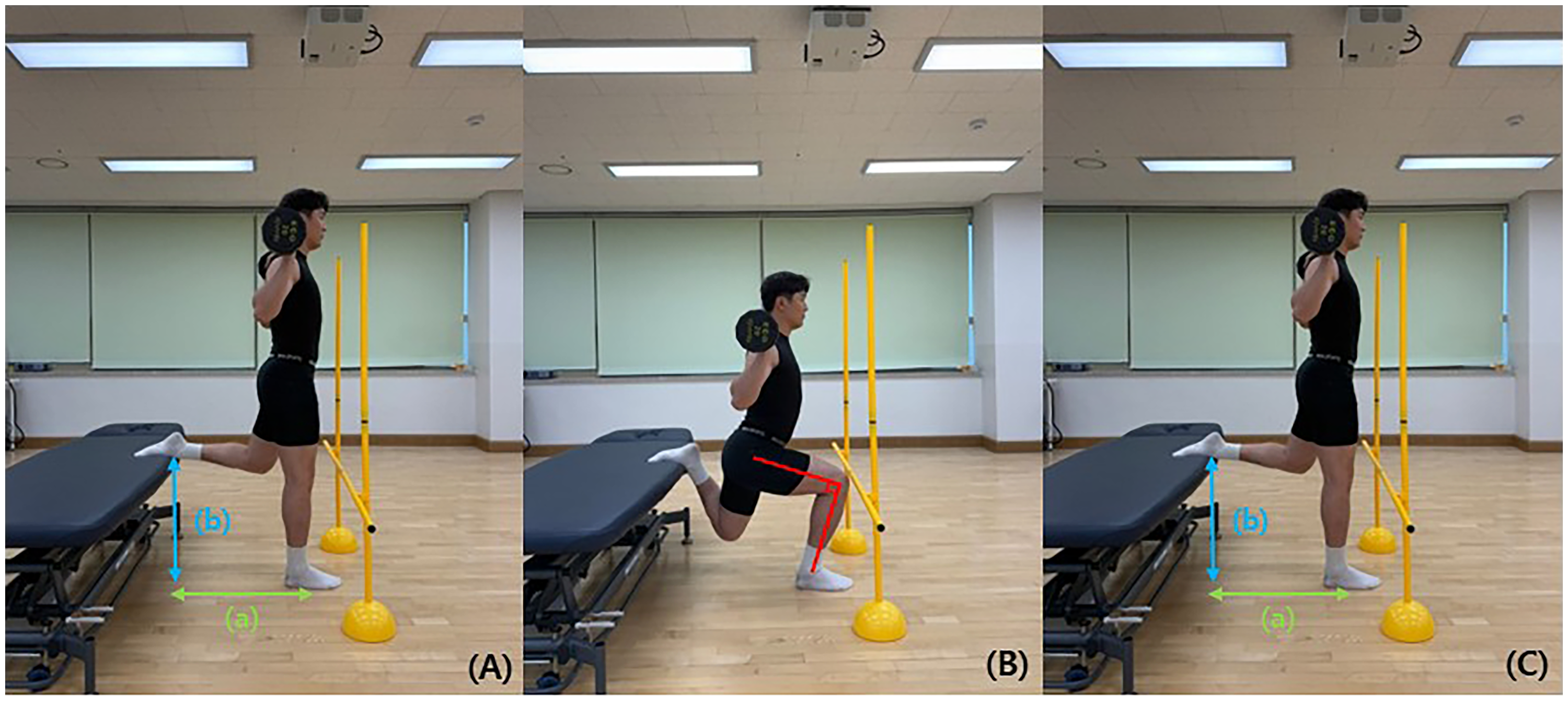
Bulgarian squat on a stable surface with stable load (SC).
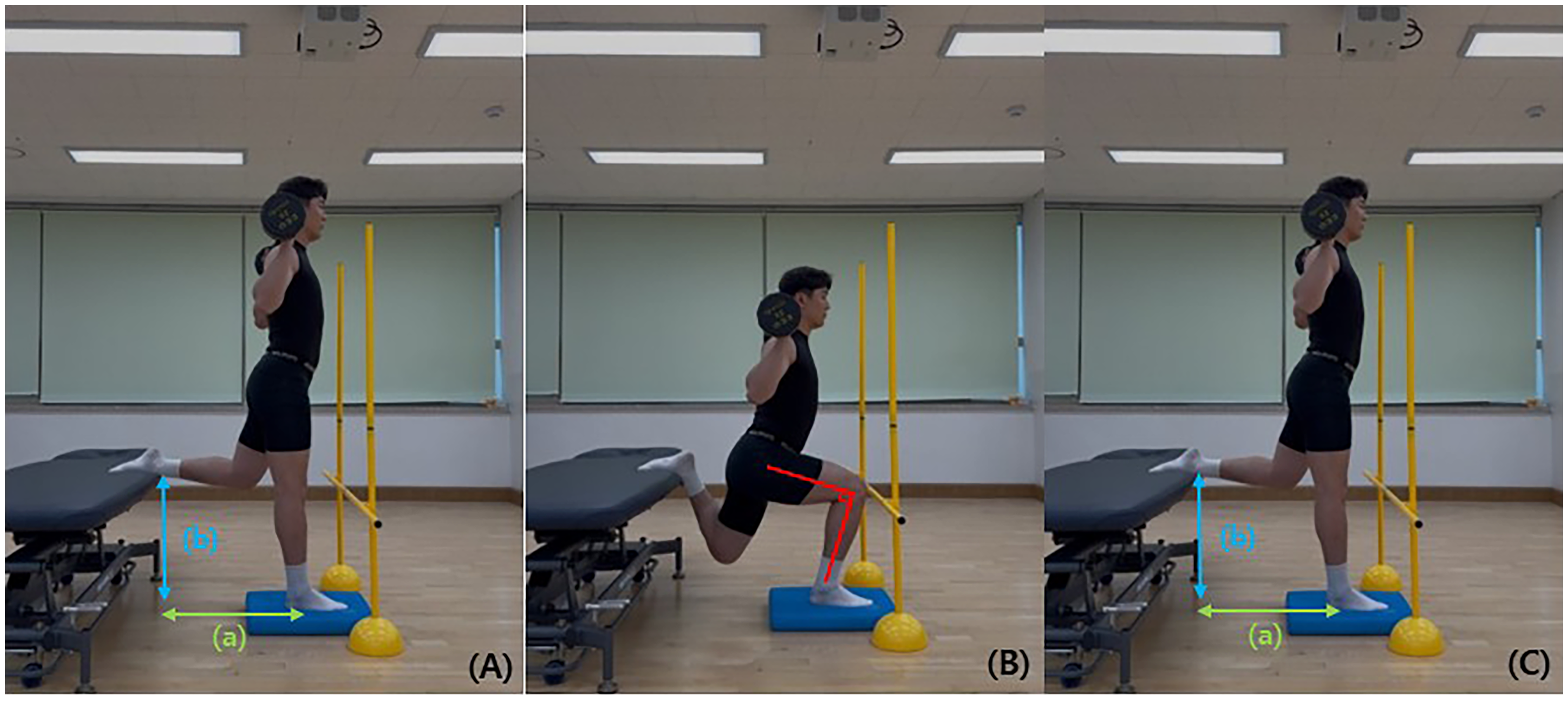
Bulgarian squat on an unstable surface with barbell load (USC).
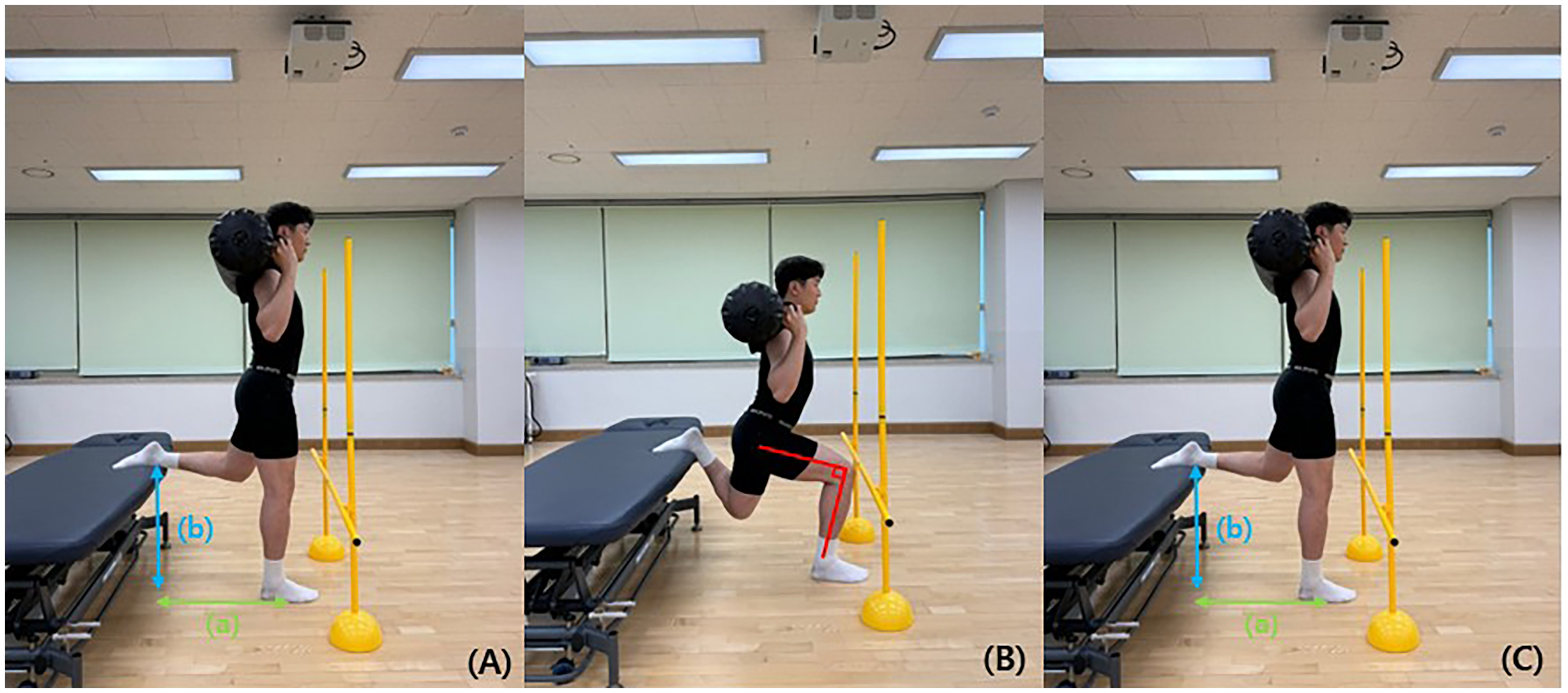
Bulgarian squat on a stable surface with unstable load (ULC).
Bulgarian squat exercises
Bulgarian split squats were performed under three conditions: using a standard barbell on a stable surface, on a balance pad, and with an aqua bag. Stance width was individualized by measuring the distance from the anterior superior iliac spine to the medial malleolus, and the dominant leg was positioned off the bench at a distance equivalent to 80% of that measurement. 25 The height of the rear bench was set at 60% of the measured leg length. 25 To ensure a consistent depth of descent during the squat, a horizontal bar was placed in front of each participant at the point corresponding to 90° of knee flexion. subjects were instructed to initiate the ascent phase of the squat as soon as the dominant knee made contact with the bar. 25 During the exercise, the dominant leg was placed in front of the bench and the non-dominant leg was positioned on the bench, shoulder-width apart. Subjects lowered their bodies until the dominant knee contacted the target bar and then extended the knee fully to return to the starting position. 25 To minimize trunk flexion throughout the movement, the bar used to guide depth was also employed as a visual cue; subjects were instructed to keep their torso upright and maintain eye contact with the bar as much as possible. 25
ULC
The ULC was implemented using an aqua bag (STC, South Korea) filled to 50% of its maximum capacity (40 kg), with dimensions of 85 cm in width and 20 cm in height, to introduce dynamic instability. Subjects performed the Bulgarian split squat on a stable surface, positioning their feet at the predefined central point of their stride. 30 For the SC, subjects performed the same exercise at the same location using a standard 20-kg barbell. To account for the dynamic properties of the aqua bag and ensure consistency across all conditions, the external load was standardized to 20 kg in each trial.
USC
The USC was implemented using a balance pad (Airex Balance Pad Elite) measuring 48 cm in width, 40 cm in length, and 6 cm in height to introduce surface instability. The balance pad was placed under the central point of the participant's dominant foot, and subjects performed the Bulgarian split squat while carrying a 20-kg standard barbell on their shoulders. 31 To account for the height difference introduced by the balance pad(6 cm), an adjustable bench was used to support the non-dominant leg. The height of the bench was raised by 6 cm from the original standard to ensure consistent posture and movement mechanics across all conditions.
Muscle activity measurement
Prior to measuring muscle activity of the core and lower extremities during the Bulgarian split squat, the electrode attachment sites were first shaved with a disposable razor and cleansed using alcohol swabs. Disposable Ag/AgCl surface electrodes were then applied at 2-cm intervals. Muscle activity was recorded during both the descending and ascending phases, as subjects performed five repetitions of the Bulgarian split squat, timing each phase to 2 s, guided by a metronome set at 60 beats/min. 29 A 2-min rest period was provided between each condition, and two assistants were present to ensure participant safety. 28 EMG data were collected using a 13-channel system (Ultium, Noraxon, Inc., USA) at a sampling frequency of 15,000 Hz. Muscles monitored included the vastus medialis, vastus lateralis, biceps femoris, gluteus maximus, gluteus medius of the dominant leg, and bilateral rectus abdominis, external obliques, internal obliques, and erector spinae. Electrode placement followed Surface EMG for Non-Invasive Assessment of Muscles guidelines (Surface Electromyography for Non-Invasive Assessment of Muscle) and prior literature32,33,34 (Table 1). The average of the three most stable repetitions out of five was used for analysis. 35 MVICs were subsequently recorded for each muscle to normalize the EMG data (Table 1). MVICs were performed three times for 5 s per muscle, with a 3-min rest between trials. The middle 3 s of each maximal voluntary isometric contraction (MVIC) trial were averaged, excluding the initial and final seconds. 36 Raw EMG signals were band-pass filtered between 20 and 450 Hz and processed using root mean square (RMS) quantification. Finally, muscle activation was normalized to %MVIC for subsequent analysis.37,38,39
Electrode placement sites and MVIC testing positions.
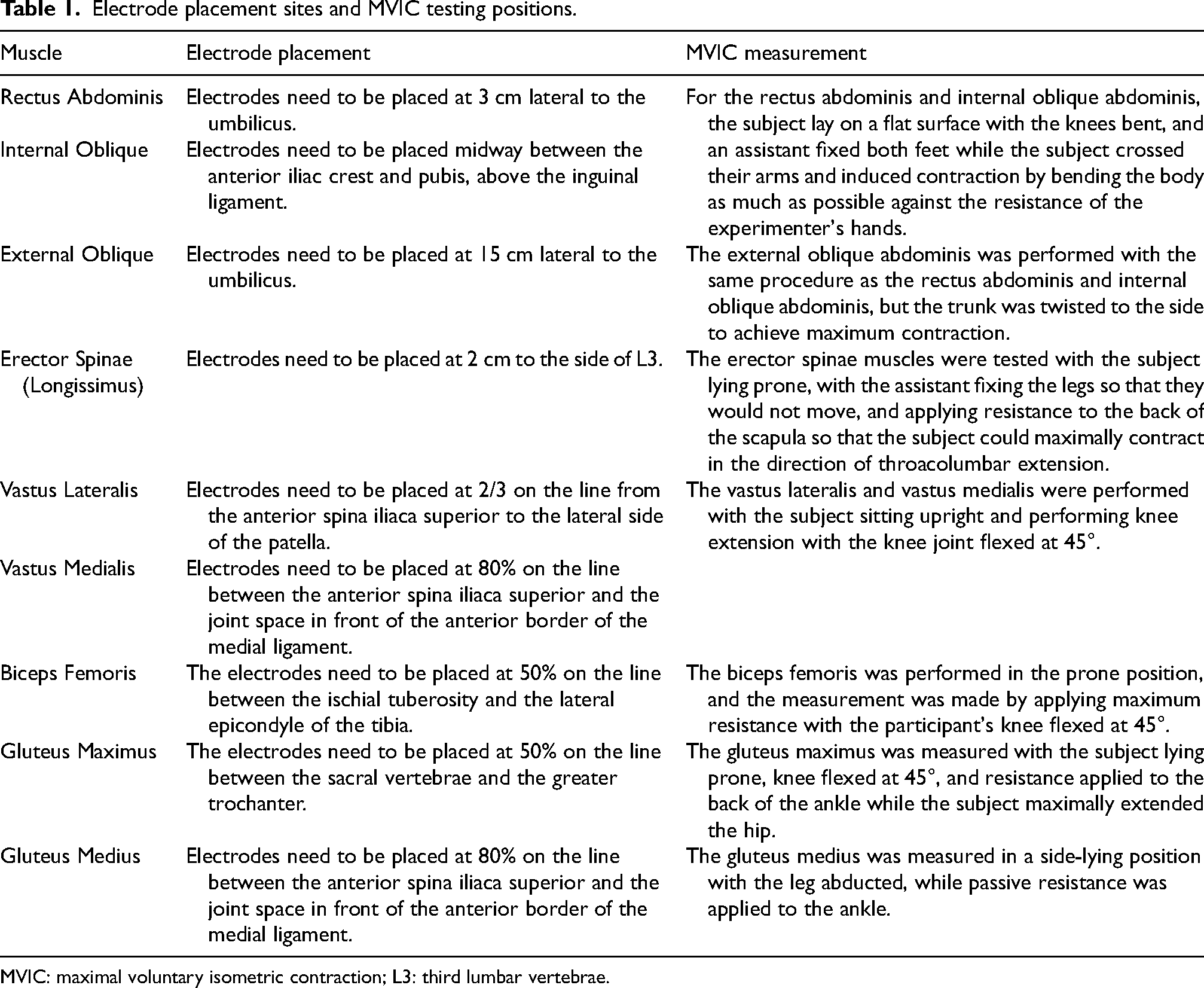
MVIC: maximal voluntary isometric contraction; L3: third lumbar vertebrae.
Statistical analysis
The data collected in this study were analyzed using IBM SPSS Statistics v29 for Windows. The selection of parametric and nonparametric statistical tests was based on the results of the Shapiro–Wilk normality test. For variables that met the normality assumption, muscle activity in the lower extremities and core muscles in the ULC, USC, and SC was compared using a one-way repeated-measures analysis of variance (RMANOVA). In addition to normality, the Mauchly test was used to confirm the assumption of sphericity was met; if the assumption was not met, Greenhouse–Geisser correction was applied. Post hoc pairwise comparisons were performed using Bonferroni correction. For variables that did not meet the normality assumption, the Friedman test was used, and pairwise comparisons were performed using the Wilcoxon signed-rank test with Bonferroni correction. Effect sizes were reported as partial eta squared (η²) for parametric tests and Kendall's W for nonparametric tests. For post hoc analyses, effect sizes were calculated using Cohen's d for parametric tests and r for nonparametric tests. Statistical significance was set at α = 0.05.
Results
Core and lower extremity muscle activity in the descending phase
We analyzed condition-dependent differences in muscle activity of the core and lower extremity muscles during both the ascending and descending phases of the Bulgarian split squat. Core muscle activity demonstrated significant increases under unstable conditions. Specifically, the right rectus abdominis (r = 0.63, p = .004), right external oblique (r = 0.67, p = .002), left rectus abdominis (r = 0.55, p = .012), left external oblique (r = 0.73, p < .001), and left internal oblique (r = 0.66, p = .002) exhibited significantly greater activation during the USC compared to the SC. Moreover, these muscles showed even higher activation levels during the ULC compared to the USC (right rectus abdominis: r = 0.64, p = .003; right external oblique: r = 0.81, p < .001; left rectus abdominis: r = 0.72, p < .001; left external oblique: r = 0.7, p = .001; left internal oblique: r = 0.44, p = .042). The right internal oblique also displayed significantly increased activity under the ULC relative to the SC (r = 0.55, p = .011). Additionally, the right erector spinae showed significantly elevated activation in both the USC (d = 0.32, p < .001) and ULC (d = 0.38, p < .001) compared to the SC. For the gluteal muscles, the right gluteus medius demonstrated significantly greater activation under both the USC (d = 0.37, p < .001) and ULC (d = 0.35, p < .001) compared to the SC, whereas the right gluteus maximus showed significantly higher activation in the USC than in the SC (d = 0.52, p < .001), with an even greater increase observed in the ULC relative to the USC (d = 0.31, p < .001).
Among the lower extremity muscles, the biceps femoris showed significantly higher activity during the USC compared to the SC (r = 0.46, p = .033), with an even more pronounced increase during the ULC relative to the USC (r = 0.76, p < .001). No significant differences were observed in the vastus lateralis or vastus medialis muscles across conditions (Table 2) (Figure 4).
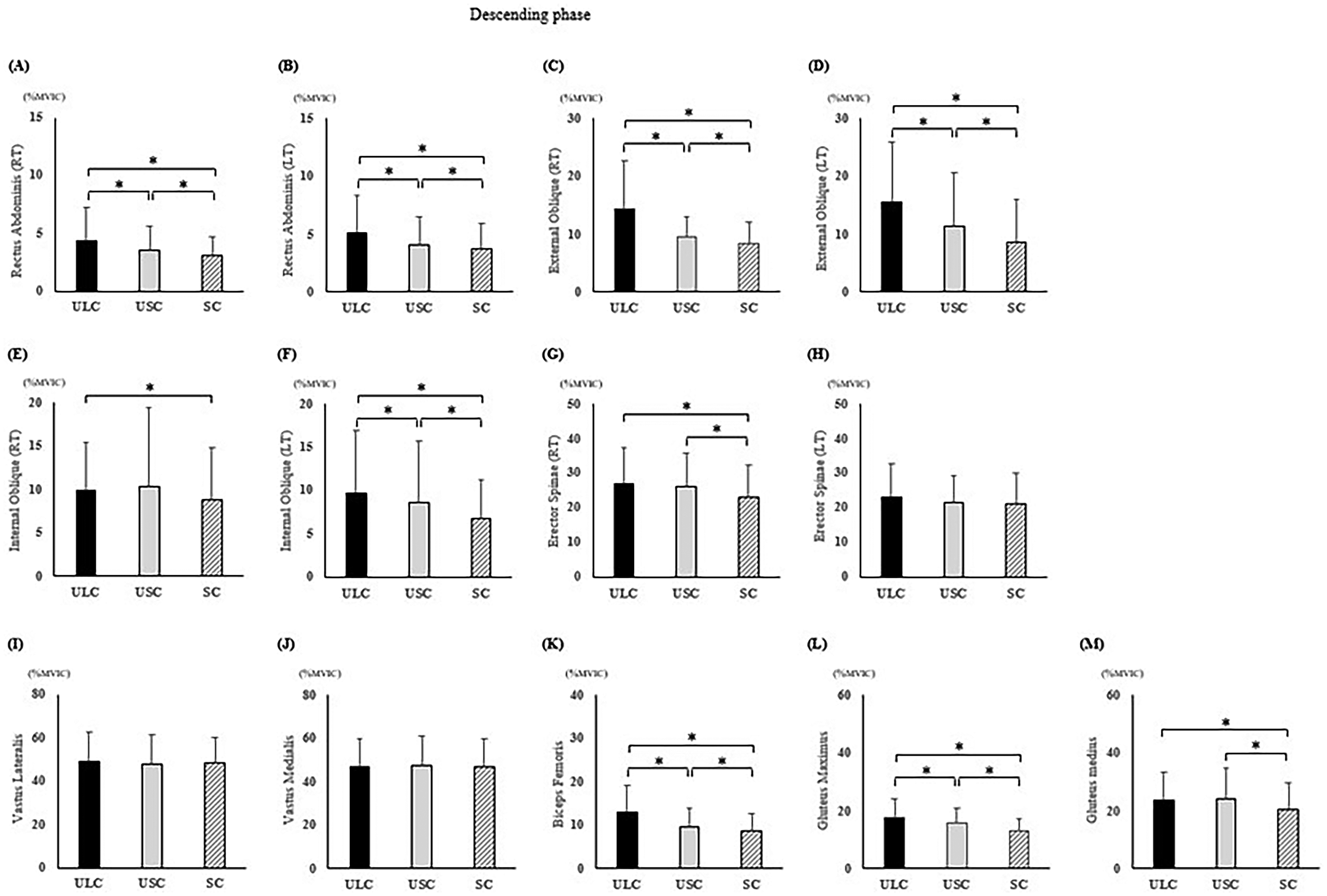
Core and lower extremity muscle activity in the descending phase.
Core and lower extremity muscle activity during the descending phase.
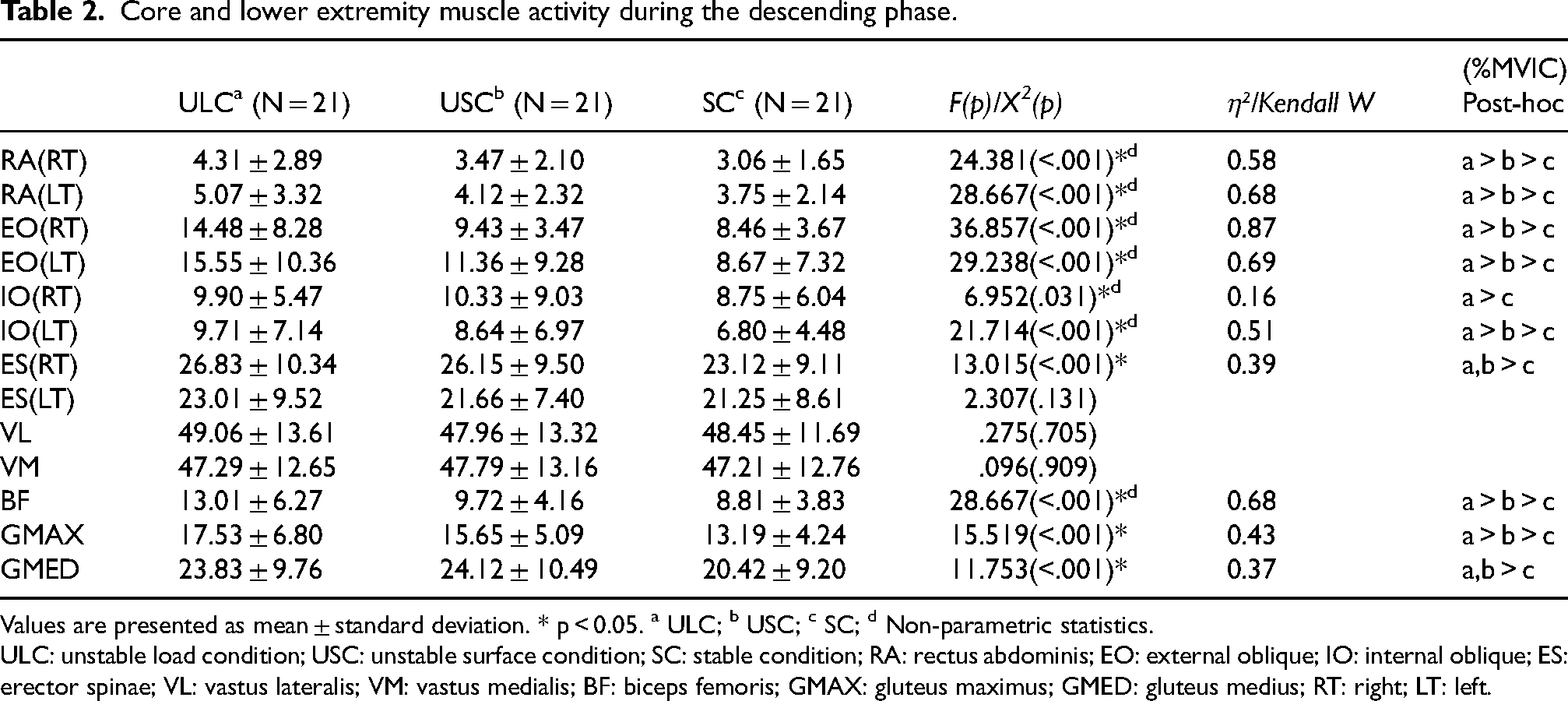
Values are presented as mean ± standard deviation. * p < 0.05. a ULC; b USC; c SC; d Non-parametric statistics.
ULC: unstable load condition; USC: unstable surface condition; SC: stable condition; RA: rectus abdominis; EO: external oblique; IO: internal oblique; ES: erector spinae; VL: vastus lateralis; VM: vastus medialis; BF: biceps femoris; GMAX: gluteus maximus; GMED: gluteus medius; RT: right; LT: left.
Core and lower extremity muscle activity in the ascending phase
A comparison of core and lower extremity muscle activation during the ascending phase of Bulgarian squats performed under ULC and USC revealed significant differences. Among the core muscles, the right external oblique (d = 0.34, p = .014), left external oblique (r = 0.67, p = .002), and left internal oblique (r = 0.56, p = .010) showed significantly greater activation during the USC compared to the SC, and all exhibited even higher activity under the ULC than under the USC (right rectus abdominis: d = 0.77, left external oblique: r = 0.67, left internal oblique: r = 0.64, p < .001). Additionally, the right rectus abdominis (d = 0.6, p < .001; d = 0.59, p < .002), left rectus abdominis (r = 0.73, p < .001, r = 0.59, p = .006), and right internal oblique (r = 0.66, p = .001; r = 0.44, p = .033) demonstrated significantly increased activation under the ULC compared to both the SC and USC. The gluteus maximus (r = 0.46, p = .033, r = 0.52, p = .016) and gluteus medius (d = 0.33, p = .005; d = 0.13, p = .042) also showed significantly elevated muscle activity under the ULC relative to the SC and USC. Among the lower extremity muscles, the biceps femoris exhibited significantly higher activation during the USC compared to the SC (r = 0.6, p = .006), with further increases observed under the ULC compared to the USC (r = 0.53, p < .001). No significant differences were observed in the vastus lateralis or vastus medialis muscles across conditions (Table 3) (Figure 5).
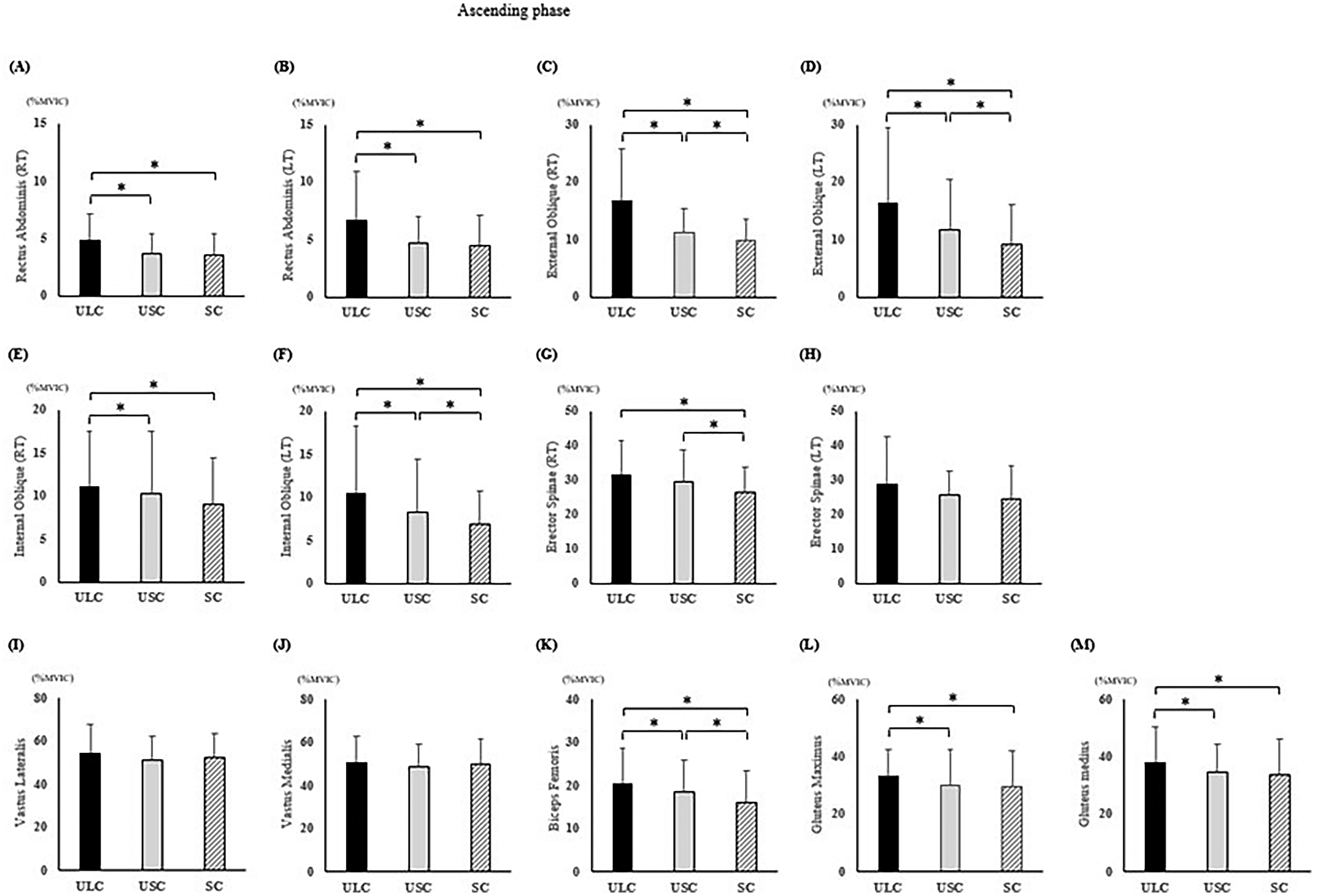
Core and lower extremity muscle activity in the ascending phase.
Core and lower extremity muscle activity during the ascending phase.
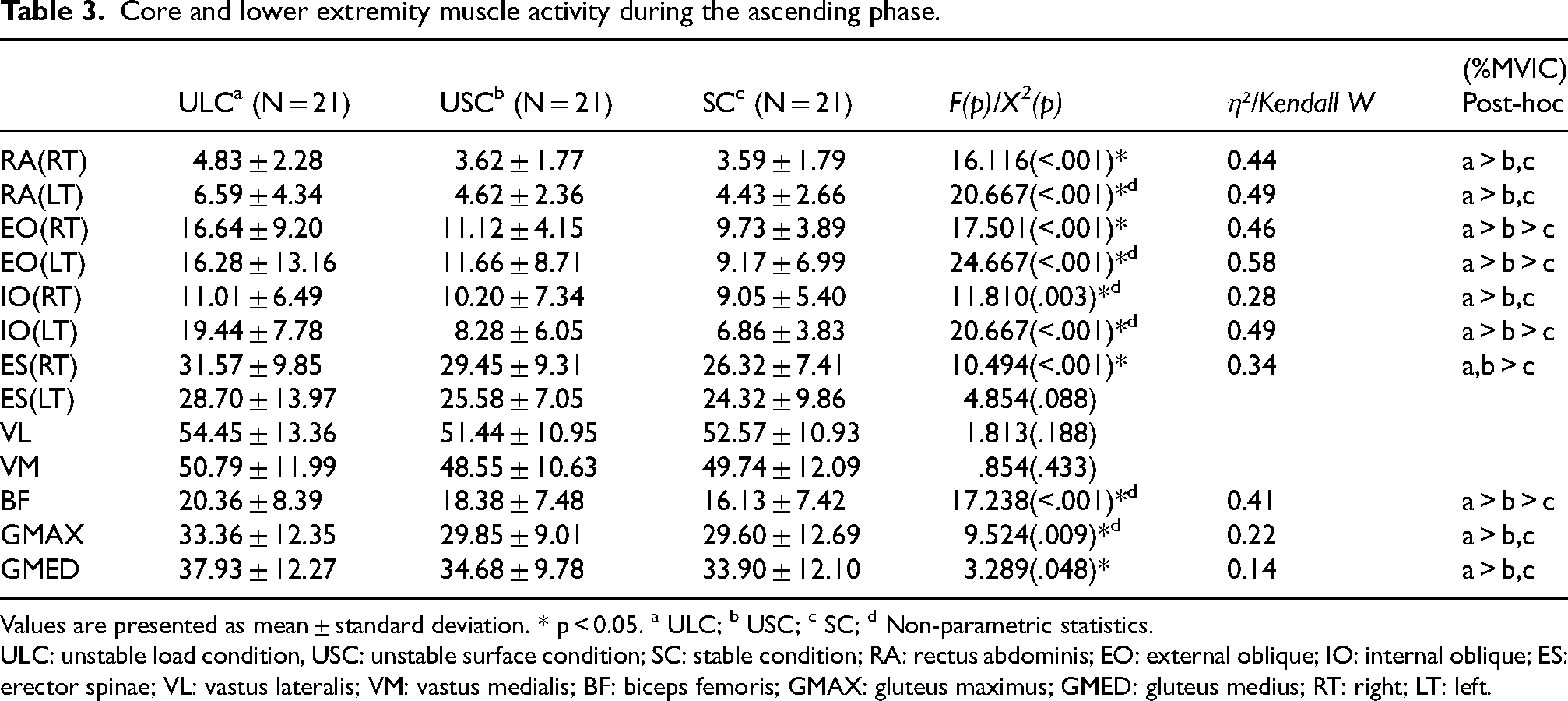
Values are presented as mean ± standard deviation. * p < 0.05. a ULC; b USC; c SC; d Non-parametric statistics.
ULC: unstable load condition, USC: unstable surface condition; SC: stable condition; RA: rectus abdominis; EO: external oblique; IO: internal oblique; ES: erector spinae; VL: vastus lateralis; VM: vastus medialis; BF: biceps femoris; GMAX: gluteus maximus; GMED: gluteus medius; RT: right; LT: left.
Discussion
We also analyzed the effects of performing Bulgarian squats under ULC, USC, and SC on the muscle activation of the core and lower limbs. The results demonstrated that, except for the vastus lateralis, vastus medialis, and left erector spinae, muscle activity in the core, gluteus maximus, gluteus medius, and biceps femoris was highest under the ULC during both the ascending and descending phases, with significant differences observed among the three conditions. Core muscle activation, including that of the gluteus maximus and gluteus medius, was predominantly greater during the USC and ULC compared to the SC, with the ULC eliciting the highest activation levels. Training with an aqua bag is known to enhance core stability through compensatory contractions elicited by the unpredictable inertial forces generated by water movement. This instability challenges balance and increases the demand for maintaining the base of support (BOS). 40 Previous studies have demonstrated that water-based training can increase muscle activation through rapid shifts in the center of gravity (COG) and improve core stabilization by laterally shifting the center of pressure (COP). 31 A previous study showed that during squats performed under SC, USC, and ULC, rectus abdominis activation was 3.3 times greater in the ULC compared to the USC, external oblique activation was 2.8 times greater than on stable surfaces, and internal oblique activation was 1.5 times greater than during the USC. 41 Unlike previous studies, our study used a unilateral exercise. This approach likely increased the demand for postural control under ULC, enhancing core muscle activation. Furthermore, the unpredictable hydration variability further heightened the demand for postural control, which is expected to impact trunk stability. Therefore, the findings of this study support previous research in suggesting that Bulgarian split squats performed under ULC are an effective method for core muscle strengthening.
Additionally, the activation of the gluteus medius, a key stabilizer of the hip joint, was found to increase. The gluteus medius plays a crucial role in maintaining balance and regulating pelvic stability.42,43 A previous study compared muscle activation during a one-leg deadlift using an aqua bag versus a sandbag and found greater gluteus medius activation when using the aqua bag; this finding was attributed to unpredictable water movement, which demanded greater muscle engagement to maintain body stability. 44 In the present study, performing the Bulgarian split squat involved substantial movement in the sagittal plane of the hip and knee joints; however, the instability introduced by the aqua bag likely required enhanced pelvic stability to maintain balance, thereby increasing gluteus medius activation. Consequently, the variable movement of the water during Bulgarian split squats with unstable loads likely led to greater mediolateral displacement of the COP, resulting in increased activation of the core muscles and gluteus medius to preserve stability. Therefore, we conclude that performing Bulgarian squats under ULC increases lateral COP displacement due to water variability, which in turn enhances core muscle activation and stability.
Regarding the erector spinae, activation of the dominant-side muscle significantly increased under both ULC and USC compared to the SC during the descending phase. During the ascending phase, muscle activation increased significantly in the order of ULC < USC < SC. However, no significant differences were observed in the left erector spinae across conditions. The erector spinae functions as an external stabilizer of the trunk, providing stability to the lumbo-pelvic region, 45 and its increased activation is likely a response to counteract the instability induced by ULC and USC. Additionally, during unilateral exercises, contraction of one side of the erector spinae produces lateral flexion of the trunk, playing a critical role in maintaining trunk stability during movements in the frontal plane. 45 The Bulgarian squat is a unilateral exercise that requires one foot to be positioned ahead of the other, which imposes greater demands on muscle control to prevent lateral trunk flexion as the axial distance between the feet increases. 46 A previous study measured muscle activation during lunges with varied load placement and found that activation of the dominant-side erector spinae was greater than that of the non-dominant side when the load was held in the non-dominant hand, supporting the findings of the present study. 47 Future research should focus on more precise investigations of frontal plane movements and muscle activation by measuring the COP or COG during unilateral exercises involving unstable loads such as the aqua bag.
In this study, the gluteus maximus, a primary hip extensor muscle, showed significantly increased activation during the descending phase under both ULC and USC compared to the SC. Moreover, muscle activation during the descending phase was significantly higher in the ULC condition than in the USC and SC. The biceps femoris also demonstrated a significant increase in activation across both descending and ascending phases, following the order ULC > USC > SC. Pelvic tilt during the Bulgarian split squat may provide a theoretical explanation for our findings. Anterior pelvic tilt has been reported to facilitate hamstring activation for pelvic stability. 48 Previous studies have demonstrated that the hip joint shifts posteriorly during the Bulgarian split squat, leading to increased anterior pelvic tilt as a compensatory strategy. 11 Although pelvic tilt was not directly measured in our study, it is reasonable to assume that variations in pelvic tilt across exercise conditions may have influenced hamstring activity. Another possible explanation involves changes in pelvic muscle activity resulting from abdominal muscle activation. The gluteus maximus and hamstrings are anatomically connected to the thoracolumbar fascia via the sacroiliac ligament. 49 Previous studies have shown that core muscle training increases transversus abdominis and external oblique activity, enhancing stability in static unilateral postures through tension in the thoracolumbar fascia and intra-abdominal pressure. 49 Therefore, increased abdominal muscle activation during USC and ULC exercises may have influenced the hip extensors through this anatomical structure. 49 Considering that the exercises in our study were performed under unilateral support in an unstable environment, it is plausible that pelvic muscle function contributing to pelvic and trunk stability was also affected, potentially explaining differences in hamstring activity.
However, as this remains a theoretical assumption, the findings should not be overgeneralized. Future studies are needed to systematically investigate stability under unstable conditions, including kinematic analyses of pelvic motion.
Activation of the vastus lateralis and vastus medialis did not differ significantly across the three tested conditions during either the descending or ascending phase. Consistent with these results, previous studies have reported no significant changes in the activation of these muscles during Bulgarian squats or squats performed under unstable conditions.19,30 These findings suggest that in unstable environments, the primary role of these lower limb muscles is not to maintain mediolateral balance but rather to facilitate knee flexion and extension. The vastus lateralis and vastus medialis mainly contribute to knee joint movement rather than postural control. When unstable loads are applied, the surrounding muscles assume the role of stabilizing the pelvis and hip joint in the frontal plane. 30 Therefore, it is likely that the vastus lateralis and vastus medialis were primarily activated to control movements in the sagittal plane during knee flexion and extension.
This study has several limitations. First, due to the capacity limits of the aqua bag and concerns for participant safety, absolute loads were applied, resulting in relatively low loads being used. Therefore, future studies should employ aqua bags with varying weights to assess the effects of the exercise more comprehensively. Second, because this study included only healthy adult males, the generalizability of the findings to women, older adults, or patients requiring rehabilitation may be limited. Furthermore, the relatively small sample size necessitates caution in interpreting and extrapolating the findings. Future large-scale studies with participants representing a wider range of ages, sexes, and individuals with musculoskeletal disorders are needed. Third, our findings are limited to electromyographic activation patterns; they should not be directly interpreted as evidence of clinical rehabilitation benefits or enhanced athletic performance. Future studies are needed to determine whether these neuromuscular responses translate into meaningful functional, clinical, or performance outcomes. Additionally, given these demographic limitations, it would be valuable to investigate the impacts of unstable condition exercises on performance in sport-specific contexts that demand functional movements, such as one-leg standing.
Conclusion
This study analyzed the effects of performing Bulgarian squats with unstable loads and on unstable surfaces on core and lower limb muscle activation. The results showed that muscle activation significantly increased under USC compared to SC, with ULC producing the greatest increase. Thus, the use of unstable loads appears to be an effective strategy for enhancing core and lower limb muscle activation during Bulgarian squat exercises. However, the generalizability of these findings is limited, as the study was conducted exclusively on healthy male participants in their twenties, which may restrict applicability to broader clinical populations. Therefore, future research should include individuals of different age groups and those with musculoskeletal conditions.
Practical applications
The findings of this study provide practical insights for strength and conditioning coaches, rehabilitation specialists, and personal trainers. Bulgarian split squats performed with ULC significantly increased activation of the core muscles and specific lower extremity muscles (gluteus maximus, gluteus medius, biceps femoris) compared to both SC and USC. This suggests that integrating ULC training into lower-body strength programs can enhance neuromuscular engagement and dynamic stability, especially in sports or activities that require unilateral movement and core control. Additionally, because no significant increase in quadriceps activation was observed across conditions, practitioners aiming to target the gluteal or core muscles specifically may benefit more from ULC approaches rather than traditional SC exercises. Care should be taken to progress gradually with ULC exercises, ensuring proper technique and safety, particularly for novice trainees. In summary, ULC resistance training using Bulgarian split squats offers a practical method to improve trunk and hip stability, which can translate to better movement control and athletic performance in field settings.
Footnotes
Acknowledgments
The authors would like to thank everyone who contributed to this study.
Ethical approval
The study was approved by the Pukyung National University Institutional Bioethics Committee (Approval No. PKNU 2024-11-008).
Informed consent
All participants provided informed consent to participate in the study and to use photos or other materials.
Author contributions
Conceptualization: Seonghwan Moon, Gaeun Seo, Jiwon Lee and Taegyu Kim; Methodology: Seonghwan Moon, Gaeun Seo and Jiwon Lee; Software: Gaeun Seo and Jiwon Lee; Validation: Seonghwan Moon and Taegyu Kim; Formal analysis: Seonghwan Moon and Gaeun Seo; Investigation: Seonghwan Moon, Gaeun Seo and Jiwon Lee; Resources: Wenyan Li and Ilyoung Yu; Data curation: Gaeun Seo and Jiwon Lee; Writing—original draft preparation: Seonghwan Moon, Gaeun Seo and Jiwon Lee; Writing—review & editing: Seonghwan Moon, Ilyoung Yu and Taegyu Kim; Visualization: Gaeun Seo and Wenyan Li; Supervision: Taegyu Kim; Project administration: Seonghwan Moon.
Funding
This study was supported by the Global Joint Research Program funded by the Pukyong National University (202412370001).
Declaration of conflicting interests
The authors declared no potential conflicts of interest with respect to the research, authorship, and/or publication of this article.
Data availability
Not applicable.
