



Abstract
Background
Sarcopenia is a progressive skeletal muscle disorder associated with increased disability, morbidity, and mortality. Ultrasound has gained increasing attention as an accessible and repeatable tool for muscle assessment.
Objective
This study aimed to map the global research trends and technological evolution in ultrasound-based sarcopenia assessment from 1997 to 2025.
Methods
A total of 1574 records were retrieved from the Web of Science Core Collection. Bibliometric analyses were performed using CiteSpace, VOSviewer, and the bibliometrix R package. Sankey diagrams were used to visualize thematic flows between ultrasound assessment dimensions and outcome-related research topics.
Results
Publications showed a prolonged latent phase, steady growth, and rapid acceleration after 2019, peaking in 2025. Keyword and thematic-flow analyses identified a three-stage evolution: an early Morphometry Phase centered on muscle size and atrophy, a Qualitative Transition Phase emphasizing muscle quality and chronic disease contexts, and an Advanced Functional and AI Phase characterized by elastography, AI-assisted analysis, and outcome-related topics. Research contexts expanded across geriatrics, nephrology, critical care, surgical oncology, and rehabilitation-related research.
Conclusion
Ultrasound-based sarcopenia research has shifted toward multidimensional muscle assessment and technology-assisted analysis. Because this study did not appraise individual study quality or clinical effect sizes, the findings should be interpreted as bibliometric patterns and research priorities rather than direct evidence of diagnostic or prognostic effectiveness.
Introduction
Widely recognized as a progressive and systemic skeletal muscle disorder, sarcopenia is fundamentally defined by the persistent depletion of muscle mass in conjunction with a decline in functional capacity.1–3 Originally regarded as a localized geriatric syndrome, it has transitioned into a pervasive, multifactorial condition that represents an important global public health concern. 4 Authoritative epidemiological data indicate that the global prevalence of sarcopenia among individuals aged 60 and older ranges from 10% to 27%. 5 It is not only a primary driver of fractures and disability in the elderly but is also established as an independent predictor of increased all-cause mortality. 6 Currently, standard diagnostic modalities—including dual-energy X-ray absorptiometry (DXA), computed tomography (CT), and magnetic resonance imaging (MRI)—exhibit inherent drawbacks. 7 DXA measurements are highly susceptible to hydration status and expose patients to ionizing radiation. 8 While CT and MRI offer superior precision, their prohibitive costs and limited point-of-care accessibility render them impractical for large-scale community screening or continuous longitudinal monitoring. 9 Consequently, there is an urgent need for a noninvasive, accessible, and repeatable assessment approach that can complement standardized sarcopenia evaluation. According to the revised European Working Group on Sarcopenia in Older People consensus (EWGSOP2), low muscle strength indicates probable sarcopenia, reduced muscle quantity or quality confirms the diagnosis, and poor physical performance indicates severe sarcopenia. 10 Within this framework, ultrasound-derived measures mainly correspond to the muscle quantity and quality domains, whereas muscle strength and physical performance still require standardized functional assessments.
Against this diagnostic framework and the need for accessible longitudinal monitoring, ultrasound (US) has increasingly been investigated as a promising technology for sarcopenia assessment due to its non-radiative nature, cost-effectiveness, and real-time dynamic imaging capabilities. 11 Specifically, the maturation of cutting-edge modalities such as shear wave elastography (SWE) and microvascular imaging has enabled the quantification of tissue stiffness, elastic modulus, and microcirculatory perfusion. 12 These advancements are contributing to a research shift in the field: moving from purely “quantitative” morphometric diagnosis toward “qualitative” functional assessment. This transition allows for a more granular elucidation of the pathophysiological alterations underlying muscle degradation in sarcopenia.13,14 Furthermore, the scope of research has expanded into diverse interdisciplinary frontiers, including chronic kidney disease, 15 oncology, 16 and machine learning. 17 However, existing literature lacks a panoramic synthesis that delineates the complete logic and evolutionary trajectory of ultrasound's transition from bench to bedside in sarcopenia research.
To bridge this knowledge gap, the present study employs scientometric analysis and knowledge visualization to provide a quantitative and qualitative interpretation of the research landscape in ultrasound-based sarcopenia assessment over the past decades. By mapping the global distribution of research, pathways of technological development, and structure of core knowledge networks, this study aims to provide a bibliometric overview of research trends and emerging thematic directions in ultrasound-based sarcopenia assessment. These findings may inform future efforts toward standardized ultrasound measurement protocols and rehabilitation-relevant research designs focusing on repeated muscle assessment, functional evaluation, and outcome monitoring.
Methods
The data retrieval for this study was finalized on January 3, 2026. The Web of Science Core Collection (WoSCC) was selected as the bibliographic data source because of its methodological suitability for citation-based bibliometric analysis. WoSCC provides standardized bibliographic records, cited-reference data, and citation metadata, which are required for co-citation analysis, citation burst detection, and network visualization using tools such as CiteSpace, VOSviewer, and Bibliometrix.18–20 In addition, restricting data retrieval to a single citation database can reduce duplicate records, inconsistent citation counts, and heterogeneity in indexing formats that may arise when merging records from multiple databases. 21 Compared with PubMed, which is primarily designed for biomedical literature retrieval, WoSCC provides more directly structured citation data for bibliometric mapping. Although Scopus also offers broad multidisciplinary coverage, differences between WoSCC and Scopus in journal coverage, citation indexing, and record structure may affect bibliometric outputs21,22; therefore, WoSCC was used to ensure consistency of data extraction and network construction.
The search strategy was constructed using the Topic field (TS) in WoSCC and combined two concept blocks with the Boolean operator “AND”: sarcopenia-related terms and ultrasound-related terms. Synonyms within each concept block were connected using “OR”. The complete reproducible search strategy is provided in Supplementary Table S1.
The search timeframe spanned from the earliest available records in 1997 through December 31, 2025, ensuring a comprehensive capture of the technological transition from morphometric assessment to functional analysis. To maintain the relevance and consistency of the dataset, the inclusion criteria were strictly limited to original “Articles” and “Reviews” published in English, thereby focusing on peer-reviewed clinical and basic science research. The initial search identified 1840 relevant records. After applying the aforementioned screening criteria, a total of 1574 studies were finalized for bibliometric analysis. The detailed screening process is illustrated in Figure 1.
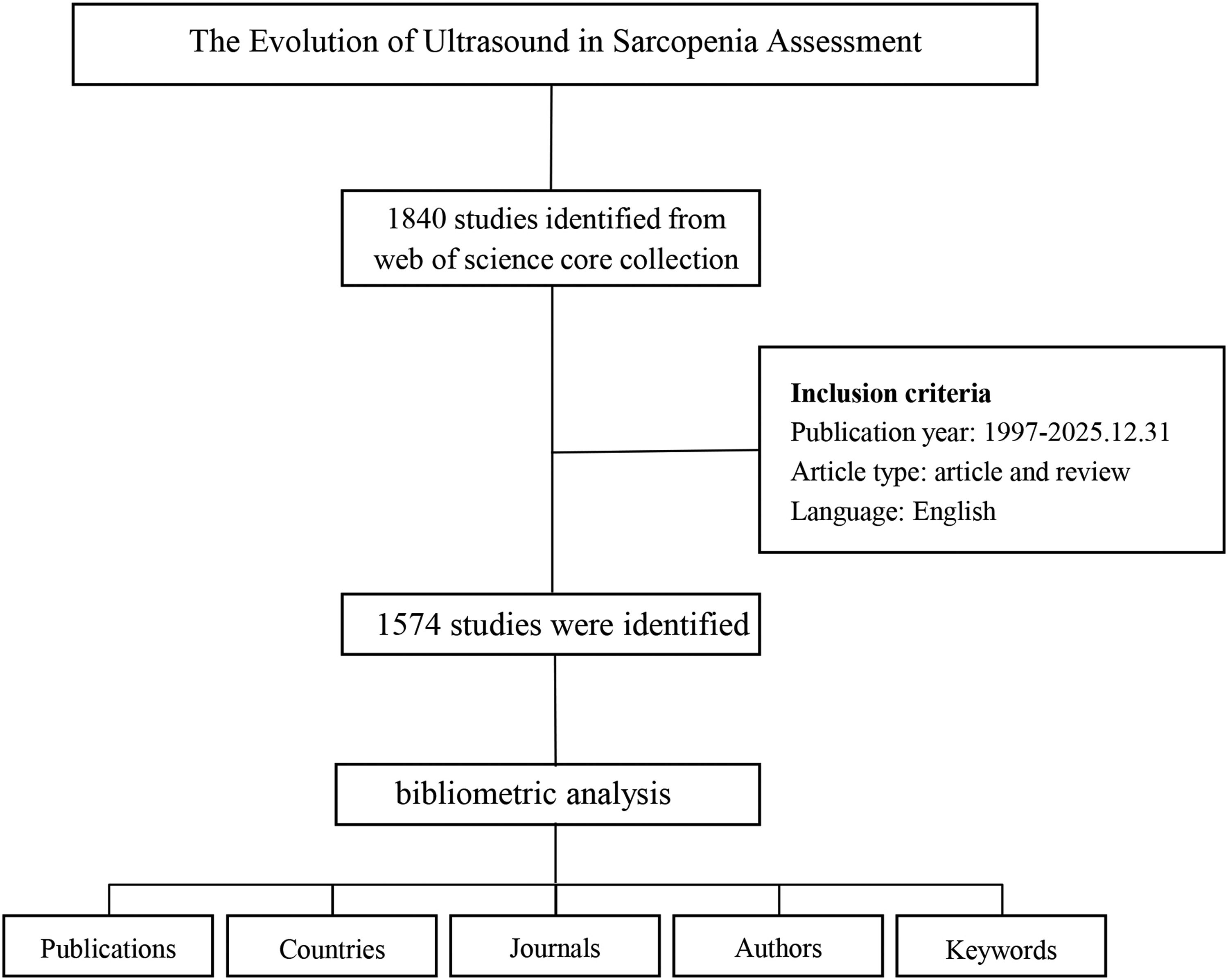
Flowchart of the literature selection process for ultrasound in sarcopenia assessment.
A multidimensional analytical framework was implemented using several specialized tools: VOSviewer (v.1.6.20) was utilized to construct collaboration networks across countries, institutions, and authors; CiteSpace (6.3.1) was employed for keyword burst detection to identify emerging research frontiers; and the Bibliometrix package in R (4.4.2), along with Microsoft Excel, was used for statistical modeling of annual publication trends. This integrated framework comprehensively evaluates core metrics, including publication volume, geographic distribution, core journals, authorship influence, and keyword co-occurrence.
Results
Global publication landscape
A total of 1574 eligible publications were identified between 1997 and 2025. The temporal distribution (Figure 2) illustrates that the field transitioned through a prolonged latent phase (1997–2010), followed by a steady growth period (2011–2018), and entered a rapid acceleration phase (2019–2025), peaking in 2025. This trajectory indicates that ultrasound-based sarcopenia research has gained increasing scholarly attention, with the most pronounced growth occurring after 2019.
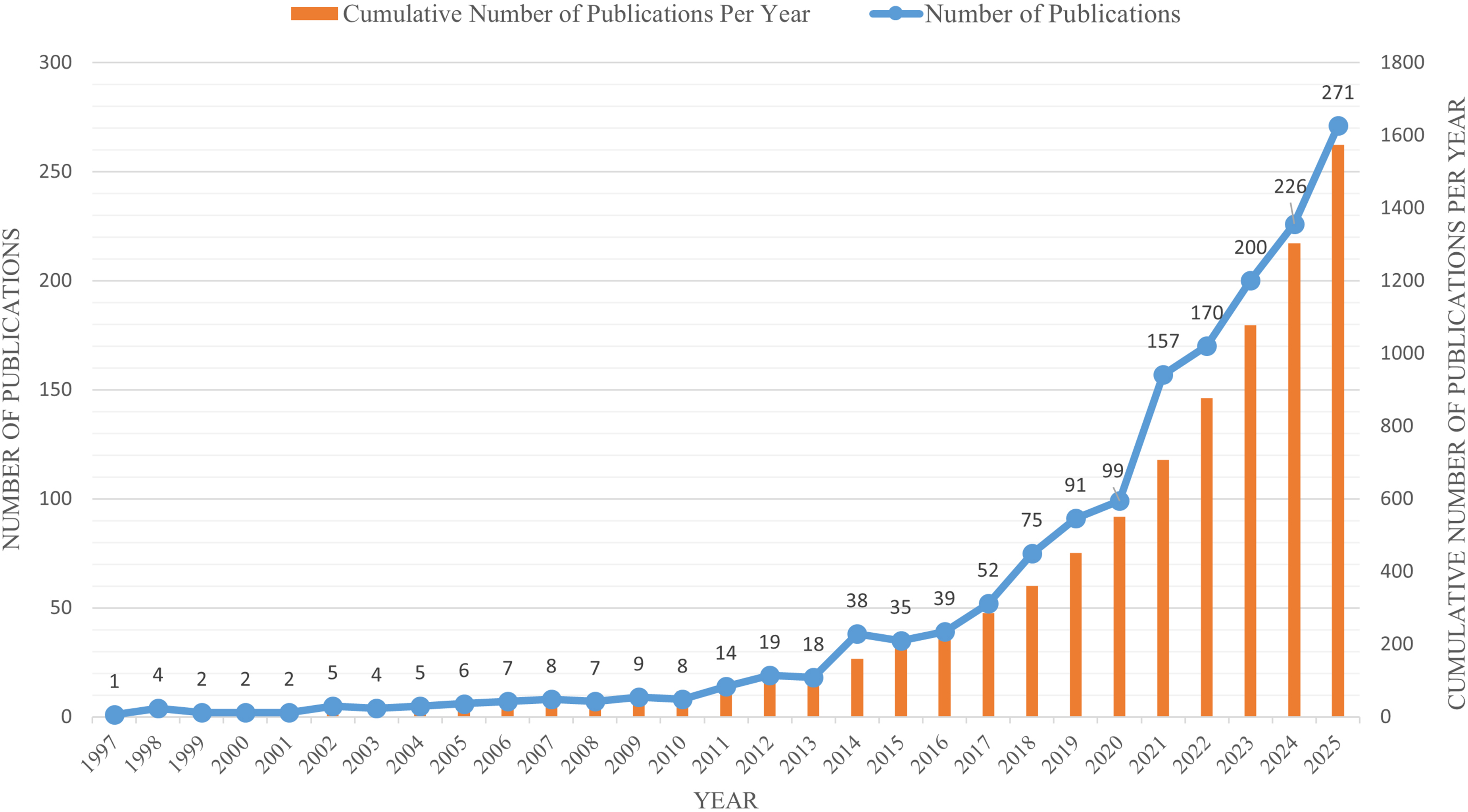
Temporal trends of global publications on ultrasound in sarcopenia assessment (1997–2025).
The global contribution to ultrasound-based sarcopenia research is primarily led by Japan, China, and the United States, which collectively account for 39.1% of the total output (Table 1). However, publication volume and citation impact were not fully aligned. Japan had the highest publication output (n = 219), whereas the United States had the highest total citations (Total citations = 6842) and the United Kingdom had the highest average article citations (Average Article Citations = 60.90). These findings indicate that research productivity and citation influence represent distinct dimensions of national contribution in this field. Furthermore, Australia (46.5%) and the United Kingdom (38.3%) demonstrate the highest International Collaboration Rates (Multiple-Country Publications %), suggesting that research in this clinical domain is evolving toward global synergistic integration.
Top 10 most productive countries based on corresponding authors.
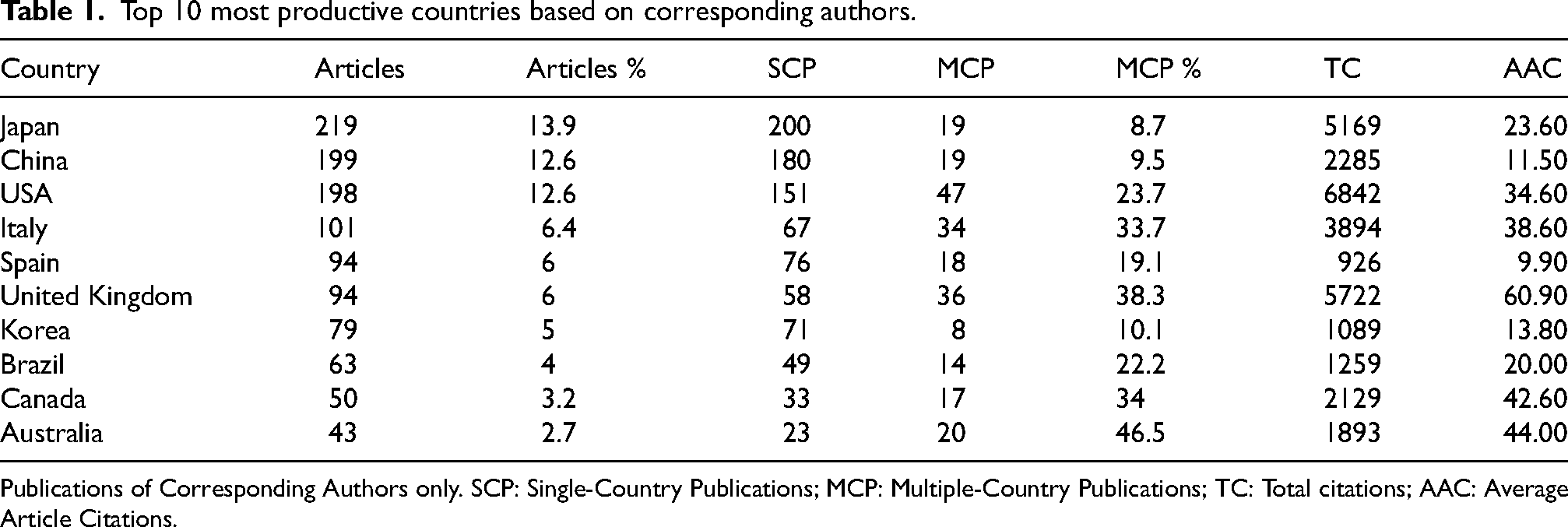
Publications of Corresponding Authors only. SCP: Single-Country Publications; MCP: Multiple-Country Publications; TC: Total citations; AAC: Average Article Citations.
The international collaboration network visualized via VOSviewer (Figure 3(a)) reveals a highly interconnected global research community. The United States occupies the most central position within this network, possessing the highest Total Link Strength (TLS = 191), followed by Italy (TLS = 156) and the United Kingdom (TLS = 148). These nations serve as critical hubs, bridging regional research clusters and driving the international standardization of ultrasound protocols for sarcopenia assessment. While Asian nations (Japan and China) lead in quantitative output, the dense connectivity among Western nations suggests a more established collaborative framework for multicenter clinical trials and guideline formulation.
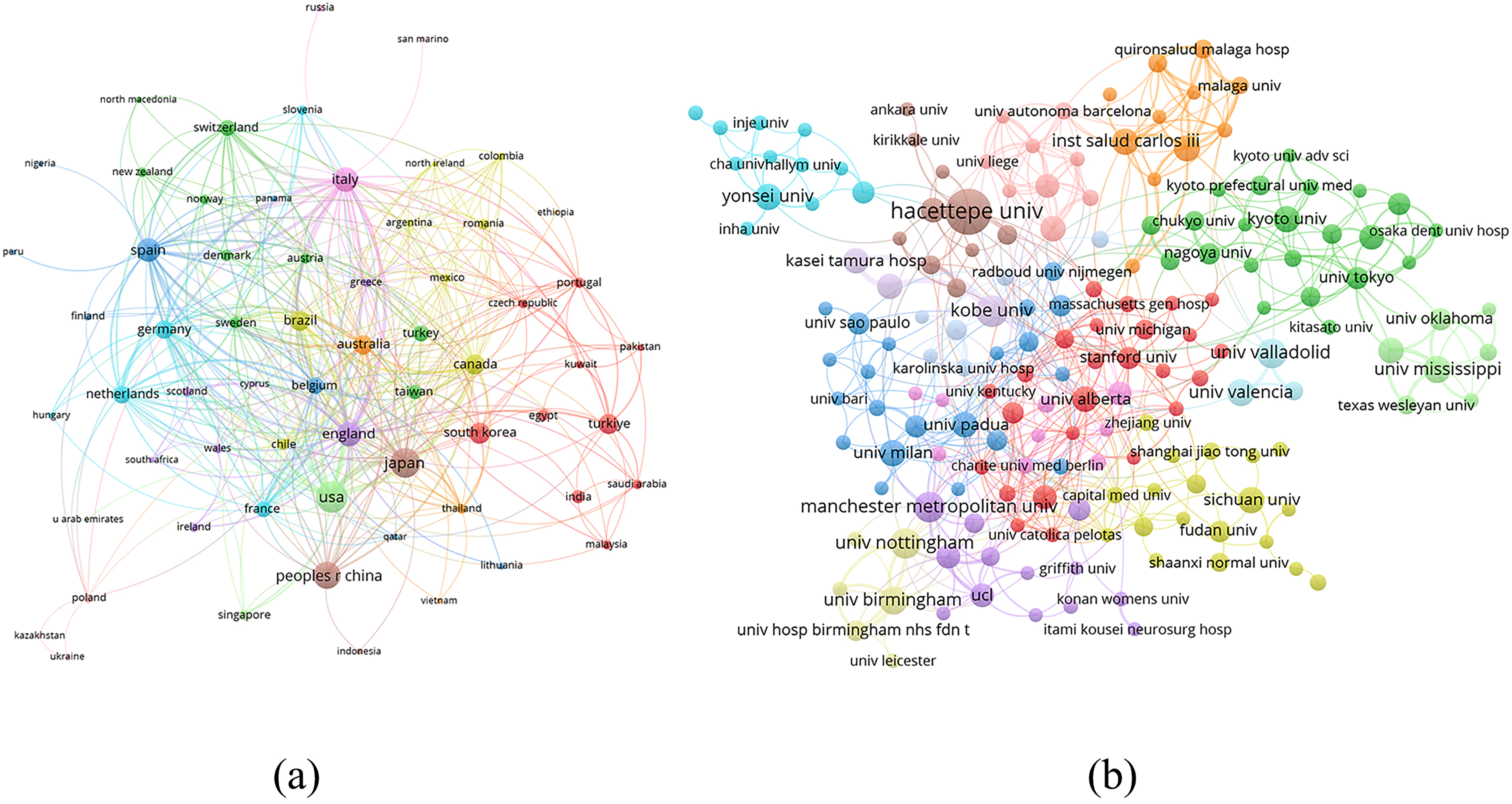
(a) International collaboration network of countries involved in ultrasound-based sarcopenia research. The network map, generated by VOSviewer, illustrates the strength of academic partnerships. Each node represents a country or region, and node size indicates publication output. Lines represent international collaboration links, with thicker lines indicating stronger total link strength. Colors indicate collaboration clusters identified by VOSviewer. (b) Mapping of the inter-institutional collaboration network. The visualization, generated via VOSviewer, includes 187 institutions meeting the five-publication threshold. Each node represents an institution, and links indicate co-authorship relationships between institutions.
The institutional landscape (Figure 3(b)) involves 187 organizations with a minimum output of five papers. Hacettepe University (Turkey) ranks first globally with 52 publications, followed by Kobe University (Japan, n = 25) and Manchester Metropolitan University (UK, n = 23). However, collaboration analysis reveals a different ranking in terms of scholarly impact; the University of Malaga (Spain) maintains the most extensive collaborative network (TLS = 151), followed by the Institute of Health Carlos III (Spain, TLS = 122). These findings indicate that while Turkish and Japanese institutions dominate in terms of productivity, the Spanish research cluster acts as a primary catalyst for international collaborative efforts in musculoskeletal ultrasound.
Knowledge structure and foundation
Scholarly leadership in ultrasound-based sarcopenia research is dominated by a cohort of highly prolific investigators. As presented in Table 2, Takashi Abe emerges as the most influential figure in the field, ranking first in number of publications (NP = 29), total citations (TC = 1209), and H-index (18). His foundational contributions since 2006 have delineated the long-term research directions of the domain. Other prominent authors, including Levent Özcakar and Murat Kara, demonstrate significant academic impact, while Burcu Balam Dogu shows substantial recent growth potential with the highest m-index (1.20). The temporal distribution of publications by these top ten authors (Figure 4(a)) reveals a distinct evolution in research intensity. While Abe has maintained a consistent output over two decades, the publication frequency of Özcakar, Kara, and Cankurtaran increased markedly after 2016. To further examine collaborative synergies, a co-authorship network was constructed comprising 153 authors with at least five publications (Figure 4(b)). Within this network, Levent Özcakar possesses the highest Total Link Strength (TLS = 236), followed by Murat Kara (TLS = 231) and Mustafa Cankurtaran (TLS = 209). The tight coupling among these scholars identifies this core group as the primary force driving international technical consensus and the standardization of musculoskeletal ultrasound protocols.
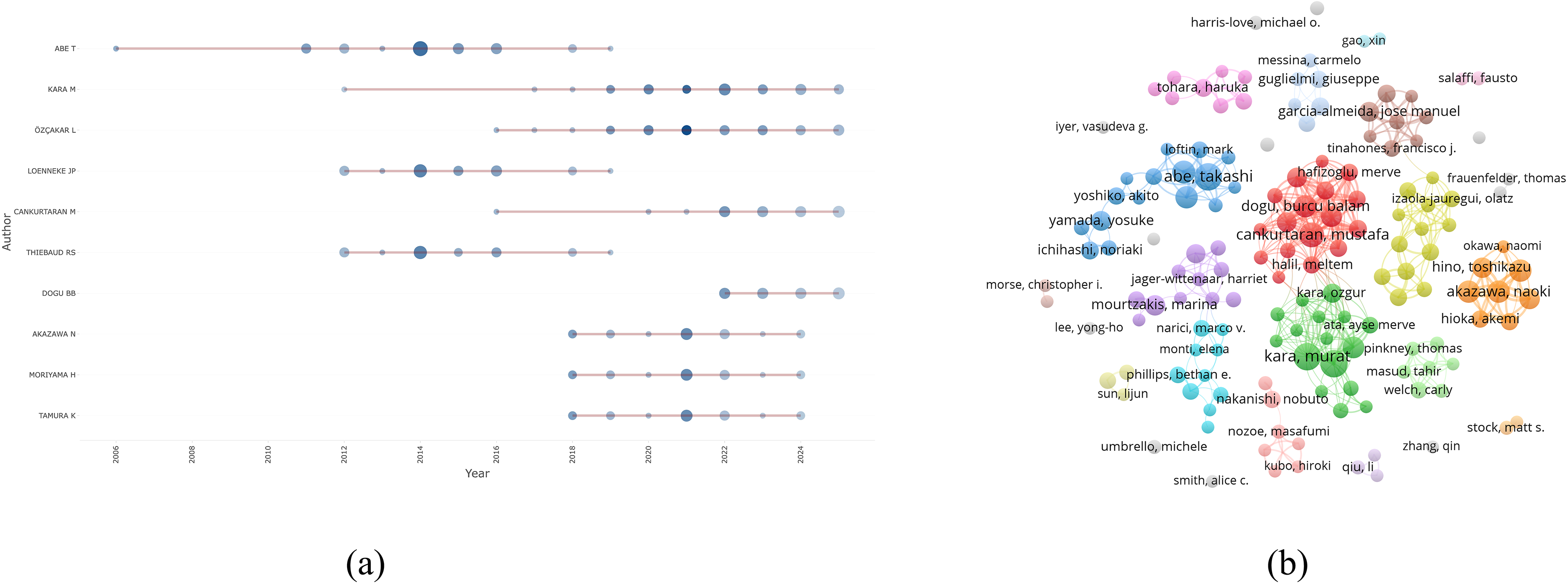
(a) Annual publication volume of the top 10 most productive authors (1997–2025). (b) Co-authorship network of core researchers. This network illustrates 153 authors with at least 5 publications. Node size indicates author publication output, line thickness indicates collaboration strength, and colors represent author collaboration clusters.
Top 10 most influential authors in ultrasound-based sarcopenia research.
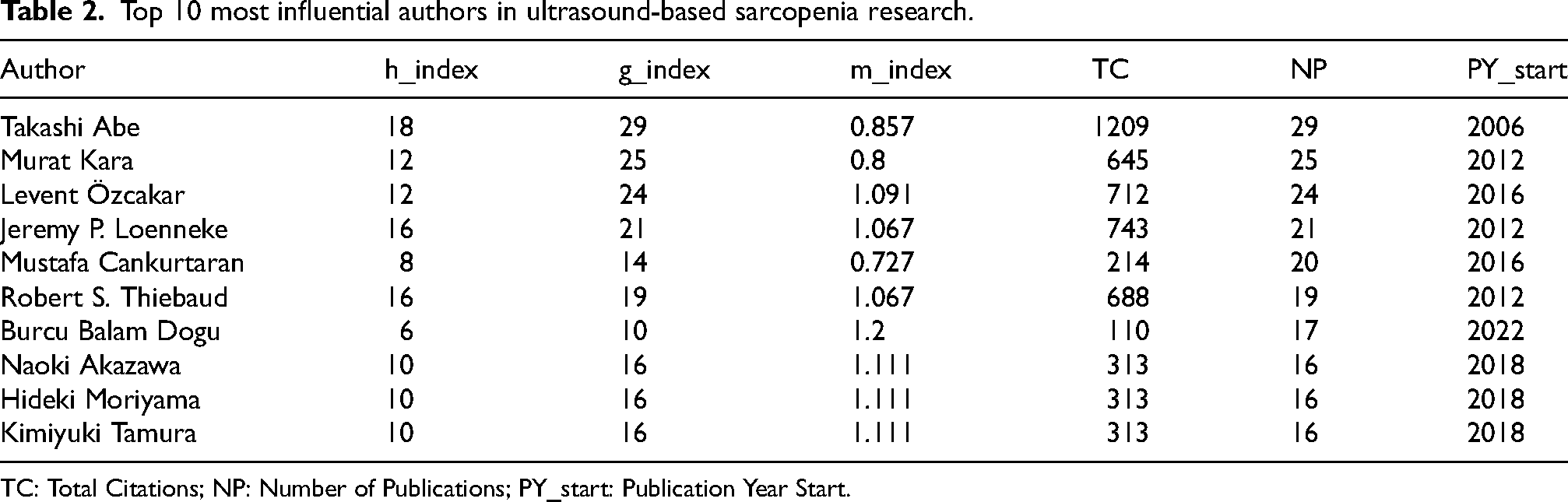
TC: Total Citations; NP: Number of Publications; PY_start: Publication Year Start.
The included 1574 studies were published across more than 500 interdisciplinary and specialized journals, reflecting the multifaceted nature of ultrasound in sarcopenia assessment. As shown in Table 3, Nutrients was the most prolific journal (NP = 49), followed by the Journal of Cachexia Sarcopenia and Muscle (JCSM,NP = 35). However, JCSM stands as the most influential journal in the field, boasting the highest total citations (TC = 1941) and a remarkable H-index (18). The presence of high-impact clinical journals such as Clinical Nutrition (TC = 1381) alongside specialized imaging journals like Ultrasound in Medicine and Biology (NP = 20) and the Journal of Ultrasound in Medicine (NP = 19) highlights the convergence of nutritional science, geriatrics, and diagnostic radiology.
Top 10 most productive journals in ultrasound-based sarcopenia research (1997–2025).
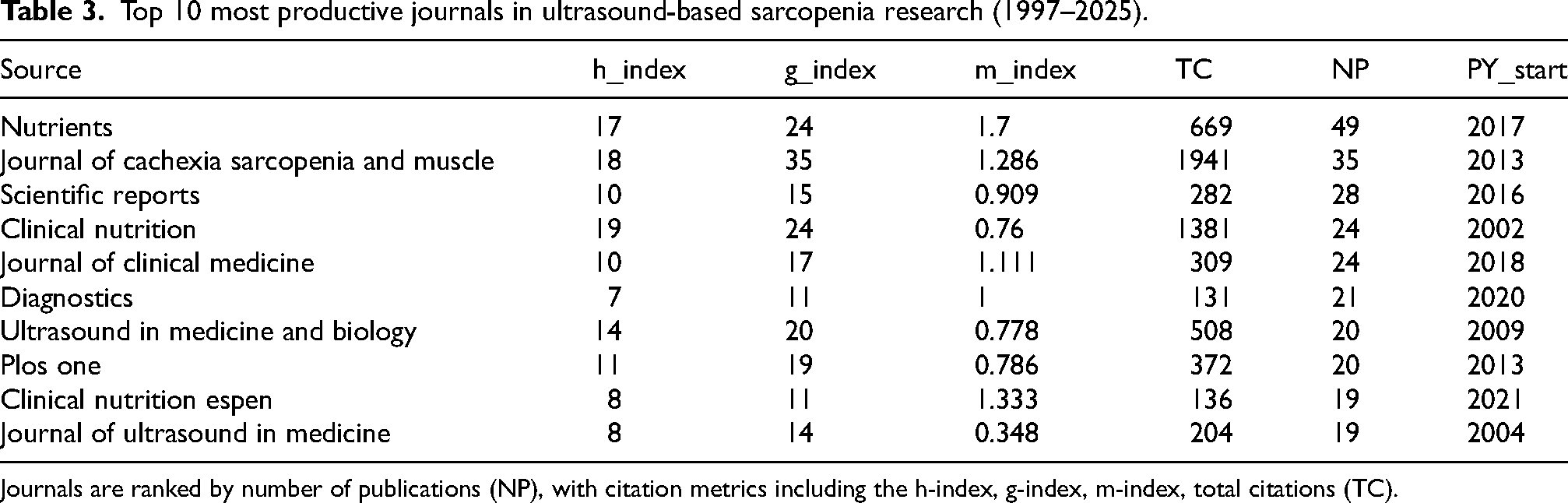
Journals are ranked by number of publications (NP), with citation metrics including the h-index, g-index, m-index, total citations (TC).
Research hotspots and evolution
The keyword co-occurrence network (Figure 5(a)) systematically delineates the knowledge architecture of ultrasound in sarcopenia research. Among the 182 identified high-frequency keywords, “Sarcopenia” (n = 829), “Ultrasound” (n = 557), and “Strength” (n = 327) constitute a robust triangular core hub, exhibiting the highest occurrences and Total Link Strength (TLS = 9,111, 6,073, 3,910, respectively). The network displays distinct modular characteristics: a morphological cluster, represented by “thickness” (n = 145) and “muscle mass” (n = 146), indicates the sustained prominence of anatomical quantification in this field. Conversely, the dense connectivity between “strength” and “muscle quality” suggests an increasing research shift from volume-centric assessment toward functional muscle evaluation.
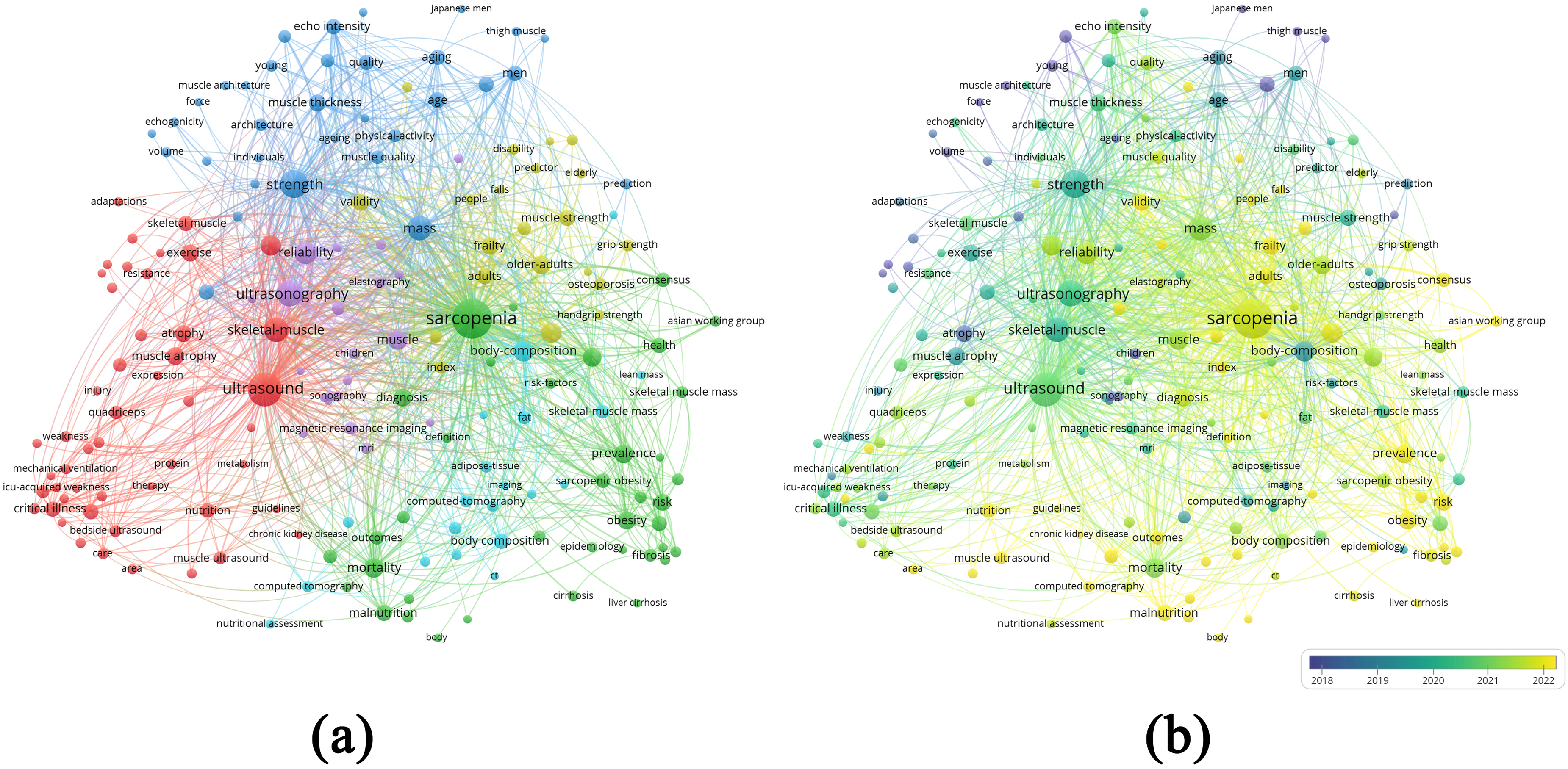
Bibliometric analysis of keywords in ultrasound-based sarcopenia research (1997–2025). (a) Co-occurrence network; (b) Overlay visualization. Only keywords with n ≥ 15 are displayed. In the co-occurrence network, node size indicates keyword frequency, line thickness indicates co-occurrence strength, and colors represent keyword clusters. In the overlay visualization, colors indicate the average publication year of keywords, with warmer colors representing more recent research topics.
Overlay visualization (Figure 5(b)) reveals an evolutionary trajectory where early research (dark blue/purple) emphasized basic physiological observations, such as muscle “atrophy” (n = 92) and characteristics in “children and young” populations. Subsequently, the overlay visualization showed a gradual transition toward application-oriented themes (green), including “mortality” (n = 135), “reliability” (n = 179), and physical performance-related topics. Recent research fronts (yellow) were increasingly concentrated on functional assessment, standardized measurement, and AI-assisted image analysis, reflecting the expanding use of ultrasound-derived muscle parameters in complex clinical research contexts. This thematic evolution suggests that the field has moved beyond basic descriptions of muscle atrophy toward broader investigations of muscle function, measurement reliability, and outcome-associated research topics.
Trend topic analysis (Figure 6(a)) illustrates the temporal evolution of the field over the past two decades. The period from 2010 to 2015 served as a Foundational Exploration Phase, focusing on micro-pathological elements like “motor units” and establishing “normal values.” The Clinical Expansion Phase (2016–2020) pivoted toward standardized assessments of “body composition” and “muscle atrophy.” The current Paradigm Maturity and Frontier Breakthrough Phase (2021–2025) is characterized by a high degree of focus on “diagnosis” and “prevalence.” Keyword burst detection (Figure 6(b)) further quantifies this evolution: early bursts centered on “size” (7.71), while mid-term trends shifted toward the “intensive care unit” (6.58). By 2024–2025, the research landscape has been redefined by “artificial intelligence” (6.39) and precision scanning of the “rectus femoris” (5.66). The strong bursts of “muscle ultrasound” (8.63) and “survival” (5.63) suggest growing interest in ultrasound-related outcome research across systemic conditions, including “disease-related malnutrition” and “metabolic dysfunction-associated steatotic liver disease” (MASLD).
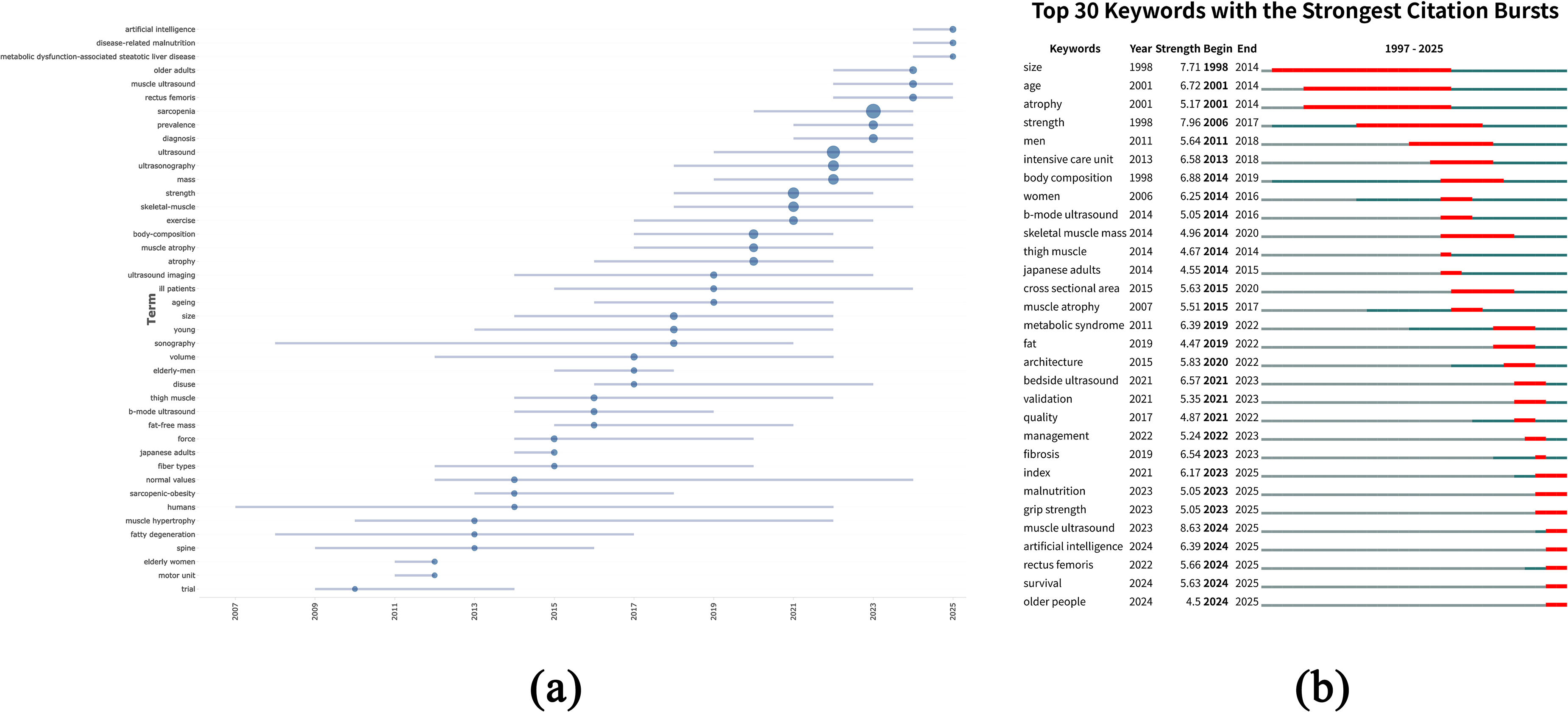
Evolution and emerging hotspots of keywords in ultrasound-based sarcopenia research. (a) Trend topics; (b) top 30 keywords with the strongest citation bursts. Trend topics show the temporal distribution of frequently occurring keywords, whereas citation bursts identify keywords that received rapidly increasing research attention during specific periods.
Technological frontiers and application flow
Quantitative area analysis of research dimensions (Figure 7(a)) reveals phase-specific characteristics in the evolution of ultrasound-based sarcopenia assessment. The Foundational Stage (1997–2013) was dominated by “Morphometry,” reflecting the central role of ultrasound in muscle atrophy assessment and anatomical standardization. From 2014 onward, the “Qualitative” dimension expanded rapidly, signifying a shift toward tissue characterization via “echo intensity.” The period from 2021 to 2025 witnessed an explosion in “Advanced Functional” dimensions, marking the emergence of AI-assisted analysis and SWE-related research as the current research frontiers.
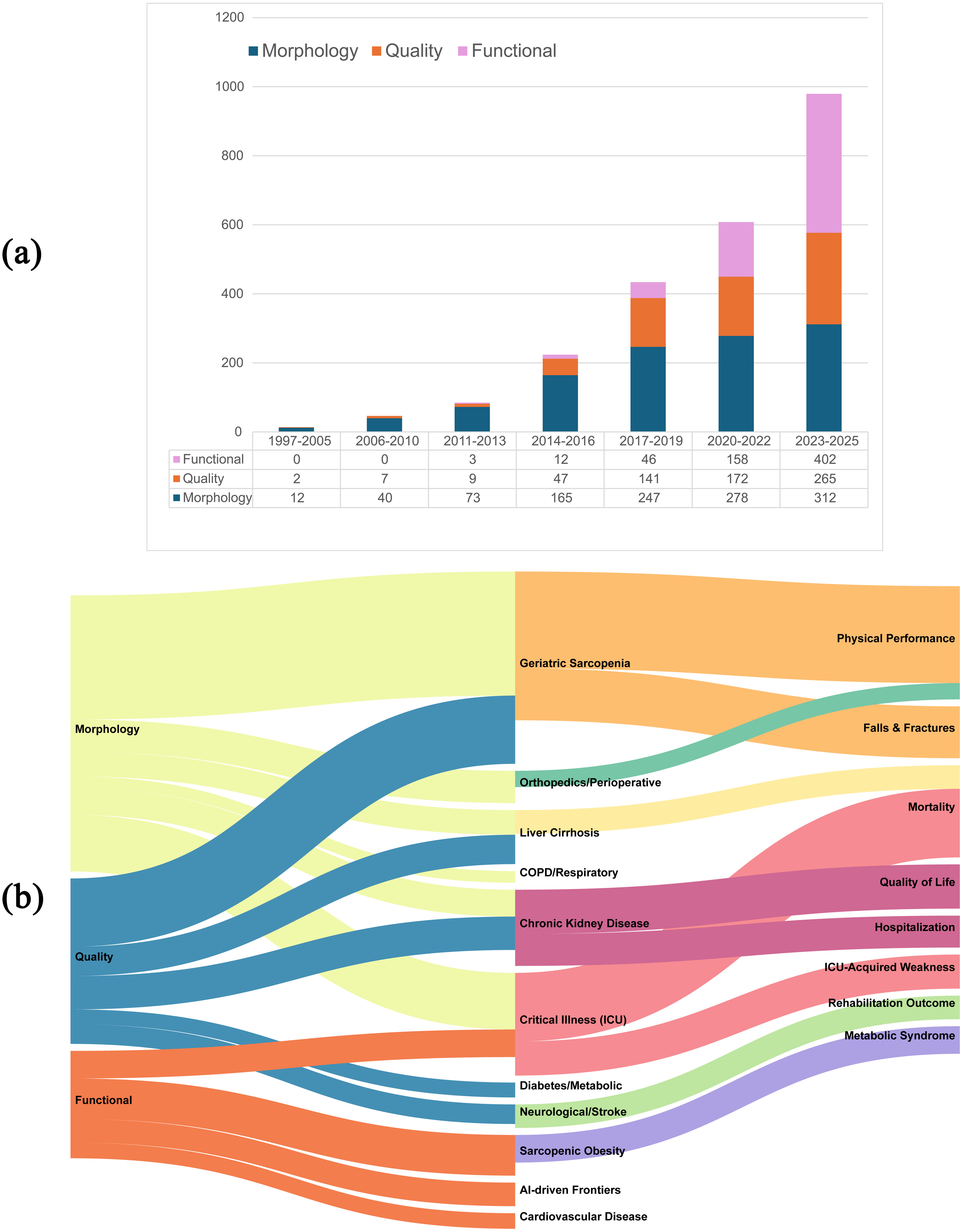
Technological evolution and thematic flow of ultrasound-based sarcopenia research based on WoSCC records from 1997 to 2025. (a) Temporal evolution of predefined ultrasound assessment dimensions, showing the relative prominence of Morphometry, Qualitative assessment, and Advanced Functional approaches over time. (b) Sankey diagram of knowledge transformation in ultrasound-based sarcopenia research. Flow width indicates the frequency of thematic links from ultrasound assessment dimensions to clinical research contexts and outcome-related topics. These links represent bibliometric associations rather than causal relationships.
Sankey diagram flow analysis (Figure 7(b)) illustrates thematic connections from “assessment dimensions” to clinical research contexts and outcome-related topics. Morphology-related terms were mainly connected with “Geriatric Sarcopenia” (n = 342), “Physical Performance” (n = 267) and “Falls & Fractures” (n = 143), indicating that anatomical ultrasound measures remain a major focus in studies of aging-related muscle decline. In the context of “Critical Illness (ICU)” (n = 156), morphology-related terms frequently co-occurred with “Mortality” (n = 189). The Quality dimension was mainly connected with disease-specific research contexts, including “Chronic Kidney Disease” (n = 92) and “Liver Cirrhosis” (n = 81), as well as “Quality of Life” (n = 122). The Functional dimension was linked to emerging themes such as “Sarcopenic Obesity” (n = 112), “AI-driven Frontiers” (n = 65), and “Metabolic Syndrome” (n = 76). Overall, the Sankey diagram showed three major thematic pathways: morphology-related terms were mainly linked to geriatric sarcopenia, physical performance, and falls or fractures; quality-related terms were mainly linked to chronic disease contexts and quality-of-life topics; and functional terms were mainly linked to AI-related, sarcopenic obesity, and metabolic topics. These findings provide a data-level basis for interpreting the technological and thematic evolution of ultrasound-based sarcopenia research.
Discussion
Global landscape and collaborative trends
Our bibliometric analysis reveals a decade of rapid escalation in ultrasound-based sarcopenia research, aligning with the broader global surge in sarcopenia investigations. 23 The transition from the incipient stage in 1997 to the exponential burst observed during 2021–2025 indicates increasing research attention to ultrasound as a potential tool for repeated and dynamic muscle assessment. 24 Geographically, a notable shift in research leadership toward Asia is evident, with Japan (n = 219) and China (n = 199) ranking as the top two contributors. However, high International Collaboration Rates (e.g., Australia at 46.5% and the UK at 38.3%) and the presence of a robust collaborative core centered on the USA, Italy, and the UK indicate that Euro-American institutions appear to play an important role in shaping international collaboration networks and discussions on methodological standardization.
Compared with previous bibliometric analyses that examined sarcopenia research as a broad field, 23 the present study focused specifically on ultrasound-based sarcopenia assessment and further characterized its technology-specific evolution. Our findings also complement narrative reviews on the role of ultrasound in sarcopenia diagnosis and management,24,25 as well as systematic reviews and meta-analyses in specific populations, such as older adults and patients with chronic kidney disease.11,15 Unlike these previous works, this study integrated publication trends, collaboration networks, keyword evolution, and thematic-flow mapping to show how ultrasound-related research has expanded from morphometric assessment toward muscle quality, functional evaluation, AI-assisted analysis, and rehabilitation-related topics.
Technological evolution and paradigm shifts
Keyword analysis delineates the evolutionary trajectory of ultrasound in sarcopenia assessment into three distinct epochs: the Foundational Exploration Phase (1997–2013), the Technological Transition Phase (2014–2020), and the Intelligence-Driven Burst Phase (2021–2025). This chronology reflects a thematic evolution from anatomical description toward outcome-associated and technology-assisted research.
During the pre-2013 era, Morphometry dominated over 80% of the research, with attention mainly focused on ultrasound-based descriptions of muscle atrophy and age-related changes. As highlighted by Prell et al., early quantification of morphological parameters is vital for optimizing interventional strategies. 25 However, this phase paid relatively less attention to intrinsic muscle quality variations.
The period from 2014 to 2020 witnessed a rapid expansion of the Qualitative dimension. Flow analysis (Figure 7(b)) showed increasing thematic connections between muscle tissue characterization (e.g., echo intensity and fatty infiltration) and chronic metabolic conditions, such as chronic kidney disease (CKD) and liver cirrhosis. These patterns suggest that research attention gradually shifted from isolated muscle quantity toward muscle quality and its associations with patient-centered outcomes, including quality of life. 26 Subsequent evidence, such as Wilkinson's work on texture analysis in CKD 27 and Becchetti's study of ultrasound-defined muscle quality in advanced liver disease, 28 further illustrates the growing research interest in qualitative ultrasound parameters across chronic disease populations.
Since 2021, the sharp growth in the Advanced Functional dimension indicates the increasing prominence of advanced ultrasound modalities and AI-assisted analysis as emerging research frontiers. Modalities such as AI, 29 SWE, 30 contrast-enhanced ultrasound (CEUS), and super-resolution microvascular imaging (SMI) 12 have emerged as important research frontiers. For instance, Yik et al. explored AI-assisted intermuscular adipose tissue indices for sarcopenia screening, 31 while Yi et al. integrated SWE, grayscale ultrasound, and clinical information using machine-learning fusion techniques. 17 In the context of the present bibliometric analysis, these studies represent emerging methodological directions. Together, these innovations suggest a transition from simple image visualization toward more standardized, quantitative, and multimodal ultrasound assessment strategies.
Expansion of clinical research contexts
The research scope of ultrasound in sarcopenia has expanded across multiple clinical research contexts. In geriatrics, ultrasound-derived metrics such as thickness and cross-sectional area have been increasingly investigated in relation to frailty and fall risks.32,33 A recent meta-analysis by Yang et al. reported a pooled sensitivity of approximately 85% (AUC 0.87), suggesting the potential diagnostic relevance of ultrasound measurements in geriatric populations. 11 In the critical care setting, Hernández-Socorro et al. introduced advanced modalities (SWE and SMI) to detect changes in muscle perfusion and stiffness in long-term ICU patients, highlighting the growing research interest in advanced ultrasound techniques for muscle assessment in critically ill populations. 12 In surgical oncology, Vongchaiudomchoke et al. reviewed the application of ultrasound-based skeletal muscle assessment for sarcopenia identification and perioperative risk-related research. 16 Similarly, Wilkinson et al. examined 2D ultrasound as a rapid approach for evaluating muscle wasting in nephrology. 34 Furthermore, studies reporting associations between decreased muscle thickness and mortality in geriatric and ICU populations reflect growing attention to survival-related outcomes in ultrasound-based sarcopenia research,3,35,36 which is consistent with the recent burst of the keyword “survival” in our analysis. Collectively, our findings (Figures 6 and 7) illustrate that the clinical research contexts of ultrasound-based sarcopenia assessment now encompass a multidisciplinary landscape, primarily anchored in geriatrics, nephrology, critical care, and rehabilitation-related research. From a rehabilitation perspective, the frequent appearance of terms related to muscle thickness, strength, frailty, falls, and physical performance suggests that ultrasound is increasingly being studied as a repeatable approach for monitoring muscle status in functionally vulnerable populations. When interpreted within the EWGSOP2 framework, these trends indicate that ultrasound-derived measures mainly contribute to the assessment of muscle quantity and quality, whereas muscle strength and physical performance remain essential components of standardized sarcopenia assessment. 10 Future rehabilitation-oriented studies should further clarify whether ultrasound-derived measures can complement functional assessment and monitor responses to exercise, nutritional, or multimodal interventions. However, because this bibliometric study did not appraise methodological quality, risk of bias, or effect sizes of individual studies, these patterns should be interpreted as research trends rather than proof of established diagnostic or prognostic effectiveness.
Limitations
This study possesses several limitations that warrant consideration. First, this study used WoSCC as the sole bibliographic data source. Although WoSCC provides standardized citation metadata and is well suited for citation-based bibliometric analysis, its coverage does not fully overlap with Scopus, PubMed, Embase, or regional databases. Therefore, our findings should be interpreted as reflecting the WoSCC-indexed research landscape, and relevant studies indexed exclusively in other databases may have been missed. Second, our search was restricted to original “Articles” and “Reviews” published in English. While this strategy ensures the inclusion of rigorous, peer-reviewed clinical and basic research, it inevitably excludes potentially significant empirical studies published in other languages. Finally, while bibliometric analysis excels at delineating scholarly ecosystems and evolutionary trends, it cannot substitute for the granular evaluation of individual study quality, risk of bias, diagnostic accuracy, prognostic effect sizes, or causal relationships provided by systematic reviews or meta-analyses. Therefore, terms such as “mortality,” “survival,” and “diagnosis” identified in the keyword and burst analyses should be interpreted as research themes rather than evidence of established clinical effectiveness. Consequently, the findings of this study should be interpreted as a bibliometric map of research activity and thematic evolution rather than a definitive clinical evidence synthesis.
Conclusion
By systematically mapping 1574 WoSCC-indexed publications, this study identified the major publication trends, knowledge structures, and thematic evolution of ultrasound-based sarcopenia research from 1997 to 2025. The field has shifted from early morphology-oriented assessment, mainly focused on muscle thickness, cross-sectional area, and atrophy-related descriptors, toward broader investigations of muscle quality, functional associations, elastography, and AI-assisted image analysis. Keyword and thematic-flow analyses further showed that ultrasound-related sarcopenia research has expanded across geriatric, nephrology, critical care, surgical oncology, and rehabilitation-related contexts. Importantly, these findings represent bibliometric patterns and research priorities rather than direct evidence of diagnostic or prognostic effectiveness. Future studies should prioritize standardized scanning protocols, reproducible measurement strategies, and prospective validation to clarify how ultrasound-derived measures of muscle quantity and quality can complement muscle strength and physical performance assessments in sarcopenia research.
Supplemental Material
sj-docx-1-bmr-10.1177_10538127261464782 - Supplemental material for The evolution of ultrasound in sarcopenia assessment: Global trends, technological shifts, and clinical frontiers
Supplemental material, sj-docx-1-bmr-10.1177_10538127261464782 for The evolution of ultrasound in sarcopenia assessment: Global trends, technological shifts, and clinical frontiers by Yue Zhang, Ying Shu, Hui Qin, Qian Han and Qinfeng Wang in Journal of Back and Musculoskeletal Rehabilitation
Footnotes
Acknowledgments
Not applicable
Author contributions
Conceptualization, Y.Z. and Y.S.; Methodology, Y.Z.; Software, Y.Z., and H.Q.; Validation, Y.Z., Q.H. and Y.S.; Formal Analysis, Y.Z.; Investigation, Y.S.; Resources, Y.Z.; Data Curation, Y.Z.; Writing – Original Draft Preparation, Y.Z. and Q.W.; Writing – Review & Editing, Y.Z. and Q.W.; Visualization, Y.Z.; Supervision, Q.W.;
Ethical considerations
Ethical approval and patient consent were not required because all analyses were based on published literature.
Consent to participate
Not applicable.
Funding
The authors received no financial support for the research, authorship, and/or publication of this article.
Declaration of conflicting interests
The authors declared no potential conflicts of interest with respect to the research, authorship, and/or publication of this article.
Data availability
The original contributions presented in this study are included in the article, further inquiries can be directed to the corresponding authors.
Supplemental material
Supplemental material for this article is available online.
References
Supplementary Material
Please find the following supplemental material available below.
For Open Access articles published under a Creative Commons License, all supplemental material carries the same license as the article it is associated with.
For non-Open Access articles published, all supplemental material carries a non-exclusive license, and permission requests for re-use of supplemental material or any part of supplemental material shall be sent directly to the copyright owner as specified in the copyright notice associated with the article.
