



Abstract
Despite the fact that in the modern education that is characterized by technology evolution, Assistive technology usage remains below optimal levels hence jeopardizing the catching up with curriculum for pupils with disabilities. Assistive Technology Devices (ATDs) stand as a beacon of inclusivity, designed to bridge the gap between pupils with disabilities and their peers with no disabilities.
Purpose
This study explores teachers’ perspectives on the challenges associated to ATDs utilization. It investigates the barriers that hinder effective integration of ATDs in the teaching and learning processes.
Major Findings
The findings indicate that the inadequate availability and functionality of Assistive Technology Devices significantly affect equal participation of pupils with disabilities in academic issues. Other notable challenges include shortage of specialized trained teachers, lack of trainings that hinder teachers’ ability to integrate ATDs into classroom practices, shortage of resource teachers, overcrowded classrooms, insufficient technical support and device maintenance services, discomfort with using ATDs due to inadequate professional development, and curriculum instability.
Conclusion
The study underscores that inadequate ATD access and lack of trained teachers hinder inclusive education. Also, substantial gap persists between policy intent and classroom realities. Therefore, the study recommends for urgent need for collaborative initiatives among policy makers and education stakeholders to address both pedagogical and technological barriers, improve accessibility, and ultimately enhance learning outcomes for students with disabilities.
Introduction
Assistive Technology Devices (ATDs) are essential tools and equipment that empower individuals with disabilities to navigate challenges and engage more fully in a variety of activities, particularly in educational settings.1–4 World Health Organization (WHO) defines Assistive Technology as a comprehensive term that includes all systems and services related to the use of assistive products and the delivery of associated services. 5 In the United States, the Assistive Technology Act of 1998 defines Assistive Technology as any item, piece of equipment, or system whether acquired commercially, modified, or customized that is used to increase, maintain, or improve the functional capabilities of individuals with disabilities.
According to Refs. 6–9, assistive technologies devices (ATDs) are among the most transformative advancements in the education sector. These devices range from simple, low-tech solutions like pencil grips10,11 to innovative, high-tech options such as augmentative communication devices and speech-to-text software.12–14 The use of ATDs is instrumental in promoting independence, 15 fostering inclusivity,16,17 and ensuring equitable access to education for pupils with diverse needs.2,4,18 ATDs facilitate differentiated learning by providing multiple alternatives for completing assignments and fostering active participation in both social and academic settings.19,20 Additionally, they support autonomous learning, peer interaction, reinforcing inclusive education principles.4,21 By tailoring educational experiences to individual needs, ATDs create opportunities for students to take control of their learning.3,22,23 In summary, ATDs provide significant support by adapting curricular content and activities to meet diverse learning needs.
In increasing access to and use of ATDs, deliberate efforts have been taken by governments and non-governmental organizations in both developing and developed countries. Various conventions and agreements have been established to ensure equal access to education for pupils with disabilities (PwDs). International conventions, such as the United Nations Convention on the Rights of the Child (UNCRC) of 1989 and the Universal Declaration of Human Rights (UDHR) of 1948, emphasize the fundamental right to education for all, reinforcing the need for inclusive policies and resources that support PwDs in accessing quality education. The Jomtien World Conference on Education for All in 1990 emphasized the importance of providing quality education for all, including those with disabilities. In consistency with the aforementioned laws and acts, such as the Individuals with Disabilities Education Act (IDEA), 24 and the Technology-Related Assistance for Individuals with Disabilities Act of 1988. School systems are required to be provided with assistive technology devices and services to enable access to the curriculum.25,26
In Tanzania, the rights of people with disabilities began to be acknowledged since independence when the Education Act of 1962 was established and education made free for all. 27 Various Acts, laws, and strategies, such as the Protocol to the African Charter on Human and Peoples’ Rights ratified in 2018, ensure that people with disabilities have access to quality and affordable mobility aids and assistive devices or technologies. Similarly, the National Disability Policy of 2004, the Persons with Disabilities Act of 2010, the National Disability Mainstreaming Strategy, 2010–2015, and Primary Education programs (PEDP I & PEDP II) were also established28,29 to ensure that pupils with disabilities have access to technical aids and assistive technologies, including new technologies, as well as other forms of assistance and support services, 22 enabling them to be educated alongside their peers. Moreover, special schools for PwDs and special education teacher training programs at the Tabora and Mpwapwa teacher’s training colleges were also established 30 to ensure teachers were well trained on how to handle, teach, and use ATDs in their teaching and learning environment.
Despite these progressive measures, significant gaps remain in understanding the barriers to ATDs implementation in Tanzania primary schools serving pupils with disabilities. This study employed an exploratory research design to investigate head teachers’ and teachers’ perceptions of barriers to Assistive Technology Devices (ATDs) utilization in primary schools across Dodoma and Dar es Salaam. The choice of this design was driven by the need to gather in-depth data regarding opinions, attitudes, and perceptions from head teachers and teachers related to ATD utilization in primary schools, specifically in Dodoma and Dar es Salaam. Moreover, the exploratory design was deemed appropriate due to the limited existing research on this topic, highlighting the scarcity of information regarding the factors associated with ATD usage.31,32 Given the limited research on this topic within Tanzanian primary schools, the exploratory approach facilitated the identification of critical barriers and emerging themes, 33 that could inform future research and guide policy development to optimize the potential of ATDs in promoting educational equity for pupils with disabilities.
Statement of the problem
Despite numerous global and national initiatives recognizing the rights of people with disabilities, the utilization of Assistive Technology Devices (ATDs) in Tanzanian classrooms remains low. This is reflected in the continued poor academic performance of pupils with disabilities (PwDs).1,22,34 Teachers’ understanding and knowledge of ATDs are crucial for their effective implementation in classroom settings. 35 However, there is a significant gap in research that explores teachers’ perspectives on the barriers to ATDs utilization. Existing studies predominantly focus on the technological aspects of ATDs, overlooking insights from teachers that influence their integration into daily teaching practices. Addressing this gap is essential for comprehensively understanding the barriers to ATD utilization and for developing interventions that can enhance academic outcomes for pupils with disabilities in Tanzania.
Methodology
This study employed a mixed-methods exploratory design, 36 combining qualitative and quantitative approaches to investigate barriers to Assistive Technology Devices (ATDs) utilization in Tanzanian primary schools. The design was selected because of the following reasons, the scarcity of existing researches on ATDs implementation in Tanzania primary schools, 31 the need to both explore under-researched barriers (qualitative phase) and quantify their prevalence (quantitative phase) and the pragmatic requirement to generate findings that could directly inform policy and practice. 37
Study settings, population, and sampling
The study was conducted in Dodoma and Dar es Salaam Regions, focusing on schools accommodating pupils with disabilities. A total of 41 schools were included in the study. Dar es Salaam being a business city, had 26 schools that catered for PwDs, all located in urban areas, while Dodoma, a capital city had a total of 15 schools which serve pupils with the same category. In Dar es Salaam, there were 19 integrated schools, 4 inclusive schools, and 3 special schools catering to pupils with disabilities. Similarly, in Dodoma, the survey included nine integrated schools, four inclusive schools, and two special schools situated in a mix of urban and sub urban locations.
The study sample comprised 41 head teachers (51.2% male, 48.8% female) and 124 teachers (37.9% male, 62.1% female) who were handling pupils with disabilities, focus was on understanding the perspectives and experiences of this particular group. To gain insights into the perspectives and experiences of this specific group, convenience sampling was employed to select teachers who were directly involved with pupils with disabilities.
Instruments and data processing procedures
Data collection and analysis were structured to address research questions related to ATD availability, utilization, and barriers to effective use. Three instruments were used to collect data. These were, semi-structured interviews conducted to head teachers, questionnaires administered to teachers, and focus group discussions (FGDs) conducted to two groups of teachers working with pupils with disabilities (PwDs).
The interviews with head teachers were semi-structured, consisting of five open-ended questions designed to explore status of availability, challenges, and institutional barriers related to Assistive Technology Device (ATD) provision and utilization in schools. Some of the questions asked include; what types of ATDs are available in your school? Describe key challenges that your school face in utilizing ATDs, have you ever received any training on ATDs? Interviews lasted between 30 and 40 min, were conducted face-to-face, and were audio-recorded with consent. This allowed flexibility for probing deeper into certain issues raised by participants. One example of the probing question was about ATDs’ funding constraints.
Two FGDs were conducted, each involving eight teachers from inclusive, special, and integrated schools. FGDs were moderated by a trained facilitator, while a second researcher served as a note-taker to ensure accuracy and capture non-verbal cues. Discussions lasted 40–60 min and were guided by a structured FGD guide comprising four questions focusing on status of availability experiences, utilization, and perceived barriers to ATD use. Questions asked were, how often do you use ATDs in classroom? What kinds of obstacles do you encounter when teaching pupils with disabilities in classroom? All participants were provided written informed consent prior to their involvement in the study. The consent form outlined the study’s purpose, procedures, confidentiality, and the voluntary nature of participation.
A semi structured questionnaire consisting of both open and closed-ended items was administered to 124 teachers. The tool was adapted from previous validated instruments (Navarro-Rivera & Kosmin, 2015), and tailored to assess individual teacher knowledge, frequency of ATD use, perceived availability, and barriers to utilization. The questions composed of four demographic questions, two items on ATD availability, four items on ATD utilization, one item on barriers to ATD utilization and the last two questions were open ended focusing on challenges and strategies. In order to ensure anonymity and confidentiality of responses from participants, unique alphanumeric codes were assigned to each participant, having obtained prior informed consent from each.
Triangulation was used to enhance the credibility and reliability of findings. Findings from head teacher interviews provided detailed insights into the types, quantities, and challenges surrounding ATD availability in schools. Teacher questionnaires further highlighted the status of ATD utilization and barriers to effective use. The survey had 15 questions, which included 2 open ended questions on barriers and strategies to enhance ATD utilization, 1 Likert scale question on factors associated with frequency of use of ATDs in schools, and 12 categorical, closed ended questions which comprised on demographic information, status of use of ATDs, and knowledge of teachers on ATDs use. The results not only inform the development of policy recommendations to improve ATD availability and effectiveness but also suggest practical interventions for teacher training and support systems, ultimately enhancing equity and equality in education for pupils with disabilities. All questionnaires were assigned unique alphanumeric codes to ensure confidentiality.
Data analysis
Qualitative data collected through semi structured interviews with head teachers and focus group discussions with teachers was analyzed using thematic analysis which was manually coded. This approach allowed for the identification and interpretation of key patterns and themes related to the barriers and facilitators of Assistive Technology Devices (ATDs) utilization. By examining recurring ideas and insights, thematic analysis provided a deep understanding of the contextual and experiential factors influencing ATD implementation in schools. 38 On the other hand, quantitative data, which focused on the factors influencing ATD utilization among teachers, was administered through questionnaires and subjected to descriptive analysis using SPSS software. This method was used to summarize and present the data in a clear and accessible manner, providing an overview of frequencies, and key variables. Descriptive analysis helped to quantify teachers’ experiences and perceptions, complementing the qualitative insights and offering a more comprehensive understanding of the factors affecting effective utilization of ATDs in the classroom.
Results
ATDs available in selected schools
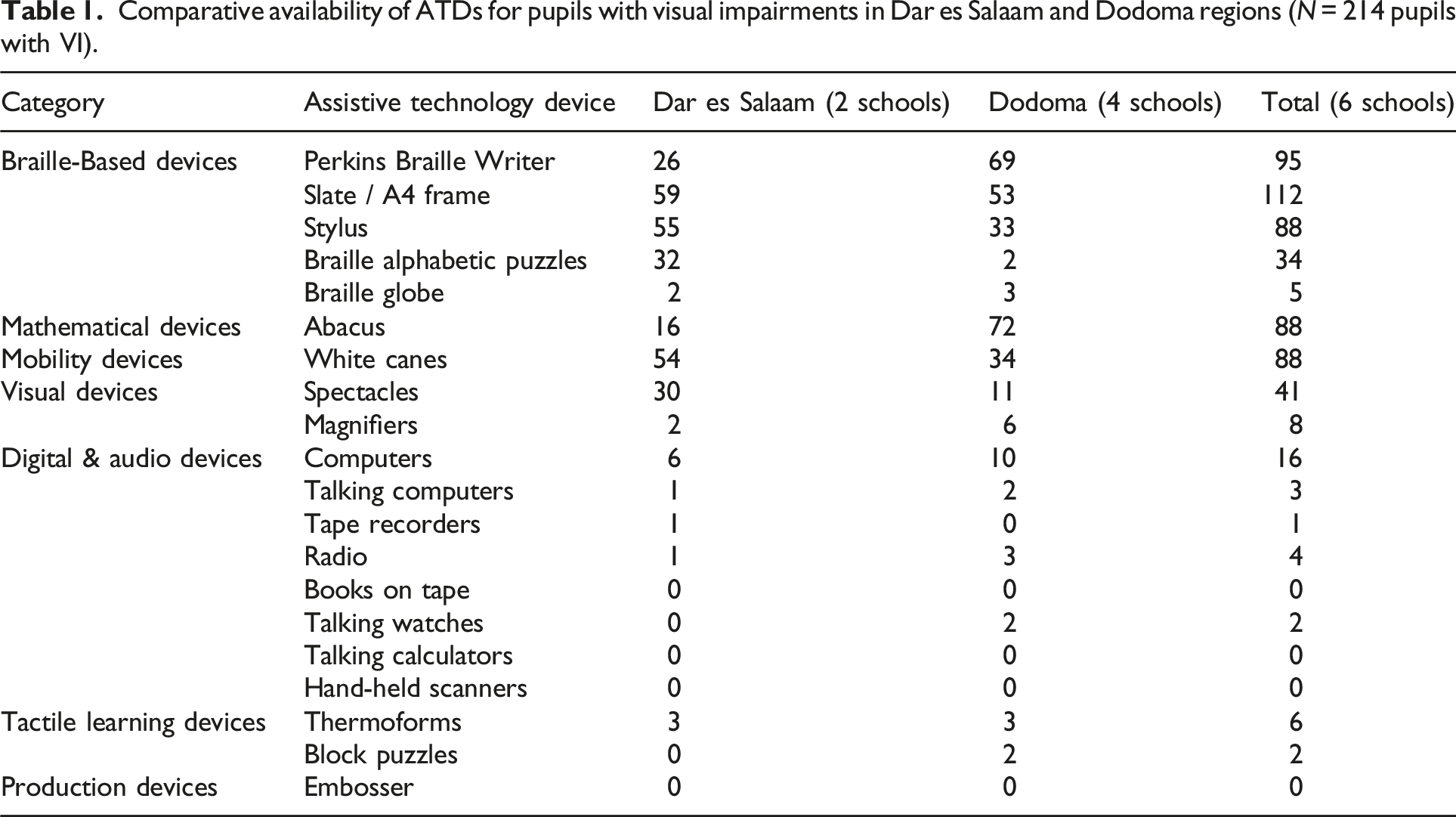
Comparative availability of ATDs for pupils with visual impairments in Dar es Salaam and Dodoma regions (N = 214 pupils with VI).
Comparative availability of ATDs for pupils with intellectual impairment in Dar es Salaam and Dodoma regions (N = 702 pupils with II).

Comparative availability of ATDs for pupils with hearing impairments in Dar es Salaam and Dodoma regions (N = 507 pupils with HI).

Results in Table 1 illustrates that across six schools in Dodoma and Dar es Salaam regions reveal ATDs disparities with Dodoma schools showing higher availability of Braille writers (69 vs 26) and abacus (72 vs 16), while Dar es Salaam leads in slate frames (59 vs 53) and white canes (54 vs 34). Other assistive technology devices (ATDs) found in limited quantities were 16 computers (including 3 non-functional talking computers), 41 spectacles, 2 non-functional talking watches. Nevertheless, essential ATDs for enhancing the learning experience of visually impaired pupils, such as embossers, books on tape, tape recorders, and talking calculators, were entirely absent.
Data from Table 2 indicate that across 23 schools in Dar es Salaam and Dodoma, there is a significant urban-rural inequalities in terms of ATD availability in schools. In Dodoma’s 6 schools (serving 112 pupils), only 77 devices were available, while Dar es Salaam’s 17 schools (serving 590 pupils) had 278 devices. Additional devices found in limited quantities included beads, cards, abacuses, balls, picture rolls, bells, computers, and globes. Generally, the available assistive technology devices (ATDs) were insufficient relative to the number of pupils in each school.
Table 3 shows that hearing aids were extensively available in both Dodoma and Dar es Salaam regions, catering to 507 pupils with hearing impairments across 10 schools. However, other assistive technology devices (ATDs) were either severely limited in number or entirely unavailable as compared to the pupil-device ratio. This highlights a significant focus on hearing aids compared to other ATDs like abacuses and speech trainers, which are crucial for enhancing the learning of pupils with hearing impairments.
ATDs status of utilization by teachers
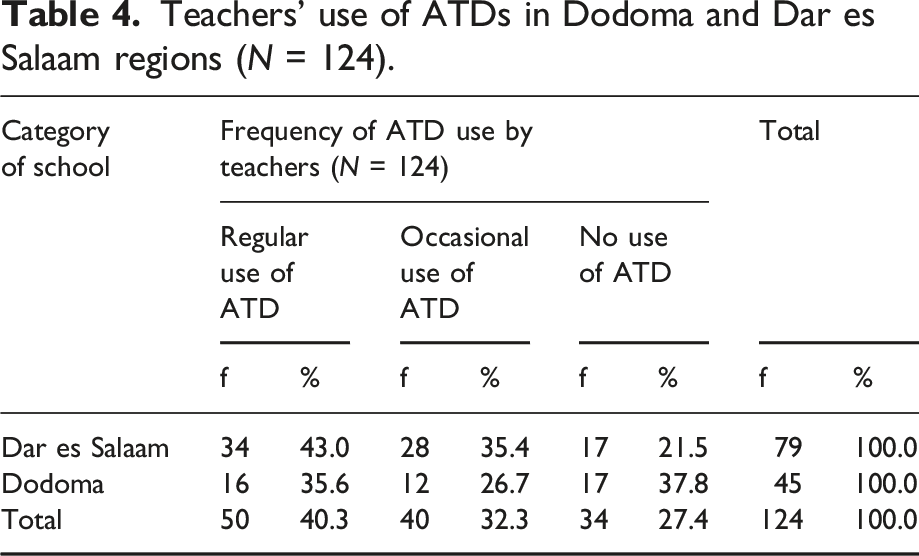
Teachers’ use of ATDs in Dodoma and Dar es Salaam regions (N = 124).
Factors affecting effective ATD use: Teachers views (n = 124).
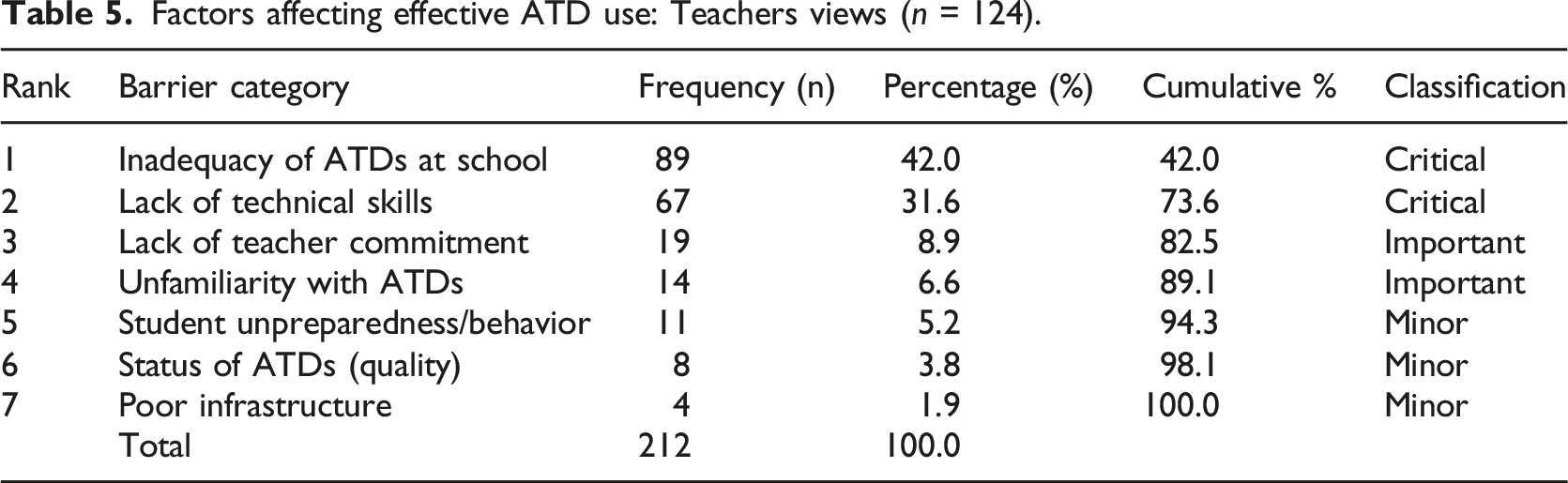
Considering the information from Table 5, there are two striking barriers with 73.6% stemming from only two factors which are shortage of ATDs and skills deficiencies. Now, the summary portrayed in Figure 1 suggest, the primary intervention should target ATDs procurement and teacher training to develop competency. Resource allocation priorities.
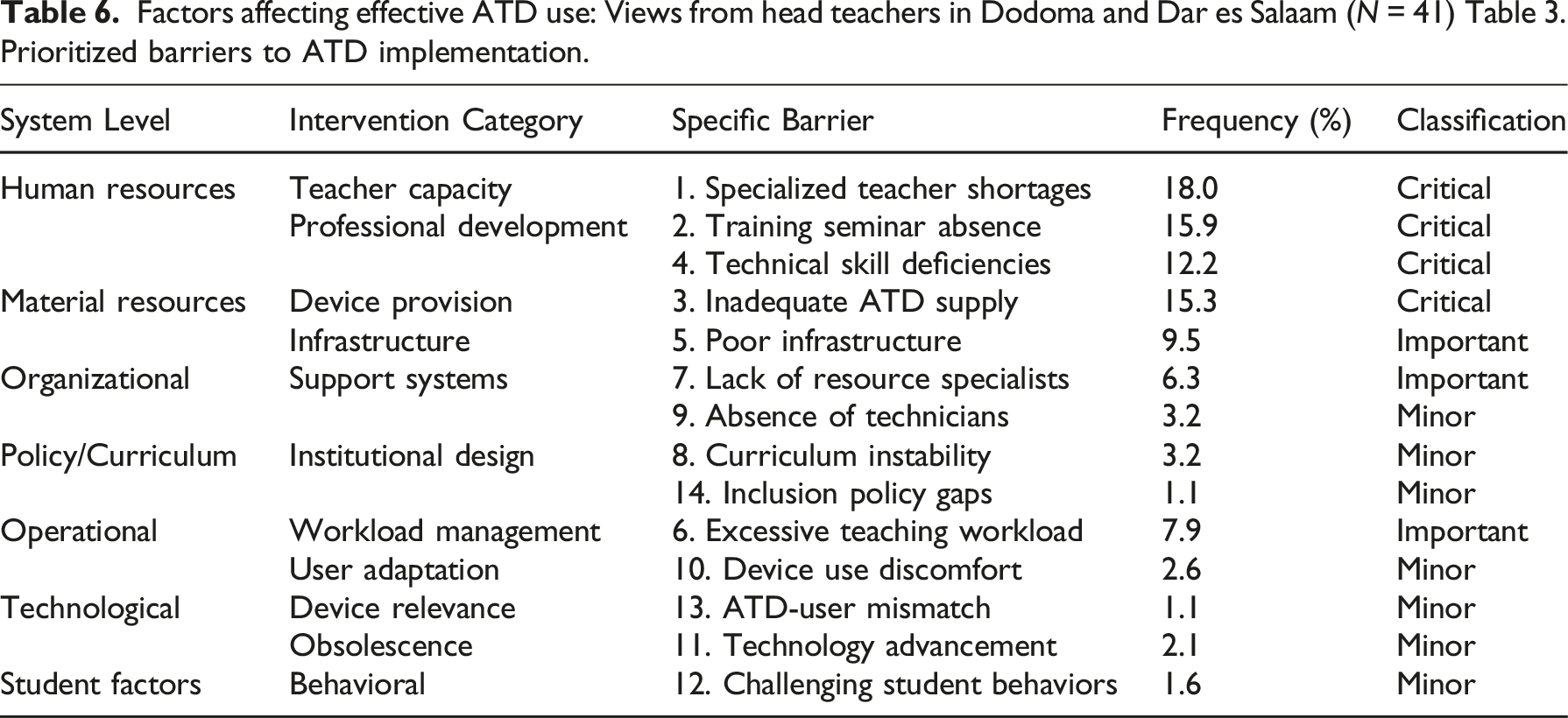
Factors affecting effective ATD use: Views from head teachers in Dodoma and Dar es Salaam (N = 41) Table 3. Prioritized barriers to ATD implementation.
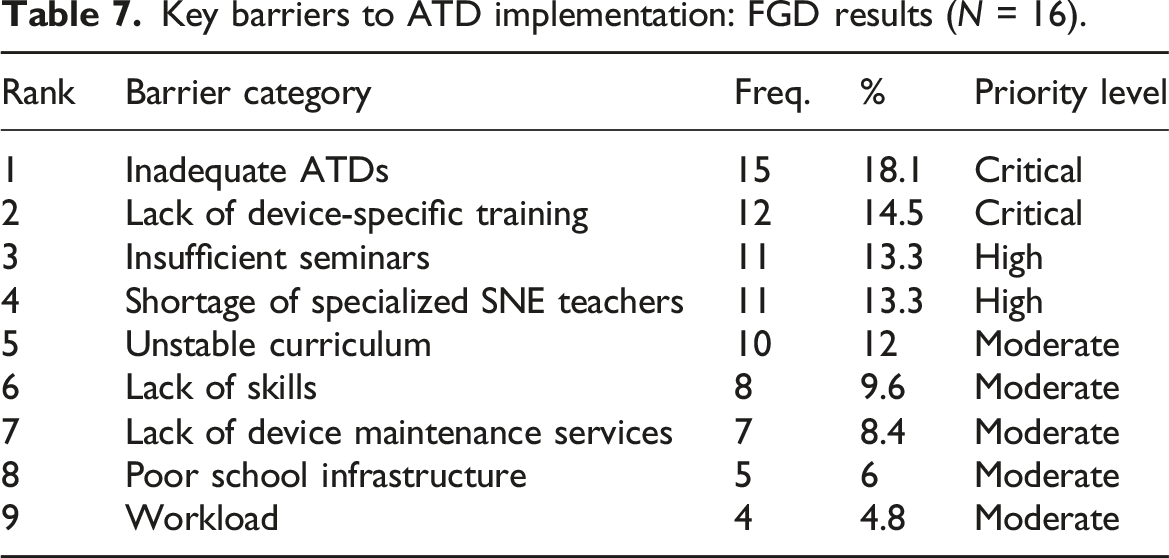
Key barriers to ATD implementation: FGD results (N = 16).
The pie chart in Figure 2 illustrates the frequency of various factors contributing to the improved availability of Assistive Technology Devices (ATDs) in schools. The chart highlights that the most significant factor is the adequate distribution of ATDs in schools, followed by frequent school visits to establish actual needs. Teachers views on how to improve ATDs availability in schools (N = 124).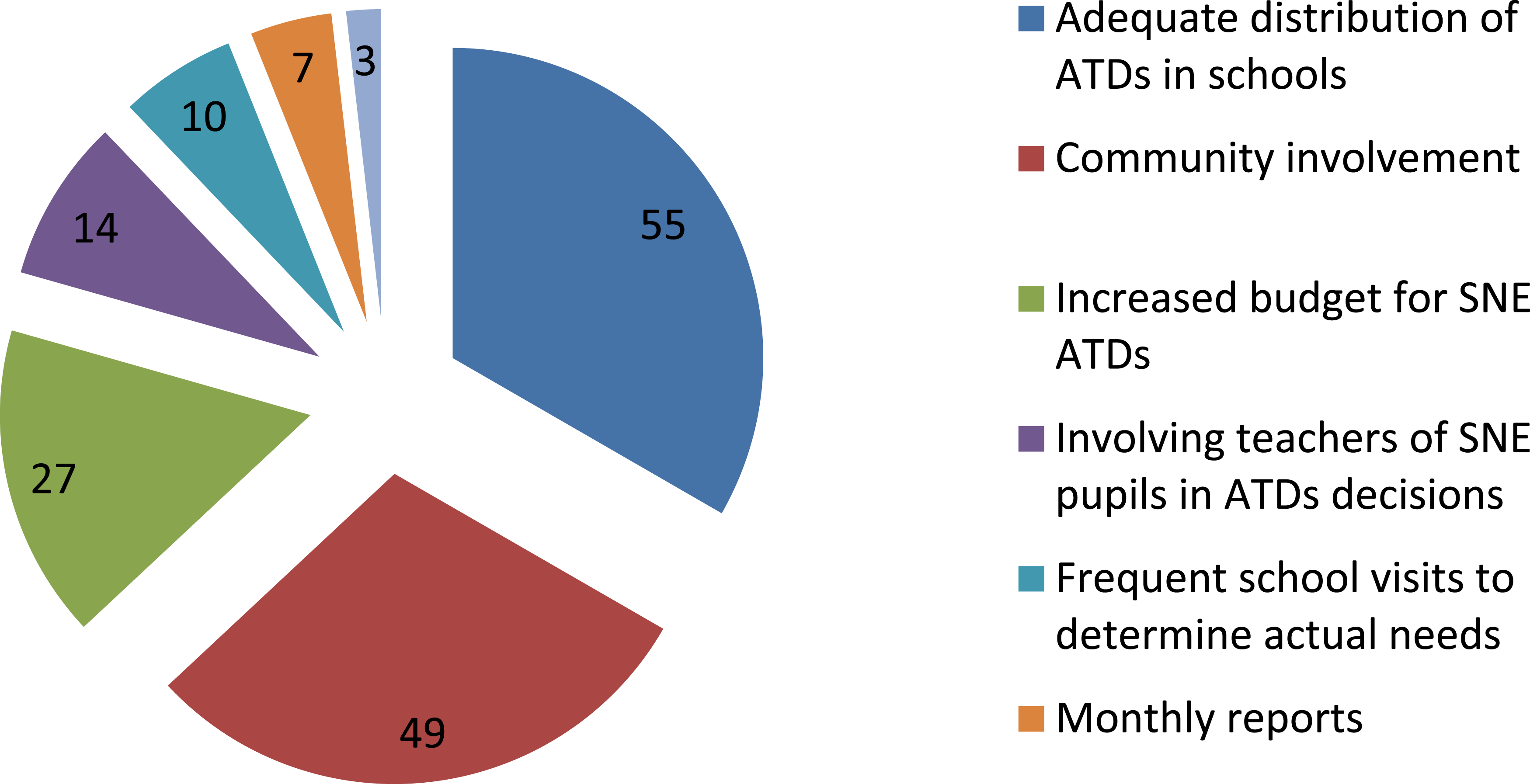
Results in Figure 2 provide insights into the perspectives of teachers of students with disabilities regarding strategies to improve the availability and accessibility of assistive technology devices (ATDs) in schools. The key points discussed in Table 5 include adequate distribution of ATDs, as reported by 44.4% of respondents. Subsequently, 39.5% of educators highlighted the significance of community engagement in bolstering ATD accessibility. A smaller but significant percentage (21.8%) called for more funding designated especially for ATDs in Special Needs Education (SNE). ATD decision-making processes are necessary, as evidenced by the 11.3% of respondents who stated a wish to include SNE students’ teachers in the process. ATD utilization reports were generated on a monthly basis (5.6%), fundraising events were planned, and frequent school visits were suggested as additional tactics.
Discussion
Status of availability of ATDs in schools
Results on status of availability of ATDs reveal significant systemic challenges that affect ATDs utilization hence impeding equity and equality in education for pupils with disabilities. Findings show disparities across different disability categories whereby ATDs for pupils with visual impairments (VI) and intellectual impaired pupils were inadequately available relative to device student ratio. However, hearing aids were found in good numbers in schools with hearing impaired pupils. Considering pupils with intellectual impairments, the 355 total ATDs for 702 pupils represents just 50.4% coverage of minimum WHO standards, with particularly severe shortages in essential tools as only 1 computer exists, no globes were present despite curriculum requirements, and Dodoma completely lacked physical activity equipment (ropes, balls, swings). While cognitive devices like puzzles were relatively abundant (121 total), their disproportionate availability compared to other categories suggests an imbalanced approach to special needs education. One teacher during FGD highlighted the inadequacy challenge, expressing frustration over the limited utilization of Assistive (ATDs) due to maintenance issues. One head teacher noted, ATDs are very few in number and they are easily worn out, and in fact, there are no proper maintenance services.
The complete absence of certain devices violates Tanzania’s Disabilities Act and National Inclusive Education Strategy. The trend of unequal distribution corresponds to previous studies on inadequacy of ATDs in schools.39–44 Qualitative insights from interviews with head teachers and focus group discussions with special education teachers further confirm that the scarcity of ATDs contributes to educational inequality of pupils with disabilities. 45
Notably, this study extends previous findings by documenting an urban-rural divide in resource allocation that exacerbates existing educational inequalities. This insufficiency effectively denies pupils with disabilities their right to learn alongside their peers. 43 Consequently, inadequacy of significant ATDs denotes a serious implication for pedagogy, education policy, 46 and infrastructure45,47,48 as the absence of necessary assistive technology devices (ATDs) can hinder the development of independent learning skills and academic competencies of pupils with disabilities43,49 by limiting their ability to learn independently, read, and develop various skills. 2 Additionally, a lack of diverse ATDs makes it challenging for teachers to implement inclusive teaching practices.25,43
Status of ATDs utilization
Findings on status of utilization sought to examine the utilization patterns of ATDs in primary schools across Dodoma and Dar es Salaam regions. The findings uncovered significant regional differences in ATD engagement, with 43.0% of teachers in Dar es Salaam reporting regular use compared to 35.6% in Dodoma. Also, despite availability, ATDs remain underutilized, with occasional use reported by only 35.4% of Dar es Salaam teachers and 26.7% in Dodoma, while complete non-use was reported by 21.5% and 37.8% of teachers in Dar es Salaam and Dodoma, respectively. This indicates a significant disparity that may be linked to differences in resource allocation and professional development between urban and rural areas. 42 This finding suggests even when devices are available, teachers face challenges incorporating them consistently. As Hofman and Kilimo (2014) 50 note, without ongoing technical support and curriculum integration strategies, ATDs often remain underutilized. These findings highlight the urgent need for targeted interventions, such as improved teacher training and better infrastructure17,50,51 to ensure equitable access to ATDs and to promote inclusive educational practices, in line with the mandates outlined in the Persons with Disabilities Act (2010), Sustainable Development Goal 4 and supported by evidence from. 43
Triangulating quantitative data with qualitative insights from focus groups and interviews, the study underscores urban-rural disparities in resource allocation and professional development, aligning with existing literature. 42 The higher utilization rates in Dar es Salaam reflect urban-biased resource allocation, as noted by Ault et al. (2013), 42 where better infrastructure and access to training likely contribute to increased engagement. Conversely, Dodoma’s rural context, characterized by limited resources and professional development opportunities, exacerbates non-use, as corroborated by FGD data where teachers expressed frustration over outdated or unavailable devices. These disparities underscore the need for targeted interventions, such as enhanced teacher training, improved infrastructure, and ongoing technical support, to foster equitable ATD use.17,50,51
The findings also align with broader policy frameworks, including the Persons with Disabilities Act (2010) and Sustainable Development Goal 4, which emphasize inclusive education. As Amwe and Dommak (2023) 43 argue, addressing systemic barriers through comprehensive support systems is critical to transforming ATDs into effective tools for inclusive learning. This study highlights the urgent need for policy-driven interventions to bridge urban-rural gaps and ensure ATDs are meaningfully integrated into primary education across both regions.
Barriers to effective ATDs utilization
Inadequacy of ATDs
The data presented in Tables 1–3 suggests that the effective utilization of assistive technology devices (ATDs) in educational settings is largely dependent on their availability and quality. Inadequate availability of ATDs was mentioned as the primary challenge as echoed by 29 out of 41 teachers in Table 2 and by 15 out of 16 teachers in Table 3. This scarcity severely limits pupils’ engagement with the curriculum and academic success4,52 as exemplified by a teacher reporting a disproportionately low ratio of ATDs for pupils in a deaf-blind class, illustrating how insufficient resources hinder learning of pupils with disabilities.
These challenges can be contextualized within disability laws, education policies, and acts such as Americans with Disabilities Act (ADA), the Individuals with Disabilities Education Act (IDEA) in the U.S., Tanzania’s Persons with Disabilities Act of 2010, United Nations Convention on the Rights of Persons with Disabilities (CRPD), designed to promote equal opportunities for all students including those with disabilities, yet findings indicate a mismatch between these policies and classroom realities, revealing that practical implementation is inadequate.
This mismatch aligns with previous research that emphasizes the critical role of ATDs in enhancing learning pupils with disabilities.2,4,45,49,53 Therefore, access to sufficient and functional ATDs is essential for unlocking the potential of PwDs and enhancing their academic achievement. 52 The Global Report on Assistive Technology 54 further advocates for mechanisms to ensure that quality, affordable ATDs are accessible to all, thereby enabling improved learning outcomes for pupils with disabilities.
Shortage of specialized teachers
According to results in Tables 4–6, the integration of assistive technology devices (ATDs) into regular learning activities requires the expertise and involvement of specialized teachers. The findings highlight shortage of specialized teacher as a barrier undermining ATD utilization with a 1:22 teacher–student ratio for pupils with intellectual disabilities, far below the ETP’s recommended 1:5 standard contributing to high non-use rates (e.g., 37.8% in Dodoma, Table 1). As reflected in these remarks, In my class there are 22 intellectually impaired students. As you know, we do not learn like normal children in normal classes…we differ…You cannot write “a” on the board and expect a pupil to read. Each pupil has his/her own understanding ability…you deal with them one by one. Do you think a single teacher is sufficient for 22 impaired pupils? For the deaf-blind students, there are 7 teachers and 13 students. Deaf-blind learning requires a one-to-one ratio (1:1) with the teacher, since they neither see, nor hear. It should be noted that 95% of pupils learn by seeing and hearing, So, this pupil remains with only 5% of learning by hands, where he/she demands the presence of a teacher every time. This means others do not study altogether, because there is no other alternative for one student to help another student. Deaf-blind pupils learn using fingers, so when the teacher is absent, no learning occurs
Specialized teachers play a critical role in handling the overall classroom environment and learning needs of pupils with disabilities and modifying the curriculum to meet the diverse needs of pupils with disabilities, ensuring that ATDs are effectively integrated into the educational process.48,55 However, inconsistent integration of ATDs can hinder full engagement of PwDs in accessing education content and reach their maximum academic potential. 56 Referring to the contention raised by one teacher, regarding the adequacy of a single teacher for a class of 22 intellectually impaired students, reflects the broader challenges faced by the country in aligning its Education and Training Policy of 2014 (2023 revision) with the realities on the ground, especially for students with disabilities. Since, each pupil have unique learning profiles, and that there is no one-size-fits-all approach, the presence of a specialized teacher is pivotal in managing ATDs as well as creating an inclusive learning environment tailored to the needs of students with disabilities.
The ETP (2023 revision) recognizes the importance of equal access to education and highlights the need for appropriate teaching methods, specialized resources, and trained personnel to address the diverse needs of learners. However, the findings reflect the significant challenges in implementing inclusive education policies, 57 particularly in classrooms with a high number of pupils with disabilities and insufficient support. Since, each student learns at their own pace, and a high student load reduces the teacher’s ability to tailor lessons to individual learning needs, 56 a low teacher-to-student ratio and adequately trained personnel equipped to address the diverse and complex needs of students with is essential. 58 Therefore, educational systems need to prioritize the recruitment, training, and retention of specialized teachers who can skillfully incorporate ATDs into the curriculum to allow effective utilization of ATDs. 47
These findings reinforce the urgent need for targeted reforms, particularly in revising ETP equity provisions and the integration of mandatory, ATD modules into teacher certification programs 47 so as to bridge skill gap. Grounded in both quantitative data and rich participant narratives, this study provides policy-relevant insights aligned with Tanzania’s commitment to SDG 4 on inclusive, equitable quality education.
Lack of skills
The lack of skills was also highlighted in Tables 5–7 denoting a significant challenge that requires urgent attention. Many available assistive technology devices (ATDs) remain underutilized due to teachers’ unfamiliarity with their functionality.45,59 A noted by another teacher during FGD in Dar es Salaam, It is true that we were given hearing aids. But giving us such devices without educating us on how to go about them is not enough. These devices require a specialist to fit and regulate them, because if you try that without being skilled, you may cause severe problems to ear drum, probably causing more problem. So, we have kept the devices until we know how to operate them.
United Nations Convention on the Rights of Persons with Disabilities (CRPD), asserts that failure to equip teachers with necessary ATD skills constitutes a violation of the principles of equity and inclusivity of PwDs. 54 Also, International frameworks, such as the Salamanca Statement and Framework for Action on Special Needs Education (1994), advocate for inclusive education that meets the diverse needs of all learners, including those with disabilities. This approach is reinforced by Sustainable Development Goal (SDG) 4, which aims to ensure inclusive and equitable quality education for all by 2030. However, the lack of trained teachers,40,56 particularly pedagogy-centered technology which is emphasized as desirable for instructional technology training, 60 severely limits the realization of these global commitments. There is a need for comprehensive teacher training programmes that focus not only on the use of ATDs but also on effective classroom management strategies for PwDs to enable teachers incorporate ATDs in their instructions. 61
Lack of specialized or resource teachers
The shortage of specialized teachers in Special Needs Education (SNE) schools, highlighted in Tables 6 and 7 hampers effective utilization of Assistive Technology Devices (ATDs) and consequently the academic achievement of pupils with disabilities (PwDs). According to Refs. 35, 45, 62, and 2, specialized teachers play a crucial role in tailoring instruction to meet the unique needs of PwDs, ensuring that ATDs are effectively integrated into the learning process. The lack of such teachers undermines the potential of ATDs to enhance academic outcomes, particularly in settings where students, such as those who are deaf-blind, require intensive one-on-one support. 3 As one respondent noted, deaf-blind students, who rely on tactile learning, are particularly disadvantaged when there is no a 1:1 student-to-teacher ratio. Similarly, 8 highlights significant barriers to the effective integration of assistive technology devices (ATDs) when specialized teachers are unavailable, hindering the potential of ATDs to facilitate learning development. Hence, without adequate specialized teachers, the promise of ATDs to improve learning outcomes for students with disabilities remains unfulfilled, exacerbating the achievement gap between pupils with and without disabilities.40,53,59,63,64
According to Education and Training Policy of Tanzania (ETP) of 2014 (2023 revision), adequate teacher training to support students with disabilities as well as inclusion is emphasized. On the other hand, Article 27 in the Persons with Disabilities Act of Tanzania (2010) requires schools to ensure accessibility through the provision of special resources such as ATDs. However, the findings suggest a disconnect between policy intentions and practical implementation. Despite the fact that the policy advocates for inclusivity, it does not provide enough emphasis on the training and continuous professional development of teachers to effectively integrate ATDs into the classroom.56,65 This gap in teacher preparation undermines the effectiveness of ATDs and limits PwDs’ access to equitable educational opportunities.
Lack of technicians and device maintenance services
In order to ensure that PwDs have access to curriculum, complete tasks, and demonstrate their knowledge, assistive technology devices (ATDs) must be well-maintained. Maintaining Assistive Technology Devices (ATDs) for people with disabilities (PwDs) is a critical issue that intersects with both the persons with disabilities act in Tanzania (2010) and the Education and Training Policy (ETP) of Tanzania (2014). The Disabilities Act mandates access to ATDs and support services for PwDs, while the ETP (2014) emphasizes inclusive education and equal access to quality education for all students, including those with disabilities. However, the lack of ATD maintenance and the scarcity of devices hinder these rights, as they directly affect students’ ability to fully participate in educational activities as narrated in the interview, There are very few technicians we can rely on when braille machines need maintenance. Sometimes we have to wait for a technician for quite some time because they are highly needed and are very few.
The ETP of 2014 on the other hand, does not sufficiently address the infrastructure required to maintain and repair these devices. A lack of sufficient technicians and device maintenance services can cause frequent problems that prevent them from using necessary tools and make it more difficult for them to engage in the learning process.19,66,67 As one respondent with visual impairment remarked on the scarcity of technicians, particularly in the realm of repairing Braille machines and the response for hearing aids that were not utilized due to lack of a technician to fix them to students, imply that denied access to ATDs caused by their malfunctioning undermines the effectiveness of these policies hence leading to long-term academic failures as PwDs find it difficult to excel alongside their peer, thereby causing a vicious cycle of underachievement and disappointment. The glaring shortage necessitates urgent action to recruit and deploy technicians nationwide, thereby alleviating the current strain on ATDs utilization.
Lack of specific device training and unfamiliarity of ATDs
Teaching students with disabilities can be significantly affected by instructors’ unfamiliarity with and lack of specialized training in assistive technology devices (ATDs). According to Ref. 64, the inability of teachers to effectively integrate Assistive Technology Devices (ATDs) into the teaching and learning process can result in significant challenges for students with disabilities. 61 further highlighted that the lack of integration of assistive technology devices into the curriculum and learning activities can hinder students’ ability to fully utilize these tools, thereby limiting their access to and engagement with instructional content. As a result, students may struggle to demonstrate their knowledge and skills, missing out on a crucial learning opportunity, which further widens the achievement gap between students with and without disabilities.2,14 These findings suggest that policymakers should implement mandatory professional development programs to equip teachers with the knowledge and skills necessary for effectively using assistive technology devices (ATDs) in the classroom, in alignment with the Convention on the Rights of Persons with Disabilities (CRPD) and other disability and education acts ratified by Tanzania that mandates PwDs to receive an education that is accessible and tailored to their needs. This effort could also include integrating ATD training into teacher education programs to ensure that new instructors are adequately prepared from the outset.
Curriculum instability
Curriculum instability can have profound implications on the effective use of assistive technology devices (ATDs) for students with disabilities, as frequent changes may leave teachers grappling with how to adapt both the curriculum and ATDs to meet evolving educational demands.8,68 Also, misalignment can occur between the features of available devices and the new educational content,8,59 leading to ineffective use and underutilization of these critical resources53,69 and breakdowns or suboptimal use of the assistive technology due to evolving technological needs and requirements.2,23 The Convention on the Rights of Persons with Disabilities (CRPD), a treaty adopted by the United Nations in 200 emphasizes the need for governments to ensure that educational systems, including curricula, are inclusive and accessible, with suitable adaptations that enable students with disabilities to participate fully (UN, 2006). Therefore, there is a need to consider the philosophy of the nation, education objectives, global changes, job market, availability of teaching and learning resources, teachers’ preparedness, morale, motivation, and training, as well as social changes is important before the commencement of the new curricula 68
Discomfort in using ATDs
The study also noted that, despite availability, physical discomfort can also lead to device underutilization or abandonment. Despite the presence of 197 hearing aids (Table 3), pupils abandoned them due to discomfort such as headaches caused by wearing them, as narrated by one respondent during interview, I know you will be surprised because I said our school has a good number of hearing aids almost every pupil has one. However, you have not seen any being worn by pupils. In class pupils do not wear hearing aids because they cause headaches whenever they use them, and we don’t have a specialist to adjust the devices. So, we have decided to store them away.
All participants in Tables 5–7 highlighted a lack of technical support as a contributing factor. Moreover, both interviews and FGDs revealed similar concerns regarding discomfort as it was linked not only to the physical strain of device use but also to the absence of technical skills among teachers. For instance, pupils with visual impairments reported discomfort when using a stylus to poke Braille paper. As one FGD participant explained, Some of our pupils struggle with the stylus when they want to poke the braille paper. It causes a lot of pain in the fingers that they do not want to proceed with using them
These findings highlight the need for both specialized personnel and user-cantered device adjustments to ensure ATDs are not just available, but usable and comfortable for pupils with disabilities. While Tanzania’s Disability Act (2010) mandates ATD provision, results reveal there is acute scarcity of device specific training. The data from Tables 6 and 7 illustrate a critical gap in education policy concerning device specific training of both teachers and pupils on the effective use of ATDs. Policies should mandate that any provision of ATDs be accompanied by thorough training programs. This could include workshops on device functionality, best practices for use, and regular refresher courses to ensure that teachers and pupils remain proficient. 8 According to Ref. 2, the provision or distribution of ATDs should be accompanied by ongoing support on training and maintenance for teachers and pupils on how to use these devices properly to ensure that schools are equipped with the necessary human resources to support students with disabilities effectively. 53 Policies should facilitate access to technical support, ensuring that devices are appropriately adjusted and maintained. By addressing these areas, education policies can significantly enhance the learning outcomes for students with disabilities, thereby fulfilling the commitments of inclusive education frameworks.
Teachers’ views on how to improve ATDs effective utilization
The challenges faced by teachers in utilizing Assistive Technology Devices (ATDs) for pupils with disabilities (PwDs) in Tanzania highlight critical gaps in policy implementation and resource allocation, despite the existence of a supportive legal framework. The teachers’ perspectives reveal significant gaps in ATDs’ availability, distribution mechanisms, community engagement, and funding required to acquire and maintain ATDs, which are critical for framework ensuring smooth learning and equal educational opportunities for pupils with disability. Although there are policies and laws that permit the use of ATDs, more robust implementation strategies are required. The Ministry of Education and its agencies lie Tanzania Education Authority, in collaboration with disability advocacy organizations, should establish clear guidelines for the routine monitoring, evaluation, and assessment of ATD policy implementation. These guidelines will help ensure that any gaps in resource allocation, distribution, and the availability of ATDs are promptly identified and addressed, ensuring consistent and equitable access for students with disabilities. According to Ref. 5, a lack of involvement in decision-making and resource mobilization, as well as inadequate ongoing evaluation and oversight, exacerbates these challenges, making it difficult for teachers to fully support their pupils. Generally, coordinated approach is required to enhance ATDs accessibility as well as in improving educational outcomes for pupils with disabilities.
Implications of the findings
The study reveals that inadequate access to assistive technology devices (ATDs) is a major barrier to academic achievement for persons with disabilities (PwDs). With 15 out of 16 instructors and 29 out of 41 head teachers citing a lack of ATDs as a key issue, many students lack essential resources for success. This limitation not only hinders their academic performance but also affects their overall educational experience, highlighting shortcomings in Tanzania’s educational policies and disability regulations. The study also highlighted the shortage of specialized teacher, as a barrier specifically considering teacher-to-student ratio and insufficient training limit teachers’ ability to tailor instruction to diverse needs, compromising educational quality and reflecting a misalignment between Education and Training Policy and classroom realities. Additionally, many teachers lack familiarity with ATDs, which hinders effective integration. These skills gap not only undermines principles of equity and inclusivity outlined in frameworks like the Convention on the Rights of Persons with Disabilities (CRDP) but also limits progress toward Sustainable Development Goal 4, which advocates for inclusive and equitable quality education. Therefore, to enhance academic utilization of ATDs for pupils with disabilities to enhance academic performance, it is crucial to address gaps in ATD availability, teacher specialization, and skills development. Policymakers and educational leaders must prioritize recruiting and training specialized teachers, ensuring equitable access to functional ATDs, and implementing comprehensive educator training programs. These steps are essential for fostering a more inclusive educational environment that empowers all students to reach their full potential.
Conclusion
The insights gathered from teachers regarding barriers to effective utilization of assistive technology devices (ATDs), reflects deeper systemic issues related to inclusion, educational access, and equitable opportunities for individuals with disabilities. The underutilization of ATDs, driven by factors such as inadequate training, lack of resources, and insufficient support networks, can perpetuate educational inequalities, further marginalizing students with disabilities and restricting their academic and social development. Therefore, to rectify this situation and promote equality for students with disabilities, it is crucial to establish an inclusive educational environment that effectively integrates ATDs. This not only enables students to reach their full academic potential but also fosters a more inclusive society where all individuals, regardless of ability, can make meaningful contributions to the society. Also, the findings underscore the need for a comprehensive policy strategy that addresses various interconnected factors influencing the effective implementation of assistive technology devices (ATDs), moving beyond isolated reforms. The need for multi stakeholders’ engagement that include Non-Governmental Organizations, Local Government Authorities, technology experts, community, and teachers is paramount in creating a supportive environment for sustained use of ATDs.
Recommendations
(1) The study recommends establishment of National ATD Resource Centre and a centralized inventory system under Ministry of Education Science and Technology to monitor the availability and utilization of ATDs which will be decentralized to ensure equitable distribution across all schools particularly in non-urban areas. Through partnership with non-governmental organizations (NGOs), local government authorities (LGAs), and disability advocates. (2) The government should develop a national monitoring and accountability framework for the implementation of assistive technology devices (ATDs). This framework should include digital reporting and regular evaluations of ATD availability and functionality. This framework should incorporate clear accountability measures, a dedicated task force comprising of representatives from schools, disability organizations, and government agencies, and policy amendments that secure sustainable funding for the procurement, maintenance, and updating of ATDs. This approach will foster a culture of accountability and include enforcement mechanisms. (3) The Ministry of Education, Science, and Technology (MoEST) should establish a mandatory, continuous professional development (CPD) program focused on the integration of assistive technology devices (ATDs) in classrooms in collaboration with teacher training institutions and disability advocacy organizations to equip teachers of students with disabilities withe essential skills and knowledge to effectively use ATDs. MoEST agencies, such as the Tanzania Education Authorities, should be tasked with facilitating fundraising efforts to procure ATDs and coordinating assistive technology-driven capacity-building initiatives aimed at enhancing teachers’ proficiency in utilizing ATDs. (4) The Ministry of Education, Science and Technology should develop specific guidelines for curriculum development to ensure any educational changes are paired with the necessary ATD support for inclusive learning. This will ensure that students with disabilities have access to the most current tools and resources needed for their education in response to evolving technology and curriculum requirements.
Supplemental Material
Supplemental Material—Barriers to assistive technology utilization in education: Teachers’ perspectives on challenges and solutions
Supplemental Material for Barriers to assistive technology utilization in education: Teachers’ perspectives on challenges and solutions by Josephine Wilfred Ogondiek in Technology and Disability.
Supplemental Material
Supplemental Material—Barriers to assistive technology utilization in education: Teachers’ perspectives on challenges and solutions
Supplemental Material for Barriers to assistive technology utilization in education: Teachers’ perspectives on challenges and solutions by Josephine Wilfred Ogondiek in Technology and Disability.
Footnotes

Funding
The authors received no financial support for the research, authorship, and/or publication of this article.
Declaration of conflicting interests
The authors declared no potential conflicts of interest with respect to the research, authorship, and/or publication of this article.
Supplemental Material
Supplemental material for this article is available online.
References
Supplementary Material
Please find the following supplemental material available below.
For Open Access articles published under a Creative Commons License, all supplemental material carries the same license as the article it is associated with.
For non-Open Access articles published, all supplemental material carries a non-exclusive license, and permission requests for re-use of supplemental material or any part of supplemental material shall be sent directly to the copyright owner as specified in the copyright notice associated with the article.
