



Abstract
Dementia and its progressive nature necessitate care and impose dependency on family caregivers, exposing them to psychological distress and even abuse of people with dementia. The effects of psychological distress and subsequent abuse can be lessened with increased resilience. This study investigates the effect of a supportive online education program on family caregivers’ resilience and abuse of people with dementia. In total, 74 family caregivers of dementia patients participated in this controlled randomized trial, which was conducted from February 2022 to July 2022. Data were gathered using the Walsh Family Resilience Questionnaire, and the Caregiver Abuse Screen. The collected data were analyzed in SPSS software using descriptive and inferential statistics. There was no significant difference between the two groups in terms of baseline variables, resilience, and abuse. The intervention resulted in no significant difference in the scores of resilience (p = .08) and abuse (p = .447). Both the intervention (p = .430) and control (p = .082) groups showed no evidence of a significant change in resilience between before and after the intervention. However, a significant difference was found in the abuse scores before and after the study in the intervention group (p = .022). The intervention did not significantly affect family caregivers’ resilience and abuse of people with dementia, but it reduced abuse in the intervention group. Taking note of these results, this study proposes other solutions to improve outcomes, and also education and support of family caregivers to diminish their abuse of people with dementia.
Introduction
Dementia is an irreversible cognitive disorder that primarily affects people over 65, and its prevalence is rising as a result of population ageing. Worldwide, the number of people living with dementia has been estimated at 47 million in 2015, and this number is expected to have tripled by 2050. This concern is rising especially in low- and/or middle-income countries compared to developed nations (Livingston et al., 2017; Stroke, 2019-03-27).
Dementia is a general term that refers to various diseases, including Alzheimer's disease (AD), frontotemporal dementia, Lewy body dementia, vascular dementia, and mixed dementia (Fymat, 2019). This condition affects memory, cognitive abilities, the ability to think and remember, problem-solving, and behavior, and interferes with daily living activities(Fymat, 2019; Livingston et al., 2017). People with dementia (PwD) mostly receive care at home from family caregivers (FCs), where caring for PwD is a key component in the management of this condition. FCs need to adapt to the PwD's conditions and must fulfill their requirements, such as increased dependency and behavioral changes. However, long-term care of PwD brings many problems for FCs. As a result of the critical management and handling of these people, FCs are more likely to experience depression, absenteeism, poor physical and mental health, low quality of life (QoL), insomnia, anxiety, and hypertension (Goren et al., 2016; Livingston et al., 2017), culminating in the enhanced caregiver burden (Srivastava et al., 2016). A study in Iran has reported a moderate to high level of caregiver burden on FCs of PwD in 50% of cases (Abdollahpour et al., 2012).
The caregiver burden on FCs and the dependency of PwD on the caregiver expose them to violence, abuse, neglect, or inappropriate behaviors by FCs. These include verbal and mental violence, noise and commotion, labeling, threatening, belittling and humiliating, physical abuse, improper drug dispensing, restriction of the patient, overlooking the patient's mental and physical needs, making health care inaccessible, denying to satisfy the patient's vital requirements, and sexual and financial abuses (Fang & Yan, 2018). A study conducted in Spain revealed that 20.3% of caregivers are categorized as abusers of PwD, while 58.4% of them are fallen into the group of moderate abusers (Rivera-Navarro et al., 2017). A similar study in the USA revealed caregivers’ abuse and neglect of PwD in 47.3% of cases (Wiglesworth et al., 2010). Abuse of FCs of the elderly or PwD has also been reported in Iran (Sakar et al., 2019). Further research advocates that caregivers with a higher rate of distress are more likely to abuse patients than caregivers with less distress (Pickeringet al., 2018; Serra et al., 2018; Wiglesworth et al., 2010).
Considering the overwhelming pressure of caregiving, a key factor that can affect the mental health of FCs and most notably, better behavior with PwD, is resilience. It represents the capacity of the family to keep relatively steady levels of psychological health and physical functioning and take into account the creation of positive experiences and emotions (Walsh, 2016). Research has revealed that enhanced family resilience in caring for PwD will reduce the caregiver burden (Scott, 2013). Accordingly, diminished caregiver burden and enhanced resilience of FCs may prevent their abuse of PwD. Resilience can evidently lead to lower emotional distress (Min et al., 2013), and improved resilience and lower distresses can preclude abuse from happening (Yan, 2014). Studies have reported weak to moderate resilience of PwD's FCs (Pessottiet al., 2018; Serra et al., 2018).
The adverse effect of the problems of FCs on their performance and potential abuse of PwD entails interventions to reinforce the resilience and general status of FCs. The results of a systematic review of the resilience of caregivers of PwD revealed the paucity of a versatile approach to reinforcing resilience in caregivers of PwD (Petriwskyj et al., 2016; Teahan et al., 2018). However, a study in South Korea revealed that the family resilience reinforcement program (FRRP) is efficient in improving family resilience in caring for the elderly with dementia (Bang & Kim, 2016). A similar study in England revealed no evidence of the impact of psychosocial intervention on reducing the abusive behavior of PwD's FCs (Cooper et al., 2016). The results of another systematic review revealed the paucity of community-based interventions for elder abuse and neglect, highlighting the necessity for further work to promote the quality of relevant studies (Fearing et al., 2017).
It is crucial to adopt strategies to enhance resilience and diminish the abuse of PwD. When designing these interventions, it is further crucial to consider cultural issues in each country and perform appropriate interventions (Fang & Yan, 2018; Napoleset al., 2010). Education has constantly been a subject of interest to expand knowledge about dementia, but it alone fails to improve the mental state and resilience of caregivers and requires multicomponent interventions (Livingston et al., 2017). These interventions should cover various aspects such as knowledge and awareness, stress management, and FCs support(Ho et al., 2016). Notably, interventions have been in-person in most of the studies, while remote access to information in the health system is currently quite fascinating and has allowed us to implement other types of interventions such as online training and support (Pleasant et al., 2020). Online programs can be attractive for FCs, as caregivers can access them at home effortlessly and conveniently. As a result, the caregivers no longer need to be present in the clinic and thereby can substantially save their time and costs (Mehta et al., 2018). Likewise, the COVID-19 pandemic and the potential emergence of other diseases necessitate shifting from in-person educational and supportive interventions to online and remote interventions.
Nurses, as the largest group of health professionals, can visit PwD and their FCs in hospitals, clinics, or other health centers. Hence, they hold a particular place in supporting PwD and their FCs. Nurses can play a vital role in linking PwD with their FCs and can help the FCs of people to feel a meaningful life (Mazaheri, 2013), foster the resilience of FCs and reduce their potential abuse of people by implementing appropriate interventions. This study investigates the effect of an online supportive educational program on the resilience of FCs and their abuse of PwD.
Methods
Trial Design
This study was a controlled randomized trial conducted from February 2021 to July 2022.
Participants and Setting
The setting of this study was Iran Dementia & Alzheimer's Disease Association (IDAA). IDAA is the first non-governmental organization in Iran involved in the education, care, and rehabilitation of PwD. The study was conducted on 74 FCs of PwD who met the inclusion criteria, including age over 18 and under 70 years, being the main FCs of the PwD, being a blood relative of the PwD, and caring for a PwD with moderate dementia for at least one year. Participants who had self-reported mental disease or addiction, those who had experienced a recent crisis (e.g., losing their loved ones and getting divorced), or those who were caring for someone else in the family with an underlying disease, and disabilities were excluded from the study. Participants, who withdraw from the study and refused to attend training sessions or those whose PwD passed away were also excluded from the study.
Intervention
The validity and reliability of educational and supportive content (including videos, text pictures, and texts about dementia, resilience, and abuse) were approved by a panel of neurologists, dementia professionals, nursing professors, and geriatric nursing specialists. A WhatsApp group was then created for the participants to coordinate with them, upload content, and share their experiences. At first, the researcher shared a text message with the group to introduce the research project and welcome the participants.
Within two days each week, the content shared with the WhatsApp group was about dementia and its definition, types, symptoms, and progression, as well as the identity and dignity of PwD, respect for humans, cases of PwD abuse and neglect, and techniques to reinforce the resilience of FCs. One they each week was assigned to text pictures, and the other day to texts prepared for the group members. The FCs’ questions and challenges were dealt with after sharing the content.
A day each week was allocated to 3–5 min short films about dementia and the main associated problems for PwD. The FCs were allowed to ask their questions concerning medications, drug doses, complications, and other relevant issues from the neurologist on a given day in the week when the neurologist was online from 14:00 to 16:00. Additionally, the ways to ameliorate stress and the answers given to questions of the FCs were considered. On the weekends, the FCs were online to actively share their experiences and care challenges with other FCs. They were asked to share the ways they adopt to enhance caring and reinforce their resilience with other FCs of the group. FCs were also provided with audio and video calls when they require more comprehensive information. Notably, the group introduced the names of associations and centers in Iran that FCs could benefit from them to achieve more data and update their current knowledge. The available equipment and technologies intended to deliver high-quality and comfortable care were also introduced. The group was managed by one of authors (M A) within a 2-month intervention period.
Participants in the control group received no education during the intervention and were only provided with general measures set out by the IDAA, including visiting the clinic and, if required, a checkup of the PwD. Notably, these measures were also delivered to the participants in the intervention group.
Outcomes
The FCs’ resilience and abuse of PwD were the study outcomes measured by the Walsh Family Resilience Questionnaire (WFRQ) and the Iranian version of the Caregiver Abuse Screen (CASE).
Data Collection
The questionnaire of the PwD's demographic and clinical information included age, gender, level of education, having another disease besides dementia, and type of dementia. Likewise, the FCs’ demographic information contained questions about age, gender, marital status, level of education, carrier, relationship with PwD, having an underlying disease, living with the patient in the same house, duration of patient care, working with a care assistant, and PwD need for a wheelchair.
WFRQ (Zhou et al., 2020) comprises 32 questions scored on a 5-point Likert scale ranging from 1 (rarely) to 5 (almost always). Based on the WFRQ, nine keys to resilience were determined in three domains, including family belief systems, family organizational patterns, and family communication/problem-solving. This questionnaire terminates with an open question. The total score, ranging from 1 to 5, is obtained by averaging the scores that participants have assigned to all 32 questions (Duncanet al., 2021). The WFRQ's validity and reliability have been evaluated in Iran and its reliability has been reported to be 0.83 (Dadashi Hajiet al., 2018). The Cronbach alpha for WFRQ in this study was 0.75. The participants in both groups were requested to complete the questionnaire before and after the intervention.
CASE measuring the caregivers’ abuse of the elderly with dementia contains two parts: “neglect” and “interpersonal abuse.” This screening tool consists of eight questions. While avoiding asking caregivers to describe specific abusive behaviors, each question examines the potential cases of physical and/or psychological abuse or neglect. Questions 1, 2, 3, 4, 6, and 8 measure cases of physical or psychological abuse, and questions 5 and 7 are intended to measure neglect. The questions are responded to with “Yes” or “No,” and CASE is scored from 0 and 8. A score of 4 or more suggests a higher risk for abuse. The CASE's validity and reliability have been evaluated in Iran and its Cronbach alpha value for the total score has been reported to be 0.868 (Sakar et al., 2019). The CASE's Cronbach alpha value in this study was 0.81. The participants in both groups were also asked to complete this questionnaire before and after the intervention.
The form of the PwD's demographic and clinical information was completed by M A based on the documentation. The participants in both groups filled out the questionnaires electronically before and after the intervention.
Sample Size
Concerning resilience as the main variable in the study, the sample size was determined in the intervention group compared to the control group (Bang & Kim, 2016). By using PASS (Version: 15.0.12.), the sample size was at least 29 in each group and raised to 37 in the group considering a 25% rate of attrition (Power: 0.8; α: 0.05).
Randomization
The FCs who met the inclusion criteria were first chosen from the list of active cases based on IADD using the convenient sampling method. They were allocated to two control and intervention groups through the blocking process. The allocation concealment was done using sealed opaque envelopes.
Blinding
This study was single-blinded for merely blinding of data analysis, with no possibility to blind the researcher and the participants.
Data Analysis
Quantitative and qualitative variables were described by mean (standard deviation: SD) and frequency (percentage), respectively. The independent t-test, paired t-test, and analysis of covariance (ANCOVA) were employed to compare the mean pre- and post-intervention scores of resilience and abuse between intervention and control groups. The chi-square test was used to assess the association between the two groups in terms of demographic characteristics. A backward elimination, forward selection, and stepwise linear multiple regression (LMR) with a p-value to enter (<.05) and a p-value to remove (>.1) were further utilized to determine potential risk factors (as independent variables) associated with resilience and abuse scores (as dependent variables). All the statistical analyses were performed in SPSS software version 18.0, and the results with a p-value of .05 were considered statistically significant.
Results
Participant Flow
Five hundred documentation of PwD and their FCs were investigated from February 2022 to July 2022. The participants’ flow is depicted in Figure 1.
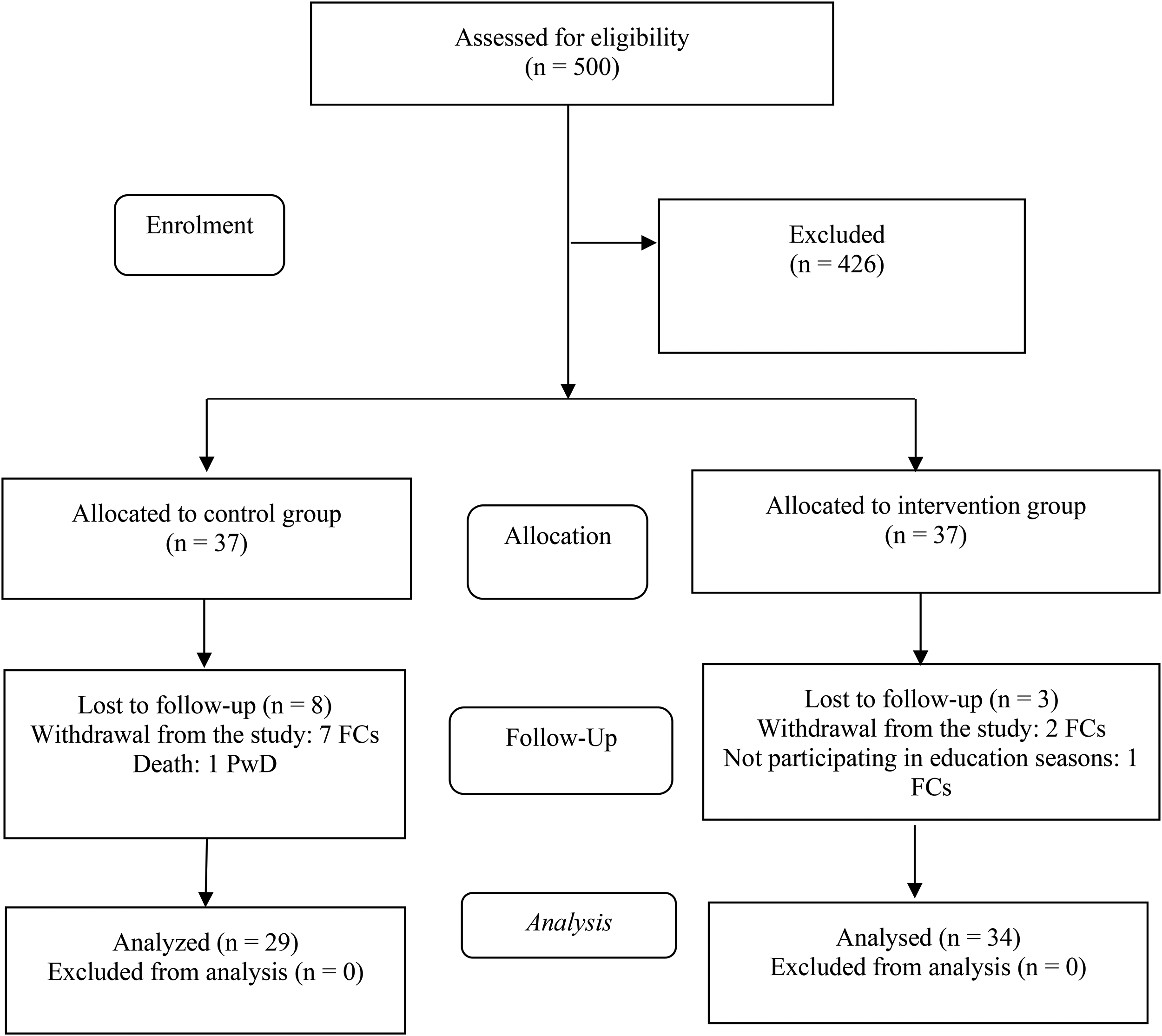
Participants flow.
Baseline Data
The mean age of PwD was 77.06 ± 7.83 years in the intervention group and 75.46 ± 9.99 years in the control group. In the same order, the mean age of FCs was 47.65 ± 9.42 years and 46.69 ± 10.11 years. Out of all the participants, 27 (79.4%) in the intervention group and 23 (79.3%) in the control group were the children of the PwD. The demographic and clinical variables of PwD and FCs were not significantly different between the two groups (Table 1).
Demographic and Clinical Characteristics of the PwD and FCs Stratified by Intervention Status.
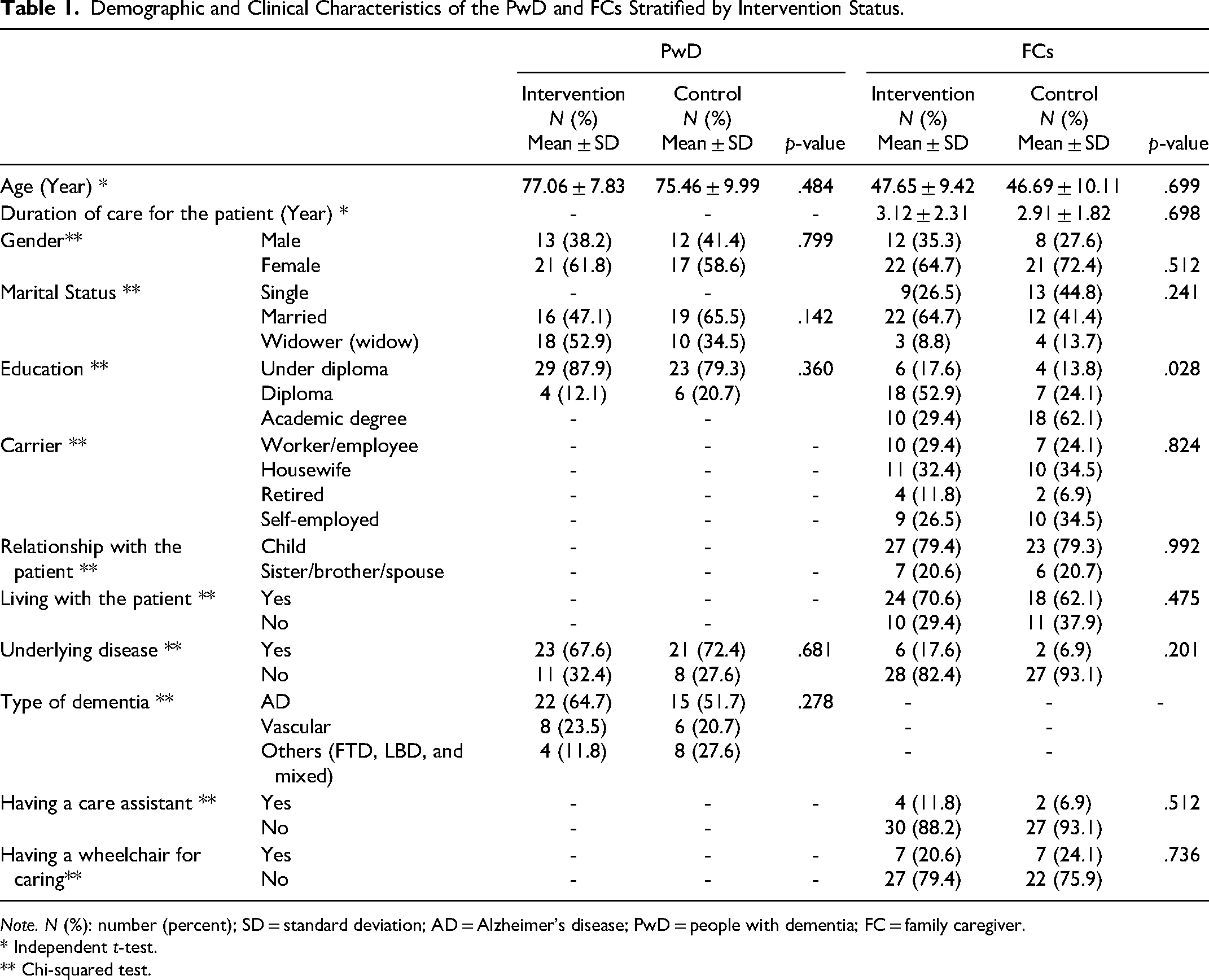
Note. N (%): number (percent); SD = standard deviation; AD = Alzheimer’s disease; PwD = people with dementia; FC = family caregiver.
* Independent t-test.
** Chi-squared test.
Outcomes
The pre-intervention difference in resilience (p = .96) and abuse (p = .58) between the two groups was not statistically significant. The post-intervention difference in resilience (p = .08) and abuse (p = .44) between the two groups was not also statistically significant. Intra-group comparison in the intervention group revealed no significant difference in resilience before and after the intervention (p = .43), while the mean score of abuse in the intervention group was diminished after the intervention (p = .02). Similarly, intra-group comparison in the control group revealed no significant difference in resilience (p = .08) and abuse (p = .13) before and after the intervention (Table 2).
Comparison of Resilience and Abuse Between Control and Intervention Groups.
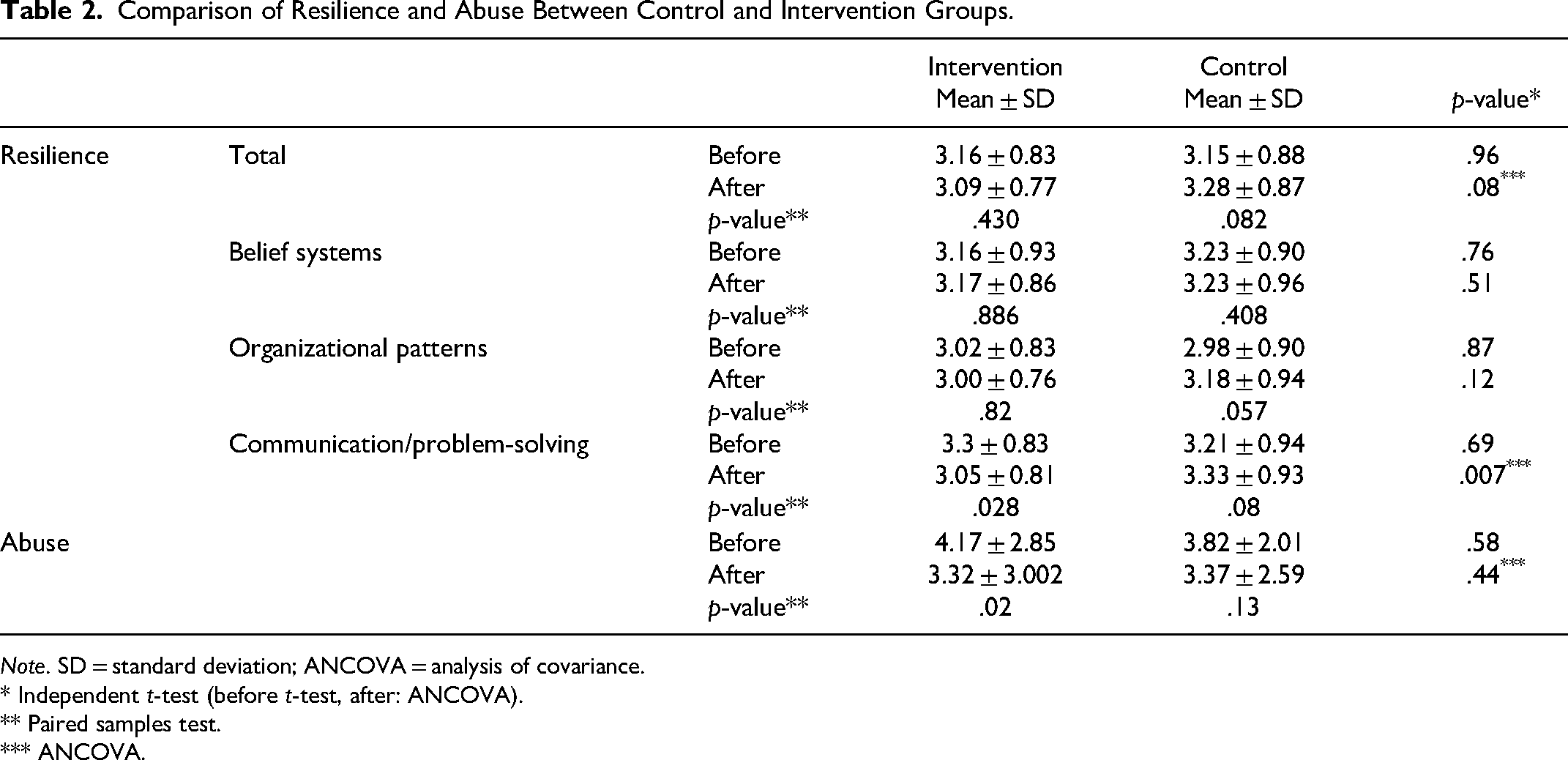
Note. SD = standard deviation; ANCOVA = analysis of covariance.
* Independent t-test (before t-test, after: ANCOVA).
** Paired samples test.
*** ANCOVA.
By controlling the effect of other variables, the resilience of FCs who were the sister/brother of the patient was lower than FCs who were the child of PwD. The resilience of FCs who lived with PwD from the beginning was much higher than those who had to live with PwD due to the disease. While controlling the effect of other variables, the mean resilience score between the two groups was not significantly different (Table 3).
LMR results to evaluate the relationship of resiliency and PwD and FCs characteristics before and after the intervention.
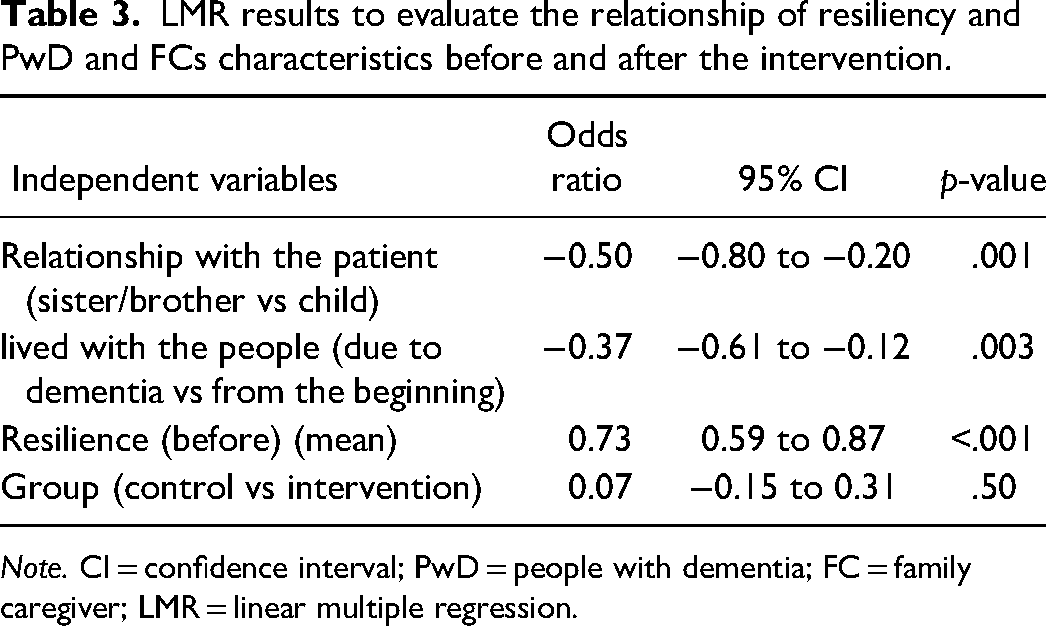
Note. CI = confidence interval; PwD = people with dementia; FC = family caregiver; LMR = linear multiple regression.
While controlling the impact of other variables, the score of abuse in married FCs was found to be higher than in other FCs. Moreover, the abusive behavior of FCs was more evident in PwD with no underlying disease. The academically educated FCs were found to exhibit less abusive behavior against the PwD than other FCs. The number of diagnosis years was reversely associated with the abusive behavior of the FCs. Likewise, the abusive behavior was more evident in the children than in FCs who were sisters/brothers of the PwD. The duration of care was negatively associated with the FCs’ abuse of PwD. FCs who work alone were more likely to exhibit abusive behavior than those who work with a care assistant. By controlling the effect of other variables, the mean score of abuse was not significantly different between the two groups (Table 4).
LMR results to evaluate the relationship between abuse and PwD and FCs characteristics before and after the intervention.
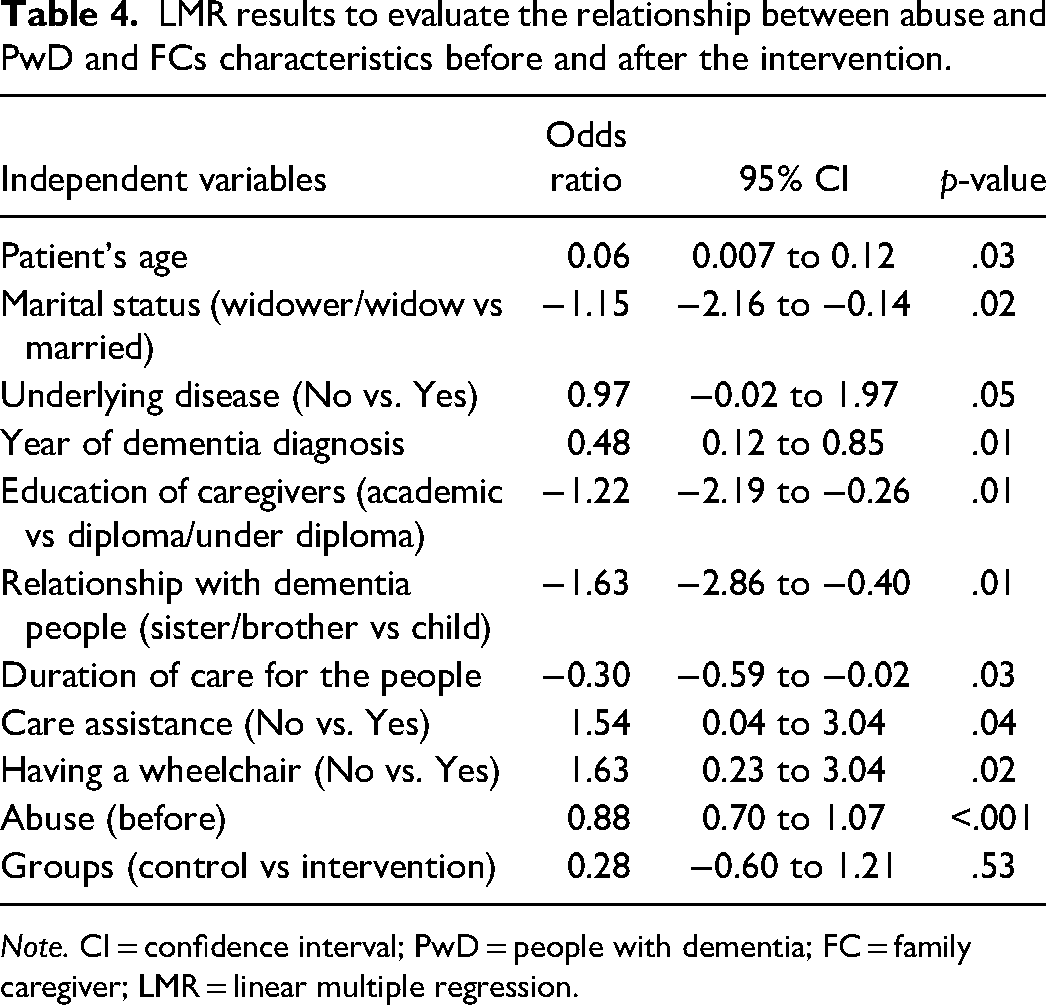
Note. CI = confidence interval; PwD = people with dementia; FC = family caregiver; LMR = linear multiple regression.
Discussion
The results indicated that an online supportive education program does not affect the resilience of FCs and their abuse of PwD.
The intervention using an online supportive education program did not improve the mean resilience of FCs in the intervention group. On the contrary, a study conducted in the USA to dissect the effect of a mindfulness-based training course on the psychological resilience of non-professional caregivers of patients with AD revealed that the training program significantly improves the psychological resilience of the caregivers after the intervention (Ho et al., 2016). A similar study to evaluate the effect of a FRRP for FCs of the elderly demonstrated significant differences in family resilience, caregiver burden, family adaptation, and perceived health status in the intervention group compared to those in the control group (Bang & Kim, 2016). A study was conducted in Iran to investigate the effectiveness of compassion-focused therapy in improving QoL and increasing the resilience of caregivers of PwD. The results showed that focused therapy on compassion increases the resilience of FCs (Ghadmpour et al., 2020). However, a systematic literature review to investigate the resilience of FCs of PwD suggested that resilience is a multifaceted response to the caregiving role, and is impacted by a multitude of interrelated factors. Though resilience in FCs of PwD seems to be influenced by social, psychological, and cultural factors, evidence implies the paucity of a comprehensive way to increase resilience among FCs (Teahan et al., 2018). A systematic review and meta-analysis investigating the effect of Internet-based support interventions on FCs of PwD showed that these interventions significantly ameliorate depressive symptoms, anxiety, perceived stress, and self-efficacy in caregivers of PwD. However, they did not significantly improve the coping competence of the caregivers (Leng et al., 2020). Although interventions such as medication therapy, self-compassion-focused therapy, and mindfulness-based training have been able to improve the resilience of caregivers of PwD in some studies, this systematic review revealed that interventions do not affect the resilience of FCs. Support and care for PwD and their FCs are recommended to be personalized and adjusted based on the person's interests, abilities, values, beliefs, personalities, life experiences, likes, and dislikes (Leng et al., 2020). Although the online supportive education program in this study allowed FCs to save their time and cost, this type of intervention did not significantly influence the FCs’ resilience. Caring for PwD who are mostly elderly seems to bring a marked challenge to FCs. The long-term involvement in caregiving, the progress, and worsening of dementia, the emergence of new problems for PwD, the FCs’ regret in the PwD's recovery, accomplishing the PwD's personal tasks, and anxiety and behavioral and psychological issues of dementia reduce the resilience of FCs.
The results of this study showed that an online supportive education program has no effect on the FCs’ abuse of PwD. Similarly, a study conducted in England to investigate the effect of the STrAtegies for RelaTives (START) program in reducing abuse of FCs of PwD revealed no evidence that START significantly reduces abusive behavior in FCs (Cooper et al., 2016). A study conducted to reduce the stress burden of FCs of patients with AD revealed that participants in the intervention group reported significantly lower levels of stress and mood disturbance relative to those in the control group. However, no significant difference was found between the two groups at the 3-month follow-up. Hence, it can be postulated that short-term interventions do not ameliorate the stress and mental pressure of the caregivers, and any improvement in symptoms could be temporary, which can increase the chance of abusive behavior recurrence (Brown et al., 2016; Ho et al., 2016).
Although the intervention in this study did not significantly differentiate the scores of resilience and abuse of FCs in each of the groups separately, it significantly reduced the mean abusive behavior of FCs in the intervention group. This result could be attributed to the nature of the intervention and elevated awareness of FCs about the abuse. Thus, this supportive education program can be used in medical centers and the community to reduce the abuse of PwD. The results of this study suggest that academically educated FCs exhibit less abusive behavior with people than other FCs, implying the necessity to increase the awareness and literacy of FCs. A study in China recommends focusing on FCs’ burden, coping styles, and social support in future interventions to avoid elder abuse (Wang, Sun, Zhang & Ruan, 2019). Investigating the causes of FCs’ abuse of PwD is also a facet worth exploring. Undoubtedly, investigation and identification of these causes can allow us to examine and implement solutions to reduce abusive behavior with PwD.
No significant impact of the online supportive education program on the resilience and abusive behavior of FCs in this study inspires us to scrutinize other solutions to improve the resilience of FCs and reduce their abusive behavior with PwD. For example, some studies have scrutinized medication-based therapies to ameliorate the severity of caregivers’ burden and improve their resilience (Lavretskyet al., 2010). Care facilities and care assistants to care for these patients or centers for caring for PwD in which FCs and health workers are jointly involved in caregiving are among the practical ways to be further explored. Notably, these strategies will help in improving care and reduce the concern of the FCs about giving PwD to these care centers. They further can efficiently reduce abuse with PwD, as the results indicate that FCs who do not work with a care assistant exhibit more abusive behavior compared to those who are supported by a care assistant. However, most FCs are not financially able to pay for a care assistant. Likewise, the enhanced caregiver burden not only raises the financial burden but also may diminish resilience and exacerbate the abusive behavior of FCs with PwD. Insurance firms are recommended to aid the FCs with their expense coverage and support.
Limitations
This study merely targeted PwD in the IADD and did not cover FCs of PwD who visit clinics and physicians’ offices. Future studies are recommended to be conducted with a larger sample size while covering multiple centers. Concerning the effect of some demographic variables on abuse, future studies are suggested to match both intervention and control groups in terms of these variables.
Conclusion
The online supportive education program had no significant effect on the resilience and abusive behavior of the FCs of PwD. This program did reduce the mean pre- and post-intervention abuse scores in the intervention group. Hence, providing FCs with training courses on abuse can be effective in this regard. Taking note of the need for improving resilience and ameliorating abuse of PwD, it is crucial to foster and improve online supportive education programs and multi-component programs, adopt alternative strategies and investigate their efficiency in reinforcing resilience and reducing abuse of PwD.
Footnotes
Registration
This study was registered on August 22, 2021, in the Iranian Registry of Clinical Trials (IRCT) under a registration code of IRCTID: IRCT20210425051076N1.
Declaration of Conflicting Interests
The authors declared no potential conflicts of interest with respect to the research, authorship, and/or publication of this article.
Funding
The authors disclosed receipt of the following financial support for the research, authorship, and/or publication of this article: This work was supported by the Nursing and Midwifery Care Research Center, School of Nursing and Midwifery; Tehran University of Medical Sciences and Health Services (grant number 1400-2-160-54745).
Ethical Approval
The approval of this study was granted on October 27, 2021, with an ethical approval code of IR.TUMS.FNM.REC.1400.023 by the Research Ethics Committees of the School of Nursing and Midwifery & Rehabilitation – Tehran University of Medical Sciences (TUMS).
Informed Consent
The participants were asked to sign the consent form before attending the study. For ethical considerations, the presented content was provided to the control group in the form of a file via WhatsApp at the end of the intervention.
