



Abstract
Contemporary researchers suggest that working is a relational act. Accordingly, literature reflects increasing interest in the relevance of attachment theory to vocational and organizational phenomena. In the current study, we focused on associations of avoidant attachment orientation (characterized by obsessive self-reliance), anxious attachment orientation (characterized by overdependence), and a central job characteristic (job autonomy) with work-related attitudes and emotions (work engagement, career commitment, work burnout, and emotional distress). Results from 150 Israeli employees revealed significant associations between avoidant attachment and all work-related outcomes, while anxiety was associated only with work burnout and emotional distress. Job autonomy was associated with all work-related outcomes, and although attachment anxiety and avoidance were not associated with job autonomy, the interactions between avoidance and job autonomy (but not the interactions between anxiety and job autonomy) significantly contributed to explained variance of all work outcomes. Simple slope analyses showed significant associations between avoidance and work-related outcomes in high job autonomy conditions and nonsignificant associations in low job autonomy conditions, surprisingly suggesting that high job autonomy specifically disadvantages highly avoidant employees. Theoretical and practical implications for organizations and for attachment theory at work are discussed.
Human relationships and their internal representations have become one of the major intellectual motifs of 21st-century psychology (Blustein, 2011; Gergen, 2009; Jordan, 2009; Mitchell, 2003; Wachtel, 2007). Relationships have also become an important issue in some recent studies and discussions of various aspects of organizations and work, such as work success (Bowen, Siehl, & Schneider, 1989; Malach-Pines, 2005) and leadership (Kark, 2011; Popper, 2004). Throughout the 20th century, however, major work-related theories rooted in an individualistic ethos isolated employees’ work-related behaviors from their relationships and interactions with other people in their work, lives, and communities (Blustein, 2011). Blustein (2011) called for development of an integrated theoretical framework that builds on the relational influences on work-related behaviors. He argued that working is an inherently relational act, and that each decision, experience, or interaction within the world of work is understood, influenced, and shaped by relationships. Thus, he advocated sustained research to examine how individual differences in relational functioning are predictive of various aspects of working behavior. In response to this challenge, the current study investigated various work-related correlates of individual differences in internal working models of relationships or attachment orientations, and their connection to job autonomy, a relevant job characteristic.
Most research about the influence of individual attributes on attitudes and emotions at work has focused mainly on broad personality traits, such as the Big Five, which have been associated with several work-related outcomes, including performance (Barrick & Mount, 1991), job satisfaction (Judge, Heller, & Mount, 2002), leadership (Judge, Bono, Ilies, & Gerhardt, 2002), and counterproductive work behavior (Salgado, 2002). In contrast, attachment orientations are personality-related characteristics that differ from these more general traits in their relational focus: Attachment orientations reflect internal working models of self, others, and relationships (e.g., Bartholomew & Horowitz, 1991) and represent individuals’ motivations, abilities, and perceptions related to relationships (Harms, 2011). Conceptualizing work as a relational act highlights the relevance of individual differences in these relationship orientations for understanding individuals’ work attitudes and emotions.
Attachment Theory
Attachment theory (Bowlby, 1969/1982) focuses on individuals’ evolutionary need for the proximity of others, asserting that close relationships with significant others play a central role in all stages of human lives (e.g., Ainsworth, 1991). The innate tendency to seek proximity of attachment figures (significant others who provide support) is especially noticeable in stressful times. Furthermore, individuals’ specific experiences in their interactions with these close significant others shape their perceptions of themselves, others, and relationships, and affect their motivations and behaviors in relationships and other arenas (see Mikulincer & Shaver, 2007 for a review).
When the attachment figure is available and responsive to the individual’s needs, he or she will develop a sense of security in close relationships, while the absence or unresponsiveness of the attachment figure can result in attachment insecurity (Mikulincer & Shaver, 2005). This sense of security or insecurity is incorporated into the individual’s internal working models or schemas, which influence cognitions, affective experience and regulation, proximity seeking, and other behaviors throughout the life span (Collins, Guichard, Ford, & Feeney, 2004; Mikulincer, Shaver, & Pereg, 2003).
Avoidance and anxiety are the two main dimensions of attachment insecurity. Individuals characterized by avoidant attachment view others as unavailable, unresponsive, or punishing (Bowlby, 1973; Mikulincer & Shaver, 2005), and thus distance themselves from others, attempt to avoid emotional closeness and intimacy, and deny their need for proximity (Mikulincer & Shaver, 2005). Avoidant individuals have a negative view of others, leading to obsessive self-reliance, independence, and difficulties in trust and depend on others (Mikulincer & Shaver, 2007). Anxiously attached individuals have a negative view of the self, leading to an obsessive need for assurance from others, overdependence (Mikulincer & Shaver, 2005), hypervigilance to social and emotional cues from others (Fraley, Niedenthal, Marks, Brumbaugh, & Vicary, 2006), fear of rejection, and general preoccupation and anxiety with and about relationships (Mikulincer & Shaver, 2007).
Individuals with low levels of attachment avoidance and anxiety are considered to have a secure attachment. These individuals typically view themselves and others as worthy, and manage to create and maintain meaningful, satisfying, balanced relationships. Accordingly, they report feeling greater security in relationships and in relationship partners, and having more resiliency. They also report better management of adversity and stress by drawing upon internal coping resources and support from others (Mikulincer & Florian, 1998; Mikulincer & Shaver, 2005, 2007).
Attachment orientations have been associated with several psychological and interpersonal characteristics and outcomes, including communication patterns, conflict management strategies, relationship satisfaction, stress management, and information processing (Mikulincer & Shaver, 2007), as well as with certain aspects of work and organizational behavior.
Attachment Orientations and Work
The vast majority of jobs require direct interaction with employees, customers, or clients rendering interpersonal aspects of work extremely important to success on the job (Bowen et al., 1989). Acknowledging the relational nature of most jobs and of work in general (e.g., Blustein, 2011), researchers argued that attachment orientations play an important role in shaping people’s work-related behaviors, motivations, attitudes, and emotional responses (e.g., Harms, 2011; Hazan & Shaver, 1990; Richards & Schat, 2011). Furthermore, according to attachment theory, one of the most important functions of attachment figures is to provide a secure base for exploration and development. Research emerging from Bowlby’s (1988) attachment theory has demonstrated that secure attachment provides a foundation of support for individuals as they venture into new environments (Ainsworth, 1989; Cassidy & Shaver, 2008).
Based on the dependency of the exploration system on the attachment system, it has been suggested that attachment orientation can influence individual functioning at work (Hazan & Shaver, 1990; Mikulincer & Shaver, 2007). Studies have indeed found that secure attachment facilitated work-related exploration activities: Secure attachment was positively associated with career exploration (Littman-Ovadia, 2008), one’s capacity to negotiate work-based tasks (Ketterson & Blustein, 1997), adaptive work-based adjustment (Blustein, Prezioso, & Schultheiss, 1995; Kenny, 1987), progress in career decision making (Hazan & Shaver, 1990), confidence on being positively evaluated by colleagues, and adaptation to work-based challenges (see Blustein et al., 1995, for a review).
In contrast, insecure attachment orientations (both avoidance and anxiety) were correlated with lower levels of organizational commitment, prosocial action, and spontaneous productive behaviors (Mikulincer & Shaver, 2007). However, there are some important differences between avoidant individuals and anxious individuals at work.
Avoidant individuals gave themselves lower self-ratings in terms of job performance and expected to receive low performance ratings from coworkers (Hazan & Shaver, 1990); They reported more conflict with coworkers, more concerns about work hours, more difficulties with relationships outside of work (Hardy & Barkham, 1994), and stronger intentions to quit and leave the organization (Mikulincer & Shaver, 2007). Richards and Schat (2011) found that attachment avoidance was associated with lower levels of instrumental and emotional support seeking and greater use of surface acting as a means of regulating emotional displays at work. These findings correspond with the initial classification of attachment avoidance, suggesting that avoidant individuals tend to be self-reliant and avoid affiliating with others by suppressing negative emotions and not seeking support when coping with work difficulties.
Anxious individuals expected to be undervalued by coworkers (Hazan & Shaver, 1990) and were anxious about relationships at work and job performance (Hardy & Barkham, 1994). Attachment anxiety was negatively associated with instrumental coworker helping behaviors (Geller & Bamberger, 2009) and with organizational citizenship behaviors (OCB; Richards & Schat, 2011). Attachment anxiety was, however, associated with higher levels of both instrumental and emotional support seeking and increased intentions to quit (Richards & Schat, 2011). These findings may reflect anxious individuals’ insecurity and fear of rejection, which make it difficult for them to feel more emotionally committed and provide unconditional assistance, such as is manifested by OCB. Their insecurity and low self-worth seem to affect their relationships at work and other relationships similarly (e.g., lower reported relationship satisfaction and adaptation in couple relationships; Mikulincer & Shaver, 2007).
Based on these findings, we suggest that individuals’ attachment orientations can potentially explain their feelings, attitudes, and functioning at work. Thus, we hypothesize: Hypotheses 1a and 1b (Attachment hypotheses): Avoidant and anxious attachment orientations will be: (a) negatively associated with positive work-related attitudes and emotions (work engagement and career commitment) and (b) positively associated with negative work-related attitudes and emotions (work burnout and emotional distress).
Job Autonomy
Job characteristics play an important role in organizational and occupational theory and practice: they enable systematic identification of differences and similarities between jobs in terms of employees’ internal work motivations (Idaszak & Drasgow, 1987). Hackman and Oldham (1976) identified and defined five primary job characteristics: skill variety, task identity, task significance, feedback, and autonomy.
In the current study, we focused on job autonomy, a job characteristic specifically related to relationships. Hackman and Oldham (1975) conceptualized job autonomy as freedom to do the work as one sees fit; discretion in scheduling, decision making, and means for accomplishing a job; the degree to which the job gives the worker freedom and independence in scheduling work and determining how the work will be performed. Workers are likely to experience burnout when they experience a lack of job autonomy, which means that they perceive their job of denying them an opportunity of being part of the decision-making process and the freedom to work as they see fit (Hackman & Oldham, 1975). Indeed, job autonomy was found to have a positive relationship with job satisfaction (Loher, Noe, Moeller, & Fitzgerald, 1985), work engagement (Saks, 2006), and flow (Fullagar & Kelloway, 2009), which is a desired work outcome and also considered a component of work engagement (Schaufeli, Salanova, González-Romá, & Bakker, 2002). Job autonomy was also found to have a negative relationship with burnout (Adebayo & Ezeanya, 2010) and with turnover intentions (Kim & Stoner, 2008).
Based on these findings, we suggest that job autonomy can potentially explain feelings, attitudes, and functioning at work. Thus, we hypothesized: Hypotheses 2a and 2b (Job autonomy hypotheses): (a) job autonomy will be positively associated with positive work-related behaviors and attitudes (work engagement and career commitment) and (b) job autonomy will be negatively associated with negative work-related behaviors and attitudes (work burnout and emotional distress).
Attachment Orientations and Job Autonomy
Because job autonomy is a manifestation of independent functioning, we assume that it is of special interest for counterdependent (i.e., avoidant) and overdependent (i.e., anxious) employees. More specifically, avoidant individuals’ obsessive need for independence may lead to benefits in high job autonomy conditions, while anxious individuals’ high dependency may lead to difficulties in high job autonomy conditions.
In couple relationships, Lavy, Mikulincer, and Shaver (2010) showed that attachment avoidance was associated with higher reports of partners’ intrusiveness, reflecting avoidant individuals’ sensitivity to infringements on their autonomy. Attachment anxiety was, however, linked with increased levels of intrusiveness, demonstrating anxious individuals’ fussy boundaries and disrespect of autonomy.
In a similar manner, in a work environment that facilitates autonomy, individuals who are obsessively self-reliant and independent, such as avoidant individuals, may flourish, but overly dependent individuals, such as anxious individuals, may suffer and experience difficulties functioning well. Furthermore, a work environment that offers autonomy may diminish the associations between avoidance and unwanted work-related outcomes, because it enables avoidant individuals to work alone in an environment that satisfies their need for independence. At the same time, autonomy may increase the negative associations between attachment anxiety and positive work-related attitudes and outcomes, because of the challenges that it poses to anxious individuals’ independence. Thus, in high job autonomy conditions compared to low job autonomy conditions, we expect avoidant employees to be more engaged, more committed, less burned out, and less distressed, compared to low job autonomy conditions, while anxious employees are expected to report lower positive attitudes and feelings and higher negative attitudes and feelings.
We hypothesize that: Hypotheses 3a and 3b (Moderation hypotheses): The relationship between attachment orientations (avoidance and anxiety) and work-related attitudes and emotions (work engagement, career commitment, work burnout, and emotional distress) will be moderated by job autonomy: (a) the associations between avoidance and work-related attitudes and emotions will diminish in high job autonomy conditions and (b) the associations between anxiety and work-related attitudes and emotions will be weaker in low job autonomy conditions.
Method
Participants
We surveyed 150 Israeli employees (50.6% women) working in a wide variety of organizations in the interest of obtaining a heterogeneous sample representing a range of industries, positions, tenure periods, and occupations. A relatively large proportion of the participants had education-related occupations (e.g., teacher, pedagogical administrator, school principle, educational/school consultant; N = 45), while others were managers in business firms (N = 15), lawyers (N = 9), nurses (N = 8), and held other occupations. In total, 38% of the participants reported having at least some management-related responsibilities in their job. Participants’ ages ranged from 23 to 64 (M = 34.66, standard deviation [SD] = 9.52), and their tenure in their current job ranged from 6 months to 30 years (M = 5.55, SD = 7.61). Most participants (70%) were married. About one half (51.6%) of the participants had an undergraduate degree and 27.1% had a graduate or doctoral degree. The remainder had complete secondary or postsecondary school education. The vast majority (93%) of the participants were salaried employees, while the rest were concurrently self-employed and salaried employed.
Instruments
Attachment Orientations
Attachment orientations were assessed using the Experiences in Close Relationships questionnaire (Brennan, Clark, & Shaver, 1998). This questionnaire includes two 18-item scales, one measuring attachment anxiety (e.g., “I worry about being abandoned”) and the other measuring avoidance (e.g., “I prefer not to show a partner how I feel deep down”). Participants rate the extent to which each item describes them in close relationships, using a 7-point scale ranging from 1 (not at all) to 7 (very much). The scale was translated from English into Hebrew by Mikulincer and Florian (2000), who also demonstrated the measure’s intended two-factor structure in Israeli samples. In the present study, the internal reliabilities of the anxiety and avoidance scales were satisfactory (Cronbach’s αs were .91 and .88 for the anxiety and avoidance scales, respectively).
Job Autonomy
Job autonomy was measured with a 3-item subscale from the revised job diagnostic survey (JDS; Idaszak & Drasgow, 1987). The JDS was originally developed by Hackman and Oldham (1975). The autonomy subscale items are The job gives me a chance to use my personal initiative or judgment in carrying out the work; The job gives me considerable opportunity for independence and freedom in how I do the work; How much autonomy is there in your job? Participants rate the relevance of each sentence to their current job on a scale from 1 (not at all) to 7 (very much). In the present study, the JDS was translated to Hebrew by two bilingual Israeli psychology scholars, using Brislin’s (1970) back-translation technique. The Hebrew scale’s internal reliability in the present study was satisfactory (Cronbach’s α = .74) and similar to reliabilities reported in previous studies using the revised subscale (e.g., Buys, Olckers, & Schaap, 2007).
Work Engagement
Work engagement was measured with a 9-item version of the Utrecht Work Engagement scale (UWES-9; Schaufeli, Bakker, & Salanova, 2006; Translated into Hebrew and validated in Israel by Littman-Ovadia & Balducci, 2013). The scale comprises three subscales measuring vigor (e.g., “At my work, I feel bursting with energy”), dedication (e.g., “I am enthusiastic about my job”), and absorption (e.g., “I get carried away when I am working”). Each subscale comprises 3 items. Respondents rate their responses on a scale ranging from 0 (never) to 6 (always). Schaufeli, Bakker, and Salanova (2006) demonstrated good factorial validity of the UWES-9 and satisfactory internal consistency (α values ranged from .85 to .92 across various countries). In the present study, because we were only interested in the general work engagement score (rather than the three subscale scores), the 9 items were combined into a single composite measure, with good internal reliability (Cronbach’s α = .91).
Career Commitment
Career commitment was measured using the Career Commitment scale (Blau, 1985, 1988; Translated into Hebrew by Littman-Ovadia & Davidovitch, 2010). This scale comprises 7 items that express commitment to a career or profession (e.g., “It is the ideal occupation for a life work”). Responses are given on a 5-point Likert-type scale ranging from 1 (not true for my career) to 5 (very true for my career). Career commitment is the computed average of responses to all the items. Reliabilities reported by Blau (1985) and by Dries and Pepermans (2007) ranged between .67 and .80; in the present study, scale reliability was .85.
Work Burnout
Work burnout was measured using the Maslach Burnout Inventory (Schaufeli, Leiter, Maslach, & Jackson, 1996). This questionnaire includes 16 items that cover three dimensions of work burnout. Participants rated the frequency they experienced exhaustion (e.g., “I feel emotionally drained by my job”), cynicism (e.g., “I have become less interested in my work since I started this job”), and efficacy (e.g., “I can effectively solve the problems that emerge in my job”), with reference to their job, on a Likert-type scale ranging from 1 (never) to 7 (always). In the present study, the scale was translated to Hebrew by two bilingual Israeli psychology scholars, using Brislin’s (1970) back-translation technique, and the overall reliability of the instrument in this study was .82.
Emotional Distress
Emotional distress was measured using the short version of the General Health Questionnaire-12 (Goldberg, 1972), designed to measure emotional distress among mentally healthy and mentally ill individuals. The questionnaire contains 12 items based on descriptions of psychiatric disorders (e.g., “Have you been able to enjoy normal day-to-day activities?” “Have you been thinking of yourself as a worthless person?”). Respondents rated the frequency of the emotional distress they experienced in the last 12 months on a Likert-type scale from 1 (never) to 7 (always). In the present study, the instrument was translated to Hebrew by Hyman (2004), and the Hebrew scale’s internal reliability in the present study was .87.
Procedure
The study was conducted in the central area of Israel. Using online snowball sampling, potential respondents for this community-based sample of employees were contacted via electronic mail message including a cover letter and a link to the electronic survey file. It was emphasized that the questionnaires were anonymous, and that participants who were employed for 6 months or more were requested to complete them voluntarily (without compensation) with no time limitation.
Results
Pearson correlations were calculated to examine the relationships between attachment, job autonomy, and work-related outcomes. Correlations between all study measures, scale reliabilities, means, and SDs are presented in Table 1.
Pearson Correlations, Reliabilities, Means, and Standard Deviations (SDs) for all Study Measures.

Note. Parenthetical values are αs (reliability coefficients).
*p < .05. **p < .01. ***p < .001.
Attachment Hypotheses
As hypothesized, results revealed significant negative associations of avoidance with work engagement and with career commitment (r = −.29, p < .001 and r = −.31, p < .001, respectively; see Table 1). Although we expected similar associations between attachment anxiety and work-related variables, the associations of anxiety with work engagement (r = −.09, ns) and with career commitment (r = −.05, ns) were nonsignificant. Regarding negative work-related outcomes attachment avoidance correlated significantly with work burnout (r = .19, p < .05) and with emotional distress (r = .25, p < .01), as expected. Similar results were found for anxiety (r =.29, p < .001 and r = .44, p < .001 for correlations between anxiety and work burnout and emotional distress, respectively).
Taken together, the results partially supported Hypothesis 1a, indicating that only attachment avoidance shares variance with positive work-related behaviors and attitudes, but fully supported Hypothesis 1b, by showing that both attachment orientations (avoidance and anxiety) share variance with negative work-related behaviors and attitudes (Table 1).
Job Autonomy Hypotheses
As hypothesized, job autonomy was positively related to work engagement and career commitment (r = .45, p < .001 and r = .37, p < .001, respectively; see Table 1), and negatively related to work burnout and emotional distress (r = −.48, p < .001 and r = −.31, p < .001, respectively). Therefore, Hypotheses 2 was fully supported.
Moderation Hypotheses
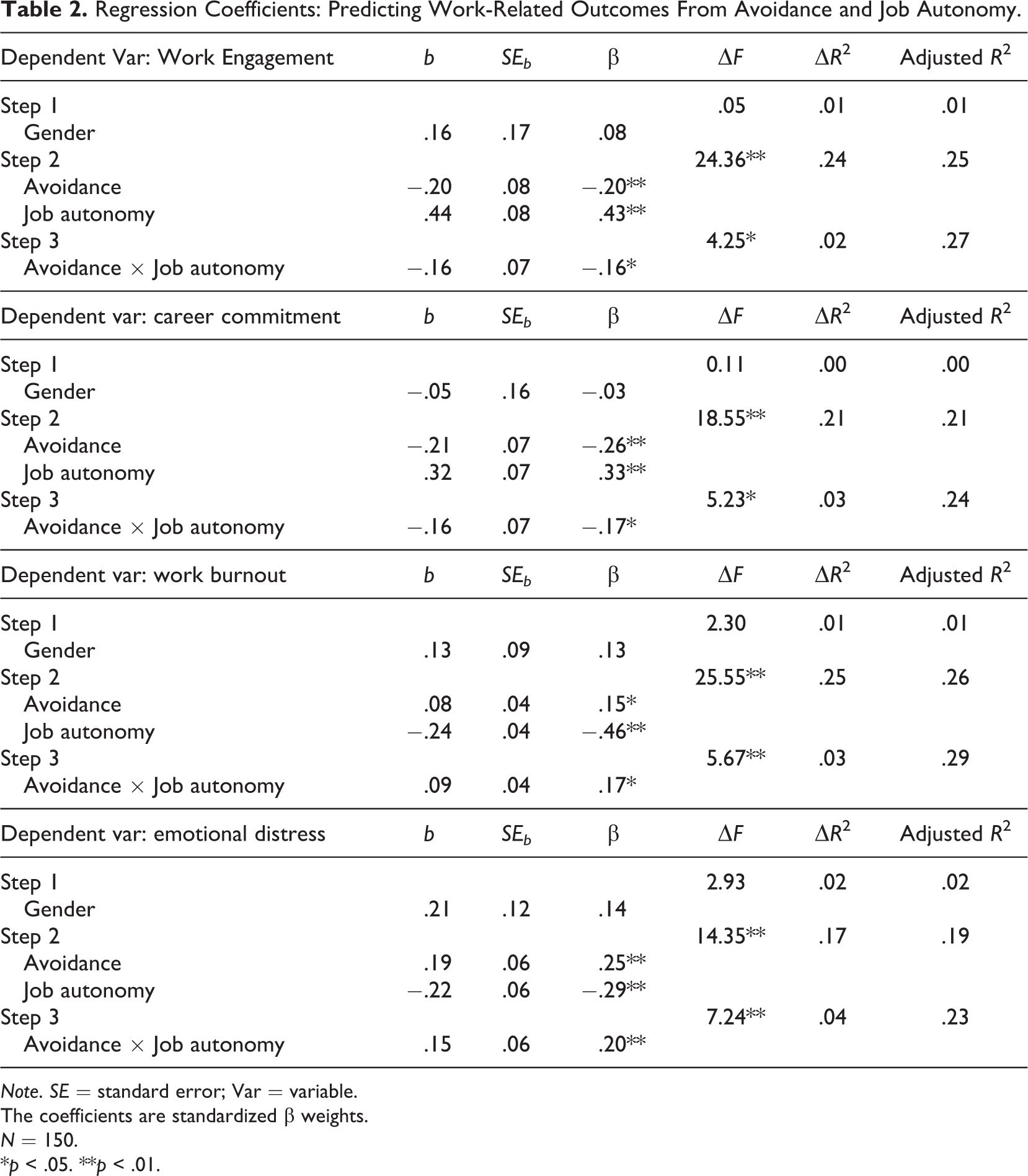
Following Baron and Kenny’s (1986) guidelines for examining moderating effects in continuous variables, four hierarchical regression analyses were performed to examine the extent to which job autonomy moderates the associations between attachment avoidance and the four work-related outcomes (engagement, career commitment, work burnout, and emotional distress; entered as dependent variables in the regression equations).
In all regressions, standardized gender scores (control) were entered in the first step followed by standardized avoidance scores (predictor) and standardized job autonomy scores (moderator) in the second step. To examine for a potentially significant moderator effect, standardized avoidance × job autonomy scores were entered to the equation in the third and final step. According to Baron and Kenny (1986), evidence of a moderator effect is present when the interaction term between the predictor and moderator is significant. Results of the four regressions are presented in Table 2. The control variable had no significant contribution for all four outcomes. Attachment avoidance and job autonomy accounted for 24%, 21%, 25%, and 17% of the variance in work engagement, career commitment, work burnout, and emotional distress in the second step, respectively. In the third and final step, the avoidance × job autonomy interaction accounted for a significant addition of 2%, 3%, 3%, and 4% to explained variance of work engagement, career commitment, work burnout, and emotional distress, respectively. The complete regression model accounted for 27%, 24%, 29%, and 23% of the variance in work engagement, career commitment, work burnout, and emotional distress, F(3, 147) = 51.53, 41.06, 53.31, 30.95, respectively, p < .001 in all four models. In all four regressions, the unique interaction effects (examined in Step 3) were significant (β = −.16, −.17, .17, and .20, p < .01), suggesting, as expected, that job autonomy moderates the relationships between avoidant attachment and the dependent variables: work engagement, career commitment, work burnout, and emotional distress.
Regression Coefficients: Predicting Work-Related Outcomes From Avoidance and Job Autonomy.
Note. SE = standard error; Var = variable.
The coefficients are standardized β weights.
N = 150.
*p < .05. **p < .01.
Simple slope analyses conducted to reveal the source of interactions (Aiken & West, 1991), revealed unexpected findings (Figures 1 –4). The associations between avoidant attachment and the work-related variables were significant in high (+1 SD) job-autonomy conditions (b’s = −.35, −.41, .28 and .39 for work engagement, career commitment, work burnout, and emotional distress respectivly , for all p < .01), but were nonsignificant in low (−1 SD) job autonomy conditions (b’s = −.05, −.07, −.08, and −.03, all ns with p > .05). 1

Simple slope for the interaction effect of avoidance and job autonomy on work engagement.
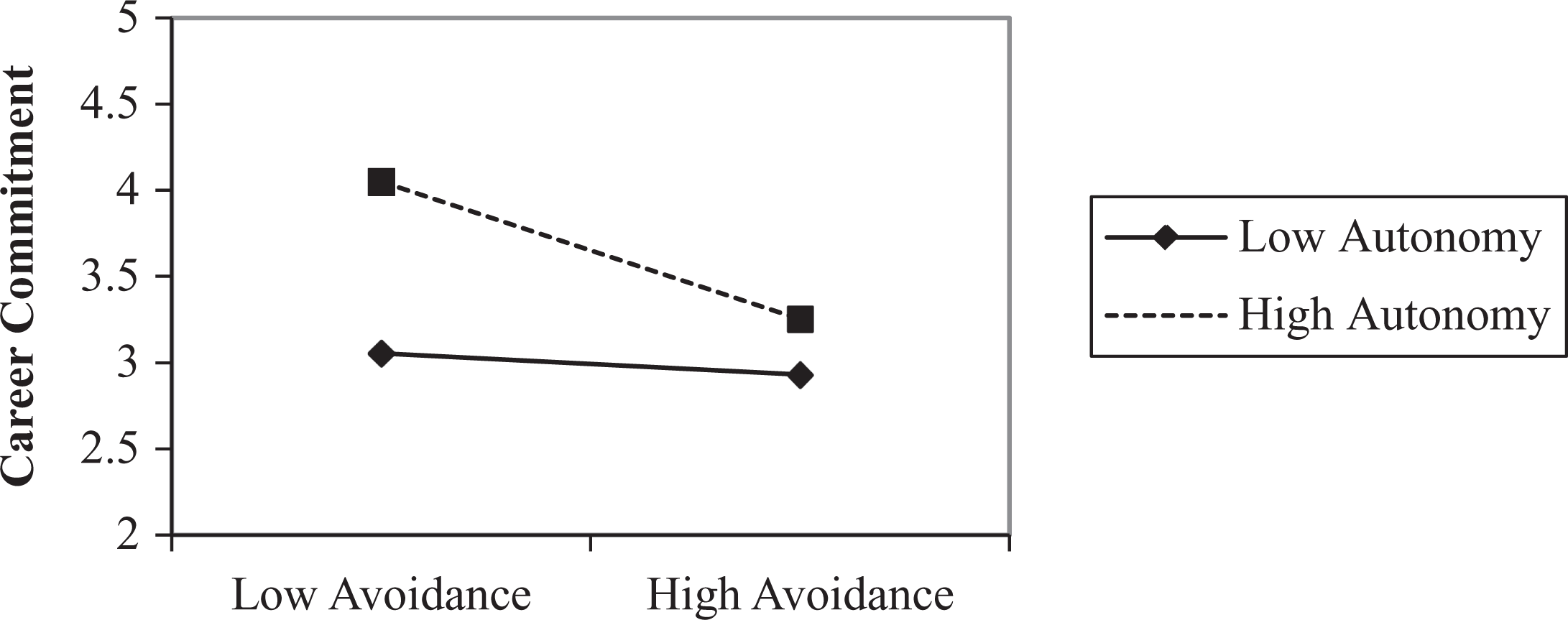
Simple slope for the interaction effect of avoidance and job autonomy on career commitment.

Simple slope for the interaction effect of avoidance and job autonomy on work burnout.
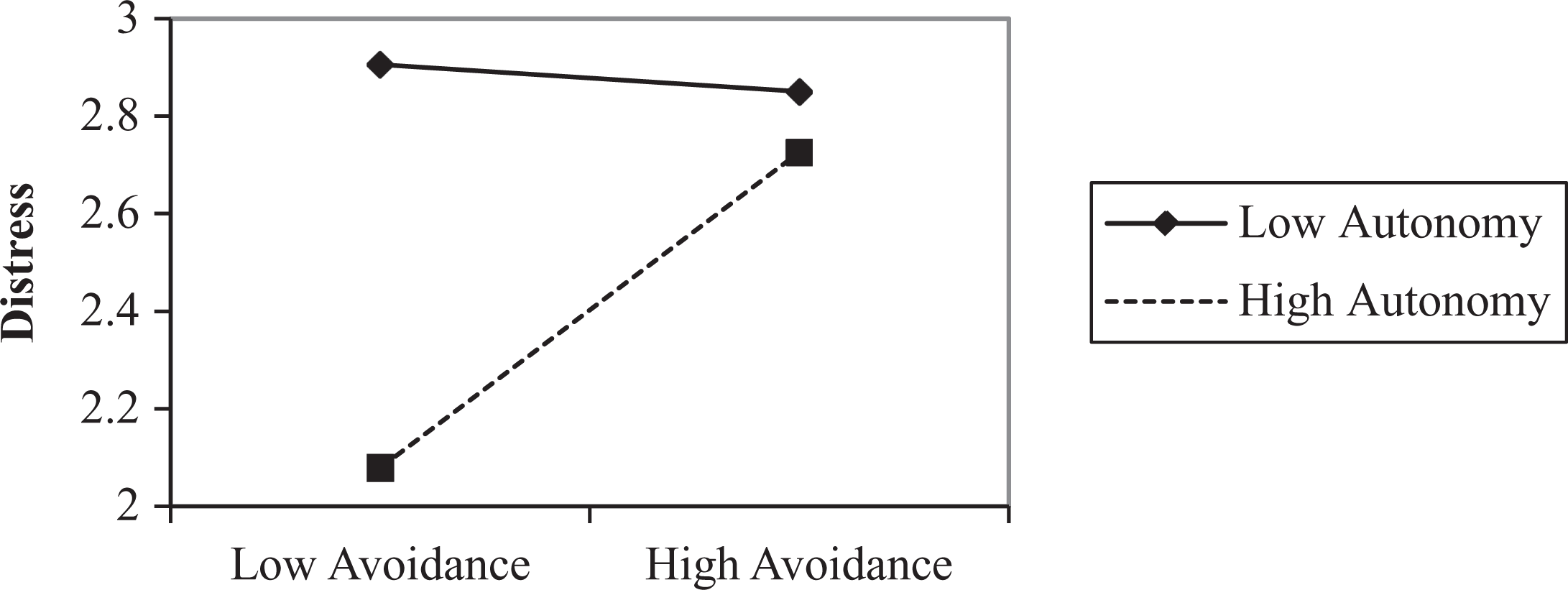
Simple slope for the interaction effect of avoidance and job autonomy on emotional distress.
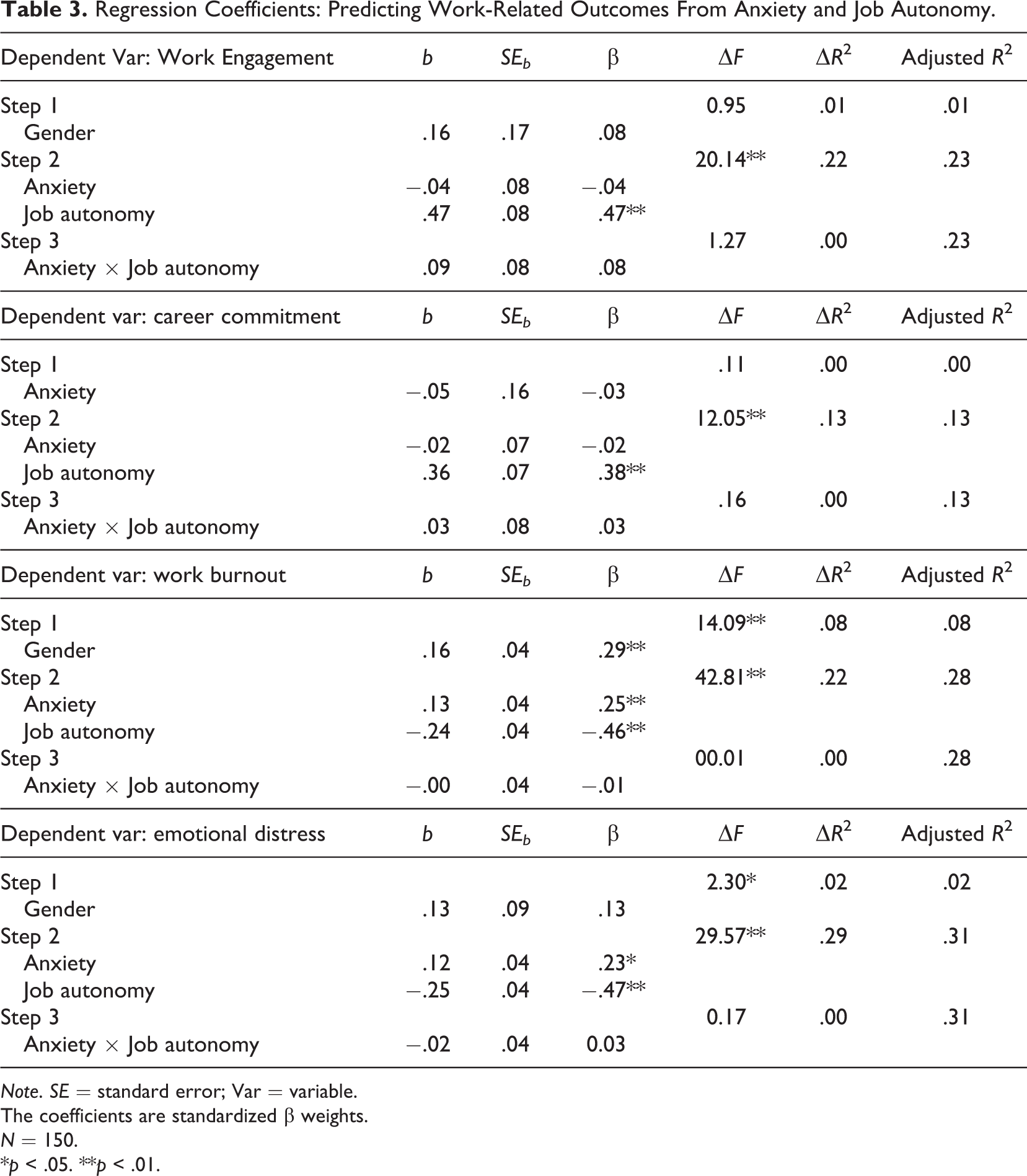
To examine the moderating effect of job autonomy on the associations of attachment anxiety with work engagement, career commitment, work burnout, and with emotional distress, four additional hierarchical regressions were conducted, in a manner similar to that described above, following Baron and Kenny’s (1986) guidelines (see Table 3). In all regressions, the interactions between anxiety and job autonomy made no significant contribution to the dependent variables, suggesting that job autonomy does not moderate the associations between anxiety and the dependent variables.
Regression Coefficients: Predicting Work-Related Outcomes From Anxiety and Job Autonomy.
Note. SE = standard error; Var = variable.
The coefficients are standardized β weights.
N = 150.
*p < .05. **p < .01.
Taken together, the unexpected results reported in this section do not support Hypothesis 3. Specifically, employees with high avoidance ratings reported less engagement and commitment and more burnout and distress (compared with employees with low avoidance ratings) when job autonomy was high. When job autonomy was low, there were no differences between the two groups. Job autonomy seems to facilitate negative effects of avoidance on work outcomes, and these effects diminish when job autonomy is low.
There were no indications for moderation of the associations between anxiety and burnout, and between anxiety and emotional distress.
Discussion
This study examined the unique and interactive contributions of employees’ attachment orientations and job autonomy to positive and negative job attitudes and emotions. Findings showed that both attachment anxiety and avoidance were positively associated with more burnout and emotional distress, and that avoidance was also negatively associated with work engagement and career commitment. Findings also showed that greater job autonomy (a work-related feature) experienced by an employee was related to more engagement and career commitment, and to less burnout and distress. An interesting interaction effect was found in the current study between job autonomy and avoidant attachment orientation in all four work-related outcomes. Unexpectedly (and contradicting our hypotheses), avoidance was associated with negative effects (lower career commitment and work engagement and higher burnout and emotional distress) only in jobs with high autonomy levels, suggesting that highly avoidant employees do not benefit (and may, in fact, suffer) from high job autonomy.
Contribution of Anxious and Avoidant Attachment Orientations
The current study provides supports for researchers’ claims (e.g., Harms, 2011; Hazan & Shaver, 1990) for the relevance of attachment theory to work and organizations, because it revealed significant associations between the two attachment orientations and several work-related variables. Avoidant attachment had negative effects on work engagement and career commitment, two positive work-related outcomes. This finding is consistent with previous findings that demonstrated a negative correlation between avoidant attachment and conscientiousness (Noftle & Shaver, 2006), and is also in line with previous findings that demonstrated a positive correlation between avoidance attachment orientation and neuroticism (Noftle & Shaver, 2006). Avoidant attachment orientation was also positively associated with burnout and emotional distress, two negative work outcomes. These findings are consistent with previously documented associations between avoidance and burnout (e.g., Malach Pines, 2005; Ronen & Mikulincer, 2009) and between avoidance and reports of less positive and more negative work-related feelings (e.g., Hazan & Shaver, 1990). Anxious attachment was not associated with work engagement or career commitment, but positively correlated with job burnout and with emotional distress. This finding is consistent with a description of anxiety as excessive dependency and sensitivity to the environment (Fraley et al., 2006), which stems from negative self-esteem and increased need for acceptance (Hazan & Shaver, 1990). Apparently, overemotional anxious individuals (e.g., Mikulincer & Shaver, 2007) do not report low work engagement or commitment, but rather tend toward excessive investment in work (also suggested by Hazan & Shaver, 1990), which does not necessarily result in higher satisfaction or enjoyment, but is rather stressful, and thus leads to burnout and emotional distress. Their overemotionality and amplification of negative emotions may be the source of anxiety’s negative effects in the workplace, as described to date (by Mikulincer & Shaver, 2007).
Contribution of Job Autonomy
In the current study, job autonomy was positively associated with desired work outcomes. This finding is consistent with the job characteristics model (Hackman & Oldham, 1975, 1976, 1980), which posits that job satisfaction results from job enrichment, which comprises intrinsic work features including autonomy. This finding is also consistent with previous findings linking job autonomy with work engagement (Saks, 2006) and with flow (Fullagar & Kelloway, 2009), which is a desired work outcome and one component of engagement (Schaufeli et al., 2002).
Contribution of the Interaction Between Job Autonomy and Attachment Orientation
The current study showed that the interaction between avoidant attachment orientation and job autonomy predicted various work outcomes. The source of these interaction effects was, however, surprising in view of theoretical premises and previous findings: The current study’s findings suggested that limited rather than extensive job autonomy is preferable for employees with an avoidance attachment orientation.
It was commonly assumed that employees who are highly avoidant have an increased need for autonomy, mastery, and self-reliance at work (Park, Crocker & Mickelson, 2004), although it was never directly examined before the present study (to the best of our knowledge). Therefore, it was predicted that extensive autonomy at work would promote avoidant employees’ work engagement and commitment, and reduce their experiences of burnout and emotional distress, compared with avoidant employees who have no autonomy at work. However, the present study’s findings indicated the opposite: autonomy at work strengthened the negative association between avoidance and desired work outcomes. The reasons underlying these surprising findings can be related to the different behavior and reactions of avoidant individuals in different work contexts. For example, these results may suggest that high autonomy work environments allow avoidant employees to employ their default defenses (e.g., suppression of emotions, distancing; Mikulincer & Shaver, 2007), which presumably trigger the negative outcomes described above (less engagement and commitment, more burnout and emotional distress). Recent studies (e.g., Richards & Schat, 2011) found that avoidant employees tend to regulate their emotions at work through surface acting (surface acting is “painting on” affective displays, or faking; see Grove & Fisk, 1989; Hochschild, 1983), which had negative psychological outcomes (e.g., burnout; Brotheridge & Grandey, 2002; Grandey, 2003). Situations in which avoidant employees have limited autonomy and are subjected to greater control and supervision by coworkers and superiors may make it more difficult for them to give full (psychological) expression of their defense mechanisms, (such as surface acting, distancing, etc), while avoidant employees who have extensive autonomy may be more free to choose the way they deal with problems, and thus use less adaptive strategies (based on distancing, suppression, etc) more prominently. Future studies should examine these possible underlying mechanisms, as well as other possible ones (e.g., the effects of role ambiguity and sense of responsibility).
Theoretical Contributions and Practical Implications
This study’s findings highlight the importance of attachment-related characteristics in the workplace. The manner in which people view interpersonal relationships affects their available resources. Insecure individuals use their valuable physical, emotional, and cognitive resources to monitor hyperactivation of negative emotions or suppression of negative emotions. Furthermore, the results indicate that even if insecurely attached individuals are a minority in work organizations (Simmons, Gooty, Nelson, & Little, 2009), insecure attachment orientations are worthy of study because of their impact on workplace behavior.
The findings of this study offer several theoretical contributions related to attachment and work. First, the findings contribute to an understanding of the unique contributions of attachment orientations and job autonomy to different work outcomes. The most important finding of the current research, however, is the study of the interactive effect of attachment orientations and job autonomy on work outcomes. Autonomy was found to strengthen the negative associations between avoidance and work engagement, and between avoidance and career commitment, and to strengthen the positive associations between avoidance and burnout and between avoidance and emotional distress. By highlighting unexpected effects of the work environment on individuals with certain personality characteristics, these findings suggest that a crucial shift is needed in our understanding of work-related implications of attachment orientations.
According to the majority of existing literature, extensive job autonomy should positively impact employees who have a strong avoidance attachment orientation. The findings of the current study challenge this assumption, and raise new questions about the contribution of autonomy to employees who have a strong avoidant attachment orientation, and perhaps to other employees.
From a practical perspective, this research underscores the differential importance of job autonomy for different attachment orientations in the workplace, and encourages supervisors to be aware of the toll that high autonomy extracts from employees who have a strong avoidant attachment orientation. Avoidant employees may interpret job autonomy as freedom to give full expression of their typical characteristics, such as surface acting and distancing. Furthermore, as previous studies have suggested that supervisors can also function as attachment figures (e.g., Davidovitz, Mikulincer, Shaver, Izsak, & Popper, 2007), supervisors should acknowledge the negative effects of insecure attachment relationships and try to provide “an island of security” for their insecure employees, by being responsive to employees’ needs for security and protection.
Limitations of the Study and Future Research
The findings of this study were based exclusively on self-report data, which may entail social desirability, and the study’s analyses were mainly correlational. Future studies exploring environmental moderators to effects of personality on work-related outcomes should preferably include longitudinal data, larger samples, and additional indicators that are not self-reported (e.g., supervisors’ evaluations). Future studies should further explore the psychological processes involved in the connection between avoidance attachment orientation and job autonomy. Our article helps to further understand the implications of employees’ autonomy experience at work, but it does not specify the conditions in which employees experience autonomy. Future research should investigate managers’ abilities to influence autonomy at work as well as the ways in which this influence might affect the relationships between attachment and continuous or extra-role behavior.
Footnotes
Declaration of Conflicting Interests
The authors declared no potential conflicts of interest with respect to the research, authorship, and/or publication of this article.
Funding
The authors received no financial support for the research, authorship, and/or publication of this article.