




Abstract
This study extends prior social cognitive career theory research by using discovery methods to examine factors that (a) facilitate and hinder first-year students’ adjustment to engineering majors and (b) inform their self-efficacy beliefs and outcome expectations regarding pursuit of engineering careers. Participant responses to a series of open-ended questions were coded and interpreted using content analysis and consensual qualitative research methods. Participants reported experiencing several types of academic, social, and financial hurdles during their first semester. They also described factors that facilitated their academic progress—such as university programs, social support from peers, and development of personal resources—and cited other resources that, if available, could have further assisted their adjustment. In addition, participants identified experiential sources of self-efficacy and outcome expectations relative to completing an engineering degree. Gender and racial group differences in coping resources and sources of self-efficacy beliefs and outcome expectations were examined.
Despite a rise in the number of jobs in the U.S. economy requiring training in science, technology, engineering, and mathematics (STEM) fields, the number of students entering these fields has declined over the years and the proportion of undergraduate students majoring in STEM fields in the United States (16%) is considerably lower than in other peer nations (e.g., 47% in China, 38% in South Korea, and 25% in European Union; National Science Board, 2010). Government planners, industry groups, and academics have also pointed to the continued underrepresentation of women and racial minorities in most STEM fields (Hill, Corbett, & St. Rose, 2010; National Science Foundation [NSF], 2007; Women in Engineering Programs and Advocates Network, 2006). The issues of supply and demand discrepancy and population underrepresentation in the STEM fields highlight the importance of addressing student recruitment and retention.
Although there have been gains made in the representation of women and minorities entering many traditionally White male-dominated professions in some STEM fields, certain specialties continue to lag behind in their progress in recruiting and retaining traditionally underrepresented groups (NSF, 2007). For example, the Association of American Medical Colleges (AAMC, 2009) has reported a steady and substantial increase since 1992 of women and minorities applying and entering into medical school. In the AAMC’s report on the 2009 academic year, a total of 48% of entering medical students in the United States were female. The number of Black/African American applicants rose to 7% in 2009, a 4% increase from the previous year. Despite such gains, the representation of women and racial minorities in engineering has remained disproportionately low in the United States. For example, recent data indicate that women constitute only 20% of engineering majors in undergraduate institutions and hold only about 11% of engineering jobs (Hill et al., 2010; NSF, 2007). These discrepancies highlight the need for further research into the factors that contribute to difficulties in recruiting and retaining women and racial minorities in engineering.
Although there is general agreement that the STEM human resources “pipeline” needs considerable expansion, there is a lack of consensus regarding how to resolve the problem. Although recommendations abound, few are guided by the theoretical or empirical literatures on students’ academic and career development. A theory-based approach may lend added coherence, organization, and comprehensiveness to current STEM workforce development efforts, including efforts to understand the role of gender, race/ethnicity, and other individual difference factors in choice of, and persistence in, STEM fields. Yet to this point, the career development literature has been largely underutilized in STEM workforce development planning. A primary goal of this study was to examine, from students’ perspectives and using social cognitive theory as a conceptual base, the factors that facilitate and hinder adjustment to and persistence in engineering majors.
Social Cognitive Career Theory in the Engineering Education Domain
One theoretical approach that has been applied to understanding college student interest and persistence within engineering is social cognitive career theory (SCCT; Lent, Brown, & Hackett, 1994; Lent et al., 2008; Lent, Singley, Sheu, Schmidt, & Schmidt, 2007). SCCT describes three key aspects of academic and career development: (a) how basic academic and career interests develop, (b) how educational and career choices are made, and (c) what factors affect academic and career success (i.e., achievement and persistence). More recently, SCCT has been expanded to address the factors responsible for educational and occupational satisfaction and other aspects of positive adjustment in school and work contexts (Lent & Brown, 2006, 2008).
Recent reviews and meta-analyses have shown a good deal of empirical support for many of the hypotheses of SCCT’s interest, choice, and performance models across a number of academic and professional domains (Betz, 2008; Brown, Lent, Telander, & Tramayne, 2011; Brown et al., 2008; Sheu & Lent, 2008; Sheu et al., 2010). Studies have demonstrated the predictive utility of SCCT’s interest choice and persistence hypotheses in the engineering domain. For example, Lent et al. (2003) found support for SCCT’s model of career choice goals and persistence among first-year engineering students. Lent et al. (2005) reported that SCCT’s choice model fit the data well among samples of male and female engineering students in both predominantly White and historically Black university settings. In addition, recent longitudinal research has demonstrated support for the model’s prediction of the temporal precedence of self-efficacy in relation to career-related outcome expectations, interest, and persistence intentions in engineering students (Lent et al., 2008).
SCCT offers a potentially useful integrative theoretical base from which to understand the underrepresentation of women and racial minorities in engineering given (a) its specific and testable hypotheses regarding the role of gender, race, and contextual supports and barriers in career behavior and (b) the promising empirical support for these hypotheses within the context of engineering (Lent et al., 2005). To date, however, the majority of SCCT research has used nomothetic, quantitative methods. It is possible that SCCT research could be extended and broadened by using idiographic, qualitative methods to capture students’ perspectives on their academic adjustment process and that such data could be used to inform recruitment and retention efforts in engineering education (cf. Walther, Kellam, Sochacka, & Radcliffe, 2011).
For example, prior work on SCCT has established that social supports and barriers predict persistence in engineering majors (e.g., typically indirectly, through their relation to self-efficacy); however, the mostly nomothetic research on this issue has focused on global aspects of supports and barriers. Idiographic (i.e., more individually oriented) research could identify specific supports and barriers identified as crucial by underrepresented students in engineering. Also, an idiographic approach could discover the coping resources that are used more or less effectively by students when they negotiate barriers to their academic persistence.
Purpose
This study extends SCCT research in the engineering domain by exploring factors that either hinder or enable undergraduates’ adjustment to the academic engineering environment, as well as their perceived sources of self-efficacy and outcome expectations. The specific objectives of this study were to discover (a) major barriers or challenges that students experienced as hindering their academic success, (b) coping strategies that students employed to cope with these challenges, (c) positive factors that facilitated academic progress or persistence in engineering, (d) additional resources that, if available, might assist students’ coping efforts, (e) experiences that affected students’ confidence in completing an engineering degree, (f) perceived positive outcomes associated with earning an engineering degree, and (g) sources of perceived outcomes associated with an engineering degree. In addition, given the historic underrepresentation of women and racial minorities in engineering, we examined whether differences in the frequency of perceived barriers, coping resources, and sources of self-efficacy and outcome expectations emerged across gender and racial groups. We based this research question on prior theoretical and empirical works suggesting that women and racial minorities face unique academic and career development challenges (Fouad & Kantemneni, 2013; Heppner, 2013; Miller & Brown, 2005).
Method
Participants
Participants were 286 racially diverse women (n = 113) and men (n = 173) enrolled in their first year of engineering at two predominantly White universities and two historically Black universities, each with a large engineering department. Mean age of the sample was 18.20 (standard deviation = .76). Participants identified as Asian/Asian American (n = 89), Black/African American (n = 46), Hispanic/Latina/Latino (n = 51), and White/European American (n = 100). The majority of students were majoring in aerospace, chemical, civil, computer, electrical, material science, or mechanical engineering specialties.
Procedures
This study was part of a larger 3-year longitudinal project funded by the NSF. Incoming first-year engineering students were contacted (by faculty or administrators associated with their home institution) via e-mail and invited to participate in a longitudinal study of adjustment to engineering majors. The online survey included both a battery of self-report quantitative measures related to the larger longitudinal study and a set of open-ended questions that were used for qualitative analysis in this study. We gathered qualitative data, which were collected in two successive cohorts of first-year students. These data were collected during the last 4 weeks of the Fall semester for each cohort. The open-ended questions were specific to engineering and asked about (a) major challenges faced during the semester, (b) how students coped with the challenges, (c) additional resources that would have helped students cope with the challenges, (d) positive factors that affected progress and persistence in engineering, (e) experiences that affected students’ confidence in completing an engineering degree, (f) perceived positive outcomes associated with earning an engineering degree, and (g) sources of perceived outcomes associated with an engineering degree. Participants were allotted 8,000 typed characters for each response. In order to reduce the time needed to complete the full survey, participants were assigned (based on university/college) to complete either Questions 1–4 or 5–7. Students were offered a US$15 gift card for their participation. The responses were reviewed and coded by a team of doctoral students (n = 5) and faculty (n = 2) in counseling psychology.
Data Analysis
We used content analysis methods (Fraenkel & Wallen, 2003) to unitize participant responses (i.e., separate responses into individual coding units) and consensual qualitative research–modified (CQR-M; Spangler, Liu, & Hill, 2012) to code the data. CQR-M was selected, as it is well suited for analysis with large samples and relatively brief qualitative data. Participant responses were first unitized by a member of the coding team. Each team member then individually reviewed participant responses and developed a tentative list of categories and subcategories that reflected both SCCT variables (e.g., social supports and barriers) and non-SCCT categories that emerged from participants’ responses. Next, the entire coding group met to discuss and reach consensus regarding response categories and subcategories. Approximately 5% of participant responses from each question were then selected in order to conduct coder training. After coder training, the entire group met again to further discuss and finalize the list of categories and subcategories.
Next, the five doctoral students were divided into 10 two-member coding teams. Each team coded one fifth of the participant responses for each question. Each member of the dyad coded the responses independently, placing each thought unit into the most appropriate category and subcategory. Dyad coding consistency was then evaluated by another research team member. Any coding inconsistencies were reported to the original coding dyad; members of the coding dyad were then responsible for coming to consensus regarding the final category and subcategory placement. Final coding decisions were reached using a consensus-driven process adapted from the CQR paradigm (Hill et al., 2005; Spangler et al., 2012).
Results
Major Challenges or Hurdles Faced During the First Semester
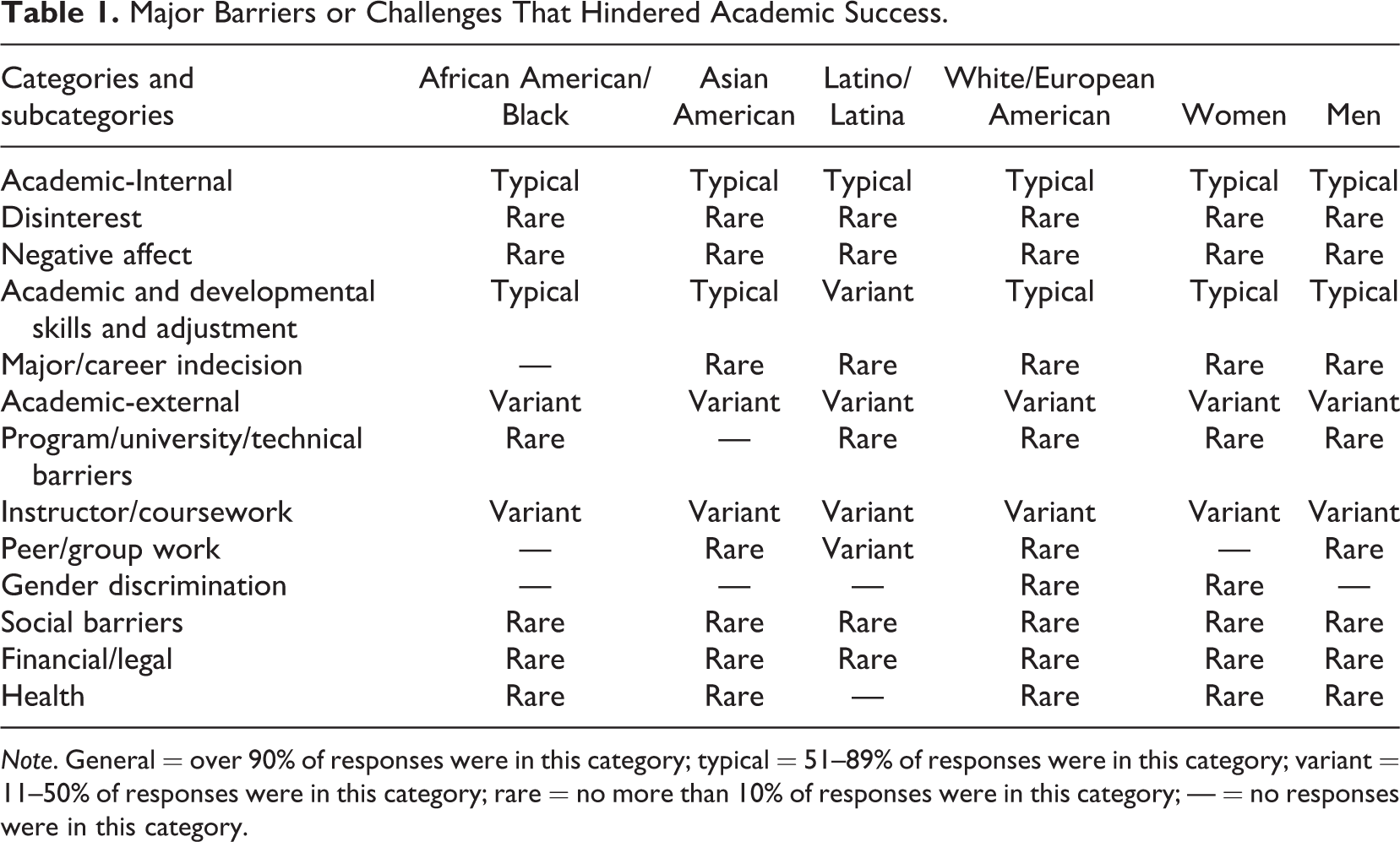
The first open-ended question was “What are some of the major hurdles or challenges you have faced this semester—that is, things that hampered, or could have hampered, your academic success or willingness to continue on in engineering?” In their responses (N = 338), participants mentioned five categories of barriers faced during the first semester (see Table 1). These included academic-internal, academic-external, social, health, and financial barriers. Academic-internal barriers (which represented approximately 63% of responses regarding challenges) were mentioned most frequently and included personal difficulties involving academic, organizational, and developmental skills (e.g., time management, academic performance problems, negotiating competing demands, work/life balance). Less common academic-internal barriers included student disinterest (“Classes that I find boring are the biggest hurdle for me to overcome in engineering”), lack of familiarity with course content, negative affect (e.g., feeling overwhelmed, frustrated, or ill equipped to deal with stress), and career indecision (e.g., wondering if a nonengineering major would have been a better choice).
Major Barriers or Challenges That Hindered Academic Success.
Note. General = over 90% of responses were in this category; typical = 51–89% of responses were in this category; variant = 11–50% of responses were in this category; rare = no more than 10% of responses were in this category; — = no responses were in this category.
Academic-external barriers (approximately 27% of responses) included problems with instructors, teaching assistants, or advisors (e.g., difficulty understanding instructors’ speech patterns, inadequate advising, and feeling like instructors were not helpful or interested in helping), team-based design project assignments (“it was difficult to work around everyone’s schedules and we had trouble getting ready for deadlines on time”), and program and university barriers (e.g., difficulties with registration). Common social barriers (5% of responses) were lack of social support, difficulty developing friendships within the major, and relationship problems. The primary health (3% of responses) and financial (2%) barriers were sickness and tuition costs, respectively.
Coping Strategies Employed to Deal With Challenges
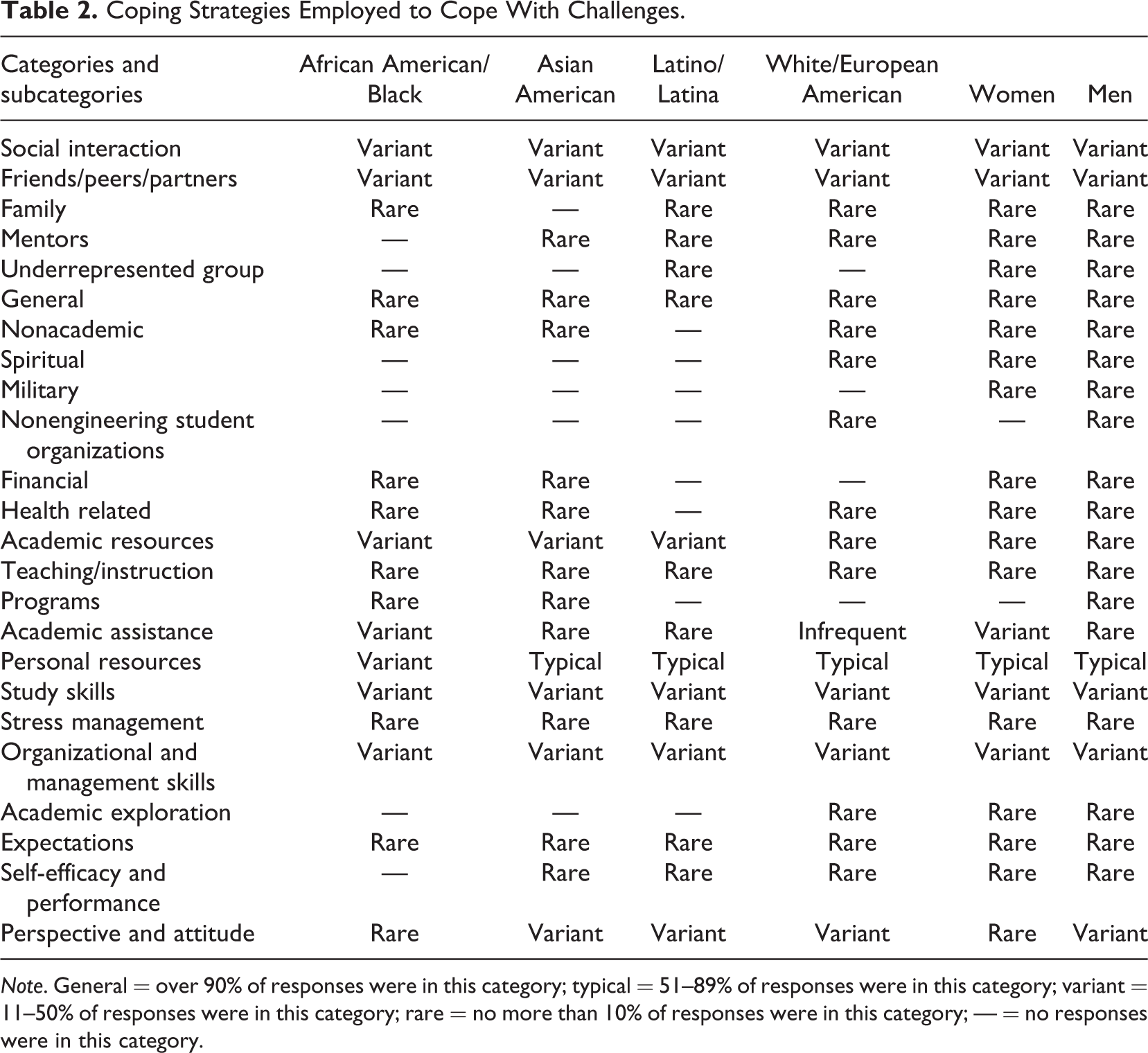
Participants were next asked, “What sorts of things did you do to cope with the hurdles that you mentioned in answering the above question? How successful were your efforts to cope with these hurdles?” Responses (N = 336) reflected four types of coping strategies that had been used to cope with the adjustment barriers or problems encountered (see Table 2). The most commonly mentioned strategy involved using personal resources (approximately 62% of responses regarding coping strategies). These referred to participants’ own character qualities, attitudes, and study skills (“I do extra background research in order to feel more engaged with what we work on in class”), organizational and management skills (e.g., time management and scheduling), perspective taking and attitude (“I just had to first take a deep breath and figure out what I need to do to cope”), and stress management skills (“have things that I can do as breaks and rewards for accomplishing short-term homework goals”).
Coping Strategies Employed to Cope With Challenges.
Note. General = over 90% of responses were in this category; typical = 51–89% of responses were in this category; variant = 11–50% of responses were in this category; rare = no more than 10% of responses were in this category; — = no responses were in this category.
Social interactions (approximately 20% of responses) referred to reliance on peer, familial, professional, or romantic relationships to cope with adjustment challenges (“I generally seek help from friends for problems that I don’t know how to complete”). The final two categories were academic (12%) and nonacademic (6%) resources. Common academic coping strategies were seeking assistance from instructors (“I went to other … classes taught by a different teacher”), participating in academic programs (e.g., living learning and mentoring), and seeking academic assistance (e.g., tutor and review sessions). Some common nonacademic coping strategies were getting involved with nonengineering student organizations (e.g., making the most out of the mandatory study hours enforced by a fraternity), self-care (e.g., exercise), pursuing alternative sources of funding, and religious practices.
Additional Resources That Could Have Aided Coping
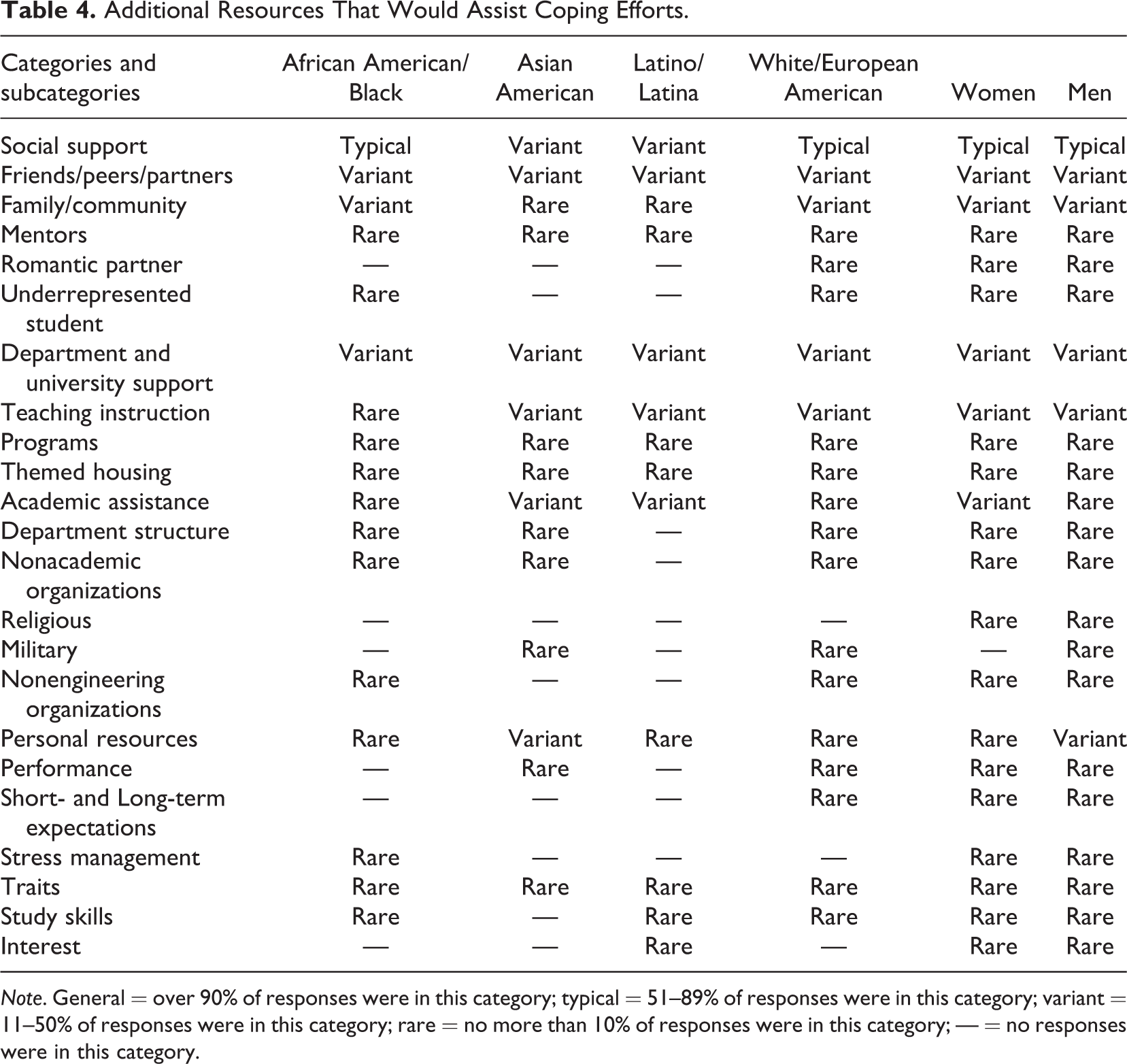
The third interview question was “Were there additional resources that, if available, could have helped you to cope better with the hurdles that you mentioned above? If so, what types of resources or supports come to mind?” In response to this question (see Table 3), participants most commonly reported (N = 149) that additional use or availability of academic resources (approximately 54% of responses regarding additional coping resources) such as mentoring programs, engineering theme housing, information and test review sessions, office hours, writing centers, and technical assistance (e.g., online homework assistance) would have been beneficial to them during the semester.
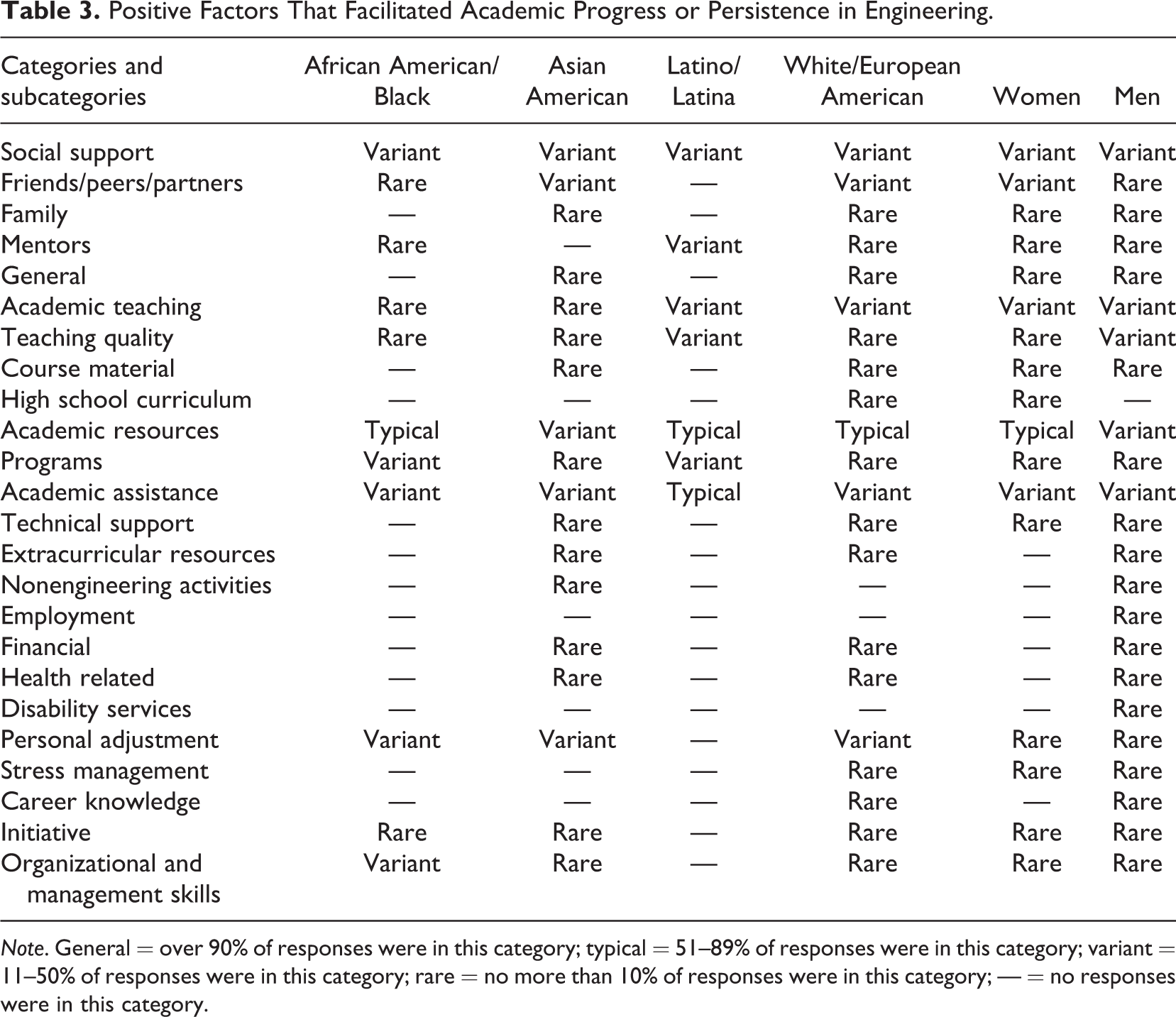
Positive Factors That Facilitated Academic Progress or Persistence in Engineering.
Note. General = over 90% of responses were in this category; typical = 51–89% of responses were in this category; variant = 11–50% of responses were in this category; rare = no more than 10% of responses were in this category; — = no responses were in this category.
Participants also felt that seeking social support (19% of responses) from peers (e.g., “I should have formed a study group … to help me”), family (“my parents could have helped me”), and academic advisors (“I probably could have talked to my adviser earlier on. I also could have gotten a mentor that could help me with my struggles”) would have been helpful. They also cited the value of academic—teaching adjustments (12% of responses) such as improved instruction, more attention paid to the course by instructors, and homework that was clear in purpose and more directly tied to the lecture material. Two additional categories included personal adjustments (11% of responses; e.g., being more organized or assertive in seeking assistance from instructors, putting forth more effort) and extracurricular activities (4% of responses), which included both seeking greater involvement (e.g., exercise, personal counseling) and, in some cases, limiting (e.g., reducing nonengineering commitments) such activities.
Perceived Positive Influences on Academic Progress or Persistence in Engineering
The final coping oriented question asked “What were some positive things or people (such as tutoring or a supportive advisor or friends) that affected your academic progress or willingness to continue on in engineering this semester?” Participant responses (N = 263) represented five categories (see Table 4) of positive factors that aided their adjustment, including social support (52% of responses), departmental and university support (35% of responses), personal resources (9%), nonacademic organizations (3%), and personal interest (1%).
Additional Resources That Would Assist Coping Efforts.
Note. General = over 90% of responses were in this category; typical = 51–89% of responses were in this category; variant = 11–50% of responses were in this category; rare = no more than 10% of responses were in this category; — = no responses were in this category.
Positive social support experiences with friends, peers, study groups, family members, mentors, and romantic partners were all listed as facilitating academic progress (“I made friends with several upperclassmen who were engineers and also shared my passions for other things in life. They are a great help”). Connecting with other members of underrepresented groups in engineering was also mentioned (“… it helps to be … surrounded by women who are majoring in engineering as well”). Participants also felt that departmental and university support, such as mentoring and summer orientation programs, theme housing, honors society, and academic assistance sources (e.g., teaching assistants who go above and beyond the call of duty, information sessions, tutoring, writing center, workshops, online materials) facilitated their academic progress.
Personal resources (e.g., performance accomplishments such as getting a good grade on an assignment, short- and long-term expectations related to the job market and job security, stress management, traits such as motivation, and study skills) and personal interest in engineering were also seen as helpful in facilitating academic progress. Positive experiences with nonacademic organizations such as military and nonengineering student organizations were also mentioned.
Experiences That Affected Confidence in Completing an Engineering Degree
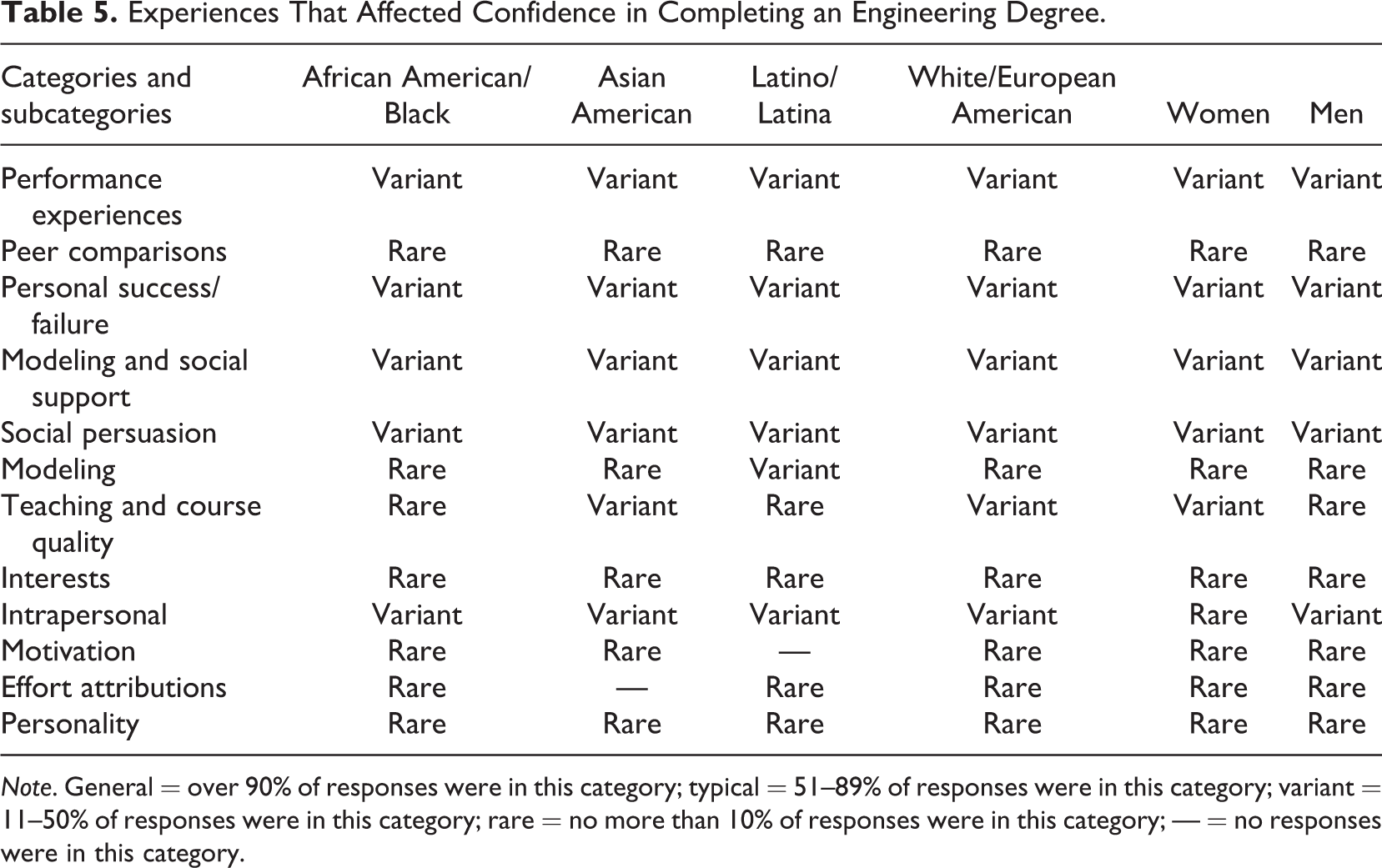
To explore the sources of students’ current academic self-efficacy beliefs in engineering, they were asked, “Looking back over this past semester, what experiences, events, or people have affected your confidence in your ability to complete an engineering degree? Briefly describe the experiences that you feel have had the most impact (positive or negative) on your level of confidence.” Participants’ responses (N = 275; see Table 5) reflected five factors including modeling and social support (39% of responses), performance experiences (34%), teaching and course quality (12%), intrapersonal qualities (12%), and interest match or mismatch (3%).
Experiences That Affected Confidence in Completing an Engineering Degree.
Note. General = over 90% of responses were in this category; typical = 51–89% of responses were in this category; variant = 11–50% of responses were in this category; rare = no more than 10% of responses were in this category; — = no responses were in this category.
Modeling and social support, which are two primary sources of self-efficacy, were frequently reported and consisted of encouragement (“parents … assuring me that I could do anything”) and modeling (“I know a girl … who is now a fifth year senior … she has been an inspiration to my desire to become an engineer, and also my choice to enroll at this university. The way I see it, if she can do it, so can I”). Performance experiences were also a frequently cited factor and included personal success/failure experiences (“solve an engineering problem”; “exams … have really caught me off guard and have definitely had a negative impact on my confidence”) and peer comparisons (“I don’t feel as prepared as the rest of my classmates”). Teaching and course quality were also cited by many participants (e.g., “Having really good professors that explain the material in an effective manner”). Participants also reported that intrapersonal factors such as motivation (“I am determined to earn my degree”) and effort attributions (“no matter how hard I try, I still do not do well”) impacted confidence.
Perceived Positive Outcomes Associated With Earning an Engineering Degree
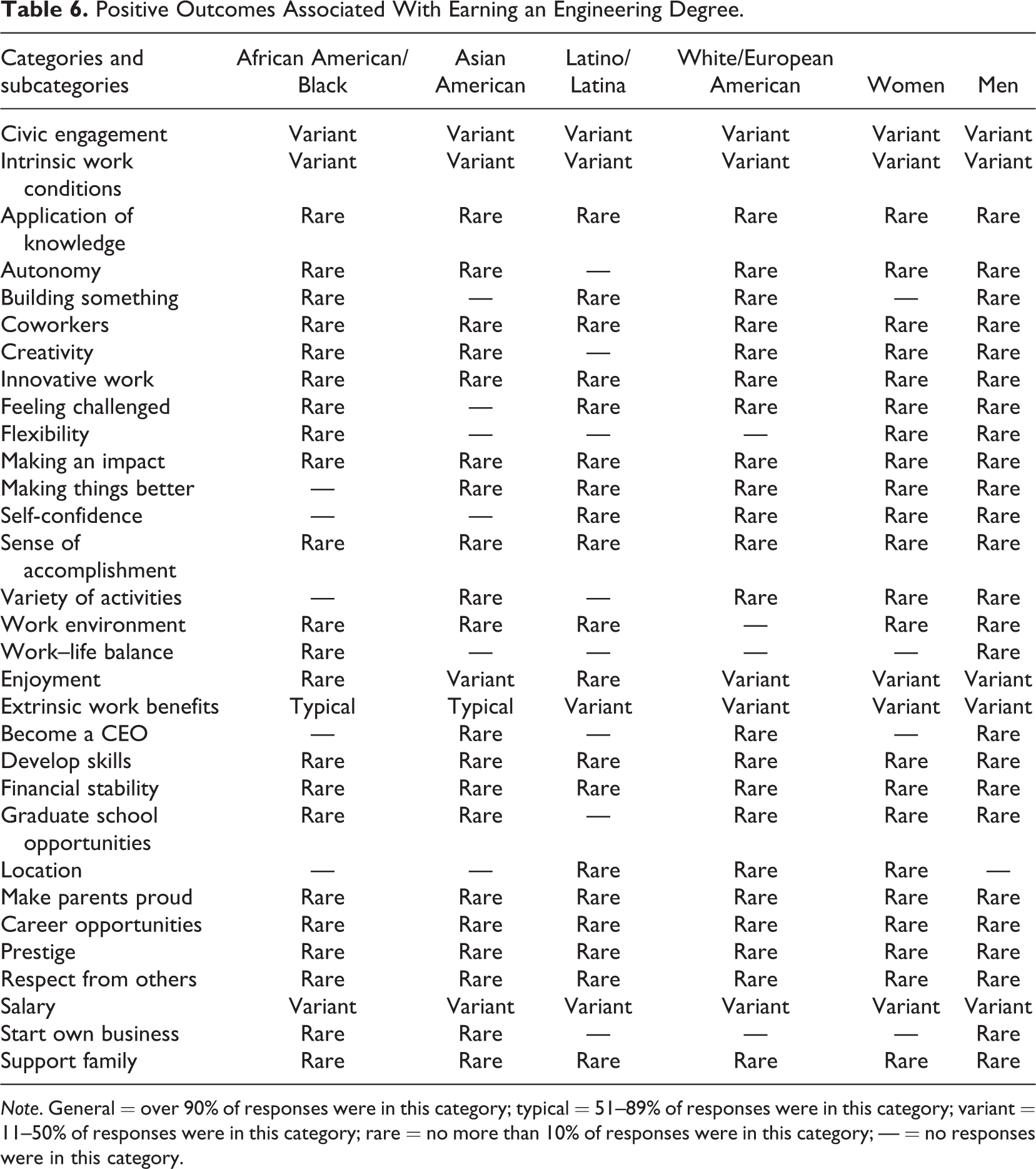
The next question was aimed at exploring the positive outcome expectations that students hold in relation to an engineering career: “Each person may hope to receive a somewhat different set of positive things from graduating with an engineering degree (such as getting a good salary, having the chance to help other people, or doing something that others will look up to). What are the most important things you hope to receive as a result of earning an engineering degree?” Participants’ responses (N = 499; see Table 6) represented three categories of positive outcomes associated with earning an engineering degree, including extrinsic work benefits (49% of responses), intrinsic work conditions (38%), and civic engagement (13%). Extrinsic work benefits were most frequently reported and included financial stability, developing additional skills, and increased professional and educational opportunities (e.g., increased chances of getting into graduate school). Intrinsic work conditions referred to aspects of work or the work environment that are in themselves fulfilling, such as achieving a sense of accomplishment, or having the opportunity to apply knowledge, create something, or do innovative and challenging work. Many participants also referred to civic engagement (e.g., “giving back to the community” and participating in environmentally focused work).
Positive Outcomes Associated With Earning an Engineering Degree.
Note. General = over 90% of responses were in this category; typical = 51–89% of responses were in this category; variant = 11–50% of responses were in this category; rare = no more than 10% of responses were in this category; — = no responses were in this category.
Sources of Perceived Positive Outcome Expectations
Finally, we were interested in the sources of information that students drew upon in forming their positive outcome expectations related to engineering careers: “Where or how did you learn that you could get these positive things from becoming an engineer? That is, what sources of information did you rely on to tell you about the positive parts of going into engineering?” Regarding the sources of anticipated positive outcome (see Table 7), participant responses (N = 424) highlighted the importance of social networks (53% of responses), including family and peers (“I talked to a few current engineering students and they said they enjoyed engineering so I felt that it was for me”), professors/advisors, and engineers (“The professor from my intro to engineering class”). Participants also mentioned media (15% of responses including TV shows and documentaries specific to engineering and online resources such as average engineering salaries), personal experiences (12% of responses including personal exploration, interest, skills, prior work experience), institutional (12% of responses) programs such as onsite tours, camps, information sessions, clubs, and courses (“I have learned that I can enjoy engineering from the various summer programs I have gone to which have focused on engineering”), and precollege experiences (8%; e.g., assistance from guidance counselors) as sources of positive outcomes.
Sources of Perceived Positive Outcomes Associated With an Engineering Degree.

Note. General = over 90% of responses were in this category; typical = 51–89% of responses were in this category; variant = 11–50% of responses were in this category; rare = no more than 10% of responses were in this category; — = no responses were in this category.
Exploration of Gender and Racial Group Differences
To examine differential patterns of responses across gender and racial groups, we categorized the frequency of reported categories as general (when over 90% of participants endorsed a given category), typical (when 51–90% of participants endorsed a given category), variant (when 11–50% endorsed a category), and rare (when 10% or less endorsed a category), based on guidelines by Hill et al. (2005). This approach allowed us to identify response patterns that may have been relatively unique to a particular gender or racial/ethnic group (see Tables 1–7). Following Hill et al.’s recommendation, group differences in the frequency of endorsed categories were considered meaningfully different when response patterns differed by at least two frequency categories (e.g., rare vs. typical or variant vs. general). Based on these criteria, none of the differences in response patterns were meaningfully different across racial or gender groups. However, it was potentially noteworthy that, in the case of academic-external barriers for women, fewer than 2% of responses referred to overt gender discrimination experiences. Also, one important, though infrequently reported coping strategy for women was seeking the support of other women engineering students in order to deal with the challenges associated with their underrepresented status.
Discussion
The primary purpose of this study was to use SCCT as a base for discovering specific challenges faced by engineering students, strategies employed to cope with these challenges, and factors that affected their perceived confidence and positive outcome expectations associated with earning an engineering degree. According to SCCT, the presence of barriers can hinder engagement and persistence in particular educational and occupational fields (Lent et al., 1994). Our findings revealed numerous challenges faced by first-year engineering students. The most frequently mentioned challenge (accounting for 63% of participant responses) during the semester was internal academic barriers. The most frequently reported types of internal barriers were related to academic (e.g., academic performance problems such as poor test performance) and developmental skill deficits (e.g., time management and negotiating competing demands). Other internal barriers included lack of familiarity with engineering-related course content and doubts related to majoring in engineering. By contrast, 29% of participant responses identified external academic barriers such as inadequate instruction and advising as a major challenge.
Participants identified a number of strategies used to cope with challenges, including personal resources (e.g., bolstering study skills, bolstering organizational and management skills, stress management and self-care, perspective, and attitude shifts); social interaction and support from friends, classmates, family, mentors, and individuals from the same underrepresented group. Participants also indicated the use of academic resources such as formal tutoring programs. When asked about additional resources that could have helped them to cope with the challenges they experienced, participants frequently indicated that they could have made better use of existing academic resources (e.g., workshops, tutoring programs, engineering living communities) and technology-related resources (e.g., open source web-based platform for homework help). Other, less commonly endorsed resources included social support, improved academic teaching, and curriculum (e.g., developing assignments that tied more directly with lecture material), personal adjustment (e.g., being more assertive when seeking assistance from instructors), and extracurricular activities (e.g., exercise and reducing nonengineering commitments).
The most commonly endorsed positive event or experience that facilitated progress and persistence in engineering was social support from friends, classmates, family, mentors, and other students (e.g., in the case of women, other female students). The perceived importance of social support is consistent with prior SCCT research (Lent et al., 2007, 2008). Other responses indicated that department and university support (e.g., instructors that went beyond the call of duty, engineering-themed housing, formal academic assistance programs), personal resources (e.g., personality dispositions and skills), nonacademic organizations, and personal interests were also positive influences.
SCCT posits self-efficacy and outcome expectations as central mechanisms through which learning experiences are translated into interest, choice (or commitment), and persistence. Participants’ most common source of confidence in completing an engineering degree were modeling and social support (e.g., knowing others going through the same experience) and performance experiences (e.g., struggling or excelling on engineering exams). Other sources of confidence were intrapersonal qualities, teaching and course quality, and personal interests. The most frequently endorsed positive outcome beliefs associated with earning an engineering degree were extrinsic work benefits such as financial stability, career opportunities, and developing new skills. Intrinsic work conditions (e.g., applying knowledge, sense of accomplishment, doing innovative work) and civic engagement (e.g., giving back to the community) were also frequently identified sources of anticipated positive outcomes. The most frequently endorsed source of these positive beliefs was social networks (e.g., peers, family members, friends/family who were engineers, teachers/advisors). Media (e.g., salary information obtained through the Internet), school and institutional efforts (e.g., onsite tours of engineering programs and summer engineering programming), personal experiences (e.g., perceived interests and skills), and precollege opportunities (e.g., guidance counselor advice) were also frequently cited sources of positive outcome expectations associated with earning an engineering degree.
Gender and Racial Group Response Patterns
We did not detect practically meaningful differences across gender or racial groups in response category frequencies. It is worth noting that although engineering environments have historically been experienced as inequitable for women (Powell, Bagilhole, & Dainty, 2009), fewer than 2% of our female participant responses indicated that gender discrimination hampered their success or persistence in engineering. This hopeful finding might reflect a shift in engineering environments as a result of structural changes, such as incorporating programs that aim to facilitate the success of women in engineering. On the other hand, it may have been that our questions did not sufficiently tap differential experiences as a function of gender or race/ethnicity or that our findings regarding the absence of group differences were a function of the specific institutional environments at which this study was conducted.
Limitations and Future Directions for Research and Intervention
The present findings should be considered in light of the study’s limitations. First, it is important to note that given the qualitative nature and sample characteristics of the study, the generalizability of findings to the general population of engineering students and across specific subpopulations (e.g., racially diverse students) in engineering is unclear. The experiences of our participants may or may not reflect the experiences of racially diverse students in other engineering programs across the country or those of racially diverse professionals in the field due to other factors (e.g., socioeconomic status or geographic region prior to entering college) not accounted for in the present study. In addition, based on the study design it is not possible to make causal inferences regarding the role of the identified barriers and supports in adjustment and persistence in engineering. Finally, we did not ask directly about gender- or race-related factors that might have influenced students’ adjustment and persistence to engineering. It is possible that our findings would have differed if we had asked specific questions about gender- and race-based experiences. Future research could ask explicit questions about gender and race-related issues in order to elicit more detailed information that could be useful in understanding the adjustment experiences of diverse engineering students. In addition, the categories and subcategories identified in this study could be used to guide the development of measures of SCCT constructs in the engineering domain.
Our findings suggest that although it is important to focus on both internal and external/environmental academic barriers, internal barriers might warrant extra attention given that this was the most frequently endorsed challenge perceived by our participants during their first semester. When developing interventions aimed at reducing internal academic barriers, it might be important to normalize (e.g., let students know that this is a common experience) students’ negative feelings and experiences related to pursing an engineering degree. In addition, it might be helpful to provide resources (e.g., peer advising and support from advanced students) to help students cope as they transition into the major. Indeed, the literature on modeling (e.g., Bandura, 1997) highlights the value of coping models (e.g., advanced female students who have themselves coped successfully with first-year challenges). Such peer role models can offer both support and credible coping advice and play a large role in the recruitment and retention of underrepresented students in engineering. One possible intervention for reducing external academic barriers might be to target instruction and advising. Participant responses related to instruction and advising indicated that course instructors were often graduate students (with varying levels of teaching experience and competence); therefore, implementing formal instructor development programs (e.g., requiring instructors to complete a teaching skills workshop) and conducting teaching observations (with individualized feedback to instructors) might be an effective way to enhance teaching and advising and ultimately diminish students’ external academic barriers.
In addition, it might be beneficial to include peer role models in efforts to recruit engineering students. For example, advanced students could participate in information sessions or panels and share personal stories about their strategies for coping with challenges; successful alumni from underrepresented groups could be featured in recruitment materials in which they discuss positive outcomes resulting from earning an engineering degree (e.g., see engineeryourlife.org). Hearing how racially diverse students succeeded in engineering might enhance the engineering-specific self-efficacy beliefs and outcome expectations of racially diverse applicants and help them identify coping strategies for overcoming intrapersonal, interpersonal, and contextual challenges.
Given the central role of social support in bolstering persistence in engineering, it might also be beneficial to formally organize and structure social support systems for students—both prior to matriculation and throughout the curriculum. For example, it might be helpful to educate first-year students about the role and importance of social support in successfully completing an engineering degree. In addition, it might be beneficial to provide targeted support for underrepresented students, for example, via ongoing workshops in which academic, professional, and interpersonal issues are discussed.
Footnotes
Declaration of Conflicting Interests
The author(s) declared no potential conflicts of interest with respect to the research, authorship, and/or publication of this article.
Funding
The author(s) disclosed receipt of the following financial support for the research, authorship, and/or publication of this article: This research was supported by a National Science Foundation award HRD-0827470 received by Robert W. Lent.