



Abstract
Personal values have been shown to be associated with a range of important psychological experiences, attitudes, and behaviors. Researchers and practitioners have, however, called for additional models and measures of employee values, specific to the context of work. Drawing from Schwartz’s extensively studied model of personal values, this study aimed to develop a scale that researchers and practitioners can use to measure individual work values. Data from 2,968 participants who were currently working or had previous work experience were analyzed using exploratory and confirmatory factor analyses. An 11-factor model, aligning closely with Schwartz’s original personal values framework, yielded good fit. Furthermore, the 11 newly developed work values correlated significantly with Schwartz’s generalized values, and multidimensional scaling broadly supported a configuration consistent with that previously proposed for general values. Overall, the research makes a contribution by extending Schwartz’s extensively validated personal values framework to the context of work. The results support the psychometrics of a new measure of work values that will enable valid and reliable assessment of the important influence that work values can have on individual, team, and organizational outcomes. Practical implications, research limitations, and proposed future research directions are discussed.
Scholarly and practitioner interest in personal values remains high because in all forms of human endeavor, values serve as a powerful guide for life choices and action (Ariele et al., 2019). Schwartz (1994) defined values as “desirable trans-situational goals, varying in importance, that serve as guiding principles in the life of a person or other social entity” (p. 21). Schwartz (1992) argued that 10 specific values guide the selection, evaluation, and justification of choices and behavior and that different individuals and groups assign more or less importance to some values as opposed to others. As such, individuals or groups develop their own particular system of values that underpins their beliefs and motivates their actions across different situations, scenarios, and contexts.
Despite Schwartz’s model and measures having been applied across a diversity of national, cultural, linguistic, religious, gender, and occupational samples (e.g., Davidov et al., 2008), researchers have recently argued that the measurement of values needs to be tailored to specific contexts (Consiglio et al., 2017). For example, rather than applying generic measures within the context of work, work-specific values need to be applied. This is because, just as context-specific attitudes are better predictors of specific behavior than general attitudes (Ajzen & Fishbein, 1973), work values will likely be better predictors of work behavior than generalized personal values. Furthermore, just as face and content valid personality inventories are used for selection and development in organizational contexts (e.g., Occupational Personality Questionnaire; SHL, 1999), content valid work values inventories need item content that is directly related to the world of work. Content validity is increasingly being recognized as a critical dimension of construct validity (e.g., Dixon & Johnston, 2019).
After first briefly overviewing Schwartz’s (1992, 1994) theory, model, and measures of universal values, we then review research focused specifically on the nature and influence of individual employee values in organizational contexts. We then describe the development of a work-based values inventory that, although grounded in Schwartz’s theory, is tailored and relevant to the context of work.
Personal Values
Schwartz’s (1992) theory proposes 10 motivationally distinct values: self-direction, universalism, benevolence, tradition, conformity, security, power, achievement, hedonism, and stimulation. Schwartz (1992, 1994) located each of the proposed 10 universal values on a circumplex defined by two bipolar dimensions and by the strength and direction of their interrelationships (see Figure 1). Schwartz argued that values in closer proximity to one another are based in similar motivations, while values on the opposite sides of the circumplex are based in conflicting motivations. Schwartz’s 10 universal values are subsumed under four higher order categories. Firstly, “self-enhancement values” (power, achievement, and hedonism) are defined in terms of the extent to which individuals seek “social status and prestige” and “control over other people and resources” (Schwartz, 1994, p. 22). Second, and structurally opposite, “self-transcendence values” (universalism and benevolence) reflect a primary interest in helping and the well-being of others (Schwartz, 1992, 1994). Third, “openness to change values” (stimulation and self-direction) relates to an individual’s preferences to set their own goals and seek freedom, challenge, and independence in their lives (Schwartz, 1994). Fourth, and structurally opposite, “conservation values” (security, conformity, and tradition) focus on maintaining the status quo and respecting history and tradition (Schwartz, 1994). As previously noted, Schwartz proposed the higher order and first-order values to be universal and to apply irrespective of context.

Work values multidimensional scaling solution (Alscal), with Schwartz (1992) values (in italics) and higher order values (capitalized italics) superimposed.
Evidence for the discriminant validity, predictive validity, reliability, and structural configuration of Schwartz’s theory and measures has been collected from a large number of samples across more than 80 different countries (Schwartz, 1992, 1994, 2012). Confirmatory factor analyses (CFAs), for example, have provided clear support for the proposed structure (Davidov et al., 2008), and research has shown cross-cultural validity of the dimensions as predictors of organizationally relevant attitudes and behaviors such as competition, conflict management, and cooperation (Kozan & Ergin, 1999; Morris et al., 1998; Schwartz, 1996). Although Schwartz et al. (2012) proposed additional subcomponent values within the 10-factor model “to provide greater heuristic and explanatory power” (p. 663), the 10-factor model remains the most used and widely cited.
In terms of measures, Schwartz has variously published a 56-item or 57-item Schwartz Value Survey (SVS; Schwartz, 1992, 2006), a 40-item and a 21-item Portrait Values Questionnaire (PVQ; Schwartz, 2003; Schwartz, 2006; Schwartz et al., 2001), a 57-item PVQ5X (Schwartz et al., 2012), and the PVQ-R (see Schwartz et al., 2012). The different forms of the PVQ and the SVS are nevertheless based on the same theoretical foundation, and “despite the formatting differences,…[they] lead to highly similar results” (Borg et al., 2019, p. 1).
Despite the published evidence in support of the PVQ and SVS across a diversity of settings, psychometric limitations of the model and the measures have also been acknowledged (e.g., Davidov et al., 2008; Schwartz et al., 2012). Schwartz et al., for example, noted “multicollinearity between adjacent values, low internal reliabilities of some indexes, and cross-loadings of items on multiple factors (e.g., Davidov et al., 2008)” (p. 668). Schwartz et al. attributed the “fuzzy boundaries” (p. 668) between some values to the deliberate selection of items “that would optimally cover the diverse substantive components in the conceptual definition of each basic value” (p. 668). Pertinent to questions of construct validity, Schwartz et al. conceptualized and operationalized the value “security” as having two subcomponents—personal security and societal security. Similarly, Schwartz et al. conceptualized and operationalized “universalism” as consisting of three interrelated subcomponents: tolerance for those who disagree, concern for the preservation of the natural environment, and concern for social justice.
Work Values
Beyond the universal life values that form the basis of Schwartz’s theory and measures, research has also been conducted on work values and the role they play in explaining workplace behavior. Previous research has shown that work values are associated with job satisfaction (Kashefi, 2005), attitudes toward change and organizational learning (Alas, 2009), job performance (Parsons et al., 1999), and organizational commitment (Cohen, 2003). More generally, Consiglio et al. (2017) noted that work values are fundamental for managing employee motivation and commitment. Consiglio et al. also noted that given their practical importance, “it is critical to have a clear conceptualization of them and reliable and valid instruments to measure individuals’ work values.” (p. 2). Valid and reliable measures specific to the context of work will enable valid assessments to be made about the extent to which employee values influence attitudinal, behavioral, and performance-related outcomes (Abbott et al., 2005).
Only a limited number of researchers have adapted or customized Schwartz’s (1992) items or dimensions specifically to the work context (e.g., Avallone et al., 2010; Consiglio et al., 2017). Avallone et al., for example, developed a 30-item Work Values Questionnaire (WVQ, 2010) to measure work values using items adapted from the PVQ (Schwartz et al., 2001). Although Avallone et al. proposed to find 10 work values corresponding to Schwartz’s theory, only 6 factors emerged from their factor analysis.
In contrast to Avallone et al. (2010), Consiglio et al.’s (2017) adaptation of the PVQ reproduced 10 work values that directly parallel those proposed by Schwartz (1992, 1994, 2012). Although Consiglio et al.’s WVQ (WVal) supported the applicability of Schwartz’s basic value theory to organizational settings, Consiglio et al. acknowledged a number of issues or limitations associated with their survey and methodology. The first issue concerns the use of ranking versus rating scales. Despite Consiglio et al. reporting they took measures to compensate for limitations associated with the use of ranking procedures, researchers have argued that ranking procedures can often be difficult and taxing for respondents, and because the sum of the ranks for individual respondents necessarily equals a constant, they pose statistical problems with respect to linear dependency (e.g., Alwin & Krosnick, 1985; Reynolds & Jolly, 1980). Schwartz (1994, pp. 26–27) additionally argued that ratings (1) have practical advantages over rankings in that they enable researchers to “use longer lists of values and to add alternative values without affecting the ratings of the core values,” (2) do not “force respondents to discriminate among equally important values,” and (3) do not force respondents “to compare directly values they may experience as incommensurable…(e.g., health and social order…)”. Schwartz also argued that ranking “requires respondents to express sharp, definitive preferences between every pair of values” even though people are typically only loosely aware of alternative values when making value judgments and behavioral choices. In contrast, rating “enables people to indicate the importance of each value separately, while keeping loosely in mind the importance of other values” (p. 27).
In terms of additional limitations in existing work values research, Consiglio et al. acknowledged it would have been helpful to compare the associations between their WVal and a Schwartz measure within the same sample. Research comparing context-free constructs against work-specific constructs (e.g., self-efficacy) suggests that the correlations between generalized values and work-specific values would likely be low to moderate (e.g., Schwoerer et al., 2005). Additionally, Consiglio et al. used an Italian sample and the authors did not make it clear whether their survey was administered in Italian or English or the nature of any back-translation processes. Overall, given the recognized importance of values in contemporary organizational contexts (Consiglio et al., 2017), the limited number of studies that have produced theory-based and work-relevant values, and the limitations associated with existing measures of work-related values, there is a clear need for additional research in this area.
This Study
This study aimed to assess the validity of a work-related Personal Values Scale designed to measure 10 basic values applicable to the context of work. The scale uses a Likert rating system, and consistent with calls to compare the structure of work values to generalized values, participants were also asked to complete an adaptation of Schwartz’s (2012) PVQ (PVQ5X).
The research addresses a number of broad propositions: (1) exploratory and CFAs of data on a newly developed 10-factor Work Values Scale will yield a clear structure and acceptable fit statistics, (2) correlations among the newly developed work values will show a pattern similar to previously published research using Schwartz’s Personal Values Survey, and (3) multidimensional scaling (MDS) of the newly developed Work Values Scale will yield a configural pattern similar to that previously demonstrated by Schwartz (2001, 2012).
Method
Participants and Procedure
Data were collected by a large Australian consulting organization that routinely collects survey data from consenting clients and contacts for its own internal research, norming, and marketing purposes. The consulting organization specializes in psychological measurement, talent acquisition, and organizational development. Email addresses of potential participants were obtained from the organization
Participants were required to be 18 years or older and to be either currently employed or have had previous work experience. Of the 3,521 online survey respondents, 1,790 were female (50.8%) and 1,731 were male (49.2%). The participants ranged in age from 18 to 78 years, with the majority (76.1%) between 30 and 60. Participants worked in a wide range of industries, with health and community services (22.0%), government administration (14.6%), and personal and other services (10.7%) having the highest representations. With regard to education, participants mostly held a bachelor degree (40.2%) and master’s degree or PhD (34.4%).
Measures
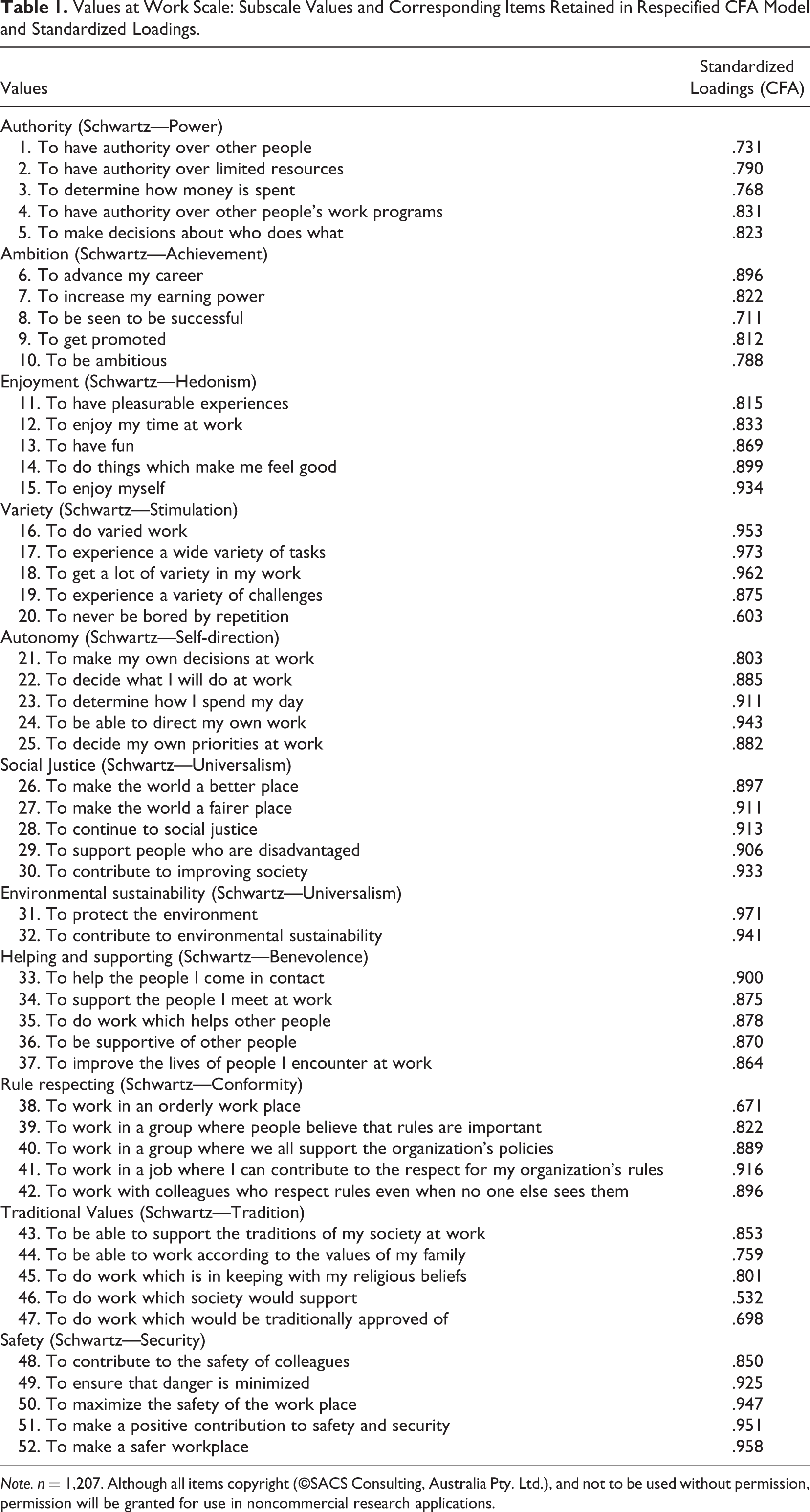
Items for the newly developed Work Values Scale were developed by the study authors who collectively have considerable experience administering and interpreting the Schwartz’s values inventories in applied settings and have considerable subject matter expertise in scale development and validation. After the second author initially developed 80 potential items, a group consensus discussion process was used to refine the set. Given that content validity is an important consideration in scale development (Boateng et al., 2018; Hinkin, 1998; Wright, Quick, Hannah, & Hargrove, 2017), the originally developed items were either minor adaptions of PVQ5X items or newly developed items that were all explicitly referenced to the workplace context (see Table 1). As a consequence of the items being developed as a collaboration between researchers and consultants, the item selection process aligned more with hybrid science practice approaches (e.g., Bartlett & Francis-Smythe, 2016) as opposed to more fully articulated academically oriented approaches (e.g., Gunawan et al., 2019). As such, and consistent with recognized evidence-based practice (Briner et al., 2009), decisions to retain, delete, or amend items were made “through the conscientious, explicit, and judicious use of…practitioner expertise and judgement, evidence from the local context, a critical evaluation of the best available research evidence, and [indirectly through] the perspectives of…[the clients] who might be affected by the decision[s]” (p. 19). For example, in constructing items for the value “safety,” a focus on the importance of safety management and safety culture within contemporary organizational contexts (e.g., Kim et al., 2016) was adopted. The newly developed work-related items were therefore designed to tap the importance “to you and your work life” of personally contributing to the safety of colleagues and the workplace. As shown in Table 1, example safety items included “to contribute to the safety of colleagues,” “to make a safer workplace,” and “to maximize the safety of the work place.” Implicit in the items is a recognition of the importance of both personal safety and safety for others in a working context.
Values at Work Scale: Subscale Values and Corresponding Items Retained in Respecified CFA Model and Standardized Loadings.
Note. n = 1,207. Although all items copyright (
To finalize the item set, the authors agreed on an iterative process of circulating emails, soliciting track change comments and suggestions. As such, and consistent with recommended item development practice, comments and suggestions were expressly focused on how well each item reflected its designated dimension, as well as the clarity of item wording, phrasing, and meaning (e.g., Gunawan et al., 2019; Hinkin, 1998). Any disagreements regarding inclusion, exclusion, or wording of items were resolved by consensus. Three iterated versions were circulated before a final set of items was agreed by all three authors. Seven items were agreed to be deleted on the grounds of conceptual redundancy, resulting in a final set of 73 items (7 or 8 items per value), each specified to load uniquely on one of the 10 factors.
Participants were asked to rate how important each of the items is to them in their work life on a 7-point Likert-type scale ranging from 1 (extremely unimportant) to 7 (extremely important). In contrast to previous researchers who have used comparison ranking procedures (e.g., Consiglio et al., 2017), participants rated each item independently. As previously mentioned, independent ratings circumvent problems with linear dependency and better enable factor analytic investigation of structure within data (Alwin & Krosnick, 1985; van Eijnatten et al., 2015).
The PVQ (PVQ5X; Schwartz et al., 2012) was also included in the study to enable comparisons of the newly developed scale with the PVQ. The PVQ has been used for more than 5 years by the data host consulting organization for employee selection, organizational development, and research purposes. The organization has developed extensive norms and expertise in the administration and interpretation of the scale. In response to the 57 PVQ items, participants rated “how much like you is this person?” on six-point Likert-type scale ranging from 1 (not like me at all) to 6 (very much like me). As previously noted, Schwartz et al. (2012) disaggregated a number of the 10 originally proposed values (e.g., security, universalism) into subcomponent values. As such, the PVQ5X items have been variously conceptualized as representing 19 values or subcomponent values (Schwartz et al., 2012) or the 10 overarching values (e.g., Anglim, et al., 2017; Schwarz et al., 2012). Schwarz et al. (2012) showed that the 10-factor model provided marginally better and more parsimonious fit compared to the 19-factor model. Anglim et al. (2017) reported acceptable α reliabilities for the 10 core values (ranging from .63 to .86) and “good support for the circular arrangement of values” (p. 32).
Data Analytic Strategy
Although listwise deletion has been criticized by some researchers for reducing sample size and potentially incurring sample bias (e.g., Schlomer et al., 2010), given the substantial response rate, listwise deletion of cases was deemed appropriate for the data set. Listwise deletion has been defended on the grounds that “that if sample size is large enough such that achievement of adequate power is not a concern [as in the present case], then listwise deletion provides one of the least risky (since it avoids adding another layer of measurement error to the data) and most quickly deployable missing data handling methods” (Cheema, 2014, p. 68). Additionally, because personal values by their very nature are personal, the authors took the decision that values are best represented by ratings completed by individual participants themselves rather than by being imputed.
After listwise deletion, the new values working data file (n = 2,968) was randomly split into two subsets with approximately 50% of cases in each. Exploratory factor analysis (EFA) was first conducted on one half of the data (n = 1,761) to provide an initial evaluation of the factor structure. EFA is recommended as a first validation step of newly developed scales (Maul, 2017). Based on the EFA results, CFA was then conducted on the alternative subsample (n = 1,207) to more rigorously assess the fit of the data to the proposed measurement model. The CFA data file contained cases remaining after also deleting missing cases for Schwartz’s values data. Next, the correlations of the final set of CFA-derived constructs and Schwartz’s 10 general personal values were calculated. Although values are appropriately be assessed using cross-sectional and self-report data, testing of common method variance was then conducted with procedures recommended by Podsakoff et al. (2012). Finally, MDS was conducted on the CFA-derived factors to determine whether the pattern of relations corresponded to Schwartz’s circumplex configuration. Both Alscal and Proxscal MDA solutions were examined for appropriate stress and “r2” fit.
Results
EFA
EFA, using maximum likelihood (ML) extraction and oblimin rotation, was conducted to identify the structure within the data. Fabrigar et al. (1999) argued that if data are relatively normally distributed, ML is the preferred method of extraction because “it allows for the computation of a wide range of indexes of the goodness of fit of the model [and] permits statistical significance testing of factor loadings and correlations among factors and the computation of confidence intervals.” (p. 277). Oblique rotation was used because it is the recommended rotation method when factors are correlated (Fabrigar et al., 1999). The Kaiser-Meyer-Olkin (KMO) sampling adequacy statistic (KMO = 0.962) and Bartlett’s test (P < .001) supported the factorability of the data. Eigenvalues greater than 1.0 were used to identify factors, and items with loadings of .40 or higher on a single factor were used to define the factors (Guadagnoli & Velicer, 1988).
As shown in Table 2, the EFA pattern matrix showed a clean and clearly interpretable 11-factor solution, with 69 of the 73 items loading 0.50 or higher on a single factor. The EFA structure matrix closely corroborated the pattern matrix, with all items having their highest loading on the same factors identified in the pattern matrix. Additionally, and in support of discriminant validity, the structure loadings on these factors were at least 0.10 higher than on any other factor (Tabachnick & Fidell, 2013; Watson, 2017). Furthermore, the rotated solution reproduced the 10 factors proposed in Schwartz’s values taxonomy. An additional 11th factor consisted of two universalism items that refer directly to valuing the environment (“to protect the environment” and “to contribute to environmental sustainability”). Although consisting of only 2 items, the factor was retained because it made clear conceptual sense and because valuing the environment is clearly an important consideration in contemporary organizational contexts. As previously noted, Schwartz (1994, 2012) similarly identified subdimensions within the universalism factor; one focused on concern for social justice and one focused on concern for nature and the preservation of the natural environment.
Exploratory Factor Analysis Pattern Matrix for Newly Developed Values at Work Items.
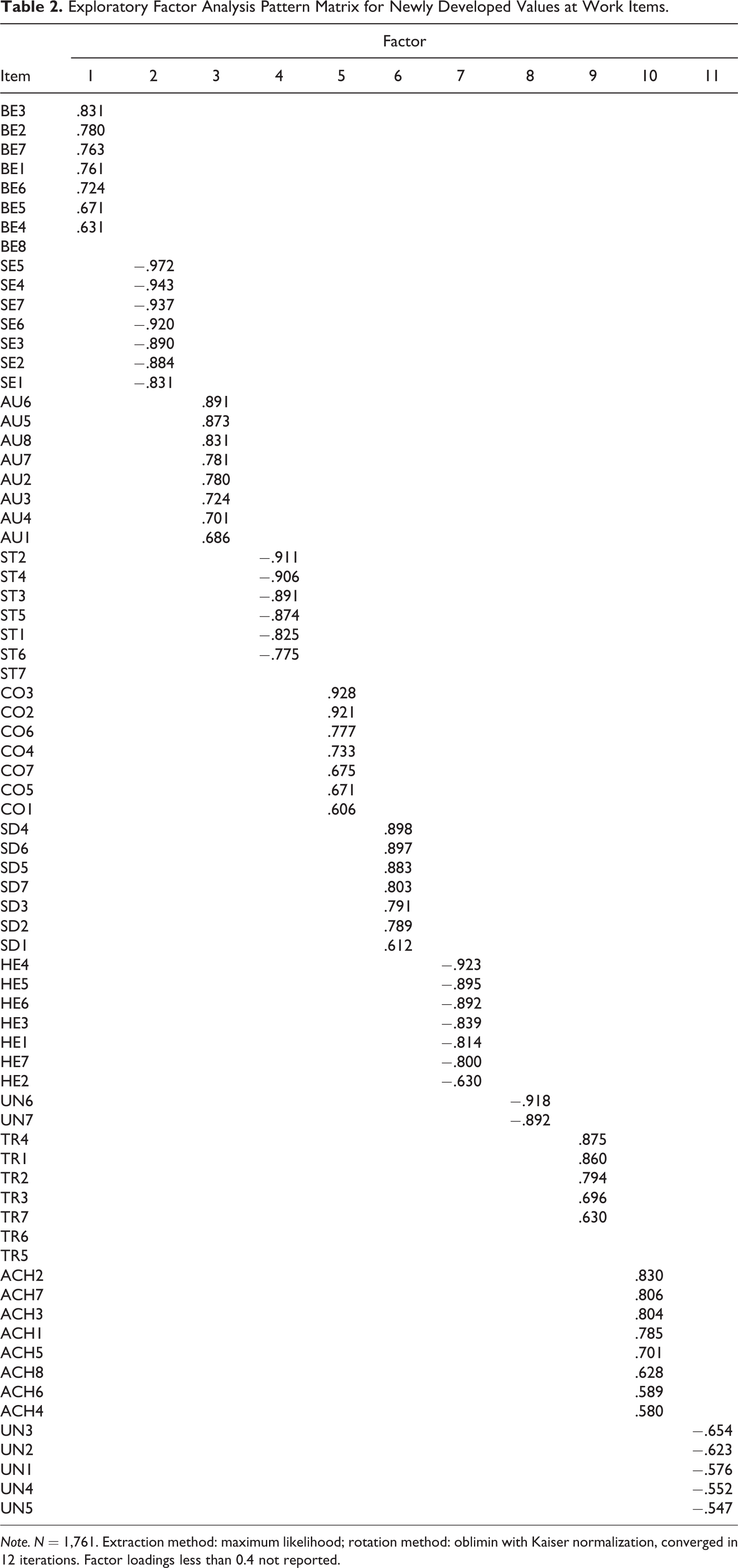
Note. N = 1,761. Extraction method: maximum likelihood; rotation method: oblimin with Kaiser normalization, converged in 12 iterations. Factor loadings less than 0.4 not reported.
CFA
The EFA-derived 11-factor structure was tested with CFA using the alternative subsample. CFA provides a more rigorous test of the convergent and discriminant validity of the measures proposed (Anderson & Gerbing, 1988). As such, the fit of the 69-item measurement model was assessed against a number of recommended fit indices: χ2 = not significant, χ2/df < 2, TLI > .95, CFI > .95, RMSEA < 0.06; RMSEA upper confidence interval <0.08; and SRMR < .08 (Hu & Bentler, 1999; Jackson et al., 2009; Kline, 2011; MacCallum et al., 1996). Although Hu and Bentler (1999) recommended TLI cutoff values close to .95 and RMSEA cutoff values close to .06, these values have been criticized for being overly stringent (e.g., Marsh et al., 2004). Nevertheless, Hu and Bentler’s cut points were adopted to apply a strict test of model fit. It is noteworthy that Consiglio et al. (2017) used less stringent cut points for CFI and RMSEA (.90 and .08, respectively) and suggested their CFI (.90) and RMSEA (.080) represented adequate fit.
Despite all standardized loadings being significant at p <.001 (ranging from .561 to .971), the CFA of the proposed 11-factor measurement model resulted in less than acceptable fit: χ2 = 11,719.60, df = 2,429, p < 0.001, χ2/df = 4.825, TLI = .901, CFI = .906, and RMSEA = .56 (90% confidence interval: .55–.57). Anderson and Gerbing (1988) argued that proposed measurement models rarely fit without subsequent modification, so modification indices were examined to identify the items that most contributed to model mis-specification. Additionally, because three or more items are recommended to identify a construct (e.g., Jöreskog & Sörbom, 1993), and because relatively short scales that do not contain redundant items are preferred to longer scales (e.g., Schaufeli et al., 2017), a decision was taken to retain the 5 items that most uniquely captured their designated construct (Hinkin & Schriesheim, 1989). It is noteworthy that no error terms were correlated to improve model fit because such practices can result in model fit despite the retention of redundant items (Cortina, 2002) and can bias estimates of both measurement and structural models (Tomarken & Waller, 2005).
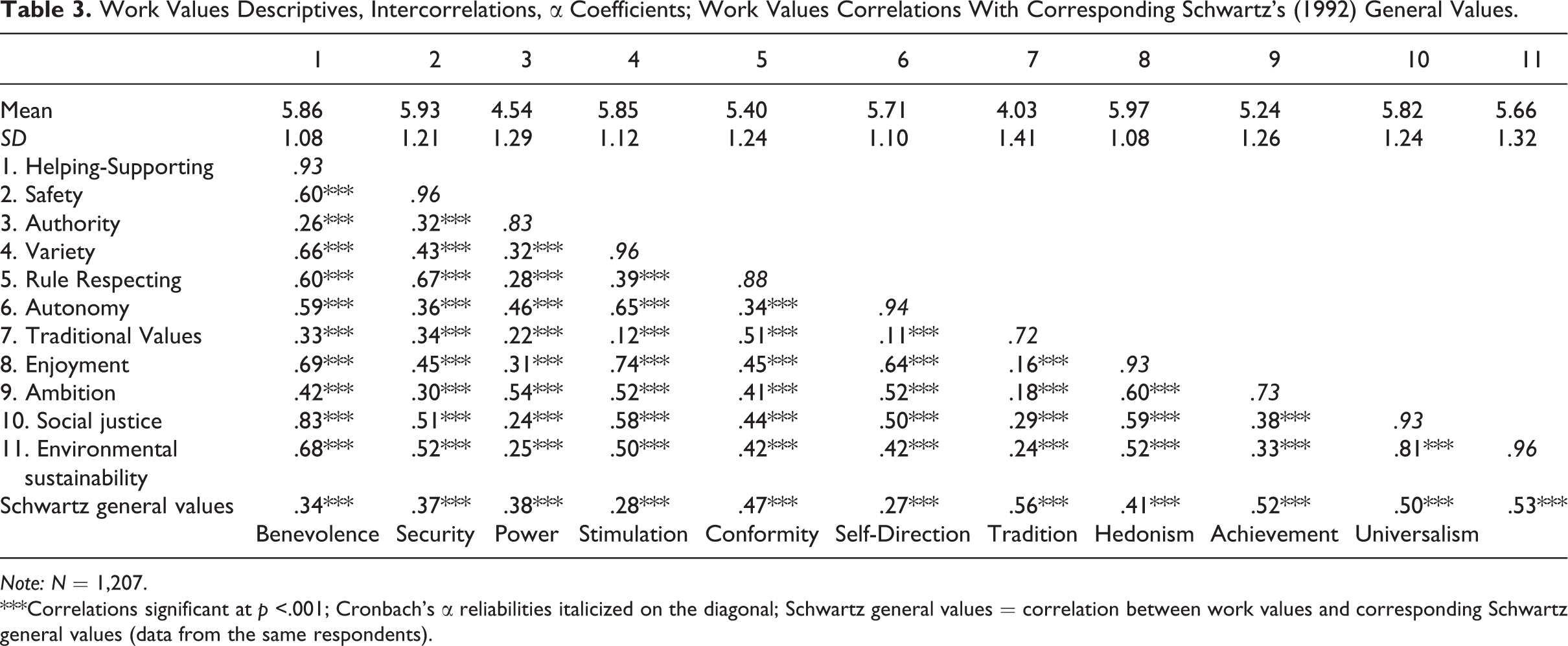
In line with Proposition 1, the respecified model resulted in generally acceptable fit: χ2 = 4,670.989, df = 1,219, p < .001, χ2/df = 3.832, TLI = .943, NFI = .931, CFI = .948, and RMSEA = .048 (LO: .047, HI: .05). All loadings were significant and the standardized loadings ranged between .532 and .958 (see Table 1 for items retained and their standardized loadings). The means, standard deviations, α reliabilities, and correlations between variables are presented in Table 3. All scales reliabilities exceeded the recommended criteria of .70 (George & Mallery, 2011; Nunnally, 1978). Furthermore, testing for common method variance (CMV) using procedures recommended by Podsakoff et al. (2012) showed that after the addition of a common latent factor, the decrease in standardized loadings ranged from .002 to .802 across the full set of 52 items included in the model. The average decrease in standardized loadings was relatively modest, 0.19 (with 33 items having decreases of less than 0.10 and only 3 having a decrease of 0.50 or larger). As such, and given that all factor loadings remained statistically significant (p < .001), the influence of method effects can, to a large extent, be discounted (Elangovan & Xie, 2000; Podsakoff et al., 2012).
Work Values Descriptives, Intercorrelations, α Coefficients; Work Values Correlations With Corresponding Schwartz’s (1992) General Values.
Note: N = 1,207.
***Correlations significant at p <.001; Cronbach’s α reliabilities italicized on the diagonal; Schwartz general values = correlation between work values and corresponding Schwartz general values (data from the same respondents).
Although most of the correlations between the newly developed values were not overly high (see Table 3), the correlations between Corporate Social ResponsibilityUniversalism* and Helping and SupportingBenevolence, and, not surprisingly, the correlation between Corporate Social ResponsibilityUniversalism and Environmental SustainabilityUniversalism were relatively high (r = .83, r = .81, respectively) (note: * superscript values denote Schwartz’s corresponding value). Therefore, for the correlations in excess of .80, tests of discriminant validity, using CFA procedures recommended by Anderson and Gerbing (1988), were conducted. As such, χ2 values when the correlations between each pair of highly correlated values were fixed to 1 (χ2 = 1,606.501, 2,290.040, respectively) were compared to χ2 values when the correlations were freely estimated (χ2 = 510.090, 654.487, respectively). Each of the tests, given a difference of one degree of freedom, yielded a significant χ2 (p <.001). The significant differences clearly suggest that the pairs of constructs, albeit related, are distinct and independent constructs. Furthermore, the sizably lower χ2 values for the models when correlations were freely estimated provided further evidence in support of the discriminant validity of the constructs compared (Bagozzi & Phillips, 1982).
As previously noted, Schwartz (1992) proposed that personal values can be organized as a circumplex. In line with Proposition 2, the bivariate correlations among the newly developed work values were broadly consistent with expectations derived from Schwartz’s (1992) circumplex (see Table 3). The more adjacent work values generally had stronger correlations than values further apart. As such, the strong to very strong correlations (Evans, 1996) between Helping and SupportingBenevolence and Corporate Social ResponsibilityUniversalism (r = .83), Corporate Social Responsibility and Environmental SustainabilityUniversalism (r =.81), Rule RespectingConformity and SafetySecurity (r = .67), AutonomySelf-Direction and VarietyStimulation (r = .65), Variety and EnjoymentHedonism (r = .74), and Autonomy and Enjoyment (r = .64) were consistent with Schwartz’s (1992) model. There were also strong correlations among theoretically nonadjacent factors (e.g., Helping and SupportingBenevolence and EnjoymentHedonism, r = .67).
To further assess the match with the spatial configuration proposed by Schwartz (1992), MDS of the 11 newly developed work values was conducted using SPSS 24. In line with Proposition 3, MDS yielded a configuration that quite closely reflected Schwartz’s circumplex. Figure 1 shows the MDS solution superimposed over Schwartz’s circumplex of values and higher order values. The MDS Kruskal stress index (stress = 0.110) was less than the recommended criterion of 0.15 (Dugard et al., 2010). The stress index and the substantial squared correlation (R2 = .96437) both suggested goodness of fit in the Alscal model (Hair et al., 1998). Similarly, the Stress-1 (.09), the dispersion accounted for (.99), and the Tucker Coefficient of Congruence (.99) all supported the two-dimensional fit in the Proxscal model. As shown in Figure 1, the plot of the 11 dimensions largely corresponded to Schwartz’s proposed configuration within the four higher order values. That is, AuthorityPower and AmbitionAchievement were located in the quadrant corresponding to Schwartz’s (1992) higher order value of “self-enhancement.” AutonomySelf-Direction, VarietyStimulation, and EnjoymentHedonism were located in the quadrant corresponding to Schwartz’s higher order “openness to change.” MentoringBenevolence, Corporate Social ResponsibilityUniversalism, and Environmental SustainabilityUniversalism were located in the quadrant corresponding to “self-transcendence.” Traditional ValuesTradition and Rule RespectingConformity were located in the quadrant corresponding to “conservation.” Contrary to the Schwartz’s circumplex model, Figure 1 shows SafetySecurity in the quadrant corresponding to self-transcendence, as opposed to conservation. This is because the newly developed safety items focus on the safety, welfare, and security of others and therefore suggest self-transcendence. In contrast, Schwartz’s security items focus on personal safety or on societal or national security.
The correlations between the 11 newly developed work values and Schwartz’s (1992) 10 universal values are shown in Table 3. The correlations ranged from .27 to .56 and were all statistically significant at p < .001. The correlations between Traditional Values and Tradition, and Ambition and Achievement were “strong”; “moderate” for Authority and Power, Rule Respecting and Conformity, Enjoyment and Hedonism, and Social Justice and Universalism; and “weak” for Helping-Supporting and Benevolence, Safety and Security, Variety and Stimulation, and Autonomy and Self-Direction (Evans, 1996). The correlations therefore broadly support the validity of the new measures in that they are significantly associated with Schwartz’s values and are generally consistent with correlations found between measures examining generalized versus work-specific constructs such as self-efficacy (e.g., Schwoerer et al., 2005).
Discussion
Drawing from established theory, this study set out to validate a new measure of work values. CFA of items developed for the new measure yielded 11 distinct work values that generally correspond to Schwartz’s (1992) well-validated and more general personal values framework. Although a limited number of researchers have also developed measures of work values based on Schwartz’s (1992) model, this study addresses limitations associated with previous measures (e.g., Consiglio et al., 2017).
This study makes a number of contributions to the literature. First, rating scales as opposed to ranking processes were used to confirm the 11 distinct values. As previously noted, researchers have argued that ranking procedures can often be difficult and taxing for respondents and pose statistical problems with respect to linear dependency (e.g., Alwin & Krosnick, 1985; Reynolds & Jolly, 1980; Schwartz, 1994). Second, an 11th value, focused on environmental sustainability, emerged from EFA, and was corroborated using CFA. Also as previously noted, Schwartz reported his universalism value has two subcomponents: one focused more on social justice and the welfare of humankind and the other focused more on the preservation of the natural environment. Consistent with increasing societal and organizational concerns about environmental sustainability, the present research makes an important contribution by overtly identifying environmental sustainability as a distinct value, worthy of attention in its own right.
As a third contribution, the present study describes work-specific values in terms more likely to be face valid in organizational contexts. Researchers of applicant reactions to organizational selection processes have established that face valid assessments result in positive applicant and employee perceptions of organizational attractiveness, respectfulness, and trustworthiness (e.g., Smither et al., 1993). As such, job applicants and employees may be more positively disposed to value statements such as “it is important to make a safer workplace” as opposed to “it is important to her/him that his/her country protect itself against all threats.” Fourth, and consistent with calls from previous researchers (e.g., Consiglio et al., 2017), the present study included a Personal Values Questionnaire (Schwartz, 2012) so as to be able to correlate the newly developed work values with previously validated personal values. The correlations between the corresponding work and more general personal values ranged from a low of .26 to a high of .53 and therefore suggest that the newly developed work values, although aligning with Schwartz’s (1992) theoretical framework, do not fully overlap. That is, the work-related values and their corresponding universal values are independent constructs. The results are consistent with previous research, suggesting that the relation between context-free versus work-specific constructs (e.g., self-efficacy) tends to be low to moderate (e.g., Schwoerer et al., 2005). It may therefore be the case that the newly derived work values have different patterns of association with important work-related outcomes such as job satisfaction, employee engagement, and job performance as compared to more generic personal values.
Beyond comparing correlations, MDS showed the newly developed work values had a pattern of associations similar to Schwartz’s (1992) personal values framework. For example, authority was most proximal in a two-dimensional space to ambition, and both were in a quadrant representative of Schwartz’s higher order self-enhancement value. Autonomy, variety, and enjoyment were colocated in the quadrant representative of Schwartz’s higher order openness to change value. These findings are therefore consistent with theory and with suggestions that work value systems can reflect the expression of broader personal values within an organizational context (Ros et al., 1999). The MDS results did not, however, fully align with Schwartz’s circumplex model. Safety, for example, appeared in the self-transcendence quadrant as opposed to the conservation quadrant. However, as previously noted, this finding can be explained by the newly developed safety items, in part, reflecting a concern for the safety of others as opposed to “personal security” (e.g., “It is important to her to be personally safe and secure”) or “national security” (e.g., “It is important to her that her country protect itself against all threats”). The work-relevant items focus on values more relevant to safety management and organizational safety culture. Additionally, although the proximity of helping and supporting, social justice, and environmental sustainability to enjoyment were not consistent with Schwartz’s (1992) circumplex, they corroborate similar results reported by Consiglio et al. (2017). Overall, the results suggest some deviations in the configuration of work values relative to Schwartz’s theoretical positioning of more generic personal values. As such, the relative configuration of values in a work setting will need to be further corroborated in additional research.
Practical Implications
Despite the much lamented divide between academic-based research and organizational and consulting practice (e.g., Bartlett & Frances-Smyth, 2016), this study aligns with recommendations for increased collaboration between academics and practitioners (Briner et al., 2009; Briner & Rousseau, 2011). The items for the newly developed work values were developed for both consulting and research purposes. The validation processes resulted in a relatively brief, theoretically grounded, and statistically validated measure of work-related values that can be applied in both practitioner and research settings.
In practical terms, there are a number of ways in which the newly developed measure may be applied in organizational and consulting contexts. The measure, for example, could prove useful in improving widely used selection processes aimed at assessing person–organization fit (Cable & Judge, 1996; Parks & Guay, 2009). Person–organization fit is important because research has consistently shown that congruency of values between individuals and organizations can result in improved organizational commitment and job satisfaction (Kristof-Brown et al., 2005) and reduced employee stress (Siu, 2003). Recruiting candidates who share values with their colleagues can also contribute to workplace cohesion and productivity (Edwards & Cable, 2009). The use of psychometrically defensible measures of work-relevant values will hopefully enable such selection processes to be conducted with increased ecological validity.
Beyond assessing candidate work values for selection purposes, values assessments could be used for individual and team coaching and for organizational development purposes. Values alignment, for example, has been identified as an important means for establishing, developing, and embedding organizational culture and for the successful achievement of organizational change (e.g., Branson, 2008). Awareness of the strength of organizational values such as autonomy and variety might help inform job redesign interventions, which in turn could potentially influence attitudinal, behavioral, and performance outcomes such as commitment, engagement, and performance (Humphrey et al., 2007). Similarly, the recognition, promotion, and actioning of values concerned with social justice and environmental sustainability might help organizations meet corporate responsibility expectations and, in turn, influence employee experiences of meaningful work, perceived organizational support, and organizational commitment (Kim et al., 2018).
The number of items that included newly developed measure was deliberately aimed at accommodating a balance between statistical rigor and practical utility. The relatively short final measure, consisting of 52 items measuring 11 constructs, will hopefully prove useful to both researchers and practitioners without imposing an undue burden on research participants and job candidates (Schaufeli et al., 2017).
Limitations and Future Research
Although the present research has provided a new measure of work values and new insights into the relations between the values, some limitations need to be acknowledged. Despite rigorous confirmatory modeling techniques being used, no additional antecedent or outcome variables were included in the analyses. To enable tests of nomological validity, future longitudinal research needs to be conducted, preferably drawn over three or more time periods, to test hypotheses about the causal influence that values may have on attitudinal, behavioral, and performance outcomes and mediators. Additionally, given that the data were collected through self-report procedures, the usual caveats concerning CMV apply (Podsakoff et al., 2012). However, given that the measurement model demonstrated acceptable fit to the data, given that the correlations between the measured constructs varied quite considerably, given the very modest average reduction in the standardized loadings after a common methods factor was included, and given that all the factor loadings remained statistically significant after the common methods factor was modeled, the issue of CMV appears not to be overly problematic.
Despite the large sample size, another limitation centers on the generalizability of the findings. The participants in this study were working in a range of different organizations. It would be useful in future studies to obtain data from particular organizations in different industry sectors to better assess the generalizability of the factor structure of the values across different organizational contexts (Bakker & Sanz-Vergel, 2013). Future studies may include a more even distribution of education-level participants.
Additional research needs to be conducted to further assess the new work-related values correspond to Schwartz’s (1994) circumplex. Although the present results align quite closely with Consiglio et al. (2017), if the pattern of associations among the work values as derived in the current research is further replicated, a theoretical account that departs from that provided by Schwartz will be required. Additional research could also usefully be conducted to determine how the newly developed values correlate with personality dimensions.
Overall, the primary contribution of the study derives from the development and validation of a set of theoretically derived work-related values. The values will potentially provide useful information with respect to the prediction and understanding of employee attitudes, behavior, well-being, and individual and organizational performance. Additional research is required, however, to determine the extent to which the newly developed values explain additional variance beyond that explained by general values.
Footnotes
Declaration of Conflicting Interests
The author(s) declared no potential conflicts of interest with respect to the research, authorship, and/or publication of this article.
Funding
The author(s) received no financial support for the research, authorship, and/or publication of this article.
