



Abstract
Despite a rapidly changing labor market, little is known about how youth’s career goals correspond to projections about the future of work. This research examined the career aspirations of 3,367 adolescents (age 13–18 years) from 42 U.S. states. We conducted a large-scale coding effort using the Occupational Information Network (O*NET) to compile the vocational interests, educational requirements, and automation risk levels of career aspirations. Results revealed that most adolescents aspired to careers with low potential for automation. However, there were large discrepancies between the sample’s aspirations and the types of jobs available when the sample entered the workforce. Almost 50% of adolescents aspired to either an investigative or artistic career, which together account for only 8% of the U.S. labor market. There were also notable trends across age and gender, such that aspirations were more gendered among younger adolescents, whereas older adolescents appeared less influenced by gender stereotypes. Overall, findings indicate important discrepancies between young people’s dream jobs and employment realities. We discuss how lofty career aspirations can have both positive and negative effects, and we present implications for career theories and workforce development initiatives aimed at promoting a more dynamic future workforce.
Changes in the labor market present both challenges and opportunities for career development (Ghislieri et al., 2018; Hirschi, 2018; Lent, 2018). Technological innovations have created new sectors of employment that require diverse skill sets and training (Cascio & Montealegre, 2016). Yet automation replaces many jobs and threatens the availability of stable work that pays sufficient income and benefits for millions of people (Brynjolfsson & McAfee, 2014). To meet the needs of a changing economy, youth must be prepared for the future of work. However, little is known about the degree of correspondence between adolescents’ career aspirations and employment trends in the labor market.
Understanding links between career aspirations and employment realities is important for several reasons. First, large-scale changes to the structure of the labor market can create gaps between labor demands and human capital (Hirschi, 2018). Researchers and policy-makers have spent considerable effort developing interventions to address these gaps, such as by motivating more students to pursue careers in Science, Technology, Engineering, and Math (STEM; Blustein, Erby, et al., 2020; Rottinghaus et al., 2018). Yet to be effective, career choice interventions require a foundational understanding of the types of jobs to which youth already aspire. For example, interventions could focus on stimulating interest in career areas with growing employment demands that are underrepresented in youth’s career aspirations. It is also important to better understand how career aspirations differ across social identities, such as gender and race/ethnicity. Although past research has identified large gender differences in career aspirations (Mello, 2008), research is lacking on how these differences correspond to labor demands and automation risks. This knowledge is critical to help guide policy efforts aimed at achieving a more balanced and equitable future workforce (Kossek et al., 2017).
In this study, we examine the career aspirations of a large sample of U.S. adolescents (aged 13-18 years old) in relation to projections about the future of work. The study has four major goals, each of which informs career theories and applied efforts aimed at strengthening the pipeline from education to employment. First, we investigate age differences in the concentration of career aspirations to test theoretical assumptions about how the variability of career aspirations changes across adolescence (Gottfredson, 1981, 2005; Super, 1980). Second, we compare adolescents’ aspirations to labor demands across vocational interest fields and educational requirements. We focus on interests and education because of the important role that these factors play in shaping career choices and opportunities (e.g., Hanna & Rounds, 2020). Third, we examine potential differences in aspirations across gender and race/ethnicity to reveal how young people’s social identities relate to their career goals. Fourth, we examine the automation risks of career aspirations to evaluate their future outlook in the coming decades (Frey & Osborne, 2013). Altogether, our study addresses several critical issues related to career development and the future of work (Hirschi, 2018).
Career Aspirations and Economic Change
Career aspirations reflect goals and plans for attaining future jobs (Rojewski, 2005). Numerous studies have shown that career aspirations have real-world consequences. For example, adolescents’ aspirations predict future career choices (Holland & Gottfredson, 1975), educational attainment (Beal & Crockett, 2010; Kim et al., 2019), and pay and occupational prestige during adulthood (Ashby & Schoon, 2010; Mello, 2008; Schoon & Parsons, 2002). Thus, although not everyone can achieve their dream job, career aspirations have considerable psychological meaning and predictive utility.
Despite their predictive power for career choice, little research has examined the degree to which career aspirations match up to labor demands in the changing world of work. This is especially important to help youth prepare for a future of technological and economic changes. For example, most countries are experiencing a continual need for more high-skilled labor in STEM fields (Oswald et al., 2019). At the same time, automation has eliminated the need for many jobs, displacing workers who often struggle to find new work that makes use of their existing talents. Thus far, agriculture and manufacturing jobs have been most affected by automation (Buera & Kaboski, 2012), but many other industries will be impacted as computer capabilities continue to advance (Brynjolfsson & McAfee, 2014).
Economic studies estimate that between one-third and one-half of all occupations are likely to be significantly altered, if not replaced, by automation in the coming decades (Arntz et al., 2016; Frey & Osborne, 2013; Nedelkoska & Quintina, 2018). The relatively wide range in estimates stems from uncertainty about how technology will progress and how different countries will respond to future changes in their economic policies. For example, there is general consensus that automation trends accelerated in response to the worldwide economic recession caused by COVID-19 (Berube & Bateman, 2020), and that workers in lower-skilled jobs are especially vulnerable (Blustein, Duffy, et al., 2020; Duffy et al., 2016). However, workers in different countries may be more or less impacted depending on their country’s labor policies designed to mitigate unemployment.
Despite this uncertainty, career development research can make a positive impact in helping individuals and societies prepare for the future of work. Adolescent career aspirations set the stage for future educational and work trajectories (Ashby & Schoon, 2010; Schoon & Parsons, 2002). Career development programs can help prepare youth for future jobs by motivating them to aspire toward bright-outlook careers that help strengthen the national economy (e.g., healthcare workers, web developers, or sustainability specialists). In line with these objectives, the current study progresses understanding about adolescent career development within the context of automation and the future of work.
Present Study
Variability of Career Aspirations Across Adolescence
We first examine how the variability of career aspirations differs across adolescence. A recent cross-cultural study by PISA (the Programme for International Student Assessment) found that 46% of teenagers across 41 countries aspired to one of only ten occupations (Mann et al., 2020). This finding raises concern that many young people are only aware of a small range of possible career options. The concentration of career aspirations was even greater when considering gender, as 53% of girls and 47% of boys aspired to one of the ten most popular jobs for their gender. The participants in the PISA study were all around 15 years old, so age differences were not considered (Mann et al., 2020). Thus, an important question is how the concentration of career aspirations differs by age. For instance, it would be beneficial if adolescents aspire to a wider range of careers as they grow older and approach actual employment.
Two prominent career theories provide useful frameworks for understanding age differences in the variability of career aspirations. Gottfredson’s Theory of Circumscription and Compromise (1981, 2005) proposes four stages in the development of career aspirations. The first two stages focus on childhood when children are oriented toward power and gender roles. Career aspirations tend to be vague, unrealistic, and unstable during this developmental period (Liben et al., 2001; Watson & McMahon, 2005). During the third and fourth stages (early and late adolescence, respectively), youth begin to form lasting impressions about different careers based on their prestige, social status, and alignment with societal gender role expectations. Adolescents then explore careers within the acceptable range of jobs after excluding careers perceived as not prestigious enough, too opposite-sex, or requiring too much effort.
A second career theory—Super’s Life-Span Model of Career Development—also emphasizes adolescence as a critical period for career exploration (Super, 1980). In Super’s theory, youth transition from the growth to exploration stage during ages 13–18 years old. The relevant developmental tasks involve trying out different activities in school and exploring new hobbies. Through iterative exploration processes, adolescents gradually begin to form enduring self-concepts about their interests and skills, which they then connect to different career fields. Overall, both Super’s life-span model and Gottfredson’s stage theory propose a shift from early to late adolescence toward greater exploration and trying out new roles and activities. The theories also suggest that career aspirations become increasingly realistic throughout adolescence as youth learn about different careers within their developing interest areas. This age-related progression implies that there should be more variability (i.e., less concentration) among older adolescents’ career aspirations. Hypothesis 1. The ten most popular career aspirations for males and females will decrease in concentration from early to late adolescence.
Comparing Career Aspirations to Labor Demands Across Interests and Education
Second, we examine how well participants’ career aspirations corresponded with labor demands across vocational interests 1 and degree requirements. In the U.S. labor market, employment demands vary substantially across education levels and vocational interests. For example, in 2014, approximately 50% of U.S. employees worked in jobs requiring a high school degree or less, compared to 27% of employees working in jobs requiring a bachelor’s degree or higher (DeCeanne et al., 2017). Employment numbers also differ across interest categories. In 2014, 30% of U.S. employees worked in realistic jobs, 6% were investigative, 2% were artistic, 18% were social, 22% were enterprising, and 23% were conventional (DeCeanne et al., 2017).
To show perfect correspondence with the labor market, our sample’s career aspirations would need to directly match these proportions. However, we view this as unlikely because of the emphasis on prestige within Gottfredon’s (1981, 2005) stages of career development. Past research has shown that adolescents often aspire to relatively prestigious jobs, then compromise as they get closer to the labor market (Armstrong & Crombie, 2000; Mello, 2009). In addition, a prior study by Metz and colleagues (2009) found that investigative and enterprising aspirations—which are both associated with high prestige and high education—were disproportionally popular among undergraduate students. Thus, we expected an overrepresentation of investigative and enterprising career aspirations in our sample, which tend to have higher degree requirements than average in the U.S. labor market (McClain & Rearson, 2015). Hypothesis 2. Investigative and enterprising career aspirations will be overrepresented among adolescents compared to the proportion of these jobs available in the U.S. labor market.
Potential Differences in Aspirations Across Gender and Race/Ethnicity
Third, we examine potential differences across gender and race/ethnicity in the interests and education levels of career aspirations. Gottfredson’s (1981, 2005) theory provides a useful framework for understanding how social identities, including gender and race, can influence career development. Her theory proposes that gender norms and identity stereotypes are especially influential during adolescence. Adolescents’ career goals are often driven by perceptions about the sex-type of occupations (i.e., whether a career is seen as masculine or feminine), which can be influenced by employment rates of men and women. In general, men are overrepresented in realistic jobs, which involve working with hands, tools, and machines; and women are overrepresented in social jobs, which involve teaching, helping, and caring for others (Su & Rounds, 2015). Women also have higher average degree levels than men, which is partly driven by the relatively low educational requirements of realistic jobs (NCES, 2019). We expected to find similar gender differences in the interests and educational requirements of adolescents’ career aspirations, such that females would be more likely to aspire toward social careers, and males would be more likely to aspire towards realistic careers and those with lower degree requirements. Hypothesis 3a. Females will be more likely to aspire to social careers than males. Hypothesis 3b. Males will be more likely to aspire to realistic careers than females. Hypothesis 3c. Females’ career aspirations will have higher average degree requirements than males’ aspirations.
Race/ethnicity can also influence young people’s career goals, as racialized stereotypes about the characteristics of people who work in different jobs often form at a young age (Bigler et al., 2003; Bigler & Liben, 2007; Gottfredson, 2005). In the U.S. labor market, occupational outcomes remain unequal across racial groups despite progress in recent decades (del Río & Alonso-Villar, 2015). Previous research on race/ethnicity differences in career aspirations has revealed mixed findings. Some studies have found that students identifying with racial/ethnic minority backgrounds have more prestigious educational and occupational aspirations than their counterparts (Kao & Tienda, 1998; Mello, 2009), whereas another large-scale study found no differences (Howard et al., 2011). There also very small race/ethnicity differences in vocational interests (e.g., Jones et al., 2020). Thus, we did not have a priori expectations for race/ethnicity differences. We therefore proposed the following research question: Research Question 1. Do the interests and educational requirements of career aspirations differ across race/ethnicity?
Automation’s Potential Impact on Career Aspirations
Fourth, we examine the potential for career aspirations to be replaced by automation in the coming decades. Although the threat of automation replacing jobs has received considerable media attention, little is known about the automation risks of young people’s career aspirations. One recent study found that undergraduate students rarely considered automation when making career decisions (Mbilini et al., 2019). Thus, we think it is unlikely that adolescents give much thought to automation risks when contemplating their careers, but they may consider other job characteristics related to automation risks.
In general, the jobs least threatened by automation require advanced training and education (Damian et al., 2017; Nedelkoska & Quintini, 2018). Such jobs are typically viewed as prestigious, including managers, doctors, teachers, and therapists (Frey & Osborne, 2013). Because adolescents often emphasize status and prestige when thinking about possible careers (Gottfredson, 1981), their career aspirations should have relatively low risks of being computerized. Thus, we expected that the percentage of the sample’s aspirations at high risk of automation would be lower than Frey and Osborne’s (2013) estimate, which was 47% of all jobs in the U.S. labor market. We also explored whether there were differences in automation risks across age, gender, and race/ethnicity, though we did not have a priori expectations for these potential differences due to a lack of prior research. Hypothesis 4. The percentage of career aspirations at high risk of automation will be lower than Frey & Osborne’s estimated percentage of U.S. jobs at high risk of automation (47%). Research Question 2. Do the automation risks of career aspirations differ across age, gender, and race/ethnicity?
Summary
The present study seeks to examine how adolescents’ dream jobs relate to employment realities from multiple, interrelated perspectives. We first examine age-related trends in the variability of career aspirations to test whether adolescents learn about the world of work following the developmental stages proposed by two major career theories (Gottfredson, 1981, 2005; Super, 1980). Second, we compare the distribution of career aspirations to national job openings to identify specific career areas that are over- and under-represented in young people’s career goals. Third, we investigate potential differences in aspirations across gender and race/ethnicity to help inform workforce initiatives aimed at achieving more balanced occupational representation. Fourth, we examine the automation risks of career aspirations and test whether risk levels differ across distinct subgroups of students. Altogether, our study helps advance theoretical and practical understanding about how young people’s career aspirations connect to the continually changing world of work.
Method
Participants
This study uses data from the 4-H Study of Positive Youth Development, which sampled U.S. adolescents aged 13 to 18 years old from across 42 U.S. States (Lerner et al., 2005; Lerner & Lerner, 2013). Our sample was comprised of participants who reported a codable career aspiration at waves 3–8 2 (Total unique N = 3,367). On average, study participants were 13.03 years old at wave 3 (N = 1,080), 14.14 years old at wave 4 (N = 1,000), 15.01 years old at wave 5 (N = 681), 15.85 years old at wave 6 (N = 1,407), 16.79 years old at wave 7 (N = 804), and 17.79 years old at wave 8 (N = 543). The majority of the sample was female (65.4%) and White (74%), with Hispanic (10%), Black/African American (7%), Multiracial (4%), Asian (2%), and Native American (4%) making up the other ethnic groups. In general, youth living in rural areas were over-represented in the sample compared to those living in urban and suburban areas (Parker et al., 2018). Participants were fairly representative of the United States’ geographic regions, with North Central states slightly overrepresented and Southern states slightly underrepresented (U.S. Census Bureau, 2020).
Though some participants responded at multiple data collection waves, we chose a cross-sectional data analytic approach for two reasons. First, treating each wave cross-sectionally led to substantial increases in sample size and statistical power, helping to improve the validity and generalizability of the results (e.g., only nine participants completed all six waves, and there was approximately 80% attrition across consecutive waves). Second, all waves were separated by approximately 1-year, allowing us to compare age differences at 1-year intervals from age 13 to 18 years. For the small subset of participants with longitudinal data, we only used the most recent career aspiration for analyses describing the overall sample (i.e., we selected each participant’s aspiration when they were oldest). This ensured that each participant was only counted once when comparing the sample’s aspirations to labor demands.
Procedure and Measures
The data used in the current study were collected from 2004 to 2011, beginning with a cohort of seventh graders and ending with a cohort of 12th graders (e.g., Lerner et al., 2005; Lerner & Lerner, 2013). Details on the recruitment procedure have been described in detail elsewhere (see Bowers et al., 2015 for a full review), so we focus on key details here relevant to the current study. Participants were recruited either through schools or outside-of-school programs. Parental and participant consent was obtained at each wave. Participants then completed questionnaires either online or in-person. Nearly all participants completed questionnaires in-person in waves 3–5, whereas most participants in waves 6–8 completed the questionnaires online. The questions were identical in each format.
Career aspirations
Participants responded to an open-ended question to assess their career aspiration at each wave: “If you could have any job you wanted when you grow up, what job would you really like to have?” We only analyzed each participants’ first response to the prompt at each time point, resulting in 5,515 codable aspirations for waves 3–8. Of the total responses, 3,367 were from unique individuals (which is the effective total sample size).
All career aspirations were coded into the Standard Occupational Classification (SOC) system of the Occupational Information Network (O*NET). The O*NET-SOC system enabled the use of standardized data about the interests, educational requirements, and automation risks of aspired jobs (Frey & Osborne, 2013; Office of Management and Budget, 2018). To match career aspirations to O*NET, three co-authors and six trained undergraduate research assistants coded responses into either O*NET occupations (e.g., “Elementary School Teachers”), or one of five other categories: undecided (e.g., “I don’t know”), non-occupation value (e.g., “be a millionaire”), joke (e.g., “be a wolf”), unclear (“srif”), or other (e.g., “any job”). A random subset of the total responses (2,363) was coded twice for inter-rater reliability. Among these responses, the average inter-rater agreement was 88%. As the final step, the first author double-checked all coded occupations to ensure accuracy.
Vocational interests and educational requirements of career aspirations
To examine the vocational interests of career aspirations, we used high-point (first-letter) RIASEC codes from O*NET. High-point codes capture the primary interest area of jobs and are commonly used to measure interest fit. A large body of research supports their predictive validity for work outcomes (e.g., Hoff et al., 2021; Nye et al., 2019) and career choice (Hanna & Rounds, 2020).
For educational requirements, we used O*NET job zones (National Center for O*NET Development, 2008). Job zones reflect the amount of education, experience, and training needed for an occupation on a scale from 1 to 5. Job zone 1 occupations require little-to-no experience. Job zone 2 occupations require a high school diploma and a few months of training or experience. Job zone 3 occupations often require either a vocational degree or Associate’s degree. Job zone 4 occupations typically require a 4-year college degree. Job zone 5 occupations require a graduate degree and more than 5 years of training or experience.
National employment data across vocational interests and educational requirements
To derive information about national labor demands across vocational interests and job zones, we linked all O*NET SOC codes with employment data from the Bureau of Labor Statistics (BLS). Specifically, we merged occupational interest data and job zones from O*NET (Office of Management and Budget, 2018) with 2014 employment data and 2024 projections from the BLS (Bureau of Labor Statistics, 2015). We chose data from 2014 and 2024 because this corresponded to the first 10 years when the sample entered the labor market.
According to the Bureau of Labor Statistics (BLS), there were a total of 150,539,900 U.S. employees in 2014. By aggregating employment numbers for all occupations in the dataset, we arrived at a total of 150,538,700 employees. The discrepancy was likely due to rounding as the original dataset reported employment numbers rounded to the thousands. Similarly, the total projected employment in 2024 reported by the BLS was 160,328,800 employees. Our aggregated 2024 value was 160,329,800 employees. Again, the discrepancy was likely due to rounding. These numbers include all people in the United States who were employed in 2014 and projected to be employed in 2024. Both sets of numbers update earlier estimates of employment data across RIASEC interests (McClain & Reardon, 2015; Metz et al., 2009).
Automation probabilities of career aspirations
We linked O*NET-coded career aspirations to automation probabilities using the estimates provided in the appendix of Frey and Osborne (2013). Frey and Osborne’s analysis estimated automation probabilities of all O*NET occupations using supervised machine learning based on three bottlenecks to computerization. The bottlenecks represent three barriers for engineering to overcome to replace manual work tasks. The first bottleneck is perception and manipulation, which included the O*NET variables of finger dexterity, manual dexterity, and cramped workspaces. The second bottleneck is creativity, including the O*NET variables of originality and fine arts. The third bottleneck is social intelligence, including the O*NET variables of social perceptiveness, negotiation, persuasion, and caring for others.
Data Analysis
Four sets of analyses were conducted to examine our research questions and hypotheses. We used χ2 tests to examine differences in the concentrations of career aspirations for males and females (H1), as well as differences across interest areas (H2, H3a, and H3b). For gender and race/ethnicity differences in educational requirements (H3c and RQ 1), we used ANOVA’s and independent samples t-tests, and reported standardized mean differences with Cohen’s d. We also used ANOVA’s and independent samples t-tests to test for differences in the probability of automation of career aspirations across age, gender, and race/ethnicity (H4 and RQ2). To aid in interpretability, age is used instead of wave in reporting the results (e.g., W3 = age 13, W4 = age 14,…, W8 = age 18).
Results
Do Career Aspirations Become Less Concentrated Across Adolescence?
We first examined the concentration of career aspirations at different ages, which refers to the percent of all aspirations that fell within the top 10 male and female occupations. Figure 1 shows the concentration of aspirations at 1-year increments from 13 to 18 years old. We separated aspirations by gender in this figure to be consistent with a prior study conducted by PISA (Mann et al., 2020). Hypothesis 1 predicted a pattern of decreasing concentration with age for both males and females (indicating more variability in aspirations). A clear trend of decreasing concentration was observed for both males and females, supporting hypothesis 1. The top 10 occupations accounted for 61% and 64% of female and male aspirations at age 13, respectively, compared to only 44% and 38% at age 18. These concentration differences were significant for both females (χ2(5, N = 3,652) = 61.02, p < .001) and males (χ2(5, N = 1,862) = 65.80, p < .001).

Concentration of career aspirations by age and gender. Concentration reflects the percent of all career aspirations within the top 10 occupations.
Table 1 shows the occupational titles of the top 10 aspirations for males and females at each age. For females, the most popular aspirations were doctors, veterinarians, teachers, and nurses. Doctor was most popular in early adolescence (accounting for around 12% of all female aspirations at ages 13–15), whereas veterinarian (7%–11% at age 16–18), teacher (8%–9% at ages 16–18), and nurse (6%–8% at ages 16–18) were more popular in late adolescence. For males, athlete was overwhelmingly the most popular aspiration during early adolescence (accounting for 22%–32% of male aspirations at ages 13–15), but became less popular in late adolescence (accounting for 5%–13% at ages 16–18). Other popular career aspirations for males were military (3%–7% across all ages), doctors (3%–6%), farmers (1%–4%), and managers (2%–5%). In sum, males and females aspired to somewhat different occupations across adolescence. However, both males and females showed a similar pattern of decreasing concentration with age, indicating more variability in career aspirations during late adolescence (compared to early adolescence).
Top 10 Career Aspirations by Age and Gender.

Note. Bolded values represent the concentration of aspirations at each age for males and females. N’s for females were 715, 651, 438, 915, 549, and 383 at waves 3–8, respectively. N’s for males were 365, 349, 242, 492, 255, and 160 at waves 3–5, respectively. aDoctors includes pediatricians, general internists, and family and general practitioners. bTeachers includes kindergarten, elementary, middle school, and high school. cMultiple jobs are tied for the 10th occupation. Vets = Veterinarians. Fashion = Fashion Designers. Interior = Interior Designers. Civil Eng = Civil Engineers. Phys Ther = Physical Therapist. Comp Sys = Computer Systems Analyst. Comp Occ = Computer Occupations. Clin Psych = Clinical Psychologist. Photo = Photographers.
How Did the Sample’s Career Aspirations Correspond to U.S. Labor Demands?
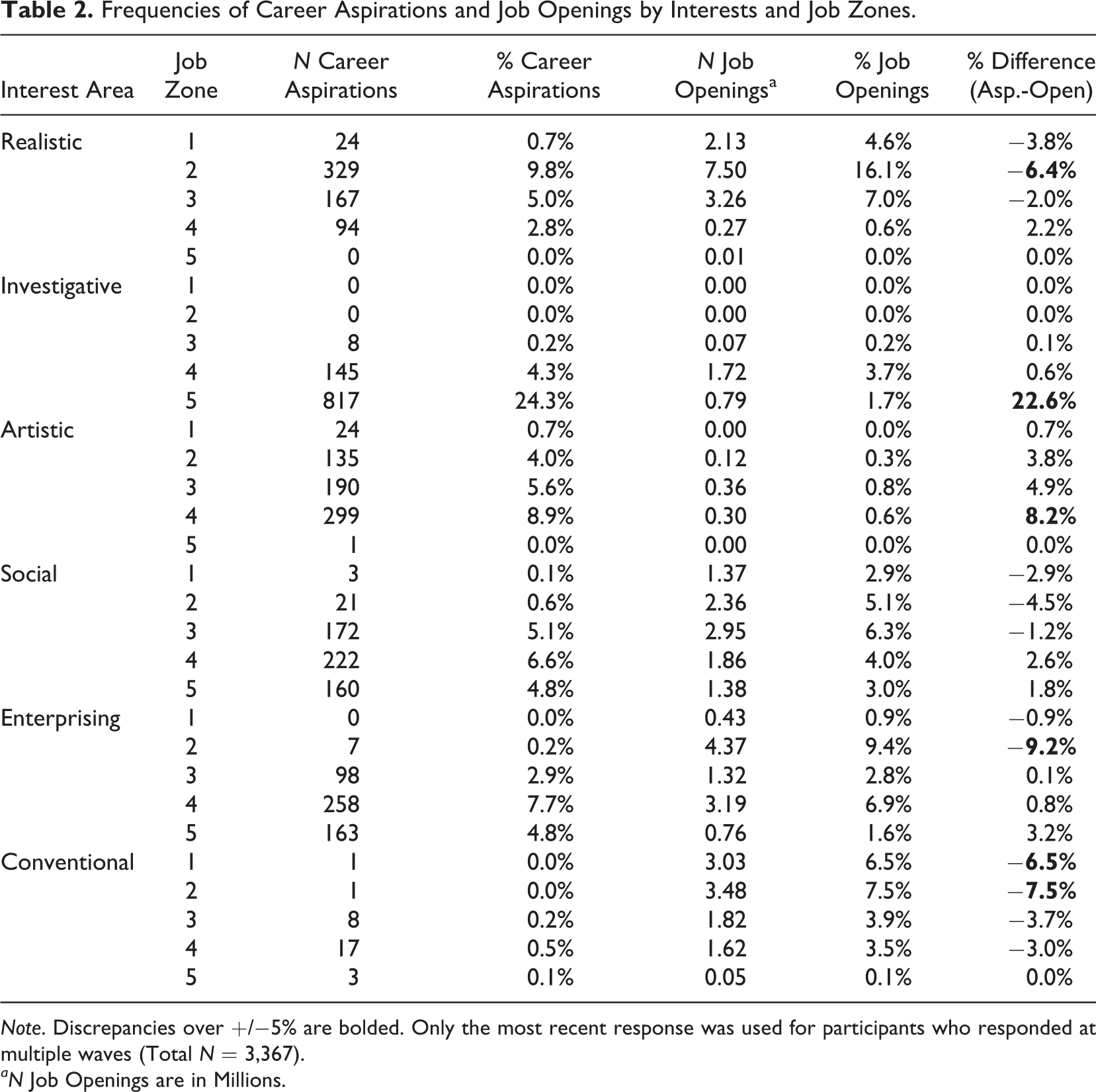
Second, we examined the correspondence between aspirations and national employment numbers across interests and education. Table 2 displays the distribution of career aspirations relative to U.S. job openings from 2014 to 2024, showing how the sample’s aspirations compare to labor demands across RIASEC interests and job zones. The far-right column in Table 2 displays the size of discrepancies between aspirations and job openings. Hypothesis 2 predicted an overabundance of aspirations for enterprising and investigative occupations, especially at higher job zones. This hypothesis was partially supported. The single largest discrepancy was in investigative aspirations at job zone 5—which accounted for 24% of aspirations but only 2% of job openings from 2014 to 2024. Comparably, the discrepancies for enterprising aspirations at job zone 5 were much smaller, as these accounted for 5% of aspirations compared to 2% of job openings. Although not hypothesized, artistic aspirations were also substantially overrepresented (differences ranged from +4 to +8% between aspirations and job openings at job zones 2–4).
Frequencies of Career Aspirations and Job Openings by Interests and Job Zones.
Note. Discrepancies over +/−5% are bolded. Only the most recent response was used for participants who responded at multiple waves (Total N = 3,367).
aN Job Openings are in Millions.
Career aspirations were generally underrepresented in realistic, social, and conventional interests compared to job openings. Notably, conventional career aspirations were almost completely absent. Overall, less than 1% of the sample reported a conventional aspiration, despite conventional interests accounting for over 20% of all job openings (i.e., −19% total difference). The next largest underrepresented areas were for enterprising at job zone 2 (−9% difference), realistic at job zones 1 and 2 (−4% and −6% differences), and social at job zones 1 and 2 (−3% and −4% differences). Overall, these results reveal that aspirations requiring advanced education were typically overrepresented, especially in investigative and artistic interests.
How do Aspirations Differ Across Gender and Race/Ethnicity in Interests and Education?
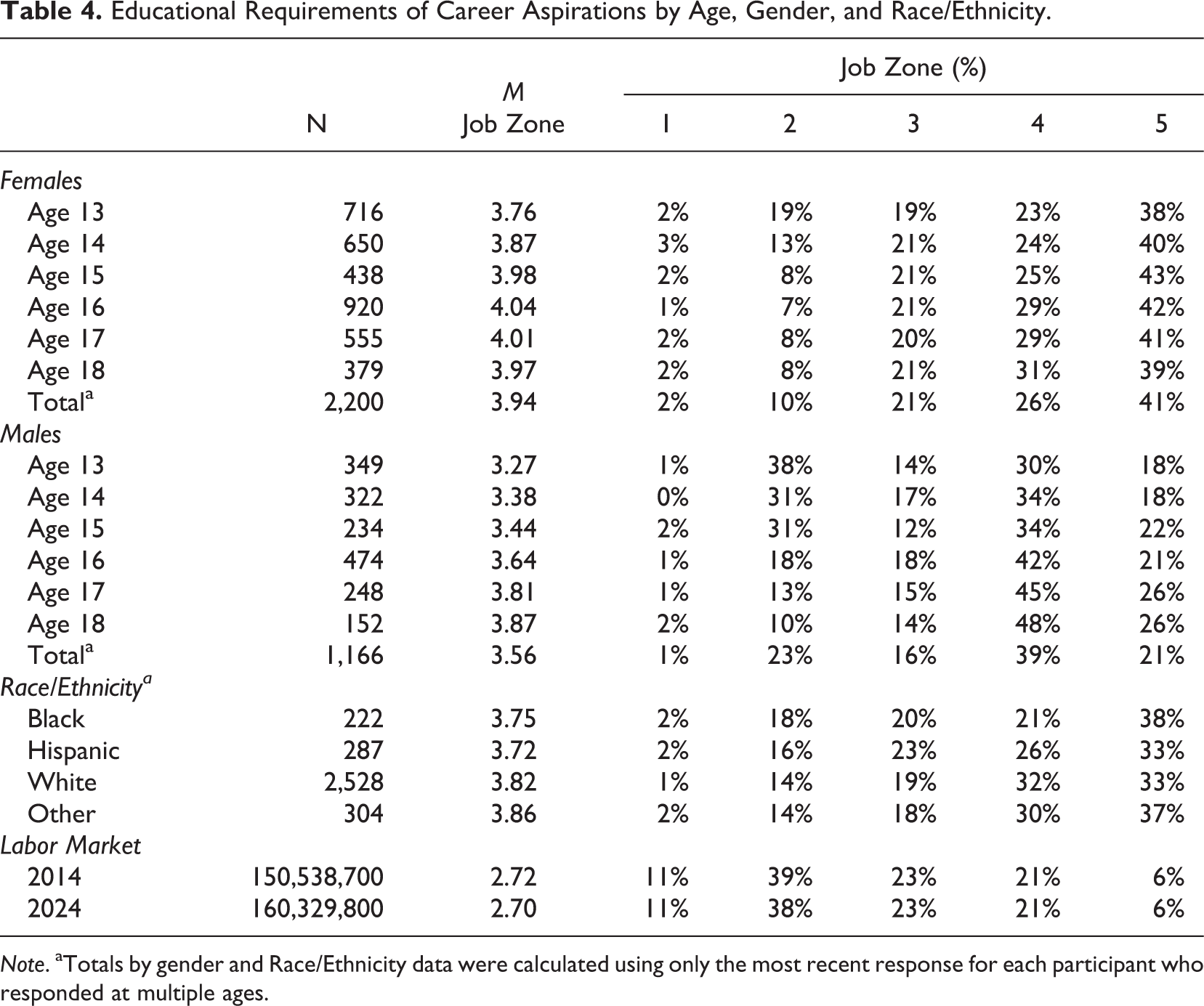
Third, we examined potential gender and race/ethnicity differences in the vocational interests and educational requirements of career aspirations. Table 3 shows the RIASEC distribution of aspirations across gender and race/ethnicity. Table 4 displays the job zones of career aspirations across gender and race/ethnicity. Research question 1 explored potential differences across race/ethnicity. Race/ethnicity was categorized into White, Black, Hispanic, and any other ethnicity (due to smaller sample sizes for other ethnicities). For interests, there were only two significant differences (Social: χ2(3, N = 3,341) = 11.83, p = .008; Enterprising: χ2(3, N = 3,341) = 11.73, p = .008). Bonferroni-corrected pairwise-comparisons revealed that White adolescents and Hispanic adolescents were significantly different from each other in enterprising interests (Hispanics reported more enterprising aspirations), but there were no significant pairwise differences for social interests. For educational requirements, there were no statistically significant differences across ethnicity groups (F(3, 3337) = 1.11, p = .35). Thus, in general, career aspirations did not differ substantially among racial/ethnicity groups in terms of their interests and educational requirements.
Vocational Interests of Career Aspirations by Age, Gender, and Race/Ethnicity.

Note. Adolescent career aspirations were classified into RIASEC categories using their high-point interest code from O*NET.
a Totals by gender and Race/Ethnicity data were calculated using only the most recent response for each participant who responded at multiple ages.
Educational Requirements of Career Aspirations by Age, Gender, and Race/Ethnicity.
Note. aTotals by gender and Race/Ethnicity data were calculated using only the most recent response for each participant who responded at multiple ages.
For gender and interests, Hypotheses 3a and 3b predicted differences in social (favoring females) and realistic (favoring males). Across all waves, significant gender differences were found (χ2(5, N = 3,366) = 659.21, p < .001). In general, males were more likely to aspire to realistic careers, whereas females were more likely to aspire to investigative, artistic, and social careers. Supporting hypotheses 3a and 3b, the largest differences were in realistic and social. There was also a notable age trend for males. The proportion of males reporting realistic aspirations decreased sharply with age, and there was a slight increase in social. These results suggest that males’ aspirations were less consistent with gender norms in late adolescence. Interestingly, gender differences in investigative aspirations (favoring females) were in the opposite direction of those found in a past meta-analytic investigation (Su et al., 2009).
For gender and education, Hypothesis 3c predicted that females’ career aspirations would have higher average degree requirements than males’ aspirations. This hypothesis was supported. Females’ aspirations had higher job zones than males across all waves (d = −.36, 95% CI: [−.43, −.29]). Gender differences were also significant at each age from 13 to 17 years, ranging from d = −.20 (age 17) to d = −.48 (age 15). However, gender differences were not significant at age 18 (d = −.10, 95% CI: [−.29, .09]). In sum, females typically aspired to careers requiring more education than males, and there were also large gender differences in the vocational interests associated with aspirations.
What Were the Automation Risks of Career Aspirations?
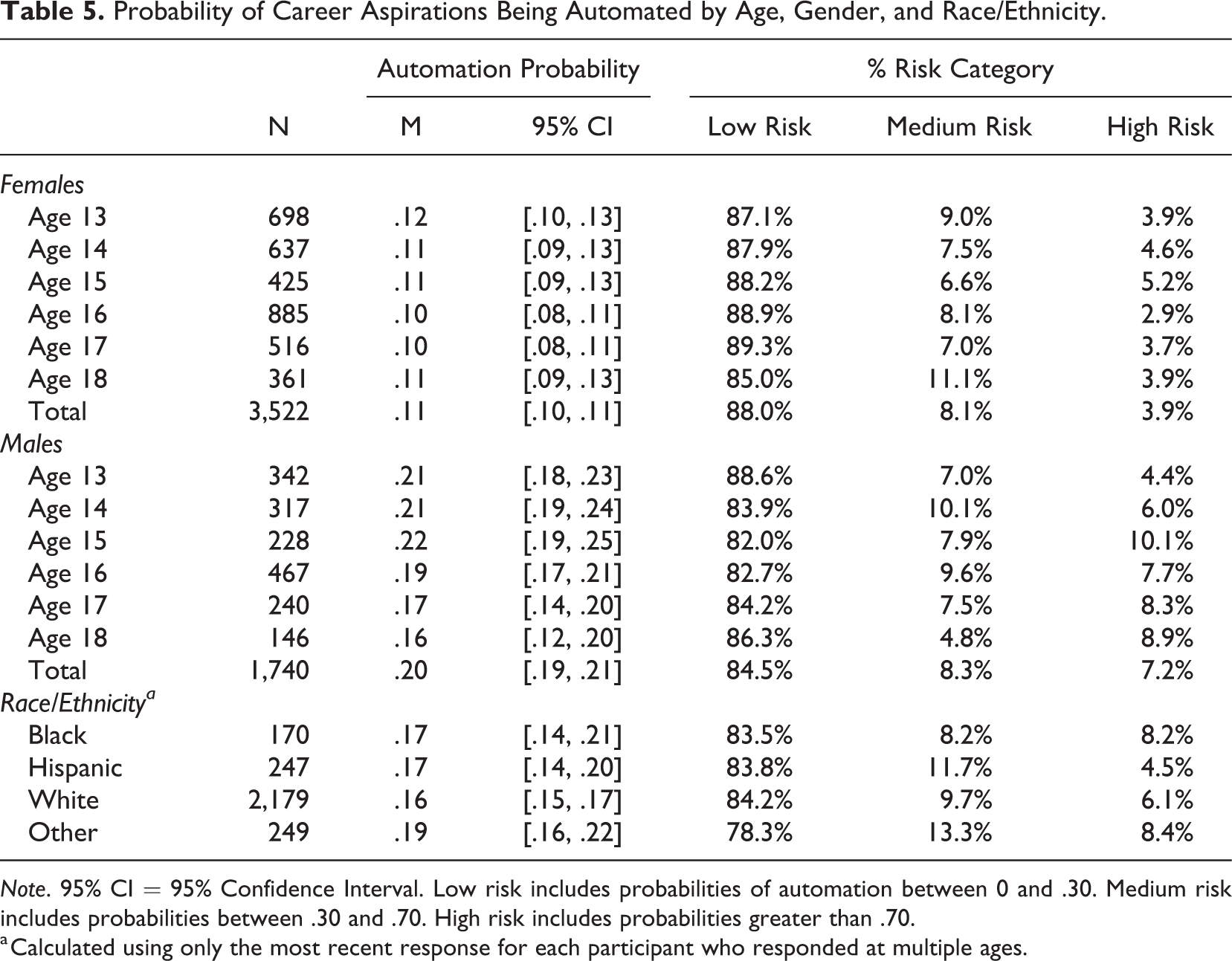
The final set of analyses examined the automation potential of career aspirations. Table 5 displays the automation probabilities, including differences across age, gender, and race/ethnicity. Hypothesis 4 predicted that fewer aspirations would be at high risk of automation (probability > .70) than the average reported by Frey and Osborne (2013), which was 47%. This hypothesis was supported, as overall, only 4% of females and 7% of males had high-risk aspirations. In fact, 87% of the sample’s aspirations were at low risk (probability < .30; c.f., 33% from Frey & Osborne, 2013).
Probability of Career Aspirations Being Automated by Age, Gender, and Race/Ethnicity.
Note. 95% CI = 95% Confidence Interval. Low risk includes probabilities of automation between 0 and .30. Medium risk includes probabilities between .30 and .70. High risk includes probabilities greater than .70.
a Calculated using only the most recent response for each participant who responded at multiple ages.
Research Question 2 explored whether automation risks differed across age, gender, and race/ethnicity. For gender, females’ aspirations had a lower probability of being computerized than males (females: M = .11, 95% CI [.10, .11], males: M = .20, 95% CI [.19, .21]). Figure 2 depicts these probabilities graphically for males and females. Follow-up independent samples t-tests revealed that these differences were significant at each age with age 15 having the biggest gender differences (t(413.6) = 5.44, p < .001) and age 18 having the smallest gender differences (t(230.9) = 2.08, p = .04). Overall, the gender differences were small-to-moderate in size, as Cohen’s d-values ranged from d = .22 (age 18) to d = .48 (age 15). For race/ethnicity, there were no statistically significant differences for automation probabilities (F(3, 2844) = 1.66, p = .17).
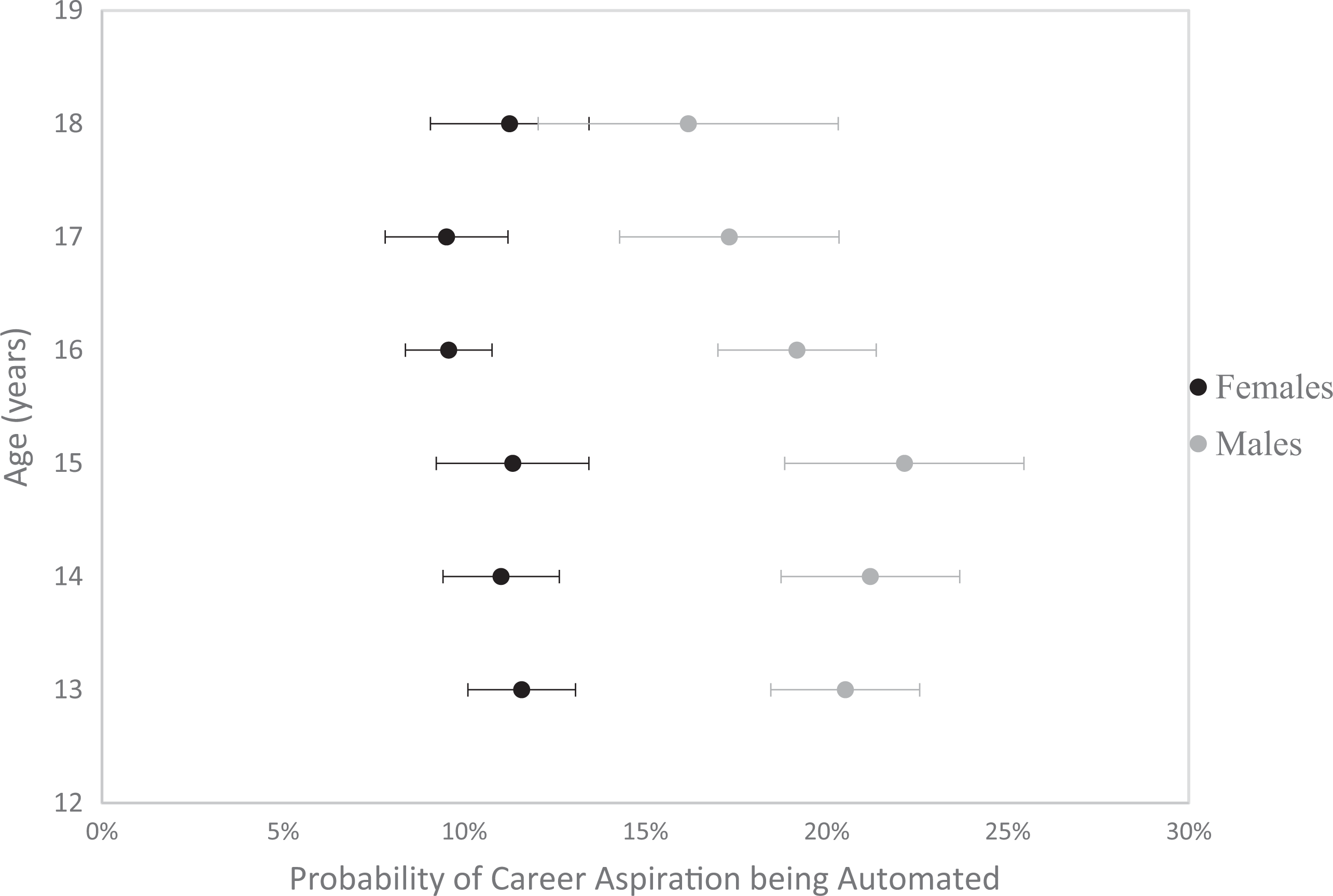
Mean probabilities of career aspirations being automated by age and gender. Error bars display 95% confidence intervals.
Finally, Figure 3 displays the distribution of automation probabilities for males and females using violin plots. The violin plots display the relative frequencies of aspirations at varying probabilities of being replaced by automation. As shown in Figure 3, the distributions were right-skewed for both males and females, as most aspirations were at low risk. However, males’ aspirations had more variability in risk levels compared to females, which helps explain why males’ aspirations were generally at greater risk (due to more high-risk outliers). In sum, the sample’s career aspirations were generally at low risk of being automated, but a small portion of participants aspired to high-risk jobs at each age (particularly males).
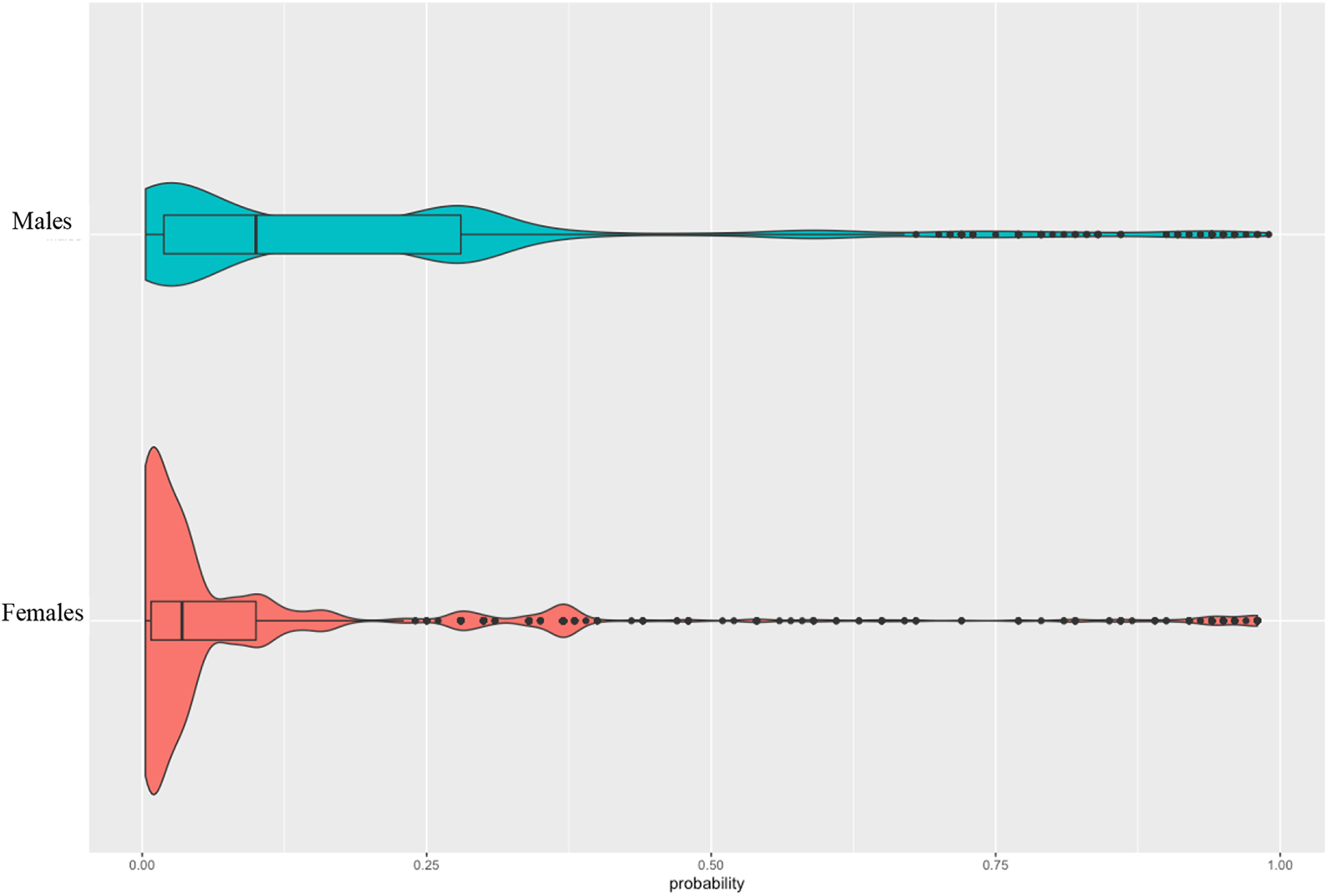
Violin plot displaying distribution of automation probabilities by gender for overall sample.
Discussion
This study examined how adolescents’ career aspirations compare to national job openings and automation risks present in the future of work. We conducted a large-scale coding effort using the O*NET-SOC system (Office of Management and Budget, 2018) to derive objective information about the sample’s aspirations. Our focus on vocational interests, educational requirements, and automation risk levels makes this one of the most comprehensive examinations of career aspirations and labor demands to date (Gottfredson et al., 1975; Metz et al., 2009).
Four key findings emerged from the research. First, the variability of career aspirations increased from early to late adolescence. Whereas over 60% of all 13-year-olds aspired to work in one of the ten most popular occupations for their gender, this proportion dropped to around 40% for 18-year-olds (see Figure 1). This finding is generally consistent with the transition from the growth to exploration stages in Super’s (1980) life-span model, in which career goals become more varied as more exploration processes take place. The increasing variability of career aspirations also suggests that older adolescents are less influenced by occupational stereotypes than younger adolescents, which relates to the differential emphases of the third and fourth stages of Gottfredson’s (1981, 2005) career development theory. It seems that youth become increasingly aware of, and more open to, diverse career possibilities within their range of acceptable careers throughout adolescence.
Second, large discrepancies existed between career aspirations and labor demands across interests and educational requirements. Participants tended to aspire to careers with higher average educational requirements than labor demands. In addition, substantially more adolescents aspired to investigative and artistic careers compared to the number of job openings in these areas. On the other hand, very few participants (<1%) aspired to a conventional interest career, despite conventional jobs accounting for over one-fifth of all U.S. job openings. These observed differences suggest important discrepancies, which could serve as a target for career interventions to address. For example, interventions could focus on promoting greater interest in conventional careers. Research in educational psychology suggests that interest-enhancing interventions are most effective when they integrate attention-getting scenarios, problem-based learning, and utility value enhancements (Harackiewicz et al., 2016; Piesch et al., 2020). Thus, an intervention designed to enhance conventional interests could encourage youth to play organizational and detail-oriented games and teach them about data-oriented technology careers, which often pay well and are likely to increase in job growth.
A third key finding concerned the pattern of gender and race/ethnicity differences in aspirations. Overall, race/ethnicity differences in aspirations were much smaller than gender differences. The largest gender differences were found across realistic and social interests, which replicates past meta-analytic findings (Su et al., 2009). However, a new pattern of results also emerged: females were more likely to aspire to investigative careers compared to males. This finding is encouraging because it counters certain gender role expectations about STEM careers (Su & Rounds, 2015; Wicht et al., 2020). Nonetheless, gender norms clearly still play an outsized role in shaping youth’s career aspirations. Career choice interventions that combat myths about gender roles can encourage more women to enter male-dominated fields (Renninger & Hidi, 2020; Whiston et al., 2017). In addition, a complementary approach is to encourage more males to enter female-dominated occupations—such as teaching, counseling, or nursing—by demonstrating how males can be empathetic and caring and that such characteristics are better measured on a continuum across humanity, rather than female or male only (Block et al., 2019; Carothers & Reis, 2013).
The fourth major finding was that participants typically aspired to careers that were unlikely to be replaced by automation in the coming years (see Figures 2 and 3). A greater proportion of males had high-risk aspirations than females, but both were substantially lower than the average in Frey and Osborne’s (2013) estimates. Importantly, we used Frey & Osborne’s probability estimates for our analyses, so the differences were entirely due to the sample’s choice of ideal careers. In general, more complex jobs requiring higher education and training are less susceptible to automation. Thus, the automation results are consistent with the high average job zones of adolescents’ aspirations. Nonetheless, there were still some popular aspirations at high risk of being computerized—including fashion models, heavy truck drivers, and carpenters. Career counselors and teachers can help mitigate automation risks by informing students about automation’s impact on different careers and providing projected job placement rates for different fields of study (Hirschi, 2018).
Balancing Ambitious Career Aspirations With Employment Realities
Overall, our findings were optimistic in that the sample generally aspired to careers with high educational requirements and low automation risks. However, the mismatch between aspirations and available jobs, even in late adolescence, highlights the reality that not everyone can have their ideal career. This raises an important question: to what extent are lofty, ambitious career aspirations advantageous for individuals and society?
There are several potential benefits of having difficult-to-attain career aspirations. First, children who aspire to more prestigious careers often attain more prestigious jobs (Ashby & Schoon, 2010). Instilling youth with ambitious career goals can therefore promote positive future outcomes. Second, even if adolescents do not end up attaining their ideal job, they may compromise in a better job than they would have otherwise. For example, if an individual who aspires to become a doctor fails a prerequisite course for medical school, they may still pursue a different career in the medical field. Some research even suggests that the more people invest in developing such “backup plans,” the less likely they are to achieve their ideal goal (Napolitano & Freund, 2016, 2017). Applied to career aspirations, this finding may translate into more employable backup plan career options that offer adolescents viable and attainable pathways into the workforce (i.e., the “aim for the moon, land in the stars,” effect).
However, lofty or unrealistic aspirations can be problematic in other cases. Youth who aspire to careers that fit poorly in terms of interests or ability may pursue extensive education or training directed towards a misfitting or unattainable job. Similarly, people who hold an overly fixed view of their career calling can experience negative consequences, such as assuming that they must achieve their dream job to be happy and overlooking other careers that may be more fulfilling (Berkelaar & Buzzanell, 2015). Popular media (e.g., Gehrau et al., 2016) and peers (e.g., Bergin, 2016; Hardie, 2015) can be highly influential in shaping students’ career aspirations, but these sources of information can lead youth to only focus on well-known, stereotypical jobs (e.g., athletes, actors, doctors, and lawyers). Moreover, a mismatch between aspirations and job openings can lead to skills gaps in the labor market (Oswald et al., 2019). Thus, the optimal balance may be having challenging, yet realistic career aspirations in fields with more available jobs.
To promote career aspirations that are both ambitious and pragmatic, it is critical to consider how youth think about careers at different age periods. Both Gottfredson’s (1981, 2005) and Super’s (1980) career theories emphasize the importance of delivering career information to youth in ways that connect to their developing social concerns, interests, and competencies (Gottfredson, 2005; Super, 1980). Our findings revealed important age differences across adolescence, such that gender gaps in interests were much larger during early adolescence. Teachers and counselors who give interest assessments to early adolescents should keep these trends in mind, as it appears likely that gendered interests reach a lifetime peak during early adolescence (Hoff et al., 2018). Another potential strategy to reduce the impact of gender norms on career aspirations is to teach youth about careers that are rarely portrayed in the media, particularly those that are less associated with a sex-type. For example, career talks, videos, or worksite visits can be used to introduce students to lesser-known occupations and describe the rewards and social benefits of these careers (Kashefpakdel & Percy, 2017).
We also note that external events always have the potential to disrupt the labor market (Akkermans et al., 2020). Many of the industries that experienced the greatest job losses during the COVID-19 pandemic were designated as high-risk according to Frey and Osborne’s (2013) estimates (e.g., food services, merchandise stores, and entertainment; Berube & Bateman, 2020). However, there were large disparities in how job losses impacted people with different educational backgrounds and social identities. For example, people of color, and especially women of color, were more likely to experience job loss and have been slower to benefit from the economic recovery (Rattner & Franck, 2021). Our study did not reveal race/ethnicity differences in the automation risks of adolescents’ career aspirations, but strong disparities in the actual labor market highlight the need for future research to investigate how automation risks impact workers differently at the intersection of race, gender, and education (Flores et al., 2019).
Strengths, Limitations, and Future Directions
Our study provided an extensive comparison of career aspirations to national employment demands across vocational interests and educational requirements. A primary strength is that we integrated information from several large datasets—including O*NET and the Bureau of Labor Statistics—to match career aspirations to job openings over ten years when the sample entered the labor market. We also incorporated automation risk probabilities from an economic analysis (Frey & Osborne, 2013). Nonetheless, it is important to note several limitations.
First, the sample was not representative of all U.S. adolescents. Participants were sampled across 42 states, but rural students were slightly oversampled, and students from lower SES schools were likely underrepresented due to difficulties recruiting and retaining schools with fewer resources (Lerner & Lerner, 2013). The findings concerning ethnicity differences should be interpreted with this in mind, as previous studies have shown that career aspirations differ as a function of both race and socioeconomic status (Howard et al., 2011; Mello, 2009). We were unable to examine the role of socio-economic status in the current study because it was not collected in the sample. Future research is needed to examine the role of specific socio-economic factors, such as parental education and family income, on youth’s career aspirations (e.g., Flouri et al., 2015). For example, studies could examine how the automation risks of youth’s career aspirations differ as a function of their parents’ occupations and education levels.
A second limitation is that we used cross-sectional analyses to examine age differences. This afforded substantially more statistical power for the analyses in the current work. However, future longitudinal studies are needed to track within-person changes in career aspirations in relation to labor demands. These studies could provide valuable insights that complement our findings concerning cross-sectional age differences. Third, it is important to note that our data was collected from 2004 to 2011, so inevitably some of the most popular career aspirations have changed due to cohort effects (Schoon & Parsons, 2002). Nonetheless, our overall findings concerning the high concentration of career aspirations are consistent with a recent PISA study of 41 countries (Mann et al., 2020). Thus, our findings call for more research on ways to promote greater variability in career aspirations to better match labor demands (Metz et al., 2009). Qualitative research designs could be especially useful in identifying specific factors that lead some youth to pursue non-traditional careers, which could serve as an impetus for career choice interventions.
Conclusion
This research examined the career aspirations of a large sample of American adolescents in relation to the future of work. Findings revealed that most adolescents aspired to careers at low risk of being replaced by automation, likely because of their high education and training requirements. However, notable discrepancies existed between the types of careers that adolescents aspired to and the jobs that were available when the sample began employment. These findings inform career theory and can guide workforce development programs aimed at helping young people prepare for and achieve success in their future careers.
Footnotes
Acknowledgments
This research is supported by the University of Illinois Campus Research Board (RB 18045). The original data collection was supported was supported by a grant from the National 4-H Council to Richard M. Lerner (Tufts University). We thank Tufts University’s Institute for Applied Research in Youth Development, particularly Richard M. Lerner and Kristina Schmid Callina for sharing these data. We are also grateful to Jacqueline Breimeier, Michael Caliendo, Nancy Lazaro, Shannon Lee, Lingyue Li, and Yan-Yu Yang, undergraduate research assistants who coded qualitative data for this research.
Declaration of Conflicting Interests
The author(s) declared no potential conflicts of interest with respect to the research, authorship, and/or publication of this article.
Funding
The author(s) disclosed receipt of the following financial support for the research, authorship, and/or publication of this article: This research was supported by the University of Illinois Campus Research Board (RB 18045) and a grant from the National 4-H Council.
