



Abstract
Despite a plethora of research on turnover intentions, we know little about the impact of subjective career aspects (e.g., authenticity, recognition, and meaningful work) on turnover intentions. Drawing upon turnover theory, we argue that subjective career success negatively influences organizational and occupational turnover intentions. This negative effect will be stronger in the presence of career competencies and high perceived employability. To test these relationships, we conducted two field studies using a two-wave survey method. Results of both studies indicated that the negative impact of subjective career success on turnover intentions was strongest when the perceived employability and career competencies were high. In Study 1, we found these relationships significant for organizational turnover intentions. Through Study 2, we found significant results for occupational turnover intentions due to their occupational investments in a new profession. We discuss the contributions of findings to the careers and turnover literature.
Keywords
Introduction
Business organizations worldwide are witnessing a rapid increase in working professionals changing their organizations and occupations (Guan et al., 2019; Sullivan & Al Ariss, 2021). For example, the latest monthly turnover rates in the U.S. at 2.9% are the highest ever reported figures (Bureau of Labor Statistics, 2021). Similarly, India recorded the decade's highest annual turnover rates at 20% in 2021 (Aon, 2021). This is because working professionals with organizational turnover intentions increased from 49% to 75%, with a change of 26% in the last 2 years (Deloitte, 2019; Michael, 2021). In the same way, professionals with occupational turnover intentions are also set to grow 25% by 2030 (McKinsey, 2021). Although prior research states that working professionals benefit from the frequent organizational and occupational changes in terms of higher salary (Cheramie et al., 2007; Lam et al., 2012), career advancement (Cheramie et al., 2007), and greater career satisfaction (Colakoglu, 2011; Stumpf, 2014), organizations as a whole suffer from significant turnover issues (Feldman & Ng, 2007) and substantial replacement and training costs (Allen et al., 2010; Dess & Shaw, 2001). While the present career success is known to be the outcome of past career changes, we know very little about how the same could act as an antecedent to future turnover decisions.
Recently, Guan et al. (2019) necessitated the examination of present career success's influence on future mobility. Though a few studies investigated the antecedent role of present career success on future turnover decisions, they focused mainly on the objective factors. For example, past research studies have identified the career success factors such as salary (Carless & Arnup, 2011; Guan et al., 2014), job level (Guan et al., 2014), number of promotions (Weng & McElroy, 2012), and career satisfaction (Guan et al., 2014; Barthauer et al., 2020) in shaping turnover intentions. While the above studies contribute to the knowledge of career success influence on turnover decisions, they rarely explored the subjective career success aspects. Subjective career success is a focal career actor`s evaluation and experience of achieving personally meaningful career outcomes (Ng et al., 2005; Shockley et al., 2016). However, studies often use job or career satisfaction as a measure of subjective career success that captures only the perceptions of objective indicators leaving many important subjective career aspects (Arthur et al., 2005; Spurk et al., 2019). These subjective career aspects include recognition, quality of work, meaningful work, influence, authenticity, growth and development, personal life, and satisfaction (Shockley et al., 2016). These factors occupy salience in the present times as more people are leaving their present employment to enhance their subjective aspects of work (Hall, 2022; Sull et al., 2022). More importantly, established research also stresses the importance of subjective career success factors (Arthur et al., 2005; Aryee et al., 1994; Gattiker & Larwood, 1986; Ng et al., 2005; Ng & Feldman, 2014; Spurk et al., 2019). Therefore, in the current study, we explore the relationship between subjective career success and turnover intentions.
Additionally, the few research studies that attempted to examine the role of career success factors on turnover intentions did not explore various types of turnover intentions (e.g., organizational and occupational). Prior research (Arthur, 1994; Blau, 2007; Louis, 1980; Sullivan & Al Ariss, 2021) highlights that organizational and occupational turnover intentions differ significantly (see also Feldman, 2002; Feldman & Ng, 2007; Uppal, 2015; Zimmerman et al., 2020). Moreover, future occupational changes greatly depend on the current occupational investments (Dlouhy & Biemann, 2018; Medici et al., 2020; Zimmerman et al., 2020). Given these, we examine the impact of subjective career success on organizational and occupational turnover intentions by adopting a two-study approach. Firstly, Study 1 investigates these relationships among full-time working professionals with no significant occupational investments. In contrast, Study 2 tests the same relationships in the context of occupational investments in a new profession.
To explore these relationships, we draw from March and Simon's (1958) turnover theory, which stipulates that desirability and ease of movement influence turnover intentions. The desirability of movement arises from the agent factors (e.g., subjective career success). The ease of movement is assessed through the interaction of agent and structure factors (e.g., career competencies and perceived employability). Accordingly, we argue that the interaction between career competencies and perceived employability influences the relationship between subjective career success and organizational and occupational turnover intentions. Therefore, we focus on the moderating effect of career competencies and perceived employability on the relationship between subjective career success and organizational and occupational turnover intentions (see Figure 1). Conceptual model.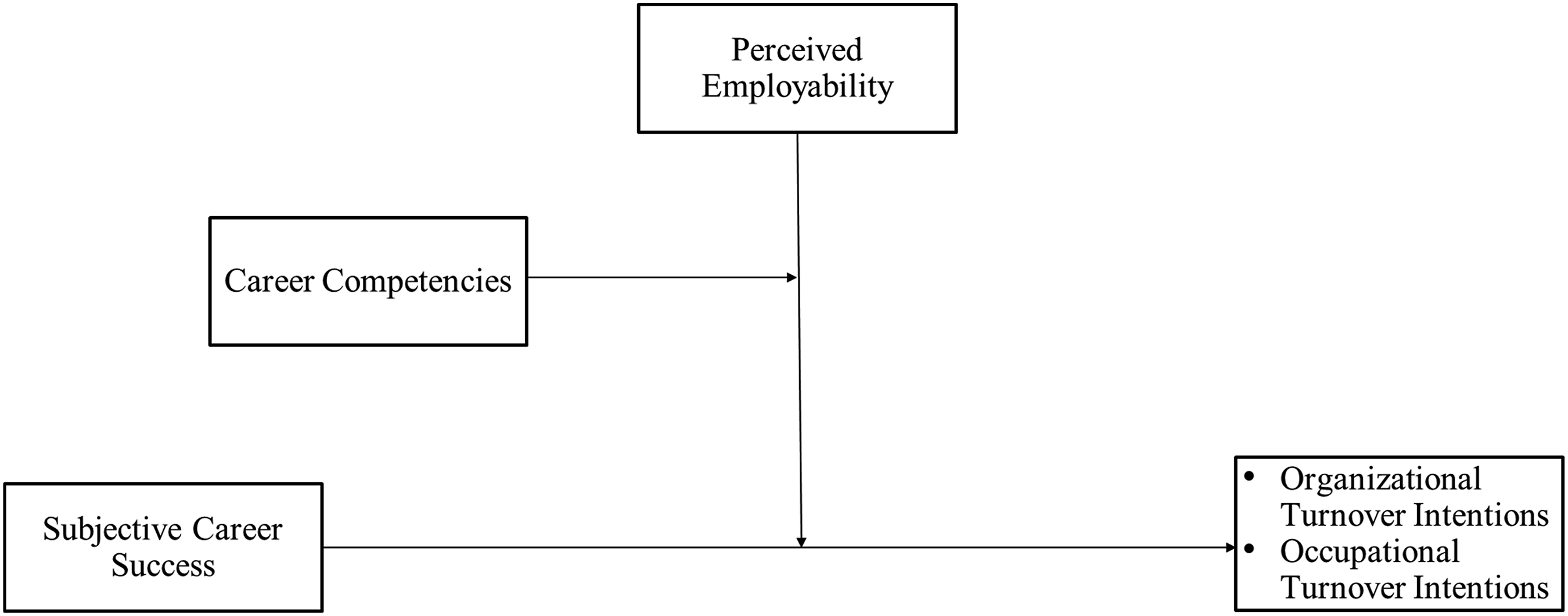
This study contributes to the literature mainly in three ways. So far, the careers literature considered subjective career success as an outcome but rarely as an antecedent, presenting a unilateral view. Further, our knowledge of boundaryless careers is limited to the role of career changes in attaining career success, ignoring the reciprocal effects (Guan et al., 2019). Our first contribution is to the careers literature by providing empirical evidence on how subjective career success can be an antecedent to future mobility decisions. Further, we provide insights into the complicated interdependence of career success and boundaryless careers.
Second, although prior research establishes that organizational and occupational turnover intentions are different (Blau, 2007; Louis, 1980; Sullivan & Al Ariss, 2021), the empirical evidence testing both are limited in turnover research. We contribute to this turnover literature by unfolding the influence of subjective career aspects on organizational and occupational turnover intentions moving beyond the standard measures like job or career satisfaction. This research enhances our understanding of a growing set of predictors of turnover intentions.
Third, the focus of the extant turnover literature mainly revolved around understanding the direct relationship between various predictors and turnover intentions (Rubenstein et al., 2018). However, it is more important to investigate the boundary conditions and relevant contexts where these relationships alter. In the current study, we uncover a few important boundary conditions (i.e., perceived employability and career competencies) where the strength of the relationship between subjective career success and turnover intentions varies. Similarly, our two-study approach highlights the importance of context in studying these relationships unveiling context-specific insights.
Conceptual Background and Hypotheses Development
The seminal work of Louis (1980) laid foundational steps for exploring various types of inter-role career changes such as intracompany, intercompany, and inter-profession. Later on, from1990s careers research witnessed a new concept, boundaryless career, which explains career changes in more than one employment setting (Arthur, 1994; Arthur & Rousseau, 1996). Career changes are influential events in people's working lives that imply movement across boundaries (Chudzikowski, 2012). For example, people undertake career changes at various dimensions such as horizontal (change in functional department), vertical (change in the hierarchy through promotions), and contextual (changing organizations and occupations) (Chudzikowski et al., 2009; Sullivan & Arthur, 2006). Prior studies have focused on organizational change, with little attention to occupational change, although these changes source high costs and risks (Medici et al., 2020; Zimmerman et al., 2020).
These organizational and occupational changes are often driven by prior turnover intentions. Past research established that turnover intentions are the most proximal indicators of career change decisions (Ajzen, 1991; Blau, 2007; Mobley et al., 1979; Rhodes & Doering, 1983; Rubenstein et al., 2018). With the support of these theoretical perspectives, several recent studies have examined various underlying mechanisms of turnover intentions (Barthauer et al., 2020; De Oliveira et al., 2019; Guan et al., 2015; Richard et al., 2020; Van der Heijden et al., 2018; Yousaf et al., 2018). Accordingly, in the current study, we consider the organizational and occupational turnover intentions as proxies for organizational and occupational changes.
To study the antecedents to the above-discussed turnover intentions, we rely on March and Simon (1958) turnover theory, which specifies two critical factors influencing voluntary turnover decisions: desirability and ease of movement. In the extant literature, job satisfaction is the most common measure of the desirability of movement; similarly, movement capital and perceived job alternatives are for ease of movement (Griffeth et al., 2000; Mitchell et al., 2001; Zimmerman et al., 2019). In the current study, we employ subjective career success, an individual assessment of subjective aspects of work to represent the desirability of movement. Further, the turnover theory posits that the ease of movement factors further influences the strength of the relationship between desirability factors (i.e., subjective career success) and turnover intentions. That is to say that the ease of movement factors may strengthen or weaken the relationship between subjective career success and turnover intentions.
The ease of movement perspective results from the interaction between agentic factors (i.e., movement capital) and structure factors (i.e., perceived job alternatives). Movement capital refers to the individual skills, capabilities, and resources that increase their chances of obtaining alternate employment (Trevor, 2001). These can be individual differences (e.g., education, personal attitudes, and cognitive abilities), job-related skills, and access to influential social networks. Prior studies related movement capital with the three types of career competencies: knowing-why, know-how, and know-whom competencies (Forrier et al., 2009; Peeters et al., 2020). Know-why competencies refer to self-awareness that builds a career identity. Know-how competencies denote an individual's human capital to meet the current job performance expectations. Know-whom competencies focus on the strength of the social capital that showcases career-relevant networks. Similarly, structure factors refer to the external labor market conditions that determine available job alternatives (Direnzo & Greenhaus, 2011). Hence, the working professionals' ease of movement is dependent on the interaction of these two aspects. Accordingly, in the current study, we employ career competencies (i.e., movement capital) and perceived employability (i.e., perceived job alternatives) to represent ease of movement.
Subjective Career Success
Subjective career success depicts the individuals' assessment of personally meaningful career outcomes (Ng et al., 2005; Shockley et al., 2016). Subjective career success is often assessed with perceptions of objective indicators such as salary, hierarchical status, and the number of promotions (Gattiker & Larwood, 1986; Greenhaus et al., 1990; Turban & Dougherty, 1994). Prior research established that these subjective career success factors negatively relate to turnover intentions (Barthauer et al., 2020; Blau, 2007; Guan et al., 2014). For example, Guan et al. (2014) found a negative relationship between career satisfaction and turnover intentions among Chinese managers. Recently, Barthauer et al. (2020) also found a negative influence of career satisfaction on turnover intentions.
However, the structural changes in organizations and employee attitudinal shifts in contemporary careers make the above factors insufficient to capture subjective aspects of work (Shockley et al., 2016; Zhou et al., 2013). These subjective aspects include recognition, quality of work, meaningful work, influence, authenticity, growth and development, personal life, and satisfaction (Shockley et al., 2016). Recognition is the formal or informal acknowledgment of work by others at the workplace (e.g., the supervisor giving positive feedback on the work performed). Quality of work refers to a sense of producing a high-quality product or service. Meaningful work states engaging in a personally valued work (e.g., working in alignment with career calling). Influence talks about the impact created on the organization and its members. Authenticity shapes the career according to personal priorities (e.g., having more autonomy and flexibility). Growth and development focus on career advancement through the acquisition of relevant skills. Personal life denotes a positive balance between work and family. Satisfaction indicates positive feelings about one`s career.
Working professionals continuously strive to achieve these subjective factors in their present employment. If the present employment fails to offer these subjective aspects (e.g., authenticity, recognition, and meaningful work), they develop intentions to change their organization or occupation that may provide the same. Consequently, subjective assessment of these non-objective factors (e.g., authenticity, recognition, and meaningful work) is likely to promote turnover intentions. Thus, often, working professionals solve their present career issues (e.g., low subjective career success) by changing their organizations and occupations. Therefore, based on prior research and turnover theory, we propose that subjective career success causes the desirability of organizational and occupational turnover intentions. Accordingly, we expect that working professionals with high subjective career success are unlikely to have turnover intentions. In contrast, professionals with low subjective career success are more likely to have strong turnover intentions. Hence, we hypothesize that subjective career success is negatively related to organizational and occupational turnover intentions.
Perceived Employability
In addition, the turnover theory posits that ease of movement influences the relationship between desirability factors and turnover decisions. Perceived employability is one of the crucial factors related to ease of movement. Perceived employability showcases the possibilities of getting an alternate job or entering a new occupation (i.e., perceived job alternatives) based on the external labor market conditions (Berntson & Marklund, 2007; Forrier et al., 2009). Perceived employability was initially conceived with graduating students and unemployed professionals, however, with the changing patterns of careers, the term employability has become more relevant to full-time working professionals considering their future career changes (Arthur & Rousseau, 1996).
Perceived job alternatives alter the strength of the direct relationship between the desirability factors and turnover decisions (Direnzo & Greenhaus, 2011; Trevor, 2001). For example, Wheeler et al. (2007) examined the moderating role of perceived job alternatives on the negative relationship between job satisfaction and turnover intentions. Similarly, Swider et al. (2011) found a stronger negative relationship between job satisfaction and turnover if the perceived job alternatives are high. In a recent review, De Vos et al. (2021) establish that the turnover decisions of working professionals greatly depend on their perceived employability levels. Therefore, the turnover theory and prior research suggest that working professionals’ turnover intentions significantly differ based on their perceived employability. Thus, the turnover intentions of working professionals caused by low subjective career success would become stronger if the perceived employability is high. Hence, we propose that perceived employability moderates the negative relationship between subjective career success and organizational and occupational turnover intentions.
Career Competencies
Defillippi and Arthur (1994) conceptualized career competencies with three types of knowing. Know-why competencies refer to career identity, motivation, and planning aspects. Know-how competencies focus on relevant knowledge, skills, and abilities to perform the current job assignments. Know-whom competencies concerned with networking abilities and social capital. These three competencies have proven crucial in boundaryless careers where people build their careers across organizational and occupational boundaries.
Prior research suggests that professionals with high career competencies have better employment opportunities in a new organization or occupation. For example, Blokker et al. (2019) investigated the role of career competencies in maintaining young professionals' employability in the context of career shocks. Similarly, Peeters et al. (2020) examined how movement capital consisting of similar competencies positively enhances perceived employability over time. Because working professionals with high career competencies craft better career plans, possess the required skills and have access to professional networks that advance their employment opportunities or job alternatives. In conclusion, the three aspects of career competencies represent career motivation, career-related skills, and career network determine working professionals' employability in the external labor market.
Drawing on turnover theory, we argue that ease of movement results from the interaction between career competencies and perceived employability. Although perceived employability captures the external labor market conditions, the individuals need to possess the necessary individual competencies to find alternate employment. So, working professionals with low subjective career success look for favorable labor market conditions and possess career competencies to develop turnover intentions that prompt an organizational or occupational change. On the contrary, the absence of career competencies and perceived employability may significantly reduce the negative impact of subjective career success on turnover intentions. Thus, in line with turnover theory and prior research, we propose that high career competencies promote employability, strengthening the negative relationship between subjective career success and organizational and occupational turnover intentions. Therefore, we focus on the moderating effect of perceived employability and career competencies on the negative relationship between subjective career success and organizational and occupational turnover intentions. Thus, we hypothesize the following three-way interactions:
Methodology
Research context
We have chosen India as the relevant career context for the current research. While most empirical research on careers is conducted in the developed economies (i.e., the western context), studies focusing on developing economies are limited (Baruch et al., 2020; Rubenstein et al., 2018). India is one of such important career contexts having the second-highest labor force in the world (World Bank, 2022). It consists of a diverse workforce with significant social, cultural, and economic differences compared to the West. Working professionals in India have primarily relied on traditional career patterns restricting themselves to a single employment setting. However, the emergence of multinational and domestic organizations in the country adopting global practices provides its workforce with the necessary exposure to new career concepts (e.g., boundaryless careers). In addition, prior literature finds significant differences in organizational career management practices of developed and developing nations (Budhwar & Baruch, 2003). Therefore, conducting research in such a distinct context with limited representation provides more nuanced insights.
Procedure
In this paper, we report on two field studies that model the impact of subjective career success on organizational and occupational turnover intentions moderated by perceived employability and career competencies. In both studies, we administered the survey in English as it matches the sample's primary language in the workplace. Further, the education system at various levels (e.g., secondary, higher secondary, and tertiary) in India delivers all subjects in English or has it as a separate subject. Hence, no translation procedures were needed. We used a two-wave survey method to collect data for both studies as it allows a significant time gap to record the underlying factors and the resultant outcomes. This design also addresses the common method bias issues by allowing temporal separation between the predictor and criterion variables (Podsakoff et al., 2012). We used self-generated identification codes to match the responses recorded at two different time points, including the first letter of surname, first name, place of birth, and month of birth (Schnell et al., 2010). Accordingly, we collected data through two self-reported surveys from full-time working professionals of different organizations in India for Study 1 and working professionals who enrolled in full-time management programs at one of India's reputed business schools for Study 2. We deemed these to be appropriate samples to test our hypotheses because full-time working professionals with no significant occupational investments often change organizations, whereas working professionals who invest in new occupations primarily consider changing the occupation. We explain the specific procedure followed for each study in further sections of the paper.
Measures
We assessed the internal and discriminant validity of the instruments with average variance extracted (AVE) and the square root of average variance extracted (DV) figures as recommended by Fornell and Larcker (1981). We measured the internal reliability of the instruments using Cronbach`s alpha. Unless specified explicitly, all the instruments are rated on a 5-point Likert scale ranging from strongly disagree (1) to strongly agree (5).
Subjective Career Success
Subjective career success was measured through a 24-item scale developed by Shockley et al. (2016) with a sample item as "Considering my career as a whole, I think my work has been meaningful.". Average variance extracted (AVE) = .59, discriminant validity (DV) = .77, and Cronbach`s alpha = .95 for Study 1; AVE = .56, DV = .74, and Cronbach`s alpha = .94 for Study 2.
Perceived Employability
Perceived employability was measured through a four-item scale developed by De Witte (2000) with a sample item as "I could easily find another job if I wanted to.". This scale consistently demonstrated high reliability in the previous empirical studies (e.g., (Cuyper et al., 2008)). AVE = .67, DV = .82, and Cronbach`s alpha = .89 for Study 1; AVE = .57, DV = .75, and Cronbach`s alpha = .83 for Study 2.
Career Competencies
Career competencies were measured with a 21-item scale developed by (Akkermans et al., 2013), which exhibited high reliability in the previous empirical studies (e.g., (Blokker et al., 2019) with a sample item as "I am able to explore my possibilities on the labor market.". AVE = .51, DV = .72, and Cronbach`s alpha = .94 for Study 1; AVE = .54, DV = .73, and Cronbach`s alpha = .92 for Study 2.
Organizational Turnover Intentions
Organizational turnover intentions were measured through three items adapted from Meyer et al. (1993), with a sample item as "I frequently thought about leaving my current organization.". AVE = .57, DV = .75, and Cronbach`s alpha = .75 for Study 1; AVE = .56, DV = .74, and Cronbach`s alpha = .73 for Study 2.
Occupational Turnover Intentions
Occupational turnover intentions were measured through three items adapted from Meyer et al. (1993), with a sample item as "I frequently thought about leaving my current occupation.". AVE = .54, DV = .73, and Cronbach`s alpha = .72 for Study 1; AVE = .70, DV = .83, and Cronbach`s alpha = .86 for Study 2.
Control Variables
We considered gender, age, highest educational qualification, and work experience as the control variables that may impact the study variables. For example, gender and age may influence subjective career success, whereas the highest educational qualification and work experience may affect career competencies and the frequency of career changes.
Study 1
We collected the data from full-time working professionals representing different organizations in India. We sourced these diverse participants through multiple channels such as authors' professional networks, online professional platforms, and Email requests to know their interest in participating in the study. We then designed two surveys and shared them with the interested participants at two-time points with a gap of 3 months. At Time 1, we collected data for demographic details, subjective career success, career competencies, and perceived employability, and at Time 2, organizational and occupational turnover intentions. We obtained responses from 303 working professionals at Time 1, out of which 51 people did not respond at Time 2. Seven responses with self-generated identification codes did not match, reducing our Time 2 sample to 245. Out of which, we obtained 235 (77.5% of the total population) usable responses.
Among the respondents, 167 were men, and 68 were women. Additionally, 71.1% of the respondents were less than 30 years old, 23.5% were 31–35 years old, and 5.1% were more than 35 years old. Furthermore, 54.9% of the respondents were graduates, and 43.4% were post-graduates. Finally, 54.9% had up to 5 years of work experience, 29.4% had less than 10 years, and 15.7% had more than 10 years.
Results
Preliminary Analysis
Descriptive Statistics and Intercorrelations Among the Study Variables (Study1).
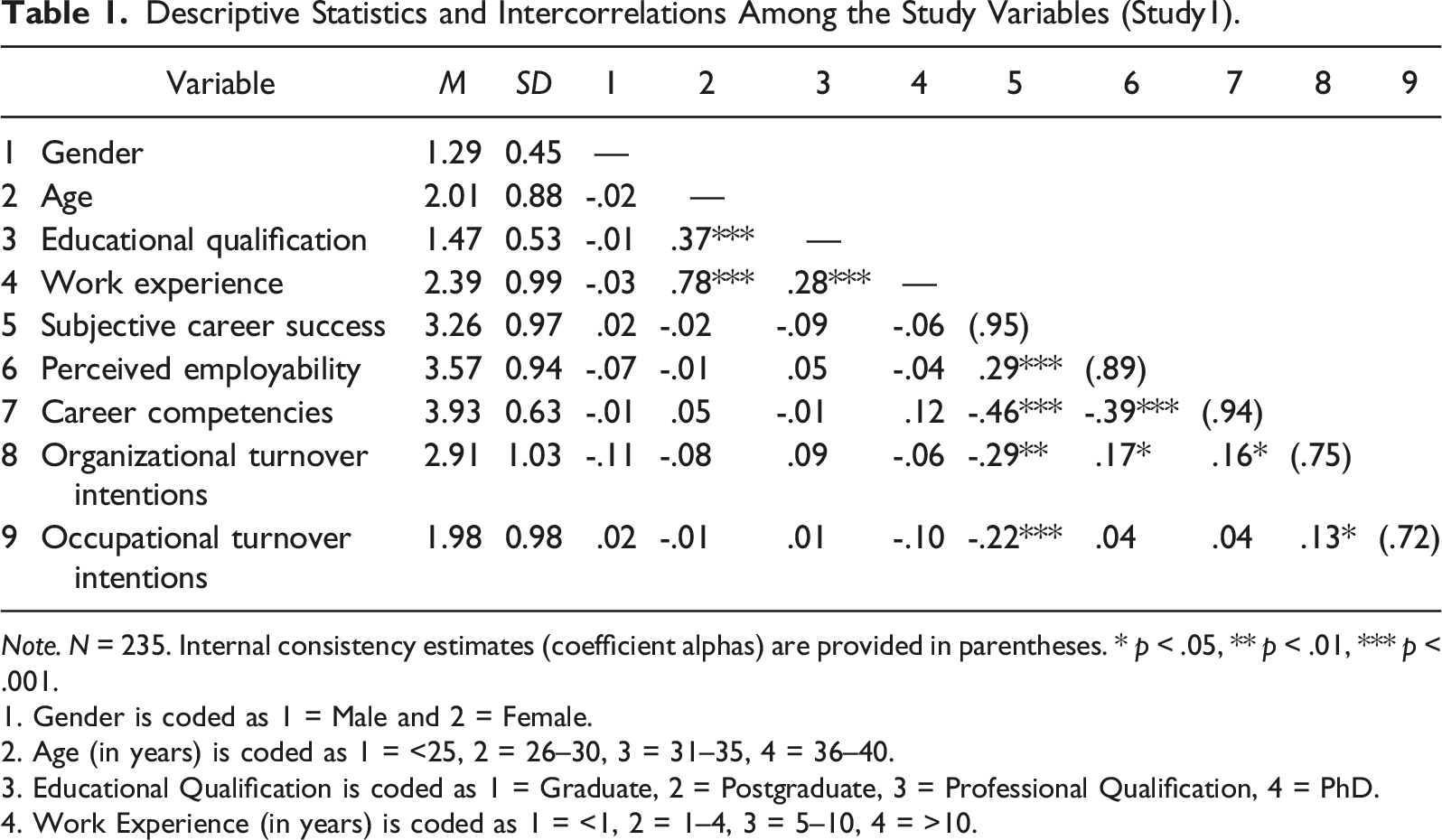
Note. N = 235. Internal consistency estimates (coefficient alphas) are provided in parentheses. * p < .05, ** p < .01, *** p < .001.
1. Gender is coded as 1 = Male and 2 = Female.
2. Age (in years) is coded as 1 = <25, 2 = 26–30, 3 = 31–35, 4 = 36–40.
3. Educational Qualification is coded as 1 = Graduate, 2 = Postgraduate, 3 = Professional Qualification, 4 = PhD.
4. Work Experience (in years) is coded as 1 = <1, 2 = 1–4, 3 = 5–10, 4 = >10.
Hypothesis Testing
Results of Regression Analysis (Study 1).

Notes. β = standardized coefficients; B = unstandardized coefficients; SE = standard error. * p < .05, ** p < .01.
Tests of simple slopes (Study 1).
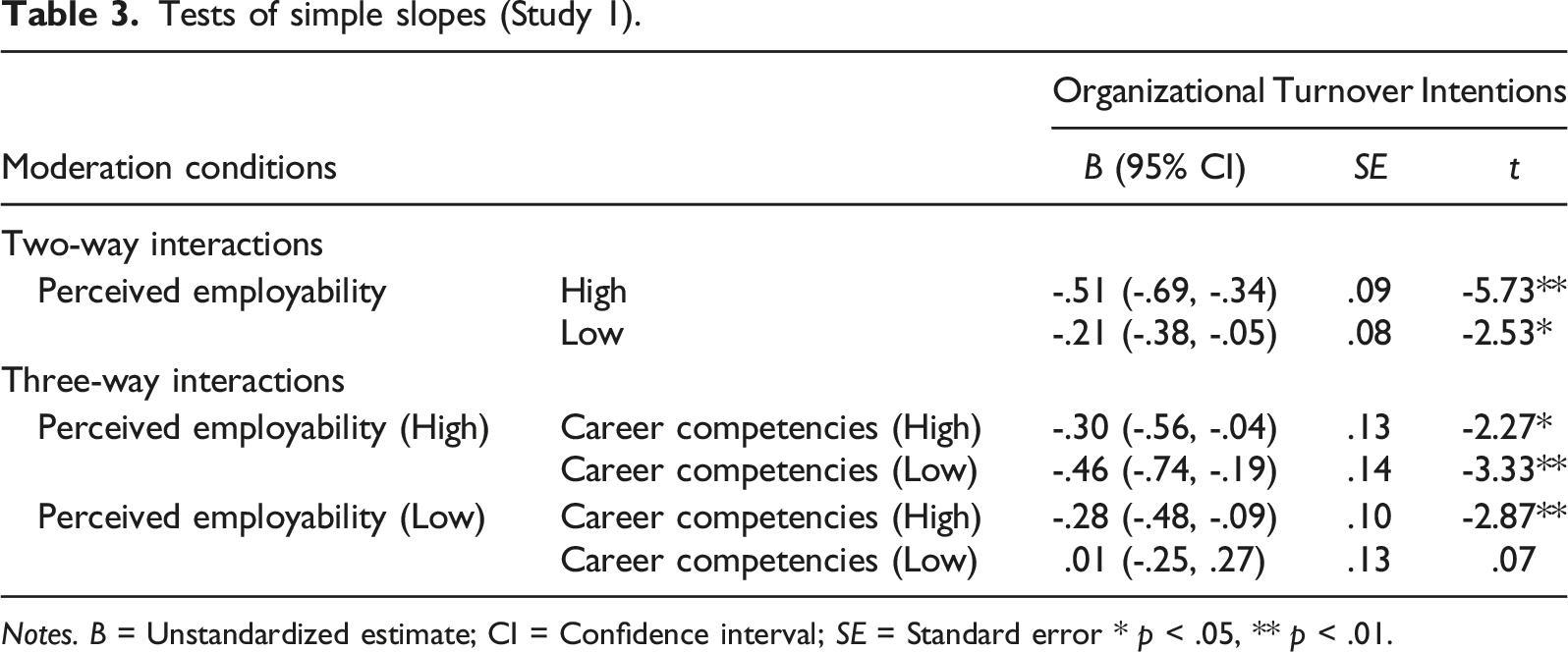
Notes. B = Unstandardized estimate; CI = Confidence interval; SE = Standard error * p < .05, ** p < .01.
Results showed that professionals` subjective career success was negatively related to organizational turnover intentions (B = -.30, SE = .08, p < .001) and occupational turnover intentions (B = -.35, SE = .07, p < .001) supporting Hypothesis 1a and 1b. Next, we found a significant moderation effect of perceived employability on the relationship between subjective career success and organizational turnover intentions (B = -.14, SE = .06, p < .001). Our simple slope analysis revealed that the negative relationship between subjective career success and organizational turnover intentions was strongest when the perceived employability was high (B = -.51, SE = .09, p < .001) when compared to a low perceived employability (B = -.21, SE = .08, p < .05). Therefore, Hypothesis 2a was supported. However, the interaction between subjective career success and perceived employability is insignificant in predicting occupational turnover intentions (B = .06, SE = .06, p < .26). Therefore, Hypothesis 2b was not supported. Finally, we proposed a three-way interaction effect of subjective career success, perceived employability, and career competencies on organizational and occupational turnover intentions. From the Table 2 results, we found a significant three-way interaction on organizational turnover intentions (B = .19, SE = .07, p < .001) supporting Hypothesis 3a, and insignificant on occupational turnover intentions (B = .05, SE = .06, p < .41) not supporting Hypothesis 3b. Our simple slope analysis further revealed that the relationship between subjective career success and organizational turnover intentions was non-significant when the perceived employability and career competencies were low (B = .01, SE = .13, p < .95). However, the slopes were negative and significant when perceived employability was high and career competencies were low (B = -.46, SE = .14, p < .001), when perceived employability was low and career competencies were high (B = -.28, SE = .10, p < .001), and when perceived employability and career competencies were both high (B = -.30, SE = .13, p < .05). These results indicate that the negative influence of subjective career success on organizational turnover intentions is conditional upon perceived employability and career competencies. The three-way interaction effect on organizational turnover intentions improved the model's coefficient of determination (R2) by three percent. Further, we plot the three-way interaction on organizational turnover intentions in Figure 2. Three-way interaction effect of subjective career success, perceived employability, and career competencies on organizational turnover intentions (study 1).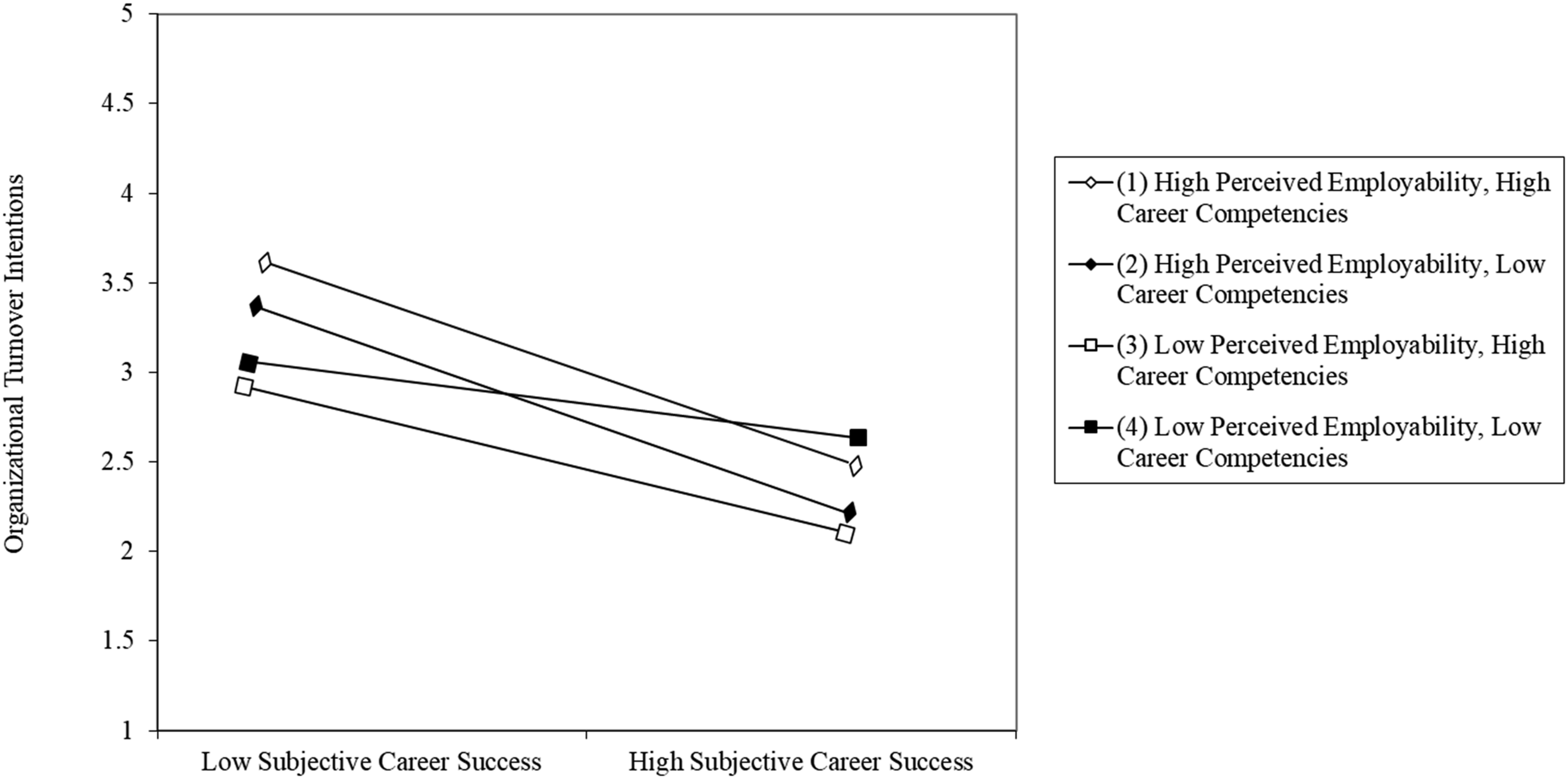
In conclusion, the Study 1 results supported our arguments that the three-way interaction of low subjective career success, high career competencies, and high perceived employability was strongly related to organizational turnover intentions. However, the insignificant results for occupational turnover intentions did not surprise us because occupational change comes with higher risk and may require substantial investments in the new occupation. At the same time, if the subjective career success was high, professionals were unlikely to have organizational and occupational turnover intentions irrespective of their career competencies and perceived employability levels.
Study 2
Although Study 1 provided significant insights on organizational turnover intentions, it fails to provide adequate evidence for occupational turnover intentions. These results align with the extant literature that states occupational mobility is less observed as it is a path-dependent process (Dlouhy & Biemann, 2018). Prior studies predict that occupational change can be more disruptive in working professionals' careers, which also comes with higher occupational investments and risks (Blau, 2000; Medici et al., 2020; Zimmerman et al., 2020). Further, occupational change requires an entirely new set of skills, schedules, and work culture and necessitates acquiring a new skill set through formal training, building relevant social networks, and occupational preparation (Feldman, 2002; Feldman & Ng, 2007). Recent studies establish that occupational investments in the current profession enhance occupational embeddedness (Dlouhy & Biemann, 2018; Zimmerman et al., 2020). However, the effect of occupational investments in a new profession on future turnover decisions is unknown. Study 2 replicates the Study 1 relationships, drawing a sample from the context of occupational investments in a new profession.
Participants and Procedure
We collected data from working professionals who had enrolled in full-time management programs at one of India's reputed business schools with multiple accreditations (e.g., AMBA, AACSB, and EFMD). We invited participants of two such programs for the survey: a full-time 1-year program and a 2-year weekend program specifically designed for working professionals with work experience from three to 15 years. We have considered this to be an appropriate sample for Study 2 because these are employed in technical positions (e.g., IT professionals) with investments in a new occupation (i.e., management). We collected data in two waves (i.e., during the first and last week of a trimester) with the same variables as Study 1. We obtained responses from 260 participants at Time 1, out of which 31 did not respond at Time 2, and four self-generated identification codes did not match, reducing our Time 2 sample to 225. In total, we obtained 221 (85% of the total population) usable responses. The respondents were 179 men and 42 women.
Additionally, 35.3% of the respondents were less than 30 years old, 43% were 31–35 years old, and 21.7% were more than 35 years old. Furthermore, 67.9% of the respondents were graduates, and 31.2% were post-graduates. Finally, 59.7% had up to 10 years of work experience, and 38.5% had more than 10 years.
Results
Preliminary Analysis
Descriptive Statistics and Intercorrelations Among the Study Variables (Study 2).
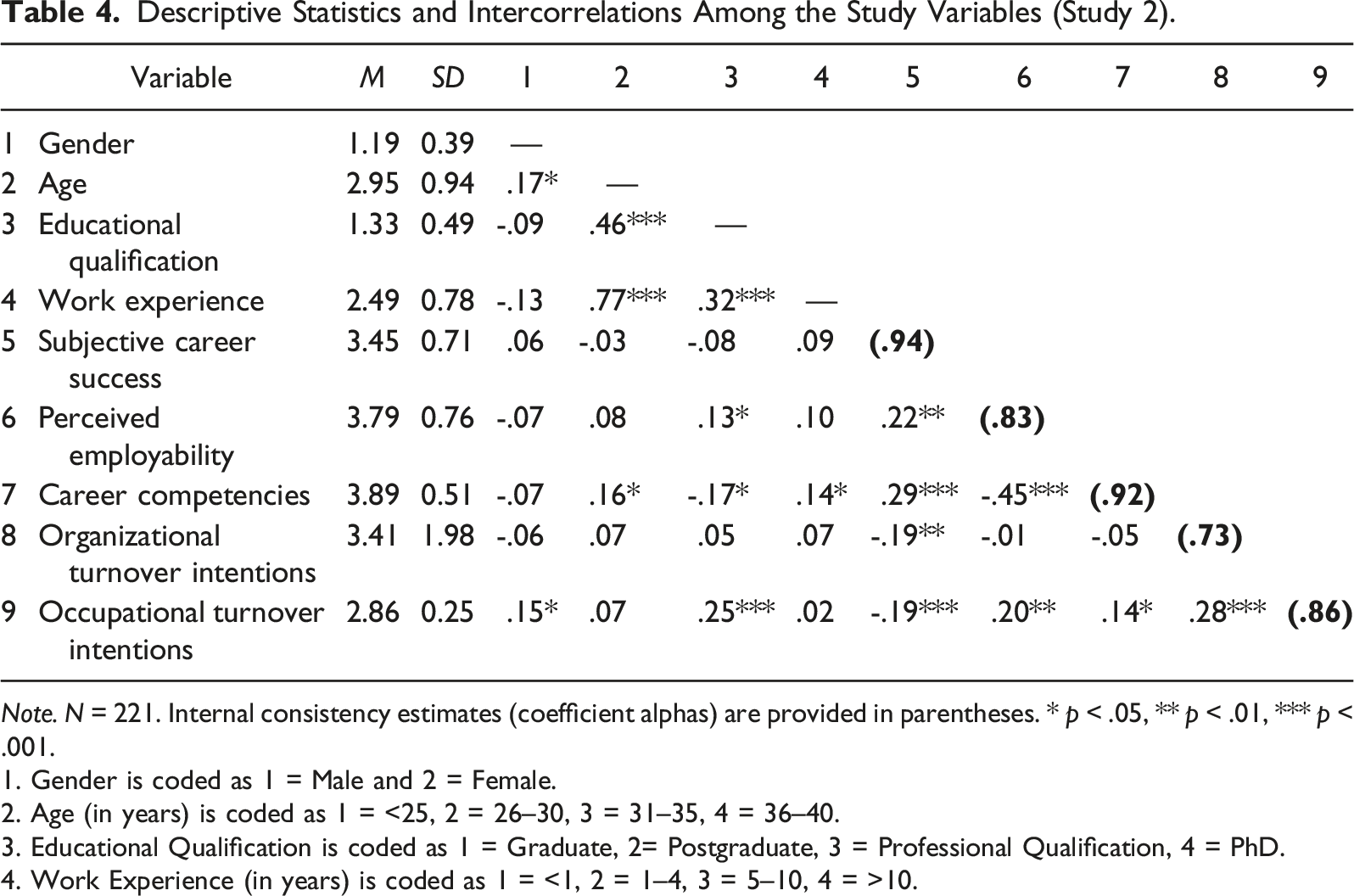
Note. N = 221. Internal consistency estimates (coefficient alphas) are provided in parentheses. * p < .05, ** p < .01, *** p < .001.
1. Gender is coded as 1 = Male and 2 = Female.
2. Age (in years) is coded as 1 = <25, 2 = 26–30, 3 = 31–35, 4 = 36–40.
3. Educational Qualification is coded as 1 = Graduate, 2= Postgraduate, 3 = Professional Qualification, 4 = PhD.
4. Work Experience (in years) is coded as 1 = <1, 2 = 1–4, 3 = 5–10, 4 = >10.
Hypothesis Testing
Results of Regression Analysis (Study 2).
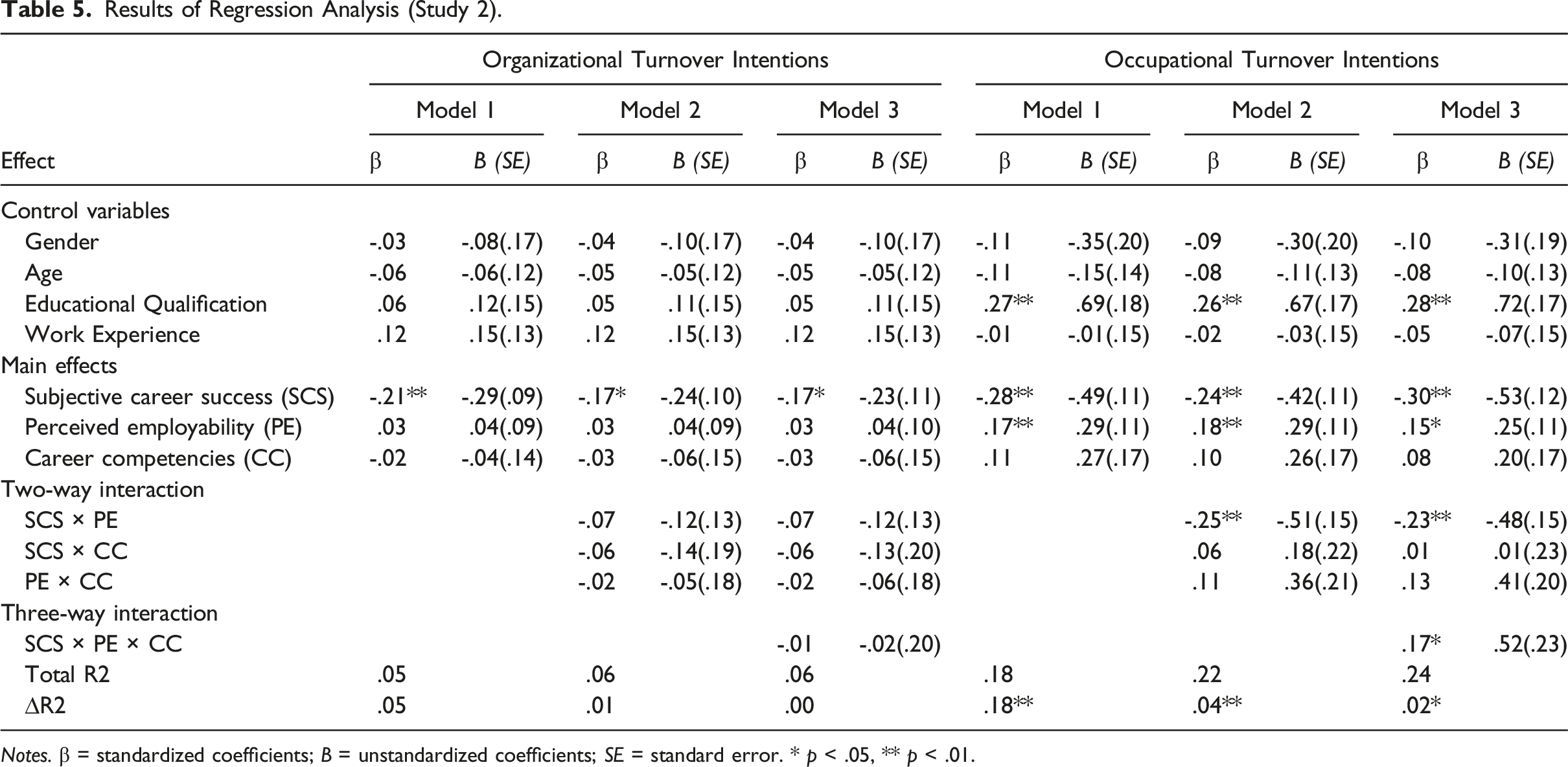
Notes. β = standardized coefficients; B = unstandardized coefficients; SE = standard error. * p < .05, ** p < .01.
Tests of simple slopes (Study 2).
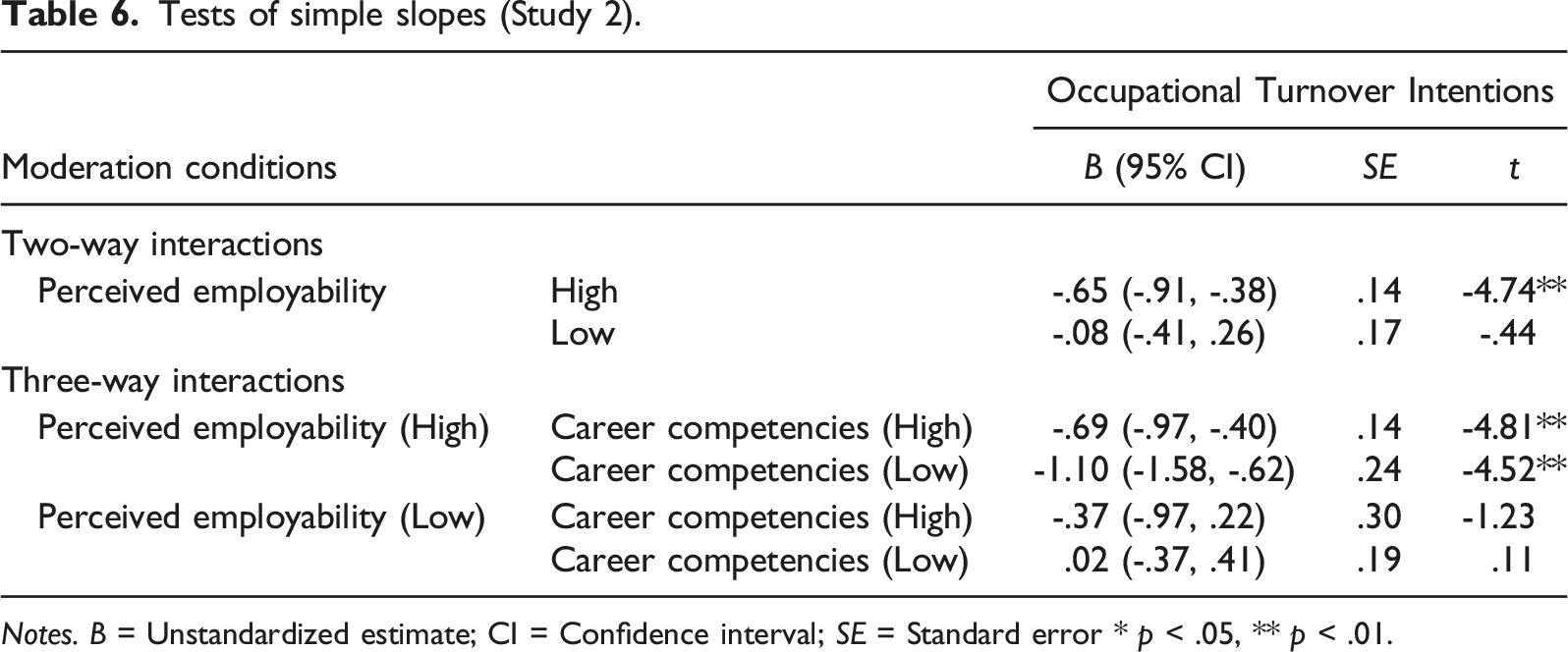
Notes. B = Unstandardized estimate; CI = Confidence interval; SE = Standard error * p < .05, ** p < .01.
Results showed that professionals` subjective career success was negatively related to organizational turnover intentions (B = -.29, SE = .09, p < .001) and occupational turnover intentions (B = -.49, SE = .11, p < .001) supporting Hypothesis 1a and 1b. Next, we found a significant moderation effect of perceived employability on the relationship between subjective career success and occupational turnover intentions (B = -.51, SE = .15, p < .001) and insignificant for organizational turnover intentions (B = -.12, SE = .13, p < .37). Further, our simple slope analysis revealed that the negative relationship between subjective career success and occupational turnover intentions was strongest when the perceived employability was high (B = -.65, SE = .14, p < .001) and insignificant at a low perceived employability (B = -.08, SE = .17, p < .66). Therefore, Hypothesis 2b was supported, and 2a was not supported. Finally, the Table 5 results indicate a significant three-way interaction on occupational turnover intentions (B = .52, SE = .23, p < .05) supporting Hypothesis 3b, and insignificant on organizational turnover intentions (B = -.02, SE = .20, p < .92) not supporting Hypothesis 3a. The simple slope analysis further revealed that the relationship between subjective career success and occupational turnover intentions was non-significant when the perceived employability and career competencies were low (B = .02, SE = .19, p < .91), and when the perceived employability was low, and career competencies were high (B = -.37, SE = .30, p < .21). However, the slopes were negative and significant when perceived employability was high and career competencies were low (B = -1.10, SE = .24, p < .001), and when perceived employability and career competencies were both high (B = -.69, SE = .14, p < .001). These results indicate that the negative influence of subjective career success on occupational turnover intentions is evident only when the perceived employability was high and in the presence of career competencies. The three-way interaction effect on occupational turnover intentions improved the model's coefficient of determination (R2) by two percent. The three-way interaction graph for occupational turnover intentions is presented in Figure 3. Three-way interaction effect of subjective career success, perceived employability, and career competencies on occupational turnover intentions (study 2).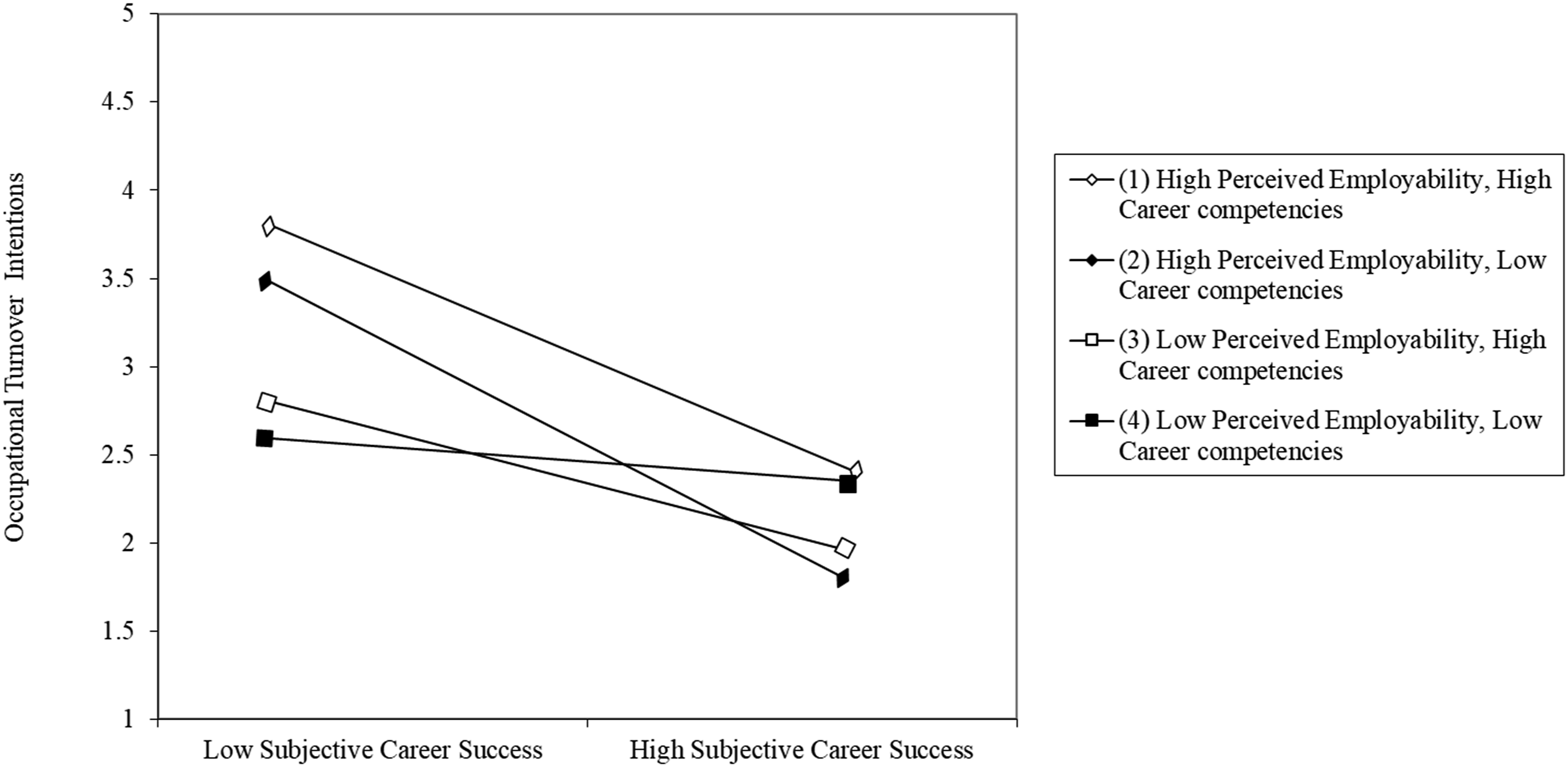
The Study 2 results supported the argument that a three-way interaction of low subjective career success, high career competencies, and high perceived employability strongly predict occupational turnover intentions. Specifically, the Study 2 results indicated that the context of occupational investments in a new profession would significantly impact the linkage between subjective career success and occupational turnover intentions. Hence, these findings provided empirical evidence that occupational investments in a new profession would positively affect future turnover at the occupational level.
Discussion
In both the studies, we found that the three-way interaction among subjective career success, career competencies, and perceived employability influencing turnover intentions. Specifically, the negative influence of subjective career success on organizational turnover intentions (Study 1) and occupational turnover intentions (Study 2) was conditional on perceived employability and career competencies. Therefore, the results showed that professionals with low subjective career success have organizational and occupational turnover intentions if they possess high career competencies and perceived employability in alternative organizations or occupations. The results also revealed that the professionals with high subjective career success were unlikely to have organizational and occupational turnover intentions irrespective of their career competencies and employability levels. Further, the contrasting results of both studies highlight the critical role of the context in studying these relationships. In Study 1, the hypothesized relationships were significant for organizational turnover intentions, not occupational turnover intentions. Study 2 results were significant for occupational turnover intentions. These results indicate that the context of occupational investments in a new profession may support occupational changes. We discuss the theoretical and practical implications, followed by limitations and future research suggestions.
Theoretical Implications
This research paper makes significant contributions to the literature. Despite the importance of subjective career aspects in the careers literature (Arthur et al., 2005; Aryee et al., 1994; Gattiker & Larwood, 1986; Ng et al., 2005; Ng & Feldman, 2014; Spurk et al., 2019), the extant studies focused mainly on predictors of subjective career success with a narrow focus on its aftereffects. This approach restricts the advancement of careers literature by providing a unilateral view of subjective career success. For example, in the context of boundaryless careers, studies often examine how past career changes contribute to achieving career success (Cheramie et al., 2007; Colakoglu, 2011; Lam et al., 2012; Stumpf, 2014), not paying the same attention to the impact of present career success on future mobility decisions. The recent calls to undertake research in this direction reiterates the importance of such relationships (Guan et al., 2019). Our study contributes to the careers literature by testing the influence of subjective career success on turnover intentions, where studies considered it only as an outcome. These findings provide empirical evidence on how subjective career success could be an antecedent to organizational and occupational turnover intentions. The study insights also showcase the interdependence of career success and career changes contributing to the careers literature.
Next, turnover intentions are focal variables in the turnover literature. Although prior research establishes that organizational and occupational turnover intentions are different (Blau, 2007; Louis, 1980; Sullivan & Al Ariss, 2021), the empirical evidence testing both are limited in the turnover literature (Blau, 2007; Yousaf et al., 2018). We complement these limited studies by investigating the role of subjective career aspects (e.g., recognition and meaningful work) on organizational and occupational turnover intentions. We followed Shockley et al. (2016) to conceptualize subjective career success moving beyond the standard measures like job or career satisfaction. In doing so, we contribute to the turnover literature by adding a new broader perspective to the growing set of predictors of turnover intentions.
Third, the focus of the extant turnover literature mainly revolved around understanding the direct relationship between various predictors and turnover intentions (Rubenstein et al., 2018). However, it is more important to investigate the boundary conditions and relevant contexts where these relationships alter. In the current study, we uncover a few boundary conditions where the strength of the relationship between subjective career success and turnover intentions varies. Our results indicate that the negative relationship between subjective career success and turnover intentions is strongest in the presence of high perceived employability and career competencies. Further, the negative impact of subjective career success becomes insignificant when the perceived employability and career competencies are low. These results enhance our understanding of boundary conditions that affect the direct relationship between subjective career success and turnover intentions.
Finally, our two-study approach highlights the importance of context in studying the impact of subjective career success on turnover intentions. Though our results show different three-way interaction effects in both studies, they reveal the importance of context in interpreting these effects. In Study 1, our results were significant for organizational turnover intentions but not for occupational turnover intentions. These results align with the prior literature that suggests occupational turnover intentions are less observed. An occupational change requires an entirely new set of skills, schedules, and work culture and necessitates acquiring a new skill set through formal training, building relevant social networks, and occupational preparation (Feldman, 2002; Feldman & Ng, 2007). However, changing the context (i.e., the sample consists of working professionals with occupational investments in a new profession) in Study 2 provided significant results for occupational turnover intentions. Therefore, our two-study design replicating the same relationships in two diverse contexts highlights these crucial differences.
Practical Implications
Our study results suggest that professionals develop organizational and occupational turnover intentions due to low subjective career success. More importantly, the negative influence of subjective career success on turnover intentions is strongest for the people with high perceived employability and career competencies. These results imply that highly competent people are likelier to leave an organization or occupation when they experience low subjective career success. It may prove costly to business organizations not to pay attention to an issue of such magnitude.
Organizations may consider designing policies aligned with the employees' career aspirations to improve these subjective career aspects. Specifically, organizations may encourage a collaborative work culture that facilitates acknowledgment of each other’s work. Further, organizations may consider providing timely opportunities for career development through periodical training and education. Furthermore, organizations may offer flexible work opportunities to enable employees more autonomy in deciding the work hours, locations, and assignments. These flexible work opportunities help employees to strike a balance between work and personal life. As a result, employees can build a personally meaningful career and carry positive feelings to the workplace. Ensuring these subjective career aspects of work benefits organizations to maintain a better engaged and productive workforce with low turnover intentions.
Limitations and Future Directions
Though the present study has several contributions to the theory and practice, it has a set of limitations that future research may address. First, we considered the organizational and occupational turnover intentions to estimate future turnover. Though the turnover intentions are the most proximal estimators of actual turnover (Ajzen, 1991; Mobley et al., 1979; Rhodes & Doering, 1983; Zimmerman, 2008), capturing the actual turnover may give more accurate insights. Hence, future studies may deploy a methodology that captures the actual turnover.
Second, our two samples represent organizations located in India. The representation from one country may limit the generalization of the results. Every country may have unique employment trends, career orientation, and skill development opportunities. Hence, future studies may consider testing these relationships in multiple countries representing diverse career contexts.
Third, we collected the data for all the variables through self-reported survey questionnaires, which may be prone to social desirability tendencies. Though the anonymous responses may reduce it to some extent, (Podsakoff et al., 2012) recommend that the use of multisource data may completely rule out such issues. Hence, future studies may collect the data for certain study variables from multiple sources.
Finally, though our two-wave survey method captured data at two different time points, it did not collect the same variables data repeatedly, which may limit our study's causal inferences. However, ensuring the temporal separation among study variables reduces the common method bias of self-reported surveys (Podsakoff et al., 2012). Hence, future studies may consider longitudinal study design with a large time frame and examine how changes in predictor variables influence turnover intentions at various career stages, which may establish the causal relationships.
Conclusion
Organizational and occupational changes may be beneficial to the professionals who undertake them. However, they significantly impact organizations with huge turnover and replacement costs. Our study examined two types of turnover intentions jointly influenced by subjective career success, perceived employability, and career competencies. The results validate the argument that career success and employability are not only outcomes of past career changes but also act as antecedents to future turnover decisions.
Footnotes
Declaration of conflicting interests
The author(s) declared no potential conflicts of interest with respect to the research, authorship, and/or publication of this article.
Funding
The author(s) disclosed receipt of the following financial support for the research, authorship, and/or publication of this article: The current research work had financial support from Indian Institute of Management Lucknow, India (SM 265).
